Category Archives: Movies with a rural setting

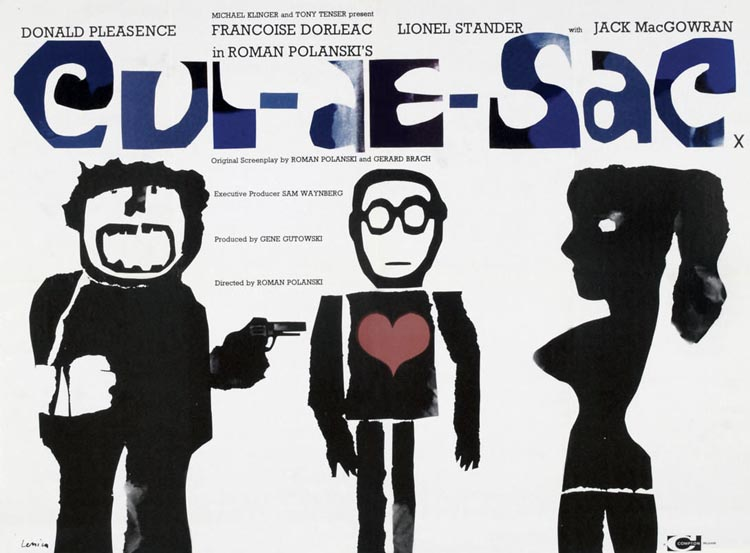
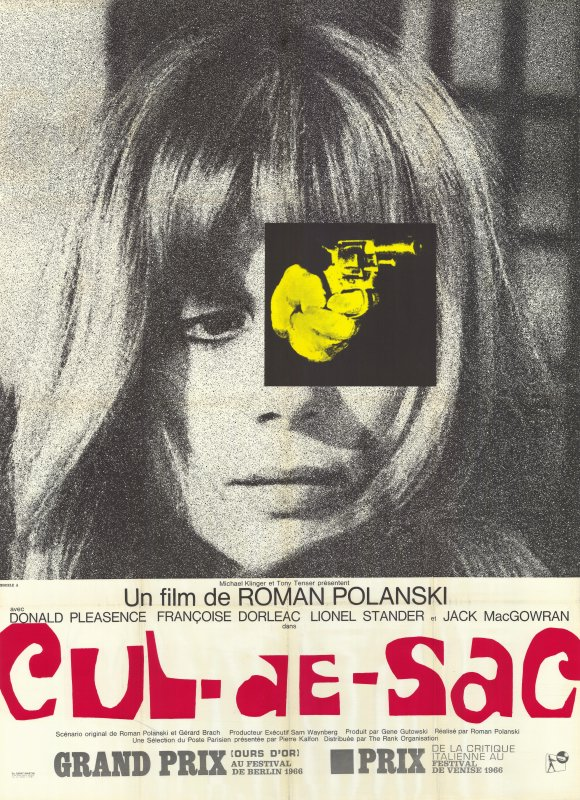
Cul-De-Sac (1966)

cul de sac 2

By Richard Winters

My Rating: 8 out of 10

4-Word Review: Bubbling beneath the surface.

Albie and Richard (Jack MacGowran, Lionel Stander) are two gangsters on the run. Albie is injured with a gunshot wound and their getaway car has broken down. They come upon an isolated castle owned by George (Donald Pleasance) who lives there with his new wife Teresa (Francoise Dorleac, who tragically died in a car accident just one year after this film was released). George is very passive and timid and pretty much allows Richard to have his way as he takes over the place and his wife and yet as the situation progresses different shades of the character’s personalities begin to come to light.

Roman Polanski leaves his strong directorial touch from the exquisite opening shot, which shows an old car being pushed along on a desolate road amidst a very flat landscape until the end. In the hands of any other director this otherwise odd story probably would not have worked. Like with A Knife in Water Polanski makes great use of the quiet and serene atmosphere and as a viewer you feel like you are right there with the characters.  Filmed on-location at the Lindisfarne Castle on Holy Island in Northumberland, England the movie makes great use of the tranquil setting. I found it almost hard to believe that there was a film crew there as the isolation really grabs you and sucks you in. The quiet moments are the film’s strongest and I just loved the hooting owl heard in the background. The idea of filming it in black and white nicely compliments the film’s dark psychological undertones.

The film’s novelty is watching how the characters evolve and interact with one another. Donald Pleasance gives one of his best performances as the cowardly George. There have been many weak and frighten characters in cinema history, but Pleasance makes the character here quite interesting and the way he finally shows some bravado at the least likely moment is fascinating. Stander also excels with a character that initially comes off as a brute, but at strange times reveals a trusting and even child-like manner.

The movie can be viewed in different ways and doesn’t fit distinctly into any type of genre. To a degree it can work as a dark psychological character study, a mystery, film noir, a thriller, or macabre comedy. Approaching it as a comedy works best Polanski has not always had great success in that area and some of his comedies in particular the ill-advised Pirates have been complete disasters, but this one works. The best scene is when some of George’s old friends come to visit and bring along their bratty son who becomes an absolute terror to everyone.

The odd ending is open to interpretation and leaves a lasting impression. This is also a great chance to see Jacqueline Bisset in her film debut. She appears during the second half wearing glasses and saying little, but is as beautiful and alluring as ever.
cul de sac 1

My Rating: 8 out of 10

Released: November 7, 1966

Runtime: 1Hour 57Minutes

Not Rated

Director: Roman Polanski

Studio: Tekli British Productions

Available: DVD (The Criterion Collection) Blu-ray, Amazon Instant Video, Netflix streaming
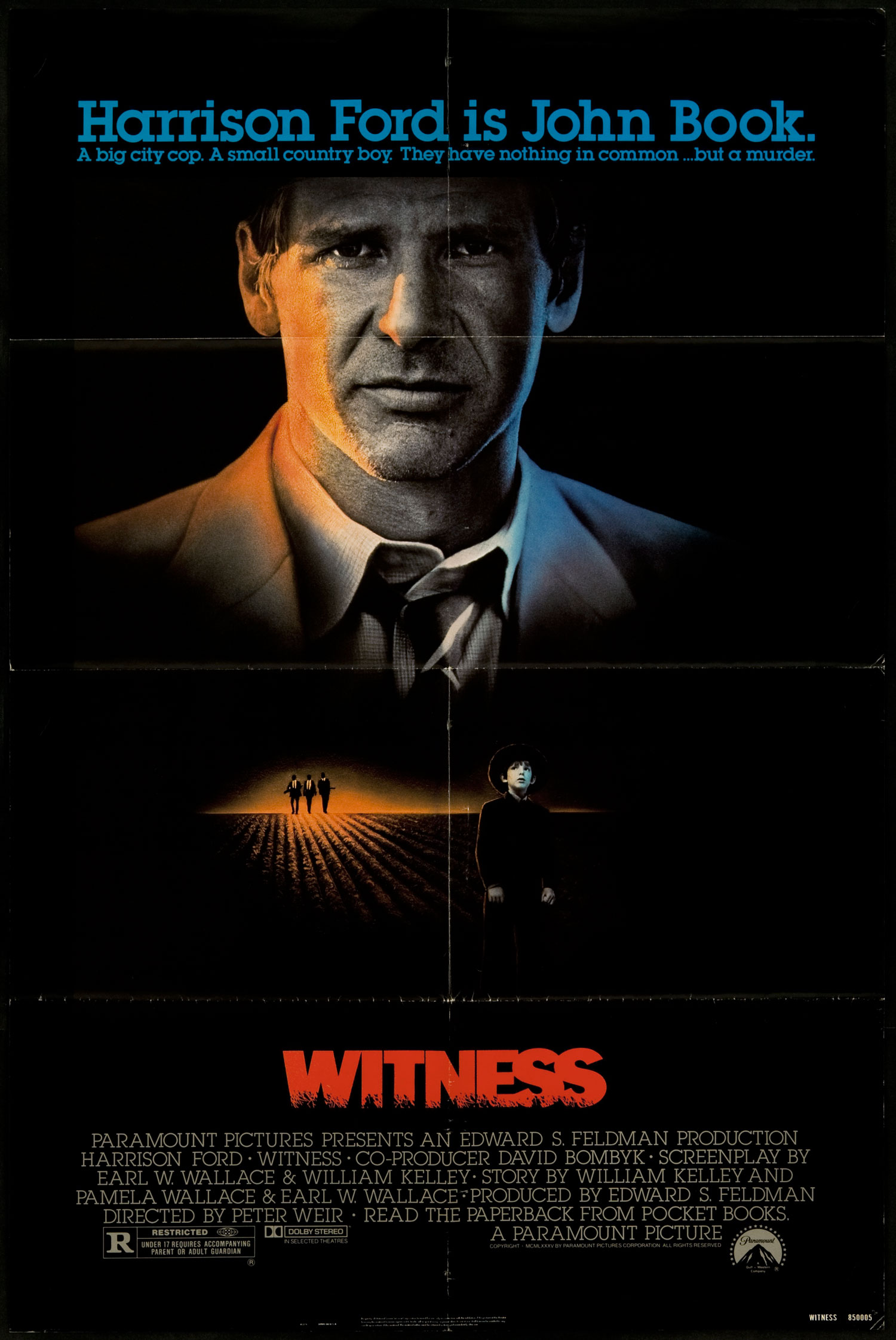
Witness (1985)

witness

By Richard Winters

My Rating: 8 out of 10

4-Word Review: Hiding out on farm.

Samuel (Lukas Haas) is a young Amish boy traveling with his mother Rachel (Kelly McGillis) by train to Baltimore to visit her sister. At the train station he leaves to go to the restroom where he witnesses a murder committed by McFee (Danny Glover) a narcotics cop gone bad. John Book (Harrison Ford) is the policeman investigating the case and when he realizes that there is an internal cover-up and he is now being targeted for blowing the whistle he goes into hiding with the boy and his mother at the farm home of Rachel’s grandfather Eli (Jan Rubes). There John learns to adjust to the Amish lifestyle while forming feelings for Rachel who displays the same for him, but McFee and his henchman doggedly pursue John in an attempt to silence him permanently.

The script by Earl K. Wallace and William Kelley deservedly won the Academy Award and is perfect blend of riveting cop drama and cultural understanding and one of the few films to deal with the Amish culture. It manages to tackle the subject in a non-sensationalistic manner that for the most part shows the Amish community in a positive, but still realistic light. The scenes showing the Amish men getting together and working as a team to hoist up a barn is exhilarating. The part where John punches out a brash heckler who looks exactly like current Baltimore Ravens head coach John Harbaugh who is harassing the peaceful people is satisfying as well. The film does also manage to look a bit at the negative side of the religion namely the shunning where if one of their members does not conform completely to their rigid doctrine then they will be literally shunned by the rest of their community even their own family members, which Rachel is told she risks simply by being, in their eyes, too friendly with John.

I remember at the time some critics complained about the scene where Rachel is bathing and turns around to find John peering at her and instead of covering herself up just stands there and exposes both of her breasts. Many people felt that this was not realistic. That a women raised on modesty would not just throw it all away and expose herself to a man who she was not married to and not a part of their community even if she did have some feelings for him and I have to agree. Although I did like the quiet sensuality of the scene I did not feel it was right for his type of picture, but fortunately it is the only time that it ever gets ‘Hollywoodnized’ and for the most part is pretty respectful.

The balance between the potential love angle and the action is surprisingly well done. The film may have one too many romantic moments, but otherwise the pacing is solid. The climatic showdown inside the barn had me on the edge of my seat and one of the best and most creative action finales for a cop movie that I have seen.

Ford is engaging as ever and it is surprising that his role here is his first and so far only time that he has ever been nominated for best actor. It is fun watching him learn how to milk a cow as well as seeing him dressed in an Amish suit with the pants not quite long enough.

Josef Sommar also gives an interesting performance as one of the bad guys. Instead of being the villain that becomes more confident, brazen, evil, and vicious as the pressure mounts he instead begins to behave in a more panicked and confused manner, which is an interesting take on the age-old formula.

Of course the real star of the film has to be Haas who is perfectly cast. He is cute and adorable without it ever having to be forced, or clichéd and one of the main reasons that this film has become so endearing.

The film also features Viggo Mortensen in a non-speaking part as one of the Amish men and Patti Lupone has a brief bit as John’s sister who begrudgingly agrees to take in Rachel and her son for the night in her home. Her reaction when Rachel tells her that she is Amish is subtly amusing.

My Rating: 8 out of 10

Released: February 8, 1985

Runtime: 1Hour 52Minutes

Rated R

Director: Peter Weir

Studio: Paramount

Available: VHS, DVD, Amazon Instant Video

The Flim-Flam Man (1967)

flim flam man 2

By Richard Winters

My Rating: 6 out of 10

4-Word Review: Con-man finds apprentice.

Curley (Michael Sarrazin) is a young army deserter living in an over-turned and abandoned freight car in the rural regions of Kentucky. By chance he meets up with Mordecai Jones (George C. Scott) a traveling con-man who decides to use Curly as his apprentice as well as his assistance in some of his more elaborate schemes. At first Curley goes along with it, but when he fall in-love with Bonnie (Sue Lyon) one of Mordecai’s intended victims he decides he wants out much to Mordecai’s reluctance.

Scott really shines and this may be his best comic performance. Although he was only 38 at the time he looks and acts like a genuine old man even though his gray hair looks like it was frosted on much like what is done to white Christmas trees. In some way it might have been more authentic had an older actor played the role, but Scott is so much fun in the part that the movie may not have worked as well.

Sarrazin is solid in support. His quiet demeanor and understated performances never allowed him to get the recognition that he deserved, but he was always effective in these types of roles and having the character walk the moral tightrope and sometimes fall off makes him interesting and believable. Lyon is also good as the romantic interest. Although I felt the romance bogged things down a bit I still enjoyed her natural acting style that is devoid of any pretension.

Harry Morgan is fun as the headstrong sheriff who chases after Mordecai and Curly as is Albert Salmi as his dim-witted deputy. Salmi’s blank looking facial expressions are tops and the car chase that they have with the two culprits features some impressive comical stunt work and seems to tear-up the entire main street of the town.

The soundtrack by Jerry Goldsmith has wonderfully soothing melody with some great harmonica and trumpet solos. The on-location shooting in Kentucky captures the countryside and the hazy late summer sunshine of the region well.  For the most part the film is quite amiable and amusing, but predictable. The script lacks the unexpected twist or unique insight that would elevate it above being just the fluff that it is. The ending, which features Curly rigging the courthouse with dynamite and threatening it blow it up has a touching quality to it, but proves frustrating as it doesn’t show us what ultimately becomes of the characters.

My Rating: 6 out of 10

Released: August 22, 1967

Runtime: 1Hour 44Minutes

Director: Irvin Kershner

Studio: 20th Century Fox

Available: VHS 

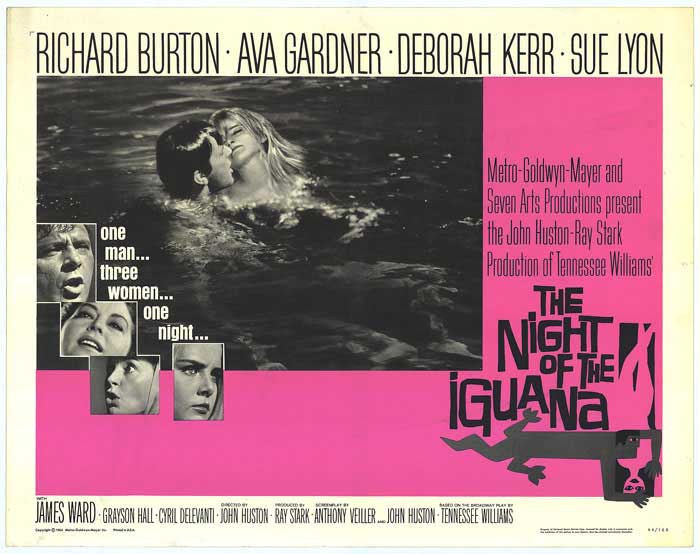
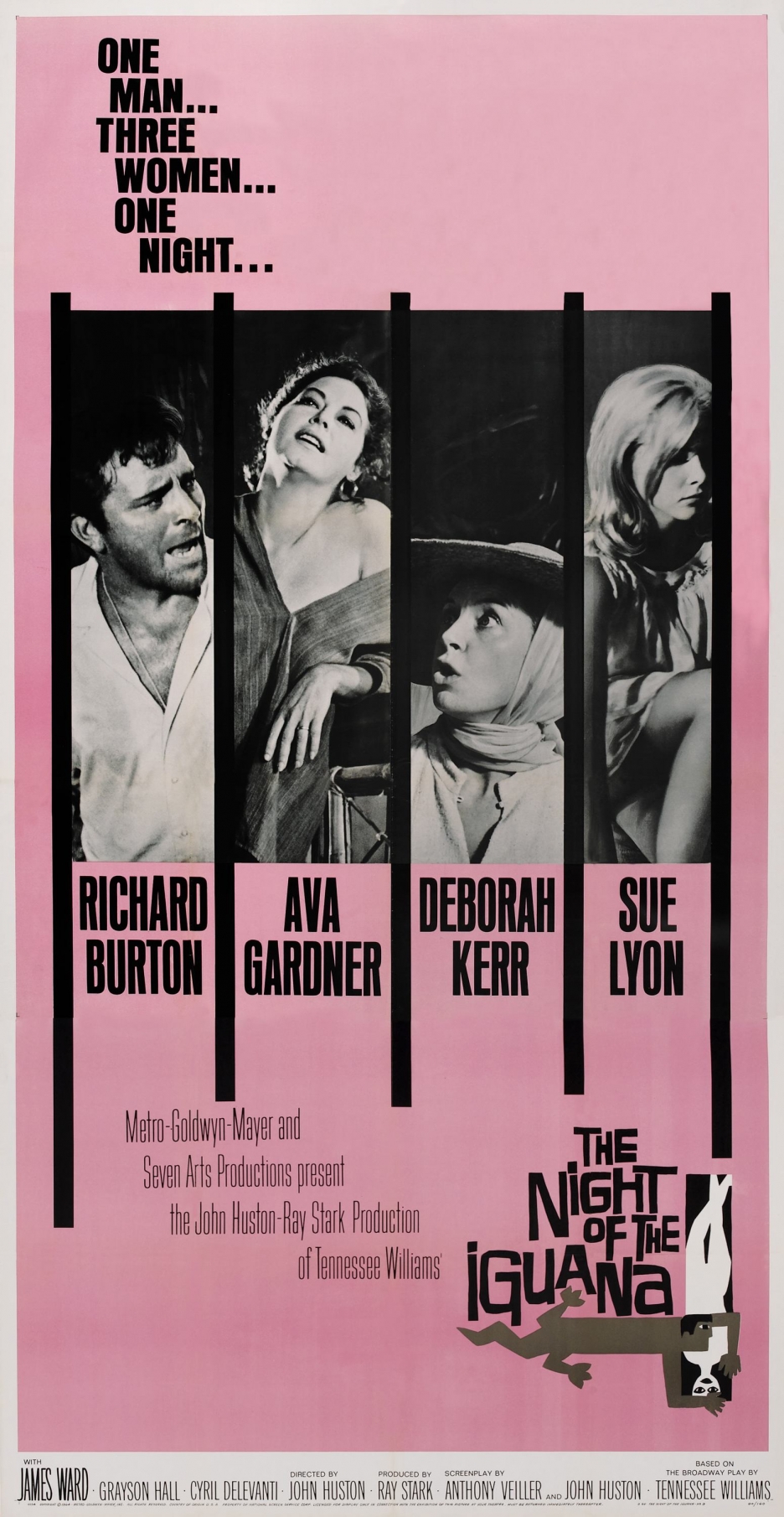
The Night of the Iguana (1964)

night of the iguana 2

By Richard Winters

My Rating: 6 out of 10

4-Word Review: Flawed clergyman loves women.

Lawrence Shannon (Richard Burton) loses his job as a clergyman when rumors surface of indiscretions he had with a young female parishioner, which pushes him to preach a ranting sermon at the pulpit that eventually drives all the members of the congregation out of the building. He then gets a job as a tour guide in Mexico and has the chore of leading a bus load of middle-aged women around the country. Charlotte (Sue Lyon) is a young nymph who takes a liking to Lawrence much to the chagrin of her over-protective chaperon Judith Fellowes (Grayson Hall). When Charlotte is caught in Lawrence’s bedroom late at night Ms. Fellowes promises that she will have it reported and get him fired. Unable to handle a another potential job loss Lawrence takes the bus load of women to an isolated seaside hotel run by Maxine (Ava Gardner) an old friend of his. He hopes that by somehow trapping them there he will be able to convince Ms. Fellowes to drop the charges, but along the way he meets Hannah (Deborah Kerr) who he starts to fall in-love with.

Unlike most of Tennesse William’s other plays this one, at least the first half, is full of energy and comical nuance. I found the group of ladies and Lawrence’s exasperated dealings with them to be quite amusing and the film moves along at an engaging pace. The second half though bogs down with more of William’s signature brooding drama that ends up hurting the flow. In many ways this film seems like two movies in one and the difference in tone and pace never gels. Despite a good nighttime conversation between Kerr and Burton I kept hoping the ladies and Ms. Fellowes would come back and felt the film was weaker without them.

Legendary director John Huston hits most of the right buttons here although it is not his best work. I was surprised and impressed to learn that Maxine’s hotel was built specifically for the production in an otherwise deserted region of the country. The building had an authentic old look and helped give the film added style and personality. I had mixed feelings with the black and white photography. On one had it helps bring out the dark recesses of its flawed characters and accentuate the moodiness of William’s script, but it also takes away from the exotic beauty of the locale.

Burton is good as usual and playing the part of an emotionally fractured, alcoholic character seems right up his alley. Gardner is great as the brassy Maxine and the scene of her making out with her two young, shirtless, maraca playing male assistants along the beach late at night is genuinely steamy. Kerr is in fine form as well and her more restrained demeanor makes a nice contrast to Gardner’s.

Lyon’s acting isn’t quite up to her costars and she seems particularly out of her league during her scene with Burton, but in the looks department she is unmatched. She is more filled-out and mature than in Lolita and in many ways even hotter. The scene of close-up shots of her moving her hips to a tune at a Mexican bar may excite some of the male viewers.

The under-rated Hall is excellent in her role as the heavy. Her craggy face and personality are perfect for the part and it rightly got her a supporting actress nomination.

In the final analysis this is not a bad version of Tennessee William’s material, but not a great one either.

night of the iguana 1

My Rating: 6 out of 10

Released: August 6, 1964

Runtime: 1Hour 58Minutes

Not Rated

Director: John Huston

Studio: MGM

Available: VHS, DVD, Amazon Instant Video

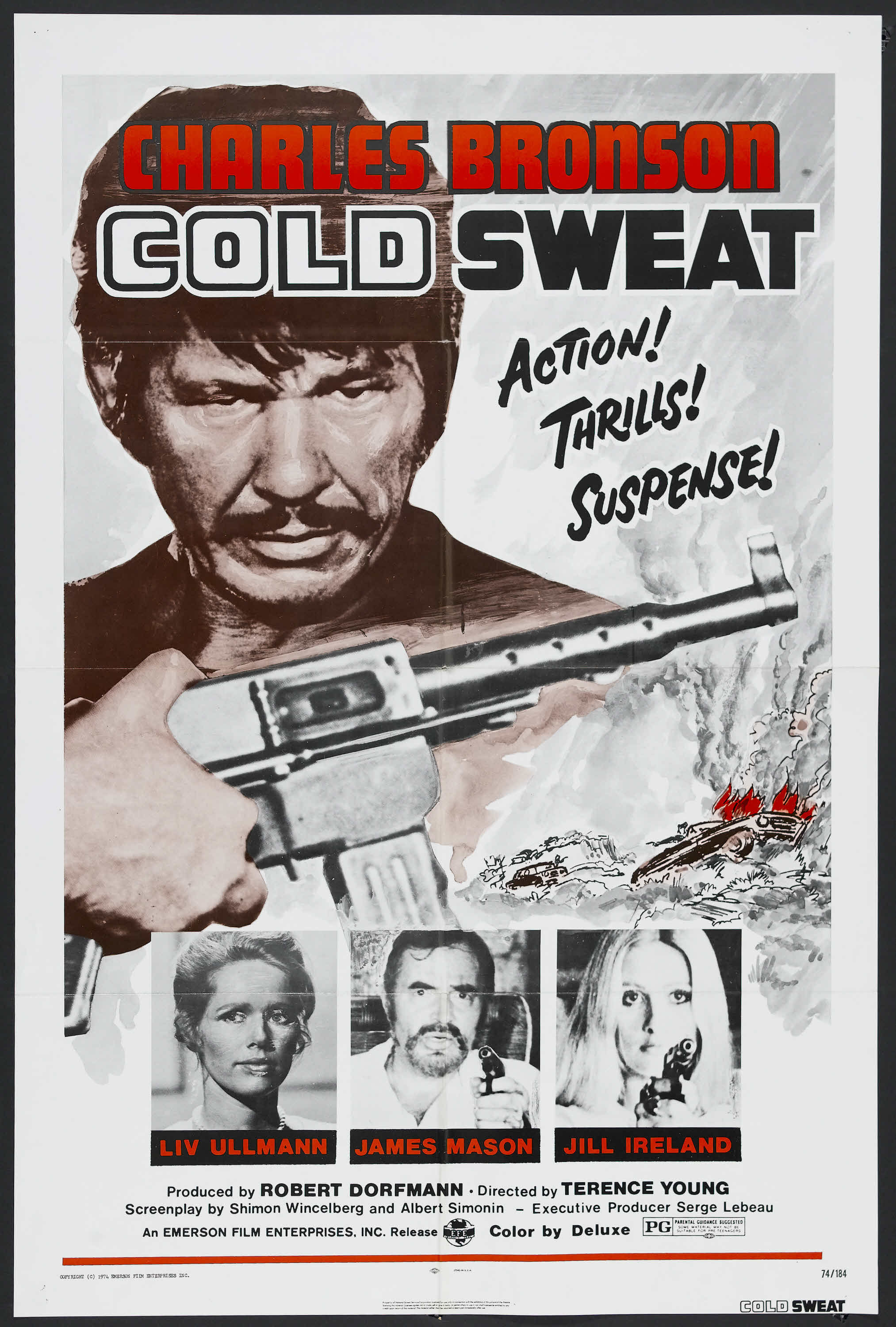
Cold Sweat (1970)

cold sweat

By Richard Winters

My Rating: 7 out of 10

4-Word Review: Chuck won’t be intimidated.

Joe Martin (Charles Bronson) is a man living with a past. Ten years earlier he was part of a prison break led by corrupt Captain Ross (James Mason). Joe was selected as the getaway driver, but after he witnesses one of them kill a police man he decides to drive off with the car and strand the others. Now he is living the quiet life in the south of France with his new wife Fabienne (Liv Ullmann) and her daughter Michele (Yannick Delulle), but as he starts to settle into his new lifestyle he finds that the old gang has tracked him down. They want him to be the boat driver in a drug deal they have planned and they won’t take ‘no’ for an answer. Fabienne and her daughter Michele are brought along for collateral, but Joe has a trick up his sleeve and instead kidnaps Ross’s girlfriend Moira (Jill Ireland) and puts her in an isolated cabin and when all parties converge onto the place is when the tensions and action boils over.

This is a simple film with the most basic of storylines. The characterizations are standard with no gray areas in-between. The good guys are really good and the bad guys really bad and nothing is ever nebulous as the tried and true formula gets followed from beginning to end. However, I liked it. Sometimes it is nice to have a film that isn’t trying to reinvent the genre and does things in a compact, crackling non-think style where the viewer can sit back and enjoy an old fashioned white knuckler without having to be challenged. After a slightly awkward start the film begins to roll and then never lets up. Chuck puts his gruff, stoic caricature to the hilt here helping propel the viewer emotionally into the action as he finds increasingly novel ways to overpower the baddies just as the odds look stacked against him.

Having him married to Ullmann was offbeat casting, but it works. Ullmann who has quite possibly one of the most expressive faces in all of cinema seems game for the proceedings. It was nice seeing her in something different than a brooding Ingmar Bergman drama. She gets right into the fray and becomes an integral part of the story and succeeds quite well.

The always reliable and many times brilliant Mason sports an American accent and its fun. He also takes part in a great death scene that gets amazingly prolonged until his increasingly pale complexion becomes genuinely disturbing.

Ireland shows flair as a jaded hippie type. Her and Chuck’s sparring clicks and casting the real-life couple as characters with animosity for the other is cute. I just wished that director Terence Young had played it up more and given Ireland more screen time.

Having the second half of the film take place almost exclusively at an isolated locale gives the picture added personality, but what impressed me the most was the action. In particular was a car chase along the long, winding French roads. I know the car chases in Bullitt and The French Connection get the honors for having the best and most famous chase sequences, but the one here comes amazingly close. I found myself turning uncomfortably in my seat as Chuck’s car travels each curve at high speeds and when he takes the auto off the road and onto the rugged terrain I was out of breath. The foot chase between Fabienne and her daughter and one of the lone gunmen along the ragged, rocky landscape is equally exciting and well captured at different angles.

This one is sure to please Bronson fans as it has all the ingredients his films are known for. My only complaint is with the DVD transfer available on Amazon Instant. Normally I love the way Amazon has made available films that are hard or even impossible to find and most of the time picture quality is decent to good, but here it looks like someone’s old home movie with a color that is faded and at certain spots completely washed out. It also very grainy and looks like it was taken from an old film stock, or lost VHS tape. The less than ideal presentation unfairly taints what is otherwise a solid production that deserves a much better looking reissue.

My Rating: 7 out of 10

Released: December 18, 1970

Runtime: 1Hour 34Minutes

Rated PG

Director: Terence Young

Studio: Fair Film

Available: DVD, Amazon Instant Video

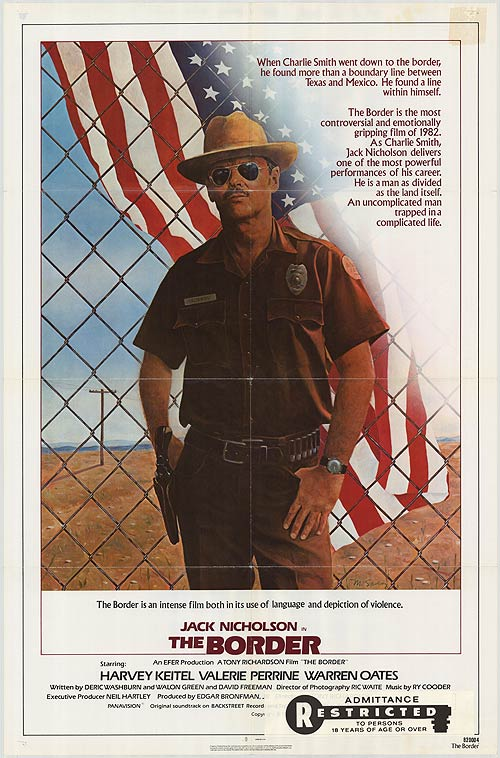
The Border (1982)

border

By Richard Winters

My Rating: 8 out of 10

4-Word Review: Border patrol isn’t easy.

Charlie Smith (Jack Nicholson) is a guard new to the border patrol who must learn to deal with the ugly realities that come along with his profession including becoming more and more pressured to get involved with the corruption that goes on there.

This is a stark presentation with an authentic atmosphere that at times makes it seem like a documentary. The viewer becomes submerged in this intelligent study on a serious and important issue with a result that is nothing short of enlightening. Unlike most other Hollywood movies nothing is over-the-top or melodramatic. It doesn’t try for shock value nor resort to clichés. The narrative is straightforward and uncompromising while offering no easy answers or annoyingly false wrap-ups.

Director Tony Richardson takes an expectedly humanistic approach and yet doesn’t seem inclined to push any type of agenda. This film has a look and feel different from any of his other films. He is known primarily for his wacky comedies (Tom Jones, The Loved One) and yet this film is grainy and grim. Much of that is due to the excellent use of natural lighting. This film has a very serious tone throughout and yet for some reason doesn’t end up being oppressive like some of those other ‘important’ pictures. It is also well paced with a riveting and compelling finish.

Nicholson gives a sensitive and sincere performance and a rare turn seeing him underplay everything. Valerie Perrine is very good as his wife and having her spend lavishly while oblivious to the poverty around her makes for interesting insight. Warren Oates is top-notch as always in support as Charlie’s supervisor. His character is brimming with a potential confrontation with Charlie and it is unfortunate that the movie doesn’t pursue this further.

Overall this is a strong picture that deserves more praise and attention and one of Nicholson’s best performances.

My Rating: 8 out of 10

Released: January 31, 1982

Runtime: 1Hour 48Minutes

Rated R

Director: Tony Richardson

Studio: Universal

Available: VHS, DVD, Amazon Instant Video

The Birthday Party (1968)

the birthday party 3

By Richard Winters

My Rating: 8 out of 10

4-Word Review: Tear up the newspaper.

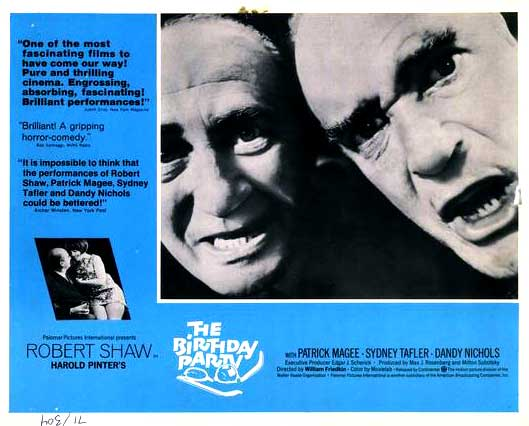
Since tomorrow will be my birthday I wanted to come up with a film that had birthdays as its theme and found this bizarre but fascinating obscurity. It is the story based on the play by Harold Pinter of Stanley Webber (Robert Shaw) a mysterious and private man who takes up lodging in a rundown British seaside house. He rents an upstairs room from Mr. and Mrs. Bowles (Moultrie Kelsall, Dandy Nichols) who are quite odd themselves. One day two men dressed in black suits (Patrick Magee, Sydney Tafler) come to pay Stanley a visit. They know something about Stanley’s past and their presence frightens him to the extent that it causes him to have a nervous breakdown.

On the surface this film shouldn’t work. There is an excessive amount of talking with dialogue that doesn’t say much and at times seems absurd. The set is drab and dirty with the camera seemingly locked down inside of it. There is never any explanation about Stanley’s past or what he is running from nor who the men are or what they know about him. The ending is elusive and the viewer will go away feeling more confused than they did at the start.

However, it is these ingredients that make the film so thoroughly intriguing. The seemingly banal dialogue is simply a façade for underlying thoughts and feelings. What Stanley is trying to run from is unimportant because it is really not about him at all and is instead more about ourselves, human nature and the quandary of our existence. It’s an examination of people’s futile attempts at trying to escape from who they are only to have society and life catch up with them. The set could be a metaphor for the inside of Stanley’s head. The grimy and decayed place symbolizes his decayed soul and the men in black suits are his conscience coming to haunt him.

Once you adjust to the eccentric narrative it then becomes a fantastic film for observing subtitles and nuance. Director William Friedkin shows a keenness for detail not only visually, but with the sound as well. The way the Magee character tears up a newspaper and the sound used for it could actually unnerve some viewers. Stanley’s meltdown scene is very unique and overall the direction is superb for such difficult material.

This movie was years ahead of its time, but for some it may be off-putting. However, it should be enjoyed by those who crave the avant-garde. It is also a rare chance to the see the normally strong-willed Shaw playing a very weak and vulnerable character. Nichols is also a stand-out playing an Edith Bunker type with a perverse streak lying just beneath the surface.

the birthday party 1

My Rating: 8 out of 10

Released: December 9, 1968

Runtime: 2Hours 3Minutes

Rated G

Director: William Friedkin

Studio: Palomar Pictures International

Available: VHS, DVD (Region 2)

Murphy’s Romance (1985)

murphys romance 2

By Richard Winters

My Rating: 6 out of 10

4-Word Review: Love blossoms in desert.

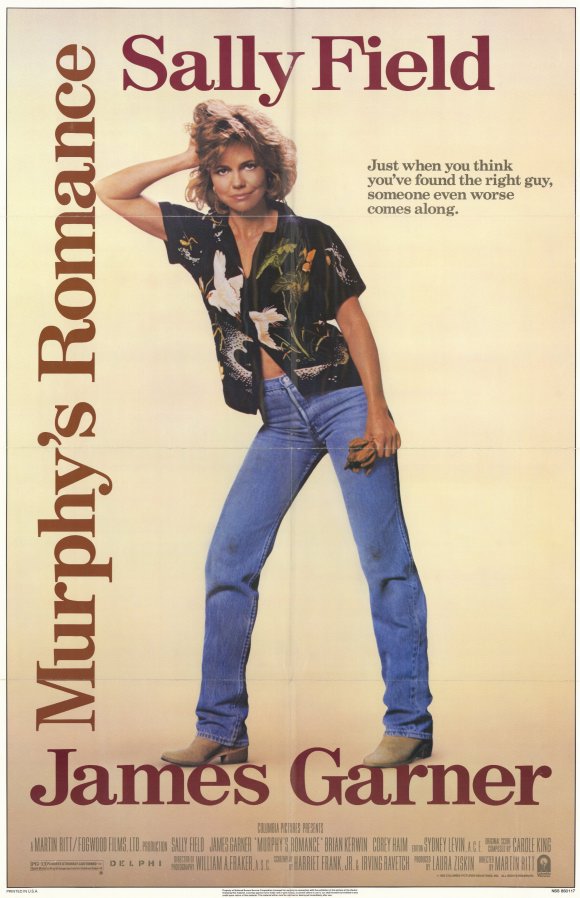
Emma (Sally Field) is a divorced mother with teenage son Jake (Corey Haim) who moves to a small Arizona town and try to singlehandedly start up a horse ranch. Once there she meets Murphy (James Garner) an older gentleman who she starts to have feelings for only to have her ex-husband Bobby Jack (Brian Kerwin) show up and try to rekindle their relationship.

This is a very leisurely paced romantic movie that doesn’t add anything new to the genre, but does end up going down like a cold drink on a hot afternoon. The dialogue is snappy and the wrap-up quite pleasing. It keeps things on a realistic level by showing Emma struggling with a lot of chores and financial constraints and thus making it perfectly relatable to those who have moved and tried to start over. It is also nice to see Haim when he was still a cute kid and before he became the 80’s poster boy for trouble child stars. Unlike other romantic comedies there is no one moment that is particularly funny or engaging however the scene involving Bobby Jack and Murphy fighting over Emma during a country dance party is amusing.

On the negative side it tends to be too formulaic. It only gets interesting when the ex-husband arrives, but then the film plays this scenario out in much too obvious a fashion. It would have been better had the ex-husband not been such a prototypical jerk and there had been more conflict and intrigue as to who she would end up choosing.

There is also a scene where Bobby Jack tackles Emma into a mound of hay in an effort to rekindle some of their old passion, but Emma ends up becoming allergic to the hay. Although this was clearly done for obvious laughs it doesn’t seem too believable. This is a woman, who by her own admission, has been working with hay and horses since she was child so this affliction would have become apparent long before then or at least during the several hours that it is shown where they are shoveling it into the stalls. It is possible that she was only faking this reaction in order to get away from him, but if that were the case then it should have been made more clear to the viewer

This is tailor made for the romantic diehards and they should enjoy it even though others may find it only passable.

My Rating: 6 out of 10

Released:  December 25, 1985

Runtime:  1Hour 47Minutes

Rated PG-13

Director: Martin Ritt

Studio: Columbia

Available: VHS, D VD, Amazon Instant Video

Wake in Fright (1971)

wake in fright 3

By Richard Winters

My Rating: 8 out of 10

4-Word Review: The middle of nowhere.

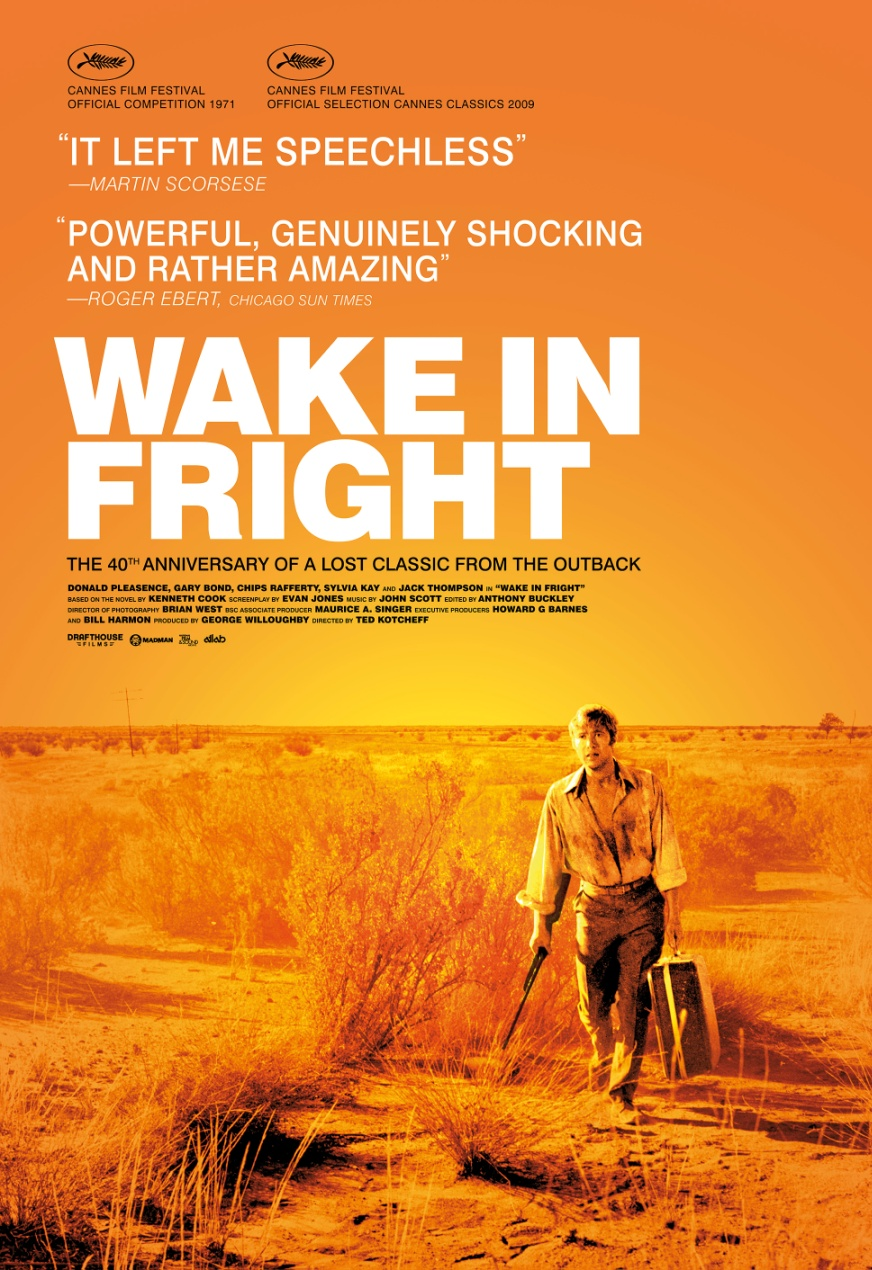
To an extent this is a one of kind film that is handled in such a raw and unpretentious way that it is like no other film you have ever seen before. The opening shot alone is amazing. You see a birdseye view of an isolated schoolhouse in the outback where our main character teaches. The camera then turns at a full circle and you see that there is absolutely nothing for miles in any direction. The desolation is mind boggling and it’s isolation at its purest.

Not only does this very inspired shot get its point across, but it also becomes the essence of what the film is about by trying to get you to understand the ruggedness of its characters by immersing you into their environment. It’s an uncompromising film full of startling images.

The story deals with a British schoolteacher John Grant (Gary Bond) who, through a loss in gambling, becomes trapped in the isolated outback town of Bundanyabba. He is cultured and educated and his sensibilities can’t mesh with the raw simplistic elements of the people in it.

It’s a highly intriguing viewpoint that not only captures man’s ever daunting task at dealing with nature, but also the overall reality of his existence and even himself. It makes you feel you are right there experiencing the same onslaught with him. There are also some interesting low key scenes proving that one of the biggest hurdles one must fight when in these places is actually just the boredom.

I do have to warn readers that the film has a very prolonged brutally explicit kangaroo hunting scene that features the actual killing of the animals. It even shows the men physically beating up on some wounded kangaroo’s and then viciously slashing their throats in a mocking fashion. Although I do feel that these scenes leave the viewer with the intended strong, raw impact and I like the lighting during the nighttime hunt that allows for a surreal element I still admit this may be a very difficult watch for some and may turn them off from viewing the film altogether. Apparently there were quite a few people that walked out of the film during this scene when it was shown at the Cannes, so be prepared.

Star Bond is excellent. You can relate to his anger and defiance at being somewhere he doesn’t want to be as well as feeling his desperation, exhaustion, and eventual surrender.

For many years this film sat in almost virtual obscurity, but after an exhaustive worldwide search a print of the film was finally found in the back of a Pittsburgh warehouse in a canister with a ‘to be destroyed’ label on it. Fortunately the print was saved and the restoration process is fantastic with colors that are bright and vivid. Director Ted Kotcheff captures the region in all of its rustic, desolate glory including the incredible crystal blue sky.

Reportedly many Aussies dislike the film as they feel it creates a negative stereotype. However, I don’t see it that way. I love the county and people and consider this more of a portrait of what happens when people are stuck in an isolated environment, which technically could be anywhere.

wake in fright 2

My Rating: 8 out of 10

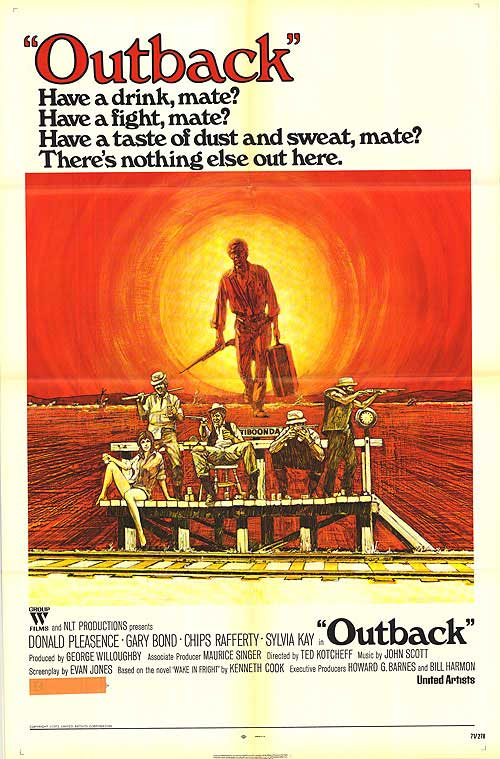
Alternate Title: Outback

Released: October 13, 1971

Runtime: 1Hour 49Minutes

Rated R

Director: Ted Kotcheff

Studio: United Artists

Available: DVD (Region 1 & 2) Blu-ray, Amazon Instant Video

The Night of the Following Day (1969)

night of the following day 4

By Richard Winters

My Rating: 4 out of 10

4-Word Review: Kidnappers can’t get along.

A teenage girl (Pamela Franklin) is kidnapped by a group of professional killers who then demand a large ransom from her rich father (Hugues Wanner). Things deteriorate as the criminals begin fighting amongst themselves and eventually it all goes awry, which leads to ironic results.

Writer/director Hubert Cornfield creates a picturesque setting and a certain new wave look that subtly runs through it. The music has a new age sound, which helps to create a kind of metaphysical mindset. There are also some good camera angles and interesting edits, so it takes you awhile before you realize that this is just a lot to do about nothing.

The caper itself is too general and formulaic and in the end makes it a lame excuse for a movie. The infighting by the criminals is not that interesting. The characters are so one-dimensional that you really don’t care what happens to them. The twist ending is not that clever and in many ways simply signifies what a waste of time this really is.

Marlon Brando overacts with a part that doesn’t require it. He uses the hip lingo of the day like ‘freaky’ and ‘man’, which doesn’t really mesh with the middle-aged man that he was. His blonde wig looks awful and his trendy clothes including his big belt buckle gives him too much of a kitschy appearance. The attempts at making him a sort of anti-hero that is brave, sensitive, and concerned for his victim’s welfare despite being one of the perpetrators doesn’t work and makes the character a cliché like everything else in the movie.

Franklin is wasted. She goes through all the expected emotions of a kidnap victim, but barely utters a word in the process.

The neighboring policeman is put in to help create some tension, but ends up being annoying instead. However, Jess Hahn as Wally is quite good playing the film’s only believable character. He has very much of an average Joe type of looks and seems at the start to have an insignificant role, but ends up being the only one that holds it up together while the rest become whacked out.

Despite an interesting cast that also includes Rita Moreno and Richard Boone I found this to be a very cardboard thriller that runs out of gas after an okay beginning.

My Rating: 4 out of 10

Released: February 19, 1969

Runtime: 1Hour 33Minutes

Rated R

Director: Hubert Cornfield

Studio: Universal

Available: VHS, DVD