Category Archives: Movies with a rural setting

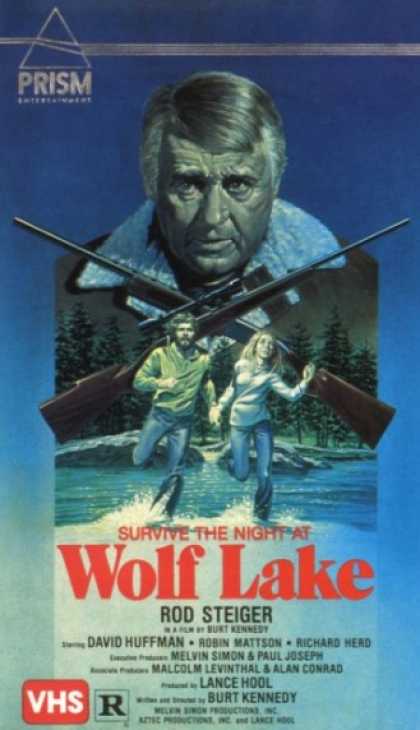
Wolf Lake (1978)

wolf lake 1

By Richard Winters

My Rating: 2 out of 10

4-Word Review: He doesn’t like deserters.

Charlie (Rod Steiger) is a hard-bitten conservative man who lost his 23-year-old son in the Vietnam War. He likes to vacation with a couple of his middle-aged buddies Wilbur (Jerry Hardin) and George (Richard Herd) at a remote Canadian hunting lodge. However, this time when they arrive they find that the regular lodge owner is not there and instead it is being run by a young man named David (David Huffman) and his pretty girlfriend Linda (Robin Mattson). Charlie and David almost immediately are at odds as they both share a wide variance in age and political leanings. What is worse is the fact that David is a war deserter and once Charlie finds out about this he flies into a rage of psychotic proportions, which culminates in a violent night of terror for both David and his girlfriend.

The film was written and directed by the normally reliable Burt Kennedy who is better known for doing westerns. After watching this I think he should have stayed in that genre as this film is too formulaic and one-dimensional. There seems to be too much emphasis to conform to the horror movie/slasher style formula of that era with a plot set-up that is too brief and character development that is almost non-existent. The story shows its cards too quickly and then proceeds to just plod on and on until it climaxes with a predictable and boring finish.

Charlie and David’s arguments and confrontations fail to elicit any type of tension. Their shouting matches are rhetorical and redundant and their points-of-view are handled at a superficial level that allows for no new insight, or intellectual debate. Charlie is so limited in his stubbornness that he becomes annoying instead of threatening, or scary.

The final 25 minutes when the two sides wage a proverbial war between their two cabins is the only time that there is any action. However, by then I was completely bored with the proceedings and so emotionally detached from the third rate material that it was a strain just getting through it. The film’s ultimate message is heavy-handed and done so much better in other films on the same subject that it renders this excursion as pointless.

Steiger is wasted. The character he plays is poorly defined and doesn’t allow him to take full advantage of his acting abilities. He gets stuck with another one of his many wigs this one looking like the same type of gray haired rug that actor Ray Milland used to wear in his later years. The producers should have just allowed him to appear bald as it would have fit this type of part better and even made him look creepier and more menacing.

Huffman is the best thing about this movie and it is a shame that his life and career were cut short when he was murdered in 1985 while trying to chase down a suspected purse snatcher. His performance here is nicely understated, which helps carry the picture as he is the only character that is multi-faceted.

Although the story takes place in Canada and the landscape certainly looks Canadian I was surprised to learn that it was actually filmed near the city of Creel in Chihuahua, Mexico, which due to its high elevation has a climate that is more similar to the North’s.

SPOILER ALERT

There are actually two different versions of this film. There is this one and another one entitled The Honor Guard. In that one there are no flashback scenes like there are here and in the end Charlie ends up killing David and his girlfriend while in this version Linda shoots Charlie before falling over dead herself. I actually liked the flashbacks that are used as it gives the film what little suspense it has and also shows a bit of cinematic flair. However, the scene where Linda miraculously comes up with a gun and killing Charlie before keeling over looked cheesy and clichéd and I might actually have voted for the alternate ending.

My Rating: 2 out of 10

Released: May 3, 1978

Runtime: 1Hour 25Minutes

Rated R

Director: Burt Kennedy

Studio: Melvin Simon Productions

Available: VHS

Welcome to Woop Woop (1997)

welcome to woop woop 2

By Richard Winters

My Rating: 6 out of 10

4-Word Review: Oh those crazy Aussies.

Teddy (Johnathon Schaech) is a rather clumsy con man from New York who tries to escape a murder rap by going to the most remote place possible, the Australian outback. However, after coming into close contact with the eccentric people and lifestyles, he decides what he really needs is an escape from there!

This is the type of offbeat comedy that should give all other offbeat comedies a bad name. It takes all the same ingredients from all those other films, meshes them together, and then spits them out in a mechanical fashion. Unlike director Stephan Elliot’s earlier feature Priscilla Queen of the Desert there is nothing deep here to help balance the quirkiness. The film is just made to be silly and at times goes overboard with it. The pace is also too fast. The viewer is never allowed to soak anything in or even take a breath.

Schaech is not good in the leading role. He gives too much of a breezy performance, acting as if the whole thing is a joke. He never once even for a second displays the angst, anxiety, and basic overall exhaustion that anyone else stuck in the same situation would feel.

The portrayal of the Australian people is terrible. They take all the stereotypes of the down under folks and then play it up to the extreme. Here they are not just slightly eccentric people of a rugged and hearty nature. Instead they are complete Neanderthals who live like animals and have no level of sophistication. Yes, it does try to be somewhat fair by showing that Americans may have some primitive defects as well. Specifically in an opening sequence in New York City where every pedestrian is seen shooting at some birds flying by. Still the Australian segments are needlessly overdone and a bit insulting.

The one pleasant surprise is the appearance of Rod Taylor. He plays completely against type here. He’s Daddy-O a self-imposed, self-styled dictator of the town. His performance is gruff, campy, energetic, over-the-top, and hilarious all at the same time. His appearance here may actually be his career pinnacle.
Overall the film is similar in tone to all those formulaic bid budgeted Hollywood actioners, except here it’s aimed at the offbeat crowd. Everything is perfectly packaged to its core audience and overblown all at the same. It’s so forced at points that it almost becomes ridiculous. Yet some of the humor is funny, it has a feel good attitude, and it is without question LIVELY.

Watch for a real fun cameo by Tina Louise at the beginning.

My Rating: 6 out of 10

Released: May 13, 1997

Runtime: 1Hour 37Minutes

Rated R

Director: Stephan Elliot

Studio: Goldwyn Entertainment Company

Available: VHS, DVD

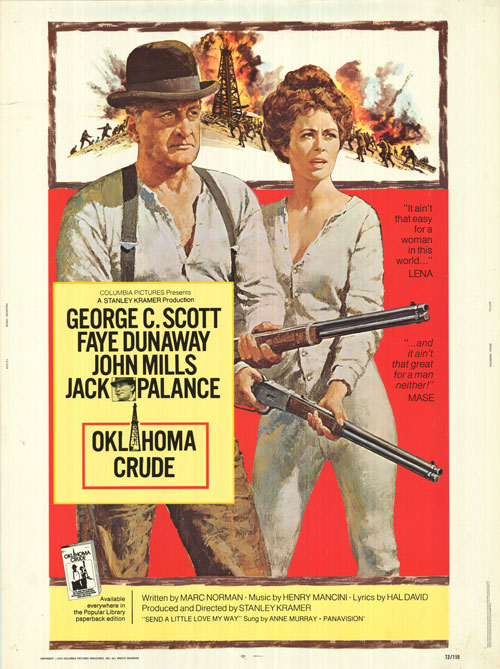
Oklahoma Crude (1973)

Oklahoma Crude

By Richard Winters

My Rating: 8 out of 10

4-Word Review: They want her land.

Lena Doyle (Faye Dunaway) runs a wildcat oil rig on land that she owns in Oklahoma. She is convinced that there is oil there and protects it with a feisty independence. Her father Cleon (John Mills) decides to hire Mason (George C. Scott) a lazy drifter that he picks up in town. Mason’s job is to guard against the impending invasion of the oil company headed by Hellman (Jack Palance) who wants the land and potential profits for themselves. Lena and Mason do not get along at first, but when Hellman and his men seize the land in a hostile takeover Lena and Mason form an uneasy alliance in an attempt to take it back.

Director Stanley Kramer can be considered overrated by many and I am pretty sure that he and critic Pauline Kael never exchanged Christmas gifts. However, this film has an edginess to it that I liked. The script, by Marc Norman, is full of original scenes and snappy dialogue. The on-going banter between Lena and Mason is particularly good with their conversation of how Lena wished she could be both a man and woman at once and which sexual organ she would favor being the best.  Although the line where is states “You gutless men don’t know your balls from teabags” is good too.

The movie nicely mixes in the feminist issues of the 70’s within the western motif and approaches it in an even keeled way. It was very in vogue at the time to arbitrarily label the male as the chauvinist, but here it examines the strengths and weaknesses of both sides while ultimately showing how both need to rely on the other to succeed.

Dunaway has always been a personal favorite of mine no matter what that silly Hilary Duff says. Is anyone going to remember Miss Duff in 20 or 30 years? I think not. Sure Dunaway can have her bitchy side, but maintaining a career in Hollywood can sometimes create that. Either way her bitchiness is put to terrific use here. Her pouty, icy cold stares that she gives to Mason were alone worthy of an Oscar nomination.

Scott was always known to have a strong and stubborn personality both in front of and behind the camera, so seeing him play a character that is meek and aloof is fun. His performance here rates as his most amusing second only to the one he did in Dr. Strangelove.

Palance again scores as the bad buy. He played a lot of heavies during his career, but this one is his best. There is just something about his deep, raspy voice and leering grin that make him a memorable villain.  Having him wear a bowler hat and black suit along with all of his henchman is perfect.

Mills comes close to stealing the film. The man has some very endearing moments and I felt the idea of pairing his refined British sensibilities along with Dunway’s caustic and vulgar manner was interesting. The scene where he climbs to the top of the oil rig in order to reattach the cable while Hellman and his men busily shoot at him is quite intense.

Why this great movie has never been released on VHS, DVD, or Blu-ray is a mystery. It has many fans and sure to gain more once they see it. The version existing right now on Amazon Instant Video is excellent. It is a widescreen with vivid colors and clarity. It nicely brings out the barren wide-open landscape and although it was not actually filmed in Oklahoma still gives one a good idea as to why the region is called ‘Big Sky Country’.

My Rating: 8 out of 10

Runtime: 1Hour 48Minutes

Rated PG

Director: Stanley Kramer

Studio: Columbia Pictures

Available: Amazon Instant Video

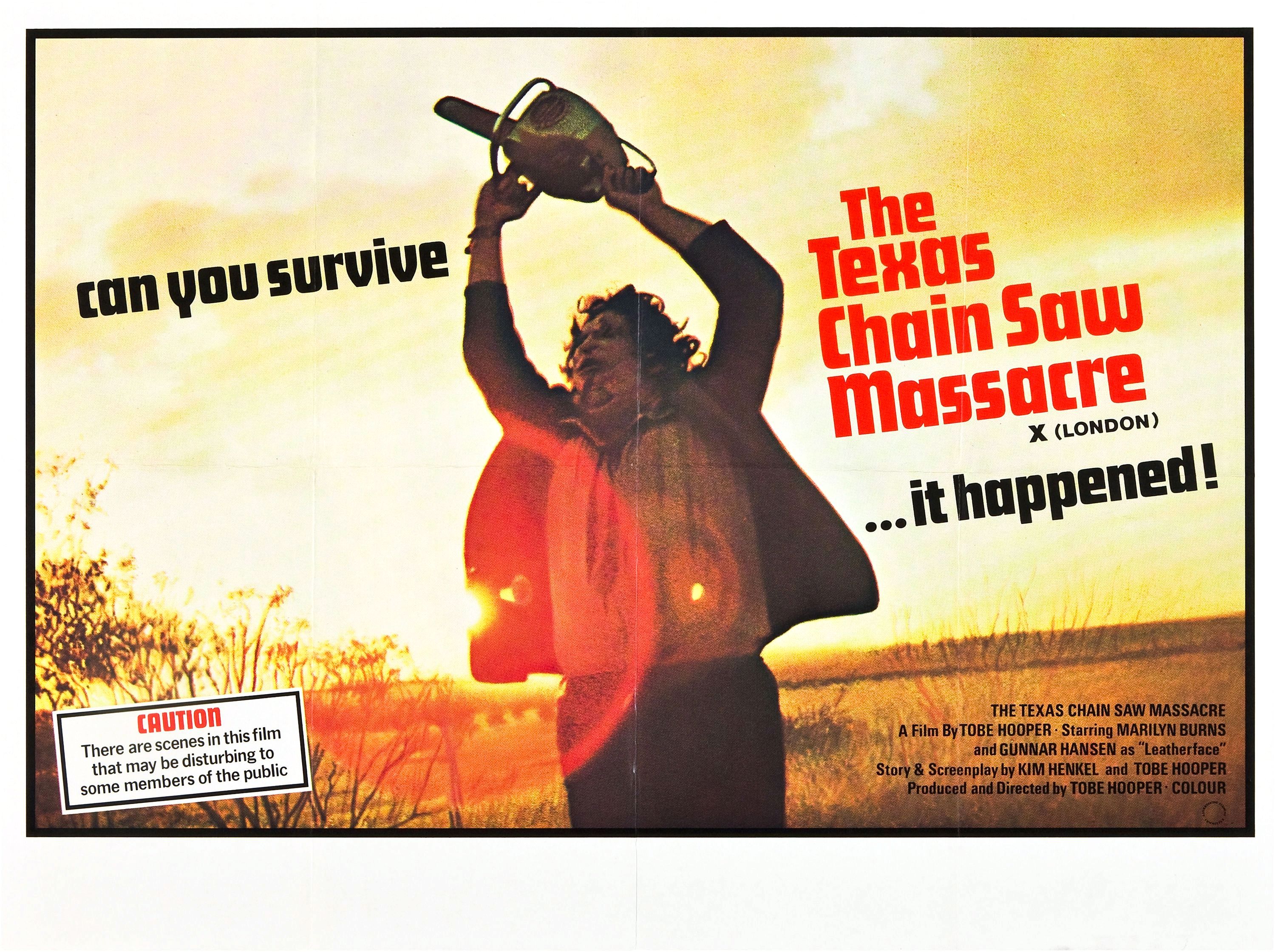
Texas Chainsaw Massacre (1974)

By Richard Winters

My Rating: 9 out of 10

4-Word Review: Man can she scream.

Four young adults on a summer trip inadvertently come into contact with a mutant family and their chainsaws.

This is the type of horror film most others strive to be, but usually never succeed. The tension builds right from the start. It’s slow but consistent and eventually hitting on an almost unparalleled level. Director Tobe Hooper and cinematographer Daniel Pearl make terrific use of the location shooting. Between the music and visuals you are given an otherworldly sense. The atmosphere literally hugs you with the dementia of the situation. You feel as engulfed with it as our heroine Sally Hardesty (Marilyn Burns). It transcends most other horror films simply because of its intensity and grotesque perspective. It blends so many unusual things together and yet everything still works. It’s both artsy and raw, moody and exciting, humorous and ugly and a masterpiece in many ways.

If you are looking for gore you may end up disappointed. Despite its reputation there really is very little if any. Apparently they were going for the ‘PG’ rating, but even so certain scenes become almost laughable with their restraint. One scene in particular features Leatherface (Gunnar Hanson) jumping out at a man in a chair. He jams his chainsaw into him and yet only small droplets of blood can be seen coming out.

There is also the problem of Marilyn Burns running. By most crew accounts she was a slow runner. This caused problems because it would allow the assailants to actually catch up to her even though they weren’t supposed to. Both Hansen and Edwin Neal as the Hitchhiker have to do some goofy things to avoid reaching her. This is obvious in the final chase sequence and it hurts the tension a bit.

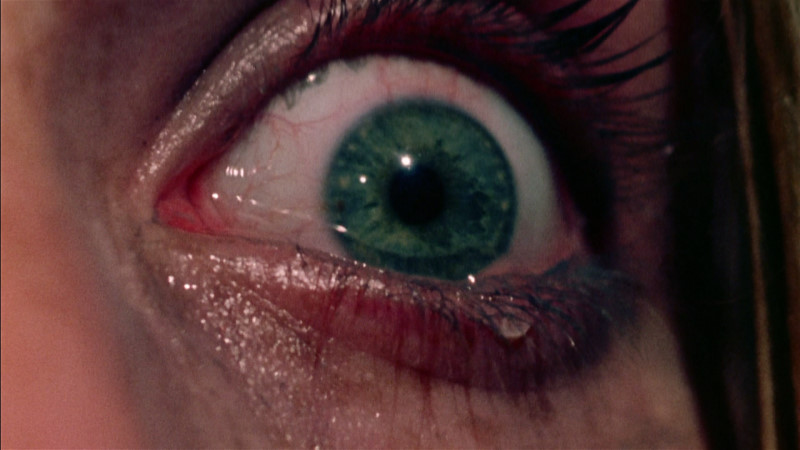
I still feel though that Marilyn was a good choice for the part. Her face holds an authentic look of terror and her screams reach amazing decibels. The graphic close-ups of her eyes are astounding and memorable.

This film makes its sequels look awful. A good companion to this picture is Hooper’s follow-up film Eaten Alive. It has the same atmosphere and intensity and is interesting in an equally odd way with Neville Brand making a unique villain.

My Rating: 9 out of 10

Released: October 1, 1974

Runtime: 1Hour 23Minutes

Rated PG

Director: Tobe Hooper

Studio: Bryanston Distributing

Available: VHS, DVD, Blu-ray 

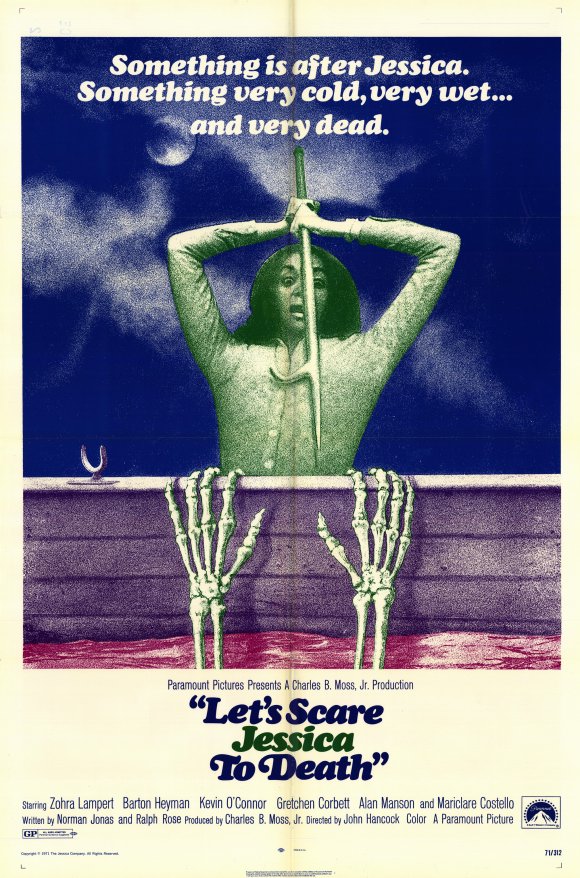
Let’s Scare Jessica to Death (1971)

By Richard Winters

My Rating: 5 out of 10

4-Word Review: Crazy lady versus vampires.

Jessica (Zohra Lampert) is recovering from a nervous breakdown and taken to a secluded Connecticut home for rest and recuperation. Here she starts to see strange visions, but nobody believes her making her the only one aware of the dangers that are brewing around them.

Haunted houses, ghosts, zombies, weird townspeople, madness, vampires, and even a tacky séance this film seems to want to take all the elements from other horror movies and mix it into one. The idea may sound great, but the approach is tepid. This may be due to its low budget, but either way the final result is unexciting. Yes it is creepy and eerie specifically at the beginning, but it never manages to get to the next level with no real scares or even a few minor ones.

The film is also slow with some stodgy drama used as filler. The special effects are minimal and the little that is shown looks unrealistic. Only at the very end do things start to get interesting.

Director John Hancock adds a little flair and had the script been able to reach the level of its scintillating title this film might actually have been special. His framing and photography of the outside of the old house is good. There is also a shot of an early morning sun rising off a foggy lake that makes for a perfect creepy atmosphere. I also like his placement of the howling wind and the whispering voices although he does go to this well a little too often.

One good reason to watch this film is too see Lampert. Although always a supporting player this was to date her only starring vehicle. She has a distinctive look and style that doesn’t match the glamour of a conventional leading lady. Her face exposes a nice fragility to the vulnerable character that she plays and her performance of a tormented person is excellent.

Although she has a pair of unique blue eyes like actress Meg Foster Mariclaire Costello, as the ghost/vampire, is just not frightening. The rest of the characters are boring and seem almost like stand-ins.

I got a kick out of the antique dealer (Alan Manson) who tells Jessica about the death of the original owner of the home that she is now living in. The tale is bland and transparent even though he insists, several times, that it is ‘quite extraordinary’.

Released: August 6, 1971

Runtime: 1Hour 29Minutes

Rated PG

Director: John D. Hancock

Studio: Paramount

Available: VHS, DVD, Amazon Instant Video

Misery (1990)

By Richard Winters

My Rating: 6 out of 10

4-Word Review: She’s his biggest fan.

Paul Sheldon (James Caan) is a writer who has just finished his latest novel. On the way back to his publisher (Lauren Bacall) he gets stranded in a freak snowstorm and ends up being ‘saved’ by Annie Wilkes (Kathy Bates) who is his ‘number one fan’. He is injured so she takes him to her nearby house where she proceeds to make him a helpless prisoner to her tormented and delusional mind.

The story has some interesting underlying elements. The film doesn’t really explore them, but does at least touch on it. It is the metaphor of the artist and the public. He is an educated man and yet his stories appeal to those with less education and what he puts into his work isn’t always what they take out of it. He doesn’t really like these stories and wants to expand his craft, but can’t because the formulaic stuff is what sells. In a way Paul was already trapped by Annie long before he ever got to her house and it is a sad dilemma a lot of artistic people have to deal with.
Bates as Annie plays the part really well. She is the ordinary, bland looking woman that you would never think about or consider dangerous. Her strange, erratic behaviors are slowly revealed until in the end the complete monster inside is unleashed. Screenwriter William Goldman, director Rob Reiner, and Bates herself show a good understanding of the character and what makes her tick. They create a woman who is complex, real, frightening, and at times even sad and pathetic.

Caan is a good competent actor however any one of number of actors could have played the part and maybe even done better. Yet you really sense and feel his confinement and ever growing frustration and when he finally revolts at the end you love it!

On the whole the thriller is pretty standard. There are some tense moments, but it is also routine and by the numbers. I thought it was too well lighted as a good psychological thriller always works best with a lot of shadows. The room Paul is trapped in looks more like it was done on a sound stage than in a real home and the film needed a few more unexpected twists.

My Rating: 6 out of 10

Released: November 30, 1990

Runtime: 1Hour 47Minutes

Rated R

Director: Rob Reiner

Studio: Columbia Pictures

Available: VHS, DVD, Blu-ray, Amazon Instant Video

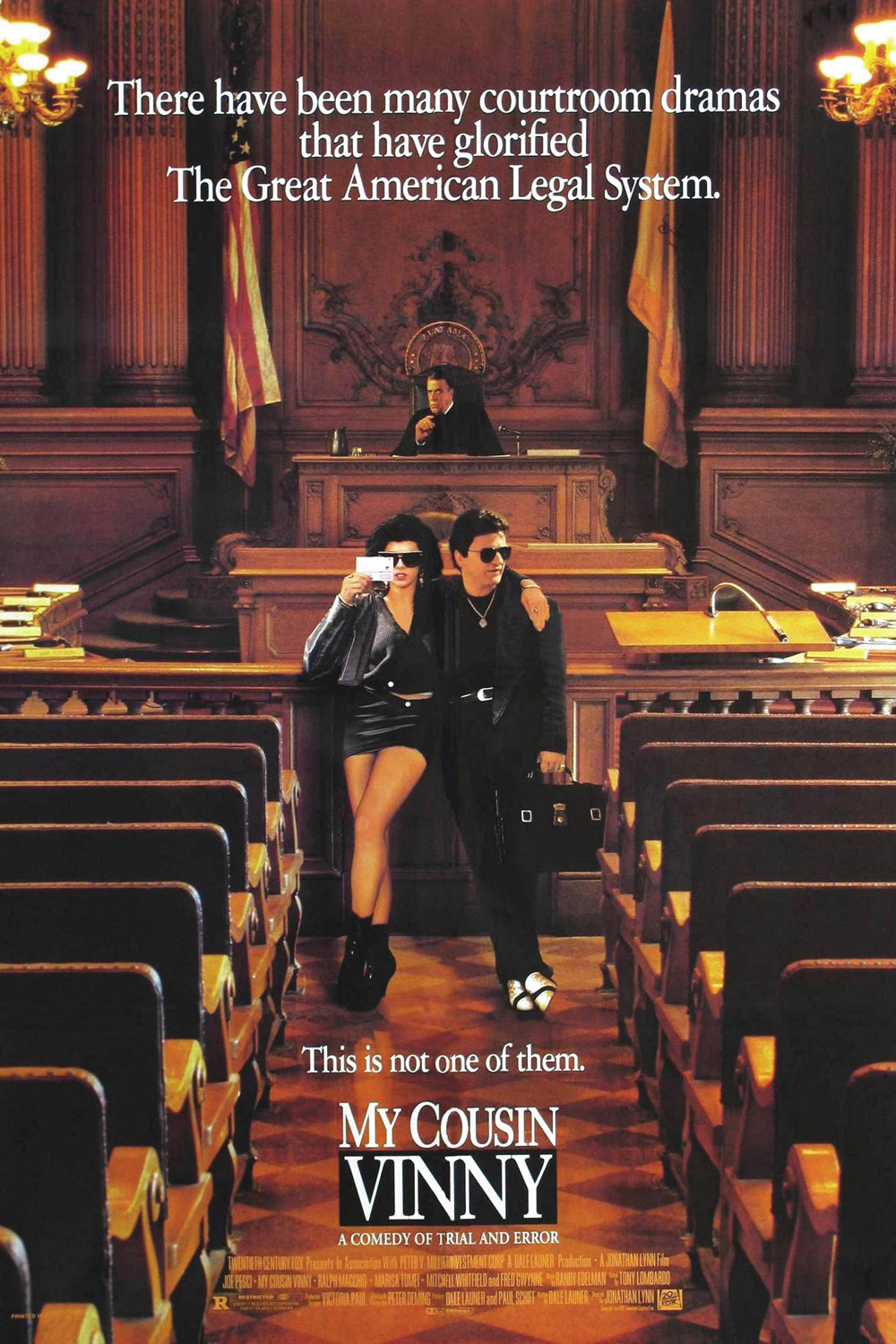
My Cousin Vinny (1992)

By Richard Winters

My Rating: 5 out of 10

4-Word Review: Don’t hire this lawyer.

A huge and much talked about hit upon its release in 1992, My Cousin Vinny is the story about two traveling college friends (Ralph Macchio, Mitchell Whitfield) who, upon going through Alabama, get implicated to the murder of a convenience store attendant that they did not commit. They’re only hope is calling up Macchio’s uncle Vinny from Brooklyn (Joe Pesci) who has only been practicing law for six weeks and has never tried a case.  Even worse is the fact that his brash Brooklyn sensibilities do not mesh well with the trial’s very strict, no-nonsense Judge (wonderfully played by Fred Gwynne in his last film role).

One thing that stood out right away with me was the way this film did not fall into age old stereotypes despite being in a setting that seemed ripe for it.  There is not a single mention of racism anywhere.  Instead the film seems to want to focus on a more contemporary Alabama where the African American characters are, by and large, on equal footing with the whites as well as having a white Sheriff who is not redneck, corrupt, or ignorant.  The two college kids also thankfully break rank from the typical Hollywood films of that era.  These kids are not the rowdy, partying, beer swilling, sex crazed teens that you usually see, but instead believable and most of all likable.  I found them to be so likable that I wished they were in the film more, unfortunately after the first twenty-five minutes they pretty much disappear until the very end, which I found disappointing.  Still it was nice seeing Macchio growing out of his Karate Kid role and looking a little more filled out and mature.

I also want to give mention to the excellent on-location shooting.  Although it was not actually filmed in Alabama, but instead the neighboring state of Georgia, it still nicely captures the look and feel of the south and it does it right from the start.  I have often said good on-location shooting (as opposed to the annoying Hollywood studio back-lot) can enhance just about any story and help create what’s almost like another character.  I have been to Alabama recently and enjoyed the many references to the red, muddy soil that is everywhere down there and the scene where the Pesci character gets his car stuck in it is great.

The comedy runs pretty well, but is much stronger at the start.  The conversations the boys have with the police are quite amusing as is Whitfield’s initial dialogue with the Pesci character who he doesn’t know is a lawyer and instead thinks he is a cellmate there to ‘break them in’.  I also enjoyed the running gag dealing with Vinny using his debating skills to try and ‘negotiate a settlement’ with a tough guy at a bar who refuses to pay up after losing a bet.

Unfortunately there is also a lot of comedy that does not work.  The running gag dealing with Vinny and his girlfriend constantly being awakened in the early morning hours by some unexpected noise at each of the places they stay at starts to get real redundant and silly.

There is also another segment featuring actor Austin Pendleton who plays one of the court appointed attorneys and, without warning or any logical explanation, starts to stutter terribly when he tries to give his opening argument.  I was genuinely shocked to see Pendleton take this part since he was a stutterer in real like and didn’t overcome the problem until he was well into his forties.  He even starred in a 1983 film entitled Talk to Me about a man coping with the affliction. Apparently Pendleton did protest the scene and even labeled it a ‘sick joke’, but eventually did it anyways because he needed the work, which was unfortunate because it comes off as being forced and uncomfortable.  Most lightweight comedies, which in the end this is, run about ninety minutes yet this film runs a hundred and twenty minutes, which is too long.  Had some of these so called ‘funny’ scenes been cut it would have shortened the film nicely and even strengthened it.

I should also mention Marisa Tomei who won the Oscar for best supporting actress as Pesci’s girlfriend.  Now her performance isn’t bad, but I didn’t see anything really outstanding about it either.  She spends most of the time wearing garish and gaudy outfits, speaking in a Brooklyn accent that borders on annoying, and playing the caricature of a ditzy girlfriend. Only at the end does she become a little more dimensional when she inexplicably displays some amazingly detailed knowledge about automobiles that for me just didn’t ring true.  I would have given the Oscar to Fred Gwynne, TV’s Herman Munster, as the judge. Some of his courtroom exchanges with the Pesci character are the best parts in the film.  I also really like Lane Smith in the role as the prosecutor. His performances are never flashy, but he is always reliable and gives his characters a nice, quiet dignity.  He is also a genuine southerner, so he fits into his role more easily.

The film is overall passable.  I had no idea how it was going to turn out and it kept me intrigued.  However, once the resolution was made and the mystery solved, I wasn’t completely satisfied.  I was hoping it would be like The Vanishing, the excellent 1988 film from the Netherlands, that went back and reenacted how it all took place.  It would have at least been nice had the film put in a little red herring at the beginning, so the viewer could have tried to figure it out themselves instead of just throwing in a wrap-up that seemed too convenient.

If you are fans of Joe Pesci then you’ll enjoy this movie a little bit more.  His performance as the volatile character in Goodfellas is so etched in my mind that I have a hard time adjusting to him in likable roles, or comedy.  However he manages to be quite engaging throughout.

My Rating: 5 out of 10 

Released: March 13, 1992 

Runtime: 2Hours 

Rated R 

Director: Jonathan Lynn 

Studio: 20th Century Fox 

Available: VHS, DVD, Blu-ray, Amazon Instant Video

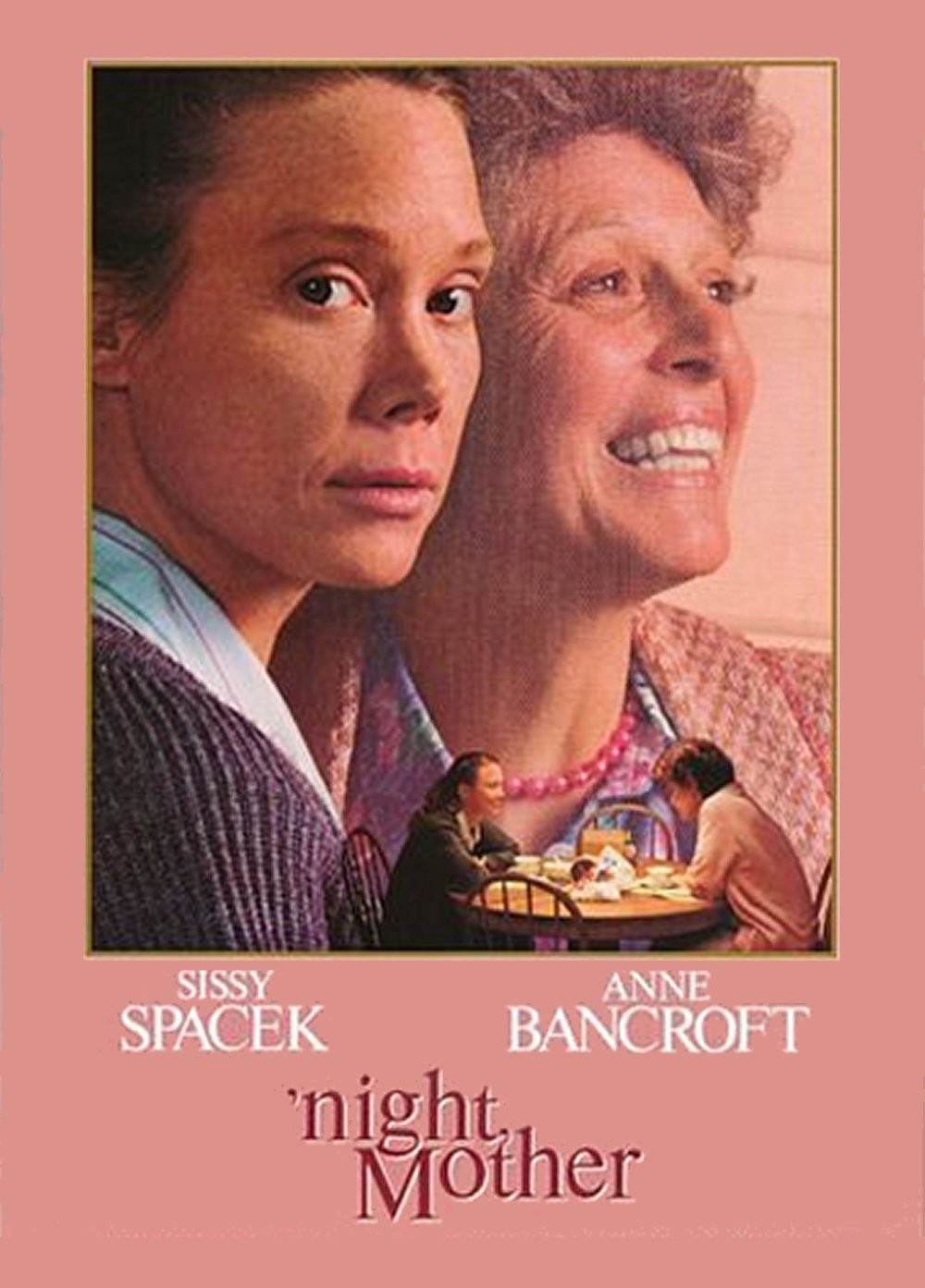
‘Night Mother (1986)

By Richard Winters

My Rating: 6 out of 10

4-Word Review: Please don’t kill yourself.

Jessie Cates (Sissy Spacek) informs her mother Thelma (Anne Bancroft) that she plans on killing herself during the night and her distraught mother spends the rest of the evening trying to convince her not to do it.

It is hard to imagine a more maudlin and static production. The film consists of just two people talking inside a small, isolated house with no cutaways, flashbacks, inventive camera angles, interesting scenery, music, or editing. Louis Malle once did a film entitled My Dinner with Andre that featured two men sitting at a table and filling the film’s entire runtime with one long conversation, but at least there the topics were fascinating while here it is depressing. I was expecting some profound intellectually stimulating talk dealing with the meaning of life much like the one in Igmar Bergman’s classic The Seventh Seal, but instead it is general and banal. Part of the problem is that the Thelma character lacks sophistication and is unable to debate Jessie on any type of deeper level. The result then is a rather rhetorical 95 minute banter revolving around Thelma pleading with Jessie not to do it ‘because she needs here’ while Jessie glibly replying ‘I can if I want to’. The screenplay, written by Marsha Norman, who also penned the play from which it is based, fails to deliver that lyrical, poetic quality of dialogue that most films based on stage plays seem to have.

I kept wondering what the point to this was.  We never seem to get to the bottom of what is bothering Jessie and only seem to skim the emotional surface. The film does not dig deep enough into the human psyche but should’ve as her issues here are rather derivative and typical. Her main complaints is that she suffers from epilepsy, which is now under control through medication, and she has gone through a painful divorce, but there a lot of people with similar problems and worse who are not trying to kill themselves. Most viewers might be disgusted and appalled at Jessie’s selfish nature and the way she callously ignores her mother’s emotional pleas and insists on moving forward with the suicide despite how clearly devastating it will be to her mother. In the end the film will probably leave most people cold and unable to connect to either character.

The one thing that does save the film and even makes it riveting to an extent is the brilliant performances. Although I could’ve done without her southern accent I still found Bancroft to be fantastic and was impressed with the way she hit all the right emotional peaks. Spacek is superb in every facet and I liked that she wore no make-up and her face had a natural and worn look.

Tom Moore’s direction has a few nice touches. I liked the opening shot showing the remoteness of the home and how the rugged western landscape helped accentuate the hard-living of the characters. The music although only played at the beginning at end has an ominous tone to it that effectively hits the mood and theme of the material.

Of course suicides are always an on-going issue and if this film had given some insight into it I would have given it more credit, but it really doesn’t. I was surprised that Aaron Spelling who was usually known for producing shallow, glitzy stuff like the TV-show ‘Dynasty’ was the producer here.

My Rating: 6 out of 10

Released: September 12, 1986

Runtime: 1Hour 35Minutes

Rated: PG-13

Director: Tom Moore

Studio: Universal

Available: VHS, DVD, Netflix streaming

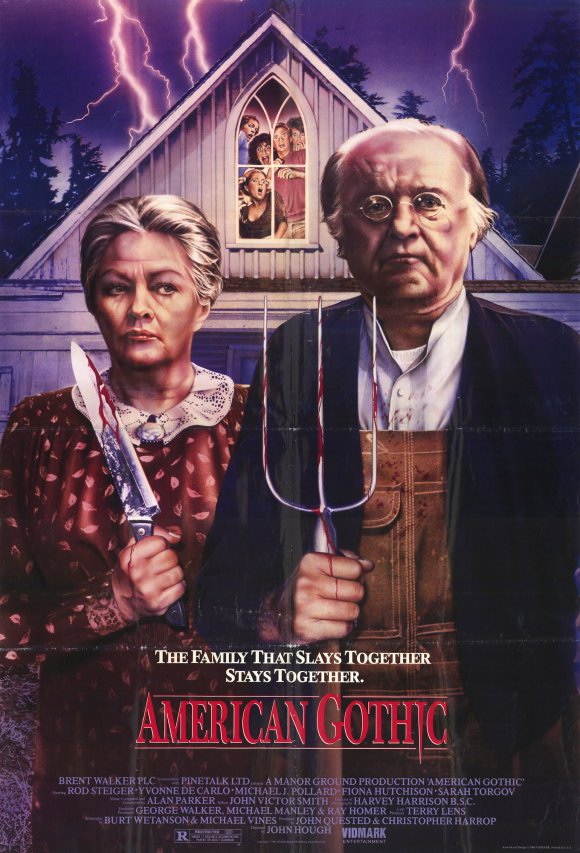
American Gothic (1988)

By Richard Winters

My Rating: 2 out of 10

4-Word Review: Rod needs to chill.

A group of young people must make an emergency landing on an off shore island when their single engine plane begins to malfunction. There they meet up with a strange family that seems locked in a bygone era and displays psychotic tendencies.

You would think a film with some big name stars of Rod Steiger, Yvonne De Carlo and Michael J. Pollard and an established director of John Hough would at least be passable, but this one is as bad as it gets. The goofy premise is taken too seriously and is too formulated. The characters are bland and stereotyped and the victims allow themselves to be killed off too easily with hardly any gore or special effects. There is also no suspense or scares. There isn’t even any good dark humor. It just plods on and on until you don’t care what happens.

It has a lot of similarities to Just Before Dawn and Mother’s Day. It even has the twist of having one of the survivors turn the tables and become the aggressor. Yet Mother’s Day had a lot more style and pizzazz.

Steiger is of course a very accomplished actor who has done a lot of good work, but seems miscast here. He should have injected more campiness into his part, but instead approaches it with his usual intensity. At the end he even gives out a loud primal scream of inner anguish much like the one he did in The Pawnbroker except here it is hollow and meaningless. Out of everyone De Carlo does the best.

The setting also becomes an issue. It has the word American in its title and yet was filmed entirely in British Columbia. Ma and Pa talk with southern type accents, but are surrounded by a northern landscape. The house is also a problem as it looks too neat and trim and like it was newly built. It would have been better had the building been taller and more foreboding and even displayed some decay or gothic style. The inside of the house doesn’t look like it’s been lived in and the furniture is nothing more than theatrical props.

Overall this is a pitiful attempt at horror movie making. It fails to be either offbeat or scary and only succeeds at becoming mind numbingly sterile.

My Rating: 2 out of 10

Released: May 13, 1988

Runtime: 1Hour 30Minutes

Rated R

Director: John Hough

Studio: Vidmark Entertainment

Available: VHS, DVD

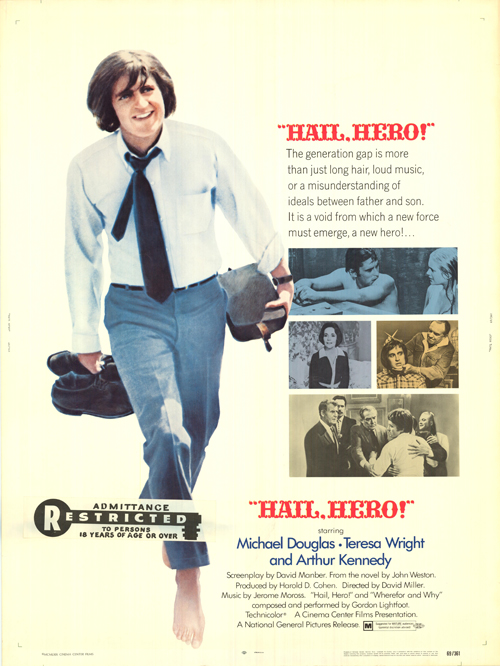
Hail, Hero! (1969)

By Richard Winters

My Rating: 5 out of 10

4-Word Review: Michael Douglas film debut.

Okay all you Michael Douglas fans out there, you know him, you love him, and you’ve seen all his movies, but what was his film debut?  I say this because I have known other fans of stars who are a bit vague when asked about early films of their favorite actors. I remember one lady who was in her 20’s, who I knew from work and professed to be a ‘huge’ Jack Nicholson fan, but when I asked her about some of his early films, which I had enjoyed including Five Easy Pieces, and King of the Marvin Gardens, she drew a complete blank. In fact she was not aware of any of the movies he did before The Shining. I had a similar experience with another lady friend I knew from a different job who professed to be a big Goldie Hawn fan and yet had no idea what film she had won the Academy Award for, which was in 1969 for Cactus Flower a movie that she hadn’t even heard of.  So I was curious how many Michael Douglas fans are actually aware of some of his early work. In fact this film, which was his first, was released when his future wife Catherine Zeta-Jones was only 11 days old.

It is the story of Carl Dixon (Douglas) who is an idealistic, peaceful young man that joins the army simply to please his conservative father (Arthur Kennedy). The film is a pleasant, even touching look at a someone learning to face the difficult and complex issues of adult life and realizing there are no easy answers. The movie doesn’t try to make any type of statement while carefully examining both sides of the issue. There isn’t any ‘bad guy’ here. The characters are real and multi-dimensional. The conversations and debates that they have are ones that went on in many households across the country at that time.

Douglas looks expectedly younger and initially I didn’t even recognize him. His hair is long, at least initially until his father cuts it, and his eyebrows are bushy and his voice much higher pitched. His performance is excellent and the  character his likable and engaging especially with the way he treats everyone with respect and is so generous that he gives his entire suitcase of clothes to a poor family in need.

Kennedy is perfect as the old-school father and my only complaint here is that I wished he had been in more scenes. Theresa Wright, as Carl’s mother, is okay, but she is not given enough screen-time either. She is also caught having an affair, but the film does not delve enough into this, but should have. Louise Latham is terrific giving one of the best performances of her career as a hermit-like woman living alone in a cave alongside the skeletal remains of an Indian baby.

There are some good scenes including Carl’s visit to a senior home where he comes face-to-face with the difficulties of aging as well as when he finds himself ready to strike someone at a party whom he does not agree with and realizing that violent tendencies lurk within anyone even those purporting to be pacifists. Yet the film fails to leave any lasting impression. The ending is weak and the story does not progress enough. The viewer is left feeling almost cheated because we are never shown how these characters evolved. In my opinion the material was insufficient for a feature film.

My Rating: 5 out of 10

Released: October 4, 1969

Runtime: 1Hour 40Minutes

Rated M

Director: David Miller

Studio: National General Pictures

Available: VHS