Category Archives: Movies with a rural setting

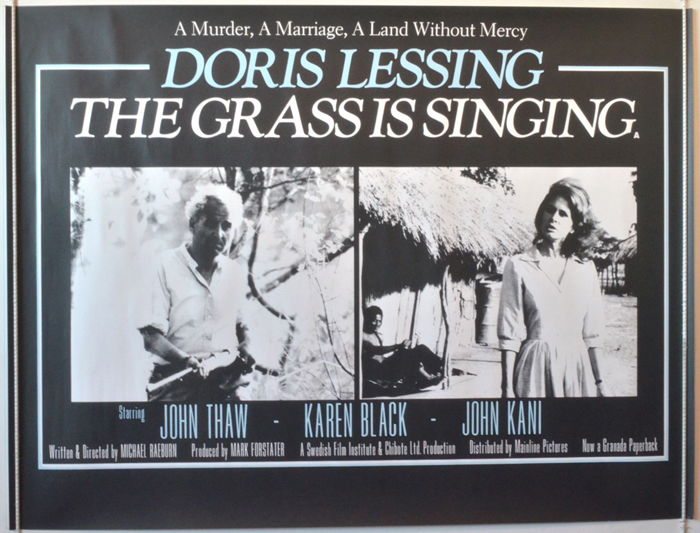
The Grass is Singing (1981)

the grass is singing 1

By Richard Winters

My Rating: 7 out of 10

4-Word Review: Farming isn’t her thing.

In memory of Karen Black who died on August 8th we will review on each Monday of this month an 80’s film that she starred in as well as a 70’s movie that she was in on Fridays. This film is based on the Doris Lessing novel and was filmed on-location in Zambia. The story centers on Mary a racist woman from South Africa who is bored with her job and lonely. She meets Richard (John Thaw) a simple man who becomes smitten with her. She is not as crazy about him but decides to accept his proposal of marriage simply as a way to escape her dreary existence and loneliness. He moves her to his farm where she finds the rigorous lifestyle difficult to adjust too. The isolation begins to wear on her already tightly wound temperament and eventually she begins to show erratic behaviors that become more disturbing and shocking.

The Zambia locations are captured in vivid style with a grainy film stock that makes it look like it were a documentary. The farm setting is indeed desolate and makes for great atmosphere. Director Michael Raeburn wisely refrains from using too much music and when he does he uses instrumentals from the native culture, which further elevates the film and gives it distinction.

The film stays pretty faithful to the novel and starts out in startling fashion with Mary being stabbed and bloodied on her backdoor step and then shifts back seven years where we see what lead up to it. The pace is slow, but involving and the characters are three-dimensional and believable. Mary’s breakdown happens in a deliberate and realistic fashion starting with little things that work into bigger ones. In the end you feel more sorry for her than frightened and thoroughly engulfed with her sad and pathetic circumstances.

This was Black’s last serious role before being quarantined in B-movie purgatory. This may also be one of her finest moments as she brings out the manipulative nature of the character quite well and I love the way she always seems to add quirky qualities to her parts. She also speaks with an authentic sounding South African accent.

Thaw is quite good in support and creates empathy from the viewer playing a very humble man looking for simple companionship with no idea what he was getting into.

There is some serious filmmaking going on here in a movie that makes some great points about life and human nature that is well worth checking out. The original theatrical release which is what I saw and able to obtain from a private collector runs a full 105 minutes. However, the American release which is available on DVD from Synergy Entertainment as well as Amazon Instant Video and goes under the title Killing Heat runs only 90 minutes and heavily edits out the explicit violence and nudity and has a narrative that is choppy and at times confusing.

My Rating: 7 out of 10

Alternate Title: Killing Heat (U.S. version)

Released: September 18, 1981

Runtime: 1Hour 45Minutes (Original Version)

Not Rated

Director: Michael Raeburn

Studio: Chibote

Available: VHS, DVD, Amazon Instant Video (as Killing Heat)
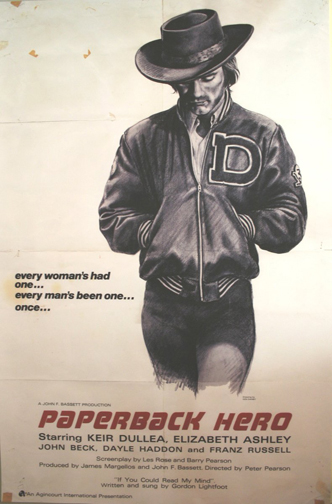
Paperback Hero (1973)

paperback hero

By Richard Winters

My Rating: 5 out of 10

4-Word Review: Big fish small pond.

Rick (Keir Dullea) is a hockey player living in a small town on the western plains of Canada. To pass his time he imagines he is a gunslinger in the old west and makes himself the self-imposed marshal of the community.  Outside of Sheriff Burdock (George R. Robertson) the other townsfolk considered it an amusing and otherwise harmless quirk. Then Rick learns that his hockey team will be disbanded and he will be without a job. He is given an opportunity for employment in nearby Saskatoon, but he refuses it feeling that he will lose his ‘mystique’ in the bigger city. Slowly the strains and pressures of his situation start to get to him and eventually it culminates in an old fashioned gunfight right in the center of town between him and the sheriff.

If the film gets one thing right it is in the recreation of small town life. Filmed on-location in Delisle, Saskatchewan director Peter Pearson gives the viewer a wonderful and vivid feel of the town. Just about all the sections of the hamlet are captured including the inside of abandoned buildings, trailer homes and farms as well as a couple of nice bird’s eye shots. The remoteness and flat wheat laden terrain brings to life the region in an almost stunning clarity. Having grown up in a small town not too terribly far from the Canadian border I can say that this film hits-the-mark in its portrayal of people in the Nordic region. All the little dramas that can go on between people locked in a remote local as well as the scenes done inside a dark and dingy bar that many times can constitute as the place to go for a ‘night-on-the-town’ is amusingly well played-out.

However, despite having the right flavor the film lacks direction. It was hard for me to get into this because all the scenes were random and not connected together by all that much. The plot is thin and made up if anything by a series of vignettes.  The main character is brass, egotistical, deluded and arrogant. He treats women like they are his property. He beats up one and considers it minor because her bruises are only the ‘size of a quarter’. He talks about getting turned on by one woman while making love to another and then is surprised when she gets upset with him. Having a film built around such an unlikable character is not entertaining or interesting especially when we are given no history to why he became the way he is.

Dullea does well in the lead and shows a lot more emotion and panache than one might expect from him especially when compared to his most famous role as the rather robotic Dave Bowman in 2001: A Space Odyssey. It is always fun to see Elizabeth Ashley and here she plays one of Rick’s love interests, but her role is small and rather thankless though she does get shown in a long and explicit nude scene.

My favorite was Dayle Haddon as the alluring Joanna. Haddon has retired from the acting profession years ago, but was at one time a fashion model and she looks gorgeous here. The scene that takes place in an abandoned house where she tells Rick off and shreds his deluded ego while doing it in a quiet whispery tone is the movie’s best moment.

The segment showing a big hockey brawl where fans jump out of the stands to get involved and even the ref gets bloodied is fun. I also liked the part where Rick takes Joanna on car ride through the wheat fields. The camera is hooked up to the bumper of the car so the viewer gets an up close experience of watching the wheat thrash before them at high speeds. The standoff at the very end in the center of town is also interesting, but the film takes too long to gel and the main character is such a turn-off that it hurts the good points and ultimately makes this a misfire.

The movie also features the Gordon Lightfoot’s song ‘If You Could Read My Mind’, which is a great a song, but it has been played so much on lite-rock stations that instead of getting the viewer more engrossed in the movie it instead takes them out of it. The film works hard to create a gritty appeal and for the most part succeeds, which is why having a long segment with the song played over it doesn’t work and I would have left it out.

My Rating: 5 out of 10

Released: September 21, 1973

Runtime: 1Hour 33Minutes

Rated R

Director: Peter Pearson

Studio: Alliance Film Distribution

Available: VHS, YouTube

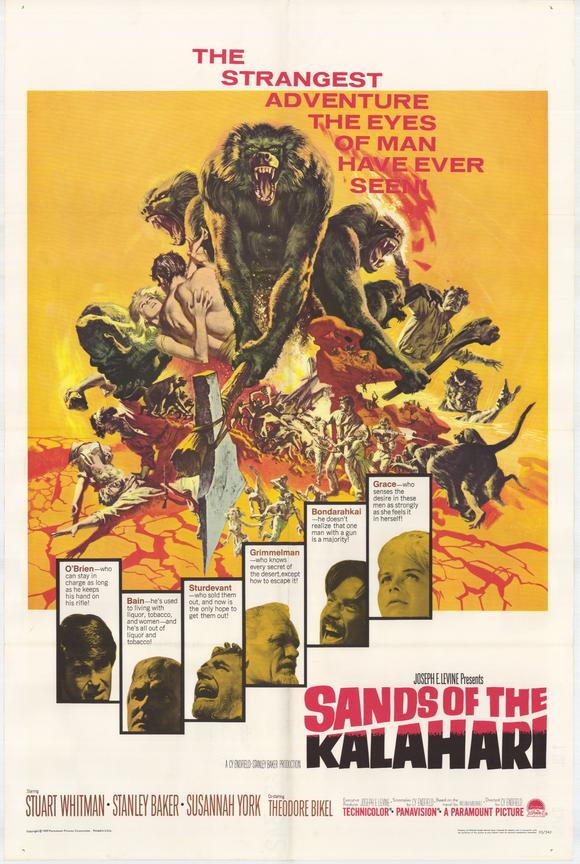
Sands of the Kalahari (1965)

sands of the kalahari

By Richard Winters

My Rating: 8 out of 10

4-Word Review: Stranded in the desert.

Based on the novel by William Mulvihill the story centers on a group of six individuals, five men and one woman, who fight to survive the blistering heat of the Kalahari Desert when their plane crashes after it’s struck by a large swath of locusts. Instead of working together as a team the group quickly disintegrates with infighting and tensions. The young and virile Brian (Stuart Whitman) who initially takes control of the situation starts to feel that his own survival would be heightened if there were less people needing food and water, so he decides to carefully eliminate them one-by-one, which leads to many interesting confrontations and a very unusual climactic finale.

Filmed on-location in Namibia the desert becomes its own character. The stunning sandy landscape is breathtaking and watching the characters walk along it under the crystal blue sky becomes almost awe-inspiring particularly during birds-eye view shots. The viewer feels like there are right there feeling the heat along with the rest of the characters. Writer/director Cy Endfield keeps things on an authentic level and stays for the most part faithful to the book with the exception of changing one of the characters who had been African American in the novel to Caucasian here. His use of actual animals is what impressed me the most particularly the baboons who become a major part of the story as well as seeing a live scorpion crawling up a man’s arm. The only real technical weakness is the cloud of locusts forming on the horizon, which looked like dust being sprayed on the plane’s windshield and when they started to splatter onto the window it looked more like scrambled eggs and not quite as impressive as I think the filmmaker’s had hoped.

I also had a bit of a problem with the Sturdevan character, which had been the plane’s pilot and is played by actor Nigel Davenport who attempts to rape Grace (Susannah York) after they had only been stranded in the desert for a day and a half. I felt this was too quick for people to so suddenly drop their civilized veneers and cave into their more animalistic urges. I could see this maybe occurring after being there for weeks or months, but I would think initially the urgency would be finding help and just plain surviving and sex being the last thing on anyone’s minds. This same issue occurs with Grace who becomes romantically attached to Brian and even professes her ‘love’ for him after only a couple of days, which again seemed too rushed. The romantic scenes make the film seem soap-opera like and gives it an unnecessary melodramatic feel that does nothing but bog down the pace.

Whitman whose career dissipated after the 60’s and was confined with less significant roles and films is memorable here. The character who comes onto the plane at the last second is initially big and brawny heroic and watching him devolve into a selfish anti-social man is interesting as are the scenes with him trapped in a hole. The segment where he throws a fire into a cave filled with baboons and then shoots the animals as they run out is quite startling. I also enjoyed York. She has always been a splendid actress, but here with her blonde hair matched against her red skin and torn dress looks genuinely sexy.

The one-on-one confrontations between the characters especially the one between Grimmelman (Harry Andrews) and Brian and then later between Brian, Grace and Mike (Stanley Baker) is what helps the film really stand-out. I would have liked it played-out a bit more, but the twist that comes at the end is indeed unexpected and leads to one of the more unusual climactic sequences you will ever see.

My Rating: 8 out of 10

Release: November 24, 1965

Runtime: 1Hour 59Minutes

Not Rated

Director: Cy Endfield

Studio: Paramount

Available: DVD, Amazon Instant Video 

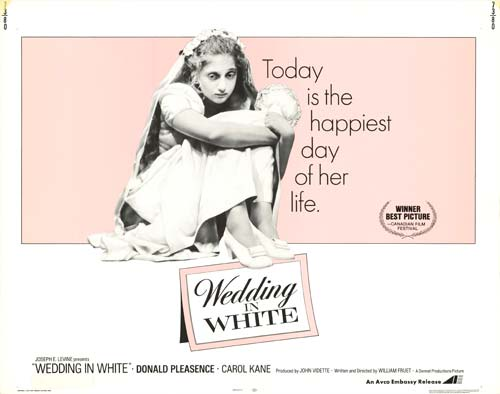
Wedding in White (1972)

wedding in white 1

By Richard Winters

My Rating: 8 out of 10

4-Word Review: Ending is a kicker.

Jeannie (Carol Kane) is a shy 16-year-old girl living in a small, bleak Canadian town just after the war who is raped by her older brother’s army buddy. Her parents (Donald Pleasance, Doris Petrie) respond as if it is her fault and resort to some extreme even shocking measures in order to ‘save the family honor’.

This is a solid little drama with good scene construction. The pacing is deliberate and an ending that really packs a wallop. The sets and location look authentic for the period and the characters are believable. Jeannie’s friend Sara (Christine Thomas) seems like a very typical teenager no matter what time period and her interactions with Jeannie show the realities of teenage friendships and makes for an interesting sidelight from the main story.

Kane is impressive acting in a style I’ve never seen from her before. Pleasance is solid as usual and his Canadian accent sounds almost authentic, but it is a bit overdone. Petrie is also quite good as the mother. She really brings to surface a character that is so cloistered she is unable to make any clear decision for herself.

The story itself is the real strong point. It is convincing, insightful, and well-crafted and brings out a sort of darkness and ‘evil’ that can come from ‘wholesome small towns’ and ‘God fearing people’. It shows how having a rigid morality can sometimes create a sort of immorality and also brings to light the lies people wish to live by and how at times it can cloud their better judgment, but most of all it’s a study at  how easily sensitive, fragile people can get sucked away and how sadly common it is.

This is a film designed to leave you feeling shocked, angered, saddened, and maybe even a little repulsed. This is quality viewing that deserves more attention.

My Rating: 8 out of 10

Released: October 20, 1972

Runtime: 1Hour 43Minutes

Rated R

Director: William Fruet

Studio: Cinepix

Available: DVD

Death Weekend (1976)

death weekend

By Richard Winters

My Rating: 3 out of 10

4-Word Review: She can defend herself.

This Canadian thriller, which is loosely based on actual events deals with a rich playboy named Harry (Chuck Shamata) who invites Diane (Brenda Vaccaro) who is also a model to spend the weekend with him at his isolated lakeside cabin that is miles from anywhere. On their way there they run into a biker gang whose leader (played by Don Stroud) takes an intense disliking to Harry. The gang tracks the two down at their cabin where they proceed to terrorize them before eventually killing Harry and forcing Diane to defend herself alone, which she does valiantly.

In a way this is a poor man’s version of I Spit on Your Grave or Straw Dogs, but not nearly as effective. For one the violent scenes aren’t very intense. This is due mainly to the fact that writer/director William Fruet keeps the camera too removed from the action and never once uses a hand held. There is also no gore as Fruet always cuts away just before anything happens and what little you do see looks tacky. Of course a film doesn’t have to be gory to be scary or intense, but if it is going to have this type of violent theme then it should at least equal it in style. The tension also ebbs and flows and the four hoodlums are too dumb and seem like cardboard cutout caricatures that possess no human qualities whatsoever.
The Harry character does allow for some added dimension, which helps and hurts. I liked the way he sees himself as this ‘refined’ gentlemen and yet views women in the same Neanderthal way as the thugs. He brags of having money and power, but when that gets stripped away from him he becomes amazingly spineless. This makes for a good commentary of the rich and successful, but unfortunately also turns him into being too much of a jerk and when the bad guys proceed to tear his place apart we are not ‘horrified’ at all, but instead enjoy seeing it.

There are actually a few good elements one of which is the music score, which effectively creates an ominous feeling. It was also filmed in Ontario Canada during the autumn and the desolate, bleak landscape helps match the bleakness of the situation and characters. I also loved the morning mist captured during the final chase sequence that gives things a very eerie look. There is also a well-staged car chase at the beginning that was done at high speeds and features some great stunt driving.

The film is saved somewhat by Vaccaro’s interesting performance as a victim. She is independent and self-sufficient and refuses to allow herself to be seen or used as a sex object. This goes along with the film’s overall theme which seems to run on the emergence of the woman in a man’s world and the basic redefining of the female role in society. Yet I felt it would have worked better had the character harbored the old female traits at the beginning and then had these new traits come out as the film progressed.

death weekend

My Rating: 3 out of 10

Alternate Title: House by the Lake

Released: September 17, 1976

Runtime: 1Hour 27Minutes

Rated R

Director: William Fruet

Studio: American International Pictures

Available: VHS

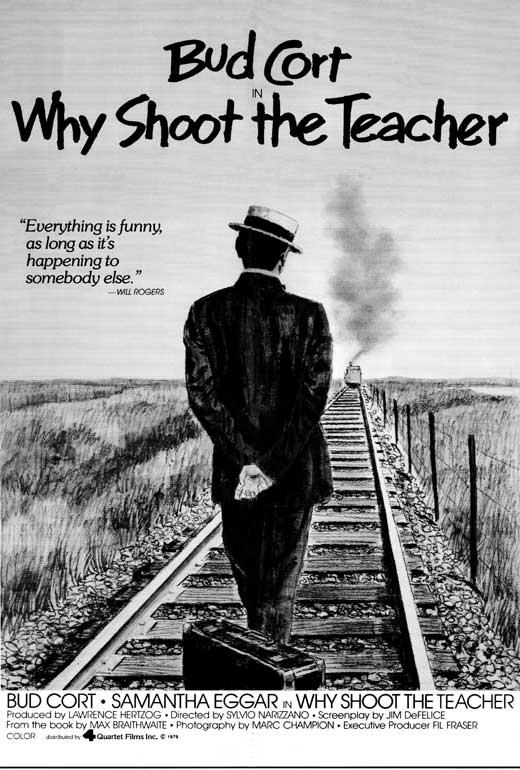
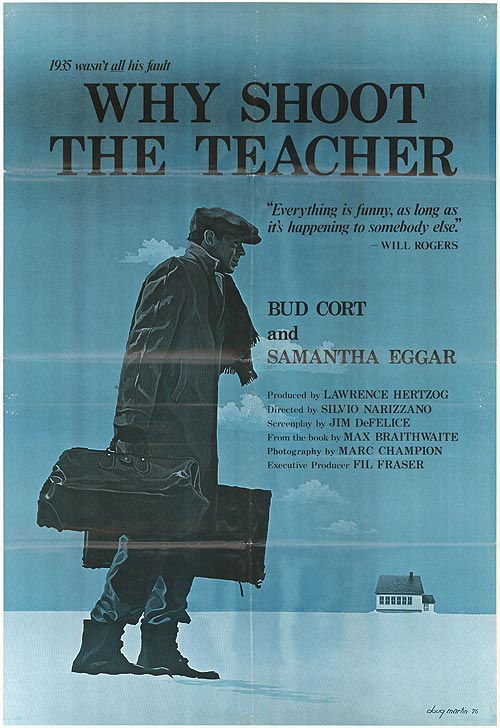
Why Shoot the Teacher? (1977)

why shoot the teacher 2

By Richard Winters

My Rating: 8 out of 10

4-Word Review: Not a good job.

If you hate your job then watching the escapades of Max Brown (Bud Cort) dealing with his should make you feel a lot better about yours, or even lucky. The setting is 1935 and Max has traveled to an isolated farming community in Saskatchewan Canada in order to live out his dream of being a school teacher. The problem is that he must live in the dingy basement of the school that has no running water and an outhouse that gets regularly overturned by the rowdy school children, sometimes with Max in it, and he is only paid $20 dollars a month for his efforts, which even back then was a paltry amount. What is worse is that the district can’t even afford to pay him so instead gives him promissory notes and forces him to be dependent on the generosity of the townspeople for his food. Since he had to borrow money for his train ride up there he is unable to go back and forced to spend the harsh Canadian winter all alone while dealing with difficult students and indifferent parents and adults.

Cort really shines. The fact that through all his diversity he still remains civil and upbeat makes the character quite appealing even though he does evolve and at times compromises from his initial ideals. The best example of this is when he eventually, despite his initial reluctance, uses the strap on one of the older bigger students while the rest of the school children watch through the school windows. Although Cort is best known for his starring role in Harold and Maude I’d actually say this is his best all-around performance.

Samantha Eggar another under-appreciated and underused performer is terrific in support as Alice Field a woman transplanted from England who like with Max finds herself alienated and unconditioned to the harsh climate. She also has a really amusing line when she states “Canada is a nice country…sometimes…in the spring.”

Filmed on-location in the tiny town of Hanna, Alberta the sprawling wheat fields create a tremendous sense of isolation as well as a distinctive sense of natural beauty. The story is filmed during all three seasons, which makes the viewer feel like they are battling the rigorous Nordic climate right alongside Max. One of the funniest moments is when the word ‘Spring’ is flashed on the screen while a raging blizzard goes on behind it making Canada one of the few places that can make Minnesota, where I am originally from, seem like a mild climate.

The film is wonderfully vivid and creates a rich multi-textured tapestry of life on the prairie. By keeping everything on a realistic level it helps recreate what life must have been like for a lot of rural school teachers during the period, which is what makes it so fascinating. The film’s faded washed-out color and archaic low budget technical approach only helps to accentuate the look and feel of the period. There are shades of Wake in Fright here that also dealt with a man teaching school in an isolated school house while battling the elements and I found it interesting to note that Ted Kotcheff who was the director of that film was listed as a production consultant on this one.

My only complaint about the film was the misleading title. There is no shooting of any kind of the teacher, or even any talk of it. Why they came up with that title, which is based on the book with the same title is a mystery. Unfortunately it may give some people the idea that this is a violent film when nothing could be further from the truth and may turn-off potential viewers from enjoying this endearing slice-of-life comedy/drama.

why shoot the teacher 1

My Rating: 8 out of 10

Released: June 23, 1977

Runtime: 1Hour 39Minutes

Rated PG

Director: Silvio Narizzano

Studio: Lancer Productions Limited

Available: VHS, DVD, Amazon Instant Video, YouTube

The Fool Killer (1965)

fool killer

By Richard Winters

My Rating: 6 out of 10

4-Word Review: Kid roams the countryside.

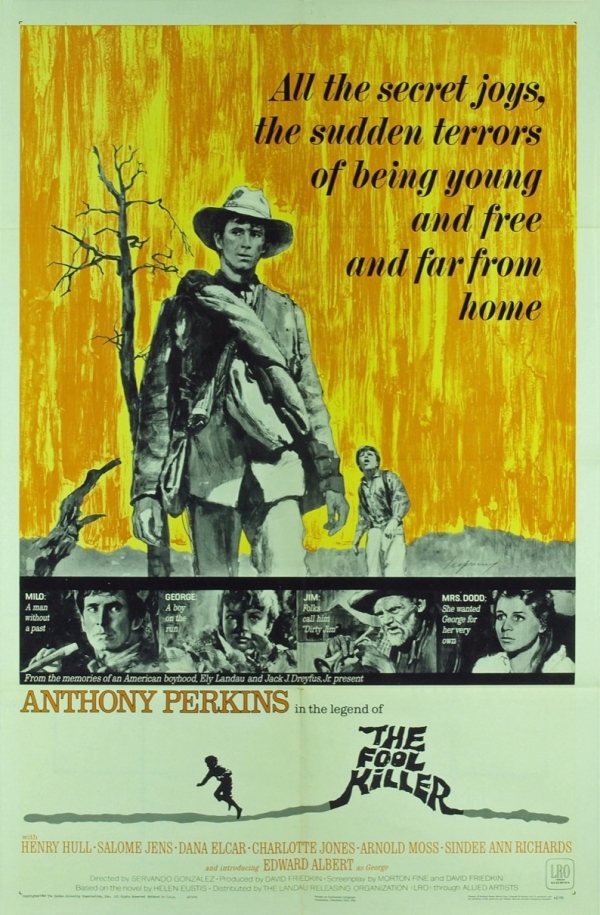
George Mellish (Edward Albert) is a 12-year-old boy who runs away from home after a particularly harsh beating at the hands of his foster parents. As he roams the Tennessee countryside he meets Dirty Jim (Henry Hull) an old man who takes him into his rundown home and fills his head with all sorts of stories about an eight foot ax-wielding man who kills people he deems to be foolish. After a bout of illness George runs away from Jim and late one night meets Milo (Anthony Perkins) a loner who carries an ax and acts strangely. Initially George thinks that he is ‘the fool killer’ Jim described, but the two soon become friends even though strange ax murders begin to occur everywhere they go.

Servando Gonzalez’s direction is excellent and the one thing that keeps this otherwise thin story intriguing. This was his only English language film and he uses a variety of different camera angles and editing styles to create a sort of hypnotic effect. The on-location shooting is vivid and their ability to recreate the look and feel of the late 1800’s is solid including having the characters occasionally speak with poor grammar, which helps with the authenticity.

The only thing about Gonzalez’s direction that I did not like is where they have a nighttime scene that was clearly filmed in the daytime, but done with a darkened lens to ‘fool’ the viewer into thinking it is night. This process has been done many times in the past, but it never works. Even with the dark lens the sky is too bright and you are unable to see any stars. I remember this done a few times on the old ‘Brady Bunch’ TV-show and I always found it disconcerting. The reason is usually because by law child performers are not allowed to work past a certain late hour, so if the script calls for a nighttime scene they try to compensate using this trick, but it always looks tacky. My solution would be to get the parent’s permission to allow the young performer to work late for one night or alter the script to have the scene done in the daytime.

Despite some good production values and an interesting narrative the story itself, based on a novel by Helen Eustis, is limp and doesn’t have enough action. The middle section, which features a lot of conversations between Milo and George, gets boring and the pace comes to a screeching halt. The George character also gets a bit annoying. I realize he is a young and the story takes place in a more innocent era, but the kid falls too easily for anything and everything he is told and seems to have no center, which eventually becomes off-putting.

For what it is worth Albert is good in the lead in what was his film debut and so is Perkins although with this he was risking getting typecast. I thought Henry Hull in one of his last roles was highly engaging and I also really liked Arnold Moss as a bombastic preacher giving a fiery sermon under a tent during a religious revival. Since the movie otherwise does not have much happening this scene tends to be pretty electrifying and vivid particularly the looks on the people’s faces as he preaches to them.

There is a sort-of surprise ending, but it is not that big of a deal and most viewers will probably see it coming long before it happens and they might also say to themselves ‘I sat through two hours of this just for that!’ as well. If the story had been a little richer with more twists or a subplot this might have been memorable, but as it is the final result is empty.

My Rating: 6 out of 10

Released: April 28, 1965

Runtime: 1Hour 39Minutes

Not Rated

Director: Servando Gonzalez

Studio: Allied Artists Pictures

Available: VHS

Alice’s Restaurant (1969)

alices resturaunt 2

By Richard Winters

My Rating: 7 out of 10

4-Word Review: Nobody likes the draft.

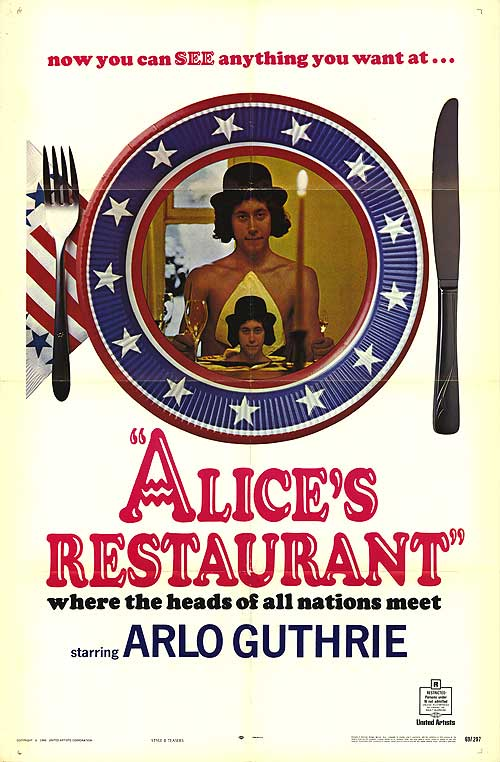
Attempt at making a movie out of Arlo Guthrie’s famous 18-minute song, which in itself was based on actual events succeeds for the most part although it seems to be biting off little more than it can chew. Pat Quinn plays Alice a middle-aged woman who along with her husband Ray (James Broderick) buys a church and turns it into a hippie retreat as well as a restaurant. Arlo plays himself and a friend of the couple who helps them in their endeavor. Things go well for a while, but then infighting, the draft, the death of some of the members, and basic overall disorganization do it all in.

Although Guthrie’s song has a bouncy, upbeat, and humorous quality to it the movie works in an opposite fashion. There are a lot of long dramatic takes with a tone that is overall downbeat and depressing. To some extent it succeeds at giving the viewer a vivid look at the late 60’s experience, but compared to the song it seems to be a bit of a letdown. However, there are still some great moments that will connect with you on a purely emotional level. One of them is seeing legendary folk singer Pete Seeger and Arlo playing a song for Arlo’s bedridden father Woody (Joseph Boley) and another includes the sights and sounds of an outdoor wintry funeral for one of their troubled friends.

There are some good comedic moments, but they all come pretty much in the second half making the film seem a bit disjointed and almost like two films rolled into one. The best moments in this area include Arlo’s attempts at dumping out garbage, which features a lot of good quick edits as well as the actual Officer William Obanhein mentioned in the song. Arlo’s army physical is also quite funny especially his experiences in the ‘Group W’ room, which also has an early appearance by character actor M. Emmet Walsh who talks so fast that he becomes incoherent.

The idea of casting Arlo in the lead works to some extent. Obviously the presence in his own story makes it more authentic, but he also seems too detached and shows little if any emotional range. He also looks incredibly young almost like he is only 14.

It is Broderick who comes off best and this is easily his best performance of his otherwise sporadic career. He seems light years away from the more conservative, fatherly figure that he played in the 70’s TV-show ‘Family’ and the fact that the character here is a middle-aged man trying to submerge himself with the youth movement while displaying obvious frailties in the process makes him fascinating to watch and help give the film an added layer.

When I first saw this film years ago I came away feeling that it was too downbeat and disjointed, but upon second viewing I have a greater appreciation for it. It seems now more prophetic and forewarning to the beginning of the end of the hippie movement and how their carefree youthful ideals simply weren’t going to survive amidst the harsh, practical realities of the world that it was in. The long, continuous shot of Alice’s sad, forlorn expression seen at the very end seems to be conveying this and thus makes this movie less of a relic and more perceptive than most people may realize.

My Rating: 7 out of 10

Released: August 20, 1969

Runtime: 1Hour 51Minutes

Rated R

Director: Arthur Penn

Studio: United Artists

Available: VHS, DVD, Amazon Instant Video

Chino (1973)

chino 2

By Richard Winters

My Rating: 3 out of 10

4-Word Review: Chuck and the kid.

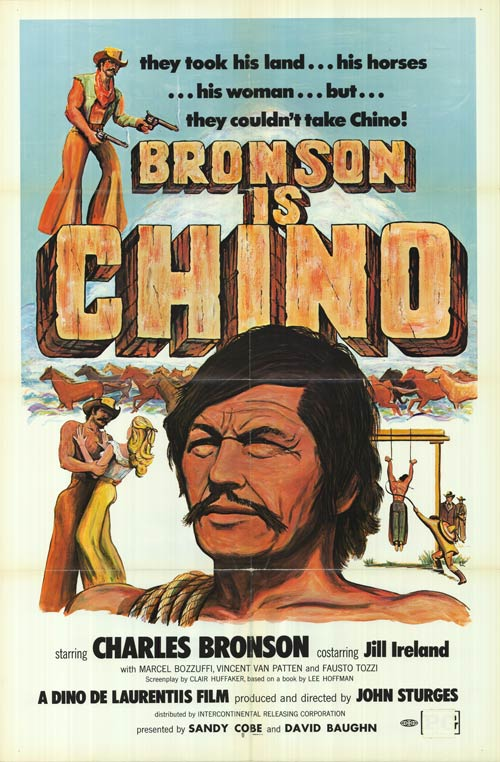
Jamie (Vincent Van Patten) is a teen runaway in the old west that comes upon an isolated horse ranch run by Chino (Charles Bronson) who is ostracized by the locals for being a ‘half-breed’.  Chino reluctantly takes the boy under his wings and teaches him about how to take care of horses, but neither of them can completely escape the racism and hatred around them.

Filmed in Spain the rustic countryside has a certain visual appeal and the low-key music is a perfect score for this type of western. There is a barroom brawl and a shootout at the end, but overall this is standard stuff with little to help make it stand out. Everything this movie has to offer you’ve seen before and in most cases done better. That is not to say it is a bad movie, but it is lacking in imagination and seems content to simply borrow from an already overused formula. While the pacing isn’t exactly slow it isn’t compelling either. The characterizations, plot, and dialogue are held at the most simplistic level and if it weren’t for a brief bit of nudity by an attractive native woman I would almost say this thing was aimed solely for kids.

Bronson doesn’t show much range of emotion here and comes off in the wooden way his critics have always accused him of although he is still good in the action sequences. Jill Ireland’s appearance helps add a bit of life to the proceedings and the antagonistic banter that the two share while he tries to train her to ride a horse is fun to a minor extent as it the part where she walks in on him as he is standing buck-naked in a bathtub. However, having them fall in love so quickly and then want to get married is rushed and forced.

It is fun seeing Vincent Van Patten as a young teen, but his interaction with Bronson is dull. Their eventual ‘bonding’ is formulaic and clichéd and only helps in cementing this as a forgettable, pointless, low-budget foray.

The real stars of the picture are the horses that show much more of a screen presence than their human counterparts. In fact during the first half you see more of them than the people, which is just as well. There is even a shot showing two of them mating, which is the film’s sole unique moment and for some possibly even the highpoint.

My Rating: 3 out of 10

Released: September 14, 1973

Runtime: 1Hour 37Minutes

Rated PG

Director: John Sturges

Studio: Intercontinental Releasing Corporation

Available: DVD, Amazon Instant Video

The Mosquito Coast (1986)

mosquito coast 2

By Richard Winters

My Rating: 7 out of 10

4-Word Review: Moving to the jungle.

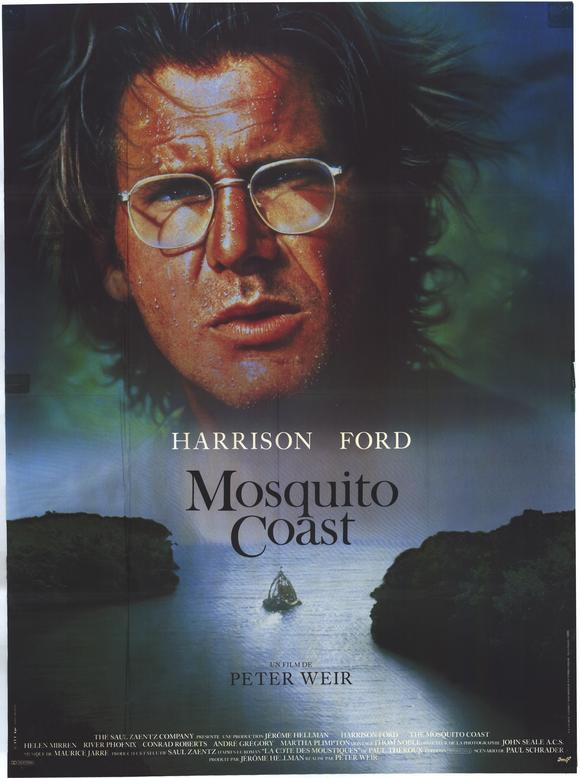
Allie Fox (Harrison Ford) is a disgruntled, eccentric, and angry inventor who feels that the United States has lost its soul. When his new ice making invention is not met with the enthusiasm that he expects he decides to move to the jungles of Central America and start a whole new society of his own in his own vision while taking his wife and four kids with him.

Filmed mostly in the country of Belize Director Peter Weir does a terrific job of capturing the flavor of the region. The plot progresses in a slow linear fashion making the viewer feel that they are traveling along and experiencing the same things right along with the characters. I found myself more entranced with the unique sounds of the exotic birds and insects of the region than the visuals. There are definite shades of Werner Herzog’s Fitzcarraldo and Sam Peckinpah’s Ballad of Cable Hogue were we watch a man verging on sheer madness build a town from nothing while injecting his control and passion on all those around him.

Watching Allie’s vision and town come to life is fascinating and satisfying, which makes up most of the film’s first hour. However, the second hour deals with his eventual self-destruction and watching the whole place go up literally in flames and due mainly to his self-absorbed arrogant nature is rather depression and agonizing to go through. Having the man turn into an out-of-control tyrant that alienates those around him even his own family is telegraphed from the very beginning. Instead of being an insightful character study it is instead more like a draining experience that makes the viewer feel as exhausted and run over as Allie’s beleaguered family.

Helen Mirren’s character as the mother is poorly defined and becomes rather frustrating in the process. She seems like an intelligent woman with sufficient self-esteem, so it became baffling to me why she would go along with this nut of a husband and follow him loyally on all of his bizarre tangents. She does finally have an emotional breakdown of sorts near the end, but I felt that should have occurred way earlier like before they even left on their crazy journey. By remaining so passive and compliant to Allie and towing her four young children along with it made me almost believe that she was crazier than he was. Some may argue that she was ‘madly in-love’ with the man and therefore overlooked his many personality flaws, but it seemed to be taking that concept too much to the extreme.

River Phoenix and Jadrien Steele are excellent as Allie’s two sons. Both have amazingly expressive faces and the viewer finds themselves sharing most of their empathy with them. Watching them start out as idolizing their father and then learning to hate him only to grieve for him at the end is touching. My only complaint is the voice-over narration by Phoenix, which to me came off as unnecessary and heavy-handed.

Ford took a risky career move by playing a character that is not too likable, but I applaud his decision. A true actor takes roles that demand going out of the safety zone and for the most part he succeeds. I liked how he brings a certain level of humor to the otherwise abrasive character particularly when he goes on long and uncontrolled rants to the natives while they are helping to build his town and many respond with lost looks on their faces while he talks to them. My favorite part is when he lectures a young boy about America’s inflation while being drowned out by the noise of a chainsaw that he is using. . I realize the scar on his chin is from a car accident that he had in the 60’s, but there were so many close-ups of his face and you see it so vividly that I felt there should have been some explanation for it written into the script, which has been done in some of his other films.

Andre Greagory is fun as the missionary who comes to odds with the opinionated Allie. He supplies just the right balance of menace and humor to the role. The televised sermon that he gives while using props is funny. It is fun to see Butterfly McQueen in her last movie role as well as spotting a young Jason Alexander as a hardware store clerk. Martha Plimpton has a nice sarcastic way about her as River’s potential girlfriend and it is good to see a teen love interest that has more of a plain look and not some model taken straight off the cover of Seventeen Magazine.

The idea of showing how modern day suburbia has destroyed the rugged individualist, but how trying to rough it in the wilderness could pretty much end in the same way is a good one. However, the movie tends to be too downbeat and unbalanced. It is based on the Paul Theroux novel, which I suspect is probably better.

My Rating: 7 out of 10

Released: November 26, 1986

Runtime: 1Hour 57Minutes

Rated PG

Director: Peter Weir

Studio: Warner Brothers

Available: VHS, DVD, Amazon Instant Video