Category Archives: Movies with a rural setting

Shock Waves (1977)

shock waves 3

By Richard Winters

My Rating: 2 out of 10

4-Word Review: Zombie soldiers inhabit island.

During WWII a Nazi commandment experimented with the supernatural by taking dead soldiers and turning them into zombies who would become killing machines that could not be taken down and impossible to destroy. When the war ended a lone SS Commander (Peter Cushing) took these zombies to an isolated island where he hoped to destroy them, but instead they became more powerful. When some castaways from a waterlogged boat arrive at the island they are greeted by these zombies who waste no time in returning to their killing ways.

The film starts out with promise and the idea has potential, but the film reverts too much to a pedestrian narrative that bogs down the action and turns it into a bore. The dialogue is banal and the characters annoying. The film would’ve worked much better had it taken a Dario Argento approach where the focus stayed solely on mood, imagery and a pounding music score while completely scrapping the dull characterizations altogether. In fact having only one or two people make it to the island would’ve been perfect as the rest of the supporting cast seem better suited for a pathetic B-comedy.

shock waves

The zombies aren’t all that interesting either. The shot showing one of them walking on the ocean bottom without any breathing apparatus was impressive, but otherwise they spend the majority of time simply lurking around in the backdrop. They can also easily be killed by having the shaded goggles that they wear taken off, which isn’t too exciting. Having the Cushing character describe their origin even though it had already been explained at the beginning by a narrator was unnecessary and in many ways no explanation or only supplying one at the very end would’ve made it creepier.

Veteran character actors John Carradine and Cushing both made $5,000 for their efforts, but their presence in both cases was not needed. Brooke Adams is good in her first credited speaking role in a film, but the rest of the cast came off like amateurs and Buck Henry lookalike Jack Davidson seemed like he had walked onto the wrong movie altogether.

Shot in 1975 the abandoned hotel on an island setting adds a bit of ambience, but overall it’s a wasted effort. The scares, tension and special effects are all quite minimal and the story’s original elements become overshadowed by a flat and unimaginative script.

shock waves 2

My Rating: 2 out of 10

Released: July 15, 1977

Runtime: 1Hour 24Minutes

Rated PG

Director: Ken Weiderhorn

Studio: Zopix Company

Available: VHS, DVD, Blu-ray, Amazon Instant Video
Deadly Blessing (1981)

deadly blessing

By Richard Winters

My Rating: 5 out of 10

4-Word Review: Murder in bible country.

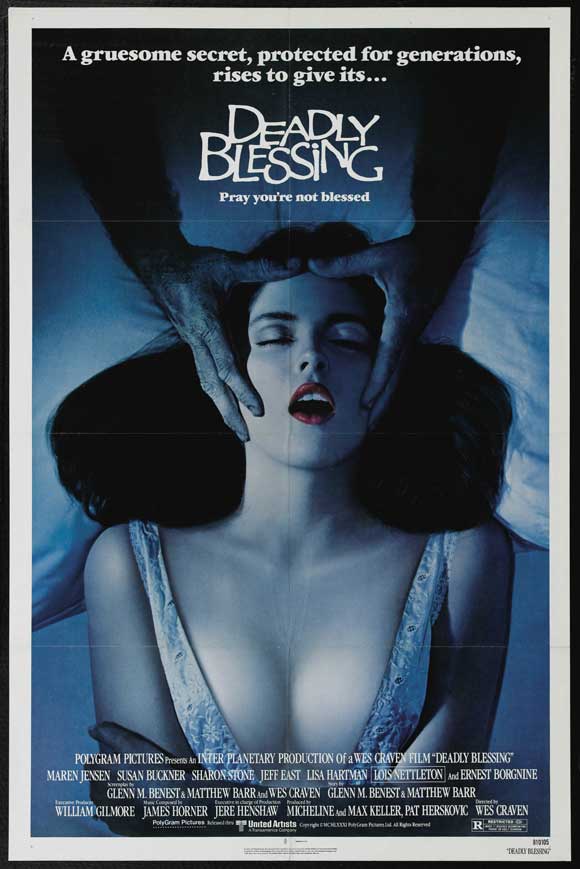
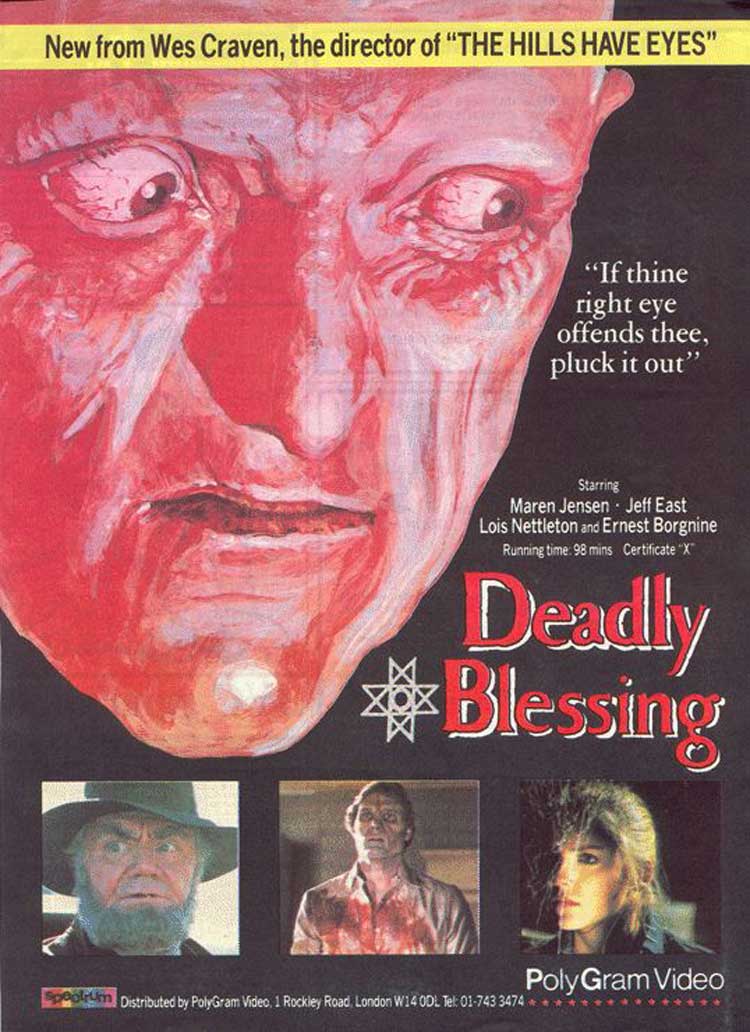
When her husband is killed in a mysterious tractor accident Martha (Maren Jensen) must try to forge on alone while living on an isolated farm surrounded by a religious sect known as The Hittites who show great disdain towards her due to the fact that she is not one of them. Lana and Vicky (Sharon Stone, Susan Buckner) are two of her friends who come to visit and offer solace. Soon more deaths and strange events begin to occur convincing them that the feared incubus, which is a male demon who descends onto female victims as they sleep, may soon be approaching.

This low budget foray, which was filmed in both Ohio and Texas and directed by Wes Craven, is competent enough to hold the viewer’s attention despite a convoluted story that goes on longer than it should. The best part of the film is its female cast, which to date marks the last acting role for both Jensen and Buckner as well as the first speaking part for Stone. Jensen, whose nude scenes were done by a body double, is okay, but Stone is the better actress and looks just as beautiful today as she did back then. In case you thought that actors didn’t earn their pay she certainly does here by allowing a live spider, albeit with its teeth removed, to fall into her mouth during a creepy nightmare segment that I’m not sure I would’ve been up to myself. The film also features Lisa Hartman and the ageless Lois Nettleton as her mother.

The shocks are trite and the creepiness at only a minimum. However, the segment where a large snake crawls into the bathtub while Jensen is in it had me creeped out and the scene involving Buckner having her car set on fire while she is still inside is good too, but both of these segments are similar to ones that Craven used in his later films making me believe that his horror concepts had a definite limit.

The Hittites, which are presumably so strict that they make the Amish look like ‘swingers’, are too one-dimensional and their leader, which gets played stoically by Ernest Borgnine, seems unusually hateful.  I can’t say that there aren’t religious sect leaders that are like him, but I don’t believe they would be so outwardly hostile to people from outside his group and would try to put on more of a kindly façade. I also thought the idea of the Buckner character starting a relationship with one of the Hittite boys, which is played by Jeff East, was unrealistic as they came from such vastly different backgrounds that trying to form any lasting bond or connection would be expectedly slim.

Michael Berryman as one of the more aggressive sect members gives an energetic performance and the fact that Craven advertises another one of his other projects, the TV-Movie Summer of Fear, on a theater marquee during a segment shot in the town, deserves a few merits, but what I really liked was the completely unexpected surprise ending that helps the film rise above the usual ‘80s horror and was something that was forced onto Craven by the producers and not actually of his own devising.

deadly blessing 2

My Rating: 5 out of 10

Released: August 14, 1981

Runtime: 1Hour 42Minutes

Rated R

Director: Wes Craven

Studio: United Artists

Available: VHS, DVD, Blu-ray, Amazon Instant Video
Lovin’ Molly (1974)

lovin molly

By Richard Winters

My Rating: 4 out of 10

4-Word Review: Two men one woman.

Molly (Blythe Danner) is a free-spirited woman living in a small Texas town during the 1920’s. Gid (Anthony Perkins) and Johnny (Beau Bridges) are best friends who also both like her. Molly likes them as well, but can’t seem to decide which of the two she loves better, so to solve things she gets married to Eddie (Conard Fowkes). This doesn’t go over well with the other two, but as time goes by she continues to see them and even has children from both of them, which causes a stir in her small community. Not only does she become the product of the local gossip, but virtually ostracized as well. However, Molly is undeterred about what everyone else thinks and sticks to her independent ways.

Based on the Larry McMurtry novel the film was directed by the legendary Sidney Lumet, but you would hardly know it. The production looks cheap and rushed and lacks atmosphere or period detail. The scenes are flatly shot with very little visual design or imagination. The whole thing comes off as something that did not get any major studio backing and was forced to look to private investors for funding, which unfortunately was just not enough.

Filming it on location in Bastrop, Texas which is also the setting of the story helps a little as the town has many historical buildings, which heightens to some extent the period atmosphere, but I would’ve liked to have seen more of it. The dry Texas landscape is also nicely captured and makes the viewer feel like they are living in the state themselves with each and every shot. The one thing though that really impressed me was how realistically the characters aged as the story, which spans 40 years, progresses. In most films the actors are forced to wear a ton of makeup, which gets overdone, but here very little of it was used and it looked far better.

Danner, who these days is best known as the mother of Gwyneth Paltrow, is excellent in a rare turn as a leading lady and even appears fully nude from the front and back. Perkins is solid in support and I enjoyed seeing Bridges with a bowl haircut. The star though that really steals it is Edward Binns as Perkins’ father whose caustic and to-the-point remarks are gems.

Fred Hellerman’s flavorful bluegrass score is pleasing, but the film itself fails to elicit much emotion. The only times that it does become mildly interesting is when the characters do a voice-over narration by reading off of passages lifted directly from its source material making me believe that this should never have been filmed in the first place and left simply in its novel format.

My Rating: 4 out of 10

Released: April 14, 1974

Runtime: 1Hour 38Minutes

Rated R

Director: Sidney Lumet

Studio: Columbia Pictures

Available: DVD (Region 2), Amazon Instant Video

Joe Kidd (1972)

joe kidd

By Richard Winters

My Rating: 3 out of 10

4-Word Review: Bounty hunter tracks revolutionary.

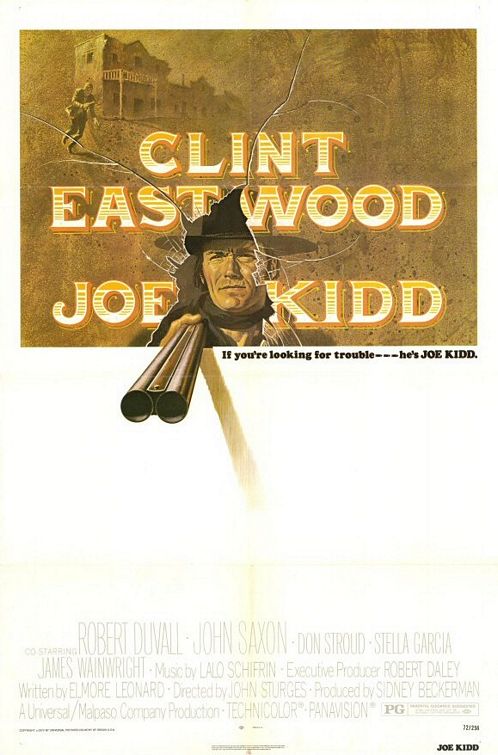
Joe Kidd (Clint Eastwood) is a bounty hunter sitting in jail on trumped up charges. As he is about to have his case heard the courthouse is invaded by Luis Chama (John Saxon) and his band of Mexican revolutionaries who are angered that their U.S. land claims have been denied. They threaten a full scale war against the American government and suddenly Kidd finds himself in the middle when powerful landowner Frank Harlan (Robert Duvall) wants to use Kidd’s abilities to track Chama down so that he can kill him before he can ferment any more unrest. Kidd and Frank do not like each other, but Kidd reluctantly goes along while planning at some point to stop Frank and his men before they can do anymore harm.

If there is one thing to take from this film it is Duvall’s performance. This is the movie where he really came into his own and his career transitioned from small character parts and guest spots in TV-shows to an all-around dynamic lead actor. His presence here is commanding and he plays the bad guy with such zeal that it ends up taking over the entire picture while smothering the usually reliable Eastwood until he and his character become bland and transparent.

Unfortunately the script written by Elmore Leonard cannot match the same energy or creativity. It starts out well and has all the rugged ingredients one expects from a good western and it’s even directed by John Sturges who’s noted for putting together great action flicks, but unfortunately at some point it goes flat and this is mainly because there is not much of a second or third act. The scenario itself is too predictable and gets played out in a mechanical, by-the-numbers fashion. It is also devoid of much action. The part where Kidd uses his telescope rifle to pick off a shooter at long range that the others can’t is okay, but the scene where he derails a train and sends it crashing through a saloon seems implausible and not as exciting to see as it may sound.

I enjoyed Kidd’s antagonistic relationship with Lamarr (Don Stroud) who is one of Harlan’s men and a young, long haired cocksure guy that immediately gets a vendetta against the more stoic Kidd, which adds some zest, but then the film squashes it too soon by having Kidd kill Lamarr in a rather unimaginative and uneventful way. In fact the whole climactic finish works in the same way with Kidd mechanically knocking off each of Harlan’s men in a fashion similar to what Gary Cooper did to the bad guys in High Noon, which was a far better movie. Kidd’s final shootout with Harlan is a particular letdown and should’ve been played out more while only helping to cement this as one of Eastwood’s weakest and more forgettable westerns that he has done.

My Rating: 3 out of 10

Released: July 14, 1972

Runtime: 1Hour 28Minutes

Rated PG

Director: John Sturges

Studio: Universal

Available: VHS, DVD, Blu-ray, Amazon Instant Video

Club Paradise (1986)

club paradise

By Richard Winters

My Rating: 3 out of 10

4-Word Review: Life on the beach.

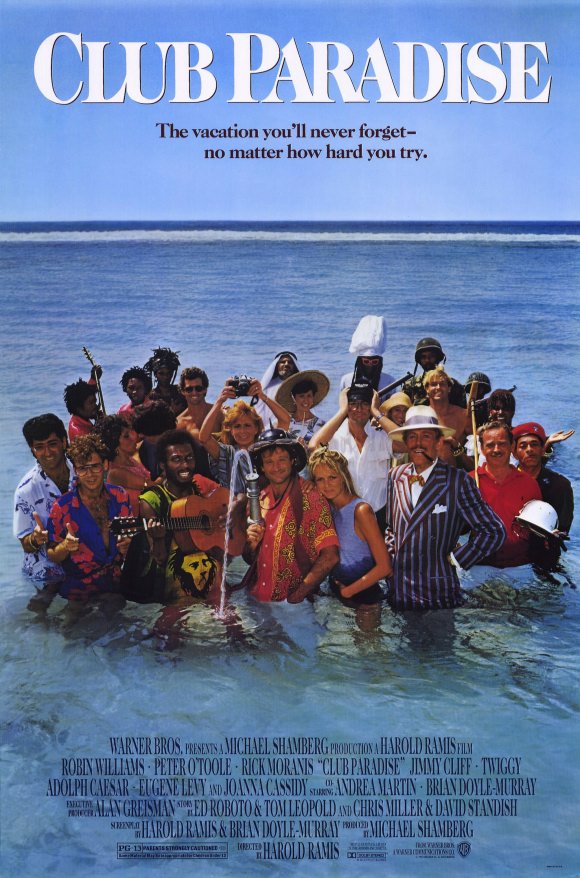
When firemen Jack Moniker (Robin Williams) is able to collect a large insurance settlement after being injured while on the job he decides to retire and move to Jamaica. There he meets Ernest (Jimmy Cliff) who owns a rundown resort and has gotten far behind on his taxes and now being harassed by the Island’s Prime Minister (Adolph Caesar) for payment. Jack decides to help his friend by fixing up the place until it becomes a snazzy destination that attracts people from all over. Soon a bunch of tourists, many of them on the eccentric side, are flocking to stay there, but Jack finds it hard to keep up with their demands while also battling Voit (Brian Doyle-Murray) a competing resort owner who feels Jack is infringing on his territory.

The film starts out pleasing enough. Cliff’s reggae songs are great and the island scenery, which was shot on-location in Port Antonio, Jamaica is soothing to the eye and spirit. Unfortunately the laughs are sporadic and the plotline minimal. Part of the problem is that it doesn’t stay focused on the Jack character. The story jumps completely past him buying the resort and rebuilding it and instead goes directly to the eccentric guests and their cartoonish behavior and dilemmas. The script is more like a patchwork of goofy skit-like ideas than a movie and the cast is made up almost entirely from the stars of the first couple of seasons of SCTV.

Williams is much more subdued here, which is nice to a degree as sometimes he can get a bit too hyper, but he is also not as funny. Peter O’Toole is good when he’s seen, but his screen time is so limited I was surprised that he even took the part as it’s a slap-in-the-face role for an actor of his stature.

The supporting cast is too hammy. Eugene Levy and Rick Moranis are mildly amusing as two clueless dweebs trying desperately to hit on some of the hot chicks, but when their story thread deviates to Moranis going on a surfboard that takes him on a 16 hour ride out to sea, it gets stupid. Andrea Martin comes off best and has a few enjoyable moments including most notably her battle with an overpowering shower.

Even a comedy needs some character development and this film, which boasts having 6 writers to its screenplay, has none. Too much emphasis is put on throwing in any type of joke or humor that it can much of which is on  a childish, preadolescent level that will bore and annoy most adults.

My Rating: 3 out of 10

Released: July 11, 1986

Runtime: 1Hour 36Minutes

Rated PG-13

Director: Harold Ramis

Studio: Warner Brothers

Available: VHS, DVD, Amazon Instant Video, YouTube

The Flight of the Phoenix (1965)

flight of the phoenix 1

By Richard Winters

My Rating: 8 out of 10

4-Word Review:  Fighting the desert elements.

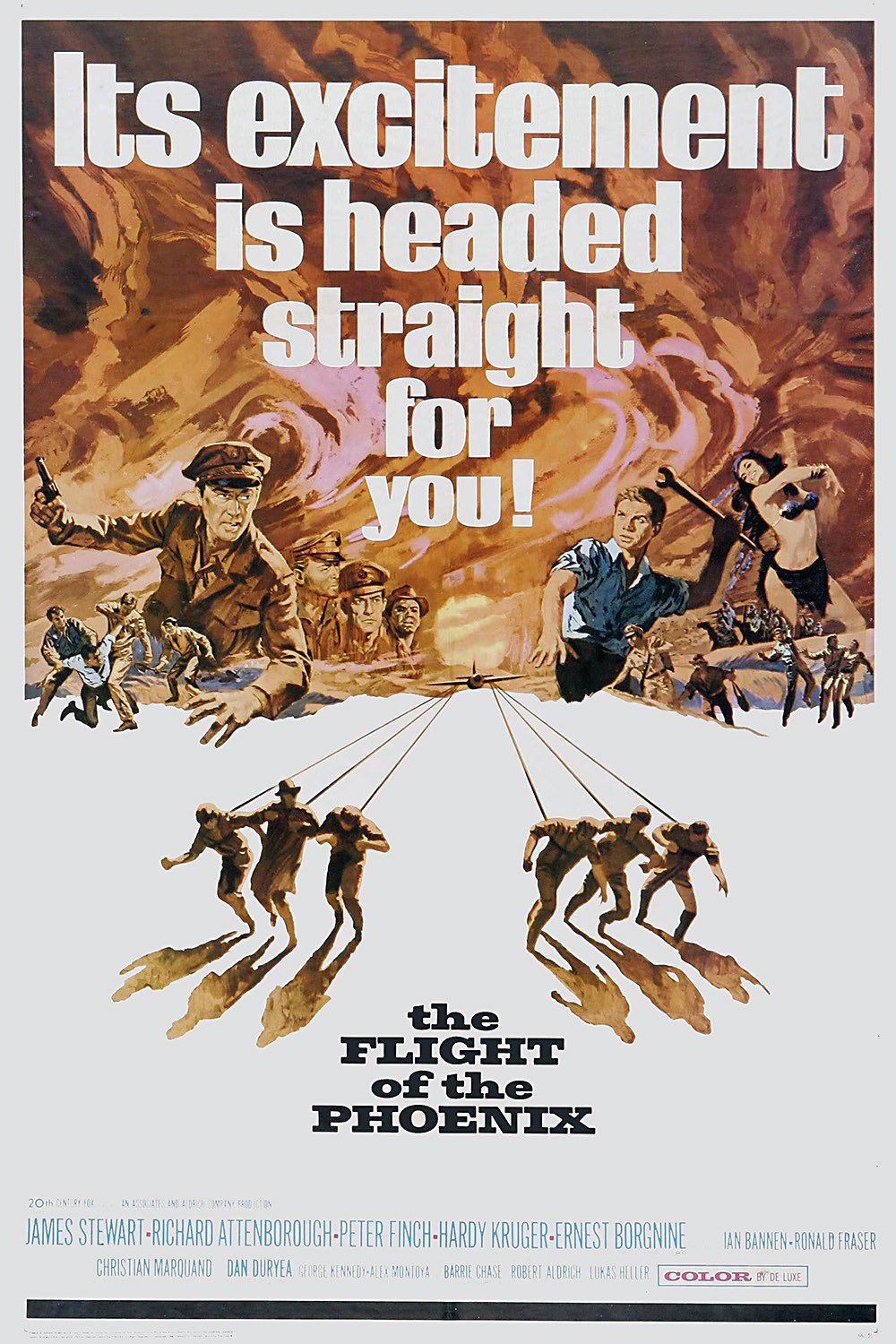
A cargo plane flying to Benghazi and piloted by Frank Towns (James Stewart) is forced to make a crash landing in the middle of the Sahara desert when a freak sand storm shuts down the plane’s engines. Of the 14 men on board two are killed instantly when several oil drums break loose during the crash which also injures a third. The rest of the men find themselves stranded in the searing heat with only dates as their food and a 2 week supply of water. The radio communication was destroyed during the crash and they are too far off their main route for anyone to find them. One of the passengers, Heinrich Dorfmann (Hardy Kruger) who works as a plane designer believes he has a way to take what’s left of the wreckage and build it into a new plane, which will then be able to fly the men out of there. Initially everyone else is skeptical, but eventually they begin working during the night to put it together while continuing to fight the elements and themselves in the process.

What makes this film stand out from the rest of the epic adventures is the fact that there is no good guy versus bad guy here. Every one of the individuals has their own unique character flaws and must learn to overcome them and their egos in order to work together as a team. The characterizations are realistic and multi-faceted making their conflicts believable from start to finish and helping to create a story that is gripping on both an adventure level and a psychological one.

Stewart is outstanding in the lead and I enjoyed seeing him play a part that is cynical and savvy and with less of the humble, country boy charm that he is known for. Kruger is solid in support and watching his confrontations with Stewart and then their eventual respect for each is the film’s main highlight. Richard Attenborough is also good as the sort-of moderator between the two and I also enjoyed Peter Finch as the brave and honorable Captain as well as Ronald Fraser as his sergeant who doesn’t quite share his same courage or sense of duty.

I was disappointed to some extent that it wasn’t filmed on-location in the Sahara and instead in Arizona and California although the desert locales look authentic enough even though eventually after two hours it becomes monotonous visually. Director Robert Aldrich keeps things believable including having the men visibly slow down physically as the days wear on as well as growing beards, which is something that sometimes gets overlooked in other stranded dramas although I was still confused why the Finch character formed a goatee instead of a full beard.

The climactic sequence is both nerve-wracking and exhilarating particularly the scene where Stewart tries to start the plane with only 7 cartridges remaining and with each one failing. Whether the logistics of this could actually occur is a big question, but it still remains grand entertainment.

flight of the phoenix 2

My Rating: 8 out of 10

Released: December 15, 1965

Runtime: 2Hours 22Minutes

Not Rated

Director: Robert Aldrich

Studio: 20th Century Fox

Available: VHS, DVD

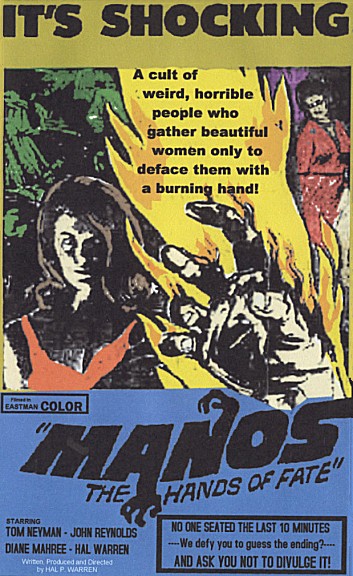
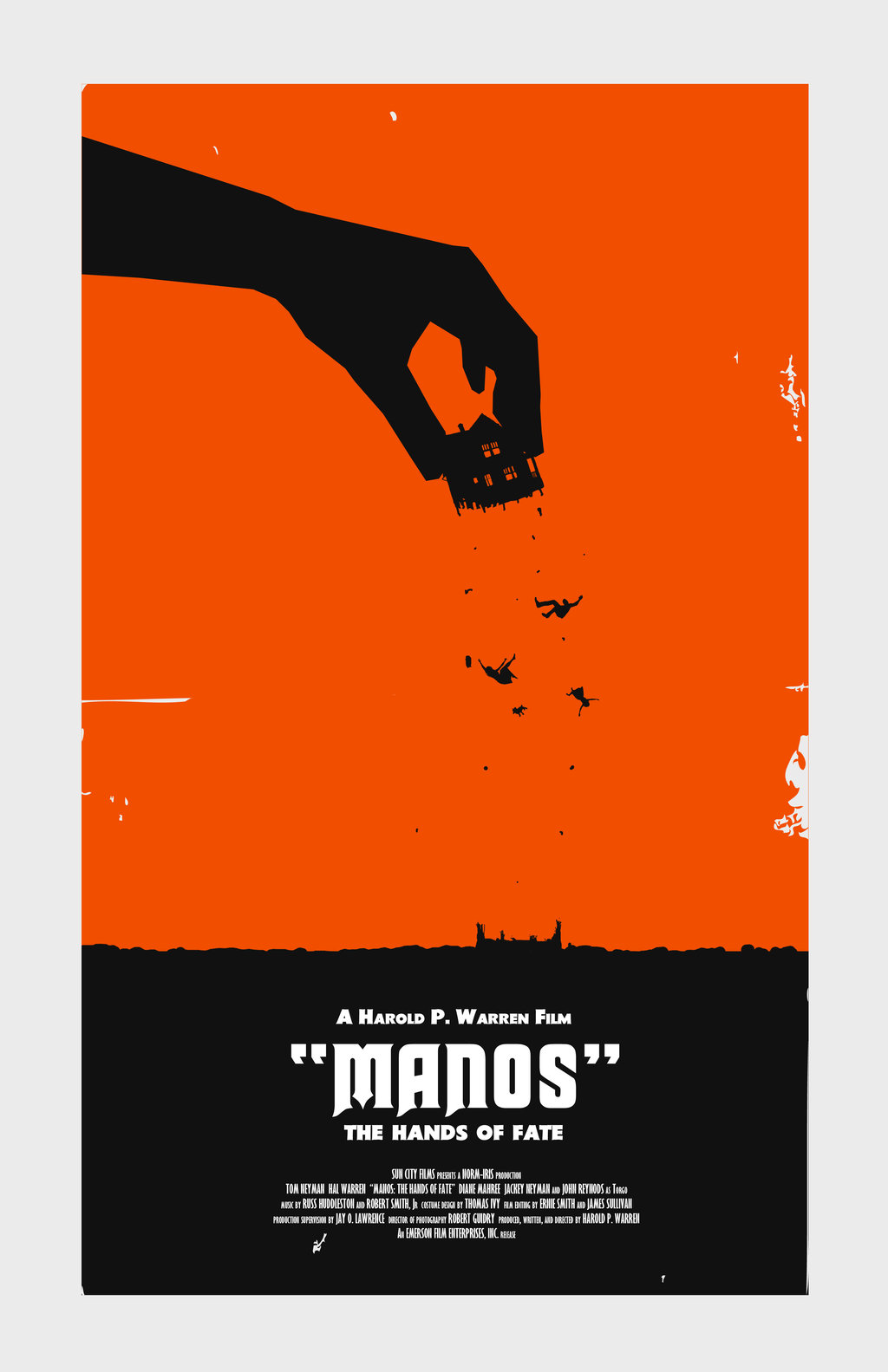
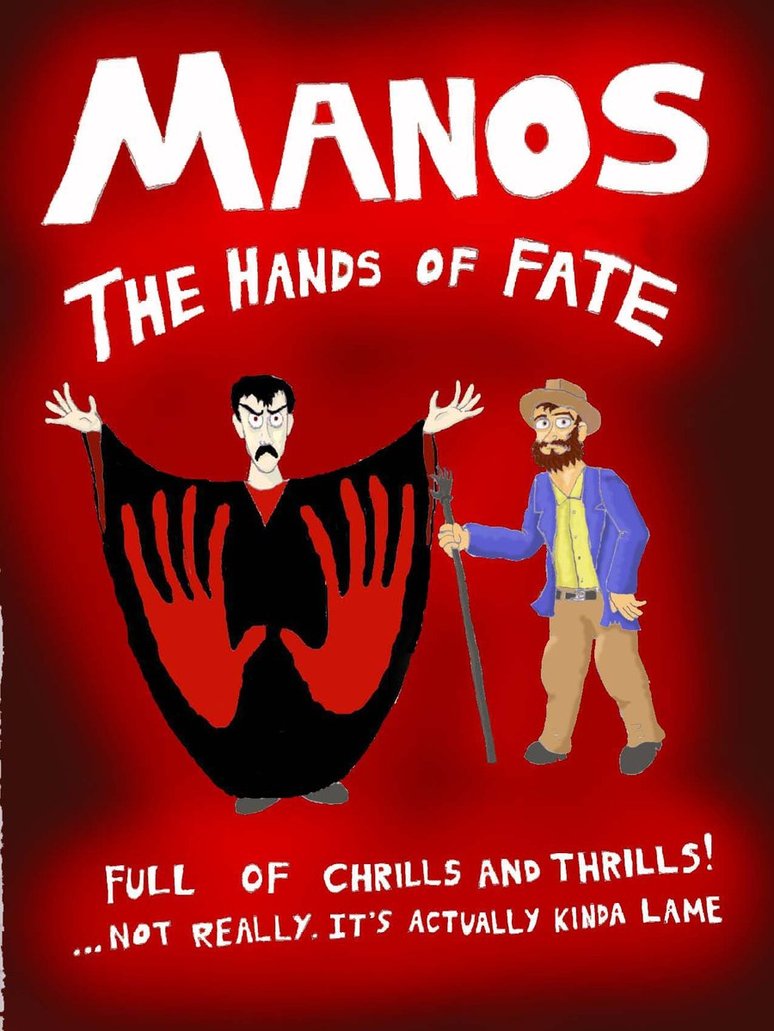
Manos: The Hands of Fate (1966)

manos 2

By Richard Winters

My Rating: 1 out of 10

4-Word Review: Worst movie ever made.

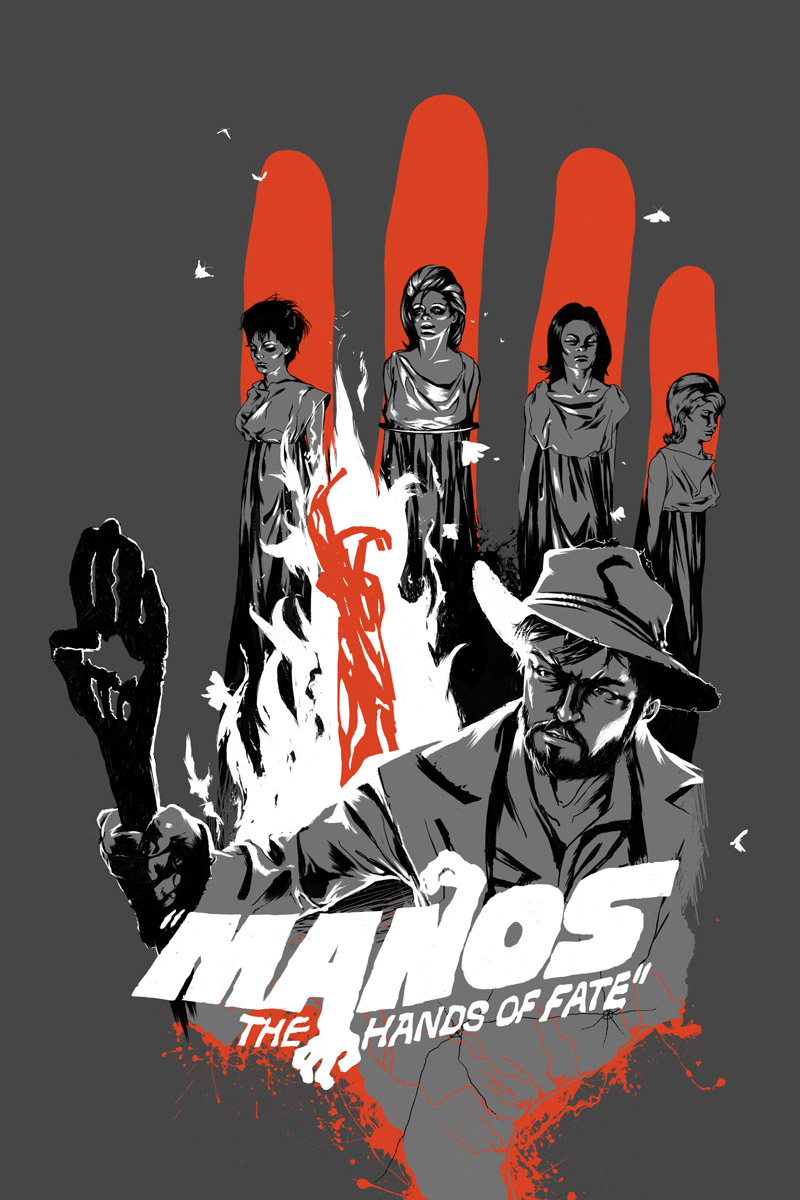
Husband and father Michael (played by the film’s writer/director Harold P. Warren) takes his wife Margaret (Diane Adelson) and their young daughter Debbie (Jackey Neyman) on a trip. Along the way they become lost in the middle of the west Texas desert and after driving around for hours finally come upon an isolated building in the middle of nowhere. Standing guard outside is a strange man named Torgo (John Reynolds) who invites them inside. Feeling they have no choice the family agrees to go in unbeknownst that the place is managed by an evil devil worshipping man known as The Master (Tom Neyman) who is already married to six wives and looking to add another to his ‘flock’.

This film came about as a bet between insurance salesman Warren and award winning screenwriter Stirling Silliphant who was in the El Paso, Texas area scouting locations for his next movie. Warren met him by chance at a local café and then proceeded to tell him that ‘anyone’ could make a movie and bet him that he could successfully do one without having any prior experience or budget. Warren even wrote the majority of the film’s screenplay on his napkin at the restaurant before the two had even left. He was then able to secure $19,000, which even for the time period wasn’t very much as well as a hand-held camera that could only shoot 32 seconds worth of film at a time. He rounded up some actors from a local theater for the cast and unable to pay them upfront promised that they would receive reimbursement for their efforts once the film was released and made a profit, which never happened.

manos 1

The result of all of this is a film that many critics and viewers consider to be the worst ever made. The film’s biggest problem is that there was no sound recorded during the filming and it all had to be dubbed in later causing it to come off like a silent movie with music used throughout the whole thing in order to help ‘narrate’ the mood and scene much of which is jazz sounding that doesn’t really connect with the horror genre to begin with. The takes go on waaaay longer than they should including a long stretch at the beginning where we see nothing but passing scenery of a barren Texas landscape that goes on endlessly.

manos 4

The filmed bombed upon its initial release and was only seen at a few theaters in the El Paso area before being forgotten completely. When Jackey Neyman attended collage during the early 80’s and told friends that she had at one point been in a film as a child her friends set out to find a copy and were unable to. It wasn’t until 1993 when this film was shown on an episode of ‘Mystery Science Theater 3000’ that it garnered the cult following that is has now including a Blu-ray release that is set to come out on October 13th of the this year that will have as a bonus not one, but three featurettes included, which I guess proves that these days bad is now the new good.

For my part I liked the general premise, which if put in more competent hands and with a better budget might’ve been interesting. I also enjoyed Adelson as the wife who is beautiful and went on to have a career as a model. The twist ending is also kind of neat, but without some sort of rifftax attached this otherwise boring thing is not worth catching.

manos 5

manos 6

My Rating: 1 out of 10

Released: November 5, 1966

Runtime: 1Hour 14Minutes

Not Rated

Director: Harold P. Warren

Studio: Emerson Film Enterprises

Available: DVD, Blu-ray (Release date October 13, 2015)

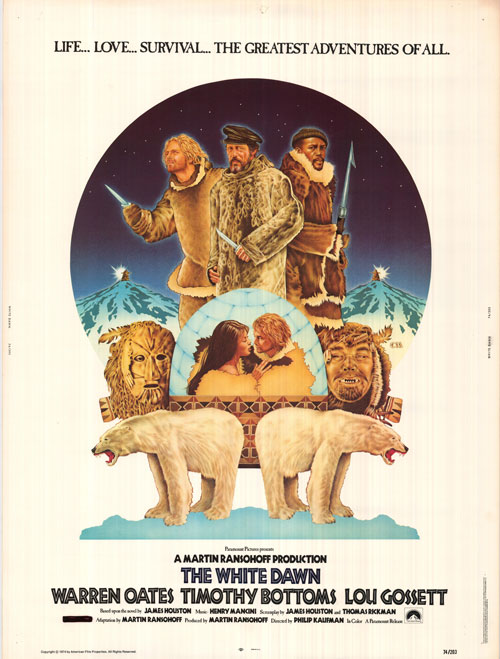
The White Dawn (1974)

white dawn 2

By Richard Winters

My Rating: 5 out of 10

4-Word Review: Trapped in the artic.

In 1896 three whalers inadvertently become lost from the rest of their crew and stranded all alone on an artic island. There is Billy (Warren Oates) who is the impulsive and belligerent one of the bunch and Daggett (Timothy Bottoms) who is more quiet and introspective as well as Portagee (Louis Gossett Jr.). After wandering in the snow and cold for many days they finally come upon an Eskimo tribe who takes them in with food and shelter. The men though never seem to fully appreciate what the Eskimos have done for them while at times even exploiting their kindness, which eventually leads to tensions from both sides.

Filmed on-location on Baffin Island in northern Canada it is based on the novel ‘The White Dawn: An Eskimo Saga’ by James Houston who also wrote the screenplay. He lived with the Inuit people during the 50’s and 60 and helped spread their art and culture to the rest of the world. The film though doesn’t seem all that revealing. Much of what happens is rather predictable and with scenes that tend to ramble. There are also other moments that are a bit bizarre like the scene during a celebration where two girls take off their shirts and then lock lips and proceed to blow air into each other’s mouths at an accelerated rate that might’ve been more interesting had it been explained what exactly they were doing and why.

The characters are dull and transparent in Oates’ case genuinely unlikable. The Eskimos lack any individual distinction and most viewers will fail to find themselves emotionally attached to anyone onscreen. The film probably would’ve worked better had it been a smaller tribe and just one person that they had rescued.

There are also a lot of scenes featuring animal deaths and cruelty that may upset some viewers. On the one hand I liked that it kept things real and hunting is certainly a part of their culture especially at that time, but some of it does get graphic. One scene has the group grabbing a goose from different ends and then literally pulling it apart while later on they slaughter some walruses that are peacefully bathing in the sun.

The film’s dark ending is interesting and the time the three attempt to escape from the tribe by stealing one of their boats is also intriguing, but otherwise I was aloof with it most of the way. I admire the attempt of bringing the Eskimo culture to a wider audience and the film really isn’t a bad movie, but it’s not a particularly gripping either.

My Rating: 5 out of 10

Released: July 21, 1974

Runtime: 1Hour 50Minutes

Rated PG

Director: Phillip Kaufman

Studio: Paramount

Available: DVD, Amazon Instant Video

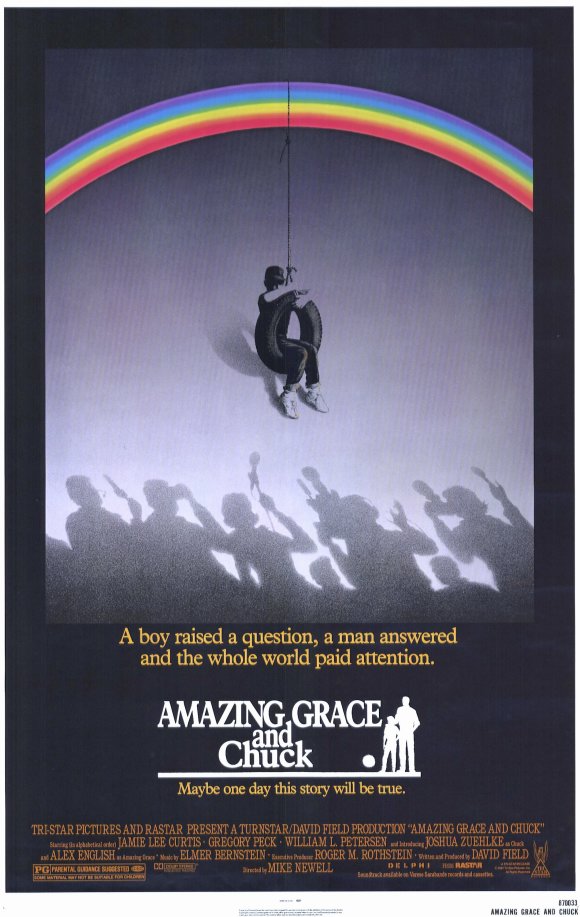
Amazing Grace and Chuck (1987)

amazing grace

By Richard Winters

My Rating: 1 out of 10

4-Word Review: Kid stops playing baseball.

After touring a nuclear missile plant 11-year-old Chuck (Joshua Zuehlke) becomes traumatized at the prospect of nuclear war and wants to come up with some way to help prevent it. His solution is to quit playing little league baseball until there is complete nuclear disarmament as his pitching skills are impressive and therefore his talents will be sorely missed and thus make a strong statement to others about his commitment. After reading about him in a newspaper Amazing Grace (Alex English) a star basketball player for the Boston Celtics decides to do the same thing. He even moves to Livingston, Montana where Chuck resides so the two can carry on their self-styled protest together. Soon other athletes jump onto the bandwagon until a genuine movement is created that eventually gets the attention of world leaders.

The plot is indeed idealistic if not extraordinarily fanciful and has the stigma of being written by David Field who later went on to write the script for ‘Invisible Child’ a notorious Lifetime movie that has gained a cult following for having one of the dumbest plotlines ever and this one isn’t all that far behind. My eyes were already rolling before it even began, but I still wanted to give it a chance. Mike Newell’s direction is competent and Zuehlke’s performance in this his one and only film appearance is convincing and it even has a cameo appearance by coaching legend Red Auerbach.

I found it almost unnatural though that any kid could have such a strong resolve and commit to such a major sacrifice as at that age they can go through a lot of different phases and whatever they may be into one day can be something completely different just a few days later. Even responsible adults can have a hard time sticking to their commitments, so expecting a kid to do so seemed almost outlandish, but I forgave it because his Dad was a fighter pilot and therefore it made it more personal.

I was even willing to forgive the second act, which gets increasingly more strained and implausible by the minute because of the presence of Chuck’s father (William Petersen) who manages to keep things somewhat grounded by being the film’s only cynical character. However, the idea that a famous and successful player, which is played by an actual former NBA star who gives a wooden performance, would read a short article about a kid in a newspaper and that would be enough to ‘inspire’ him to quit everything and move to the middle of nowhere is just downright ridiculous as is Chuck being called to White House all alone and not accompanied by his parents, so that he could speak with the President (Gregory Peck) who begged him to start playing again because his stubborn stance has somehow hurt their bargaining power with the Russians.

The third act though is when it all gets to be too much and something that no logical or rational person will be able to swallow no matter how optimistic they may be. The film also enters in a side story dealing with Grace being stalked by a terrorist group threatening to kill him unless he goes back to playing basketball, which seemed to come from some completely different movie altogether and makes this already implausible story all the more absurd.

I’m all for a ‘feel-good’ movie, but there has to be some bearing in reality and when every player around the world quits playing and all the children quit speaking in order to show their solidarity for Chuck then this thing becomes just plain stupid and takes the concept of wish fulfillment to ridiculously new and embarrassing heights.

Of course there are some who feel the ‘positive message’ outweighs its otherwise fairy tale-like theme. There is even one reviewer on Amazon who shows his students this movie as a way to teach them the importance of having a ‘cause’. I for one think this would be a bad thing to show to young viewers because it gives them the idea that fighting for social change will be a quick and satisfying experience while also making them ‘famous’ in the process, which seems to be setting them up for a tremendous fall when they actually get out into the real world and find things to be the exact opposite.

My Rating: 1 out of 10

Released: May 19, 1987

Runtime: 1Hour 56Minutes

Rated PG

Director: Mike Newell

Studio: Tri Star Pictures

Available: VHS, DVD-R, Amazon Instant Video, YouTube

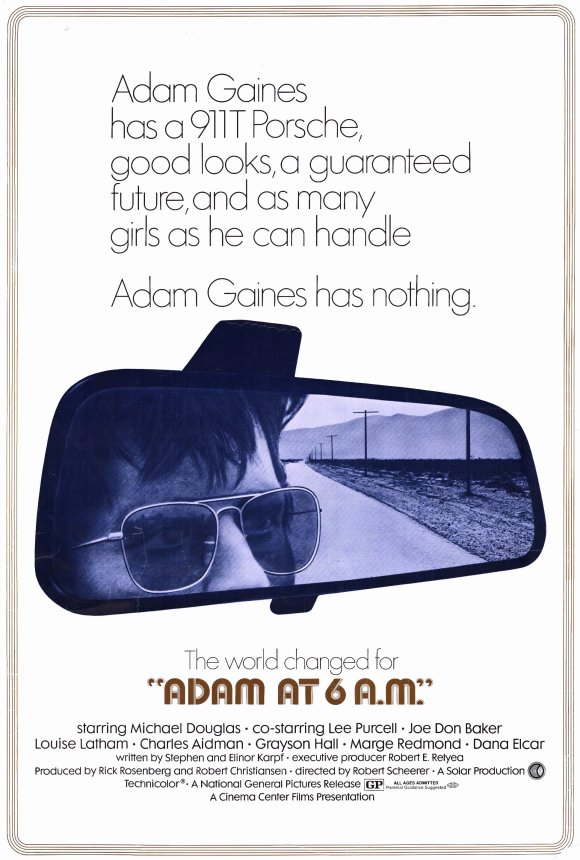
Adam at 6 A.M. (1970)

adam at 6am

By Richard Winters

My Rating: 8 out of 10

4-Word Review: He searches for direction.

Adam Gaines (Michael Douglas) is a Professor of Semantics at a local California college and although his future looks bright and stable he can’t help but feel ‘processed’ and bored. When his aunt dies he travels to Missouri to attend her funeral and then on whim decides to stay there for the summer while working a rugged job clearing out a forest in order to install power lines. He also meets and falls in love with the attractive Jeri Jo (Lee Purcell), but then just as things seem to becoming together he suddenly gets the itch to leave and start a new adventure somewhere else.

This is the type of character study that they just don’t seem to make anymore, which is creating characters that are not satisfied with society’s ‘perks’ and still feeling the need to go off and find themselves, which films of that era emphasized as being more important. Filmed on-location in Cameron and Excelsior Springs, Missouri the Midwest gets captured in authentic detail. The population is portrayed as being conservative and limited, but not hick or stupid. The film also has a lot of quiet moments with no dialogue, which helps recreate the heartland’s slower and more neighborly atmosphere.

Purcell, in her film debut, is outstanding as a typical small-town girl with just enough sexiness and flirtation to be alluring, but ultimately unable to break away from her local roots and share Adam’s more expansive worldly views. Louise Latham as her conniving mother is also good as is Joe Don Baker as a field hand who befriends Adam despite having vastly different intellectual backgrounds. It’s also great seeing Meg Foster in film debut popping up early as one of Adam’s girlfriends and sporting not only her incredibly exotic pair of eyes, but her topless body as well.

Adam’s conversation with Grayson Hall’s character during the funeral where she tries to mask her inability to understand the word ‘semantics’ is amusing and I also enjoyed his ‘debate’ with Dana Elcar’s character in regards to Blow Up and the other ‘filthy’ movies of the modern generation. The scene where the laborers go to a bar and pick-up some ‘hot chicks’ is fun as well, but the film’s best moment comes at the end when a routine trip to a convenience store to pick up some ice cream becomes unexpectedly captivating and climaxes with a memorable final shot.

My Rating: 8 out of 10

Released: September 22, 1970

Runtime: 1Hour 40Minutes

Rated GP

Director: Robert Scheerer

Studio: National General Pictures

Available: VHS