Category Archives: Movies that take place in the Big Apple

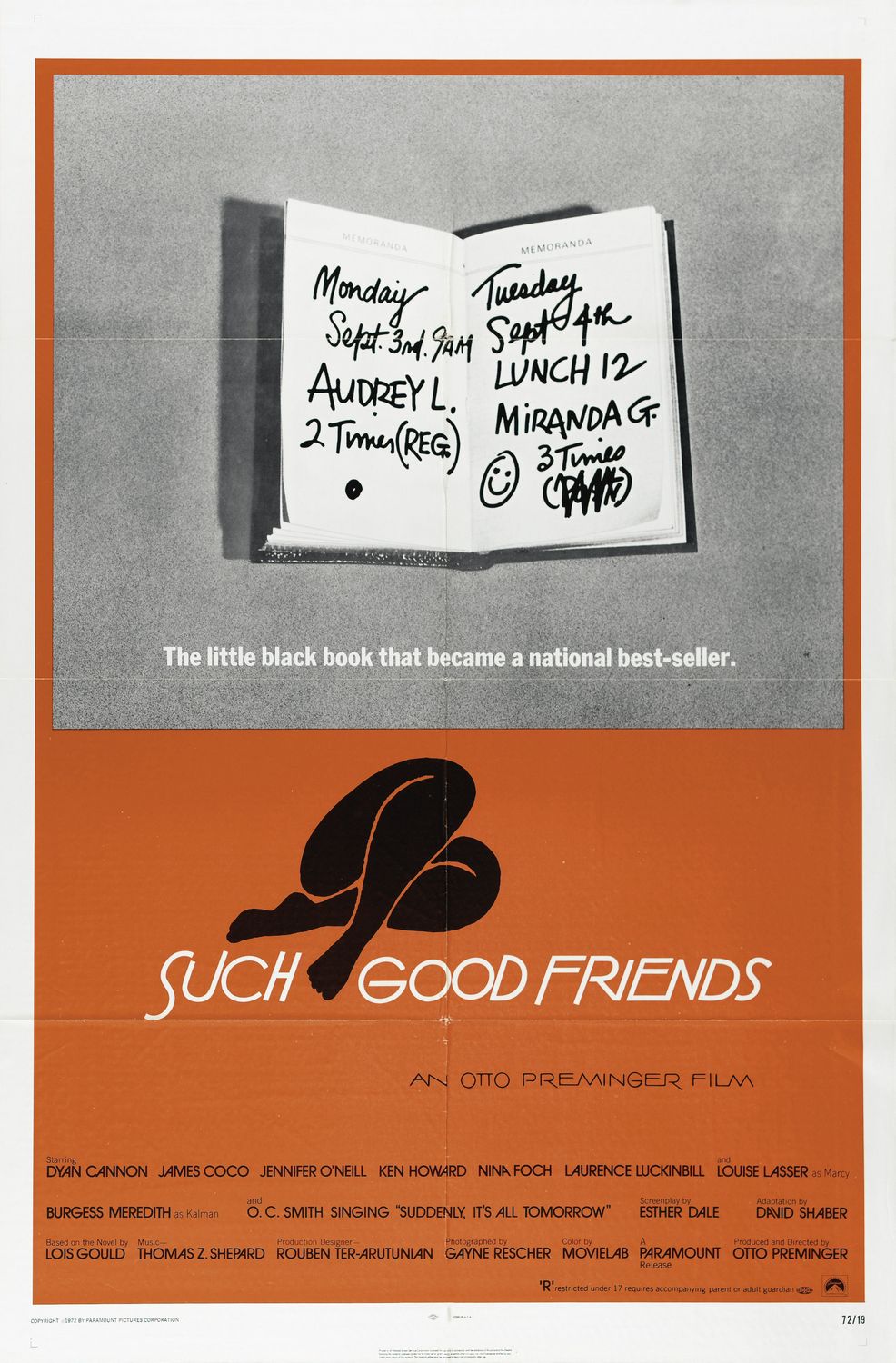
Such Good Friends (1971)

such good friends 1

By Richard Winters

My Rating: 8 out of 10

4-Word Review: Her husband fools around.

Julie (Dyan Cannon) is a well-off New York Housewife living in a swanky Manhattan apartment with her husband Richard (Laurence Luckinbill) who is the successful editor of a New York fashion magazine. Her life seems fulfilled and happy until Richard goes into the hospital for routine surgery, which has unexpected complications that sends him into a coma. While going through some of his personal belongings she comes upon his little black book that lists all sorts of sexual conquests he has had with her friends, which first leads the devastated Julie into considering suicide, but then ultimately into revenge.

This film can be considered Otto Preminger’s swan song as the two movies he made after this weren’t worth watching. This movie also proves to be a giant improvement from the awful Skidoo that he did just three years before where he tried unsuccessfully to get with the ‘hip generation’, but failed miserably. It has the same irreverence and satire as that one, but it is much more disciplined and sophisticated and makes its point without going overboard. It also shows that despite his renowned cantankerous nature behind-the-scenes he was still a gifted director who managed to span five decades with movies that had vastly different styles and themes and he deserves to be labeled a filmmaking legend.

I loved the way the camera spins around in a circle during a scene inside a New York art museum as well as some breathtaking shots of the New York skyline while on top of Jennifer’s and Richard’s condominium. The fractured narrative that deals heavily with flashback sequences is also nicely handled though the scenes showing a middle-aged Cannon trying to look like she is an adolescent while wearing pigtails looks tacky and should’ve been scrapped.

The film is based on the Lois Gould novel of the same name and while that book had a much more serious tone the movie gives the material more of a satirical spin much like Diary of a Mad Housewife, which Preminger had scriptwriter Elaine May (who gets credited as Ester Dale) watch before writing this one. The result is endlessly witty dialogue and some near brilliant conversational exchanges between the characters. Some of the best bits are Jennifer’s discussions with Richard’s doctors who seem reluctant to take responsibility for their medical blundering as well as Jennifer’s awkward sexual encounter with her friend Cal (Ken Howard) when he is unable to ‘rise to the occasion’.

Although she has a face that can show pain and sadness well Cannon may not have been the best choice and some other actresses would’ve been more interesting in the part. Apparently Preminger had her in tears already on the first day and she has in subsequent interviews called him a ‘horrible man’. The scene showing her naked in a snapshot is actually that of another nude model with Cannon’s face cropped on it.

James Coco is great in support and I was genuinely shocked that it didn’t get him nominated for best supporting actor. The scene where Cannon is undressing him for some sex and he tries desperately to distract her while he takes off a corset that he is wearing underneath is frickin’ hilarious. Burgess Meredith has an outrageous moment where he is seen nude while attending a posh party and only his genitals are covered by a book hung from a belt that he is wearing.

The only real negative is the ending that is too serious and somber and deflates the energy from the film’s otherwise snarky tone. Some of the music used doesn’t work with the scenes either including the O.C. Smith song played over the closing credits. Otherwise it’s as fresh, original and timely as it was when it first came out and ripe to be rediscovered by the right audience. The title sequence created by Saul Bass that is used to open the film is diverting and I wished it had been extended.

My Rating: 8 out of 10

Released: December 16, 1971

Runtime: 1Hour 42Minutes

Rated R

Director: Otto Preminger

Studio: Paramount

Available: DVD, Blu-ray, Amazon Instant Video
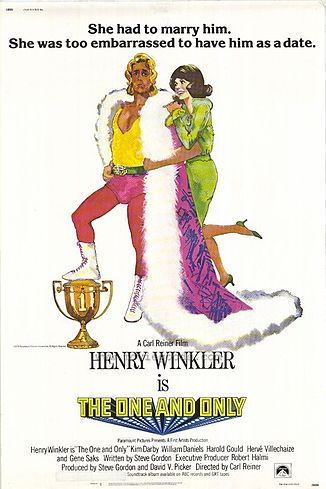
The One and Only (1978)

the one and only 1

By Richard Winters

My Rating: 4 out of 10

4-Word Review: Struggling actor becomes wrestler.

Andy Schmidt (Henry Winkler) is a college student with a driving ambition of becoming a star. He is constantly doing things to be the center of attention including being a scene stealer in every stage play that he is in even if his role is minor. He meets and falls in love with Mary (Kim Darby) and the two move to New York, but find that life in the big city can be difficult especially when Andy is unable to secure any type of acting gig. Then by chance he meets Milton (Herve Villechaize) who is a dwarf wrestler that gets Andy connected to his promotor Milton (Gene Saks). Milton thinks Andy’s need for attention and flamboyance would be perfect for the theatrics of the wrestling world and although he is initially reluctant eventually starts to love it even when his wife hates it and threatens to leave him unless he quits.

Winkler’s performance is the film’s driving force and outside of his signature role as The Fonz this has to be his best work. I enjoyed the variety of characters that he plays in the ring, but the character himself tends to be quite obnoxious and borders on being a complete turn-off especially at the beginning. It is also hard to believe that anyone could fall in love with someone who is so extremely narcissistic and self-centered making the whole romance angle seem forced. The role also, during the scenes when he is in the ring and wearing very little, shows just how short and puny Winkler really is.

The script by Steve Gordon, who later went onto to pen and direct the Dudley Moore version of Arthur, seems reluctant to dive completely into the wrestling angle even though these scenes are by far the most interesting and funniest and when it gets away from the ring its predictable and contrived. I also couldn’t understand how they were able to maintain an apartment as small as it was when Andy was unable to get any type of job or income and the idea that they had unprotected sex and brought in an infant into the world when they could barely support themselves seemed utterly ludicrous. The film’s setting is during the 50’s, but it never comes full circle into the 70’s making it seem incomplete and the characters not as evolved as they could’ve been.

Darby does well in her part and works as a nice anchor to Winkler’s unbridled zaniness. I also really liked Polly Holliday best known for her role as Flo on the long running TV-series ‘Alice’ as Darby’s uptight mother who finally lets loose at the very end while watching Andy in a wrestling match. Saks has a lot of funny lines especially the running joke dealing with his ‘weird’ son, but his glasses that seem glued to his forehead eventually became annoying to look at.

On the negative side you also have rotund actor Richard Karron who’s excessively hairy, flabby physique, which gets shown in all of its unglorious splendor during one particular match may possibly be one of the grossest sights ever put on celluloid. The casting of the infant is another issue as when he is shown in the hospital he has a full head of blonde hair and then in all the subsequent scenes he has dark black hair.

My Rating: 4 out of 10

Released: February 3, 1978

Runtime: 1Hour 37Minutes

Rated PG

Director: Carl Reiner

Studio: Paramount

Available: DVD, Amazon Instant Video

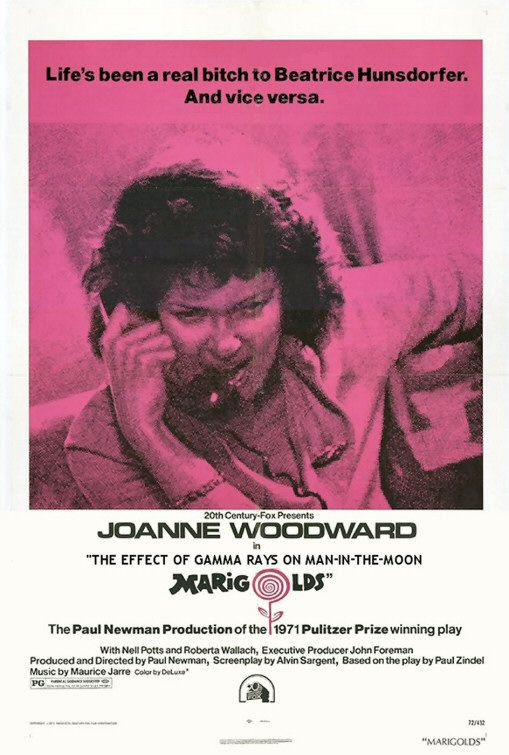
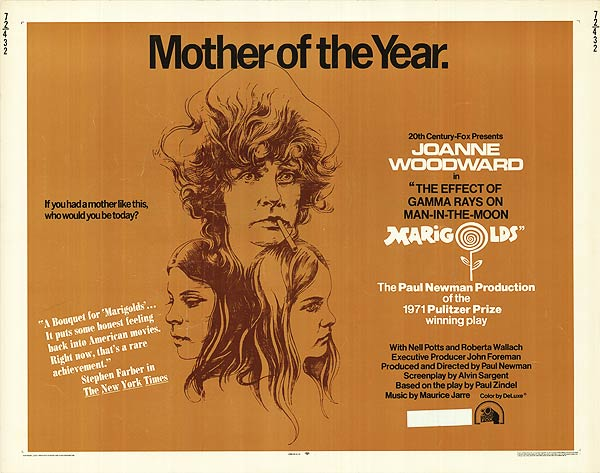
The Effect of Gamma Rays on Man-in-the-Moon Marigolds (1972)

effect of gamma rays 2

By Richard Winters

My Rating: 8 out of 10

4-Word Review: My heart is full.

Beatrice Hunsdorfer (Joanne Woodward) is a single-mother raising two girls while living in the poor side of Staten Island. She is an extremely self-centered, emotionally frail woman who’s bitter about life and alienates everyone that she meets. Ruth (Roberta Wallach) is her rebellious teenage daughter who recognizes her mother’s flawed personality and tries to distance herself from her. Matilda (Nell Potts) is the quiet, introspective daughter who takes in all the chaos while escaping by concentrating on her school science projects particularly the one involving marigolds, but as things progress Beatrice’s mental state becomes more erratic and threatens to tear their lives completely apart.

Actor Paul Newman directs on a tour-de-force level. Absolutely everything comes together while still keeping it on a subtle, visual level. The opening sequences gives the viewer a clear picture of the family’s strife and divergent personalities without ever having to go into any type of verbal backstory, which is great filmmaking at its finest. Although filmed in Bridgeport, Connecticut one still gets a good feeling of a poor inner-city neighborhood with the house that was chosen for the setting looking authentically cluttered without appearing staged. The variety of settings has a cinema verite feel while also remaining true to Paul Zindel’s script. Yet Newman’s greatest achievement is the fact that he creates a wholly unlikable main character that the viewer ends up still feeling quite sorry for and the climactic scene inside the school’s auditorium becomes emotionally wrenching.

Woodward excels in a difficult role and creates a character that becomes permanently etched in the viewer’s mind. Her brilliance comes through from the very beginning with the way she chews her gum while trying on some wigs and her never ending stream of caustic remarks runs the gamut of being rude and insensitive to darkly humorous. Although she was nominated for best actress with the Golden Globes and won the award at the Cannes for her work here she really should have been given the Academy Award as well.

Wallach, who is the daughter of Eli Wallach and Anne Jackson, is terrific in her film debut and has some memorable moments not only when she has a seizure, but also later when she plays a caricature of her mother for a school play. Potts, who is Newman’s and Woodward’s daughter, is quite good too especially with her stunning clear blue eyes and facial expressions.

Judith Lowry, who made a name for herself in her later years playing cantankerous old ladies, is outstanding as an old woman who rents a room from Beatrice. Although she frustratingly never says a word her moments are still unforgettable especially with the way Newman focuses on her wrinkled face and toothless mouth as she sips drinks or even hobbles her way to the bathroom.

Zindel’s story was originally a stage play and in fact Carolyn Coates who is cast as Mrs. McKay here played the Beatrice role in one of the stage versions. Most teenagers from the 70’s and 80’s will recognize Paul Zindel’s name as the author of ‘Pigman’, which was required reading in many high schools during that era. Yet I liked this story, which is based loosely on his experiences while growing up, even better and it’s a real shock that it has never been released on an American DVD as it definitely should be!

effect of gama rays 1

My Rating: 8 out of 10

Released: December 20, 1972

Runtime: 1Hour 40Minutes

Rated PG

Director: Paul Newman

Studio: 20th Century Fox

Available: DVD (Region 2)

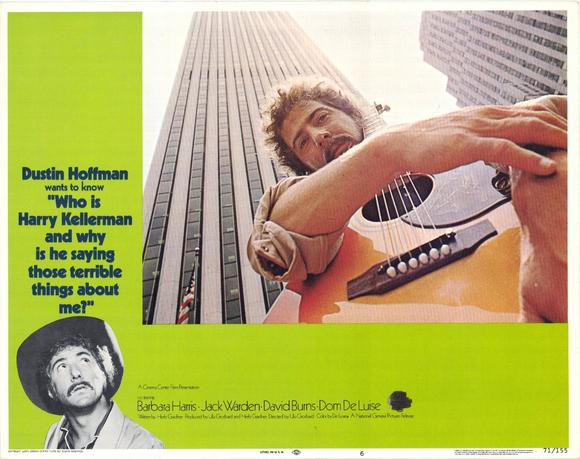
Who is Harry Kellerman and Why Is He Saying Those Terrible Things About Me? (1971)

who is harry kellerman 2

By Richard Winters

My Rating: 4 out of 10

4-Word Review: Paranoid songwriter self-destructs.

Georgie Soloway (Dustin Hoffman) is a successful songwriter who has written dozens of chart topping songs for different bands and yet feels alone and guilt ridden. He lives in his swanky Manhattan penthouse feeling paranoid after a man by the name of Harry Kellerman starts calling his friends and saying malicious things about him, which risks jeopardizing his career and reputation. He tells his problems to his psychiatrist (Jack Warden) while also searching for Kellerman, but makes no headway.

Story-wise the film is a misfire as Herb Gardner’s script has no discernable plot and a main character that doesn’t grow or evolve. Even if taken as a collection of vignettes it doesn’t work and it becomes more like a pointless one-man soliloquy instead. The final revelation of the mysterious Kellerman is not all that surprising or worth sitting through. Why the filmmakers thought viewers would be interested in watching a man essentially self-destruct for two hours is a mystery and it is as boring as it sounds. Besides it is hard for the average person to feel sorry for someone who seems to have it all and loaded with money and thus makes the character’s problems and issues seem quite minute and his perpetual whining overly monotonous.

The only thing that saves it is Ulu Grosbard’s creative direction. I enjoyed some of the surreal elements particularly those done during his sessions with his psychiatrist as well as a scene showing Georgie running through a long lighted tunnel that seems to have no end. The final segment done on a single-jet airplane is captivating especially as it flies through the clouds and watching two skiers’ glide through the snow from a bird’s-eye perspective has an equally mesmerizing effect. I also loved the way the film captures the New York skyline during a visual taken from the plane as it swoops over the city and a scene done in the early morning hours in downtown Manhattan without seemingly a single car driving on the street gives off a strangely unique feeling.

Barbara Harris, who doesn’t come on until the second half, is a scene stealer as an insecure actress who bombs at her audition, but then refuses to leave the stage. It was good enough to get her nominated for the Academy Award that year, but she lost out to Cloris Leachman and as much as I love Cloris Barb really should have won it as she is the one thing the enlivens this otherwise flat film and had her character been in it more this would have been a far better movie. David Burns, who died from a sudden heart attack while performing in a play three months before this film’s release, is touching as Georgie’s father.

Grosbard and Hoffman teamed up again seven years later for Straight Time, which is far superior and more worth your time to watch.

who is harry kellerman 3

My Rating: 4 out of 10

Released: June 15, 1971

Runtime: 1Hour 48Minutes

Rated R

Director: Ulu Grosbard

Studio: National General Pictures

Available: VHS, DVD

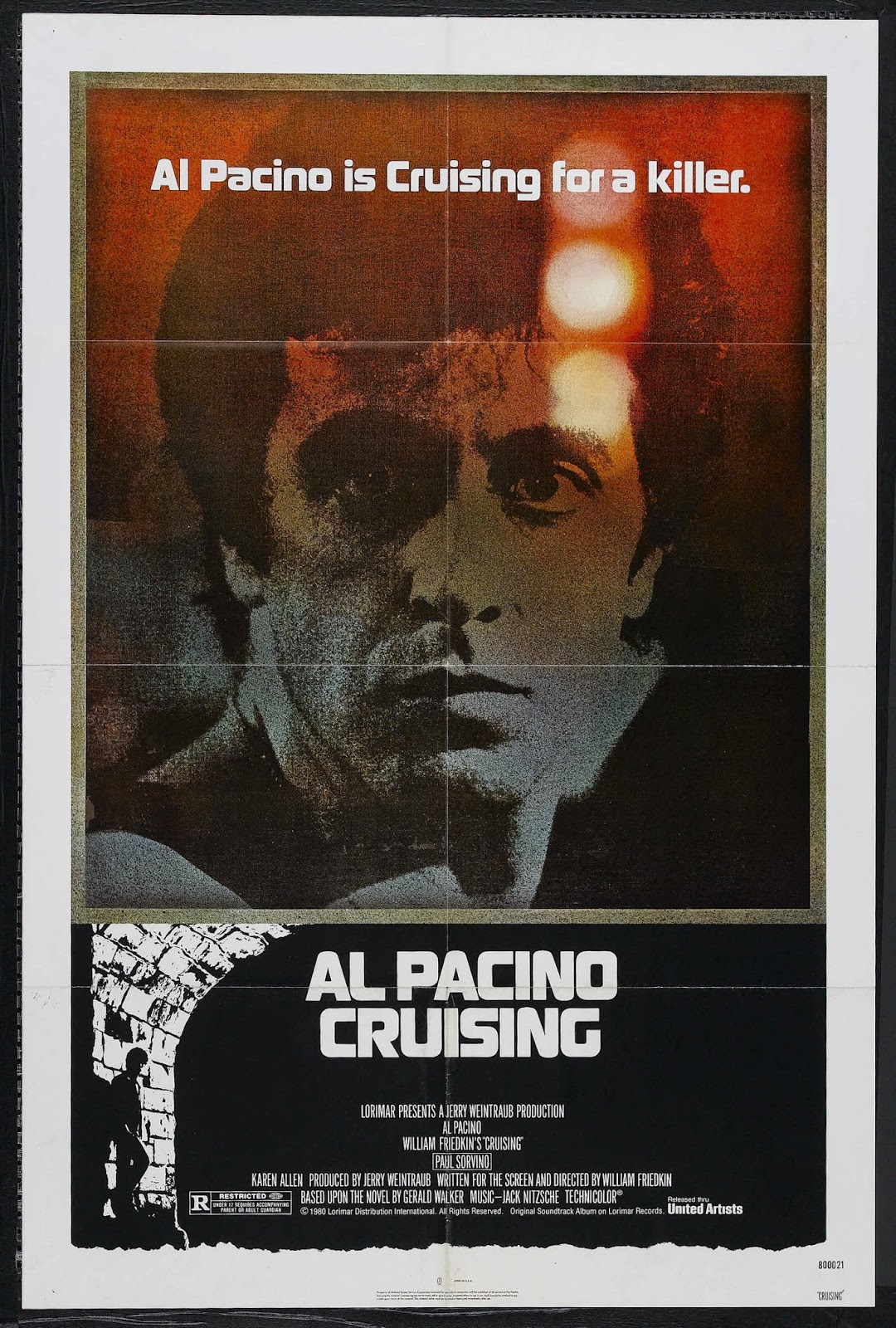
Cruising (1980)

cruising2

By Richard Winters

My Rating: 4 out of 10

4-Word Review: Cop infiltrates gay underground.

A serial killer is attacking gay men who frequent New York’s S&M bars and young cop Steve Burns (Al Pacino) is chosen to go undercover as a gay and infiltrate these ‘leather clubs’ in order to bring out the killer. However, the job requirements demand that he must be completely isolated from the rest of the force and not carry a gun, which eventually causes a strain on his personal life particularly in his relationship with his girlfriend Nancy (Karen Allen).

The film, which is loosely based on actual events that occurred during the late 70’s and captured in Gerald Walker’s novel of the same name, was considered quite controversial at the time of its production. Protestors who felt the film accentuated the gay stereotype tried to create loud noises during filming and even shine reflective lights on the actors in an attempt to mess up the scenes. In retrospect it is hard to imagine that director William Friedkin is in anyway homophobic as just ten years earlier he did the brilliant adaptation of The Boys in the Band, which remains to this day one of the better films dealing with gay issues. The story certainly does wallow in ugly elements, but also makes the point to describe this as an extreme subculture and  not reflective of the gay lifestyle as a whole, which in my opinion made the film seem more enlightening to New York’s gay underground of a bygone era and less propaganda as its critics ascertained.

To some degree I liked the explicit uncompromising approach, but after a while it became one-dimensional and predictable. The scenes of the killings are unnecessarily prolonged and some of the segments showing large groups of men having sex at a bar come off as overly-stylized and looking reminiscent of a homoerotic scene from a Fassbinder film.

Friedkin does manage to add a few unique touches including having a well-built black man wearing nothing but a jock strap enter the room during police interrogations and violently slap suspects who he felt weren’t telling the truth, which according to one of the film’s advisors was an actual technique used by police at the time.  The way the movie captures the monotony and frustrations of investigating a complex case such as this and leaving open that there may have been more than one killer is also well done and helps elevate this a bit from the usual formulaic cop thriller.

Pacino gives a gutsy performance including one scene showing him tied up in bed naked during some kinky S&M play, but the character’s motivations are confusing particularly the way he so quickly accepts this difficult assignment that most others would be very reluctant to do. The fact that his experiences ends up affecting him psychologically isn’t compelling since that becomes a foregone conclusion right from the start.

Paul Sorvino is perfect as the police captain. His gray hair dye was a little overdone, but his limp was great. Allen has a good moment at the end when she tries on Pacino’s leather hat and coat that he brought home with him and Joe Spinell makes the most of his small role as a corrupt cop who harasses gays only to end up patronizing gay bars on his off hours. You can also spot Powers Boothe in an early role as a hankie salesman and Ed O’Neil as a police detective.

The idea of exposing the dark side of police life is no longer original or interesting and the film’s shock value has lessened through the years and thus failing to leave any type of lasting impression or message.

My Rating: 4 out of 10

Released: February 15, 1980

Runtime: 1Hour 42Minutes

Rated R

Director: William Friedkin

Studio: United Artists

Available: VHS, DVD, Amazon Instant Video

To Find a Man (1972)

to find a man 2

By Richard Winters

My Rating: 8 out of 10

4-Word Review: Teen wants an abortion.

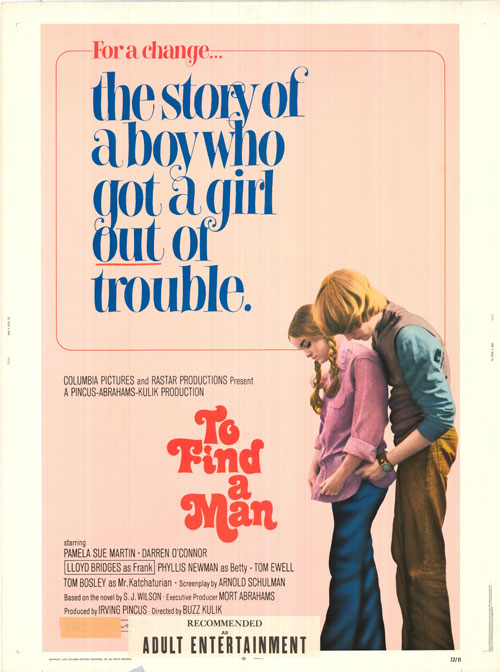
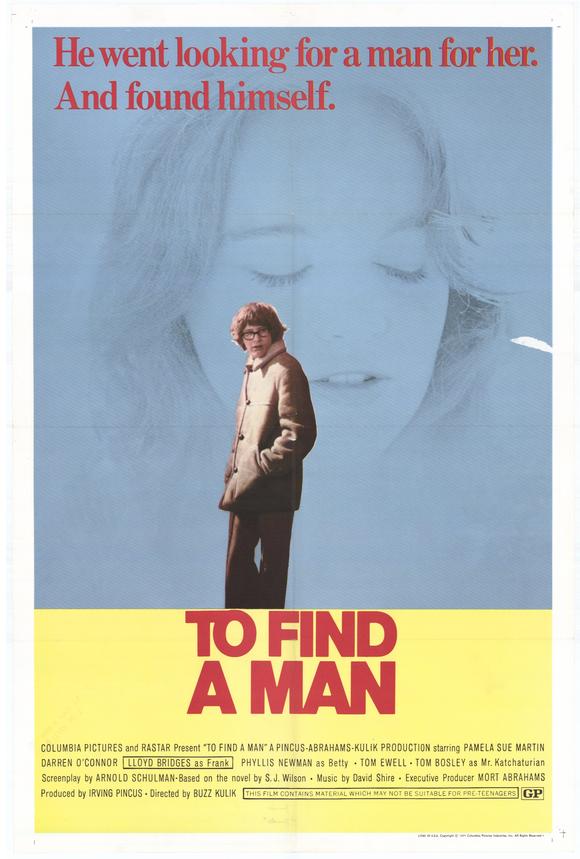
Rosalind (Pamela Sue Martin) is a teenager attending an all-girls Catholic school who finds out that she is pregnant. She can’t tell her parents (Lloyd Bridges, Phyllis Newman) and some of the advice that her girlfriends give prove to be useless. She decides she wants an abortion, but doesn’t know where to go so she turns to one of her guy friends named Andy (Darren O’Connor) who is a bright student and a little more sophisticated. After being scolded by his family’s live-in maid Modesta (Antonia Rey) as being too selfish he decides to go out of his way to help Rosalind with her problem even if at times she seems to have no appreciation for it.

I know the phrase ‘they don’t make movies like this anymore’ has become a modern-day axiom especially when reviewing films from this era, but in this case it fits, but not for the expected reasons. In a lot of ways this is far more open-minded about the controversial subject than anything you might see today. It manages to nicely avoid the political issues and instead tells a refreshingly realistic story about teenage friendship that respects the intelligence of its intended audience without ever getting preachy or overly-sanitized.

The film also manages to be surprisingly funny particularly at the beginning when Rosalind and her naïve friends come up with all sorts of insane ways to try to terminate the pregnancy on their own, which may sound potentially offensive to some, but somehow scriptwriter Arnold Schulman and director Buzz Kulick balance it well enough to keep it at an innocuous level. They also manage later on to shift it seamlessly towards the serious side as it shows in vivid detail the cold, ‘business-like’ attitude of those working at an abortion clinic and the impersonal way they treat people that come to it.

Martin in her film debut is excellent playing a character that is not necessarily likable, but still quite human and believable for that age. O’Connor in his one and only film appearance is equally good and it’s great to see a teen lead that is smart without being particularly fashionable, trendy or attractive.

Bridges is excellent as the girl’s father and the unique friendship that he has with O’Connor is quite interesting. Ewell is a standout as the abortionist in the final sequence that manages to be stark, compelling and strangely moving.

In a lot of ways this is more a story about the flawed human beings that we all are and how sometimes when it’s least expected they can do some amazingly selfless acts in this slice-of-life film that is surprisingly both touching and upbeat. It’s also quite similar to Our Time, which came out 2 years later and also starred Martin.

to find a man 1

My Rating: 8 out of 10

Released: January 20, 1972

Runtime: 1Hour 30Minutes

Rated GP

Director: Buzz Kulik

Studio: Columbia Pictures

Available: Amazon Instant Video

The Sentinel (1977)

the sentinel 1

By Richard Winters

My Rating: 3 out of 10

4-Word Review: The Gateway to Hell.

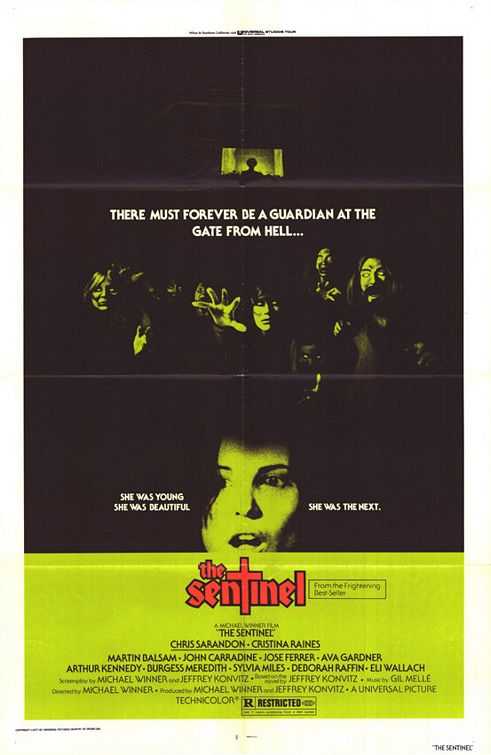
Alison (Cristina Raines) is a fashion model looking for a place of her own. She is dating Michael (Chris Sarandon) and living with him, but has decided she is not ready for marriage and wants her own apartment. She finds an old, but stylish place in the Brooklyn Heights area of New York City that is already furnished and decides to move in, but then strange things begin to occur convincing her that the place may be haunted and when she starts to have physical maladies she is sure that something within the building is trying to possess her and the other residents she sees are really evil demons.

From the very first scene still film reeks of being just another, tired rip-off of The Exorcist. The first hour features no real scares and it is only during the second part that it becomes a full-fledged horror movie giving the film an overall disjointed feel. The much hyped final, which features severely deformed people who are not wearing make-up isn’t that impressive and unable to equal any of today’s horror movies. If anything I wished they had played this part up even more as it is the only time this otherwise generic thing gets even slightly diverting.

Rains, who by her own admission has never ever actually watched the movie, makes for a weak lead. Sure she is beautiful, but the character is dull and ordinary and she gets easily upstaged by co-star Sarandon who clearly shows how to carry a scene and deserves top billing over her for that reason alone. Her characters motivations didn’t make much sense either. Why would such a young woman want to move into a place filled with antique furniture and inhabited by senior citizens that she has nothing in common with? Also, when creepy things start to occur she doesn’t just move out right away like a normal person would, but instead goes back to the place several more times. There is also a moment when she hears strange noises from the upstairs apartment and then gets out of her bed and locks her front door, which seemed crazy because she is living in New York City and should be locking her doors ALL the time to begin with.

The only real interesting thing about this film for me was seeing older stars at the end of their careers in bit parts. Ava Gardner is fun as the leasing agent and Arthur Kennedy is solid as a mysterious priest as well as John Carradine as an older blind priest who lives upstairs and wearing creepy contacts. There is also Sylvia Miles who appears topless and camps it up as a lesbian neighbor with a Russian accent at least I think it was Russian. Christopher Walken can be seen briefly as a detective giving his gum a workout and Beverly D’Angelo plays a nubile lesbian who doesn’t say a single word, but more than makes up for it with her masturbation scene.

My Rating: 3 out of 10

Released: January 7, 1977

Runtime: 1Hour 34Minutes

Rated R

Director: Michael Winner

Studio: Universal

Available: VHS, DVD

He Knows You’re Alone (1980)

he knows youre alone

By Richard Winters

My Rating: 2 out of 10

4-Word Review: Killer goes after brides.

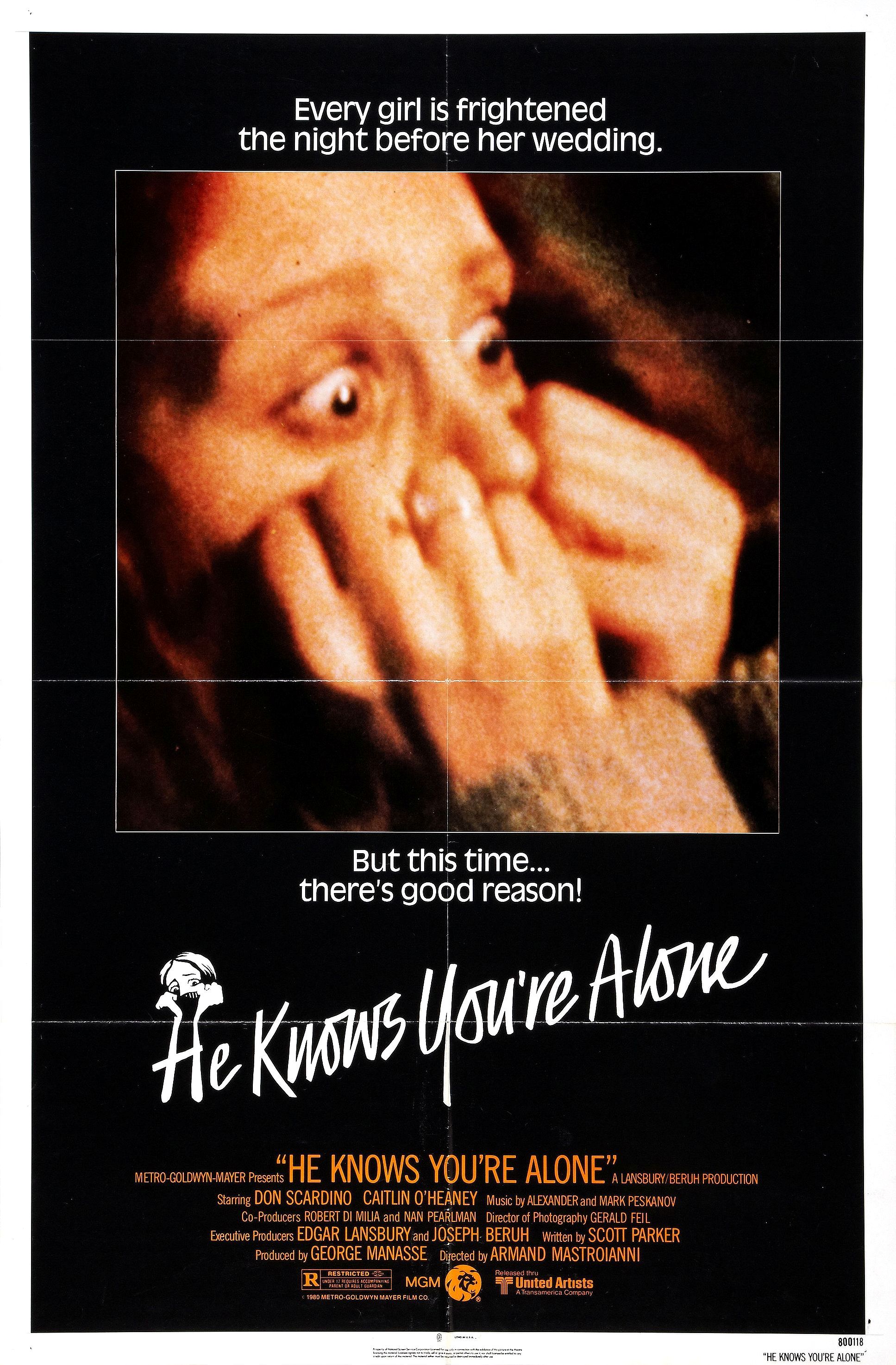
Amy (Catlin O’Heaney) is getting ready to get married, but finds herself stalked by a mysterious stranger (Tom Rolfing). She begins to worry that she may fall victim to a psycho that has been murdering women who have been engaged to marry. Detective Gamble (Lewis Arlt) whose own fiancé was murdered at the hands of this same maniac goes on a relentless quest to stop the attacker, but will it be too late?

The film starts out well and has early hints of Scream where we see an audience viewing a reenactment of an urban legend on a theater screen while one of the women in the audience gets killed by the psycho at the same time, which I found to be quite clever. Unfortunately it goes completely downhill afterwards and never recovers. Lots of slow scenes filled with extraneous dialogue and characters that add nothing to the suspense.  Most horror films quicken the pace as it gets nearer to the end, but this one doesn’t making the tension almost non-existent.

The identity of the killer is another issue. We are shown his face right up front, which hurts because usually with these things the killer’s true identity is kept a secret until the end, which adds to the entertainment. I also thought it was ridiculous to believe that a man murders one woman because she broke up with him and decided to marry someone else, but then robotically decides to murder every other bride he finds. I wanted more of a backstory to the character and felt one was sorely needed. It also seemed implausible that the police would be clueless as to who it is as when the first bride died they would most assuredly interview her ex-boyfriends, which is standard procedure and had this guy locked up or closely monitored long before things spiraled so out-of-control.

The special effects are minimal and in fact there is barely any blood at all as everything is implied. We see one severed head in a fish tank, but otherwise the camera cuts away before anyone is shown getting stabbed or killed.

O’Heaney is transparent in the lead and isn’t even all that cute. Arlt as the dogged detective isn’t much better. It’s fun seeing Tom Hanks, who appears at the 59-minute mark, in his film debut. James Rebhorn can also be seen here in an early film role with a full head of hair playing a college professor who cheats on his wife with one of his students. You can spot Paul Gleason in a bit part as one of the detectives as well as Robin Lamont during the opening sequence who is best remembered for her rendition of ‘Day by Day’ in both the stage and film version of Godspell.

My Rating: 2 out of 10

Released: September 12, 1980

Runtime: 1Hour 34Minutes

Rated R

Director: Armand Mastroianni

Studio: MGM

Available: VHS, DVD, Amazon Instant Video, YouTube

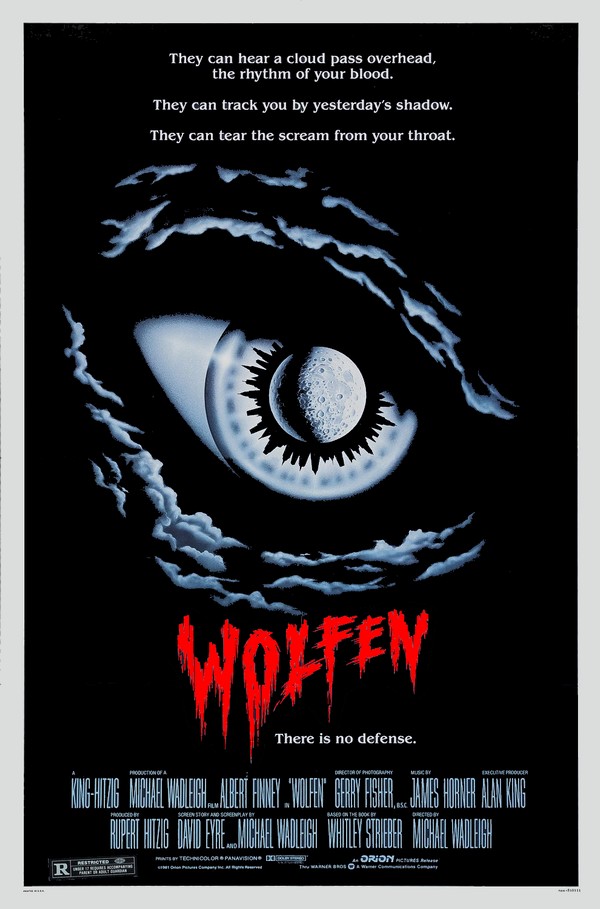
Wolfen (1981)

wolfen 1

By Richard Winters

My Rating: 4 out of 10

4-Word Review: Wolves on the attack.

Dewey Wilson (Albert Finney) is assigned to investigate a particularly savage attack that occurred in Battery Park in New York City where a real estate magnate and his wife and bodyguard where gruesomely killed by some mysterious being that the police initially peg as a terrorist act. As Wilson investigates further and in talking with some experts he comes to the opinion that it may be wolves that killed them, but not the everyday wolf instead they are ghostly spirits intent on protecting their sacred ground. As the body count continues Wilson tries unorthodox methods to understand and stop these strange animals that remain invisible and elusive to the human eye.

For a horror film, which is based on the novel by Whitley Streiber, it has a refreshingly different approach to the material making it seem more like a modern-day drama and character study. Director Michael Wadleigh nicely captures the ambience and attitude of the city. The authentic feel and multi-dimensional lead character helps make the story more compelling. The use of showing things from the wolves’ point-of-view that gets captured through a unique colored lens is initially captivating and creepy.

Unfortunately the film does the P.O.V. thing too often, which eventually becomes redundant and boring. The genteel tone does not create enough tension and the film is barely ever suspenseful. There is one good decapitation scene, but otherwise the gore and special effects are minimal. The runtime is too long and the pacing could have been better. A good horror film or even a thriller needs a good scary image of the threat at hand to hold onto and create the fear for the viewer, but we are never shown the wolves at all until the very end. I did like the one part where the Diane Venora character goes roaming around an abandoned church and almost gets attacked by one of the wolves whose red eyes we see, but I wanted to see more of this since it was the only time I got even slightly frightened.

Finney is an odd choice for the lead. Simply because he has a reputation as being a great actor does not mean he is perfect for every role and having a grizzled New York cop speak with a British accent is off-putting. He is also too old and his relationship with a female cop that is clearly 20 years younger looks weird. I did like Edward James Olmos who takes off his clothes at one point and effectively acts like a real wolf and the scene where he has a menacing conversation with Finney while high on top of a bridge is memorable.

Spoiler Alert!!

My biggest beef comes with the ending in which Finney finds himself surrounded by the wolves and in an attempt to appease them smashes the model of the construction site that was going to be built on their sacred ground, which satisfies them enough to leave him alone and go away, but it came off as corny, farfetched and anti-climactic to me. It also makes the wolves who the viewer has feared throughout the film suddenly look like the ‘good guy’  and thus stripping all the ‘horror’ from this supposed thriller and makes sitting through it a pointless waste of time.

End of Spoiler Alert!!

My Rating: 4 out of 10

Released: July 24, 1981

Runtime: 1Hour 55Minutes

Rated R

Director: Michael Wadleigh

Studio: Orion Pictures

Available: VHS, DVD, Amazon Instant Video

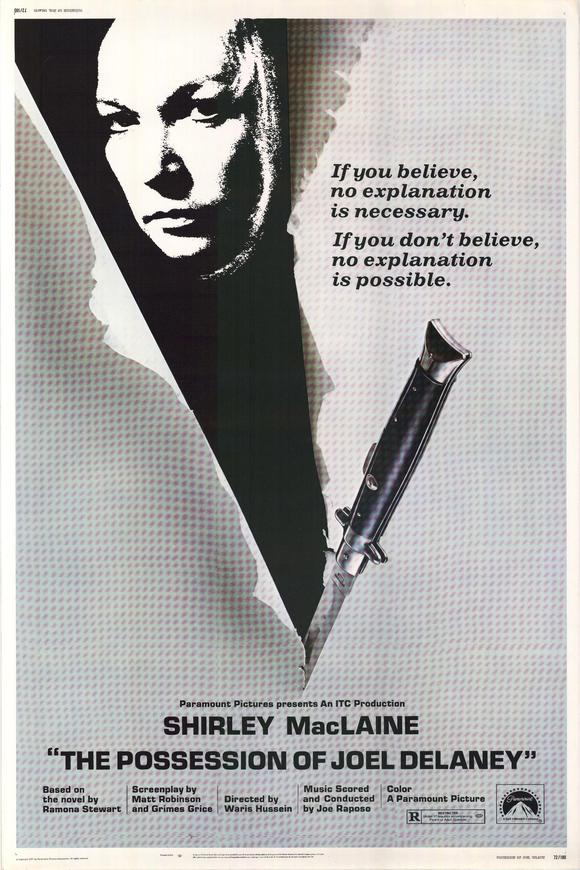
The Possession of Joel Delaney (1972)

the possession of joel delaney

By Richard Winters

My Rating: 7 out of 10

4-Word Review: Possessed by his friend.

Norah (Shirley MacLaine) is a divorced mother of two living in a well-off neighborhood of New York that is also keeping a watchful eye on her younger brother Joel (Perry King). He is a recent college grad returned from an overseas stay and still looking to find his way in the world. He lives in a poorer section of town and does so to keep a distance between he and his sister who he feels has domineering traits like his now deceased mother. As things progress he begins to show odd, frightening behaviors that at times turn violent and when conventional therapy doesn’t help Norah turns to a Puerto Rican witch doctor that is convinced that Joel is possessed.

What makes this film so intriguing is that it has far more layers than a typical horror film and its most interesting aspect isn’t the occult at all, but instead the vivid look at New York’s contrasting socio-economic and cultural make-up. It shows how buffered the rich are from the poverty stricken areas of the city and how completely helpless they become when thrown into that environment. In fact Norah’s most frightening moments are when she is taken out of the safety zone of her pampered lifestyle than in dealing with the possession of her brother.

MacLaine’s character is not too likable, but this ends up being a positive. Her exchange with a clerk at a mental hospital when she expects to receive preferential treatment is amusing as is her obliviousness to her surroundings when she walks into a rundown tenement building wearing a gaudy fur hat and coat only to later finally get the sense to take it off when walking down the street of a tough neighborhood.

King is perfect choice for the role as his clear blue eyes give off a naturally creepy look and his moments of possession are some of the most unnerving parts of the film although I would have liked more time to have been given showing him in more of a normal state. His relationship with his sister also exposes an underlying sexual theme that never gets sufficiently explored

Although the terror is more cerebral it still has some choice moments including a shot of a decapitated head of a woman hung over her nude body as well as Maclaine’s extremely odd reaction to it. The ritual involving the attempted removal of the dead soul from Joel’s body has a nice cinema vertite flair and when the man lights some kerosene on the floor and steps in it with his bare feet it looks genuine and not staged. The climatic sequence that takes place in a remote beach house is intense and includes the controversial scene showing a young boy being forced to strip as well as a young girl having to eat dog food from a dog dish that was excised from many prints, but intact on the Legend Films DVD release. There is also a cool twist that occurs at the very, very end.

My Rating: 7 out of 10

Released: May 24, 1972

Runtime: 1Hour 45Minutes

Rated R

Director: Waris Hussein

Studio: Paramount

Available: DVD