Category Archives: Movies Based on Novels

The Color Purple (1985)

the color purple 2

By Richard Winters

My Rating: 4 out of 10

4-Word Review: Sisters try to reunite.

Celie (Whoopi Goldberg) is a young black woman living in rural Georgia during the early 1900’s. She gets stuck in an arranged marriage to Albert (Danny Glover) who is abusive and has more of an interest in her younger sister Nettie (Akosua Busia).  When Nettie comes to visit them Albert tries to rape her and when she is able to fight him off it enrages him and her throws her out of the house and refuses to let the two sisters ever talk to each other again. Nettie makes efforts to contact Celie through letters, but Albert seizes them and takes them away before Celie can read them. Eventually Celie adjusts to the domineering ways of her husband until she becomes friends with Shug (Margaret Avery) who gives her the strength and confidence to stand up to him.

I have never read the Alice Walker novel from which this film is based, but I feel it would’ve worked better had Steven Spielberg not directed it as it unfortunately gets too much of the patented Spielberg treatment. Every scene reeks of a Hollywoodnized glossiness and certain scenes are so manipulative sappy that it becomes almost painful to watch. The musical score is overplayed and not reminiscent of the time period. A similar film like Sounder worked better because most of the scenes had no background music and was a better reflection of a quieter and slower paced era.

There are also moments of cute comedy, which seems a bit out-of-place and confuses what the underlying intent of the production was. Are the filmmakers trying to make a genuine recreation of a bygone era, or simply entertainment fluff and at points it gets very merged and hard to tell. This film also had some of the tackiest snow scenes I have ever seen. It looks like white stuff that was simply spray painted onto the ground and the shot showing snow falling while there is bright green foliage on all of the trees looks so ridiculous and I wondered why they had even bothered. Also, when talking about someone in a mocking manner as Celie and Nette do about Albert it is probably wise to at least close the bedroom door and make sure the source of your mockery isn’t standing right outside listening in.

Goldberg is good in an uncharacteristically restrained performance although her character is so extremely submissive that it frustrates the viewer and makes you want to reach out and shake her. Oprah Winfrey is quite engaging and simply watching the way she walks up the dirt road driveway when she first appears is a hoot. The scene where she is attacked by an angry mob of white people is the best dramatic moment of the whole film. Avery is also good simply because of her great singing voice and her vibrant rendition of ‘Sister’ is excellent although the ‘sing-off’ that she has near the end with a gospel church choir gets to be too much.

Glover gives one of his best performances and looks so much younger especially at the beginning that I had to do a double-take when I first spotted him. I liked the way that he is shown as domineering and cruel with Celie, but when out in the public he is quite intimidated and quiet with everyone else. Adolph Caesar who plays Albert’s father is a real scene stealer especially with his reaction to a glass of water that has Celie’s spit in it and the glib comments that he makes at the dinner table during a family confrontation.

The production values are great, but Spielberg over-directs and it becomes too slick for its own good. The story is never allowed to breathe on its own and a little more of a gritty, raw style was needed. The movie also goes on too long and takes a few too many tangents.

My Rating: 4 out of 10

Released: December 18, 1985

Runtime: 2Hours 34Minutes

Rated PG-13

Director: Steven Spielberg

Studio: Amblin Entertainment

Available: VHS, DVD, Blu-ray
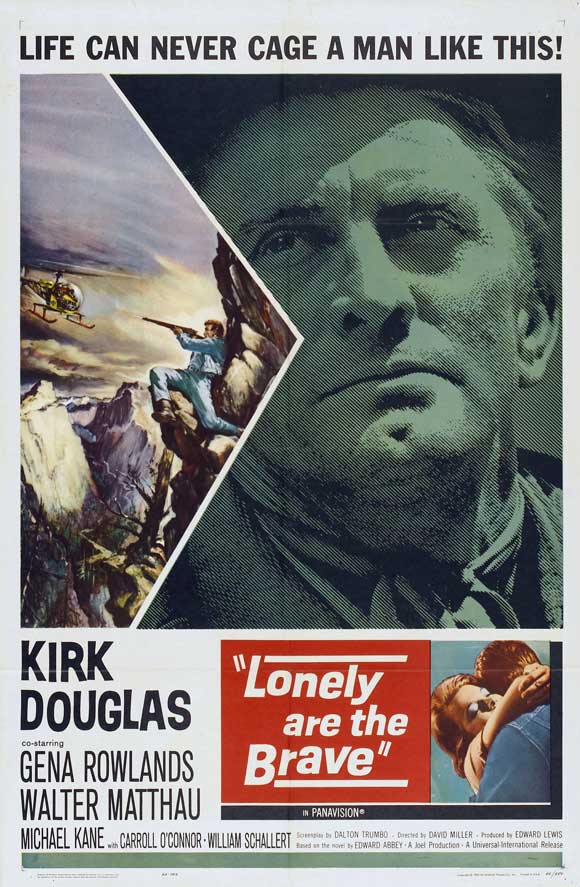
Lonely Are the Brave (1962)

lonely are the brave

By Richard Winters

My Rating: 6 out of 10

4-Word Review: A modern day cowboy.

Jack Burns (Kirk Douglas) is a loner cowboy still trying to live the lifestyle of the old west in the modern day world and who must elude the police and all of their modern technologies when he escapes from jail.

Kirk is excellent. He really connects with the character and allows the viewer to do the same. The cinematography is first rate with spectacular shots of the western landscape. The cowboy’s escape through the rugged terrain as well as the police pursuit is exciting most to the way and there is a terrific well-choreographed barroom brawl between Douglas and actor Bill Raisch who later went on to star as the one-armed man in ‘The Fugitive’ TV-series. This is also a great chance to see some young actors just starting out including Carroll O’Connor and Bill Bixby.

On the negative end I wasn’t too crazy about Walter Matthau and William Schallert as the two policemen who are played too much for laughs. Some of their goofy exchanges are amusing, but it hurts the tension. I also disliked the ending. It does indeed leave an impression and was obviously done to make a statement, but it is not completely effective and is a real downer. It also leaves too many issues open including whether the Douglas character was able to survive.

The high production values help immensely and the story structure keeps things interesting and offbeat as well as exciting. The film though cannot overcome its ending, which isn’t very original and no more profound than hundreds of other stories and movies dealing with the same subject.

My Rating: 6 out of 10

Released: May 24, 1962

Runtime: 1Hour 47Minutes

Not Rated

Director: David Miller

Studio: Universal

Available: VHS, DVD, Blu-ray, Amazon Instant Video

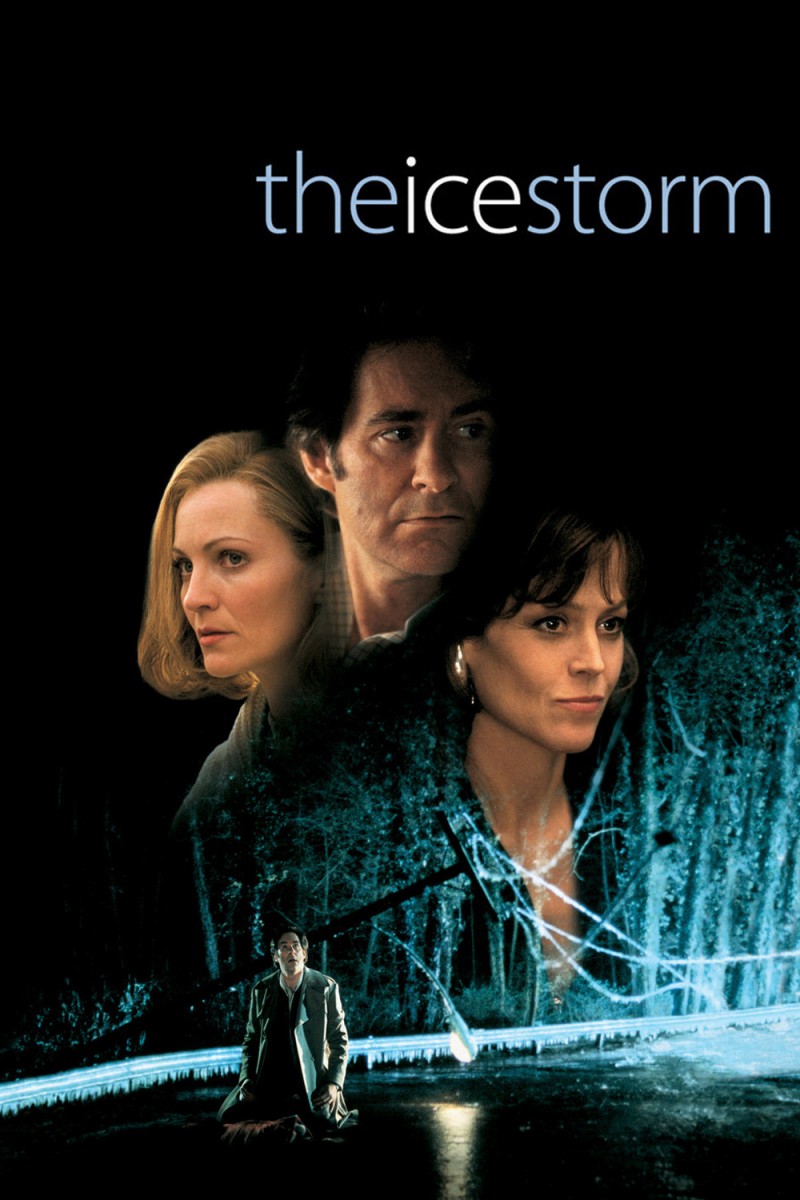
The Ice Storm (1997)

the ice storm 1

By Richard Winters

My Rating: 8 out of 10

4-Word Review: Sex in the 70’s.

The sexual escapades between the various members of two neighboring households in the 1970’s are examined as well as the unexpected results.

This is definitely one of director Ang Lee’s best efforts to date. Some of his other films have been overrated and a bit protracted and yet here everything clicks perfectly. It is great to see Sigourney Weaver in an unusual role and sporting a unique hairstyle. The quirky interplay between both the adults and teenagers is interesting and revealing. It is nice to have a period piece and in this case the 70’s, that doesn’t feel the need to drown the viewer with heavy and unnecessary period detail. The use of the ice storm as a dramatic motif is well done and Joan Allen’s performance as the betrayed wife is especially strong. The ‘key party’ scene is amusing and the overall themes that this film conveys are universal and easily relatable.

On the negative end it seems like the filmmakers have never experienced an actual ice storm because if they had it would have been done differently. The main issue is that the moisture should come down in the form of ice pellets or sleet, not like actual rain that just forms into ice once it hits the ground. Also, when one has to drive after an ice storm, which I have done many times, it is important and necessary to scrap off the ice from not only the front window, but the side windows and the rear one as well. Kevin Kline’s character drives his car the next day while only having scraped the ice off the front window. Not only is this completely impractical, but it would also make it a very serious driving hazard. The conclusion, which is intended to be powerful, seems a bit aloof and doesn’t have the impact that it should and would have worked better had we been able to see all the character’s reactions.

Overall this is a movie that comes through on its vision and is a good independent film for the sophisticated viewer.

My Rating: 8 out of 10

Released: May 12, 1997

Runtime: 1Hour 52Minutes

Rated R

Director: Ang Lee

Studio: 20th Century Fox

Available: VHS, DVD, Blu-ray (The Criterion Collection), Amazon Instant Video

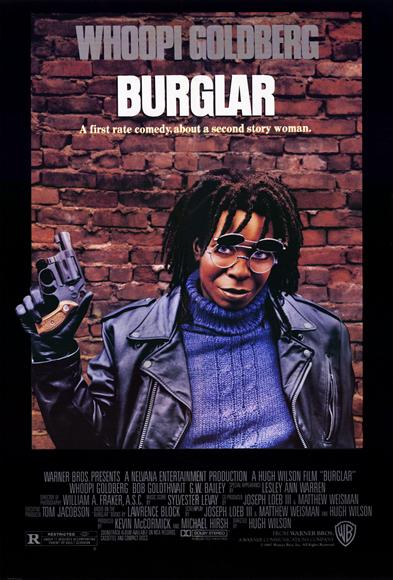
Burglar (1987)

burglar

By Richard Winters

My Rating: 3 out of 10

4-Word Review: Burglar witnesses a murder.

Bernice who goes by the nickname of Bernie (Whoopi Goldberg) is a cat burglar who gets hired by a dentist named Cynthia Sheldrake (Lesley Ann Warren) who wants Bernie to rob her ex-husband’s apartment and steal back her jewelry. When Bernie enters the apartment she has to hide in the closet when the ex-husband comes home earlier than expected and it is there that she hears him get murdered. Cynthia implicates Bernie in the crime and it is up to Bernie to track down the real killer before the police catch up with her.

The usually entertaining Goldberg doesn’t seem right for the part, which was originally intended for Bruce Willis. Except for a few amusing moments she is not all that funny and seems to be coasting most of the way and even out-of-place. For some reason she wears blue contacts and they look hideous. She also seems just a bit too nice for a career criminal that has spent time in jail and should be little more rough-around-the-edges. Having her constantly concerned about doing the ‘ethical’ thing and only robbing those that ‘deserve’ it doesn’t quite jive.

Bobcat Goldthwait as her dog groomer friend Carl is more of distraction than anything. His quivering, high pitch schtick comes off like someone with a serious psychological or physical problem and more creepy than funny. His line stating that drinking olive oil before drinking alcohol will prevent one from getting drunk later became the amusing basis for the film Calling Bobcat.

The supporting cast ends up being funnier than the two leads. John Goodman and Anne De Salvo have a few good moments as a bickering and perpetually perplexed cop duo. Warren is also good as an all-around bitch and all three performers deserved more screen time.

The film features Whoopi riding a motorcycle and being chased by police down the hilly, winding streets of San Francisco, which to an extent resembled the chase sequence in What’s Up Doc?. However, the chase is so poorly photographed and edited that it becomes hard to follow and nothing more than a collage of jump cuts.

There is another scene where the police try to enter her apartment which is equipped with a steal door, all sorts of booby traps and even a hidden room. On one hand this is kind of funny, but on the other it is wholly unrealistic. If this had occurred in a house that she owned I might have bought into it, but I would think that the noisy construction of all these contraptions would have had her reported to the landlord and she would have been evicted. Also, how is one able to build a hidden room in an apartment building without it affecting the neighboring tenants? There is also the issue that she states earlier that she had just been released from jail, so where did she find the time to build all this stuff?

The story itself lacks intrigue, relies too much on coincidence and eventually becomes implausible. I liked the use of the Bay area locations particularly the fog setting at the end, but otherwise this is just a bunch of overblown nonsense.

My Rating: 3 out of 10

Released: March 20, 1987

Runtime: 1Hour 44Minutes

Rated R

Director: Hugh Wilson

Studio: Warner Brothers

Available: VHS, DVD, Amazon Instant Video

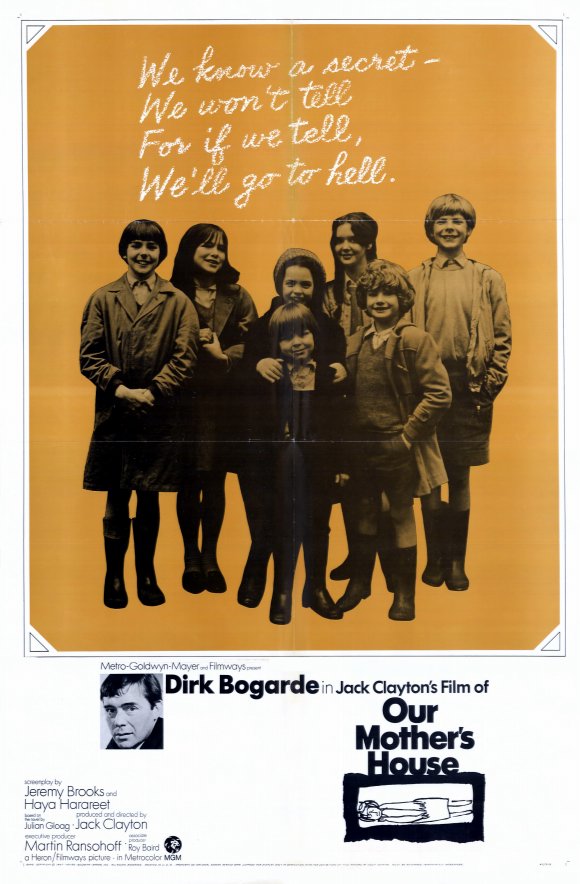
Our Mother’s House (1967)

our mothers house 1

By Richard Winters

My Rating: 6 out of 10

4-Word Review: Life after mother dies.

Seven children live with their mother inside a large English house. She is sickly and when she dies they decide to keep it a secret by burying her body in the back garden and then continuing on as normal as they fear they will otherwise be sent off to an orphanage. Things go surprisingly well for the most part, but then their alcoholic father Charlie (Dirk Bogarde) reappears after a long absence, which sends everything spiraling out of control.

Director Jack Clayton lends an amazing amount of control and freedom to the child performers and the result is fantastic. The kids give solid performances and really carry the movie. Margaret Brooks as Elsa is a standout and shows great maturity especially with the way she stands up to the Bogarde character. Phoebe Nicholls is also terrific and looks like a young Sandy Dennis. Mark Lester did this just before doing his star turn in Oliver and he is cute, but his stuttering is annoying.

Although the character is obnoxious, one-dimensional and predictable Bogarde does a fine job as always in his part in what was a bit of an offbeat turn for him as he doesn’t appear until about forty-five minutes in. Yootha Joyce is entertaining with her bit as the children’s callous nanny. She has interesting facial expressions and voice tones, which makes the most of her otherwise small role. She is probably most famous for playing the equivalent of the Mrs. Roper character in the British version of ‘Three’s a Company’, which was ‘Man about the House’ and it is a shame that alcoholism cut both her career and life short.

The film weaves an interesting atmosphere and this is the type of story where you have no idea where it is going. I also liked some of the side diversions that Clayton incorporates including having the children take a boat ride around the famous Dinosaur Court in the Crystal Palace Park. Erected in 1854 these were the very first dinosaur sculptures ever made in the world.

I also found it interesting that there are scenes showing the children praying and even reading Bible verses. This is not a spiritual film in any way and I personally have no stand on the issue, but it brought to mind how mainstream films today never show anyone ever praying even though a lot of regular people still do it and by putting it into the story it makes it more realistic instead of less.

The only real issue that I had with the movie that otherwise has some very intriguing elements is the ending, which comes pretty close to being a copout and leaves way too many loose ends open.

My Rating: 6 out of 10

Released: October 9, 1967

Runtime: 1Hour 44Minutes

Not Rated

Director: Jack Clayton

Studio: MGM

Available: YouTube

The Magic Garden of Stanley Sweetheart (1970)

the magic garden of stanley sweeheart

By Richard Winters

My Rating: 3 out of 10

4-Word Review: An aimless, carefree lifestyle.

Based on the novel by Robert T. Westbrook who also wrote the screenplay the film centers on Stanley (Don Johnson in his film debut) an underground filmmaker living in an apartment that is almost continually bombarded with the noise of a construction site next door. He has big dreams and ambitions, but at times seems awkward and unsure of himself. He meets Cathy (Dianne Hull) who he initially is just interested in for sex, but then he starts to fall-in-love with her and when she breaks up with him he finds it hard to handle.

The movie starts out well. I enjoyed the free-style direction and narrative. Cutting back and forth showing things as they are versus how Stanley would like them to be is fun, but the film deviates away from this when it would have been more interesting had it stayed this course all the way through. There is a certain element of one of Andy Warhol’s anti-movie movies here where the film tries to challenge the viewer’s conventional understanding of protagonists, plot, character development and all around narrative structure and it is no surprise that Warhol really liked this movie. It does have a strong cinema vertite approach that gives you a feeling like you are right there with the characters and to a certain extent helps bring the 60’s back to life.

Unfortunately the direction is too lackadaisical and unfocused and the story is uninteresting. Looking more at Stanley’s underground films could have given it a little more bite, but we only get a glimpse of one of his movies and then that thread is pretty much forgotten. The second half of the film centers on Stanley’s relationship and ultimate break-up with Cathy, which is too contrived and does not compliment the film’s otherwise offbeat approach. Funky and irreverent moments of humor are lost with a storyline that doesn’t seem to know where it wants to go or what to say. Tighter editing could’ve helped avoid some long stretches where nothing seems to happen.

The film though still has some interesting and unique scenes. I got a kick out of Stanley’s cluttered apartment and how he has to smell his food in his refrigerator to see what is still edible and for entertainment he stamps on cockroaches crawling across his floor. The part where he masturbates in a bathtub while reading a letter written by his mother is hilarious. His attempts at making a porno by getting his actress (Holly Near) good and drunk only to get her hornier than he is amusing. The naked body painting sex orgy that he has with two young nubile roommates has a nice sensual quality.

Don Johnson is excellent and the one thing that keeps this wandering film together and he can be seen totally nude from both the front and back. Hull allows for some diversion as a sheltered young lady who is initially shocked by the open sexuality around her, but eventually learns to embrace it. Native American actress Victoria Racimo is hot with her clothes on and off and reminded me a lot of 70’s adult film star Hypathia Lee. Brandon Maggart makes the most of his small bit as a gay man trying to come onto Stanley while inside a café. Michael Greer offers some edginess as Stanley’s slightly menacing friend Danny. His violent death that occurs near the end of the film and in front of his shocked mother does leave an impression, but we don’t know enough about the character for it to make much sense and just another thing put into the film without seemingly much thought.

My Rating: 3 out of 10

Released: May 26, 1970

Runtime: 1Hour 50Minutes

Rated R

Director: Leonard Horn

Studio: MGM

Available: None at this time.

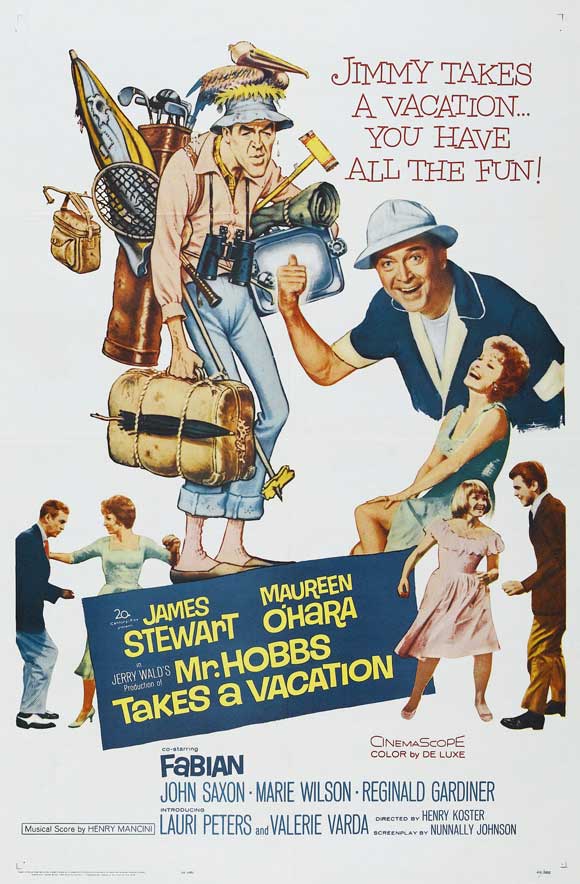
Mr. Hobbs Takes a Vacation (1962)

mr hobbs takes a vacation

By Richard Winters

My Rating: 5 out of 10

4-Word Review: Calamity filled family vacation.

Roger Hobbs (James Stewart) is a slightly cantankerous man in his 50’s who is tired of family vacations as he finds them to be more stress than they are worth. He loves his family, but hates going on trips with them. He dictates a letter to his secretary that is to be opened by his wife (Maureen O’Hara) upon his death detailing his many grievances of one particular trip that they took to a beach-side house that ended up being one catastrophe after another and through flashbacks the viewer relives them along with him.

Stewart is a real blast and the best thing about the movie. He doesn’t have that wide-eyed country boy charm like in some of past roles, but instead is a world-weary cynical man whose constant flow of acerbic comments and observations are quite funny. O’Hara is beautiful and engaging as his wife and helps as a sort of anchor between him and the rest of the family although I thought she looked much too young to be playing a grandmother. 60’s teen-heartthrob singer Fabian can also be seen as Joe a young man who takes a liking to one of Hobbs’ daughters. I liked the beatnik beard that he grows, but the part where he breaks out into a duet with his date in a film that is otherwise not a musical is very weird.

The actual beach house is a crazy sight and looks creepier than the Psycho house and sits literally right on the sandy beach and looking vulnerable to getting flooded during high tide. Beachgoers sit and sunbathe all around it and I would have thought many of them might walk into the house, or peer through the windows, but that angle does not get played up. Some of the myriad mechanical issues that Hobbs has with the building are the film’s funniest moments especially his difficulty getting the water pump going. The film should’ve continued to focus on this story thread all the way till the end, but doesn’t, which is a weakness.

While the movie is cute and pleasing it is also contrived and unoriginal. Many of the scenarios that they have could have easily occurred had they stayed home and the whole vacation concept seems to get lost. The writing and humor are better suited for television and the plot is threadbare. In a lot of ways this could better be described as an ordinary family sitcom with several different episodes strung together.

The visit that they have with a boring couple (John McGiver, Marie Wilson) near the end doesn’t work at all and should’ve been cut as a two hour running time is too long for this type of film to begin with. The scene where Hobbs get stuck in the bathroom with the tipsy and nude visiting wife elicits a few chuckles, but the bird spotting trek that he takes with the husband becomes too much of a pointless tangent. The scene also has a glaring goof because the two men decide to wake up at 4:30 in the morning to start their trek but when they first get outside the sun is already high in the sky and looking like it is the middle of the afternoon.

My Rating: 5 out of 10

Released: June 15, 1962

Runtime: 1Hour 56Minutes

Not Rated

Director: Henry Koster

Studio: 20th Century Fox

Available: VHS, DVD, Amazon Instant Video

Kramer vs. Kramer (1979)

kramer vs kramer

By Richard Winters

My Rating: 10 out of 10

4-Word Review: Life after wife leaves.

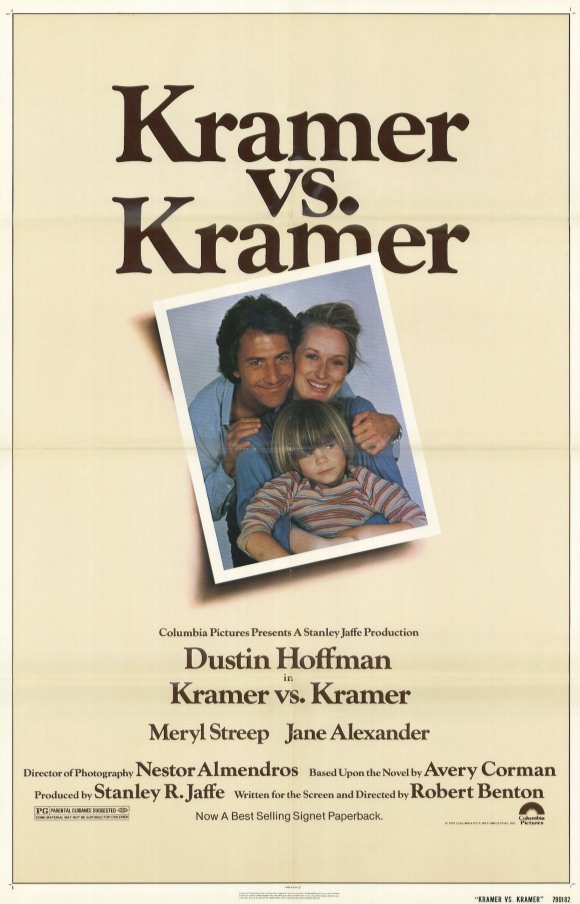
This is a solid drama detailing the divorce and subsequent custody battle between two young, educated and upper middle class parents (Dustin Hoffman, Meryl Streep).

To say that this is simply an examination of divorce and its effects on both the child and parents do not do the film justice as this is a very richly textured story that brings out the many variables that come with being a modern day parent. One of the best is the examination of Hoffman’s character’s job and how ‘moving up the corporate ladder’ can have an adverse effect on a man’s home life and his family members. In fact this is a major factor to his break-up and emotional detachment with his wife.

The film also offers a nice glimpse between father and son and the scenes showing this relationship are quite touching especially as they learn to coexist with one another after the mother leaves. Justin Henry doesn’t get enough credit for his performance as the son. Yes, he is adorable in the typical child-like way, but he also manages to create a child character that is diverse and memorable.

Hoffman gives a superior performance and in many ways it is all about him and his adjustment at playing the dual roles of being both a father and mother. He has his aggressive New Yorker persona, but you understand it and really feel for what he is going through. Even watching him frantically running around from place-to-place is interesting.

Streep is also outstanding in what is kind of an unusual role for her. Typically she plays strong-willed women with a strong on-screen presence, but here her character is rather weak and suffers from problems that are elusive, but still intriguing.

Howard Duff is solid as Hoffman’s attorney and Jane Alexander offers good support as the next-door-neighbor although her character is a bit too ordinary and could have been supplied with a few interesting quirks.

The subject itself is still quite topical and everything is kept in a real perspective with nothing getting overblown or clichéd.  Robert Benton’s direction is flawless as it pays attention to the smallest of details and makes them special.  A good example of this is the poor way the father and son try to make French toast when they first find themselves alone together and then the very efficient way they learn to make them at the end. It is also not all serious as there is a really hilarious scene involving Jobeth Williams who plays Hoffman’s new girlfriend and the unusual circumstances onto which she first meets Henry.

There are a few issues to quibble about, but they are minor. One is that you hear Hoffman and Henry peeing in the toilet a lot, but they never seem able to flush it! There is also a scene where Hoffman who is in desperate need for a job applies for one during a holiday party and when he gets it he runs out, grabs a woman he does not know and kisses her right on the lips. If he tried something like that today he would not only be fired on the spot, but have a sexual harassment lawsuit as well.

My Rating: 10 out of 10

Released: December 19, 1979

Runtime: 1Hour 45Minutes

Rated PG

Director: Robert Benton

Studio: Columbia Pictures

Available: VHS, DVD, Blu-ray, Amazon Instant Video

The House of God (1984)

the house of God 2

By Richard Winters

My Rating: 7 out of 10

4-Word Review: Caustic look at medicine.

This is an interesting, honest, and incisive look at the inner-workings of an average, everyday hospital. Here we have a group of interns fresh out of medical school that come face-to-face with the harsh realities of the hospital ‘business’. Their youthful ideals and energy is soon stamped out and replaced by apathy and indifference because of the ‘system’.

Even if you have no connection to the medical field you may still find this relatable. The hospital business really is just like the everyday business world with the same politics and contrasting personalities. In particular there’s the Jo character, which is well played by Lisa Pelikan. She is called a ‘slurpy’ and can best be described as a ‘company person’ someone with no outside life and thus becomes married to her job. She goes “all out” for every patient, even if they don’t want it, simply to hide her own emptiness and need for approval. You can find one in any office as well as an administrator who is completely oblivious to what is going on and tries to solve all issues by simply talking in circles.

The core group of interns is very identifiable. They start out as one, but eventually break apart. Some adopt the system and even play into it. Others begrudgingly learn to accept it while still others decide to simply drop-out altogether.

It is hard to put this film into any one type of category. It starts out as a sort of absurdist comedy, but then becomes much more realistic. There are moments of both satire and drama, but the second half becomes all serious.

There’s no real cinematic style and the overall visual quality is blah. The film can’t really be described as entertaining either. It’s more like an informative film by someone in the know. If you want to be ‘educated’ about what a hospital environment is really like then this needs watching. Charles Haid’s “Fatman” character alone makes it worth it.

Based on the novel by Samuel Shem this film was shelved by its studio and never released either theatrically or on video, which was unusual since this is a quality picture. This was supposedly from pressure by the American Medical Association who felt it painted too much of an unflattering light on hospitals although the book was even more critical. Finding a copy can be difficult although recently it has been broadcast sporadically on THISTV network.

house of God 1

My Rating: 7 out of 10

Released: None

Runtime: 1Hour 48Minutes

Rated R

Director: Donald Wrye

Studio: MGM

Not available at this time.

The Pleasure Seekers (1964)

the pleasure seekers

By Richard Winters

My Rating: 5 out of 10

4-Word Review: Finding romance in Spain.

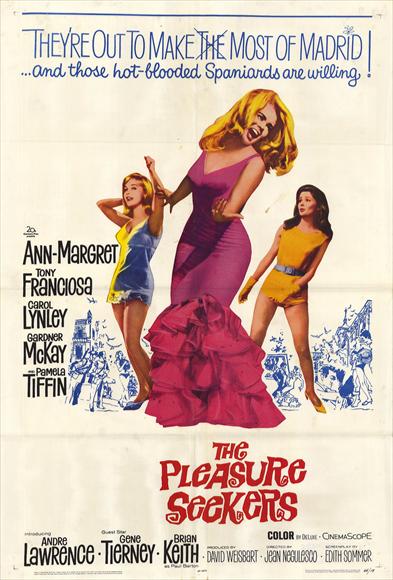
Three young American women decide to room together in Madrid. Fran (Ann-Margret) is the flirtatious, sexy one. Maggie (Carol Lynley) is more stoic and sensible while Susie (Pamela Tiffin) is the most naïve of the trio. Fran falls in-love with a dashing young doctor while Maggie has an affair with her much older boss Paul (Brian Keith) and Susie tries to get her playboy boyfriend Emilio (Anthony Franciosa) to settle down and marry her.

The film is cute and engaging for the most part and helped mainly by the performances and contrasting personalities of the three female leads. Ann-Margret is quite sensual especially when she sings and dances in her bikini on the beach. She also does a great rendition of the film’s title tune and I was at a lost as to why it wasn’t played over the opening credits as it has a definite verve and bounce. Lynley is solid as the more jaded worldly-wise of the three and helps give the story an anchor. Tiffin is amusing with her wide-eyed comments and despite being considered dumb turns out to be quite clever in the way she manipulates her womanizing boyfriend.

I was hoping the film would focus more on their living arrangement as it is evident from the beginning that their different habits and perspectives would be ripe for interesting comic scenarios. Instead the film veers almost exclusively to the romance angle, which makes the film one-dimensional and dangerously close to being completely vapid. Certain prime comic set-ups do not get followed through on and the part where Susie allows herself to be lead into Emilio’s car before she even knows his name is just too recklessly insane even for a more innocent era. The songs are sparse and spread so far apart that you almost forget that it is a musical. I did like the flamingo dance segment done on stage by a talented male performer and then later at the beach by two children who couldn’t have been more than 3-years-old.

Normally I am a great admirer of Brian Keith, but his appearance here is all wrong. His gruff, brash manner does not work as a love interest and there is absolutely no chemistry between he and Lynley making their love affair seem unbelievable. This was also Gene Tierney’s last film.  She gets a rather thankless, small part as Keith’s jilted, bitter wife. Her hair is much shorter and she looks very middle-aged and lost all her youthful beauty that she had during her classic film roles of the 40’s and 50’s, but her confrontation with Lynley during a party is okay.

Basically this is an updated version of Three Coins in the Fountain, which was done by the same director and the only difference being that it took place in Rome. The film is pleasant enough to be watchable, but rather empty and mindless and best suited for romantics looking for an evening of mild entertainment.

My Rating: 5 out of 10

Released: December 25, 1964

Runtime: 1Hour 46Mintutes

Not Rated

Director: Jean Negulesco

Studio: 20th Century Fox

Not Available at this time.