Category Archives: Movies Based on Novels

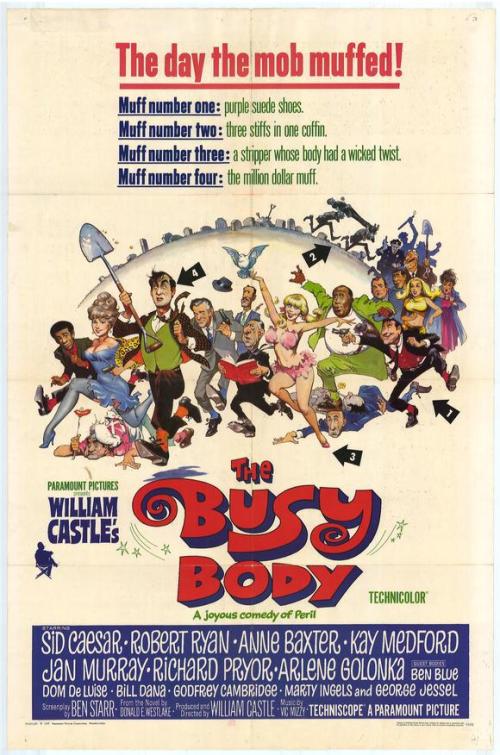
The Busy Body (1967)

busy body

By Richard Winters

My Rating: 3 out of 10

4-Word Review: Find the dead body.

George Norton (Sid Caesar) is a nebbish mama’s boy who, for whatever reason, gets taken in by Charley (Robert Ryan) a Chicago mob boss. Charley even gives George a seat on his board of governors. When a fellow crime boss (Bill Dana) gets killed in a freak accident it is George who selects a blue suit for the corpse to wear at the funeral. Unfortunately that blue suit was lined with a million dollars and Charley demands that George dig up the body and retrieve the money, but when he does he finds that the body is gone and thus begins a long, winding, ‘madcap’ search for the missing body and money.

Noted horror director/producer William Castle decided late in his career to give comedy a stab and this is the result. The beginning is mildly amusing, but the humor gets terribly strained and a 100 minute runtime is just too long for such trite material. Everything gets suppressed into silliness with an overplayed music score that has too much of a playful quality to it making the whole thing thoroughly ingrained on the kiddie level from start-to-finish.

Dom DeLuise has an amusing bit as a mortician that would really rather be a hairdresser and Kay Medford is quite funny as George’s doting mother, but the rest of the supporting cast is wasted, which includes Richard Pryor, in his film debut, playing in a role that does not take advantage of his comic skill. Caesar is just not leading man material and his vaudeville-like shtick is quite passé and predictable. His co-star Ryan is far funnier and without having to try half as hard.

The plot goes off on wild tangents until it becomes impossible to follow and quite pointless. The whole production is horribly dated and will not appeal to kids or adults. In fact the film’s intended audience has long ago passed away making this thing a silly relic of its time and nothing more.

My Rating: 3 out of 10

Released: March 12, 1967

Runtime: 1Hour 40Minutes

Not Rated

Director: William Castle

Studio: Paramount

Available: DVD, Amazon Instant Video

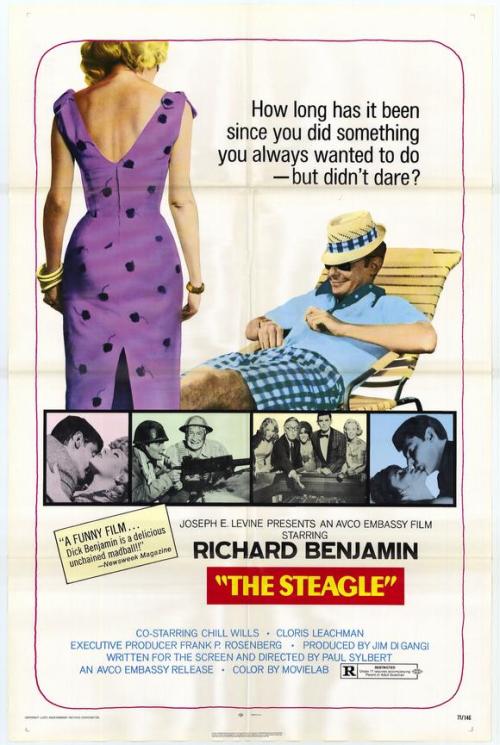
The Steagle (1971)

steagle 2

By Richard Winters

My Rating: 5 out of 10

4-Word Review: Living out his fantasies.

The year is 1962 and the Cuban missile crisis is in full-throttle. The threat of a possible nuclear war has everyone on edge and having to hear about it every night on the news just makes things worse. Harold (Richard Benjamin) decides to use this opportunity to ‘escape’ from his drab existence. Both his marriage to Rita (Cloris Leachman) and his job as a college professor have grown stale. If the end is near then Harold wants to live-it-up to the fullest, so he travels to Vegas, has sex with hot women while also living out other outrageous fantasies.

The film was directed by award-winning set designer Paul Sylbert and for the most part, at least at the beginning, is right on-target. The mood and design looks authentically like the early ‘60s and the story nicely taps into the secret fantasy life that most likely harbor in the back-of-the-minds of just about every middle-age person out there. The viewer effectively feels Harold’s frustration during the first half and then just as effectively feels the rush when he finally decides to break free and go wild.

The story is consistently amusing throughout with the most memorable bit coming when Harold decides to speak in gibberish while giving a lecture to his class. Benjamin is perfect for the part playing a character with a snarky, sarcastic personality that hides just beneath his otherwise formal veneer. Ivor Francis is great in support as a minister who Harold meets on his travels that, like with him, wants to escape from the shackles of his daily existence. Chill Wills is good too playing a loopy ex-actor who thinks he’s Humphrey Bogart and traps a group of men inside a bathroom and won’t let them out until after they hear his rendition of a scene from The Maltese Falcon.

The film’s biggest drawback though comes from the awkward transition between Harold fantasizing about these things and then finally deciding to go through with it. The film never bothers to show how he manages to get away from his wife and kids. Does he sneak out in the middle of the night unannounced, leave a note, or simply tell them that he needs to ‘get away for a while’? Nothing is ever shown even though I felt that this scene was quite crucial and needed to be put in. The ending is equally frustrating as we never find out what happens when Harold finally decides to go back, which makes the film as a whole come off as incomplete and one-dimensional.

My Rating: 5 out of 10

Release: September 15, 1971

Runtime: 1Hour 30Minutes

Rated R

Director: Paul Sylbert

Studio: AVCO Embassy Pictures

Available: VHS, DVD (Mill Creek)

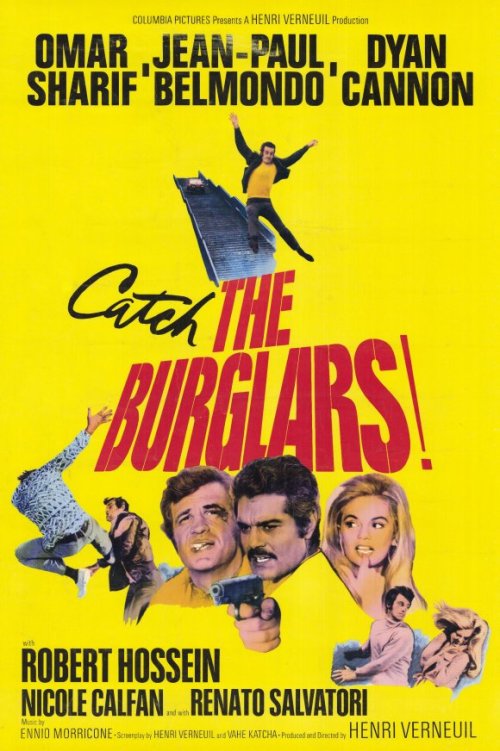
The Burglars (1971)

burglars 1

By Richard Winters

My Rating: 5 out of 10

4-Word Review: Corrupt cop hounds thief.

Azad (Jean-Paul Belmondo) and his cohorts pull off a daring heist by robbing a gem collector of his emeralds in his home by using a state-of-the-art machine that is able to create a key to the safe on the spot by simply entering in the safe’s serial number. However, things go awry when Abel (Omar Sharif), a corrupt police captain, becomes suspicious of their activity after seeing the gang’s car parked on the road. Initially he lets them off, but only so he can follow them later and then blackmail them for the jewels, or threaten them with prison otherwise.

The film, which is based on the novel by David Goodis and made 14 years earlier as The Burglar, which starred Jayne Mansfield, has all the trappings for being a classic heist film. I enjoyed watching the intricate way they are finally able to crack open the safe, which takes up much of the first half-hour. I also liked the creative action, stunt work, story twists, luscious Greek scenery and musical score by the legendary Ennio Morricone. Unfortunately none of this is able to overcome a rather plodding pace and a lingering feeling that you’ve seen it all before.

The film’s biggest claim-to-fame is its two chase sequences. The first is similar to the one done in The Italian Job as two small compact cars drive all over Athens, including on sidewalks, stairwells, and through crowds of people, which is exciting to watch. However, the fact that no one gets injured and no other automobiles are damaged even as the cars drive straight into on-coming traffic is hard to imagine. The camera also cuts to a close-up shot of the lead car driving on its rim, but somehow the vehicle is still able to continue to go several more miles on rough surfaces and high speeds, but why have a shot like that inserted if it ultimately doesn’t mean anything?

The second chase works better, which involves Belmondo hanging onto the side of a bus as it travels speedily down a crowded city street while he tries to kick shut the door of a police car that is following, which is quite realistic looking especially since it appears to be Belmondo himself and not a stunt double doing it. This one culminates with Belmondo being tossed from a dump truck and down a steep hill while other large rocks roll with him, which again is impressive, but the fact that he doesn’t even receive a scratch from it is hard to believe.

Sharif is outstanding in a rare turn as a bad guy. He commands every scene that he is in and in the process makes co-star Belmondo seem forgettable and unable to equal the same strong presence. Dyan Cannon, who is the only American in the cast, gets a pointless part as a pin-up magazine model that catches Belmondo’s eye. Her character doesn’t appear until an hour in and is not all that integral to the plot. Her voice is also clearly dubbed in the French version, which makes her acting here limited and probably not worth signing up for to begin with.

The climactic finish that entails a man being drowned inside a grain elevator is novel as is the final moment inside a giant, mobile chicken coop with thousands of loud, clucking chickens, but overall the film fails to illicit much tension and would’ve been better had the runtime been trimmed and the scenes shortened.

burglars 2

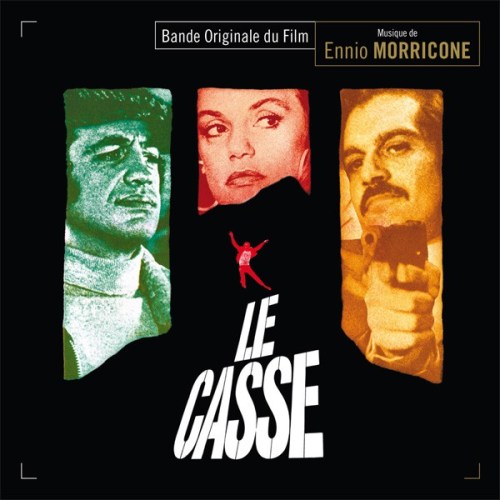
Alternate Title: Le Casse

My Rating: 5 out of 10

Released: October 24, 1971

Runtime: 1Hour 57Minutes

Rated PG

Director: Henri Verneuil

Studio: Columbia Pictures

Available: DVD-R

The Andromeda Strain (1971)

andromeda strain

By Richard Winters

My Rating: 7 out of 10

4-Word Review: Isolating a dangerous virus.

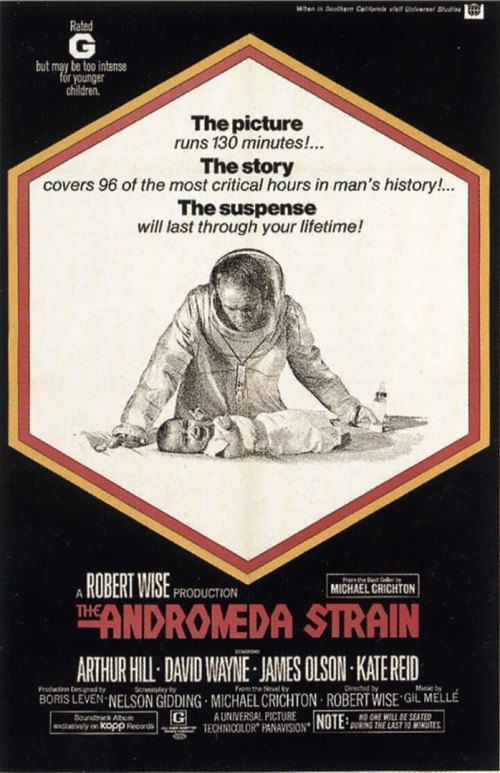
When a satellite returns to earth it brings back a mysterious virus that ends up killing all the residents of a town where it lands. Two scientists Dr. Jeremy Stone (Arthur Hill) and Dr. Dan Hill (James Olson) go to the town to investigate and find that the only survivors are a wino (George Mitchell) and a six-month-old baby. They bring these two people along with the remnants of the satellite back to a secret Nevada lab known as Wildfire that’s buried deep below the ground. It is here after close examination that they are able to observe the virus, which appears as small green dots on the satellite, but they fail to realize that this virus can also mutate and presents an even greater risk to them in the lab.

One of the major selling points of this film is the fact that it keeps everything within the realm of ‘realistic sci-fi’. No bubblegum action, scary monsters, or any other form of over-the-top dramatics get added; instead it’s on a ‘thinking man’s level’ with an extraordinary attention to detail. I enjoyed seeing all of the decontamination procedures that the crew is forced to go through before they are even allowed to begin their investigation. The isolated lab, which is hidden beneath what looks to be just an ordinary farmhouse and shed, is really cool and director Robert Wise’s use of the split-screen during the search of the town is both flashy and slick.

Showing the scientist’s personal lives and how the government agents literally demand that they drop what they are doing and come with them helps humanize the characters to a degree. I also liked how the male character of Dr. Peter Leavitt in the Michael Crichton book from which this is based gets switched to a female character here, which helps add an extra dynamic and is very well played by Kate Reid. In fact the only thing about the character’s that I didn’t like, aside from Arthur Hill’s sterile performance, is when we see the dreams of the doctors as they sleep, which seemed corny and unnecessary.

The mysterious nature of the virus is compelling and I certainly enjoyed the way they were able to detect it by scanning the satellite with cameras that could focus onto the object in minute detail, but the plot itself gets stretched farther than it needs to. There are a few interesting twists, but it starts to feel quite labored around the 2-hour mark and the climatic finish isn’t all that intense and seems rather stagy and predictable.

I was also amazed that this film achieved a G-rating. For one thing there isn’t much action and the narrative is on a more sophisticated level that is clearly aimed at adults and something most children won’t be able to pick up on. Also, one of the victims that the two men come upon is of a woman with no top on. The image is brief, but her breasts are clearly exposed making this one of the few G-rated movies to feature nudity.

My Rating: 7 out of 10

Released: March 12, 1971

Runtime: 2Hours 11Minutes

Rated G

Director: Robert Wise

Studio: Universal

Available: DVD, Amazon Instant Video, YouTube
The Clan of the Cave Bear (1986)

clan of the cave bear

By Richard Winters

My Rating: 5 out of 10

4-Word Review: Girl gets new tribe.

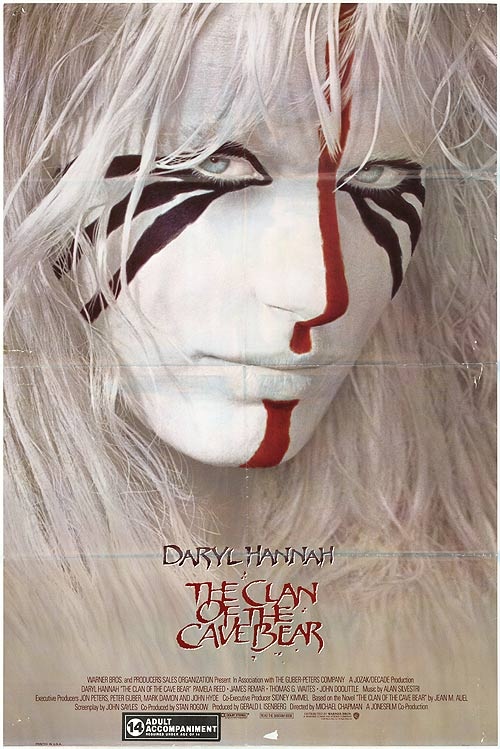
After her mother is killed in an earthquake and escaping from the clutches of a hungry lion a very young Ayala (Daryl Hannah) gets taken in by a tribe of Neanderthals. Her addition causes strife amongst the other members particularly Broud (Thomas G. Waites) who feels she doesn’t conform enough to the subservient female role. When it is found that she has taught herself to hunt by using weapons that the women were forbidden to touch she is kicked out of the tribe and forced to survive on her own.

I realize that this film has been almost universally lambasted by movie goers and critics alike, but overall I found it to be watchable. The biggest issue in many ways were the action sequences. The opening earthquake bit as well as the lion attack comes off as stagy and phony and even border on being unintentionally funny. Later on when Ayala saves a young child from a wolf the movie reverts to slow motion, which gives it too much of an over-the-top Hollywood feel. There is also another segment where the cavemen torment a grizzly bear as part of an ancient tribal ceremony. Some of the men get torn up and killed by the bear, which to me was just fine as they should’ve left him alone in the first place!

Hannah is the perfect choice for this type of role, but for whatever reason her performance seemed a bit off and not as effective as it could’ve been. She was also probably too tall for the part as people back then was much shorter than they are now.

The movie has a little too much melodrama and eventually resembles just another cheesy Hollywood drama. The authenticity is questionable and the grittiness from the more popular Quest for Fire is definitely missing. I also wasn’t too crazy about the outdoor shots, which includes the opening one, that shows sunlight filtering through the tree leaves in a haze-like fog that gives it too much of a fairy tale-like look.

The part where Ayala is forced to survive on her own goes by too quickly and hardly seems as brutal as it should’ve been and I was also confused about how she was able to come upon this fur shawl to wear that protected her from the cold because when the tribe kicked her out she left with nothing but the flimsy outfit that she had on.

Yet despite all this I still found it to be reasonably compelling. Maybe it’s just the idea of seeing an individual learn to survive on her own, standing up to unjust authority and learning to find independence that manages to connect us no matter what the time period, but in either case it’s an okay time filler if you don’t think about it too much.

My Rating: 5 out of 10

Released: January 17, 1986

Runtime: 1Hour 38Minutes

Rated R

Director: Michael Chapman

Studio: Warner Brothers

Available: DVD (Warner Archive), Amazon Instant Video, YouTube
Quest for Fire (1981)

quest for fire

By Richard Winters

My Rating: 6 out of 10

4-Word Review: Cavemen search of fire.

After their tribe is attacked by another one and their only source of fire put out three male members from the group (Everett McGill, Ron Pearlman, Nicholas Kadi) set out to find fire from somewhere else and bring it back to the others.  Their quest is not easy as they are forced to travel through harsh terrain, escape from man eating tigers, and fight off a tribe of cannibals. They also meet up with Ika (Rae Dawn Chong) who comes from a more advanced tribe where the members live in huts instead of caves and who also harbors the secret to starting a fire, which she just might share with the others.

Filmed on-location in Canada, Scotland, and Kenya this film brings to life the true nature of prehistoric times in vivid detail and better than any other movie that has dealt with the same subject. The male actors were fitted with masks that gave them ape-like features and except for one brief moment there is no discernable line of dialogue and communication is spoken through grunts and groans as well as words not connected to modern day language. Some DVD issues do have subtitles, but to me this is taking the viewer out of the experience as the whole idea is to allow one a true sense of how things where like back then and therefore forcing one to try to understand things through the primitives means of communication during that period is the only way to do it and I’m thankful that the theatrical version and the streaming version that I saw did not offer them.

While I applaud the filmmaker’s commitment to keeping things close to the true form as possible and not willing to compromise it simply to make it more accessible to a mainstream audience I still found it to be confusing at spots and even at times boring. The opening battle between the two tribes seemed almost unintentionally funny and the loud, booming music played over most of the movie is a bit off-putting as there was clearly no music at the time of the setting, so silence or natural sounds would’ve kept it truer to the authentic tone.

There is also a scene where the men come upon the remains of some meat left from another tribe. The men are hungry and begin eating the remains only to realize that what they are chewing on is human flesh, which sickens them and they spit it out, but I wasn’t so sure that genuine Neanderthals such as the ones portrayed here would be so ‘civilized’ and instead more concerned with simply satisfying their hunger needs.

Rae Dawn Chong’s presence is a major plus and the movie gets more interesting when her character appears. She remains fully nude at all times while covered in body paint, but isn’t as erotic as you might think. The scene where she gets raped by the men late at night is brutal, but authentic to the animalistic level that I would assume sex would be approached with during that time period. The way her character ends up bonding and even forming a romantic attachment to the one of them as the film progresses is genuinely touching.

The film has a lot of lulls and may be just too unique for some. I found myself intrigued at certain parts and bored at others, but the scene where the men watch in amazement when Chong creates a fire for the first time is a surprisingly exhilarating moment where the viewer feels the same emotion that people back then must’ve felt, which to be able to convey such a feeling to a modern audience is an achievement in itself and a sign of astute filmmaking at its finest.

My Rating: 6 out of 10

Released: December 16, 1981

Runtime: 1Hour 40Minutes

Rated R

Director: Jean-Jacques Annaud

Studio: 20th Century Fox

Available: DVD, Blu-ray, Amazon Instant Video, YouTube
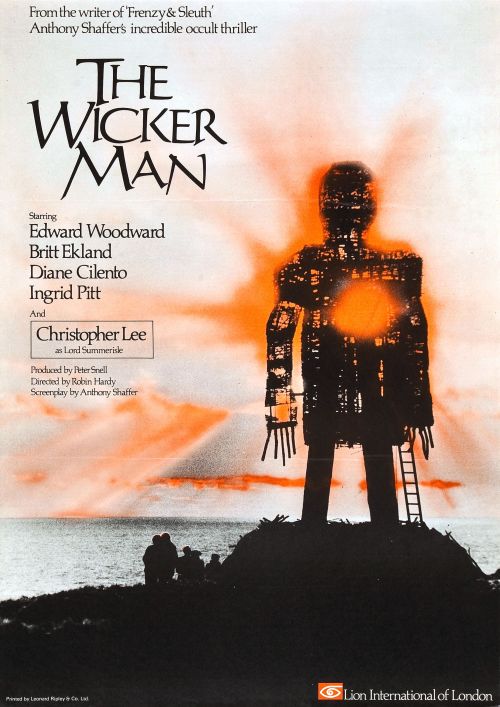
The Wicker Man (1973)

the wicker man 1

By Richard Winters

My Rating: 8 out of 10

4-Word Review: Pagans on an island.

Police sergeant Howie (Edward Woodward) receives a letter stating that their daughter named Rowan Morrison (Gerry Cowper) has disappeared and it compels him to travel by plane to an obscure island village off the coast of Scotland to find her. Once he arrives he finds nothing but resistance from the people and everyone denying that she even exists. He also learns that the people practice a pagan type of religion and begins to suspect that the girl’s disappearance may have something to do with the upcoming harvest celebration and decides to infiltrate the proceedings in order to weed-out the culprits and find the girl.

The film, which was inspired by the 1967 novel ‘Ritual’ by David Pinner, manages to be quite intriguing despite being material better suited for a short story. The whole concept is woven around the big twist that occurs at the end and everything that occurs beforehand is simply a lead up to that, which could’ve been a stretch for feature length but director Robin Hardy’s tight editing and deft use of atmosphere keeps things permanently lodged in the creepy and compelling even though I did figure out at around the 60 minute mark where it ultimately was headed. The film’s original length is supposedly longer than the 1Hour 28Minute release that is currently available, but to be honest I felt this was a perfect runtime for this type of story and stretching it out further would’ve simply been diluting it.

Edward Woodward, who later became familiar to American audiences with his starring role in the TV-show ‘The Equalizer’, is terrific in the lead and I liked that fact that the character wasn’t a completely ‘nice guy’ either, but instead rigidly entrenched in his Christian religious beliefs and arrogantly convinced that his spirituality was superior to anyone else’s. Christopher Lee again makes a good nemesis even though his mod hair style looks a bit goofy. Britt Ekland is on hand as well singing a weird song and even doing a provocative dance although the nude scenes of her from the waist down were done by a body double.

the wicker man 2

The only issue that I had with Anthony Shaffer’s script is the fact that the sergeant must go back to the mainland to get more men from the force to help him search for the girl, which to me was a bit of a loophole because I would think he could’ve just gotten on a phone and called in for more backup without arduously having to travel back. The facts that no one else knows where he is seemed a little implausible as well as most people working on the force have a supervisor that they must report to and who is at least somewhat aware of what case they are working on and where they are traveling to do it.

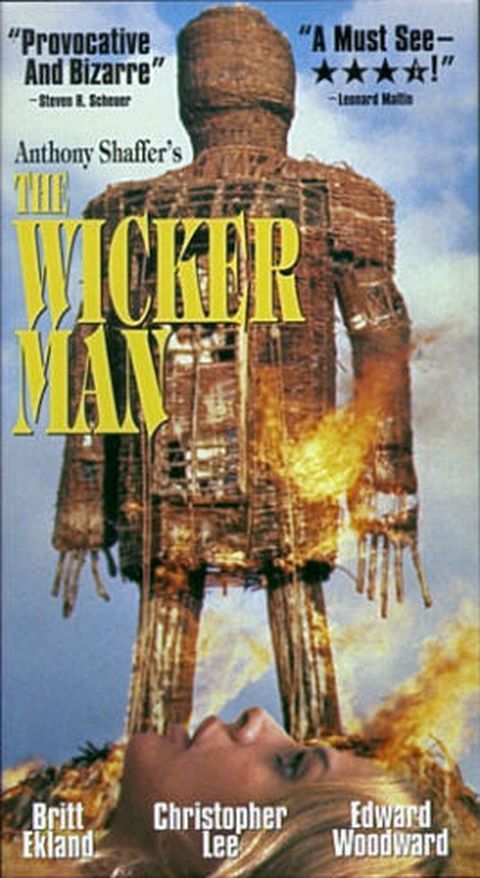
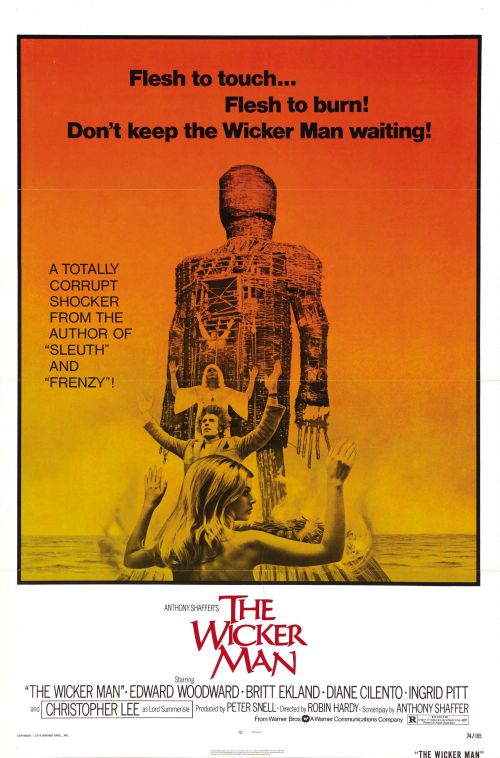
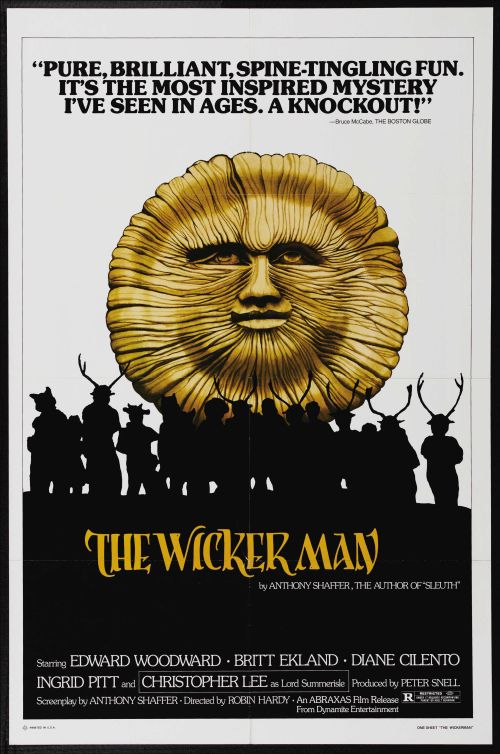
The ending though, which features an actual giant wicker man made of wood is an amazing site. When it gets set on fire with the victim and even some animals trapped inside of it is quite exciting and I liked how the point-of-view shifts between the people who view it from the ground as well as the victim seeing the people on the ground from inside the burning structure.

I remember seeing the 2006 remake starring Nicholas Cage in the theaters. While the details of it are vague I do recollect coming away from it finding grossly inferior in literally every way to this one and something that should be avoided at all costs.

the wicker man 3

the wicker man 4

My Rating: 8 out of 10

Released: December 10, 1973

Runtime: 1Hour 28Minutes

Rated R

Director: Robin Hardy

Studio: British Lion Film Corporation

Available: DVD, Blu-ray, Amazon Instant Video, YouTube
The Lady in the Car with Glasses and a Gun (1970)

lady in the car

By Richard Winters

My Rating: 5 out of 10

4-Word Review: Dead body in trunk.

Dany (Samantha Eggar) works as a secretary for Michael (Oliver Reed) who asks her to come to his place one evening to help him type an urgent report that needs to go out the next day. She agrees and then spends the night in his guest bedroom. The next morning she travels with his family to the airport where they board a plane for a vacation while she is instructed to drive their car back home, but along the way she takes a wrong turn and begins to come upon people who say they’ve seen her before even though she can’t remember them. Then she finds a dead body in the trunk and things get really bizarre.

The film, which is based on the novel by Sebastien Jasprisot and remade in 1992 and then again in 2015, has a certain appeal as the story is offbeat enough to keep you intrigued and manages to give a logical, or at least an attempted one, explanation at the end for why everything that occurs to Dany happened and the reason behind it. Unfortunately Anatole Litvak’s direction is bland despite a colorful opening montage and Reed, with his hair dyed gray, is miscast as a stuffy businessman.

One of the biggest issues though is the main character who behaves in ways that make little sense. Going to her boss’s place after work hours to write a report and even be instructed to drive his car back from the airport seems to be going well beyond the normal duties of an ordinary secretary and one that most likely would be met with resistance by anyone else and yet Dany obliges to his demands without question like she is a robot. Later a strange man (John McEnery) enters her car and makes an aggressive pass at her. Instead of leaving or running for help she instead gets into the car with him and takes him back to her hotel and goes to bed with him before she even knows what his first name is.

Spoiler Alert!

At the end we find out that Dany’s boss has set the whole thing up to make it look like Dany shot the man, whose dead body was in the trunk, in order to cover up for his wife (Stephane Audran) who was the one who really did it. Apparently she had been having affairs with many different men and shot this one when he refused to continue to see her. The husband was aware of all of these transgressions and would pay off the men to quit seeing her and when he found out that his wife had killed this one he concocts an elaborate scheme to get her off the hook, but why? Most men would not feel the need to come to the defense of an unfaithful wife especially one that continues to do it over and over again, which makes the whole storyline quite weak since it’s completely off-the-mark in terms of realistic human behavior.

End of Spoiler Alert!

My Rating: 5 out of 10

Released: October 22, 1970

Runtime: 1Hour 38Minutes

Rated R

Director: Anatole Litvak

Studio: Columbia Pictures

Available: None at this time.

Nicholas and Alexandra (1971)

nicholasandalexandra1

By Richard Winters

My Rating: 9 out of 10

4-Word Review: The last Russian Tsar.

This film chronicles the life of Tsar Nicholas II (Michael Jayston) of Russia and his marriage to Alexandria (Janet Suzman). Based on the novel by Robert K. Massie it examines the height of his power and his apathy to the poverty of his people and his reluctance to listen to their needs, or consider a more democratic form of government. It also looks at his personal life including the birth of his son Alexei (Roderic Noble) who is diagnosed with hemophilia and his wife’s over-reliance on Grigori Rasputin (Tom Baker) a man pretending to have divine connections who ultimately uses his influence on Alexandra to take control over her political affairs when her husband is away. The film also portrays Russia’s involvement during WWI as well as the Tsar’s downfall and eventual exile in Siberia with his family.

The film is basically split up into three parts with the first hour looking at Nicholas’ family life while intercutting with scenes showing the discontent of the Russia people and the efforts of Vladimir Lenin (Michael Bryant) to create a revolutionary form of government. The second hour examines Russia’s war involvement and the many warnings that Nicholas is given not to get involved in it, but foolishly decides to anyways, which ultimately creates massive upheaval. The third hour looks at his abdication of power and the family’s exile and virtual imprisonment at the Ipatiev House in Yekaterinburg where they nervously await their fate.

Initially I thought the third hour would be the weakest as we all know they get shot and killed execution style, but to my surprise it is actually the strongest part of the film. To an extent tearing the characters away from their plush surroundings and forcing them to exist in bleak, squalor-like conditions actually humanizes them and allows the viewer to empathize with them particularly the four daughters who had nothing to do with their father’s harsh policies and just wanted a chance to grow up and live a normal life. The scene where the family is herded into the basement of the home in the early morning hours and forced to sit silently while awaiting their executioners is quite possibly one of the most intense moments ever captured on film.

The performances are uniformly strong particularly Suzman’s as well as Baker as the evil Rasputin who’s drawn out death scene may be one of the longest in movie history. Laurence Olivier in a small, but pivotal bit as the Prime Minister gets two commanding moments including his speech after the Bloody Sunday massacre and later his strong misgivings about the country’s war involvement.

The film is full of brilliant cinematography, direction, costumes and set pieces and is certainly something that must be watched on the big screen to be fully appreciated. I enjoyed the lavish interiors of the Winter Palace especially their walks down the elegant hallways that are lined with Royal guards, but found it equally interesting when Nicholas returns there after the war and forced to walk down these same hallways, which are now darkened and rundown. The many long distance shots of the flat and majestic landscape is also impressive particularly a view of a rolling sunflower field.

Although this film has never attained the well-known classic status of Doctor Zhivago, and in fact this was producer Sam Spiegal’s answer to that film when he was blocked from working on it, I still found it to be every bit as compelling and well directed.

My Rating: 9 out of 10

Released: December 13, 1971

Runtime: 3Hours 8Minutes

Rated GP

Director: Franklin J. Schaffner

Studio: Columbia Pictures

Available: DVD, Blu-ray, Amazon Instant Video


And Hope to Die (1972)

and hope to die

By Richard Winters

My Rating: 7 out of 10

4-Word Review: Kidnapping a dead girl.

Tony (Jean-Louis Trintignant) is on the run from a gypsy group out for revenge and as he is being chased by them he encounters another group of criminals headed by Charley (Robert Ryan) who after some conflict take him into their fold and gives him the nickname of Froggy. Their plan is to kidnap a teen girl who is set to be the star witness at a trial of a major head of a criminal organization. Unfortunately she commits suicide before they can get to her, so they pretend that she is still alive and go through the motions of the kidnapping so as to be able to collect the payout by the organization that hired them.

This is the second of director Rene Clement’s trilogy dealing with the theme of kidnapping. The first was The Deadly Trap and the third being Scar Tissue. Of the three this one is the best mainly because of its many offbeat touches. The wry sense of humor, which is deftly interwoven into an already intricate plot, is terrific and helps make the entire thing engaging from beginning to end. My favorite parts include a contest that Froggy plays with Charley where he can stand three cigarettes on end straight into the air, which he can do with ease while Charley can’t despite his repeated efforts. The eulogy that Charley gives during a makeshift burial of one of their cohorts is priceless and the action isn’t bad either including an exciting sequence in which the group walks across a thin ladder hundreds of feet in the air that connects one skyscraper to another.

The characterizations are well done and played to the hilt. Trintignant plays another one of his outsider-looking-in roles and the way he manages to mesh himself into the group that is initially reluctant to have him is quite amusing. Aldo Ray is a scene stealer playing the gang’s resident bonehead and Tisa Farrow, who is Mia’s younger sister and looks almost like she could be her twin, is appealing in her role as a volatile young lady who knows how to use a gun and not afraid to shoot it whenever she gets the least bit riled.

The actual kidnapping, which is based on the novel ‘Black Friday’ by David Goodis, doesn’t occur until the final thirty minutes with the first hour dealing exclusively with Froggy’s assimilation into the group, which may sound boring, but really isn’t. In fact there is very little about this movie that I didn’t like and my only complaint would be the lackluster ending that doesn’t offer much of a payoff. Otherwise I feel this is a great example of how to mix humor with action, but still managing to keep things believable, fresh and inventive.

My Rating: 7 out of 10

Released: September 15, 1972

Runtime: 1Hour 39Minutes

Rated PG

Director: Rene Clement

Studio: 20th Century Fox

Available: DVD (Region 2)