Category Archives: Movies Based on Novels

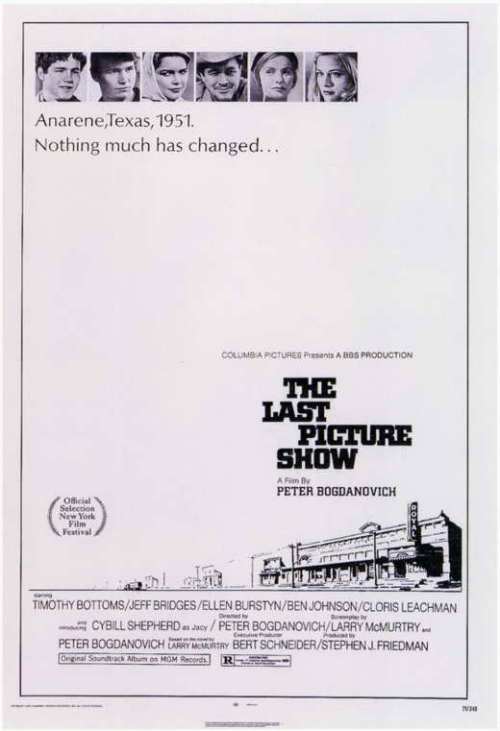
The Last Picture Show (1971)

last picture show 1

By Richard Winters

My Rating: 9 out of 10

4-Word Review: A Texas sized drama.

Based on the Larry McMurtry novel, who also co-wrote the screenplay, the story deals with the inter-workings and relationships of a people living in a small Texas town known as Anarene during the years of 1951 and 1952.  There’s Duane (Jeff Bridges) and Sonny (Timothy Bottoms) two high school seniors who are also best friends. Duane dates the highly attractive Jacey (Cybill Shepherd) who seems more geared to playing the field with every guy in town and even makes a play for Sonny, which seriously affects his relationship with Duane. There’s also Ruth (Cloris Leachman) the lonely coach’s wife who begins a brief affair with Sonny until he decides to bail-out for the more attractive Jacey. Sam (Ben Johnson) makes up part of the older generation still stuck in the dusty town and trying to make ends meet by running the local movie theater and pool hall both of which come to a halt when he dies suddenly.

I saw this film just recently outside on the big screen as part of the Texas Film Heritage and Preservation Society here in Austin. Although I had seen it before I was hit with how much more impressive and visually sumptuous it is on the big screen. Robert Surtees’ black and white cinematography is top-notch and the main ingredient to what makes it so spellbinding, so much meticulous attention is taken into each and every shot that one could almost watch this with the sound down and still find it thoroughly compelling.

Director Peter Bogdanovich takes great care to make sure that all of the elements are there and spins them together like a well-crafted machine so the viewer learns bit and pieces about these characters and their attitudes through each shot and camera angle that comes along. Filming it on-location in Archer City where McMurtry grew up helps accentuate the authenticity as does playing the country music from the period although I could’ve done with a little less of that and more of the sound of the wind and dust crackling across the barren region instead.

What surprised me most was how interesting and varied the love making scenes where and how instrumental they became to the film as a whole. One of the most memorable ones is when Sonny first tries to make love to Ruth, but is quite awkward about it. We see the pained expressions on both of their faces, hear the rusty springs of the mattress, and then finally witness Ruth’s attempts to shield her crying and frustration from Sonny. Duane’s futile attempt at sex with Jacey later on is also good particularly the fiery look of anger spewing from Jacey’s eyes when he is unable to perform. The scene involving a mentally challenged young man pushed into attempting sex with an obese and caustic prostitute inside the backseat of a cramped car is both darkly funny and sad, but the most provocative love making moment comes near the end when Jacey has sex with her mother’s boyfriend (Clu Gulager) on top of a pool table inside a dark and lonely pool hall while bracing the table’s side pockets with her hands for leverage.

The performances are all-around outstanding and both Leachman and Johnson won the Academy Award for their work here, but I still came away feeling, just like I did twenty years ago when I first saw this film, that Shepherd does the best job and leaves the most lasting impression. I love how her character slips between being insecure and indecisive to cunning and conniving and Shepherd’s facial expressions are completely on-target all the way. Her striptease done on top of a diving board is still pretty hot and my only complaint about the character is the way she elopes with Sonny and then completely bails on him the next day. I realize she didn’t love the guy and she’s just used him like she did others, but I didn’t understand what her motivation was in this instance as she seemed to get little if anything out of it.

I was also a bit disappointed that the Coach Popper character played by Bill Thurman didn’t have a bigger role in the story. The way he berates his players during practice is amusing and would most likely get coaches in today’s more sensitive world in hot water. I also found his constant spitting of tobacco juice into a cup that he carries around with him to be grotesquely amusing, but my biggest beef is the fact that we have a main character screwing his wife and the whole town knows about it, but never any reaction from the man himself. Maybe he was aware and didn’t care, but the movie should’ve made an attempt to show this, or at least some interaction between Sonny and the Coach since Sonny was at one time one of his players, which would have to make things quite awkward whenever they would bump into each other and in a small town that would most likely happen on more than a few occasions.

Overall though this is a great movie and I was surprised at how frank and explicit it was despite its 1950’s setting. Some may argue that it was done with too much of a revisionist mindset and things weren’t quite this wild, but others, like myself, will insist that it probably was, but just not talked about as much.

My Rating: 9 out of 10

Released: October 22, 1971

Runtime: 2Hours 6Minutes (Director’s Cut)

Rated R

Director: Peter Bogdanovich

Studio: Columbia Pictures

Available: DVD, Blu-ray, Amazon Instant Video
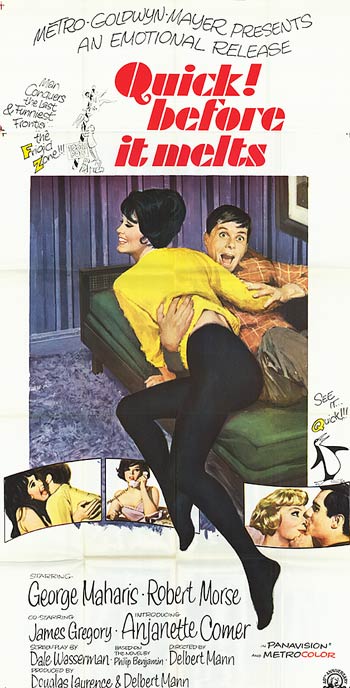
Quick, Before it Melts (1964)

quick 1

By Richard Winters

My Rating: 2 out of 10

4-Word Review: Stuck in the cold.

Oliver Cannon (Robert Morse) is a lowly newspaper reporter who gets sent to the Antarctica by his boss Mr. Sweigert (Howard St. John). Sweigert not only dislikes Oliver, but also wants to keep him away from his daughter Sharon (Yvonne Craig) who intends on marrying him. To his surprise Oliver accepts the assignment feeling that the South Pole is the ‘last great frontier’ and wanting to expose the harsh environment of the region to his readers who may not otherwise realize quite what it is like. Yet once he arrives he quickly wishes to leave, but can’t. He then concocts a plan with Peter (George Maharis), who is  another  American stranded  there, to fly in a planeload of beautiful women, so at least their time there can be enjoyable and sexy.

The script is virtually plotless and amounts to nothing more than broadly written, flatly comical scenarios loosely tied into the Antarctica theme. It’s basically just another contrived, generic ‘60s sex comedy that lacks bite or imagination. The only mildly amusing part about it is the real-life penguin that acts as a carrier pigeon by delivering mail and messages to the various residents.

I was surprised that Maharis chose to be in this as he was a strong, highly underrated dramatic actor who was one of the main reasons for the success of the acclaimed TV-series ‘Route 66’. In fact he left that show before the end of its run mainly to take advantage of all the movie offers that were coming in, but choosing to do this silly thing as his first one especially when he isn’t even the star of it is baffling. His career ultimately was ruined when he was caught having sex with a gay hairdresser inside the men’s bathroom of a gas station during the mid-‘70s, but appearing in fluff like this certainly didn’t help it.

Morse on the other-hand seems well suited for the material and performs admirably. This film also has, in her film debut, Anjanette Comer who later had roles in many interesting cult films. In fact both Morse and she later reteamed to star in The Loved One just a year after doing this one. That film is far superior and a movie you should definitely see while avoiding this one at all costs.

My Rating: 2 out of 10

Released: October 5, 1964

Runtime: 1Hour 38Minutes

Not Rated

Director: Delbert Mann

Studio: MGM

Available: DVD (Warner Archive)

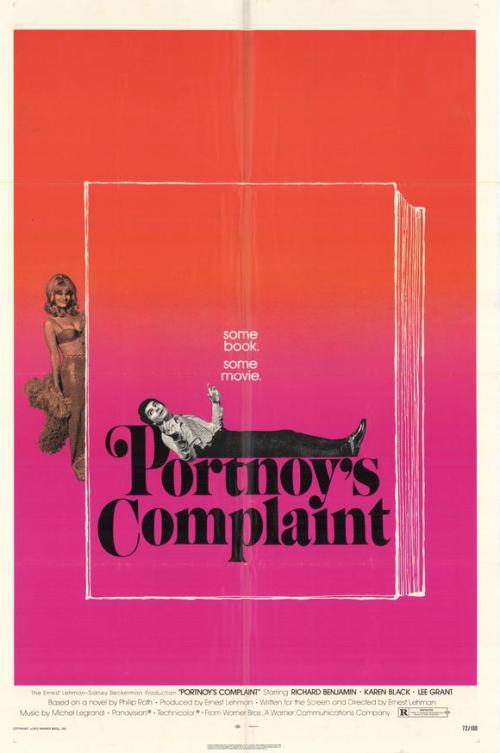
Portnoy’s Complaint (1972)

portnoys complaint 1

By Richard Winters

My Rating: 4 out of 10

4-Word Review: Jewish man digs prostitute.

Alexander Portnoy (Richard Benjamin) is a man who no longer believes in a God or any of the other conventional ways of life taught to him by his old-fashioned Jewish parents (Jack Somack, Lee Grant). He enjoys the ‘art’ of masturbation and will routinely find excuses to go do it when his parents aren’t looking. As he grows older he finds that his sexual appetite broadens in a way that regular women won’t be able to fulfill. Then he meets Mary Jane (Karen Black). She’s a prostitute nicknamed ‘The Monkey’ due to all the wild positions that she can get her body into during sex. The two enjoy a lot of kinky times, but then she ends up falling in love with him and wanting to get married, but Portnoy resists as he considers her to be intellectually inferior and fears she’ll become an embarrassment to him with his other friends.

Philip Roth’s landmark and controversial novel comes to the big screen with only lukewarm results although it does start out funny. I laughed-out-loud at the scene where Portnoy pretends to have a bout of diarrhea just so he can sneak into the bathroom to get-off and his parents misinterpret his moans of ecstasy as being that of gaseous agony. The dream segment where Portnoy finds that his penis has fallen off and onto the kitchen floor while his parents come into to inspect it is pretty good as is the bit where Jeannie Berlin tries to give Portnoy a hand-job.

Unfortunately the film shifts too much in tone. It starts out as this quirky, dark-humored, sex-laden comedy only to end up being a brooding drama. The novel was written as a continuous monologue spoken by Portnoy while talking to his therapist, which doesn’t effectively come off here. We see a few scenes in his therapist’s office, but they are brief and I didn’t like the fact that his therapist never speaks a word of dialogue, which seemed weird and unnatural.

Screenwriter Ernest Lehman, in his one and only foray behind the camera, implements too much of a slow pace to the proceedings. Many scenes go on far longer than they should and at certain points the camera gets nailed to the ground giving it a static presence. He also hired Michel Legrand to do the film score, which is beautiful and majestic, but the lush tones are better suited for a romantic flick, which this definitely isn’t.

Karen Black gives an outstanding performance as ‘The Monkey’, but her character is too one-dimensionally dumb almost to the point that she seems mentally handicapped, which I don’t think was the intention. Either way it is never funny, touching, or even real while bordering into the stereotype that all prostitutes ‘must be really stupid’.

One of the most annoying elements of the film is that it keeps cutting back to a matted image of Black jumping from a skyscraper and towards the viewer while she screams. The image looks very hooky while giving the film a real amateurish feel. I also didn’t like how at the very end we spot Black walking amongst a crowd of people from a bird’s eye perspective. The supposed demise of the character was meant to be murky as she threatens to jump from a building and Portnoy leaves her without ever knowing if she ended up doing it or not, which then causes him a major source of guilt afterwards. By having her suddenly appear at the very end ruins the mystery and brings up far more questions than answers.

Roth’s novel was very much ahead-of-its-time and deserved a film that could match it, but Lehman’s staid approach doesn’t do it justice.

My Rating: 4 out of 10

Released: June 19, 1972

Runtime: 1Hour 41Minutes

Rated R

Director: Ernest Lehman

Studio: Warner Brothers

Available: DVD (Warner Archive), YouTube

The Tenant (1976)

tenant 1

By Richard Winters

My Rating: 10 out of 10

4-Word Review: He loses his identity.

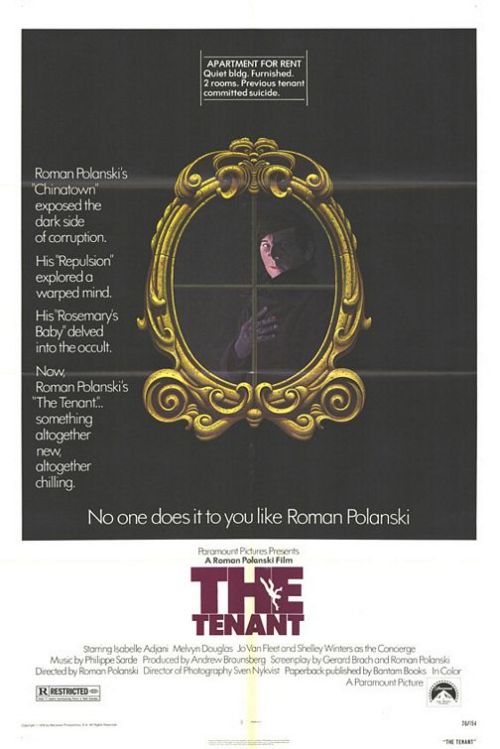
This intriguingly odd horror film may well be Roman Polanski’s best work and even better than Rosemary’s Baby as it manages to be scary in a unique way while also bringing to light many of the subtle ugliness of everyday life. Here Polanski plays a tenant who moves into an apartment were all the residents, and even the landlord (Melvyn Douglas), act slightly peculiar. The woman who lived in the apartment before him killed herself by jumping out the window and as he continues to live there he starts to feel a connection towards her while also getting the idea that somehow the other residents are in a conspiracy against him.

The film’s brilliance comes from the fact that the horror and tension is not based on any of the usual devices.  No ghosts, monsters, or psychos here. Instead the viewer gets sucked into the harsh realities of the modern urban world. The feelings of isolation, people who are cold and impersonal and apartments that are bleak and small as well as showing how these urban jungles swallow up our identities until we’re just another face-in-the- crowd.

This amazingly deep and penetrating study gets astutely underplayed with no action and little or any true scares. The tension comes through its psychological implications and the paranoia that only the Polanski character feels. Are these people really out to get him, or is it all just in his head? There are no definite answers, but theme and ideas are quite real. It’s a sort of twisted version of Rear Window and extension of Repulsion that may require a second viewing in order to completely appreciate.

Polanski scores on all levels as his performance is interesting and his ability as a director to make you feel the smallness and bleakness of the character’s apartment is also amazing. You are given a very real sense of the room’s dimensions without any inclination that it was done on a stage, or with the presence of a film crew. The eerie segments are subtle but successful with imagery that is both strange and lasting.

My Rating: 10 out of 10

Released: May 26, 1976

Runtime: 2Hours 5Minutes

Rated R

Director: Roman Polanski

Studio: Paramount

Available: DVD, Amazon Instant Video, YouTube

The Marriage of a Young Stockbroker (1971)

marriage of a young stockbroker

By Richard Winters

My Rating: 6 out of 10

4-Word Review: Husband is a voyeur.

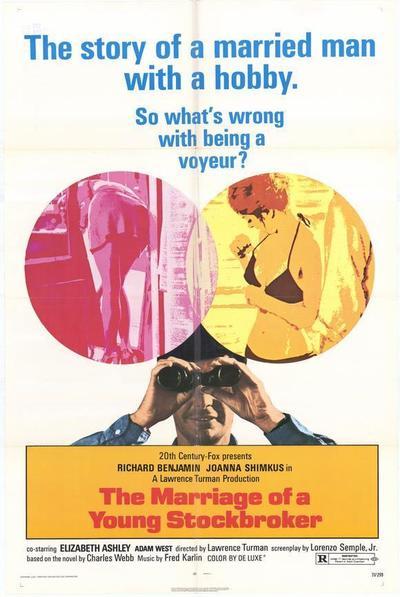
William (Richard Benjamin) seems to be living the dream having both a stable job and a beautiful wife named Lisa (Joanna Shimkus), but underneath he’s bored and as a source of escape begins to get involved in voyeuristic activities. He spends hours at an adult theater and uses any opportunity he can to spy on scantily clad women through his binoculars. Eventually Lisa, in a fit of frustration over William’s behavior, walks out on him and moves in with her sister Nan (Elizabeth Ashley) and her husband Chester (Adam West). Nan is very controlling and makes every attempt to keep Lisa away from William even as William tries to reconcile. Although her marriage seems fine on the outside it is actually as troubled as William and Lisa’s, which comes to a head when both couples get involved in a group therapy session.

The film is based on the novel of the same name written by Charles Webb, who was also the author of The Graduate, which became a hit film that was produced by Lawrence Turman who directed this one. Clearly Turman was hoping for the same success and this one begins well. The opening bit showing William bored with his job is funny as is his trip to an adult theater and the many thoughts that go through his head as he watches a nudie flick. The cinematography by Lazlo Kovacs captures the California coastline in a lush style and the overall narrative takes a refreshingly open-minded approach towards sexual fetishes as well as the institution of marriage while also questioning society’s conventional understanding of both.

Benjamin is good playing almost the exact same type of character living the same type of detached existence as the one he did in The Steagle. In fact this film could easily be considered an extension to that one and both movies were released less than a month apart. This one though fares a bit better as Benjamin gives a more well-rounded performance. In fact this may be his best work second only to the one that he did in Diary of a Mad Housewife.

The beautiful Shimkus does equally well and I enjoyed the scenes with the two of them together. Ashley makes a strong impression as the meddling sister and has a few funny moments. West, who campaigned hard for the role in an attempt to shake his Batman image, seems a bit too transparent and there needed to be more of a backstory involving both his character and his marriage to Nan.

Unfortunately all of these good things get crushed by a script that doesn’t know what direction it wishes to take. The scene with Tiffany Bolling is just one issue as she plays this really beautiful woman who for some indiscriminate reason decides to invite William, who is a complete stranger to her, into her house for sex after spotting him walking down the sidewalk. Why such a gorgeous woman would invite a schmuck like Benjamin into her place on a sexual whim makes very little sense and seems too much like a male sexual fantasy that demanded much more of an explanation to be believable. I realize this scene was part of the story arc to show William’s dissatisfaction with having sex with women who were strangers and thus propel him to try and win Lisa back, but the same point could’ve been made in a more realistic way had he done it with a hooker that he met on the street instead.

The ending is the biggest letdown as it employs too much of a feel-good, happy curve that comes out of nowhere. The two main characters suddenly turn into frolicking, youthful lovebirds that do not in any way resemble the same people that we’ve been following for the first 90 minutes. It comes off like a cop-out that is jarring to the overall tone while undermining all of the other issues that the film had previously brought up.

My Rating: 6 out of 10

Released: August 19, 1971

Runtime: 1Hour 35Minutes

Rated R

Director: Lawrence Turman

Studio: 20th Century Fox

Available: http://www.modcinema.com

The Busy Body (1967)

busy body

By Richard Winters

My Rating: 3 out of 10

4-Word Review: Find the dead body.

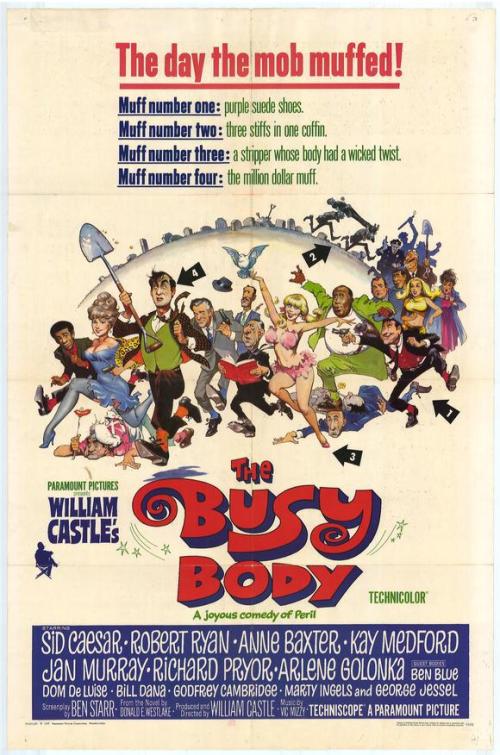
George Norton (Sid Caesar) is a nebbish mama’s boy who, for whatever reason, gets taken in by Charley (Robert Ryan) a Chicago mob boss. Charley even gives George a seat on his board of governors. When a fellow crime boss (Bill Dana) gets killed in a freak accident it is George who selects a blue suit for the corpse to wear at the funeral. Unfortunately that blue suit was lined with a million dollars and Charley demands that George dig up the body and retrieve the money, but when he does he finds that the body is gone and thus begins a long, winding, ‘madcap’ search for the missing body and money.

Noted horror director/producer William Castle decided late in his career to give comedy a stab and this is the result. The beginning is mildly amusing, but the humor gets terribly strained and a 100 minute runtime is just too long for such trite material. Everything gets suppressed into silliness with an overplayed music score that has too much of a playful quality to it making the whole thing thoroughly ingrained on the kiddie level from start-to-finish.

Dom DeLuise has an amusing bit as a mortician that would really rather be a hairdresser and Kay Medford is quite funny as George’s doting mother, but the rest of the supporting cast is wasted, which includes Richard Pryor, in his film debut, playing in a role that does not take advantage of his comic skill. Caesar is just not leading man material and his vaudeville-like shtick is quite passé and predictable. His co-star Ryan is far funnier and without having to try half as hard.

The plot goes off on wild tangents until it becomes impossible to follow and quite pointless. The whole production is horribly dated and will not appeal to kids or adults. In fact the film’s intended audience has long ago passed away making this thing a silly relic of its time and nothing more.

My Rating: 3 out of 10

Released: March 12, 1967

Runtime: 1Hour 40Minutes

Not Rated

Director: William Castle

Studio: Paramount

Available: DVD, Amazon Instant Video

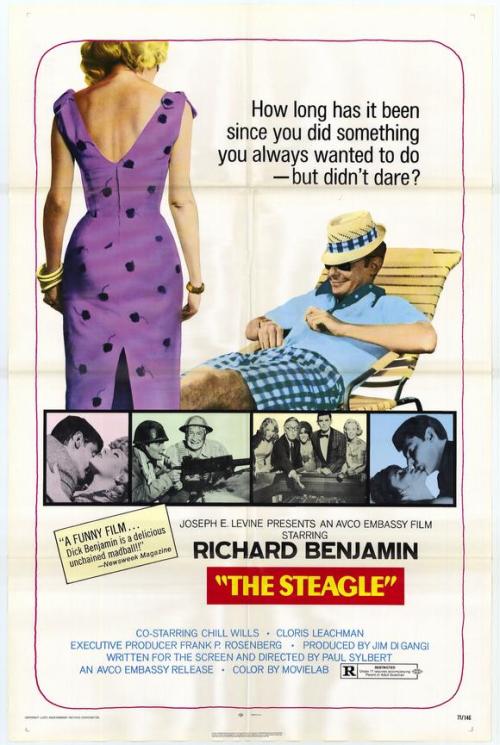
The Steagle (1971)

steagle 2

By Richard Winters

My Rating: 5 out of 10

4-Word Review: Living out his fantasies.

The year is 1962 and the Cuban missile crisis is in full-throttle. The threat of a possible nuclear war has everyone on edge and having to hear about it every night on the news just makes things worse. Harold (Richard Benjamin) decides to use this opportunity to ‘escape’ from his drab existence. Both his marriage to Rita (Cloris Leachman) and his job as a college professor have grown stale. If the end is near then Harold wants to live-it-up to the fullest, so he travels to Vegas, has sex with hot women while also living out other outrageous fantasies.

The film was directed by award-winning set designer Paul Sylbert and for the most part, at least at the beginning, is right on-target. The mood and design looks authentically like the early ‘60s and the story nicely taps into the secret fantasy life that most likely harbor in the back-of-the-minds of just about every middle-age person out there. The viewer effectively feels Harold’s frustration during the first half and then just as effectively feels the rush when he finally decides to break free and go wild.

The story is consistently amusing throughout with the most memorable bit coming when Harold decides to speak in gibberish while giving a lecture to his class. Benjamin is perfect for the part playing a character with a snarky, sarcastic personality that hides just beneath his otherwise formal veneer. Ivor Francis is great in support as a minister who Harold meets on his travels that, like with him, wants to escape from the shackles of his daily existence. Chill Wills is good too playing a loopy ex-actor who thinks he’s Humphrey Bogart and traps a group of men inside a bathroom and won’t let them out until after they hear his rendition of a scene from The Maltese Falcon.

The film’s biggest drawback though comes from the awkward transition between Harold fantasizing about these things and then finally deciding to go through with it. The film never bothers to show how he manages to get away from his wife and kids. Does he sneak out in the middle of the night unannounced, leave a note, or simply tell them that he needs to ‘get away for a while’? Nothing is ever shown even though I felt that this scene was quite crucial and needed to be put in. The ending is equally frustrating as we never find out what happens when Harold finally decides to go back, which makes the film as a whole come off as incomplete and one-dimensional.

My Rating: 5 out of 10

Release: September 15, 1971

Runtime: 1Hour 30Minutes

Rated R

Director: Paul Sylbert

Studio: AVCO Embassy Pictures

Available: VHS, DVD (Mill Creek)

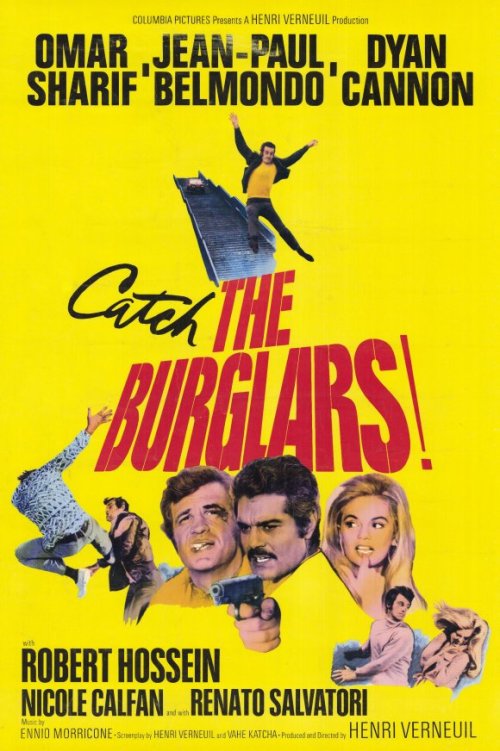
The Burglars (1971)

burglars 1

By Richard Winters

My Rating: 5 out of 10

4-Word Review: Corrupt cop hounds thief.

Azad (Jean-Paul Belmondo) and his cohorts pull off a daring heist by robbing a gem collector of his emeralds in his home by using a state-of-the-art machine that is able to create a key to the safe on the spot by simply entering in the safe’s serial number. However, things go awry when Abel (Omar Sharif), a corrupt police captain, becomes suspicious of their activity after seeing the gang’s car parked on the road. Initially he lets them off, but only so he can follow them later and then blackmail them for the jewels, or threaten them with prison otherwise.

The film, which is based on the novel by David Goodis and made 14 years earlier as The Burglar, which starred Jayne Mansfield, has all the trappings for being a classic heist film. I enjoyed watching the intricate way they are finally able to crack open the safe, which takes up much of the first half-hour. I also liked the creative action, stunt work, story twists, luscious Greek scenery and musical score by the legendary Ennio Morricone. Unfortunately none of this is able to overcome a rather plodding pace and a lingering feeling that you’ve seen it all before.

The film’s biggest claim-to-fame is its two chase sequences. The first is similar to the one done in The Italian Job as two small compact cars drive all over Athens, including on sidewalks, stairwells, and through crowds of people, which is exciting to watch. However, the fact that no one gets injured and no other automobiles are damaged even as the cars drive straight into on-coming traffic is hard to imagine. The camera also cuts to a close-up shot of the lead car driving on its rim, but somehow the vehicle is still able to continue to go several more miles on rough surfaces and high speeds, but why have a shot like that inserted if it ultimately doesn’t mean anything?

The second chase works better, which involves Belmondo hanging onto the side of a bus as it travels speedily down a crowded city street while he tries to kick shut the door of a police car that is following, which is quite realistic looking especially since it appears to be Belmondo himself and not a stunt double doing it. This one culminates with Belmondo being tossed from a dump truck and down a steep hill while other large rocks roll with him, which again is impressive, but the fact that he doesn’t even receive a scratch from it is hard to believe.

Sharif is outstanding in a rare turn as a bad guy. He commands every scene that he is in and in the process makes co-star Belmondo seem forgettable and unable to equal the same strong presence. Dyan Cannon, who is the only American in the cast, gets a pointless part as a pin-up magazine model that catches Belmondo’s eye. Her character doesn’t appear until an hour in and is not all that integral to the plot. Her voice is also clearly dubbed in the French version, which makes her acting here limited and probably not worth signing up for to begin with.

The climactic finish that entails a man being drowned inside a grain elevator is novel as is the final moment inside a giant, mobile chicken coop with thousands of loud, clucking chickens, but overall the film fails to illicit much tension and would’ve been better had the runtime been trimmed and the scenes shortened.

burglars 2

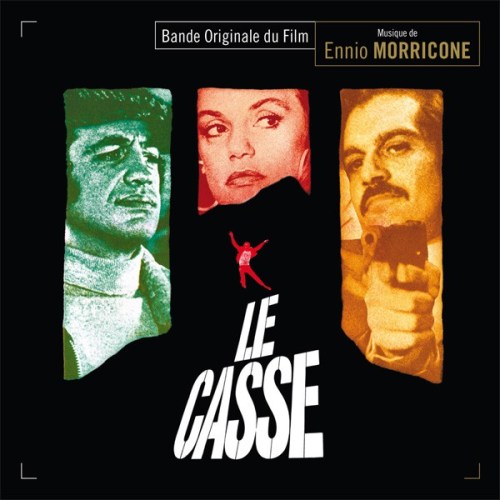
Alternate Title: Le Casse

My Rating: 5 out of 10

Released: October 24, 1971

Runtime: 1Hour 57Minutes

Rated PG

Director: Henri Verneuil

Studio: Columbia Pictures

Available: DVD-R

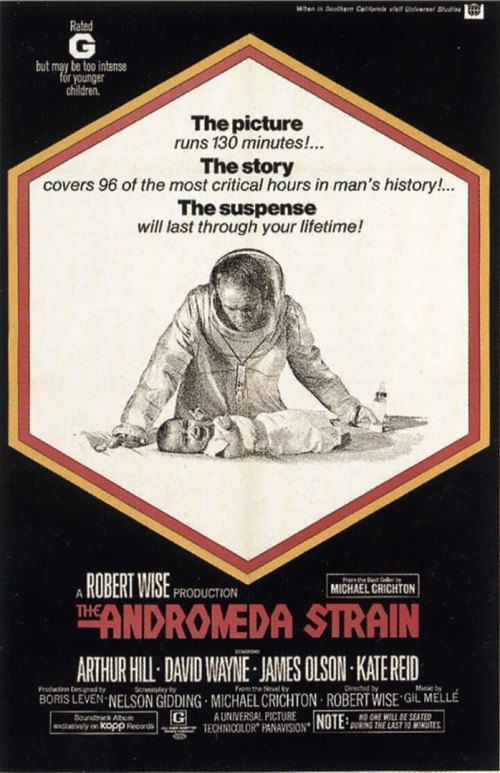
The Andromeda Strain (1971)

andromeda strain

By Richard Winters

My Rating: 7 out of 10

4-Word Review: Isolating a dangerous virus.

When a satellite returns to earth it brings back a mysterious virus that ends up killing all the residents of a town where it lands. Two scientists Dr. Jeremy Stone (Arthur Hill) and Dr. Dan Hill (James Olson) go to the town to investigate and find that the only survivors are a wino (George Mitchell) and a six-month-old baby. They bring these two people along with the remnants of the satellite back to a secret Nevada lab known as Wildfire that’s buried deep below the ground. It is here after close examination that they are able to observe the virus, which appears as small green dots on the satellite, but they fail to realize that this virus can also mutate and presents an even greater risk to them in the lab.

One of the major selling points of this film is the fact that it keeps everything within the realm of ‘realistic sci-fi’. No bubblegum action, scary monsters, or any other form of over-the-top dramatics get added; instead it’s on a ‘thinking man’s level’ with an extraordinary attention to detail. I enjoyed seeing all of the decontamination procedures that the crew is forced to go through before they are even allowed to begin their investigation. The isolated lab, which is hidden beneath what looks to be just an ordinary farmhouse and shed, is really cool and director Robert Wise’s use of the split-screen during the search of the town is both flashy and slick.

Showing the scientist’s personal lives and how the government agents literally demand that they drop what they are doing and come with them helps humanize the characters to a degree. I also liked how the male character of Dr. Peter Leavitt in the Michael Crichton book from which this is based gets switched to a female character here, which helps add an extra dynamic and is very well played by Kate Reid. In fact the only thing about the character’s that I didn’t like, aside from Arthur Hill’s sterile performance, is when we see the dreams of the doctors as they sleep, which seemed corny and unnecessary.

The mysterious nature of the virus is compelling and I certainly enjoyed the way they were able to detect it by scanning the satellite with cameras that could focus onto the object in minute detail, but the plot itself gets stretched farther than it needs to. There are a few interesting twists, but it starts to feel quite labored around the 2-hour mark and the climatic finish isn’t all that intense and seems rather stagy and predictable.

I was also amazed that this film achieved a G-rating. For one thing there isn’t much action and the narrative is on a more sophisticated level that is clearly aimed at adults and something most children won’t be able to pick up on. Also, one of the victims that the two men come upon is of a woman with no top on. The image is brief, but her breasts are clearly exposed making this one of the few G-rated movies to feature nudity.

My Rating: 7 out of 10

Released: March 12, 1971

Runtime: 2Hours 11Minutes

Rated G

Director: Robert Wise

Studio: Universal

Available: DVD, Amazon Instant Video, YouTube

The Clan of the Cave Bear (1986)

clan of the cave bear

By Richard Winters

My Rating: 5 out of 10

4-Word Review: Girl gets new tribe.

After her mother is killed in an earthquake and escaping from the clutches of a hungry lion a very young Ayala (Daryl Hannah) gets taken in by a tribe of Neanderthals. Her addition causes strife amongst the other members particularly Broud (Thomas G. Waites) who feels she doesn’t conform enough to the subservient female role. When it is found that she has taught herself to hunt by using weapons that the women were forbidden to touch she is kicked out of the tribe and forced to survive on her own.

I realize that this film has been almost universally lambasted by movie goers and critics alike, but overall I found it to be watchable. The biggest issue in many ways were the action sequences. The opening earthquake bit as well as the lion attack comes off as stagy and phony and even border on being unintentionally funny. Later on when Ayala saves a young child from a wolf the movie reverts to slow motion, which gives it too much of an over-the-top Hollywood feel. There is also another segment where the cavemen torment a grizzly bear as part of an ancient tribal ceremony. Some of the men get torn up and killed by the bear, which to me was just fine as they should’ve left him alone in the first place!

Hannah is the perfect choice for this type of role, but for whatever reason her performance seemed a bit off and not as effective as it could’ve been. She was also probably too tall for the part as people back then was much shorter than they are now.

The movie has a little too much melodrama and eventually resembles just another cheesy Hollywood drama. The authenticity is questionable and the grittiness from the more popular Quest for Fire is definitely missing. I also wasn’t too crazy about the outdoor shots, which includes the opening one, that shows sunlight filtering through the tree leaves in a haze-like fog that gives it too much of a fairy tale-like look.

The part where Ayala is forced to survive on her own goes by too quickly and hardly seems as brutal as it should’ve been and I was also confused about how she was able to come upon this fur shawl to wear that protected her from the cold because when the tribe kicked her out she left with nothing but the flimsy outfit that she had on.

Yet despite all this I still found it to be reasonably compelling. Maybe it’s just the idea of seeing an individual learn to survive on her own, standing up to unjust authority and learning to find independence that manages to connect us no matter what the time period, but in either case it’s an okay time filler if you don’t think about it too much.

My Rating: 5 out of 10

Released: January 17, 1986

Runtime: 1Hour 38Minutes

Rated R

Director: Michael Chapman

Studio: Warner Brothers

Available: DVD (Warner Archive), Amazon Instant Video, YouTube