Category Archives: Italian Films

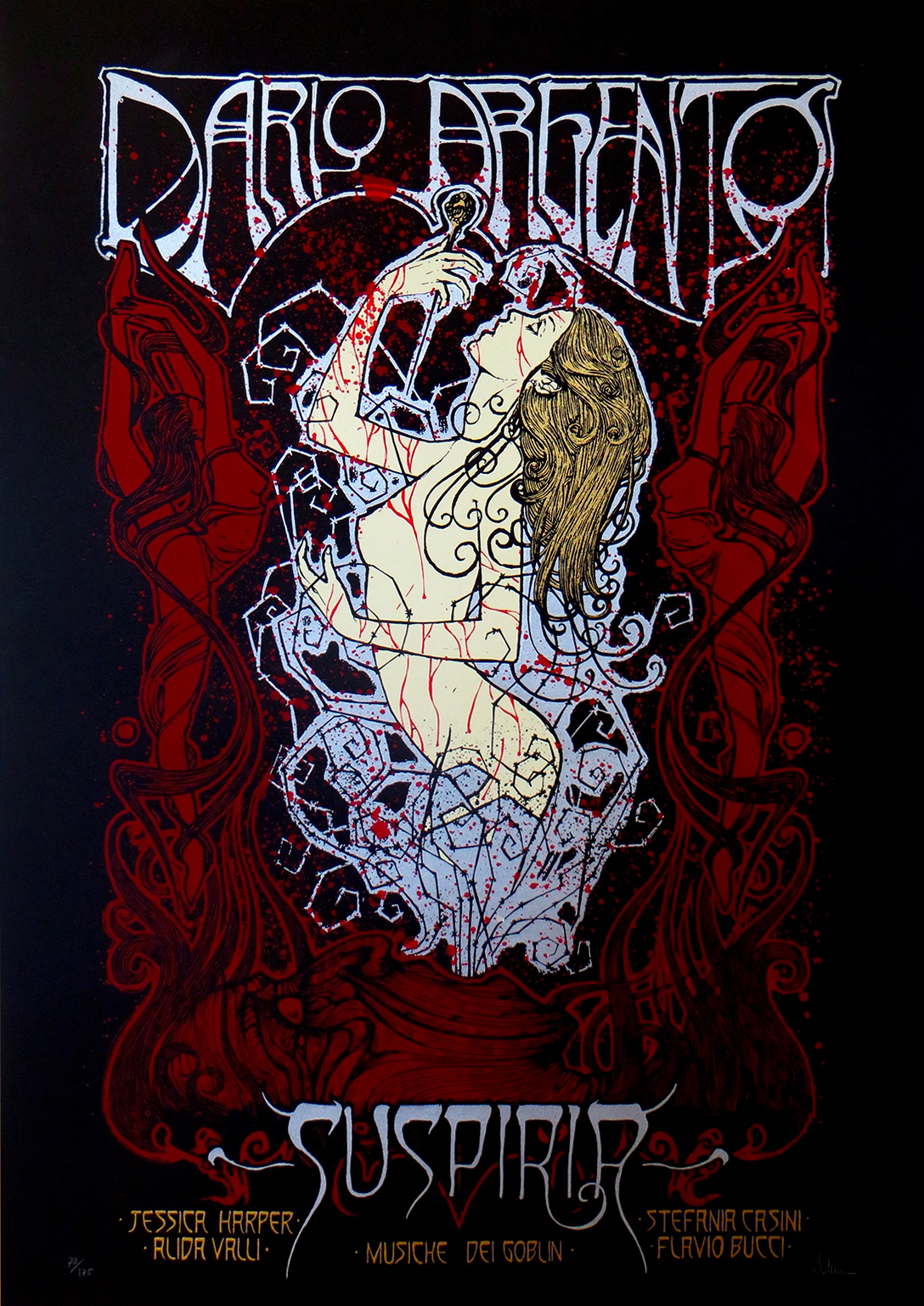
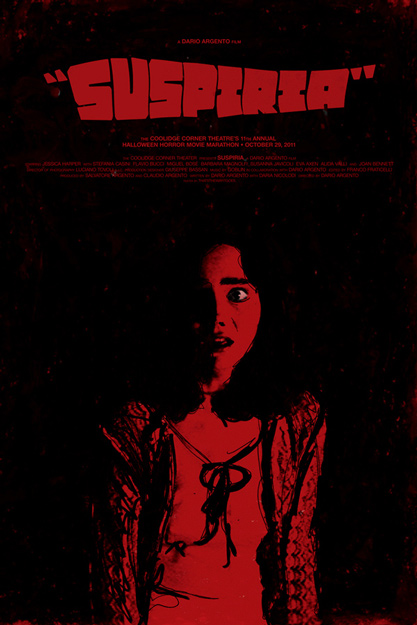
Suspiria (1977)

suspiria 2

By Richard Winters

My Rating: 4 out of 10

4-Word Review: Ballet dancer battles witches.

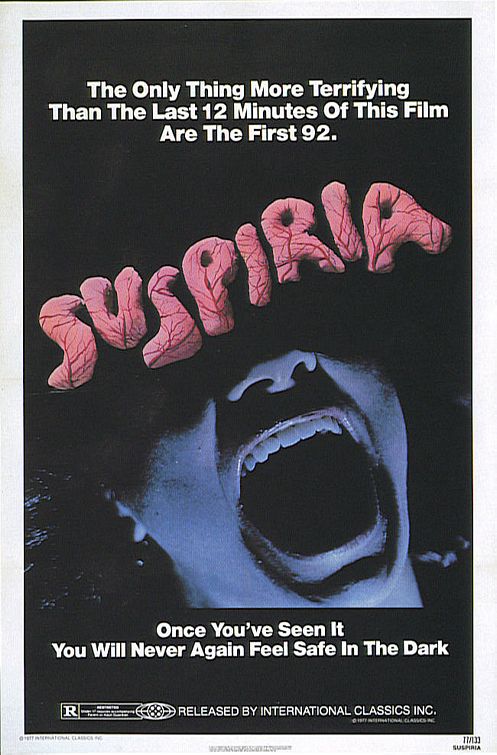
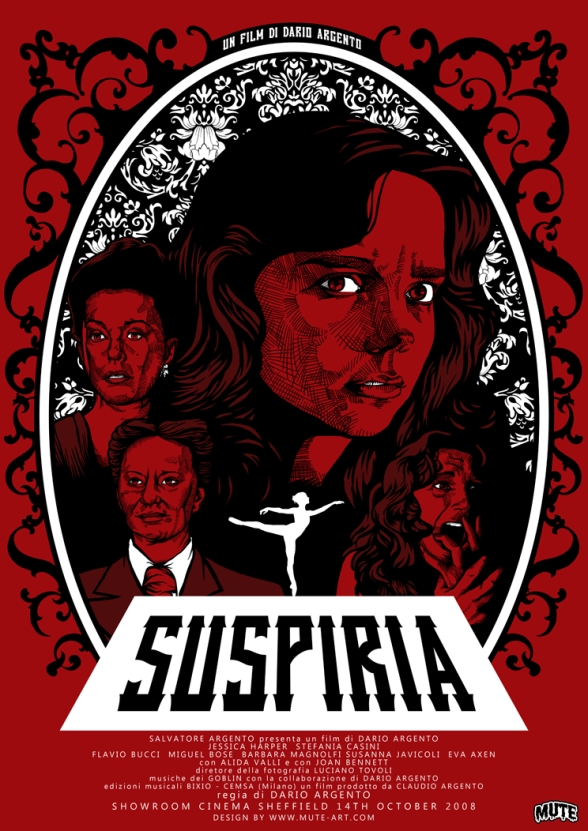
Suzy (Jessica Harper) is an American from New York who aspires to be a ballet dancer and travels to Freiburg, Germany to enroll at the dancer academy there. When she arrives she confronts another young lady who shouts something about a ‘blue iris flower’ before running out into the stormy night and then later turning up murdered. As the days progress strange events begin to occur convincing Suzy that the dance school may really be a cover for a coven of witches.

I first saw this film back in the late 80’s and it left me cold, but after reading a few other movie blogs where the critics insisted this was ‘brilliant’ I decided to give it another chance and approached it with a completely open mind only to end up liking it even less. The majority of the problem is Dario Argento’s over-direction. The sets and color schemes are wildly over-the-top bordering on camp. Had he pulled back even a little it might have been visually impressive, but instead gets obnoxious. The atmosphere, like everything else, is overdone creating a dream-like fantasy feel that has no connection to reality and therefore not very compelling.

The music, which was done by a group called Goblin, is interesting to some extent. I like the effect that to me sounded like hissing demons, but the other parts of it too closely resembled the ‘Tubular Bells’ music that was used in The Exorcist. It also gets overplayed and is too loud coming off like a spoiled child demanding your attention, which creates less tension and more distraction instead.

The special effects don’t live up to billing. When a man gets attacked and then eaten by his own dog is the only good part simply because it’s unexpected. Otherwise the blood and gore is average and even lacking. The majority of it is at the beginning where we see a young, frightened woman squirmy around on the floor while she gets stabbed and to a degree looks like some interpretive dance routine. The shot of a body coming out of a ceiling and then hung from a rope doesn’t work because it is clearly a mannequin and if you look real closely her face already has a strangled expression on it before the head goes through the noose.
suspiria3

Harper is a good protagonist and its fun seeing classic film star Joan Bennett in her last film role. I also really liked Alida Valli as Miss Tanner the dance instructor. During the 40’s and 50’s she was a stunningly beautiful leading lady, but here looks very witchy with the way her hair is cropped up into a tight bun as well as with her eyes and voice. The rest of the supporting cast have their voices dubbed, something that Italian productions during this period were notorious for and gives the already wooden dialogue a cheesy, amateurish sounding banter.

Spoiler Alert!

The climactic finish is a big letdown. For such an extravagant, garish build-up I was expecting much more of a bloody, drawn-out battle. Instead Harper just picks up a sharp object and stabs the head witch, who looks dead already, and it immediately kills her along with the others, but to me this didn’t make sense. This is supposedly some otherworldly demon, so the same laws of physics wouldn’t necessarily apply to her like it does to humans and a simple stab wound wouldn’t have the same effect like it would to regular people.

End of Spoiler Alert!

I was glad to see that other viewers on IMDB particularly those on the message board felt the same way about this ‘classic’ as I did. In my opinion the only way to enjoy it is for its excessive camp value and nothing more.
suspiria4

suspiria5

My Rating: 4 out of 10

Released: February 1, 1977

Runtime: 1Hour 38Minutes (Blue Underground 2-Disc Special Edition)

Rated R (Originally rated X)

Director: Dario Argento

Studio: International Classics (Dubbed Version)

Available: VHS, DVD, Blu-ray
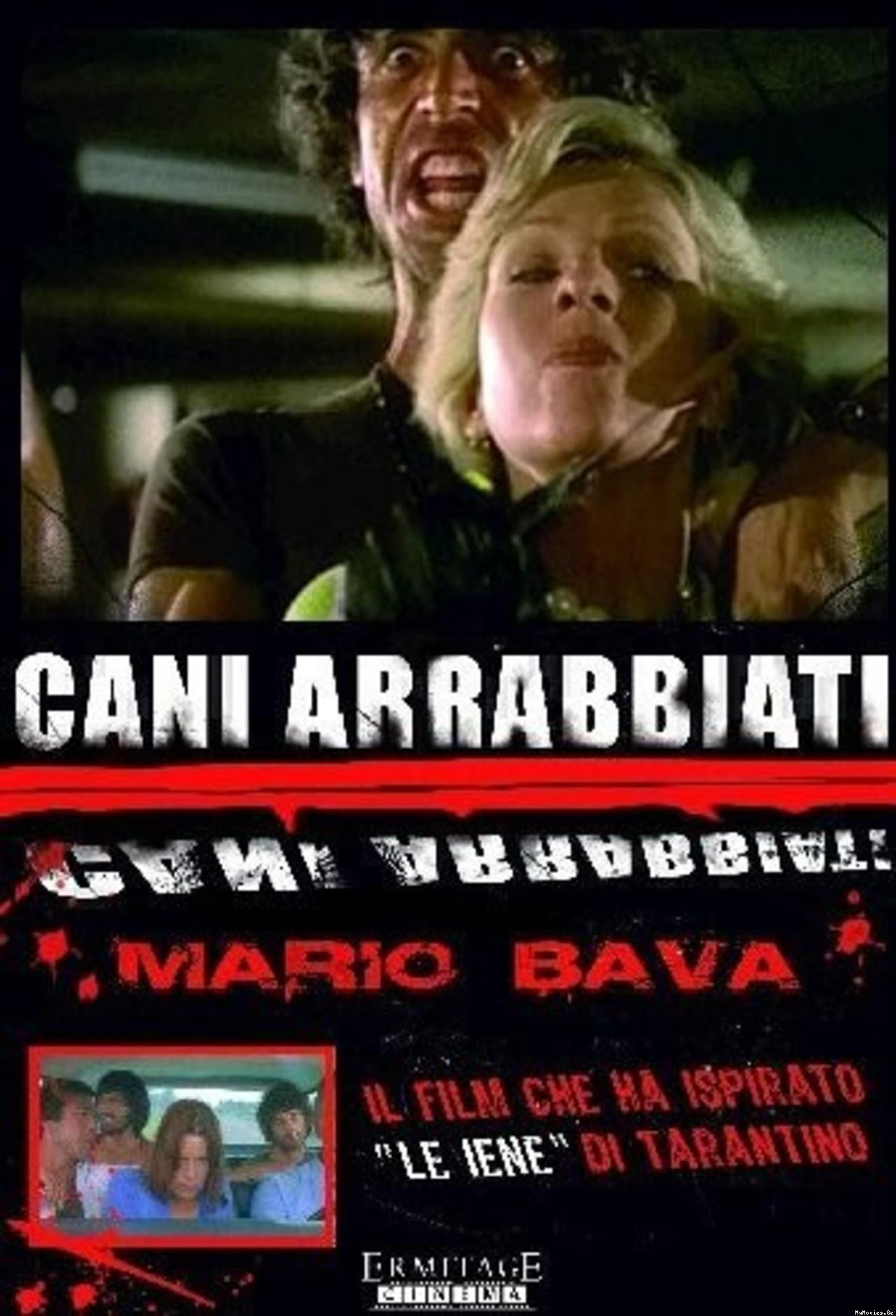
Rabid Dogs (1974)

rabid dogs 3

By Richard Winters

My Rating: 7 out of 10

4-Word Review: Terror filled car ride.

Four men decide to hijack a car that is delivering the payroll to the employees of a local Italian pharmaceutical plant. Both men inside the car are killed, but the four manage to get away with the money only to have the driver of the getaway vehicle shot in the back of the head by a security guard as well as having a bullet hole put into their fuel tank. The remaining three are then forced to find another car. There is the Doctor (Maurice Poli) who is the level-headed leader and mastermind. There is also Bisturi (Don Backy) a lanky child-like man prone to savagery without warning and Thirty-two (George Eastman) who can be equally savage especially with women. They kidnap a beautiful woman named Maria (Lea Lander) and then hijack another car driven by a father Riccardo (Riccardo Cucciolla) who is trying to take his sick son to the hospital. The six then go on a terrifying car ride through the Italian countryside while playing a game of cat-and-mouse with each other and eluding the authorities.

This film turned out to be Mario Bava’s swan song. His career had faded during the 70’s as his style of horror films were no longer considered chic and he made this film project a personal crusade to prove that he could keep up with the modern sensibilities by creating a film that was gritty, raw and violent. All things considered he succeeds valiantly. The film has a nasty edge right from the beginning and manages to stay at that tone throughout. The killers are truly mean and keep the viewer on edge with their unpredictable trigger-finger personalities. It achieves a level of ugliness reminiscent in a true crime that most Hollywood films never seem able to attain and its shoe-string budget and bare-bones approach becomes a major benefit.

For a film that takes place almost entirely inside a car the shot selections has an amazing amount of variety. Bava ended up having to do the cinematography himself because he couldn’t afford to keep the one he had hired on, which makes it all the more incrediable how brilliantly visual this is. The characters faces get up so close to the lens you literally feel like you can smell them and sense the sweat glistening off their bodies making you believe you are stuck in the car with them. The film is never boring or slow, the action well-choreographed with interesting  plot twists proving what an underrated genius Bava was and making me believe that despite the many difficulties getting produced this is his finest effort.

Backy who was and still is today a singer/songwriter with limited acting experience gives a great performance and is possibly the most memorable of the villains especially with his shocked expressions after he commits a particularly vile act proving that even he himself is shaken at his own savagery. Leander isn’t necessarily the best of actresses, but her perpetual look of shock and fear is quite entertaining. I was also impressed with the child actor who manages to stay asleep despite all the violence and chaos around him.

I also enjoyed the similarities to Last House on the Left including an exciting foot chase through a cornfield where you think the women is going to get away as well as a scene where the women is forced to urinate in front of the men while they laugh and mock her.

If you are a fan of 70’s exploitation than this lost gem deserves to be on top of any true fan’s list as it delivers-the-goods without ever watering things down for good taste. I also enjoyed the neat twist ending, which I saw coming, but it’s pretty cool anyways.

Years later Bava’s son Lamberto used existing footage from this film while adding new scenes with a different ending to create a movie called Kidnapped although I prefer this version better.

My Rating: 7 out of 10

Alternate Title: Kidnapped

Released: February 25, 1998 (Never released during Bava’s lifetime.)

Runtime: 1Hour 36Minutes

Not Rated

Director: Mario Bava

Studio: Spera Cinematografica

Available: DVD, Blu-ray, Amazon Instant Video

Minnesota Clay (1964)

minnesota clay 2

By Richard Winters

My Rating: 6 out of 10

4-Word Review: Gunfighter loses his sight.

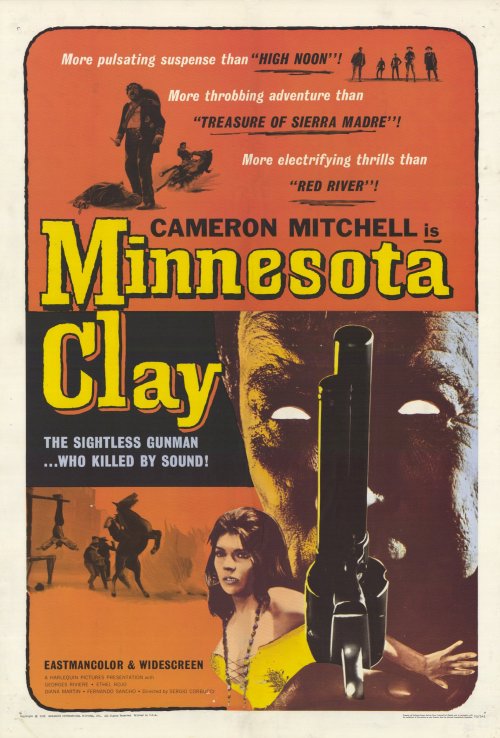
Minnesota Clay (Cameron Mitchell) is a revered gunfighter stuck in a work camp prison for a crime he didn’t commit. One day he manages to escape and tracks down Fox (Georges Riviere) the man who withheld evidence that would have gotten him off. Fox is now the self-imposed sheriff and extorting money from the citizens of a town in order to keep them ‘safe’.  One of the townspeople is Minnesota’s grown daughter Nancy (Diana Martin) although she is not aware of this and local rancher Jonathan (Antonio Casas) is the only other person that does. As Minnesota tries to figure out a way to exact his revenge while also saving his daughter and townspeople from the reign of terror he realizes that he is losing his sight and doesn’t have much time before he goes completely blind.

For a basic spaghetti western this isn’t too bad. It certainly is no Sergio Leone masterpiece, but it fortunately isn’t the cheap looking, boring mess that some of the ones on the very bottom end of the genre are. The pace is quick with enough gunfights to appease any western fan. Director Sergio Corbucci manages to camouflage the low budget with a background and sets that look reasonable authentic. The plot is nothing special, but has enough twists and turns to keep it mildly interesting although having the Estella character (Ethel Rojo) one minute set-up Minnesota to be killed and then the next minute express her undying love for him gets a bit too dizzying.

One of the chief assets is amazingly Mitchell himself. His acting career started strong in the 1950’s including his critically acclaimed role as Happy Loman in the original Broadway version and eventual 1951 film Death of a Salesman, but a rumored drinking problem lead to a decline in the quality of roles. By the 1980’s he was lodged into doing a procession of grade Z productions simply for the money including shockingly co-starring in a non-sexual role in a porn film Dixie Ray Hollywood Star. Yet here he still shows to be the solid actor that he could be. He carries the picture well and having him a bit older than the conventional gunslinger makes it interesting.

The final shootout done when Minnesota has lost his sight and must rely completely on his heightened sense of hearing is well done and the best moment in the film. It lasts for almost fifteen minutes and has a certain surreal quality due to it happening in the middle of the night and neither man able to see the other. It might have been more interesting though had the character lost his sight at the very beginning, which would have made the entire story more distinctive as the majority of it is pretty ordinary and forgettable.

My Rating: 6 out of 10

Released: November 12, 1964

Runtime: 1Hour 25Minutes

Not Rated

Director: Sergio Corbucci

Studio: Harlequin International Pictures

Available: DVD (Mill Creek)

The Passenger (1975)

the passenger

By Richard Winters

My Rating: 5 out of 10

4-Word Review: He steals someone’s identity.

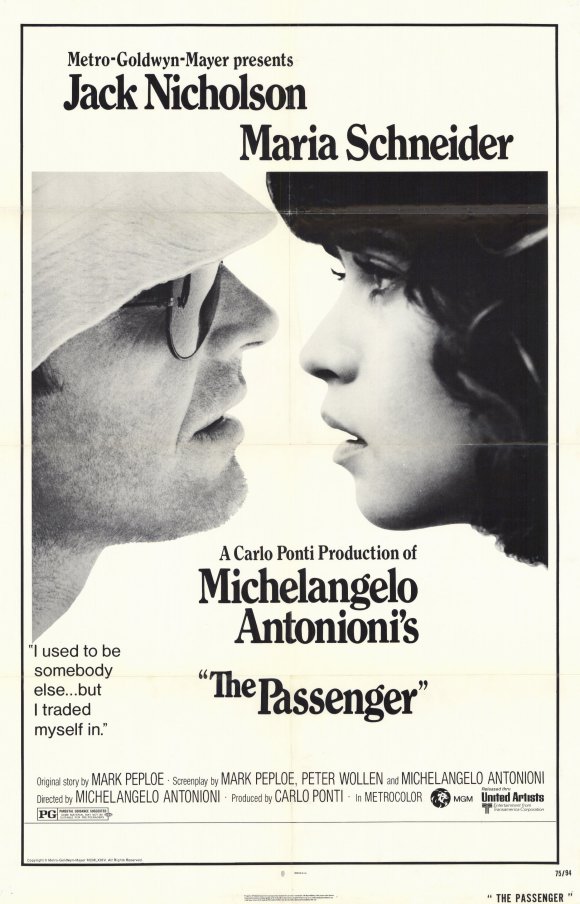
This is a low key drama detailing a world-weary reporter named David (Jack Nicholson) who comes upon a dead man in a hotel room. David is unhappy with his existence and since they closely resemble one another he decides to switch identities with the dead man. He believes that this man lives a jet setting lifestyle, but soon finds that may not be true and that everyone is trying to escape from something.

This film has the artsy flair that is typical of all Michelangelo Antonioni’s films. It tends to be quite evasive as it brings up certain points and then seems to muddle them. It’s made to make you ponder, but has a decidedly downbeat tone. There is no music until the very end, which was a mistake as it gets too quiet at points and one’s mind will eventually wander especially with the lack of strong dramatic interaction. Having some music blended in would certainly have helped the momentum and avoided the rather flat feeling you get when it is all over.

The film is not without its good points and can best be described as a kind of Easy Rider, but more from a world perspective. Like with that film it describes characters trying to escape from a world that will not let them go. I loved the wide variety of exotic locales, which in any other film would symbolize excitement and adventure yet here they become part of the imprisonment. The film though does not take full advantage of its outlets and the sense of detachment that it has eventually rubs off on the viewer.

Nicholson gives a surprisingly non-dynamic performance. Maybe he was just trying to get into his transparent character, but either way it is not riveting. Maria Schneider is interesting only because she has the face of a young girl but the sensibilities of a much older woman.

There are some interesting shots. One features the camera looking out of a barred window from inside a room. Then without taking a single cut the camera moves through the bars, makes a complete turn, and then looks back through the window from the outside. There is also footage of an actual execution of a political prisoner. This certainly will interest the morbid, but it also seems to be a bit sick and disrespectful especially when the camera stays locked onto limp, bullet-riddled body.

My Rating: 5 out of 10

Released: April 9, 1975

Runtime: 2Hours 6Minutes

Rated PG

Director: Michelangelo Antonioni

Studio: MGM

Available: VHS, DVD

12 + 1 (1969)

twelve plus one 2

By Richard Winters

My Rating: 2 out of 10

4-Word Review: Money in the chair.

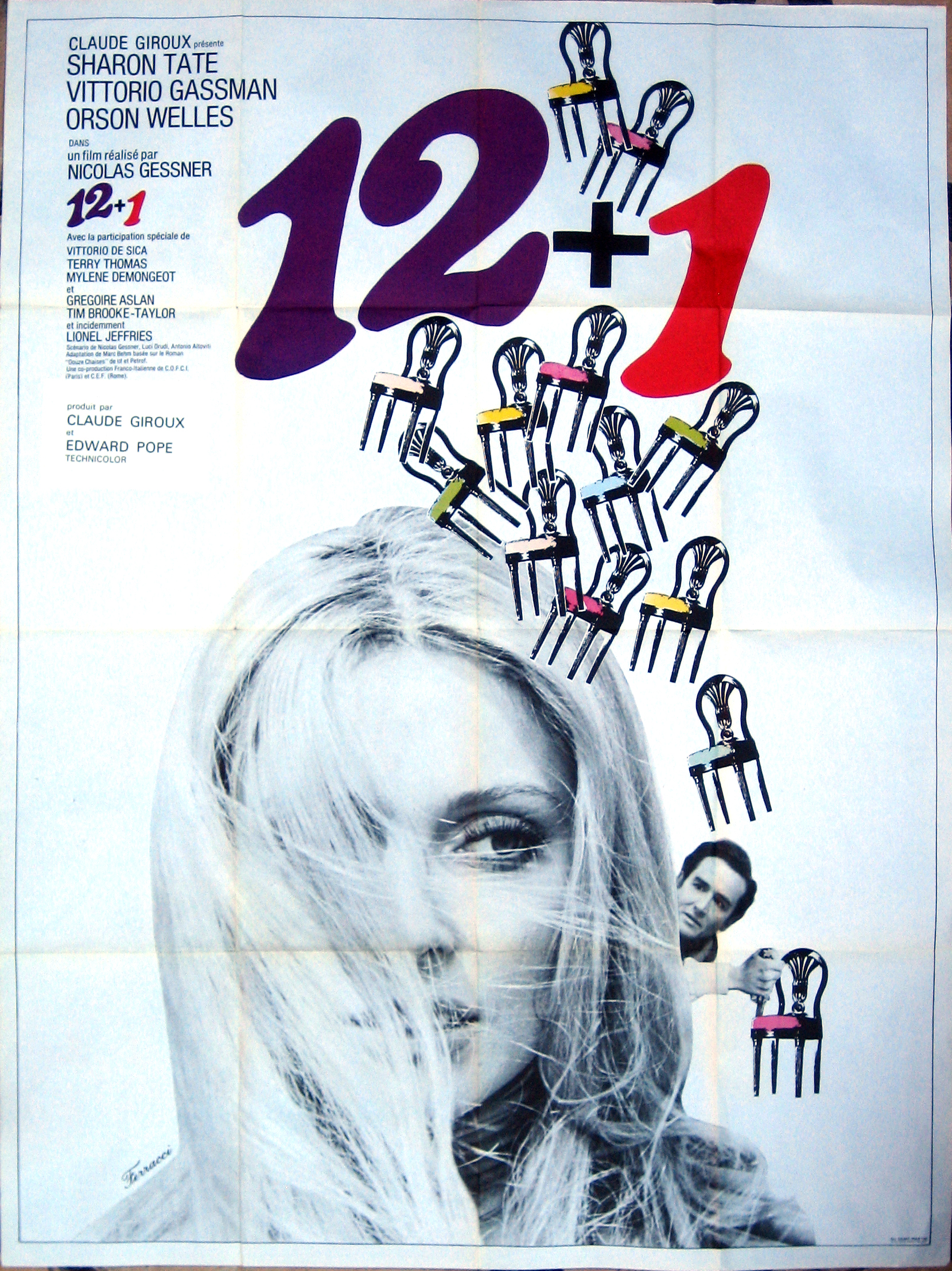
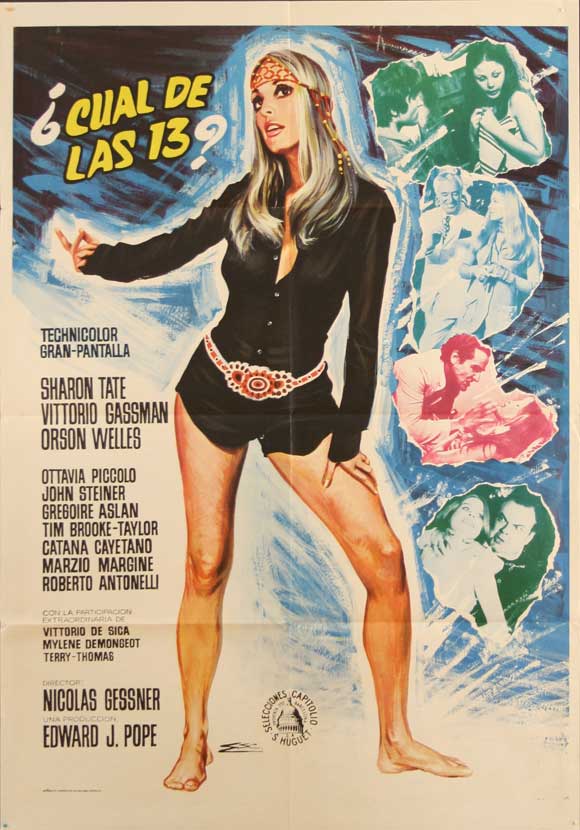
Mario (Vittorio Gassman) is a struggling barber who gets word that his rich aunt has left him a large inheritance. When he gets to her estate he finds the place nearly empty except for some old chairs piled up into a corner. Angered he decides to sell the chairs to a local antique dealer so he can at least make some money off of them. After he sells them he finds a note from his deceased aunt stating that there was a large amount of money sewn up inside one of them. In a panic he goes running back to the shop, but finds that they have already been sold off to various customers, so he along with Pat (Sharon Tate) who worked at the shop and wants to help him as long as she gets a part of the take go on a mad dash to seek out the chairs and retrieve them one-by-one until they can find the money.

The film is based on the classic 1928 Russian novel that has been made into several film versions including one by Mel Brooks that came out a couple of years after this one. I’ve never read the novel, but this film clearly does not do it any justice. The humor is lame and cartoonish and barely able to equal a weak Tom and Jerry cartoon or uninspired Disney flick. The budget is low and the scenes all have a perpetually cheesy, schlocky feel. The Herb Alpert-like music sounds like it was edited in off of an audio cassette recording. The whole thing is quite derivative and dull despite the wide variety of characters and locales.

The film’s biggest claim to fame is being Tate’s only starring vehicle and this didn’t get released until well after her death. She is very beautiful and surprisingly engaging and comical and her presence is the best thing about the movie. She even does a nude scene along with the equally tantalizing Ottavia Piccolo when they both go topless and then get into bed on either side of Gassman, which is the film’s one and only provocative moment.

The supporting cast is full of some old pros that get badly wasted. Terry-Thomas is one of the funniest character actors of all-time, but here he is shockingly boring and forgettable. Orson Welles hams it up in make-up as a pretentious stage actor whose play he is performing in becomes a catastrophe in the film’s only slightly amusing moment.

The color is faded and shot with no imagination or flair. Although there is some nudity the filmmaker’s would have been better served had they cut it out and aimed it solely for the kids as the humor is so broad and silly that only a three-year-old could possibly find it entertaining and even that is no guarantee.

twelve plus one 1

My Rating: 2 out of 10

Released: October 7, 1969

Runtime: 1Hour 34Minutes

Rated R

Director: Nicholas Gessmer

Studio: AVCO Embassy Pictures

Available: VHS

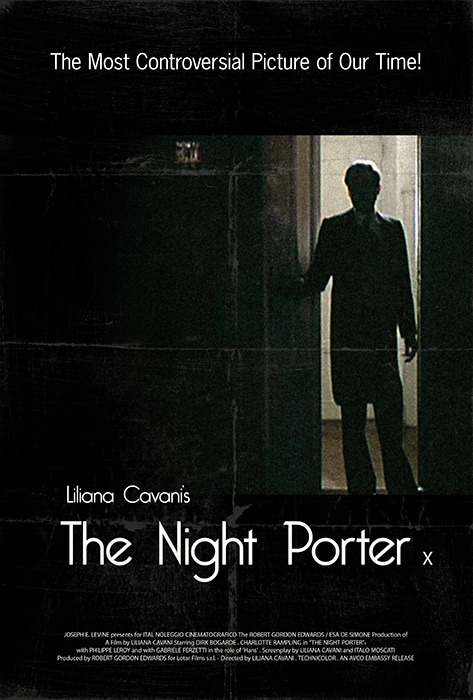
The Night Porter (1974)

the night porter 3

By Richard Winters

My Rating: 8 out of 10

4-Word Review: A strange sadomasochistic relationship.

As the title suggests this film deals with the darkness of the human mind, relationships, sex and society as a whole and has a Freaudian theme of exploring the weird sexual obsessions of those who on the outside may seem perfectly functional and ‘normal’.

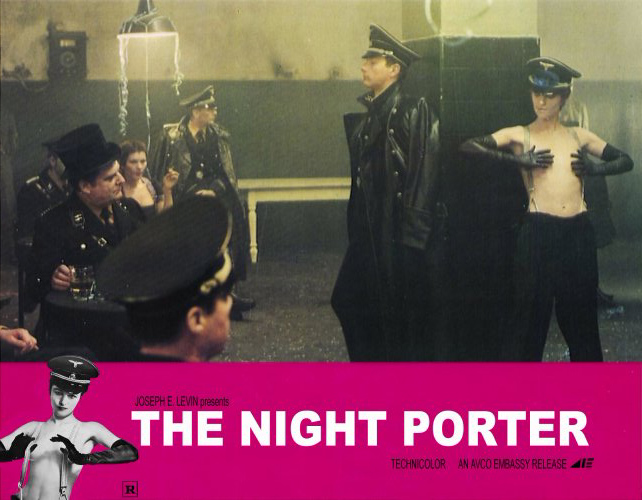
The story focuses on a concentration camp survivor Lucia (Charlotte Rampling) who twelve years later, by chance, meets her former captor Maximilian (Dirk Bogarde). She is now married while he is working as a night porter at the hotel she is staying at. The twist here is that she decides to go back to him and continue the bizarre sex rituals they once had.

The film’s most interesting aspect is focusing on the long term psychological ramifications of those surviving traumatic experiences. It looks both at the victims and the captors who now must learn to ‘rationalize’ their guilty conscious and it questions whether anyone can truly function normally after surviving such severe circumstances or whether society has any ability to make someone ‘adjust’.

This is definitely complex material and director Liliana Cavani has a good grasp on it. The shot compositions are full of stark shadows with a definite emphasis on the surreal, which comes to play the most during the sadomasochistic fantasy segments.

The problem with the film lies in the fact that it doesn’t have the intended strong impact. There’s no momentum or discernible tension. The characters are complex, but not that interesting and we really don’t care particularly what happens to them.

The films strongest point is actually in its final sequence, which brings the whole thing together. Like in any great movie there’s the one shot that says it all and here it’s the final one where visually, without saying anything, it shows just how isolated these outsiders truly are. It also exposes how their personal demons have imprisoned them and how dysfunctional society is at handling them.

the night porter 2

My Rating: 8 out of 10

Released: April 3, 1974

Runtime: 1Hour 58Minutes

Rated R

Director: Liliana Cavani

Studio: AVCO Embassy Pictures

Available: VHS, DVD, Blu-ray, Amazon Instant Video

Ginger and Fred (1986)

ginger and fred

By Richard Winters

My Rating: 6 out of 10

4-Word Review: Aging dance partners reunite.

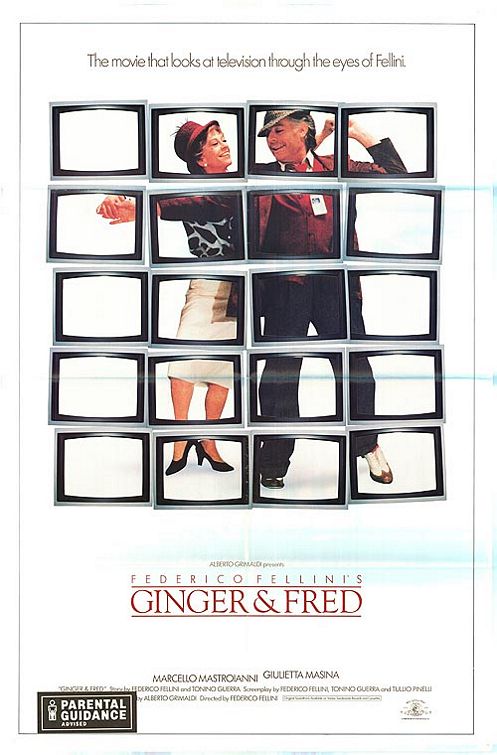
Amelia (Giulietta Masina) and Pippo (Marcello Mastroianni) are two aging dance partners who haven’t worked together for years. They are asked to reunite for a TV-show special and do a famous Fred Astaire and Ginger Rogers routine, but things have changed in their many years apart and the situation becomes more awkward than they imagined.

This is a genuinely amusing satire on television and celebrity status with Mastroisanni being absolutely engaging in every scene that he is in. Masina, who was director Federico Fellini’s wife in real-life, also gives a good performance and together they make a real fun team. The final dance sequence is terrific and the film manages to really come together at that point. The film is also sprinkled with some funny satirical snippets with the best ones including goofy billboards and a woman wearing edible panties.

On the negative end I found the techno music score to be overplayed and it becomes irritating especially at the beginning.  The film is also about a half-hour too long and it takes almost thirty minutes for Mastroianni’s character to even appear.

Overall I found the film to be enjoyable and mainly because the two leads are old pros who know how to work their magic although this is definitely not one of Fellini’s best films and at times it seems like he is just coasting.

My Rating: 6 out of 10

Released: January 13, 1986

Runtime: 2Hours 5Minutes

Rated PG-13

Director: Frederico Fellini

Studio: MGM

Available: DVD, Amazon Instant Video

The House of Exorcism (1976)

house of exorcism

By Richard Winters

My Rating: 5 out of 10

4-Word Review: Possessed by the devil.

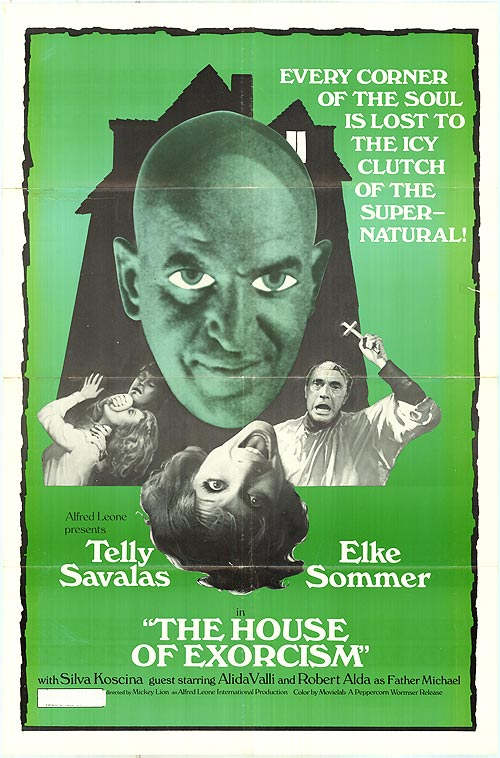
When Mario Bava’s Lisa and the Devil, which was reviewed yesterday, failed to generate any business at the box office the film was reedited using footage cut from the first film as well as adding some new scenes. In this version Lisa (Elke Sommer) is a tourist in Spain who becomes possessed by the devil right out in broad daylight on the cobbled streets and in front of her fellow tourists. She is taken by ambulance to the nearest hospital and accompanied by Father Michael (Robert Alda). The doctors are unable to explain her condition medically and as she gets worse and more violent it is up to the Father to excise the demon.

This version is an improvement over the Bava one in fact Bava’s name doesn’t appear anywhere on the credits and instead the film’s producer Alfredo Leone is listed as the director under the pseudonym Mickey Lion. Obviously it’s a huge rip-off of The Exorcist and in some ways gets unintentionally funny particularly when the Priest has a conversation with the demon during the exorcism. However, it is still fun and more flamboyant than the original and at least has a coherent plot that helps propel the movie along. The only problem is that the exorcism scenes are intercut with scenes from the original film showing Lisa visiting the mansion and meeting up with the strange characters. Supposedly this is the alternative reality that she is in while the demon possesses her body, but it adds little and bogs down the pace.

Sommer comes off much better here than she did in the first one. The way she contorts her face during the possession sequence is entertaining and she does well under the difficult demands. Telly Savalas as the devil disguised as a butler is still wasted. He doesn’t even seem to be taking the part seriously and seems to give it a tongue-and-cheek approach, which doesn’t work.

Alda’s presence is rather bland, but Carmen Silva who plays Anna his wife before he entered into the priesthood is a stunner. She appears nude in a rather gratuitous flashback segment that should more than appease any self-respecting voyeur.

The ending has a little more pizazz than the original as well where the Father goes into an empty mansion and tries to fight off the demon while having snakes thrown right at him. It’s not the best, but not the worse either.

My Rating: 5 out of 10

Released: July 9, 1976

Runtime: 1Hour 32Minutes

Rated R

Directors: Mario Bava, Alfredo Leone

Studio: Peppercorn-Wormser Film Enterprises

Available: DVD, Blu-ray, Netflix streaming

Lisa and the Devil (1973)

lisa and the devil

By Richard Winters

My Rating: 3 out of 10

4-Word Review: Where is the plot?

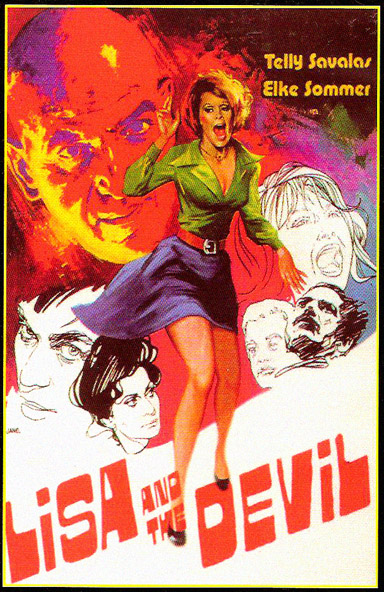
Lisa (Elke Sommer) is a tourist in Spain who gets lost and finds shelter inside a large mansion run by a butler Leandro (Telly Savalas) and a Countess (Alida Valli). Soon Lisa begins to experience strange occurrences and visions. People turn up dead and then alive again. When she tries to escape she finds that she can’t and is now stuck in a surreal world with no exit.

I am use to watching Italian horror films being strong on the visual end and weak with the plot, logic and character development especially when they attached to either Mario Bava or Dario Argento, but this one goes to the extreme. Nothing makes sense and scenes are thrown in haphazardly and go nowhere. The basic premise is too general and unfocused and the entire production seems to be an exercise in interesting camera work and nothing more. Yes there are a few atmospheric moments, but it all adds up to very little.

Had the special effects been gory or impressive I might have forgiven it, but for Bava standards they are lacking as well. For one thing there is very little gore to begin with and what we do see looks amateurish. The scene where a man gets run over by a car clearly looks like a mannequin and as the driver backs up and runs him over several more times it becomes even more obvious.

Sommer makes for a weak heroine. Her character is as vague and mysterious as all the others, so the viewer never gains any empathy or concern for her fate. Her short shoulder length haircut makes her look middle-aged and dowdy. Also, Sylvia Koscina her costar has facial features that are too similar to Elke’s and for a while I thought she was Elke with a brunette wig. Her best moment is actually her nude scene of which she looks great although I noticed her eye lids constantly fluttering when her character was supposedly asleep.

Normally I love Telly Savalas and he can be effectively menacing, but here he is sorely underused. The character pops in and out sporadically, but really doesn’t do much. I did like that he is constantly sucking on lollipops, which later became his trademark during his run on the ‘Kojak’ TV-series.

I was hoping for some grand over-the-top finale to make up for having to sit through all this, but it never came. The climax, which takes place inside a jet airliner no less, is as underwhelming as everything else. Not surprisingly this film was edited into a completely different story and reissued as The House of Exorcism, which will be reviewed tomorrow.

My Rating: 3 out of 10

Released: May 9, 1973

Runtime: 1Hour 32Minutes

Rated R

Director: Mario Bava

Studio: Leone International

Available: DVD, Blu-ray, Amazon Instant Video, Netflix streaming

A Minute to Pray, A Second to Die (1968)

a minute to pray a second to die

By Richard Winters

My Rating: 3 out of 10

4-Word Review: A gunfighter suffers seizures

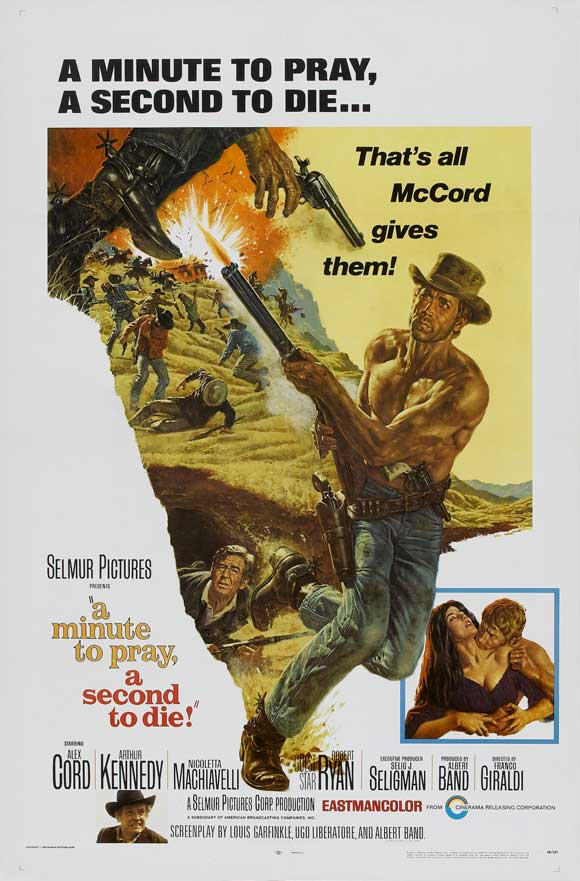
Clay McCord (Alex Cord) travels to New Mexico where the Governor (Robert Ryan) promises amnesty to all outlaws. Clay finds himself at odds with the other outlaws who are traveling to the state for the same reason, which causes him to get involved in numerous gun fights and although he is an excellent shooter he also suffers from strange seizures that temporarily paralyze his arm. When he has these fits it makes him completely vulnerable to all those who might want to take advantage of him. He tries to keep this condition a secret while looking for a Dr. which he hopes can cure him, but the other outlaws get wind of it and start to track him down.

One of the biggest problems with this movie is that Director Franco Giraldi is no Sergio Leone and you spend the whole time wondering how much better this would have been had Leone directed it. Giraldi fails to have Leone’s visual style or lyricism. Everything is staged and photographed in a very conventional unimaginative way with a lot of choppy editing. The one fun and interesting scene that the film does have Giraldi screws up and it entails Clay as a young boy watching a group of cowboys laughing at his father and dragging him through the mud while he suffers an epileptic seizure. The crying boy becomes so distraught that he steals one of the men’s guns and then turns around and shoots them all dead. Instead of taking advantage of the scene’s irony and showing the men with shocked expressions and even possibly having them getting hit and falling down dead in slow motion Giraldi instead immediately cuts away the second the boy starts shooting, which doesn’t allow the scene to gel and stand out as much as it should.

The music is another issue and in desperate need of Ennio Morricone’s distinctive orchestral sound. Carlo Rustichelli the composer here has a score that places too much emphasis on the violins and creates a heavy, droning melody that would be better suited for a drama. The dialogue is also dubbed. I know a lot of Italian filmmakers did this especially during this era. I’ve never been sure why and I have never liked it although with Dario Argento’s horror movies it somewhat works because it heightens the surreal effect, however here it cheapens the production and cements it as a definite B-movie.

Cord doesn’t have the charisma or presence of a leading man. His deep voice and laid back delivery makes him sound like he is only half awake. He glides through the film with too much of a detached and unemotional persona. The biggest problem though was the character. This is a man who has no idea when his seizures will occur and knows full well the vulnerable position they will put him in and yet he continues to behave in a brash, cocky way with everyone he meets and singlehandedly tries to right every wrong when it would have been much more practical to simply lay low and blend in with the crowd.

Nicoletta Machiavelli is a beauty and although I wasn’t so sure about her acting her face was so appealing that I wanted to see her in more scenes and was disappointed when she got killed off so quickly. Veteran actor Arthur Kennedy who wears a wig gives his usual stalwart performance as the town’s marshal, but it is not enough to save the picture. Ryan is okay as the governor, but I found it hard to believe that a man who looked like he was clearly getting elderly would be able to punch out as many guys as he does let alone even one of them.

There are quite a few gun battles particularly during the first half, but they are generic and the final one really isn’t that exciting. The ending peters out with a whimper and this spaghetti western wannabe does nothing but make you long to go back and re-watch a classic one.

My Rating: 3 out of 10

Released: May 1, 1968

Runtime: 1Hour 37Minutes (The DVD cover says 1Hour 58Minutes, but they’re wrong.)

Not Rated

Director: Franco Giraldi

Studio: Cinema Releasing Corporation

Available: DVD