Category Archives: Foreign Films

Garde A Vue (1981)

garde1

By Richard Winters

My Rating: 6 out of 10

4-Word Review: Interrogation of a lawyer.

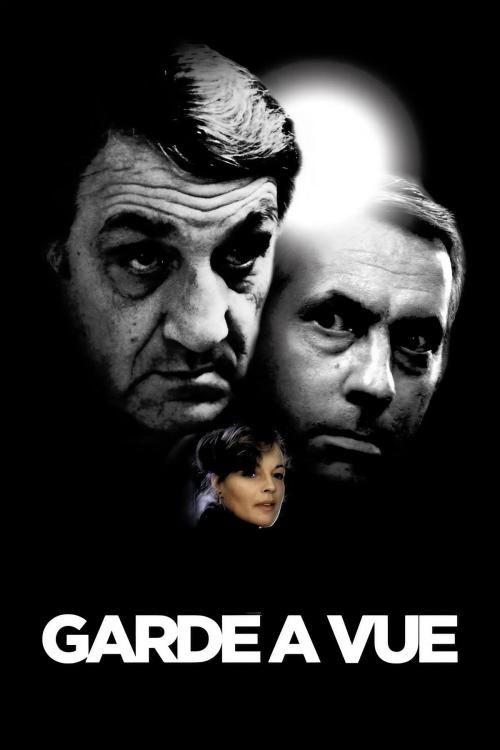
Jerome (Michel Serrault), is a rich and powerful lawyer who is brought into a police station late one night during New Year’s Eve in order to be questioned about the rape and murder of two young girls. Antoine (Lino Ventura) is the lead investigator while Marcel (Guy Marchand) sits in the back and assists him during the interrogation. At first the conversation is light and civil, but as Antoine brings more circumstantial evidence to the forefront Jerome becomes nervous yet insists he’s still innocent. Marcel even implements some physical force against him, but Jerome’s stance never changes. In another room Antoine has a conversation with Jerome’s wife, Chantal (Romy Schneider), who confides to him that she secretly suspected Jerome to be in-love with an 8-year-old girl. Once Jerome gets confronted with this his story soon begins to change.

The film is based on the novel ‘Brainwash’ by John Wainwright and shot entirely in a studio soundstage and in chronological order. Why director Claude Miller would want to film a story that had very little if any cinematic elements to it is a mystery and if anything this might’ve fared better as a stage play. I was initially impressed with the police station room as you’d swear it was an authentic building and not just a prop built for the production. The drenching rain seen pouring down outside the windows is impressive as it gives the viewer a claustrophobic feel and I liked how eventually, when the clock hits midnight, you hear car horns honking outside to represent the New Year. However, every interrogation room I’ve seen, and I watch a lot of confession videos on Youtube from real-life cases, the rooms are very small and with no windows and the film would’ve been better served had it reflected a setting like this as it would’ve brought out better the psychological tension of the suspect and his feelings of the ‘walls closing in on him’, which with here you don’t get.

You can’t help but connect this movie with The Offencewhich starred Sean Connery and was directed by Sidney Lumet. That movie came out 8 years before this one, but had the exact same theme of a suspect being brought in over the murders of some school girls. That movie was well directed but did annoy me for the fact that in that one the suspect, played by Ian Bannen, did nothing, but give off this smirk the whole time.  This one has a much better back-and-forth between the investigator and suspect, which helps keep it compelling as more evidence gets introduced. However, in the Lumet film it had constant shots of this big bright light shining into the camera giving the viewer a point-of-view feeling of what someone in that situation would feel and thus helping hype the sense of urgency of wanting to get out of there, or say anything one needed to in order to stop the pressure, which this film doesn’t do very well. Both films though have cutaways showing the dead girl’s bodies from a distance in a secluded area, which are visually creepy, though again Lumet’s film scores a bit higher in that category too.

Spoiler Alert!

Ultimately the ending is a letdown and rather baffling as it features Jerome caving and admitting to a crime that he really didn’t commit due to the perceived police pressure. For one thing it’s hard to imagine that a seasoned lawyer would be that dumb and wouldn’t just ‘lawyer up’ himself and demand counsel of his own when interrogation got to be too much. I’ve seen a lot of true life interrogations where the pressure put on the suspect was far worse and those people refused to buckle, so seeing the character fall to pieces so relatively quickly especially when he was educated to know better makes the whole thing pathetic.

Didn’t quite get why the wife shoots herself at the end either. Supposedly it’s because she feels guilty about tabbing him for the murder when the real killer eventually gets exposed, but she did it out of honesty as she really felt he had a thing for young girls, so why should she feel tortured about saying something she truly believed? It would’ve been more surprising if she had pulled the gun on Jerome himself as he got into the car and shot him as she would feel, even if he hadn’t been arrested for this crime, that he still had some dark perversions and thus should be killed before he goes and carries out his fantasies on some other girl. Of course if she lied about him having a thing for an 8-year-old in order to get back at him over their contentious marriage then her guilt and suicide would’ve been more plausible, but I didn’t get that from watching it, so if that was ultimately her motivation then the filmmakers should’ve done a better job at intimating it.

This is the rare case where I’d say the Hollywood remake, which came out in 2000 as Under Suspicion and starred Gene Hackman and Morgan Freeman was much better done. It had a better visual balance that didn’t keep the whole thing stuck inside a police room and it better tied-up loose story ends that this one leaves open.

My Rating: 6 out of 10

Released: September 23, 1981

Runtime: 1 Hour 27 Minutes

Not Rated

Director: Claude Miller

Studio: AMLF

Available: DVD, Blu-ray
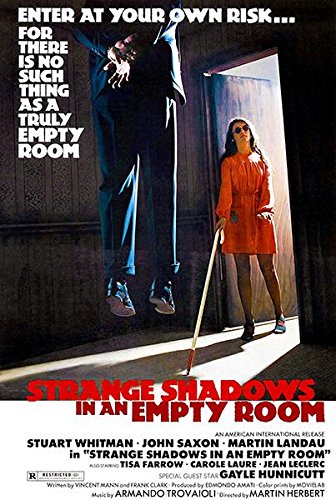
Strange Shadows in an Empty Room (1976)

strange

By Richard Winters

My Rating: 4 out of 10

4-Word Review: Cop’s sister dies mysteriously.

Tony (Stuart Whitman) is a tough-as-nails veteran cop who gets the shocking news that his younger sister Louise (Carole Laure) is found dead at a party she had attended. Initially he presumes it’s George (Martin Landau) a middle-aged doctor whom she’d been having an affair with and who gave her a injection at the party, but later he realizes there might be more to the story than he thought and begins investigating other avenues that leads him to a wild and completely unexpected conclusion.

The film was directed by Alberto De Martino who had done other Italian produced films that were rip-offs of better known Hollywood hits with this one clearly being inspired by Dirty Harry. It was filmed in Montreal and Ottawa, Canada, but done by an Italian film crew making it seem more like an overseas production with very little Canadian elements to it. Overall the quality looks cheap and the story has a lot of twists that don’t make a lot of sense, or are believable.

Two that stood out right away to me is during the party scene where Louise fakes illness simply to get George’s attention to make him come over there and away from his wife. Then when he tries to help her she lets him know it was all a gag. A few minutes later she passes out for real and he responds in a worried way, but you’d think since he got taken advantaged of just moments earlier he’d presume this was just another prank and not take it seriously. Also, at her funeral Tony begins to suspect there’s more to her death than what is known and requests an autopsy be done, but an autopsy is standard procedure that should be done after any unexplained death, especially since the victim was so young, and thus seems absurd that he should have to request it only as her body is already in the casket and ready to be buried.

Whitman, who was nearing 50, looks too old for this kind of thing and it’s hard to imagine he would, in reality, be able to physically keep up with these much younger suspects who force him to chase them around in airports, along crowded city sidewalks, and even in hospitals. He’s not the most ethical guy either as he has no problem drowning one of the men he’s questioning in a sink of water as a method of interrogation, which should normally get an officer in trouble. There’s also no glimpses of his personal life, so we never learn anything about him, or see any other dimension except for his rough cop persona. Most other cop movies, or at least the good ones, do have a few scenes dealing with the policeman’s private side, but here there’s none, which makes the character flat and uninteresting. Having the victim be his sister didn’t make too much sense since she was clearly quite a bit younger than him and making her his daughter would’ve been more believable and more devastating when he has to come to terms with her darker side.

The supporting characters are, just like with Whitman’s, poorly fleshed-out. It’s hard to be intrigued who the suspects are when they all seem alike and say and do nothing that’s interesting. The film does have one long car chase, which has some impressive stunts, but it seemed unnecessary as the man driving away from the cops really didn’t have much to hide and is essentially not interrogated once Whitman catches up to him, and he offers only a little piece to the puzzle, so why tear up the city streets and completely destroy two cars if he’s not in dire trouble? Better to have saved this for the finale with the bad guy who really is the culprit than just some minor player who isn’t seen, or heard of again.

I did enjoy the foot chase through the hospital that comes at the end and even goes through a maternity ward and ultimately onto the roof of the place. The story does feature many twists and I did appreciate the way it shows how policeman can make the wrong guesses on who they think is guilty and go on many long tangents that don’t lead anywhere before they realize their mistake. However, more effort should’ve been made to create unique characters as the ones provided here are wooden and banal.

Alternate Title: Blazing Magnum

My Rating: 4 out of 10

Released: March 9, 1976

Runtime: 1 Hour 39 Minutes

Rated R

Director: Alberto De Martino

Studio: Fida

Available: DVD, Blu-ray, Amazon Video, YouTube

The Devil’s Honey (1986)

devilshoney

By Richard Winters

My Rating: 4 out of 10

4-Word Review: Revenge on a doctor.

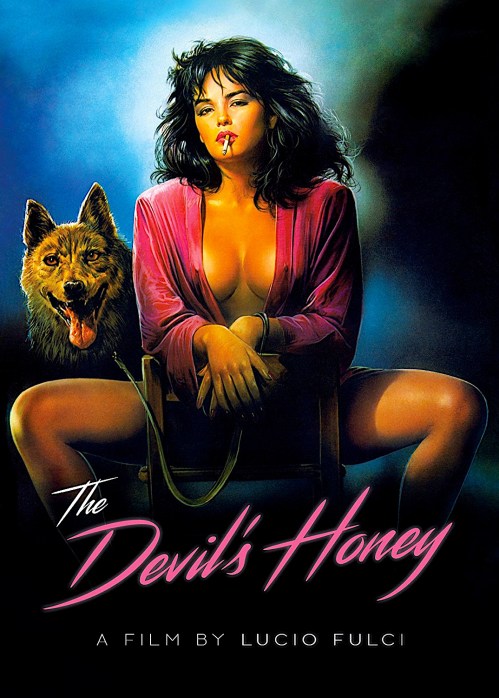
Jessica (Blanca Marsillach) is madly in-love with Johnny (Stefano Madia) who’s a famous saxophonist. The two share many kinky moments and have sex in the wildest of places. Wendell (Brett Halsey) is a surgeon who no longer has sex with his wife Carol (Corinne Clery) and instead seeks out prostitutes though even here the arousal is brief as he can’t achieve an erection for any extended period of time. Carol finds out about his philandering and asks for a divorce, which sets Wendell into a panic as he still enjoys having his wife around as a support system even if it isn’t for intercourse. As this is happening Johnny falls unconscious during one of his recording sessions due to a bump he got on his head while falling off his motorcycle earlier. He gets rushed to the hospital where Wendell is on-call, but he’s unable to concentrate on the surgery due to the stress of his marriage and Johnny ends up passing away. Jessica is outraged by this and sets a vendetta on Wendell to punish him for killing her boyfriend. It begins by her calling him constantly, but eventually she kidnaps him by taking him to her place and tying him up. She tortures him sexually, which strangely both of them begins to enjoy.

This was cult director Lucio Fulci’s return to a sex themed film, which he had started his career out as and away from the gory giallos he had become most known for. The attempt is not without merit as the sex is explicit and almost like a porn film with brief interludes of dialogue before it goes right back to the sexual imagery. Unfortunately on the erotic end it’s not all that titillating. The scene where Johnny blows his saxophone up Jessica’s vagina looked more laughable than kinky. The segment where he tries to get her to fondle his penis while they’re riding on a motorcycle, which almost gets them into a bad accident, I found genuinely cringey and not sexy at all. The fact that she’d be so into a guy that’s rather controlling and degrading to her seemed a mystery though it might’ve been meant as a quirk to her personality, but never explained sufficiently.

Outside of the sex the drama is weak. The moment inside the studio where he complains about having a headache, but the producer tells him to keep on playing anyways, so he blows out a few weak notes before tumbling to the floor came-off as unintentionally funny and had me laughing. Jessica’s distraught reaction where she bangs on the glass that separates the control room from the studio was ridiculous as she should’ve run into the studio to try to physically come to his aid, which had a better chance of actually helping him than just pounding on a window. I also got sick of hearing Johnny play the same piece over and over until it became nauseating.

Things improve with the presence of Halsey an American actor who appeared in many B-pictures during the 60’s and 70’s, but eventually went abroad by the 80’s when the film offers here began to dry up. While his face is chiseled and good-looking the hollow look in his eyes perfectly fits the character and thus becomes  a memorable image. Watching Jessica harass the hell out of him is kind of fun though no explanation for what the substance was that she used to knock him out, nor where she managed to attain it.

Spoiler Alert!

The third act has some tension though it gets ruined by all the flashbacks. Wendell’s wife also disappears completely and no scenes showing her reaction to the news that her husband’s been kidnapped. She had figured prominently in the first two acts and therefore we should’ve seen some sort of response from her in the third. Whether she was happy to have him gone, or had a change-of-heart and became upset is something we should’ve seen. There’s also no answer to what ultimately becomes of the new couple who end up liking the abuse that they give to each other. Do they go on cohabitating and if so does Wendell go back to being a surgeon and if not how do they survive financially? There needed to be more of a conclusion and just leaving it all hanging is not satisfying.

My Rating: 4 out of 10

Released: August 21, 1986

Runtime: 1 Hour 23 Minutes

Rated R

Director: Lucio Fulci

Studio: Selvaggia Film

Available: DVD-R, Blu-ray

Tribute (1980)

tribute

By Richard Winters

My Rating: 3 out of 10

4-Word Review: Father reconciling with son.

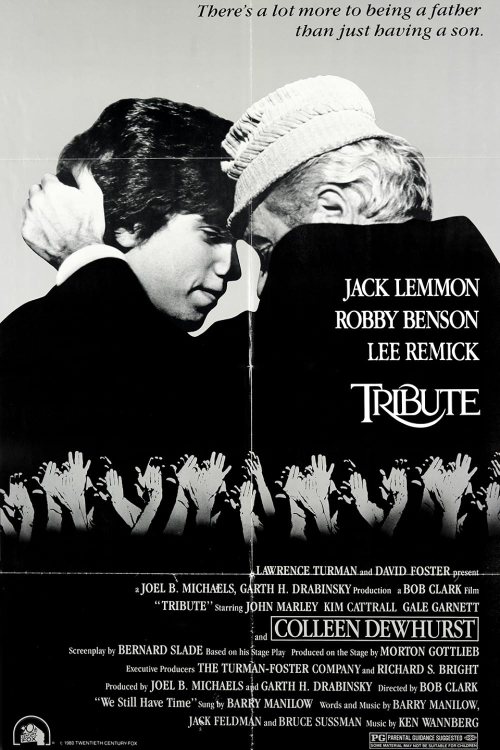
Scottie (Jack Lemmon) has been working in show business for decades and has built up many friends and fans, but finds it all come crashing down when, at the mere of age of 55, he gets diagnosed with leukemia. His greatest regret is not having a close relationship with his now grown son Jud (Robby Benson). He wants to reconcile, but not make it obvious that’s it’s because he’s about to die. When Jud comes over for a surprise visit with his mother (Lee Remick), whom Scottie has long since divorced, he tries to mend things and become the father he never had, but the hurt runs deep and Jud proves to be resistant to everything Scottie tries making him feel even more hopeless and forcing him to come to terms with his personal faults and inadequacies.

The film is based on the stageplay of the same name, which also starred Lemmon, and got sold into a $1 million movie deal before the stage version ever hit Broadway. On the surface it’s deemed a drama, but the script by Bernard Slade, who also penned the play, comes off more like a desperate comedy akin in tone to Same Time Next Year, which is Slade’s most famous work that had a strong dramedy vibe to it. This works on that same level as it attempts to lighten the poignant moments with comical bits, but it fails miserable.

Had some of it managed to actually been funny I might not have complained, but it amounts to cringe instead. The most eye-popping moment is watching Lemmon in a chicken costume run around his place going ‘balk-balk’ and even lay a giant egg on the sofa, which I felt was a career low point. What’s even dumber is his wooing of a young woman, played by Kim Cattrall, who’s also a patient at the hospital. He gets into her room by pretending to be a doctor and then gropes her breasts in a feeble attempt to check her heart rate. A normal woman of today, and even one back then, should respond with outrage for him copping-a-feel by disguising himself into being someone he isn’t, but in this stupid movie she’s instead ‘charmed’ by his antics and it’s enough to get her to go to bed with him later.

What’s worse and even more outlandish is that Scottie then sets her up with his son to have them conveniently ‘bump into each other’ in public and then begin going out. Yet how many sons are going to be cool with Dad sleeping with their girl first? Of course Scottie never tells him that he’s already ‘tested her out’, but it does end up showing inadvertently what a conniving jerk the old guy is and what the film considers to be nothing more than an amusing comic side-story really hurts the likability of the character if you think about it.

The acting is good. Lemmon is expectedly strong and so is Remick as his wife though her part is limited. I liked seeing Benson, who usually got stuck with immature parts due to his young, geeky features, play the mature and sensible, level-headed adult of which he does perfectly. Colleen Dewhurst has some strong moments as the caring nurse and Cattrall, despite the annoying nature of her dippy character, is pleasing enough. Yet the ultimate scene-stealer goes to Gale Garnett famous for the mid-60’s folk song ‘We’ll Sing in the Sunshine’, who plays a hooker and in one segment goes topless (looks great), but it’s a bit jarring when you realize it’s the same person who sang such a sweet-natured tune, tough in some ways you could say it’s also a testament that her creative talents are quite broad.

The third act, where they have this major tribute for Scotty has a touching potential, but gets overdone by filling-up an entire auditorium with all of his ‘close friends’, which even for a social butterfly seemed a bit exaggerated. The scene where the hooker gets a restaurant packed with all of her male clients who have ever slept with her has an amusing quality though again equally hard to believe that all of these men would be cool with everybody knowing that they’ve bedded a prostitute. I’ll give props though to the segment showing Scotty getting treatment in the hospital, which gets shown exclusively through still photos, which I found visually innovative.

Unfortunately everything else falls into second-rate melodramatics. It doesn’t even have the decency to tells us whether Scotty dies or not. When an entire movie deals with a character’s ultimate demise I think it should eventually get answered instead of leaving it open. It makes the whole terminal illness thing seem like a tease done to emotionally manipulate the viewer than an actual reality that it supposedly is.

My Rating: 3 out of 10

Released: December 19, 1980

Runtime: 2 Hours 1 Minute

Rated PG

Director: Bob Clark

Studio: 20th Century Fox

Available: DVD-R

The Garden of Delights (1970)

garden2

By Richard Winters

My Rating: 6 out of 10

4-Word Review: He’s unable to speak.

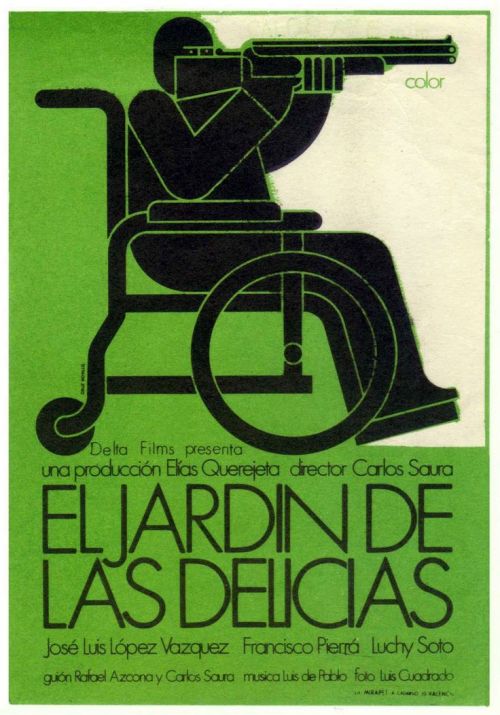
Antonio (Jose Luis Lopez Vazquez) is a wealthy owner of a construction business that he took over from his father (Francisco Pierra) years earlier. Unfortunately just as he’s ready to reap his profits he gets into a car accident, which confines him to wheel chair and unable to speak, or write, or even remember anything. His greedy family becomes determined to get him his memory back even if it means drastic shock therapy as Antonio holds all the business secrets including the combination to the safe and the Swiss bank accounts. The family’s brazen attempts seem to be working though not enough to get him to speak, but while this is going on, inside Antonio’s head, he begins experiencing surreal events that seem almost real and are both fascinating and frightening.

The film’s director Carlos Saura started out his career in the 50’s as a director of documentaries and shorts, which eventually lead to him getting the offer to direct his first feature length film in 1966 with The Hunt, a film about three middle-aged male friends who go on a rabbit hunt that starts out pleasant enough, but ends in brutal violence for all three. That film won him many accolades and gave him the opportunity to direct this one, which plays out more as a metaphor. His home country of Spain was at the time under the authoritarian rule of Francisco Franco who did not allow for free speech and often punished those who spoke out against him. To get around this Saura uses many allegories to convey his anger at the oppressive government, but in a way that didn’t make it obvious enough for him to be arrested.

The main character of Antonio is meant to be a metaphor of the Spanish people with his mute condition being similar to their inability to speak out against their country’s leader. Unfortunately many of today’s viewers aren’t going to get this either because they haven’t bothered to study up about it, or just don’t care. Because of this many viewers will miss the symbolism and leave at the end, if they managed to stay with that long, shaking their heads. Since few people of today were around when it occurred and most Americans don’t have a good grasp of Spainish history it will all be unrelatable for most.

The lead role is well played and Vasquez has a very expressive face, which helps add nuance to a character that otherwise has no other way of expressing himself. I did find it frustrating that we don’t learn much about him. The scenes where he looks around his empty warehouse that he once ran does convey the quandary of someone who once felt powerful, but now only a shell of what he once was. The viewer though is unable to completely identify with him as not enough of his backstory is given. We do eventually during the third act see him in a flashback moment where he speaks with his father and aggressively takes over the company, we also eventually witness the car accident that put him into this condition as it had only been referred to before as ‘an accident’ with no details given, but I felt both of these things should’ve been shown and introduced a lot earlier.

Spoiler Alert!

Pierra as the father gives a thoroughly delightful performance and some of the surreal moments including Antonio’s vision of being pushed into his backyard pond and the recreation of a religious ceremony being two of the best. Yet there are other moments that miss the mark including having a live pig brought into the home and then trapping Antonio inside a room with it in order to jog his memory from a painful past event, but his confrontation with the animal is never shown, which is a letdown. The family members are confusing as it’s never clear whether they have bad intent, or are just acting the way they are due to being put in a desperate situation. The ending in which all the characters become bound to a wheelchair and unable to speak just like Antonio was trying to show how all of the Spanish citizens where being oppressed beyond just him, but emotionally it isn’t compelling and a potentially good story and character study get lost with Saura’s obsession to put political symbolism first and foremost.

My Rating: 6 out of 10

Released: November 5, 1970

Runtime: 1 Hour 30 Minutes

Rated GP

Director: Carlos Saura

Studio: Video Mercury Films

Available: DVD-R (dvdlady.com)

Who can Kill a Child? (1976)

who3

By Richard Winters

My Rating: 6 out of 10

4-Word Review: Children kill the adults.

Tom (Lewis Fiander) and Evelyn (Prunella Ransome), who is pregnant, travel to an island off the coast of Spain in order to find some peace and quiet while on vacation. Once they arrive they find the place conspicuously devoid of any adults with many of the shops and bars looking like they’ve been abandoned. The only people around are children who behave strangely and will not talk to Tom, or Evelyn even when spoken to directly. They then come upon an adult survivor named Padre (Antonio Iranzo) who describes to them how the night before the children suddenly went crazy and began killing all the adults on the island without any provocation. Can Tom and Evelyn escape, or will they become yet another victim?

While there’s been other movies detailing children, or even groups of kids, who murder the adults around them this one is considered the granddaddy of all of them and, though not ever verified, the possible inspiration to Stephen King’s Children of the Corn. The film’s creepiness comes not so much with scares, as there’s very little of that, but more through its quiet atmosphere and isolation that grows increasingly more ominous as it goes. Violence-wise it’s scarce with only the minimum of gore though the sequence done over the opening credits, which has grisly real-life footage of victims of the Holocaust as well as both the Korean and Vietnam Wars is not for the squeamish and may be too explicit and grim for some to sit through.

The script was written in only a matter of 4 short days and it shows with character motivations that aren’t particularly well thought out. For instance I didn’t understand why Tom wouldn’t tell Evelyn about what he saw, in regards to the child beating up and eventually killing an old man, and wanted to somehow play down and even lie about what was going on. This is a pregnant woman who has a right to know about the dangers lurking about. Shielding her from the horrifying realities isn’t going to help her be alert and put up her defenses and if anything just make her more vulnerable to be taken advantage of by the kids. What kind of husband lies to his wife about such urgent matters? Does he think because she’s female she won’t be ‘strong enough’ to handle the truth? If so it makes him sexist and not particularly likable because of it.

Tom also is too slow to respond to things. Even after witnessing first hand the children’s atrocities he doesn’t immediately try to arm himself, get off the island, or board him and his wife off in some sort of safe room with a fortified door. Instead they remain pretty much out in the open in an abandoned hotel with both the entrances and exits wide open for anyone to come into. At one point he even gives his wife a sedative and tells her to take a nap inside one of the hotel rooms while leaving the door open as he goes downstairs to speak to the male survivor, but how does he know a kid won’t sneak into the room while he’s gone?

It’s strange too how the children kill a Dutch woman and even strip off her clothes, but when Tom walks in they all scurry away. If they’ve already killed a vast number of adults why would they fear Tom when he comes in and instead not just attack him too? For that matter why does Tom feel so emboldened to walk in on these kids to begin with? He’s seen what terrible things they can do, so why does he risk exposing himself to them? These clearly aren’t normal kids, so he should remain at a safe distance and view what they’re doing from a hiding spot.

While there’s creepy moments and imagery it all mainly comes during the third act and some more scares and action earlier could’ve helped. The special effects aren’t too great either with the shot of the bloodied old man, whose supposedly just been killed, clearly still breathing as his chest heaves up and down, though Tom carries him away like he’s now nothing more than a corpse. Having Padre describe the violent attacks of the children onto the adults from the previous night was disappointing as this should’ve been played out visually, even if through flashback, as it would be much scarier to see this instead of just being told about it.

Spoiler Alert!

The ending has its fair share of suspenseful moments, but again more logic loopholes. When Tom and Prunella are trapped in a room behind a wooden door a small child crawls through the window space and tries to shoot at them, but Tom manages to hit the kid with a bullet first with a rifle he’s found. The other kids then quit trying to break the door down the couple are in once they hear the shot and all go filing away. Tom says this is because none of the other adults responded with aggression and violence towards them like he did. Once they realized, by hearing the gunshot, that Tom meant business they all backed off knowing that he might kill them as well. However, the kids could not see through the door, the tiny window on it was too high up for them to look through, so for all they knew the gunshot was the sound of the small kid shooting the couple with his gun and therefore they should’ve continued the attack and not immediately stopped.

The children are also able to somehow brainwash their peers into doing their evil bidding by simply looking into their eyes, which somehow puts them under a spell. They even use this power to get the fetus inside Evelyn’s womb to attack her, but where do they get this power from? What kind of entity is behind all of this? Nothing gets answered, which leaves too many questions open and thus not as effective as it could’ve been.

My Rating: 6 out of 10

Released: April 26, 1976

Runtime: 1 Hour 53 Minutes

Rated R

Director: Narciso Ibanez Serrador

Studio: Penta Films

Available: DVD (Region 0), Blu-ray (Region B/2)

Hellbound: Hellraiser II (1988)

hellbound

By Richard Winters

My Rating: 7 out of 10

4-Word Review: The cenobites come back.

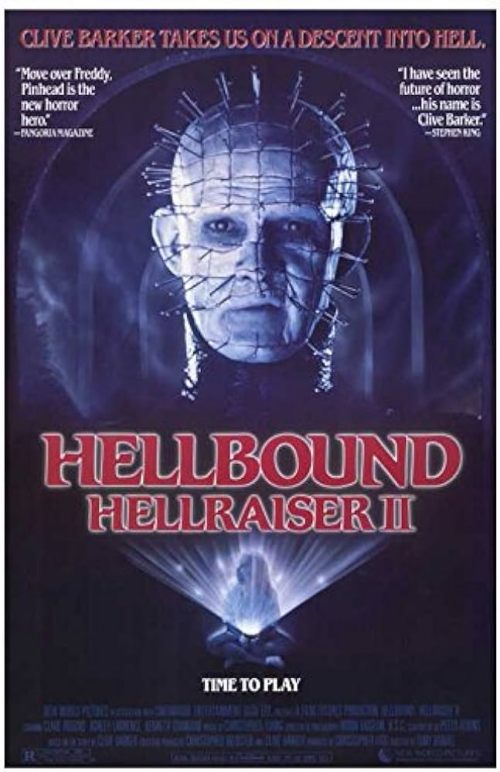
The story begins immediately where the first installment ended with Kristy (Ashley Laurence) in the hospital recovering from her injuries while she pleads with Dr. Channard (Kenneth Cranham) and his assistant Kyle (William Hope) to destroy the bloody mattress that her stepmother Julia (Clare Higgins) died on for fear that it might bring the woman back to life. Dr. Channard finds this possibility intriguing, so he brings the mattress back to his home and then has one of his mentally ill patients bleed on it, which brings Julia, minus her skin, back from the other dimension. She feeds on the patient, which gives her strength and Dr. Channard supplies her with more of them until she is able to take human form. Kristy finds out about it and travels to Channard’s home along with Tiffany (Imogen Boorman), a mental patient at the hospital whom she meets that cannot speak, but has a gift for solving puzzles. When they confront Julia and Channard all four get taken to the other dimension known as the labyrinth that houses the cenobites.

While Clive Barker wrote the script and produced he did not direct and instead handed over the reins to his friend Tony Randel. Randel wanted to turn into more of a dark fantasy and the transitions works making it visually arresting. The mazes that make up the other dimension, which are captured from a bird’s-eye view as we see tiny dots, which represent the characters running, are amazing and I enjoyed Tiffany’s brief foray into a circus like freak show that had a giant fetus with its lips sewn shut, that was creepy and I wished extended further. The scene where Julia bursts out of the mattress to attack the patient I found genuinely horrifying and a dare say one of the scarier moments in horror film history. I also liked the backstory revealing how pinhead (Doug Bradley) came into being. Supposedly this backstory was supposed to take up a major part of the runtime, but due to budget limitations it had to be scrapped and we only see a brief snippet of it through quickly edited segments, which to me was probably best.

The script though does seem a little weak in the way it sets up the premise as it’s way too convenient that the patient in the neighboring room to Kristy’s would have this fixation to solving puzzle boxes, which just makes it highly predictable where its going to go. Have her Dr. show an equal fascination with the puzzles and the cenobite world is again betting long odds and having someone with this dark obsession from outside the hospital track Kristy down would’ve been more believable. The way the mental patients are housed looks dated like we’re seeing an asylum from the 16th century though it still works, if you suspend your belief a bit, with the film’s over the top style.

I was glad that at least Andrew Robinson’s character from the first one doesn’t appear here. He was asked to reprise his role, but refused, which was good because if he had returned the script would’ve had a scene where he and Frank where together in the same body like Siamese twins, which sounded ridiculous. I also don’t like movies that have a character die-off, like Robinson’s did in the first one, and then magically come back to life later, which seems to defeat the purpose. If someone dies then they should stay dead otherwise it’s really not that horrifying seeing anyone get killed if we know that somehow they can still find a way to exist.

Spoiler Alert!

The Julia character, which was already poorly defined in the first installment, gets worse here. Supposedly, she was so madly in-love with Frank that she was willing to kill for him, which meant they must have some sort of special and perverse bond, but in this one she gleefully rips his heart out, literally. In the first one she showed signs of being conflicted over what she was doing, but here she becomes one-dimensionally evil and very boring.

The only cool thing about her is the way she sheds her skin off, but this proves problematic when Kristy puts on the skin in order to disguise herself. The women had different body types and heights, so the skin should not be able to fit her. Also, the inside of the skin was lined with blood from Julia, so putting it on should make Kristy suffocate and quite frankly gag at the grossness of having someone else’s blood seep all over her and thus not be able to wear it for more than a few seconds, or at least that’s how I would respond if I were in that situation, which makes the ending here a bit problematic.

My Rating: 7 out of 10

Release: December 23, 1988

Runtime: 1 Hour 37 Minutes

Rated R

Director: Tony Randel

Studio: New World Pictures

Available: DVD, Blu-ray, Amazon Video, Plex, Pluto, Tubi, YouTube

Hellraiser (1987)

hellraiser

By Richard Winters

My Rating: 6 out of 10

4-Word Review: Former lover needs blood.

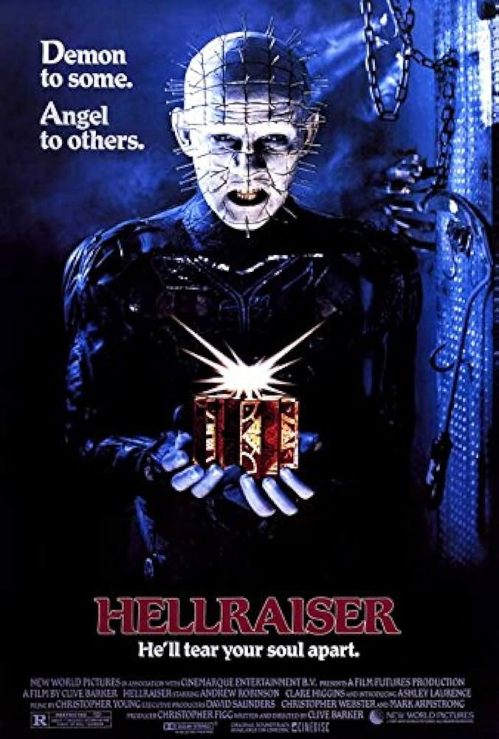
Frank Cotton (Sean Chapman) purchases a puzzle box and brings it home to solve it. When he does he finds that it brings out demons known as Cenobites who enjoy inflicting pain on others for their own pleasure. After tearing Frank apart they reset the box and return to their own dimension. Larry (Andrew Robinson), Frank’s brother, moves into the house along with his wife Julia (Clare Higgins), who at one time, unbeknownst to Larry, had a brief affair with Frank. While moving in some boxes Larry cuts his finger and bleeds onto the attic floor where Frank was killed. Pieces of Frank still exist under the floor boards and the blood allows him to regain life though his body still needs more blood to regain its full form. He convinces Julia to bring in strangers from the bar home, so that she can kill them and allow Frank to drink their blood and regain more strength. Julia agrees to do this, but then Kristy (Ashley Laurence) becomes aware of what Julia is doing and is determined to put a stop to it by confronting Frank and taking away his puzzle box.

This was the first movie directed by Clive Barker and is based on his 1986 novel ‘The Hellbound Heart’. After being dissatisfied with how Rawhead Rex, based on another novel Barker had written, he became determined to direct the next feature in order to give it, in his words, some ‘directorial oomph’, which he had felt was missing in the previous film. Special effects wise the film hits all marks and is a precursor to what’s called Horror Porn today with a lot focus put on the effects that are both realistic and cruel. Watching Frank’s body slowly take form by growing out of the floorboards is quite impressive, but my only complaint are the close-ups of the skin particularly when a hook slices it open, which to me resembled more silly putty.

While the effects are great the characters aren’t. All of them come-off as dark and mean and there’s really no one to cheer for, or side with. Supposedly it’s Kristy the viewer is intended to get behind, but she came-off looking older than college aged and more like she was in her late 20’s. She’s also worldy-wise and seems able to handle herself, as is seen when she comes into contact with a couple of lecherous movers, quite effortlessly, so there’s no real character arch. Having her start-off as shy and sheltered and then grow stronger and confident as she learns to take on the cenobites would’ve been much more interesting and would’ve allowed for tension as you would initially question whether she had to guts to confront the evil like she eventually does.

The Julia character is weak too. I didn’t understand what drew her to Frank. Maybe in the novel this gets better explained, but in the movie it’s nebulous. Her brief fling with Frank, in the few backstory scenes that get shown, makes it seem like it was rather cold and distant and Frank doesn’t necessarily treat her all that well, so why would she bother helping to bring him back to life? Maybe she had a sadomaschistic bent, but if that was the case why would she marry Larry who treats her differently almost like he’s the passive and she’s more in control. If the woman prefers the man to be in control then that’s what she looks for in her next relationship not the opposite.

Spoiler Alert!

The twist near the end where Frank kills Larry and then begins to wear his skin gets botched too. It’s intended to be a surprise reveal for the viewer who, like with Kristy, initially think it’s the real Larry though it’s pretty obvious something isn’t right as blood is seeping out on the edges of his face, which Kristy should notice, but apparently because she’s so upset she doesn’t. It would’ve been better though to have the killing played-out and shown the final shocked expression on Larry’s face when he realizes he’s been betrayed by not only his brother, but wife too, which would’ve been priceless.

What’s even more perplexing though is why is Frank speaking in Larry’s voice? He may have his skin, but not the voice box. Even if he had tried to disguise it, in an effort to trick Kristy, I don’t think it would’ve come-off so convincingly. Then, once the gig is up and Kristy realizes it’s Frank, he still continues speak with Larry’s voice by why bother at that point since he no longer needed to fool her?

My Rating: 6 out of 10

Released: September 11, 1987

Runtime: 1 Hour 34 Minutes

Rated R

Director: Clive Barker

Studio: New World Pictures

Available: DVD, Blu-ray, Amazon Video, Pluto TV, Tubi, YouTube

Tales that Witness Madness (1973)

tales

By Richard Winters

My Rating: 3 out of 10

4-Word Review: Four tales of terror.

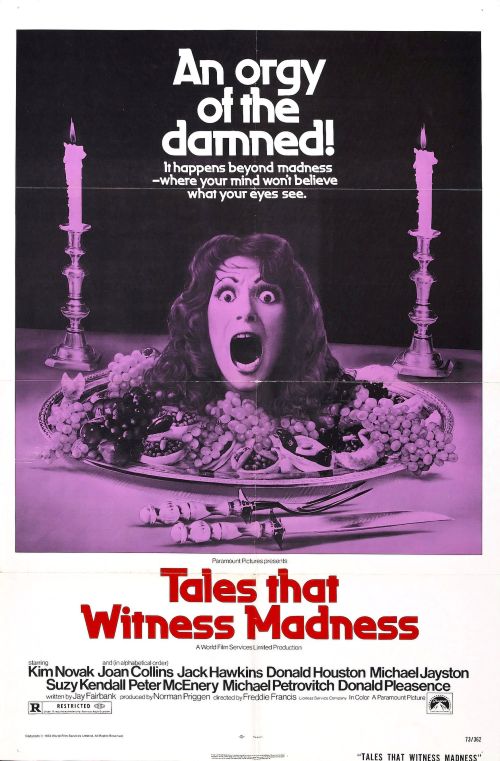
Directed by legendary cinematographer Freddie Francis, the film revolves around four stories where the protagonist is perceived as having gone mad, but in actuality it’s evil from another dimension that gets them to see or do odd things and in reality they’re the sane ones. The connecting element is Donald Pleasance who acts as their psychiatrist who keeps them at his clinic in an effort to improve their mental state. In the first story we have a boy named Paul (Russell Lewis) who boasts about having a live tiger in his room even though his parents (Donald Houston, Georgia Brown) don’t believe him. The second story deals with Timothy (Peter McEnery) an antique collector who’s able to ride an old Penny Farthing bicycle that allows him to go back into time and inhabit another man’s body. The third tale deals with a man (Michael Jayston) who brings home a dead tree and mounts it in his living room much to the annoyance of his wife (Joan Collins). The final story is about a rich socialite (Kim Novak) who courts a younger man only for him to have show more interest in her beautiful daughter (Mary Tamm).

This Review Contains Spoilers!

The first story is pretty weak mainly because you presume going in that there’s probably, despite the long odds, some sort of tiger present because after all this is a horror movie dealing with the supernatural, so seeing the parents getting attacked at the end isn’t surprising, or even shocking and you’re pretty much just waiting for it to happen from the get-go. Director Francis makes the mistake of attempting to film the attack as it happens by editing in stock footage of a tiger and mannequin parts with red paint standing in for the parent’s bodies, but it all looks quite fake. Since the tiger figures in again at the very end of the movie a better idea would’ve been to keep it a mystery whether he existed, or it was just a homicidal child that had killed his mom and dad. When the parents walked into the son’s room the camera should’ve remained outside in the hall and the viewer hearing their screams, which would’ve been scarier than anemic special effects that we ultimately do see.

The second story is limp as well as it features a picture of ‘Uncle Albert’ whose facial expressions and eyes are constantly moving and changing, which has been parodied in many other films making this one seem more campy than scarry. The third tale is dumb too as anyone who brings a dead tree into their living room and wants to keep it there is mentally ill and the wife would’ve been smart to have left him versus fight for his affections. The twist here is no surprise either as I saw it coming right from the start though Collins does give a good performance and the viewer gets treated to a shot of her breasts although I suspect it was done by a body double.

The fourth segment is the only one that merits any type of mention as it features the bad guys not only killing the daughter, but slicing her up and then serving her to the mother as a piece of ham during a Hawaiian-style luau. The audacious idea deserves some points and Novak’s performance is fun as is Tamm’s in her film debut, who you also get to see nude from the backside, but it fails to make up for the rest of it, which isn’t up to par with the other British Anthology horror films from that period.

My Rating: 3 out of 10

Released: October 31, 1973

Runtime: 1 Hour 30 Minutes

Rated R

Director: Freddie Francis

Studio: Paramount

Available: DVD, Blu-ray, Amazon Video, YouTube

The Last Remake of Beau Geste (1979)

beaugeste

By Richard Winters

My Rating: 4 out of 10

4-Word Review: Brothers join the army.

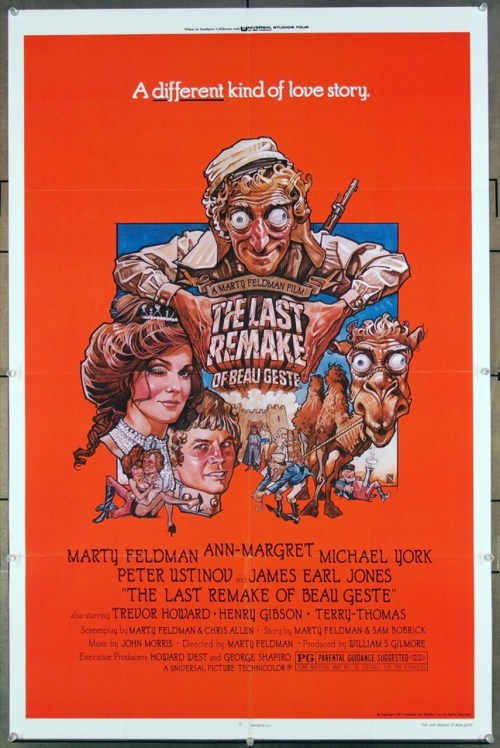
Sir Hector Geste (Trevor Howard) decides to adopt a son to be his rightful heir and carry on the family name. He goes to an orphanage where he spots Beau (Michael York) a dashing young boy who shows immense prowess. Hector immediately decides he wants him, but it comes with the caveat that he must also take on Beau’s twin bother Digby (Marty Feldman) who’s not nearly as handsome, or brave. After bringing both boys home Hector then gets married to Flavia (Ann-Margret) a much younger woman who’s more in-love with the Blue Sapphire diamond that’s in Hector’s possession than Hector himself. In order to keep Flavia from absconding with it Beau decides to take it out of the family home and bringing it along with him to Africa where he joins the French Foreign Legion. Digby eventually joins and they go on to have many adventures, but Flavia catches up with them determined to get the diamond using any means necessary.

The film is based on the 1924 novel of the same name written by P.C. Wren that had already been made into a movie three other times: in 1926 starring Ronald Coleman, 1939 starring Gary Cooper, and finally in 1966 starring Guy Stockwell. In 1976 when Marty Feldman signed a 5-picture deal with Universal to write, direct, and star in any film project he choose he decided to do a parody on a film he had seen growing up. He mistakenly thought it was Beau Geste, but came to realize once he watched the movie that it was really The Four Feathers that had a similar storyline and came out around the same time. He eventually went with doing this version since he felt ‘The Last Remake of the Four Feathers’ didn’t sound right.

The production, which was filmed in both Ireland and Spain, was met with many obstacles, including having Feldman getting sick during the shoot and putting the production on-hold for many weeks. It eventually went over budget and over schedule and the studio was not happy with Feldman’s final cut and determined to re-edit it while giving Feldman a 2-week vacation under the guise of letting him rest and recuperate. When Feldman returned and found out what the studio had done he became irate, so the studio heads decided to make him a deal; they would show both versions to a test audiences and which ever one rated better would be the one that would be released. Feldman agreed to this and to the studios shock Marty’s cut got much higher ratings, but the studio then went back on their word and released their version instead, which did not fare well with either the critics, or public. To this day Marty’s version has never been seen, but by only a few people even though those that have viewed say it’s much funnier and efforts have been made to find it and give it a proper Blu-ray issue though this has never come to fruition as of yet.

As for this version it’s okay, but it starts out better than it ends. There’s some funny gags here and there, but the humor tends to be quite broad and many of the jokes fall flat especially after the midway point. The best moment comes when Feldman splices his character into the 1939 film version and we see his character speaking to Gary Cooper and they even share a scene together, which I found to be quite innovative for the time period. Everything else though is hit-or-miss and suffers from not enough people being familiar with the source novel and thus the in-jokes involving the story will most likely go over  most viewer’s heads it also makes many changes from the original plot with the biggest one being that in this movie there’s only 2-brothers, but in the book there was 3.

The array of famous faces making cameo appearances is fun for awhile though I felt Peter Ustinov camps it up too much as the evil General Markov and the part would’ve been better served had it been played by Roy Kinnear who instead gets wasted as Markov’s assistant. Howard is quite amusing as the elderly father and I wished he was in it more, but ultimately his character gets confined to his bed for the second and third act. Ann-Margret offers some sexiness, but really has nothing to say or do that’s funny until the very end when she tries to challenge a guy to a fist-fight, which should’ve been played-out more. Terry-Thomas gets some work before his Parkinson’s condition, which is very obvious here with his trembling left hand, became so severe that it forced him out of acting and into a retirement home not more than a year after this was filmed.

Feldman himself is quite good, but I felt he needed to be seen more, which is the biggest problem with the movie in that it’s neither character nor plot driven. Too much nuttiness and wackiness for its own good. If the comedy had been better disciplined and a smaller cast it would’ve worked better, but the barrage of constant craziness all in the name humor eventually gets overblown.

My Rating: 4 out of 10

Released: July 15, 1977

Runtime: 1 Hour 25 Minutes

Rated PG

Director: Marty Feldman

Studio: Universal

Available: DVD-R (Universal Vault Series), Blu-ray