Category Archives: Foreign Films

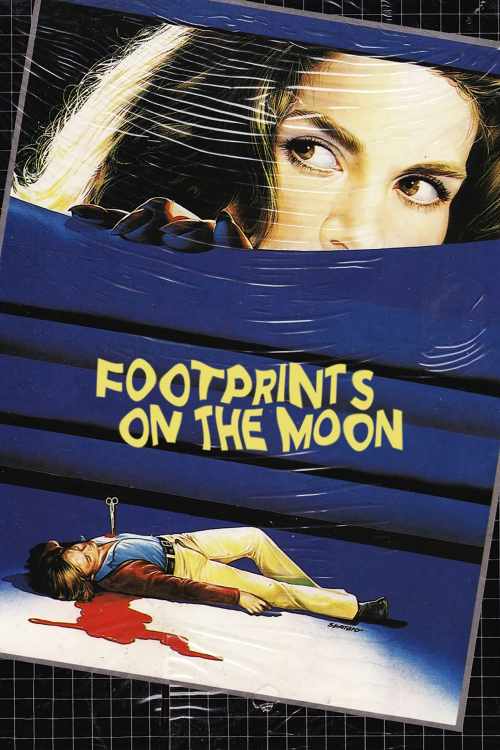
Footprints on the Moon (1975)

footprints5

By Richard Winters

My Rating: 4 out of 10

4-Word Review: Tormented by a nightmare.

Alice (Florinda Bolkan) is tormented by a constant dream involving an old movie she saw when she was younger that dealt with a man being left on the moon to die. She awakens one morning to find that she’s slept for over 2-days and when she arrives at her job she learns that she’s been fired for not showing up and not calling-in. She gets back to her apartment and spots a postcard revealing a hotel, which she vaguely remembers being at. She decides to travel there, which is off the Turkish coast, and meets people who say they’ve seen her before, but while wearing a wig and going by a different name.

The film’s chief asset is the directing by Luigi Bazzone, who had a brief 10-year career where he did 5 films and then inexplicably retired when he was only 46 and never to do another film after this one, which is a shame as he had many more years ahead of him and could’ve helmed a slew of interesting movies in the process. This one definitely relies on a good visual touch. The opening bit done on the moon has certainly a tacky quality, but is also captivating. It doesn’t exactly look authentic, but captured in a way that gives it a dream-like feel and makes it gripping. The island setting that Alice goes to, shot in Phaselis, has such a unique topography that it gives the whole thing a very outer worldly appeal and helps enhance the bizarre story elements.

Bolkan’s presence though does not help. She wears a perpetual scowl, outside of one moment when she smiles to greet a child, that makes her unappealing and hard to sympathize with. She also lost too much weight, reportedly 11 pounds by her own admission, making her look scrawny and like she could tip over with the slightest breeze. She already had a thin frame, so for her to lose anymore, makes her anorexic and not sexy particularly when she goes nude during a shower scene.

Her character is ghost-like and transparent. Some may say this is due to the twist, but for the viewer to get wrapped-up into the character’s quandary they need to see her as a multi-dimensional person. Instead we get someone with no apparent connections to the world around her. Having her go through the plot with some other friend beside her, which she could’ve fed-off of emotionally whenever she got upset, or confused would’ve helped tremendously. Trying to care about a person who’s not fleshed-out doesn’t work and I went through most of it feeling ambivalent about the protagonist’s fate.

Nicoletta Elmi, who plays a young girl that Alice meets while on the island, has far more appeal especially with her striking red hair and clear blue eye, and thus her scenes allow for some intrigue though her conversations with Alice seem to just be repeating themselves. Klaus Kinski is only on hand for a little while and never interacts with anyone making it seem like he’s in some other movie with no connection to this one. In fact his moments could’ve been cut, he only gets shown sporadically anyways, and the movie would not have been hurt by it.

The plot, which was based loosely on the novel ‘Las Huellas’ by Mario Fenelli, doesn’t have enough going on to hold the viewer’s attention. This is yet another example where had it been shortened it would’ve worked perfectly as an episode for the “Twilight Zone’, but here it labors along. It gives out a lot of tantalizing clues at the beginning, but the second act goes nowhere with not enough twists. The concept becomes highly strained with a character that doesn’t interact enough and the few conversations she has are bland and don’t allow the story to progress. The ‘surprise ending’ doesn’t make-up for the lulls and only leads to more questions than answers.

My Rating: 4 out of 10

Released: February 1, 1975

Runtime: 1 Hour 30 Minutes

Not Rated

Director: Luigi Bazzoni

Studio: Cineriz

Available: DVD-R, Amazon Video, Screambox

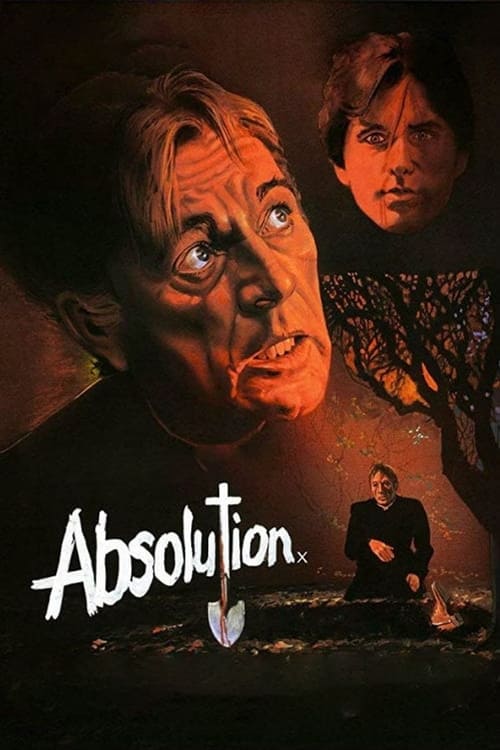
Absolution (1978)

absolution

By Richard Winters

My Rating: 7 out of 10

4-Word Review: Pranking a strict priest.

Father Goddard (Richard Burton) is the head of an English Boy’s School and uses his influence to control those who attend and is unflinching on his policies. Goddard constantly displays a cold and detached demeanor particularly with Arthur (Dai Bradley) a handicapped student that the Father doesn’t seem to care for. Benjie (Dominic Guard) on the other-hand is the teacher’s pet and routinely shown favorable treatment. Benjie though grows to resent the Father’s stern ways when he’s told he can no longer visit with Blakely (Billy Connolly) a motorcycle riding vagabond who has set-up an encampment just outside of the school grounds. Benjie decides to play a prank on the Father after hearing the lecture about the seal of confession, which a priest cannot break even if what he’s told is about a murder, so during confession Benjie tells Goddard that he’s murdered Blakely. Goddard initially doesn’t believe him, which sets off a myriad of twists that soon sends Goddard’s life, career and even his sanity spiraling out-of-control.

After the success of The Wicker ManAnthony Schaffer was commissioned by director Anthony Page to write another script that could be made into a movie and Schaffer decided to choose one that had initially been meant as a stageplay, but had never been produced. However, once Schaffer had completed his adaptation Page was unable to find a studio willing to fund it and he was ultimately forced to use his own money and Burton agreeing to slash his normal fee in order to get it made.

The lack of a budget is sorely evident at the start featuring a grainy print with faded color and what initially seems like misplaced banjo music that would be considered more appropriate for a film set in the American south instead of England. Having it shot on-location at Ellesmere Collage helps as many of the local pupils played the students here and the film gives-off a realistic atmosphere about what a boys school would be like with all of the kids looking age appropriate for their grade level and not like, as with other teen school movies, older actors in their 20’s trying to come-off as if they were still adolescents.

Billy Connelly, in his film debut, is terrific and it’s fun seeing Bradley, who was better known for his starring role in KesBurton though is the standout as his jet setting persona that he had at the time with Elizabeth Taylor gets completely erased and he fully sinks into his role of a steely-eyed, cantankerous man who rules with a rigid, iron-fist and whose simple presence wields terror in the boys as he walks-by and to some extent the viewer too. It’s a commanding performance that helps the movie stand-out.

Spoiler Alert!

The story though, while intriguing, doesn’t fully work. It becomes obvious that Goddard is being tricked by the boys, but you feel no empathy for his quandary. He has spent so much time up until then being a jerk that you end up siding with the boys, at least initially, which seriously hurts the tension as normally in a thriller/mystery such as this you’re supposed to side with the protagonist and want to emotionally see them get out of their predicament. Here though you like his mental breakdown and not as invested in finding out the resolution beyond it. The final explanation, dealing with the Arthur character supposedly disguising his voice to sound like Benje’s is too much of a stretch and ultimately hurts the credibility.

Shaffer stated in interviews that this was not meant to be an anti-Catholic movie, but I feel he said this in order not to alienate potential viewers as it’s clearly written by someone who grow-up in the church and had many problems with it. Father Goddard is more a caricature meant to represent Catholicism as a whole and how the religion with its very rigid rules ends up trapping those who follow it with a damned-if-you-do, damned-if-you don’t scenarios leaving its followers in a perpetual state of guilt and paranoia. This becomes quite evident at the end where the Father feels unable to break his seal of confession for fear of divine wrath, but also fears it for the murder he committed and his thoughts of suicide that would equally lead him to hell, per the teachings, making him more a victim of the religion than of the boys, which I feel was the whole point.

My Rating: 7 out of 10

Released: December 8, 1978

Runtime: 1 Hour 35 Minutes

Rated R

Director: Anthony Page

Studio: Bulldog Productions

Available: DVD, Blu-ray, Amazon Video

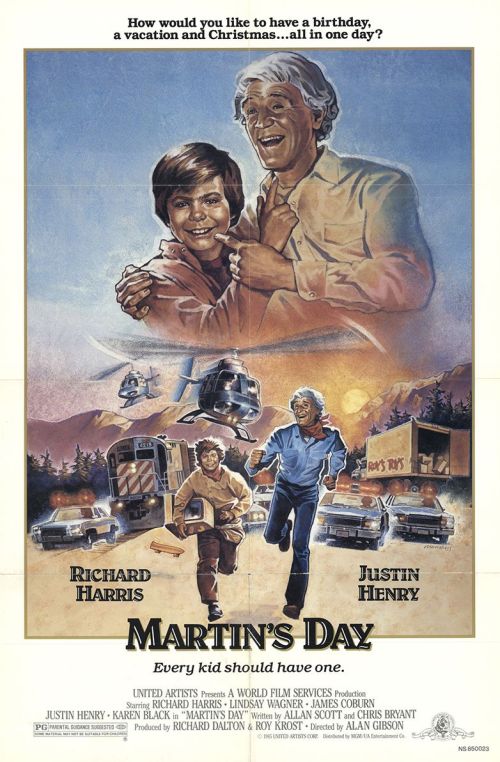
Martin’s Day (1985)

martinsday

By Richard Winters

My Rating: 4 out of 10

4-Word Review: Escaped convict kidnaps boy.

Martin Steckert (Richard Harris) breaks out of jail and disguises himself as a policeman while also absconding with a squad car. Soon some other cops notice the stolen car, which has a broken rear window, and begin to inspect it while Martin is buying groceries. When Martin returns he sees the cops inside the car, but notices their vehicle, which has caught the attention of some neighborhood boys, is sitting idle. He decides to use that car to getaway, but just as he tries to get inside it the other cops take out their guns and point them at him. In a desperate move Martin grabs one of the kids and threatens to kill him, which forces the officers to put down their weapons and let him get away. During the subsequent road trip the two get to know each other and he learns that the kid’s name is also Martin (Justin Henry). A unique bond is created, but the Canadian police force, lead by Lt. Lardner (James Coburn), is hot-on-their-trail.

Richard Harris is fantastic as usual, but the majority of the film is too intent on being a family-friendly movie that it ends up having no edge. The Canadian landscape, shot in September of 1983 in the province of Ontario, is nice and gives one a good feel of rural Canada, but everything else comes-off as trite and predictable though the eclectic supporting cast allows for some added interest.

I especially got a kick out of Lindsay Wagner playing the prison psychiatrist, who tries to replicate the Canadian accent by adding an ‘eh’ at the end of her sentences. I was surprised though that James Coburn, who was still considered a quality leading man at the time, was relegated to such a small role and only seen sporadically. Karen Black does a fine job as Harris’ former lover, but she’s in it for only about 5-minutes and they should’ve had her go along on the trip with the other two, which would’ve added some much needed energy and even a little spice.

The story itself is weak mainly because it telegraphs everything out and there’s absolutely no surprises. It’s clear right from the start, that Harris, while in jail, is a nice guy with a few anger issues, but then when he kidnaps the kid we know upfront that he isn’t going to hurt him. A more intriguing way to have done it, which would’ve allowed for some genuine tension, was to have shown him getting into angry confrontations with his cellmate and possibly even his therapist, so when the kid and him are alone you start to worry how he’ll behave and then during the course of the movie he could learn to be more calm and sympathetic. Even having him threatening the kid versus telling him upfront he’s not going to hurt him, would’ve upped the dramatic ante and allowed for a wider character arch.

I also couldn’t understand why the kid wouldn’t want to go back to his parents and start missing his home life at some point. The movie portrays his mom and dad, whom we never see, as being ‘strict’, but the rules that they had for him, like not eating candy on weekdays and only on weekends, didn’t seem all that outrageous. Had the film shown some scenes at the beginning where his folks were abusive towards him then his ‘escape’ with Harris might’ve made more sense, but as it gets done here the concept becomes highly strained.

Also, for a film aimed at a younger audience the segment where Harris intentionally sets himself on fire while inside his cell was quite graphic and could disturb a lot of children viewers. The scene where Harris backs the squad car that he’s just stolen into the front wall of the policeman’s house gets botched when I noticed that the backend of the vehicle remains completely intact and with no signs of damage, which just painfully illustrates that a breakaway wall was used and not a real one. Another logistical lapse comes when Harris and the kid park their pick-up on the train tracks, which forces the locomotive to stop and allows them to holed-up the train while the kid gets trained by the engineer on how to work it. Then in the next shot we see the train starting down the tracks with the kid now at the helm, but with the pick-up on the side of the tracks and no longer on them, but  it’s never shown how did the pick-up got moved.

My Rating: 4 out of 10

Released: February 22, 1985

Runtime: 1 Hour 38 Minutes

Rated PG

Director: Alan Gibson

Studio: MGM/UA

Available: DVD (Region 2), Amazon Video

This Sweet Sickness (1977)

sweet2

By Richard Winters

My Rating: 7 out of 10

4-Word Review: Obsessed over childhood friend.

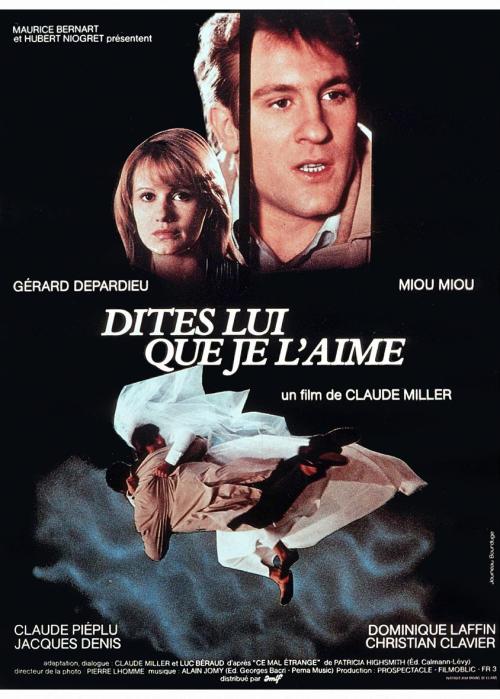
David (Gerard Depardieu) can’t seem to get over Lise (Dominique Laffin) who was a childhood friend of his. Now as adults Lise has married Gerard (Jacques Denis) and even had a child, but David keeps believing that she’s in-love with him and will eventually leave Gerard for him. On weekends he spends his time finishing up with a country house that he has bought, which he plans for he and Lise to live in. He repeatedly calls Lise and meets up with her in public in an effort to beg her to come back to him, but she resists while also advising him that he is mentally unwell and needs to see a psychiatrist. Meanwhile there’s also Juliette (Miou-Miou) who resides in David’s apartment building and has strong feelings for him. David is aware of her presence, but rebuffs her at every turn and yet Juliette persists. She secretly follows David to his country home and when she figures out what he’s doing the two have a confrontation.

While there’s been many movies involving stalkers and jilted ex-lovers that can’t seem to take ‘no’ for an answer this one was done when stalking was still considered an isolated phenomenon and thus there’s a lot of things that work against the modern-day formula, which is what makes it fascinating to watch. For one thing it’s not approached as a thriller, or even a horror, but instead a drama. David is not perceived as threatening, but mentally confused and needing help learning to move-on. Lise does not respond in a frightened way when he approaches, but more just annoyed.

The stalker is three-dimensional as well. One of the most intriguing moments is after Lise’s husband dies in a car accident and David convinces her to come to the country home to check-it-out. Initially she acts impressed with it and gives-off the perception that she might seriously consider moving-in, but David eyes her suspiciously, which is quite revealing. He’s spent the entire time convincing himself and others that she’s truly in-love with him, but now when she actually gives him what he wants he’s not sure he can believe her. This shows subconsciously that he’s aware she doesn’t have the feelings for him like he consciously wants to believe and he actually does know the reality of the situation, but the emotional side of him just doesn’t won’t accept it.

The addition of Miou-Miou  adds another fascinating element. It brings out how stalkers aren’t the way they are simply because they may be lonely and unable to find anyone else, which then supposedly forces them to become so fixated on one person since Miou-Miou is openly interested in him and just as attractive and yet David consistently rejects her. Her stalking on him becomes just as intrusive as David’s to Lise and in some ways just as creepy. The sex scene between her and Gerard, or at least an attempted sex moment, is quite interesting because just a few years earlier the two starred in another film called Going PlacesThere Gerard played the aggressor who rapes Miou-Miou here though she’s the aggressive while Gerard lays virtually frigid, which shows how brilliant these two actors are that they can play such opposite people so convincingly.

Spoiler Alert!

The story was based on a novel of the same name by Patricia Highsmith though there are a few key differences starting with the fact that the novel has the two in a previous, but brief relationship while in the movie they were just friends from childhood. In the book David works as a scientist and purchases the country home under an assumed identity. The Lise character is named Annabelle in the book and her husband Gerard dies after tracking David to the isolated home and getting into a fight with him where in the movie Gerard is killed when his car slides off an icy roadway. In the movie the house burns down when a drunken David knocks over a TV-set, but in the novel he simply sells it and buys a new one that’s closer to where Annabelle lives. The ending is a lot different too with the one in the movie, which takes place at a health spa, being far better and in fact it’s the most memorable moment as the scene is able to balance both an artistic and horrifying elements all at once.

Alternate Title: Tell Her That I Love Her

My Rating: 7 out of 10

Released: September 28, 1977

Runtime: 1 Hour 47 Minutes

Not Rated

Director: Claude Miller

Studio: Filmoblic

Available: DVD-R (dvdlady.com)
Three Men and a Cradle (1985)

threemencradle

By Richard Winters

My Rating: 7 out of 10

4-Word Review: Stuck with a baby.

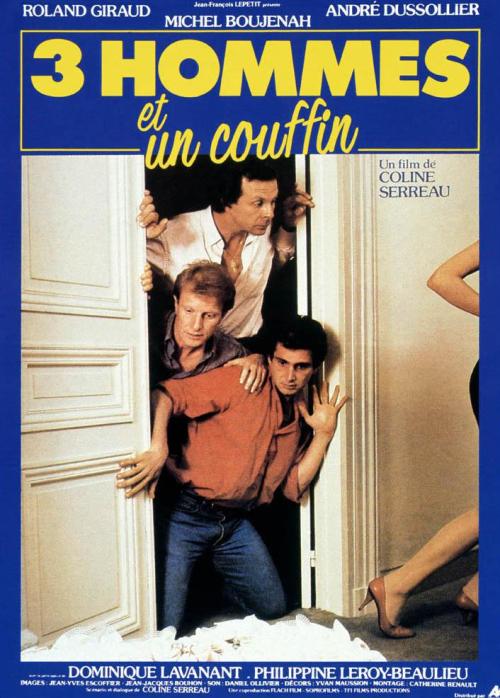
Pierre (Roland Giraud), Michel (Michel Boujenah), and Jacques (Andre Dussollier) are three bachelors living in a swanky apartment who routinely bed hot women and throw wild parties. During a party one of Jacques’ friends informs him that he has a package and wants to have it delivered to their apartment for safe keeping. Jacques agrees and then goes flying off to Japan for a month as an airline steward. Pierre and Michel then find a baby at their doorstep that gets left by Jacques former girlfriend. Thinking this is ‘the package’ they begrudgingly bring her in and try caring for her despite having no idea what they’re doing. Meanwhile the actual package also gets delivered, which is a small box secretly full of heroin, which they think nothing of until the dealers arrive looking to pick it up and mistakenly take the baby instead.

A highly insightful look at bachelors and their ineptness and downright ignorance at infant care is brought splendidly to screen, at least with the first act. There’s many keen moments as they run around to pharmacies not knowing what sized diapers to get the kid, or the type of baby food, thinking it’s ‘all the same’ and needing to constantly go back and speak to the female druggist for clarity.  In fact the first 30-minutes are probably the funniest and could’ve just kept it at that theme and been a success though having Jacques away so much starts to make it seem like the title should’ve just been ‘2 Bachelors and a Cradle’ since the third one is little seen until much later on.

I also really adored the kid who is able to somehow cry on cue. Most infants are understandably hard to control, but this one reacts to the scene and situations perfectly and is in it surprisingly a lot. In most other films dealing with babies they usually get only shown in a crib for a few seconds here and there, with these shots spliced in, but here she’s like a genuine character that’s in it almost as much as the main ones. We also see her grow where at the end she’s doing her first walk and it’s cool that the ‘music’ done over the closing credits amounts to recordings of her baby blabbering.

Where the film starts to fall-off a bit is with the drug dealer side-story. I think the baby chores that the men had to go through could’ve been enough to carry it and adding in the crime thing made it seem unnecessarily exaggerated. It’s also ridiculous that the dealers tear up the entire apartment, and I mean they literally ransack the place cutting up and breaking all the furniture to the point that’s it’s an extraordinary mess. Then suddenly a little later it all goes back to normal, but how could they find the time to clean it all up while also taking care of the kid? This clean-up would’ve quite frankly taken many weeks and buying all new stuff, so this should’ve at least been shown, but instead it gets portrayed like they’re genies who can seemingly turn a trashed place into a clean one with a snap-of-a-finger.

The characterizations are rather weak as Pierre and Michel respond to things too much the same way and have very little distinction between them and could’ve easily morphed into being one person. The idea that these guys could just call off from work for not only days, but weeks at a time without even giving an excuse as to why and not lose their jobs for it seemed implausible. Granted the French culture isn’t a workaholic one like in America, but it’s pushing the bar to the extreme here and might’ve been more amusing seeing the guys taking the baby to their work and trying to somehow still get things done.

Spoiler Alert!

My biggest beef though comes with the girlfriend named Sylvia, played by Philippine Leroy-Beaulieu, who has the audacity to leave a helpless infant on somebody’s doorstep, walks away, and doesn’t think anything of it. What’s to say some stranger couldn’t come along and snatch the kid up before the occupiers of the apartment find it? What’s to guarantee that the guys in the apartment are even going to want to take the baby in, or if they do won’t inadvertently harm the child since they have no training on how to handle it? The fact that she returns months later with this bright beaming smile demanding to see her baby immediately like she’s some loving mother entitled to her kid whenever she pleases makes her seem even more outrageous. In most jurisdictions her behavior would’ve been considered reckless child abandonment and her parenting privileges taken away. Instead of handing over the baby she should’ve received a very stern lecture

Granted the film tries to make-up for this by having her return to the apartment saying she can’t keep up with the mothering duties and agrees to hand the baby over to the men. She also gets shown lying in the baby’s crib in a fetal position in order to symbolize that she’s immature, but still for a playful comedy this has some serious undertones that it glosses over, but are still readily there if you think about it.

My Rating: 7 out of 10

Released: September 18, 1985

Runtime: 1 Hour 46 Minutes

Rated PG-13

Director: Coline Serreau

Studio: Soprofilms

Available: DVD

Blood Relatives (1978)

bloodrelatives

By Richard Winters

My Rating: 6 out of 10

4-Word Review: First cousins become intimate.

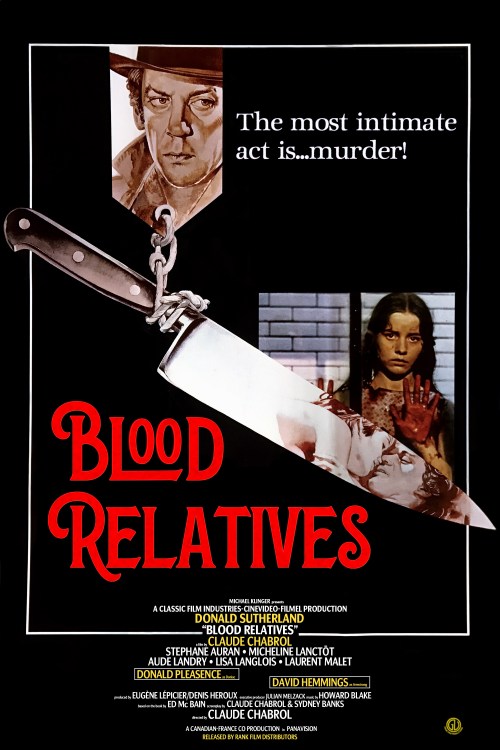
Based on the Ed McBain novel of the same name, but with the setting changed from New York to Montreal the story centers around police inspector Steve Carella (Donald Sutherland) who takes on the case of a teen girl named Patricia (Aude Landry). She arrives at the police station, in a bloody condition, late one night saying that she and her cousin Muriel (Lisa Langlois) were attacked in an alley by a strange man. When the cops arrive at the scene they find Muriel dead. Initially Patricia can not identify who the man was, but later after the funeral, she comes forward to say that it was her brother Andrew (Laurent Malet) that did it. She details how he and Muriel were having an illicit affair despite being first cousins and when Muriel tried to break-up with him due to having a romance with her boss (David Hemmings) he snapped and killed her and then tried to do the same with Patricia since she was a witness, but she managed to escape. Carella though still has his suspicions and when he finds Muriel’s diary he begins reading it, which confirms the affair, but also something even more sinister that was lurking beneath the surface.

This film received a very limited release and was only shown in the theaters for a few weeks before it was removed and has basically sat in obscurity ever since. Much of it may have to do with the incest theme and a couple of really odd moments. One scene was when Donald Pleasance, who appears briefly as a suspect and speaks in a Canuck accent, admits to having an on-going affair with a 13-year-old named Jean (Tammy Tucker) despite him being 46. Carella then goes to the girl’s home to interview her not so much about her being a minor having sex with an older man, but instead in order to vouch for his alibi that he was with her the night of the crime. She’s told that her answers can help get him ‘off-the-hook’ and ‘prevent him from going to jail’ if she can confirm his whereabouts and the whole sex thing she’s having with him is apparently ‘not a big deal’ (they even end up releasing Pleasance once they determine he wasn’t the killer), which for many viewers today will find quite baffling.

Plot-wise the pacing is poor. It starts out alright and is even riveting as we see this young, blood stained teen girl running through the dark streets that’s littered with trash everywhere. However, the flashback moments, done while Carella reads the diary, don’t have the same compelling impact and tends to slow everything down and even manages to turn it into a soap opera. Even though Sutherland is the main character there’s long stretches where he’s not in it and doesn’t seem to have much else to do, but interrogate the witness, particularly Patricia, again and again. His relationship with his own family isn’t captivating though here too there’s an odd moment where his own teen daughter (Nina Balogh) describes her and her father as potential ‘lovers’ as they’re walking outside in public, which again would be deemed a pretty cringey line if said between father and daughter in virtually any other movie.

The acting by Langlois I found to be terrible and helped drag the whole thing down especially during the second act when Sutherland all but disappears. Granted she’s gone on to have a rather successful career and maybe she just needed more experience in order to find her footing, but she delivers her lines in a flat monotone manner and her pretty face seems unable to show any other expression than a vapid smile. Even when she’s getting stabbed she continues to smile and doesn’t even scream, which came-off as unnatural. Though she did very little else after this I felt it was Landry who was the better actress. She is very convincing and has an angelic looking face, so you really see her as an innocent though equally effective when her character’s dark nature comes out later.

Spoiler Alert!

The twist ending I figured out while there was still an hour to go and most other viewers should start to see it well before the ‘big reveal’ occurs. The main issue with Patricia being the ultimate killer is that it really doesn’t make much sense. Supposedly she was intensely jealous of her cousin’s relationship with her brother, but why? Woman usually get envious of someone if they consider them a rival to a person that they have affections for, so is the film implying that she too was having a sexual relationship with her brother, if so it doesn’t confirm it, but should’ve.

A better way to have ended it, in my view, would’ve had Muriel get pregnant, she actually does think she’s pregnant earlier, but it turns out to be a false alarm. Instead it should’ve been the real thing and Andrew would’ve become upset at this and coerced Patricia to kill her in order to get him off-the-hook. He’d promise her that they’d get into a relationship in return (this version would make clear that she had intimate feelings for him and he knew it), but then after the killing gets done, he reneges, which gets her upset, so she implicates him to the police. This scenario would’ve at least given clear motivations to the characters, which is otherwise murky. Sure it would be pretty tawdry and sleazy, but the story was going in that direction anyways, so it might as well go all the way with it.

My Rating: 6 out of 10

Released: February 1, 1978

Runtime: 1 Hour 40 Minutes

Rated R

Director: Claude Chabrol

Studio: Filmcorp

Available: DVD (Region 2) (Dubbed), DVD-R (dvdlady.com)

Camera Buff (1979)

camera1

By Richard Winters

My Rating: 7 out of 10

4-Word Review: Husband’s hobby ruins marriage.

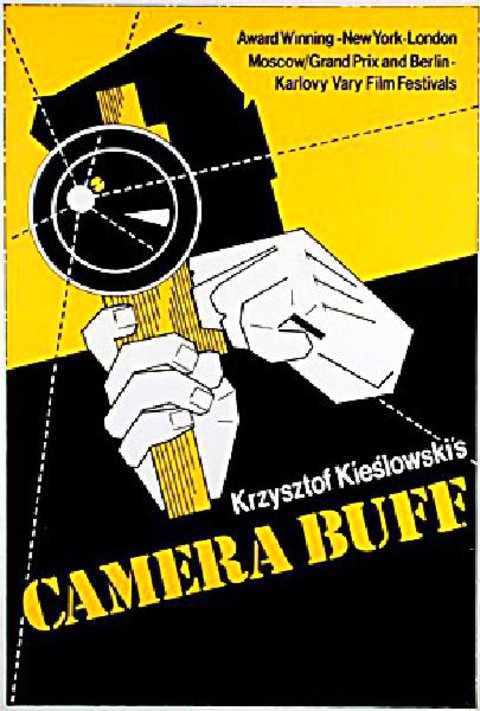
Filip (Jerzy Stuhr) is a factory worker living in the small town of Wielice, Poland. To celebrate the birth of his newborn child he decides to buy a camera to record the event and watching him grow. Because he’s the only one who owns a camera in the town he soon comes to the attention of his boss (Stefan Czyzewski) at the plant he works at who asks him to film an upcoming jubilee celebration that they’re having at the factory. Filip reluctantly agrees, but soon finds himself enjoying the filmmaking process and he begins to record everything around him including some of the corruption that he sees, which gets him into trouble. His wife Irka (Malgorzata Zabkowska) also does not like his newfound hobby as she feels it’s taking too much time and attention away from her and the baby. As his marriage begins to disintegrate Filip is forced to make a hard decision: give up something that he enjoys in order to conform and get along with those around him.

This marks one of the earlier efforts from famed filmmaker Krzysztof Kieslowski. When originally released it was met with a lukewarm response, but as his fame grew it has been reassessed as a classic.  What stood out for me was the interminable grayness that permeates every shot and really helps to hit home for the viewer the bleakness of the everyday living situation of people in a communist country and allows one to understand the need of Filip to find an outlet for his frustrations. It’s darkly amusing how he has to spend so much money, 2-months of his salary, in order to afford this tiny little contraption that can be held in the palm of one’s hand and can only do the most basic of film recording that isn’t even in color and offers no zoom or focus and yet is considered a ‘prized possession’ amongst everyone else around him.

I did appreciate the way it brings out the positive things about movies. The fact that a man who loses his mother can still go back and see the recordings of her that Filip did with his camera to make it seem like she was essentially ‘still alive’ was quite touching and one of the reasons why I enjoy films so much personally in that it has a quality of ‘holding time in place’. The scene where a dwarf worker, who had become the subject of one of Filip’s movies, became so overcome with emotion at seeing himself on the big screen in what had been until then a very ordinary and anonymous life for him, was equally moving.

On the negative side the film tends to go overboard with the dramatics. Having his wife get so upset at the way he enjoyed filming everybody at the jubilee that she goes home and smashes a mirror that cuts her hand was too extreme of a reaction and unintentionally made it seem like she had far more internal issues than just her husband’s hobby. The segment where a woman (Ewa Pokas), an amateur filmmaker herself who works as a judge at one of the festivals he submits his film to, gets so overcome by one of his movies that she leans over and kisses him was overdone as well especially when she later admits she didn’t think much of his movie and only said she liked it to motivate him to continue making more and getting better at it.

The wife’s behavior was the most perplexing. If she really loved the guy then she should be supportive of his hobby since she could see that it made him happy. The fact that she immediately dislikes what he’s doing and openly wants him to fail at it, so he could then turn all of attention back to her and the baby made her seem selfish and that their subsequent separation was a good thing since ultimately they didn’t have much in common. Their conversation where he tells her that he needs more in life than just ‘peace and quiet’ and she looks at him blank-eyed like she can’t fathom what else that would be hits-the-bullseye as there are many people out there, and I’ve known some, who just can’t relate to the artistic endeavors that others may have, which is all the more reason why their marriage was far from ideal and therefore better to expose the flaws of it now then go on living a lie that they were ‘a great couple’ when they really weren’t. The film though seems to parlay the message that it’s a ‘sad thing’ when the marriage disintegrates, but I saw it as a positive because now he has the freedom to pursue his artistic aspirations and meet people who better connect to his interests. The marriage as it was, was nothing but a trap that was holding him back.

Spoiler Alert!

The ending has Filip giving up on his moving making hopes and even destroying the negatives of one of them that was set to be delivered to a TV-station. He does this when he finds out that his last film cost some of the people at his factory to lose their jobs and thus having him conclude that the whole idea was a ‘mistake’. I saw it as the opposite. His movies brought joy and inspiration to people that hadn’t had much of that previously. Sure, it also brought him some trouble, but that was to be expected when living in an environment where self-expression was taboo, but to completely throw-in-the-towel as he does was unnecessarily defeating. I would’ve wanted him to continue on with his new hobby while learning how to be more sophisticated at it to avoid the problems he had earlier. His movie making was not the problem instead it was the flawed society that he lived in.

My Rating: 7 out of 10

Released: November 16, 1979

Runtime: 1 Hour 57 Minutes

Director: Krzyszlof Kieslowski

Studio: Zespol Filmowy

Available: DVD, Blu-ray

The Black Windmill (1974)

black

By Richard Winters

My Rating: 5 out of 10

4-Word Review: Agent’s son is kidnapped.

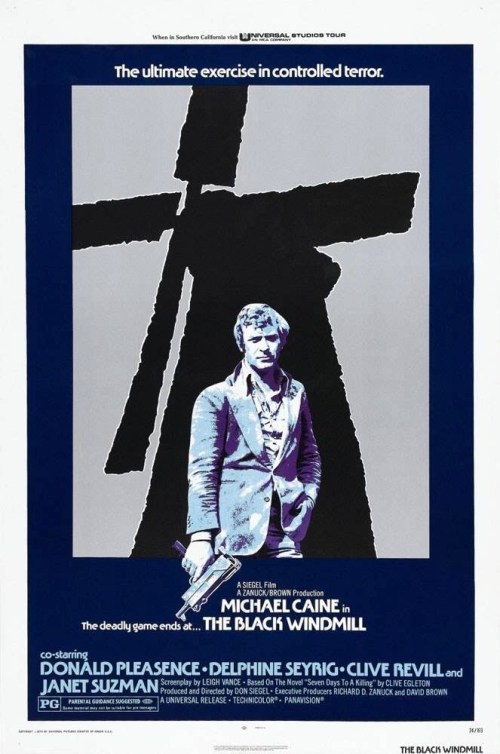
Michael Caine plays Major John Tarrant, a British Intelligence Officer, whose young son David (Paul Moss) gets kidnapped by an underground criminal organization headed by McKee (John Vernon). McKee is aware of John’s profession and insists that to get his son back he must fork-over some uncut diamonds, which had already been purchased to fund another operation. John informs his supervisor, Harper (Donald Pleasance), about their demands, but Harper begins to suspect that John may have orchestrated the kidnapping himself and thus refuses to go along with the turnover of the diamonds. Frustrated John decides to deliver them himself, but finds that he’s put himself into a perilous situation that he might not be able to get out of.

The film is based on the novel ‘Seven Days to a Killing’ by Clive Egleton and directed by Don Siegal who’s most notable for having done Dirty Harry. On the technical end it’s masterful. The lighting and editing are pristine and shot on-location in England in many scenic spots including the historic, but now closed Aldwych underground train station and the Shepherd’s Bush station as well as the climactic sequence, which takes place at the Clayton Windmills, known as Jack and Jill with Jill being built in 1821 and Jack in 1866. There’s also a terrific supporting performance by Pleasance who plays this uppity agent who won’t allow smoking in his office, nervously fiddles with his mustache, and is shocked by the forwardness of one of the other elderly agent’s younger wife, played by Catherine Schell. In fact his eye brow raising expression during his visit with her is one of the more amusing moments in the film.

The story seems a bit pedestrian with elements stolen from other better spy films including a Q-like moment where a  researcher shows Harper and John how they’ve come-up with a new invention, which is a briefcase that can shoot bullets just like a gun. Another segment has John being followed by a bad guy while hopping onto the subway, which looks like it was taken straight out of The French Connection, though much better done there.

There’s also the part where John, upset with Harper’s refusal to deliver the diamonds, breaks into Harper’s office and steals the key to the bank safe that has the diamonds in it, but this seems much too easy. You’d think an operation that has lights on top of the office doors, with green to be allowed in and red to be locked, would have a better contraption to stop someone from breaking in like burglar alarms to sound when somebody trespasses, or laser beams that would trip off and sound alarm on a mobile device carried by a security guard. Yet John is able to break-in with hardly any effort and the way he tries to disguise his voice to sound like Harper is pathetic and should’ve been enough to alert the bank manager that something fishy was going on. Also, you’d think Harper would have his eye on John, or had someone else keep tabs on him since he’d most likely be angry over the news that the agency wasn’t going to help him and thus already be predicting that he’d make an effort to steal the key before it actually happened.

The biggest issue though is that John is not emotional. His stoic nature makes him seem almost inhuman and like he may not actually care about his son’s safety at all. Supposedly this is because he’d been trained as an agent to hide his feelings, but the viewer still needs to see his softer side at some point, so we know he’s suffering inner turmoil about what’s going on and the fact that this is never shown makes it hard for us to side with him. It also gives Caine one of the flattest performances I’ve ever seen and is so stone cold it could’ve been done by a robot and you’d never know the difference.

The kid is far more engaging and if the movie had shown him more it might’ve worked better, or at least shown John and the boy together, we only see a fleeting few seconds of a photo of them, but we should’ve viewed them in a fun activity before the kidnapping, so we could feel the bond that is otherwise quite hollow. John’s relationship with his wife, played by Janet Suzman, doesn’t gel either. They’re already separated apparently because John put his career ahead of the family, but there needed to be more of an arc to make it interesting like having them bitterly at odds at the beginning only to realize they must put their animosities behind them in order to work together to find their son, but here there isn’t enough dramatic friction between the two, so seeing them rekindle things near the end packs no punch at all and like with everything else here emotionally vanquished for the audience.

My Rating: 5 out of 10

Released: May 17, 1974

Runtime: 1 Hour 46 Minutes

Rated PG

Director: Don Siegel

Studio: Universal Pictures

Available: DVD, Blu-ray

Something for Everyone (1970)

something1

By Richard Winters

My Rating: 7 out of 10

4-Word Review: Charming his way up.

Konrad (Michael York) is a young man with no money, or status, who dreams of one day owning the large Bavarian castle that he spots in the outskirts of a town that he’s passing through. He learns that it’s the property of the widow Countess Herthe (Angela Lansbury), who’s unable to live in it due to lack of finances. He schemes to become one of her servants by getting her regular butler, Rudolph (Klaus Havenstein) run over by a train. He then gets into a romantic relationship with Anneliese (Heidelinde Weis) whose parents (John Gill, Eva Maria Meineke) are quite wealthy while he also becomes lovers with the Countess’ son Helmuth (Anthony Higgins). Konrad hopes that Anneliese’s wealthy parents can use their money to reopen the castle and convinces Annelise to get into a fake romance with Helmuth that will lead to a marriage and then this will hopefully have her parent’s money flowing into the castle to get it reopened. He assures both Anneliese and Helmuth that he’ll remain their lover on the sly, but without each one knowing that they’re having sex with the same man. The elaborate plan though comes to a crashing halt when Anneliese accidentally walks in on Konrad and Helmuth and sees them kissing.

This super black comedy may be one of the darkest every made as it has no let up and absolutely everyone of the characters is a schemer and no better than the others. It’s based loosely on the novel ‘The Cook’ by Harry Kressing, but the story here is much different. In that one the main character is Conrad who spells his name with a ‘C’ instead of a ‘K’ and portrayed as a gaunt man who’s over seven feet tall and dresses in an all black unlike here where Konrad is young and handsome. In the book Conrad uses his cooking skills to get everyone to be ‘eating out of his hand’ with his delectable dishes while in the movie Konrad shows no such talent. The book had a much creepier tone while the film plays it all up for dark laughs and keeps the horror elements completely out.

I’m not exactly sure why there was such big changes made from its source material as keeping it truer to the novel had the potential of making this into a ‘food porn’ movie, which could’ve been visually sumptuous. However, the way it’s done here is still enjoyable with the majority of props going to York’s splendid performance whose boyish smile and dashing looks keeps it all quite engaging no matter what dastardly thing his character does. Reviled by the critics at the time for its ‘glorification of homosexuality’ it’s pretty amazing in retrospect how daring it was as this was filmed in 1969 and quite possibly the first film to ever show two men kissing. I remember in 1982 it was considered still quite shocking when Michael Caine and Christopher Reeve did it in Deathtrapso much so there was a report about it on CBS Evening News under the theme of movies ‘going too far’ while this movie had already been showing it, in a rather gleeful way, 13 years earlier, but maybe that’s all because this was done in Europe and not stuffy old America.

On the flip side I didn’t feel Lansbury had much of a presence. A talented actress for sure, but she doesn’t have a lot to do until well into the second act and even then isn’t real funny, and seems upstaged by the supporting cast who come-off as more colorful. It’s also frustrating that we spend the whole runtime seeing this gorgeous castle in the distance, in this case the famous Neuschwanstein Castle in Germany, but never able to go inside it. The few scenes that were supposedly its interior were instead very obviously shot on a soundstage.

Spoiler Alert!

While the script is full of many crafty twists and witnessing each nefarious character go down in a unique way is quite fun I did feel the way Konrad kills Anneliese and her parents by acting as their chauffer who crashes the vehicle down an embankment didn’t work. For one thing the killing of a wealthy family would’ve lead to a major investigation and since Konrad was driving the car, which he ‘miraculously’ jumps out of before it crashes, but he would still have to come up with a reason for why the car spun out of control. Since he doesn’t have one he would come under suspicion of the authorities instead of getting off scot-free like here.

Having Herthe’s nerdy daughter Lotte (Jane Carr) suddenly become instrumental in the whole thing by exposing the fact, at the end, that she’d been spying on Konrad the whole time and using what she knew to force him to marry her, leaved even further plot holes. The viewer should’ve been tipped off about what she was doing, even subtly, during the story as having her just turn up with all this new information makes it seem like it was tacked-on as a convenience without having it thought through with the rest of the plot. Not sure why Herthe, who was expecting to marry Konrad herself, would’ve gone along with Lotte marrying him instead, or what explanation was given to her in order for her to accept, which again just leaves open even more questions that in a truly well-crafted script should’ve been answered.

something2

My Rating: 7 out of 10

Released: July 22, 1970

Runtime: 1 Hour 52 Minutes

Rated R

Director: Harold Prince

Studio: National General Pictures

Available: DVD-R, Blu-ray

Garde A Vue (1981)

garde1

By Richard Winters

My Rating: 6 out of 10

4-Word Review: Interrogation of a lawyer.

Jerome (Michel Serrault), is a rich and powerful lawyer who is brought into a police station late one night during New Year’s Eve in order to be questioned about the rape and murder of two young girls. Antoine (Lino Ventura) is the lead investigator while Marcel (Guy Marchand) sits in the back and assists him during the interrogation. At first the conversation is light and civil, but as Antoine brings more circumstantial evidence to the forefront Jerome becomes nervous yet insists he’s still innocent. Marcel even implements some physical force against him, but Jerome’s stance never changes. In another room Antoine has a conversation with Jerome’s wife, Chantal (Romy Schneider), who confides to him that she secretly suspected Jerome to be in-love with an 8-year-old girl. Once Jerome gets confronted with this his story soon begins to change.

The film is based on the novel ‘Brainwash’ by John Wainwright and shot entirely in a studio soundstage and in chronological order. Why director Claude Miller would want to film a story that had very little if any cinematic elements to it is a mystery and if anything this might’ve fared better as a stage play. I was initially impressed with the police station room as you’d swear it was an authentic building and not just a prop built for the production. The drenching rain seen pouring down outside the windows is impressive as it gives the viewer a claustrophobic feel and I liked how eventually, when the clock hits midnight, you hear car horns honking outside to represent the New Year. However, every interrogation room I’ve seen, and I watch a lot of confession videos on Youtube from real-life cases, the rooms are very small and with no windows and the film would’ve been better served had it reflected a setting like this as it would’ve brought out better the psychological tension of the suspect and his feelings of the ‘walls closing in on him’, which with here you don’t get.

You can’t help but connect this movie with The Offencewhich starred Sean Connery and was directed by Sidney Lumet. That movie came out 8 years before this one, but had the exact same theme of a suspect being brought in over the murders of some school girls. That movie was well directed but did annoy me for the fact that in that one the suspect, played by Ian Bannen, did nothing, but give off this smirk the whole time.  This one has a much better back-and-forth between the investigator and suspect, which helps keep it compelling as more evidence gets introduced. However, in the Lumet film it had constant shots of this big bright light shining into the camera giving the viewer a point-of-view feeling of what someone in that situation would feel and thus helping hype the sense of urgency of wanting to get out of there, or say anything one needed to in order to stop the pressure, which this film doesn’t do very well. Both films though have cutaways showing the dead girl’s bodies from a distance in a secluded area, which are visually creepy, though again Lumet’s film scores a bit higher in that category too.

Spoiler Alert!

Ultimately the ending is a letdown and rather baffling as it features Jerome caving and admitting to a crime that he really didn’t commit due to the perceived police pressure. For one thing it’s hard to imagine that a seasoned lawyer would be that dumb and wouldn’t just ‘lawyer up’ himself and demand counsel of his own when interrogation got to be too much. I’ve seen a lot of true life interrogations where the pressure put on the suspect was far worse and those people refused to buckle, so seeing the character fall to pieces so relatively quickly especially when he was educated to know better makes the whole thing pathetic.

Didn’t quite get why the wife shoots herself at the end either. Supposedly it’s because she feels guilty about tabbing him for the murder when the real killer eventually gets exposed, but she did it out of honesty as she really felt he had a thing for young girls, so why should she feel tortured about saying something she truly believed? It would’ve been more surprising if she had pulled the gun on Jerome himself as he got into the car and shot him as she would feel, even if he hadn’t been arrested for this crime, that he still had some dark perversions and thus should be killed before he goes and carries out his fantasies on some other girl. Of course if she lied about him having a thing for an 8-year-old in order to get back at him over their contentious marriage then her guilt and suicide would’ve been more plausible, but I didn’t get that from watching it, so if that was ultimately her motivation then the filmmakers should’ve done a better job at intimating it.

This is the rare case where I’d say the Hollywood remake, which came out in 2000 as Under Suspicion and starred Gene Hackman and Morgan Freeman was much better done. It had a better visual balance that didn’t keep the whole thing stuck inside a police room and it better tied-up loose story ends that this one leaves open.

My Rating: 6 out of 10

Released: September 23, 1981

Runtime: 1 Hour 27 Minutes

Not Rated

Director: Claude Miller

Studio: AMLF

Available: DVD, Blu-ray