Category Archives: Foreign Films

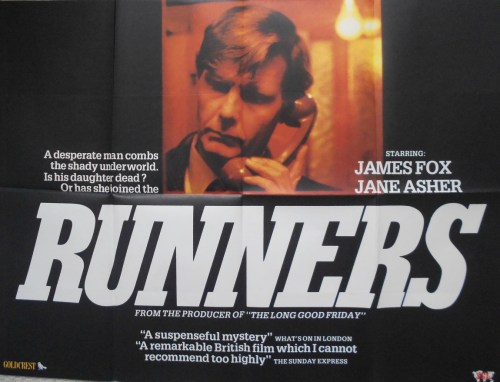
Runners (1983)

runners

By Richard Winters

My Rating: 5 out of 10

4-Word Review: Searching for teen daughter.

Tom (James Fox) is a suburban father who watches his teen daughter Rachel (Kate Hardie) ride off to school on her bike one day only for her to never come home. The police find her abandoned bike, but no signs of her, making it seem like she was snatched by someone driving in a car that was passing by. As the years go by Tom becomes even more fixated on finding her despite the lack of clues. His marriage begins to crack as his wife (Eileen O’Brien) feels it’s time to move on and that Tom needs to just ‘let it go’ though he refuses. He eventually moves out and into the city of London where he becomes determined to use what few leads he has to track her down on his own. Along the way he meets Helen (Jane Asher) a mother searching for her missing son and the two get into a relationship even as the challenges of finding their missing kids becomes even more daunting. Then one day by complete shock Tom finally sees Rachel and manages to corner her to have a brief conversation, but Rachel clearly does not want to see him and runs away again, but Tom becomes relentless to bring her home even if it means doing it by force.

Originally meant as a TV-movie the film did ultimately spend some time in theaters though it never managed to catch-on and was soon buried by bigger hits of the day. The film though still stands out as being the first appearance onscreen, outside of a brief cameo in a religious documentary from 1976, of actor James Fox, who left the movie scene after doing Performance, which was filmed in 1968, where he suffered a nervous breakdown. He then joined the Billy Graham ministries, known as The Navigators in England, and became a missionary, but found that his interest in acting never left and decided to make a foray back into it after 14 years and unlike other stars who drop out of the business and try to make a comeback, Fox found enviable offerings and even lead roles in major productions making it seem like he was still a much sought after commodity who had never left. His performance here is masterful and he looks like he hadn’t even aged a day as he’s clearly the one entity that helps carry the film and keep it interesting and insightful throughout.

Storywise I felt the first hour worked best and in many ways is highly gripping. The way it gets played-out has a certain spooky quality and the mystery element wraps you in and keeps you intrigued. The dynamics between the husband and wife are realistic and the film deserves props for examining how these situations can wear on people in different ways and how the ongoing stress can eat away at even the best marriages. Fox creates a compelling character and the viewer feels as emotionally worn-out as he does as he partakes on a grim search that manages to only give never ending bleak results.

Unfortunately the second hour is where it falls apart. To a degree it’s nice seeing him finally get a breakthrough, but there’s no explanation for why she ran away. In fact the daughter is almost like a ghost who says little and displays a continuous pouty expression and not much else. She’s shown passing out some sort of religious pamphlets, but we’re never told exactly what this literature says. Her motivations are vague as she expresses unhappiness with her upbringing, but never explicitly states what exactly they are. Without understanding what makes her tick, or why any of this happened, it hurts the film and makes it seem, despite its keen direction, as half-baked and ultimately empty-headed.

Apparently there was a rash of teens running away from home in England during the early 80’s and this film was produced in an attempt to tackle the subject as a sort of ‘ripped-from-headlines’ TV-movie of the week, but the filmmakers never made any effort to interview the kids to find out why they left home and without that understanding the rest of it is pointless. Showing things from the parent’s perspective is great, but at some point we need the kids point-of-view too and without that it lacks insight.

My Rating: 5 out of 10

Released: May 9, 1983

Runtime: 1 Hour 47 Minutes

Not Rated

Director: Charles Sturridge

Studio: Cinegate

Available: DVD-R 

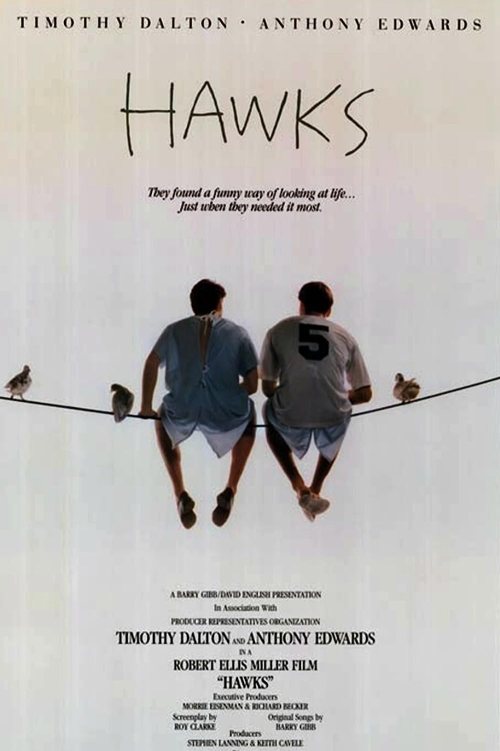
Hawks (1988)

hawks1

By Richard Winters

My Rating: 6 out of 10

4-Word Review: Patients hit the road.

Decker (Anthony Edwards) is a former football player stricken with terminal cancer. He’s put in the hospital where his roommate is Bancroft (Timothy Dalton), who’s dying from the same disease. Bancroft though still wants to have some fun and convinces Decker to sneak out of the facility and go on a road trip to Denmark, so they can have one last fling with the prostitutes in the Red Light District. Decker is nervous at first, as he’d rather commit suicide to put himself out of his misery, but eventually decides to go along where they end up meeting two lonely ladies, Maureen (Camille Coduri) and Hazel (Janet McTeer) who’s also harboring a painful secret.

Based on a short story written by Barry Gibb of The Bee Gees the plot has, despite it’s grim theme, a playful quality and comes-off more like a quirky road movie. The scenery is nice especially when they get into Holland and have an extended scene amidst the picturesque windmills, which you can hear slowly rotating in the wind as they speak. There’s also a few funny moments with the best one coming right at the start where Decker takes a frightened SAAB car salesman (Geoffrey Palmer) on a test drive at reckless speeds and right to the edge of a cliff.

The acting is great with Dalton, who did this between his two stints as Bond and used his notoriety to get it made, which he felt wouldn’t have gotten financed otherwise, being standout and putting to great use his piercing blue eyes, which become even more prominent when he’s wearing his stocking cap. Edwards is also good though he looked wimpy to have ever played football. Some may try to argue that the sickness ate away his weight, but in reality this is the body type he’s always had and the producers should’ve, for the sake of authenticity, had him bulk-up before filming began.

What I didn’t like were the unexplained caveats, like where did these two terminally ill patients manage to get the money to pay for fancy hotels and chic restaurants? It seemed like they could buy anything they wanted, so if that were the case then why couldn’t they get themselves clothes so they didn’t have to run around everywhere wearing nothing but their bathrobes? The sex angle was ridiculous too especially for Decker, who’s so weak he had to be carted around in the wheelchair. If he could barely stand then how the hell is he going to get the energy for sex?

Initially I found Hazel and her clumsiness as annoying as Bancroft did, but like with him she eventually grew on me, but I didn’t think she needed to be introduced already in the first act before she even met the two men. She has a scene on a bridge all alone and I didn’t understand what she had to do with the story, only later during the second act when she appeared again did it make sense, but again her personal troubles could’ve waited to be explained when Bancroft and Decker heard about it. I actually enjoyed more Sheila Hancock, who plays Regina, an aging 50-something hooker they meet, who shows a good propensity at fixing things like TV’s and I wished she’d been the one they had befriended long term and the two younger ladies cut out altogether.

Spoiler Alert!

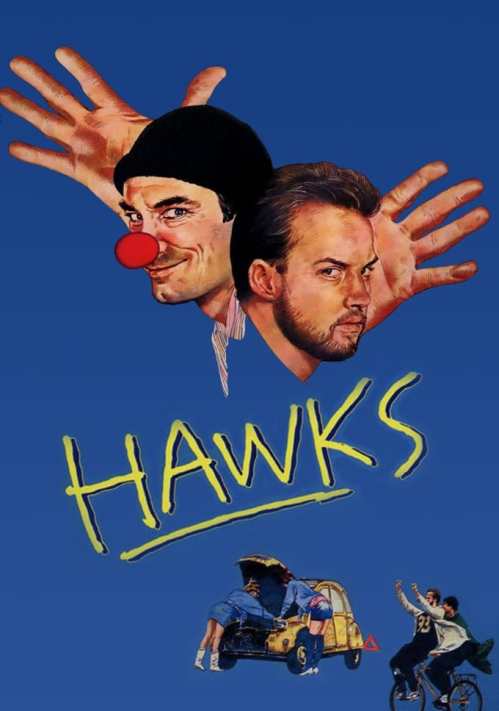
The ending is touching particularly the way the plastic red clown nose comes into play. The wedding in which Bancroft marries Hazel, who’s secretly pregnant by a man who disowns the child, is cute too though I didn’t understand how Bancroft, who had been losing his hair throughout, suddenly seemed to grow it all back as he walked down the aisle. If anything he should’ve been completely bald by that time and it would’ve been more realistic had he been shown that way.

hawks2

My Rating: 6 out of 10

Released: August 5, 1988

Runtime: 1 Hour 47 Minutes

Rated R

Director: Robert Ellis Miller

Studio: Skouras Pictures

Available: VHS, DVD-R (dvdlady.com)

Bedroom Eyes (1984)

bedroom1

By Richard Winters

My Rating: 1 out of 10

4-Word Review: Voyeur witnesses a murder.

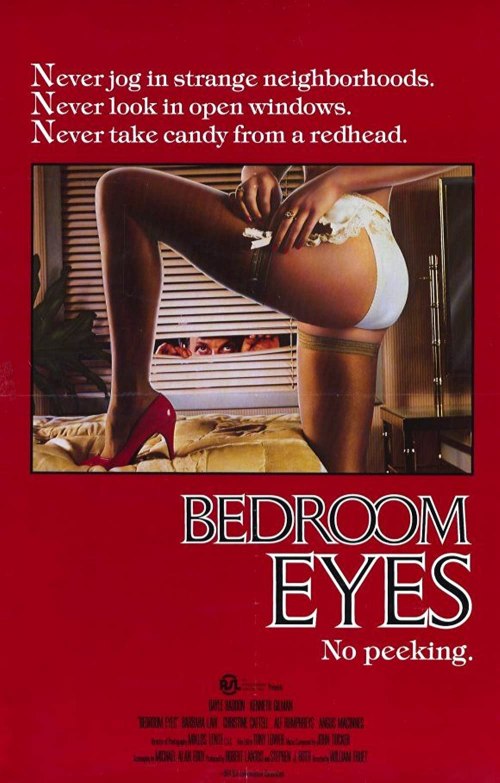
Harry Ross (Kenneth Gilman) is a businessman who enjoys taking a late night jog in the Toronto neighborhood in which he lives. One night he steps in dog poo and as he’s trying to scrape it off he notices a light coming from a nearby window. Out of curiosity he peers in and sees a half-naked woman (Jayne Catling) dancing provocatively. It turns him on and he decides to make it a point to peer into the window each night when he goes for a run. He though begins to feel guilty about what he’s doing and thinks he may be a ‘pervert’ and thus schedules an appoint with Alex (Dayle Haddon), who is a psychiatrist, so that they can talk it through. During their sessions he also becomes attracted to her and things slowly work into a relationship. While this is going on he continues to look into the window each night, but eventually witnesses the woman getting murdered and now must go into hiding inside Alex’s apartment as not only the police, who mistakenly think he did it as they get his prints off of the window, are after him, but so is the killer.

This film was directed by William Fruet, a prolific writer/director from Canada, who shot to fame with the excellent Wedding in White and then followed that up with a lot lame thrillers and horror films. While some of those were diverting this one isn’t and the tacky set-up is the biggest problem. The fact that Harry isn’t portrayed as being a life long voyeur, but instead quite literally just ‘stumbles’ upon it is farfetched and the character would’ve had more depth if this had been a constant trait that he had to deal with. Having him ‘panic’ that he was afraid this made him a ‘pervert’ was ridiculous too as I’d think just about any heterosexual guy would get aroused seeing a hot lady cavorting around erotically. The way he peers in, the camera captures it from the inside looking out, is quite obvious as his face is fully light, from the indoor lamps, and thus all the people needed to do was glance up briefly to see him, which I would think would’ve occurred at some point especially since he continues to do it over multiple nights. The fact that they always leave the window shade half open seems like they’re inviting someone to look in though the movie acts like this is unintentional and just a ‘coincidence’. The place is lit in a way that makes it seem like it’s a set for soft core porn flick and the woman behaves like an adult actress, which completely ruins any sliver of plausibility.

Initially I liked seeing Haddon, who was at one time a super model before she got into acting, cast as the therapist as this was traditionally at that time still more of a man’s profession, so she was playing against type, but having Harry immediately asks her out on a date was dumb. Due to this being a professional doctor and patient relationship he should’ve at least waited until after several sessions before he got up the nerve to do it and even then it’s putting her in an unethical spot and he should’ve known that. Fortunately she tells him ‘no’ the first couple of times, which is what she should’ve done, but I knew, going by how stupid this script had already been, that she’d eventually cave and of course she does, which makes the whole premise become even more ludicrous. Having her spot him at a fancy restaurant was too coincidental in such a big city and having his girlfriend perform a sexual act while inside the place with all sorts of people around was over-the-top. If anything Haddon should’ve just been cast as his girlfriend, who just happens to work as therapist, and he could’ve still spoken to her about his voyeurism in private when they were together and this would’ve helped made it more believable.

It does get a bit intriguing for a few minutes when the police begin to close-in on Harry and I enjoyed the inner-rivalry of the police department where the two lead detectives became irritated at how a young ‘wet-behind-the-ears’ kid (Alf Humphreys) was always coming up with new leads and clues before they did, but other than that there’s very little to recommend. The climactic sequence in which the killer ties Harry up while he’s inside Haddon’s apartment, is quite boring and the female actor who plays the culprit shows no panache and thus making her scenes quite dull. In 1989, at the request of no one, this was made into a sequel, but with a completely different writer, director and actors with the only thing connecting the two being the Harry Ross character.

My Rating: 2 out of 10

Released: November 30, 1984

Runtime: 1 Hour 30 Minutes

Rated R

Director: William Fruet

Studio: Pan-Canadian Film Distributors

Available: DVD-R

X Y & Zee (1972)

x

By Richard Winters

My Rating: 4 out of 10

4-Word Review: Wife sabotages husband’s affair.

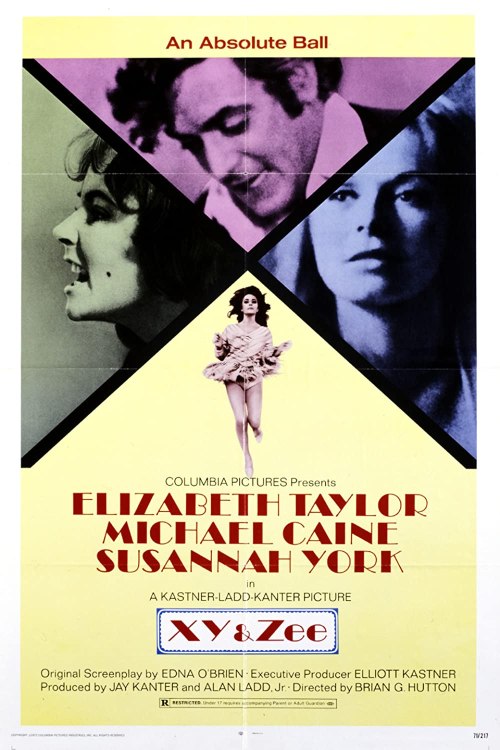
Zee (Elizabeth Taylor) is the middle-aged wife of Robert (Michael Caine) and the two have been in a tumultuous marriage for many years. Then at a party Robert spots Stella (Susannah York) who is a single mother with two boys. Robert enjoys her much calmer less confrontational demeanor, which is the exact opposite of Zee’s and the two quickly fall into an affair. Zee though becomes aware of what’s going on and becomes determined to put a stop to it one way or the other. At first she is meddlesome by constantly calling-up Stella and warning her about Robert and even going to her place of business to harass her. When that doesn’t work she tries playing into Robert’s sympathy and at one point even attempting suicide, but when all that fails and the affair continues she uses her gay friend Gordon (John Standing) to dig-up some dirt on her and when she finds out the secret that Stella has she uses it to exact her revenge.

Taylor and her over-the-top shrewish performance is the whole reason the movie works and if you watch it for that purpose you won’t be disappointed. Sure she’s played this role a bit too often to the point that it was becoming more of a caricature for her and ultimately what I feel killed her career as by the 80’s she was no longer making films for the big screen, but still when she’s as entertaining doing it as she is here it’s still a joy to watch. Unfortunately she dominates every scene that she’s in that it leaves very little room for her co-stars particularly York who’s completely dull by comparison. York certainly was an accomplished actress, but in this movie she’s unable to go toe-to-toe with her superior co-star and the film suffers for it. A strong actress with a definite presence was needed instead York just quietly sits there looking overwhelmed as Taylor’s character continuously berates her. If anything Mary Larkin, who plays Caine’s nerdy secretary, should’ve been the love interest, Caine ultimately sleeps with her anyways, as she’s so meek that you would feel sorry for her when Taylor got snarky with her, but with York you feel nothing and it’s almost like she’s transparent.

Caine on the other-hand is able to hold his own, but his frothy retorts at Taylor’s abuse is never quite as clever, or entertaining as hers. My biggest issue with his character is why doesn’t he just divorce her as he’s quite wealthy and could easily do it and yet avoids it. He mentions at one point wanting to kill her, but never just divorcing her. Since the couple never had any kids it would be less messy, so why not just take that route and then he could see York, or any other woman for that matter without worrying about Taylor getting in the way. I realize some marriages are held together for weird reasons, even those when it becomes achingly clear that it should end, but for whatever reason it doesn’t. However, after 2-hours of watching this those reasons should eventually become clear, but they never do.

Spoiler Alert!

I sat through almost the entire movie just waiting to find out what the ‘dark secret’ was that York’s character held, as described by Leonard Maltin in his review, only to finally realize it was nothing more than her being a closet lesbian. What’s worse is that nothing much happens once the secret is exposed. Maltin also describes Taylor/York’s lovemaking scene as ‘ranking high in the annals of poor taste’ though this sentence has been removed from his review in the later editions of his book presumably to avoid making him look homophobic, but whatever lovemaking he may of seen I didn’t and I watched the full 1 Hour 49 Minute newly remastered version from Columbia Pictures (same version streaming on Amazon Video), so either a minute of it got snipped on this cut, or Maltin was offended at seeing the two women hug, which is all there is.

Admittedly I was disappointed as I was hoping to see them kiss, or in bed together, which would’ve livened it up a bit and made it worth sitting through, which otherwise is a strain. The lesbian angle should’ve been introduced much earlier and showing Taylor and York not only getting-it-on and enjoying it, but inviting the reluctant Caine in as a threesome. That would’ve made the movie truly sophisticated and ahead-of-its-time, but having it end the way it does with York seeming very ashamed and defeated about her homosexuality makes it dated and out-of-touch with modern-day sentiments. A misguided relic of its period that really doesn’t have much to say and nowhere near as ‘daring’ as the filmmakers thought it was.

My Rating: 4 out of 10

Released: January 21, 1972

Runtime: 1 Hour 49 Minutes

Rated R

Director: Brian G. Hutton

Studio: Columbia Pictures

Available: DVD-R, Amazon Video, Tubi

The Greek Tycoon (1978)

greek

By Richard Winters

My Rating: 4 out of 10

4-Word Review: Marrying a rich man.

Originally intended as a fact based bio of Aristotle Onassis and his marriage to Jacqueline Bouviar Kennedy where Jackie was offered $1 million to play herself, but when she turned it down the producers decided to turn it into a ‘fictional’ story where the names of the characters were changed, but many of the elements remained the same. The plot deals with a Greek shipping tycoon named Theo Tomasis (Anthony Quinn) who is known to fool-around on his wife Simi (Camilla Sparv). One day while hosting a posh party on his yacht he sets his sights on Liz (Jacqueline Bisset) who is the wife of a politician James Cassidy (James Franciscus) who’s running for the democratic nomination for the U.S. Presidency. While Theo and Liz are able to get away from the rest of the guests and talk he’s unable to admit how smitten he is with her due to her marriage. Liz returns to the states with her husband and he’s elected President, but then is assassinated. Now widowed she decides to return to Greece and meets-up with Theo. Theo in-turn leaves his wife, who was tired of his philandering ways, and marries Liz though their marriage ends-up being a rocky one as well as Theo is unable to change his old habits making Jacki feel she’s just another ‘notch-on-his-belt’.

Producer Nico Mastorakis is probably better known for having directed the controversial horror film Island of Death, which to this day remains one of the most notorious movies ever made, but before he got into filmmaking he was a reporter, who under the guise of being a musician for a rock group, gained access to Onassis’ yacht the Christina while Aristotle was hosting a party with guests Jackie and Ted Kennedy. He hid a small camera inside the his guitar and was able to take pictures of the event before having the negatives confiscated by Ted Kennedy’s security detail. Nico though remained fascinated with Onassis and his experiences while on the his yacht convinced him he’d make a perfect subject for a movie. Quinn, met with Onassis just months before his death where he reportedly gave him blessing to play the role, so Quinn initially agreed to do it only to back-out later when he spoke with Jackie who asked him not to do it. However, months later, she then publicly snubbed him at a restaurant, which got him so angry that he changed his mind and called Nico to tell him he wanted to go through with it and play the part, of which he was paid the handsome figure of $500,000.

As a soap opera, which is all this amounts to, it’s watchable with the biggest asset being the exotic European locales. The plot moves along breezily enough to keep it mildly compelling though no effort is made to make it conform to the early 60’s time period when it all began making it seem instead like it could’ve all occurred during the 70’s. The assassination is especially surreal as James gets shot as he and Jackie are walking along the beach, but no sniper is ever seen. The camera pans over to where the shots were fired and all we see are trees like some phantom gunmen came out of nowhere to kill him and then just disappeared into thin air with no explanation for who did it, or why.

Quinn’s acting though is really impressive and one of the few reasons to watch it. Quinn has always had a magnetic energy that grabs the viewer into  his characters and makes you fascinated enough in them to keep you engrossed though the dark glasses he’s seen constantly wearing was a distraction. He wears them all the time even while inside and at night, which seems weird and makes him appear almost like he’s gangster. There’s a few times when the glass lenses inside the frames are clear and not darkened, but no explanation for why, or how they changed. His propensity for Greek line dancing only succeeds in reminding viewers of another more famous movie that he was in, Zorba the Greek, and for that reason alone it should’ve been avoided altogether.

Bisset on the other-hand doesn’t have much of a presence. Normally she’s a great actress, but her character here isn’t fleshed-out enough to make anything that she says or does interesting. It’s a transparent composite of what one might deem a First Lady to be, but with nothing unique, or distinct added into it and thus making her time onscreen seem quite blah. She does have one energetic moment when she gets into a fight with him after he embarrasses her in front of a few men and even proceeds to attack him physically, but other than that her performance, like the rest of the movie, is sterile with very little to recommend.

My Rating: 4 out of 10

Released: May 12, 1978

Runtime: 1 Hour 47 Minutes

Rated PG

Director: J. Lee Thompson

Studio: Universal Pictures

Available: DVD, Blu-ray

Circle of Two (1981)

circle3

By Richard Winters

My Rating: 4 out of 10

4-Word Review: Old man/young teen.

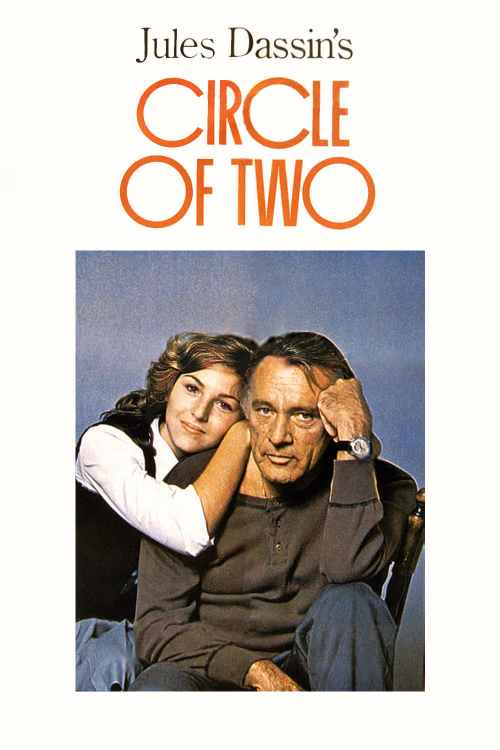
Ashley St. Clair (Richard Burton) is an aging painter of 60 who has lost his passion and hasn’t either sold, or attempted to do a painting in over 10 years. Sarah (Tatum O’Neal) is an unhappy 15-year-old who’s tired of dating guys her own age as she finds them to be immature and only interested in one thing…sex. She then meets Ashley, first after she sneaks into an adult theater to watch an X-rated movie and then later at a coffee shop. Despite the extreme differences in their ages they still connect through their mutual interest in art. Ashley even begins to paint again and the two share an enjoyable, but platonic friendship. However, once Sarah’s parents (Robin Gammell, Patricia Collins) find out about they put an immediate stop to it by locking her in her room and and in protest Sarah refuses to eat.

Based on the novel ‘A Lesson in Love’ by Marie-Terese Baird this film marks the final one to be directed by famed Greek director Jules Dassin and in many ways this may be the weakest one that he did. The whole way the relationship gets going is very rushed and forced. Bumping into the same person twice in one day, in the big city of Toronto, doesn’t seem likely and then having Sarah fall so head-over-heels for him to the point she starts spouting out the ‘L’ word quite quickly is dingy. A more plausible scenario would’ve had Ashley teaching an art class (he no longer paints, but still has to bring in an income somehow) of which Sarah attends and then through the course of several months a bond is slowly created.

The sex angle is a complete mess. Fortunately Ashley makes no moves on her, but Sarah does aggressively begin to come-on to him and at one point stands completely naked in front of him. In her autobiography ‘A Paper Life’ O’Neal expressed great discomfort in having to do this scene though I didn’t detect this, but maybe that’s just because she’s such a great actress, but either way the scene was completely unnecessary.  It’s also inconsistent with the character as she broke-up with her boyfriend Paul (Michael Wincott) because he was trying to pressure her into having sex and she was still a virgin, so if she didn’t want sex with a guy her own age why would she want it with one who was way older and is this era of pre-Viagra how could she even be sure he could do it? A better scenario would’ve had sex never coming into play and it was simply their other mutual interests that connected them and it was only outsiders, like Sarah’s parents, that presumed the worst when it really wasn’t occurring.

The one bright spot is the acting with both leads being superb. O’Neal proves that her strong and memorable performance in Paper Moon was no fluke and the only thing that keeps the film watchable. Burton is excellent as well. Although he usually has a strong presence here he wisely takes a step back playing someone who’s weak and tentative, which in many ways reflected his own career at the time where many felt he was washed-up and the years of alcohol abuse certainly did age him making him look even older than 60 when he really wasn’t, and thus a perfect fit for the part. The only issue here is that Tatum seems way too mature for 15 both physically and personality-wise and having her play someone who was 17 would’ve been more appropriate.

While the film remains marginally compelling the talky ending in which Burton goes on a long speech like a tenured professor lecturing to a college class practically ruins it. I was also frustrated that we never learn much about the old man, played by George Bourne Sr., an elderly gentleman who agrees to let Ashley paint his portrait for a fee, which in-turn revitalizes his career and I felt this character should’ve been in it more, or at least a few scenes showing what they talked about as his portrait was being done.

Tatum’s abstaining from all food plays-out poorly as well. For one thing she doesn’t change physically, so we’d never know she wasn’t eating if it weren’t mentioned. She then travels to New York and I was fully expecting her to pass-out in the middle of crowded Grand Central Station from a lack of nutrients, but apparently in-between time she had eaten something, but this should’ve been shown and the fact that it isn’t is a sign of shoddy film-making, which despite Dassin’s previous output, this whole movie ends up pretty much being.

My Rating: 4 out of 10

Released: May 7, 1981

Runtime: 1 Hour 46 Minutes

Rated PG

Director: Jules Dassin

Studio: World Northal

Available: DVD-R, Amazon Video

The Disappearance (1977)

disappearance

By Richard Winters

My Rating: 7 out of 10

4-Word Review: Where is his wife?

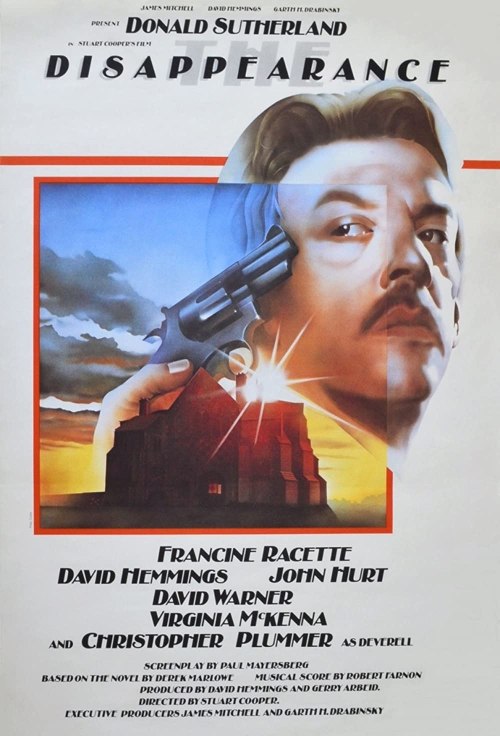
Jay Mallory (Donald Sutherland) is a professional assassin who works for a secret organization that contracts him out to do hits all over the world. After returning home from his latest assignment he finds that his wife Celandine (Francine Racette) is not there. Since they had a tumultuous relationship he initially presumes she left on her own accord, but then his friend and fellow hit man Burbank (David Warner) informs him that her disappearance may have something to do with his last hit. The organization that employs him now calls with another assignment, but this time they’re reluctant to give any details, which is unusual. Jay is afraid he’s being set-up as Burbank told him that the company is known to ‘retire’ those that are deemed no longer useful or trustworthy. He decides though to go through with the assignment as he’s curious how it will play-out and confident enough in his ability to get out of any jam, but soon finds himself faced with an entangling twist he never expected.

The film is a fascinating portrait of what can be done with creative direction. Stuart Cooper, who’s not exactly a household name and in fact this was his last theatrical film until 2010 when he did Magic Man, lends some interesting directorial touches that makes the story and characters more interesting than they might otherwise. What I especially liked was the non-linear narrative in which the movie cuts back and forth between the past to the present day. These types of storylines are typically frowned upon by Hollywood studios as they’re considered to be ‘too confusing’ for mainstream audiences to follow, but I had no such difficulty and felt it allowed in added nuance that would not have been present had the plot been approached in the conventional way. Nonetheless when the film tanked at the box office upon its initial release the studio insisted that the film be re-cut where the story would be presented in the standard linear format, but this version did even worse, so fortunately for the DVD/Blu-ray release it was brought back to its original way and labeled as being the ‘director’s cut’ though Cooper actually had no input on it, but eventually approved once he viewed it.

It’s also highly atmospheric particularly with the way it captures the cold, wintry climate of Montreal in the dead-of-winter. Having been born and raised in Minnesota I can tell a fake winter scene done on an indoor sound stage using artificial snow within seconds, but here the cold, including the mounds of snow drifts and nasty hollowing wind, is quite vivid and helps to symbolize the cold nature of the characters and the business they’re in.

I was a little more lukewarm with the acting. Sutherland can certainly be an outstanding leading man, but he seems too kind and sensitive for a person making a living killing others for money though I did like the scene where he plays memory games with his wife while at home, which brings out how crucial paying attention to detail is for his line of work. The supporting players are all familiar faces though I felt Warner was a bit wasted and underused. Virginia McKenna, best known for her starring role in the classic Born Free, is seen for only a brief bit though her interaction with Sutherland is quite pivotal while Christopher Plummer doesn’t appear at all until the final 15-minutes, but still manages to come-off with a memorable presence.

Spoiler Alert!

The film’s biggest downfall though is with the ending, which becomes one twist too many. Up until that point the twists had been a logical fit that made sense when you went back and thought about it. Then at the very end Sutherland gets shot and killed while walking home from the grocery store, but it’s never shown who did it, or why. Maybe it was the secret organization that wanted to ‘retire’ him, but this needed to be shown and explained. Just leaving the viewer hanging with a violent, but vague scenario isn’t satisfying and cheapens the rest of it.

My Rating: 7 out of 10

Released: September 17, 1977

Runtime: 1 Hour 31 Minutes

Rated R

Director: Stuart Cooper

Studio: Trofar

Available: DVD (Region 2), Blu-ray

Rapists at Dawn (1978)

rapists1

By Richard Winters

My Rating: 7 out of 10

4-Word Review: Teen boys assault women.

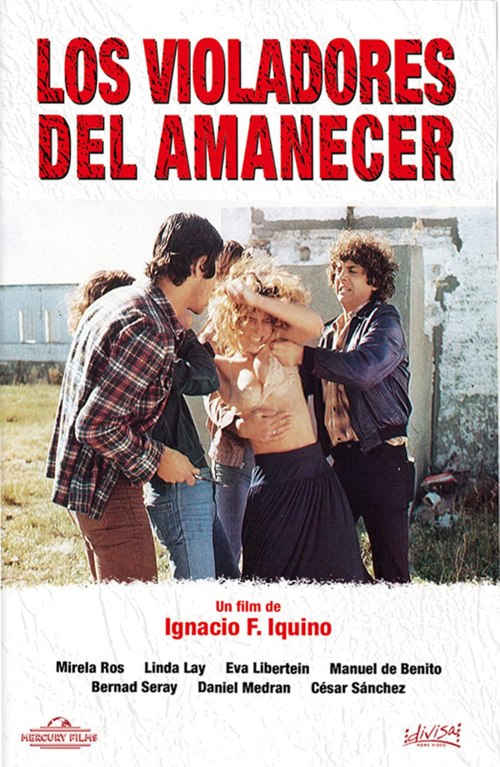
Rubiales (Manuel de Benito), Quinto (Daniel Medran), Rafi (Bernard Seray), Cana (Cesar Sanchez) and Cana’s pregnant sister Lagarta (Alicia Orozco) roam the streets of Barcelona, Spain looking for young women to assault. The boys live on the poor side of town and are from abusive home lives with little future except working boring, low paying jobs. Feeling that society has ‘discarded’ them they they take out their hostilities on the pretty women that they meet. They pick their victims at random usually as they spot them getting out of their cars and go walking into their schools many times while in front of the victim’s family member who’ve just dropped them off. They then take the women to an isolated area and proceed to gang rape them while Lagarta acts as the look-out. The police are aware of the crimes, but seem helpless to do much about it. When they catch the boys in the act and try to arrest them the boys manage to escape making them confident that they can’t be stopped.

While films like I Spit on Your Grave and Irreversible get all the attention as being the ‘last word’ in rape movies, this one, if it was better known and more attainable, would trump those. The rapes here are graphic, prolonged and quite violent. Some will complain that it’s exploitative while others will argue that if you’re going to show rape for the violent crime that it truly is then it must be captured in all of its unpleasantness and toning it down for the sake of good taste does a disservice. Personally I found the brutal nature to be effective as I came away feeling really sorry for the victims, as it’s captured in such a real way you can barely see the acting and instead start to consider it more like a graphic documentary.

This movie also handles the aftermath in an interesting way by examining the debilitating effect the crime has on the victim psychologically and how they become like a different person. They’re outgoing and well-adjusted beforehand and then afterwards depressed, angry, and even ashamed. They turn sullen and anti-social to both their friends and family making it seem like they’ll never be the same again. The film also analyzes what happens when one of the women becomes pregnant, something that I don’t remember being touched upon in other rape films, and how the mother of the victim insist, due to religious reasons, that she keep the baby and not abort it, making her seem as cruel as the gang.

The thuggish boys are portrayed in an intriguing multi-dimensional way too. While they’re cocky when out and about they recoil and become like victims themselves when at home and dealing with their abusive fathers. I did like too that in their own twisted way they have ‘limits’ or  a ‘code of morality’ albeit a very weird one. A great example of this is when Lagarta becomes shocked when the boys continue to penetrate one of the victims even after she has clearly died. Normally Lagarta had no problem seeing them violently molest the women, but when one of them actually gets killed during the attack and the boys continue the assault it’s only then that she feels things have ‘gone too far’.

It’s hard to say what genre to put this one into. It’s not really a horror film as none of the women become Rambo-like by packing a big gun and going on a revenge tour against their assailants, which although emotionally satisfying isn’t realistic If anything it brings out how there are no easy answers, which makes it even more horrifying, but still thought provoking.

My Rating: 7 out of 10

Released: May 3, 1978

Runtime: 1 Hour 33 Minutes

Not Rated

Director: Ignacio Iquino

Studio: Ignacio Ferres Iquino

Available: DVD-R

The Sunday Woman (1975)

sundaywoman

By Richard Winters

My Rating: 6 out of 10

4-Word Review: Murdered by phallic object.

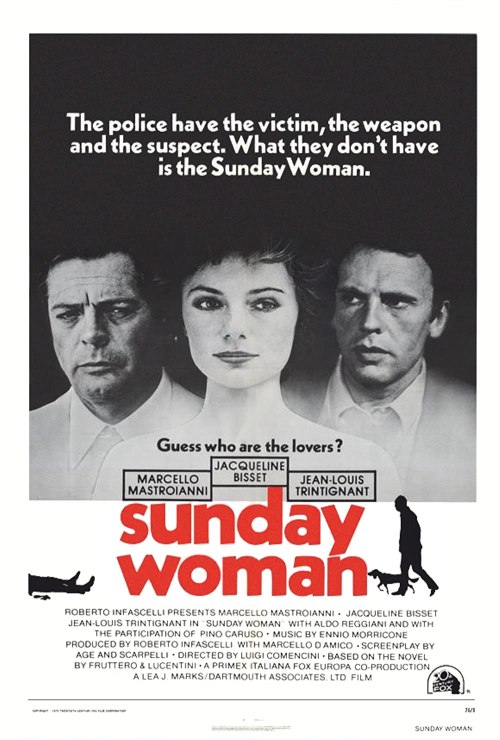
Based on the novel of the same name by Carlo Fruttero and Franco Lucentini, the story centers on the investigation of the murder of Mr. Garrone (Claudio Gora). Garrone is found bludgeoned to death inside his apartment by a giant penis statue. Garrone was a well known architect and a lecherous ladies man who couldn’t help but make unseemly passes at every woman he came by. Commissioner Santamaria (Marcello Mastroianni) is put in charge of the case, which has many suspects. Two of the biggest ones are Anna Carla (Jacqueline Bisset) and her platonic male friend Massimo (Jean-Louis Trintignant). Anna had written a note, found by her hired help the next day, stating her desire to ‘eliminate’ Garrone. Anna, who’s quite wealthy, insists that it was all a innocent misunderstanding and Massimo backs her up, but Massimo, who has an alibi, is reluctant to divulge it because it would require him to admit that he’s gay and at Lello (Aldo Reggiani) his lovers’ house. Santamaria begins looking into other potential suspects as does Lello who wishes to get his boyfriend cleared, but the deeper Santamaria gets into the case the more he connects with Anna and despite their age difference they begin to have a romantic relationship all while she remains at the top of his suspect list.

The film, on the technical end, is well done. Director Luigi Comencini nicely captures the visual beauty of the Italian landscape and the posh older homes of Turin a city in northwest Italy where it was filmed. The soundtrack by Ennio Morricone has a nice bounce that keeps the film moving along even while not a lot is happening. There’s an array of suspects and enough red herrings to keep it intriguing and impossible to guess who’s the true culprit.

The story has its share of offbeat moments though it’s disappointing that the funniest character, Garrone, ends up getting killed as he was amusingly sleazy enough to have kept things consistently comical. While the death by giant penis statue, if memory serves me correctly, had already been used in A Clockwork Orange, it’s still a novel idea and it’s funny how Santamaria visualizes each suspect he meets bashing Garrone over the head with it as he interviews them. Traveling to the shop where the statues are made and being surrounded with hundreds of them is certainly good for a chuckle, but outside of this there wasn’t all that much that stood out, or made this any better than any other murder mystery. The ingredients are good enough to keep sufficient interest, but nothing the makes it really memorable.

I was most disappointed that Bisset wasn’t in it more. She’s fabulous, as she is in most of her movies, and though I suspect that her voice, where she speaks fluent Italian, is dubbed, I still felt she gives a spectacular performance. Mastroianni on the other hand looks tired and worn-out and like his peak years of being a international sex symbol had passed. Yet when he’s together with Bisset it clicks and Jacqueline’s superior acting camouflages their extreme age difference making them seem more like a perfect couple than it should. The two should’ve investigated the case together and become a team, as every second Bisset is not seen it flatlines. Had the two shared the screen this might’ve been special, but ultimately it misses-the-mark and never fully gels.

My Rating: 6 out of 10

Released: December 16, 1975

Runtime: 1 Hour 45 Minutes

Rated R

Director: Luigi Comencini

Studio: Fox-Lira

Available: DVD-R (dvdlady.com) (Italian w/English subtitles), Amazon Video (English subtitles)

The Exorcist: Italian Style (1975)

exorcist3

By Richard Winters

My Rating: 7 out of 10

4-Word Review: Mayor’s family becomes possessed.

Mimmo Baldi plays a 10-year-old boy named Luigi who comes upon a small amulet lost in a field while playing soccer with his friends. He puts it into his pocket and then begins to behave in unusual ways including assaulting a young woman he meets while walking home. His father is Pasquale (Lino Banfi) who’s the mayor of the town and running for reelection. He and the rest of the family notice the increasingly odd behavior of their son and decide to call-in a doctor (Gigi Bonos), but when he’s unable to do anything they get desperate and ask for the services of a local demon hunter known as L’Esorciccio (Ciccio Ingrassia) who’s reputed to have an ability to exorcise demons, but in reality is a fraud. When he tries to do a fake exorcism on the child nothing initially happens, but when the amulet falls out-of the child’s pocket and onto the ground the child is considered ‘cured’. However, his older sister Barbara (Barbara Nascimben) then retrieves it and soon begins acting in the same dangerous way. Their father wants to keep this issue as far away from the press as he can for fear it will hurt his reelection chances only for him to eventually come into procession of the amulet himself where his wild and shocking behavior gets put on full display for everyone.

While this film has been seen in a better light in recent years it was considered when it first came-out as ‘the worst movie of all-time’ by the Italian public and lambasted as such even decades later. Ciccio Ingrassia, who was a much beloved comedian, who had been starring in comedy films for the past two decades, became shaken by the response and harsh criticism and vowing he’d never direct another movie again and while he did continue to star in them through the 90’s he kept  to his promise and never directed any others.

It’s hard to say where the film, which is clever at times, went wrong for the moviegoers as the comedy is there if you’re patient. I’ll admit the special effects are scant and not too impressive. The film tries to emulate the classic one of which this is a parody by putting-in most of what that one was known for into this story though it does compromise on some of it. For instance during the exorcism the bed that the girl is on begins to levitate, but the projectile vomit is not done. They do have her spit something at them, but in parody it’s always good to go overboard and the film missed a prime opportunity to do something visually hilarious like drowning the exorcist and his assistant in a mound of green muck that flies out of her mouth, or something to that effect. The swivel head doesn’t get done either, at least not with the girl victim, but instead it’s saved for later when the father becomes possessed, but the effects here look cheap and not believable.

In some ways this is a smart movie as it doesn’t just depend on a barrage of gags to keep it going, but instead creates an actual character driven story where they react to the craziness going on with a befuddled amusement, which to me was the best element. Banfi is very funny as the conniving husband/father who’s convinced that these satanic events are just something that his political opponent (Tano Cimarosa) is behind, so that he’ll lose the election. Ingrassia has his moments too and there were some parts that had me laughing-out-loud though the sped-up running, where the son chases the father around their yard looks cartoonish and should’ve been avoided. The soundtrack is also a problem as it’s blaring and doesn’t give-off a creepy vibe. Even if it’s just parody when it involves a famous horror movie it’s good to at least play along and give a spooky facade to it, which with the music selected here doesn’t do that.

Spoiler Alert!

The wrap-up where seemingly everyone in the town, while attending a public event, becomes possessed, at least for a few minutes, as they randomly pick-up the amulet that gets passed around from one person to another becomes dizzying and silly. Having the story center on the family characters was when it worked and that’s where it should’ve stayed. While certain segments could’ve been played-u more there’s enough here to be enjoyed as long as you accept it as a simple comedy done on a shoestring.

My Rating: 7 out of 10

Released: June 11, 1975

Runtime: 1 Hour 39 Minutes

Not Rated

Director: Ciccio Ingrassia

Studio: Dear International

Available: DVD-R (dvdlady.com)