Category Archives: Foreign Films

The Grass is Singing (1981)

the grass is singing 1

By Richard Winters

My Rating: 7 out of 10

4-Word Review: Farming isn’t her thing.

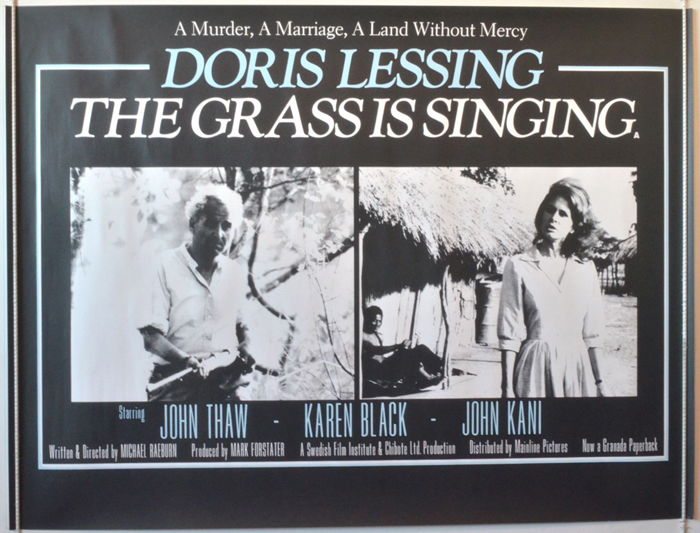
In memory of Karen Black who died on August 8th we will review on each Monday of this month an 80’s film that she starred in as well as a 70’s movie that she was in on Fridays. This film is based on the Doris Lessing novel and was filmed on-location in Zambia. The story centers on Mary a racist woman from South Africa who is bored with her job and lonely. She meets Richard (John Thaw) a simple man who becomes smitten with her. She is not as crazy about him but decides to accept his proposal of marriage simply as a way to escape her dreary existence and loneliness. He moves her to his farm where she finds the rigorous lifestyle difficult to adjust too. The isolation begins to wear on her already tightly wound temperament and eventually she begins to show erratic behaviors that become more disturbing and shocking.

The Zambia locations are captured in vivid style with a grainy film stock that makes it look like it were a documentary. The farm setting is indeed desolate and makes for great atmosphere. Director Michael Raeburn wisely refrains from using too much music and when he does he uses instrumentals from the native culture, which further elevates the film and gives it distinction.

The film stays pretty faithful to the novel and starts out in startling fashion with Mary being stabbed and bloodied on her backdoor step and then shifts back seven years where we see what lead up to it. The pace is slow, but involving and the characters are three-dimensional and believable. Mary’s breakdown happens in a deliberate and realistic fashion starting with little things that work into bigger ones. In the end you feel more sorry for her than frightened and thoroughly engulfed with her sad and pathetic circumstances.

This was Black’s last serious role before being quarantined in B-movie purgatory. This may also be one of her finest moments as she brings out the manipulative nature of the character quite well and I love the way she always seems to add quirky qualities to her parts. She also speaks with an authentic sounding South African accent.

Thaw is quite good in support and creates empathy from the viewer playing a very humble man looking for simple companionship with no idea what he was getting into.

There is some serious filmmaking going on here in a movie that makes some great points about life and human nature that is well worth checking out. The original theatrical release which is what I saw and able to obtain from a private collector runs a full 105 minutes. However, the American release which is available on DVD from Synergy Entertainment as well as Amazon Instant Video and goes under the title Killing Heat runs only 90 minutes and heavily edits out the explicit violence and nudity and has a narrative that is choppy and at times confusing.

My Rating: 7 out of 10

Alternate Title: Killing Heat (U.S. version)

Released: September 18, 1981

Runtime: 1Hour 45Minutes (Original Version)

Not Rated

Director: Michael Raeburn

Studio: Chibote

Available: VHS, DVD, Amazon Instant Video (as Killing Heat)
A Minute to Pray, A Second to Die (1968)

a minute to pray a second to die

By Richard Winters

My Rating: 3 out of 10

4-Word Review: A gunfighter suffers seizures

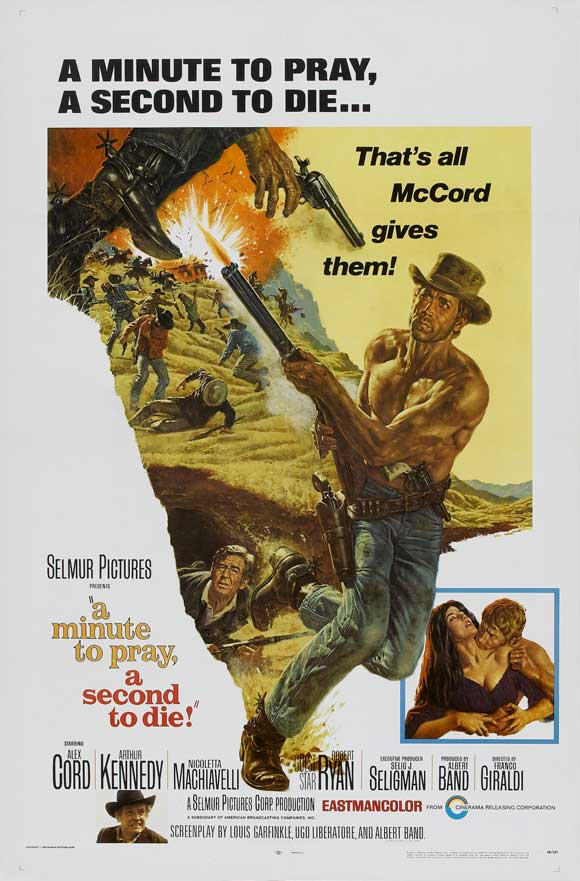
Clay McCord (Alex Cord) travels to New Mexico where the Governor (Robert Ryan) promises amnesty to all outlaws. Clay finds himself at odds with the other outlaws who are traveling to the state for the same reason, which causes him to get involved in numerous gun fights and although he is an excellent shooter he also suffers from strange seizures that temporarily paralyze his arm. When he has these fits it makes him completely vulnerable to all those who might want to take advantage of him. He tries to keep this condition a secret while looking for a Dr. which he hopes can cure him, but the other outlaws get wind of it and start to track him down.

One of the biggest problems with this movie is that Director Franco Giraldi is no Sergio Leone and you spend the whole time wondering how much better this would have been had Leone directed it. Giraldi fails to have Leone’s visual style or lyricism. Everything is staged and photographed in a very conventional unimaginative way with a lot of choppy editing. The one fun and interesting scene that the film does have Giraldi screws up and it entails Clay as a young boy watching a group of cowboys laughing at his father and dragging him through the mud while he suffers an epileptic seizure. The crying boy becomes so distraught that he steals one of the men’s guns and then turns around and shoots them all dead. Instead of taking advantage of the scene’s irony and showing the men with shocked expressions and even possibly having them getting hit and falling down dead in slow motion Giraldi instead immediately cuts away the second the boy starts shooting, which doesn’t allow the scene to gel and stand out as much as it should.

The music is another issue and in desperate need of Ennio Morricone’s distinctive orchestral sound. Carlo Rustichelli the composer here has a score that places too much emphasis on the violins and creates a heavy, droning melody that would be better suited for a drama. The dialogue is also dubbed. I know a lot of Italian filmmakers did this especially during this era. I’ve never been sure why and I have never liked it although with Dario Argento’s horror movies it somewhat works because it heightens the surreal effect, however here it cheapens the production and cements it as a definite B-movie.

Cord doesn’t have the charisma or presence of a leading man. His deep voice and laid back delivery makes him sound like he is only half awake. He glides through the film with too much of a detached and unemotional persona. The biggest problem though was the character. This is a man who has no idea when his seizures will occur and knows full well the vulnerable position they will put him in and yet he continues to behave in a brash, cocky way with everyone he meets and singlehandedly tries to right every wrong when it would have been much more practical to simply lay low and blend in with the crowd.

Nicoletta Machiavelli is a beauty and although I wasn’t so sure about her acting her face was so appealing that I wanted to see her in more scenes and was disappointed when she got killed off so quickly. Veteran actor Arthur Kennedy who wears a wig gives his usual stalwart performance as the town’s marshal, but it is not enough to save the picture. Ryan is okay as the governor, but I found it hard to believe that a man who looked like he was clearly getting elderly would be able to punch out as many guys as he does let alone even one of them.

There are quite a few gun battles particularly during the first half, but they are generic and the final one really isn’t that exciting. The ending peters out with a whimper and this spaghetti western wannabe does nothing but make you long to go back and re-watch a classic one.

My Rating: 3 out of 10

Released: May 1, 1968

Runtime: 1Hour 37Minutes (The DVD cover says 1Hour 58Minutes, but they’re wrong.)

Not Rated

Director: Franco Giraldi

Studio: Cinema Releasing Corporation

Available: DVD

Paperback Hero (1973)

paperback hero

By Richard Winters

My Rating: 5 out of 10

4-Word Review: Big fish small pond.

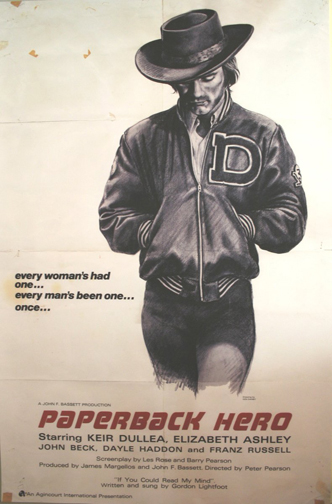
Rick (Keir Dullea) is a hockey player living in a small town on the western plains of Canada. To pass his time he imagines he is a gunslinger in the old west and makes himself the self-imposed marshal of the community.  Outside of Sheriff Burdock (George R. Robertson) the other townsfolk considered it an amusing and otherwise harmless quirk. Then Rick learns that his hockey team will be disbanded and he will be without a job. He is given an opportunity for employment in nearby Saskatoon, but he refuses it feeling that he will lose his ‘mystique’ in the bigger city. Slowly the strains and pressures of his situation start to get to him and eventually it culminates in an old fashioned gunfight right in the center of town between him and the sheriff.

If the film gets one thing right it is in the recreation of small town life. Filmed on-location in Delisle, Saskatchewan director Peter Pearson gives the viewer a wonderful and vivid feel of the town. Just about all the sections of the hamlet are captured including the inside of abandoned buildings, trailer homes and farms as well as a couple of nice bird’s eye shots. The remoteness and flat wheat laden terrain brings to life the region in an almost stunning clarity. Having grown up in a small town not too terribly far from the Canadian border I can say that this film hits-the-mark in its portrayal of people in the Nordic region. All the little dramas that can go on between people locked in a remote local as well as the scenes done inside a dark and dingy bar that many times can constitute as the place to go for a ‘night-on-the-town’ is amusingly well played-out.

However, despite having the right flavor the film lacks direction. It was hard for me to get into this because all the scenes were random and not connected together by all that much. The plot is thin and made up if anything by a series of vignettes.  The main character is brass, egotistical, deluded and arrogant. He treats women like they are his property. He beats up one and considers it minor because her bruises are only the ‘size of a quarter’. He talks about getting turned on by one woman while making love to another and then is surprised when she gets upset with him. Having a film built around such an unlikable character is not entertaining or interesting especially when we are given no history to why he became the way he is.

Dullea does well in the lead and shows a lot more emotion and panache than one might expect from him especially when compared to his most famous role as the rather robotic Dave Bowman in 2001: A Space Odyssey. It is always fun to see Elizabeth Ashley and here she plays one of Rick’s love interests, but her role is small and rather thankless though she does get shown in a long and explicit nude scene.

My favorite was Dayle Haddon as the alluring Joanna. Haddon has retired from the acting profession years ago, but was at one time a fashion model and she looks gorgeous here. The scene that takes place in an abandoned house where she tells Rick off and shreds his deluded ego while doing it in a quiet whispery tone is the movie’s best moment.

The segment showing a big hockey brawl where fans jump out of the stands to get involved and even the ref gets bloodied is fun. I also liked the part where Rick takes Joanna on car ride through the wheat fields. The camera is hooked up to the bumper of the car so the viewer gets an up close experience of watching the wheat thrash before them at high speeds. The standoff at the very end in the center of town is also interesting, but the film takes too long to gel and the main character is such a turn-off that it hurts the good points and ultimately makes this a misfire.

The movie also features the Gordon Lightfoot’s song ‘If You Could Read My Mind’, which is a great a song, but it has been played so much on lite-rock stations that instead of getting the viewer more engrossed in the movie it instead takes them out of it. The film works hard to create a gritty appeal and for the most part succeeds, which is why having a long segment with the song played over it doesn’t work and I would have left it out.

My Rating: 5 out of 10

Released: September 21, 1973

Runtime: 1Hour 33Minutes

Rated R

Director: Peter Pearson

Studio: Alliance Film Distribution

Available: VHS, YouTube

Sands of the Kalahari (1965)

sands of the kalahari

By Richard Winters

My Rating: 8 out of 10

4-Word Review: Stranded in the desert.

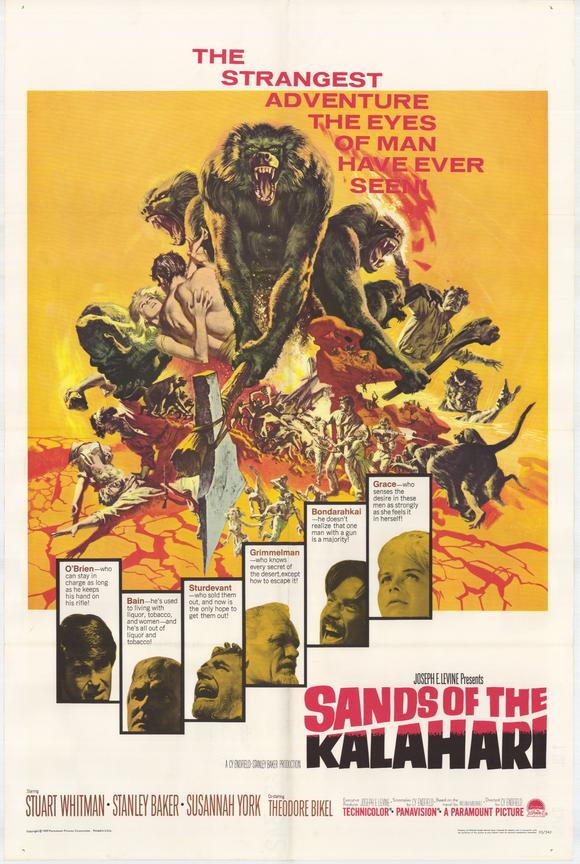
Based on the novel by William Mulvihill the story centers on a group of six individuals, five men and one woman, who fight to survive the blistering heat of the Kalahari Desert when their plane crashes after it’s struck by a large swath of locusts. Instead of working together as a team the group quickly disintegrates with infighting and tensions. The young and virile Brian (Stuart Whitman) who initially takes control of the situation starts to feel that his own survival would be heightened if there were less people needing food and water, so he decides to carefully eliminate them one-by-one, which leads to many interesting confrontations and a very unusual climactic finale.

Filmed on-location in Namibia the desert becomes its own character. The stunning sandy landscape is breathtaking and watching the characters walk along it under the crystal blue sky becomes almost awe-inspiring particularly during birds-eye view shots. The viewer feels like there are right there feeling the heat along with the rest of the characters. Writer/director Cy Endfield keeps things on an authentic level and stays for the most part faithful to the book with the exception of changing one of the characters who had been African American in the novel to Caucasian here. His use of actual animals is what impressed me the most particularly the baboons who become a major part of the story as well as seeing a live scorpion crawling up a man’s arm. The only real technical weakness is the cloud of locusts forming on the horizon, which looked like dust being sprayed on the plane’s windshield and when they started to splatter onto the window it looked more like scrambled eggs and not quite as impressive as I think the filmmaker’s had hoped.

I also had a bit of a problem with the Sturdevan character, which had been the plane’s pilot and is played by actor Nigel Davenport who attempts to rape Grace (Susannah York) after they had only been stranded in the desert for a day and a half. I felt this was too quick for people to so suddenly drop their civilized veneers and cave into their more animalistic urges. I could see this maybe occurring after being there for weeks or months, but I would think initially the urgency would be finding help and just plain surviving and sex being the last thing on anyone’s minds. This same issue occurs with Grace who becomes romantically attached to Brian and even professes her ‘love’ for him after only a couple of days, which again seemed too rushed. The romantic scenes make the film seem soap-opera like and gives it an unnecessary melodramatic feel that does nothing but bog down the pace.

Whitman whose career dissipated after the 60’s and was confined with less significant roles and films is memorable here. The character who comes onto the plane at the last second is initially big and brawny heroic and watching him devolve into a selfish anti-social man is interesting as are the scenes with him trapped in a hole. The segment where he throws a fire into a cave filled with baboons and then shoots the animals as they run out is quite startling. I also enjoyed York. She has always been a splendid actress, but here with her blonde hair matched against her red skin and torn dress looks genuinely sexy.

The one-on-one confrontations between the characters especially the one between Grimmelman (Harry Andrews) and Brian and then later between Brian, Grace and Mike (Stanley Baker) is what helps the film really stand-out. I would have liked it played-out a bit more, but the twist that comes at the end is indeed unexpected and leads to one of the more unusual climactic sequences you will ever see.

My Rating: 8 out of 10

Release: November 24, 1965

Runtime: 1Hour 59Minutes

Not Rated

Director: Cy Endfield

Studio: Paramount

Available: DVD, Amazon Instant Video 

Wedding in White (1972)

wedding in white 1

By Richard Winters

My Rating: 8 out of 10

4-Word Review: Ending is a kicker.

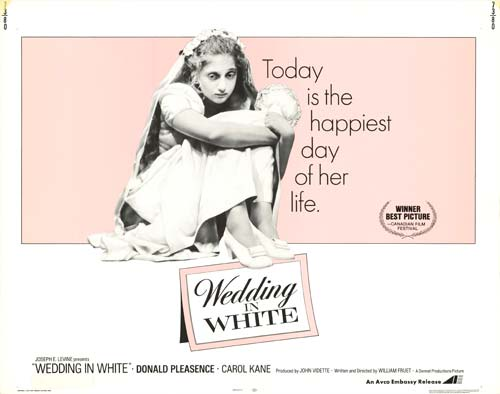
Jeannie (Carol Kane) is a shy 16-year-old girl living in a small, bleak Canadian town just after the war who is raped by her older brother’s army buddy. Her parents (Donald Pleasance, Doris Petrie) respond as if it is her fault and resort to some extreme even shocking measures in order to ‘save the family honor’.

This is a solid little drama with good scene construction. The pacing is deliberate and an ending that really packs a wallop. The sets and location look authentic for the period and the characters are believable. Jeannie’s friend Sara (Christine Thomas) seems like a very typical teenager no matter what time period and her interactions with Jeannie show the realities of teenage friendships and makes for an interesting sidelight from the main story.

Kane is impressive acting in a style I’ve never seen from her before. Pleasance is solid as usual and his Canadian accent sounds almost authentic, but it is a bit overdone. Petrie is also quite good as the mother. She really brings to surface a character that is so cloistered she is unable to make any clear decision for herself.

The story itself is the real strong point. It is convincing, insightful, and well-crafted and brings out a sort of darkness and ‘evil’ that can come from ‘wholesome small towns’ and ‘God fearing people’. It shows how having a rigid morality can sometimes create a sort of immorality and also brings to light the lies people wish to live by and how at times it can cloud their better judgment, but most of all it’s a study at  how easily sensitive, fragile people can get sucked away and how sadly common it is.

This is a film designed to leave you feeling shocked, angered, saddened, and maybe even a little repulsed. This is quality viewing that deserves more attention.

My Rating: 8 out of 10

Released: October 20, 1972

Runtime: 1Hour 43Minutes

Rated R

Director: William Fruet

Studio: Cinepix

Available: DVD

The Handyman (1980)

the handyman

By Richard Winters

My Rating: 6 out of 10

4-Word Review: He’s unlucky in love.

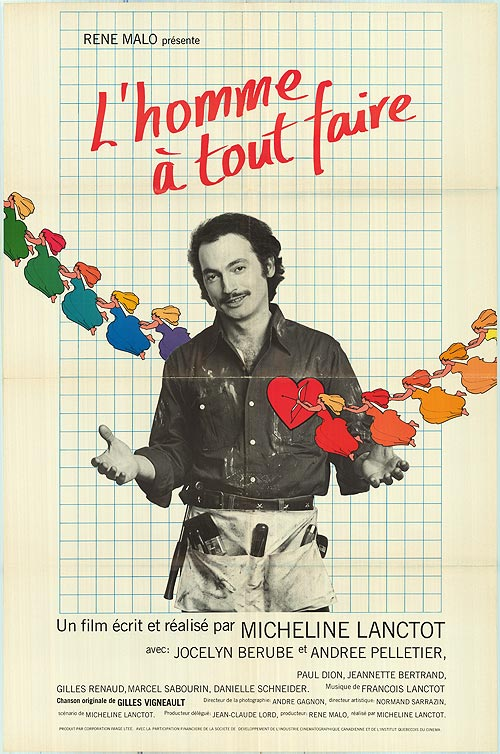
Armand (Jocelyn Berube) is a chump of the first order. Everything he plans or does never seems to work out. He writes a letter to his mother describing how he has finally gotten himself married and how ‘he won’t die a bachelor’ only to have her walk out on him after only a few months. He tells his best friend the secret place where he hides all of his money and then the next day the friend steals the money. He brings in a new roommate only to have that man listen in to his private phone calls and when he does meet an attractive woman who he thinks is interested he gets her a romantic gift only to have her and her friends laugh at him behind his back. “The world is made up of two types of people,” he states “Those that take and those that are taken and I tend to be the latter.”

Things seem to improve for him when he gets a job fixing up the house for bored and attractive housewife Therese (Andree Pelletier). She is unhappy with her marriage to Bernard (Gilles Renaud) who is indifferent to her feelings and more interested in his golf game than her. She considers Armand’s unpretentiousness refreshing and Armand of course becomes immediately smitten. The two make an attempt at an affair, but as usual Armand gets in over-his-head.

One of the things that really stands out in this movie is the way Armand and Therese’s relationship unfolds. In most movies it always seems like love at first sight and both people get animalistic urges that they can’t contain and impulsively jump into the sack, but here it is much different. For one thing their attraction for one another progresses at a much slower and more realistic pace and does not come to a head until after several months. Both parties are shown contemplating their next move and their desire for one another is constantly being balanced by their reluctance at knowing how much trouble and guilt they will have if they do go through with it. How they respond to each other after they have sex is equally revealing and the quirky relationship that Armand later has with Therese’s husband is also quite interesting.

Although I felt that actor Berube’s bushy mustache and 70’s hairstyle seemed a little overdone I still found the character to be highly amiable. You tend to feel for the guy even after he makes one blunder after another. Actress Pelletier is certainly attractive, but her thick Nordic accent was a bit of a turn-off although probably realistic for the region.

My only complaint from this otherwise widely hailed low budget obscurity is the fact that the Armand character doesn’t grow or evolve at all. This is a man that knows he has a weakness for being taken advantage of, but doesn’t do anything about it. Watching him perpetually self-destruct to the point that he finds himself living out of his car and even contemplating jumping off a bridge is frustrating and depressing. Showing him having just one defining uncharacteristic moment where he somehow manages to transcend himself would have been much more satisfying and in some ways more realistic.

My Rating: 6 out of 10

Released: March 14, 1980

Runtime: 1Hour 39Minutes

Rated PG

Director: Micheline Lanctot

Studio: Les Films Reno Malo

Not Available at this Time.

Repulsion (1965)

repulsion 1

By Richard Winters

My Rating: 8 out of 10

4-Word Review: She loses her mind.

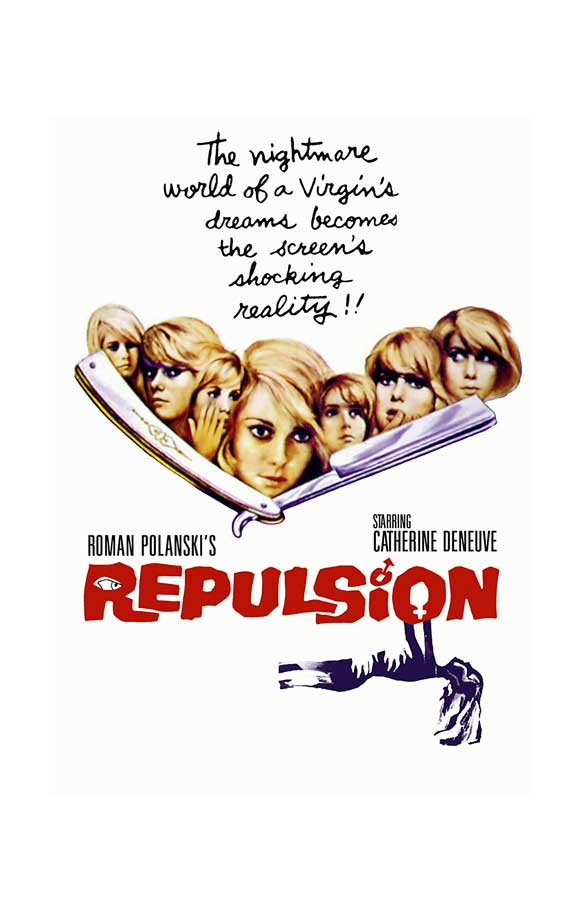
Love or loathe him one thing is for sure the controversial Roman Polanski has made some great movies and since today marks his 80th birthday I thought it would be good to review one of his films this being his first English language one. The story, which was written by Polanski and Gerard Brach centers on Carol (Catherine Deneuve) a beautiful but lonely young woman living in an apartment with her older sister Helen (Yvonne Furneaux) and Helen’s boyfriend Michael (Ian Hendry). Carol seems detached and troubled and when Helen and Michael go off for the weekend Carol begins to suffer hallucinations while inside the apartment that becomes increasingly more frightening and eventually leads to murder.

The film works at a slow and deliberate pace that some viewers may feel put-off by. Personally I felt it was effective and made it more realistic although things really don’t start to get intense until the final hour. For me it was the little things that made it intriguing for instance the way Carol becomes fascinated with the distorted reflection of herself in a teapot, or a rolling bottle of nail polish. Nothing is over-the-top, but instead subtle and restrained. This is one of the few films that seem to understand the thought process of the mentally ill and makes you feel like you are really inside their head and seeing things as they do, which is what makes it so unnerving. The low-key approach works because like with an actual person having a breakdown it starts with little things that slowly morph into bigger ones.

Polanski shows incredible control over the material. The stark black-and-white cinematography helps to heighten the ugliness of the situation. The variety of camera angles and movements creates an almost hypnotic effect. I loved the way, as Carol gets further into her demented state, that the dimensions of the apartment begins to change, or the hands coming out of the walls. My only complaint is I wished some of these effects had been played up even more. The rape sequences are quite effective and surprisingly explicit for its time period. Yet instead of hearing Carol’s screams during these moments we instead hear the ticking of a clock, which somehow makes it even more disturbing.

Deneuve gives one of her best performances and she was at the peak of youthful beauty here. The blank almost zombie-like look in her eyes is penetrating. You get the feeling that she not only truly understands the madness of her character, but actually is the character. Patrick Wymark is also memorable as the landlord who goes from being bombastic and demanding to kind and cuddling and eventually sexually deviant in a matter of only 10 minutes.

Normally I always like a background to the characters and when they are missing or vague I find it a weakness to the script while here it is strangely a strength. We can surmise that she was most likely abused sexually when she was younger, but the who, when, and why is never made clear. This though somehow makes the character and the situation more compelling and reflects back to how psychologically fragile the human condition can be and how these things can happen to anyone. The final tracking shot, which stops on a picture of Carol as a child showing an angry look on her face is great.

The imagery and psychological approach to this thing is still one-of-a-kind. The movie viewing experience on this one remains potent and aptly deserves its classic status.

repulsion 2

My Rating: 8 out of 10

Released: October 2, 1965

Runtime: 1Hour 45Minutes

Not Rated

Director: Roman Polanski

Studio: Compton Films

Available: VHS, DVD, Blu-ray, Amazon Instant Video

Death Weekend (1976)

death weekend

By Richard Winters

My Rating: 3 out of 10

4-Word Review: She can defend herself.

This Canadian thriller, which is loosely based on actual events deals with a rich playboy named Harry (Chuck Shamata) who invites Diane (Brenda Vaccaro) who is also a model to spend the weekend with him at his isolated lakeside cabin that is miles from anywhere. On their way there they run into a biker gang whose leader (played by Don Stroud) takes an intense disliking to Harry. The gang tracks the two down at their cabin where they proceed to terrorize them before eventually killing Harry and forcing Diane to defend herself alone, which she does valiantly.

In a way this is a poor man’s version of I Spit on Your Grave or Straw Dogs, but not nearly as effective. For one the violent scenes aren’t very intense. This is due mainly to the fact that writer/director William Fruet keeps the camera too removed from the action and never once uses a hand held. There is also no gore as Fruet always cuts away just before anything happens and what little you do see looks tacky. Of course a film doesn’t have to be gory to be scary or intense, but if it is going to have this type of violent theme then it should at least equal it in style. The tension also ebbs and flows and the four hoodlums are too dumb and seem like cardboard cutout caricatures that possess no human qualities whatsoever.
The Harry character does allow for some added dimension, which helps and hurts. I liked the way he sees himself as this ‘refined’ gentlemen and yet views women in the same Neanderthal way as the thugs. He brags of having money and power, but when that gets stripped away from him he becomes amazingly spineless. This makes for a good commentary of the rich and successful, but unfortunately also turns him into being too much of a jerk and when the bad guys proceed to tear his place apart we are not ‘horrified’ at all, but instead enjoy seeing it.

There are actually a few good elements one of which is the music score, which effectively creates an ominous feeling. It was also filmed in Ontario Canada during the autumn and the desolate, bleak landscape helps match the bleakness of the situation and characters. I also loved the morning mist captured during the final chase sequence that gives things a very eerie look. There is also a well-staged car chase at the beginning that was done at high speeds and features some great stunt driving.

The film is saved somewhat by Vaccaro’s interesting performance as a victim. She is independent and self-sufficient and refuses to allow herself to be seen or used as a sex object. This goes along with the film’s overall theme which seems to run on the emergence of the woman in a man’s world and the basic redefining of the female role in society. Yet I felt it would have worked better had the character harbored the old female traits at the beginning and then had these new traits come out as the film progressed.

death weekend

My Rating: 3 out of 10

Alternate Title: House by the Lake

Released: September 17, 1976

Runtime: 1Hour 27Minutes

Rated R

Director: William Fruet

Studio: American International Pictures

Available: VHS

The Silent Partner (1978)

silent partner 2

By Richard Winters

My Rating: 8 out of 10

4-Word Review: Bank teller outsmarts robber.

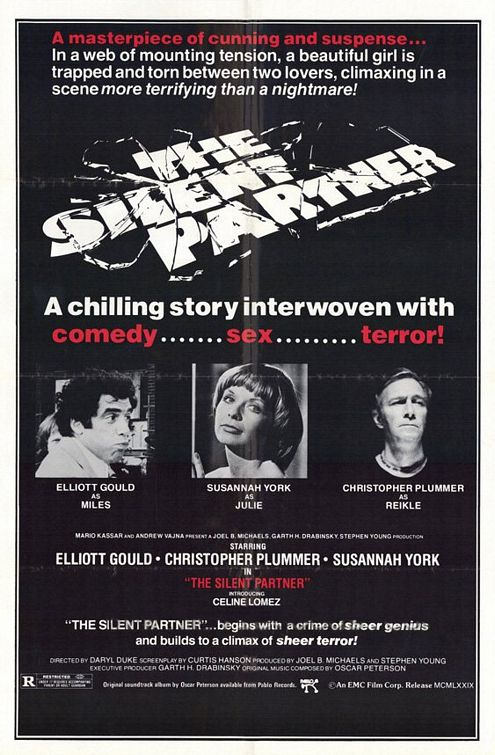
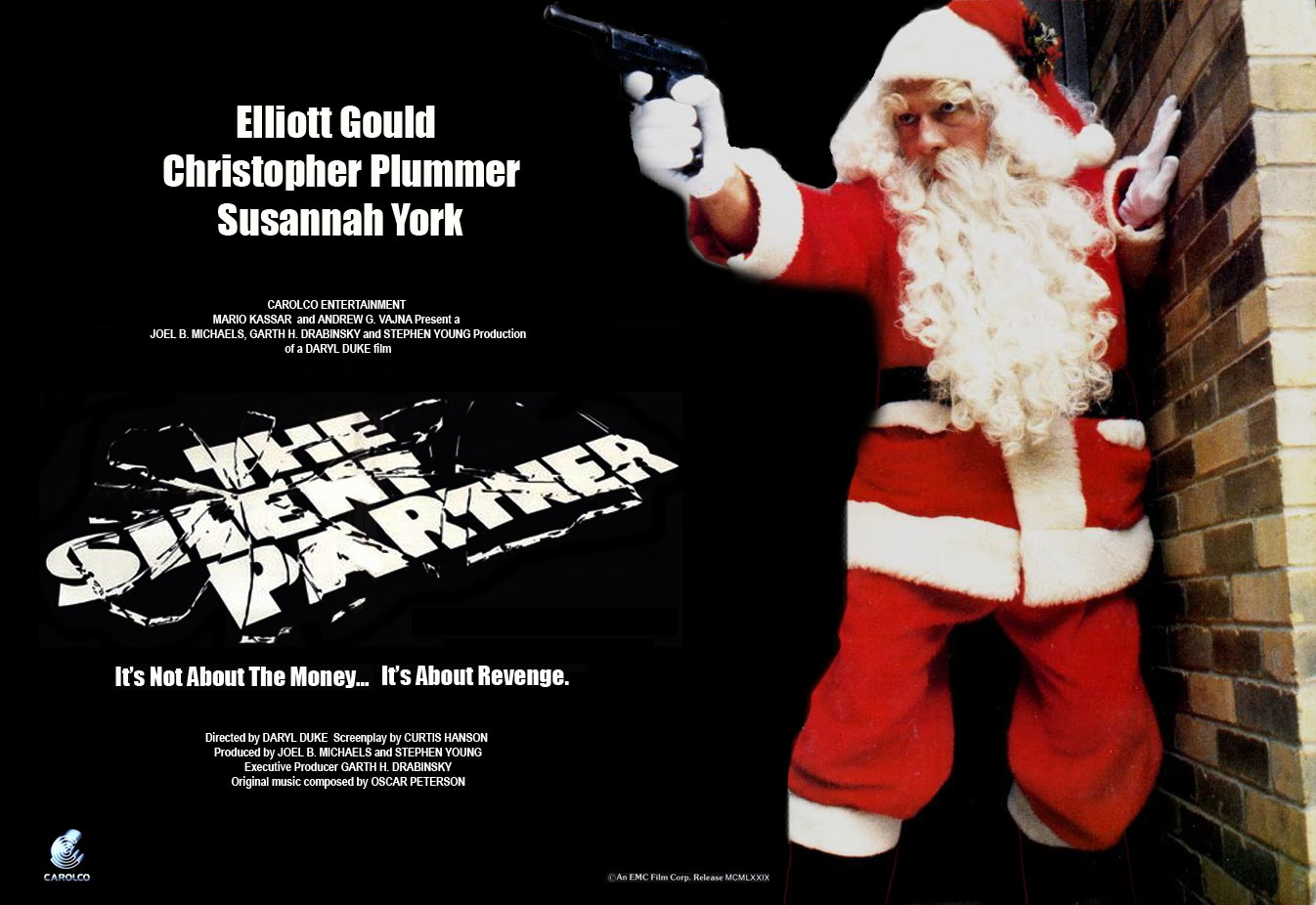
This is an ingenious, slick, and really fun caper movie that puts a whole new spin on the old bank robbery theme. Here Elliot Gould plays a bank teller named Miles who, by sheer accident, becomes aware that a man named Harry (Christopher Plummer) is planning on robbing his bank. Miles decides to take the money from his till and put it into his lunchbox. Then when Harry robs the bank it is actually Miles the teller that gets the money while Harry goes away with very little. Yet this is only the beginning as Harry and Miles continue to play a crafty game of cat- and-mouse, which leads from one interesting twist to another.

Gould plays against type here and he does quite well. Usually he tends to be loud, argumentative, and anti-authority, but here he is quiet and unassuming. It’s the type of character you think wouldn’t have the guts to pull off what he does, which makes him all the more intriguing. In fact he just keeps surprising you all the way along, stringing the very psychotic and dangerous Harry in ways you couldn’t imagine. It is only his final move that seems to be testing the odds too much.

Plummer makes a terrific adversary. He is dashing and handsome as ever, but with an intensely sinister edge and an icy cold gaze.

Susannah York as Miles’ love interest Julie is wasted. Her character seems thrown in for good measure and at no time seems interesting. There is no chemistry between them and the whole love angle is forced and unnecessary. Celine Lomez, as Elaine the other female character, is different. She is stunningly beautiful and much cagier. She plays between both Harry and Miles and you are never sure which side she is really on. Her acting isn’t spectacular, but she is sensual and has a nice French accent. Her gory and gruesome demise though is unwarranted and works as a drawback to the movie.

There are a few other negatives about the film. One is the drab setting that takes place in Toronto and yet we hardly see any of it. Having the bank itself set inside a boring shopping mall is not too visually exciting. The same goes for Miles’s bland apartment. The supporting characters, especially the other bank employees are incredibly dull. Their lines and basic presence all seem to have been written in simply as ‘filler’. A young John Candy plays one of these co-workers and his comic talents are wasted.

Still the story is creative and has enough unique twists that it overcomes the technical shortcomings and manages to be a highly entertaining flick.

silent partner 1

My Rating: 8 out of 10

Released: September 7, 1978

Runtime: 1Hour 46Minutes

Rated R

Director: Daryl Duke

Studio: EMC

Available: VHS, DVD, Amazon Instant Video

The Running Man (1963)

the running man 1

By Richard Winters

My Rating: 7 out of 10

4-Word Review: Couple scams insurance company.

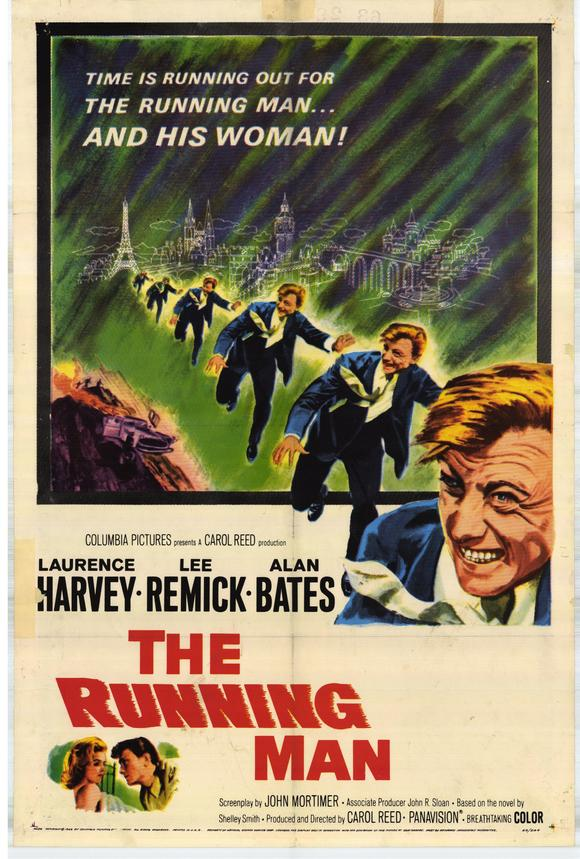
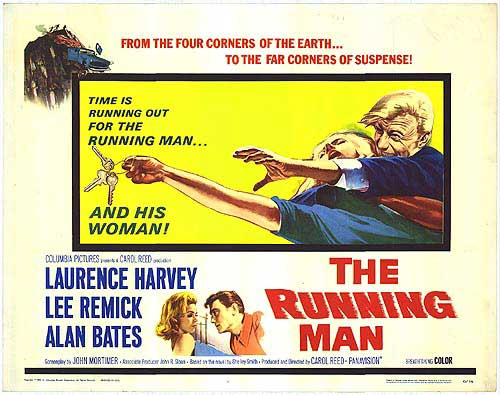
Rex (Laurence Harvey) is a victim of a plane crash when the airplane he is piloting crashes in a forest. He survives with minor injuries, but the plane is totaled and he expects a big payout from his insurance company. However, since he was two days late with his premium payment the policy was canceled and he gets nothing. Outraged he plans a scheme to get revenge with the help of his wife Stella (Lee Remick). He purchases a glider plane and has it insured with the same company. He then intentionally crashes it into the water and before help arrives he dives into the lake and by using an underwater apparatus swims ashore undetected. He hides out on a small island during the investigation and when it is finally confirmed that he was ‘lost-at-sea’ and the insurance pays a handsome sum to Stella the two then run off to Spain, but insurance investigator Stephan (Alan Bates) still has his suspicions and follows the two while continuing to hound them with questions forcing them into a shrewd game of cat-and-mouse.

Based on the novel by Shelley Smith this is a thriller in the most classic sense. The plot is completely believable and still very timely without any of the annoying loopholes. The action particularly during the final 30 minutes, which had me literally on the edge of my seat, is very exciting. The twists are interesting and unpredictable.

What I enjoyed most though was the way the characters evolve and change as the story progresses. Stella initially comes off as carefree and callous only to end up being beleaguered, worn out, and even feeling a bit guilty. Rex seems slick and conniving at the start, but eventually turns crass, vindictive and wholly unlikable. Stephan is nosy and intrusive when it begins, but before it is over he is the most sympathetic to the viewer. Having worked in the insurance industry now for 15 years I liked how the film shows things from both side not only the rigid business-like end, but also how those that try to cheat the system even when they feel somehow ‘justified’ in doing it only ends up making it worse for everybody else. The very ironic ending hits the bullseye.

Director Carol Reed is in top form. I liked how he captures the many different exotic locales of Spain not only with the outdoor scenery and villas, but also inside an old church cathedral as well as an empty bullfighting arena. The opening credit sequence showing Harvey’s shadowing figure running in front of a colored background is good as his the variety of camera angles used particularly during Rex’s final attempt to escape by airplane. The only part that I thought was unnecessary was in when Rex finds a passport left by an Australian that he was talking to inside a bar. Rex picks it up and it is clear to the viewer that he was thinking of using it for his own change of identity, but Reed still felt the need to superimpose Rex’s head shot over the Australian’s, which seemed heavy-handed as does the booming music that is played when Stephan meets Stella for the second time while in Spain.

Remick is excellent and the stresses and strains that her character conveys are easily felt by the viewer. Harvey seems to be having a grand old time particularly when he is in the disguise of the Australian. Although there is some debate over it at IMDB I actually felt that his Aussie accent was alright. He does however look much too scrawny in his bathing suit although Remick in her bikini is delectable.

Why this exciting and polished thriller has never been released onto DVD, or Blu-ray let alone VHS is a complete mystery especially when it stars two major actors from 60’s British cinema and directed by a legend. This movie is waiting to be discovered by new fans and can be enjoyed by just about everyone.

the running man 2

My Rating: 7 out of 10

Released: October 2, 1963

Runtime: 1Hour 43Minutes

Not Rated

Director: Carol Reed

Studio: Columbia Pictures

Not Available at this time.