Category Archives: Foreign Films

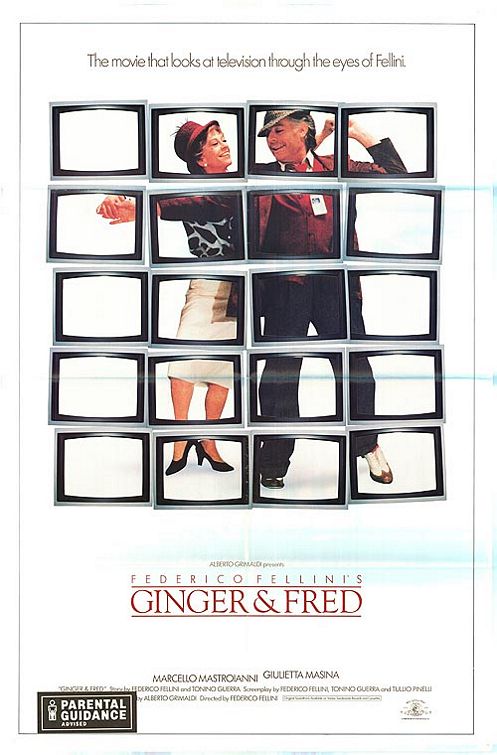
Ginger and Fred (1986)

ginger and fred

By Richard Winters

My Rating: 6 out of 10

4-Word Review: Aging dance partners reunite.

Amelia (Giulietta Masina) and Pippo (Marcello Mastroianni) are two aging dance partners who haven’t worked together for years. They are asked to reunite for a TV-show special and do a famous Fred Astaire and Ginger Rogers routine, but things have changed in their many years apart and the situation becomes more awkward than they imagined.

This is a genuinely amusing satire on television and celebrity status with Mastroisanni being absolutely engaging in every scene that he is in. Masina, who was director Federico Fellini’s wife in real-life, also gives a good performance and together they make a real fun team. The final dance sequence is terrific and the film manages to really come together at that point. The film is also sprinkled with some funny satirical snippets with the best ones including goofy billboards and a woman wearing edible panties.

On the negative end I found the techno music score to be overplayed and it becomes irritating especially at the beginning.  The film is also about a half-hour too long and it takes almost thirty minutes for Mastroianni’s character to even appear.

Overall I found the film to be enjoyable and mainly because the two leads are old pros who know how to work their magic although this is definitely not one of Fellini’s best films and at times it seems like he is just coasting.

My Rating: 6 out of 10

Released: January 13, 1986

Runtime: 2Hours 5Minutes

Rated PG-13

Director: Frederico Fellini

Studio: MGM

Available: DVD, Amazon Instant Video

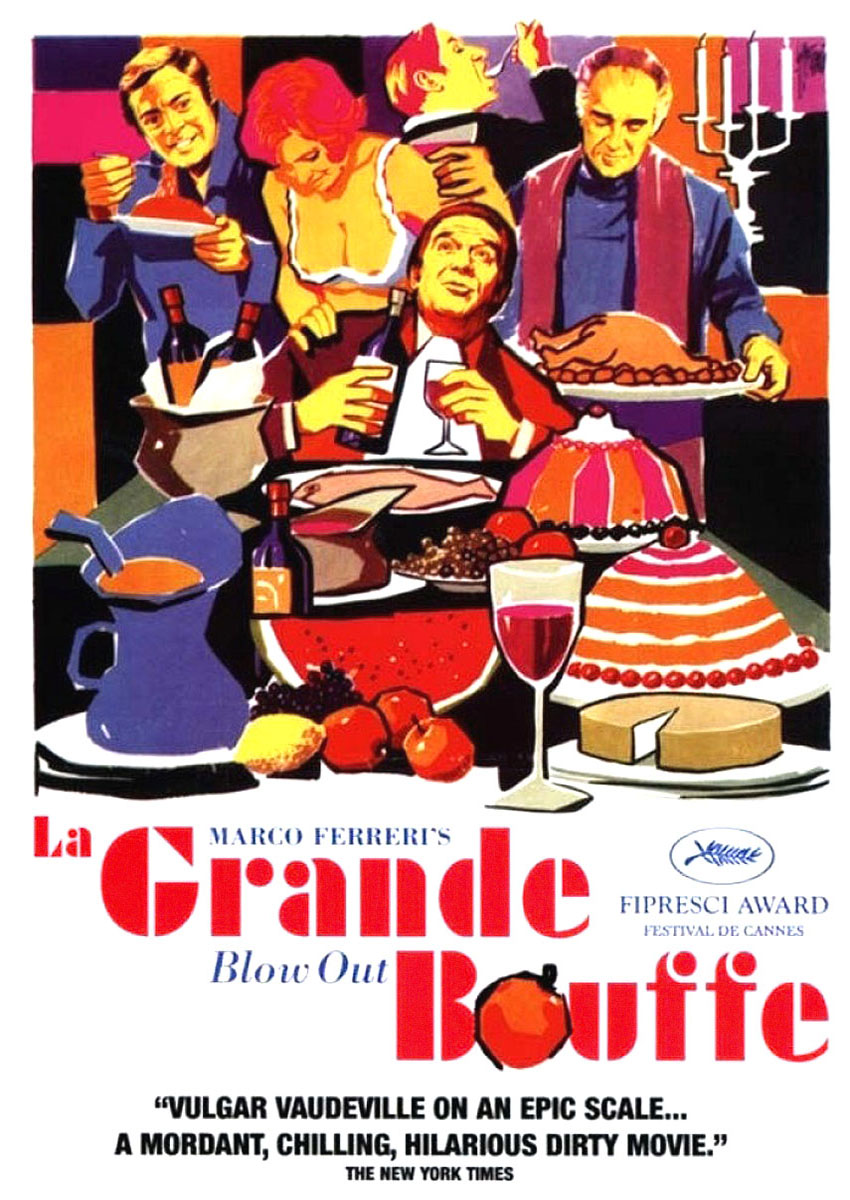
La Grande Bouffe (1973)

la grande bouffe 1

By Richard Winters

My Rating: 3 out of 10

4-Word Review: They stuff their faces.

This film will start an annual Thanksgiving Day theme of reviewing movies that have something to do with food and eating. This one may be the most notorious of them all and despite its offbeat plot and crude scenes won the Cannes Film Festival’s International Critics award as well as attaining a large cult following and be one of the highest grossing movies in the history of Italian cinema.

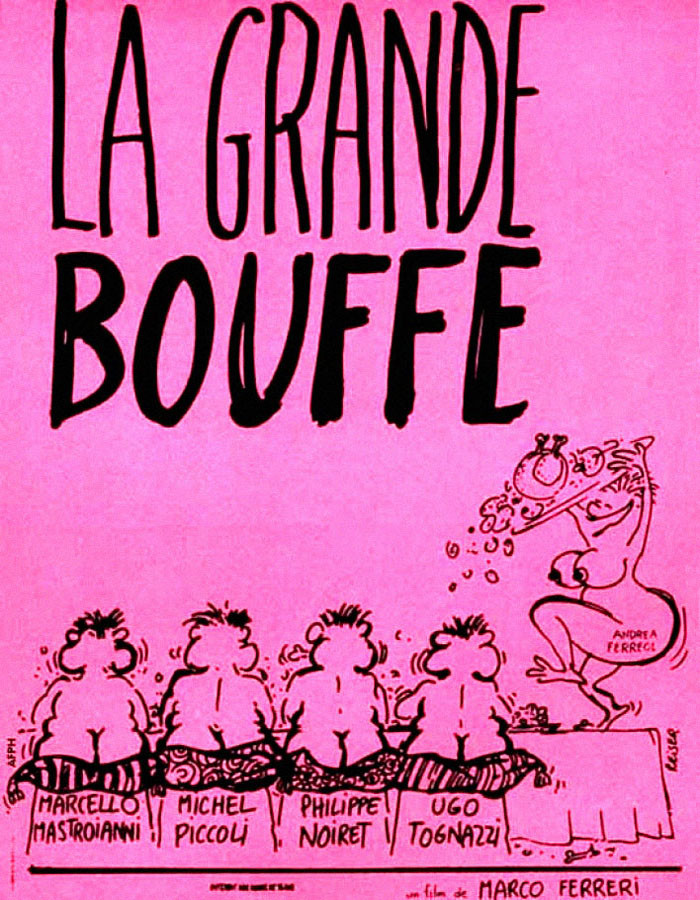
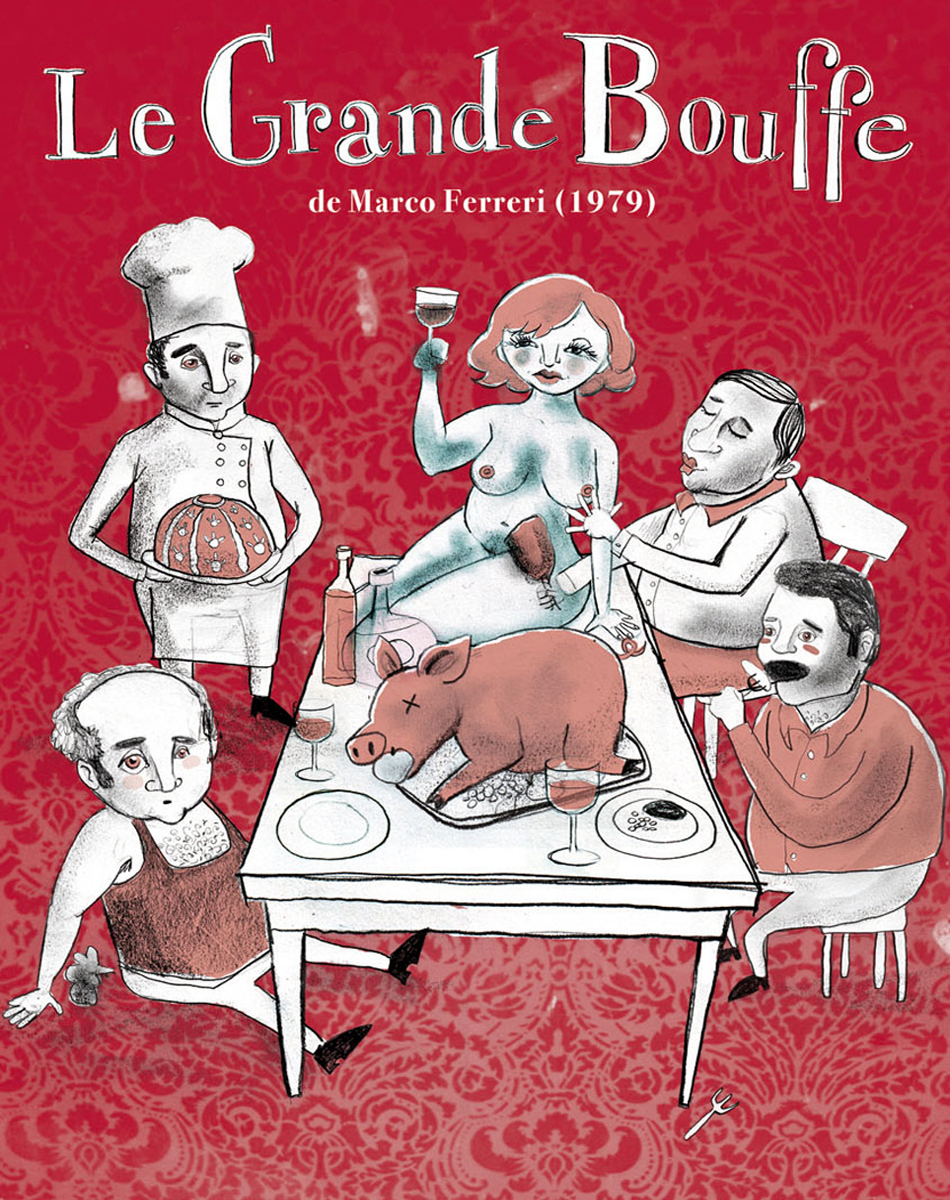
The story deals with four middle-aged men (Marcello Mastroianni, Ugo Tognazzi, Philippe Noiret, Michel Piccoli) who despite attaining affluence and wealth are bored with life and decide their only recourse is to get together for a weekend and commit group suicide by eating themselves to death.

At first the movie will make you hungry.  After an initial set-up the characters can be seen eating in just about every shot. The variety of foods and menu that is served is almost mouth-watering and features a wide array of exquisite dishes seen only in the most fanciest of restaurants. However, after visually seeing these people overeat I felt myself feeling as bloated as the characters and almost sick. The film also gets quite gross with several segments featuring loud sounds of flatulence and a scene where the toilet bursts and covers the men and room with feces that even drips down and gets into the kitchen.

Some may find this ‘hilarious’ while others will think it’s disgusting. For me despite the moments of over-the-top crudeness the strongest scene may actually be when the characters start dying and their dead bodies are carried into a freezer while the rest of them continue to make food and stuff their mouths like it is a compulsion.

la grande bouffe 2

The four leads are old pros who couldn’t give a bad performance if they tried. I started to wonder though how they could eat so much and whether the scenes were all done in one take with no retake as eventually I think they would all start puking. Mastroianni’s death scene is a stand-out simply because it manages to keep his expression completely frozen and does not manage to blink for several minutes, which I found impressive. Tognazzi’s death moment is also fun although it’s Andrea Ferreol who starts out as a proper school teacher, but ends up becoming as decadent and hedonistic as all the men combined that steals it.

The film makes a strong if not impactful statement about gluttony and how a life of prestige and luxury may actually be more of a trap and curse. The more some people get of it the more they want until it is never enough and death may end up being their only true source of salvation and escape.

The idea is outrageous and clever and I loved the concept, but the execution is lacking. The direction is too loose with scenes going on longer than they should. Some tighter editing would have helped the pace and momentum.  I also don’t think it is possible for a person to stuff themselves with food and then die as I think instead they would just vomit it all out.

la grande bouffe 3

My Rating: 3 out of 10

Released: May 17, 1973

Runtime: 2Hours 4Minutes

Rated NC-17

Director: Marco Ferreri

Studio: Films 66

Available: VHS, DVD

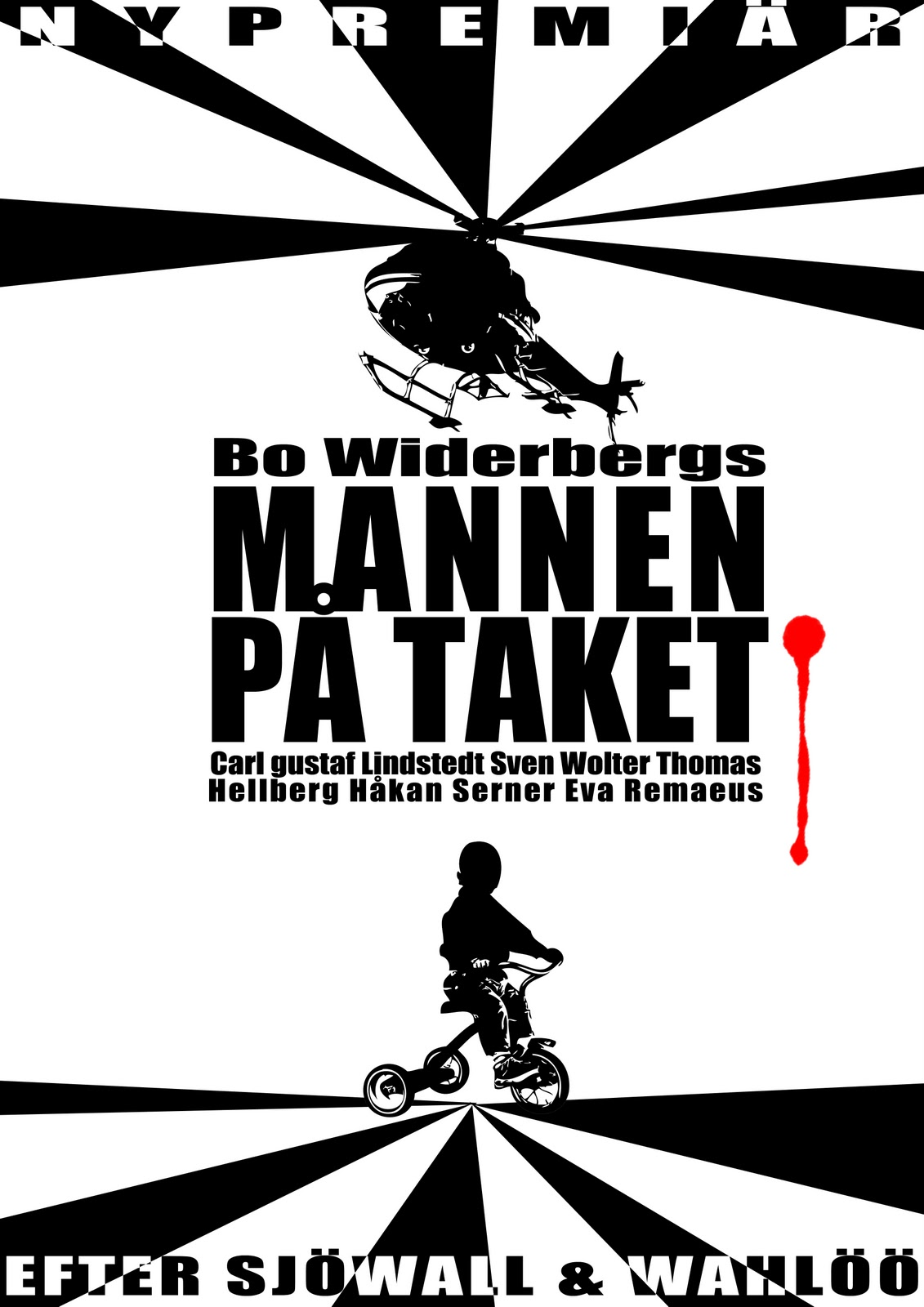
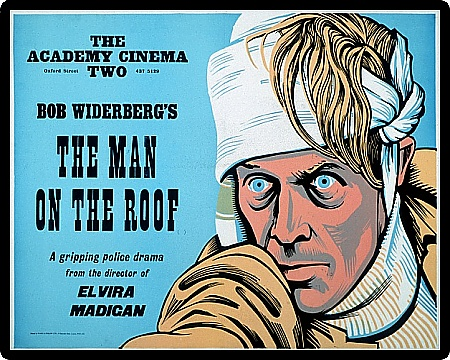
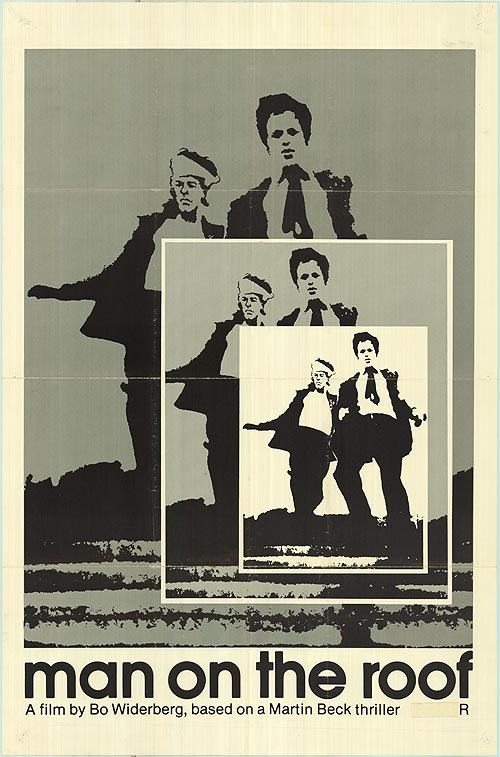
Man on the Roof (1976)

man on the roof 3

By Richard Winters

My Rating: 6 out of 10

4-Word Review: Sniper shoots at police.

Police officer Stefan Nyman (Harald Hamrell) is shot and killed by an unknown gunman. During the investigation police detective Martin Beck (Carl-Gustaf Lindstedt) finds that Nyman was an officer who used brutal and sometimes unethical conduct in his dealings with suspects. Beck begins to consider this as a possible motive, but before he can decide on that the sniper climbs on top of a high rise building in downtown Stockholm and begins shooting and killing all uniformed officers.

The first hour of this Swedish production is different from just about any other police drama you’ve seen. The investigation is slow and meticulous and the identity of the killer is kept a complete mystery.  There is no heart pounding soundtrack and all the scenes are handled in a nicely subdued fashion.  The tension mounts slowly, but deliberately until it finally wraps you into it and becomes riveting.

By contrast the second hour is handled completely differently to the point that it almost seems like two movies in one. The second half becomes this high adrenaline action pic that includes an exciting helicopter crash, but it all proves jarring when compared to the first hour.

man on the roof 1

The story is also too reminiscent of the real-life Charles Whitman incident that occurred in Austin, Texas in 1966.  The ending is much too abrupt and leaves open too many loose ends and a more composite portrait of the killer would have also helped.

This film definitely has its moments both in action, drama and dialogue and is considered highly influential to the modern police dramas that we see today, but the way it comes together is a mishmash. Director Bo Widerberg was known for his poor planning and constantly rewriting scenes and dialogue sometimes while he was sitting on the toilet. The behind-the-scenes atmosphere of his productions was filled with chaos and confusion and the results can be easily detected here. Viewers that enjoy the first half may not like the second one and vice versa.

man on the roof 2

My Rating: 6 out of 10

Released: October 1, 1976

Runtime: 1Hour 50Minutes

Rated R

Director: Bo Widerberg

Studio: Svensk Filmindustri

Available: DVD (Region 2)

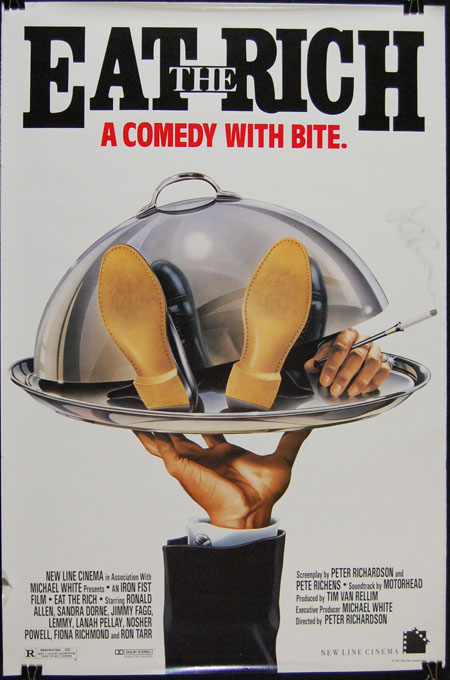
Eat the Rich (1988)

eat the rich

By Richard Winters

My Rating: 5 out of 10

4-Word Review: Rich feed the poor.

This is an extremely garish mixture of loud music, ugly visuals, and shock comedy. The story is about a waiter, a gay man with a real fun bitchy attitude, who gets fired when he refuses to suck up to the arrogant clientele. He gets revenge by banding together other misfits who return and kill everybody and then feed the dead bodies to new unsuspecting patrons.

Sounds gross and tasteless, but it really isn’t. There’s no nudity or sex and no graphic violence or gore. A little bit more of these things would have actually helped. At least it would have solidified it as the underground shock comedy it seems to be striving to be. Instead it’s cluttered with no real objective or foundation. At times it plays like biting social commentary and at other times nothing more than a silly gross out teen flick

By the time you get to the way off-base ending it becomes obvious that the filmmakers were trying to be outrageous simply as a way to get noticed. There is no real insight to the have and have-nots of society. They simply came upon the idea because they felt it would appeal to the type of audience they were looking for.

This is too bad because had it been a little more polished it might have been a stronger film. Believe it or not there are some clever bits. The jabs at the Queen are a riot. The scene involving terrorism and the Middle East crisis is a true original. The rich characters are so over-the-top obnoxious you have to laugh-out-loud.

The true scene stealer though is Nosher Powell. He is a former stunt man/ stunt coordinator who worked on many of the stunts in the early James Bond movies. Here he plays a sort of Teddy Roosevelt times ten a ‘working class’ politician who bullies everyone and everything. The actor has a rather rough, amateurish delivery which only adds to the saltiness of the character.

My Rating: 5 out of 10

Released: April 22, 1988

Runtime: 1Hour 30Minutes

Rated R

Director: Peter Richardson

Studio: Recorded Releasing

Available: VHS, DVD, Amazon Instant Video

The Marriage of Maria Braun (1979)

the marriage of maria braun

By Richard Winters

My Rating: 8 out of 10

4-Word Review: Maria gets her way.

Maria’s (Hanna Schygulla) husband a soldier in World War II is presumed dead. She decides to make her mark by getting a job and a new lover in the form of a black man named Bill (George Eagles), but complications ensue when her husband Hermann (Klaus Lowitsch) shows up very much alive. Maria enjoys her new found independence and isn’t interested in falling back into her old role, which causes friction with her husband as well as her interactions with others.

Director Rainer Werner Fassbinder creates a unique vision and manages to walk the balance between the gritty and surreal. The lighting is evocative and shadowy and nicely reflects his stage background. The sets are colorful and varied and one becomes almost hypnotically entranced with the visuals. The abandoned buildings and rundown locales especially at the beginning make a strong impression and become like a third character. Fassbinder echoes the desperation of the characters through visual means only without ever having to resort to melodramatics, which alone makes this a classic and far better than some other similar films about the period.

Equally great use is made of sound with two to three layers of it within each scene. Whether it is the noise of a radio, traffic, or someone whistling there is always some noise coming from the background much like in reality, which helps in a subtle way to make the scenes more vivid. I loved the dolly shots constantly moving the camera around in every scene throughout the rooms that the characters are in giving the viewer a full sense of their dimensions and helping breakdown the fourth wall.

Some memorable scenes include the moment when Maria’s husband comes back from the war and catches Maria in a compromising position with her new found lover. There are at least four minutes here where there is no talking from any of the characters and one becomes riveted with the silent reactions of the three, which proves powerful. Even the erotic overtones work. Normally I find that area to be rather clichéd and mechanical, but here the sweat glistening off the naked bodies seems genuinely evocative and enticing.

Many people feel this is a movie about budding feminism and applaud the strong female character. I really wouldn’t argue with that and in many ways it is fun seeing this woman forge her way ahead while remaining poised and stalwart throughout. Her relationship with rich businessman Karl (Ivan Desny) and the way she turns him into a subservient to her every whim while also explaining to him that ‘he isn’t having an affair with her, but instead SHE is having one with him’ is classic, but I also felt it seemed a bit artificial. Having a strong central character is one thing, but this woman seems inhuman. She never shows any vulnerability at any time and appears almost completely removed from the environment around her. Never once does she flinch, compromise, or back down from anything or anyone, which just isn’t possible and makes Maria one-dimensional in the process. A character is more interesting when their flaws are exposed and then they must work hard to overcome them, but this one doesn’t have any, which is my biggest issue with this otherwise excellent production.

My Rating: 8 out of 10

Released: February 20, 1979

Runtime: 1Hour 58Minutes

Rated R

Director: Rainer Werner Fassbinder

Studio: United Artists

Available: VHS, DVD (The Criterion Collection)

High and Low (1963)

high and low

By Richard Winters

My Rating: 7 out of 10

4-Word Review: Pay ransom go bankrupt.

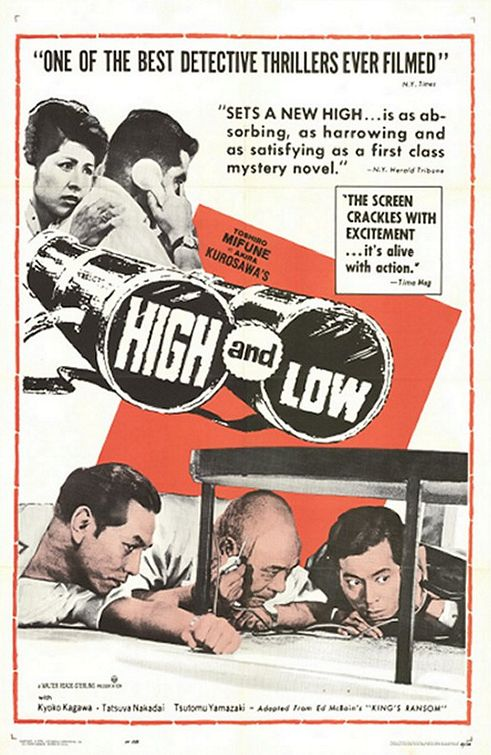
Kingo (Toshiro Mifune) is an executive of a shoe company who finds out that his chauffeur’s son has been kidnapped and comes under tremendous pressure to pay the ransom even it will make him bankrupt.

As with all of Akira Kurosawa’s films the production values are solid and the story is well paced. The very methodical police work and investigation is interesting and enlightening. It’s certainly nothing like today’s CSI shows, but well done for its period. The ending scene where Mifune faces the kidnapper leaves a strong and memorable impression.

However, on the negative side the set-up to the kidnapping happens too quickly without any type of buildup or tension. Almost the entire first hour takes place inside the living room of Kingo’s hilltop house and it would’ve helped to have some cutaways to other locales.  Mifune, who is billed as the star and gives a great performance disappears during the second hour only to finally reappear at the very end and I felt it would’ve been stronger had he been involved more in the investigation. Also, the revealing of the kidnapper is unexciting and a big letdown.  I had a hard time understanding why a guy who was so very crafty and sophisticated in every facet of his planning of the kidnapping would suddenly get so conveniently dumb and sloppy at the very end.

This is a decent Kurosawa entry, but in my opinion not one of his best. Yet it is still good enough to keep you captivated from beginning to end.

My Rating: 7 out of 10

Released: March 1, 1963

Runtime: 2Hours 23Minutes

Not Rated

Director: Akira Kurosawa

Studio: The Toho Company

Available: DVD, Blu-ray (The Criterion Collection)

The House of Exorcism (1976)

house of exorcism

By Richard Winters

My Rating: 5 out of 10

4-Word Review: Possessed by the devil.

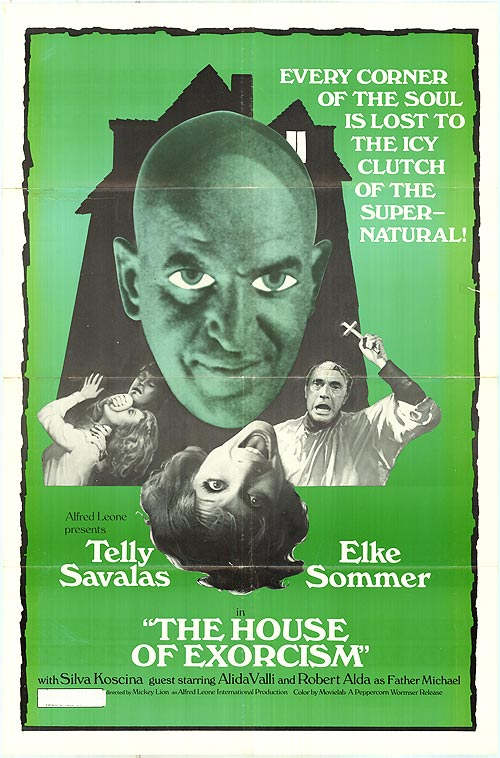
When Mario Bava’s Lisa and the Devil, which was reviewed yesterday, failed to generate any business at the box office the film was reedited using footage cut from the first film as well as adding some new scenes. In this version Lisa (Elke Sommer) is a tourist in Spain who becomes possessed by the devil right out in broad daylight on the cobbled streets and in front of her fellow tourists. She is taken by ambulance to the nearest hospital and accompanied by Father Michael (Robert Alda). The doctors are unable to explain her condition medically and as she gets worse and more violent it is up to the Father to excise the demon.

This version is an improvement over the Bava one in fact Bava’s name doesn’t appear anywhere on the credits and instead the film’s producer Alfredo Leone is listed as the director under the pseudonym Mickey Lion. Obviously it’s a huge rip-off of The Exorcist and in some ways gets unintentionally funny particularly when the Priest has a conversation with the demon during the exorcism. However, it is still fun and more flamboyant than the original and at least has a coherent plot that helps propel the movie along. The only problem is that the exorcism scenes are intercut with scenes from the original film showing Lisa visiting the mansion and meeting up with the strange characters. Supposedly this is the alternative reality that she is in while the demon possesses her body, but it adds little and bogs down the pace.

Sommer comes off much better here than she did in the first one. The way she contorts her face during the possession sequence is entertaining and she does well under the difficult demands. Telly Savalas as the devil disguised as a butler is still wasted. He doesn’t even seem to be taking the part seriously and seems to give it a tongue-and-cheek approach, which doesn’t work.

Alda’s presence is rather bland, but Carmen Silva who plays Anna his wife before he entered into the priesthood is a stunner. She appears nude in a rather gratuitous flashback segment that should more than appease any self-respecting voyeur.

The ending has a little more pizazz than the original as well where the Father goes into an empty mansion and tries to fight off the demon while having snakes thrown right at him. It’s not the best, but not the worse either.

My Rating: 5 out of 10

Released: July 9, 1976

Runtime: 1Hour 32Minutes

Rated R

Directors: Mario Bava, Alfredo Leone

Studio: Peppercorn-Wormser Film Enterprises

Available: DVD, Blu-ray, Netflix streaming

Lisa and the Devil (1973)

lisa and the devil

By Richard Winters

My Rating: 3 out of 10

4-Word Review: Where is the plot?

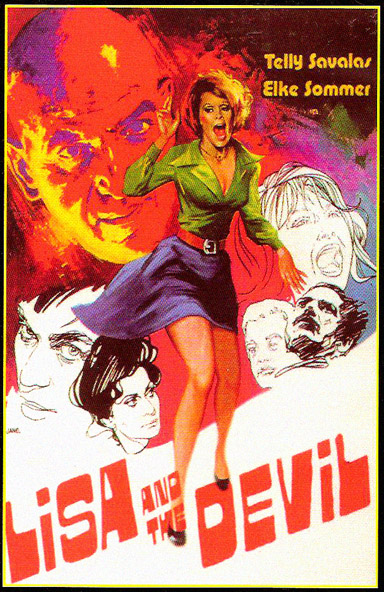
Lisa (Elke Sommer) is a tourist in Spain who gets lost and finds shelter inside a large mansion run by a butler Leandro (Telly Savalas) and a Countess (Alida Valli). Soon Lisa begins to experience strange occurrences and visions. People turn up dead and then alive again. When she tries to escape she finds that she can’t and is now stuck in a surreal world with no exit.

I am use to watching Italian horror films being strong on the visual end and weak with the plot, logic and character development especially when they attached to either Mario Bava or Dario Argento, but this one goes to the extreme. Nothing makes sense and scenes are thrown in haphazardly and go nowhere. The basic premise is too general and unfocused and the entire production seems to be an exercise in interesting camera work and nothing more. Yes there are a few atmospheric moments, but it all adds up to very little.

Had the special effects been gory or impressive I might have forgiven it, but for Bava standards they are lacking as well. For one thing there is very little gore to begin with and what we do see looks amateurish. The scene where a man gets run over by a car clearly looks like a mannequin and as the driver backs up and runs him over several more times it becomes even more obvious.

Sommer makes for a weak heroine. Her character is as vague and mysterious as all the others, so the viewer never gains any empathy or concern for her fate. Her short shoulder length haircut makes her look middle-aged and dowdy. Also, Sylvia Koscina her costar has facial features that are too similar to Elke’s and for a while I thought she was Elke with a brunette wig. Her best moment is actually her nude scene of which she looks great although I noticed her eye lids constantly fluttering when her character was supposedly asleep.

Normally I love Telly Savalas and he can be effectively menacing, but here he is sorely underused. The character pops in and out sporadically, but really doesn’t do much. I did like that he is constantly sucking on lollipops, which later became his trademark during his run on the ‘Kojak’ TV-series.

I was hoping for some grand over-the-top finale to make up for having to sit through all this, but it never came. The climax, which takes place inside a jet airliner no less, is as underwhelming as everything else. Not surprisingly this film was edited into a completely different story and reissued as The House of Exorcism, which will be reviewed tomorrow.

My Rating: 3 out of 10

Released: May 9, 1973

Runtime: 1Hour 32Minutes

Rated R

Director: Mario Bava

Studio: Leone International

Available: DVD, Blu-ray, Amazon Instant Video, Netflix streaming

My Bloody Valentine (1981)

my bloody valentine

By Richard Winters

My Rating: 2 out of 10

4-Word Review: A Killer with heart.

After 20 years a small Canadian mining town of Valentine Bluffs has decided to hold another Valentine’s Day Dance. The previous ones were canceled due to one ending in bloodshed by a psychotic mine worker named Harold Warden. Now he is locked away so they think it is safe except the killings start happening again and this time the killer tears the hearts out of the victims and delivers them in heart shaped boxes to their relatives.

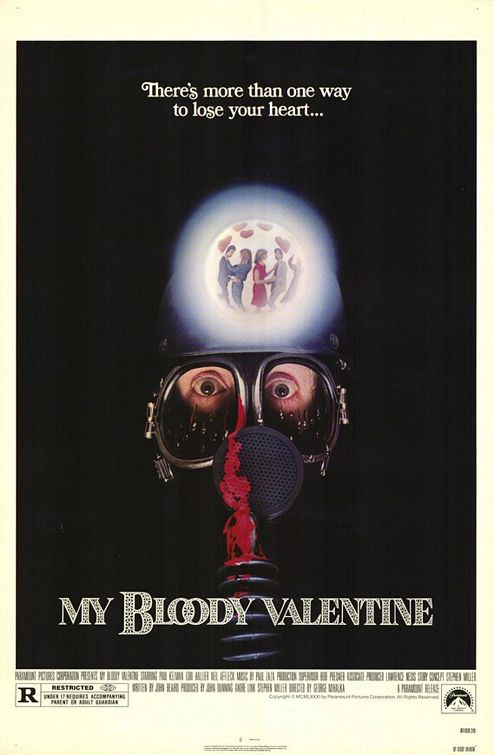
This movie has a cool looking poster and a deliciously macabre concept and has also attained a strong cult following including Quinton Tarantino, but I unfortunately was not impressed with it. I found it to be excruciatingly boring and a major strain just to sit through. The direction and writing are uninspired creating predictable scenarios and delivering all the expected teen slasher movie clichés with a monotonous regularity.  Nothing is distinctive or scary and it fails to deliver any suspense or tension. It can’t even make effective use of its unique mine shaft setting. The final sequence takes place there, but it is nothing spectacular. The constant delivering of human hearts in candy style boxes soon loses its effect and eventually becomes stupid especially with the corny poems written on the attached note cards.

The young victims are dull and stereotypical. They look like caricatures from all the other slasher horror films except here they speak with thick Canadian accents. One of them looks like an overweight version of Meathead from ‘All in the Family’. There is also a ‘class clown’ type of character that resembles very closely the ‘class clown’ character from Friday the 13th . Here he does nothing but crack dumb jokes and watching him eventually get decapitated is the film’s single most gratifying moment.

The sheriff character is a real loser. He wears a big belt buckle and dopey haircut that makes him appear to be some middle-aged buffoon who has just stepped out of the 60’s. His logic is also flawed. He decides not to warn the town that a killer is on the loose even after he has killed a couple of people as he is afraid it will create too much of a panic, so instead he waits until seven more people die and the citizens all go into a panic anyways.

Usually in even the poorest of horror films the killings and gore can at least keep things entertaining on a tacky level and yet here they are as dull as everything else. Also, since when has going into a dark and dingy cave been considered a great place to have sex? To me it seems absurd and yet several of the teen couples go into the mine for distinctly that purpose.

Remade in 2009.

My Rating: 2 out of 10

Released:  February 11, 1981

Runtime: 1Hour 30Minutes

Rated R

Director: George Mihalka

Studio: Paramount

Available: VHS, DVD, Blu-ray, Amazon Instant Video


Funny Games (1997)

funny games 3

By Richard Winters

My Rating: 8 out of 10

4-Word Review: Killers like playing games.

A family is tormented by two young men (Arno Frisch, Frank Geiring) who break into their home and proceed to play ‘funny games’ on them. These games are cruel and humiliating in nature. They are ‘played’ simply to prove that they can. As the film progresses and reveals some very unusual narrative devices it becomes obvious that the real ‘funny games’ are those played on the viewer by writer/director Michael Haneke.

Clearly this is long overdue as it is a revisionist look at the very violent psycho/thriller genre. Last House on the Left and Henry: Portrait of a Serial Killer have both handled the violence and dehumanization theme quite well before, which thus minimizes some of this film’s shock value. Yet Haneke shows an astute awareness of his craft and its manipulative nature. He cuts into all the accepted formalities and conventions of the genre and film making in general that you have to give it high marks. There is one scene, where the camera literally stays locked on the carnage for several minutes that the repugnance of violence really does hit home as intended.

funny games 2

The whole thing is supposed to shake the viewer into reevaluating their own viewpoints. It’s an almost ongoing assault questioning their views on justice, tolerance to violence, prayer and other cosmic forces and even their own fragility. It also tries to force them to analyze why they view these types of films and find them entertaining.

Like the heavy metal music played over the opening credits this thing is raw, abrasive and filled with anger and rebellion. Haneke is clearly upset. Upset at irresponsible directors who make violent films and an overly tolerant public that watches them.

This is an ugly film with an unrelenting nature and flashes of contempt. The average movie goer will probably not like it. However, it you are a connoisseur of cutting edge cinema then you may find the whole thing refreshingly provocative.

funny games 1

Frisch and Geiring as the two killers look and act so much against type that they become two of the most chilling and memorable villains in screen history. Also, Susanne Lothar and Ulrich Muhe who play the husband and wife victims are actually married in real life.

An American version, which was directed by Haneke as well and stars the beautiful Naomi Watts and follows this one almost scene-for-scene was released in 2007.

funny games 4

My Rating: 8 out of 10

Released: May 14, 1997

Runtime: 1Hour 48Minutes

Not Rated

Director: Michael Haneke

Studio: Attitude Films

Available: DVD, Blu-ray, Amazon Instant Video