Category Archives: Foreign Films

Death Weekend (1976)

death weekend

By Richard Winters

My Rating: 3 out of 10

4-Word Review: She can defend herself.

This Canadian thriller, which is loosely based on actual events deals with a rich playboy named Harry (Chuck Shamata) who invites Diane (Brenda Vaccaro) who is also a model to spend the weekend with him at his isolated lakeside cabin that is miles from anywhere. On their way there they run into a biker gang whose leader (played by Don Stroud) takes an intense disliking to Harry. The gang tracks the two down at their cabin where they proceed to terrorize them before eventually killing Harry and forcing Diane to defend herself alone, which she does valiantly.

In a way this is a poor man’s version of I Spit on Your Grave or Straw Dogs, but not nearly as effective. For one the violent scenes aren’t very intense. This is due mainly to the fact that writer/director William Fruet keeps the camera too removed from the action and never once uses a hand held. There is also no gore as Fruet always cuts away just before anything happens and what little you do see looks tacky. Of course a film doesn’t have to be gory to be scary or intense, but if it is going to have this type of violent theme then it should at least equal it in style. The tension also ebbs and flows and the four hoodlums are too dumb and seem like cardboard cutout caricatures that possess no human qualities whatsoever.
The Harry character does allow for some added dimension, which helps and hurts. I liked the way he sees himself as this ‘refined’ gentlemen and yet views women in the same Neanderthal way as the thugs. He brags of having money and power, but when that gets stripped away from him he becomes amazingly spineless. This makes for a good commentary of the rich and successful, but unfortunately also turns him into being too much of a jerk and when the bad guys proceed to tear his place apart we are not ‘horrified’ at all, but instead enjoy seeing it.

There are actually a few good elements one of which is the music score, which effectively creates an ominous feeling. It was also filmed in Ontario Canada during the autumn and the desolate, bleak landscape helps match the bleakness of the situation and characters. I also loved the morning mist captured during the final chase sequence that gives things a very eerie look. There is also a well-staged car chase at the beginning that was done at high speeds and features some great stunt driving.

The film is saved somewhat by Vaccaro’s interesting performance as a victim. She is independent and self-sufficient and refuses to allow herself to be seen or used as a sex object. This goes along with the film’s overall theme which seems to run on the emergence of the woman in a man’s world and the basic redefining of the female role in society. Yet I felt it would have worked better had the character harbored the old female traits at the beginning and then had these new traits come out as the film progressed.

death weekend

My Rating: 3 out of 10

Alternate Title: House by the Lake

Released: September 17, 1976

Runtime: 1Hour 27Minutes

Rated R

Director: William Fruet

Studio: American International Pictures

Available: VHS
The Silent Partner (1978)

silent partner 2

By Richard Winters

My Rating: 8 out of 10

4-Word Review: Bank teller outsmarts robber.

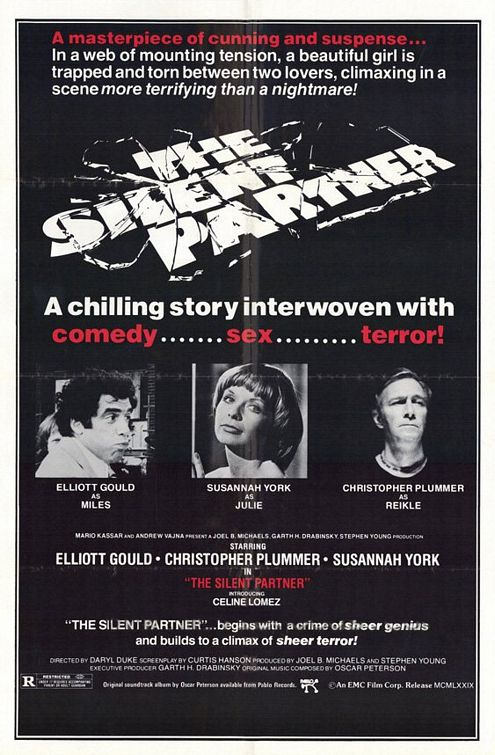
This is an ingenious, slick, and really fun caper movie that puts a whole new spin on the old bank robbery theme. Here Elliot Gould plays a bank teller named Miles who, by sheer accident, becomes aware that a man named Harry (Christopher Plummer) is planning on robbing his bank. Miles decides to take the money from his till and put it into his lunchbox. Then when Harry robs the bank it is actually Miles the teller that gets the money while Harry goes away with very little. Yet this is only the beginning as Harry and Miles continue to play a crafty game of cat- and-mouse, which leads from one interesting twist to another.

Gould plays against type here and he does quite well. Usually he tends to be loud, argumentative, and anti-authority, but here he is quiet and unassuming. It’s the type of character you think wouldn’t have the guts to pull off what he does, which makes him all the more intriguing. In fact he just keeps surprising you all the way along, stringing the very psychotic and dangerous Harry in ways you couldn’t imagine. It is only his final move that seems to be testing the odds too much.

Plummer makes a terrific adversary. He is dashing and handsome as ever, but with an intensely sinister edge and an icy cold gaze.

Susannah York as Miles’ love interest Julie is wasted. Her character seems thrown in for good measure and at no time seems interesting. There is no chemistry between them and the whole love angle is forced and unnecessary. Celine Lomez, as Elaine the other female character, is different. She is stunningly beautiful and much cagier. She plays between both Harry and Miles and you are never sure which side she is really on. Her acting isn’t spectacular, but she is sensual and has a nice French accent. Her gory and gruesome demise though is unwarranted and works as a drawback to the movie.

There are a few other negatives about the film. One is the drab setting that takes place in Toronto and yet we hardly see any of it. Having the bank itself set inside a boring shopping mall is not too visually exciting. The same goes for Miles’s bland apartment. The supporting characters, especially the other bank employees are incredibly dull. Their lines and basic presence all seem to have been written in simply as ‘filler’. A young John Candy plays one of these co-workers and his comic talents are wasted.

Still the story is creative and has enough unique twists that it overcomes the technical shortcomings and manages to be a highly entertaining flick.

silent partner 1

My Rating: 8 out of 10

Released: September 7, 1978

Runtime: 1Hour 46Minutes

Rated R

Director: Daryl Duke

Studio: EMC

Available: VHS, DVD, Amazon Instant Video

The Running Man (1963)

the running man 1

By Richard Winters

My Rating: 7 out of 10

4-Word Review: Couple scams insurance company.

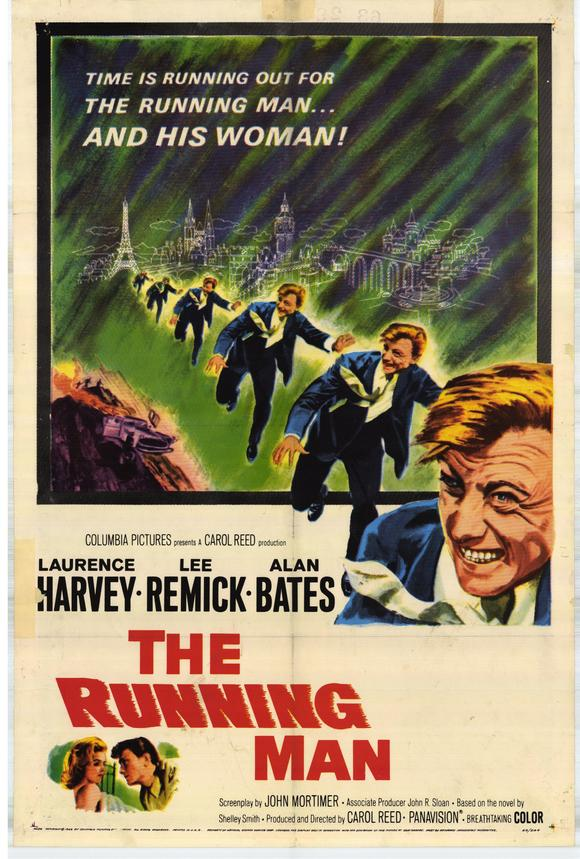
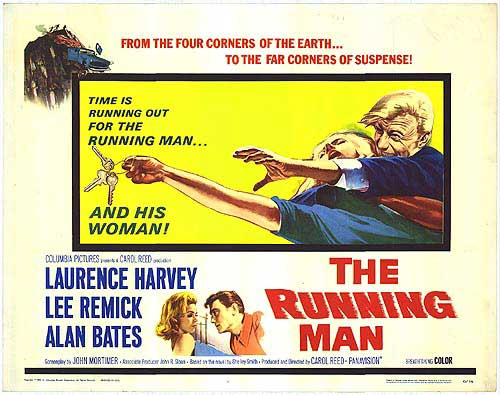
Rex (Laurence Harvey) is a victim of a plane crash when the airplane he is piloting crashes in a forest. He survives with minor injuries, but the plane is totaled and he expects a big payout from his insurance company. However, since he was two days late with his premium payment the policy was canceled and he gets nothing. Outraged he plans a scheme to get revenge with the help of his wife Stella (Lee Remick). He purchases a glider plane and has it insured with the same company. He then intentionally crashes it into the water and before help arrives he dives into the lake and by using an underwater apparatus swims ashore undetected. He hides out on a small island during the investigation and when it is finally confirmed that he was ‘lost-at-sea’ and the insurance pays a handsome sum to Stella the two then run off to Spain, but insurance investigator Stephan (Alan Bates) still has his suspicions and follows the two while continuing to hound them with questions forcing them into a shrewd game of cat-and-mouse.

Based on the novel by Shelley Smith this is a thriller in the most classic sense. The plot is completely believable and still very timely without any of the annoying loopholes. The action particularly during the final 30 minutes, which had me literally on the edge of my seat, is very exciting. The twists are interesting and unpredictable.

What I enjoyed most though was the way the characters evolve and change as the story progresses. Stella initially comes off as carefree and callous only to end up being beleaguered, worn out, and even feeling a bit guilty. Rex seems slick and conniving at the start, but eventually turns crass, vindictive and wholly unlikable. Stephan is nosy and intrusive when it begins, but before it is over he is the most sympathetic to the viewer. Having worked in the insurance industry now for 15 years I liked how the film shows things from both side not only the rigid business-like end, but also how those that try to cheat the system even when they feel somehow ‘justified’ in doing it only ends up making it worse for everybody else. The very ironic ending hits the bullseye.

Director Carol Reed is in top form. I liked how he captures the many different exotic locales of Spain not only with the outdoor scenery and villas, but also inside an old church cathedral as well as an empty bullfighting arena. The opening credit sequence showing Harvey’s shadowing figure running in front of a colored background is good as his the variety of camera angles used particularly during Rex’s final attempt to escape by airplane. The only part that I thought was unnecessary was in when Rex finds a passport left by an Australian that he was talking to inside a bar. Rex picks it up and it is clear to the viewer that he was thinking of using it for his own change of identity, but Reed still felt the need to superimpose Rex’s head shot over the Australian’s, which seemed heavy-handed as does the booming music that is played when Stephan meets Stella for the second time while in Spain.

Remick is excellent and the stresses and strains that her character conveys are easily felt by the viewer. Harvey seems to be having a grand old time particularly when he is in the disguise of the Australian. Although there is some debate over it at IMDB I actually felt that his Aussie accent was alright. He does however look much too scrawny in his bathing suit although Remick in her bikini is delectable.

Why this exciting and polished thriller has never been released onto DVD, or Blu-ray let alone VHS is a complete mystery especially when it stars two major actors from 60’s British cinema and directed by a legend. This movie is waiting to be discovered by new fans and can be enjoyed by just about everyone.

the running man 2

My Rating: 7 out of 10

Released: October 2, 1963

Runtime: 1Hour 43Minutes

Not Rated

Director: Carol Reed

Studio: Columbia Pictures

Not Available at this time.

Why Shoot the Teacher? (1977)

why shoot the teacher 2

By Richard Winters

My Rating: 8 out of 10

4-Word Review: Not a good job.

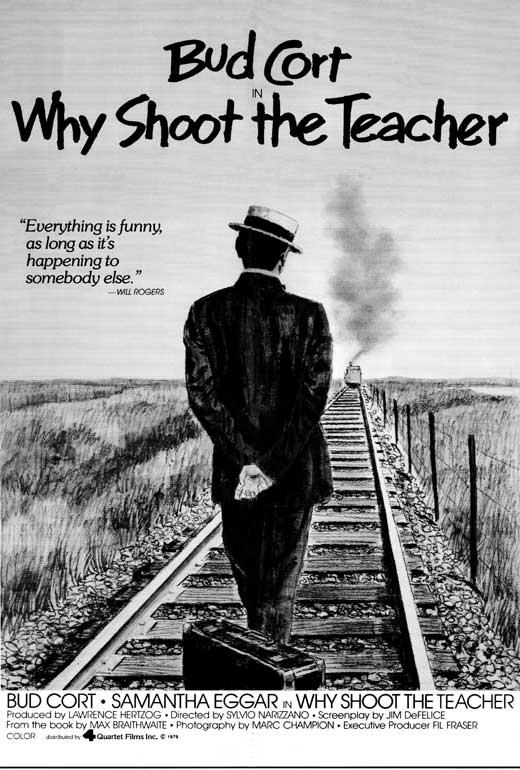
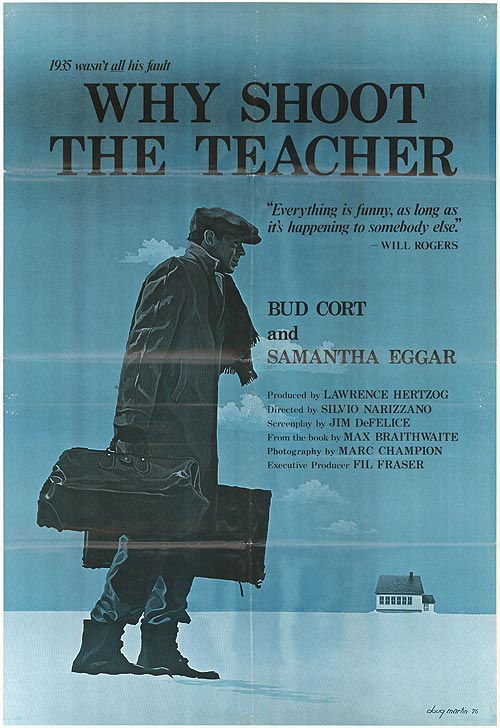
If you hate your job then watching the escapades of Max Brown (Bud Cort) dealing with his should make you feel a lot better about yours, or even lucky. The setting is 1935 and Max has traveled to an isolated farming community in Saskatchewan Canada in order to live out his dream of being a school teacher. The problem is that he must live in the dingy basement of the school that has no running water and an outhouse that gets regularly overturned by the rowdy school children, sometimes with Max in it, and he is only paid $20 dollars a month for his efforts, which even back then was a paltry amount. What is worse is that the district can’t even afford to pay him so instead gives him promissory notes and forces him to be dependent on the generosity of the townspeople for his food. Since he had to borrow money for his train ride up there he is unable to go back and forced to spend the harsh Canadian winter all alone while dealing with difficult students and indifferent parents and adults.

Cort really shines. The fact that through all his diversity he still remains civil and upbeat makes the character quite appealing even though he does evolve and at times compromises from his initial ideals. The best example of this is when he eventually, despite his initial reluctance, uses the strap on one of the older bigger students while the rest of the school children watch through the school windows. Although Cort is best known for his starring role in Harold and Maude I’d actually say this is his best all-around performance.

Samantha Eggar another under-appreciated and underused performer is terrific in support as Alice Field a woman transplanted from England who like with Max finds herself alienated and unconditioned to the harsh climate. She also has a really amusing line when she states “Canada is a nice country…sometimes…in the spring.”

Filmed on-location in the tiny town of Hanna, Alberta the sprawling wheat fields create a tremendous sense of isolation as well as a distinctive sense of natural beauty. The story is filmed during all three seasons, which makes the viewer feel like they are battling the rigorous Nordic climate right alongside Max. One of the funniest moments is when the word ‘Spring’ is flashed on the screen while a raging blizzard goes on behind it making Canada one of the few places that can make Minnesota, where I am originally from, seem like a mild climate.

The film is wonderfully vivid and creates a rich multi-textured tapestry of life on the prairie. By keeping everything on a realistic level it helps recreate what life must have been like for a lot of rural school teachers during the period, which is what makes it so fascinating. The film’s faded washed-out color and archaic low budget technical approach only helps to accentuate the look and feel of the period. There are shades of Wake in Fright here that also dealt with a man teaching school in an isolated school house while battling the elements and I found it interesting to note that Ted Kotcheff who was the director of that film was listed as a production consultant on this one.

My only complaint about the film was the misleading title. There is no shooting of any kind of the teacher, or even any talk of it. Why they came up with that title, which is based on the book with the same title is a mystery. Unfortunately it may give some people the idea that this is a violent film when nothing could be further from the truth and may turn-off potential viewers from enjoying this endearing slice-of-life comedy/drama.

why shoot the teacher 1

My Rating: 8 out of 10

Released: June 23, 1977

Runtime: 1Hour 39Minutes

Rated PG

Director: Silvio Narizzano

Studio: Lancer Productions Limited

Available: VHS, DVD, Amazon Instant Video, YouTube

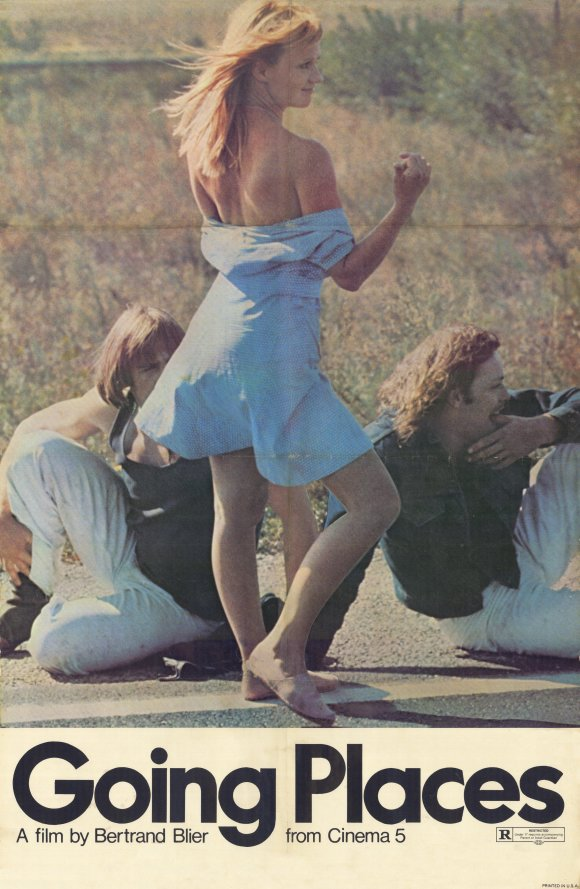
Going Places (1974)

going places

By Richard Winters

My Rating: 9 out of 10

4-Word Review: Guys with no morals.

Two small time hoods (Gerard Depardieu, Patrick Dewaere) spend their days roaming the streets, robbing stores, and molesting women. In some ways this is truly an amazing film in what it is able to get away with. The two main characters are immoral, ignorant, insensitive, and brutal and the women are demeaned and degraded. The overall content is vulgar and perverse and yet somehow this thing comes off as a lyrical, offbeat delight that is pure entertainment.

It’s a definite original with every scene being an ingenious comic set-up. The scenario structure and use of locations is perfect. The pacing is fluid and director Bertrand Blier’s eye for detail near brilliant. The two hours move along like a breeze. It never gets boring and I actually almost wished it could have been longer.

The comic threads are hilarious and they get funnier and funnier as they go along. The guys’ constant, futile and very explicit attempts at getting a frigid woman (Miou-Miou) excited are a particular standout.

This is the type of black comedy that should be used as an example for all others. It’s consistently unique and manages to balance the ugly elements with the lighthearted without going overboard on either. It even throws in a surreal angle without a hitch.

Veteran French actress Jeanne Moreau has one of her finest latter career roles playing a lonely lady in desperate need of male attention. Her scene is well played out and even has a shocking conclusion. Depardieus ‘friendly’ conversation with a shopping mall security guard is another standout. The ultimate joke though may be in the film’s title as these guys are truly going nowhere.

My Rating: 9 out of 10

Released: March 20, 1974

Runtime: 1Hour 57Minutes

Rated R

Director: Bertrand Blier

Studio: Universal Pictures France

Available: VHS, DVD (Region 1 & 2), Amazon Instant Video

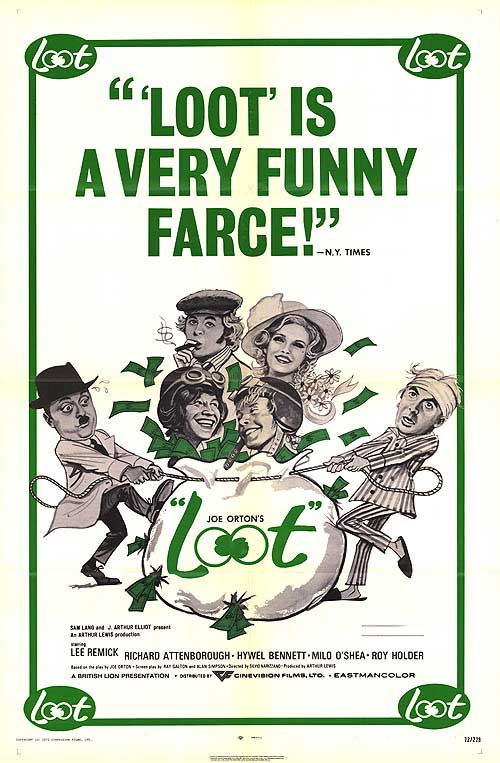
Loot (1970)

loot 3

By Richard Winters

My Rating: 8 out of 10

4-Word Review: They are all greedy.

Every Friday this month I will review the Top 5 best and most outrageous black/dark comedies from the 70’s. There were many to choose from, but these five have stood the test of time and remain as potent and hilarious as they were when first released. Today’s film was written by Joe Orton who died before ever seeing his play made into a movie and despite being top-notch in every aspect remains unjustly overlooked and hard-to-find.

The story deals with Dennis and Hal (Hywell Bennett, Ray Holder) two friends who decide to rob a bank next to a funeral home and hide the stolen money inside the coffin of Hal’s late mother. Problems ensue when Inspector Truscott (Richard Attenborough) starts to suspect the boys have something to do with it and incorporates brutal interrogation tactics to get the truth out of them. Then there is Nurse Fay (Lee Remick) who may have had something to do with Hal’s mother’s death and is inclined to want a piece of the action. All of this occurs inside Hal’s house, which is also a bed and breakfast run by Hal’s Father McLeavy (Milo O’Shea) who remains oblivious to all of the shenanigans and only worried about getting a decent burial for his departed wife.

The film is fast and funny and retains all of Orton’s dark and acidic wit. It is full of one-liners, sight gags, odd characters, and bizarre, unexpected comical twists, with ninety-eight percent of it being clever and funny. The best is the funeral procession when Dennis, who is driving a hearse that is carrying the deceased, finds out that the vehicle has lost its brakes and careens down the streets at high speeds with all the other cars in the procession try to keep up with it while driving equally fast.

Director Silvio Narizzano shows a terrific grasp on the material. Unlike Entertaining Mr. Sloane the only other film adaption of Orton’s work this film has a terrific pace that starts with a bang and never lets up. Narizzano also infuses a lot of imaginative camera angles, edits, and set design to give the thing a nice edgy, off-color feel. Outdoor action is nicely balanced with the indoor scenes to create a good cinematic feel and it never seems like a filmed stage play. There are some interesting homoerotic overtones as well including having Dennis and Hal blow a hole in the bank wall, crawl through it and take the money, then crawl back out and stuff it into the coffin while being completely naked.

Remick has one of her most interesting and unique performances in her already illustrious career as she is quite amusing looking almost like Marilyn Monroe with her dyed platinum blonde hair and authentic sounding British accent. Attenborough is memorable playing against type. Usually he is best at meek and passive types, but here he almost steals the film as the aggressive Inspector with a Hitler mustache. His best moment comes when he picks up a glass eye from the floor and in one brief second sticks out his tongue and licks it, which is done in vivid close-up.

The bouncy, psychedelic score by Steve Ellis helps give the proceedings attitude and personality. Why this film has never been released on DVD or Blu-ray is a mystery. The humor remains sharp and a whole new throng of fans could be acquired if they were just able to see it.

My Rating: 8 out of 10

Released: May 1, 1970

Runtime: 1Hour 41Minutes

Rated R

Director: Silvio Narizzano

Studio: British Lion Film Corporation

Available: VHS

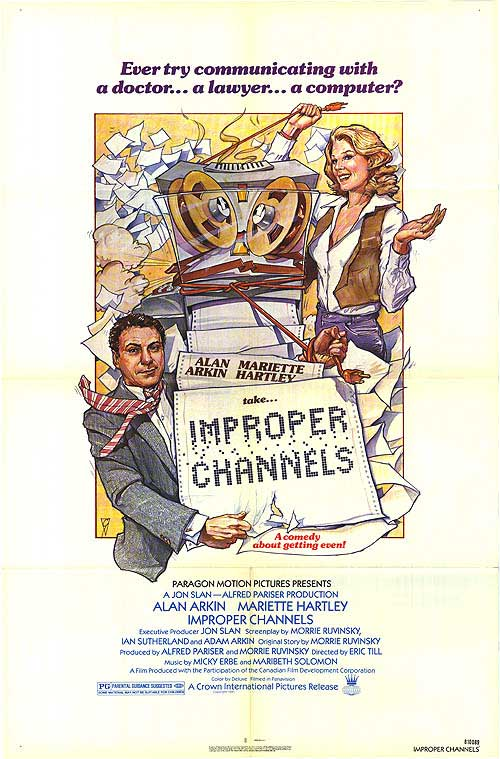
Improper Channels (1981)

improper channels

By Richard Winters

My Rating: 1 out of 10

4-Word Review: The system is screwed.

Jeffrey Martley (Alan Arkin) is a middle-aged man soon to be divorced from his wife Diana (Mariette Hartley) who is driving along in his car with his 5-year-old daughter Nancy (Sarah Stevens) when he is forced to put on the brakes quickly in order to avoid hitting another vehicle. Sarah, who was not wearing a seatbelt since there were no such seat belt laws at the time, falls to the car floor and hits her head. It is a minor bruise, but Jeffrey takes her to the hospital as a precaution. As the doctors are examining her social worker Gloria (Monica Parker) overhears Jeffrey’s conversation with the medical staff and thinks that the injuries may have come from child abuse. She takes the child out of his custody and puts her into a protected foster home while she uses the help of a computer expert (Martin Yan) to come up with as much dirt from Jeffrey’s past as she can in order to prevent him from getting her back. Jeffrey and Diana hire a lawyer and try to fight the charges, but find that the system is against them.

This is a wretched attempt at satire that never gets off the ground. Director Eric Till’s bland direction makes this thing look like a TV-movie and the majority of it is more like a drama. The comedy is not very funny and the little that there is comes off as forced and out of place. Jeffrey’s and Diana’s situation becomes more harrowing as it goes along and this thing probably would have worked better and been more riveting had they kept it at a realistic and dramatic level all the way through.

The social workers are portrayed as being completely inept, incompetent, and malicious without any balance making me wonder if the writers had a major grudge against them in real-life. Gloria’s boss Harold Cleavish (Harry Ditson) is particularly unlikable and comes off as an all-around prick in every way. However, he does get the film’s one and only funny line when he chastises Gloria for believing that the social services profession is about helping people:

Harold: I have been in social services for 9 years and in that time I haven’t helped anyone and I hope to God that I never will. If you really want to help humanity then become a prostitute.

Hartley is a wonderful actress and I will never forget her Emmy award winning performance in a guest spot on ‘The Incredible Hulk’ TV-show unfortunately her career never took off despite a great debut in Sam Peckinpah’s Ride the High Country. Today most people probably know her for her Polariod commercials that she did with James Garner back in the 80’s. Even so she is great here and gives the material more effort than it deserves. Arkin who has played the man against the system many times seems strangely reserved.

The most annoying thing about the film is the ending where Jeffrey turns-the-tables and tries sticking it to the system. Having an average man who works as an architect and has no special computer experience break into the computer systems of the social welfare office and erase his records and send everything on the fritz is too exaggerated. Having him dump out streams of computer printout paper from the office windows and line the city streets with it is too goofy and unbelievable to be even slightly humorous. The filmmakers display a limited and confused understanding of the technological revolution and treat it like it is nothing more than a passing fad that can be easily taken down by the common man. The pat and silly wrap-up makes light of an otherwise serious issue and thus makes the entire production stupid and pointless.

My Rating: 1 out of 10

Released: April 17, 1981

Runtime: 1Hour 32Minutes

Rated PG

Director: Eric Till

Studio: Crown International Pictures

Available: VHS
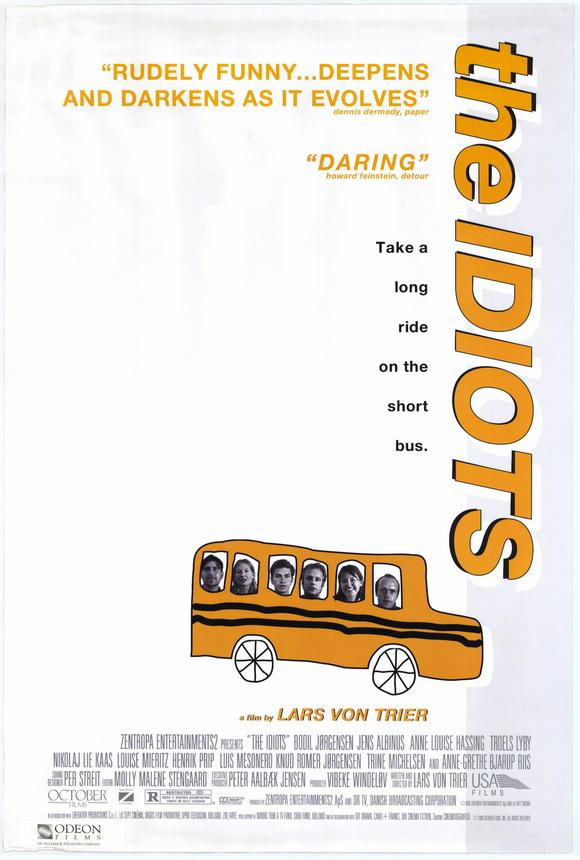
The Idiots (1998)

the idiots 2

By Richard Winters 

My Rating: 7 out of 10

4-Word Review: This is so retarded.

The Idiots is another shocking, controversial, and highly original work from filmmaking maverick Lars Von Trier.  This one involves a group of disenchanted people in their 20’s and 30’s, who decided to rebel from society by acting like they are mentally retarded.

Although certainly not in the best of taste, there are some funny bits here. The comedy works well because amidst all of the outrageousness it is also very revealing about human nature. One of the best segments involves an affluent couple who wish to purchase a large, upscale home.  As they are touring the place they are informed that a group of ‘retards’ live next door. The couple put on the politically correct facade by saying that wouldn’t be a problem even though their facial expressions say otherwise.  When the group pretending to be retarded pays them a visit the couple quickly runs off.  Another funny part, which may actually be the most outlandish of the whole film, involves a group of tough, tattooed bikers who help in very graphic fashion one of the group members pretending to be mentally handicapped go to the bathroom. The group’s visit to a factory is also hilarious.

The majority of the film though is actually quite serious and yes, even thought provoking. Von Trier does a good job of analyzing things from different angles while supplying no easy answers. It was interesting how the group mocks society for all of their rules and customs and yet when one of their own members starts to act erratic they tie him to a bed and refuse to free him until he ‘settles down’, thus proving that even they themselves need certain rules of behavior in order to function even if they don’t want to admit it.  Some other strong dramatic scenes involve the father of one of the members who tries taking his daughter from the group and back home with him.  There is also a revealing segment involving one of the members who decides to ‘drop back into society’ and return to his job as a college professor despite the protests from the other members.  The group also comes into direct contact with people who are actually mentally handicapped and how each of them responds to this is fascinating.

The characters are nicely fleshed out.  All of them show distinct personalities and evolve in interesting ways as the film progresses. Karen (Bodil Jorgenson) acts as they catalyst.  She comes upon the group by chance and acts as a sort of ‘conscience’ for the film.  Initially she is shocked and confused by the group’s behavior, but because she is stuck in an unhappy relationship and grieving the recent death of her son, she decides to tag along. Eventually she starts to see the benefits of ‘spassing out’ which is the group’s term for ‘finding your inner idiot’.

I liked how the film challenges the concept of true rebellion and shows how complex the fabric of society really is. Everyone would like to ‘drop-out’ at certain times and there is even a need for it, but finding the right place can be complicated. I have often felt that the true nonconformist is either living on the streets, is in prison, or a mental institution and the film pretty much comes to this same conclusion, but without advocating ‘fitting-in’ with the establishment as the answer either.

My complaints for the film centers mainly on the over use of the hand-held camera, which tends to get distracting after a while and gives the film a needless amateurish feel. I know with Von Trier’s ‘Dogma 95′ manifesto the hand-held camera is a major factor, but I think he could back off a little with it. There is also a ‘gross-out’ segment at the end where the group member’s start to drool out their chewed up food, which I found completely disgusting especially the way the camera captures it in close-up. The pacing is pretty good, but it does drag a little at times and I felt the film went on about twenty-five minutes too long.

Obviously this is a film that will not appeal to everyone and in fact I would say that the majority of people may find it off-putting.  That doesn’t mean it is a bad film because I think it is a pretty good one and I liked it overall.  However, what makes it a good film is the fact that it works off of its own vision and makes no compromises in doing so.  For most viewers especially American audiences who are used to a ‘mass-appeal’ approach to film-making, this type of concept may not connect. 

the idiots 3

My Rating: 8 out of 10

Released: May 20, 1998

Runtime: 1Hour 57Minutes

Rated R

Director: Lars Von Trier

Studio: Zentropa Entertainments

Available: VHS, DVD

The Luck of Ginger Coffey (1964)

the luck of ginger coffey

By Richard Winters

My Rating: 7 out of 10

4-Word Review: He needs a job.

Ginger Coffey (Robert Shaw) is a middle-aged man living in Montreal whose dreams and ambitions far outweigh his grim predicament. He moves from one low paying job to another convinced that his lot in life will improve. His wife Vera (Mary Ure) decides to leave him and Ginger tries to win her back while juggling two jobs and hoping to get a promotion in one that never seems to come.

As a vivid look at the daily lives of the everyday working class this film hits a solid bullseye. The conversations between the co-workers and the monotonous and sometimes demeaning job interview process and Ginger’s on-going arguments with his wife and daughter are all true to form. There is no pretension and director Irvin Kershner keeps everything at a bare-bones minimum giving it almost a documentary style and making the viewer feel immersed in the bleak environment. The outdoor shots of the city are unexciting and cinematically unappealing, but help reflect the grim level. Watching Ginger get kicked out of his apartment and have to carry what is left of his belongings and then place them on the outside sidewalk while he goes in to visit his daughter in her school is quietly powerful.

Robert Shaw is excellent. This is a man who had by all accounts had a very dominating and proud personality in real-life and usually played characters with the same traits, so seeing him play against type and succeed is interesting. What is really effective is that he makes the character very human and likable despite his constant goof-ups, which keeps the viewer compelled to his situation.

Ure, who at the time was married to Shaw in real-life, gives an equally outstanding performance. Her perplexed facial expressions are perfect and the fact that we see her character grow and become more confident is good.

I also must mention Liam Redmond as Ginger’s cantankerous boss, who is nicknamed by his employees as ‘Hitler’. Ginger’s rushed job interview that he has with him is one of the film’s highpoints as is the moment when Ginger dashes away from him when he is caught making a personal phone call.

The only real complaint I have with the film is the ending, which is for the most part non-existent. I have seen vague wide-open endings in my movie viewing lifetime, but this thing is a cop-out and really boring one at that. I think when a viewer has spent nearly two hours empathizing with his difficult  and precarious situation that they deserve some sort of finality, or at least a hint of what became of him and whether he ever did find that ‘luck’ that he was so convinced was out there.

My Rating: 7 out of 10

Released: September 21, 1964

Runtime: 1Hour 40Minutes

Not Rated

Director: Irvin Kershner

Studio: Continental Distributing

Available: YouTube

Antonia and Jane (1991)

antonia and jane 1

By Richard Winters

My Rating: 7 out of 10

4-Word Review: Friends aren’t always friends.

Jane (Imelda Staunton) is a depressed single woman slipping into middle-age and jealous of her lifelong friend Antonia (Saskia Reeves) who she feels is prettier and gets all the breaks. Jane pours her thoughts out to her therapist (Brenda Bruce), but the twist is that Antonia sees the same therapist and is having the same problems only in reverse as she is jealous of Jane. The first half-hour looks at things from Jane’s point-of-view while the second half shows it from Antonia’s.

The element that really makes this movie so enjoyable is the cutaways. Everything talked about during their sessions is recreated visually. These recreations are all quite funny. Some of my favorites are when Jane talks about a trip to Canada and we see her pushing over a tall pine tree with one hand. There is also the segment where Antonia’s 10-year-old son gives a raunchy stand-up comedy routine to his friends during his birthday party. The part where the two find themselves trapped in an old French war movie complete with them speaking fluid French and subtitles is quite creative as is the many different and colorful outfits that the two wear each year when they get together for their annual visit with the other.

Somehow friendships between females are quite different than the ones of their male counterparts. Harbored jealousies and insecurities seem to always lurk beneath the surface no matter how ‘happy’ their facades and this film explores them with biting and accurate detail as well as showing how skewed people’s perspectives can sometimes be. I also found myself digging the name Antonia and wondered why we don’t hear more women named that so…

Memo to all young couples and parents to be: Let’s get a few more  Antonias out there and a few less Ashleys. Thank You.

The Howard character played by Bill Nighy is also quite amusing. Jane meets him at an art exhibit where he displays big blown-up black and white photographs of twenty-four different naked rear-ends. The two go down the line and analyze each and every one, which in a strange way I thought was kind of interesting. I also got a kick out of the way he asks Jane out on a date.

Howard: Are you involved in a long-term monogamous mutually self-absorbed sexual relationship?

Jane: No.

Howard: Me neither.

In an effort to keep the quirkiness going the two women characters sometime do strange things that at times makes them hard to relate to and is the film’s only real weakness. For instance Antonia tells Jane that she is having an affair with Jane’s husband and Jane becomes very supportive of it and attends their wedding even though most people would probably want to kill their friend if they told them that and the unfaithful husband to boot. There is another scene where Antonia meets a stranger at a theater and goes back to his place for sex and even allows herself to get tied up during some kinky bondage games, which most viewers will consider being too reckless and putting oneself into too vulnerable a position with someone they don’t even know.

Usually films that seemed obsessed with tying everything together get overdone and annoying, but here the ironies are hilarious and become funnier as it goes along. Strangely it is the very end where the film loses it flamboyance and instead gives us a nice, simple scene of genuine human affection that leaves the strongest impact in this very offbeat and entertaining gem.

My Rating: 7 out of 10

Released: November 2, 1991

Runtime: 1Hour 15Minutes

Rated R

Director: Beeban Kidron

Studio: Miramax

Available: VHS