Category Archives: Foreign Films

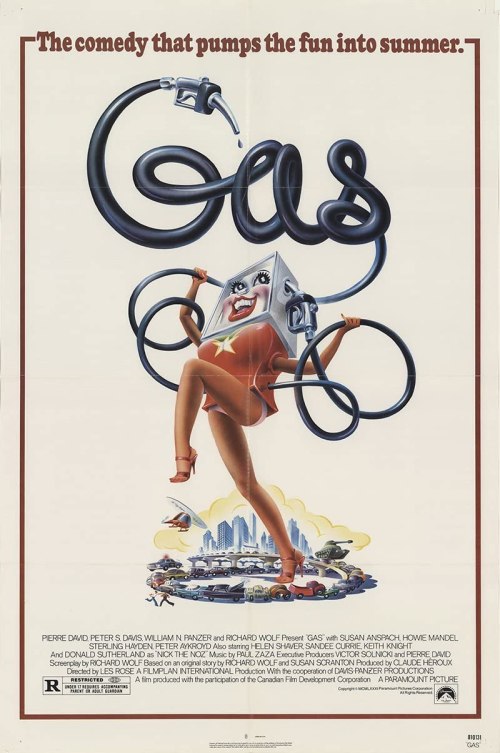
Gas (1981)

By Richard Winters

My Rating: 3 out of 10

4-Word Review: Fuel shortage causes chaos.

It’s 1979 and the energy crisis is in full-swing. Long lines of cars are seen at every gas station as the shortage of oil makes filling up one’s vehicle difficult. Oil tycoon Duke Stuyvesant (Sterling Hayden) decides to up the price of petroleum even more by pretending that he doesn’t have the needed gas that he really does by secretly transporting it to organized crime syndicates through milk trucks. Jane Beardsley (Susan Anspach) is a news reporter who gets a tip about what’s going on and becomes determined to expose it.

It’s unfortunate that no one told screenwriter Dick Wolf, who has had better success as a producer including winning many awards for his work on the long-running TV-show ‘Law and Order’, that less is more, which is the film’s whole failing point. There’s just too much of everything. Too many lame gags, too many characters, and too much of an unfocused point-of-view.

For a gag-a-minute concept to work like in Airplane! it still needs some sort of point that it’s trying to make. For that film the humor revolved around poking fun of old airline disaster flicks, but here any dumb joke gets haphazardly thrown-in no matter how little it has to do with the plot. The result is a mind-numbing experience where the ‘zaniness’ goes recklessly overboard with nothing making much sense.

The story desperately needed some central character that was normal and could help offset the absurdity around them. For awhile it seemed like the Sara character, played by Sandee Currie, would be it, but then she falls off the radar by getting into a relationship with Howie Mandel, who has no charisma at all, and isn’t seen for long periods. Also, Peter Akroyd, who is Dan Aykroyd’s younger brother in real-life, and plays Sara’s overly possessive brother here, is incredibly annoying in what is already an annoying film and it’s a shame that his character, who has many near death mishaps, wasn’t just quickly killed off.

As bad as this Canadian production is it’s amazing how many well known faces there are here. For some it was understandable why they’d do it. Anspach’s career was clearly on the decline, so she was most likely desperate to take anything in order to remain busy. Helen Shaver’s career was just starting out, so she had to accept the crumbs that she was given. Hayden was going through tax evasion charges and needed to make money quick in order to pay his legal costs, but Donald Sutherland’s presence was a real shock as he was , and still is, a top name star. He stated in later interviews that he did this solely for the money, which is fine, but why was he cast in such an insignificant part as a DJ who flies overhead in a helicopter and seen only sporadically instead being given the lead role?

The film ends with a climactic car chase in which all the characters chase each other  through the streets of Montreal that is similar in spirit to the one done in What’s Up Doc?, but just not as funny. However, the stunt work is rather impressive with lots of vivid crashes more so than in other car chase flicks, which is probably the only positive thing one can say about this otherwise bad, bad, bad movie.

My Rating: 3 out of 10

Released: 1 Hour 34 Minutes

Runtime: 1 Hour 34 minutes

Rated R

Director: Les Rose

Studio: Paramount Pictures

Available: VHS

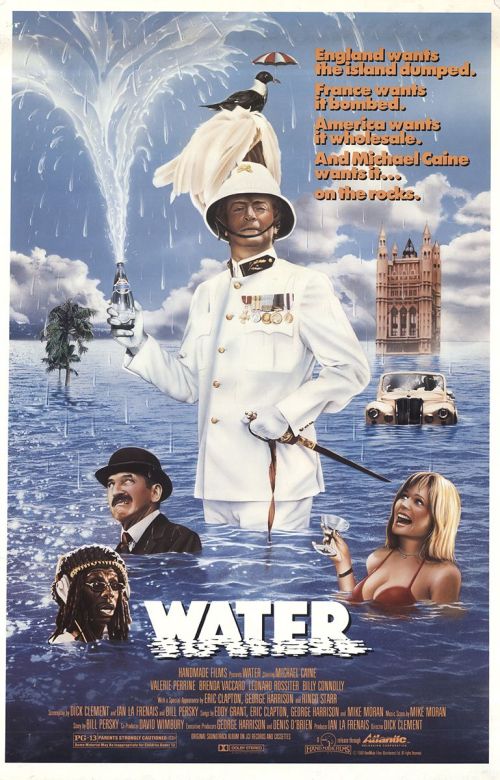
Water (1985)

By Richard Winters

My Rating: 4 out of 10

4-Word Review: Island nation fights back.

Governor Baxter Thwaites (Michael Caine) runs the British Colony island of Cascara a largely peaceful place that is mostly ignored by everyone else. Then one day one of the oil rigs on the island taps into a underground reservoir of water that has all of its impurities already removed. The delicious tasting drink, that can also be used as a laxative, becomes much sought after from bottling companies across the globe. Now suddenly the British government wants everyone on the island to move out and find some other island to live on while taking over and turning this one into a profit making venture.

The film is patterned after many British satires of the 50’s through the 70’s like The Bed Sitting Room and O Lucky Man that mixes in wacky characters with absurd comic scenarios and also trying to make sharp political observations in-between. Unfortunately this film, which is based on a story by Bill Persky who appears briefly as a TV director, goes soft and is too similar in its vapid tone to Persky’s other social satire flop, Serial, which came out 5 years earlier. The message is too ambiguous and the plot too cluttered with insignificant characters that it becomes almost nonsensical.

The characters are so eccentric that the viewer cannot identify with, or care about any of them. The film in a way comes off as almost racist since the island is populated with black people, but the main characters are all white while the blacks folks get completely pushed into the background. If anything the viewer could’ve sided with the islanders and their quest to protect their homeland, but since all focus is put on the British people who control them, that never happens.

The eclectic cast is the only thing that somewhat holds it together. Brenda Vaccaro, who normally plays in dramatic roles, is very funny as Caine’s feisty wife although I could’ve down without her misguided accent. Valerie Perrine, with her clear blue eyes is fun too as an idealistic social activist although she was already in her 40’s at the time in a role which would’ve been better served by someone in their late teens or early 20’s.

Caine on-the-other-hand isn’t all that entertaining with the exception of the scenes showing him wearing a cocked hat, which are amusing.  He at least seems more comfortable here than in Blame it on Rio, which he did the same year as this one, but due to the subject matter in that one he clearly looked quite awkward and stiff while here he’s having a fun time even if the audience really isn’t.

This also marks the last feature film appearance of Leonard Rossiter, who died in his dressing while waiting to go on stage in a play he was in just a few months after completing his filming here. Normally he’s enjoyable to watch even when he’s playing a stuffy character, which is what he usually did anyways, but here he’s too much of a jerk and I did not find him to be humorous or interesting in any way.

If there is one person that ultimately does comes-off best it would be Billy Connelly who’s hilarious as this rebel leader who refuses to speak and instead communicates everything through singing. Dick Shawn is also quite good as this arrogant actor whose career has declined and now forced, much to his dismay, to being a spokesperson for informercials. You can also spot Joyce Van Patten very briefly in an uncredited role as a TV news reporter.

George Harrison, who also produced the film, appears near the end playing the bass guitar in front of political leaders at the UN while Ringo Starr handles the drums and Eric Clapton does the vocals, but the movie would’ve been more entertaining had all three of them been given roles to play, or at  least it couldn’t have hurt. The film’s title is a bit misleading too as the water ultimately has nothing to do with what saves the island from takeover, or allows them to keep their independence.

My Rating: 4 out of 10

Released: January 11, 1985

Runtime: 1 Hour 55 Minutes

Rated PG-13

Director: Dick Clement

Studio: Atlantic Releasing Corporation

Available: DVD

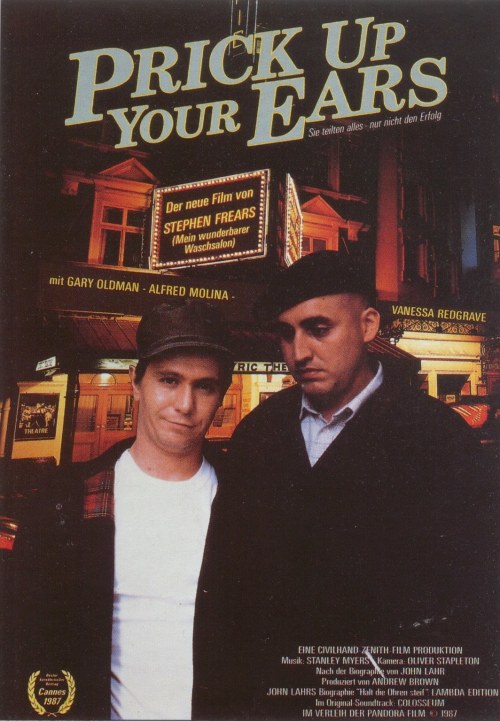
Prick Up Your Ears (1987)

By Richard Winters

My Rating: 7 out of 10

4-Word Review: Bio of Joe Orton.

This film, which is based on the biography of playwright Joe Orton that was written by John Lahr, has two diametrically different story lines going on at the same time. One part has John Lahr, played in the movie by Wallace Shawn, going around interviewing people that knew Orton when he was alive, which includes Orton’s theatrical agent Peggy Ramsey (Vanessa Redgrave). The other part delves into Orton’s (Gary Oldman) relationship with his Kenneth Halliwell (Alfred Molina) showing how it began and then eventually ending in tragedy.

The film, which was directed by the usually reliable Stephen Frears, starts out right away with the murder scene showing Halliwell covered with blood as he stands over Orton’s body that he has just killed, which to me was a mistake. Sometimes using flashbacks in films can help accentuate the story, but here it gives too much away way too soon. What’s the point of continuing to watch the movie if the viewer knows exactly how it will end? Even if one such as myself was aware of Orton’s demise, which occurred on August 9, 1967 in Islington, England, it still should’ve approached the material in a linear way having the murder occur at the very end after we had gotten to understand and feel for the characters and therefore making the act all that more impactful.

The story should’ve started with the scene, which doesn’t occur until 30 minutes in, where Halliwell and Orton are attending a acting improv class, which is where the two first meet and the funniest moment in the movie. In the scene the students are instructed to pass around a make-believe cat and when this invisible cat gets handed to Halliwell, and to the shock of the other students, but to the amusement of Orton, he kills it and then hands it back to the instructor.  This moment also perfectly reflects the black humor that became so apparent in Orton’s plays as well as conveying the weird dynamic that the two had.

When the film focuses solely on the two lead characters and their love-hate relationship it is quite interesting. Molina gives a powerhouse performance and dominates every scene that he is in. His mental deterioration is both vivid and horrorifying and  leaves a lasting impression. Yet there are also other moments where you feel sorry the guy and it helps to make sense of what lead to the tragedy as you see how Orton, who is much younger and better looking, openly have trysts with other men that he randomly meets while Halliwell, fully aware of what is going on, gets pushed into the background and unable to do anything about it.

The film is also filled with some memorable imagery. The scenes where Orton and sometimes Halliwell would pick up strangers for indiscriminate sex, like in dingy public restrooms with the lights turned off and even at times inside the bathroom stalls themselves while constantly in fear of getting caught and arrested, is well captured. The tiny room that the two lived in for years, with pictures that cover every inch of the walls, gets recreated to a perfect tee. Based on images of the actual room found on Google it looks exactly like the one in the movie and its claustrophobic dimensions hits home making it seem amazing that such significant long lasting stage plays, that were later made into movies, could’ve been written in such an insignificant space that seemed no bigger than someone’s walk-in closet.

The opening bit that focused on Orton’s agent and having her reminisce about her experiences dealing with him is boring and should’ve been taken out of the final cut. Viewers come into this wanting to learn more about Orton and his relationship with Halliwell and that’s where the film should’ve started and stayed. I admit Redgrave gives a very good performance as the agent, so having brief scenes with her in them that intercut between the ones dealing with the lovers might have been interesting, but too much time gets spent on the side characters that almost dismantles the entire rest of the film.

Spoiler Alert!

I didn’t like how loud crashing music gets abruptly played during the murder sequence either. The soundtrack had been quite subtle up until then, so having it suddenly get loud is jarring and goes against the tone of the rest of the film. It also puts too much of a theatrical quality to the murder that was not needed. The  visuals are all that is needed to show the shocking and gruesome nature of the act without music needing to be any part of it.

My Rating: 7 out of 10

Released: April 17, 1987

Runtime: 1 Hour 45 Minutes

Rated R

Director: Stephen Frears

Studio: The Samuel Goldwyn Company

Available: DVD

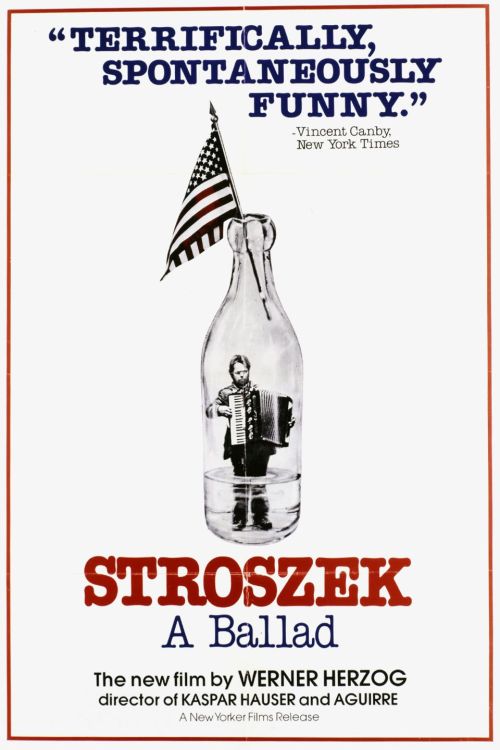
Stroszek (1977)

By Richard Winters

My Rating: 8 out of 10

4-Word Review: Germans relocate to Wisconsin.

Bruno (Bruno S.) has recently been released from prison and while warned to stop drinking as a condition for his parole he immediately goes to a local bar. It is there that he meets Eve (Eva Mattes) a prostitute in an abusive relationship with her husband (Burkhard Driest). Bruno offers to allow her to move into his apartment, but this angers her husband and her pimp (Wilhelm von Homburg)  who break into the apartment and terrorize Eva and Bruno making them believe that the only way they can escape the harassment is by moving to America, which we they do along with their elderly neighbor Scheitz (Clemens Scheitz). They presume everyone is the USA is rich and life will be easy, but find that not to be the case.

The story was based loosely on the real-life experiences of its star and the script  written specifically for him by director Werner Herzog as a conciliation for not casting him in Woyzeck as originally intended. Since Bruno had already taken a leave of absence from his job at a steel mill to star in that one Herzog decided to make it up to him by writing this script in a matter of 4 days and then filming it on-location in Plainfield, Wisconsin because that was where the notorious serial killer Ed Gein had lived.

The story should’ve been a complete downer as it focuses on some very depressing realities, but instead, thanks to the genius of Herzog, one comes away from it feeling almost upbeat at all the quirky humor that gets incorporated in. The most memorable moment, which the rest of the crew found highly offensive and refused to film forcing Herzog to do it himself, happens near the end when Bruno travels to North Carolina and uses the last of his money to insert coins into arcade exhibits featuring chickens inside cages that dance and play the piano. The amusing element from this comes when the police finally arrive on the scene and are more concerned with getting the chicken to stop dancing than with the welfare of Bruno.

I also enjoyed the moment when an auto mechanic (Clayton Szalpinski) decides to do his own oral surgery by using the same pliers that he fixes cars with to remove a painful tooth in his mouth. While more blood was needed, as there should’v been streams of it coming out of his mouth, but isn’t, it’s still quite darkly funny and was ‘inspired’ by a true-life scene in the  1972 documentary Spend it All in which a Cajun in Louisiana does the same thing to his teeth, which amazed Herzog so much when he saw that movie that it compelled him to work the scene into one of his stories.

The jabs at America are expectedely negative and to some degree are on-target while at other points goes too far. Watching the trio become overly excited at seeing their new trailer home driven onto a vacant lot and acting like this was a sign that they had finally ‘made it big in America’ is certainly sardonically funny. Yet the scene with two farmers holding rifles as they plow a field in their tractors ready to shoot the other one if either dared touch a small strip of disputed land played too much into the stereotype that Europeans have of Americans and really wasn’t needed especially since it had nothing to do with the main story.

Bruno S.’s performance, who was never formally trained as an actor, is boring as he conveys the same facial expression all the way through where a more seasoned actor could’ve given the role more needed nuance. Scheitz was an amateur actor as well, but his short stature and overall goofy appearance made him a fun part of every scene he’s in while with Bruno that same quality doesn’t exist. If anything Eva has the widest character arc and the film should’ve evolved around her instead.

Herzog casts a lot of non actors in secondary roles as well. I’m not sure if this was done for budgetary reasons, or just played into his long-standing desire to be experimental, but the results aren’t completely effective. I did however enjoy Scott McKain, an auctioneer in real-life, who plays the part of a bank employee that comes to visit the trio in their trailer home to inform them of their delinquent payments and yet no matter how bad the news is that he must convey he always manages to remain upbeat and peppy when he says it.

The film, which has been rightly placed in Steven Schneider’s ‘1001 Movies You Must See Before You Die’ is original in so many ways that it deserves to be seen just for the oddity it is and I really have no complaints with its avant-garde style, which even today comes off as fresh and inventive, but I was confused about why the Glen Campbell song ‘By the Time I Get to Phoenix’ got played so much. The lyrics are never heard, but the melody is and yet there’s no connection to the city of Phoenix in the story, for awhile I thought that was where they’d ultimately end-up, but they never do, so hearing it played so much is out-of-place.

My Rating: 8 out of 10

Released: May 20, 1977

Runtime: 1 Hour 48 Minutes

Not Rated

Director: Werner Herzog

Studio: New Yorker Films

Available: DVD, Amazon Video, YouTube

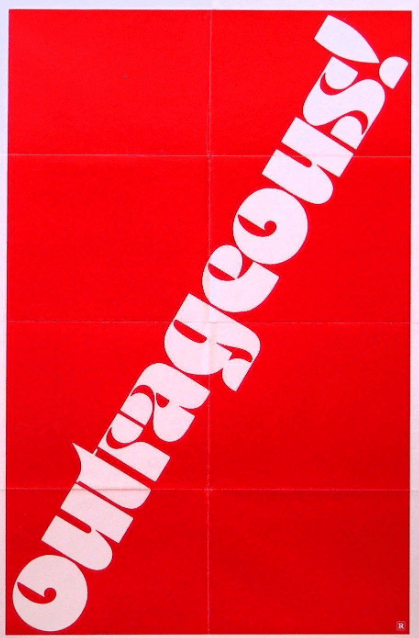
Outrageous! (1977)

By Richard Winters

My Rating: 7 out of 10

4-Word Review: Female impersonator befriends schizophrenic.

Robin (Craig Russell) works as a gay hairstylist during the day, but longs to be up on stage as a female impersonator.  Liza (Hollis McLaren) is a schizophrenic who leaves the hospital she was confine in and moves in with Robin her longtime friend. Both find ways to help each other with their problems, which allows Robin the confidence to finally get on stage in drag as Tallulah Bankhead, which makes him an instant hit and gets him a paid gig in New York City. However, when he moves away Liza’s condition worsens forcing Robin to decide what’s more important: his budding career, or his friendship.

The film is based on the shorty story ‘Making It’ by Margaret Gibson, which in turn was based on her experiences dealing with mental illness and her real-life friendship with Craig Russell whom she roomed with in 1971. The story nicely tackles the challenges of dealing with mental illness and how Robin’s support helps Liza overcome her demons that the other professional Dr’s and counselors that she sees don’t because they only view her as just another patient instead of a person.

The grainy, low budget quality works to the film’s advantage as it brings out the fringe, economically disadvantaged lifestyle that the two lived in while McLaren’s performance shies away from the cliches of mentally illness causing the viewer to see her as a regular everyday person, not just some ‘crazy’, valiantly fighting a nasty illness that she can’t always control.

The segments dealing with Russell’s onstage act are quite entertaining as well though when I first saw this film decades ago I found these moments to be off-putting as they turned it more into a documentary, or a comedy special that took the focus away from the actual essence of the story, which was the friendship. However, upon second viewing I liked the way it captures the gay club scene that was unique to that time period. Russell’s impersonations where he does Barbra Striesand, Judy Garland, Mae West and Bette Midler just to name a few are outstanding. I’ve seen some female impersonator acts before, but Russell’s far outshines any of the others I’ve ever watched as he gets the body language, voice, and facial expressions of the people he’s playing just right to the point that he completely disappears into the women characters until you can’t tell the difference.

While the film does have many touching moments I felt it should’ve shown how Robin and Liza first met instead of having it start with them already knowing each other when she moves in with him. Since they are such an odd pair capturing how and where this unique relationship all started and what element brought them together seemed crucial, but we never see it nor does it even get addressed in conversation. Having this backstory could’ve helped the film stay a little more centered on the relationship as well and prevented the over reliance on Russell’s stage routine, which while quite good, still takes up a bit more of the runtime than it should’ve.

My Rating: 7 out of 10

Released: July 31, 1977

Runtime: 1 Hour 36 Minutes

Rated R

Director: Richard Benner

Studio: Canadian Film Development Corporation

Available: DVD, Amazon Video

Bugsy Malone (1976)

By Richard Winters

My Rating: 3 out of 10

4-Word Review: The gangsters are kids.

It’s the 1920’s and rival mobsters, who are all played by children, fight over control of a club that illegally sells liquor. Fat Sam ( John Cassisi) is the one who currently controls it, but Dandy Dan (Martin Lev) makes a play at a violent overthrow in which his men attack the club by using machine guns equipped with whipped cream that ‘splurge’ their victims. Bugsy Malone (Scott Baio) is a penniless boxing promoter caught in the middle. He tries to help aspiring singer Blousy (Florrie Dugger) get an audition at Sam’s club, but then becomes distracted by Sam’s alluring girlfriend Tallulah (Jodie Foster) who causes Sam’s ire by flirting with Bugsy.

This odd concoction was the product of Alan Parker in his feature film directorial debut who came up with the idea while driving his kids on a weekend trip to a countryside cottage. To keep his kids entertained he started telling them a story about some prohibition era gangsters based on old gangster movies he had seen as a child. It was at one point where one of the kids brought up the idea of having gangsters be children instead of adults.

The first 15 minutes or so are quite inventive and fun. I enjoyed the freeze-frames showing each victim splattered with whip cream and the pedaled powered automobiles, but after awhile it starts to repeat the same gags over and over becoming a one-dimensional, one-joke flick.

I kept wondering where the adults where and despite this being a fantasy what exactly where the ‘rules’. Is this a type of universe where there are no adults at all and the kids remain at that age forever and if so does that ultimately then make them the ‘adults’? For me it would’ve been better had the story been book-ended with some connection to the world as we know it. Perhaps with a Wizard of Oz type structure where the film starts out, maybe even in black-and-white, with adults in the parts of the gangsters and then one of them gets hit on the head or drinks something with a drug in it and has this weird dream involving kids suddenly taking over the roles previously played by the adults. Showing the differences at how kids approached things versus how the adults do would’ve been a funny contrast instead of keeping it at the kiddie-level the whole way through, which ultimately falls flat.

The performances of the young cast are quite energetic although I could’ve done without the musical numbers. Cassisi, who in real-life ended up serving jail time of his own for money laundering, steals it with his humorous send-up of a mob boss. Baio is quite good too especially with his over-the-top Brooklyn accent, but I felt Foster got shamefully underused. If anything her role should’ve been combined with Blousy’s to make one and cutting out Florrie Dugger, who now goes by the name of Florence Garland, completely. I didn’t have anything against her per say, but she didn’t have the onscreen spark that Foster did. She also apparently disliked Baio and the scene involving her hugging him required many retakes as she didn’t want to get near him and this lack of chemistry comes through onscreen.

My Rating: 3 out of 10

Released: September 12, 1976

Runtime: 1 Hour 33 Minutes

Rated G

Director: Alan Parker

Studio: Paramount Pictures

Available: DVD, Blu-ray, Amazon Video

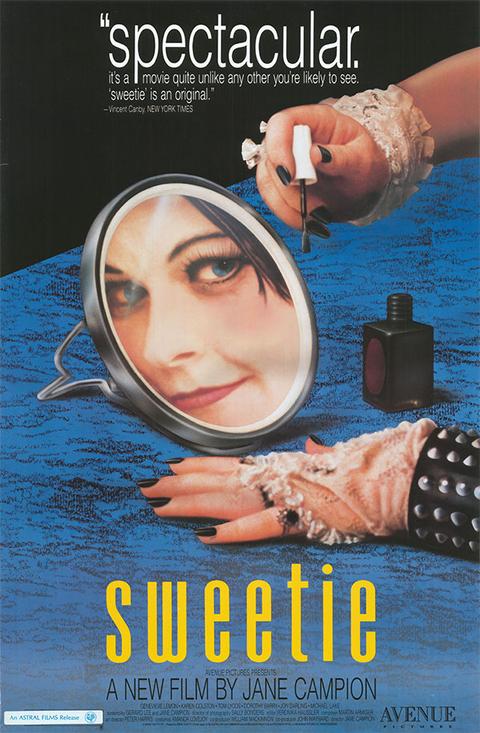
Sweetie (1989)

By Richard Winters

My Rating: 8 out of 10

4-Word Review: Sister is mentally ill.

Kay (Karen Colston) has begun a relationship with Louis (Tom Lycos) and things seem to be going smoothly as they move into a home together, but it quickly unravels when he sister Dawn ‘Sweetie’ (Genevieve Lemon) shows up with her boyfriend Bob (Michael Lake). Sweetie has been institutionalized in the past and her wild mood swings and erratic behavior quickly cause turmoil particularly with Kay. She asks her parents (Jon Darling, Dorothy Barry) for help, but her dad refuses to recognize Sweetie’s tragic current state and instead continually hearkens back to her childhood years when she was a cute kid with budding talent who would perform songs and dances to the family’s entertainment and delight.

This is a hard film to critique  as it starts off as a quirky comedy, but by the midpoint it becomes more dramatic and filled with a lot of uncomfortable even cringe worthy scenes as Sweetie’s mental decline becomes achingly apparent. Not only do you feel sad for her, but also for how it causes such a severe strain for the rest of her family, which accurately illustrates how mental illness isn’t just a one person issue as their behaviors will adversely affect those around them too.

The fact that the film’s tone switches halfway through, which would be considered a major no-no by Hollywood standards, is part of the reason why it works as it replicates real-life where sometimes you can have a touching, humorous moment only to suddenly get thrown into a troubling one.  This also shapes what life is like living with a mentally-ill individuals who may seem ‘okay’, but can turn erratic sometimes without warning and this ongoing tension vividly comes through for the viewer until they feel the same way as the characters.

I found the father though to be the most entertaining and interesting. One minute he’s scheming to get Sweetie out of the family car, so they can leave on a trip without her and then the next minute he’s driving back to pick-her-up, so they can be ‘one happy family’ again. While this may sound overly contradictory to some I felt it brought out  the inner turmoil many parents feel in dealing with their grown children where at times they can’t stand them, for whatever reason, but at other points can’t stand to be without them either.

Director Jane Campion, in her feature film directorial debut, adds in interesting touches like having the camera frame the characters off-center where instead of seeing them captured in the center of the screen they are shown in the right-hand corner, which helps accentuate the tone of the subject matter. There’s also an odd time-lapsed cutaways detailing a seedling tree pushing its way through the dirt and above ground, which wasn’t exactly necessary to the main plot, but kind of cool nonetheless.

Campion also wisely doesn’t insult the viewer’s intelligence with pat answers to a complex problem. Mental illness cannot be cured or even  always stabilized with medications, so leaving the viewer with a feel-good ending where everything works out and everybody is happy would be a cop-out and thankfully gets avoided here. Instead the we’re left pondering troubling questions, which stays with you long after it’s over and makes this a far better movie than most because of it.

My Rating: 8 out of 10

Released: September 28, 1989

Runtime: 1 Hour 37 Minutes

Rated R

Director: Jane Campion

Studio: Filmpac Distribution

Available: DVD, Blu-ray (Criterion Collection), Amazon Video

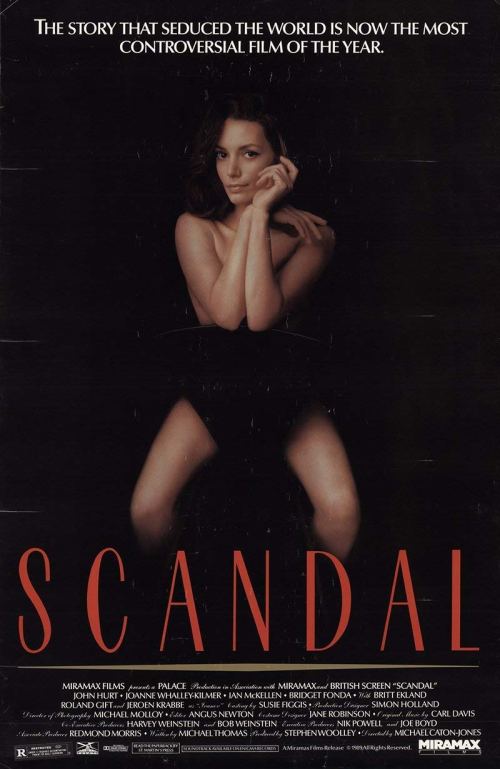
Scandal (1989)

By Richard Winters

My Rating: 5 out of 10

4-Word Review: Politician has an affair.

Based on the Profumo affair that rocked the British parliament in 1963 the story centers around an exotic dancer named Christine Keeler (Joanne Whalley-Kilmer) who catches the eye of Stephen Ward (John Hurt) a doctor with a thing for attractive young ladies. She moves in with him and the two share an unusual relationship where he pimps her and her friend Mandy (Bridget Fonda) out to members of the conservative party. Her sexual affair with one of the high-ranking officials of parliament, John Profumo (Ian McKellen) eventually reaches the attention of the press and leads to far-reaching ramifications for all involved.

Part of why this movie didn’t work for me and may not for others is that politicians getting involved in a scandal is no longer a big deal. We’re living in an age where political figures have been caught having affairs, even while in office, and it isn’t enough to have them removed. Yet this film expects the viewer to be in jaw-dropping shock from the first frame to the last even though in this cynical age it would be more shocking if one actually lived a squeaky clean life.

The first hour meanders along from one racy sex scene to the next until it almost seems like a soft core porn flick with no story. I had no idea where any of this cavorting around was going to lead and wasn’t really all that intrigued in finding out either. First time director Michael Caton-Jones takes too much of a detached approach to his characters. They all come off like wild sexual animals unable to control their inner urges, but with no other discernible differences making everything that goes on seem like one giant frolicking blur with no point.

Hurt gives a great performance, but I didn’t understand the motivations of his character. Why doesn’t he want to sleep with Christine and instead get more turned-on listening to her stories about her having sex with other men? What about him makes him this way, which the film should’ve helped answer, but doesn’t.

Whalley is too old for her part as she was supposed to be playing someone who was 19, but in reality was already 29. Having a true 19-year-old play the part, and have a definite look of innocence about her, may have given the provocative material a little more bite.  Her character also has the same issues as with Hurts. I got how she wanted to get away from her impoverished surroundings and sleeping with rich influential men could help her do that, but I didn’t understand why she liked her Hurt, or their unusual relationship.

The film ends with the court proceedings, which like with everything else doesn’t have the impact that it should. While the attention to detail and accuracy is impressive it would’ve worked better had it began with the trial and then worked backwards through flashback showing how they all got there instead of the linear narrative that it does take, which is too plodding. Focusing on only one of two characters would’ve helped too instead of trying to encompass so many of them where none of them are all that interesting or distinct.

My Rating: 5 out of 10

Released: March 3, 1989

Runtime: 1 Hour 46 Minutes

Rated R

Director: Michael Caton-Jones

Studio: Miramax

Available: DVD, Blu-ray (Region B/2)

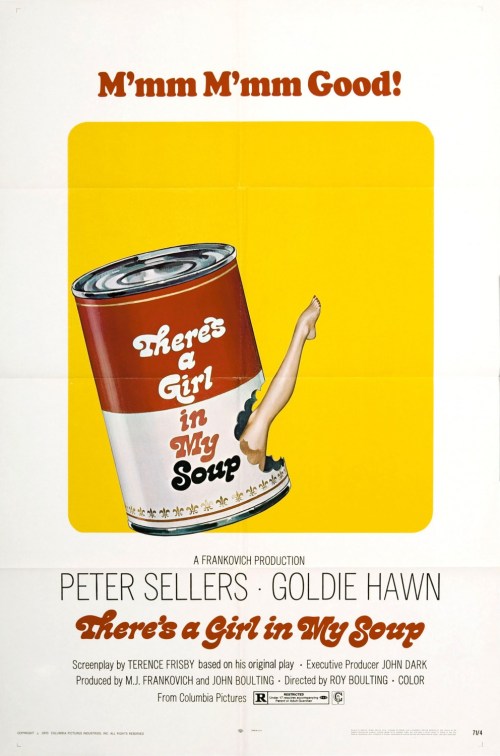
There’s a Girl in My Soup (1970)

By Richard Winters

My Rating: 3 out of 10

4-Word Review: Playboy falls for hippie.

Robert (Peter Sellers) is a dashing playboy who enjoys having random sexual encounters with women, even having sex with a bride on her wedding day. Despite being in his 40’s he shows no signs of wanting to settle down and get married. Then he meets Marion (Goldie Hawn) a groupie for a rock band who finds out that its lead singer Jimmy (Nicky Henson) has been unfaithful to her. With nowhere else to go she lets Robert pick her up and take her back to his pad where he tries to seduce her, but without much luck.

Although the stageplay for which this film is based did quite well its translation to the screen leaves much to be desired.  Despite director Ray Boulting’s efforts to liven up the scenery by placing several scenes in exotic locales while also sprucing up Robert’s place by inserting his bathroom to have all mirrors in it that cover both the walls and ceiling, the film still ends up coming off like a filmed stageplay that lacks both energy and action. Even the dialogue, that usually helps  keep other plays that have evolved onto the big screen, lacks bite and becomes as stale as the rest of the proceedings.

The relationship is only funny when Marion rebuffs Robert’s advances and openly tells him how unsexy he really is, but when she foolishly ignores her better judgement and starts falling for the cad is when the whole thing goes downhill. There’s also confusion for why Robert, who openly enjoyed his single life and sleeping around with various beautiful women, which he seemed to have no trouble getting, would suddenly fall for a young woman that he didn’t have much in common with. For a relationship to begin both sides have to initially be looking for one and there is absolutely no hint that is what Robert wanted, so what about Marion got him to suddenly change his mind?

Sellers is okay although critics at the time complained that his performance was ‘lifeless’, which it is, but he makes up for it with his Cheshire cat grin. The role though doesn’t allow him to be inventive, or put on many of his different accents or personas, which he is so well known for. The character and situation are also too similar to the one that he played  in I Love You Alice B. Toklas, which he did just two years earlier.

Hawn is great and I enjoyed seeing her playing a snarky woman instead of the spacey blonde that she usually does, you even get a nice shot of her naked backside, but her character is too similar to one that she did in Butterflies are Free. In fact the two people that come-off best here are not the stars at all, but instead John Comer and Diana Dors as a middle-aged, bickering couple who should’ve been given more screen time.

Overall there’s just not enough laughs here to make sitting through it worth it. The plot has no point and the characters don’t grow or evolve making it a waste of time for its two leads whose talents are above this type of material.

My Rating: 3 out of 10

Released: December 15, 1970

Runtime: 1 Hour 36 Minutes

Rated R

Director: Ray Boulting

Studio: Columbia Pictures

Available: DVD, Amazon Video, YouTube

The Gods Must Be Crazy II (1989)

By Richard Winters

My Rating: 7 out of 10

4-Word Review: Misadventures in the desert.

Xiri (Eiros) and Xisa (Nadies) are the two children of Xixo (N!xau) and a part of a nomadic desert tribe of the Kalahari who go roaming off into the wilderness and encounter a truck driven by two elephant poachers (Lourens Swanepoel, Pierre van Pletzen). Having had no previous contact with modern technology the children become fascinated with the vehicle and climb into its water tank just as it drives off taking them many miles away from their home. When the children fail to return their father goes out looking for them and in the process comes into contact with a lawyer (Lena Farugia) and a zoologist (Hans Strydom) who are stranded after their small engine plane crashes as well as two soldiers (Erick Bowen, Treasure Tshabalala) fighting from opposite sides of the war and each precariously trying to get the upper hand on the other.

This follow-up to the run away hit was filmed in October, 1985, but took over 4 years to find a distributor and suffered many setbacks during its production, which frustrated writer/director Jamie Uys so much that he retired from directing after completing this one and never worked on another film. On the whole though it’s not too bad, but like with the first one it does start out a bit clumsily.

My biggest complaint had to do with the scenes dealing with the lady lawyer named Ann and her interactions with the macho pilot/zoologist Hans who takes her up in the plane, which to me became too sexist and too similar to the scenario played-out in the first film where a lady-in-distress being rescued by a male character more acclimated to the environment. However, in the first film this was funny because the male was so clumsy and inept it made him seem more like a lovable clod, but here the guy character resembles the male image, especially with his mustache, of the Marlboro man and his constant aggravation at this ‘ditzy lady’ isn’t amusing while her inability to understand technology played too much into the feminine stereotype that women can’t comprehend machinery must have a man come to their rescue.

I did find the small engine plane that they rode in, which was a modified Lazair Ultralight, fascinating as I found it interesting at how something so small and flimsy could carry two people and still get off the ground, but was disappointed to learn later that this was only because it got attached to a crane and in reality wouldn’t have flown. Although the filmmakers achieve this illusion pretty well the scene where the two fly above the clouds is clearly fake as you can tell the backdrop of the sky is a painting and in that regards the whole plane scene, especially since it really couldn’t fly anyways, should’ve been discarded and some other plot line created that would’ve brought the two together.

The two runaway children though are quite cute especially the frightened but resourceful little boy who grabs a nearby piece of wood to put on top of his head to fool the hyena that has been stalking him into thinking that he is taller than he really is, which actually ends up working. I was also most impressed with the scenes dealing the Honey Badger, which is known for its ferocious defensive abilities and lives up to its reputation here when he grabs a hold of Hans boot with his teeth and refuses to let go no matter how far Hans walks.

The last half-hour when all the various characters from the four divergent story lines eventually merge is when the film finally manages to hit its stride and it’s a shame this couldn’t have occurred sooner, but ultimately as a sequel it’s surprisingly funny and manages to retain much of the same charm from the first one.

My Rating: 7 out of 10

Released: October 13, 1989

Runtime: 1 Hour 38 Minutes

Rated PG

Director: Jamie Uys

Studio: 20th Century Fox

Available: DVD, YouTube