Category Archives: Foreign Films

Announcing Australia Sundays

Hey mate, since it’s always summer in Australia when it’s winter here I thought we could warm us up during these long, cold, chilly months ahead by visiting the Down Under, at least on Sundays. Beginning tomorrow and going all the way through March will spend each Sunday reviewing an Aussie flick from the 60’s through the 80’s. Some of these films have never been released here, or reviewed on other blogs, so this will give readers a new awakening to some of the great cinema that is down there. Plus, a chance to see the wonderful topography, animal life, and colorful people that makes up this unique continent, so I hope everyone will enjoy this new weekly series. Until then enjoy these pics.

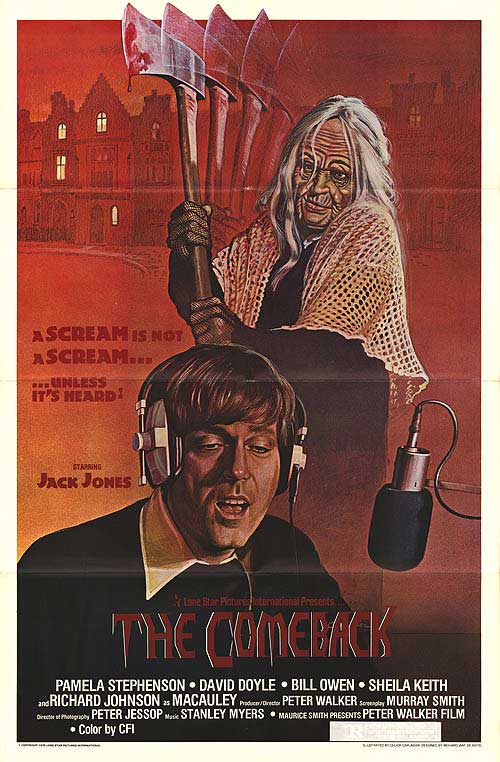
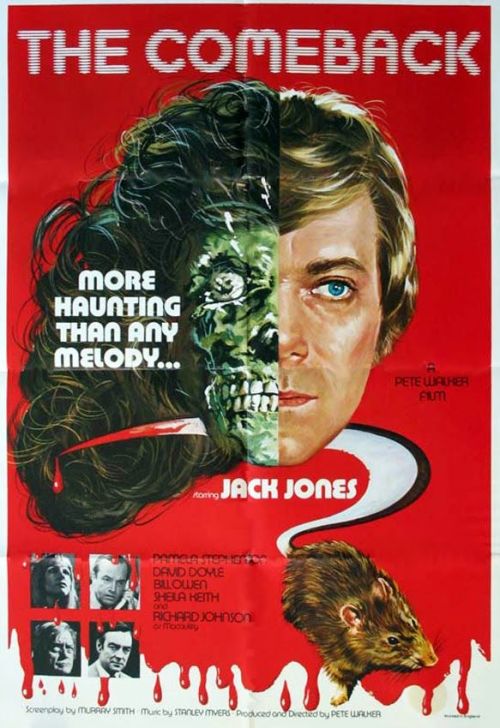
The Comeback (1978)

By Richard Winters

My Rating: 6 out of 10

4-Word Review: Singer hears weird noises.

Nick Cooper (Jack Jones) is a successful singer trying to revive his career after a 6-year hiatus. He travels to London to work on a new album under the guidance of his manager Webster (David Doyle), where the two share a hot-and-cold business relationship. Meanwhile his ex-wife Gail (Holly Palance) goes to their former apartment to collect her things, but is attacked by someone dressed as an old lady and brutally killed. After the murder Nick begins to hear noises at the mansion he is staying in that is owned by an older couple (Bill Owen, Sheila Keith) in which he hears the sound of a woman crying, but can’t detect where it is coming from.

This is another Pete Walker production who has in recent years received a strong cult following for the long line of British horror films that he directed during the 70’s and early 80’s before leaving the profession in order to start up a business where he bought and refurbished old movie theaters. While I’m not a big fan of some of his early work, which seemed kind of hooky, I felt this horror outing managed to deliver for the most part.

What impressed me most was the brutality of the murder where Gail not only gets stabbed many times, but has her hand cut off, which goes flying down the stairs. This was in the era of the Video Nasties, where the British government was banning all sorts of horror films brought in from other countries, so I was surprised why this one got a pass. What made it even more gruesome is that the camera keeps cutting back to the dead body at different intervals where the viewer vividly sees the decaying process. It starts by showing a close-up of the dried blood that covers the victim’s face, real blood was used that had been donated from a local hospital, then later on it cuts back to show maggots’ inside her eye sockets and mouth  and eventually even rats eating away at her face.

Having singer Jack Jones, who’s best known for crooning the theme song from the TV-show ‘The Love Boat’, cast in the lead seemed an odd choice. Apparently Walker was determined to get a singer for the part and first approached Cat Stevens and then Ringo Starr who both declined, so he had to settle for Jones, who isn’t bad. It’s refreshing to see a protagonist in a horror flick that isn’t a teen or college aged and instead in his 40’s, but since there is an element of teen idol worship in the story it would’ve made more sense having a younger singer cast that would’ve appealed more to the youth of the day.

David Doyle, best known for playing Bosley in the TV-show ‘Charlie’s Angels’, is surprisingly effective too and given a big role. Usually he would be relegated to small supporting parts in comical films, but here does well in a dramatic one and even seen at point putting on women’s make-up and wearing a dress, but the film never follows-up with this potential story thread, but should’ve.

The murders aren’t too prevalent, there’s only two and spread far apart, but they’re gory enough to leave a strong impression. The story moves a bit too slowly and while there is tension at times it’s not consistent. The wrap-up though is a complete surprise and pretty much comes out of nowhere, but I didn’t mind.

Spoiler Alert!

While the script is satisfactory there were a couple of moments that didn’t make much sense. One has Nick returning to the mansion after he’s seen the decapitated head of his ex-wife in a box there and tormented each night by her cries and screams, which is enough to send him to the mental hospital for awhile. If it were me I’d never go back to that place again and yet Nick does and just casually turns up the music on his radio when he again starts hearing the ghostly cries instead freaking out like anyone else would’ve. The scene where he takes an ax out of a victim’s body, who had been killed by someone else, and then is seen holding it over the dead body as someone else enters the room, made me believe he was going to be accused of committing the murder, but it doesn’t work that way, but probably should’ve.

Alternate Title: Encore

My Rating: 6 out of 10

Released: June 16, 1978

Runtime: 1 Hour 33 Minutes

Rated R

Director: Pete Walker

Studio: Enterprise Pictures Limited 

Available: DVD, Blu-ray, Amazon Video

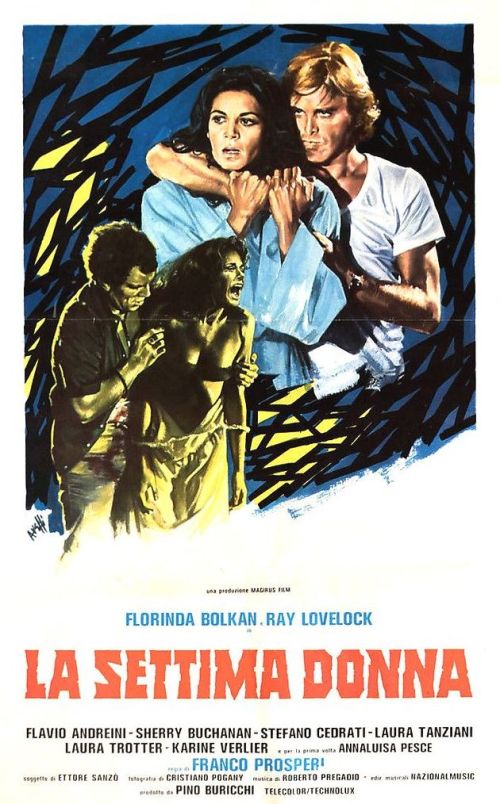
The Last House on the Beach (1978)

By Richard Winters

My Rating: 7 out of 10

4-Word Review: Robbers hold nun hostage.

Aldo (Ray Lovelock) leads a gang of three robbers who stage a bank robbery in broad daylight, but things go wrong and lives get lost. During the getaway their car breaks down and they’re forced to hideout in a nearby home that sits next to a beach. Inside the home is Sister Christina (Florinda Bolkan) a nun who takes in wayward teen girls and helps them find their way. She was in the middle of rehearsing a play with them when the men break-in. The thugs soon takeover, raping two of them while terrorizing the rest. At first the women are compliant, feeling they have no other choice, but eventually they decide they’ve had enough and turn-the-tables on their captors.

While this film will initially come-off as just another Last House on the Left rip-off the production values are much better than most American low budget cheapies and the location quite scenic. The place didn’t look like any type of religious school to me and more like an ocean front pad for a rich person, it was more than likely the home of one of the film’s producers who decided to use it in place of a real school to save money, but the setting ultimately still works. Too many other horror movies feel the need to go for the cliché, like having things take place at night in some abandoned building, or rundown home, so having it work against this is a refreshing change. In some ways it makes it even scarier because it shows that bad things can happen even in the affluent suburbs and that nobody is truly immune from crime and violence.

I liked the way the bad guys were all good-looking too especially Aldo whose face could be on the cover of  teen heartthrob magazine. Again, other horror films feel the need to make the killer look menacing, disfigured, or creepy in some way, but working against this stereotype makes it more unsettling by showing that anyone can harbor evil. The women are all good-looking too with great figures, but in this regard it doesn’t work as it didn’t seem realistic that only women who looked like models would join this school and there needed to be at least one plain-looking, overweight one to give it balance.

The set-up happens a bit too quickly. It would’ve been more frightening if things had been shown at the start from the women’s perspective, rehearsing for the play, and then having these robbers burst in unannounced versus showing the robbery, which ends up getting reshown through flashback later on anyways, and everything from the men’s perspective. Horror works when there’s a surprise and in that regard this film misses a prime opportunity early on.

However, once it kicks in I was surprised how compelling it was. There isn’t a lot of violence, but when there is it’s bloody and pretty graphic, even the injury that one of them receives (Stefano Cedrati) looks quite realistic, and shown close-up, and I liked how this becomes and on-going part of the plot and doesn’t just magically heal and get forgotten.

The film also features two prolonged rape segments with the first one done in slow motion. Some may say this is exploiting the situation, but ultimately it ends up making it even more unsettling. The second rape  is equally disturbing as it features a woman (Sherry Buchanan) being violated by a wooden cane and done from her point-of-view.

Spoiler Alert!

The ending for me was the best part. Rape and revenge flicks have been done a lot and there’s also been films like Straw Dogs where a wimpy guy ultimately turns violent through necessity, but this film does it better than those. Seeing the angry looks on the once tranquil women’s faces as they take turns beating the man to death was actually pretty shocking as you’re not quite expecting it. It successfully hits-home the fact that anyone can be provoked into violence even those that deny they have that ability and gets the viewer to realize they harbor that tendency too since these guys were so vile you actually end-up enjoying seeing their comeuppance.

Alternate Title: La Settima Donna

My Rating: 7 out of 10

Released: April 20, 1978

Runtime: 1 Hour 26 Minutes

Not Rated

Director: Francesco Prosperi

Studio: Magirus Film

Available: DVD, Amazon Video

Fright (1971)

By Richard Winters

My Rating: 4 out of 10

4-Word Review: Psycho torments a babysitter.

Amanda (Susan George) is a college student who earns money part-time by working as a babysitter. One night she takes a job with the Lloyds (Honor Blackman, George Cole) who assign her to watch after their sleeping toddler (Tara Collinson) at their isolated wooded estate while they go off to a dinner party. Once the couple leaves Amanda begins hearing strange noises and becomes convinced that someone outside is watching her unaware that Mrs. Lloyd’s ex-husband (Ian Bannen) has escaped from the nearby insane asylum and now looking to attack anyone inside.

While the babysitter-terrorized-by-a-psycho theme may now be considered a cliché with such popular films as Halloween and When a Stranger Calls having successfully done it it’s important to realize that this film did it first and to some extent does pretty well although it does veer off from the formula. I did like the creepy set-up where an extended amount of time is given to building up the atmosphere. Some of the best moments are seeing the shadowy images on the other side of the window and not knowing who it is. The film is most effective when it’s seen from Amanda’s point-of-view making the viewer feel trapped inside the home alongside her, but weakens when it cuts away to the outside, which lessens the tension.

Having Amanda’s boyfriend Chris (Dennis Waterman) arrive doesn’t help. The fear hinges on Amanda feeling that she is all alone in this big strange house in the middle-of-nowhere and entering more people into the mix takes that element away.

The film is unusual in that unlike the other thrillers with a similar plotline the parents here figure heavily into the story. Instead of just focusing exclusively on the babysitter the films consistently cuts between her scenes and the scenes of the couple at the party. In many ways its the mother that becomes the real star, which is fine to an extent, but the part is played by Honor Blackman, a very gifted actress, but at age 46 was looking way too old to be the mother of such a young child.

The film is also unusual in that when the police arrive it doesn’t just end in fact that’s when it starts to get going with the entire third act filled with this long protracted stand-off. To some degree I felt this made it more realistic as real-life hostage situations can happen with long ‘negotiating’ session between the police and the person inside. Police aren’t always able to immediately take control of a situation either and can sometimes be just as helpless as the victim, but in the process this approach takes away the confrontational element between Amanda and the psycho, which would’ve been more interesting at seeing how she could use her wits to outsmart the bad guy that never really gels.

Susan George really doesn’t figuring in as much of the action as you’d initially expect spends most of the time just crying and looking scared. The 3-year-old child, which was played by the daughter of the film’s director Peter Collinson, doesn’t help matters either. I found it very hard to believe that any child could remain asleep such as this one when Amanda and the psycho stood over her crib talking and at certain points even shouting. The child never screams or cries either even when a sharp piece of a broken-off mirror is put to her throat.

Bannen can be amazingly creepy, I enjoyed his work in The Offence where he played a suspected child killer being interrogated by Sean Connery, but here he’s given a bit too much latitude and becomes a caricature. Having him seesaw between being child-like to behaving aggressively comes off as manufactured and more strained than frightening.

Spoiler Alert!

The ending, in which Amanda shoots and kills the psycho, does not work. For one thing Bannen had already handed over the child to the mother and at that point was completed surrounded by the police with nowhere to run, so killing him wasn’t needed. It’s questionable how and where Amanda got the gun, supposedly it was the one that an officer had put down earlier, but how she was able to sneak up and get it from him is never explained. Also, she had most likely never shot a gun before, in Great Britain most people don’t own guns, so she’d probably not have been able to hit him, especially in her shaky emotional state, at a long distance, which makes this scene dumb and unnecessary.

My Rating: 4 out of 10

Released: September 18, 1971

Runtime: 1 Hour 27 Minutes

Rated PG

Director: Peter Collinson

Studio: British Lion Film Corporation

Available: DVD, Blu-ray, Amazon Video

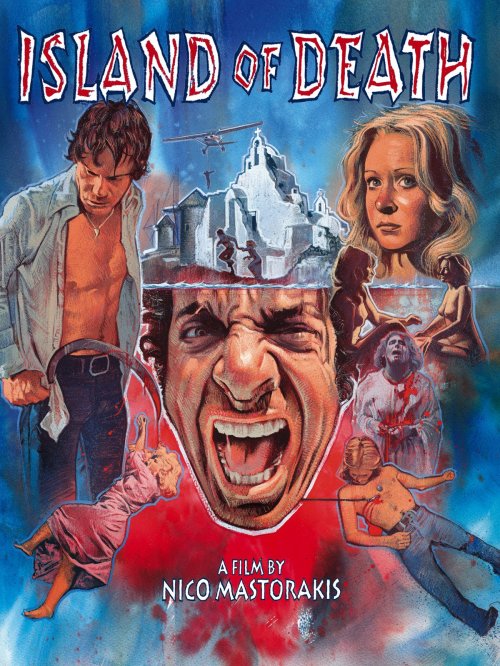
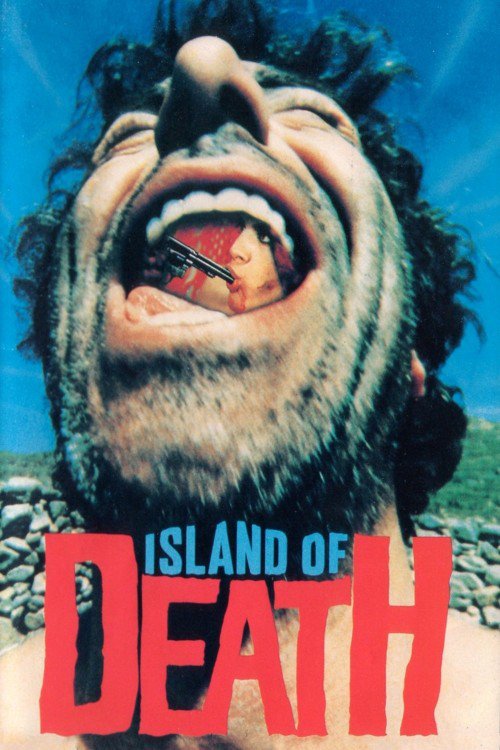
Island of Death (1976)

By Richard Winters

My Rating: 6 out of 10

4-Word Review: Couple on killing spree.

Christopher and Celia (Robert Behling, Jane Lyle) seem like a nice young couple just looking  for a little vacation as they travel to a Greek island. Yet once there they begin killing anyone who they deem ‘perverted’. First it’s a man who makes a pass a Celia, then it’s a gay couple, and a bartender who’s outed as a lesbian. Not only do Christopher and Celia kill their victims with glee, but they also enjoy taking pictures of the carnage, so that Christopher can use them for sexual arousal later.

In 1974 Nico Mastorakis, who at that time was working as an investigative journalist and before that was a popular radio DJ, became impressed with The Texas Chainsaw Massacre, and the amount of money it brought in. He was convinced that making exploitation flicks was a profitable venture and proceeded to create a film that would be as shocking as possible simply for the money benefits it would bring in. The film has certainly achieved a strong cult status and has been one of the most widely banned films in the world.

While its reputation is quite notorious I actually found the violence to be nothing special. There’s one segment where a man gets his hands nailed to a cement ground, which is pretty nasty and the killing of a baby goat, which Christopher then proceeds to have sex with is quite disturbing too, but everything else, at least gore-wise, is run-of-the-mill. The one segment that did get a bit difficult to watch simply because it gets more prolonged than the other killings and therefore makes it seem more real was when Christopher tries to force the lesbian bartender (Janncie McConnell) to swallow a bottle of hard liquor, which she repeatedly chokes on.

On the perversity level the film still scores strongly even after all these years. One of it’s more outlandish moments is when Christopher gives an unexpected golden shower to a 60-year-old woman (Jessica Dublin) who at first reacts in disgust, but then eventually gets into it. The real shocker though for me was the final twist, which I hadn’t seen coming and as jaded as I’ve become with years of watching these underground 70’s flicks, had my mouth agape.

Mastorakis shows good command with solid pacing and a script that continuously reveals many sick twists as it goes. The slow start works in its favor as it creates a romantic feel, especially with its sweet sounding score and picturesque backdrop of Mykonos, which allows for the viewer to let down their guard and then when the shocks gets going it makes it even more emotionally horrific. I also enjoyed Mastorakis use of the hand-held camera and wide angle lens something that only came into vogue many decades later.

Overall I commend the production for going all in. Too many other horror flicks, especially from the 70’s, promised exploitation, but ultimately  delivered little. It seemed like despite their provocative storylines they would end up chickening-out, so it’s nice to see one hyper-focused to truly push the envelope. Obviously this won’t be everyone’s cup-of- tea many, but if you’re compelled to make a truly underground feature then alienating some viewers is a prerequisite.

My Rating: 6 out of 10

Released: October 13, 1976

Runtime: 1 Hour 48 Minutes

Not Rated

Director: Nico Mastorakis

Studio: Omega Pictures

Available: DVD, Blu-ray, Amazon Video, YouTube

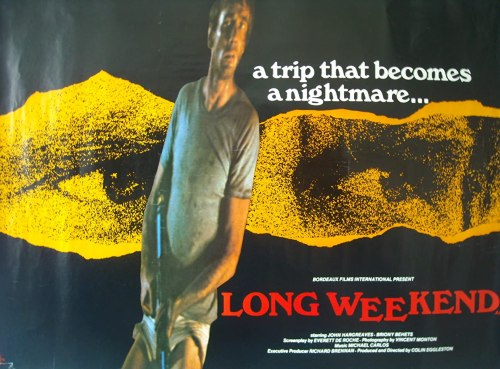
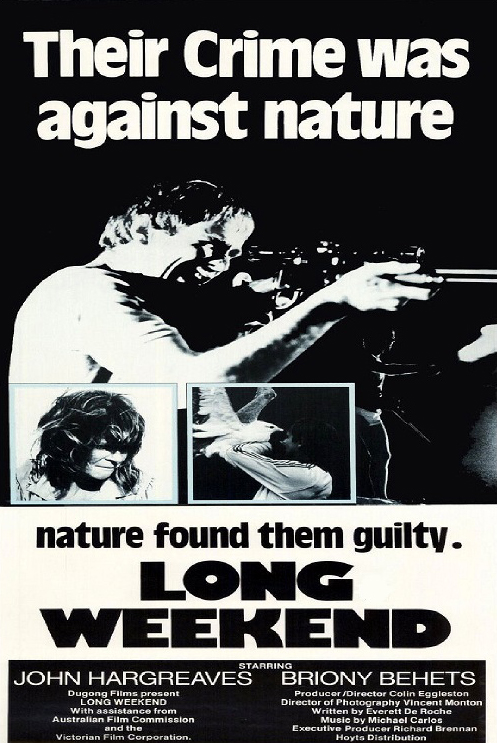
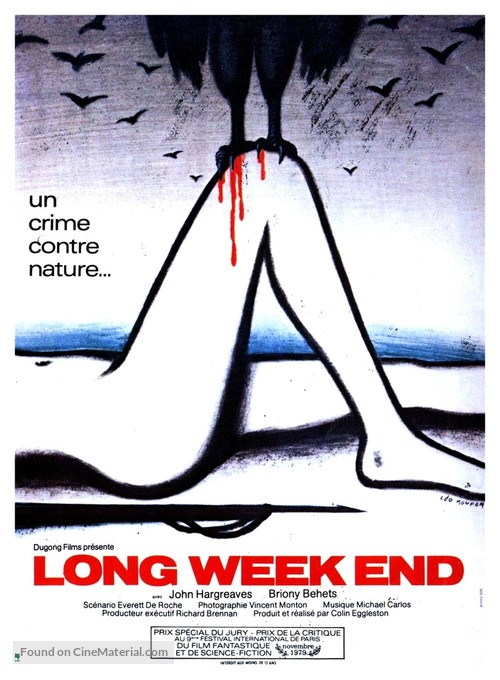
Long Weekend (1978)

By Richard Winters

My Rating: 7 out of 10

4-Word Review:  A couple battles nature.

Peter (John Hargreaves) and Marcia (Briony Behets) are a young couple who are constantly at odds with each other. To help smooth things over they decide to take a trip into the wilderness and enjoy the beauty of the outdoors. Along the way they accidently hit and kill a kangaroo with their vehicle. This sets off a chain-of-events that puts them under the increasing attack of various animals. First Peter must fight off an angry eagle who swoops down at him without warning. Then a possum and even a sea cow who stalks Peter while he is swimming. The two decide they must leave the area in order to save their lives, but everywhere they turn there’s another animal waiting for them.

The story idea is certainly an interesting one, but the concept is too wide-open. Scriptwriter Everett De Roche stated that the premise was all about how Mother Earth had her own auto- immune system and when humans started acting like cancer cells she’d attack, which is great, but why just this couple? There are millions of people who behave just like them, so why don’t they end up getting the same treatment?

The plot needed an extra spin to hold it all together, but it never comes. Having this small remote place hold a mystical power that allowed animals to behave differently than they would normally do elsewhere would’ve at least given it some needed focus. Perhaps a backstory too where other people would’ve gone to this same locale and complained about being attacked. Any extra plotline would’ve helped because the idea that these animals would just randomly attack a generic couple in some isolated moment in time that they never did before or after just doesn’t cut-it.

I didn’t like either that the couple bicker right away, but then later on become lovey-dovey only to proceed back to bickering, which is too bipolar. A better approach would’ve had them getting along at the start and then with the stress of the animal attacks tear their relationship apart, which would’ve created a more interesting character arc, which otherwise is non-existent.

I would’ve preferred that the lead characters been played by macho men who arrogantly tear up the wilderness with their SUV’s and kill the animals for shameless sport. Watching these ‘tough guys’ then unravel once the animals went on the offense turning them into sniveling, frightened cowards would’ve been far more of an entertaining payoff while hitting-home the importance to respect nature  in a more stark way.

The animal attacks aren’t all that riveting and take up very little of the runtime, but the creepy atmosphere is amazing. Filmed on the island of Tasmania I enjoyed the point-of-view shots of the SUV driving through the long, tangled unique looking trees that grow down there where when captured at night and through the beams of the vehicle’s headlights come off looking like gnarled fingers protruding from the ground. The intense music and haunting call of the sea cow are also quite unsettling and get even more so as the couple continues to hear it, which helps to make this a memorable horror flick despite the few drawbacks and a great example at how strong directing can help overcome a flat script. Remade in 2008.

My Rating: 7 out of 10

Released: October 2, 1978

Runtime: 1 Hour 35 Minutes

Not Rated

Director: Colin Eggleston

Studio: Hoyts Distribution

Available: DVD, Blu-ray (Spanish), Amazon Video, YouTube

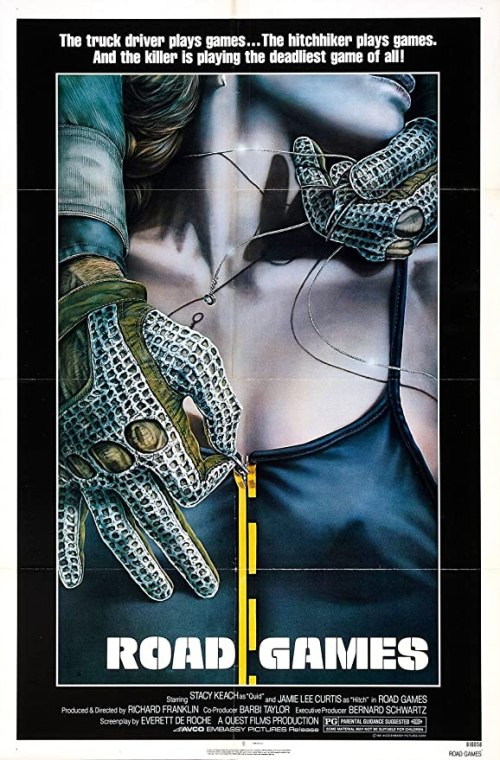
Road Games (1981)

road games 1

By Richard Winters

My Rating: 6 out of 10

4-Word Review: Truck driver pursues killer.

Quid (Stacy Keach) is an American working as a trucker in Australia and hauling a frozen shipment of pigs through the outback and into Perth. Along the way he becomes menaced by a strange man (Grant Page) driving a black van who has a penchant for picking-up prostitutes who then end up dying. Quid is convinced that the man is the serial killer that is being reported about on the news, but before he can go to the police he gets tabbed as the killer himself forcing him, with the help of Pamela (Jamie Lee Curtis) a hitch-hiker he picks up along the way, to find the real killer before he gets arrested for crimes that he did not do.

One of the coolest aspects of this film is its voyeuristic quality where visual clues are a requirement for the viewer to pick up on to figure out what’s going on.  Too many other movies don’t take enough advantage of this idea and usually sell-out by having everything explained through dialogue, but here director Richard Franklin, a major devotee of Alfred Hitchcock, who tried to model the story after Rear Window, keeps the viewer feeling like they’re an active participant.

The film’s drawback, and most likely one of the main reasons it didn’t do well at the box office, is that the tension  ebbs and flows. Too much labor gets put into dressing up the plot with a lot of quirky side stories. This includes having Quid  coming into contact with the same motorists through his travels, which I didn’t think was realistic that these same drivers would be taking the exact same route as him while maintaining the same speeds as he over a several day period, so that no matter where he went they were never far away. I have traveled extensively by car on long road trips similar to this one and have never kept passing the same motorists like Quid does here.

The film also lacks, with the exception of a surprise double ending that comes at the very end,  any type of actual scares. There is a running build-up making you believe that a shock is just around-the-corner, but ultimately it’s a letdown. People watch these things with the anticipation they’ll be jumping-out-of-their-seats at some point, but this is too tame and at certain points it’s almost more like a comedy.

The killer, who was played by a stuntmen and not a professional actor, lacks any type of presence to distinction. For things to get really intense, which it never does, the bad guy has to stand out and make the viewer feel on edge every time they see him, which this transparent guy is unable to do. It would have also been more interesting had his face not been shown until the very end instead of Quid seeing what he looks like early on when he spots him through his binoculars.

I was surprised why the two lead characters were played by Americans since the setting is the down-under and the story better served by performers who were native born. That’s not to say that Keach or Curtis don’t give engaging performances because they do, but I don’t believe there’s too many American truck drivers working in Australia, so there needed to be some explanation for why Keach was there and why, being that he was not from the region, he was so educated about the history of the area, as evidenced when the two camp-out overnight and he tells her the back story of an abandoned telegraph station that sits nearby.

The romantic undertones that are lightly introduced does nothing but sap away the tension. I also found it curious why Curtis would be trusting of Quid upfront as she’d have no idea whether the serial killer could’ve been him and therefore she should’ve been more guarded, which she isn’t.

The climactic sequence features a unique car chase where three vehicles follow each other around the back alleys of Perth late at night, but at very slow speeds, which surprisingly is effective. However, the script should’ve been tighter and the editing quicker. The film’s leisurely pace and colorful supporting characters works against it. There needed to be more shocks, more of a confrontation between Quid and the killer, and basically just more of a conventional thriller-like approach.

My Rating: 6 out of 10

Released: June 26, 1981

Runtime: 1 Hour 41 Minutes

Rated PG

Director: Richard Franklin

Studio: Embassy Pictures

Available: DVD, Blu-ray, Amazon Video

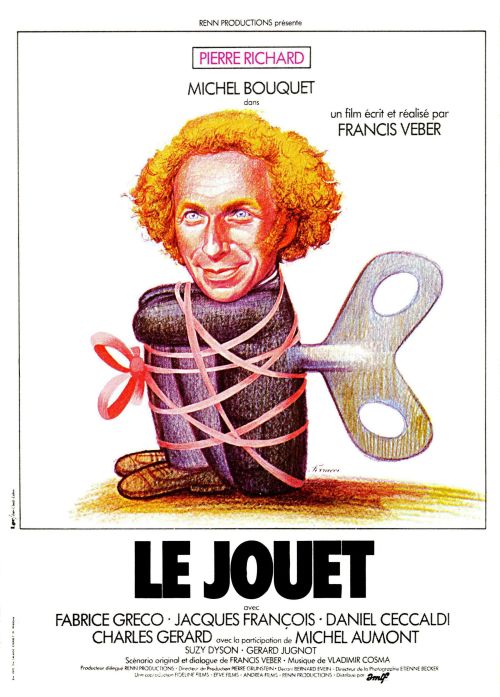
Le Jouet (1976)

By Richard Winters

My Rating: 8 out of 10

4-Word Review: A rich kid’s plaything.

Eric (Fabrice Greco), the son of Pierre (Michel Bouqet) a rich business tycoon, is used to getting his way, so when he goes to a toy store, where he’s informed he can have anything he wants, he chooses Francois (Pierre Richard). Francois is a struggling journalist looking for income and decides to go along with the outrageous proposition of being a child’s toy because of the money he’s offered, so he gets put into a crate and ‘delivered’ to the home just like a regular large ‘toy’ would. He’s then forced to amuse the child at all times and catering to any whims of fancy that he may have. While this arrangement is initially quite awkward Francois is eventually able to form a bond with the boy and the two then set out to teach the arrogant father a lesson.

The script, which was written by the prolific Francis Veber, who also directed, lends keen insights into capitalism and the corporate company structure. While Pierre seems to be the one that is being put into a degrading position and treated like a puppet, it’s actually the company yes men that surround Eric’s father and obediently do anything he demands who are the real toys and yet none of them see it.

Richard does quite well in the lead and despite being put in a humiliating situation ends up showing much more self respect than many of the other characters. Greco is equally good in this his only film appearance. Initially I thought I was going to really hate this spoiled kid, but Veber’s adept writing creates a child character who’s very savvy to the foibles of the adult world  and ends up showing a hidden motivation for why he does what he does that eventually comes out later.

The only performance that I didn’t care for was that of Bouquet. While he has an impressive acting resume and is still appearing in movies at the ripe old age of 95 having just starred in one that came out this year and working steadily in films since 1947, which makes for one of the longest career spans of any actor ever, I still felt here he wasn’t right for this part. His facial expressions are dull and one-dimensional and he’s never funny with his grey hair making him seem too old to be the father of such a young boy.

The film does get a bit heavy-handed at times making its targets too obvious, but it’s still filled with some acerbically funny moments including my favorite scene where Eric and his father walk-in on a family eating dinner and he offers them a lot of money if they agree to on-the-spot sell their home and leave, so after a brief conference the family immediately starts packing. Even with some minor blemishes it’s still far superior to its American remake, which will be reviewed tomorrow.

My Rating: 8 out of 10

Released: December 8, 1976

Runtime: 1 Hour 35 Minutes

Rated PG

Director: Francis Veber

Studio: AMLF

Available: DVD (Region 2), Blu-ray (Region A/B/C), Amazon Video (Dubbed), YouTube (Dubbed)

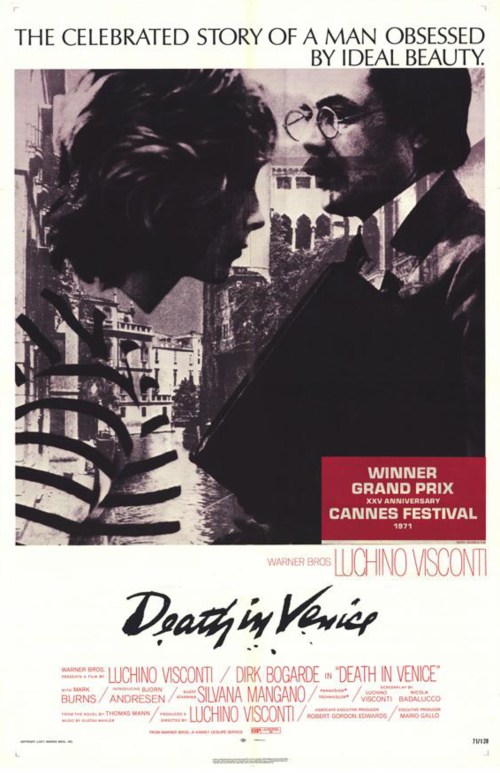
Death in Venice (1971)

By Richard Winters

My Rating: 7 out of 10

4-Word Review: Man obsesses over boy.

Based on the Thomas Mann novel of the same name, the story centers around Gustav von Aschenbach (Dirk Bogarde) a composer in the decline of his career and suffering from ill health. To recuperate he travels to the Grand Hotel des Bains in Venice, Italy, but finds his relaxation cut short when he becomes infatuated with Tadzio (Bjorn Andresen) a 15-year-old Polish boy who’s staying with his family. Gustav can’t seem to keep his eyes or mind off of him, but never physically approaches the teen or makes any attempt to communicate with him. While his fixation grows so does the cholera epidemic that is gripping the city, which may end up taking both of their lives.

Like with most of director Luchino Visconti’s films the pace may be too slow for some viewers, but I found it to be fascinating right from the get-go. One of the aspects that really stood out is Visconti’s ability to recreate a period atmosphere. Nothing seems stilted or rehearsed. Visconti wisely pulls the camera back and allows things to happen naturally. The people in the background don’t seem like film extras at all, but real people going about there lives that Bogarde just happens to be in. It’s also really cool that it was shot at the Grand Hotel des Bains where author Mann stayed in 1911 when the real incident that the story is based on occurred.

I liked too that Gustav does not play-out is mental fantasies and remains at a comfortable distance from the boy at all times. Too many other movies give off this impression that everyone who obsesses over somebody else immediately goes after the person they’re attracted to when in reality many don’t. For some they realize things would never work out with whoever they’re attracted to as well as the legal ramifications, or because of the fear of rejection they prefer to keep it at a fantasy level. While they may still figuratively stalk the person, or observe them intently, it never goes beyond this point. In fact the ones that do aggressively go after their target are more the exception than the rule although in the movie world you’d think the opposite was true, so it’s nice to have at least one film that takes this topic in a different direction.

The fact that its based on a true story that Mann eventually fictionalized in his novel makes it all the more interesting. According to Mann’s wife Katia in a 1974 memoir she describes how her husband kept staring at a young boy he saw at the hotel whom she described at being 13 and was portrayed in the movie as being 15, but in reality was only 11. She stated that he kept gazing at the boy the whole time and always thought about him during their vacation.

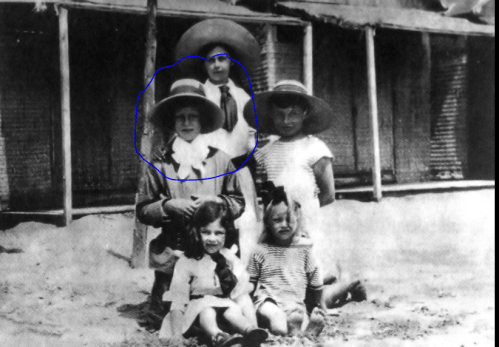
The actual source of Mann’s attraction was later discovered to be Baron Wladyslaw Moes who was on vacation with his three sisters and had no idea that he was being observed. In fact Moes only became aware that he’d been the inspiration for the book when he saw the film upon its released in 1971. The biggest irony is that Moes looked nothing like the Tadzio character in the movie as evidenced by the below photo of him (blue circle) taken in 1911 the same year as when Mann spotted him.

The biggest issue that I had was seeing Tadzio making eye contact with Gustav like he’s aware that he’s being watched. Initially when I saw this in the theaters many years ago I took this eye contact thing to being a point-of-view fantasy of Gustav, but upon second viewing it seems the intention was different. Personally I don’t like this idea because at the age of 15 I don’t believe the teen would’ve been able to handle this behavior from an older man and would’ve either confronted him about it, or told someone else. Maybe if Tadzio had been older, like in his 20’s, and use to being seen as an object then maybe, but since he was so young this would’ve been all new to him and thus making him very uncomfortable very quickly and causing him to ultimately unravel.

Andresen’s performance is rather poor to boot. There were other good looking young actors who could’ve easily played the part in a more interesting way, but apparently Visconti was looking for a very specific type of look, but Andresen  appears uncomfortable throughout and has stated in interviews that his experience on the set was not a happy one. Bogarde in turn does quite well as he’s able to create a riveting performance despite having very little dialogue.

My Rating: 7 out of 10

Released: March 5, 1971

Runtime: 2 Hours 10 Minutes

Rated GP

Director: Luchino Visconti

Studio: Warner Brothers

Available: DVD, Blu-ray, Amazon Video, YouTube

The Mirror Crack’d (1980)

By Richard Winters

My Rating: 7 out of 10

4-Word Review: Poison in her drink.

A Hollywood production company arrives in a small English village, where Miss Jane Marple (Angela Lansbury) resides, to film a costume drama. The film will star two actresses, Marina Rudd (Elizabeth Taylor) and Lola Brewster (Kim Novak), who are also bitter rivals. A reception is held to allow the villagers to meet the celebrities. During the reception Marina speaks with Heather Babcock (Maureen Bennett) a devoted fan who tells Marina about having met her years earlier backstage.  While she bores Marina with the details she also drinks a daiquiri cocktail that was laced with poison causing her to die and propelling Miss Marple, who is bedridden with an injured foot, and Inspector Craddock (Edward Fox) to investigate the case.

If there is one reason to checkout this otherwise so-so film it’s to see Taylor and Novak go at it as rival actresses. This was Taylor’s first feature film appearance in 4-years and, if you don’t count her cameo appearance in The Flintstones as well as 1987’s The Young Toscanini, which was never released in the US, the last one of her career. Her standout performance, which amounts to being a mixture of camp and poignant drama, more than makes it worth it and Novak is in top form as well playing-up the comic wickedness to a delicious level. Even Rock Hudson, who was reunited with Taylor 25 years after having done Giant together, does quite well as Marina’s exasperated husband.

Unfortunately Lansbury gets miscast as she was only in her mid-50’s while Marple was considered an elderly woman in her 70’s or 80’s. They dye her hair white in an attempt to make her appear older, but it still doesn’t quite work. It’s also a letdown not to have her in the majority of scenes like you’d expect. While I never read this Agatha Christie novel I have read some others as well as the movies that have been made from her works and all of them had the head detective taking an integral part in the investigation and not shackled up in her home doing nothing to propel the potentially engaging banter that she could have had with the suspects as she interviewed them. Ultimately the supporting cast gets more screen time than she, which was a waste.

The glossy cinematic element that was so apparent in other Agatha Christie movies like Murder on the Orient Express and Death on the Nile is totally lacking here. Some of the on-location shooting does take place in what would be considered large mansions, but the interiors resemble rooms seen in any old building and convey no flair or distinction. Director Guy Hamilton admitted to not liking Agatha Christie’s books nor thinking much of the script, which he openly stated to the producers during the interview and yet they decided to hire him anyways,  but the result, with the exception of the kitschy film-noir opening bit, is mechanical while relying solely on the veteran cast to keep it interesting.

My Rating: 7 out of 10

Released: December 19, 1980

Runtime: 1 Hour 45 Minutes

Rated PG

Director: Guy Hamilton

Studio: Associated Film Distribution (AFD)

Available: DVD, Blu-ray, Amazon Video, YouTube