Category Archives: Drama

Without a Trace (1983)

without

By Richard Winters

My Rating: 7 out of 10

4-Word Review: Her child goes missing.

Susan (Kate Nelligan) works as a college professor while also raising her 6-year-old son Alex (Danny Corkill) as a single parent. Alex normally walks 2-blocks to his school every morning in their Brooklyn neighborhood, so Susan thinks nothing of it when she waves goodbye to him as he turns the corner towards his school while she goes the other way to her job. However, when she returns home and finds that he’s not there she begins to worry. She calls her friend Jocelyn (Stockard Channing), who has a daughter the same age as Alex, only to learn that Alex never showed up to school that day. She then immediately calls the police and Detective Al Manetti (Judd Hirsh) becomes the lead investigator in the case to find the child.

The story is loosely based on the real-life case of Etan Patz who disappeared one day while walking to school on May 25, 1979. Not only did he become the first child to appear on a milk cartoon for missing children, but it also inspired Beth Gutcheon to write a novel, which was a fictionalized account of the his case that was later purchased by producer Stanley R. Jaffe in the amount of $350,000 to turn it into a film, of which Gutcheon was hired to write the screenplay.

While the film has a riveting quality that keeps you watching it does also have a certain ‘genteel atmosphere’ that critic Leonard Maltin complained about in his review, that keeps it a bit sterile for its own good. The film acts like child abduction is almost a novelty that’s rare to happen and shocking when it does though kids can go missing each and every day in this country. The detective states that children can be sexually molested by adults though if children came forward about it they’d ‘never be believed’ or ‘taken seriously’, which is something that I think has certainly flipped the other way in this day and age. He also brings up the subject of child porn, which gets called ‘chicken porn’ here, and parents respond in a naive way to this concept, which again is something I think most adults in this era would’ve been familiar with its existence and not act like they’re being told about something completely new they had never heard about.  The police also ‘set-up-shop’ in the women’s apartment turning it into a virtual police station and remain there day-and-night for 6-weeks, which I couldn’t see happening now.

The sequence with a psychic, played by Kathleen Widdeos, I found unintentionally laughable. Her ‘visions’ are quite vague and when she gets pressed to give something specific, like the license plate number of the car, or identity of the kidnapper, she can’t. Yet the mother acts relieved when the psychic says the child is still alive, but since her ‘information’ is so nebulous she could be a con artist making it all up and no one would know the difference.

David Dukes, who plays the ex-husband and father of the child, who at this time was best known for playing the man who tried to rape Edith Bunker, in a memorable episode of the classic TV-show ‘All in the Family’ of which he received several death threats, plays the only character that shows any emotion and thus the only one who stands-out. The movie also examines the detective’s home-life, which I didn’t feel was needed. Normally I say it’s good when we learn more about a cop’s private side, but since he wasn’t the film’s protagonist I didn’t find it necessary and only helps to lengthen the film’s runtime, which was too long anyways and could’ve neatly been told in only a 90-minute time frame instead of 110 minutes.

I did come away liking Nelligan’s performance, some critics at the time labeled her as coming-off as ‘cold’, but I felt she did alright, but was kind of disappointed that Stockard Channing didn’t get the lead instead. At the time Nelligan was considered the up-and-coming star while Channing had been mostly relegated to comedy including two failed sitcoms, but in retrospect Channing has become the better known actress and proven to be highly versatile, so seeing her in the part of mother would’ve been quite interesting and she might’ve even been able to do it better.

Spoiler Alert!

My biggest beef though is with the ending, which is much different than in the actual incident. In the Patz case his body was never found and it turned into a cold case for many years before a man named Pedro Hernandez came forward in 2012 and confessed to the crime. Here though the boy gets found alive having been kidnapped to help take care of a man’s disabled adult sister, but it’s very hard to fathom how much help a 6-year-old could be expected to give an adult woman nor has there ever been in the annals of crime where a kidnapping has been done for this reason. Having the kid immediately answer the door of the home he is supposedly being ‘confined in’ hurts the tension and would’ve been more suspenseful had the police had to search the place before finally finding him hidden somewhere. Also, if the kid is able to open the front door then what’s stopping him from running out at some point and finding help?

The fact that a neighbor woman named Malvina Robbins (Louise Stubbs), who lives next door to the kidnappers and keeps calling the police about it, but they ignore her, really hurts the credibility of the Manetti character who we’re supposed to like and he’s portrayed as being ‘super dedicated’. If that’s the case then he should’ve followed-up on every single lead he could’ve even if he thought some of them might be ‘cranks’ it shouldn’t matter because you just never know. The fact that he doesn’t do this even after she calls the police hundreds of times makes it seem like a dereliction of duty who should be investigated for not  following up and certainly not some ‘hero’.

I realize most audiences want some sort of resolution and making a movie like this that doesn’t have one might prove frustrating, but in real-life a lot of cases like these don’t get resolved, or if they do the findings are a grim one. To have a movie stay realistic the whole way only to tack-on a feel-good ending does a disservice to the many parents whose missing children never come home and thus hurts it from being as insightful and compelling as it could’ve been.

My Rating: 7 out of 10

Released: February 4, 1983

Runtime: 1 Hour 50 Minutes

Rated PG

Director: Stanley R. Jaffe

Studio: 20th Century Fox

Available: DVD-R, VHS

The Gambler (1974)

gambler

By Richard Winters

My Rating: 5 out of 10

4-Word Review: Can’t control his addiction.

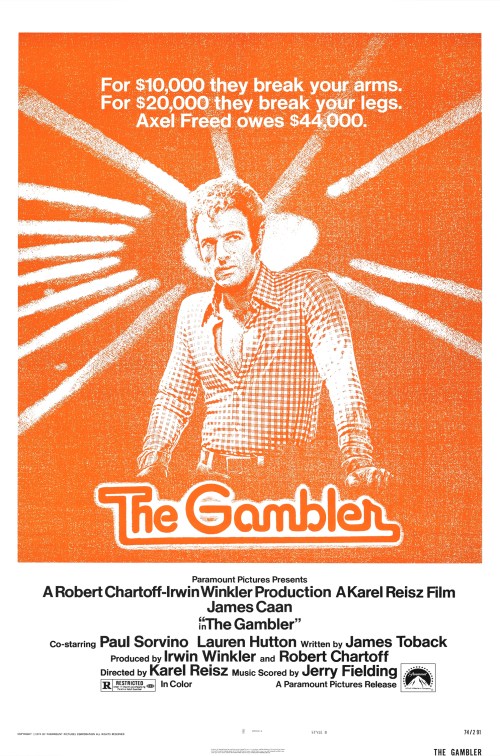
Axel (James Caan) is a college professor with a serious gambling addiction. He enjoys making bets on anything and everything whether it’s in a casino, over the phone betting on sports games, or out on the street playing one-on-one hoops with the neighborhood kids. No matter how much he loses he can’t stop from continuing the same pattern. When he owes $44,000 to the mob and they come looking for him and threatening his life he’s forced to ask his mother (Jacqueline Brookes) for the money and despite her disapproval she gives it to him out of her life savings, but then instead of paying off his debt he just uses it to gamble some more.

The screenplay was inspired by writer James Toback’s own life experiences and was initially written as a semi-autobiographical book before he decided to turn it into a script. The film is intriguing to a degree as gambling addiction is not anything that I’ve ever fully understood, so trying to fathom why some people would put up such huge sums of money to make a bet that they know they have a very good chance of losing, and even if they do lose will still continue to go on making bets anyways is baffling to me. Toback makes good efforts to try to explain the psych of a gambler’s mindset, which mainly gets revealed through Axel’s lectures to his class and at one point during a conversation with his bookie (Paul Sorvino) where he admits he could beat him with safe bets in competitions he was sure to win, but that this wouldn’t give him the same adrenaline rush, or ‘juice’, that placing a more riskier bet would.

Even with these explanations it still becomes gut wrenching watching him spiral out-on-control and dig himself deeper and deeper in a hole until you feel almost like turning away as it becomes genuinely painful, and frustrating, at seeing someone self-destruct the way this guy does. There are some very powerful moments including the scenes where the mother begrudgingly takes her money out of the bank to help him for fear he may lose his life if she doesn’t and her pained expression on her face as she does it really gets etched in your mind. Axel sitting in a bathtub listening to the final moments of a basketball game that he’s also bet big money on where the final score doesn’t go the way he wanted is also quite compelling.

The acting is strong with Caan giving a great performance that Toback originally wanted to go to DeNiro, who campaigned heavily for it, but director Karel Reisz choose Caan instead, only for Caan to state in later interviews that he hated working with him. Comedian London Lee, wearing an incredibly garish bowl haircut, is good in a very sleazy sort of way and Burt Young has a dynamic bit as an enforcer who tears up a lady’s apartment when her boyfriend is unable to repay what he owes. James Woods can be seen in a small role as a flippant bank teller though overall I still felt it was Brookes who steals it as the concerned mother and I was surprised she was not in it more nor that she didn’t get an Academy Award nomination as she really should’ve.

Despite a few powerful moments the pace is slow and there’s a lot of periods where it gets boring and nothing much happens. A lot of the blame goes to the fact that the main character has very little of an arch. He starts out already with the addiction gripping him and we can see what a problem it’s causing and the rest of the movie just continues to hit home this same point until it becomes redundant. It would’ve been better to have seen him before he had gotten into the whole gambling fix took over his life and personality, which would’ve created a far more interesting and insightful transition.

My Rating: 5 out of 10

Released: October 2, 1974

Runtime: 1 Hour 51 Minutes

Rated R

Director: Karel Reisz

Studio: Paramount

Available: DVD, Amazon Video

Cutter’s Way (1981)

cutter1

By Richard Winters

My Rating: 6 out of 10

4-Word Review: Friends help catch murderer.

Richard Bone (Jeff Bridges) driving his old beat-up car, a 1966 Austin-Healey, which breaks down in a dark alley during a late night rain storm. From behind comes another vehicle where the driver dumps something into a nearby garbage can that turns out to being the dead body of a young girl. Since Bone’s car is still at the crime scene the next day when the authorities arrive he quickly becomes suspect number one. Bone’s friend, Alex Cutter (John Heard), a Vietnam vet struggling with alcoholism and PTSD, takes on the process of investigating the case to help get his friend out of trouble. The two soon hone in on a rich local businessman named J.J. Cord (Stephen Elliot) whom Bone swears was the man he saw driving the car that dumped the body.

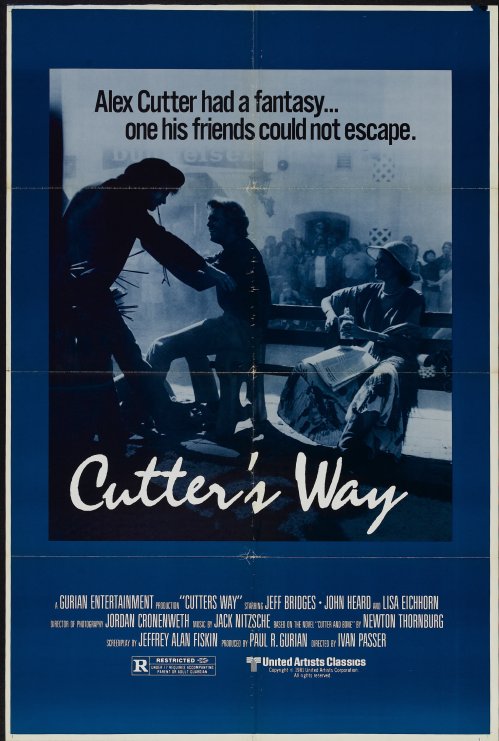
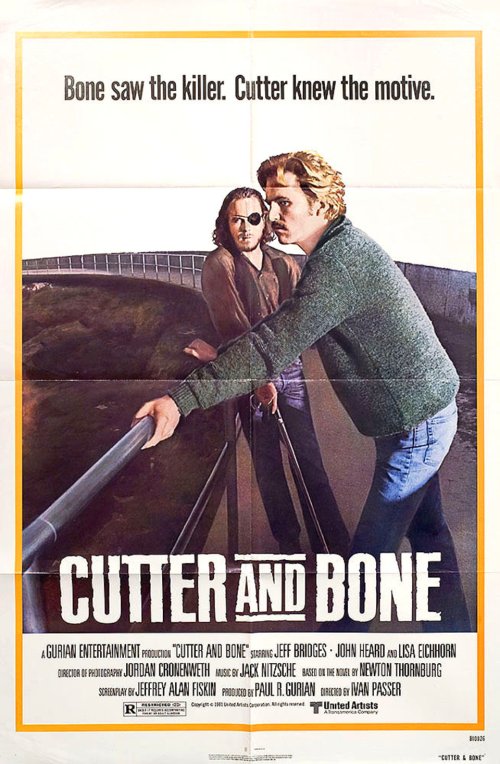
The film is based on the 1976 novel ‘Cutter and Bone’ by Newton Thornburg. Producer Paul Gurian bought the rights to the book and asked struggling screenwriter Jeffrey Alan Fiskin if he’d be interested in adapting it to a screenplay. Since Fiskin was broke at the time, he last sold a screenplay, Angel Unchained, 10 years earlier, he was forced to shoplift the book in order to read and adapt it. David Field from United Artists was open to backing it for $3 million, but only if they could find a big-name star. Gurian then went to the home of Jeff Bridges, where he got attacked by one of Bridges’ dogs thus motivating Bridges to accept the part unseen in order to avoid a possible lawsuit. The film was released in the Spring of ’81 where it fared poorly with the critics and the studio was ready to scrap it only for it to pick-up good reviews a few weeks later. The studio then decided to place the film in their ‘classics’ division where it got retooled from it’s former title of ‘Cutter and Bone’, which they felt made it seem like a comedy about surgeons, to it’s current one and then rereleased it in the fall of that year were through good word-of-mouth it managed to recoup a modest profit.

Director Ivan Passer has stated that his motivation for directing the film was to go against what he felt was the ‘cripple mania’ at the time where film characters would get maimed usually through being in the war and then come back better, stronger people. Here he wanted to show that it didn’t make them better, but instead more dangerous.

While Heard certainly gives a good performance, it was originally intended for Richard Dreyfus, I felt he was too much of a caricature of an angry, wounded war vet and I didn’t find him interesting at all. Bridges was his usual transparent self and thus the interactions between two not all that captivating. Elliott is rather blah as well as the bad guy since for most of the runtime he’s only seen from a distance and never has any lines of dialogue until the final 9-minutes, though this does at least give him a certain creepy/mysterious vibe. Out of everyone I was most intrigued with Lisa Eichorn who plays a woman who bounces between the two friends and seems to want to play-off them both.

The emphasis is on the character study with long takes of Heard snarly at everybody he meets including the next door neighbor’s whose car he crashed into and the the subsequent police report, which goes on too long and doesn’t help the film or story move forward. The mystery isn’t as intriguing as it could’ve been because elements of it fall into place a little too conveniently. Bridges witnesses the killer driving away and then right away the next day spots the guy in a parade. Then a couple of days later the friends are talking about the case at a restaurant where the guys’ wife (Patricia Donohue) is sitting right next to them and overhears everything, which again is letting things fall too neatly into place without much effort.

There’s also questions about why the killer didn’t just run Bridges over with his car when he had the chance in order to avoid any witnesses. Also, Bridges is able to recognize the killer/driver, but when I saw the scene it was impossible to see the face of the driver. The viewer’s perspective should be the same as the protagonist, so if he’s able to get a good look at the culprit then we should’ve too.

Spoiler Alert!

Since everything is tied into circumstantial evidence I was hoping for some unexpected twist at the end. For instance having Bridges’ house get burnt down not because of Cale like they initially thought, but instead from the neighbors still angry over their car. The final confrontation in which Bone apparently shoots Cale (the screen fades to black and we only hear the noise of the gun going off) leaves more questions than answers. Does Bone and to an extent Cutter, who was there in the room with him, now go to jail for this? Seems like that should’ve been confirmed one way or the other and leaving it vague is like showing the viewer only half of the story.

cutter2

My Rating: 6 out of 10

Released: March 20, 1981

Runtime: 1 Hour 49 Minutes

Rated R

Director: Ivan Passer

Studio: United Artists

Available: DVD, Blu-ray, Amazon Video, Pluto, Freevee, Roku Channel, YouTube

Camera Buff (1979)

camera1

By Richard Winters

My Rating: 7 out of 10

4-Word Review: Husband’s hobby ruins marriage.

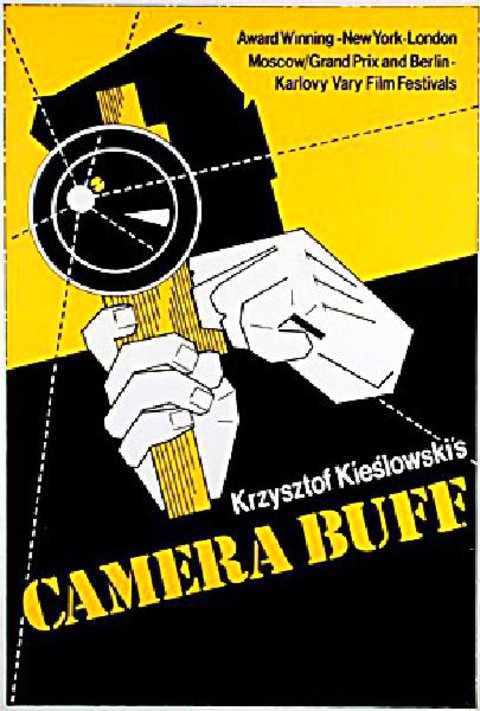
Filip (Jerzy Stuhr) is a factory worker living in the small town of Wielice, Poland. To celebrate the birth of his newborn child he decides to buy a camera to record the event and watching him grow. Because he’s the only one who owns a camera in the town he soon comes to the attention of his boss (Stefan Czyzewski) at the plant he works at who asks him to film an upcoming jubilee celebration that they’re having at the factory. Filip reluctantly agrees, but soon finds himself enjoying the filmmaking process and he begins to record everything around him including some of the corruption that he sees, which gets him into trouble. His wife Irka (Malgorzata Zabkowska) also does not like his newfound hobby as she feels it’s taking too much time and attention away from her and the baby. As his marriage begins to disintegrate Filip is forced to make a hard decision: give up something that he enjoys in order to conform and get along with those around him.

This marks one of the earlier efforts from famed filmmaker Krzysztof Kieslowski. When originally released it was met with a lukewarm response, but as his fame grew it has been reassessed as a classic.  What stood out for me was the interminable grayness that permeates every shot and really helps to hit home for the viewer the bleakness of the everyday living situation of people in a communist country and allows one to understand the need of Filip to find an outlet for his frustrations. It’s darkly amusing how he has to spend so much money, 2-months of his salary, in order to afford this tiny little contraption that can be held in the palm of one’s hand and can only do the most basic of film recording that isn’t even in color and offers no zoom or focus and yet is considered a ‘prized possession’ amongst everyone else around him.

I did appreciate the way it brings out the positive things about movies. The fact that a man who loses his mother can still go back and see the recordings of her that Filip did with his camera to make it seem like she was essentially ‘still alive’ was quite touching and one of the reasons why I enjoy films so much personally in that it has a quality of ‘holding time in place’. The scene where a dwarf worker, who had become the subject of one of Filip’s movies, became so overcome with emotion at seeing himself on the big screen in what had been until then a very ordinary and anonymous life for him, was equally moving.

On the negative side the film tends to go overboard with the dramatics. Having his wife get so upset at the way he enjoyed filming everybody at the jubilee that she goes home and smashes a mirror that cuts her hand was too extreme of a reaction and unintentionally made it seem like she had far more internal issues than just her husband’s hobby. The segment where a woman (Ewa Pokas), an amateur filmmaker herself who works as a judge at one of the festivals he submits his film to, gets so overcome by one of his movies that she leans over and kisses him was overdone as well especially when she later admits she didn’t think much of his movie and only said she liked it to motivate him to continue making more and getting better at it.

The wife’s behavior was the most perplexing. If she really loved the guy then she should be supportive of his hobby since she could see that it made him happy. The fact that she immediately dislikes what he’s doing and openly wants him to fail at it, so he could then turn all of attention back to her and the baby made her seem selfish and that their subsequent separation was a good thing since ultimately they didn’t have much in common. Their conversation where he tells her that he needs more in life than just ‘peace and quiet’ and she looks at him blank-eyed like she can’t fathom what else that would be hits-the-bullseye as there are many people out there, and I’ve known some, who just can’t relate to the artistic endeavors that others may have, which is all the more reason why their marriage was far from ideal and therefore better to expose the flaws of it now then go on living a lie that they were ‘a great couple’ when they really weren’t. The film though seems to parlay the message that it’s a ‘sad thing’ when the marriage disintegrates, but I saw it as a positive because now he has the freedom to pursue his artistic aspirations and meet people who better connect to his interests. The marriage as it was, was nothing but a trap that was holding him back.

Spoiler Alert!

The ending has Filip giving up on his moving making hopes and even destroying the negatives of one of them that was set to be delivered to a TV-station. He does this when he finds out that his last film cost some of the people at his factory to lose their jobs and thus having him conclude that the whole idea was a ‘mistake’. I saw it as the opposite. His movies brought joy and inspiration to people that hadn’t had much of that previously. Sure, it also brought him some trouble, but that was to be expected when living in an environment where self-expression was taboo, but to completely throw-in-the-towel as he does was unnecessarily defeating. I would’ve wanted him to continue on with his new hobby while learning how to be more sophisticated at it to avoid the problems he had earlier. His movie making was not the problem instead it was the flawed society that he lived in.

My Rating: 7 out of 10

Released: November 16, 1979

Runtime: 1 Hour 57 Minutes

Director: Krzyszlof Kieslowski

Studio: Zespol Filmowy

Available: DVD, Blu-ray

Fever Pitch (1985)

fever1

By Richard Winters

My Rating: 3 out of 10

4-Word Review: Sportswriter addicted to gambling.

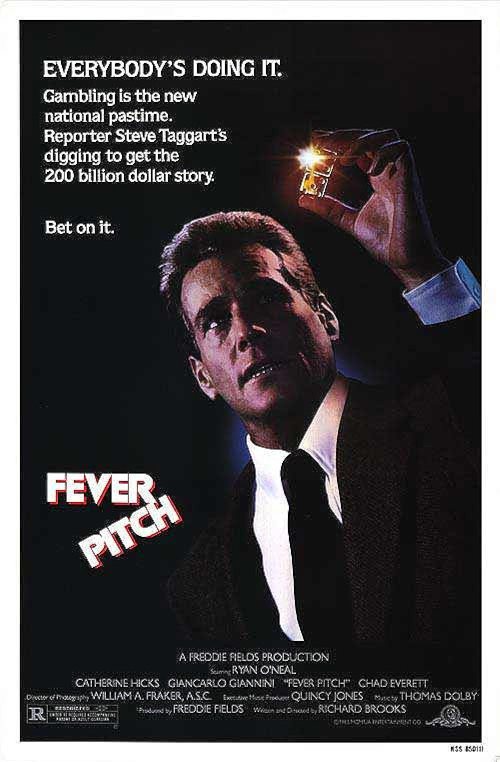
To commemorate the sad passing of Ryan O’Neal just last week we here at Scopophilia decided to review one of his more infamous outings in a film that helped to ultimately bring in his career downfall, which was already fading at the time anyways, but this one was the nail in the coffin. He plays Steve Taggart a popular sports journalist who wishes to do an expose on the gambling epidemic. His editor (John Saxon) gives the okay and so he proceeds to write articles dealing with a ‘Mr. Green’ whose addiction is ruining his life and career. Unbeknownst to his editors Mr. Green is actually Steve whose gambling habit is so out of control that he owes $31,000 to a bookmaker named The Dutchman (Chad Everett) who has a henchman named The Hat (William Smith) that follows Steve around and threatens him with violence if he doesn’t pay up. Steve’s recourse is to simply gamble more hoping somehow to get on a lucky streak and be able to pay it all back when instead he just continues to drown in an even more widening debt.

Writer/director Richard Brooks became fascinated with the topic of gambling while recovering from a heart attack and spent years writing the script, where he intended to have Sam Shephard play the lead. Unfortunately despite his great success with other films this one ended up becoming a giant flop that cost the studio over $7 million to produce, but only recouped a paltry $244,000 at the box office. Derided by both critics and viewers its become a ‘so bad it’s good’ type movie that in the ‘Official Razzie Movie Guide’ gets listed as the 100 Most Enjoyable Bad Movies Ever Made.

The movie would’ve been better had they got Shephard in the lead role as intended instead of the wooden O’Neal who doesn’t show enough emotion, or nuance to make his part interesting. The character would’ve had a better arch had we known him before he got into gambling and could see his downfall right from the beginning versus coming into it when he’s already starting to hit rock bottom. Having the viewer fooled into thinking Mr. Green was a real person might’ve made an interesting twist versus giving it all a way at the start that it’s Steve.

The dialogue is badly overwritten with the character’s regurgitating out gambling statistics like they’re a computer and there’s no conversational quality in anything that gets said. Despite being supposedly this ‘hard-hitting’ look at what goes on in Las Vegas it instead comes-off more surreal as it shows only people who are ‘captivated by the madness of gambling’ like these are the only type of people who exist without countering it with others who are not into it and thus giving it a better balance and perspective.

The story also suffers from too many coincidences and extreme dramatic arcs. The most notable is when Steve finds a soldier (Patrick Cassidy) inside a bathroom stall ready to shoot himself with a gun as he’s so depressed about losing all his money, but Steve stops him from doing it. Then gives the soldier money for airfare and a little bit extra for spending cash. The soldier uses it to continue his gambling where he wins it all back at the craps table making it seem like a ‘happy’ ending and going against the film’s own narrative that wants to show the ‘evils’ of the addiction only to laugh it all away when somebody gets on a magical win streak that somehow makes it all better. Going from potential suicide victim to happiest guy on earth in the matter of only a couple of hours is a bit of a stretch.

Having Steve get physically attacked by The Hat inside a gambling lounge as he has both his shins kicked-in and then miraculously having Flo (Catherin Hicks), a cocktail waitress whom he had a fling with, walk by at the exact same instant when The Hat leaves, so she’s able to help back to her room seemed way to coincidental and convenient. The fact that he doesn’t go to a doctor and able to still walk using only some pain pills to get by was even more absurd. What gets even dumber though is that during the melee Steve injures The Hat, using non other than salt and pepper shakers, causing him to wear a over-the-top neck brace as he goes around town trying to ‘even the score’ with Steve by attempting to kill him, but unable to do so at every turn like he’s morphed into the live action version of Wiley E. Coyote.

Spoiler Alert!

The biggest laugh, or most nauseating moment depending on your perspective, comes at the end when Steve is supposedly ‘cured’ of his addiction by having attended a Gambling Anonymous meeting only to, at the airport waiting to go home, decide to put one last quarter into a slot machine called ‘Bet a Buck for God’ in which he amazingly wins a massive payout and having his winnings immediately handed to him by a woman dressed like a nun. I thought for sure this was some sort of dream, but to my shock it’s not and we’re all supposed to take it seriously.

It then gets even worse as Steve goes on one last hot streak and able to win back all the money he’s owed and thus get out of his predicament, which does a complete injustice to the subject. Many other victims of gambling aren’t able to do this as the movie even says itself the odds are the house will ultimately win making the wrap-up completely false and thus the film’s notorious cornball status is highly deserved.

My Rating: 3 out of 10

Released: November 22, 1985

Runtime: 1 Hour 36 Minutes

Rated R

Director: Richard Brooks

Studio: MGM/UA

Available: VHS, DVD-R (dvdlady.com)

Rage (1972)

rage

By Richard Winters

My Rating: 6 out of 10

4-Word Review: Nerve gas kills son.

Living just outside of Rawlins, Wyoming is rancher Paul Logan (George C. Scott) and his 12-year-old son Chris (Nicholas Beauvy). Since the death of his mother a year earlier the two have shared a special bonding and routinely do many things together as Paul works to guide Chris from being a child to a man. One night they decide to go camping on the outer stretches of their property. While Paul sleeps in a tent his son stays outside in a sleeping bag, but by morning he’s unresponsive and bleeding from the nose. Paul takes his child to a nearby hospital where the doctors aren’t sure what’s caused the condition, but keep him under observation. Behind-the-scenes it’s revealed that Chris has become a unintended victim of a botched military operation from a nearby base where nerve gas was accidentally released to the public. Paul soon comes down with the effects of the exposure as well, but before he dies he intends to get to the bottom of what happened and bring street justice to all those who were behind it.

The film, which was the first theatrical feature that Scott directed, is a handled in an unusual way. Most movies that deal with government cover-ups/conspiracies usually keep it a mystery of who’s behind it. Both the victim and the viewer have no idea what’s going on behind-the-scenes and are left with trying to guess who may be responsible and only at the very end do things get revealed, but in some movies even then many questions remain left open. Here it gets shown right away who’s causing the crisis and why as there are many long, drawn-out meetings between the government agents who almost painstakingly detail of what went wrong and how they’re going to cover it up. In fact there’s more scenes, especially in the first half, with the military brass and their co-horts than with Scott making it almost seem like he’s just a side character.

Spelling everything out may seem like a bad idea as part of what creates the suspense in these types of stories is the unknown. Yet it still held moderate interest though the scenes are overly talky, at least the first two acts. It’s also not explained what happens to Dr. Caldwell (Richard Basehart). He initially goes along with the government agenda to keep things quiet, but eventually changes his mind and decides to tell Paul the truth, but then he’s confronted with the agents who bring him into a hospital room and close the door, but it’s never shown what they do with him. He’s reappears at the very end, but no explanation for where he was in-between, or how the government managed to make him ‘disappear’ for awhile. For a movie that seemed intent to explain everything I felt this was one area that needed to be better played out.

Spoiler Alert!

Where the film goes really off-the-beam is when Paul exacts his revenge, which has him killing many indiscriminate people. Some of it turns quite savage particularly when he blows up a police car and the cops jump out screaming in pain as the hot flames rise off their bodies. At one point he even shoots-up a cat who tries to come to the aid of its owner, which has to be some sort of cinematic first. Normally other movies with this type never have the hero kill anyone and will usually just hold people that they come upon, like cops or security guards, hostage by tying them up. Here though he blasts them away without pause. Some critics have said this was a mistake as the protagonist loses his likability factor with the viewer, but in some ways if you’re really going to try take on something as big as the government then ultimately things will get ugly especially if the person is willing to go ‘all-in’ making it in a nihilistic way quite realistic.

The ending though is what really hurts it as Paul dies while the government agents callously watch on and then flown away via helicopter to some undisclosed location. I know 70’s movies were notorious for their unhappy endings, but this one piles-on that notion a bit too much. Outside of blowing up the research center, which could easily get rebuilt, Paul’s actions made no difference. The viewer likes to see their hero have more of an effect on things and to end it like this makes it overly defeating. Had we gotten to know the Paul character better and there had been more of a backstory then maybe his final rage at the system would have had more of a dramatic effect, but as it gets presented here on an emotional scale it’s unsatisfying.

My Rating: 6 out of 10

Released: November 22, 1972

Runtime: 1 Hour 39 Minutes

Rated PG

Director: George C. Scott

Studio: Warner Brothers

Available: DVD-R (Warner Archive), Amazon Video, YouTube

The Woman Inside (1981)

woman2

By Richard Winters

My Rating: 3 out of 10

4-Word Review: From man to woman.

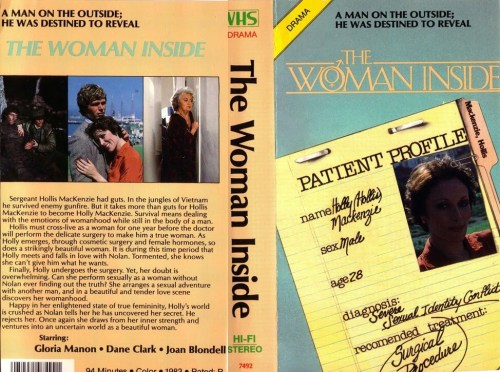
Hollis (Gloria Manon) is a Vietnam Vet. whose suffers from gender dysphoria and decides to begin the process of gender transition with Dr. Rosner (Dane Clark). The first part of the procedure works perfectly as Hollis, who changes the name to Holly, resembles a woman physically and even takes voice lessons so that her voice is higher pitched. She still has a penis, but that doesn’t prevent her from beginning a relationship with Nolan (Michael Champion) though they don’t sleep together and she’s reluctant to tell him about her condition. Eventually she schedules the surgery while telling Nolan she’ll be gone for a couple of months, but when she returns they’ll be able to fully consummate their relationship. In the meantime she begins to question her decision when she joins a therapy group with other people who’ve had the procedure while also enduring verbal abuse from her Aunt (Joan Blondell) who doesn’t agree with the transition and openly mocks Holly for going ahead with it.

While on the surface this may seem like a groundbreaking film it really isn’t as two movies The Christine Jorgensen Story, which came out in 1970, and I Want What I Want, which starred Anne Heywood and released a year after the other one all preceded this movie by a good decade. It also suffers badly, much like with the Heywood film, where the protagonist doesn’t really resemble a guy even though technically that was what he was biologically born into. Instead Hollis looks much more like a woman with short hair and padded outfits and in a lot of ways kind of like Nancy Kulp the actress best known for starring in ‘The Beverly Hillbillies’ TV-show. Her attempts to speak in a lower voice doesn’t sound authentic and I felt it would’ve worked better had a biological male actor been cast in the part as the scenes with Manon trying to come-off as a guy is awkward and not believable.

The scenes where she goes back to the gas station, where she once worked when she was still a guy, and trying to get-it-on with Marco (Michael Mancini), a man she had a confrontation with earlier while she was Hollis, is ridiculous as well. Marco apparently doesn’t recognize her as the person he knew when she was a man, which I just couldn’t buy into, as Holly’s face is essentially she same as it was when she was Hollis except her hair’s is longer and she has a very distinctive facial structure, so there’s just no way someone that knew her in the past wouldn’t at the very least jog some Deja vu if ultimately connecting the two at some point and for him to go to bed with her without a single inkling is just not plausible.

Holly’s relationship with Nolan, particularly the way it begins, is highly problematic too. She works as a taxi driver and literally picks him up on a street corner at random while he’s in a drunken state, but why on earth would she suddenly fall for a guy, especially in that condition? She also comes upon him right after having a very scary and violent confrontation with another male passenger (Louis Basile) making me think she’d be so traumatized that the last thing she’d want to do is allow another male stranger into her car. Their relationship moves too quickly as they’re already talking about ‘love’ and long term commitment by only the next day. Nolan also transforms from a bum to a well-spoken respectable member of society overnight. The scene where they try to ‘outrun an approaching storm’ is stupid too as we see them madly riding their bicycles in an attempt to escape while above them is sunshine and blue skies.

Things improve a bit by the third act particularly the scenes involving the therapy group, which the movie should’ve had more of. Some commenters on YouTube, where the film is currently streaming for free, that also suffered from gender dysphoria seemed to appreciate the movie more than others, so if you personally connect to the subject matter you’ll most likely like it better, but on a technical end it’s botched.

This too marks, at least in most reference sites, as being Joan Blondell’s final film appearance though that’s not completely true. While this was the final film to be released with her presence, in fact it came out after she had already passed away, it was filmed in March, 1978 while The Glove, another movie she was in, was shot in April of that year, so technically that was her last film appearance even though it got released before this one.

My Rating: 3 out of 10

Released: September 15, 1981

Runtime: 1 Hour 34 Minutes

Rated R

Director: Joseph Van Winkle

Studio: 20th Century Fox

Available: VHS, DVD-R (J4HI.com)

Stardust Memories (1980)

stardust2

By Richard Winters

My Rating: 5 out of 10

4-Word Review: Director unhappy with career.

Sandy Bates (Woody Allen) is going through a lull in his career. While he’s had success in the past at making comedies he’d like to now move into more serious material that’s dramatic in nature though his many fans and studio heads insist he should stick with what made him famous and what the public wants. While attending a film retrospective of his movies at the Stardust Hotel he ponders about his life. He remembers a fling that he had with a beautiful actress named Dorrie (Charlotte Rampling) that didn’t work out due to her insecurities about herself and her career. He also meets up with a young woman named Daisy (Jessica Harper) whom he’s attracted to and openly flirts with even as his current lover Isobel (Marie-Christine Barrault) flies into town and announces that she’s left her husband and wishes to commence with a committed relationship with Sandy whom she expects will also help with raising her two children. As Sandy ponders what to do next he finds out that the studio has reshot a different ending to his latest movie, which further sours him on the business.

Many critics at the time gave this negative reviews feeling it was too self-indulgent and more like a personal diary than a movie. I did though like the black and white photography by Gordon Willis, which is so pristine that just watching the characters walking into an empty room with sunlight pouring through the windows looks dazzling. Allen’s comments on the film business are honest and relatable and it’s interesting to see that even when one becomes a proven commodity he can still be pressured by producers to change his films into something he’s not happy with simply for the sake of having more of a commercial appeal, which proves no matter how successful, or ‘big-name’ you get that’s one obstacle that seemingly will hamper everyone. Allen’s constant run-ins with his fans, which becomes the film’s running joke, and their odd requests as they pander to him in hopes of making it big in the business themselves are quite funny and true to form.

The story though is structured in such a fragmented way that it’s hard to get into. Sandy’s relationship with Dorrie is especially confusing. For one thing he comes onto her while she’s on a film set by telling her how beautiful she is, which seem to be the oldest and corniest come-on lines in the book and yet she’s fully taken aback with his compliments and this immediately turns into a relationship though in reality most women would likely give the guy the eye-roll and a quick rebuff. This though may be part of the joke by showing that because Sandy is a well-known director he’s able to get away with the corny lines that other guys wouldn’t, but even so these scenes are strained and annoying.

I felt Sandy’s conversations with Daisy was far more interesting and his budding relationship with her should’ve been explored much more, but isn’t, which wastes away a fabulous performance by Harper who plays the one character in the movie that I found relatable. Barrault is engaging as well particularly the scene where she does her facial exercises and having the story focus on his on-going relationship with her while also seeing Daisy on the side would’ve created the intriguing juxtaposition that was needed, but otherwise missing. Dorrie on the other hand comes-off like a caricature of just about every Hollywood starlet out there making her moments contrived and unnecessary.

While there are a few funny moments with the best one being Sandy’s close encounter with a group of space aliens it’s never enough to carry the picture. Having a more conventional storyline instead of the dream-like tone would’ve allowed the viewer to get more into what was going on emotionally versus sitting through what seems like an experimental movie that never quite catches its stride. Having Allen play somebody that wasn’t so much like himself would’ve helped too as it’s almost a joke to think he’s playing anyone else and should’ve just called himself Woody and made it more like a pseudo-documentary, which is what it ultimately is anyways.

I was though struck by the one part where Dorrie comes home furious with Woody for staring at her 13-year-old cousin the whole night they were at dinner and implying that he may have unhealthy feelings for her and thus essentially at least mentally ‘cheating on her’. Woody doesn’t really put up much of a defense, which I found even more amusing since 30 years later in real-life he got accused of improper behavior. Now, I wasn’t there and don’t know what happened and don’t want to make it sound like I’m trying to make conclusions, or taking sides. In the eyes of the law he’s innocent until proven guilty in a court of law, but I still couldn’t help seeing the irony. Maybe it was just a coincidence, or maybe he was subconsciously revealing through the Sandy character something he may harbor. Hard to say, but given the hindsight it’s difficult to walk away and not have that moment stand out.

My Rating: 5 out of 10

Released: September 26, 1980

Runtime: 1 Hour 28 Minutes

Rated PG

Director: Woody Allen

Studio: United Artists

Available: DVD, Blu-ray, Amazon Video

Last of the Mobile Hot Shots (1970)

lastmobile

By Richard Winters

My Rating: 4 out of 10

4-Word Review: A game show wedding.

Myrtle (Lynn Redgrave) and Jeb (James Coburn) meet at a game show being taped in New Orleans and find themselves working together as contestants when brought up onto the stage. They end up winning some money, but are told that they cannot collect it until they’re officially married on live television, which they both agree to. After the nuptials they travel to an old mansion known as the Waverly Plantation that has been in Jeb’s family since 1840. Jeb wishes to use the money earned on the game show to fix up the place, but finds his plans being stymied by Chicken (Robert Hooks) a multi-racial half-brother that has been residing at the place and maintaining it for many years. Chicken insists that he’ll become the next owner of the place once Jeb succumbs to terminal cancer, but Jeb wants Chicken off the premises immediately and have the document stating that Chicken is the next of kin to be destroyed. He orders Myrtle to flirt with Chicken until she can get him into a compromising position so that she can steal the document. Once that is retrieved he then wants her to kill him with a hammer while Jeb waits upstairs. Though initially reluctant Myrtle decides to go through with the plan only for Chicken to turn-the-tables on them with an unexpected twist.

While playwright Tennessee Williams is celebrated for his acclaimed work like A Streetcar Named Desire and Cat on a Hot Tin Roof many people don’t realize that his biggest success came early in his career while towards the end,  especially by the mid-60’s through to his death in 1983, his output was very little and what he was able to get produced was generally not well received by either the critics, or the public. This film is based on his play The Seven Descents of Myrtle, which was originally written as a short story in 1942 and published in 1954. Williams then decided to turn it into a one-act play in 1967, but then expanded it to a full length stage production, which premiered on Broadway on March 27, 1968 with Harry Guardino as Chicken and Estelle Parsons playing Myrtle. This version though only ran for 29 performances and was generally considered a failure.

However, director Sidney Lumet saw the production and decided he wanted to take a stab at turning it into a movie. He made several changes to the story with the biggest one being that in the play the Jeb character, who was called Lot, was a closeted transvestite, which is something that the movie doesn’t bring up at all though would’ve been far more interesting had it done this. The play also doesn’t feature the game show segment, which was very surreal and makes the film seem almost like a misguided parody.

I did enjoy the way famed cinematographer James Wong Howe captured the decaying mansion, which was filmed on-location in St. Francisville, Louisiana, a famous small town known for its abundance of historic old buildings. Everything else though falls flat. The opening bit at the game show is funny, but becomes jarring with the second-half, which is more dramatic making it seem like two completely different movies with highly inconsistent tone rammed into one. The Myrtle character is not fleshed-out enough to make any sense, or even seem remotely believable and ultimately like with the rest of them comes-off as an empty composite that is not relatable in any way to real people.

The acting though by Redgrave is quite strong. Normally British actors have a hard time masking their accent, but here she’s able to speak in an authentic Southern dialect without her European voice being detectable in the slightest and she puts on a provocative striptease to boot. Hooks dominates the proceedings and ultimately outclasses Coburn who later admitted regret at doing the project and considered his appearance here to be a low point in his career. Having Williams write the screenplay might’ve helped and I’m not sure why he wasn’t asked, but Gore Vidal doing the task turns the whole thing into an absurd misfire that should never have been attempted.

My Rating: 4 out of 10

Released: January 14, 1970

Runtime: 1 Hour 40 Minutes

Rated X

Director: Sidney Lumet

Studio: Warner Brothers

Available: DVD-R (Warner Archive)

Square DANCE (1987)

square

By Richard Winters

My Rating: 3 out of 10

4-Word Review: Moving to the city.

Gemma (Winona Ryder) is a country girl whose never known life beyond the small Texas farm that she lives on with her grandfather (Jason Robards). She at times though does think about her mother (Jane Alexander) who lives in Dallas and what city living would be like. One day her mother takes a rare trip to the farm and invites Gemma to come live with her. Gemma is turning 13 and intrigued to spreading-her-wings. While she loves her grandfather she’d be interested in trying something new, so she agrees to go with her while promising to write home to her grandfather regularly. Once there she finds the jaded lifestyle of her mother and the people around her not to be to her liking as Gemma is quite religious and reads her Bible often. She does though meet-up with Rory (Rob Lowe) a young man who is mentally handicapped, but professes to love her and the two plan to one day get married despite the opposition by her mother and those around her.

This was a film produced by Michael Nesmith better known for being a part of the Monkees rock band in the 60’s. Some of the other films he produced were of a comical/surreal nature, but this is one of the few dramas that he did (the film was also co-produced by co-star Jane Alexander and actor Charles Haid) and while some of his comedies weren’t so great this thing could’ve used some laughs to help liven it up. While the intentions may have been laudable the result is mostly tedium as its attempts to reflect the slow lifestyle of country living backfires creating a movie that’s too methodically paced to ever become interesting and the fact that it managed to only recoup $225,000 at the box office out of its initial $4 million budget is no surprise.

If you watch this movie for any reason do it for the acting, which is exemplary. Ryder, in only her second film appearance, crafts a shy, awkward and sheltered teen quite well and her performance helps guide the viewer through the lulls. Robards and Alexander are equally fine, which is to be expected, but Lowe is probably the most impressive playing against type. Usually he played cocky, worldly-wise types, but here shines as a kind, but dim-witted soul though his delivery, in retrospect, comes-off too much like Tom Hanks in Forrest Gump. Granted this one came out 6 years before that one, but since that film is more famous than this one you can’t help but compare the two and come away feeling, despite Lowe’s best efforts, that his acting here is a bit affected.

The story is too minimalistic as not enough happens to justify sitting through 90-minutes of it. I had a hard time buying into Gemma believing she could marry a mentally handicapped man and having it work out. Granted she’s not worldly-wise and lacks sophistication, but I felt this type of thinking was too naïve even for someone with her background. Wanting to help the man and take care of him possibly as a guardian of some kind would be fine, but the love aspect gets overblown and makes the film come-off as overly idealized and not realistic.

None of the characters, with the exception of maybe Lowe’s, goes through much of a transition. I was expecting Gemma to become corrupted by the jaded ways of the people she meets and possibly even becoming less religious, or even beginning to question her faith, but none of that happens. Gemma basically remains the same, even after a few tussles, and returns back to the farm like nothing happened, which made me wonder what was the point. There’s way too many loose ends that are left open like the grandfather’s lingering racism and his inability to get along with a black friend he used to play with when he was a kid. Gemma invites the black man over for dinner, but the film fails to show us whether the two men begin talking, or remain silent. A good drama should give us some conclusion to things and see the characters grow, which in this case it doesn’t do making the whole thing seem half-baked and not worth the effort or time.

My Rating: 3 out of 10

Released: January 16, 1987

Runtime: 1 Hour 52 Minutes

Rated PG-13

Director: Daniel Petrie

Studio: Island Pictures

Available: DVD-R