Category Archives: Drama

The Revolutionary (1970)

the revolutionary 2

By Richard Winters

My Rating: 6 out of 10

4-Word Review: He fights against capitalism.

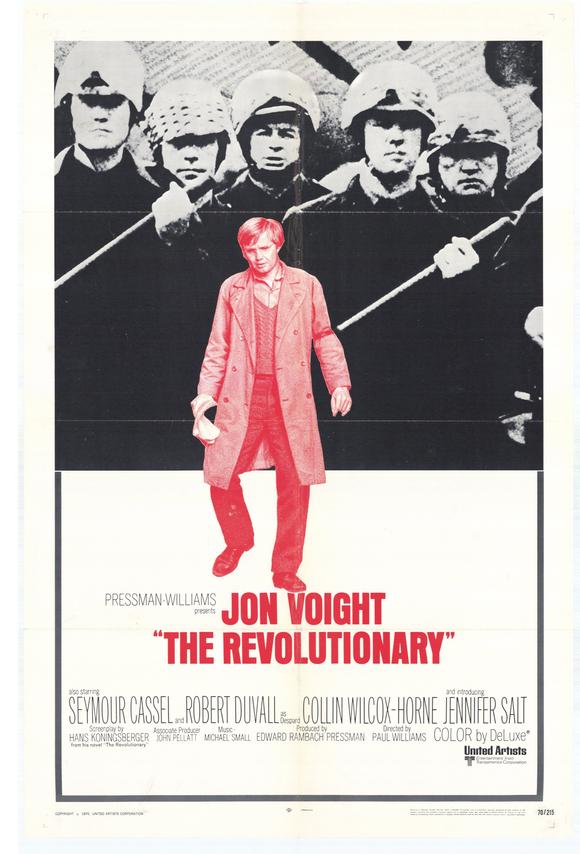
Jon Voight plays a college student involved in a student protest group called The Radical Committee. They push for social change particularly with a more communist/socialist style of government, which he becomes fonder of after working with Despard (Robert Duvall) a nearby factory worker who’s trying to start a union up at his plant. After being suspended from the school for his radical views he becomes frustrated at seeing how his work and actions seem to have very little influence or effect. He then meets up with Leonard (Seymour Cassel) who is a more seasoned radical and not shy about using violent or unethical methods to make his point and pressures Voight to start doing the same.

On the whole despite its slow pace this is a slickly produced intriguing character study. I enjoyed the grainy pictures of the 1917 Bolshevik Revolution shown over the opening credits, but I didn’t like the film’s choice of on-location shooting. Supposedly it takes place in a small American city, but it doesn’t resemble one since it was filmed in London, which gives everything from the old buildings to roadways and sidewalks a European look that you never see in any American town or city. There is also no explanation initially about what the students are protesting against or why they are at odds with the school, which makes the storyline seem generic and hard to get into at first.

I loved Voight’s character as it is similar to his Joe Buck one in Midnight Cowboy with all of the social awkwardness, but fortunately he is not as painfully dumb. It is interesting to see how such a highly intellectual man with strong opinions and ideals can still at times be quite timid. I was looking forward to seeing the character go through a transition and was disappointed that it took so long to get there.  To me the ending should’ve been the beginning and the fact that it isn’t hurts the film’s overall impact. I was also confused as to why the Jennifer Salt character, who plays a young lady from an affluent family, would find Voight so appealing, or why she wanted to continue to go out with him, which to me demanded more of an explanation.

The scene in which a mob gets attacked by some riot police is photographed in a way that makes it intense and startling and could’ve been extended even more. The ending is nerve wracking and great example of how complete silence without any music can sometimes create far more tension. Unfortunately the ambiguous resolution is a disappointment and after such a long and deliberately slow build-up comes off almost like a cop-out.

My Rating: 6 out of 10

Released: July 15, 1970

Runtime: 1Hour 40Minutes

Rated R

Director: Paul Williams

Studio: United Artists

Available: DVD (MGM Limited Edition Collection), Amazon Instant Video

Urban Cowboy (1980)

urban cowboy 1

By Richard Winters

My Rating: 3 out of 10

4-Word Review: Ride the mechanical bull.

Bud (John Travolta) has just moved to the big city of Houston and is looking to fit-in and prove himself to the local crowd. He finds his niche at a local hang out called Gilley’s where he gets noticed for the way he rides the mechanical bull that is there. He also meets Sissy (Debra Winger) who he quickly falls in love with and marries. Sissy takes an interest in riding the bull as well, but Bud refuses to allow it as he is afraid it might compete with his own macho image. When she does it anyways he becomes angered and the two break-up, but secretly long to get back together especially when the other relationships that they get into aren’t as fulfilling.

This movie, which is based on a magazine story, is highly disjointed and doesn’t have any type of seamless pace. There is way too much footage of people dancing on the barroom dance floor and the amount of songs that get played, which ends up being 30 as I counted them during the closing credits, is too many. The songs themselves are great, but by playing so many it starts sounding more like a radio station playlist than a movie soundtrack. The Texas caricatures also get overdone. In this movie everybody wears a cowboy hat even though I have now been living in this state for 4 months and can count on the fingers of one hand how many people I’ve seen wearing one since I’ve moved here. The Texas drawls of the characters are a bit too heavy and at one point during Bud’s job interview the interviewer refers to Bud as ‘boy’ or more aptly ‘Bo-AH’. I realized that this was made 35 years ago, so it may just be life from a different era, but it still seemed over-the-top and not a balanced, realistic view of the state as a whole.

Travolta’s presence doesn’t help as it reminded me of Saturday Night Fever as both of those characters go through the same type of growing pains into manhood. The sexist, immature way that he treats Sissy really got on my nerves and he was certainly not the type of character I would want to make the center point of a movie. Winger on the other hand is beautiful and far more appealing. The fact that she gets treated just poorly by her second boyfriend (Scott Glenn) is equally irritating and I started to wish they had written out the two dipshit male leads completely and made her the sole centerpiece of the story. I also liked Barry Corbin in support as Bud’s uncle, but the way he dies by getting struck by lightning is hooky.

The riding the mechanical bull stuff to me looks unintentionally funny and even strangely sexual. It’s also not all that interesting to watch and quickly becomes repetitive to look at, which severely diminishes the ‘exciting’ climatic sequence that it’s built around. The only scene involving the mechanical bull that I did like is when Winger gets on it and starts riding it in all sorts of different provocative poses, which was fun and sexy.

The second half of the film loses its focus completely and instead of being this intended gritty ‘boy-to-man’ drama becomes more like a soap opera where the emphasis is on whether Sissy and Bud will get to back together, which is not that interesting or original and the schmaltzy ending is Hollywood at its clichéd worst.

My Rating: 3 out of 10

Released: June 6, 1980

Runtime: 2Hours 12Minutes

Rated PG

Director: James Bridges

Studio: Paramount

Available: VHS, DVD, Amazon Instant Video, YouTube

The Christian Licorice Store (1971)

christian licorice store 2

By Richard Winters

My Rating: 2 out of 10

4-Word Review: He searches for answers.

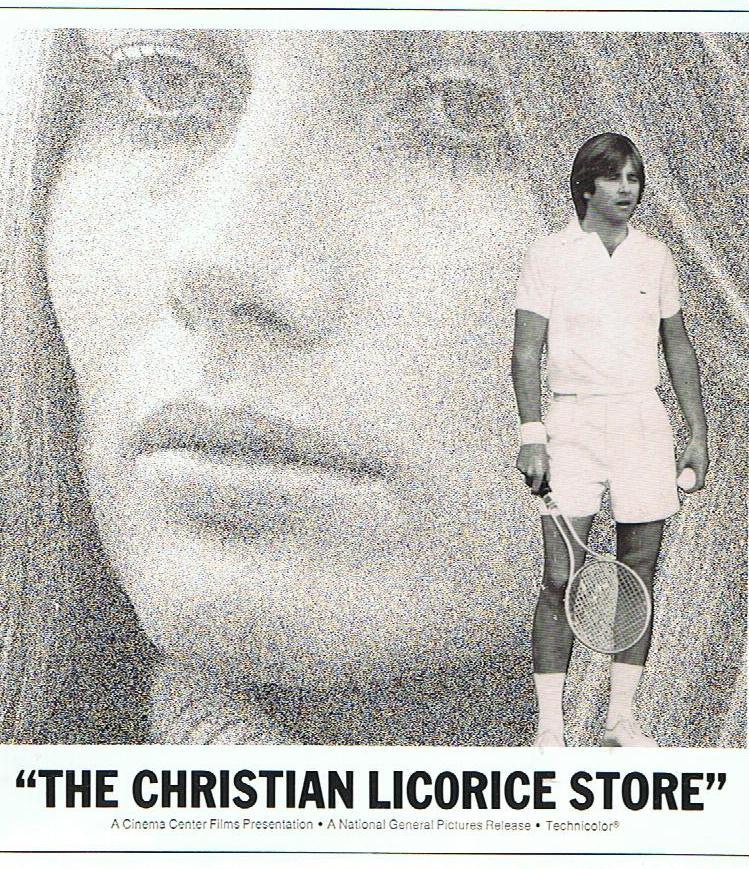
Cane (Beau Bridges) is a successful tennis player who has a close bond with Jonathan (Gilbert Roland) his mentor/coach who at one time during the 30’s was a tennis star himself. Things seem to be going well for him both on and off the court. He even starts fitting in with the chic Hollywood crowd and invited to some of their swanky parties. He meets Cynthia (Maude Adams) a beautiful photographer and their relationship begins to sizzle. Then Jonathan dies suddenly in his sleep and the emptiness in Cane’s life and the people in it come to a head. He begins searching for meaning and finds nothing, which eventually drives him away from his girlfriend, career and life in general.

The film was directed by James Frawley who is the son of actor William Frawley best known for his portrayal of Fred Mertz on the old ‘I Love Lucy’ episodes. James himself dabbled in acting a bit before turning to directing, but proves here to be completely in over-his-head. The attempt to replicate the French new wave type of filmmaking that had become so trendy at that time and done quite well by accomplished directors like Jean Luc Goddard and Michelangelo Antonioni is a disastrous dud and all the more reason why the artsy stuff should stay with the Europeans who have a better handle on it. From the very first shot forward this thing limps along with no pace, story or momentum. The cinema verite-styled takes go on for too long without enough visual flair to help carry it. The perceived ‘sophistication’ is nothing but an empty façade and an embarrassment to watch making it no wonder that the studio shelved this thing for 2 years before finally letting it out to a limited release.

Bridges does well, but the material offers him little to work with. Adams is surprisingly strong and this may be one of her best performances in an otherwise overlooked career. Silent film star Roland is solid as well particularly with the discussion he has with the two leads about aging and the quick passage of time, but he exits the story too quickly. Legendary French director Jean Renoir is the ultimate scene stealer even though he is only in it for less than five minutes, but clearly shows in that brief period how to own the screen and make the most of it in an almost effortless fashion.

The only thing that I liked about this sleep inducing 90-minute bore and actually even found original is the party scene where Beau meets up with several famous directors of the day including Monte Hellman and Theodore J. Flicker. The camera pans between several different side conversations of the various groups of people there and then everyone goes into a small theater to screen a new film where they then watch the opening credits to this film that they are all in, which I found to be kind of cool.

My Rating: 2 out of 10

Released: November 15, 1971

Runtime: 1Hour 30Minutes

Rated R

Director: James Frawley

Studio: National General Pictures

Available: None at this time.

Fedora (1978)

fedora 3

By Richard Winters

My Rating: 2 out of 10

4-Word Review: Old actress stays young.

This Review Contains Spoilers!

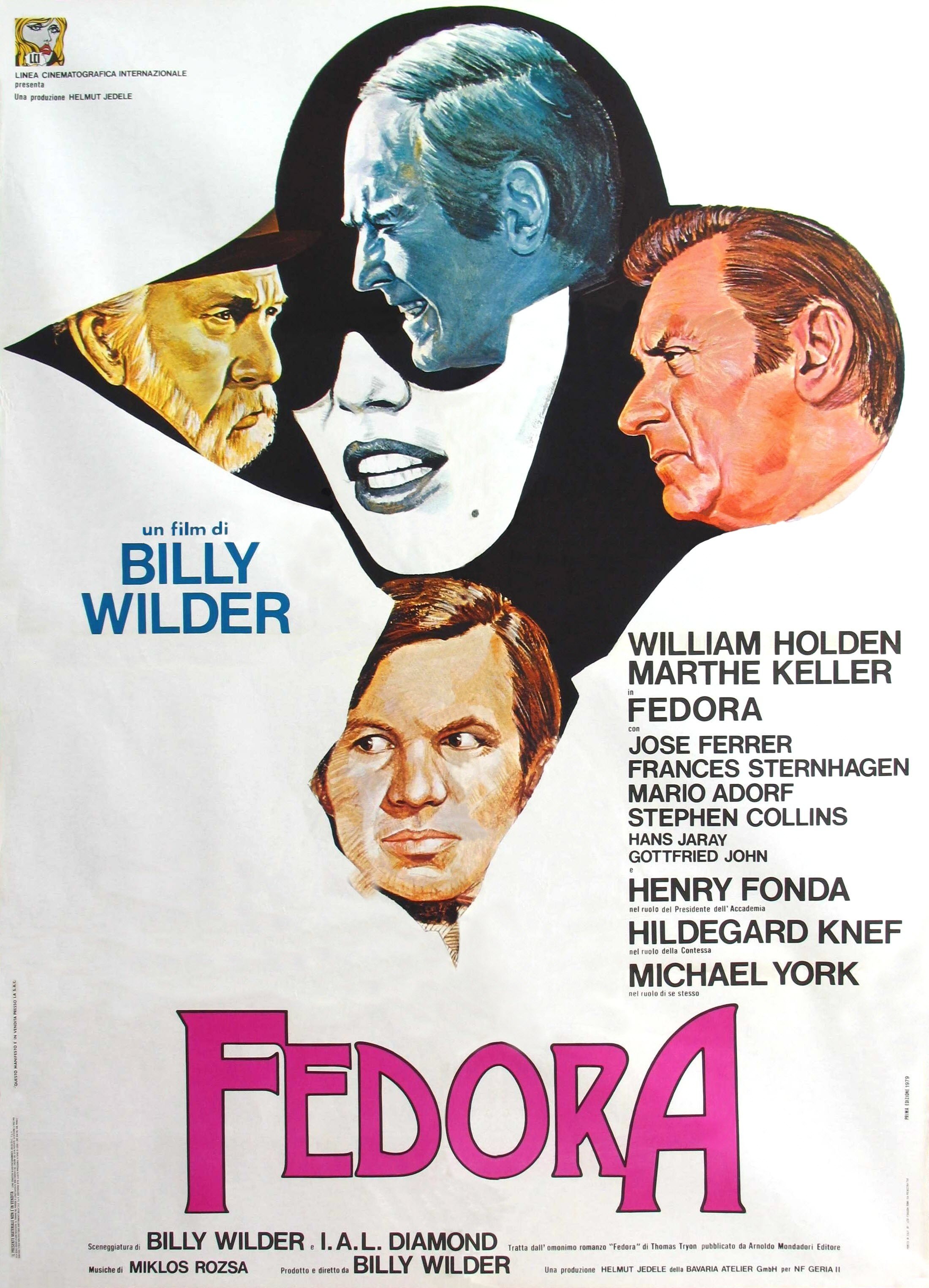
Barry ‘Dutch’ Detweiler (William Holden) is a struggling film director looking to make a big splash by trying to convince a reclusive Greta Garbo-like actress (Marthe Keller) to come out of retirement and star in his next big picture. He however, has trouble getting into contact with her as she resides on a secluded island estate in Greece. Finally after giving his script to her plastic surgeon (Jose Ferrer) he is able to meet her, but finds things to be on a strange side as she looks almost ageless and living with an authoritative Countess (Hildegard Knef) and personal secretary (Frances Sternhagen) who treat her like she is a child and refuse to let her out of their sight. As Barry investigates further he unravels the dark secret that the three share and the shocking reason why Fedora never seems to age.

Based on a short story by actor-turned-author Tom Tryon this was director Billy Wilder’s second-to-last film and as legendary as he is it was surprising to me why this film has never been released to DVD despite the fact that all of his other ones have. However, after viewing it the reason became clear as this is a real dud and a great director’s worst movie. The plot is poorly thought out and leaves a bundle of loopholes. In fact the believability is so low that it’s hard to get into it at all and the big twist that occurs near the middle where Fedora’s secret is exposed, which is that the old, ugly Countess is the real Fedora while the woman masquerading as the young looking one is really her daughter, is not surprising as I had suspected it from the very beginning. The acting and melodramatics are so much on a goofy soap opera level that the studio ended up dropping the film from its distribution when test audiences were found laughing in all the wrong places.

The island residence used to represent Fedora’s secluded home appeared rather old and rundown and the interiors were a bit cramped and not looking as luxurious as one would expect for a rich actress and Holden’s character is able to invade the place a bit too easily. I also thought the idea that the young Fedora would be constantly seen wearing white gloves to supposedly to cover up how young looking her hands were and thus tip people off that she really wasn’t an old woman at all didn’t make any sense as the daughter had already made three movies under the guise as being the old Fedora and it is impossible to believe that she would have been allowed to wear gloves through all of those roles.

The part where the Holden’s character gets knocked unconscious is equally stupid. For one thing he is not taken to a hospital, but instead back to his seedy hotel where he lies in bed for a whole a week before finally, miraculously regaining his consciousness. However, if a person is knocked out for that long a period it almost inevitably leads to a coma and how where they able to feed him and give him water? A hospital could’ve hooked him up to an IV that a dingy hotel wouldn’t have, which most likely would have had him dying from dehydration long before he makes his magically recovery and for someone who was hit over the head so violently you would expect some bruising, swelling and cuts and yet Holden wakes up without a single scratch on him!

The plastic surgery angle is another mess. Supposedly the whole reason Fedora got her daughter to pretend to be her is after she had some experimental surgery done on her face that became botched and made her too ugly to look at and yet one can see far worse plastic surgery disasters by observing many of today’s actresses attending your average Hollywood gala. Since the movie gets so over-the-top with its melodrama anyways they really should have made her face much more grotesque and thus given the viewer and film a lasting image.

Initially Marthe Keller was expected to play both the young and older Fedora, but when it was found that she had an allergic reaction to the old age makeup that was used Knef was then hired to play the part of the countess. Since their voices did not sound similar German actress Inga Bunsch dubbed for both of them, but her excessively deep voice gets really annoying to listen to.

After watching this film I came to the conclusion that Wilder had fallen into the same trap as his famous Norma Desmond character from Sunset Boulevard as he seems to be clinging too much to sentiments and a filmmaking style from a bygone era that no longer has relevance and unfortunately embarrasses himself in the process.

fedora 1

My Rating: 2 out of 10

Released: May 30, 1978

Runtime: 1Hour 54Minutes

Rated PG

Director: Billy Wilder

Studio: Lorimar

Available: VHS

The Effect of Gamma Rays on Man-in-the-Moon Marigolds (1972)

effect of gamma rays 2

By Richard Winters

My Rating: 8 out of 10

4-Word Review: My heart is full.

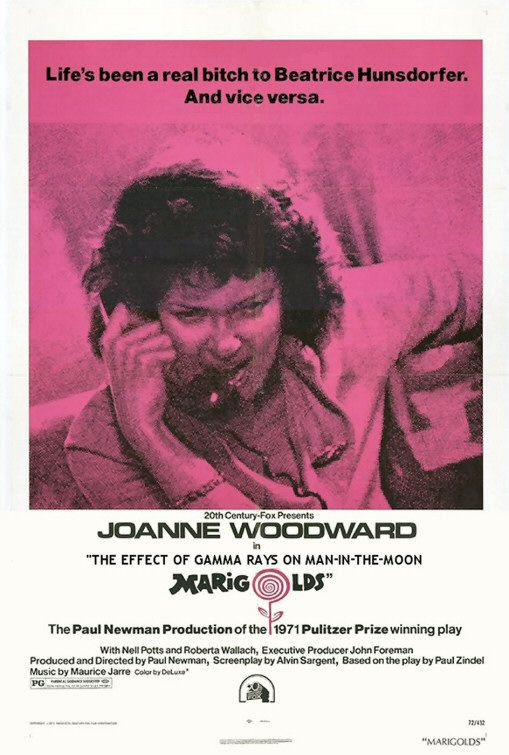
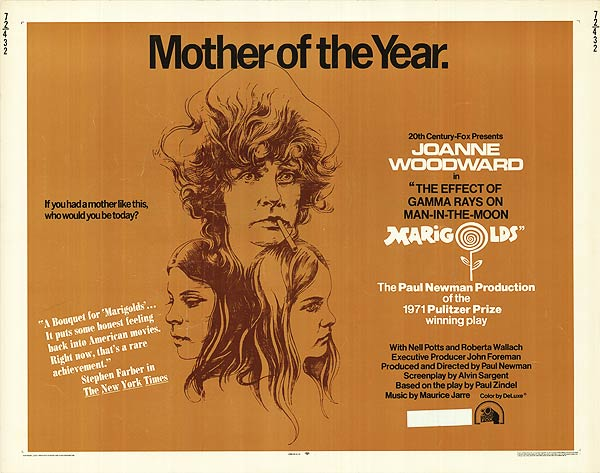
Beatrice Hunsdorfer (Joanne Woodward) is a single-mother raising two girls while living in the poor side of Staten Island. She is an extremely self-centered, emotionally frail woman who’s bitter about life and alienates everyone that she meets. Ruth (Roberta Wallach) is her rebellious teenage daughter who recognizes her mother’s flawed personality and tries to distance herself from her. Matilda (Nell Potts) is the quiet, introspective daughter who takes in all the chaos while escaping by concentrating on her school science projects particularly the one involving marigolds, but as things progress Beatrice’s mental state becomes more erratic and threatens to tear their lives completely apart.

Actor Paul Newman directs on a tour-de-force level. Absolutely everything comes together while still keeping it on a subtle, visual level. The opening sequences gives the viewer a clear picture of the family’s strife and divergent personalities without ever having to go into any type of verbal backstory, which is great filmmaking at its finest. Although filmed in Bridgeport, Connecticut one still gets a good feeling of a poor inner-city neighborhood with the house that was chosen for the setting looking authentically cluttered without appearing staged. The variety of settings has a cinema verite feel while also remaining true to Paul Zindel’s script. Yet Newman’s greatest achievement is the fact that he creates a wholly unlikable main character that the viewer ends up still feeling quite sorry for and the climactic scene inside the school’s auditorium becomes emotionally wrenching.

Woodward excels in a difficult role and creates a character that becomes permanently etched in the viewer’s mind. Her brilliance comes through from the very beginning with the way she chews her gum while trying on some wigs and her never ending stream of caustic remarks runs the gamut of being rude and insensitive to darkly humorous. Although she was nominated for best actress with the Golden Globes and won the award at the Cannes for her work here she really should have been given the Academy Award as well.

Wallach, who is the daughter of Eli Wallach and Anne Jackson, is terrific in her film debut and has some memorable moments not only when she has a seizure, but also later when she plays a caricature of her mother for a school play. Potts, who is Newman’s and Woodward’s daughter, is quite good too especially with her stunning clear blue eyes and facial expressions.

Judith Lowry, who made a name for herself in her later years playing cantankerous old ladies, is outstanding as an old woman who rents a room from Beatrice. Although she frustratingly never says a word her moments are still unforgettable especially with the way Newman focuses on her wrinkled face and toothless mouth as she sips drinks or even hobbles her way to the bathroom.

Zindel’s story was originally a stage play and in fact Carolyn Coates who is cast as Mrs. McKay here played the Beatrice role in one of the stage versions. Most teenagers from the 70’s and 80’s will recognize Paul Zindel’s name as the author of ‘Pigman’, which was required reading in many high schools during that era. Yet I liked this story, which is based loosely on his experiences while growing up, even better and it’s a real shock that it has never been released on an American DVD as it definitely should be!

effect of gama rays 1

My Rating: 8 out of 10

Released: December 20, 1972

Runtime: 1Hour 40Minutes

Rated PG

Director: Paul Newman

Studio: 20th Century Fox

Available: DVD (Region 2)

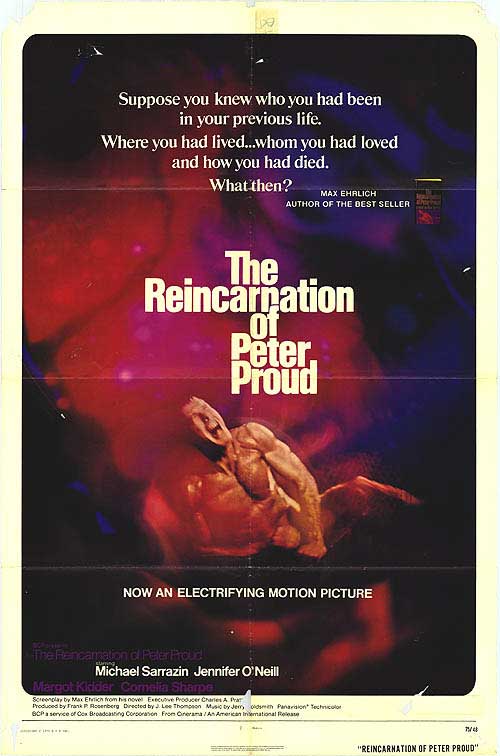
The Reincarnation of Peter Proud (1975)

the reincarnation of peter proud

By Richard Winters

My Rating: 4 out of 10

4-Word Review: Reliving a past life.

College professor Peter Proud (Michael Sarrazin) starts having reoccurring dreams where he sees himself living a past life somewhere in a small New England town and killed by a woman (Margot Kidder) while out on a lake. The dreams become so strong that they interfere with his job and even his relationship with his girlfriend Nora (Cornelia Sharpe). He travels to Massachusetts in search of the place and finally finds it and even starts a relationship with Ann (Jennifer O’Neill) who may be his daughter from the previous incarnation. He also meets her mother Marcia who is the same woman who he sees killing him in a past life during his dreams. As the three get to know each other tensions and dark secrets eventually begin to surface.

The idea has some potential, but director J. Lee Thompson gives the material a very standard treatment making it seem almost like a pedestrian drama. The dialogue is dull and corny, the characters cardboard and the storyline is predictable and formulaic. For what is supposed to be a horror movie/mystery it is not very compelling or intense. The visions that Peter sees in his dream are quite ordinary and generic and eventually become redundant. In fact the film’s only twisted moment, which is when Peter makes love to Ann, who is technically his daughter from a past life, gets treated like a sweet romantic scene instead of the underlying perverse act that it really is.

The story also gets farfetched including having Peter drives through every town in Massachusetts until he finds the one he is looking for. The character of the dream researcher, which is played by actor Paul Hecht, gets overly enthusiastic about Peter’s statements regarding experiencing reincarnation and becomes almost wide-eyed at the idea of writing a book about it and making millions even though a true researcher would be much more reserved about what Peter was saying and realize it would entail much more years of study before it could even be termed a reality. I also thought it was strange that when they put Peter into a sleep study the machine is unable to read the dreams that Peter is having about his past life. Supposedly this is because they are not dreams, but ‘visions’ of some sort, but wouldn’t that still create brain activity in order for Peter to see them and thus still get recorded on the machine?

Jennifer O’Neill is always great to watch simply because of her beautiful face and Cornelia Sharpe has a few choice nude scenes as Peter’s sarcastic girlfriend, but Margot Kidder is miscast as O’Neill’s mother. For one thing she is the same age as O’Neill and although they try to make her look older by putting some gray streaks in her hair her skin is still quite smooth and in need of some age lines in order to look more authentic. However, the scene where she masturbates while naked in a tub isn’t bad.

The ending is terrible and makes having to sit through this thing a complete waste of time.

My Rating: 4 out of 10

Released: April 25, 1975

Runtime: 1Hour 45Minutes

Rated R

Director: J. Lee Thompson

Studio: American International Pictures (AIP)

Available: VHS

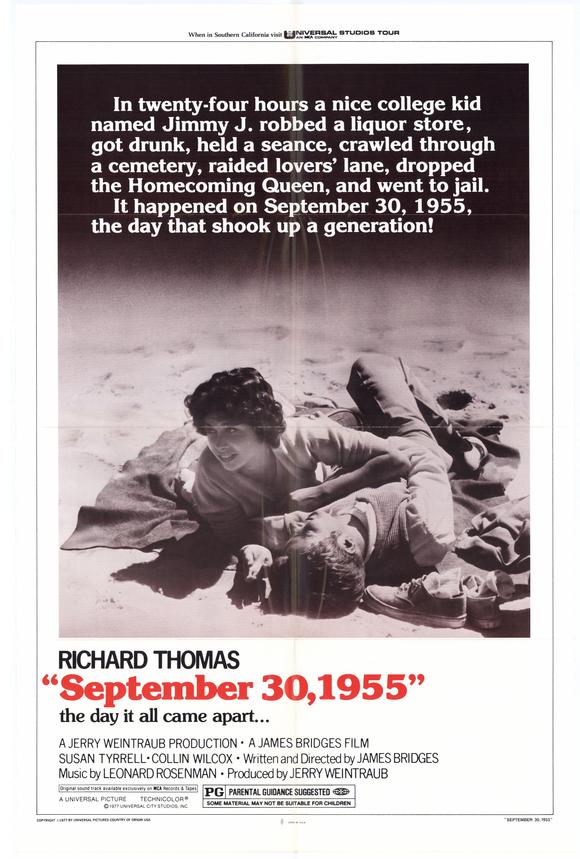
September 30, 1955 (1977)

september 30 1955

By Richard Winters

My Rating: 4 out of 10

4-Word Review: Death of a legend.

The title represents the date that the legendary actor James Dean died in a car crash and his death has an adverse effect on a group of teens in a small southern town.

Richard Thomas is the main character who, along with his girlfriend Billie Jean (Lisa Blount), seems to get the most upset. Although some of his actions may seem fanatical it is really not as extreme as you may think or could’ve been and at no time does he ever lose sight of reality. For the most part the story is more a look at lost young souls searching for an identity than it is on celebrity worship.

The plot itself is slow with scenes that become unnecessarily drawn out with heavy-handed drama. The ending is unsatisfying as it doesn’t even give us a hint as to whatever became of these characters that are all left hanging in unfinished scenarios making the whole thing seem like just another sappy 70’s teen romance/ tragedy.

Beyond the poor structure there are some good points. One is the chance of seeing budding young talents like Tom Hulce, Dennis Quaid and Dennis Christopher working together and carrying a film. The other is director James Bridges who shows strong insight into Dean’s mystic and why he made such a powerful connection with the youth giving one the feeling that Bridges himself was a big Dean fan at the time as well. He also makes an effective statement about how many lost, lonely souls there are out there and the stifling nature of small town life. His recreation of the period is excellent and the interactions between the characters seem real and authentic. The assessment of the era is honest without being condescending and you feel like you are a part of the 50’s experience, which is interesting and fun.

Unfortunately it becomes too labored and trapped by the sensibilities of a bygone era while also being completely humorless and too talky.

My Rating: 4 out of 10

Released: August 6, 1977

Runtime: 1Hour 41Minutes

Rated PG

Director: James Bridges

Studio: Universal

Available: DVD (Universal Vault), Amazon Instant Video

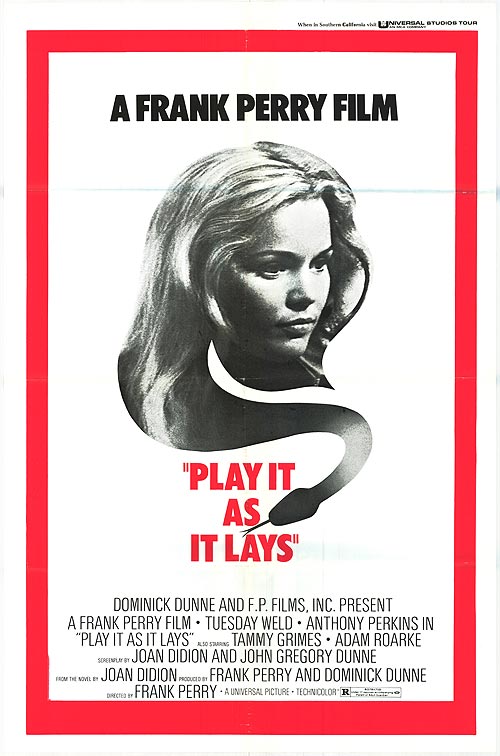
Play It As It Lays (1972)

play it as it lays 2

By Richard Winters

My Rating: 2 out of 10

4-Word Review: Her life is empty.

If there ever was a title that aptly described its picture it’s this one as this thing truly does just lay there like a dead body. It’s another one of those stories about a beautiful actress/model (Tuesday Weld) who has fame, fortune, and looks and yet still feels empty. She is a part of the ‘been there, done that’ crowd that now wonders what there is left to do and the plot gets told in a fragmented narrative that at first seems diverting, but eventually goes nowhere.

It was made in an era where if the message wasn’t sad and depressing then it wasn’t ‘important’. The filmmakers have already made up their minds that life is depressing and meaningless and then proceed to beat the viewer over the head with it in each and every scene. Supposedly then the audience is to walk away thanking them for the beating.

The characters represent everything that is irritating about the Hollywood crowd. They are self- absorbed and self-loathing. They fail to put meaning into their lives and yet somehow life has failed them if meaning doesn’t just come up and punch them in the nose. Whine and moan, take a drug hit, whine and moan, go to bed with a stranger, and whine and moan some more.

It’s hard to become attached to those who are so detached from themselves and even harder to like those who can’t stand themselves. Eventually you just give up, especially when the film works on the same spiritless level as the characters. You begin to just laugh at it since every despondent look and quasi philosophical discussion soon becomes redundant making this drama more like high cliché.

Weld and Antony Perkins teamed up earlier in Pretty Poison which has a much more original storyline and interesting characters and you should watch that one instead.

My Rating: 2 out of 10

Released: October 19, 1972

Runtime: 1Hour 39Minutes

Rated R

Director: Frank Perry

Studio: Universal

Available: None at this time

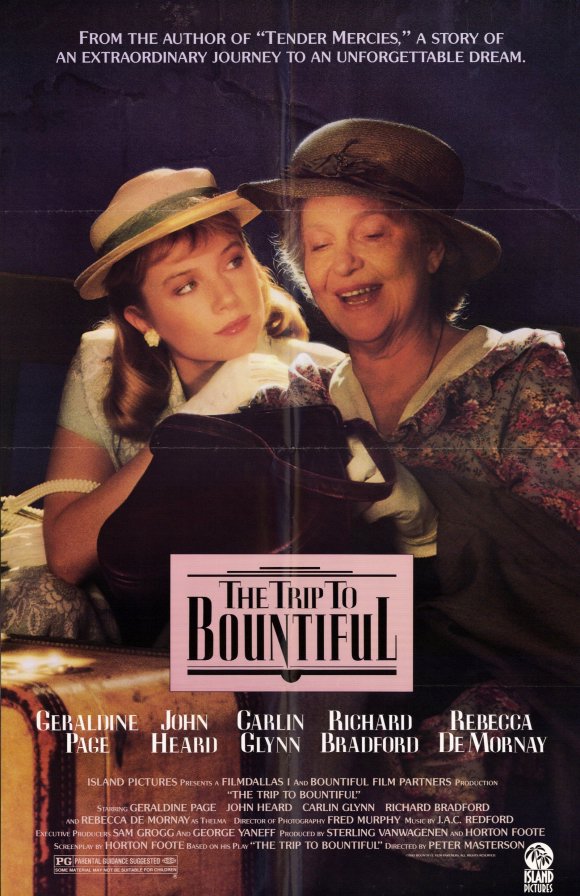
The Trip to Bountiful (1985)

the trip to bountiful 1

By Richard Winters

My Rating: 7 out of 10

4-Word Review: Old lady goes home.

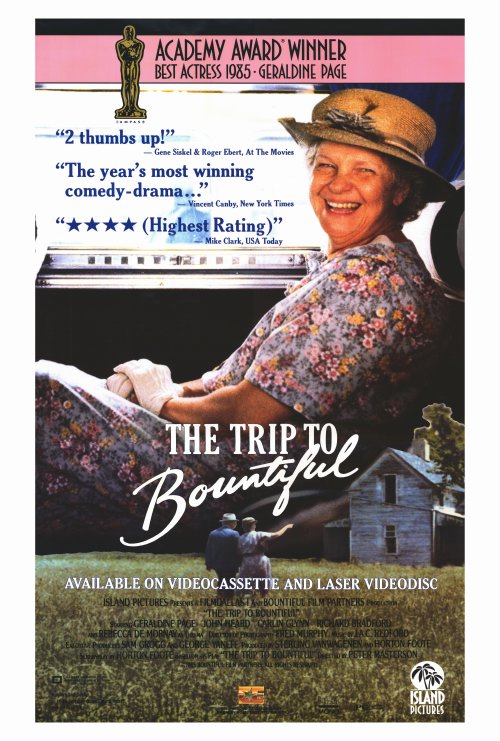
Carrie Watts (Geraldine Page) is an elderly woman living inside a cramped apartment with her grown son Ludie (John Heard) and his wife Jessie Mae (Carline Glynn) in Houston, Texas during the 1940’s. Carrie dreams of one day returning to her childhood home in the small town of Bountiful and ‘escaping’ from Jessie Mae who is overbearing and treats her like a child, but she lacks the transportation or funds. She secretly hides her government checks with the hopes of saving enough to take a train. When she finally makes it to the train station she finds there is no longer any stops to her old town, which is now essentially abandoned, but with the help of the local sheriff (Richard Bradford) he takes her there while Ludie and Jessie follow close behind determined to drag her back with them.

Peter Masterson’s directorial debut shows a great appreciation for Horton Foote’s script as it manages to stay true to the period and tone. I especially liked the part where Carrie describes the quietness of her childhood home while the camera slowly pans the yard and allows the viewer to essentially experience what she is talking about. The recreation of the ‘40s is on-target making you feel like you are living there yourself. Having some tunes of the era playing on a phonograph in the background is a great touch and it’s nice to hear a soundtrack that isn’t from the preverbal classic rock period.

Page shines in her Academy Award winning performance. She has played evil characters with such a relish for most of her career that it is nice seeing her portray a sweet old lady for once and do it so well. Her presence adds to every scene she is in and helps make them more interesting particularly with her conversation on the train with Thelma (Rebecca De Mornay) and the way she holds up everyone in line at the train station specifically two men standing behind her who in real life where her twin sons. She also manages to cry effectively with tears actually coming out of her eyes as opposed to De Mornay whose tearless attempts at it where so pathetic it seemed almost embarrassing.

Carlin is quite good in the snippy adversarial role and I was surprised she didn’t at least get a nomination for her efforts. Heard is solid as a sort of mediator and De Mornay is perfect for the part simply because her fresh youthful face makes a great contrast to Page’s worn one.

The on-location shooting adds a lot of flavor and helps to make this superior over its original stage version. The story itself is slow moving, but a wonderful character study on aging that at times manages to be dryly humorous, honest and sad, but never maudlin.

the trip to bountiful 2

My Rating: 7 out of 10

Released: December 20, 1985

Runtime: 1Hour 48Minutes

Rated PG

Director: Peter Masterson

Studio: Island Pictures

Available: VHS, DVD

Our Time (1974)

our time 2

By Richard Winters

My Rating: 6 out of 10

4-Word Review: She gets an abortion.

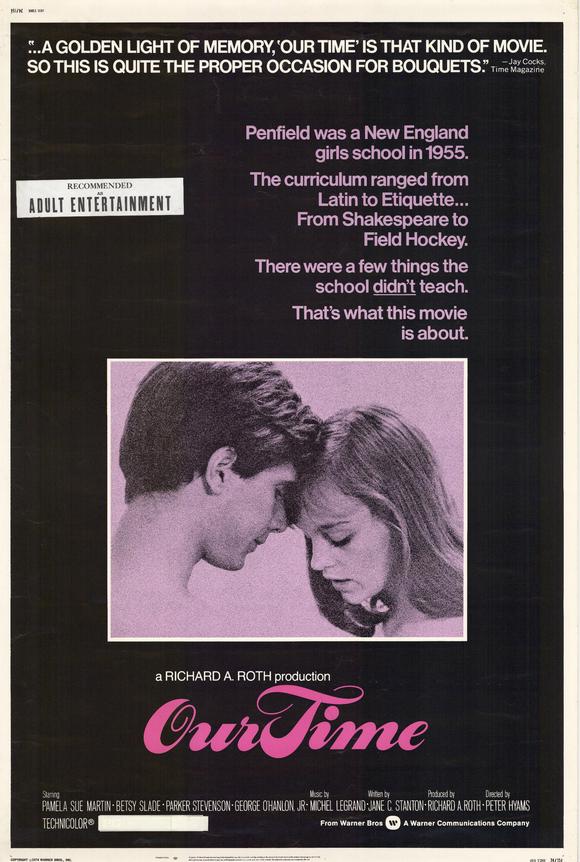
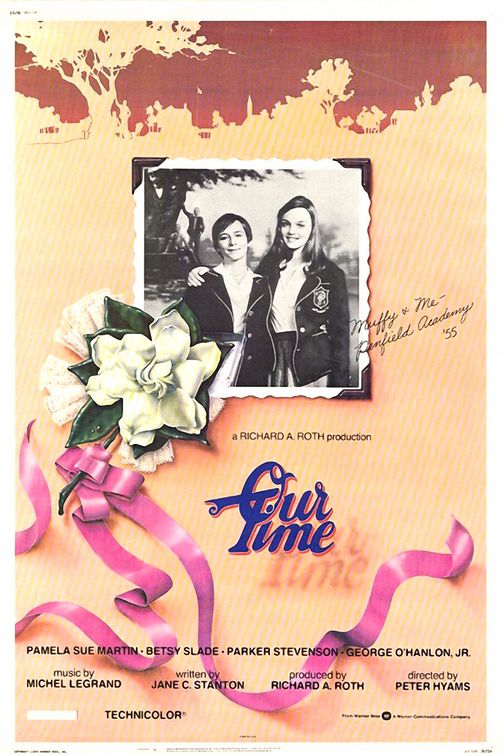
Abby (Pamela Sue Martin) and Muffy (Betsy Slade) are two teen girls and the best of friends that are attending a New England all-girls school during the 50’s. Abby is in love with Michael (Parker Stevenson) and the two sneak off one weekend and consummate their relationship, which makes Muffy jealous. She is not as pretty as Abby and has a hard time getting boyfriends, but decides one night during a Christmas party to have sex with Malcolm (George O’Hanlon Jr.) in the backseat of a car simply to feel what it is like. Their experience isn’t as enjoyable, but Muffy becomes pregnant anyways and the four then spend the rest of the time looking for an underground abortionist to terminate her pregnancy.

On the technical end the film is slick. I particularly liked the opening tracking shot that takes place in a church. The camera starts at the front of the church showing a close-up of the headmaster singing with the choir and then pulls back down the side aisle to show Abby sneaking in late and then goes back up the middle aisle as she looks for a seat. In fact just about every scene features some form of a tracking shot, which may get a little overdone, but helps give the film a certain visual liveliness. Unlike Leonard Maltin who in his book described the color photography as being ‘bad’, I found it to be quite vivid with a nice soft focus lens that gives it a nostalgic-like appeal.

The story itself is predictable, but I enjoyed the sometimes humorous takes of the sexual repressive, stifling attitude of the era and how the students were made to feel like they were being watched and monitored at every second. Abby’s and Michael’s sexual encounter inside a hotel room is quite amusing, but the one done later on between Muffy and Malcolm is painful to watch and not very realistic, looking more like two clothed bodies on top of each other without much effort to simulate the sexual motions.

Martin is excellent in the lead and ironically starred just two years earlier in a similar film about a young unwed woman looking for an abortionist entitled To Find a Man. Stevenson, who later co-starred with Martin in ‘The Hardy Boys/Nancy Drew Mysteries’ TV-show looks like he is barely past puberty. Jerry Hardin, Cliff Emmich, Robert Walden and Debralee Scott can all be seen in brief bits. This is also the only other film appearance of Karen Balkin, who played the bratty student in The Children’s Hour and plays a similar type of character here.

The only issue I had with the film is with the abortion segment. Overall, from a purely dramatic level I felt these scenes were compelling and the best moments in the movie, but it seemed unrealistic especially from a 1950’s perspective that none of the four would try to convince Muffy to keep the baby. It almost comes off like these are 70’s teens with more modern sensibilities that were transplanted into a different time period than actual characters from a bygone era. The plot also becomes more like a political statement than a story and seems to lean too heavily on a liberal point-of-view.

our time 3

My Rating: 6 out of 10

Released: April 10, 1974

Runtime: 1Hour 30Minutes

Rated PG

Director: Peter Hyams

Studio: Warner Brothers

Available: DVD (Warner Archive)