Category Archives: Comedy/Drama

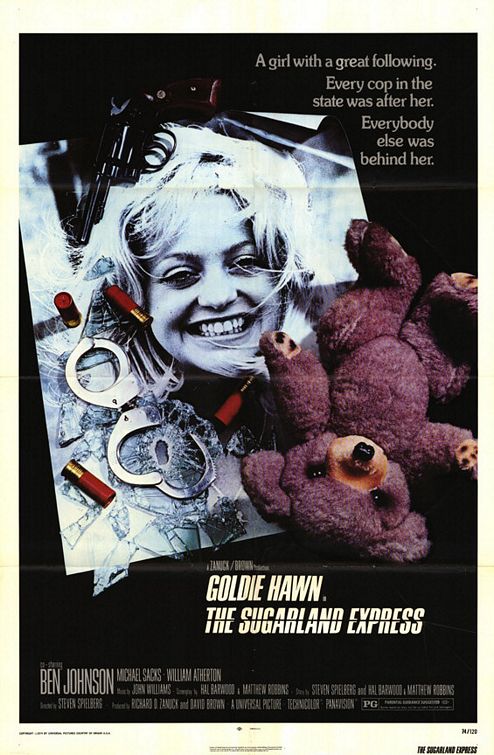
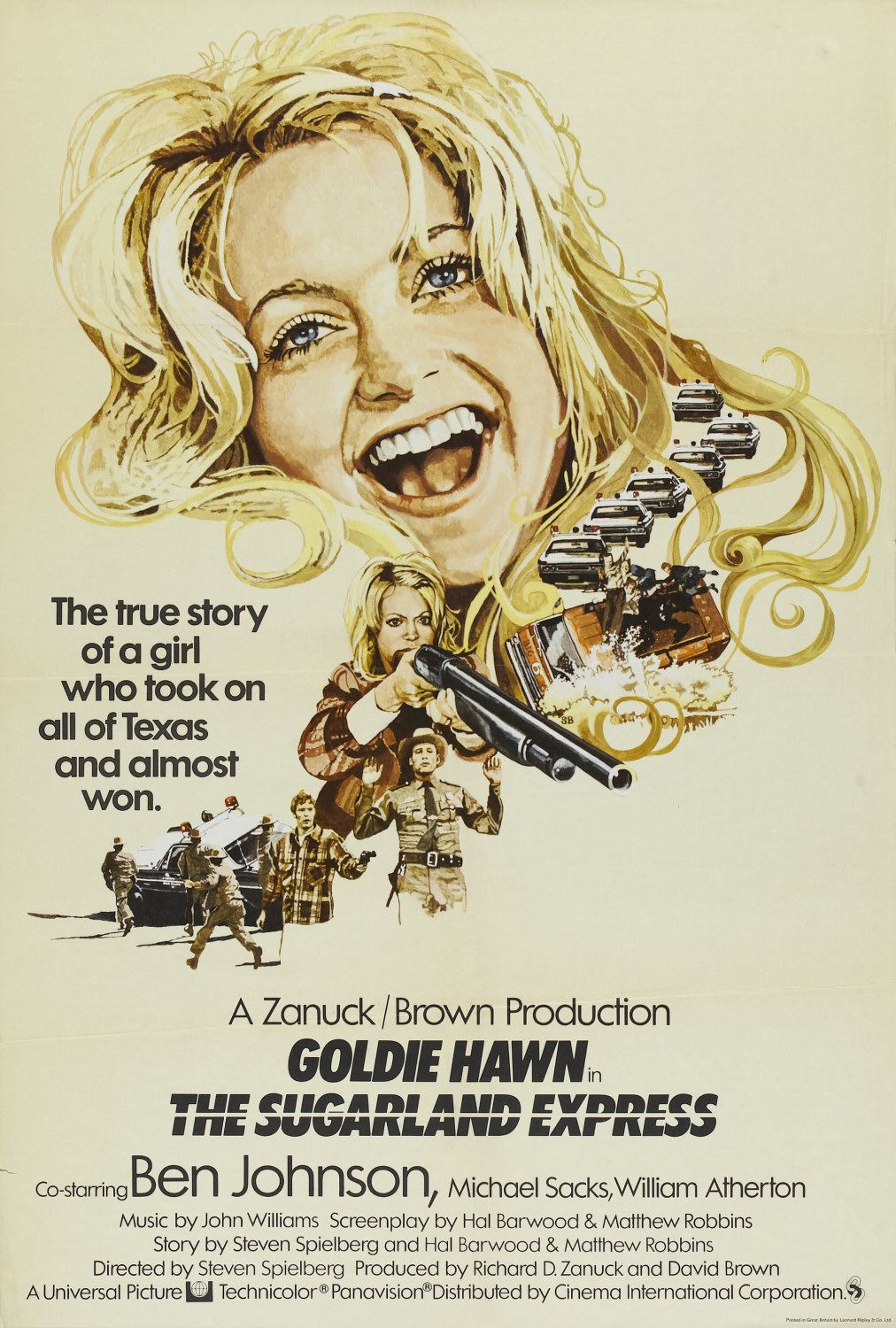
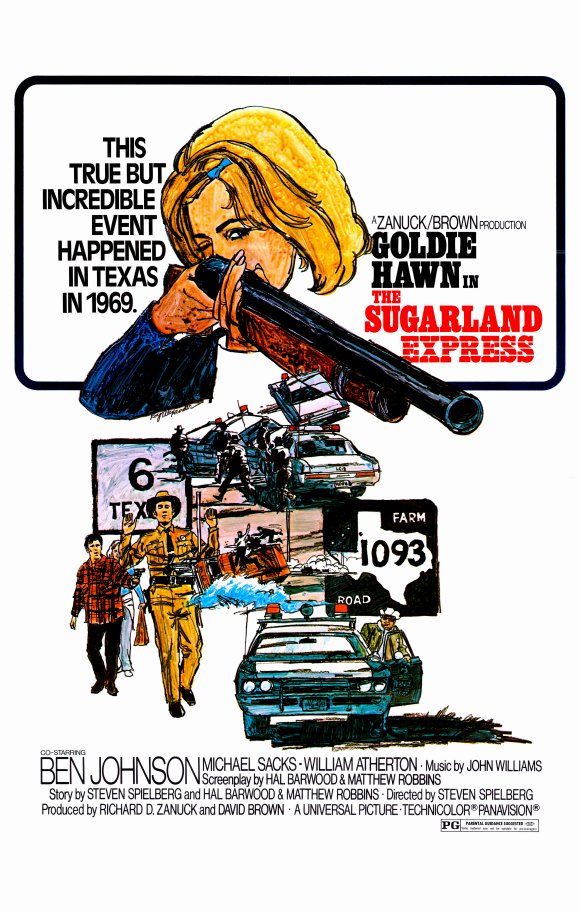
The Sugarland Express (1974)

sugarland express 4

By Richard Winters

My Rating: 7 out of 10

4-Word Review: She wants her baby!

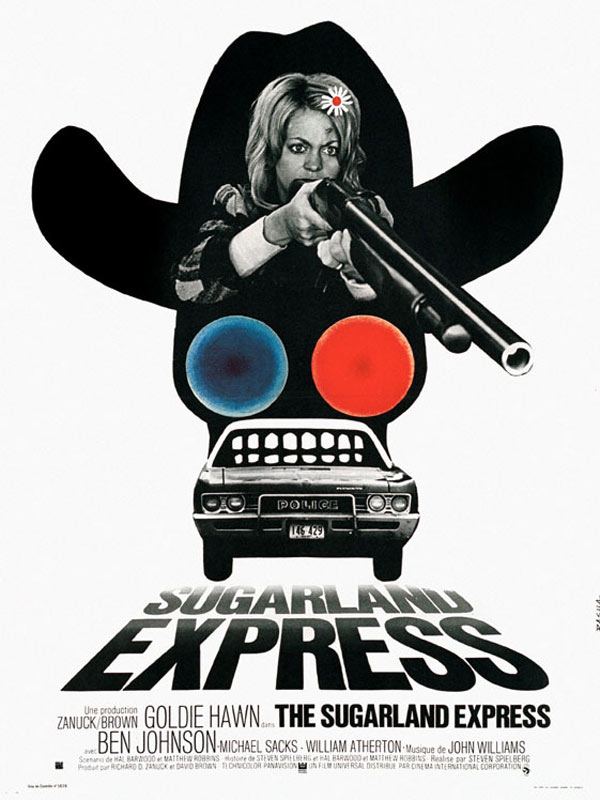
When her baby is put into a home with foster parents Lou Jean (Goldie Hawn) will have nothing of it and helps her husband Clovis (William Atherton) break out of pre-release prison in an attempt to steal the child back. The two hitch a ride with an older couple (A.L. Camp, Jessie Lee Fulton), but when the car gets pulled over by Officer Maxwell Slide (Michael Sacks) they panic and drive off. The officer is able to track them down when their car crashes, but when he goes to investigate the accident Clovis pulls the officer’s own gun on him and uses it to take him hostage. They speed off in his patrol car, which soon gets the entire Texas Highway Patrol after them as well as creating a media frenzy in a slow moving car chase that spans 2-days and 300 miles.

This film marks director Steven Spielberg’s full-length theatrical feature film debut and the result is highly entertaining. He takes an odd moment in history and helps infuse a playful quirkiness to the proceedings while also gently nudging the Texas stereotype. The music by John Williams and especially the harmonica solos by Toots Theilemans help cement the mood and tone. This is also the first film to use a panaflex camera and the first ever to feature a tracking shot from inside a car.

There are enough original and humorous scenes to make this well worth catching. The scene in which the police bring in a Porto potty so Lou Jean can stop and take a pee is hilarious as is the moment where their car runs out of gas and Captain Harlan Tanner (Ben Johnson) who is technically ‘chasing’ them must push their car with his to the nearest gas station. The impromptu TV interview done during the chase is great as is the first CB conversation that Tanner has with the three inside the patrol car. The best moment though is when they go through a small town where the main street is lined with onlookers and well-wishers who hand the three all sorts of gifts and encouragement through the car windows as they slowly drive through.
sugarland express 2

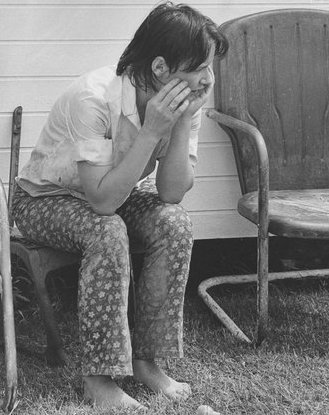
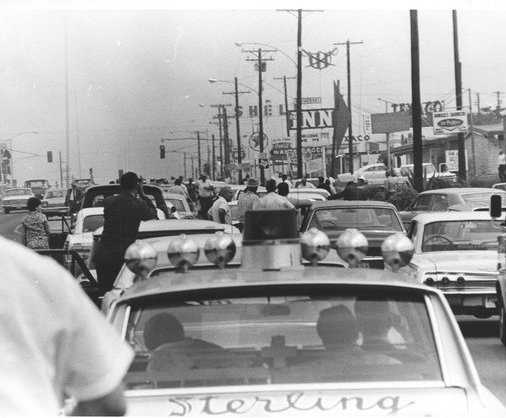
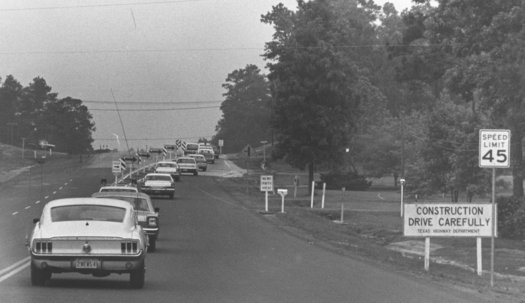
Of course as with any true story the movie takes many liberties and I researched the incident by reading actual newspapers reports from that era and found this to be the jest of what actually happened. It all started in the early morning hours of May 3, 1969 when Ila Faye Dent (1947-1992) and her husband Robert where chased by the Port Arthur police for speeding. The couple managed to evade them by abandoning their vehicle and fleeing on foot into a heavily wooded area. They eventually came upon a ranch whose owner called the police to say that he had been attacked by two hitch-hikers. Patrolman Kenneth Crone, whose character is played by Michael Sacks and who also appears briefly in the film as a sheriff’s deputy, answered the call. When he arrived on the scene Robert pulled a gun on him and forced him back into his patrol car where the three then took off in the vehicle that started the massive 200 mile slow speed chase that attracted hundreds of police cars as well as onlookers and media outlets. Their destination was Wheelock, Texas where Ila Faye wanted to visit her two children from her previous marriage that where now staying with her parents. They had no intention of kidnapping them like it is portrayed in the film only to visit them for 15 minutes, which Captain Jerry Millter (portrayed by Ben Johnson) initially agreed to allow, but then later reneged.
sugarland1


Ila Faye Dent portrayed by Gold Hawn in the film
sugarland2

The actual car chase as it occurred on May 3, 1969.
sugarland3

The changes that Spielberg and his team of two writers made to the story doesn’t help and I wish they had been more accurate with it. The biggest issue is the fact that the actual chase lasted for only about 5 hours while in the film it gets extended for 2 days, which doesn’t work because the part where they sleep overnight inside a car lot kills the momentum and makes for a draggy middle. The use of foreshadowing becomes too obvious and heavy-handed. The child-like enthusiasm by the two main characters is initially fun, but their notion that they can somehow take the police on a wild car chase and snatch back their child without having any consequences seems too unrealistically naïve even for a pair of country bumpkins as they are portrayed.

Spoiler Alert!

The film’s biggest downfall though and the main reason it didn’t do well in the box office is with its downbeat ending. From a directorial stand point I liked it as Spielberg infuses all sorts of interesting elements into it including making the house in which the child supposedly is staying look very foreboding and ominous as well as a brief shot of a teddy bear being thrown out a car window and laying the road while the cars speed all around it. However, seeing Clovis get shot is jarring and takes away from the film’s otherwise lighthearted tone. In the real life incident the husband did indeed get shot and killed although it happened differently than the way it gets played out here, so I don’t really have anything against showing it, but film should’ve added in a brief moment showing Lou Jean being reunited with her child after her stint in prison, which also really happened. I realize the denouncement mentions this in text over the credits, but visually showing it would’ve made more of an impact and helped the audience leave the theater with an upbeat feeling.

End of Spoiler Alert!!
sugarland express 3


sugarland express 1

My Rating: 7 out of 10

Released: April 5, 1974

Runtime: 1Hour 52Minutes

Rated PG

Director: Steven Spielberg

Studio: Universal

Available: VHS, DVD, Blu-ray, Amazon Instant Video, YouTube
The Lord’s of Flatbush (1974)

lords of flatbush 2

By Richard Winters

My Rating: 6 out of 10

4-Word Review: Sly and the Fonz.

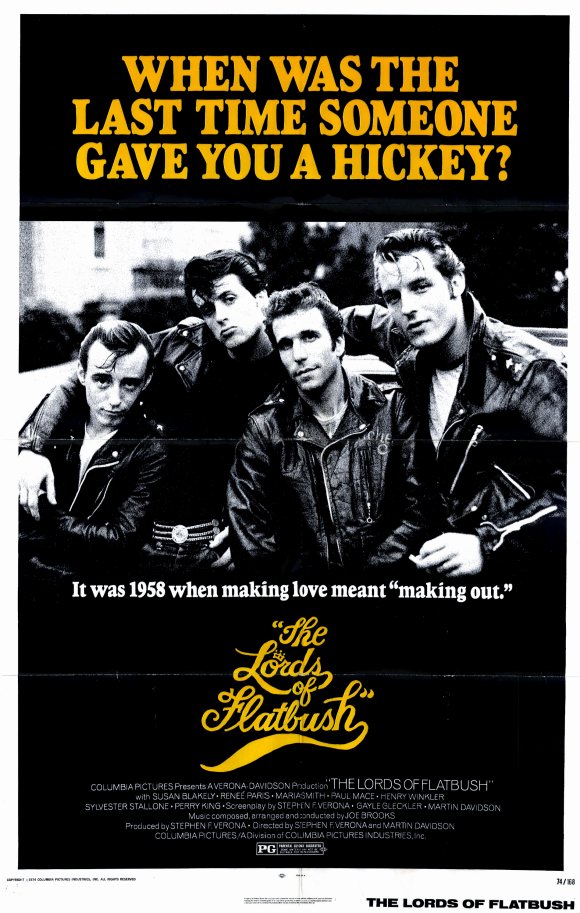
Butchey (Henry Winkler) forms a leather jacket gang with his friends at a Brooklyn city high school during the 1950’s. The group is made up of Stanley (Sylvester Stallone) who is forced to marry his girlfriend when he gets her pregnant and Chico (Perry King) who romances the pretty new girl in school named Jane (Susan Blakely). As they grow into adulthood they find themselves drifting apart as new interests and demands begin to appear.

This film can best be described as a B-version of American Graffiti that came out just a year earlier. The production values are shoddy with a grainy picture that looks like it was filmed on somebody’s home camera. The story works in fragmented style that comes off more like a series of vignettes than an actual plot. Chico’s romance with Jane happens too quickly and seems artificial from the start especially since they are from ‘opposite sides of the tracks’. The actors themselves are clearly well over 18 and in Stallone’s case almost pushing 30 making their presence and the overall 50’s feel seem unauthentic.

The one thing that saves it is that there are some funny scenes as well as moments of decent drama and character development. The part where Stallone barters with a jeweler over the price of the wedding ring is quite good. I also liked the scene where the boys get together to intimidate a guy who is dating Chico’s girl only to run in fright when the other guy brings in a team of football players to defend him. However, the opening bit dealing with the teens misbehaving in class is not funny at all and I ended up feeling sorry for the teacher who was only trying to do her job.

Although given top billing Winkler is underused and almost forgettable. King is the real star and does quite well while also creating a multi-dimensional character. Stallone steals every scene he is in and proves to be much more adept at comedy than you might think. You can also glimpse Ray Sharkey, Armand Assante and Brooke Adams as wedding guests.

The film also features model-turned-actress Susan Blakely in only her third feature who does well playing the ‘good girl’, but the scene where Chico pressures her into having sex and she resists while asking him what color her eyes are in an attempt to see if he really ‘knows’ her and not just using her makes no sense. For one thing her big, blue eyes are the most prominent part of her face. Anyone, even a stranger, who glances at her face for even a second would know the color of her eyes, and thus having her ask someone what color they are is ridiculous already and then having them unable to tell her makes it the dumbest part of the whole movie.

susan blakely

My Rating: 6 out of 10

Released: May 1, 1974

Runtime: 1Hour 26Minutes

Rated PG

Director: Martin Davidson and Stephan Verona

Studio: Columbia Pictures

Available: VHS, DVD, Amazon Instant Video

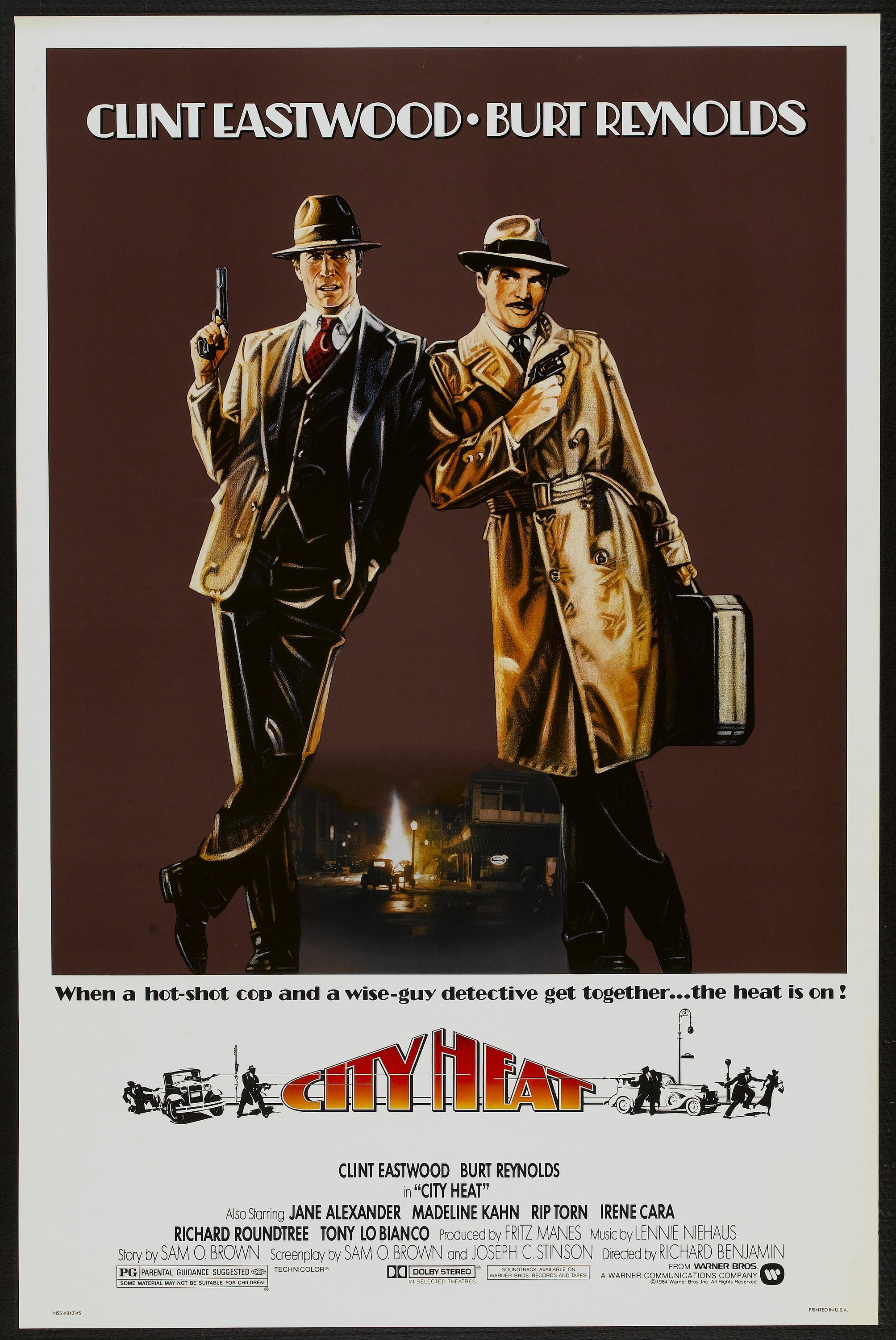
City Heat (1984)

city heat

By Richard Winters

My Rating: 5 out of 10

4-Word Review: Clint and Burt together.

Mike Murphy (Burt Reynolds) is a private eye living in 1930’s Kansas City who at one time worked as a cop. When his friend Dehl (Richard Roundtree) gets murdered after obtaining the secret accounting records of a local mobster and then trying to blackmail him with it Mike goes on a mission to find the culprit, but soon finds himself in over his head. His former police partner Speer (Clint Eastwood) gets involved and the two reluctantly work together to solve the case despite the many clashes with their personalities and methods.

The script was written by Blake Edwards who gets credited under the pseudonym Sam O. Brown. He was originally slated to direct, but Burt didn’t want to work with Edward’s wife Julie Andrews who was cast in the role that later went to Madeline Kahn because the two had clashed just a year earlier while starring in The Man Who Loved Woman. Clint desired a less intense director at the helm, so the two used their star status to have Edwards yanked from the project and replaced with actor-turned-director Richard Benjamin. The result is a strange mish-mash of a movie that at times seems like a pedestrian action flick and at other moments becomes a campy comedy.

The film starts off well. I enjoyed the fight Reynolds with has with two men inside a café while Eastwood sits back and does nothing, but things deteriorate quickly after that. Part of the problem is Eastwood and Reynolds are only funny when they are seen together and working off of each other’s contrasting styles. Alone there are boring at least here with Eastwood playing too much of a caricature of himself while Reynolds is unconvincing as a tough guy. The film would’ve worked much better had the two been partners from the very beginning instead of throwing in this contrived bitterness between the two, which is never funny or interesting.

Outside of Rip Torn’s performance as a rival gang boss the supporting cast is wasted especially Jane Alexander in a thankless throwaway role as Reynold’s secretary. Kahn manages to have some redeeming moments when she gets kidnapped by the mob and then beats her captors at poker, but it is not enough. Irene Cara sings a few good tunes, but proves to be weak as an actress.

The shootouts are great and the best thing in the movie as unlike the rest of the film they manage to have a nice balance between being exciting and funny. Unfortunately the plot itself is overblown, confusing and formulaic and a prime example of a Hollywood production relying too much on the charisma of its two stars while failing to supply them with material that is fresh or original.

My Rating: 5 out of 10

Released: December 7, 1984

Runtime: 1Hour 33Minutes

Rated PG

Director: Richard Benjamin

Studio: Warner Brothers

Available: VHS, DVD, Amazon Instant Video, YouTube
Gentle Savage (1973)

gentle savage 2

By Richard Winters

My Rating: 3 out of 10

4-Word Review: Indian accused of rape.

Camper John (William Smith) is an Indian living in a small town who gets accused of raping a white girl (Betty Ann Carr) by Ken (Kevin Hagen) her stepfather even though it was actually Ken who did it. The hidden prejudices of the predominantly white folks come to light against the nearby Indian community. Both sides take up arms and become intent on crushing the other causing hysteria and violent outbreaks while Camper John tries hiding out until it blows over.

If there is anything distinctive about this otherwise formulaic and predictable low budget drama is the fact that it paints vigilantism as more of a problem than a solution even if the one side feels completely justified, which I found to be a refreshing and more realistic take on the issue especially as the Indian group becomes as vindictive, violent and hateful as the people they are trying to fight. However, it would’ve been nice had there been at least one white person who wasn’t portrayed as being completely narrow-minded and bigoted, which in a lot of ways comes off as reverse racism by the filmmakers.

The music is loud and overly dramatic, which gives the proceedings a very heavy-handed feel. In a lot of ways it comes off as a poor man’s Billy Jack, which was already pretty amateurish and one-dimensional to begin with although still far better than this thing. The 75 minute version that I viewed had an abrupt ending that seemed incomplete and failed to tie up many loose ends, but I wasn’t complaining as even with the abbreviated runtime it was still highly protracted, overblown and tedious with the scene of a water tower tank exploding and dousing everyone on the street with tons of water being the only slightly diverting moment.

Smith is intense in the lead, but he should’ve been given more dialogue especially at the beginning as the viewer barely gets to know or understand him before being jettisoned into his quandary. Character actor R. G. Armstrong who normally plays menacing characters is quite wimpish here as a bartender who gets held down and forced to swallow drink after drink when he tries closing down the bar before the patrons were ready. Hagen is competent as the bad guy, but casting Gene Evans and Joe Flynn as a bumbling sheriff and deputy in an attempt at misguided ‘comic relief’ in the Last House on the Left-type vein was a big mistake. One scene even has them handcuffed together wearing nothing but their underpants while forced to walk across the desert, but it all adds little and takes away from the tension, which is the only time that this flat film ever becomes mildly diverting.

My Rating: 3 out of 10

Alternate Title: Camper John

Released: March 7, 1973

Runtime: 1Hour 25Minutes (Full Version)

Rated R

Director: Sean MacGregor

Studio: Cinemation Industries

Available: None at this time.

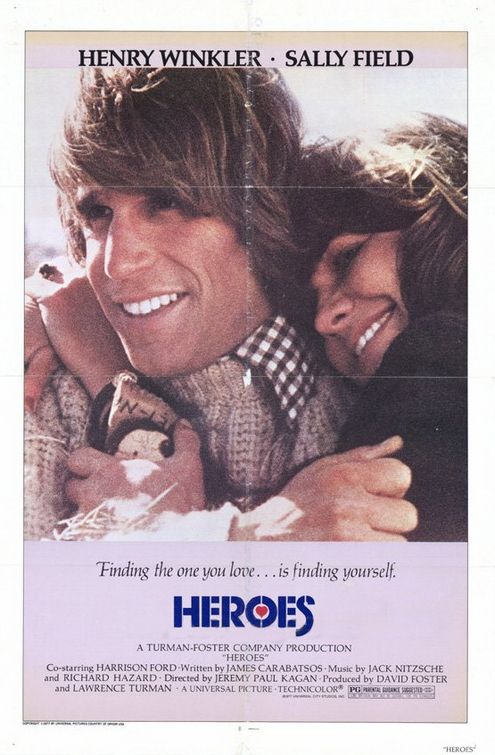
Heroes (1977)

heroes

By Richard Winters

My Rating: 4 out of 10

4-Word Review: Adjusting to civilian life.

Jack (Henry Winkler) is a Vietnam Vet. still suffering from nightmares from his war time experiences. He has been in and out of the psyche ward at the veteran’s hospital, but has come up with an idea that he feels will makes both him and his buddies a lot of money. He wants to start a worm farm to be used as fisherman’s bait, but must board a bus to California to do. There he meets Carol (Sally Field) a woman who is engaged to be married and was a war protester during the 60’s. The two don’t get along at first, but eventually a relationship is made as she and his cousin Ken (Harrison Ford) help Jack fulfill his dream.

The movie is well filmed for the most part and even has a nicely shot and exciting foot chase down the busy streets of Manhattan, but the script by James Carabatsos, who was a Vietnam Vet. himself is too loosely structured and only glosses over the many issues that veterans face, which gives the whole thing a very shallow feeling. The only time we ever see any type of flashback’s to the experiences that Jack had while fighting in the war is at the end even though I felt the film would’ve been much stronger had this been shown throughout. The comical segments are misplaced and the story would’ve worked better had it just stuck to the drama.

The film also spends too much time with Jack and Carol’s budding romance, which for the most part comes off as forced. The cutesy ways that the two are shown constantly bumping into each other as their relationship ‘blossoms’ is contrived and having the two already as a boyfriend/girlfriend from the very start would’ve helped focus things more solely on Jack, which it doesn’t do enough of. I also felt that the segment where Carol pays for damages that Jack does at a café and then goes with him and his buddy Ken to an isolated location where she is promised to get paid back for it didn’t seem realistic. I realize this was the ‘70s where people were more relaxed about meeting strangers, but it still seemed dangerous and impractical for a lonely woman to be driving off with two men she had only met and were already acting peculiar to begin with.  A normal person would’ve simply sued him in small claims court to get back the money that they felt was owed.

Winkler does a terrific job in the lead and I felt it was a shame he hadn’t pursued his film career further instead of languishing away in television. Field is good as well as is Ford playing against type as a country hick. Character actor Stuart Margolin has a fun bit as a driver who picks the two up as they are hitchhiking and Val Avery is amusing as the bus driver who becomes increasingly annoyed at Jack’s antics.

The film has its share of pleasing moments, but on the whole it’s shallow and forgettable. There have been so many other better films on the subject that this one seems barley worth even mentioning.

My Rating: 4 out of 10

Released: November 4, 1977

Runtime: 1Hour 53Minutes

Rated PG

Director: Jeremy Kagan

Studio: Universal

Available: DVD, Amazon Instant Video

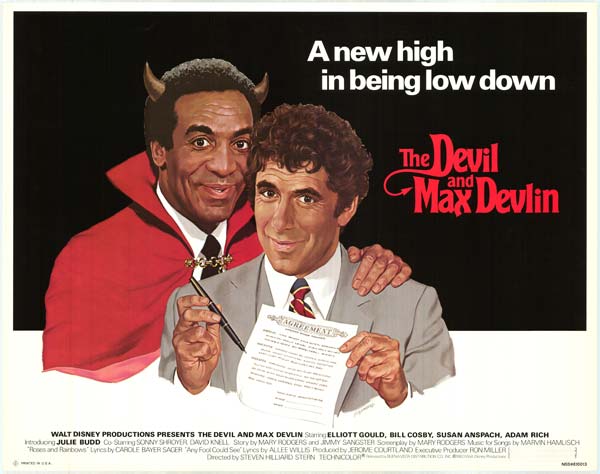
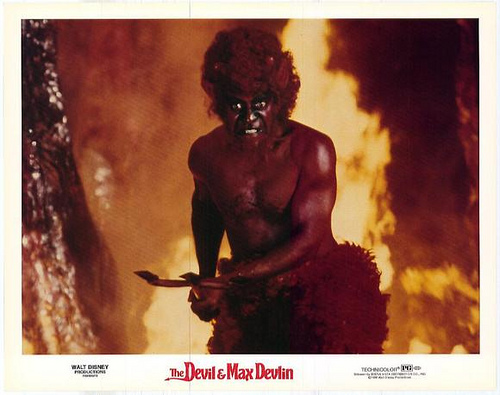
The Devil and Max Devlin (1981)

devil and max devlin

By Richard Winters

My Rating: 2 out of 10

4-Word Review: Working for the devil.

Max (Elliot Gould) works for a slumlord and does whatever he can to make life miserable for the tenants who rent from him. After getting run over by a bus while trying to chase down a delinquent tenant he finds himself in hell and face-to-face with the devil (Bill Cosby) who gives him a deal that will allow him to get out of dealing with ‘Level 4’, which is supposedly one of the harsher penalties for hell dwellers. The deal consists of Max getting three people to sign over their souls at which point Max’s will be freed, but as Max gets to know the people including that of 10-year-old Toby (Adam Rich) whose mother Penny (Susan Anspach) he is interested in marrying he becomes reluctant to follow through with it.

This movie was part of Disney’s effort to break away from the kiddie-like slapstick of their 70’s films and become edgier and more ‘hip’. This film along with The Black Hole, Condorman, and Tron where all produced to attract an older teen audience and gain a trendier appeal, but it pretty much failed and this movie was the worst of them. Part of the problem is that the main character is a man in his 40’s, which kids and teens cannot relate to. Most films need to have a protagonist the same age as its intended audience in order to build that connection and this one doesn’t. It’s also very slow with little or no action. I found myself completely bored with it during the second hour and I can only imagine what a 10 or even 13-year-old must have felt. The humor is minimal and not funny. It also lacks any type of ‘coolness’ with a plot that isn’t any more sophisticated than the formulaic stuff it had already been churning out, which at least was engaging on a mindless level, which this one isn’t.

I liked the scenes shown from hell, but that is about it. The script, which was written by Mary Rodgers who had earlier success with Freak Friday seems unable to understand things from a teen’s perspective while being quite predictable in the process. Also, the reasons for Max going to hell, which include cheating on a test in the 4th grade and stealing candy from a store as a child seem awfully trite. If hell truly does exist and minor stuff like that is enough to get people sent there then the majority of us will be going and heaven will be a very empty place.

Gould does surprisingly well, but I still felt he was miscast. Cosby is wasted and barely even used although the scene near the end where he appears in devilish makeup is effective and creepy. Anspach is equally wasted and Ronnie Schell who plays as an aggressive talent agent wearing some very loud suits is seen much too briefly.

This one is a definite pass even for Disney fans. It’s too edgy and scary for little kids, not hip enough for teens while being too watered down for adults.

devil and max devlin2

My Rating: 2 out of 10

Released: March 6, 1981

Runtime: 1Hour 36Minutes

Rated PG

Director: Steven Hilliard Stern

Studio: Buena Vista Productions

Available: DVD, Amazon Instant Video

Partners (1982)

partners

By Richard Winters

My Rating: 2 out of 10

4-Word Review: Pretending to be gay.

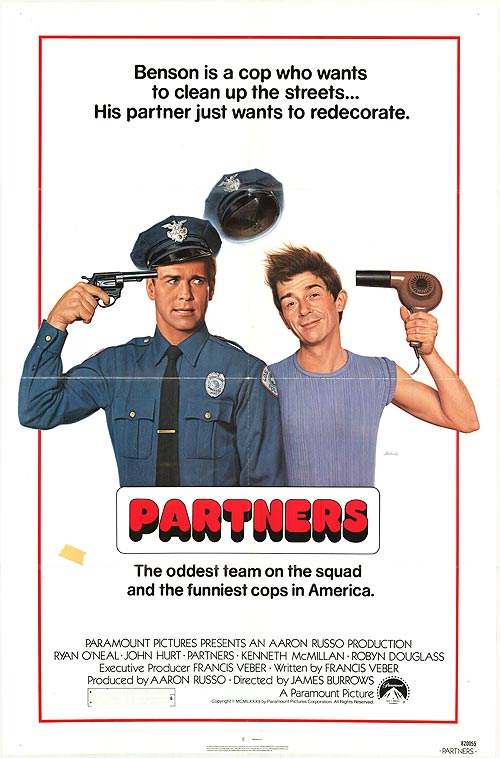
A serial killer targeting gay men is on the prowl. When one of his victims turns out to be the son of an influential politician pressure is put on the police force to find the culprit. The police chief (Kenneth McMillan) feels he has no choice but to pair Sgt. Benson (Ryan O’Neal) a straight cop with Kerwin (John Hurt) who is a gay desk clerk at the station. They are to masquerade as a gay couple in hopes of infiltrating the gay underground and find clues to the elusive killer, but their contrasting personalities and lifestyles threaten to blow their cover before they can make headway.

This film was controversial at the time of its release for its overuse of gay stereotypes and there are indeed some especially at the beginning, but the film’s biggest offense is that it is just plain boring. The idea that two cops could be forced to pretend to be a gay couple or have one of them pose naked for the cover of a gay men’s magazine as part of their investigation is dubious enough, but had it been funny I might have forgiven it. Unfortunately this thing can’t even elicit a few chuckles.

The idea that Kerwin would automatically fall in love with Benson while working together simply because he is another man is absurd and makes about as much sense as a heterosexual male falling for every woman that he meets, which of course doesn’t happen. The Benson character is also quite callous and disrespectful to Kerwin while showing blatant homophobic tendencies and being a confirmed ladies’ man, so I didn’t see what there was about him that Kerwin would have fallen in love with anyways.

Benson’s transformation to being more sensitive to gays and their issues during the course of the story might have been more compelling had it been better written. However, his liberal use of the word ‘faggot’ makes the film seem quite dated and wouldn’t be heard in a movie today especially from a character that is supposedly a protagonist.

Hurt plays the gay caricature well, but the idea of placing someone on such a dangerous mission without having any undercover experience of even knowing how to use a gun seemed stupid and unrealistic. Out of all the characters McMillan’s comes off best and he even manages to be slightly amusing, but unfortunately isn’t seen enough. Character actors Jay Robinson and Sydney Lassick can be spotted very briefly.

This was intended to be a parody of Cruising, which was released 2 years earlier and was a much more serious and graphic look at a true life killer of gay men. That film starred Al Pacino and will be reviewed next Monday.

My Rating: 2 out of 10

Released: April 30, 1982

Runtime: 1Hour 32Minutes

Rated R

Director: James Burrows

Studio: Paramount

Available: VHS, DVD

To Find a Man (1972)

to find a man 2

By Richard Winters

My Rating: 8 out of 10

4-Word Review: Teen wants an abortion.

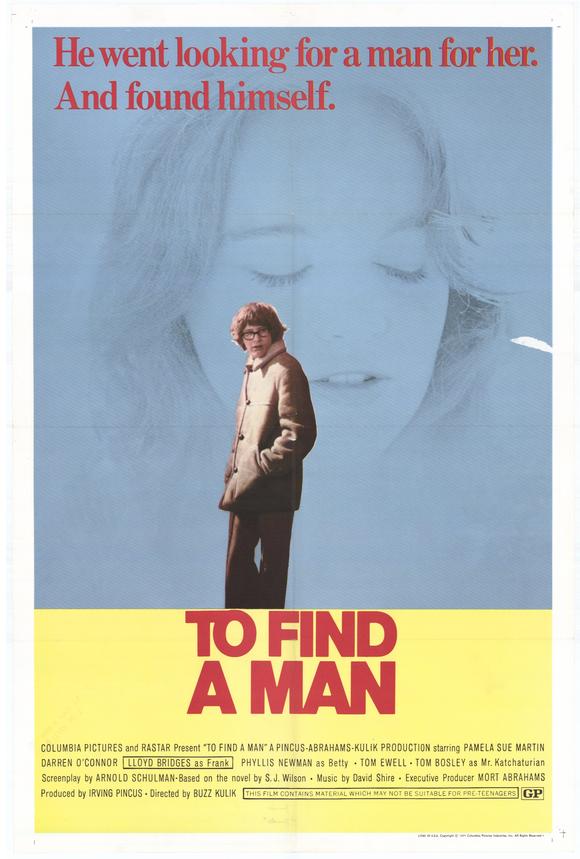
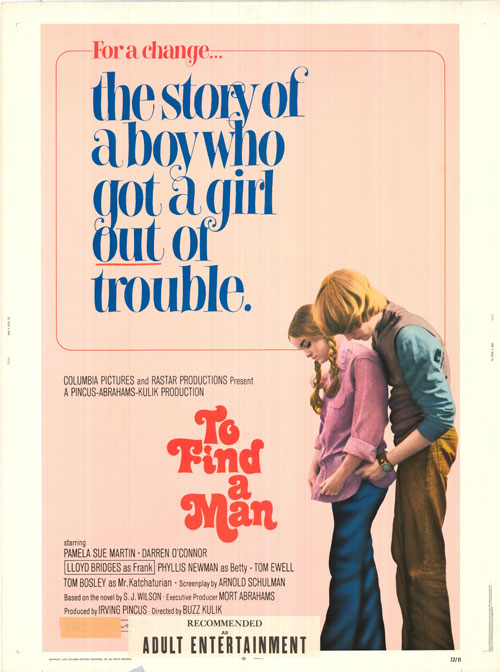
Rosalind (Pamela Sue Martin) is a teenager attending an all-girls Catholic school who finds out that she is pregnant. She can’t tell her parents (Lloyd Bridges, Phyllis Newman) and some of the advice that her girlfriends give prove to be useless. She decides she wants an abortion, but doesn’t know where to go so she turns to one of her guy friends named Andy (Darren O’Connor) who is a bright student and a little more sophisticated. After being scolded by his family’s live-in maid Modesta (Antonia Rey) as being too selfish he decides to go out of his way to help Rosalind with her problem even if at times she seems to have no appreciation for it.

I know the phrase ‘they don’t make movies like this anymore’ has become a modern-day axiom especially when reviewing films from this era, but in this case it fits, but not for the expected reasons. In a lot of ways this is far more open-minded about the controversial subject than anything you might see today. It manages to nicely avoid the political issues and instead tells a refreshingly realistic story about teenage friendship that respects the intelligence of its intended audience without ever getting preachy or overly-sanitized.

The film also manages to be surprisingly funny particularly at the beginning when Rosalind and her naïve friends come up with all sorts of insane ways to try to terminate the pregnancy on their own, which may sound potentially offensive to some, but somehow scriptwriter Arnold Schulman and director Buzz Kulick balance it well enough to keep it at an innocuous level. They also manage later on to shift it seamlessly towards the serious side as it shows in vivid detail the cold, ‘business-like’ attitude of those working at an abortion clinic and the impersonal way they treat people that come to it.

Martin in her film debut is excellent playing a character that is not necessarily likable, but still quite human and believable for that age. O’Connor in his one and only film appearance is equally good and it’s great to see a teen lead that is smart without being particularly fashionable, trendy or attractive.

Bridges is excellent as the girl’s father and the unique friendship that he has with O’Connor is quite interesting. Ewell is a standout as the abortionist in the final sequence that manages to be stark, compelling and strangely moving.

In a lot of ways this is more a story about the flawed human beings that we all are and how sometimes when it’s least expected they can do some amazingly selfless acts in this slice-of-life film that is surprisingly both touching and upbeat. It’s also quite similar to Our Time, which came out 2 years later and also starred Martin.

to find a man 1

My Rating: 8 out of 10

Released: January 20, 1972

Runtime: 1Hour 30Minutes

Rated GP

Director: Buzz Kulik

Studio: Columbia Pictures

Available: Amazon Instant Video

A Change of Seasons (1980)

a change of seasons 1

By Richard Winters

My Rating: 6 out of 10

4-Word Review: Everybody has a fling.

Adam (Anthony Hopkins) a middle-aged college professor who starts having an affair with a beautiful young student of his named Lindsey (Bo Derek). When his wife Karyn (Shirley MacLaine) finds out about it she decides to get her revenge by having an affair of her own with a handyman named Pete (Michael Brandon). All four decided to take a ski trip together while staying in the same house with each spouse sleeping with their new found lover. Despite a few hiccups things go surprisingly well until their college-aged daughter Kasey (Mary Beth Hurt) shows up who is none too thrilled with her parent’s new arrangement. Then Lindsey’s father (Edward Winter) appears who, after initially being shocked at the tawdry set-up, eventually adjusts and then makes a play for Karyn as well.

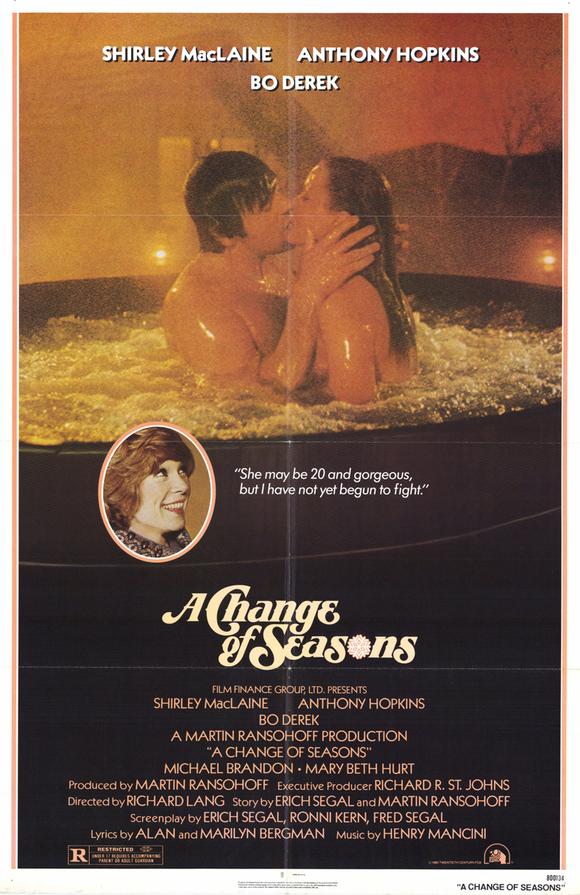
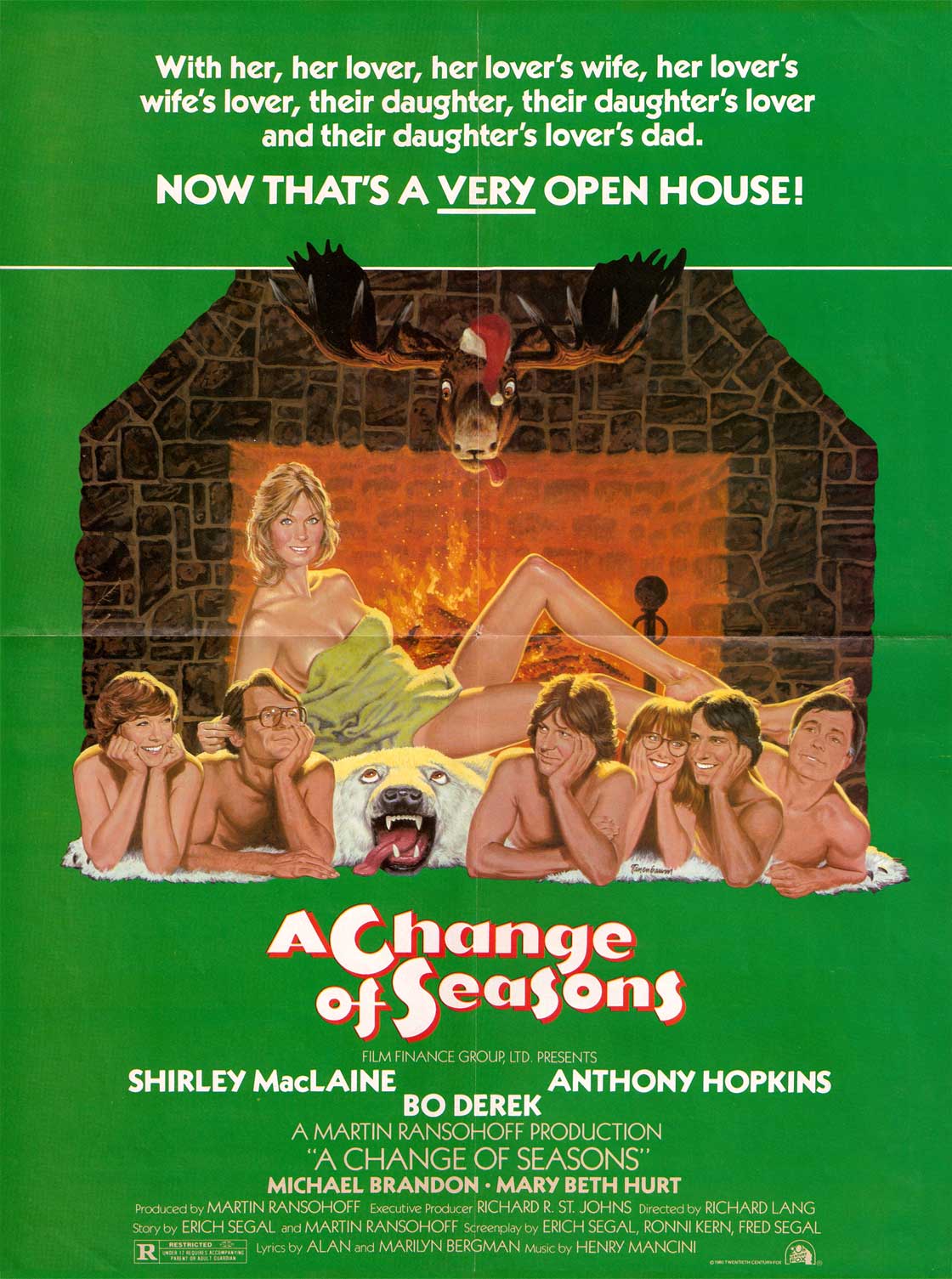
Although the film’s trailer and poster makes this thing look like a madcap farce it really isn’t and despite a comical set-up veers surprisingly towards the dramatic most of the way. To some extent it kind of works and I enjoyed some of the dialogue that tries to dig a bit deeper than most of the other mid-life crisis films as it analyzes why otherwise happily married men would jeopardize their union by having a mindless fling and somehow expecting to successfully juggle both relationships. However, it would have worked much better had it stayed with the comical route. Some of the funny scenarios don’t get played out enough and with such goofy characters and situations it’s hard to take it seriously even when it wants to culminating in an uneven mix of a movie that never quite hits its stride.

There are also certain scenes that don’t make much sense in either the comical or dramatic vein. One involves Adam admitting to Karyn about his affair and instead of her becoming enraged and either throwing him out or leaving they spend the rest of the night calmly discussing it and even going to bed together, which seemed highly unlikely to occur in real-life. The way Karyn hooks-up with Pete is equally stupid as he waltzes into her house unannounced and starts making himself some coffee and breakfeast. When Karyn comes downstairs to find this stranger in her home she doesn’t panic and call the police like a normal person would, but instead after a very brief conversation invites him upstairs for sex.

a change of seasons 3

Hopkins gives and excellent performance and the main reason the film stays afloat and is passable to watch. The way his character is forced to face his own contradictions and flaws is good and the scene where he catches Karyn with Pete is well acted on his part and makes the segment more interesting than it otherwise would have been. Winter is great as well and gives the best performance of his career where his initial shock at discovering their living arrangement is genuinely funny.

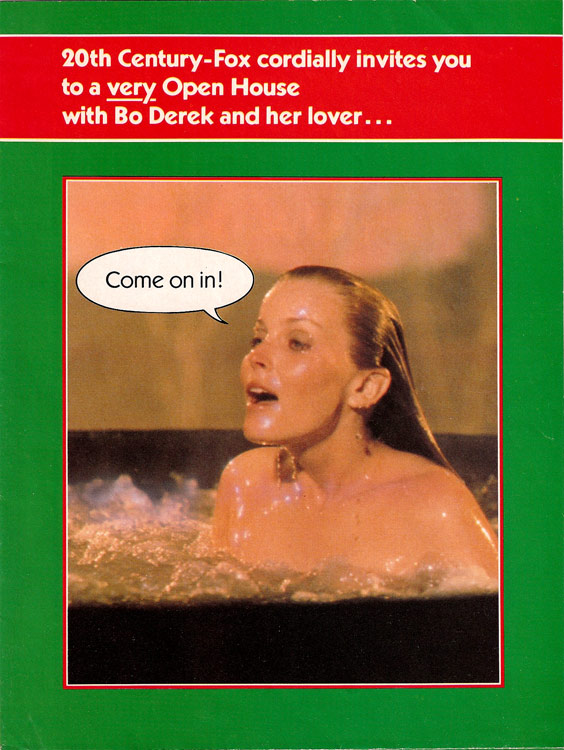
The only weak link of the cast is Derek. Yes, she certainly looks great naked and the opening sequence featuring her and Hopkins in the hot tub is okay on the erotic level, but her acting is overall quite poor and her monotone delivery eventually becomes annoying.

Overall the theme is too derivative from many other films that have tackled the same subject making this one hardly worth the effort to seek out. In fact MacLaine starred in another film that very same year entitled Loving Couples that has pretty much the exact same storyline and that one will be reviewed next week.

a change of seasons 2

My Rating: 6 out of 10

Released: December 1, 1980

Runtime: 1Hour 42Minutes

Rated R

Director: Richard Lang

Studio: 20th Century Fox

Available: VHS, DVD

Making It (1971)

making it 2

By Richard Winters

My Rating: 5 out of 10

4-Word Review: Teen enjoys seducing women.

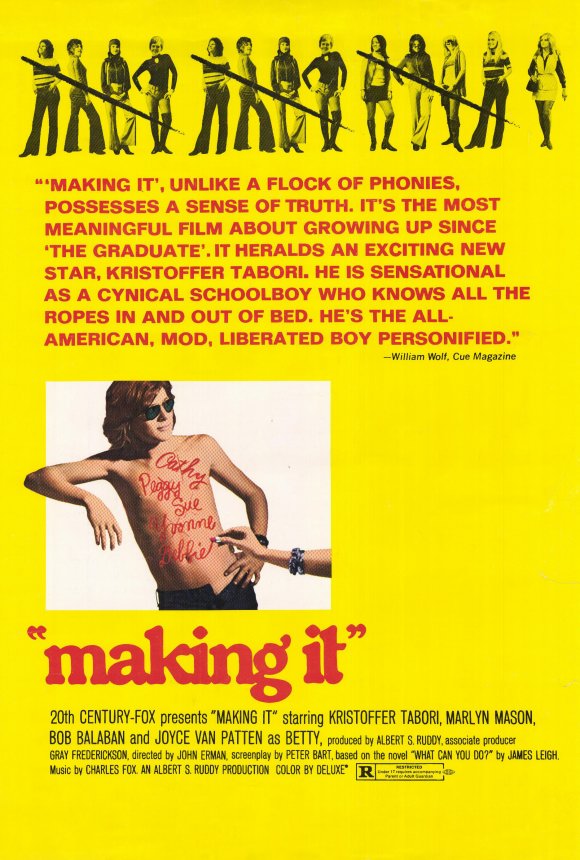
Phil (Kristoffer Tabori) is a cocky, self-centered teen who uses his good looks to get practically any girl he wants into bed with him. He even has a fling with the wife of his basketball coach, but when he thinks he has gotten one of them pregnant things begin to spiral out-of-control especially when his emotionally fragile mother (Joyce Van Patten) starts to have some ‘problems’ of her own.

Peter Bart’s script, which is based on James Leigh’s novel ‘What Can You Do?’ has some incisive comments, but surprisingly it’s more on being middle age than adolescence. It shows with a depressing clarity what a thankless, pain-in-the-ass the middle age years can be and how people at that stage secretly wish to go back to their teens if only to experience for a fleeting moment the carefreeness and idealism once again.

The on-location shooting done at West Mesa High School in Albuquerque, New Mexico nicely captures the gorgeous, crystal blue skies of that region. The students are made up of actual teens that look and behave very much like teens of today. However, John Erman’s direction is lackluster and flat. Everything is shot in a conventional, unimaginative way with a pace that is slow and only manages to improve towards the end when it becomes dramatic.

Phil’s spirited debate with his English teacher, played by Lawrence Pressman, is engaging as is a rebellious student played by Bob Balaban arguing with his beleaguered principal (David Doyle) about his right not to have to stand at attention during the pledge of allegiance. The film is also famous for the novelty of casting real-life siblings Dick and Joyce Van Patten as lovers and includes a sequence showing him kissing her on the mouth, which had to be awkward to perform let alone rehearse.

Tabori, who is the son of actress Viveca Lindfors and Dirty Harry director Don Siegel shows an impressive amount of composure and maturity for such a young age, but I wasn’t so sure I liked the sound of his voice. Louise Latham, who plays the mother of the girl Phil thinks he might have impregnated, is memorable and had her part been just a wee bit bigger she would have easily stolen the whole thing. She is also involved in the film’s funniest moment where she asks Phil for some weed and thinking she doesn’t know “grass from her ass” he decides to take a regular cigarette, roll it up like a joint, light it and then let her smoke it where she  ends up getting a ‘high’ anyways.

The film’s staple though is its twist ending that is genuinely shocking and most likely to leave even the most jaded viewer’s mouth agape. It could’ve been played out a little more, but remains nasty nonetheless and it’s something you’re guaranteed not to see in any other movie. It is also the one thing that gives this otherwise undistinguished teen flick a kick and probably explains why it has never been released on either VHS or DVD nor ever shown on broadcast network television.

making it 1

My Rating: 5 out of 10

Released: March 21, 1971

Runtime: 1Hour 31Minutes

Rated R

Director: John Erman

Studio: 20th Century Fox

Available: None at this time.