Category Archives: Comedy

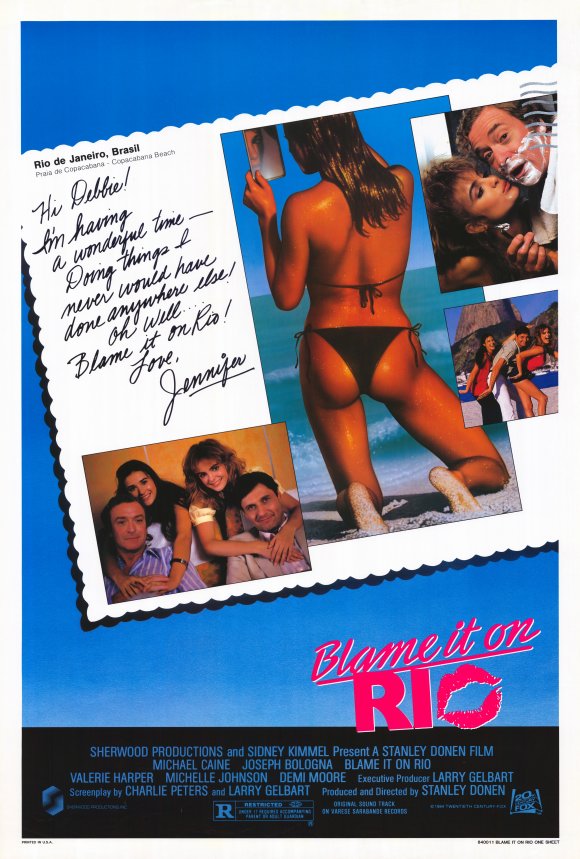
Blame it on Rio (1984)

blame it on rio 1

By Richard Winters

My Rating: 4 out of 10

4-Word Review: Sex with friend’s daughter.

Victor (Joseph Bologna) is going through a messy divorce and in order to escape from the stress he invites his friend Matthew (Michael Caine) to join him and his daughter Jennifer (Michelle Johnson) on a trip to Rio de Janeiro. Initially Matthew was to bring along his wife Karen (Valerie Harper), but at the last minute she bails out, so instead he takes his daughter Nicole (Demi Moore) who is also Jennifer’s best friend. During the trip Jennifer’s long dormant feelings for Matthew come to a head and the two end up having a fling. Matthew sees this as a secret one-night-stand as he doesn’t want it to jeopardize his long friendship with Victor, but Jennifer wishes for it to blossom into a love affair and even considers, much to Matthew’s reluctance, informing her father about it.

The film, which has been the last theatrical feature to date to be directed by the legendary Stanley Donen, has a zesty start that features soothing music, luscious scenery and sharp dialogue. Unfortunately it goes downhill from there with the third act being the real problem. Instead of becoming an interesting character study and analyzing whether this otherwise strong friendship could survive such a shocking event it instead veers off into silliness by entering in a crazy twist of Mathew’s wife having a secret affair with Victor, which didn’t seem realistic or believable and cements the whole thing as being nothing more than a dumb, shallow lightweight comedy.

The usually reliable Caine is miscast and his big Harry Caray-like glasses become almost a distraction. His costar Bologna is the one who steals it in a role nicely attuned to his brash, hothead persona.

The weakest link though is Johnson who despite looking great topless clearly has very little acting talent. Her character is poorly defined and written by two middle-aged men who were out-of-touch with the younger generation and had no idea how they ticked.  At the beginning she behaves too much like a child and then suddenly when she gets it on with Matthew she is like an out-of-control sensuous vamp, which made the character come off like two different people altogether. The fact that she shows no apprehension at all in having sex with Matthew who is much older made little sense as I would think that any normal person  would feel nervous and despite the attraction even some reluctance. She also shows no concern for how stressed the whole thing made Matthew feel, which unintentionally made her appear quite selfish.

Moore would’ve been much better in Johnson’s role and in many ways sexier. I had to chuckle a bit because in Leonard Maltin’s review of this film he mentions that Demi seemed ‘intimidated’ during her topless scene at the beach, which is actually an understatement as she looks downright uncomfortable, which in turn makes the viewer feel the same way.

This film is the American remake of the French comedy One Wild Moment, which came out six years earlier and will be reviewed later this week.

My Rating: 4 out of 10

Released: February 17, 1984

Runtime: 1Hour 40Minutes

Rated R

Director: Stanley Donen

Studio: 20th Century Fox

Available: VHS, DVD, Amazon Instant Video, YouTube
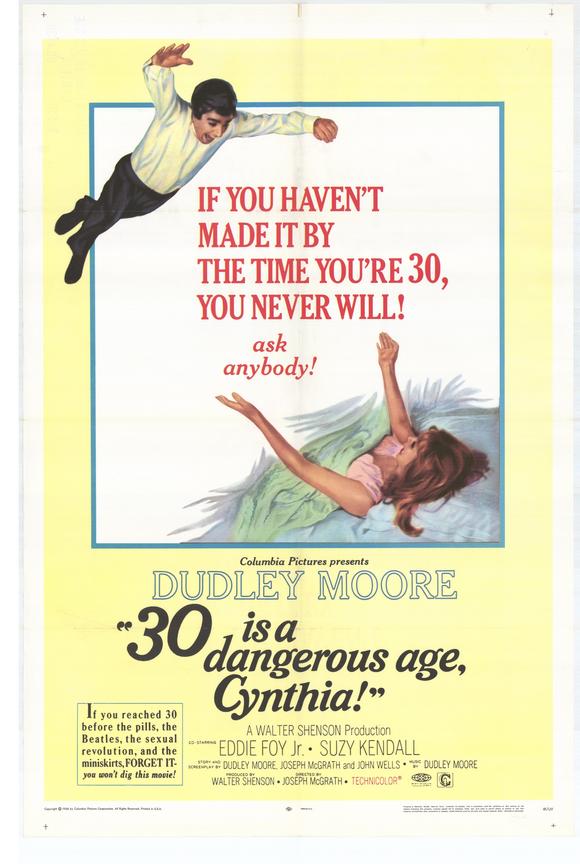
30 is a Dangerous Age, Cynthia (1968)

30 is a dangerous age

By Richard Winters

My Rating: 6 out of 10

4-Word Review: Life crisis at 30.

Rupert Street (Dudley Moore) is a struggling pianist and composer who with only six weeks until his thirtieth birthday feels that his life has been a failure. He sets out to change that by setting some very lofty goals, which is to write a musical and have it produced as well as getting married even though he has yet to find a girlfriend.

The film, which was directed by Joseph McGrath is filled with the wonderfully drool British humor that manages to be both lightly satirical and imaginative all at the same time. The rampant cutaways in which a character will be talking about something and then it cuts to show them doing what they are imagining or discussing lends a nice surreal quality. The banter that Moore has with a Registrar (Frank Thornton) where he tries to get a marriage license before even having picked out a woman is the high point of the film and a perfect example of the wacky humor of that era from that region of the world that balances being both subtle and over-the-top that I wish more American movies would be better able to replicate.

The supporting cast helps a lot and is full of comic pros. The elderly Eddie Foy Jr. is a scene stealer as Rupert’s best friend and so is Duncan Macrae, whose last film this was, as Rupert’s boss. Patricia Routledge is great as his kooky landlady and Suzy Kendall is highly attractive as his fiancée. There is also an amusing parody of 1940’s detective movies featuring John Bird as a self-styled film noir-like private eye.

Unfortunately the script, which was co-written by Moore, suffers from too much of loose structure. The jokes are poorly paced and many times the comic bits go on longer than they should. There is also an intermixing of musical numbers that features Moore at the piano, which does not work well with the rest of the film. Yes, Moore was also an excellent pianist, but this was no place to be showing it off and these segments only help to bog the film down as a whole. The ending, which features Moore having to witness the desecration of his musical by an overzealous director who has a different ‘vision’ for it is priceless, but in-between there are a lot of lulls and the film would’ve been helped immensely by having a tighter script and a more structured, plot driven story.

My Rating: 6 out of 10

Released: March 4, 1968

Runtime: 1Hour 25Minutes

Not Rated

Director: Joseph McGrath

Studio: Columbia Pictures

Available: VHS

Pardon Mon Affaire (1976)

pardon mon affair1

By Richard Winters

My Rating: 7 out of 10

4-Word Review: Married man wants hottie.

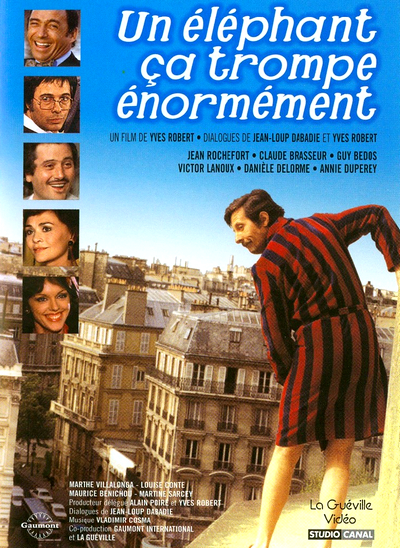
Etienne (Jean Rochefort) is a mild mannered, middle aged man who has lived a practical lifestyle both with his marriage and career and then one day goes absolutely gaga over a beautiful model named Charlotte (Anny Duperey) that he spots by chance in a parking garage. He goes to great, tireless lengths to meet her with no regard to how it is upsetting and even destroying his once quant and secure life.

This is the French version of what was later Americanized in The Woman in Red starring Gene Wilder. For the first five minutes the two films are almost identical as the opening scenario plays out in exact same fashion frame-for-frame, but then after that there are some distinct differences with this version being far superior to the remake. The disintegration of Etienne’s friend Bouly’s (Victor Lanoux) marriage is much funnier here as the philandering character gets upset when his wife leaves him we will realize its more because of his inflated, deluded ego thinking that somehow he is such a ‘great’ guy that his wife will tolerate his misgivings and when the harsh reality hits him that she won’t it’s a genuinely amusing meltdown to see. I also liked that the film cuts to a reaction shot of the main character as he observes his friend’s meltdown, which helps tie the scene more into the central plot and something that the Wilder version did not do.

I also liked how this film digs to a deeper level in regards to Etienne’s relationship with his male friends showing how competitive they are at times with each other, which is something that occurs even in the best of friendships, but when it counts they are still there to help their friend out of jam which came off as being very natural and real. The side story dealing with the homely female office worker which is played by Gilda Radner in the remake is also better handled. In the American version like with this one the character mistakenly thinks that Etienne is in love with her and not the model and when he doesn’t show up to their ‘dates’ like she expects she gets quite upset and trashes his car, but here Etienne attributes her outrage to the idea that she is aware that he wants to fool around with the model and thus does these things to defend his wife’s honor, so therefore he does not retaliate when she destroys his property for fear she will then go to his wife and tell her. In the remake this is never explained, which makes the main character’s reluctance to retaliate after his property is damaged seems strange and confusing.

This movie also has a side-story dealing with the daughter’s boyfriend hitting on Etienne’s wife something that only gets slightly touched upon in the remake. Here it gets played out more and the scenes watching this 17-year-old kid clumsily try to come on to this much older woman who has no interest in him are some of the most amusing moments in the movie.

The acting here is far better as well. The Charlotte character seems more like a real person instead of a one-dimensional sex object as LeBrock did. Rochefort is much funnier than Wilder and sports a brown mustache, which makes him seem very Inspector Clouseau-like. The American version, in an apparent attempt to make the protagonist more ‘marketable’ to a mass audience, conforms more to mainstream values by being portrayed as constantly guilt-ridden, but the character here is not shackled with such restraints and the way he recklessly chases after the woman even as it causes him more stress is what makes the movie so funny. It also has some very astute observations about marriage, middle-age, sex and the male animal while the remake is just vapid, silly escapism.

I presume the reason why the nuances of this one didn’t get transferred to the Hollywood version is because the producers felt that American audiences would not be ‘sophisticated’ enough to pick up on them, which is why I tell everyone who considers themselves to be a film lover to be sure to stay abreast of the foreign films that are out there. In most cases they are much more original, creative and observant to the human condition than anything that’s come out of Hollywood and the main reason for this is that they are treated more like an artistic endeavor with the director given full control while here the films are forced to work within a studio driven formula and treated more like a business byproduct made to give a profitable return on their investment and nothing more.

pardon mon affair2

My Rating: 7 out of 10

Released: September 22, 1976

Runtime: 1Hour 45Minutes

Rated PG

Director: Yves Robert

Studio: Gaumont

Available: VHS

Goldstein (1964)

goldstein2

By Richard Winters

My Rating: 4 out of 10

4-Word Review: Prophet emerges from lake.

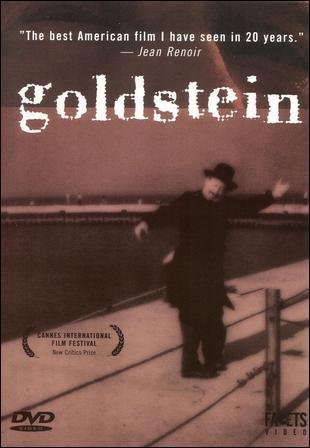
An old man (Lou Gilbert) emerges from Lake Michigan and wanders the streets of Chicago making friends and enemies along the way. His aurora captures the imagination of a local artist (Tom Earhart) and he seeks the old man out for advice and inspiration, but then loses sight of him and spends the rest of the movie trying to chase him down, but becoming more lost in the process.

This film’s biggest claim to fame is that it is the directorial debut of Philip Kaufman who along with co-director Benjamin Manaster penned this tale that is supposedly a loose, modern-day interpretation of the prophet Elijah. The film has an engaging cinema verite style that is enough to hold some interest, but story wise it is vague and confusing. Too much is thrown in that seems to having nothing to do with the central character or theme. Much of it was clearly ad-libbed, which creates a certain freshness, but also allows it to go even more on a tangent that it ultimately cannot recover from.

The best moments come from the scenes involving Gilbert’s character who surprisingly doesn’t have as much screen time as you’d expect despite being supposedly the central point of the story. The scenes where he comes out of the water and then befriends a homeless man and wheels him down a busy street while holding up traffic is funny I also loved the part where he takes a bath in an apartment and is unable to work the faucet knobs or even know what they are for. His foot chase through a meat plant is nicely captured and edited as is his shadow dancing along the shores of Lake Michigan, but he disappears too quickly and the movie is weak and directionless without him.

This movie also marks the acting debuts of several famous comic character actors including Jack Burns who was part of a comic team with George Carlin for a while and then later with Avery Schrieber before becoming famous as the voice for the crash test dummies. Here he has an amusing bit as an ambivalent desk sergeant. Severn Darden and Anthony Holland are both seen on the screen for the first time playing a sort-of Laurel and Hardy-like traveling abortionists who perform the operation on one woman (Ellen Madison) inside an empty apartment that is quite edgy, explicit and darkly humored for its time period.

The on-location shooting in Chicago is great especially with the way it captures the Marina Towers, which are two residential buildings resembling corncobs that sit in the downtown and had just been completed when filming took place. The flimsy, wide-eyed story though cannot equal its creative execution making this interesting as a curio only.

goldstein 1

My Rating: 4 out of 10

Released: May 4, 1964

Runtime: 1Hour 25Minutes

Not Rated

Director: Philip Kaufman, Benjamin Manaster

Studio: Altura Films International

Available: DVD

Viva Max! (1969)

viva max 2

By Richard Winters

My Rating: 3 out of 10

4-Word Review: Taking back the Alamo.

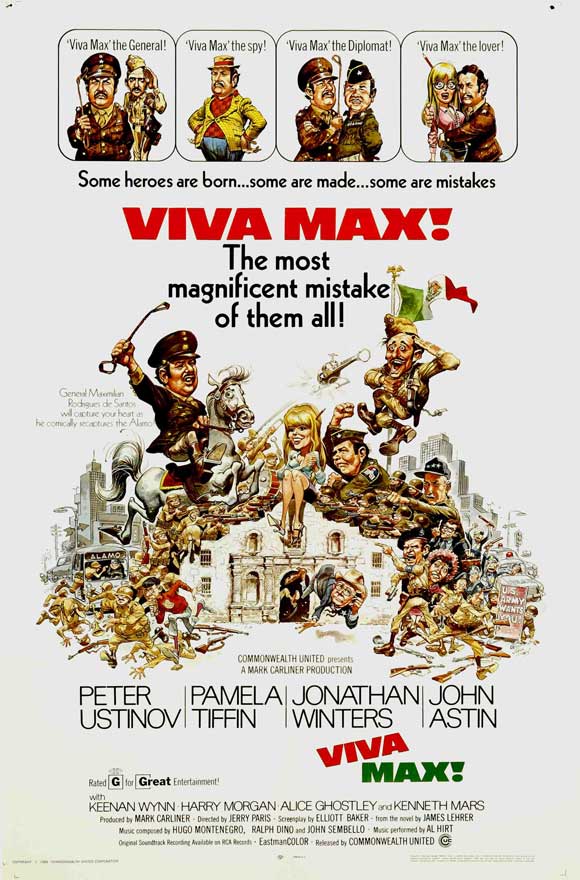
A small ragtag Mexican army led by the affable, but incompetent General De Santo (Peter Ustinov) decides to cross the border and recapture the Alamo. The process goes much easier than expected despite the fact that the army used no bullets in their guns. The National Guard is then sent in to weed them out, but they too decide not to load their guns with bullets leading to some unusual results.

The film is based on the novel written by PBS newsman Jim Lehrer and the movie’s behind-the-scenes politics ends up being much more interesting than the plot itself. Filmed in April of 1969 the production initially had permission from the state to film right on the actual site of the Alamo and a major portion was done there before various citizen groups became aware of it and began protesting the crew’s presence in what they considered to be sacred ground. Some of their protests was captured on film and incorporated into the story, but their loud presence eventually disrupted the production forcing some scenes to be done on an indoor studio soundstage while still others were completed in Italy.

The commotion and ‘controversy’ was not worth the effort as the film is an overall bore. The first 15-minutes are amusing and even mildly engaging, but once it gets inside to the actual Alamo the action and pace come to a screeching halt and kill any possible potential that the film may have had.

The script also has some illogical loopholes one of them being the army deciding to invade a place, but without using any ammunition, which is never explained and highly improbably. What is even more ridiculous is that the National Guard would decide not to use bullets in their guns either since this is the U.S. of A. where guns and force are considered a national birthright and thus makes this ill-conceived plot twist to be unbelievable to the extreme. The fact that De Santos and his men and able to freely leave at the end and go back to their country without dealing with any type of consequence for their actions is equally absurd.

Ustinov is funny and speaks in an authentic Mexican accent, but he’s unfortunately limited by the broad caricature of his role. John Astin comes off best as the Sergeant that’s second in command and does most of the actual disciplining and leading and Jonathan Winters is good as a clueless American general. Alice Ghostley lends some energy as an innocent bystander that becomes one of the army’s prisoners and Pamela Tiffin looks great wearing glasses and having her hair tinged in blonde.  Gino Conforti, Paul Sand, Jack Colvin, Anne Morgan Guilbert and Kenneth Mars can also be spotted in small roles, but even with their competent performances it fails to mask the film’s otherwise glaring inadequacies.

My Rating: 3 out of 10

Released: December 16, 1969

Runtime: 1Hour 34Minutes

Rated G

Director: Jerry Paris

Studio: Commonwealth United Entertainment

Available: VHS

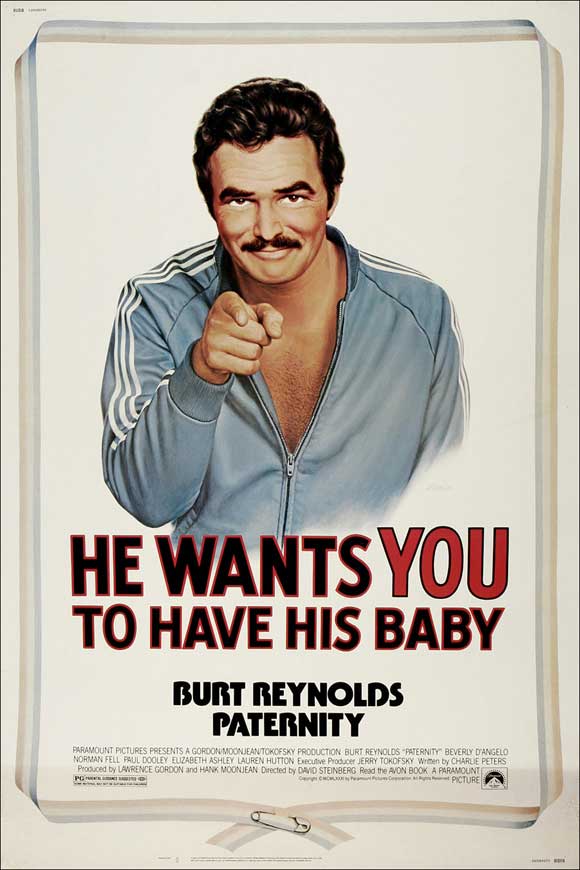
Paternity (1981)

paternity

By Richard Winters

My Rating: 1 out of 10

4-Word Review: Bachelor wants a son.

Despite managing Madison Square Garden, having lots of money and good looks Buddy Evans (Burt Reynolds) is still single at 44. He is happy with his bachelorhood, but still longs for a having a son. He comes up with the idea of paying a woman to have his child while treating it solely as a business proposition without any romance or relationship attached to it, after interviewing several ‘candidates’ he finally settles on Maggie (Beverly D’Angelo) a waitress who can use the money to further her education. Things are expectedly awkward at first, but as the process continues Maggie finds herself falling in love with him and trying to turn it into a relationship despite his reluctance.

Reynolds is a dynamic star with an engaging onscreen presence particularly in comedies, but his appearance here hurts the picture more than it helps it. For one thing it doesn’t make sense why this great looking guy with tons of cash can’t find a woman. And just why is he so reluctant to get into a committed relationship? What about this character’s background makes him the way he is? It never gets explained, but would’ve helped give the film more depth had it been. A better concept would’ve been portraying the character as being a rich guy who is also short, fat, bald and lacking in the romantic graces, but woman still tolerate because of his money, which would’ve ultimately made this more realistic, edgier and funnier.

I really liked D’Angelo and considered this her best performance, but having her fall in love with the guy and turning this into just another formulaic, sterile romantic comedy was a ridiculous stupid idea and makes it almost excruciating to watch. The guy spends the whole time acting like he owns her by telling her what to eat and do while being outrageously ambivalent to her feelings or needs. Any woman that would fall in love with a guy that her treats that way should see a psychiatrist and get some self-respect.

Comedian David Steinberg makes his directorial debut here and I liked the way he begins the film by having pictures of baby’s faces lining the screen during the credits all to the sound of them cooing and crying. He also pays loving tribute to his adopted city of New York by having some fabulous shots of the skyline and some scenic moments in Central Park that accentuate the fall foliage. In fact it is for these two reasons only that I generously give this thing a measly 1-point.

My Rating: 1 out of 10

Released: October 2, 1981

Runtime: 1Hour 34Minutes

Rated PG

Director: David Steinberg

Studio: Paramount

Available: VHS

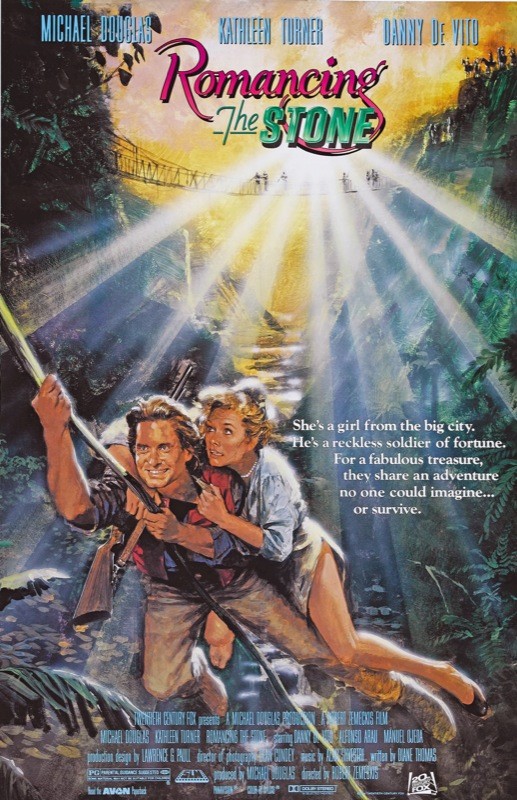
Romancing the Stone (1984)

romancing the stone

By Richard Winters

My Rating: 4 out of 10

4-Word Review: Romance novelist has adventure.

Joan Wilder (Kathleen Turner) is a romance novelist living her love life out through her characters because she fails to have one of her own. One day she receives a mysterious treasure map in the mail and then gets a call stating that her sister Elaine (Mary Ellen Trainor) has been kidnapped and will only be released once her captors receive the map. Joan then travels down to Columbia where Elaine is being held and bumps into Jack (Michael Douglas) a rugged adventurer who helps her navigate her way through to jungle while falling in love with her in the process.

The most interesting aspect to the film may actually be in the backstory of its screenwriter Diane Thomas who seemed to live both the Hollywood dream and tragedy all at the same time. She was working as a waitress while struggling as a would-be screenwriter during her off hours. Then one day by chance actor Michael Douglas arrived at her café as one of her customers and seeing this as her one chance to break into the business she pitched her idea, which later became this movie, to him and he loved it. She was eventually able to sell it for $250,000 and as an added bonus Douglas brought her a Prosche, which she ended up being killed in during a car accident that occurred only 1 year after this film was released.

As a story though this thing is quite weak and barely passes for a plot at all and really is just more of some high-end adventure concepts strung together. It’s pretty much bubblegum on a fifth graders level and if you stop to think about it all it will quickly become quite empty-headed.

Turner’s performance and her nerdy character is the best thing about it. Unfortunately the character changes too quickly shifting into a more confident and secure woman by the midway point and thus losing its comic edge. Her relationship with Jack is initially interesting as well as they have very divergent personalities and approaches to things, but this too gets lost when the romance between the two becomes full-throttle making the film’s whole second half seem more like a feminist fantasy than an actual movie.

Danny Devito is amusing and needed more screen time. However, the ironic ways he keeps accidently bumping into the main characters starts to become a little too convenient. Holland Taylor is fun as Joan’s snarky agent and I wished her character had gone along with Joan on the adventure. The bad guys though are dull and generic and create no type of fun tension at all.

The story as a whole is just too cutesy and lacks any type of real conflict or excitement. Had Jack and Joan’s sparring been played up more and only turned into a romance at the very end, or even just approaching it in a satirical vein to all the romance novels out there I might have gotten more into it. Female viewers may take to this better as it seems completely geared for them. Unfortunately though it becomes too slick for its own good while failing to have any footing in reality, which ultimately makes it cease to feel like any type of real adventure at all.

My Rating: 4 out of 10

Released: March 30, 1984

Runtime: 1Hour 46Minutes

Rated PG

Director: Robert Zemekis

Studio: 20th Century Fox

Available: VHS, DVD, Blu-ray, Amazon Instant Video

Hot Pursuit (1987)

hot pursuit 2

By Richard Winters

My Rating: 1 out of 10

4-Word Review: He misses the plane.

Danny (John Cusack) attends a private school and when he flunks his chemistry test he’s not allowed to leave with his girlfriend’s family on their trip to the Caribbean. Then his professor inexplicably gives him a reprieve, which allows him to go anyways, but he misses the plane and is forced to play catch-up. First he meets up with some locals, but when their jeep gets submerged in water he takes up with a captain (Robert Loggia) who strands him out at sea. Meanwhile his girlfriend and her family have problems of their own when they inadvertently come into contact with drug smugglers.

The film is poor from the get-go and wastes Cusack’s appeal with material that lacks any imagination. The basic premise is derivative and the characters are one-dimensional. The plot plods along too slowly and the various hijinks that Danny finds himself in aren’t funny at all. The natives that he first meets up with are a bit on the creepy side and Loggia’s captain character is an over-the-top caricature that adds little.

The film’s biggest problem is its severe shift in tone. It starts out as an escapist comedy, which would’ve been alright had it actually been funny, but then ends up turning into a thriller when the family gets kidnapped by drug kingpins and it’s up to Cusack to get them out. Had it tried to keep some humor going during the tension it might’ve worked, but instead it gets unnecessarily serious and implausible with characters that are so poorly fleshed-out that the viewer really doesn’t care what happens to them making the climatic sequence boring and prolonged.

Cusack is good as always and I kind of liked him with his long hair look, but the character tends to be a bit too clean-cut. A young Ben Stiller appears here in his film debut and seeing him play against type as a leering, cocky bad guy is the only interesting thing about this movie and makes it somewhat worth catching.

My Rating: 1 out of 10

Released: May 8, 1987

Runtime: 1Hour 33Minutes

Rated PG-13

Director: Steven Lisberger

Studio: Paramount

Available: VHS, DVD, Amazon Instant Video, YouTube
Mr. Sycamore (1975)

mr sycamore 1

By Richard Winters

My Rating: 4 out of 10

4-Word Review: Mailman becomes a tree.

Bored with his job as a mailman and unhappy in his marriage John Gwilt (Jason Robards) decides one day to turn himself into an oak tree. He digs a hole in his backyard and ‘plants’ himself into it where he stands there day and night waiting to become a tree while his wife Jane (Sandy Dennis) tries desperately to talk him out of it, his neighbor Fred (Robert Easton) laughs at him and his minister (Mark Miller) tries to have him committed.

The film, which is based on a 1942 Broadway play, has a certain whimsical tone to it that might be pleasing to some if in the right mood and there is a certain strange intrigue at wondering just how this thing will end and whether he will eventually turn into a tree or not. However, the material would be better suited as a film short and the offbeat quality gets lost in a script that deals solely with a long parade of people who come into contact with John and their predictably shocked and confused responses when finding out what he is trying to do. The low budget is also an issue and outside of showing the inner-workings of a mail processing machine at the beginning there is no visual style at all.

Robards is a natural for the part, but he had already played a nonconformist looking to drop out of society earlier in the film and stage play A Thousand Clowns making his appearance here seem almost like typecasting. Jean Simmons gets wasted in a small bit as John’s secret love interest. Dennis, who usually plays kooky characters, becomes the most rational one here, which ultimately is the film’s weirdest element.

This definite curio does have a few amusing moments, but it lacks a second act or interesting side story and eventually talks its strange concept to death until it becomes boring.

My Rating: 4 out of 10

Released: December 12, 1975

Runtime: 1Hour 28Minutes

Rated G

Director: Pancho Kohner

Studio: Film Ventures International

Available: VHS

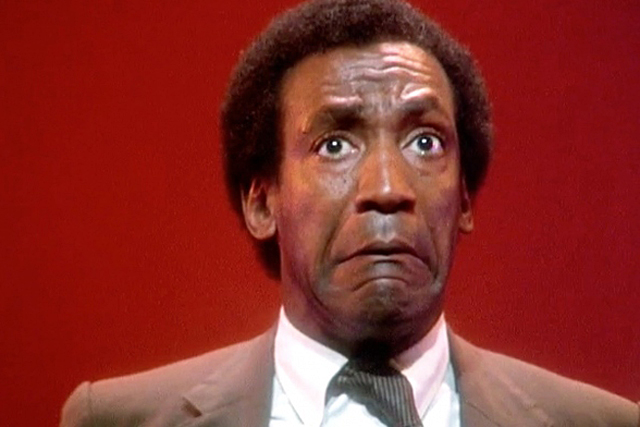
Bill Cosby: Himself (1983)

bill cosby 2

By Richard Winters

My Rating: 3 out of 10

4-Word Review: The Cos onstage routine.

Filmed in Hamilton, Ontario the movie centers entirely on Cosby in concert as he sits in front of a very enthusiastic audience doing many of his typical onstage routines including takes on child rearing, family life, marriage, dentist visits and even fart jokes. There is also a bit at the beginning about people who go out on weekends to party and get drunk only to regret it on Monday morning, which I found to be the funniest.

Although not R-rated the humor is still edgier than you might expect at one point he even says the word ‘asshole’ and uses his chair like it is a toilet that he is throwing up into. The material isn’t exactly fresh either as some of the jokes were already used during the pilot episode of his 60’s comedy TV-show. The opening credit sequence, which shows black and white pictures of kids and teenagers, which may or may not be his own is good because it features The Cos doing a parody of the Bill Withers’ song ‘Just the Two of Us’ only here it gets called ‘Just the Slew of Us’. Cosby’s entrance onto the stage in which he enters to the roar of the crowd and then leaves and comes back again to more applause is funny and shows his incredible ability to work an audience while looking completely at ease.

These days of course with the rape allegations this film along with everything else he has done has taken on a sour note. Some may not want to watch it simply for that reason and that’s fine. I’m conflicted a bit with the whole thing due to the fact that there are so many women suddenly coming forward after remaining silent for so many years like they just want to ‘jump on the bandwagon’ for whatever reason, but ultimately there is too many of them at this point to believe that they all could be lying.

The way I figure it, it all makes sense because in Hollywood the celebrity has access to a wider circle of attractive, younger people that a regular person doesn’t, which is why most marriages and relationships there don’t last because it’s just too easy to find someone else no matter what the age or looks of the star may be. Don Knotts in his 70’s managed to date and marry an attractive blonde in her 30’s. Dick Van Dyke who is near 90 is married to a woman in her 40’s and Carol Burnet in her early 80’s is married to a man in his 40’s. Tinseltown is full of people with trophy-like girlfriends (or boyfriends) to the point that it is the norm and even acceptable, but for Cosby it would’ve ruined his career because his whole act hinges on family values. So by drugging them to which he is accused of was his way of ‘fooling around’ and taking advantage of his celebrity status while still keeping his ‘clean-cut’ image intact and banking on the fact that no one would believe them if they ever did decide to come forward.

However, the biggest controversy in this instance is even calling this a movie to begin with. Most films even a documentary have some cutaways or visual variety, but this has none. We don’t even get to see the faces of the audience. The camera stays glued to Cosby from beginning to end, which despite his engaging nature and mildly funny jokes becomes incredibly tedious to sit through and watch.

My Rating: 3 out of 10

Released: May 20, 1983

Runtime: 1Hour 43Minutes

Rated PG

Director: Bill Cosby

Studio: 20th Century Fox

Available: DVD