Category Archives: Black & White

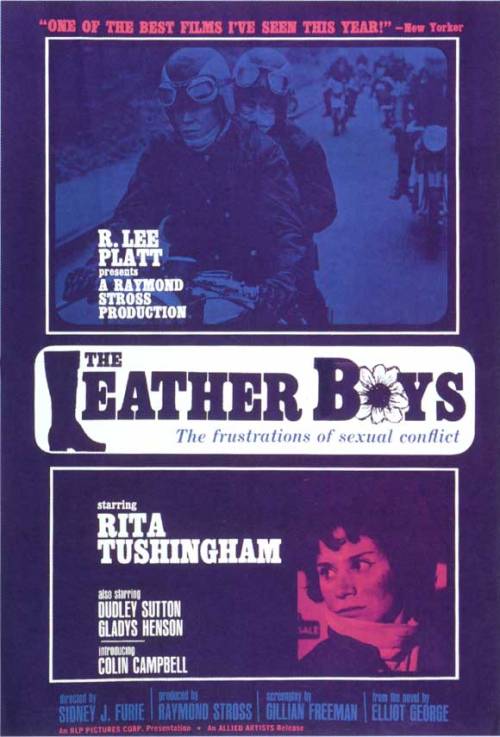
The Leather Boys (1964)

leather boys 1

By Richard Winters

My Rating: 6 out of 10

4-Word Review: Befriending a gay biker.

Reggie and Dot (Colin Campbell, Rita Tushingham) are young and in love, at least they think they are. They want to rush off and get married, but Reggie’s father (Lockwood West) feels that they ‘don’t know the meaning of the word’ and he gets proven right as immediately after they tie the knot they are at odds with each other. Reggie begins looking for companionship elsewhere and meets up with a fellow biker named Pete (Dudley Sutton). Pete and Reggie quickly become best friends and begin hanging out together, but Pete is secretly gay and has more of an interest in Reggie than just a friendship.

Director Sidney J. Furie, whose career has now spanned 6 decades, has done a lot of duds in his time, but this isn’t one of them. The stark black-and-white photography helps bring out the bleak working class existence of the characters and the variety of locales used including a nicely captured cross country motorbike race make the story captivating and believable.

The performances are outstanding. Tushingham is especially good at displaying a genuinely nasty side to her character at the most unexpected times. Gladys Henson, who plays the widowed grandmother, is also excellent and the scene where the others argue while right in front of her about how they consider her to be ‘an elderly inconvenience’ who needs to be sent away to a retirement home is downright heart wrenching. Sutton though is the most dynamic in a risky role that helped jettison him to stardom. His distinctive facial features galvanize the viewer’s attention and the ambivalent expressions that he makes particularly when in the presence of Dot are priceless.

Spoiler Alert!

The film though takes too long to get to its obvious conclusion as we have a pretty good idea from the beginning that Pete is gay, so having to wait until the very end for this to finally get revealed seems to be stretching the story out longer than necessary. Most likely Pete would’ve made some sort of pass at Reggie at some point earlier anyways especially since the men shared the same bed. The film also ends with Reggie walking away from Pete and essentially ‘abandoning’ him once he realizes that he is gay. The music that is played over the scene conveys the idea that this is the ‘right’ thing to do and parlays the conventional attitude of the time that there is something ‘wrong’ with Pete, which doesn’t make this as much of a landmark movie as it’s widely considered since its ultimate message is still entrenched with the biases and bigotry of that era.

End of Spoiler Alert!

My Rating: 6 out of 10

Released: March 8, 1964

Runtime: 1Hour 48Minutes

Not Rated

Director: Sidney J. Furie

Studio: Allied Artists

Available: DVD, Amazon Instant Video


Village of the Damned (1960)

village of the damned 2

By Richard Winters

My Rating: 6 out of 10

4-Word Review: The eyes have it.

Remade in 1995 and based on the John Wyndham novel ‘The Midwich Cuckoos’ the story centers on a small English village where one day everyone mysteriously falls asleep for several hours while under the spell of some invisible, odorless gas. When they awaken everything seems normal, but later on all the women become pregnant, even those that were not married or were still virgins. When the babies are born they are found to be different from their human counterparts as they have a higher intelligence, odd shaped heads and bright blonde hair. Later on these same children gain the ability to read other people’s minds and dispose of those that they don’t like penetrating them with the spell of their glowing eyes. As the rest of the village panics one man (George Sanders) feels that he may have the ability to stop them, but only if he can somehow control his own thoughts, so they won’t be able to tell what he is actually up to.

As a sci-fi thriller it’s not bad. The film’s short running time has a nice compact style to it with a story that evolves at a fast pace and continues to add new twists. The special effects for its day are realistic enough to be passable and the violence is surprisingly high. Sanders is effective in the lead and Martin Stephens as the leader of the children is quite creepy.

I found it a bit baffling though that the townspeople wouldn’t have quarantined the strange children from the start as it becomes quite obvious from the beginning that they aren’t normal. Instead they are allowed to roam freely even as they become increasingly more sinister. I would’ve also have thought that some of the mothers who gave birth to these strange beings would’ve disowned them and even refused to take care of them once their unnatural and frightening oddities became apparent.

The ending is frustrating as the film does not supply any answer as to who these kids where and what type of alien presence impregnated the women and why. The movie tells us that other places have been effected with these strange children as well, which leads one to believe that this is only a part of some other more sinister plot with far reaching consequences that never gets tackled. Instead we get left with a short film that acts like a small chapter to a fascinating idea with broad potential variables that unfortunately never gets followed through on.

My Rating: 6 out of 10

Released: July 5, 1960

Runtime: 1Hour 17Minutes

Not Rated

Director: Wolf Rilla

Studio: MGM

Available: DVD, Amazon Instant Video
Goldstein (1964)

goldstein2

By Richard Winters

My Rating: 4 out of 10

4-Word Review: Prophet emerges from lake.

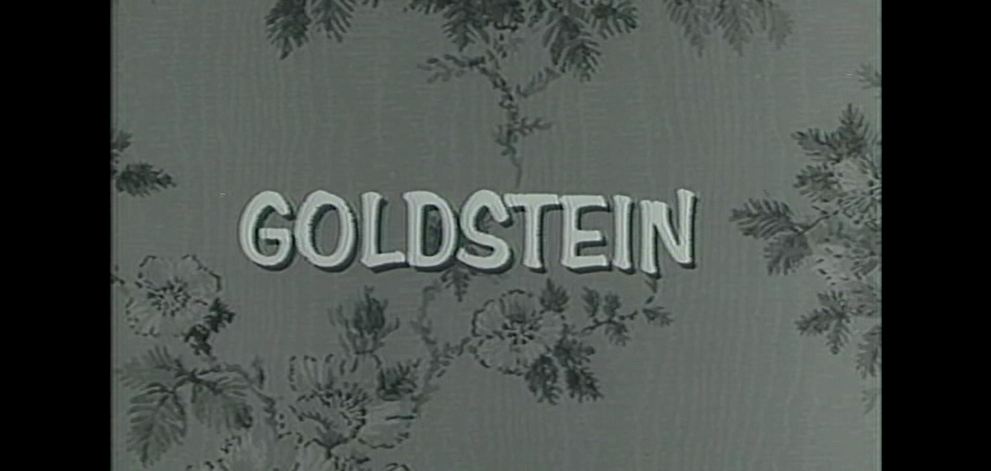
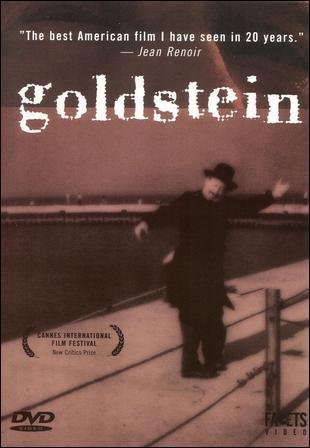
An old man (Lou Gilbert) emerges from Lake Michigan and wanders the streets of Chicago making friends and enemies along the way. His aurora captures the imagination of a local artist (Tom Earhart) and he seeks the old man out for advice and inspiration, but then loses sight of him and spends the rest of the movie trying to chase him down, but becoming more lost in the process.

This film’s biggest claim to fame is that it is the directorial debut of Philip Kaufman who along with co-director Benjamin Manaster penned this tale that is supposedly a loose, modern-day interpretation of the prophet Elijah. The film has an engaging cinema verite style that is enough to hold some interest, but story wise it is vague and confusing. Too much is thrown in that seems to having nothing to do with the central character or theme. Much of it was clearly ad-libbed, which creates a certain freshness, but also allows it to go even more on a tangent that it ultimately cannot recover from.

The best moments come from the scenes involving Gilbert’s character who surprisingly doesn’t have as much screen time as you’d expect despite being supposedly the central point of the story. The scenes where he comes out of the water and then befriends a homeless man and wheels him down a busy street while holding up traffic is funny I also loved the part where he takes a bath in an apartment and is unable to work the faucet knobs or even know what they are for. His foot chase through a meat plant is nicely captured and edited as is his shadow dancing along the shores of Lake Michigan, but he disappears too quickly and the movie is weak and directionless without him.

This movie also marks the acting debuts of several famous comic character actors including Jack Burns who was part of a comic team with George Carlin for a while and then later with Avery Schrieber before becoming famous as the voice for the crash test dummies. Here he has an amusing bit as an ambivalent desk sergeant. Severn Darden and Anthony Holland are both seen on the screen for the first time playing a sort-of Laurel and Hardy-like traveling abortionists who perform the operation on one woman (Ellen Madison) inside an empty apartment that is quite edgy, explicit and darkly humored for its time period.

The on-location shooting in Chicago is great especially with the way it captures the Marina Towers, which are two residential buildings resembling corncobs that sit in the downtown and had just been completed when filming took place. The flimsy, wide-eyed story though cannot equal its creative execution making this interesting as a curio only.

goldstein 1

My Rating: 4 out of 10

Released: May 4, 1964

Runtime: 1Hour 25Minutes

Not Rated

Director: Philip Kaufman, Benjamin Manaster

Studio: Altura Films International

Available: DVD

A Jolly Bad Fellow (1964)

jolly bad fellow 2

By Richard Winters

My Rating: 5 out of 10

4-Word Review: He poisons his enemies.

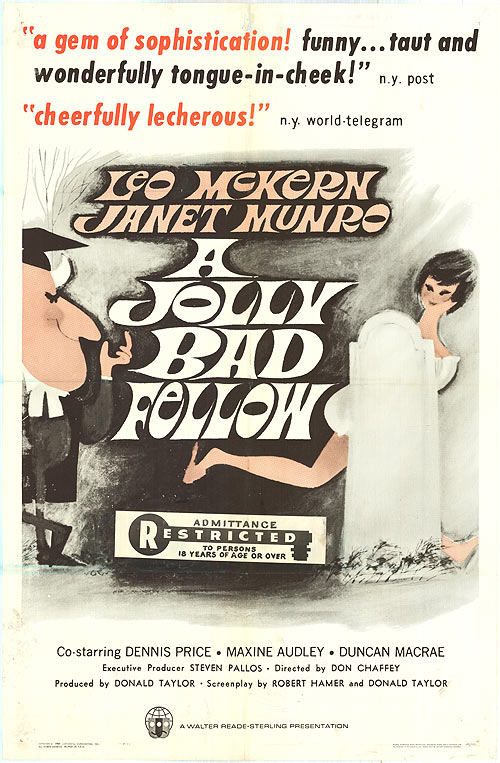
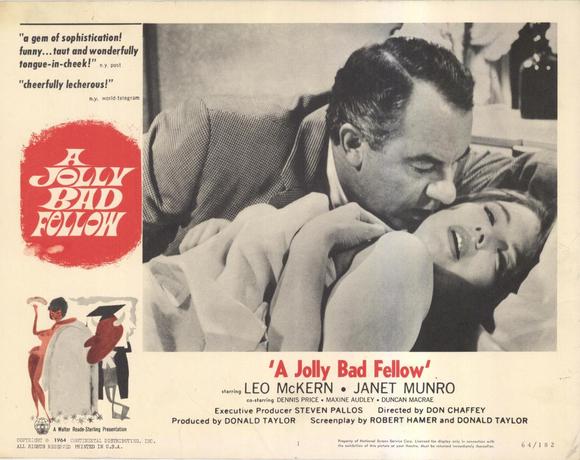
Professor Kerris Bowles-Ottery (Leo McKern) is a college professor working in the university’s science lab where he conducts experiments on mice. One day he accidently comes upon a poison that kills the mice, but only after sending them into a brief euphoric state, which he then decides to use on his enemies. Only a little bit of it is needed to work, so he is able to use all sorts of methods to get them to ingest it including putting it into their drinks, as well as the cigarettes they smoke, and even dabbing a bit of it on a tip of a pencil, which one of the character’s routinely likes to lick before he begins writing with it. Things go quite smoothly until his wife Clarinda (Maxine Audley) leaves him, which upsets him enough that he become careless and eventually culminates with ironic results.

The film’s chief asset is McKern’s presence whose acerbic delivery and facial expressions perfectly captures a stuffy, pompous curmudgeon in highly humorous fashion. He nails every scene that he is in, but his best moment comes at the very end when he hops into his car and begins driving at high speeds throughout the English countryside while giving off a loud, long maniacal laugh.

The plot is thick with satire, but doesn’t go far enough with it. Just when it seems to be catching its stride it bogs down with an affair that McKern has with a much young woman (Janet Munro) that didn’t make a lot of sense. I could see why he’d be into her, but no so much why she would have the hots for him although the fact that he does seem to truly love his wife even when he fools around on her and becomes upset when she decides to leave him was excellent irony.

The funniest element is when he poisons his enemies and rivals many of whom are as pompous and stuck-up as he is. Watching these refined, stuffy people suddenly act silly and child-like is quite amusing, but again the film stops short of packing the punch as these scenes should’ve been more extended, which is the one thing that makes this potentially hilarious film not half as funny as it could’ve been.

jolly bad fellow 1

My Rating: 5 out of 10

Alternate Title: They All Died Laughing

Released: March 15, 1964

Runtime: 1Hour 34Minutes

Not Rated

Director: Don Chaffey

Studio: British Lion Film Corporation

Available: DVD

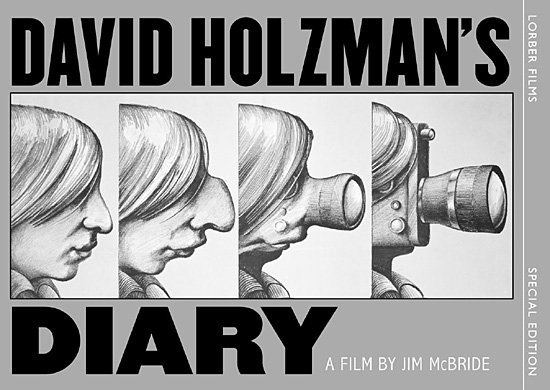
David Holzman’s Diary (1967)

david holzman 1

By Richard Winters

My Rating: 8 out of 10

4-Word Review: He records his life.

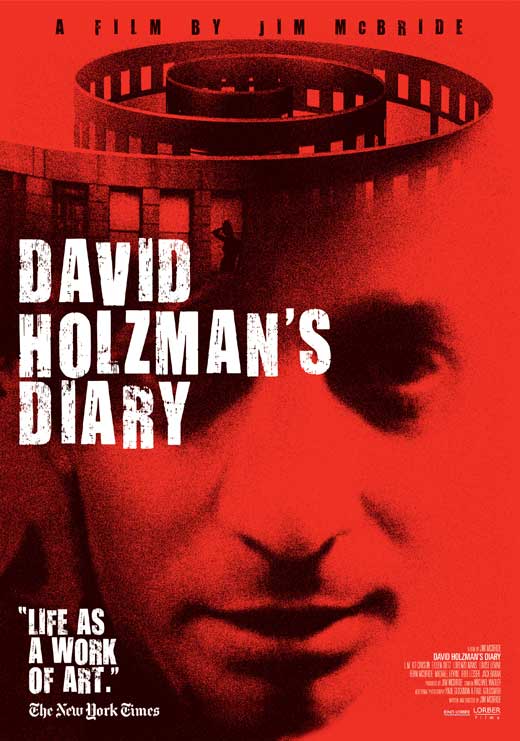
David (L.M. Kit Carson) is a young college-aged movie fan who wants to use the camera to not only record his life, but help him better understand and interpret reality. Unfortunately he finds that instead of clarifying things the camera instead brings out even more of reality’s complexities making his life and the world he is in even more confusing. It also inadvertently exposes a darker side to his personality that he wasn’t aware of which his voyeurism to both an attractive woman across the street as well as his live-in girlfriend Penny (Eileen Dietz) who eventually gets fed up with his film and him and moves out.

I realize the saying ‘ahead of its time’ can get a bit overused, but this is one case where that term really fits. This movie is cool on many different levels and features scenes and segments that you will never see done anywhere else. The Cinema verite style is perfect and I loved how the camera gets turned on itself as we are given a good background and visual to the type of camera that was used and why for its time was considered a cutting edge piece of machinery. The scene where he takes a shot of every image that he saw during a night of television viewing and then plays it back creating a mosaic of flashing images from shows and commercials is equally cool. The segment where he interviews a woman, which was apparently a man dressed in drag, but quite hard to tell, who stops her car in the middle of the street to tell him of her candid sexual desires while holding up traffic is quite amusing as is the part where he stalks a nervous lady from a subway car out onto the city streets.

The film also successfully transcends its time period. I have always said it is very easy to tell the time period or decade a movie was made usually after viewing it for only a few minutes, but this was one case where it is actually quite hard to tell. The detached, hip nature of the protagonist is still trendy and the film’s existential philosophical approach dealing with an artist’s need to recreate reality, but ultimately failing is as relevant today as ever. The loosely structured ad-libbed dialogue gives it a legitimate documentary feeling and was so believable that when audiences first viewed it during the 60’s they booed when they saw the closing credits and realized it had all been made-up. This was also the first American film to use the f-word and one of the first to feature full nudity, which is done by the attractive Dietz who later went on to play the face of the demon in the movie The Exorcist.

Although I saw this movie many years earlier and was already a big fan I watched it again during a special showing at the The Marchesa Theatre in Austin as a tribute to the film’s star who passed away in October of 2014. Afterwards many people got on stage to talk about how Carson had inspired them with their lives and careers and it included his son Hunter Carson as well as film director Guillermo del Toro who was probably the most entertaining.

If the film has any drawbacks it’s in the use of black frames that are shown in between shots where for several seconds the viewer will see no image at all and at times only a voice over. This might’ve been done for effect, but ends up giving it too much of an amateurish feel. There are also times when the camera stays too fixated on its subject making it look too much like talking heads with not enough cutaways or interesting camera angles. Overall though it’s still one-of-a-kind and worth checking out for a glimpse at experimental and original filmmaking at its purest.

david holzman 2

My Rating: 8 out of 10

Released: October 3, 1967

Runtime 1Hour 14Minutes

Not Rated

Director: Jim McBride

Studio: Direct Cinema Limited

Available: DVD, Blu-ray, Amazon Instant Video

The Children’s Hour (1961)

childrens hour

By Richard Winters

My Rating: 4 out of 10

4-Word Review: Ruined by a lie.

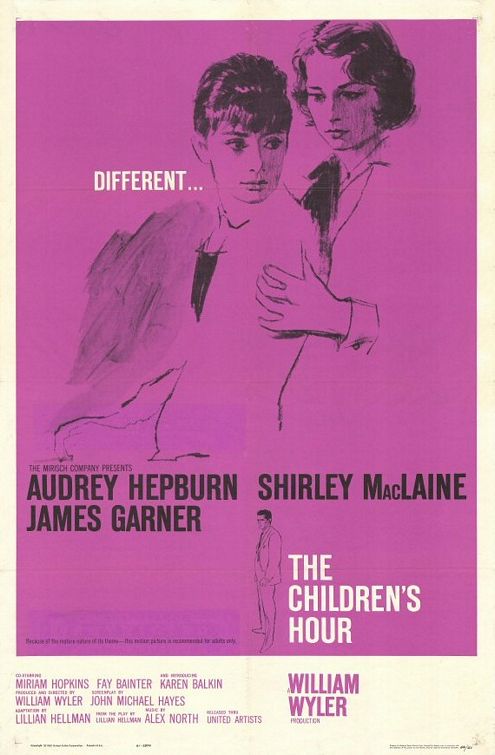
Martha and Karen (Shirley Maclaine, Audrey Hepburn) are two single young women running an all-girl’s school. They have the respect of the community and the parents, but that suddenly changes when one of the students named Mary (Karen Balkin) decides to spread a rumor that Martha and Karen are lovers. This sends everything into an uproar. All the students are moved out and the two women find themselves fighting desperately for their reputations and livelihoods. Karen’s boyfriend Joe (James Garner) remains their staunch supporter, but eventually even he begins to have his suspicions.

The film is based on the landmark play written by Lillian Hellman which ran for 691 performances in 1934 and was based on a true incident that happened in Scotland in 1810. The original film version of the play was made in 1936 and entitled These Three that was also directed by William Wyler and starred Miriam Hopkins as Martha who in this film plays Martha’s Aunt Lily. That film was heavily watered down with the lesbian element completely taken out and instead has the rumor revolve around the two teachers being in love with the same man.

This second film version was supposed to be more like the play, but hardly seems worth the effort. Although Wyler makes some attempts to make it seem more cinematic it still comes off very much like a filmed stage play and a static one at that. Lots and lots of talk with a narrative that is quite plodding and predictable. Having the story work more in a fragmented style might have helped, but either way it is never very engrossing or compelling. It also completely skips over the libel trial, which I thought could’ve given some added drama and it never completely explains why the Aunt Lily character avoided testifying. She comes up with the lame excuse that she was touring with her show, but I felt it was more because she secretly knew Martha was a closet lesbian and didn’t want to have to confront that and the film should’ve made this more clear.

It is also unintentionally funny at times especially the part where actress Fay Bainter’s eyes get bigger and bigger as Mary whispers her ‘shocking’ secret into her ear. Balkin also overdoes the facial expressions, which was probably due to too much coaching on the part of Wyler, but with that said her presence in the film is fun and gives the proceedings a liveliness that is otherwise stagnant.

The film really isn’t all that groundbreaking either and handles the delicate issue in too much of a timid way. For instance there is a scene where Martha admits to her homosexual feelings and states that she feels ‘ashamed’ for having them and Karen counsels her by stating that ‘you did nothing wrong’ because ‘nothing happened’, but what if it had then would it have been wrong? I tend to lean towards the latter making the production seem as stale and prejudicial as the public at the time. I was also confused as to how the two women could remain living at the school when all the students had moved out and they no longer had any income, or how they were still able to have groceries delivered to them.

My Rating: 4 out of 10

Released: December 19, 1961

Runtime: 1Hour 47Minutes

Not Rated

Director: William Wyler

Studio: United Artists

Available: DVD, Blu-ray, Amazon Instant Video

Last Night at the Alamo (1983)

last night at alamo

By Richard Winters

My Rating: 6 out of 10

4-Word Review: Life at the bar.

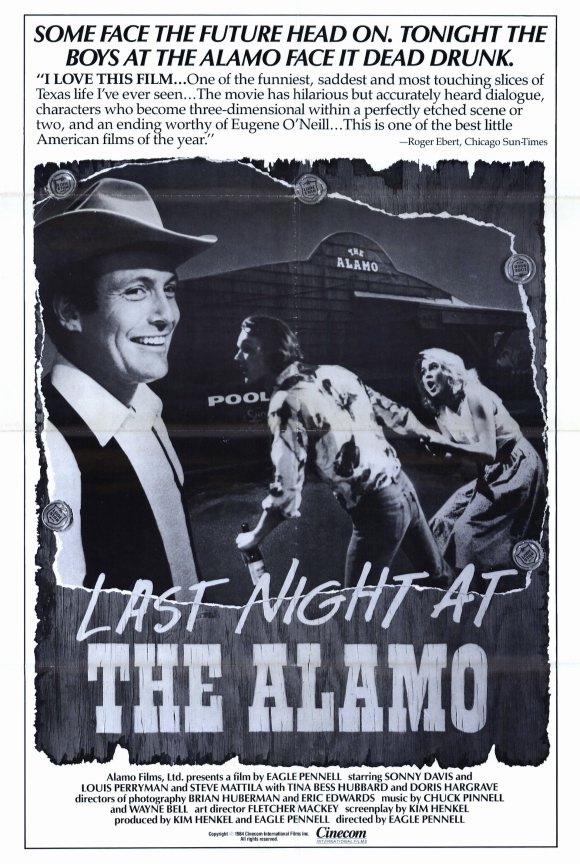
It’s the last night of business for The Alamo bar in Houston, Texas. Some developers have purchased the land and plan on constructing a skyscraper on the site much to the dismay of the regular patrons. There’s Icabod (Steven Mattila) a wiry, creepy looking fellow who seems to bitch about everything and anything. There is also Claude (Lou Perryman) who has just been kicked out of his house by his wife and spends he majority of the night on the phone begging her to let him comeback as well as Cowboy (Sonny Carl Davis) who has big dreams of becoming a Hollywood star, but can’t seem able to hold down a job for any lengthy duration.

The film was shot in black-and-white on a measly budget of $25,000. The majority of it was done inside a place called The Old Barn, which was a popular neighborhood bar in Houston. The scenes where done during the day, so as not to interfere with the regular customers coming in during the evening. Kim Henkel who is best known for penning The Texas Chain Saw Massacre wrote the screenplay as well as appearing as a character named Lionel. Director Eagle Pennell appears briefly as Bo and his wife Peggy can be seen as Ginger.

What makes this film so interesting is the fact that nothing really happens. Instead it gets filled with a lot of rhetorical arguments, insignificant conversations and down-and-out characters much of what you’re likely to find on a regular night at any neighborhood bar across the country. The film takes the ‘Cheers’ format, but with more of a caustic, darker sense of humor. Although this minimalistic approach may sound boring it actually isn’t and in many ways is surprisingly engaging, refreshing and even daring.

The eclectic cast, many of whom were local performers who had not appeared in a film before, really helps. The Davis character who wears a big cowboy hat to cover up is balding head and goes to great lengths to try to save the bar even calling the state capitol in Austin for assistance only to find that there is nothing they can do because nobody ‘important’ had ever gone there is especially endearing. Perryman, who was tragically murdered in 2009, is quite amusing in his desperate attempts to reconcile with his wife and Mattila has his moments as well particularly when he decides to hold a conversation with a wall because he feels it’s more interesting than talking to his girlfriend.

Barflies young and old should appreciate this low budget gem as it hits the essence of bar life and those that frequent them head on while taking an offbeat approach that most Hollywood films wouldn’t dare to do. Henkel and Pennell reteamed 10 years later to create the similarly themed Doc’s Full Service about people who frequent a Texas service station.

My Rating: 6 out of 10

Released: October 2, 1983

Runtime: 1Hour 21Minutes

Not Rated

Director: Eagle Pennell

Studio: Cinecom Pictures

Available: VHS

The White Bus (1967)

the white bus 1

By Richard Winters

My Rating: 6 out of 10

4-Word Review: Bizarre tour through Manchester.

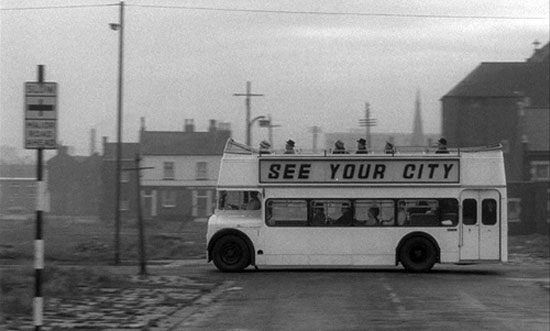
Patricia Healey plays a young lady who is never given any name that is bored with her job and looking for a diversion. While walking through some of the slum sections of the city she comes upon a white double-deck tour bus headed by the Mayor (Arthur Lowe) promising to show her the exciting areas of town. The tour group visits a factory, library and even witness a civil service drill of people saving victims from burning buildings that had been attacked during an unnamed war. In the end the young lady breaks from the group and goes wandering the streets herself looking into windows of homes where she learns a lot more about ‘the real’ city that she lives in that the tour bus could never show.

the white bus 2

This short film, which only runs 45 minutes was directed by Lindsay Anderson who later went on to collaborate with Malcolm McDowell in the classic if…., O Lucky Man! and Britannia Hospital. Anderson’s films were known for their surreal qualities, absurd situations and bizarre characters. This film proves to be no exception and part of the fun of watching the movie is never knowing what strange thing will happen next.  There are some weird moments for sure including the young lady envisioning herself hanging by the neck from a rope connected to the rafters of the ceiling at her job while the cleaning crew obliviously works around the dead body like it is not there. To me though the best moment is when she witnesses a group of people pushing a polio victim inside an iron lung through a lonely train station.

The film is mostly done in black-and-white, but occasionally for no reason or warning will flip over to color for a few seconds and then back to black-and-white again. These intervals become more frequent towards the middle of the film, but then go back to all black-and-white during the final fifteen minutes. In some ways I found this to be diverting and interesting initially, but eventually it became distracting and pointless.

the white bus 3

Healy does well in the lead and speaks only 9 words of dialogue through the whole thing. Her prominent light blue eyes look like emeralds and she exudes a nice detached quality where she at times seems a confused and curious about her surroundings as the viewer. Classic British character actor Lowe offers some moments of levity as he leads the group through a library while expounding on his opinions about ‘dirty books’.

This movie also marks the film debut of Anthony Hopkins, but to be honest I couldn’t spot him anywhere. Supposedly he can be seen in the background of one scene singing a song in German, but I couldn’t find it. I even went back through the scene selections re-watching moments that had some singing, but I still didn’t see him. If anyone knows exactly where he appears in the film and could let me know I would be forever grateful.

My Rating: 6 out of 10

Alternate Title: Red, White and Zero

Released: December 9, 1967

Runtime: 46Minutes

Not Rated

Director: Lindsay Anderson

Studio: United Artists Corporation

Available: DVD (MGM Limited Edition Collection), Amazon Instant Video

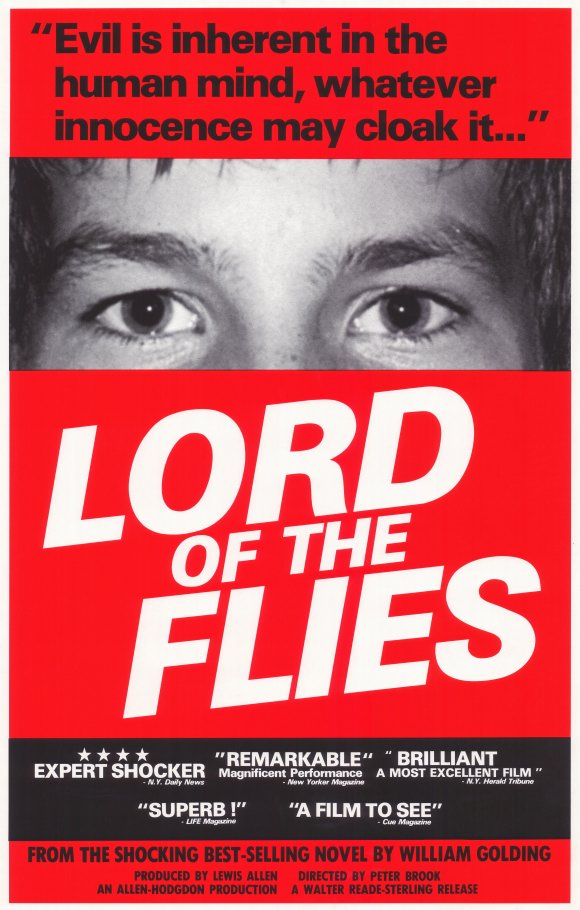
Lord of the Flies (1963)

LOTF

By Richard Winters

My Rating: 8 out of 10

4-Word Review: Kids turn into savages.

Based on the William Golding novel that has been required reading for most high school students. The story centers on a group of British schoolboys who survive a plane crash on an uninhabited tropical island. The boys are of varying ages, but none older than 14. Ralph (James Aubrey) is chosen as their leader, but finds almost immediate friction from Jack (Tom Chapin) who is an aggressive type that likes to hunt and doesn’t tolerate being told what to do. As things progress Jack breaks off from the main group and eventually starts his own following that comes to odds with Ralph’s. More and more of the boys join Jack and start to display savage behavior that leads to two deaths and puts the frightened Ralph on the run and into hiding.

It has been three decades since I’ve read the book, so I can’t really compare it with the film. The criticisms that I have are aimed solely at the film although as I remember the book had some of the same issues. One of the biggest ones is just the fact that there are so many survivors from a plane crash and all of them are conveniently the kids while all the adults perishing, which seems to play too much against the odds. There are also no scratches, bruises or injuries, which you usually come about with a crash even amongst those that survive it. Director Peter Brook does a clever job of intimating a plane disaster at the beginning over the opening credits through use of photographs, which I found to be creative, but showing an actual destroyed plane with kids getting out of it would have given it a little better foundation.

There is also another segment where the kids are convinced some sort of strange beast is on the island and as they go searching for it, it is found to a pilot in a helmet who was killed while trying to parachute to safety. Yet the kids don’t seem to realize this and remain frightened of it. I realize the setting is the 1940’s around the time of the war, but I would still think the kids of that time would have been sophisticated enough to recognize a dead man in a fighter helmet and the fact that they don’t seems pretty odd and even farfetched.

Overall though I really enjoyed the film and feel reluctant to watch the 1990 remake as I am afraid it would ruin the experience of this one.  It was filmed on-location off the island of Vieques in Puerto Rico during late August of 1961. The entire cast was made up of amateur actors who had not read the book. There was no actual script and the boys were allowed to ad-lib their lines, which helps give it an extra air of realism.

lord of the flies 1

I will admit there are shots where some of the boys look bored and detached from things, but then again I suppose boys that age can be that way anyways no matter what situation they are, so in some ways it doesn’t really hurt things. Hugh Edwards who plays Piggy is a real standout and apparently got the role simply by writing a letter to director Brook and informing him that he was fat and wore spectacles.

The black and white photography helps heighten the dark undertones. The shot showing a close-up of the pig’s head on top of a stake with flies’ going in and out of its mouth and nostrils is quite impressive and a brilliant realized moment from the book. The climatic sequence where Ralph must run through the burning foliage to escape the other boys is quite intense. The shot showing a dead boy’s body floating in the water under the moonlight has an evocative flair, but fake looking to the extent that the child was stabbed to death and yet has no visible wounds or blood coming out.

On the DVD commentary Brook states that he likes to believe something like this couldn’t happen. That we have somehow evolved enough as a human race where this savagery would be impossible, but I respectively this disagree. I think this could very well happen in this day and age which is what makes this an infinitely fascinating look at human nature and ultimately a great movie.

lord of the flies 3

My Rating: 8 out of 10

Released: August 13, 1963

Runtime: 1Hour 32Minutes

Not Rated

Director: Peter Brook

Studio: Continental Distributing

Available: VHS, DVD (Criterion Collection), Amazon Instant Video

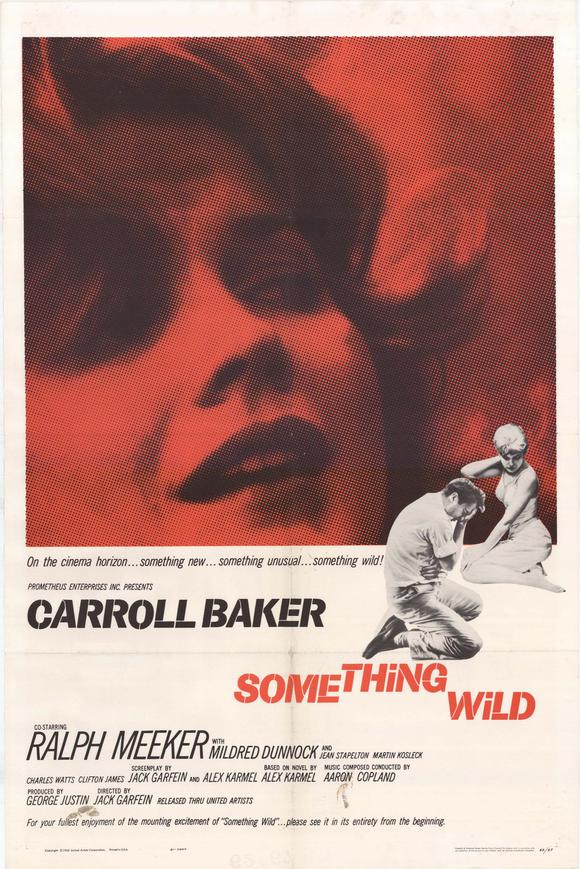
Something Wild (1961)

something wild 1

By Richard Winters

My Rating: 5 out of 10

4-Word Review: Rape and its aftermath.

Mary Ann (Carroll Baker) is raped one night while she is walking home from school. For whatever reason she decides not to go to the police and instead keeps the whole incident to herself, but living with her domineering mother (Mildred Dunnock becomes too much and she decides to run away. She finds herself a cheap apartment in a seedy part of the city and a job at a five and dime store. However, the emotional effects of the rape begin to gnaw at her psychologically. She no longer wants to get close to anyone, which alienates her from those around her. She considers suicide, but at the last minute is saved by Mike (Ralph Meeker) who takes her back to his modest basement apartment. There he imprisons her and refuses to let her leave until she falls in love with him.

In some ways this film was ahead-of-its-time. The dazzling opening credit sequence by Saul Bass is eye popping. Director Jack Garfein who at the time was married to Baker and just off of his success of The Strange One continues his push of exploring ideas with dark psychological undertones. The rape scene for its time is surprisingly graphic and the film doesn’t have a single line of dialogue uttered for the first fifteen minutes. New York gets captured in a cinema vertite style reminding me of the influential ‘Naked City’ TV-series that was out at the same time. The black and white photography helps accentuate the story’s grittiness and the surreal dream sequence that Mary Ann has towards the middle of the film is visually creepy and impressive.

Although not the strongest of actresses Baker still manages to give a compelling performance and although she was already pushing 30 she still looked very much like she was 18 or even younger. Meeker an outstanding actor who unfortunately isn’t very well known is solid. The film also offers a great chance to see young stars in the making including Diane Ladd in her film debut as well as Jean Stapelton as Mary Ann’s nosy neighbor and Doris Roberts as a petulant co-worker. There is even Clifton James with a full head of hair.

Unfortunately the film ultimately misses-the-mark and part of the problem is Mary Ann’s decision of not going to the police after she is attacked, which is never explained. This could have been because of the stigma placed on rape victims at the time, but it still comes off as frustrating and even off-putting to the viewer. Mike’s apartment is just a little too bare-bones looking almost like a prison cell instead. Maybe this was the director’s attempt at symbolizing how ‘imprisoned’ Mike and Mary Ann were, but if that was the case it was much too obvious. Realistically someone usually enlivens and personalizes the place where they live by at least putting up a few pictures on the walls. Also, Mary Ann’s doesn’t seem to put up much of an attempt at escaping. Mike locks the door from the inside and then passes out drunk and she could have just gone through his pockets to get the key. She is also left alone for several hours a day while he goes to work, which would have been enough time to cut through the bars on the windows, broken through the door, or even yelled for help out the open window.

Cinematically it has its moments particularly during the first hour, but the story itself seems dated and the character’s motivations confusing and unclear ultimately making it an experimental misfire.

My Rating: 5 out of 10

Released: December 23, 1961

Runtime: 1Hour 52Minutes

Not Rated

Director: Jack Garfein

Studio: United Artists

Available: DVD, Amazon Instant Video