Category Archives: 70’s Movies

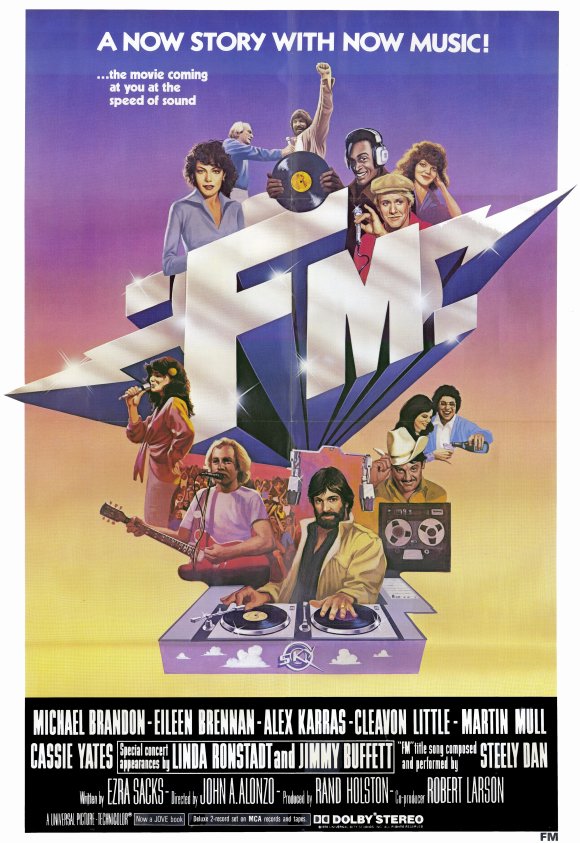
FM (1978)

fm 3

By Richard Winters

My Rating: 4 out of 10

4-Word Review: No static at all!

Q-SKY is the number one radio station in Los Angeles and this is mainly due to program director Jeff Dugan (Michael Brandon) who has lined up a good rock playlist as well as an eclectic bunch of on-air personalities. However, Regis Lamar (Tom Tarpey) the sales manager wants to play some army recruitment commercials, which Jeff refuses to do and when he gets into a fight with management over it he quits. The rest of the staff decides to come to his rescue by staging an on-air sit-in where they lock themselves inside the station and refuse to play any commercials until management agrees to hire Jeff back, which soon attracts the attention of hundreds of listeners that pack the streets of L.A. until it becomes a mob scene.

If this movie succeeds at anything it is in its ability at bringing the ‘70s back to life. In fact if you ever wanted to get into a time machine and travel back to that decade to see what things were really like this film does it better than just about any other from that era. The sights, sounds and attitudes from that crazy decade literally ooze from every frame until you feel like you are living it yourself.

The film also manages to recreate the behind-the-scenes life at a radio station in a realistic way. Back in the ‘90s I worked in radio and even had my own weekend overnight show called ‘After Hours’ at a FM station in Chicago and the atmosphere shown here is on-target and enough to make me long to go back to it if it just paid more.

The characterizations are fun. Eileen Brennan takes a rare dramatic turn and does quite well playing an older D.J. named Mother who is burnt out from the business and wants to quit, but can’t quite pull herself completely away from it. Martin Mull is amusing as the narcissist Eric Swan who considers his on-air persona to be an ‘art form’ and he even traps himself inside the radio booth when he breaks up with his girlfriend and refuses to leave until one of his many female listeners agrees to take her place. Ironically both Mull and Cleavon Little who plays Prince the overnight jock also played D.J.’s in two other movies. Mull was in Jingle All the Way while Little was in Vanishing Point.

The film also has a strong ‘70s soundtrack. Not only does it open with a great stereo version of Steely Dan’s title hit, but just about every rock hit from 1978 can be heard playing in the background at some point. There is also excellent concert footage of Jimmy Buffet as well as Linda Ronstadt who does live versions of ‘Tumbling Dice’, ‘Poor, Poor Pitiful Me’, and ‘Love Me Tender’.

The film unfortunately falls apart at the end with a sit-in segment that proves unrealistic and exaggerated. Radio personal are hired and fired every day. It’s the nature of the business and one knows that going in and prepares for it. It is highly unlikely that any of the other employees would stage a sit-in like the one shown here simply because it would put not only their job, but careers in complete jeopardy. Dugan with his strong resume could easily find himself a job at another station pretty quickly, so their efforts seemed unnecessary. The idea that hundreds of people would come out onto the street to protest and even overturn cars is ridiculous and what’s worse is that the crowd scenes were clearly done on an inside soundstage making the entire segment look staged and fake.

I loved the first half and had it stayed on that slice-of-life level this could’ve been an interesting time capsule. In some ways it still is, but the ending gets so stupid that it pretty much ruins the whole thing.

My Rating: 4 out of 10

Released: April 20, 1978

Runtime: 1Hour 44Minutes

Rated PG

Director: John A. Alonzo

Studio: Universal Pictures

Available: VHS

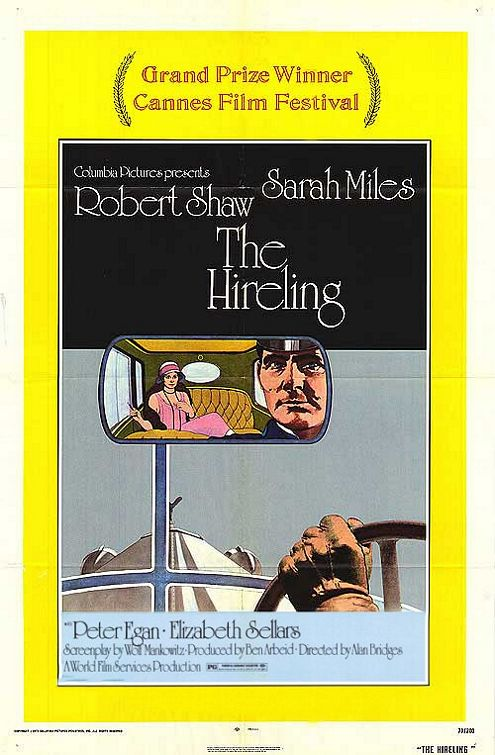
The Hireling (1973)

the hireling

By Richard Winters

My Rating: 6 out of 10

4-Word Review: His love isn’t reciprocated.

Based on the L.P. Hartley novel the film examines the unusual relationship between a rich English widow named Lady Franklin (Sarah Miles) and her chauffeur Steven Ledbetter (Robert Shaw). The setting is just after the First World War and Lady Franklin has suffered a nervous breakdown after the untimely death of her husband. Steven drives her from place-to-place and helps her out of her depression while also forming a strong attachment to her. Once she recuperates she no longer calls upon his services as much, which hurts him. She then forms a relationship with the much younger Hugh Cantrip (Peter Egan). His personality is the complete opposite of Steven’s and when Steven finds out that Hugh is still seeing another woman on the side it angers him. When he goes to Lady Franklin to inform her of this as well as profess his love for her things do not go well and soon spirals out-of-control.

The film is exquisitely photographed by director Alan Bridges with a haunting score by Marc Wilkinson that is excellent. The period atmosphere is perfect and the slow pace not only reflects that era, but the book to which it is based. Some may be put off by the pace as it is for the most part quite talky although the last half-hour has more action and final showdown is quite intense. The element I really liked about the film are the brief cutaways showing people listening in to other’s conversations and people always being careful what they say and great concern with always playing their ‘proper role’ in society. It really helps build a cloistered feeling for the viewer and gives them a better understanding to the meltdown that occurs at the end.

Miles gives another great performance and she essentially plays two characters here with the fragile, wide-eyed woman at the beginning and the more confident, emotionally distant person that she turns into at the end. Shaw is excellent as always. It is almost amazing to see how someone with such a strong personality as his could get hidden underneath the rather bland and proper character that he portrays at the beginning, but he comes through full-force at the end, which is chilling and terrifying.

The film makes some great statements about the inequities of a rigid social caste system as well as the unrealistic, rigid demands that were placed on people especially in past eras that did not completely take into account the human being underneath or their natural emotions. It is also a great testament to the loneliness of unrequited love, which is sadly a perennial element of the human experience. Although the film stays faithful to the novel the ending has been changed, which may or may not go over well with some viewers.

My Rating: 6 out of 10

Released: June 10, 1973

Runtime: 1Hour 35Minutes

Rated PG

Director: Alan Bridges

Studio: Columbia Pictures

Available: DVD (Region 1 & 2)

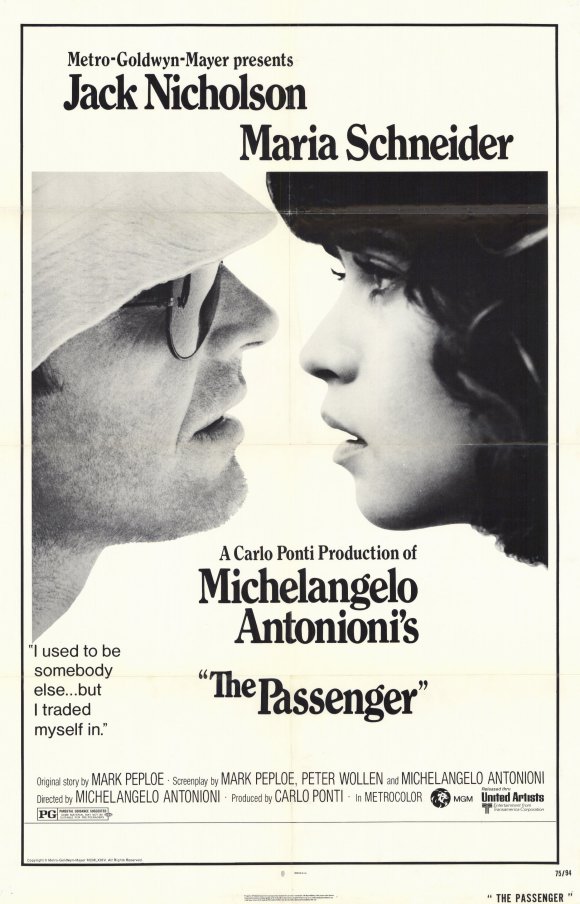
The Passenger (1975)

the passenger

By Richard Winters

My Rating: 5 out of 10

4-Word Review: He steals someone’s identity.

This is a low key drama detailing a world-weary reporter named David (Jack Nicholson) who comes upon a dead man in a hotel room. David is unhappy with his existence and since they closely resemble one another he decides to switch identities with the dead man. He believes that this man lives a jet setting lifestyle, but soon finds that may not be true and that everyone is trying to escape from something.

This film has the artsy flair that is typical of all Michelangelo Antonioni’s films. It tends to be quite evasive as it brings up certain points and then seems to muddle them. It’s made to make you ponder, but has a decidedly downbeat tone. There is no music until the very end, which was a mistake as it gets too quiet at points and one’s mind will eventually wander especially with the lack of strong dramatic interaction. Having some music blended in would certainly have helped the momentum and avoided the rather flat feeling you get when it is all over.

The film is not without its good points and can best be described as a kind of Easy Rider, but more from a world perspective. Like with that film it describes characters trying to escape from a world that will not let them go. I loved the wide variety of exotic locales, which in any other film would symbolize excitement and adventure yet here they become part of the imprisonment. The film though does not take full advantage of its outlets and the sense of detachment that it has eventually rubs off on the viewer.

Nicholson gives a surprisingly non-dynamic performance. Maybe he was just trying to get into his transparent character, but either way it is not riveting. Maria Schneider is interesting only because she has the face of a young girl but the sensibilities of a much older woman.

There are some interesting shots. One features the camera looking out of a barred window from inside a room. Then without taking a single cut the camera moves through the bars, makes a complete turn, and then looks back through the window from the outside. There is also footage of an actual execution of a political prisoner. This certainly will interest the morbid, but it also seems to be a bit sick and disrespectful especially when the camera stays locked onto limp, bullet-riddled body.

My Rating: 5 out of 10

Released: April 9, 1975

Runtime: 2Hours 6Minutes

Rated PG

Director: Michelangelo Antonioni

Studio: MGM

Available: VHS, DVD

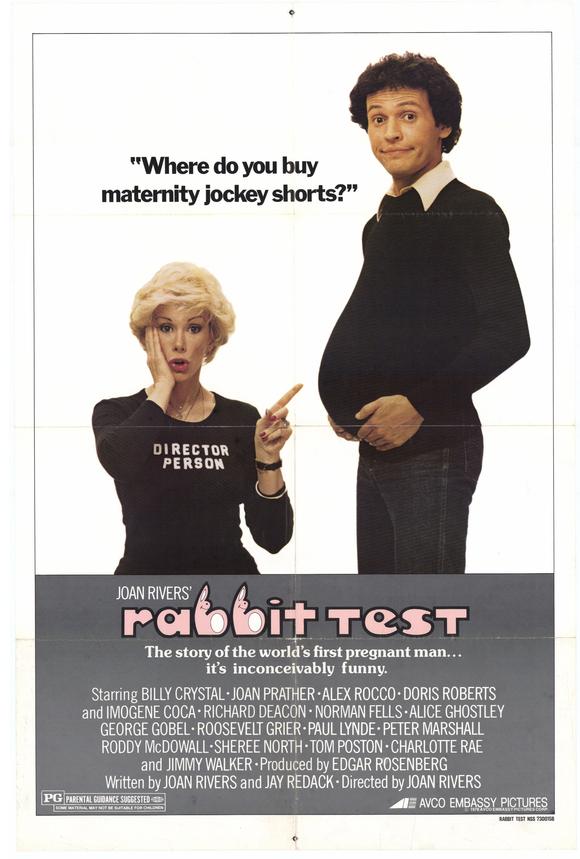
Rabbit Test (1978)

rabbit test 2

By Richard Winters

My Rating: 2 out of 10

4-Word Review: The first pregnant man.

Lionel (Billy Crystal) is a lonely young man of 24 who lives next to his obtrusive mother (Doris Roberts) and has never been with a woman. When his friend Danny (Alex Rocco) comes home from the service they go out to a war veteran’s social where he has sex with actress Sheree North on top of a bowling pinball machine and inexplicably becomes pregnant. This creates an uproar in both the media and medical world and turns Lionel into an unwanted celebrity.

This was the one and only movie directed by Joan Rivers. Like with her personality it can be mildly funny at times, but is mostly abrasive and crass. The film lacks any cinematic style and was originally shot on video. The plot is limp and the whole thing seems more like a gag reel than a movie. Her attempts at recreating the comic style of Mel Brooks, Woody Allen or even John Waters fails miserably and the viewer is left with one big amateurish mess.

Ninety-nine percent of the humor is crude and stupid and deals heavily in racial stereotypes making one almost thankful for political correctness. Some of the worst bits include the portrayal of Lionel’s Mexican-American students as being utterly infantile and the only way to get rid of them is to yell ‘immigration’. There is also a segment where Lionel travels to Africa and watches a ventriloquist act where a black man has a dummy on his lap that is played by midget actor Billy Barty in blackface. The film also takes potshots at elderly people, fat people, people with disabilities and even Jews. None of the jokes are funny and are often cruel and in the poorest of taste.

rabbit test 1

Crystal in his film debut is the only good thing about the movie and is likable enough to help elevate it to some degree. Paul Lynde is amusing as a gynecologist and had he had more screen time it would have helped. Roberts score a few points in the caricature of a meddlesome mother as does George Gobel as the hick president. Michael Keaton also makes his film debut here, but it is in a non-speaking role as a sailor and if you blink you’ll miss him.

There is also never any explanation for exactly how Lionel becomes pregnant nor do we see the delivery or what type of baby it is which is annoying and dumb. It is almost like a bunch of twelve-year-olds got together to write the script and in many ways I think they could have done better. The film’s posters are funnier than anything you’ll see in the actual movie.

My Rating: 2 out of 10

Released: April 9, 1978

Runtime: 1Hour 26Minutes

Rated PG

Director: Joan Rivers

Studio: AVCO Embassy Pictures

Available: VHS

The Boys in the Band (1970)

boys in the band 1

By Richard Winters

My Rating: 9 out of 10

4-Word Review: This party turns sour.

A group of gay men get together for an intended night of food and laughs as they celebrate Harold’s (Leonard Frey) birthday. Things begin to unravel when Alan (Peter White) appears who was an old college roommate of party host Michael (Kenneth Nelson). He insists that he is not gay, but Michael and the rest of the group intend to prove otherwise, which leads to many harsh and interesting revelations.

This film packs a wallop and is as relevant and daring now as it ever was back then. Director William Friedkin does a terrific job of making this story, which was originally an off-Broadway production seem cinematic. I loved the capturing of the apartment, which makes you feel like you are right there.

The performances are outstanding and all are the original cast from the stage production. Cliff Gorman as the flaming gay personality is a particular standout. The script by Mart Crowley is captivating from beginning to end as it brings out all the different personalities and myriad issues that make up the gay community and the whole thing is a tour-de-force on all levels.

My only complaint would be the character of the Cowboy played by actor Robert La Tourneaux who is the dim-witted, but good looking ‘gift’ giving to Harold for his birthday. I realize the intention is to make him a bit dumb, but it gets overdone. It’s one thing to be an ‘airhead’, but a complete other thing to sound so stupid it’s like he is from another planet. His character is the only one that does not get fleshed out at all and his utterly inane comments come off as hollow and annoying. Ironically La Tourneaux was unable to find many acting parts afterwards and became a gay prostitute in real-life by the late 70’s in order to make ends meet.

The characters are believable and the dialogue moving. It’s a compelling study of those feeling isolated from society and sometimes even themselves.  Even if you are not gay the film can still have a great impact and its quality viewing either way.

My Rating: 9 out of 10

Released: March 17, 1970

Runtime: 1Hour 58Minutes

Rated R

Director: William Friedkin

Studio: National General Pictures

Available: VHS, DVD

Brewster McCloud (1970)

brewster mccloud 1

By Richard Winters

My Rating: 9 out of 10

4-Word Review: Flying in the Astrodome.

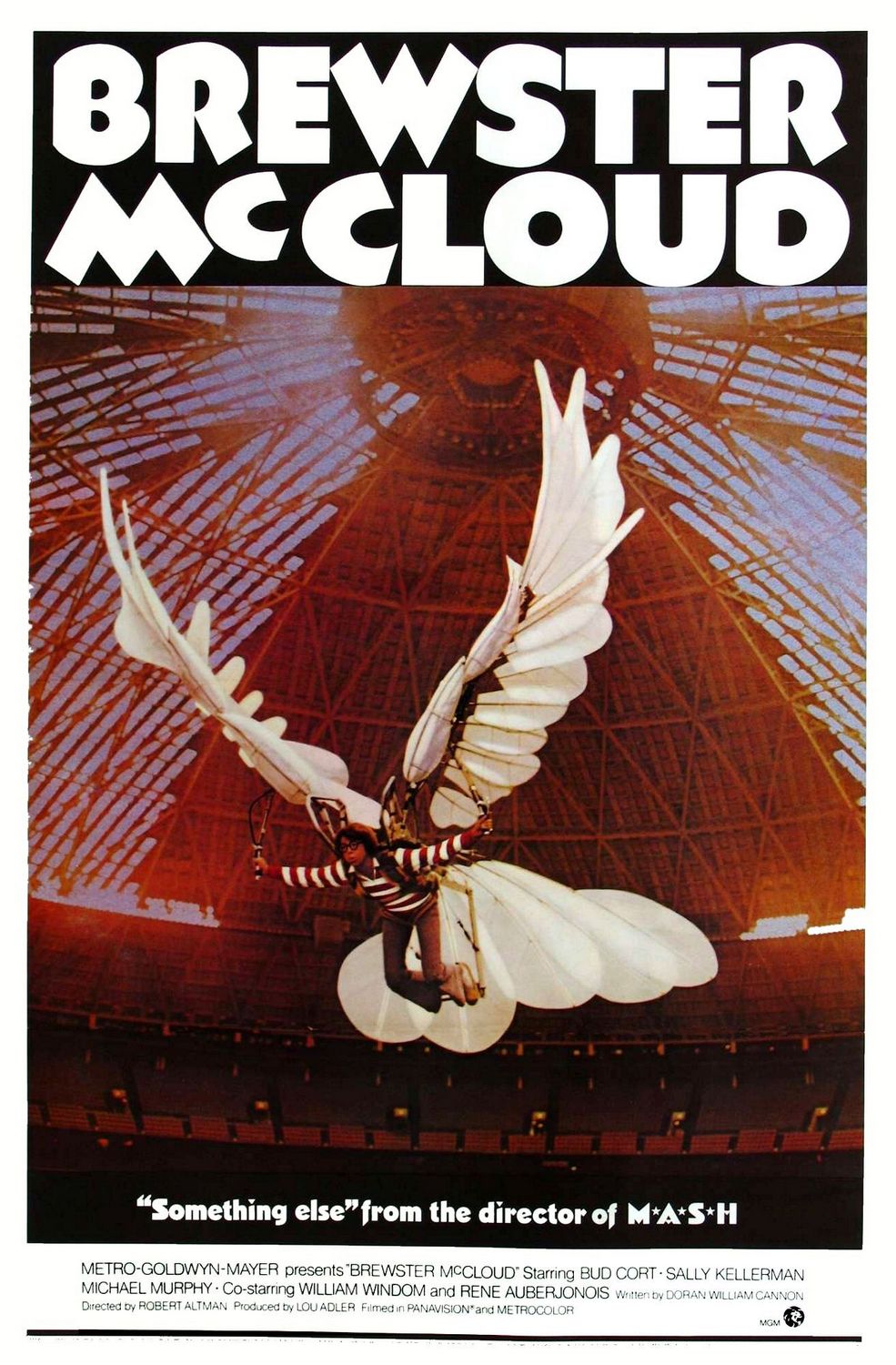
Brewster McCloud (Bud Cort) is a young man who lives and hides inside the giant Astrodome in Houston, Texas. He dreams of one day flying like a bird and secretly works on building a contraption that will help him do it while being aided by a mysterious guardian angel named Louise (Sally Kellerman). Meanwhile strangulations start occurring all over the city and the police become convinced that Brewster may have something to do with it. As he gets ready to ‘spread his wings’ and fly for the first time the police surround the place and try to arrest him.

This film is reportedly director Robert Altman’s favorite out of all the ones that he did and it is easy to see why. The quirky, offbeat script by Doran William Cannon nicely compliments Altman’s free-form, cerebral style. The film works on many different levels with every shot and scene being unique and a kind of story in itself. The dream-like quality is nicely balanced with harsh realities creating an interesting theme that touches a wide array of senses. Although this film is never mentioned in relation to car chases the one that is has is exciting and well photographed without any of the jump cuts that you normally see.

The city of Houston gets captured well and I liked the fact that Altman stayed away from the downtown and instead focused more on the neighborhoods and city streets. The filming of the inside of the Astrodome is the most impressive and the building becomes like a third character. It may seem hard to believe now, but at one time it was considered ‘the eighth wonder of the world’ and was the very first dome stadium in existence. Watching Cort fly around on the makeshift wings he creates gives off an exhilarating feeling especially with the way Altman captures it against the backdrop of the stadium’s ceiling filled with skylights. The best shot in my opinion though is the bird’s-eye view of seeing Kellerman walking the entire length of the field and out the exit.

The broad and amusing characterizations are fun and Altman gives his actors wide range to create them. Some of the best ones are Stacy Keach who is unrecognizable under heavy make-up as an elderly, cantankerous and greedy landlord who goes reeling down the city streets in nothing but a wheel chair. Bert Remsen is good as a corrupt and racist policeman who even beats and berates his own family. Michael Murphy is interesting as a narcissist, hotshot detective who ends up killing himself and Rene Auberjonois as the lecturer who slowly turns into a giant bird as the film progresses. There is even the aging Margaret Hamilton who says a few curse words and dies while wearing her ruby red slippers.

The film is one-of-a-kind and perfect fare for those looking for something offbeat and diverting. The kooky opening and ending title sequences alone make it worth it. My only real complaint would be the fact that supposedly a bird is committing all these strangulations, but we never see how. All the viewers see is the victims getting bird poop on them and nothing more. I realize this might have been technically difficult to film or visualize, but for such an otherwise creative movie this seems like a bit of a cop-out.

My Rating: 9 out of 10

Released: December 5, 1970

Runtime: 1Hour 45Minutes

Rated R

Director: Robert Altman

Studio: MGM

Available: VHS, DVD

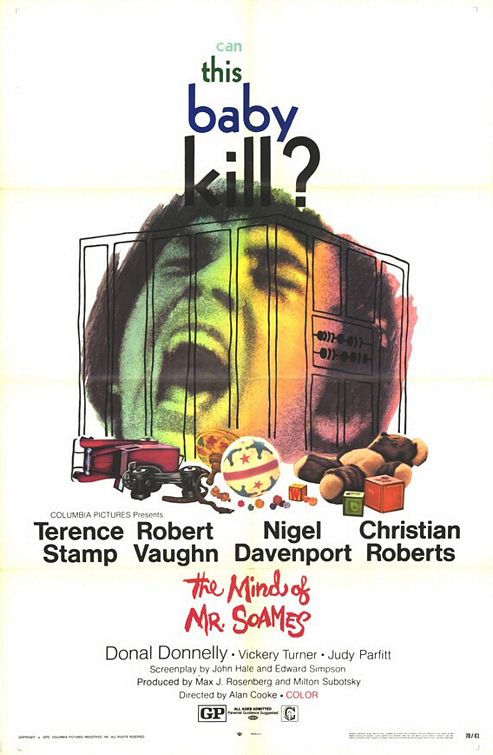
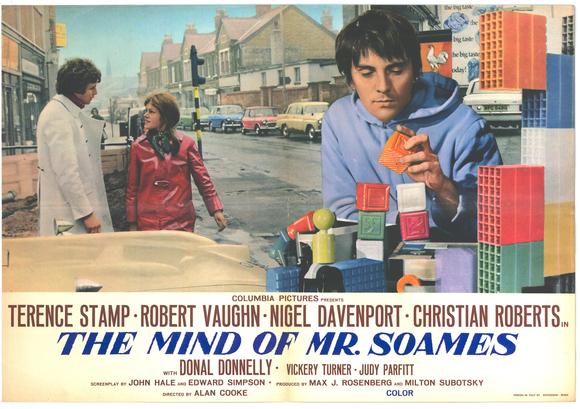
The Mind of Mr. Soames (1970)

the mind of mr soames 1

By Richard Winters

My Rating: 6 out of 10

4-Word Review: Man child faces world.

Due to a complication at birth a man (Terence Stamp) is born into a coma and for thirty years he has stayed that way. Now due to medical advancement they can stimulate the part of the brain that is asleep, thus allowing him to awaken into consciousness. The problem is that he will be a virtual infant and have to taught at a much quicker pace than a normal child.

Outside of a few implausibility’s the story is handled in an overall realistic manner. The pacing is tight and compact and the cinematography by Billy Williams is outstanding with excellent framing. Stamp plays the part with conviction and overall makes a believable grown up baby.

The story itself is much more complex than it initially looks as it takes a good examination into the science approach vs the humanistic one. It shows how truly complicated the human being is and the great balance it takes to successfully raise one. It also takes a few good potshots at the obtrusiveness of the media.

The stories most interesting angle though comes when the adult child escapes and goes out into the real world where we see what a tight inner fabric society is and the complete inability that the ‘pure’ human, with no prior connections to it would have.

However, in the end this movie is a disappointment as it gives us no conclusion and we never see the end result. Was this man child successfully raised? Which approach was the best and did he ever fully adapt to the world around him? We never know because it never tells us. The whole idea for the film looks to have been made only to bring up certain issues with no attempt at a complete story.

the mind of mr soames 2

My Rating: 6 out of 10

Released: October 12, 1970

Runtime: 1Hour 32Minutes

Rated GP

Director: Alan Cooke

Studio: Columbia Pictures

Available: DVD-R

Up the Sandbox (1972)

up the sandbox 2

By Richard Winters

My Rating: 7 out of 10

4-Word Review: Housewife has secret fantasies.

Margaret (Barbra Streisand) is a neglected housewife taking care of her two children while her husband Paul (David Selby) busily works on his novel and thesis. She lives in a rundown New York apartment that seems to have bugs crawling from everywhere. Her nagging mother (Jane Hoffman) pressures her to move back with them to the suburbs, but she enjoys the excitement and independence of city life over lily white suburbia, so she resists. Now she finds that she is pregnant with her third child and this along with the other stresses causes her to slip into secret fantasies that become more and more outlandish.

This film didn’t do well upon its initial release and is a bit forgotten, but deserves a look simply for its unique and memorable fantasy segments. The scene where she joins a black militant group that gets inside the Statue of Liberty and wires it with explosives is pretty good as is the part at a party where her stomach suddenly balloons out as if she is pregnant and when she pushes it in it makes her breasts larger. The scene where she meets a Fidel Castro-like dictator who takes off his shirt to expose that he has female breasts is funny and the finale that takes place inside an abortion clinic is interesting. The best though is when she is captured by an African tribe of topless women. The shot of their grossly overweight leader whose gigantic, sagging breasts seem to overlap her entire body ends up being the film’s most lasting image.

Hoffman is hilarious and a perfect caricature of a meddling mother of adult children. The part where Margaret fantasies about stuffing her mother’s face into an anniversary cake and then the two roll around on the floor where Margaret then punches her in the face had me laughing-out-loud.

Paul Zindel’s script nicely balances the fantasy with the gritty reality of urban living. It also envelopes the feminist issues with the social upheaval of the times and the speech that Margaret gives about women needing to be less like men and more like themselves is excellent.

Director Irvin Kerschner makes fine use of the New York locales giving the viewer an eclectic taste of its crowded neighborhoods and street culture as well as its epic skyline. I loved the cinema vertite style that has a sophisticated and trendy feel.

Streisand herself seems to be having a lot of fun and purportedly this is her favorite out of all the films that she has done. This was just before she went through her frizzy hair phase and the long straight style that she has here I feel makes her look sexy.

The pace is unusual especially for a comedy in that it isn’t frantic and does not have any quick edits. Instead the set-ups are quite slow and seem at times to be almost dramatic before throwing in a surprise punchline. Personally I liked this approach, but the unconventional style might have proved confusing to certain audience members who didn’t know what genre to place it in and may have been the reason for the poor box office returns, which is shame as the production overall is excellent and intriguing.

up the sandbox 1

My Rating: 7 out of 10

Released: December 21, 1972

Runtime: 1Hour 37Minutes

Rated R

Director: Irvin Kerschner

Studio: National General Pictures

Available: VHS, DVD

Natural Enemies (1979)

natural enemies 2

By Richard Winters

My Rating: 6 out of 10

4-Word Review:  Man kills his family.

Paul Steward (Hal Holbrook) is a middle-aged suburban father who wakes up one morning having decided that by the end of the day he will shoot and kill his wife and three children with his hunting rifle. His rationale being that life is full of inevitable disappointments and his kids are ill prepared to face life’s harsh realities, so by killing them he will be in a sense ‘protecting’ and ‘saving’ them. The rest of the film deals with conversations he has with his friends debating on whether he should go through with it or not.

Writer/director Jeff Kanew is probably best known for having done Revenge of the Nerds and this film is probably as different from that one as you can get. It is an excellent and interesting directorial debut for the most part. It is not completely successful, but you have to give him credit for putting such challenging material onto the screen. It is based on the novel by Julius Horowitz, which was probably never intended to be made into a movie, but Kanew uses the voice-over narration to its full effectiveness and I loved the quant and remote setting of the colonial home that Paul resides in.

It is really the conversations and the ongoing philosophical debates that Paul has with various acquaintances that gives it a fascinating and intellectual subtext. I especially liked his discussion with Harry (Jose Ferrer) a concentration camp survivor as well as an unintentionally amusing one with a cab driver who complains that a 247 a month rent on a 3 bedroom apartment in Queens is ‘too expensive’ even though you would be unable to find one there that cheap today. The strongest is the one that he has with his wife Miriam (Louise Fletcher) at the end that proves to be not only revealing, but riveting.

The scene where he has sex with five prostitutes is also quite well done including having classical music played over the sex scenes, which creates an unusual erotic quality. The conversation he has with them is equally interesting, but I would’ve liked to have seen a few more verbal reactions from the women.

I’ve always considered Holbrook to be one of the finest actors around and his performance here is flawless and helps give the film its impact. Fletcher is also quite good playing the polar opposite of her Nurse Ratched character. Here she is vulnerable and fragile instead of rigid and authoritative and even has a scene inside a mental hospital as a patient. The fact that she can play such different characters so solidly proves what a brilliant actress she is.

The tone is incessantly bleak and downbeat, which could easily be a turnoff for most viewers, but doesn’t lessen the validity of many of the points that it makes. There is a strong Ingmar Bergmanesque quality to this that I really liked and this film could prove quite provocative for those looking for something that is thought provoking and outside of the mainstream.

My Rating: 6 out of 10

Released: November 1, 1979

Runtime: 1Hour 40Minutes

Rated R

Director: Jeff Kanew

Studio: Cinema 5 Releasing

Available: VHS

Little Cigars (1973)

little cigars

By Richard Winters

My Rating: 3 out of 10

4-Word Review:  Midgets turn to crime.

A young, beautiful blonde (Angel Tompkins) becomes an unlikely partner with a group of midgets who run a small (no pun intended) theft ring. With a title and premise like that you would expect a broad comedy, but that is not the case. Although there are a few snappy exchanges and a funny scene involving a police line-up of some very angry midgets, this is mainly handled on a gritty, violent level.

The midgets themselves aren’t too likable. This may be an attempt by the filmmakers to show them as real human beings and the effects of living in a society with a handicap, but they end up coming off as overly irritable, bad tempered, and vicious without ever confirming if this is some social statement.

Overall it’s just a standard crime yarn with midgets used instead of regular sized people. There is even a storyline involving a romance between Tompkins and head midget Billy Curtis showing how love can spring up between any two people no matter what their size. However, you can’t help but get a queasy feeling when you see a 60-year-old midget in bed kissing a young statuesque blonde.

The film leaves the viewer with a certain degree of unpleasantness too much actually, to consider it enjoyable or entertaining. The only part I really liked was the scene where Curtis goes into a tough bar and takes on a big guy who has his arms around ‘his’ girl, which is both amusing and exciting.

Also, Frank Bonner who later went on to play Herb in the classic TV-series ‘WKRP in Cincinnati’ can be seen very briefly as a hotel doorman.

My Rating: 3 out of 10

Released: June 11, 1973

Runtime: 1Hour 32Minutes

Rated PG

Director: Chris Christenberry

Studio: American International Pictures (AIP)

Available: DVD-R (MGM video on demand)