Category Archives: 70’s Movies

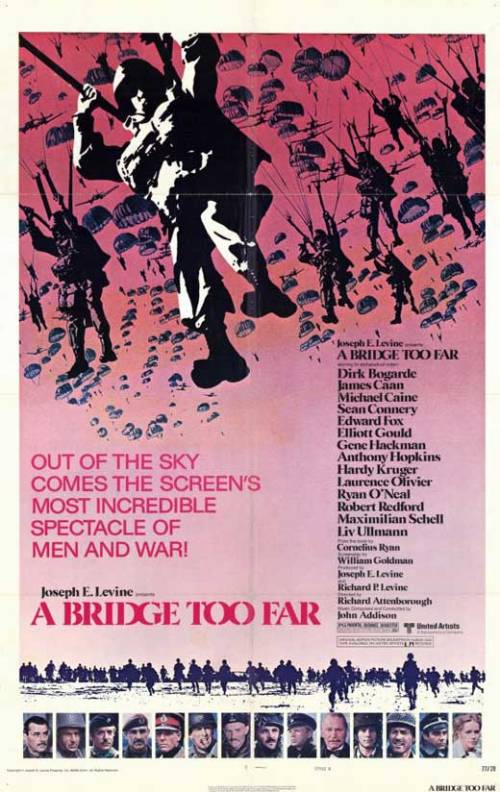
A Bridge Too Far (1977)

By Richard Winters

My Rating: 8 out of 10

4-Word Review: Conflict behind enemy lines.

Based on the true story of Operation Market Garden that occurred in September, 1944.  The strategy was, in an effort to hasten the end of WWII, to have allied forces drive into Germany and lock up key bridges, which would then block any attempts at German escape, but errors in judgement and planning occurred that caused many unnecessary casualties.

At the time this was one of the most expensive films every produced, but the reaction from critics was tepid.  While the producers insisted that every attempt was made for accuracy they also admitted to taking certain liberties for logistical reasons, which ultimately did not go over well with everyone. Many friends and spouses of the soldiers depicted in the film who were still around at the time complained about what they felt was misrepresentation in regards to what really happen and threatened to sue the filmmakers for libel.

Despite some obvious flaws, which can occur in any film that is this long, I came away quite impressed and even genuinely moved by what I saw. Some of the most memorable moments for me was seeing the parachute drop of thousands of allied paratroopers onto the Netherlands. It is one thing to see old pictures of this, and there are many available, but a completely other thing to have it done via live action in living color.  Another moving scene features Robert Redford reciting a prayer out loud as he and other men maneuver a boat across a river while bombs and artillery fire blast all around them, which is so vivid it made me tense up like I was at risk of getting hit just like the other men.

Another running segment I really liked dealt with the army taking over a couple’s house that was right next to a crucial bridge by barging in unannounced and turning the place into their headquarters. So many other war movies that I’ve seen have never shown this side of battle where innocent pedestrians and homeowners can literally just lose all of their rights on-the-spot and have no recourse. Watching their home get more and more torn-up  by the army as the film progresses is both darkly comical and horrifying as is the eventual mental breakdown of the home’s family.

Many of the complaints that critics had about the movie resided around the large cast and how certain actors were miscast especially Ryan O’Neal as Brigadier General James Gavin. While I admit O’Neal is a weak actor in most cases I came away feeling he did quite well here although if you see a picture of the real Gavin the two look nothing alike. My main criticism in this area was more around the appalling amount of money that the cast made with all of them collecting a fee of $250,000 per week, which would come out to $1,157,540 in today’s dollars while Redford made $500,000 per week that came out to $2,315,000. Now I have nothing against actors making as much money as they can, but many of the parts were just walk-ons and had only a few lines, so to make that kind of money for that little of work seemed obscene, but I guess if I were one of them I wouldn’t complain either.

A much bigger problem was the extreme shifts in tone and a misguided use of music. War time flicks, especially those made in the 40’s and 50’s had a lot of music, which was fine for the period, by many post 60’s films tried to stay away from an excessive soundtrack in order to capture more of the sounds of battle and heighten the realism. This movie though seems to want it both ways having virtually no music during the first-half and then suddenly without warning bombarding the viewer with a lot of it during the second-half, which gets the viewer caught up in the natural sounds of war only to ultimately take them away from it by the end.

While the film has many serious moments it also allows some quirky comedy to seep in, which like with the music issue came-off as jarring and unnecessary. Older war movies kept things on a patriotic level, but post 60’s the trend was to be irreverent, which in movies like Catch-22, can be done brilliantly. Here though it cheapens the effect making the viewer wonder how authentic it is when trendy, modern sentiments get haphazardly thrown-in.

Overall it succeeds at showing the absurdity of war in a profoundly visual way as we see first-hand the brutal injuries and deaths of the soldiers just trying to carry out their orders while the general who came up with the bad plan that killed so many sits in his plush office far removed the destruction that he created and never forced to face the horror of his mistakes.

My Rating: 8 out of 10

Released: June 15, 1977

Runtime: 2 Hours 55 Minutes

Rated PG

Director: Richard Attenborough

Studio: United Artists

Available: DVD, Blu-ray, Amazon Video, YouTube
Mr. Billion (1977)

By Richard Winters

My Rating: 4 out of 10

4-Word Review: Italian mechanic inherits fortune.

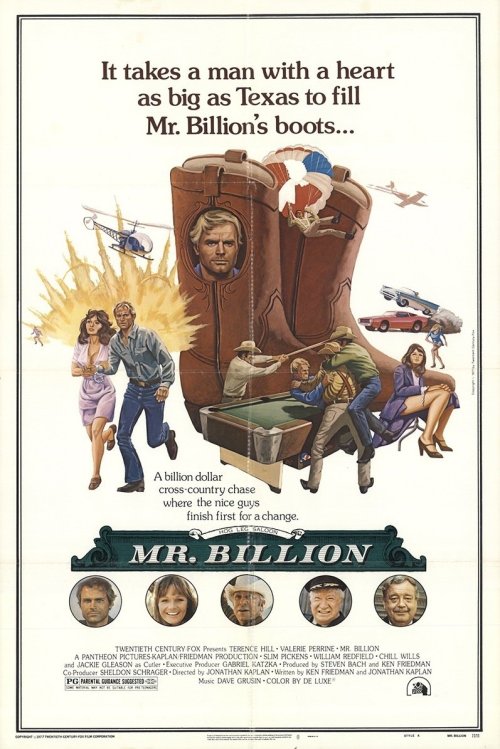
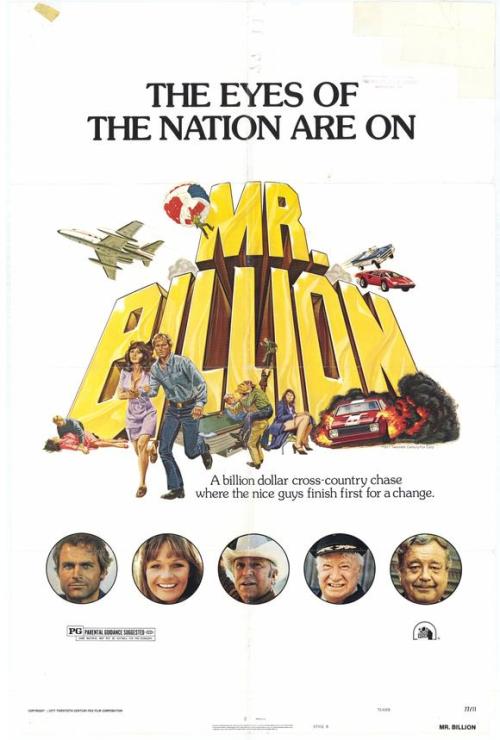
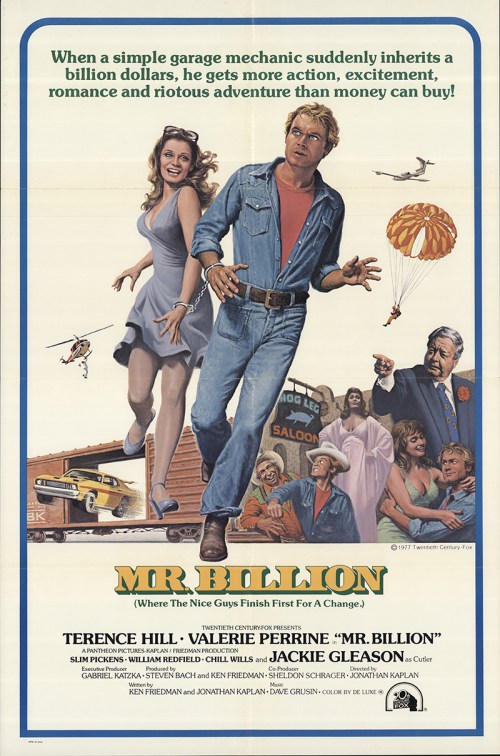
When his rich uncle dies in a freak accident humble mechanic Guido (Terence Hill) learns that he has inherited the man’s billion dollar fortune. However, everything is contingent that he sign the legal papers at precisely 12 Noon on Monday, April 12th in San Francisco in order to receive the money. John Cutler (Jackie Gleason) who has worked many years in the uncle’s corporation wants all the money for himself and will do anything to stop the signing, which requires Guido to travel across the country in various forms of transportation to get there.

This was Hill’s American movie debut, but the results and effort are mediocre at best. It was written and directed by Jonathan Kaplan, who was still in the Roger Corman production phase of his career, which makes the film come-off looking like just another pedestrian dive-in fare that he had been doing up to that point. The plot is thin and unimaginative, relies too heavily on car chases to make it interesting, and gets filled with a lot of logic loopholes that just don’t add up.

Hill gets upstaged by the talented supporting cast of characters actors at every turn. Sam Laws as an aging black man who brings Hill home with him only to end up getting into a big argument with his son (Johnny Ray McGhee) about it is fun as is R.G. Armstrong as a stereotypically over-the-top southern-styled sheriff. Gleason is a lot of fun here too especially his facial expressions and reactions that make his scenes enjoyable.

There are a few interesting moments including a helicopter crashing onto a little league game and all the people shown, from a bird’s-eye perspective, running out of their homes to witness the accident. Watching the police vehicles getting smashed-up in a stock car race is cool too and the aerial views of the Grand Canyon where the characters battle each other while literally teetering on the edge of a massive cliff are breath taking. Unfortunately there are a lot of slow, dull moments in-between. The dialogue is not sharp enough to be consistently amusing and the script is too run-of-the-mill like it was written in a matter of hours with no heart or thought put into it at all.

This film also marks the last screen appearance of William Redfield. He was an actor who had been working in films since 1939 when he was just at child, but never gained much fame until he was in One Flew Over the Cuckoo’s Nest. However, it was while working on that film that he got diagnosed with leukemia. He decided to forge on with his acting work as best as he could and here he looks perfectly healthy, and even plays a character that has an interesting arc, and yet he ended up dying just month after filming had completed.

My Rating: 4 out of 10

Released: March 3, 1977

Runtime: 1 Hour 29 Minutes

Rated PG

Director: Jonathan Kaplan

Studio: 20th Century Fox

Released: DVD-R (Fox Cinema Archives)

Best Friends (1975)

By Richard Winters

My Rating: 4 out of 10

4-Word Review: Road trip turns nightmarish.

Jesse (Richard Hatch) and Pat (Doug Chapin) have been best friends since childhood. Now both are ready to enter into young adulthood. To celebrate they decide to take a road trip via a camper across the American southwest along with their two girlfriends: Kathy (Susanne Benton) and Jo Ella (Ann Noland). As the trip progresses the differences between the two men become more pronounced. Jesse is ready to settle down and get married while Pat remains a free-spirit wanting to party with no limits. Pat also resents the presence of Kathy who he feels is getting in the way of his friendship with Jesse. He tries different tactics to get them to break-up and when that doesn’t work he resorts to a more drastic measures.

The film is interesting to a degree and goes against most other road pictures that usually show the bond between two people growing as the trip progresses while here it devolves. The low key approach allows for a certain diversion including a wonderfully majestic bird’s eye shot of the camper driving along the highway with a beautiful mountain range seen in the background. The pace is slow and the scenes could’ve been trimmed, but first-time director Noel Nosseck manages to at least have some drama flowing in each segment and thus enough to hold a modicum of interest.

Most will be intrigued to see Hatch in his film debut and while his performance is adequate it’s actually Chapin, who’s last film this was to date, that comes off better in a portrayal of a ticking time bomb ready to go off. Although I couldn’t help but notice his severely scarred right hand, which is not a part of the story and only seen briefly in one shot, that looks like the pinkie finger was severed off at some point in an accident and then surgically reattached.

The film’s downfall comes with Pat’s dissent into psychosis, which  needed more context. Friendships ebb and flow and a person could be best friends with a certain individual at one point in their life, but not in another one. When one friend gets married and the other one doesn’t then the single person finds other friends whose lifestyles remain more similar to his. Rarely if ever does it resort to the friend trying to kill the other’s girlfriend. To simply write this all off as being Pat’s inability to adapt to change or his jealousy is not enough. His behavior is too extreme and more of a background on his life and upbringing needed to be shown for us to make sense of it.

It would’ve worked better had it started with the two friends meeting in childhood and showing the good times they had throughout the years before even getting to the road trip, which should’ve been pushed back to the second act instead of right at the beginning. The two talk about their past, but in film it’s better for the viewer to see this for themselves instead of only being told about it. There should’ve also been some explanation for why Jesse didn’t see any red flags to Pat’s psychotic tendencies years earlier as they were so close you’d think he would’ve noticed the imbalanced much sooner instead of it all becoming a shock to him like everyone else at the end.

The ending is weak and offers no resolution. Jesse’s response to Pat’s behavior becomes almost as bizarre making it seem like he’s just as crazy as his friend, but since the characters are so poorly fleshed-out it’s hard to tell if that was the intention or not.

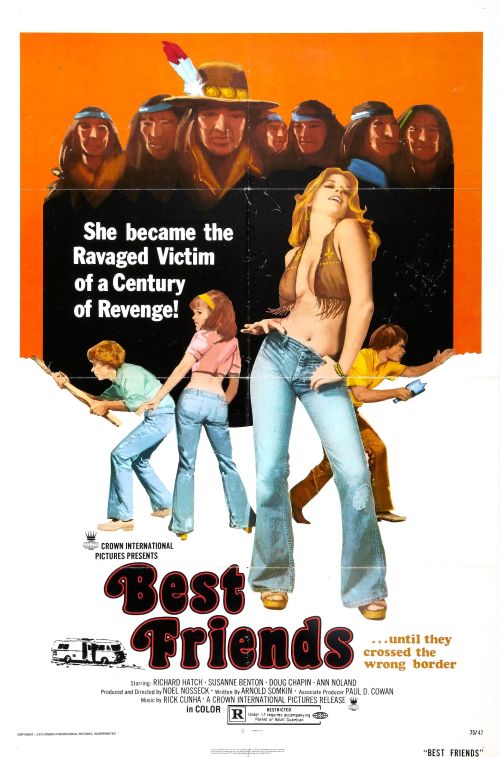
The film’s promotional poster seen above is quite misleading as it implies that’s it’s all about a confrontation between the 4 and a group of Native Americans. It is true there is a scene where a fight breaks-out between them at a bar, but it is brief and does not have anything to do with the main story.

My Rating: 4 out of 10

Released: May 29, 1975

Runtime: 1 Hour 23 Minutes

Rated R

Director: Noel Nosseck

Studio: Crown International Pictures

Available: DVD (Savage Cinema 12-Movie Collection)

The Super Cops (1974)

By Richard Winters

My Rating: 6 out of 10

4-Word Review: Arresting the drug dealers.

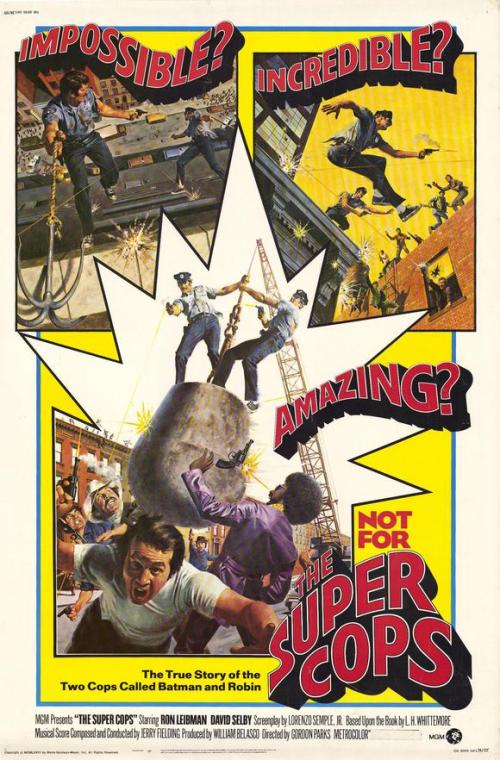
David Greenberg (Ron Leibman) and Robert Hantz (David Selby) join the police force hoping to be active in cleaning up the streets from drug dealers. Unfortunately for them once they go through the basic police training and graduate they’re assigned low level jobs like directing traffic, which they find boring. They decide to start using their off-duty hours to make arrests on their own, which gets them into trouble with their department, but their continuing efforts impresses the residents and soon makes them media heroes known as ‘Batman and Robin’.

The film, which was directed by Gordon Parks who also did Shaft, has plenty of engaging moments and I liked how it starts with the two going through the police training, which allows the viewer to see a full transition of the characters from average citizens to street cops. There’s also a lot of quirky comedy that really works including having the two hiding out inside a trash dumpster and ready to make an arrest only to have a large amount of garbage dumped on them just as they do. The bit at the end where two dueling factions of the police department try to arrest each other, even though neither side is sure which side has committed the worst crime, is quite amusing too.

The characters and situations are based loosely on real life events and it’s interesting how the actual Greenberg and Hantz are shown right at the start being interviewed about all of their arrests and then they appear later in the story playing two corrupt cops that get into a big fistfight with their film counterparts. Initially I thought Leibman looked too scrawny and outside of his bushy mustache didn’t resemble Greenberg all that much, but he makes up for it with a highly spirited performance. Selby is good too and I liked how there’s a contrast in personalities between the two although in real-life they had been best friends since childhood while the film makes it seem like they meet and become friends while in training.

The main problem with the film is that we never learn what makes these guys tick. Why are these two so motivated to arrest drug dealers even more so than a regular cop? Did they have a friend or family member die of a drug overdose in the past? And what about their private lives? Are these guys married, single, or gay? None of this gets shown or addressed, which ends up creating a placid effect. While the viewer may admire the relentlessness of the protagonists we’re also never emotionally tied-in to anything that goes on.

Showing the politics that occurs behind-the-scenes inside a police force and how this protocol system can sometimes stymie innovation or individuals that may want to work outside of it is commendable, but also ends up having a defeating quality to it. Every time these guys make any progress they end up falling back into the hands of the same administrators that want to make life miserable for them, and this gets repeated all the way until the bitter end making the viewer feel frustrated when it’s over instead of inspired.

It’s also interesting to note that Greenberg and Hantz weren’t exactly virtuous in their real-lives and ended up getting caught doing the same things that they arrested other people for doing here including Hantz who was forced to resign from the police force in 1975 after getting caught in possession of marijuana. Greenberg also spent two stints in jail once in 1978 for nine months for mail fraud and then again in 1990 for 4 years for insurance fraud.

My Rating: 6 out of 10

Released: March 20, 1974

Runtime: 1 Hour 30 Minutes

Rated R

Directer: Gordon Parks

Studio: MGM

Available: DVD-R (Warner Archive), Amazon Video

Wild in the Sky (1972)

By Richard Winters

My Rating: 3 out of 10

4-Word Review: Hijacking a B-52 bomber.

Three Vietnam protesters (Brandon De Wilde, George Stanford Brown, Phil Vandervort) are arrested and taken to jail via a paddywagon driven by Officer Roddenberry (Dub Taylor). Along the way Roddenberry pulls over to relieve himself and while he’s outside one of the prisoners uses a wire to pull on the gear shift and make the vehicle move, which runs over Roddenberry who was in an out-house. The three then escape to a nearby air force base and get on a plane carrying a bomb that they threaten to drop onto Fort Knox unless they’re given their freedom.

This very budget-challenged production has a grainy look and a lame soundtrack that quickly makes it a relic of its era. There were so many other better produced films that came out in the same time period that took the same potshots at the army, politicians, and the establishment that it seems virtually pointless why anyone would feel the need to sit through this one as it adds nothing new to the already tired anti-war spoof genre.

The script though, which was co-written by Dick Gautier, who also gets cast as the plane’s co-pilot, and famous ‘Hollywood Squares’ host Peter Marshall, does have a few engaging moments. The conversation that Larry Hovis, who probably comes off best out of the entire cast, has with army general Keenan Wynn, is quite amusing. The moment when macho pilot Robert Lansing spontaneously kisses George Stanford Brown smack on the lips as they attempt to wrestle a gun from each other is pretty out-there especially for the time period. The bit at the end where the army personnel are stuck in an enclosed room and busily kick a live grenade away from each other and to someone else, who just kicks it back to the person who sent it to them, has an amusing quality to it as well.

Unfortunately the film creates a lot of strong characters and then doesn’t know what to do with them. Stanford Brown makes for a formidable lead, in fact the film was reissued with the title BLACK JACK because of his very dominant presence, but then he parachutes out of the plane along with most of the other air crew just as the dynamics between them were getting interesting. Had the film remained focused on the men inside the plane and made it more of a character study showing how their interactions between them changed during the course of the stand-off/flight this might’ve been interesting, but instead it spends too much time on the ground dealing with a petty, bickering fight between Wynn and Tim O’ Connor, which becomes cartoonish and silly.

De Wilde, whose last film this was before his untimely death in a car accident in July, 1972, is boring. He certainly looks the part with his long hair and jaded hippie-like facials expressions and light years away from the innocent child characters that he played in Shame and The Member of the Wedding, but his character has no pizzazz and nothing to say that is interesting or even remotely funny. Stanford Brown was the one that gave it energy and once he goes this already flimsy production goes with it.

My Rating: 3 out of 10

Released: March 16, 1972

Runtime: 1 Hour 22 Minutes

Rated GP

Director: William T. Naud

Studio: American International Pictures

Available: None at this time.

Freebie and the Bean (1974)

By Richard Winters

My Rating: 7 out of 10

4-Word Review: Protecting a state’s witness.

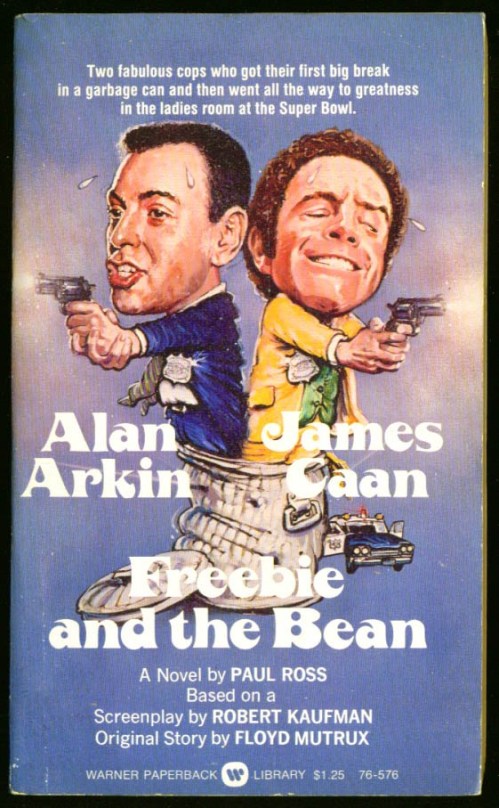
Detective Sergeant Dan Delgado (Alan Arkin) is ‘Bean’ while Detective Sergeant Tim Walker (James Caan) is known as ‘Freebie’. Together they are two San Francisco cops investigating a well-known racketeer named Red Meyers (Jack Kruschen). Just when they think they have enough evidence to bring him in they find that there’s a hit-man ready to kill him and it is now their job to keep the cantankerous Meyers alive until they can bring in a key witness to testify against him, which proves difficult.

The script was written by Floyd Mutrix who shopped it around to many studios before finally selling it to Warner Brothers because he felt he could trust then Studio Boss Richard Zanuck to keep the story in tact only to have the script go through massive rewrites once it was handed over to Richard Rush to direct. The story was originally conceived as being in the serious vein, but during rehearsals it was found that Caan and Arkin had a good comic chemistry together, so the dialogue took on more of a humorous take.

In many ways I liked the comic spin. This was in the age of Dirty Harry and The French Connection where cops had taken too much of a serious tone, so having something making fun of the trend is refreshing. The story itself remains gritty, which culminates in this odd dynamic where you find yourself laughing one minute and then cringing the next. My only complaint is that it seemed like Freebie and Bean where getting away with too much, the destruction of police property and reckless driving was one thing, but the way they would freely rough-up suspects under their care was another. Their ethical boundaries were so loose that real-life cops in the same situation would most certainly end up  getting reprimanded, at least hopefully.

The stunt work is worth catching as the car chases create a true adrenaline rush. The best one starts inside a dentist’s office, then goes out onto the streets where Caan, or at least his stunt double, rides a motorbike over the roofs of several cars in his pursuit of the bad guys, then proceeds to go through an outdoor art exhibit only to culminate inside the kitchen of a ritzy restaurant.

The supporting cast includes Loretta Swit as the wife of the crime boss who initially seems to have a very insignificant role, but it eventually works into being an integral part by the end. I also enjoyed Christopher Morley, who is a well-known female impersonator best remembered for playing Sally Armitage a character that was known as a woman who eventually came out as a man on the daytime soap opera ‘General Hospital’ that later inspired the movie Tootsie.  Here he plays a transvestite that Freebie meets briefly early on. Due to his small body frame Freebie initially considers him a ‘lightweight’ only to get the shock of his life when later on Morley proves to be far more able to defend himself than Freebie could’ve ever imagined in a unique fight sequence that I wished had been extended.

The casting that I had an issue was with Arkin and Valerie Harper as his wife. Usually these are great actors, but here they play Hispanic characters even though both were actually Jewish. Hearing Harper speak in a fake Spanish accent is quite annoying and the scene where the two bicker at each other would’ve had far better energy had it been played by actual Hispanics.

Spoiler Alert!

The part where Bean gets shot is problematic too. Normally I don’t mind having some reality seep into a story,  but here Bean being put out of commission is all wrong. The two had done everything together up to this point, so it cheats the viewer and the film’s chemistry with him missing during the climactic fight. Having him then miraculously recover after he’s taken away in the ambulance and pronounced dead makes the whole scenario ridiculous and implausible.

My Rating: 7 out of 10

Released: December 25, 1974

Runtime: 1 Hour 53 Minutes

Rated R

Director: Richard Rush

Studio: Warner Brothers

Available: DVD, Blu-ray, Amazon Video, YouTube
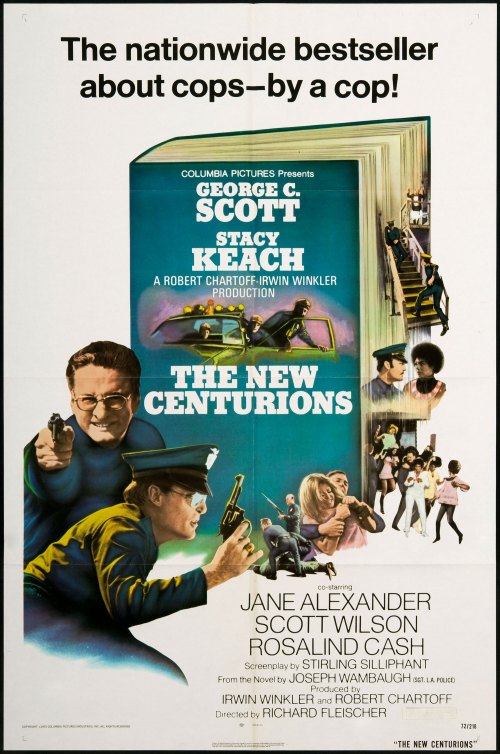
The New Centurions (1972)

By Richard Winters

My Rating: 7 out of 10

4-Word Review: Rookies on the force.

Roy Fehler (Stacy Keach) is a young law student who decides to join the LAPD until he can complete his degree. After graduating from training he gets partnered with Andy Kilvinski (George C. Scott) a veteran with almost a quarter of a century of police work under his belt. Roy likes Kilvinski’s unique approach to cop duty and enjoys his police work more and more to the point that he puts his law studies on hold, much to the consternation of his wife (Jane Alexander). Then one night Roy gets shot while on-duty forcing him to go through a painful recovery, but his determination to return to the force puts a major strain on his marriage and when his wife leaves him he turns to liquor for solace.

The film is based on Joseph Wambaugh’s debut novel, which he wrote in 1970 and based loosely on his own experiences and observations while working as a cop. The novel though differs greatly from the film in that there were three main characters in the book while the film focuses mainly on Keach while leaving the other two, which are played by Eric Estrada and Scott Wilson, as only secondary players that are seen only sporadically. The novel also delved into the Watts Riots at the end, which the movie completely ignores.

The film though does succeed at humanizing those that work on the force as we see them as regular people who just so happen to wear a badge as opposed to authority figures. The story thankfully avoids police cliches and seeing how Keach’s job affects both his home life and personality is quite interesting and something I wished had been explored even more.

The best moments come during the first act as the viewer gets thrust onto the street scene along with Fehler and Kilvinski where in almost cinema vertite style we see what an average night patrolling a poor African American neighborhood in Los Angeles is really like. Some of the time their experiences are quite lighthearted like when they pick up a group of black prostitutes, one of which is played by Isabel Sanford, who later went on to star in the TV-Show ‘The Jeffersons’, who get put into a paddy wagon where they drink hard liquor and tell bawdy stories. Other moments though become tense and serious particularly when they have to wrestle a crying infant away from his abusive mother.

Keach plays his part quite well and one of the reasons that the film is successful, but his character isn’t well defined. We have no understanding why he enjoys patrolling the streets so much and ignores his family life the way he does. Without any insight to what drives him it makes his obsession to return to the force after his shooting injury seem bizarre and confusing. In the novel he was portrayed as being quite arrogant and thinking he was smarter than everyone else, which gets toned down considerably here.

Spoiler Alert!

Scott’s character is another confusing mess. For most of the film he’s shown as being rather laid-back only to suddenly shoot and kill himself without warning after he retires. Yet the character is not fleshed-out enough making what he does senseless. The film seems to imply that he was bored in retirement, which is what lead him to do it, but do other policemen who retire also kill themselves at a high rate? I haven’t heard of that many who do so it seemed to me there needed to be a better reason than just that and without one being sufficiently supplied it makes the scene come-off as unnecessarily jarring that creates confusion instead of clarity.

The segment where Fehler joins the vice squad are quite funny and manage to be both outrageous and believable at the same time. However, his sudden descent into alcoholism gets too rushed and the film would’ve worked better had it reflected the same structure as its source novel where the character’s lives are examined every August of each succeeding year after graduating instead of keeping the time period undefined, which makes everything that occurs look like broad composites instead of a fluid situation.

The scene where Scott Wilson’s character shoots and kills an innocent black man gets poorly presented too as we never get to see the aftermath of his actions as the subsequent investigation is never addressed at all. We simply see him back on the force in later scenes like it never happened. The moment is startling, so not answering the question of what penalty he may or may not have faced is frustrating.

My Rating: 7 out of 10

Released: August 3, 1972

Runtime: 1 Hour 43 Minutes

Rated R

Director: Richard Fleischer

Studio: Columbia Pictures

Available: DVD

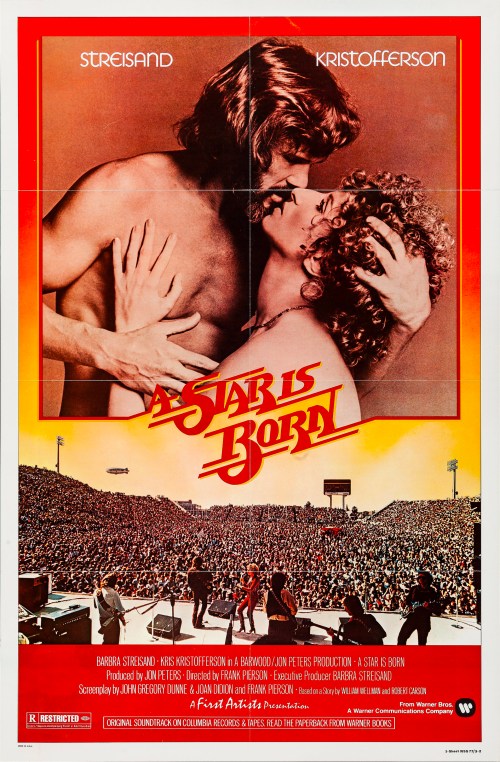
A Star is Born (1976)

By Richard Winters

My Rating: 4 out of 10

4-Word Review: His career goes downhill.

John Norman Howard (Kris Kristofferson) is a famous rock singer who’s found that his career on the road has taken its toll. He’s become jaded by the money and fame and now bored with it while spending his days and nights committing self-destructive acts that alienate the rest of his crew. One night after walking off the stage of his own concert after singing only a few songs he goes to a bar where he sees Esther (Barbra Streisand) singing on stage. He becomes impressed by her talent and uses his resources to make her a star. The two eventually get married, but as her career continues to rise his goes in decline.

This is the third remake of the story that was originally written by William A. Wellman and Robert Carson. The first version came out in 1937 and starred Frederic March and Janet Gaynor while the second one was released in 1954 and starred James Mason and Judy Garland. This version differs from the other two in that the setting was the music scene instead of the movie business, but overall the efforts here to revitalize the tired formula are trite and predictable.

A lot of the blame can go to Streisand who acted as both the star and producer to the project. For one thing she was too old for the part as she was already in her mid-30’s when this was filmed and wearing a tacky afro hairstyle to boot. It would’ve been more effective had a truly young person, like a woman who was 19, which is a typical age for someone to have dreams of breaking into the rock scene, was cast. Possibly having the character start out as one of Kristofferson’s groupies, instead of doing it like it’s done here where he just meets her at random at a bar, which is awkward and forced, and then through their time together he learns of her aspirations and talents and works to help her meet her potential.

It also would’ve helped had the young starlet had the same singing style as Kristofferson, which would’ve made the concert scene where he walks off stage and brings Esther onto it more believable. Kristofferson’s music, or what little we hear of it, has clearly a more hard rock edge while Streisand sings mellow love songs. In the movie we’re supposed to believe that all these fans who paid good money to see Kristofferson sing are suddenly without warning given Streisand instead and are so taken aback by her talent that they all clap and cheer when in reality I think they would’ve been upset and demanding their money back as they came to hear hard rock and not the lite stuff.

I enjoyed Kristofferson’s performance and his impulsive self-destructive acts give the film energy and edge. However, the chemistry between the two is non-existent and he later said that working with Streisand was “an experience which may of cured me of the movies.” His decline gets handled in a rushed, heavy-handed way. Music careers are by their very nature cyclical. Rock stars get replaced with every generation as teens prefer their own singing idols and not those of their parents. For him to become so quickly devastated when his record sales begin to plummet is unrealistic as nobody stays on top forever. He should have enough money to wade out the career lulls and simply held on to when his fans grew up and became nostalgic and then hit the retro tour circuit like many of the pop/rock icons from the past do.

Streisand’s character is flat, one-dimensional, and just plain too-good-to-be-true. She’s well known in real-life for her notorious ego, in fact director Frank Pierson described her as being egocentric, manipulative, and controlling and refused to ever work with her again, so having her then portray someone who is gracious and humble seems very phony and not something that she’s effectively able to convey. The original concept was to have the character be like Janis Joplin and go through a self-destructive decline of her own, but Streisand nixed this idea, which is unfortunate as it would’ve given the film some needed nuance.

The footage of the massive crowds at the concerts is the one element that I found impressive and the segment showing the vast stretch of land that Kristofferson owned in the middle of the Arizona desert was pretty cool too. Everything else though in this otherwise overlong film is boring. Fans of Streisand’s singing may take to it better, but there’s too much of it, making it seem like this was just one big vanity project for her and nothing more.

My Rating: 4 out of 10

Released: December 17, 1976

Runtime: 2 Hours 20 Minutes

Rated R

Director: Frank Pierson

Studio: Warner Brothers

Available: DVD-R (Warner Archive),  Blu-ray, Amazon Video, YouTube

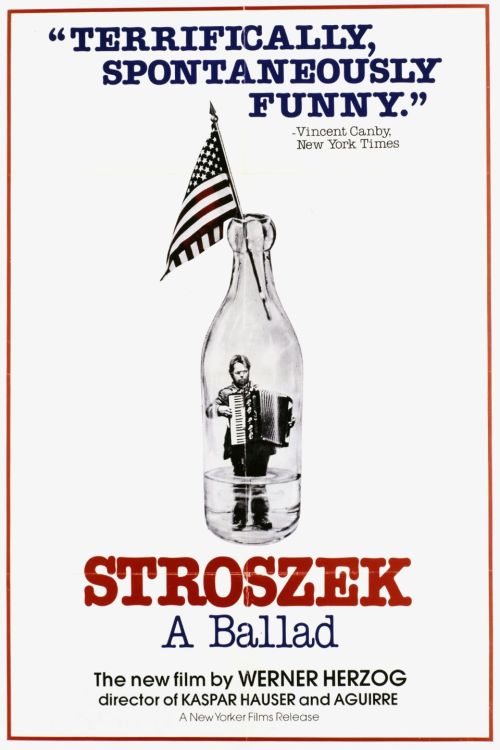
Stroszek (1977)

By Richard Winters

My Rating: 8 out of 10

4-Word Review: Germans relocate to Wisconsin.

Bruno (Bruno S.) has recently been released from prison and while warned to stop drinking as a condition for his parole he immediately goes to a local bar. It is there that he meets Eve (Eva Mattes) a prostitute in an abusive relationship with her husband (Burkhard Driest). Bruno offers to allow her to move into his apartment, but this angers her husband and her pimp (Wilhelm von Homburg)  who break into the apartment and terrorize Eva and Bruno making them believe that the only way they can escape the harassment is by moving to America, which we they do along with their elderly neighbor Scheitz (Clemens Scheitz). They presume everyone is the USA is rich and life will be easy, but find that not to be the case.

The story was based loosely on the real-life experiences of its star and the script  written specifically for him by director Werner Herzog as a conciliation for not casting him in Woyzeck as originally intended. Since Bruno had already taken a leave of absence from his job at a steel mill to star in that one Herzog decided to make it up to him by writing this script in a matter of 4 days and then filming it on-location in Plainfield, Wisconsin because that was where the notorious serial killer Ed Gein had lived.

The story should’ve been a complete downer as it focuses on some very depressing realities, but instead, thanks to the genius of Herzog, one comes away from it feeling almost upbeat at all the quirky humor that gets incorporated in. The most memorable moment, which the rest of the crew found highly offensive and refused to film forcing Herzog to do it himself, happens near the end when Bruno travels to North Carolina and uses the last of his money to insert coins into arcade exhibits featuring chickens inside cages that dance and play the piano. The amusing element from this comes when the police finally arrive on the scene and are more concerned with getting the chicken to stop dancing than with the welfare of Bruno.

I also enjoyed the moment when an auto mechanic (Clayton Szalpinski) decides to do his own oral surgery by using the same pliers that he fixes cars with to remove a painful tooth in his mouth. While more blood was needed, as there should’v been streams of it coming out of his mouth, but isn’t, it’s still quite darkly funny and was ‘inspired’ by a true-life scene in the  1972 documentary Spend it All in which a Cajun in Louisiana does the same thing to his teeth, which amazed Herzog so much when he saw that movie that it compelled him to work the scene into one of his stories.

The jabs at America are expectedely negative and to some degree are on-target while at other points goes too far. Watching the trio become overly excited at seeing their new trailer home driven onto a vacant lot and acting like this was a sign that they had finally ‘made it big in America’ is certainly sardonically funny. Yet the scene with two farmers holding rifles as they plow a field in their tractors ready to shoot the other one if either dared touch a small strip of disputed land played too much into the stereotype that Europeans have of Americans and really wasn’t needed especially since it had nothing to do with the main story.

Bruno S.’s performance, who was never formally trained as an actor, is boring as he conveys the same facial expression all the way through where a more seasoned actor could’ve given the role more needed nuance. Scheitz was an amateur actor as well, but his short stature and overall goofy appearance made him a fun part of every scene he’s in while with Bruno that same quality doesn’t exist. If anything Eva has the widest character arc and the film should’ve evolved around her instead.

Herzog casts a lot of non actors in secondary roles as well. I’m not sure if this was done for budgetary reasons, or just played into his long-standing desire to be experimental, but the results aren’t completely effective. I did however enjoy Scott McKain, an auctioneer in real-life, who plays the part of a bank employee that comes to visit the trio in their trailer home to inform them of their delinquent payments and yet no matter how bad the news is that he must convey he always manages to remain upbeat and peppy when he says it.

The film, which has been rightly placed in Steven Schneider’s ‘1001 Movies You Must See Before You Die’ is original in so many ways that it deserves to be seen just for the oddity it is and I really have no complaints with its avant-garde style, which even today comes off as fresh and inventive, but I was confused about why the Glen Campbell song ‘By the Time I Get to Phoenix’ got played so much. The lyrics are never heard, but the melody is and yet there’s no connection to the city of Phoenix in the story, for awhile I thought that was where they’d ultimately end-up, but they never do, so hearing it played so much is out-of-place.

My Rating: 8 out of 10

Released: May 20, 1977

Runtime: 1 Hour 48 Minutes

Not Rated

Director: Werner Herzog

Studio: New Yorker Films

Available: DVD, Amazon Video, YouTube

Outrageous! (1977)

By Richard Winters

My Rating: 7 out of 10

4-Word Review: Female impersonator befriends schizophrenic.

Robin (Craig Russell) works as a gay hairstylist during the day, but longs to be up on stage as a female impersonator.  Liza (Hollis McLaren) is a schizophrenic who leaves the hospital she was confine in and moves in with Robin her longtime friend. Both find ways to help each other with their problems, which allows Robin the confidence to finally get on stage in drag as Tallulah Bankhead, which makes him an instant hit and gets him a paid gig in New York City. However, when he moves away Liza’s condition worsens forcing Robin to decide what’s more important: his budding career, or his friendship.

The film is based on the shorty story ‘Making It’ by Margaret Gibson, which in turn was based on her experiences dealing with mental illness and her real-life friendship with Craig Russell whom she roomed with in 1971. The story nicely tackles the challenges of dealing with mental illness and how Robin’s support helps Liza overcome her demons that the other professional Dr’s and counselors that she sees don’t because they only view her as just another patient instead of a person.

The grainy, low budget quality works to the film’s advantage as it brings out the fringe, economically disadvantaged lifestyle that the two lived in while McLaren’s performance shies away from the cliches of mentally illness causing the viewer to see her as a regular everyday person, not just some ‘crazy’, valiantly fighting a nasty illness that she can’t always control.

The segments dealing with Russell’s onstage act are quite entertaining as well though when I first saw this film decades ago I found these moments to be off-putting as they turned it more into a documentary, or a comedy special that took the focus away from the actual essence of the story, which was the friendship. However, upon second viewing I liked the way it captures the gay club scene that was unique to that time period. Russell’s impersonations where he does Barbra Striesand, Judy Garland, Mae West and Bette Midler just to name a few are outstanding. I’ve seen some female impersonator acts before, but Russell’s far outshines any of the others I’ve ever watched as he gets the body language, voice, and facial expressions of the people he’s playing just right to the point that he completely disappears into the women characters until you can’t tell the difference.

While the film does have many touching moments I felt it should’ve shown how Robin and Liza first met instead of having it start with them already knowing each other when she moves in with him. Since they are such an odd pair capturing how and where this unique relationship all started and what element brought them together seemed crucial, but we never see it nor does it even get addressed in conversation. Having this backstory could’ve helped the film stay a little more centered on the relationship as well and prevented the over reliance on Russell’s stage routine, which while quite good, still takes up a bit more of the runtime than it should’ve.

My Rating: 7 out of 10

Released: July 31, 1977

Runtime: 1 Hour 36 Minutes

Rated R

Director: Richard Benner

Studio: Canadian Film Development Corporation

Available: DVD, Amazon Video