Category Archives: 70’s Movies

Mouth to Mouth (1978)

mouth1

By Richard Winters

My Rating: 8 out of 10

4-Word Review: Two teen girl runaways.

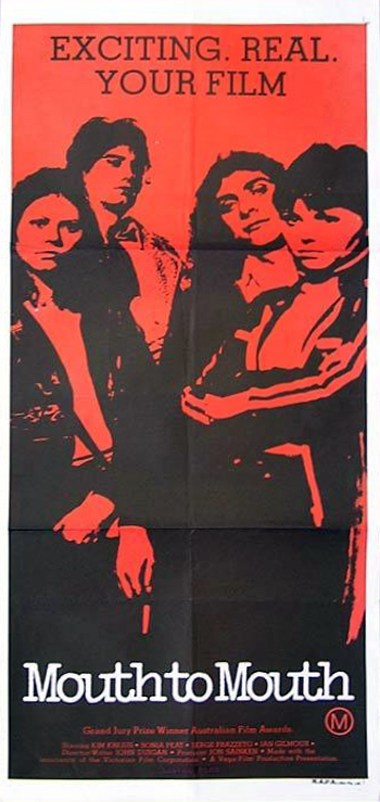
Carrie (Kim Krejus) and Jeanie (Sonia Peat) are two friends living in a juvenile detention center when one of them gets accused of stealing an item. Angered that they’ve been accused of doing something that they didn’t they escape into the night and onto the streets of Melbourne. They manage for find shelter in an abandoned factory building that also has an elderly homeless man named Fred (Walter Pym) living there whom they befriend. They find employment as servers in a cafe and that’s where they meet Tim (Ian Gilmour) and Sergio (Serge Frazzetto) who are two young men who have come to the city looking for employment. They girls bring them back to the factory building and the four create a makeshift home, but Carrie and Jeannie are not happy with the wages that they’re making nor having to shoplift on the side to make ends-meet. Carrie sees an ad in the paper for escorts and convinces Jeannie to join her as they’ll be able to make much more money doing that. Jeannie is reluctant at first, but eventually goes along with it, but after doing it for awhile Carrie becomes increasingly depressed, which eventually leads to her illicit drug use.

Initially I wasn’t excited to watch this as I’d seen many teen runaway movies before and failed to see what new perspective they could put on that would make it interesting, but I was surprised how very compelling it is. A lot of credit for this goes to writer/director John Duigan’s script, which has a nice conversational quality and the characters react the way real teens do where they never articulate how they really feel and go to great lengths to mask their true feelings. The setting, particularly the abandoned building is made all the more stark as a real one was used and not just some prop built on a movie set, which really hits home the kind of squalor some people will be willing to put-up with if their desperate enough and similar to the living conditions in the British film Rita, Sue, and Bob Too. 

Despite the actors having little or no acting experience they manage to give compelling performances and much of this was helped by having the cast room in a house for 2-weeks before the shooting started, which allowed them to bond with each other as well as refined their characters and rehearse their lines until it became almost natural to them. 

The script originally had more of a light-hearted tone, but after 14 rewrites it took on a harsher subject matter as director Duigan wanted to bring to life people that a middle-class movie audience only sees as ‘numbers on unemployment figures, or kids in juvenile court’ and in that regard it’s well-made. The ending is particularly gut-wrenching, but not surprising and yet I was very moved by it and it stayed with me long after it was over. 

On the complaints side it would’ve been nice to have had Fred come-up to their loft to either dinner with the four and see more how he interacted with them. The girls invite him, but he refuses, but for the sake of character development he should’ve agreed. The escort scenes only show Jeannie interacting with her client, but not Carrie with hers, which I found frustrating. Carrie is never seen visiting with her father either during the brief scene when she returns home as he’s not there, but having a conversation between the two could’ve been quite revealing. The film also features a great song entitled “The More You Love the Harder You Fall”, but no credits are given for who sings it, which is a shame.

My Rating: 8 out of 10

Released: July 20, 1978

Runtime: 1 Hour 36 Minutes

Rated M (Australian Movie Rating)

Director: John Duigan

Studio: Victorian Film Cororation

Available: DVD (Region 0 Import)

Gator (1976)

gator2

By Richard Winters

My Rating: 3 out of 10

4-Word Review: Rubbing-out a friend.

Gator McKlusky (Burt Reynolds) is back living in the swamp lands of southern Georgia with his Father (John Steadman) and young daughter (Lori Futch) with no interest of working for the police again. Then one day federal agent Irving Greenfield (Jack Weston) comes by in his boat asking Gator to work with them as an undercover agent to get incriminating information that can be used in court to convict local mob boss ‘Bama’ McCall (Jerry Reed), who just so happens to also be one of Gator’s former buddies. Gator at first resists, but eventually agrees. Bama seems excited to have Gator onboard with his team and even hires him as one of his collectors, but Gator gets turned-off by Bama’s penchant for drugging underage girls and then using them as prostitutes.  Bama eventually lets Gator leave his organization, but this only strengthens Gator’s resolve to put Bama behind bars, which leads the two former friends into a deadly game of cat-and-mouse.

The film was written by William W. Norton, whose colorful life,  was far more interesting than many of his banal scripts, which include such stinkers as I Dismember Mamaand in fact when Norton was on his deathbed in the hospital a nurse asked him if she knew of any of his movies and his response was “I don’t think your IQ is low enough”.  Despite Norton having written the script for the first film, White Lightningthat this movie was a sequel to, Reynolds was initially not interested in doing it and referred to the script as being “terrible”, but when the studio offered him the option to direct it he called it “wonderful”.

Like with many first-time directors the film has many long takes, but overall I felt Reynolds’ virgin effort behind the camera wasn’t too bad. The best part is the opening boat chase shot at the Okeefenokee State Park in southern Georgia that nicely captures it’s picturesque swamp topography as well as some exciting stunt work. Unfortunately after this bit the film goes downhill.

Much of the reason is the script’s inability to keep a consistent tone. The appeal is the spunky humor and action, but by the second act this all disappears and it becomes too serious and slow until it almost starts to resemble a drama. There’s also a few moments of jarring violence that completely losses sight of the playfulness that it had at the beginning.

Reynolds doesn’t seem into his part either, maybe because he was spending so much focus in directing, but in either case he walks through the role and phones in his lines. He also sports a mustache even though in the first installment he didn’t and for consistency he should more or less look the same as he did in the original. The mustache and wavy hair make him look older and the country boy charm that made his character so infectious in the first one is missing here.

Jerry Reed on-the-other-hand is great and shows the necessary energy to keep the scenes that he’s in interesting. Jack Weston is quite funny as the clumsy and constantly exacerbated agent and I was disappointed that he wasn’t in it more as the movie required him to be with Reynolds at all times in order to keep it engaging. I’ll even credit Alice Ghostley as the eccentric cat lady, but Lauren Hutton as the love interest is all wrong. She at least makes fun of the gap in her teeth, which I liked, but the romance angle comes-off as forced and unnecessary and does nothing but bog down the pace, in movie that’s too slow and choppy to begin with.

My Rating: 3 out of 10

Released: August 25, 1976

Runtime: 1 Hour 55 Minutes

Rated PG

Director: Burt Reynolds

Studio: United Artists

Available: DVD, Blu-ray, Amazon Video

Hustle (1975)

hustle2

By Richard Winters

My Rating: 6 out of 10

4-Word Review: Father searches for killer.

Phil (Burt Reynolds) is a police lieutenant who’s in love with a beautiful French prostitute named Nicole (Catherine Deneuve) and the two live together in Phil’s swanky hilltop Malibu home. Unfortunately Phil can’t handle that Nicole continues her business practice even as the two are in a relationship and this threatens their love affair. As this goes on Phil also gets embroiled in a police investigation when a group of school children find a dead body of a 20-year-old woman washed up on the beach. The victim’s father (Ben Johnson) insists it was murder even after the autopsy says it’s a suicide. Phil and his partner Louis (Paul Winfield) are ready to close the case, but when the father starts his own investigation the two  decide to pursue it further, which leads them to many unsettling conclusions including that the daughter starred in several porno films financed by the sleazy Leo Sellers (Eddie Albert) a rich older man who also happens to be a client of Nicole’s.

This film was the second collaboration between Reynolds and director Robert Aldrich as the two had just completed the highly successful The Longest Yard a year earlier. While that film met with critical acclaim this one received only a so-so reception. There were certain elements that I liked, but I did find Reynolds’ presence to be a detriment. His boyish looks where he doesn’t have the mustache or the wavy hair, which always made him look like he was wearing a wig, is a plus, but his character is too detached. It’s only after repeated cajoling by the father that he even agrees to look into the case more and the movie would’ve been more compelling had it revolved around the father from the very beginning.

Reynolds’ relationship with Deneuve is boring and the scenes between them aren’t sexy or provocative as intended. We should’ve seen how they became a couple from the start as their attachment brings out all sorts of questions that never get answered. For instance, where did they first meet? Was it during a sexual rendezvous where Burt paid for her services, or possibly a cop raid? Why did she fall for Burt as this woman had been with a lot of men, so what made him special over the others and why would a cop think getting serious with a woman who routinely sleeps with other men be a good idea, or even work?

The movie tries to be chic by creating a character who’s initially ‘open-minded’ about prostitution, but then contradicts itself by having him turn around and demand she must give it up. If this were truly a modern thinking guy he would’ve liked the fact that she was financially independent and slept with other men because she gave herself for free to him while she made the others pay. He might even get-off watching her having sex with others, as there are some husbands/boyfriends who do, and the fact that the film doesn’t think to go into this area makes it far less ‘hip’ than it thinks it is.

There’s also a very violent moment where Reynolds refuses to let her leave, physically slaps her, and even refers to her as a ‘bitch’ several times. He then pins her to the bed and forces himself onto her. While she initially resists he continues to do it until she finally gives-in and acts like she’s enjoying it. Today’s audiences will be rightly turned-off by this and it will make Reynolds, the intended ‘good guy’, look much more like an abuser. It also might allow some men to think that being violent with women is ‘okay’ as they’ll ultimately give in and ‘learn to enjoy it’, which is the wrong message to be sending.

As mentioned earlier Ben Johnson’s character is the only thing that keeps it interesting. The scene where his eyes tear-up after watching his daughter, played by real-life adult film actress Colleen Brennan, perform in a porn film is similar to the one in Hardcorebut far more impactful here. I was amused why he even took the part as he had complained about being in The Last Picture Show, which is the film he won the Oscar for as Best Supporting Actor, because of the ‘foul language’, but then he ends up swearing quite a bit in this one. In either case I’m glad he took it as his presence raises the storyline above its otherwise seedy level and even helps give it a few memorable bits.

My Rating: 6 out of 10

Released: December 25, 1975

Runtime: 2 Hours

Rated R

Director: Robert Aldrich

Studio: Paramount

Available: DVD, Amazon Video, YouTube

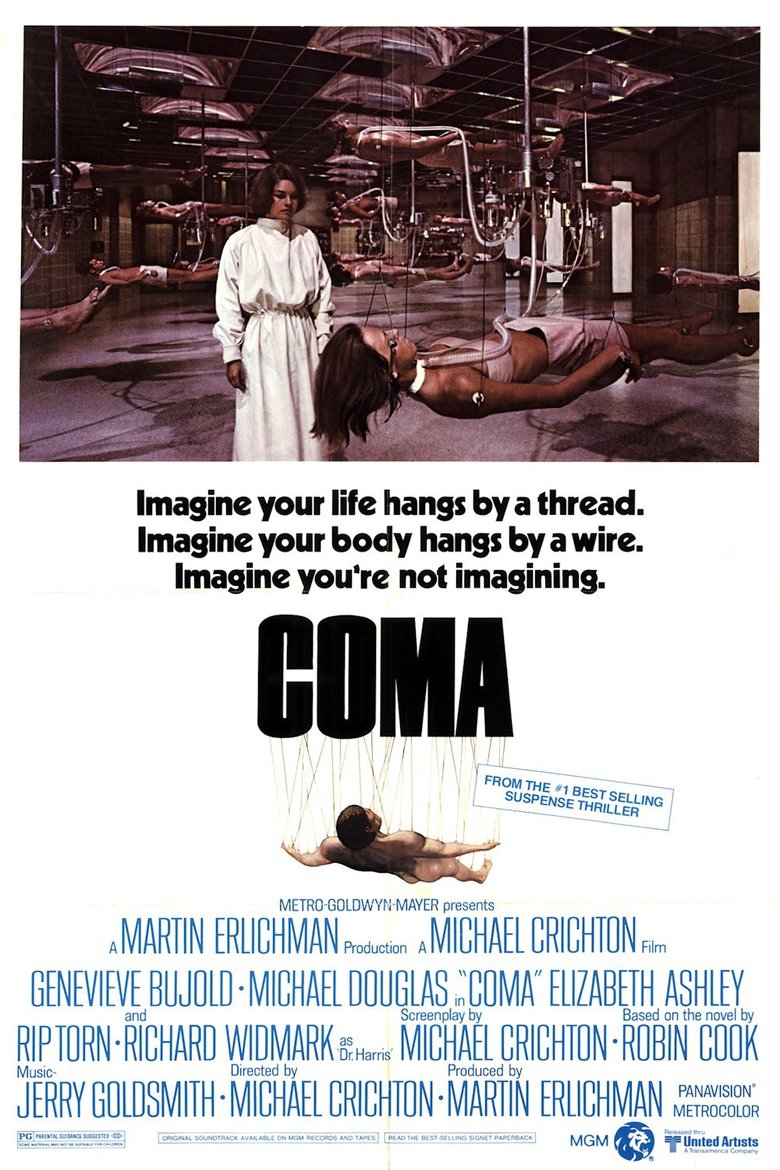
Coma (1978)

coma2

By Richard Winters

My Rating: 7 out of 10

4-Word Review: Who’s killing the patients?

Susan Wheeler (Genevieve Bujold) is a Dr. working as a surgeon at Boston Memorial Hospital, who learns that her best friend Nancy (Lois Chiles) fell into a coma at the hospital while having routine surgery. Susan is convinced that there must be an answer to what went wrong as Nancy was young and had no underlying health conditions. While reviewing the hospital records she finds that a high number of other patients at the hospital ended up having the same fate and all were of a similar age and body type as Nancy. Susan also notices that the patients had surgery in the same operating room and once they became comatose their bodies where shipped off to a remote facility known as The Jefferson Institute.  Susan’s boyfriend Mark (Michael Douglas), who also works at the hospital, tries to convince her it’s all a coincidence, but the more Susan investigates the more determined she is to uncover the truth even if it means putting her job and even her life on the line.

The film is based on the novel of the same name written by Robin Cook. Cook, a physician, decided to dabble in writing on his off-hours and in 1973 got his first novel, ‘The Year of the Intern’, published but it was a financial failure. While that book had been more of a drama he came to realize that thrillers was the genre that had the most commercial success. He studied how, in his words, ‘the reader was manipulated by the writer’, in the thriller novels that he had enjoyed and then listed these techniques on index cards and made sure to use them in ‘Coma’, which lead to that book being a best-seller. Michael Crichton, who had met Cook while he was working on a post doctorate at La Jolla’s Salk Institute, agreed to sign on as the director where he hoped to create a film that would delve into people’s fear of hospitals the way Jaws had connected to people’s phobias about sharks and swimming.

The result is a nice compact thriller that moves along at a brisk pace and takes advantage of both the director’s and author’s medical background to help keep the scenario both realistic and enlightening to the inner-workings of a hospital. There’s a couple of cool foot chase scenes with one occurring between Bujold and actor Lance LeGault inside the hospital while another happens at the ominous looking Jefferson Institute with both being quite intense.

Bujold, despite being different than the protagonist in the novel, who was described as blonde and 23 while Bujold is brunette and 35 at the time of filming, was still a perfect casting choice. I loved her French Canadian accent, which gives her character distinction, but she does appear at times to have reddish nose and cheeks making her seem like she had a rash or cold. What I didn’t like was that the feminist angle of the character, which had been so prominent in the novel, gets played-down here. In the book Susan did not know Nancy and simply took on the case through her own personal initiative to prove herself in an otherwise ‘man’s world’, which was more compelling than the pedestrian way here where she investigates the case simply because she’s heartbroken over the loss of a friend.

It also didn’t make sense to me why she was the only one upset over the deaths of these patients. The patients most likely had family and friends, so why weren’t any of them demanding answers to what happened? We live in a sue-happy culture and medical malpractices are the most prevalent lawsuits out there making me believe this racket wouldn’t have been able to survive too long as lawyers and private investigators, who would’ve been hired by the grieved family members, would’ve been on the case demanding answers from the hospital long before Susan ever even got involved.

The Susan character has the same issues as James Coburn’s did in The Carey Treatment where we have a medical professional with no background in investigating suddenly showing amazing instinct on-the-spot that you’d only expect from a seasoned detective. Having a group of people, like the grieved relatives, working together to solve the case would’ve had more interesting banter and camaraderie, which is missing here. While seeing an individual take down a mighty criminal system is emotionally gratifying it usually takes a strong team of people working in tandem to accomplish that.

Spoiler Alert!

I did find the film’s climax where Susan goes under the knife and risks being another comatose victim, to be quite suspenseful, but I found it strange why this woman, who had done all the legwork to uncover the crime, would then just hand-it-over to the creepy hospital administrator, played by Richard Widmark, to finish the job instead of her going to the police with her findings. The Widmark character displayed a lot of red flags from the start, which is obvious to the viewer, so why is Susan, who had been so super savvy the rest of the time, so dumb at the end and trust a creep like him to do the right thing?

My Rating: 7 out of 10

Released: January 6, 1978

Runtime: 1 Hour 53 Minutes

Rated PG

Director: Michael Crichton

Studio: MGM

Available: DVD, Blu-ray, Amazon Video, YouTube, HBOMax

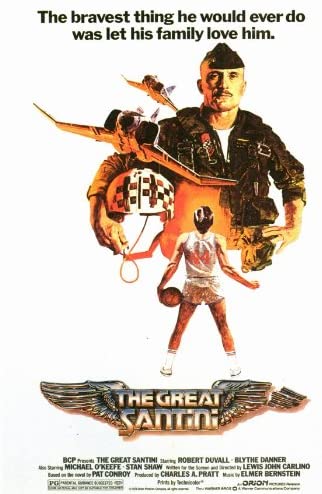
The Great Santini (1979)

great santini

By Richard Winters

My Rating: 4 out of 10

4-Word Review: Warrior without a war.

Bull Meachum (Robert Duvall) is a Lieutenant Colonel pilot in the marines, who enjoys much camaraderie and respect amongst his colleagues, who affectionately call him ‘The Great Santini’.  However, his home-life is a different story as Bull treats his family the same way he does those under him in the service. His wife Lil (Blythe Danner) has learned to adjust to it, but his oldest son Ben (Michael O’Keefe), who is ready to turn 18, rebels and this causes much friction between the two, which eventually boils over to the rest of the children just as the family gets ready to move into a new residence in the deep south.

The film is based on the novel of the same name by Pat Conroy, who in-turn based it on his real-life relationship with his strict, militant father Donald Conroy who gave himself the nickname from a magician that he had seen as a child. While the two had a rocky relationship, much like the son and father do in the movie, the film did help the two mend some fences and his father would routinely accompany his son on book signings and they were even in attendance on the set as the movie was being shot.

While the book was well received I felt that the movie came off disjointed and had a wide-array of tonal issues. The scenes with Santini in the military are quite funny, in a raucous sort of way, but when it shifts to focus on the family life it becomes more of a hackneyed drama. There’s also a long-drawn out segment dealing with a stuttering black man named Toomer (Stan Shaw) and his late-night confrontation with a white racist (played by David Keith in his film debut) that gets quite ugly and doesn’t have either Duvall or O’Keefe in the scene and seems like something for a completely different movie. Maybe in the book, which I have not read, this all came together better, but here it’s like a movie searching desperately for its center and never finding it.

Both Duvall and O’Keefe are excellent and both got nominated for the Academy Award for their efforts, but Danner as the wife is badly miscast. For one thing she looks too young for be O’Keefe’s mother and she speaks in a weird accent where it seems like she’s trying to affect a southern dialect, but it doesn’t sound authentic and wavers throughout. I also didn’t understand why her character married Santini as the two had little in common and for the most part seems to resent his bullish behavior much like the rest of the kids do. Why does she stick with him and what did she see in him to have her fall in love with him in the first place as these things just aren’t clear at all.

Lisa Jane Persky, who also makes her film debut as the oldest daughter Mary Anne, is an odd-piece of casting as well. Her performance is okay, but she certainly does not come-off like a child dominated by a supposedly abusive, controlling parent as she routinely teases and mocks Santini right to his face and at one point the teasing gets so bad it chases him away, which hurts the film’s credibility as it makes him seem far less of a tyrant and making O’Keefe’s dealings with him seem overrated. After all if a teen girl can get the old guy to run from her why can’t he do the same?

On the technical end the movie is okay and it’s fun seeing Julie Ann Haddock, best known for playing Cindy in the first season of ‘Facts of Life’ TV-Show, playing Santini’s younger daughter Karen. Unfortunately the film is too much of a mish-mash. Has some good moments here-and-there, but overall fails to deliver any type of sustained emotional impact.

My Rating: 4 out of 10

Released: October 26, 1979

Runtime: 1 Hour 55 Minutes

Rated PG

Director: Lewis John Carlino

Studio: Orion Pictures

Available: DVD, DVD-R (Warner Archive), Amazon Video, YouTube

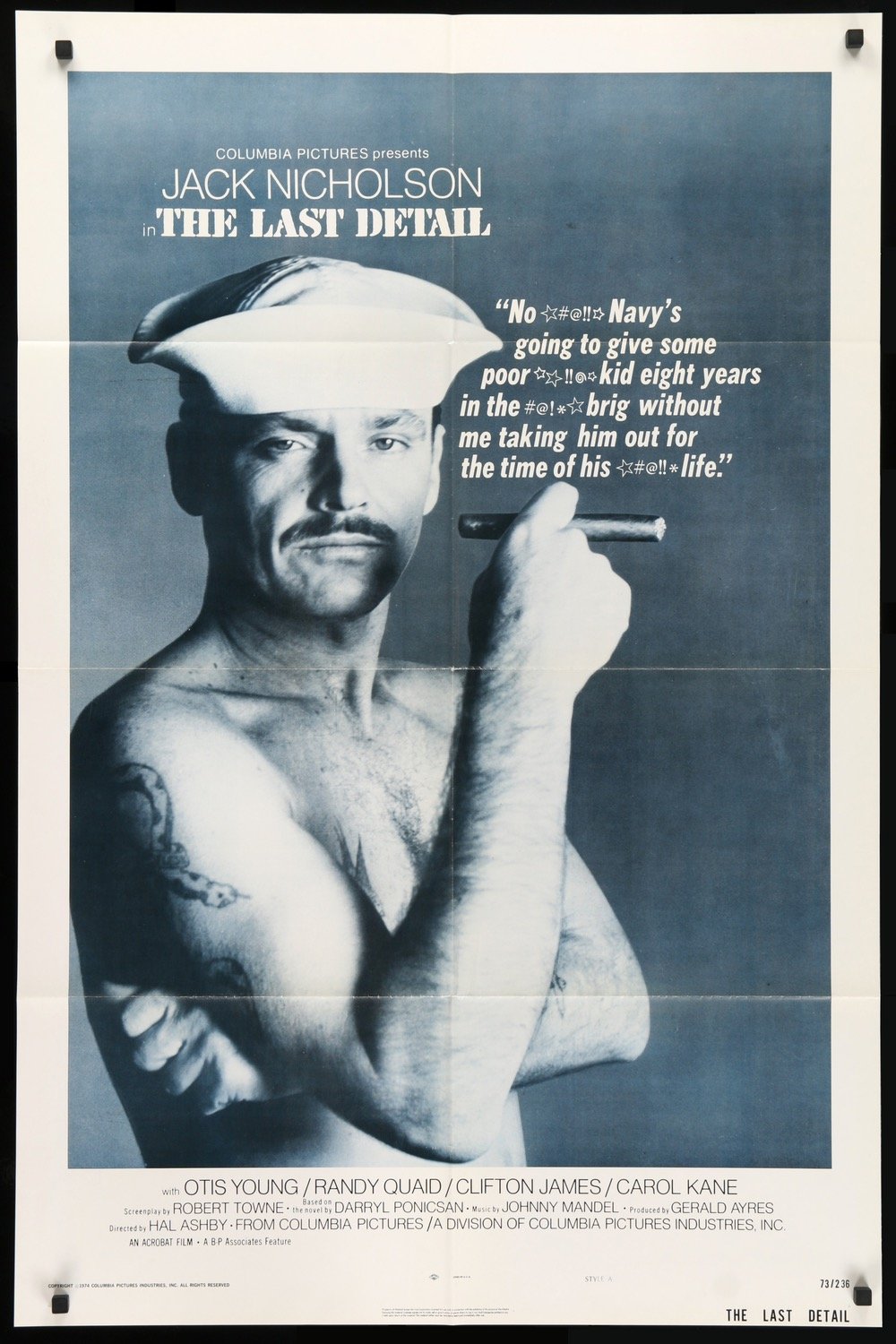
The Last Detail (1973)

lastdetail

By Richard Winters

My Rating: 8 out of 10

4-Word Review: Seaman escorted to prison.

Billy Buddusky (Jack Nicholson) and Richard Mulhall (Otis Young) are two navy lifers assigned the task of escorting an 18 year-old seamen named Larry Meadows (Randy Quaid) to prison. Meadows had been caught lifting $40 from a charity fund run by a wife of a senior officer. In return he got court-martialed and given an 8-year sentence in the brig. Buddusky and Mulhall feel the sentence is too harsh and immediately take a liking to the soft-spoken young man who despite his tall height seems harmless and mile-mannered. During the trip, which is expected to take a week, the two men decide to show Meadows a ‘good time’ by taking him on many side-trips including a whorehouse where the young virgin has sex with a prostitute (Carol Kane). As the time grows near for them to turn their prisoner over to the authorities they start to feel reluctant about doing so, but the fear of being kicked out of the navy and losing all of their pay and benefits keeps them grounded in their responsibility even as Meadows tries several times to escape.

It may seem amazing to believe now, but this film, which has won over almost universal appeal both from the critics and film viewers almost didn’t get made due to the fear from the studio that the word ‘fuck’ was spoken in it too many times. Screenwriter Robert Towne, who adapted the story from the novel of the same name by Daryl Poniscan, was pressured to take most of the uses of the profanity out of the script and in fact production was delayed while both sides had a ‘stand-off’ about it with Towne insisting that “this is the way people talk when they’re powerless to act; they bitch.” Eventually the script got green-lit with all the ‘fucks’ intact, which at the time was a record 65 of them. In retrospect I’m glad Towne held his ground as without the F-word being used, or some silly lesser profanity substituted in, would’ve given the film a dated feel when being watched by today’s standards where the word is said hundreds of times on social media and sometimes even in commercials where it’s only slightly bleeped-out. This is a problem when watching other films from the late 60’s and early 70’s where goofy slang gets thrown in to compensate for the lack of the F-word, which in turn hurts the film’s grittiness and edge, which thankfully got avoided here.

The story was a problem too as many studio execs considered it too ‘non-eventful’ to make for an interesting movie, but this is the whole reason why the movie is so special as it doesn’t try to throw in the cheap antics other Hollywood films might to make it ‘more entertaining’. The film remains low-key and fully believable throughout and may remind others, as it did me, of one’s own coming-of-age experiences when they were 18 and hanging out with others who were older and more worldly-wise. Cinematographer Michael Chapman, who appears briefly as a cab driver, insistence at using natural lighting only also helps heighten the realism.

The story takes many amusing side turns that manages to be both poignant and funny including a brawl that the three have with a group of marines inside a Grand Central Station restroom, though I did wish some of the other segments had been strung out a bit more. One is when the three men attend a group encounter, which features Gilda Radner in her film debut, to a bunch of chanting Buddhists. I felt it was weird that the men just stood in the background and didn’t assimilate with the group during the meeting and begin chanting alongside the others, which would’ve been funny. The scene inside the hotel room where Buddusky can’t get his roll-out cot to fold-out right and forcing him to sleep in a uncomfortable position should’ve been played-out more too. Are we to believe that he slept that way the whole night?

Of course it’s the acting that makes this movie so special. While I never pictured Nicholson with his over-the-top persona as being someone who would be a part of the regimented culture such as the navy I ended up loving him in it and felt this was the performance he should’ve won the Oscar for. I especially got a kick out of the way he would get all fidgety when outside in the cold, which I don’t think was acting at all as it was filmed on-location in the Northeast during the very late autumn/early winter and I believe he was really freezing as he was saying his lines.

While his character is not as flashy, Otis Young is every bit as excellent as it takes a good straight-man, which is what he essentially is, to make for a good funny man. The part was originally meant for Rupert Crouse, who unfortunately got diagnosed with cancer just as the production began forcing the producers to bring in Young as a last minute replacement, but he manages to deliver particularly in the scene on the train where he loudly castigates Buddusky for his misbehavior. Quaid is quite good too even though he goes against the physical characteristics of the character, who in the novel was described as being ‘a helpless little guy’, but director Hal Ashby, who can be seen briefly during a barroom scene, choose to cast against type by bringing in a tall, hefty fellow who looked like he could defend himself if he had to, but is just too sheltered to know how.

The ending is the one segment where I wished it had been a little more emotionally upbeat. It’s still a big improvement over the one in the book where Buddusky dies, which fortunately doesn’t happen here, but it still isn’t too memorable either. The film though overall does a good job of conveying the underlining theme of how the navy men where just as imprisoned as Meadows, at least psychologically, and unable to consider life outside of the navy box that they had spent their entire lives in and where thus locked-in more so than Meadows, whose sentence in jail would only last 8-years versus a lifetime like with Buddusky and Mulhall.

My Rating: 8 out of 10

Released: December 12, 1973

Runtime: 1 Hour 44 Minutes

Rated R

Director: Hal Ashby

Studio: Columbia Pictures

Available: DVD, Blu-ray, Amazon Video, YouTube

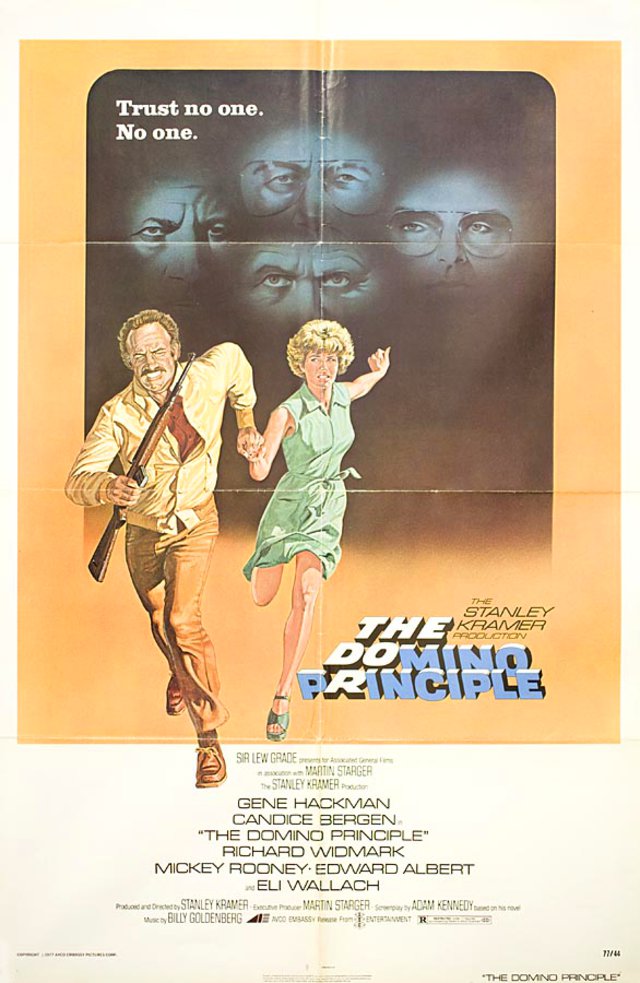
The Domino Principle (1977)

domino

By Richard Winters

My Rating: 6 out of 10

4-Word Review: Hired for secret mission.

Roy Tucker (Gene Hackman) is in prison for the murder of his wife’s first husband, but gets approached by Tagge (Richard Widmark), who works for a secret organization and who offers to get both Roy and his cellmate Spiventa (Mickey Rooney) out of jail where they can have their freedom again, but with one hitch; he must carry out a mysterious mission that they themselves don’t yet know the details to yet. Roy is suspicious of the group’s intent, but longs to see his wife Ellie (Candace Bergen), so he agrees to go along with it. After getting out of prison through an elaborate escape plan that the secret group hatches Roy is then able to travel to Costa Rica using a passport that the group made for him. It is there that he spends a relaxing week with Ellie, but then Tagge and his men (Eli Wallach, Edward Albert) return and remind him of his commitment, which turns out to being the assassination of an important political figure. Once Roy realizes this he tries to back out, but soon realizes that he jeopardizes the life of his wife, who the group insists they will kidnap an kill, if he does.

The film is based on the novel of the same name written by Adam Kennedy, who also wrote the screenplay and at one time was an actor before eventually turning to writing. While the novel got great reviews the movie didn’t with many critics panning it including Leonard Maltin, who described it as a ‘muddled thriller’. Both Hackman and Bergen, in later interviews, have called it ‘terrible’ and even director Stanley Kramer wrote in his memoirs that he’d like to disown it. Much of the problem could be blamed on the different runtimes with a heavily edited 88-minute cut being completely confusing, but this version that I saw, which ran a full 101 minutes, I found to be captivating, at least through the first 90-minutes.

The real problem I had stemmed around Hackman, who gives a one-dimensional performance. There is one moment where he assaults the Edward Albert character after he refuses to let him see his wife, which I felt was justified and entertaining to watch, but he remains surly too much of the time and it would’ve been nice to have seen some other emotions seep through, if even for a few random moments. Bergin is totally miscast as the middle-aged wife and even wears a brunette wig in an effort to make herself seem older. She stated in interviews that she took the part so she could play an ‘ordinary person for once’ instead of a beautiful, glamourous person like she usually did, but I didn’t understand why she was even offered the role as there were plenty of actresses more Hackman’s age that would’ve been a better fit.

Spoiler Alert!

While I did enjoy the movie for the most part especially its scenic location shooting including one scene that takes place directly underneath the Golden Gate Bridge I did find the twist ending to be extremely dumb. This includes having Roy deciding not to shoot the intended victim by intentionally aiming his shots short in order to miss his human target only to find that his former cellmate Spiventa was also hired for the same mission, but without Roy knowing, and he kills the person while shooting at him from a different angle. The problem is that the viewer thinks Spiventa is already dead as we see him get shot by the mysterious group while underneath the bridge. Why Spiventa would fake his own death, or not tell Roy that he was in on the plan since the two had been quite close, is ever explained. It also doesn’t make sense why Roy would decide at the last second to pull back his shots and not kill the person he was assigned to assassinate. Sure, for moral reasons he probably felt bad about it, but he knew that his wife would be killed if he didn’t follow through, so how he was expecting to save the life of his target while also somehow keeping his wife alive after the group finds out Roy didn’t do what he was supposed to?

The final shot shows Roy, with gun in hand, walking along a beach, apparently intent on hunting down whoever was the behind-the-scenes man from the group who was giving out all the orders, which we the viewer never see. Keeping some elements of the organization a mystery is fine, but what annoyed me is that we see a rifle pointed right at Roy as he walks the beach, but then the film ends without us ever knowing if Roy got shot first, or if he survived to kill the head of the group. Some sort of resolution in this area should’ve been shown and leaving it so wide-open is not intriguing and instead quite frustrating.

My Rating: 6 out of 10

Released: March 23, 1977

Runtime: 1 Hour 41 Minutes

Rated R

Director: Stanley Kramer

Studio: AVCO Embassy Pictures

Available: DVD, Amazon Video, Shout Factory TV, Tubi, YouTube

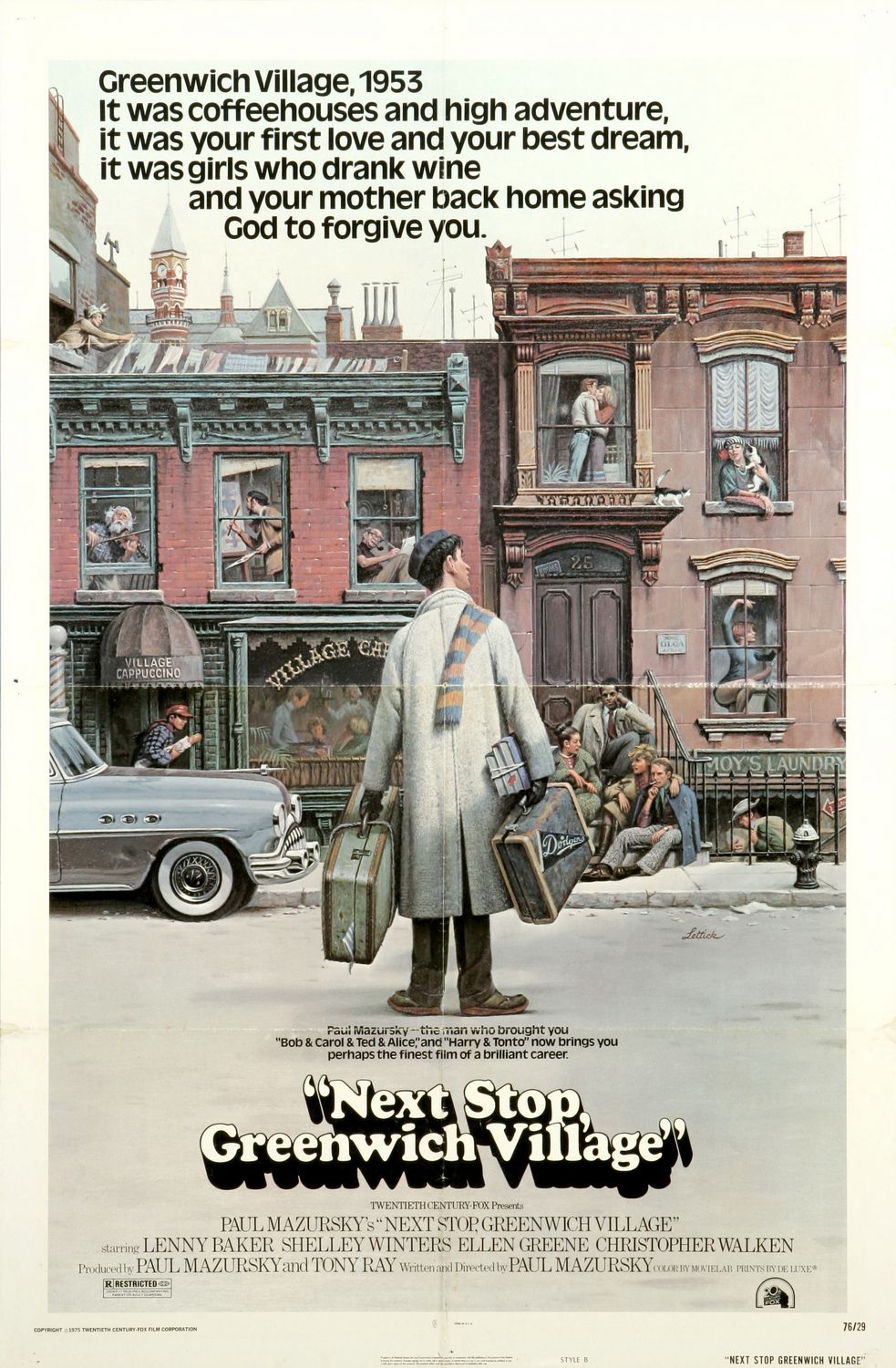
Next Stop, Greenwich Village (1976)

nextstop

By Richard Winters

My Rating: 7 out of 10

4-Word Review: He dreams of stardom.

In 1953 Larry (Lenny Baker), a young man in his early 20’s, decides to move out of his home in Brooklyn that he still lives in with his parents (Shelley Winters, Mike Kellin) and into an apartment situated in the artsy district of Greenwich Village. Larry dreams of becoming a movie star and feels the way to start his career is by living with fellow artists. He also wants to get away from his meddling mother, but finds no matter where he goes she always comes to visit many times at the most inopportune moments including when he’s holding wild parties, or making-out with his new girlfriend Sarah (Ellen Greene).

The film is loosely based on writer/director Paul Mazursky’s early life as a struggling artist, which is fine, but how much one likes this movie hinges almost completely on how much they can stand the main character. For me he wasn’t so likable. While I admit his mother was annoying she was still well-meaning and the way he constantly lashed-out at her seemed too angry and aggressive. I would’ve thought someone who had been raised in that type of overbearing environment all of his life would’ve figured out a more subtle way to placate his mom that wouldn’t have needed to be so abrasive. When he tells his neighbor lady (Rachel Novikoff) that he’s moving to Greenwich Village to ‘become a big star’ like it was going to be some automatic thing seemed a bit too deluded and you’d think by that age he would’ve been a little bit better grounded.

The friends that he makes, which include some early performances by Christopher Walken, Antonio Fargas, and Dori Brenner, are a bit off-kilter as well. For instance they visit a fellow artist friend named Anita (Lois Smith) at her apartment only to find her sitting inside the bathroom with her wrists slit and talking about how she wants to die. They manage to get her patched-up, but then return to the apartment a couple of weeks later with the same carefree spirit that they had the first time, but you’d think after what they witnessed they’d approach the place cautiously, or maybe never want to go there again, for fear that she’d try it again and this time succeed forcing them to witness a tragic sight and yet this bunch acts like for some reason the whole suicide thing will never reoccur only to be shocked when it does even though I as a viewer was completely expecting it.

The story is rather rudimentary and involves basic elements that seemed to be analyzed in a lot of coming-of-age films during the 70’s including having Larry’s girlfriend get pregnant and require an abortion, which wasn’t exactly a unique twist. I did though enjoy the scenes inside Larry’s acting class and the way his teacher (Michael Egan, who was portraying the legendary acting coach Herbert Berghof) challenged his students after his each performance that they gave in the class and requiring them to analyze why they portrayed a certain character the way they did. Not enough other movies capture the technical side to acting, so I felt these scenes stood out in a good way and were quite introspective to the craft. I also liked the dream sequence where Larry imagines himself as a successful star, but then this quickly turns into a nightmare where he sees himself booed by the audience and even has pies thrown in his face, which I felt brought out the insecurity many artists, especially actors, harbor, even the successful ones, where they secretly fear never being quite good enough.

Spoiler Alert!

My biggest complaint though was with the ending where for some inexplicit reason Larry gets hired to play a part in a movie and whisked off to Hollywood even though I didn’t see what was so great about his audition, or why this scrawny guy stood out to the casting directors from all of the other men that were also vying for the role. I realize that Mazursky was basing this on his own life as he was able to escape to Hollywood after getting the starring role in the Stanley Kubrick drama Fear and Desire, but this only occurs to a small handful of people and the vast majority who move to Greenwich Village never really leave it, or if they do it’s most likely to the suburbs where they’re forced to get ‘real jobs’, or maybe even back home to their parents after they run out of money. If the movie has Greenwich Village in its title then that’s where it should’ve stayed as most people who live there probably ultimately wouldn’t like Hollywood as it’s a completely different vibe and sometimes it’s better being a big fish in a small pond, which I felt is the message that the film should’ve conveyed as the Hollywood twist seemed too dreamy.

End of Spoiler Alert!

Either way the film is helped immensely by Shelley Winters, who plays the overbearing mother to a T and comes complete with realistic crying spells. This should’ve netted her a third Oscar and for all purposes was her last great role as the parts she got offered after this were virtually all of the B-movie variety. Baker on the other-hand, whose only starring vehicle this was as he died, at the young age of 37, less than 6 years after this film came out, is an acquired taste. I don’t know if it was his extreme skinniness that got to me, he was 6’0, 145 pounds, but I just couldn’t really ever warm up to him and felt that Harvey Keitel, who had been considered for the part, would’ve worked better. You do though get to see Bill Murray, in his live-action, feature film debut, as a party guest as well as Jeff Goldblum as a humorously obnoxious struggling actor doing whatever he can to stand out and get noticed.

My Rating: 7 out of 10

Released: February 4, 1976

Runtime: 1 Hour 51 Minutes

Rated R

Director: Paul Mazursky

Studio: 20th Century Fox

Available: DVD, Blu-ray

The Blockhouse (1973)

blockhouse2

By Richard Winters

My Rating: 6 out of 10

4-Word Review: There’s no way out.

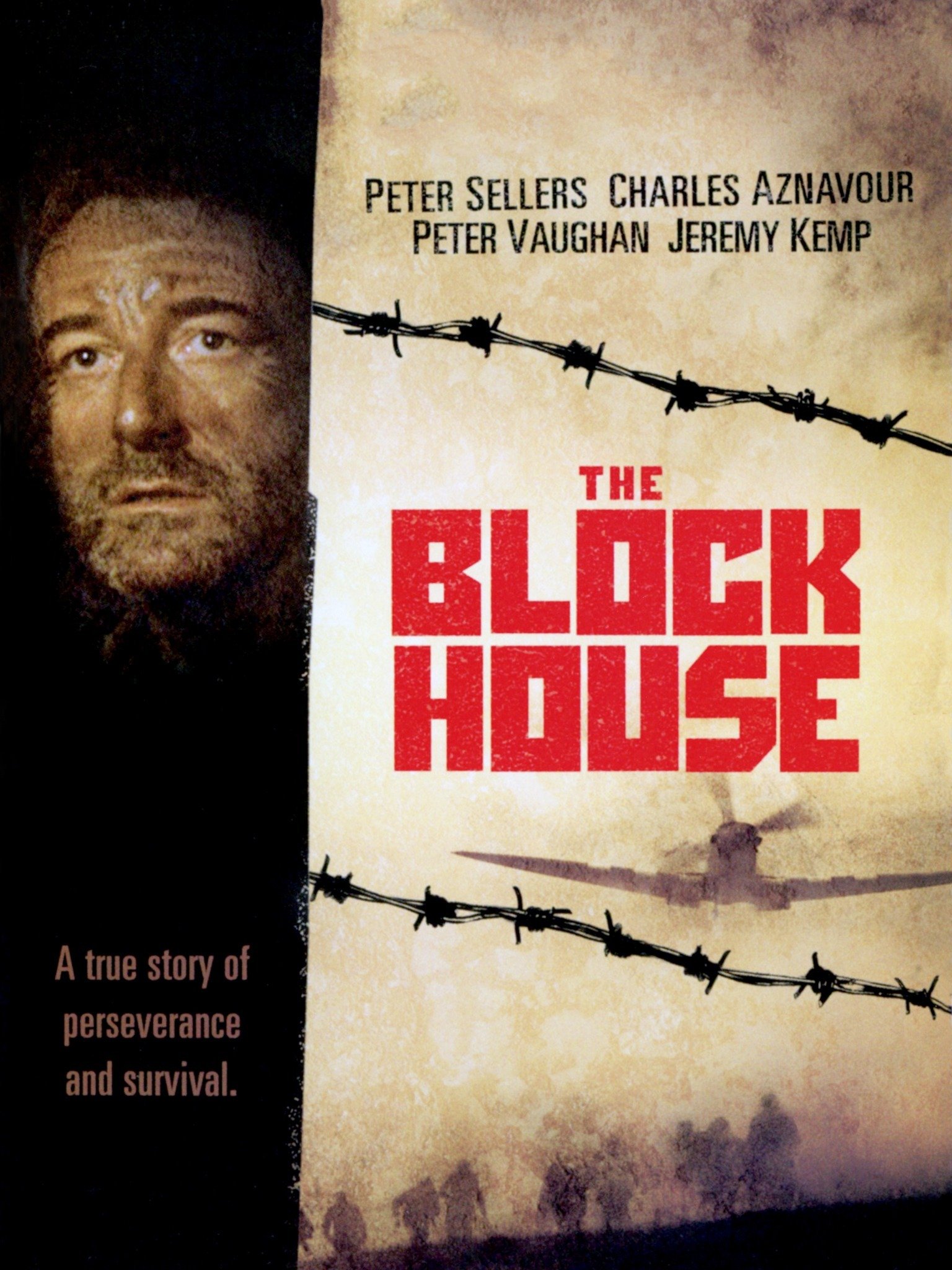
On D-Day a group of war prisoners on an island that’s run by German soldiers seek shelter from an allied air attack by finding refuge in an underground German bunker, but once inside, they realize to their horror that the shelling outside has blocked-off both the entrance and exit, which essentially traps them in permanently. They are fortunate enough to find a supply room full of enough food and wine to keep them fed for a long time, but as the days wear into weeks and then months and even years they grow tired and despondent about their situation. They try to find ways to break through the cement walls, but their attempts prove futile, which leads all of them into a mental and emotional breakdown.

The film is best known as being one of Peter Seller’s rare dramatic turns where he plays a character that is not funny or colorful. Normally his performances are quite flamboyant and over-the-top and he tends to dominate the spotlight, but here he blends in with the rest of the performers with a rare low-key portrayal that is quite impressive when given how he normally acts. This was yet another project he got involved in during the early 70’s when his career was on the down side and he was desperately taking just about any offer that came along, no matter what the quality, in an effort to bring in money. While some of those movies that he starred in during that period were truly awful (i.e. Where Does it Hurt?) this one, despite its grim theme, is unique and worth checking out particularly for those who enjoy experimental cinema.

The film was directed by Clive Rees, whose only other cinematic directorial effort was When the Wales Came, which had a similar theme about an eccentric man living an isolated existence on an island. While Rees is not as well known as Stanley Kubrick, Sellers insisted in interviews, that he was ‘every bit as good’.  While this statement may seem like an exaggeration I was quite taken aback by the gritty realism and the way the viewer feels just as trapped as the victims. The actors give all-around great performances and you see their character’s ultimate mental decline happen right before your eyes, which is both vivid and gut-wrenching. The story also looks at all aspects of their deterioration where they start to do things they had never done before including conveying certain homo-erotic elements. While none of this gets shown I was still impressed that it at least got lightly touched-on as I feared due to the period and heavy UK censorship, where this film was made, that would be one facet that couldn’t get introduced, but ultimately in a soft way it does.

If you’re looking for an entertaining crowd pleaser than this movie won’t be it. As Sellers rightly stated in his interview it’s meant for serious ‘connoisseur’s of cinema’ only. TV Guide complained that the film in their review ‘goes nowhere’ and it doesn’t reveal a ‘metaphysical reason’ for the character’s predicament, but I really didn’t think one was needed. Sometimes shit just happens and people must learn to adapt to their new harsh reality, or fall apart and in that vein I felt the movie does an excellent job and goes much further into this dark, murky psychological realm than most others would dare.

Spoiler Alert!

The story is based on the 1955 novel of the same name by Jean-Paul Clebert, who also coincidentally lived an isolated existence for many years in an abandoned village. The novel is loosely based on the actual incident that occurred on June 25, 1951 when two German soldiers in Poland were rescued from an underground shelter that they had been trapped in for 6 years. The difference is that in the movie we never see the rescue as it ends with the remaining two survivors stuck in total darkness when the last of their candles goes out. I felt it would’ve worked better had the rescue been shown as well as a better build-up where we would’ve gotten to the know the men better in the prison camp before they were forced underground, which would’ve made their mental declines even more interesting.

My Rating: 6 out of 10

Released: June 1, 1973

Runtime: 1 Hour 33 Minutes

Rated R

Director: Clive Rees

Studio: MGM

Available: DVD, Amazon Video, Tubi

The Last American Hero (1973)

lasthero

By Richard Winters

My Rating: 7 out of 10

4-Word Review: He follows his dream.

Junior Jackson (Jeff Bridges) works in his family’s moonshine business as a driver who transports the liquor and uses his superior driving skills especially his patented ‘bootlegger-turn’ in which to avoid capture he gets the vehicle to make a 180-degree turn by using the emergency brake, which then allows his car to go speeding off in the opposite direction. However, the authorities are able to catch-up with his father (Art Lund) and they throw him in jail for 11-months. With no moonshine business Junior is forced to find other means for an income, so he decides to try and turn his driving skills into a profit venture by entering into a demolition derby run by Hackel (Ned Beatty). He does well in this and eventually moves up to the higher levels and makes enough money for him to decide on turning it into his career, but his family does not approve as they feel it’s too dangerous. Junior is also forced to buy his own race car and pay for his own pit crew, which causes him to go back into the bootlegging business as a runner all to the disapproval of his father who feels it will just lead Junior into the same prison that he was in.

Overall this is one of the best bio’s out there and impeccably filmed and edited by actor-turned-director Lamont Johnson, who appears briefly as a hotel clerk. Johnson’s directing career was a bit spotty, he also did notorious clunkers like Lipstick and Somebody Killer Her Husbandbut this one is virtually flawless and there’s very little to be critical about on the technical end. The racing footage is both intense and exciting and one of the few racing movies where I was able to follow the race as a whole and not just be bombarded with a lot of jump cuts. I also appreciated how it captures the pit stops and the different conversations that the driver has with his crew during these moments and how sometimes this can be just as intense in its own way. The on-locations shooting done in and around Hickory, North Carolina as well as some of the neighboring race tracks during the fall of 1972 helps bring home both the ambiance and beauty of the region.

For me though what really stood out was Junior’s relationship with his family and how they were not supportive, at least initially, to his dreams as a racer and forcing him to have to pursue it on his own. Many times people who have ambitious goals don’t always have their friends and family on the same page with it and the road to success can definitely have its share of loneliness while also testing one’s own inner fortitude. One of my favorite scenes, that goes along with this theme, is when Junior is inside a K-mart and comes upon a recording booth that allows him to make a voice tape message that can be sent via the mail to one’s family or friends. Junior conveys into the microphone what he wants to say to his family, but ultimately seems to be talking more to himself than them, as a kind of self therapy to release the inner tensions that he’s been feeling, and subsequently never actually sends it out.

The acting is top-notch particularly by Bridges. Normally he’s good at playing mellow, level-headed characters, but here does well as someone who at times is quite volatile and caustic. There’s great support by Beatty as an unscrupulous race track owner, Ed Lauter as a highly competitive owner of a competing racing teams as well as Valerie Perrine as a woman who enjoys bed-hopping between different men, sometimes with those who are friends with each other, and yet completely oblivious with the drama and tensions that this creates. William Smith is good as a competing racer and while his part is small the scene where he walks in on Junior sleeping with his girl (Perrine) and the response that he gives is great. I thought Geraldine Fitzgerald, who plays Junior’s mother, was excellent and her Irish accent somehow effectively made to sound southern, but she should’ve been given more screen time.

The story is based on an Esquire article written by Tom Wolfe that was entitled ‘The Last American Hero was Junior Jackson. Yes!’, which in turn was based on NASCAR racing champion Junior Jackson (1931-2019) who also served as the film’s technical advisor. The movies pretty much stays with the actual account, but does change one pivotal point in that it has the father going to jail when in reality it was Junior who was sentenced to 11-months in 1956. Why this was changed I don’t know, but it usually helps the viewer become more emotionally connected to the protagonist when they see them going through the hardship versus someone else, so having Bridges spend time in the slammer would’ve made more sense. The film is also famous for its theme song ‘I Got a Name’ sung by Jim Croce, but this song has been played so much on oldies radio that one no longer connects it with the film and in fact when it does get played it takes you out of the movie because it reminds you of somewhere else where you’ve first heard it, which most likely wasn’t this movie.

lasthero2

My Rating: 7 out of 10

Released: July 27, 1973

Runtime: 1 Hour 35 Minutes

Rated PG

Director: Lamont Johnson

Studio: 20th Century Fox

Available: DVD, Amazon Video, YouTube