Category Archives: 60’s Movies

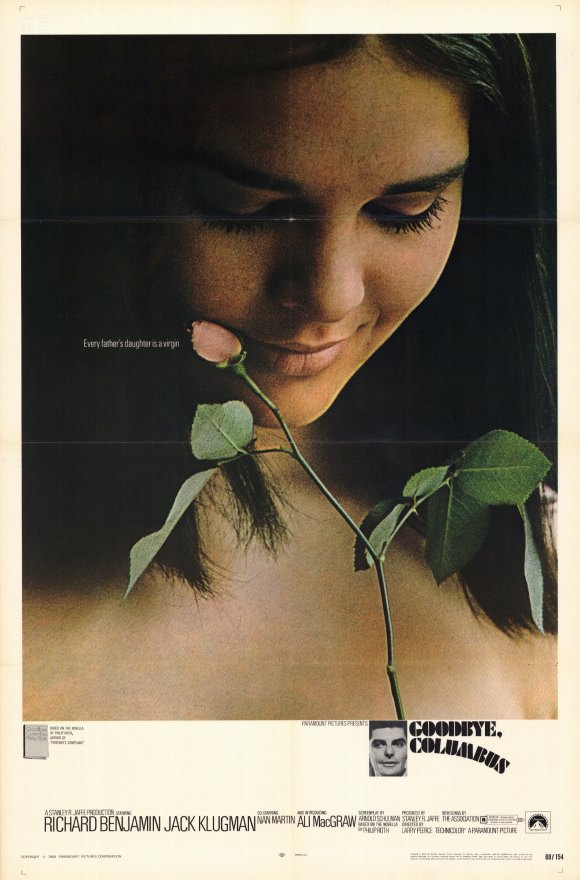
Goodbye, Columbus (1969)

goodbye columbus 2

By Richard Winters

My Rating: 8 out of 10

4-Word Review: Dating a rich girl.

One day while at a pool party Neil (Richard Benjamin) becomes infatuated with beautiful Brenda (Ali MacGraw) and proceeds to begin a relationship with her. He has just recently graduated from college and still not quite sure what direction he wants to take in life. He doesn’t want to fully ‘drop-out’, but isn’t so excited about diving in to the corporate business world where making a lot of money is the only focus. Brenda on the other hand is from a rich Jewish family who enjoys her privileged lifestyle, but not always the pretension that comes with it.  She continues to date Neil simply out of spite to her mother (Nan Martin) who doesn’t approve, but as things progress their differences and values become more pronounced and sends the relationship teetering on the brink.

Director Larry Peerce did some high quality films during the sixties and it is unfortunate that by the seventies his output dropped off. I think overall this is his most complete work and a wonderful compliment to the Philip Roth novella from which it is based. The location shooting is outstanding and one of the main things that gives the film a personality. The giant suburban house in which Brenda’s family lives makes one of the biggest impressions not only with its large exterior, but interior as well where every room is wallpapered with its own distinct color and design. The library where Neil works is also visually impressive especially with its large marble columns and painted cathedral ceilings.

The film is filled with a lot of memorable and amusing scenes. Neil’s interactions with Brenda’s ten-year-old younger sister Julie (Lori Shelle) is entertaining not only with a game of hoops that the play, but most especially their ping pong contest that they play later. Neil’s attempted conversation with a deaf man while inside the library is funny as is seeing Neil sneaking into Brenda’s bedroom each night when the parents are asleep. You also got to love Neil’s shocked response when he finds out Brenda has not been taking the pill and the scenes at the wedding reception of Brenda’s brother is filled with a lot of keen observations. If you look closely you will be able to spot Bette Midler, Michael Nouri, Jacklyn Smith and Susan Lucci as wedding guests.

MacGraw has never looked more beautiful and Peerce spends several minutes lovingly photographing her swimming in the pool, which isn’t bad. Her performance as a spoiled rich girl going through fits of rebellion, but not quite ready to completely break from her soft lifestyle is on-target and proves that she is not just a pretty face, but an excellent actress as well. Although already 30 at the time she plays a 20-year-old quite convincingly.

Michael Meyers as Brenda’s older brother Ron is a scene stealer not only with his empty ‘discussions’ with Neil, but also with the way he orders around the other workers as a supervisor at a job he wouldn’t have had, had he not been the owner’s son. This proved to be his one and only movie appearance. He eventually became a physician in real-life and wrote an autobiography entitled ‘Goodbye Columbus, Hello Medicine’.

In some ways I saw a lot of similarities to this film and The Graduate and consider it to be just as much of a classic. I enjoyed the way the film explores the different stages of the relationship and the final argument the two have is quite revealing.

My Rating: 8 out of 10

Released: April 3, 1969

Runtime: 1Hour 41Minutes

Rated R

Director: Larry Peerce

Studio: Paramount

Available: VHS, DVD, Laser disc, Amazon Instant Video, YouTube
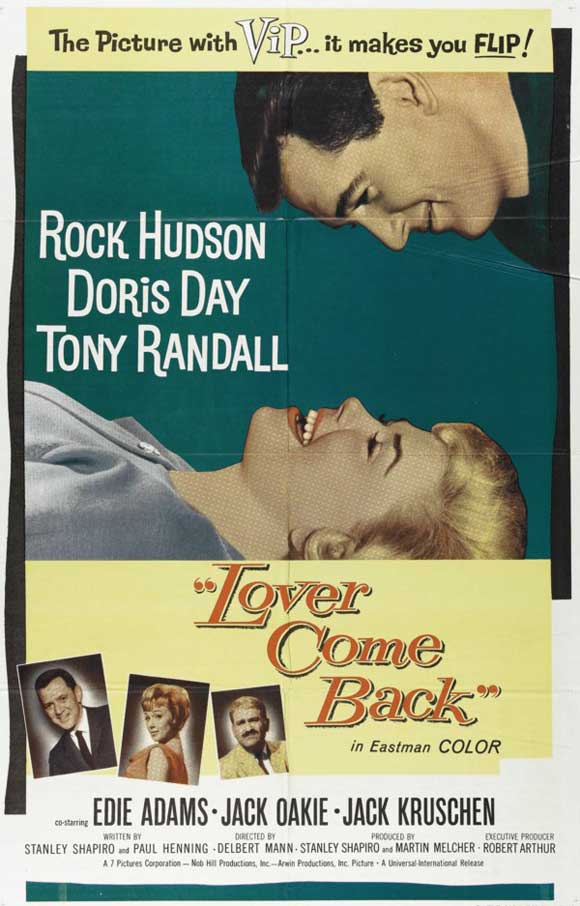
Lover Come Back (1961)

lover come back

By Richard Winters

My Rating: 6 out of 10

4-Word Review: They all want VIP.

Jerry Webster (Rock Hudson) steals clients from other ad agencies by throwing them parties filled with a lot of liquor and loose women. When Carol Templeton (Doris Day) who works at a competing ad agency finds out about this she goes on the offensive by getting Rebel (Edie Adams) a woman who attended one of Jerry’s wild parties to testify against him at the ad council board, which she hopes will get Jerry severely reprimanded. Jerry though gets Rebel to soften her testimony by promising her that she will be involved in the advertising campaign for a new product called VIP. The problem is that there is no such product, but Carol thinks there is, which leads to a lot of confusion including having Carol start a relationship with Jerry under the misguided notion that he is the chemist working on the new product.

The film is fast and fun for the most part although there isn’t as much physical comedy as in some of Day’s other vehicles, but makes up for it with some sharp dialogue. Although Day’s films have always been considered family friendly the film probably has just as much sexual references and innuendoes as any other movie.  There is even a scene where Day takes the Hudson character out to a strip club and has a stripper shed her pasties right on him. Even more amazing is the scene where the Day character actually considers having sex with Hudson before she is married to him. She ultimately doesn’t go through with it, but the fact that she was about to and even takes out a revealing nightie to wear seemed shocking enough.

Day’s costumes, which were designed by Irene Lentz who just a year after this film came out jumped to her death from a 14-story window, are chic and heighten the film’s visual appeal. I especially liked the variety of hats that she wears some of which go humorously over-the-top. I also got a kick out of Hudson’s garish suit that looks like it got splattered by twelve different cans of paint. My only complaint here is the absurdity of Day going to work looking like she is dressed for an elegant dinner party.

Day is gorgeous as ever, but her performance seems a bit one-note and amounts to nothing more than a collection of exasperated and perturbed reactions. It is actually Hudson who is typically a weak actor that steals it. The cocky way his character tries to finagle his way out of everything and his interactions with Tony Randall are the best.

The film ends with the two characters getting married, which I am sure fans of Day’s movies like and expect, but it really doesn’t make a lot of sense and seems quite contrived and formulaic. The script’s original ending had the two characters getting drunk and then checking into a hotel room, but Day insisted the characters get married instead even though it is unlikely any judge or minister would marry two people in a drunken state. The Hudson character was a raging playboy who could get attractive women whenever he wanted and clearly viewed sex as a conquest. It is most likely that after a few years of marriage he would get the itch to fool around again, which would culminate in an ugly divorce and make this ‘happy ending’ not so happy after all.

My Rating: 6 out of 10

Released: December 20, 1961

Runtime: 1Hour 46Minutes

Not Rated

Director: Delbert Mann

Studio: Universal

Available: VHS, DVD, Amazon Instant Video

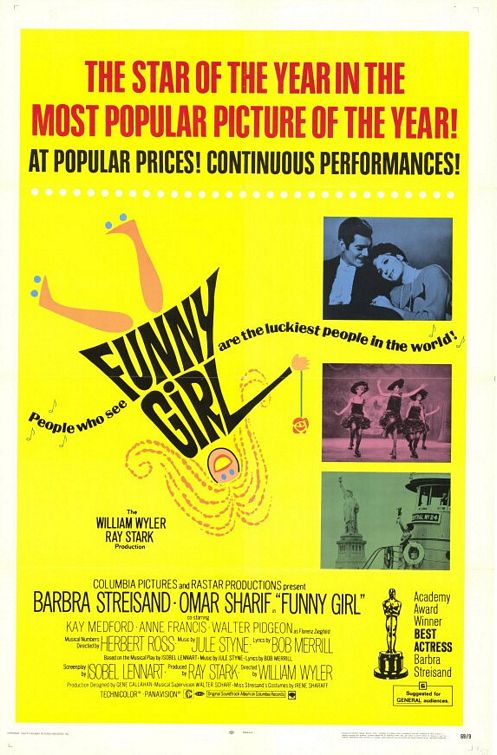
Funny Girl (1968)

funny girl

By Richard Winters

My Rating: 6 out of 10

4-Word Review: Fanny’s rise to stardom.

Barbra Streisand, in her film debut, plays Fanny Brice in this loose biography about the Jewish comedian’s rise to stardom in the Ziegfield Follies during the 20’s and 30’s. The story examines how she uses her homely looks to her advantage by honing in her comedic skills to allow her to stand-out. The second half of the film examines her romance and eventual marriage to professional gambler Nick Arnstein (Omar Sharif).

Streisand recreates her Broadway role in grand style and deserved her Oscar win in which she famously tied Katherine Hepburn that year for Best Actress. I’ve always liked her best when she is doing comedy and she has always shown a good knack for timing and delivery. Although stories abound how she was very difficult during the production and showed a tremendous ego, which culminated in the film going through two directors and cinematographers she still plays the very insecure Brice effectively and it’s this appealing ingredient the carries the film and character.

William Wyler’s direction is also outstanding and helps make up for a story that at times seems pretty light. He replaced Sidney Lumet early on and gives the film an added flair with lavish sets. I loved the French-style restaurant and expansive old fashioned New York train station. There is some excellent dance numbers in which Wyler takes full advantage of the visual element including a nifty ballet segment. The recreation of the period is authentic and there are even a few moments of dazzling camera work including the shot showing Fanny singing on top of a tugboat all alone in the New York harbor while the camera circles above her and then careens down.

Kay Medford adds good support as Fanny’s mother and it earned her an Academy Award nomination for supporting actress. Sharif is always solid, but the character seemed poorly fleshed-out and more of a personal background needed to be explored to help explain why he was so infatuated with the extremely insecure and awkward Brice when he could have easily attracted any girl. Walter Pidgeon lacks the commanding presence needed in the part of Florenz Ziegfield and instead comes off as a tired old man getting badly upstaged by Streisand in every scene he has with her.

The songs are pleasing and you may find yourself humming some of them for days afterwards, but I was surprised how few of them there really were with long dramatic intervals in-between. The story itself is placid as Brice’s rise to the top happens too quickly and too much time is spent on the romantic angle making the film seem unbalanced but it manages to be entertaining anyways due mainly to the high production values.

My Rating: 6 out of 10

Released: September 18, 1968

Runtime: 2Hours 30Minutes

Rated G

Director: William Wyler

Studio: Columbia Pictures

Available: VHS, DVD, Blu-ray, Amazon Instant Video

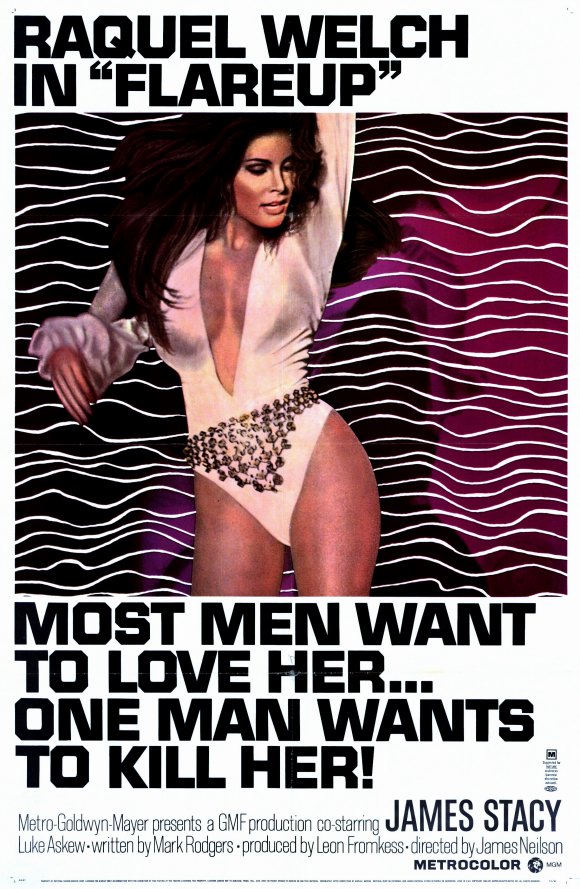
Flareup (1969)

flareup

By Richard Winters

My Rating: 3 out of 10

4-Word Review: Stalker terrorizes go-go dancer.

Michele (Raquel Welch) is a Las Vegas go-go dancer that attracts the unwanted attention of Alan (Luke Askew) who blames her for the breakup of his marriage. After killing his wife he then sets his sights on Michele who moves to Los Angeles in an attempt to lose him, but he figures out what club she is dancing at and continues his reign of terror. When Michele finds a new boyfriend named Joe (James Stacy) the psycho decides to add him to his already growing hit list.

Raquel is the whole movie. Her acting ability is definitely limited and at times even annoying, but in the looks department she gets an A+. In fact I’d say she is at her best looking here out of all the movies she has done. The scene where she gets on stage to gyrate her body during a provocative dance number is pretty much the highlight of the whole film. Although some of the other girls dance topless she does not and she very angrily rejects another female dancer who offers her some ‘woman love’, so there is no lesbian scene either, which could be a disappointment to some oversexed male viewers, but her presence offers enough eye candy to propel the movie on nonetheless.

Askew who wears a tacky bowl haircut looks a bit too clichéd, but he is a good enough actor to keep it tolerable. Stacy is decent as the love interest, but the romantic scenes bog down the pace. This was the last movie he did before he got into a motorcycle accident and lost his left leg and arm, which spiraled both his career and personal life downward and eventually led to a child molestation charge in 1995 that sent him to prison.

James Neilson’s direction is okay. The best part is the on-location shooting, which makes you feel like you are right back on the streets of Las Vegas from forty years ago and its fun seeing the different shops and billboards that were out during that era. The foot chase between Welch and Askew that occurs late at night in a zoo with wild animal noises heard in the background has potential, but should’ve gotten more extended.

The script though is one-note and gets stretched much too thin. The action starts out right away, but the pacing is poor and there is really never any tension. Everything gets done in a formulaic way with nothing that is unique or memorable.

Although I will give some credit to the finale that features a burning man the special effects are overall pretty shoddy. The psycho shoots at and kills people, but we never see any bullet holes or blood on the dead bodies. One scene has a security guard (Gordon Jump in an early role) shooting at Askew’s car and putting two bullet holes in its rear window, but then when the camera cuts away to a long view of the car the bullet holes have somehow miraculously disappeared.

My Rating: 3 out of 10

Released: November 10, 1969

Runtime: 1Hour 40Minutes

Rated M

Director: James Neilson

Studio: MGM

Available: VHS, DVD (Warner Archive)

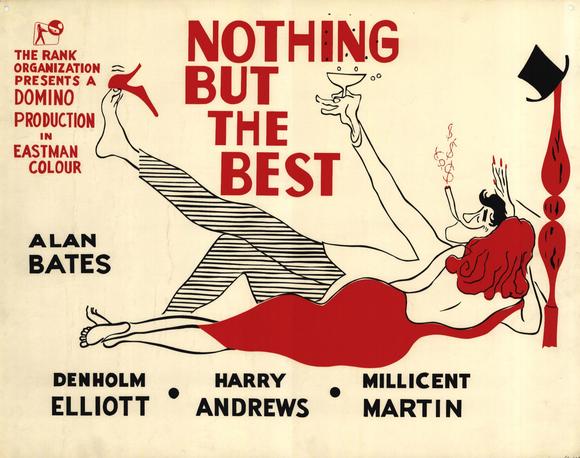
Nothing But the Best (1964)

nothing but the best 2

By Richard Winters

My Rating: 6 out of 10

4-Word Review: Maybe crime does pay.

James Brewster (Alan Bates) is a young ambitious man who will do anything to not only climb the corporate ladder, but raise his social standing as well. He works at a large company and finds things tough. Everyone else is competing for the same thing and James finds himself being boxed out and unable to get the attention and recognition he feels he deserves. Then he meets Charles (Denholm Elliot) a master con-man and forger and he realizes the only way to move up is by doing it the criminal way. The two move in together where Charles teaches James all the tricks of the trade. James becomes so good at it that he realizes he no longer needs Charles so he murders him and stuffs his body inside a large trunk, which he has hidden. Then he becomes engaged to the beautiful Ann Horton (Milicent Martin), but her extended family has connections he is not aware of, which could put a kink to his otherwise lofty plans.

The screenplay was written by Frederic Raphael who has had a distinguished career in screenwriting including penning the script to Stanley Kubrick’s last film Eyes Wide Shut. Although there really isn’t any one particularly funny moment and some of the criminal activity is a bit complex and hard-to-follow the dialogue is still snappy and the less than honorable characters surprisingly engaging. Clive Donner’s direction gives the proceedings a breezy pace and the characterizations of the upper British crust are on-target and fun.

Elliot, who is one of the best character actors ever and had a long and distinguished career playing a wide variety of them, is terrific. Somehow this guy has always had an ability to make conniving, immoral people engaging, funny and even somewhat likable and his part here is no exception. His presence is a major plus and helps give the film its drive and it’s a shame he couldn’t have remained through the whole duration. I also enjoyed Pauline Delaney as James’s landlady Mrs. March who becomes aware of his illegal activity and extorts sex out of him in order to keep quiet.

There are a couple of twists at the end that are interesting, but not what you expect. James never really gets the comeuppance that you think he should, which to some degree is disappointing, but on the other hand kind of refreshing. We are so used to seeing films have a moral theme of some kind where bad guys are eventually punished and justice prevails that having one pretty much get away with it is intriguing simply for its novelty.

The color on the print I watched was horribly faded making it look almost like a cheap computer colorized attempt even though it really wasn’t. This film, which was widely hailed by critics and audiences alike, deserves a Criterion release and a thorough restoration and I am shocked that it hasn’t already.

My Rating: 6 out of 10

Released: March 10, 1964

Runtime: 1Hour 39Minutes

Not Rated

Director: Clive Donner

Studio: Royal Films International

Available: None at this time.

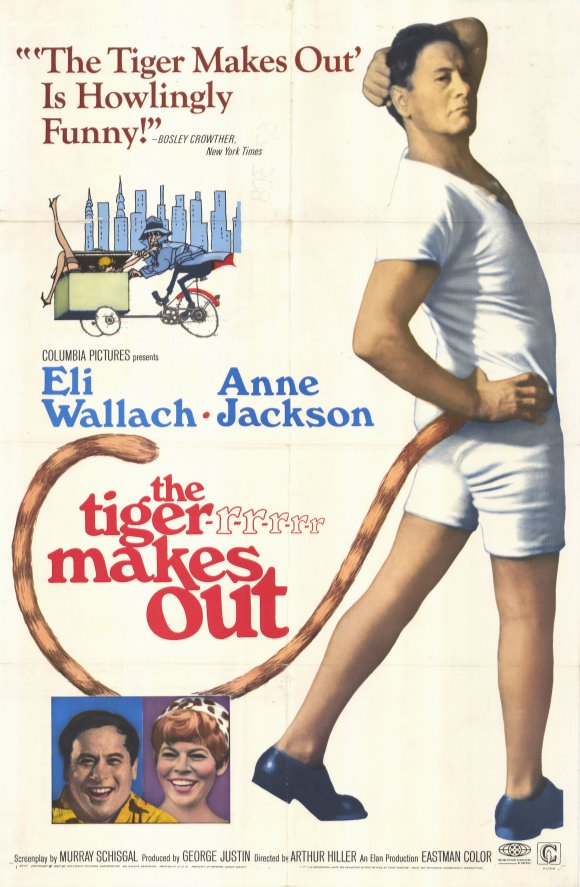
The Tiger Makes Out (1967)

tiger makes out 1

By Richard Winters

My Rating: 5 out of 10

4-Word Review: Mailman kidnaps suburban housewife.

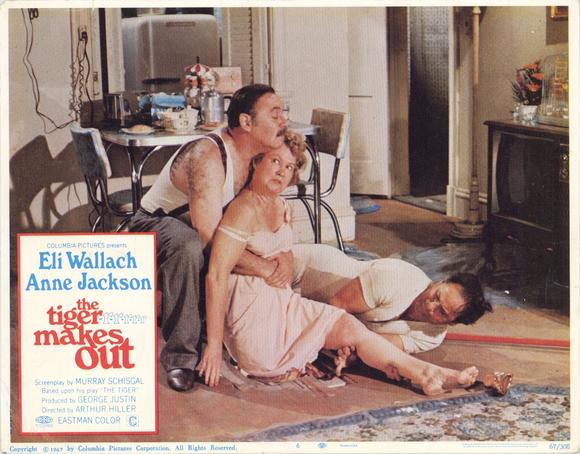
Ben Harris (Eli Wallach) is a middle-aged mailman living in a crummy, rundown basement apartment. He is bitter and angry at the world around him, which he feels is filled with a lot of vapid followers to a rigid and dehumanizing system. When his upstairs neighbor puts a hole in his roof and both his landlord and the housing authority refuse to do anything about it he decides to kidnap a young beautiful women as a form of insurrection. Instead he mistakenly nabs middle-aged housewife Gloria (Anne Jackson) who has similar issues and the two slowly form a budding friendship.

The screenplay is written by Murray Schisgal and is based on his one-act, two-character off-Broadway play ‘The Tiger’. The film is filled with a lot of diverting, offbeat humor some of which works and some of it doesn’t. I liked the part where Gloria’s neighbor Leo (John Harkins) gets his entire family on their knees to pull out crabgrass from their otherwise ‘perfect’ lawn and we eventually see them tear the entire lawn to bits from a bird’s-eye view and in fast-motion. Wallach’s confrontation with Sudie Bond inside the housing authority office is also amusing, but his attempts at kidnapping a woman come off too much like Wiley E. Coyote trying to get the roadrunner and turn the film into an ill-advised live action cartoon.

Director Arthur Hiller does a fabulous job of disguising the fact that this was originally a play. The editing is quick and the locales varied particularly at the beginning. The pace has a kinetic late 60’s feel, which gives it a certain time capsule quality. However the choice of music, which includes a studio group singing the film’s theme, is quite sterile.

Wallach gives a flawless performance and Jackson is also good. The two have been married since 1948 making them Hollywood’s longest lasting couple. Unfortunately the scenes of the two of them inside the apartment are rather stagnant and the one-time that the film gets boring.

There are also some great supporting performances including Rae Allen as a paranoid woman who thinks every man is a potential stalker and Charles Nelson Reilly as a goofy college registrar. The film also marks the film debuts of Dustin Hoffman and Mariclare Costello as his jilted girlfriend, Bob Dishy as an exasperated husband and John P. Ryan as an escort to a female impersonator. You can also spot a young Joe Santo inside the housing authority office and Frances Sternhagen as a passenger on a bus as well as Barbara Colby who in 1975 ended up getting murdered in mysterious and yet unsolved circumstances.

The one error that I noticed in the film is the gaping hole in Ben’s apartment ceiling somehow gets strangely taken care of and is nonexistent when he comes back to the place with his victim. I realize this movie borders on the bizarre and quirky to begin with, but I still felt there needed to be some explanation for that and none is given.

tiger makes out 2

My Rating: 5 out of 10

Released: August 18, 1967

Runtime: 1Hour 34Minutes

Not Rated

Director: Arthur Hiller

Studio: Columbia Pictures

Available: None at this time.

A Lovely Way to Die (1968)

a lovely way to die

By Richard Winters

My Rating: 6 out of 10

4-Word Review: Cop protects sexy defendant.

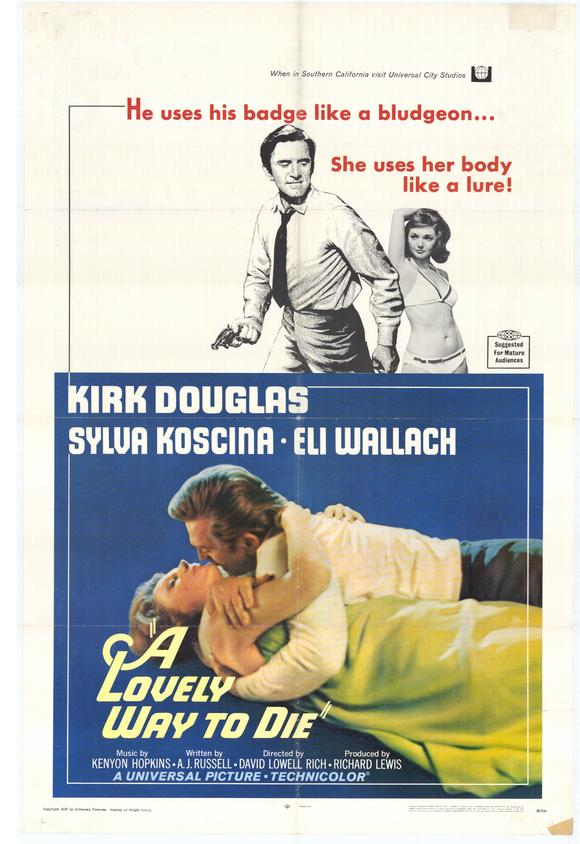
Jim Schuyler (Kirk Douglas) is a tough guy cop who leaves his job after his superiors put pressure on him to change the brutal way he treats criminals, which he refuses to do. Tennessee Fredericks (Eli Wallach) a high profile defense lawyer hires Jim to protect his client Rena Westabrook (Sylva Koscina) who is on trial for conspiring with her lover (Kenneth Haigh) to murdering her rich husband. Jim takes a liking to Rena and the two soon begin a torrid affair while he tries desperately to prove that Rena is innocent even though everything points against her.

This film sat in complete obscurity for almost 4 decades having never gotten released on either VHS or DVD until Universal finally made it part of their Vault Series. Why it took so long to get out I don’t know why as it is on the most part pretty good. The mystery is intricate and entertaining and full of unusual twists. The woodsy New Jersey scenery isn’t bad and the large mansions where most of the action takes place are impressive. This film isn’t any different from any of the other myriad crime noir mysteries of that era, but it manages to be slick enough to keep it intriguing until the very end.

The opening credit sequence is a definite drawback as it shows freeze frames of scenes from the film and seems almost like an ad or movie preview that does not help the viewer get into the mood of the story. The music also gets overplayed to the point of being distracting and irritating. It also has too much of a playful tone to it that does not coincide with the dark, moody overtones of the plot or characters.

Douglas who was already in his 50’s at the time of filming looks too old for the part and his love scenes with Koscina look almost like a father and daughter, which comes off as creepy and unnatural. The part would have been better served had it been played by an actor that was at least 20 years younger, which would have made the romantic angle much more believable. Wallach’s attempts at a southern accent are futile, but his arguments and theatrics during the trial are still fun.

The film also offers a great chance to see young up-and-coming stars including Conrad Bain as the prosecuting attorney, Doris Roberts as a snoopy housekeeper and Ralph Waite as the star witness. There is also Philip Bosco and John P. Ryan as bad guys. Richard Castellano is a bartender and David Huddleston is one of his patrons. You can even spot the beautiful Ali MacGraw in her film debut at the very beginning.

My Rating: 6 out of 10

Released: July 12, 1968

Runtime: 1Hour 43Minutes

Not Rated

Director: David Lowell Rich

Studio: Universal

Available: DVD (Universal Vault Series)

Kaleidoscope (1966)

kaleidoscope

By Richard Winters

My Rating: 7 out of 10

4-Word Review: He breaks the bank.

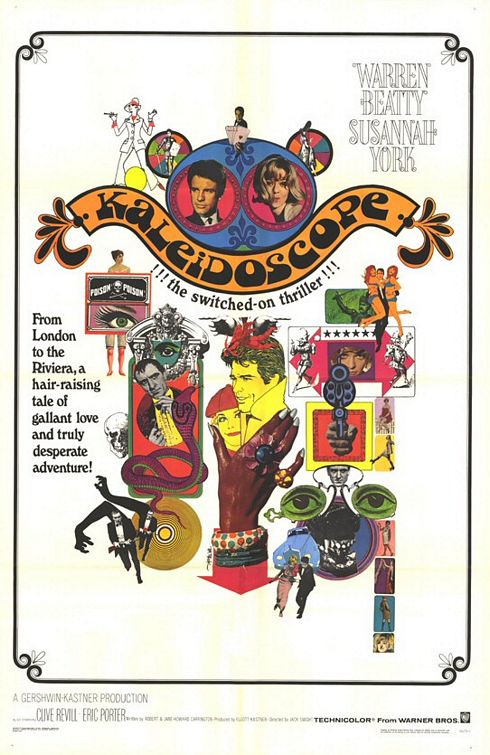
Barney Lincoln (Warren Beatty) is a well-off playboy who has come up with a clever scheme that will allow him to win at cards at any casino along the Riviera. He does this by breaking into a card printing company called Kaleidoscope and marking the back of the master plates used to print their playing cards so when he attends the casinos later on he will know exactly what the cards are by reading his own small markings on the back of them.  Angel (Susannah York) is a cagy and flirtatious woman who recognizes Barney’s card skills as a crucial link to help her father (Clive Revill) who is a Scotland Yard Inspector and looking to nab the notorious Dominion (Eric Porter) who is a skilled card player himself.

The idea of breaking into a card printing company and marking the plates is a clever one, but highly improbable. After all if it was so easy to do such as it is portrayed in this movie then wouldn’t somebody else have tried it already? Personally as a viewer the markings were so small that I could not spot them and the Scotland Yard inspector needed a magnifying glass to see them making me wonder how Barney using only his naked eye could make them out when the cards were clear across the table. Also, it seems unrealistic that every casino would use the same cards by the same printing company as there has to be more than one card playing printing company out there to choose from.

Beatty is his usual detached and cool self, which to some degree gets annoying. You want to see this guy sweat a little, but he never does and the character borders on being arrogant and too cocky. However, the intense scene at the end where Barney is playing a high stakes poker game with Dominion is where Beatty’s cool demeanor comes in perfectly particularly when he shows absolutely no facial expressions while everyone else nervously awaits to see what is under the one crucial card that has yet to be turned over.

York is quite good, but sadly underused. The way she initially toys with Beatty a notorious ladies man both on and off screen is delightful and I wanted to see more of it. Their first date culminates with her sitting on top of a cow and he on a hay bale, which can’t be topped, but then her character disappears and when she comes back she is much weaker and less interesting expressing her ‘love’ for the Beatty character like she is just another vapid chick and without the fun edge at the beginning. She does look very attractive here and I loved seeing her in the strapless gown.

Revill is amusing as the much put-upon inspector who has a thing for toy steam engines, but he looks much too young to be playing York’s father and in real-life was only 9 years older than her. Porter adds campy panache as the villain while sporting a most groovy comb-over.

The opening title sequence is done in a way that looks similar to an actual kaleidoscope, which was cool and each scene transitions with a kaleidoscope design. The lavish and garish sets used as an interior backdrop for Porter’s mansion are eye-popping and I loved all the tunnels they have to drive through just to get there. On a mindless level this proves to be pleasant fluff, but the shoot-out and chase sequence at the end gets a little too James Bond-like and is out-of-place with the rest of the film.

My Rating: 7 out of 10

Released: September 22, 1966

Runtime: 1Hour 43Minutes

Not Rated

Director: Jack Smight

Studio: Warner Brothers

Available: DVD (Warner Archive)

For Love or Money (1963)

for love or money

By Richard Winters

My Rating: 3 out of 10

4-Word Review: A lawyer becomes matchmaker.

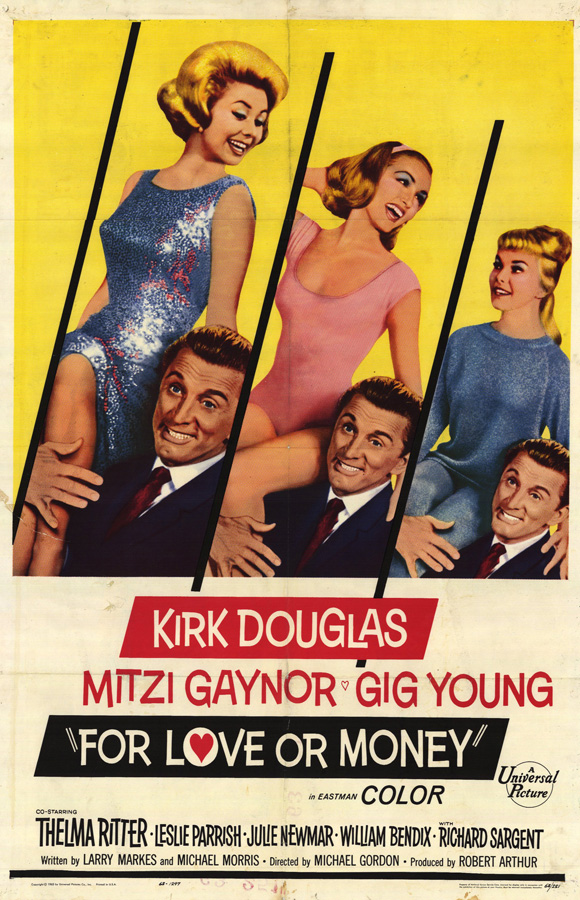
Deke Gentry (Kirk Douglas) is a lawyer appointed trustee of Chloe Brasher’s (Thelma Ritter) estate and is shocked to learn the terms of her will state that any of her three daughters will be cut off from their inheritance if they marry a man that she does not approve of. After debating with her about this Deke agrees to try to match up the girls with men that Chloe has already picked for them, but finds it to be much more difficult than he expected.

This was an odd career move for Douglas who is best known for his westerns, dramas and adventure roles. In some ways seeing him do light comedy is a nice change-of-pace, but the plot is too banal and the character is dull and gets overshadowed by the supporting cast of old comic pros. His best moment is when he hoists actor Gig Young over his shoulder and carries him from the hospital to his apartment and even gives him a spanking along the way.

The three actresses who play the daughters (Julie Newmar, Leslie Parrish, Mitzi Gaynor) are all quite attractive, but in the case of Newmar and Parrish aren’t given enough screen time. Gaynor is solid in the lead in what is to date her last film appearance. I am also happy to note that all three actresses as well as Elizabeth MacRae who play’s Deke’s girlfriend are still alive and well as of this writing.

Young is a very talented character actor who manages to come into his own during the second hour. Having him end up getting stuck out at sea while clinging in the nude to a pole sticking up out of the water is funny, but the scene where he starts throwing some vintage bottles of champagne overboard had me cringing.

The story is too lightweight for a feature film and although it starts out okay ends up becoming quite stretched and tedious during the second half. The scenarios are more silly and inane than actually funny and the only time it is ever amusing is when Ritter and William Bendix are in front of the camera and otherwise it falls flat. The contrived ‘happy ending’ merely emphasizes how predictable and formulaic the whole thing is.

My Rating: 3 out of 10

Released: August 7, 1963

Runtime: 1Hour 48Minutes

Not Rated

Director: Michael Gordon

Studio: Universal

Available: DVD (Universal Vault Series)

Becket (1964)

becket 2

By Richard Winters

My Rating: 7 out of 10

4-Word Review: Betrayed by his friend.

King Henry II (Peter O’Toole) is finding himself at continual odds with the Archbishop of Canterbury (Felix Aylmer) particularly in their disagreement of taxing the church to help fund Henry’s war with France when the elderly Archbishop suddenly dies Henry decides to appoint his longtime friend Thomas Becket (Richard Burton) into the position.  Becket had always shown extreme loyalty towards Henry and many times gotten him out of several jams so Henry expects this will continue in his new role, but finds that Thomas takes his position much more seriously than expected and shifts his loyalty from the king to the almighty, which causes serious conflict between the two.

The film which is directed by Peter Glenville is based on the 1959 stageplay written by Jean Anouilh that starred Laurence Olivier in the role as Becket and Anthony Quinn as Henry. This film version isn’t bad, but not quite the epic spectacle that we are so used to from these types of films from that period. The action is quite minimal and there is a definite staginess. I would have liked more camera movements and even a few scenes with a hand-held to help make it seem a little more authentic and less of a filmed drama. The scene where Henry and Becket are seen riding on horseback appears very corny as it was clearly done in front of a blue-screen. There is also too much music one scene has Henry and Becket running away from a farmhouse after being caught fooling around with a farm girl that has a cartoonish sounding melody that seems completely inappropriate especially for the time period.

Having Henry and Becket go from being friends to bitter enemies seemed to happen too quickly. I got the feeling we were seeing the ‘Cliff Notes’ version of events were they analyze only the important plot points and then quickly moved to the next. I realize the runtime of the film is already long, but spending more time showing the friendship gradually devolve would have been more realistic.

Normally I love Sir John Gielgud and his performance as King Louis VII is amusing, but he is clearly British and speaks with an English accent that doesn’t even come close to sounding French. The part of the Pope is given to an Italian, so the King Louis role should have been done by a Frenchman.

O’Toole is excellent. He has brown hair here instead of his patented blonde and his ability to stay in step with Burton by giving an almost comic performance of a King who is nothing more than an overgrown adolescent is brilliant. The royal food fight is good as are the many putdowns that he gives to both his wife and kids and even his own mother.

Burton is fantastic as expected playing a role different from any of the others that he has done. His piercing blue eyes have never been stronger particularly when he becomes the Archbishop.

The killing scenes done inside the church near the end has some nice camera work and Henry’s final emotional speech as well as his flogging by the monks are all strong and make this worthwhile viewing, but I couldn’t help but feel that we have ‘grown-up’ a bit in the way we do period pieces today and this is one that could use a remake.

My Rating: 7 out of 10

Released: March 11, 1964

Runtime: 2Hours 28Minutes

Not Rated

Director: Peter Glenville

Studio: Paramount

Available: VHS, DVD, Blu-ray, Amazon Instant Video, Netflix streaming