Category Archives: 60’s Movies

Me, Natalie (1969)

me natalie 1

By Richard Winters

My Rating: 6 out of 10

4-Word Review: Homely girl finds independence.

Natalie (Patty Duke) has been plagued all her life as being unattractive and overlooked time and again by other men. Her parents (Nancy Marchand, Phillip Sterling) promise her that way day she will grow up to be beautiful, but it never happens. When she finds out that they secretly promise one of her potential suitors (Bob Balaban) that they will pay for his education to become an eye doctor if he agrees to marry her she becomes deeply hurt and decides to move out. Things are not easy at first, but she manages to find a job and a decent apartment in Greenwich Village. It is there that she meets David (James Farentino) an older man who she falls deeply in love with only to find out that he is married.

Duke does well in the lead role although this was at the height of her bipolar disorder, which was untreated at the time and it caused many problems on the set between her and director Fred Coe that was later chronicled her autobiographic book ‘Call Me Anna’ and subsequent 1990 TV-Movie of the same name. On the looks department the character really isn’t that bad and her ‘ugliness’ consists mainly of some bad buck teeth that could probably have been immediately resolved with a good orthodontist and some braces.

It’s the character’s personality that is really unattractive. She is extremely whiny as well as being bag of insecurities that falls completely apart the second she is faced with anything unpleasant or unexpected. She is constantly judging other women on their looks even though she expects everyone else to look past her own physical flaws and resents them when they don’t. There is even a scene where she coldly rejects an overweight man who asks her to dance by calling him a ‘loser’. While I applaud the film for showing us a candid portrait of an individual that goes well beyond the manufactured politically correct persona of a protagonist that we are so used to seeing it still may be tough going for most viewers to have much empathy for her.

What I liked about the movie is that it starts out as an old fashioned kitchen sink drama of this lonely girl stuck in a drab existence and simply looking to get married and then blossoms into something completely different as she gets out into the world and experiences the big city and late ’60s attitudes. The film has a few memorable scenes including her job at a topless and bottomless bar in which the waitresses are required to wear all black that covers even their faces and then they are fitted with prosthetic breasts and butts that they wear around the outside of their outfits and glow-in-the-dark. They then walk around the darkened restaurant taking customer orders while looking like a collage of floating female body parts.

The one thing that really hurts the film as a whole is the musical score by Henry Mancini. Normally I’m a big fan of his, but here his melodic stuff sounds out-of-date and not in touch with the late ’60s or the young people living in it. Simply because one may be a great composer doesn’t mean he’s a perfect fit for every project and this was clearly one of them as the music has a 1940’s quality to it that made the picture seem highly dated even at the time.

The movie though does successfully make a great point, which is that one can only find true happiness from inner peace and not by being dependent on the reactions of others. It also marks the film debut of Al Pacino who is seen briefly as a young man who asks Natalie for a dance at a high school social and then immediately asks her if she ‘puts out’.

My Rating: 6 out of 10

Released: July 13, 1969

Runtime: 1Hour 51Minutes

Rated M

Director: Fred Coe

Studio: National General Pictures

Available: None at this time.
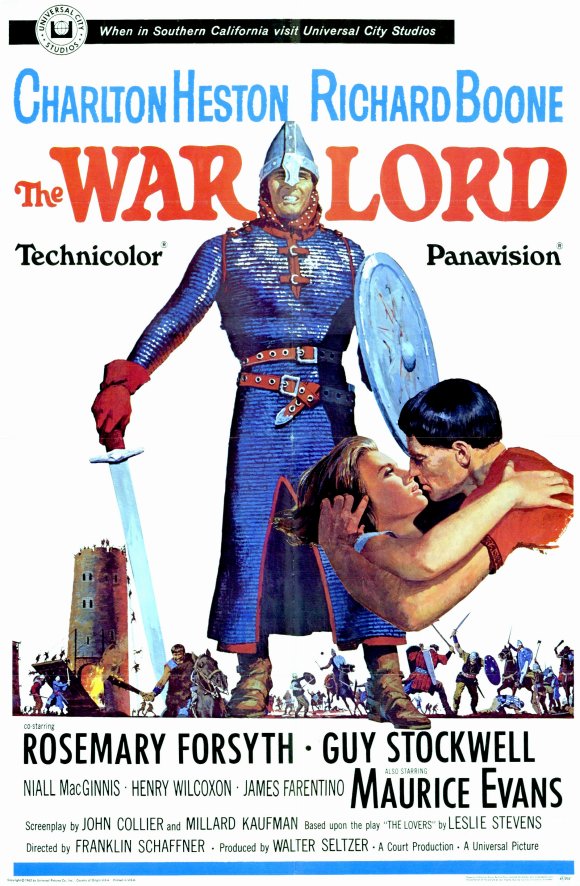
The War Lord (1965)

the war lord 1

By Richard Winters

My Rating: 7 out of 10

4-Word Review: Knight wants a woman.

Medieval tale set in the 11th century dealing with a Norman Knight named Chrysagon (Charlton Heston) who with his group of men take over a Druid’s Village and make it ready for the Duke who will then eventually rule it. During his time there Chrysagon meets the beautiful Bronwyn (Rosemary Forsyth) and becomes smitten. The problem is that Bronwyn has already been prearranged by her father (Niall MacGinnis) to marry Marc (James Farentino) yet Chrysagon imposes a little known right, which allows the Lord of a Domain to sleep with a virgin woman on her wedding night, but only if he agrees to return her back to her suitor by dawn. Her father complies, but then Chrysagon refuses to give her up once the night is over, which causes great outrage with the village as well as Chrysagon’s own men particularly his brother Draco (Guy Stockwell) who begins to challenge Chysagon’s authority.

The film paints a realistic portrait of medieval times by exposing the rigid social caste system that people were forced to live by with almost no ability for individual choice. The plot is compelling, but what I really enjoyed were the fighting sequences that take up almost the entire second hour and are filled with  ingenious maneuvers and creative attempts by each side to try and take advantage of the other without having the benefit of guns or any other form of ammunition.

Outside of Heston who is stiff as always the acting is uniformly strong. Stockwell who was the older brother of Dean lends a good menacing touch particularly with the way he starts out as loyal only to have his darker side slowly seep through. Richard Boone, best known for his starring role in the ‘50’s western ‘Have Gun-Will Travel’ is solid as Heston’s second-in-command and who remains amazingly stoic and sensible throughout. Forsyth is quite alluring as the love interest and Maurice Evans is also good as a meek and ineffectual Priest.

Director Franklin J. Shaffner, Heston, Evans and character actor Woodrow Parfrey all reteamed three years later to star in the much better known Planet of the Apes and while that film has gone on to become an influential classic this one has remained in relative obscurity, which is unfortunate as its production values are equally high, the story just as interesting and action sequence just as exciting making it yet another lost classic awaiting discovery by a new generation of fans.

My Rating: 7 out of 10

Released: November 17, 1965

Runtime: 2Hours 3Minutes

Not Rated

Director: Franklin J. Shaffner

Studio: Universal

Available: VHS, DVD, Blu-ray (Region B)

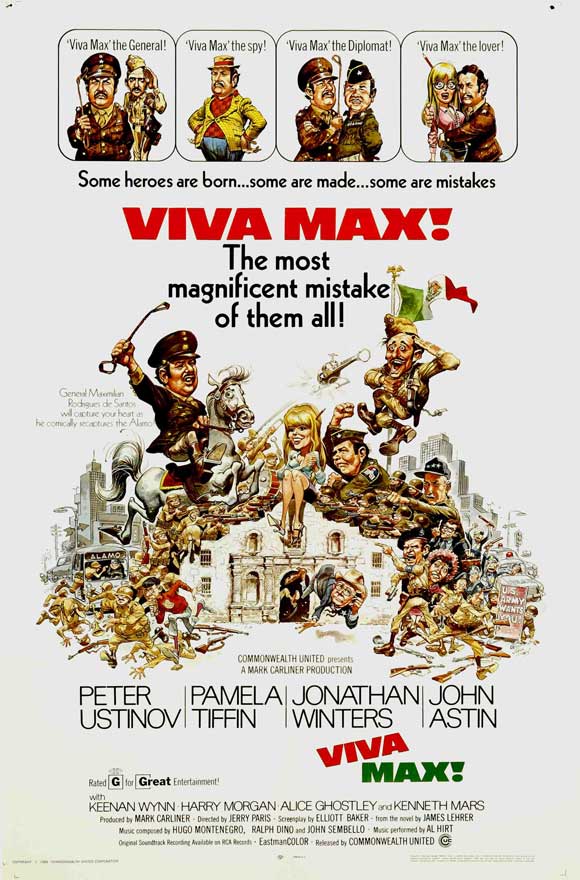
Viva Max! (1969)

viva max 2

By Richard Winters

My Rating: 3 out of 10

4-Word Review: Taking back the Alamo.

A small ragtag Mexican army led by the affable, but incompetent General De Santo (Peter Ustinov) decides to cross the border and recapture the Alamo. The process goes much easier than expected despite the fact that the army used no bullets in their guns. The National Guard is then sent in to weed them out, but they too decide not to load their guns with bullets leading to some unusual results.

The film is based on the novel written by PBS newsman Jim Lehrer and the movie’s behind-the-scenes politics ends up being much more interesting than the plot itself. Filmed in April of 1969 the production initially had permission from the state to film right on the actual site of the Alamo and a major portion was done there before various citizen groups became aware of it and began protesting the crew’s presence in what they considered to be sacred ground. Some of their protests was captured on film and incorporated into the story, but their loud presence eventually disrupted the production forcing some scenes to be done on an indoor studio soundstage while still others were completed in Italy.

The commotion and ‘controversy’ was not worth the effort as the film is an overall bore. The first 15-minutes are amusing and even mildly engaging, but once it gets inside to the actual Alamo the action and pace come to a screeching halt and kill any possible potential that the film may have had.

The script also has some illogical loopholes one of them being the army deciding to invade a place, but without using any ammunition, which is never explained and highly improbably. What is even more ridiculous is that the National Guard would decide not to use bullets in their guns either since this is the U.S. of A. where guns and force are considered a national birthright and thus makes this ill-conceived plot twist to be unbelievable to the extreme. The fact that De Santos and his men and able to freely leave at the end and go back to their country without dealing with any type of consequence for their actions is equally absurd.

Ustinov is funny and speaks in an authentic Mexican accent, but he’s unfortunately limited by the broad caricature of his role. John Astin comes off best as the Sergeant that’s second in command and does most of the actual disciplining and leading and Jonathan Winters is good as a clueless American general. Alice Ghostley lends some energy as an innocent bystander that becomes one of the army’s prisoners and Pamela Tiffin looks great wearing glasses and having her hair tinged in blonde.  Gino Conforti, Paul Sand, Jack Colvin, Anne Morgan Guilbert and Kenneth Mars can also be spotted in small roles, but even with their competent performances it fails to mask the film’s otherwise glaring inadequacies.

My Rating: 3 out of 10

Released: December 16, 1969

Runtime: 1Hour 34Minutes

Rated G

Director: Jerry Paris

Studio: Commonwealth United Entertainment

Available: VHS

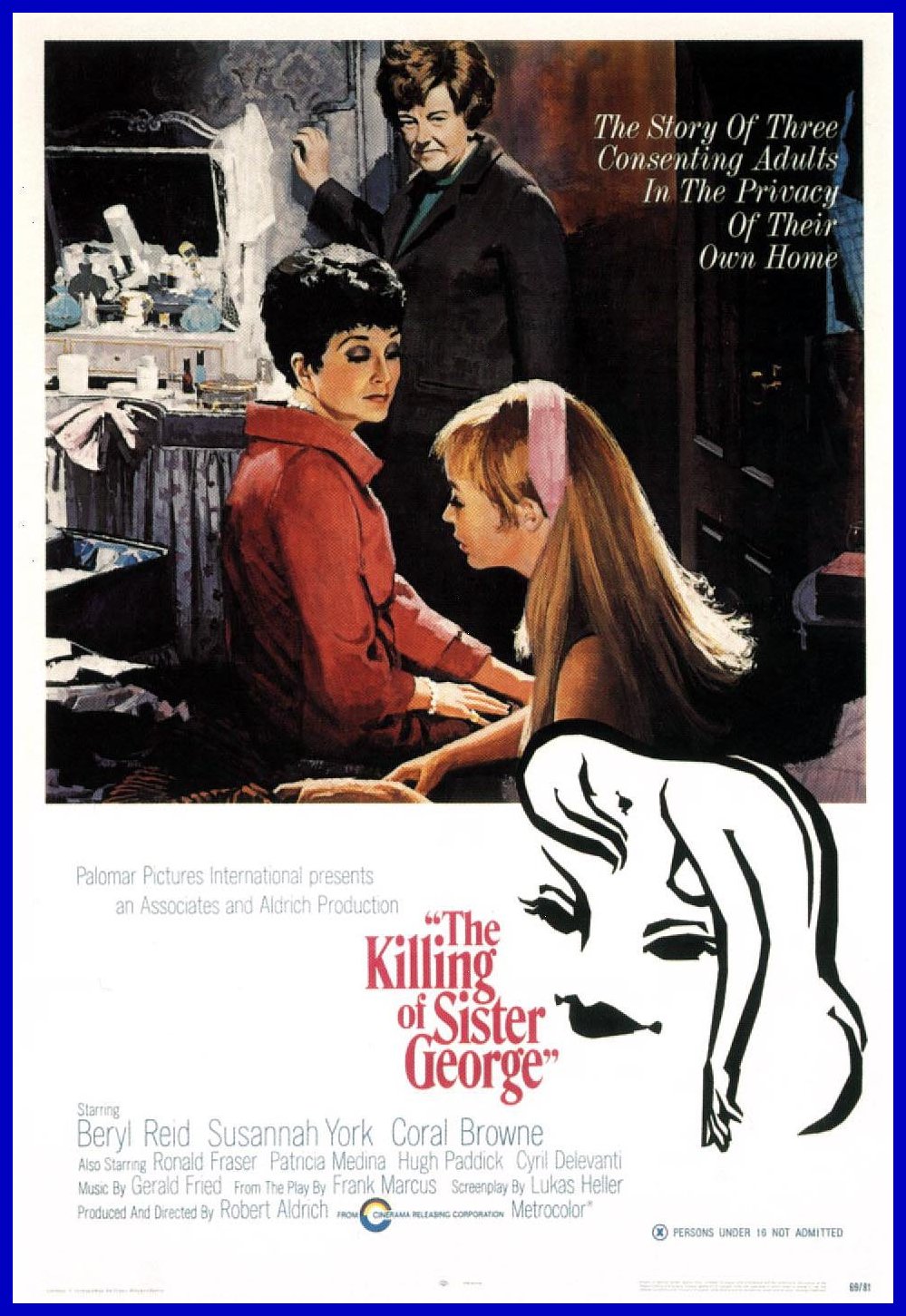
The Killing of Sister George (1968)

killing of sister george

By Richard Winters

My Rating: 6 out of 10

4-Word Review: TV character gets axed.

June Buckridge (Beryl Reid) is an aging actress playing the character of Sister George a scooter riding nun in a long running British TV soap opera. Her character no longer has the popularity that it once had and the producers have decided to kill her off by having her die in an ugly road crash with a truck. June is upset with this news as at her age parts are hard to come by and she takes her frustrations out on Childie (Susannah York) her much younger live-in lesbian lover, but she may lose her as well as one of the show’s producers Mercy (Coral Browne) has inklings to lure Childie away from June so she can have her all to herself.

After the immense box office success of The Dirty Dozen writer/director Robert Aldrich was given free rein to start up his own production company and he choose this as his first project. In many ways it is quite similar to his earlier and more well-known film What Ever Happened to Baby Jane?, but with sexual undertones. The film is based on the Frank Marcus play of the same name that ran for 205 performances and was nominated for the 1967 Tony Award. For its time this was considered quite controversial and groundbreaking especially the final scene that features a highly explicit sex scene between two women. It also is the first film to have a character utter the word ‘bullshit’ and one of the first to say the word ‘fuck’. Although the word itself gets drowned out by a car horn you can still clearly tell by reading Reid’s lips what she is saying.

The three female leads and their snarky exchanges with each other are the film’s chief asset especially Reid who recreates the same character that she played in the stage version that netted her a Tony. Her emotional, angry outbursts are entertaining and the scene where she forces Childie to eat and swallow the butt of her cigarette as ‘punishment’ is still quite edgy. Browne is equally good specifically during her provocative love scene with York, which was made all the more daring since she was 30 years older than York at the time.

The film’s overall staginess is a drawback. Many scenes are too talky and should’ve been trimmed while York and Reid’s Laurel and Hardy routine could’ve been cut out completely. Flashbacks showing how they first met would’ve helped and there needed to be an explanation to the weird child-like manner of York’s character, which quite possibly was based on an age-old gay stereotype. I also didn’t like the foreboding quality of the music that gets played just before Browne and York have their lesbian love scene, which seemed to suggest that something ‘creepy’ and ‘unnatural’ was about to take place and convinced me that despite the daring and ahead-of-its-time nature of the subject that the filmmakers themselves still had some very dated ideas about gays much like the majority of people from that era.

My Rating: 6 out of 10

Released: December 12, 1968

Runtime: 2Hours 18Minutes

Rated X (Reissued as R)

Director: Robert Aldrich

Studio: Cinerama Releasing Corporation

Available: DVD

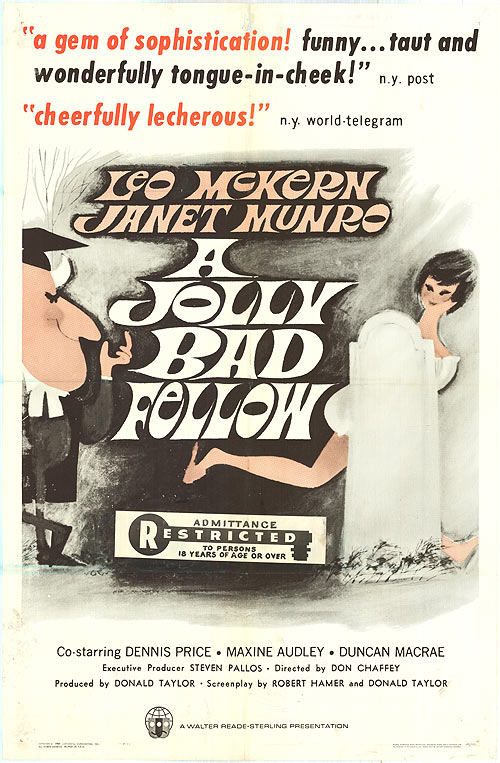
A Jolly Bad Fellow (1964)

jolly bad fellow 2

By Richard Winters

My Rating: 5 out of 10

4-Word Review: He poisons his enemies.

Professor Kerris Bowles-Ottery (Leo McKern) is a college professor working in the university’s science lab where he conducts experiments on mice. One day he accidently comes upon a poison that kills the mice, but only after sending them into a brief euphoric state, which he then decides to use on his enemies. Only a little bit of it is needed to work, so he is able to use all sorts of methods to get them to ingest it including putting it into their drinks, as well as the cigarettes they smoke, and even dabbing a bit of it on a tip of a pencil, which one of the character’s routinely likes to lick before he begins writing with it. Things go quite smoothly until his wife Clarinda (Maxine Audley) leaves him, which upsets him enough that he become careless and eventually culminates with ironic results.

The film’s chief asset is McKern’s presence whose acerbic delivery and facial expressions perfectly captures a stuffy, pompous curmudgeon in highly humorous fashion. He nails every scene that he is in, but his best moment comes at the very end when he hops into his car and begins driving at high speeds throughout the English countryside while giving off a loud, long maniacal laugh.

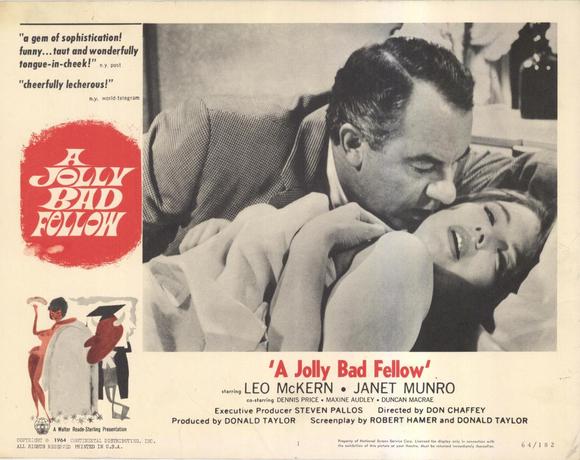
The plot is thick with satire, but doesn’t go far enough with it. Just when it seems to be catching its stride it bogs down with an affair that McKern has with a much young woman (Janet Munro) that didn’t make a lot of sense. I could see why he’d be into her, but no so much why she would have the hots for him although the fact that he does seem to truly love his wife even when he fools around on her and becomes upset when she decides to leave him was excellent irony.

The funniest element is when he poisons his enemies and rivals many of whom are as pompous and stuck-up as he is. Watching these refined, stuffy people suddenly act silly and child-like is quite amusing, but again the film stops short of packing the punch as these scenes should’ve been more extended, which is the one thing that makes this potentially hilarious film not half as funny as it could’ve been.

jolly bad fellow 1

My Rating: 5 out of 10

Alternate Title: They All Died Laughing

Released: March 15, 1964

Runtime: 1Hour 34Minutes

Not Rated

Director: Don Chaffey

Studio: British Lion Film Corporation

Available: DVD

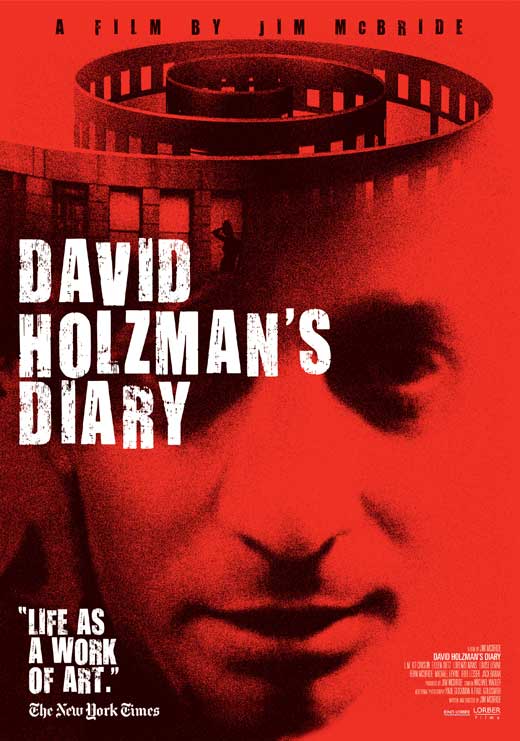
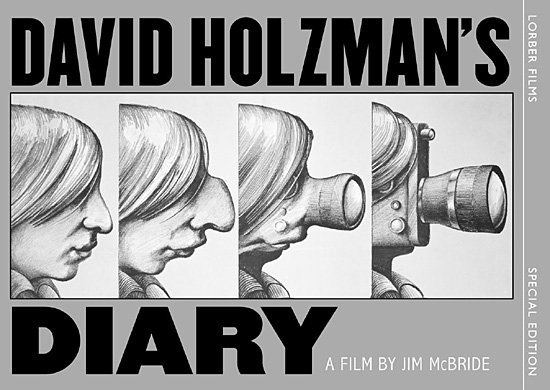
David Holzman’s Diary (1967)

david holzman 1

By Richard Winters

My Rating: 8 out of 10

4-Word Review: He records his life.

David (L.M. Kit Carson) is a young college-aged movie fan who wants to use the camera to not only record his life, but help him better understand and interpret reality. Unfortunately he finds that instead of clarifying things the camera instead brings out even more of reality’s complexities making his life and the world he is in even more confusing. It also inadvertently exposes a darker side to his personality that he wasn’t aware of which his voyeurism to both an attractive woman across the street as well as his live-in girlfriend Penny (Eileen Dietz) who eventually gets fed up with his film and him and moves out.

I realize the saying ‘ahead of its time’ can get a bit overused, but this is one case where that term really fits. This movie is cool on many different levels and features scenes and segments that you will never see done anywhere else. The Cinema verite style is perfect and I loved how the camera gets turned on itself as we are given a good background and visual to the type of camera that was used and why for its time was considered a cutting edge piece of machinery. The scene where he takes a shot of every image that he saw during a night of television viewing and then plays it back creating a mosaic of flashing images from shows and commercials is equally cool. The segment where he interviews a woman, which was apparently a man dressed in drag, but quite hard to tell, who stops her car in the middle of the street to tell him of her candid sexual desires while holding up traffic is quite amusing as is the part where he stalks a nervous lady from a subway car out onto the city streets.

The film also successfully transcends its time period. I have always said it is very easy to tell the time period or decade a movie was made usually after viewing it for only a few minutes, but this was one case where it is actually quite hard to tell. The detached, hip nature of the protagonist is still trendy and the film’s existential philosophical approach dealing with an artist’s need to recreate reality, but ultimately failing is as relevant today as ever. The loosely structured ad-libbed dialogue gives it a legitimate documentary feeling and was so believable that when audiences first viewed it during the 60’s they booed when they saw the closing credits and realized it had all been made-up. This was also the first American film to use the f-word and one of the first to feature full nudity, which is done by the attractive Dietz who later went on to play the face of the demon in the movie The Exorcist.

Although I saw this movie many years earlier and was already a big fan I watched it again during a special showing at the The Marchesa Theatre in Austin as a tribute to the film’s star who passed away in October of 2014. Afterwards many people got on stage to talk about how Carson had inspired them with their lives and careers and it included his son Hunter Carson as well as film director Guillermo del Toro who was probably the most entertaining.

If the film has any drawbacks it’s in the use of black frames that are shown in between shots where for several seconds the viewer will see no image at all and at times only a voice over. This might’ve been done for effect, but ends up giving it too much of an amateurish feel. There are also times when the camera stays too fixated on its subject making it look too much like talking heads with not enough cutaways or interesting camera angles. Overall though it’s still one-of-a-kind and worth checking out for a glimpse at experimental and original filmmaking at its purest.

david holzman 2

My Rating: 8 out of 10

Released: October 3, 1967

Runtime 1Hour 14Minutes

Not Rated

Director: Jim McBride

Studio: Direct Cinema Limited

Available: DVD, Blu-ray, Amazon Instant Video

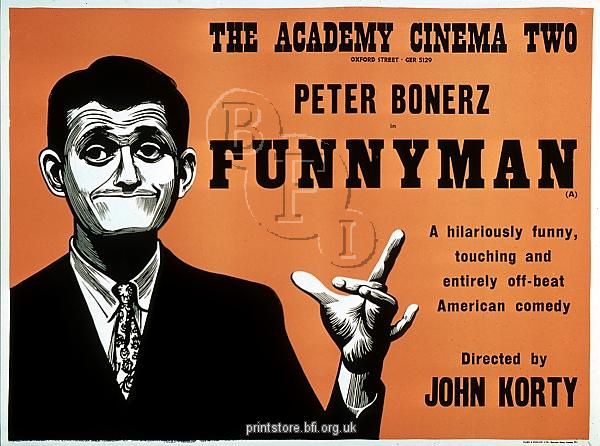
Funnyman (1967)

funnyman1

By Richard Winters

My Rating: 5 out of 10

4-Word Review: Being funny isn’t funny.

Peter Bonerz, who also co-wrote the script along with director John Korty, plays Perry a struggling comedian working with the famous San Francisco improvisational group The Committee who is finding that life onstage isn’t as fulfilling as he had thought. The story focuses on his many different relationships and behind-the-scenes activities as he searches for some meaning to what he does.

The film is a loosely based look at Bonerz’s own experiences during his time with the group. It has a definite cinema vertite feel and look, which helps accentuate the improv attitude. Some of the situations he goes through do indeed help shed light for the viewer as to the difficulties of the profession particularly the part where Bonerz and a friend stay up late one night trying to brainstorm a creative ad campaign for a bug spray and finally do manage to come up with something clever only to have it frustratingly nixed by the client over concerns that it may possibly offend their targeted audience.

I also found it interesting to see how much things have changed in regards to casual affairs and relationships as Bonerz is seen meeting woman for the first time and then going back to their place for sex and in one instance having the woman go off to work and leave him still in bed at her place without seemingly any concern about him being a potential psycho or thief.

Bonerz, who is probably best known for playing the Jerry Robinson character in ‘The Bob Newhart Show’ does well in the lead and I was impressed with his variety of voices and characterizations. However, the many skits that they do, which were filmed onstage in front of an audience weren’t all that funny or engaging. The only one that is mildly humorous involves a bit with Richard Stahl describing a new robot (played by Bonerz) that is programmed to be used as a peace demonstrator during campus protests.

Korty’s over-direction doesn’t help as too much emphasis is put on mood over substance. His attempts to instill an existential slant to the material falls flat and his use of shooting each scene with a different color filter is distracting and ultimately annoying. The final twenty minutes veers too much away from the main story as the Bonerz character decides to take a vacation at an isolated retreat where he gets into a relationship with a nude model, which meanders and is not compelling or interesting.

My Rating: 5 out of 10

Released: September 23, 1967

Runtime: 1Hour 25Minutes

Not Rated

Director: John Korty

Studio: Korty Films

Available: None at this time.
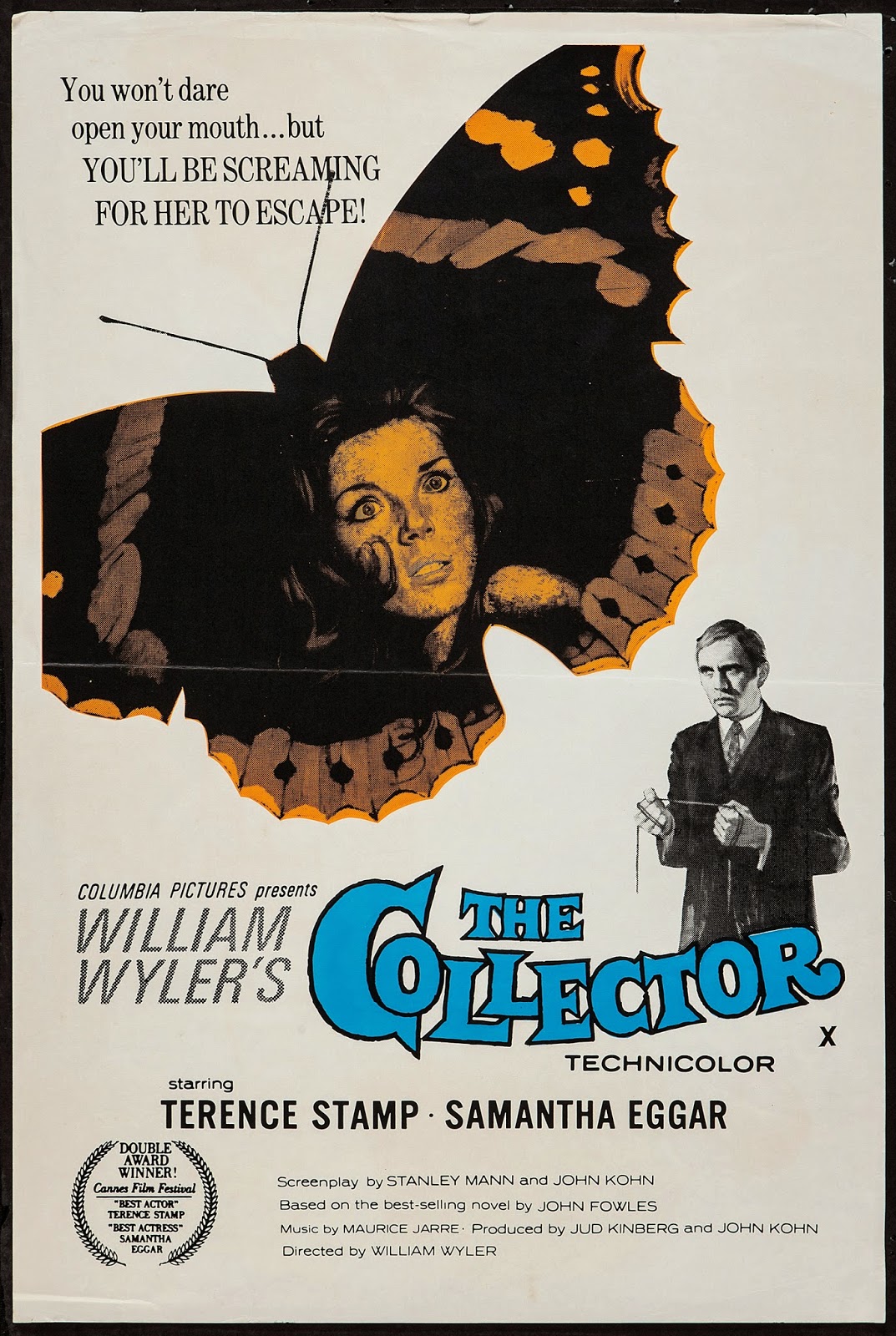
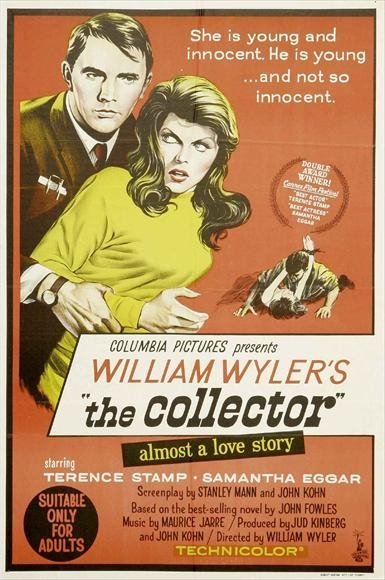
The Collector (1965)

the collector 2

By Richard Winters

My Rating: 8 out of 10

4-Word Review: Collecting women like butterflies.

Freddie (Terence Stamp) is a withdrawn loner who collects butterflies for a hobby. One day he manages to win a lot of money in a football pool and uses it buy an old, isolated house in the English countryside. The place has a very large cellar, which gives him the idea that it can be used as a prison. It is then that he decides to kidnap beautiful art student Miranda (Samantha Eggar). He keeps her in the cellar, but fixes it up making it seem almost like an apartment. He treats her with the upmost respect and even knocks before entering her room. He buys her art supplies so she can continue her work and makes an agreement with her that he will let her go after 4-weeks, but hopes in between then that she will fall in love with him.

The film puts an interesting spin on the old ‘psycho kidnapping a beautiful woman’ theme and for the most part succeeds. The viewer ends up feeling almost as sorry for Freddie as they do his victim as it becomes clear that through his social awkwardness he is in even more of a prison than she. The way the two try to communicate and connect, which only ends up driving the them further apart is fascinating and their contrasting views about the book ‘Catcher in the Rye’ as well as the paintings of Picasso are equally revealing.

Stamp gives one of his greatest performances in his already illustrious career playing a character who weaves from being menacing to vulnerable and childlike. Eggar makes for an appealing victim and apparently turned Stamp down years earlier when he had asked for her date while the two were students in acting school.

the collector 4

William Wyler’s direction is perfect as he wisely decides to pull back without adding any unnecessary Hitchcock touches and thus allowing the interactions between the two characters to propel the film. His superimposed, colorful shots of butterflies seen over the closing credits are a nice added touch. My only minor grievance is the Maurice Jarre score, which seemed too melodic without enough of the dark foreboding undertones that music for a thriller should have.

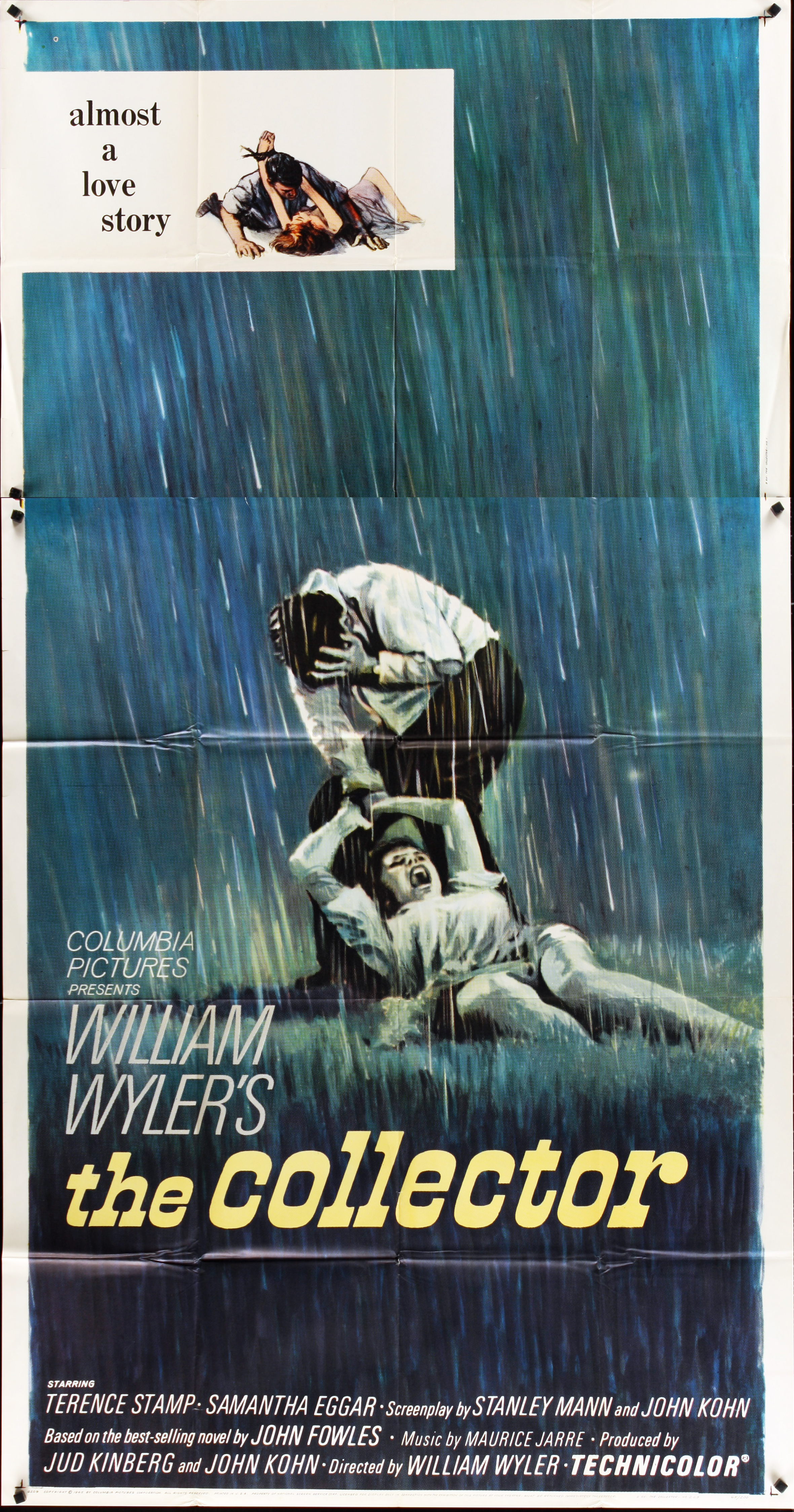
If you’re looking for the conventional thriller you may be disappointed as the emphasis is more on the psychological than the suspenseful. There are a few good tense moments including Miranda’s final attempt to escape during a nighttime rain storm, but for the most part the compelling element comes from the way these two multi-layered people deal with each other and ultimately reveal things about themselves that they didn’t know existed. The story also makes an excellent point of how everyone to a certain degree is trapped in a prison and the challenging if not impossible effort it can sometimes be to bond with others especially when reaching across different social-economic lines. The only thing that does get ruined is the ending, which no longer has the novelty or shock value that it once did.

the collector 3

My Rating: 8 out of 10

Released: June 17, 1965

Runtime: 1Hour 59Minutes

Not Rated

Director: William Wyler

Studio: Columbia Pictures

Available: VHS, DVD, Blu-ray, Amazon Instant Video

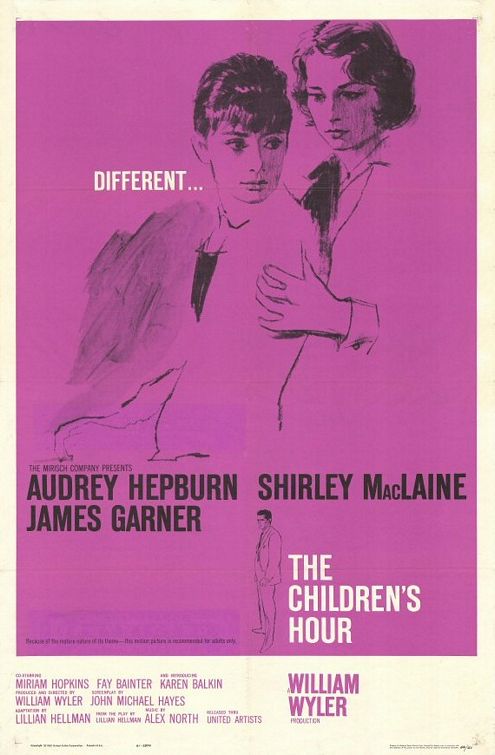
The Children’s Hour (1961)

childrens hour

By Richard Winters

My Rating: 4 out of 10

4-Word Review: Ruined by a lie.

Martha and Karen (Shirley Maclaine, Audrey Hepburn) are two single young women running an all-girl’s school. They have the respect of the community and the parents, but that suddenly changes when one of the students named Mary (Karen Balkin) decides to spread a rumor that Martha and Karen are lovers. This sends everything into an uproar. All the students are moved out and the two women find themselves fighting desperately for their reputations and livelihoods. Karen’s boyfriend Joe (James Garner) remains their staunch supporter, but eventually even he begins to have his suspicions.

The film is based on the landmark play written by Lillian Hellman which ran for 691 performances in 1934 and was based on a true incident that happened in Scotland in 1810. The original film version of the play was made in 1936 and entitled These Three that was also directed by William Wyler and starred Miriam Hopkins as Martha who in this film plays Martha’s Aunt Lily. That film was heavily watered down with the lesbian element completely taken out and instead has the rumor revolve around the two teachers being in love with the same man.

This second film version was supposed to be more like the play, but hardly seems worth the effort. Although Wyler makes some attempts to make it seem more cinematic it still comes off very much like a filmed stage play and a static one at that. Lots and lots of talk with a narrative that is quite plodding and predictable. Having the story work more in a fragmented style might have helped, but either way it is never very engrossing or compelling. It also completely skips over the libel trial, which I thought could’ve given some added drama and it never completely explains why the Aunt Lily character avoided testifying. She comes up with the lame excuse that she was touring with her show, but I felt it was more because she secretly knew Martha was a closet lesbian and didn’t want to have to confront that and the film should’ve made this more clear.

It is also unintentionally funny at times especially the part where actress Fay Bainter’s eyes get bigger and bigger as Mary whispers her ‘shocking’ secret into her ear. Balkin also overdoes the facial expressions, which was probably due to too much coaching on the part of Wyler, but with that said her presence in the film is fun and gives the proceedings a liveliness that is otherwise stagnant.

The film really isn’t all that groundbreaking either and handles the delicate issue in too much of a timid way. For instance there is a scene where Martha admits to her homosexual feelings and states that she feels ‘ashamed’ for having them and Karen counsels her by stating that ‘you did nothing wrong’ because ‘nothing happened’, but what if it had then would it have been wrong? I tend to lean towards the latter making the production seem as stale and prejudicial as the public at the time. I was also confused as to how the two women could remain living at the school when all the students had moved out and they no longer had any income, or how they were still able to have groceries delivered to them.

My Rating: 4 out of 10

Released: December 19, 1961

Runtime: 1Hour 47Minutes

Not Rated

Director: William Wyler

Studio: United Artists

Available: DVD, Blu-ray, Amazon Instant Video

Hellfighters (1968)

hellfighters

By Richard Winters

My Rating: 3 out of 10

4-Word Review: Put out the fire.

Chance Buckman (John Wayne) runs a company specializing in putting out oil well fires. His loyal assistant is the young and dashing Greg Parker (Jim Hutton) who on his off-hours is known to be quite the ladies’ man. When Chance is injured during a freak accident and sent to the hospital Greg call’s Chance’s estranged daughter Tish (Katherine Ross) to come visit him. When Tish arrives her and Greg fall in love and get married even though there is no initial chemistry and after only knowing each other for five days. The rest of the film deals with Chance and Greg quarreling over having his daughter, or any woman for that matter, on-site watching them put out fires as he feels it’s ‘not the proper place for a woman to be’.

If this were a documentary on the real Red Adair, which is who the Chance Buckman character is modeled after, this would have been an exciting and fascinating film. Unfortunately the drama in-between the fire scenes is lame and hooky. The characters and situations are generic and boring and the 2-hour runtime becomes almost interminable to have to sit through.

Politics aside I have always enjoyed Wayne as an actor. Yes he can basically only play one type of part, but he does it well. He knows how to have an onscreen presence, can usually own every scene he is in and can sometimes surprisingly show a good self-depreciating sense of humor as well. However, here he looks old, tired and washed-up. He goes through his scenes like he is sleepwalking and as bored with the threadbare material as the viewer. The silly barroom fight that he and his pals get into becomes ridiculous when you realize that it is old geezers in their 60’s and 70’s that are throwing the punches. The only good scene he has is during a humorous throwaway where he sits on a committee and much to his annoyed reluctance must decide what color to paint the company’s 1,400 nationwide bathrooms.

Despite the fact that she later told reporters that this film was “The biggest piece of crap I’ve ever done!” it is Ross who is the most engaging and quite beautiful in her bob haircut. I enjoyed the way her character stands up to Wayne and apparently behind the scenes the two did not get along and had quite a few arguments. Vera Miles as Wayne’s wife is badly miscast as she was 23-years younger than him and looks more like Ross’s older sister than her mother.

The opening 20 minutes where you see step-by-step how the men put an actual oil rig fire out is quite compelling and even educational, but it goes completely downhill from there and never recovers. By the end the whole thing becomes redundant and having the climatic finale takes place in South America where the men risk being shot at by guerrilla snipers adds little tension or interest making me conclude that the one thing that should’ve been set on fire was the script, but unfortunately it wasn’t.

My Rating: 3 out of 10

Released: November 27, 1968

Runtime: 2 Hours 2 Minutes

Rated G

Director: Andrew V. McLaglen

Studio: Universal

Available: VHS, DVD, Blu-ray (Region B)