Category Archives: 60’s Movies

Woman Times Seven (1967)

woman times seven 2

By Richard Winters

My Rating: 7 out of 10

4-Word Review: Gotta love Shirley MacLaine.

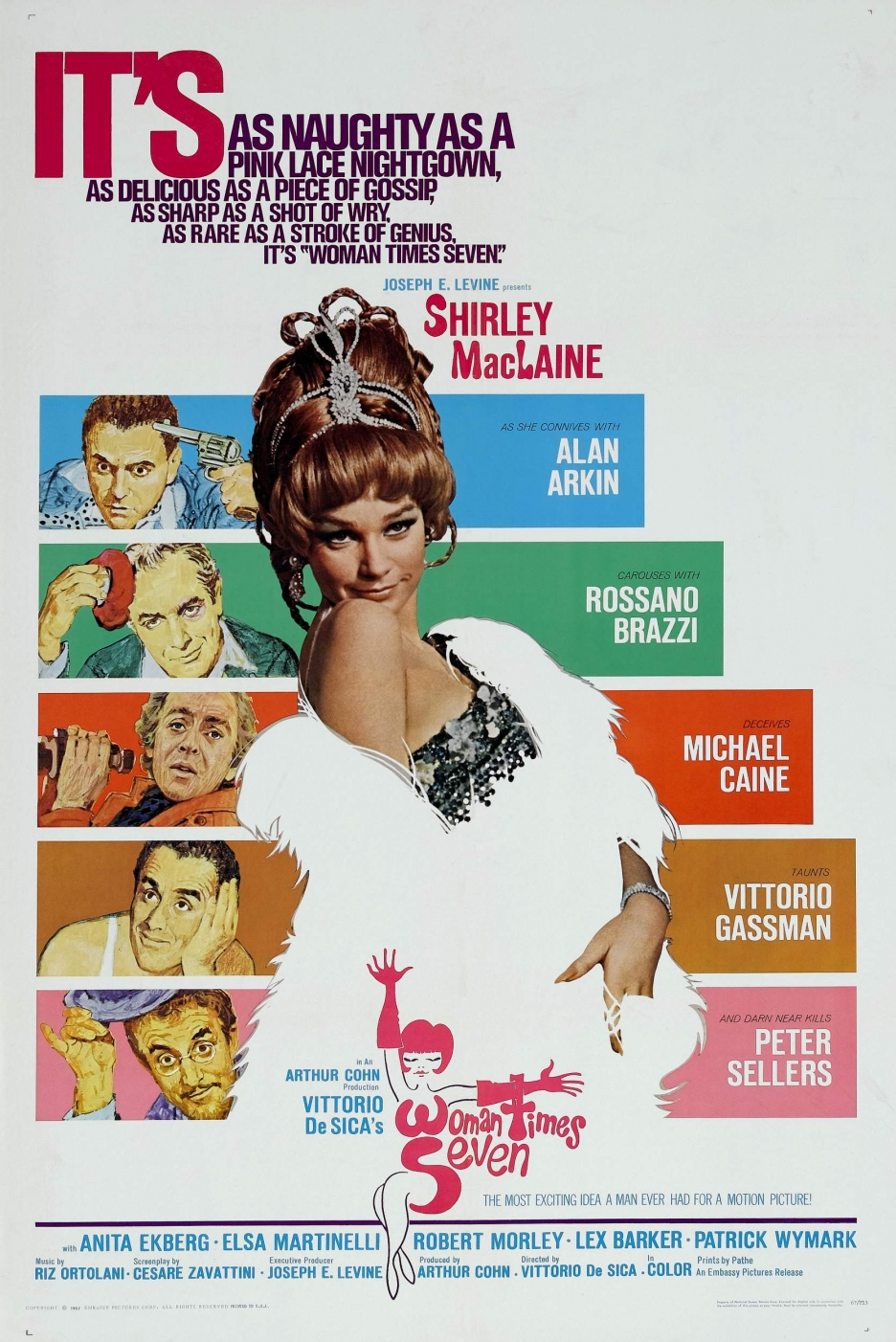
Much like with Yesterday, Today and Tomorrow Vittorio De Sica directs a collage of stories all centering on a different female character and all played by the same actress this time being Shirley MacLaine who is fabulous. In fact she is so good that her famous male co-stars get badly upstaged and their presence almost becomes transparent.

The first story is entitled ‘Funeral Procession’ and deals with MacLaine playing the character of Paulette who is grieving over the recent death of her husband. As they are walking behind the hearse that is carrying her husband to his gravesite her friend Jean (Peter Sellers) uses this moment to proposition her for a weekend of sex and fun at an isolated getaway. The irony in this one is amusing and De Sica makes great use of nuance particularly the way everyone tries to avoid the messy puddles they come upon during the procession.

‘Amateur Night’ is the second segment and this one deals with Maria Theresa (MacLaine) coming home early from a vacation only to find her husband Giorgio (Rossano Brazzi) in bed with her best friend. She becomes so upset that she runs out of the house and into a group of prostitutes who lend a sympathetic ear as well as concocting some revenge. The interplay of the prostitutes is quite amusing and I loved watching all the different items that she throws at Giorgio during her rage, but the final payoff on this one could have been better.

MacLaine plays Linda in the third segment, which is entitled ‘Two Against One’. This is where she takes two competing suitors (Vittorio Gassman, Clinton Greyn) up to her apartment and reads them poems while she is completely naked. This segment is a bit forced and the attempts at satirizing the artsy-fartsy crowd is strained, but the creative ways De Sica cover-ups MacLaine’s otherwise naked body, so the viewer never sees anything explicit is amusing.

‘Super Simone’ makes up the fourth story and deals with Edith (MacLaine) becoming jealous because her writer husband Rik (Lex Barker) seems more infatuated with the female character in the book that he is writing than with her. Her wild attempts to get his attention backfires as he starts to think that she is going insane and even brings in a psychiatrist (Robert Morley) to take her away. The story here is slightly contrived, but MacLaine with a short bob haircut is adorable and the foot chase at the end along some apartment rooftops is visually engaging.

MacLaine gives an hilarious over-the-top performance in the fifth segment entitled ‘At the Opera’ dealing with a rich woman who becomes enraged when she finds out that another woman will be wearing the same dress that she will to an exclusive opera. The satirical jabs at the rich are on-target, but it loses steam at the end.

The weakest segment of them all that is barely even funny is the sixth one entitled ‘Suicides’. This is where a young couple (MacLaine, Alan Arkin) decide to commit suicide as a form of vague political protest, but then both chicken out at the end.

The seventh and final segment is entitled ‘Snow’ and deals with a married woman who becomes intrigued by a handsome stranger (Michael Caine) who follows her around the city streets, but who may not be who he seems. Most of the time movies like these have the final story be a strong one, but this one is strangely subdued making the film end with a whimper instead of the bang that it should. This segment is also novel because Caine barely even utters one word of dialogue and becomes completely wasted in the process.

Overall this is fun lightweight entertainment with a great chance to see MacLaine’s wide acting ability and different hairstyles and looks.

My Rating: 7 out of 10

Released:  June 27, 1967

Runtime: 1Hour 40Minutes

Not Rated

Director: Vittorio De Sica

Studio: Embassy Pictures

Available: DVD, Amazon Instant Video, Netflix Streaming

Daisies (1966)

daisies 1

By Richard Winters

My Rating: 7 out of 10

4-Word Review: Girlfriends rebel from society.

Two young women (Ivana Karbanova, Jitka Cerhova) who are both named Marie decide that society has nothing to offer them and that they will not comply with its norms. They then proceed to jaunt through the streets of Prague causing havoc and destruction everywhere they go and with everyone they meet while also trying to find themselves and their true purpose in life.

This film is similar to Ingmar Bergman’s Persona, which was released the same year. Both films rely heavily on quick edits, jump cuts, bizarre imagery and unconventional narrative structures. The only difference is that at least Persona had a story behind it and two interesting characters. This film has neither. The two women behave too strangely to be relatable and the scenes seem disconnected. This is one film that takes the avant-garde, experimental approach to the most extreme. The result is a bit off-putting and took me until the halfway mark before I could get into it. Others may not even make it that far. Personal taste will gauge how much one gets into it as well as how much they get out of it.

On a completely visual level it is fascinating. The film goes from being black-and-white to color and then back again at random intervals. There is one scene in a restaurant where the scene changes to a different color filter each time a character speaks a different line of dialogue. The segment showing photos of a variety of butterflies done at a rapid fire pace is also interesting. The best part is probably near the end when the girls walk into a banquet hall and proceed to eat up all the food that is in it. In fact the film shows an amazing amount of eating. It seems like every other shot has the girls stuffing their mouths with some sort of edible. However, instead of making you hungry it ends up kind of grossing you out.

If there is anything that got on my nerves it was director Vera Chytilova’s use of sound. There was too much repetition of noises. For instance in the opening scene there is what sounds like a squeaking door that is implemented after each actress says her line that quickly becomes irritating. The slobbering, chewing sound as the girls eat the banquet food is overdone as is their background whispering that occurs near the end.

Many feel this is a movie about budding feminism and I would agree on that for the most part. I enjoyed how the women did not feel that they needed a man in their life to ‘be whole’ and in many ways seemed to manipulate and make fun of the male characters, or simply become bored with them especially when the men would convey to them their ‘undying love’.  However, to me it was more about the rebelling and disdain of the communist regime and living in an environment that promoted hard work and not much else. I liked the segment at the end where the two women proceed to be ‘good’ instead of ‘bad’ and try to clean up the mess that they made while trying to convince themselves that working hard will make them happy even though it really doesn’t.

I’ve seen a lot of weird sixties movies, but this one tops them all by a mile. It certainly doesn’t seem dated and easily transcends its era. Not only was it ahead-of-its-time, but I would maintain that it STILL is.

Although the runtime is listed as being 74 minutes the version I saw, which was from Czech New Wave, came out to being only an hour.

My Rating: 7 out of 10

Released: December 30, 1966

Runtime: 1Hour

Not Rated

Director: Vera Chytilova

Studio: Ustredni

Available: DVD

Countdown (1967)

countdown

By Richard Winters

My Rating:  7 out of 10

4-Word Review: Man lands on moon.

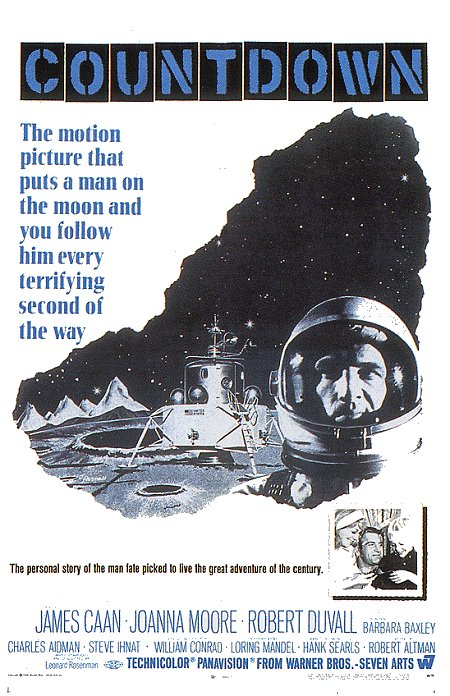
Lee (James Caan) and Chiz (Robert Duvall) are astronauts who are part of the Apollo 3 mission training to land on the moon. The liftoff date is still a year away when it is found that the Russians have already built a rocket ready for takeoff and plan on sending a man to the moon within the next few days. NASA decides to beat the Soviets by sending one of their men in an older style rocket and then having him live there for one year inside a shelter. Lee is chosen to go instead of Chiz much to his consternation and despite the fact that he had more training, but the project proves to be even more difficult than expected and Lee’s inexperience creates concerns that it might not succeed.

This is an unusual space drama in the fact that you see very little action that takes place in outer space or the moon. The main emphasis is on the human point-of-view both with the people directly involved with the project as well as their families and loved ones. The movie focuses on the behind-the-scenes competition and politics and in the process creates a realistic and vivid viewpoint. The story is engrossing and compelling wrapping the viewer in right away and never letting them go. Despite being over 40-years-old it doesn’t seem dated at all and I had to keep reminding myself that I was watching a 60’s movie.

Duvall is a standout as the very emotional and competitive Chiz. I enjoyed seeing the way he initially refuses to help Lee train for the mission when it is found that he was chosen instead of himself, but then reluctantly comes around and becomes both Lee’s mentor and biggest source of support. Caan’s more restrained performance is a nice contrast to Duvall’s volatile one and it is interesting to compare the work the two do here with The Godfather film that they both starred in 5 years later where they played the completely opposite characters.

Joanna Moore is also excellent as Lee’s wife Mickey who goes through a mixed bag of emotions during Lee’s tumultuous training and eventual flight. She’s the first wife of Ryan O’Neal and the mother of Tatum and Griffin who never achieved stardom due to her bouts with alcoholism and guest starred more in TV-shows than movies, but I have always found her to be impressive and unique in everything that I have seen her in. This is also a great chance to see up-and-coming actors in bit roles including Ted Knight, Mike Farrell, and Michael Murphy.

This was director Robert Altman’s first theatrical feature and he does great work here although you will not see any of his trademark ‘Altmanisisms’.  I did see it budding in certain small ways including a party scene that seemed like a real get together with people actually congregating and having lingering background conversations as the camera moves through the crowd versus the conventional way where the main characters stand directly in front of the camera and then only shows stand-ins in the background who are out-of-focus and moving their mouths, but not really saying anything. I also liked that when they are counting down for liftoff it gets paused when a technical issue is found.  This reminded me of the many times when I would watch on television in the 80’s the countdown for the Space Shuttle liftoff and how it would get paused in a similar way sometimes with just a few seconds to go because of certain similar glitches. Most films fail to show this, so it was nice to see it here.

My Rating: 7 out of 10

Released: August 20, 1967

Runtime: 1Hour 40Minutes

Not Rated

Director: Robert Altman

Studio: Warner Brothers

Available: DVD (Warner Archive)

Marooned (1969)

marooned 1

By Richard Winters

My Rating: 7 out of 10

4-Word Review: Astronauts stranded in space.

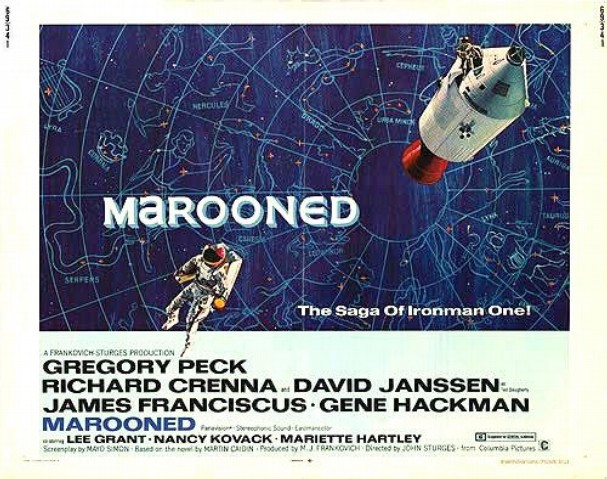
Unfortunately this film’s biggest claim to fame is that it is the only movie nominated for an Academy Award to be shown on ‘Mystery Science Theater 3000’.  As much as I enjoy that show I think it is unfair to throw this movie into the pile and make fun of it as I think it holds-up well and is a solid space drama.  The story based on the novel by Martin Caidin is about three astronauts (Richard Crenna, Gene Hackman, James Franciscus) who have been orbiting the earth for several months in a space lab, but as they try to return to earth they find that their retro rocket won’t fire and they’re stranded. Initially NASA, which is headed by Charles Keith (Gregory Peck) decide they have no alternative but to leave them there however, Ted Daugherty (David Janssen) puts up enough of a raucous that they decide to allow him to head a rescue mission. An impending hurricane and the astronaut’s dwindling supply of oxygen all cause further problems and force everyone to work at break-neck speed to pull it off.

One of the things that grabbed me initially was the lack of music. Instead we just here beeping sounds of a computer and the hum of a rocket during the opening credits, which helps give the film a futuristic and distinctive flair. I also liked the cool sounding hum that the viewer hears every time the men are outside of their capsule and in space. It has kind of a hypnotic tone to it and makes things a bit surreal. The special effects were decent for its era. You do have to forgive it a little particularly the scenes showing the rocket and men floating in space, which were clearly matted over a blue screen, but at least when the men are shown floating around with no gravity there are no visible strings. My favorite moment out of the entire film is when one of the men goes floating off motionless into the dark abyss while the other two watch solemnly from the capsule door.

The narrative could have been handled better. Instead of starting things out right away with the rocket taking the men off into space I felt there should have been more of a backstory to the main characters so we got to know them better and felt more empathy to their predicament. Even having flashbacks of the characters at different times in their life dotted throughout the film would have helped make them seem less cardboard. The scenes involving all three wives of the astronauts (Nancy Kovack, Mariette Hartley, Lee Grant) talking to their respective husbands via satellite just before the rescue mission takes off becomes too extended, predictable and maudlin. However, the scene involving the conversation that the astronauts have amongst themselves when it is learned that there isn’t enough oxygen for all three and one of them must be willing to die to save the other two I found to be gripping and compelling.

Peck is as usual incredibly stiff and delivers his lines like he is preaching some sort of sermon. Here though his style works with a character that is no-nonsense and locked into being completely practical at all times. His looks of nervousness as the rescue rocket gets ready to take off are great as is his delicate conversation that he has with Crenna involving which of them must sacrifice their life for the other two. Hackman is solid as usual playing an emotional Gus Grissom-like character, but he has played these roles so much it would have been interesting to see him play one of parts that required more restraint. The beautiful and talented Grant is wasted in a non-distinguished role as one of the wives, but her line about ‘the girls’ leaving the men alone so they can get back to their jobs seemed incredibly sexist especially from her.

The rescue mission is exciting, but excruciating and the ending is way too abrupt. However, my biggest complaint about this film that I otherwise find to be realistically and plausibly handled is that no explanation is ever given for why the rockets failed to fire, which I felt there should have been especially since there is a moment showing the green light on their dashboard stating that the rockets did fire and this light mysteriously stays on even when they shut down the power to the rest of the cabinet.

marooned 2

My Rating: 7 out of 10

Released: December 11, 1969

Runtime: 2Hours 14Minutes

Rated G

Director: John Sturges

Studio: Columbia

Available: DVD, Amazon Instant Video

A Minute to Pray, A Second to Die (1968)

a minute to pray a second to die

By Richard Winters

My Rating: 3 out of 10

4-Word Review: A gunfighter suffers seizures

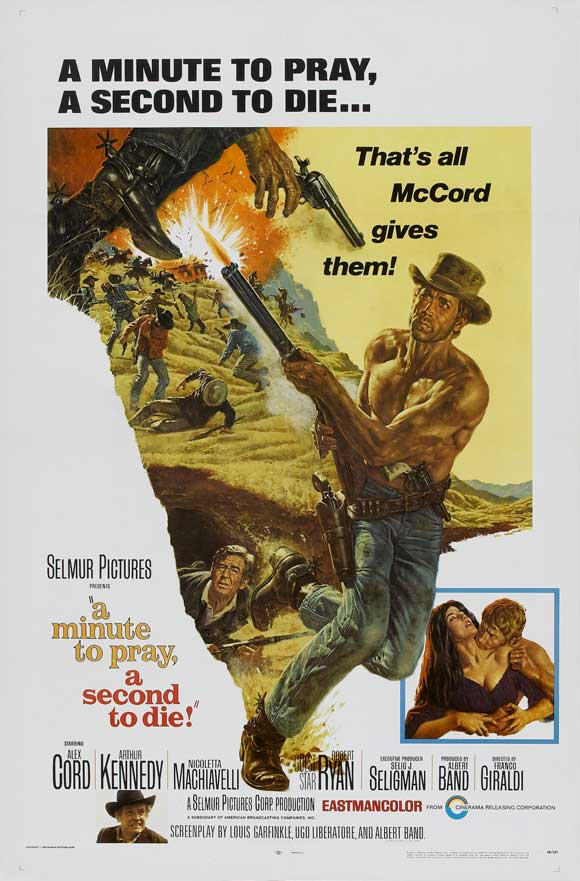
Clay McCord (Alex Cord) travels to New Mexico where the Governor (Robert Ryan) promises amnesty to all outlaws. Clay finds himself at odds with the other outlaws who are traveling to the state for the same reason, which causes him to get involved in numerous gun fights and although he is an excellent shooter he also suffers from strange seizures that temporarily paralyze his arm. When he has these fits it makes him completely vulnerable to all those who might want to take advantage of him. He tries to keep this condition a secret while looking for a Dr. which he hopes can cure him, but the other outlaws get wind of it and start to track him down.

One of the biggest problems with this movie is that Director Franco Giraldi is no Sergio Leone and you spend the whole time wondering how much better this would have been had Leone directed it. Giraldi fails to have Leone’s visual style or lyricism. Everything is staged and photographed in a very conventional unimaginative way with a lot of choppy editing. The one fun and interesting scene that the film does have Giraldi screws up and it entails Clay as a young boy watching a group of cowboys laughing at his father and dragging him through the mud while he suffers an epileptic seizure. The crying boy becomes so distraught that he steals one of the men’s guns and then turns around and shoots them all dead. Instead of taking advantage of the scene’s irony and showing the men with shocked expressions and even possibly having them getting hit and falling down dead in slow motion Giraldi instead immediately cuts away the second the boy starts shooting, which doesn’t allow the scene to gel and stand out as much as it should.

The music is another issue and in desperate need of Ennio Morricone’s distinctive orchestral sound. Carlo Rustichelli the composer here has a score that places too much emphasis on the violins and creates a heavy, droning melody that would be better suited for a drama. The dialogue is also dubbed. I know a lot of Italian filmmakers did this especially during this era. I’ve never been sure why and I have never liked it although with Dario Argento’s horror movies it somewhat works because it heightens the surreal effect, however here it cheapens the production and cements it as a definite B-movie.

Cord doesn’t have the charisma or presence of a leading man. His deep voice and laid back delivery makes him sound like he is only half awake. He glides through the film with too much of a detached and unemotional persona. The biggest problem though was the character. This is a man who has no idea when his seizures will occur and knows full well the vulnerable position they will put him in and yet he continues to behave in a brash, cocky way with everyone he meets and singlehandedly tries to right every wrong when it would have been much more practical to simply lay low and blend in with the crowd.

Nicoletta Machiavelli is a beauty and although I wasn’t so sure about her acting her face was so appealing that I wanted to see her in more scenes and was disappointed when she got killed off so quickly. Veteran actor Arthur Kennedy who wears a wig gives his usual stalwart performance as the town’s marshal, but it is not enough to save the picture. Ryan is okay as the governor, but I found it hard to believe that a man who looked like he was clearly getting elderly would be able to punch out as many guys as he does let alone even one of them.

There are quite a few gun battles particularly during the first half, but they are generic and the final one really isn’t that exciting. The ending peters out with a whimper and this spaghetti western wannabe does nothing but make you long to go back and re-watch a classic one.

My Rating: 3 out of 10

Released: May 1, 1968

Runtime: 1Hour 37Minutes (The DVD cover says 1Hour 58Minutes, but they’re wrong.)

Not Rated

Director: Franco Giraldi

Studio: Cinema Releasing Corporation

Available: DVD

Sands of the Kalahari (1965)

sands of the kalahari

By Richard Winters

My Rating: 8 out of 10

4-Word Review: Stranded in the desert.

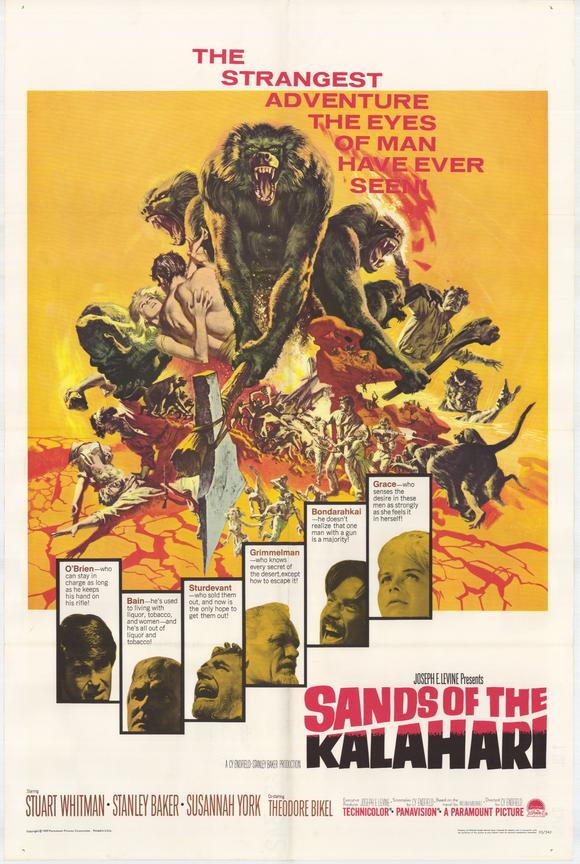
Based on the novel by William Mulvihill the story centers on a group of six individuals, five men and one woman, who fight to survive the blistering heat of the Kalahari Desert when their plane crashes after it’s struck by a large swath of locusts. Instead of working together as a team the group quickly disintegrates with infighting and tensions. The young and virile Brian (Stuart Whitman) who initially takes control of the situation starts to feel that his own survival would be heightened if there were less people needing food and water, so he decides to carefully eliminate them one-by-one, which leads to many interesting confrontations and a very unusual climactic finale.

Filmed on-location in Namibia the desert becomes its own character. The stunning sandy landscape is breathtaking and watching the characters walk along it under the crystal blue sky becomes almost awe-inspiring particularly during birds-eye view shots. The viewer feels like there are right there feeling the heat along with the rest of the characters. Writer/director Cy Endfield keeps things on an authentic level and stays for the most part faithful to the book with the exception of changing one of the characters who had been African American in the novel to Caucasian here. His use of actual animals is what impressed me the most particularly the baboons who become a major part of the story as well as seeing a live scorpion crawling up a man’s arm. The only real technical weakness is the cloud of locusts forming on the horizon, which looked like dust being sprayed on the plane’s windshield and when they started to splatter onto the window it looked more like scrambled eggs and not quite as impressive as I think the filmmaker’s had hoped.

I also had a bit of a problem with the Sturdevan character, which had been the plane’s pilot and is played by actor Nigel Davenport who attempts to rape Grace (Susannah York) after they had only been stranded in the desert for a day and a half. I felt this was too quick for people to so suddenly drop their civilized veneers and cave into their more animalistic urges. I could see this maybe occurring after being there for weeks or months, but I would think initially the urgency would be finding help and just plain surviving and sex being the last thing on anyone’s minds. This same issue occurs with Grace who becomes romantically attached to Brian and even professes her ‘love’ for him after only a couple of days, which again seemed too rushed. The romantic scenes make the film seem soap-opera like and gives it an unnecessary melodramatic feel that does nothing but bog down the pace.

Whitman whose career dissipated after the 60’s and was confined with less significant roles and films is memorable here. The character who comes onto the plane at the last second is initially big and brawny heroic and watching him devolve into a selfish anti-social man is interesting as are the scenes with him trapped in a hole. The segment where he throws a fire into a cave filled with baboons and then shoots the animals as they run out is quite startling. I also enjoyed York. She has always been a splendid actress, but here with her blonde hair matched against her red skin and torn dress looks genuinely sexy.

The one-on-one confrontations between the characters especially the one between Grimmelman (Harry Andrews) and Brian and then later between Brian, Grace and Mike (Stanley Baker) is what helps the film really stand-out. I would have liked it played-out a bit more, but the twist that comes at the end is indeed unexpected and leads to one of the more unusual climactic sequences you will ever see.

My Rating: 8 out of 10

Release: November 24, 1965

Runtime: 1Hour 59Minutes

Not Rated

Director: Cy Endfield

Studio: Paramount

Available: DVD, Amazon Instant Video 

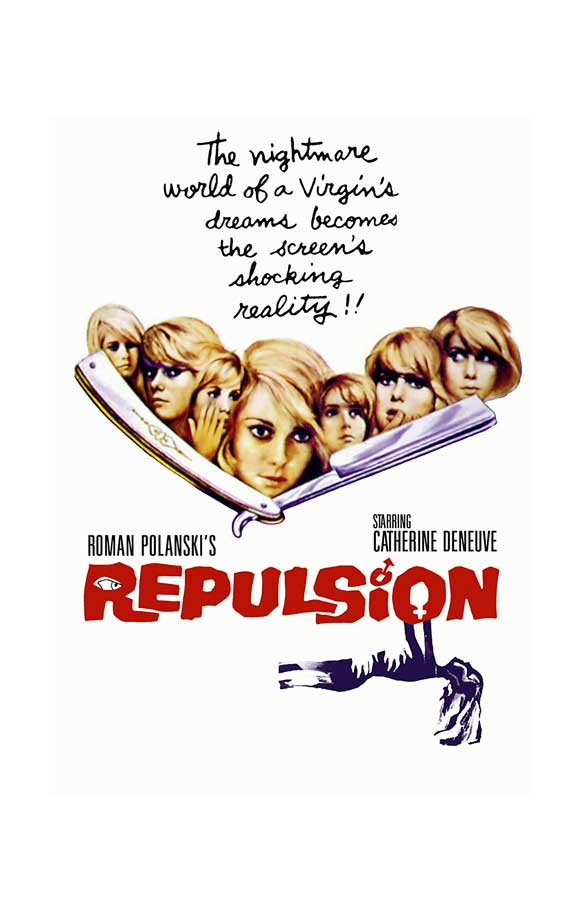
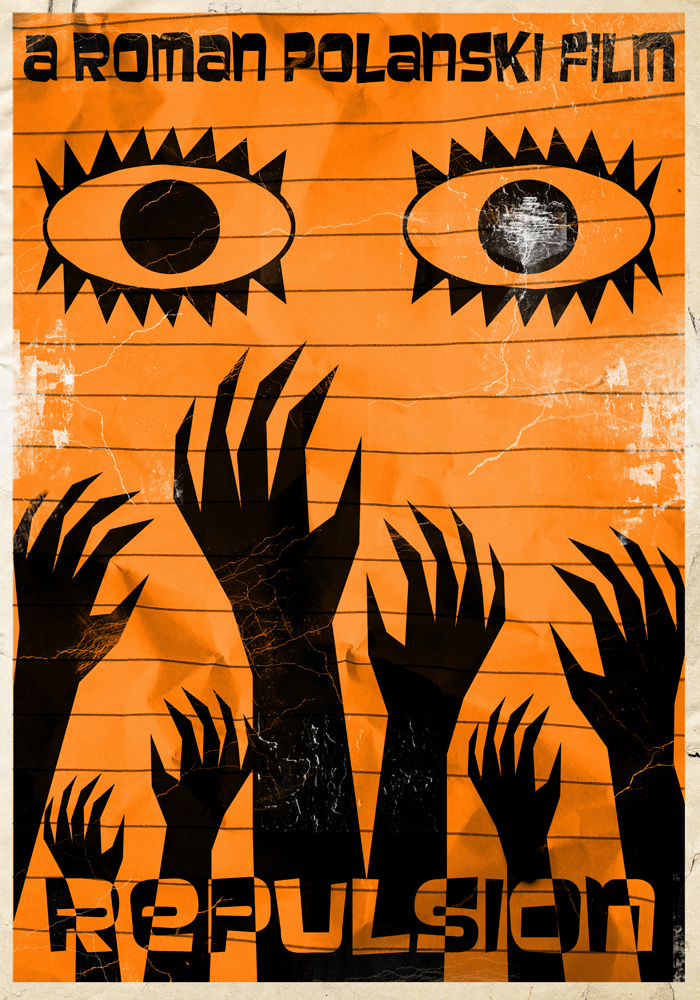
Repulsion (1965)

repulsion 1

By Richard Winters

My Rating: 8 out of 10

4-Word Review: She loses her mind.

Love or loathe him one thing is for sure the controversial Roman Polanski has made some great movies and since today marks his 80th birthday I thought it would be good to review one of his films this being his first English language one. The story, which was written by Polanski and Gerard Brach centers on Carol (Catherine Deneuve) a beautiful but lonely young woman living in an apartment with her older sister Helen (Yvonne Furneaux) and Helen’s boyfriend Michael (Ian Hendry). Carol seems detached and troubled and when Helen and Michael go off for the weekend Carol begins to suffer hallucinations while inside the apartment that becomes increasingly more frightening and eventually leads to murder.

The film works at a slow and deliberate pace that some viewers may feel put-off by. Personally I felt it was effective and made it more realistic although things really don’t start to get intense until the final hour. For me it was the little things that made it intriguing for instance the way Carol becomes fascinated with the distorted reflection of herself in a teapot, or a rolling bottle of nail polish. Nothing is over-the-top, but instead subtle and restrained. This is one of the few films that seem to understand the thought process of the mentally ill and makes you feel like you are really inside their head and seeing things as they do, which is what makes it so unnerving. The low-key approach works because like with an actual person having a breakdown it starts with little things that slowly morph into bigger ones.

Polanski shows incredible control over the material. The stark black-and-white cinematography helps to heighten the ugliness of the situation. The variety of camera angles and movements creates an almost hypnotic effect. I loved the way, as Carol gets further into her demented state, that the dimensions of the apartment begins to change, or the hands coming out of the walls. My only complaint is I wished some of these effects had been played up even more. The rape sequences are quite effective and surprisingly explicit for its time period. Yet instead of hearing Carol’s screams during these moments we instead hear the ticking of a clock, which somehow makes it even more disturbing.

Deneuve gives one of her best performances and she was at the peak of youthful beauty here. The blank almost zombie-like look in her eyes is penetrating. You get the feeling that she not only truly understands the madness of her character, but actually is the character. Patrick Wymark is also memorable as the landlord who goes from being bombastic and demanding to kind and cuddling and eventually sexually deviant in a matter of only 10 minutes.

Normally I always like a background to the characters and when they are missing or vague I find it a weakness to the script while here it is strangely a strength. We can surmise that she was most likely abused sexually when she was younger, but the who, when, and why is never made clear. This though somehow makes the character and the situation more compelling and reflects back to how psychologically fragile the human condition can be and how these things can happen to anyone. The final tracking shot, which stops on a picture of Carol as a child showing an angry look on her face is great.

The imagery and psychological approach to this thing is still one-of-a-kind. The movie viewing experience on this one remains potent and aptly deserves its classic status.

repulsion 2

My Rating: 8 out of 10

Released: October 2, 1965

Runtime: 1Hour 45Minutes

Not Rated

Director: Roman Polanski

Studio: Compton Films

Available: VHS, DVD, Blu-ray, Amazon Instant Video

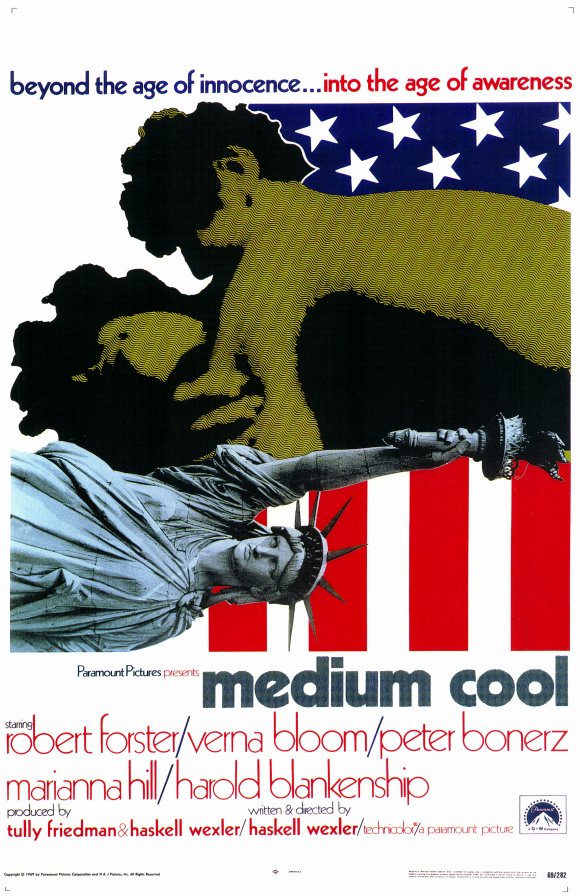
Medium Cool (1969)

medium cool 1

By Richard Winters

My Rating: 9 out of 10

4-Word Review: The 60’s up close.

If you ever wanted to travel back in time and take part in the events of the tumultuous 60’s this film comes about as close to that as you can get. Watching this isn’t like viewing a movie, but more like an experience in itself. Acclaimed cinematographer Haskell Wexler who had previously worked in the documentary field heard that demonstrators were going to march at the 1968 Democratic convention in Chicago so he decided to hire a few actors and throw them into the fray while building a thin plot around it and creating a pseudo-reality effect. The story deals with news cameraman John Cassellis (Robert Forster) who meets and starts to date Eileen (Verna Bloom) who has just moved to Chicago from West Virginia with her 11-year-old son Harold (Harold Blankenship). As the convention and protests begin and John begins to cover it Harold runs away from home and Eileen goes into all the chaos to find him.

The scenes from the riots leave a major impact and even though I had already seen this film several times before I was amazed at how compelling it still was. Everything still seemed fresh with a clarity that makes you feel you are right there and a vividness that seems like it was filmed just yesterday. Watching the National Guard with their rifles raised marching down the streets of Chicago threatening crowds of people is incredible as is the sight of army tanks rolling down Michigan Avenue.  The people in the crowds are not actors and you see them getting clubbed by the police only a few feet from the camera. Watching them take the park benches in Grant Park and use them to build a shield from the police is exciting as are actual sound bites of reporters describing the action and at certain points being roughed up by the patrol as well. The look of fear and confusion on Bloom’s face at what she finds herself in the middle of it is authentic and helps build the tension.

Of course these scenes only make up the final fifteen minutes of the film, but the movie is filled with a variety of other unique moments that are all captured with the same vivid style and are equally memorable. The part where John and Eileen go to a roller derby and watch actual female players beat each other up with some even using their fists gets quite vicious. The scene showing hundreds of caged pigeons being set free and flying off in a giant flock that fills the sky is eloquent. There is even some effective erotica as a naked John chases his naked girlfriend Ruth (Marianna Hill) around his apartment before lifting her up by her legs and spinning her around in a circle.

The film also takes a great critical look at television news and the people who cover it. It shows how reporters and cameramen are very detached from the events and people that they are covering and how their need to capture that ‘great’ image or sound bite supersedes the human element.

Forster is perfect for the lead role. I loved his aggressive, blue collar, tough-guy attitude that perfectly reflects the Windy City. Peter Bonerz who plays Gus his sound man is great, but in the opposite way. His character is much more timid and wants to avoid confrontation at every turn and finds it difficult dealing with some black people who make him feel uncomfortable when he visits their apartment and even some young children when they start to climb on his car.

The only negative is that the song ‘Merry-Go-Round’ by Wild Man Fischer is not included in the most recent Criterion Collection DVD/Blu-ray release. The song was in the original release shown in theaters as well as the film’s first VHS version, which I saw. Unfortunately the song’s copyright holders sued Paramount stating that a VHS/DVD release is not the same as a theatrical/television broadcast, which they were under contract for to use and therefore could not include it in any later reissues, which is a real shame. The song has to be one of the strangest things you will ever hear and done by an eccentric one-of-a-kind artist. It has a weird alluring quality to it that gives personality and an extra edge to the film and in later versions gets replaced with ‘Sweet Georgia Brown’ better known as the theme for The Harlem Globetrotters, which is just not as effective.

My Rating: 9 out of 10

Released: August 27, 1969

Runtime: 1Hour 11Minutes

Rated R

Director: Haskell Wexler

Studio: Paramount

Available: VHS, DVD, Blu-ray (The Criterion Collection)

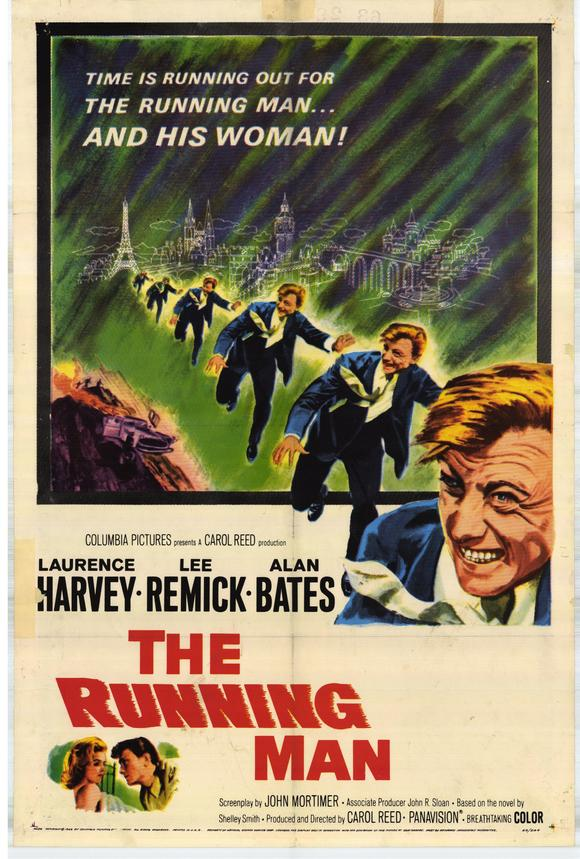
The Running Man (1963)

the running man 1

By Richard Winters

My Rating: 7 out of 10

4-Word Review: Couple scams insurance company.

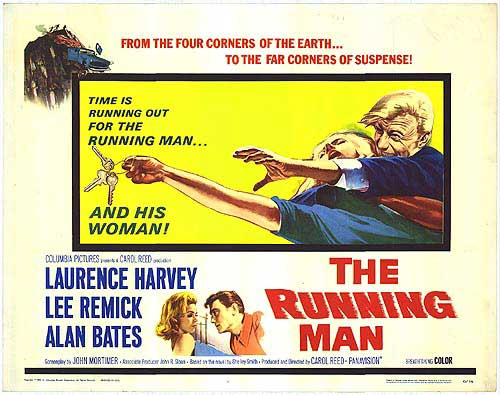
Rex (Laurence Harvey) is a victim of a plane crash when the airplane he is piloting crashes in a forest. He survives with minor injuries, but the plane is totaled and he expects a big payout from his insurance company. However, since he was two days late with his premium payment the policy was canceled and he gets nothing. Outraged he plans a scheme to get revenge with the help of his wife Stella (Lee Remick). He purchases a glider plane and has it insured with the same company. He then intentionally crashes it into the water and before help arrives he dives into the lake and by using an underwater apparatus swims ashore undetected. He hides out on a small island during the investigation and when it is finally confirmed that he was ‘lost-at-sea’ and the insurance pays a handsome sum to Stella the two then run off to Spain, but insurance investigator Stephan (Alan Bates) still has his suspicions and follows the two while continuing to hound them with questions forcing them into a shrewd game of cat-and-mouse.

Based on the novel by Shelley Smith this is a thriller in the most classic sense. The plot is completely believable and still very timely without any of the annoying loopholes. The action particularly during the final 30 minutes, which had me literally on the edge of my seat, is very exciting. The twists are interesting and unpredictable.

What I enjoyed most though was the way the characters evolve and change as the story progresses. Stella initially comes off as carefree and callous only to end up being beleaguered, worn out, and even feeling a bit guilty. Rex seems slick and conniving at the start, but eventually turns crass, vindictive and wholly unlikable. Stephan is nosy and intrusive when it begins, but before it is over he is the most sympathetic to the viewer. Having worked in the insurance industry now for 15 years I liked how the film shows things from both side not only the rigid business-like end, but also how those that try to cheat the system even when they feel somehow ‘justified’ in doing it only ends up making it worse for everybody else. The very ironic ending hits the bullseye.

Director Carol Reed is in top form. I liked how he captures the many different exotic locales of Spain not only with the outdoor scenery and villas, but also inside an old church cathedral as well as an empty bullfighting arena. The opening credit sequence showing Harvey’s shadowing figure running in front of a colored background is good as his the variety of camera angles used particularly during Rex’s final attempt to escape by airplane. The only part that I thought was unnecessary was in when Rex finds a passport left by an Australian that he was talking to inside a bar. Rex picks it up and it is clear to the viewer that he was thinking of using it for his own change of identity, but Reed still felt the need to superimpose Rex’s head shot over the Australian’s, which seemed heavy-handed as does the booming music that is played when Stephan meets Stella for the second time while in Spain.

Remick is excellent and the stresses and strains that her character conveys are easily felt by the viewer. Harvey seems to be having a grand old time particularly when he is in the disguise of the Australian. Although there is some debate over it at IMDB I actually felt that his Aussie accent was alright. He does however look much too scrawny in his bathing suit although Remick in her bikini is delectable.

Why this exciting and polished thriller has never been released onto DVD, or Blu-ray let alone VHS is a complete mystery especially when it stars two major actors from 60’s British cinema and directed by a legend. This movie is waiting to be discovered by new fans and can be enjoyed by just about everyone.

the running man 2

My Rating: 7 out of 10

Released: October 2, 1963

Runtime: 1Hour 43Minutes

Not Rated

Director: Carol Reed

Studio: Columbia Pictures

Not Available at this time.

The Fool Killer (1965)

fool killer

By Richard Winters

My Rating: 6 out of 10

4-Word Review: Kid roams the countryside.

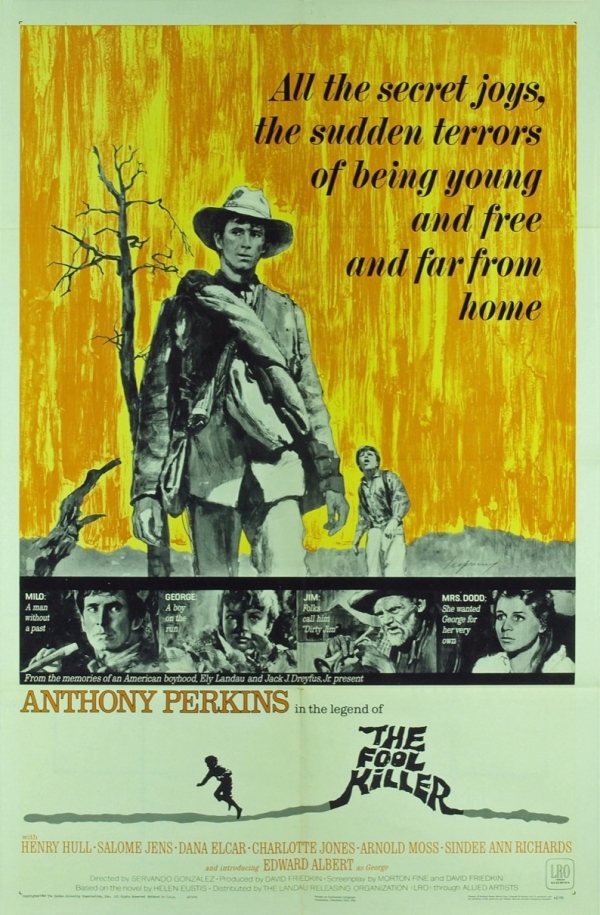
George Mellish (Edward Albert) is a 12-year-old boy who runs away from home after a particularly harsh beating at the hands of his foster parents. As he roams the Tennessee countryside he meets Dirty Jim (Henry Hull) an old man who takes him into his rundown home and fills his head with all sorts of stories about an eight foot ax-wielding man who kills people he deems to be foolish. After a bout of illness George runs away from Jim and late one night meets Milo (Anthony Perkins) a loner who carries an ax and acts strangely. Initially George thinks that he is ‘the fool killer’ Jim described, but the two soon become friends even though strange ax murders begin to occur everywhere they go.

Servando Gonzalez’s direction is excellent and the one thing that keeps this otherwise thin story intriguing. This was his only English language film and he uses a variety of different camera angles and editing styles to create a sort of hypnotic effect. The on-location shooting is vivid and their ability to recreate the look and feel of the late 1800’s is solid including having the characters occasionally speak with poor grammar, which helps with the authenticity.

The only thing about Gonzalez’s direction that I did not like is where they have a nighttime scene that was clearly filmed in the daytime, but done with a darkened lens to ‘fool’ the viewer into thinking it is night. This process has been done many times in the past, but it never works. Even with the dark lens the sky is too bright and you are unable to see any stars. I remember this done a few times on the old ‘Brady Bunch’ TV-show and I always found it disconcerting. The reason is usually because by law child performers are not allowed to work past a certain late hour, so if the script calls for a nighttime scene they try to compensate using this trick, but it always looks tacky. My solution would be to get the parent’s permission to allow the young performer to work late for one night or alter the script to have the scene done in the daytime.

Despite some good production values and an interesting narrative the story itself, based on a novel by Helen Eustis, is limp and doesn’t have enough action. The middle section, which features a lot of conversations between Milo and George, gets boring and the pace comes to a screeching halt. The George character also gets a bit annoying. I realize he is a young and the story takes place in a more innocent era, but the kid falls too easily for anything and everything he is told and seems to have no center, which eventually becomes off-putting.

For what it is worth Albert is good in the lead in what was his film debut and so is Perkins although with this he was risking getting typecast. I thought Henry Hull in one of his last roles was highly engaging and I also really liked Arnold Moss as a bombastic preacher giving a fiery sermon under a tent during a religious revival. Since the movie otherwise does not have much happening this scene tends to be pretty electrifying and vivid particularly the looks on the people’s faces as he preaches to them.

There is a sort-of surprise ending, but it is not that big of a deal and most viewers will probably see it coming long before it happens and they might also say to themselves ‘I sat through two hours of this just for that!’ as well. If the story had been a little richer with more twists or a subplot this might have been memorable, but as it is the final result is empty.

My Rating: 6 out of 10

Released: April 28, 1965

Runtime: 1Hour 39Minutes

Not Rated

Director: Servando Gonzalez

Studio: Allied Artists Pictures

Available: VHS