Tag Archives: Roy Scheider

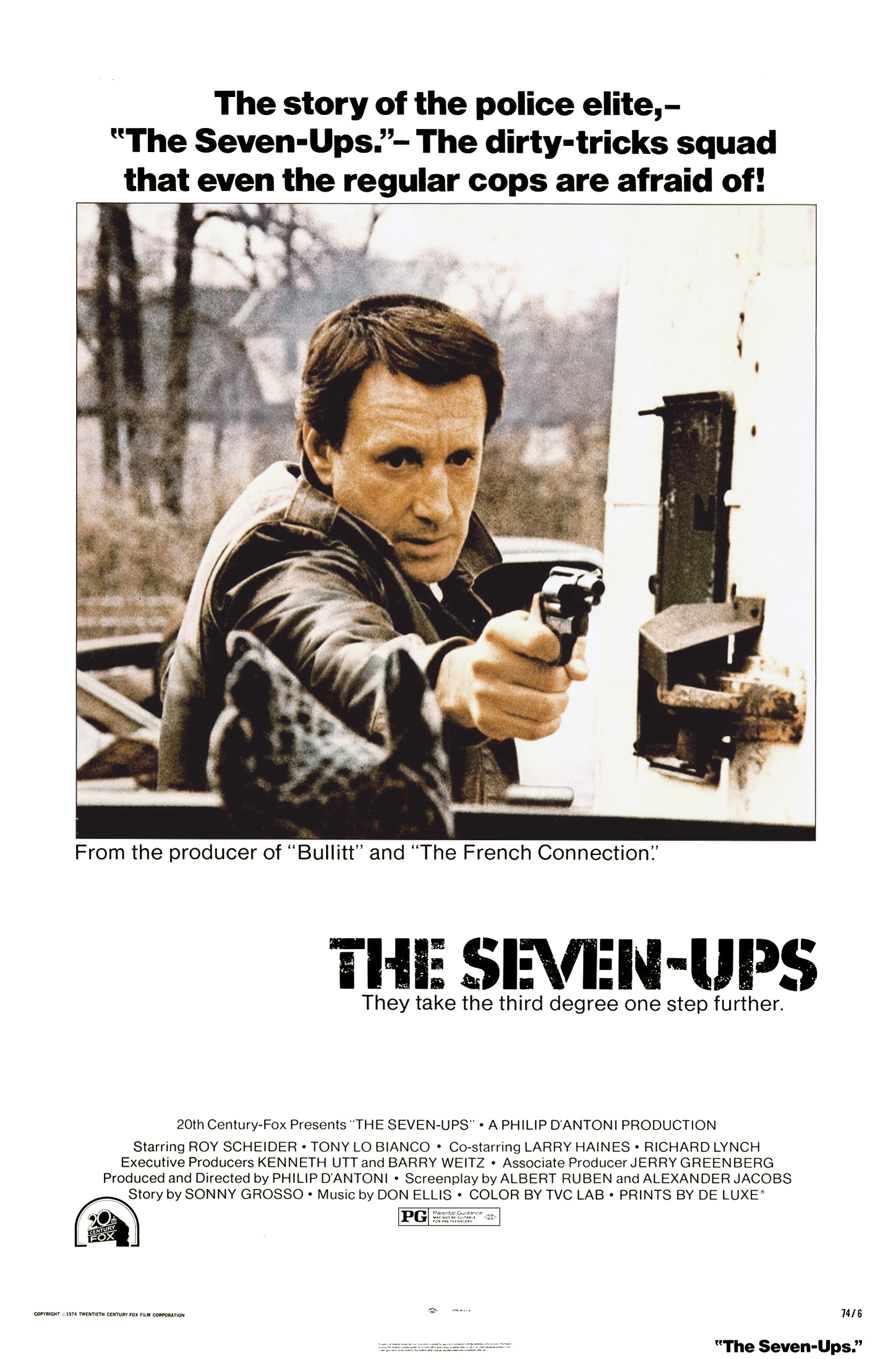
The Seven Ups (1973)

By Richard Winters

My Rating: 7 out of 10

4-Word Review: Cops use unorthodox methods.

Buddy (Roy Scheider) is a police detective who runs a group of renegade cops who employ unusual and sometimes questionable methods to nab crooks. Once apprehended the criminals they arrest usually end up serving 7-years or more in the penitentiary, which gives their group the nickname of the ‘Seven Ups’. The groups most recent mission is investigating kidnappings occurring in the city and Buddy uses the help of Vito (Tony Lo Bianco) a childhood friend who works as an undercover informant for the police, but who unbeknownst to Buddy is actually behind the recent crimes going on and even the orchestrator.

After the success of The French Connection producer Phil d’Antoni became inspired to produce another similar crime film dealing with the true-life event that occurred in the 50’s in New York that had mobsters being kidnapped by criminals posing as cops. He wanted William Friedkin, who had done so well with the first film, to direct this one, but Friedkin didn’t like the script and passed as did several other directors, which eventually lead the studio to choose d’Antoni to take the helm himself in his one and only foray behind the camera with results that are both good and bad.

The production lacks cinematic flair and shot in a flat way almost like a documentary, which to some degree actually helps it. It was filmed between January and April of 1973 and the crisp, gray, frigid look helps build an atmosphere by accentuating the grimy, cold life of the underworld and how the detectives themselves get foisted into it. The plot is basic and linear, so it’s easy to follow and not cluttered with unnecessary mystery angles and tangents as the viewer knows right away who’s behind everything. There’s also a tense scenes inside a car wash, not exactly sure the perpetrators would’ve been able to pull-off as effortlessly as they do, but it definitely keeps you riveted as you feel the same unease as the two guys in the car though having another scene come later that also takes place in a car wash wasn’t needed.

The film though doesn’t have the interesting characters like in The French Connection where Popeye Doyle’s lifestyle and temperament contrasted in fascinating ways with the man he was pursuing and in fact it was Doyle’s fractured personality that made the movie so compelling. Here, through no fault of Scheider who plays the part well for what is asked, but his character is quite one-note. We learn nothing about him, or his home life. He’s just a typical New York cop obsessed with getting the bad guys, which is fine, but doesn’t have the multi-dimensional quality to help make him memorable.

The supporting characters aren’t necessarily much better, but the actors who play them at least help give them some life. Larry Haines, probably best known for playing one of Felix and Oscar’s poker playing buddies in The Odd Couple, has a good turn here as a crime boss who’s nonchalant initially when he thinks he’s being taken to the cop station for a routine arrest only to cower in fright when he realizes he’s been duped and then when he survives shows no mercy in his unrelenting pursuit for revenge. My only quibble though is that Scheider and his cohorts are able to break into Haines’ house too easily and even able to catch him and his wife sleeping in bed, but you’d think with him being a well-known target with the police he’d have burglar alarms set-up all over his home to detect anyone trying to get in and since he’d just had a traumatic kidnapping incident earlier you’d think he wouldn’t be able to sleep soundly again, or paranoid enough to sleep lightly and aware of any noise.

The car chase sequence is by far the best moment, and some may say the only real reason to watch it. It certainly has you holding your breath, but in a lot of ways is too similar to Bullit, another film produced by d’Antoni, so it really doesn’t stand out as much as it should. There’s also the issue of Scheider pursuing the bad guys even as there’s pedestrians all around. Most real-life cops will stop chasing after a culprit’s car if they feel  it will put others at too much of a risk and this comes to a horrifying moment when school children are playing on the street and must quickly run to the curb when the bad guys drive their car through only a few seconds later to almost get hit by Scheider’s car as he plows through at high speeds without even a thought of putting on his breaks making him seem more like an irresponsible cop who’s more of a problem than a solution.

Nonetheless it’s gripping and I enjoyed how it ends with Scheider ducking under the windshield just as his vehicle hits the underside of the backend of a truck in an intended ‘homage’ to Jayne Mansfield’s wreck. It’s also great watching Richard Lynch’s facial expressions as he plays the crook sitting in the passenger’s side of the fleeing car. Some could say it’s great acting, which maybe it was, but I believe his looks of nervousness and fear was genuine, which just helps to make these shots of his face, which get intercut throughout the chase all the more entertaining and help to have a human side to the action as I and almost anyone else would be reacting the same as he does if we were in the same situation.

My Rating: 7 out of 10

Released: December 14, 1973

Runtime: 1 Hour 43 Minutes

Rated R

Director: Philip D’Antoni

Studio: 20th Century Fox

Available: DVD, Blu-ray

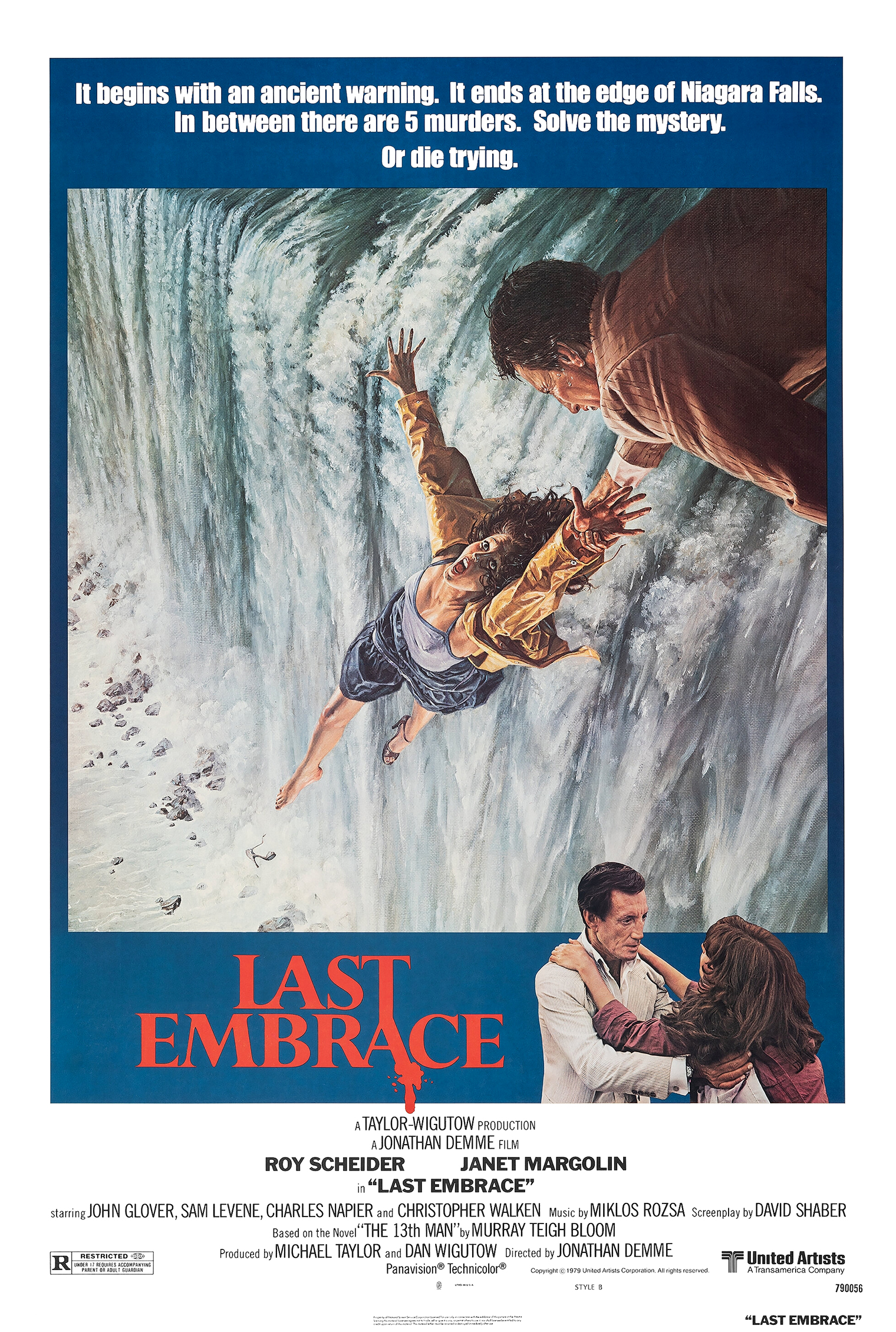
Last Embrace (1979)

lastembrace

By Richard Winters

My Rating: 7 out of 10

4-Word Review: Someone wants him dead.

Loosely based on the novel ‘The 13th Man’ by Murray Teigh Bloom the story centers around Harry (Roy Scheider) a government agent who has a nervous breakdown after his wife gets killed during a shootout while he was on a secret mission. After spending time in a sanitarium he gets out to realize that his agency no longer has any assignments for him and he fears they may want him dead while trying to make it look like an accident. When he gets back to his apartment he finds that it’s been sublet to Ellie (Janet Margolin), a doctoral student at Princeton University. He tries to get her to move-out, but can’t and then starts to receive threatening notes in Hebrew and uses Ellie’s background in that language to help him decipher what they’re saying. Soon the two go on the run convinced that the same person after Harry may also now be targeting Ellie, but nothing is exactly as it seems.

Jonathan Demme, despite his immense talent and admirable film output, never received name recognition and for the greater part of his career failed to have a hit at the box office. In fact it wasn’t until the success of The Silence of the Lambs that he even became a sought after Hollywood commodity. Even then when most people think about that movie it’s Anthony Hopkins, or even Jodie Foster that comes to mind while Demme’s directorial efforts seem overlooked. In many of his interviews this was his biggest complaint and that no matter what he did he could never break-out of the bubble to have his name put over the title like with Spielberg, Scorssese, or Hitchcock. I could understand his frustration as his movies were step above your basic indie flick and while not perfect still had far more going for it than a usual B-picture and if anything this film should’ve been the one that got him noticed.

There’s been many Hitchcock imitations with a lot of them done by Brian Di Palma, but those seemed overdone while this one gets just the right balance. The on-location shooting is splendid with my favorite moments being at Princeton University bell tower and of course the climactic sequence at Niagara Falls. I’ve personally been to the falls, but found this movie made me feel closer and more immersed in it than in person especially with the sequences shot inside the Robert Moses Niagara Power Plant and another done in the Cave of the Winds, which is what really makes the film stand-out. The music score by Miklos Rozsa, has the perfect blend of what would’ve been used by Bernard Herrman, which was Hitch’s main composer, which helps to make this seem like a movie Hitch himself could of very well done himself.

Scheider’s acting is good as he’s constantly cranky and irritable, which anyone going through his situation would be, so it was realistic and relatable, but I really hated the white suits that he wore. For one thing the guy was out of work and no longer a professional agent, so why he felt the need to dress-up all the time when he really wasn’t on the job anymore didn’t make much sense. Why they were all white was even more head-scratching. Outside of Pat Boone I don’t know of anyone who wears a white suit and it made him stand-out in all the wrong ways. If this guy is afraid that he’s being targeted then he should be dressing down so he could then blend-in, which in this movie he definitely wasn’t.

Margolin, best known for her work in the landmark indie flick David and Lisa, is good too especially with her dual personalities where she plays a nerdy student and her alluring, sexy vamp alter ego at other points. She though was not the original choice for the part as Demme wanted Lynn Lowry, who had been in his previous film Fighting Mad, but Scheider, who was dating Margolin at the time, preferred her and studio backed him on it forcing Demme to drop Lowry, but out of guilt he still paid her and allowed her to collect residuals despite her never appearing in any of it.

Spoiler Alert!

The plot is fast-moving and well crafted and keeps you guessing while also introducing a wide array of new twists without ever getting too confusing. The final twist though, in which we find that Ellie is the one after Harry and has been murdering other men as well in a revenge plot for what Harry’s and the other men’s grandfathers did to her grandmother who was gang raped by them at age 15. The idea was to tie the Ellie character to the Biblical avenger of Goel, which sounds cool, but ultimately an overreach. Had Ellie been raped directly by these men then I could see her going out of her way to seek rough justice, but doing it all for a grandmother she barely knew just didn’t seem all that believable. Also, how does this then ‘right the wrong’ by taking vengeance out on the grandchildren of the men who committed the actual crime? The grand kids had no control over what their grandparents did and weren’t even around when it happened, so how is any of this fair, or even make sense?

A better way to have ended it was to have Ellie portrayed as being a crazy kook going after these men due to a belief in some conspiracy theory only for the viewer to finally realize that she was an actual rape victim and Scheider, who we thought was this good guy, was instead the villain. Since she was raped at 15 her features could’ve changed, which would thus explain why Scheider didn’t recognize her initially. With a movie so compelled to have one twist after the other, this would’ve been the ultimate jaw-dropper. It’s just a shame they hadn’t chosen this route as the film, as slick as it is most of the way, leaves the viewer with an empty feeling after it’s over.

My Rating: 7 out of 10

Released: May 4, 1979

Runtime: 1 Hour 42 Minutes

Rated PG

Director: Jonathan Demme

Studio: United Artists

Available: DVD, Blu-ray, Tubi

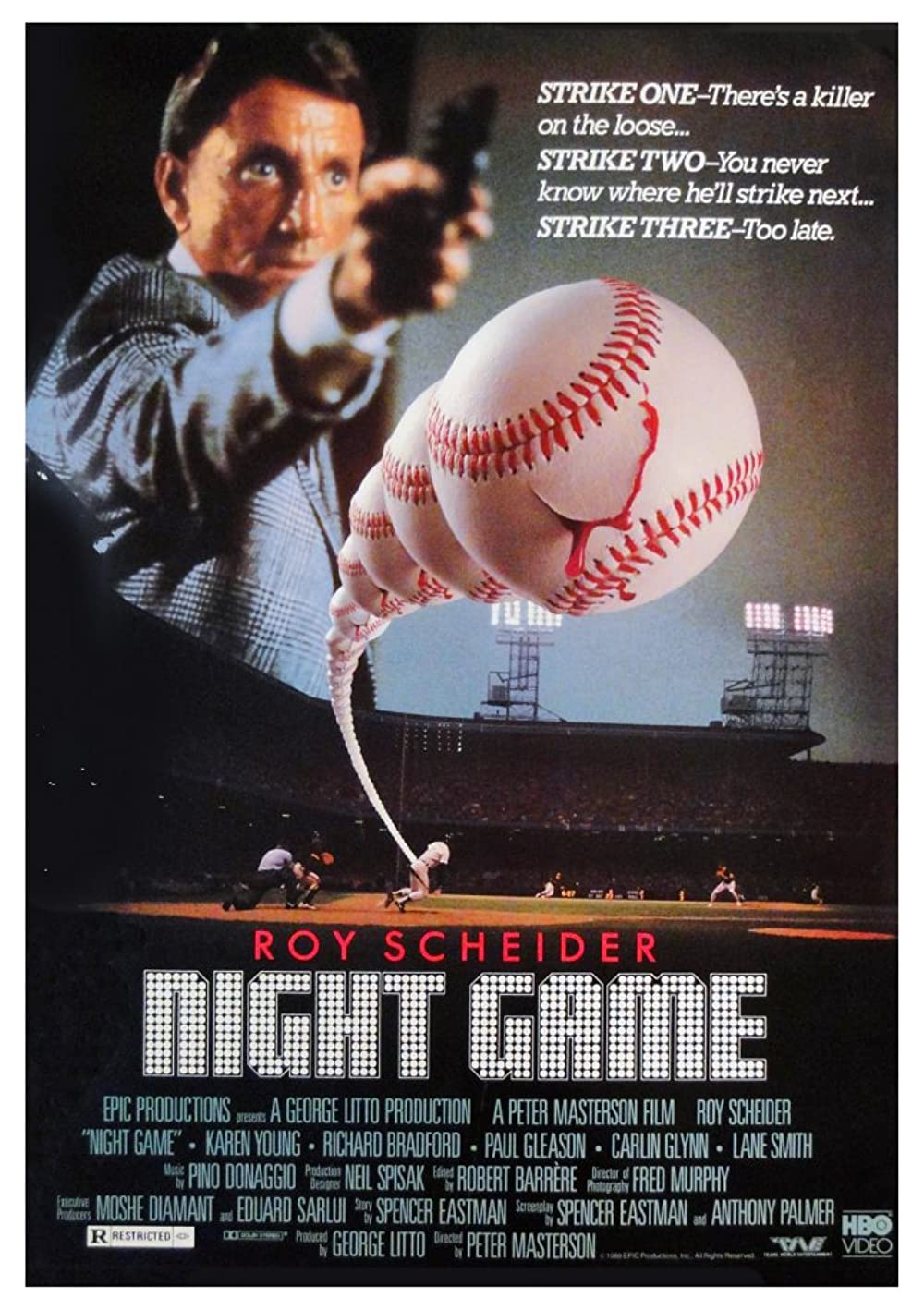
Night Game (1989)

nightgame1

By Richard Winters

My Rating: 4 out of 10

4-Word Review: Baseball score and murder.

Mike Seaver (Roy Scheider), a police detective, is put in charge of investigating a series of bizarre murders where women, some of them prostitutes, are murdered along the beaches of Galveston, Texas after each Houston Astros home game where pitcher Silvio Baretto achieves a victory. There are initially no suspects and it all seems to be a coincidence until Seaver ties the clues together and hones in on the killer while quarreling with Witty (Lane Smith) a state investigator brought in to help him with the case, but who has opposing ideas as to how to approach it.

The story is a strange mixture wanting to feed-off of the slasher films of the 80’s while also tying it to a sports themed flick, that was also popular during that decade, but manages to fail on both ends. The killings aren’t imaginative enough to attract a horror audience while the gore is much too graphic for those just looking for a slick thriller and thus both types of viewers will get put-off with this pretty quickly. Fans of sports movies won’t like it either as the baseballs scenes are brief and fleeting. While it’s kind of fun to see the Astros old color bar uniforms as well as watching actual game footage shot inside the old Astrodome, which at one time was coined ‘the 8th wonder of the world’ it hardly seems necessary especially since a TV-movie ‘Murder at the World Series’, which came out in 1977, had a very similar storyline that also included the Astros and Astrodome making this seem like a cheap, uninspired rip-off of that one.

The plot at least, while still dated especially on the technology end, takes a realistic approach to being a detective and how hard it is to find clues that can help piece the case together and lead to an actual suspect. Scheider, who was 57 at the time and looking it, manages to give it some energy and this was helped no less than by casting Richard Bradford as his nervous and pensive superior whose white hair and old school ways helps to offset Scheider’s wrinkles despite the fact that Scheider was in real-life 2 years older. The side stories though dealing with Smith coming in to butt heads with Roy doesn’t get played-up enough to be interesting and Scheider squabbling with his mother-in-law over a color TV that he got her drags the pacing down and hurts the tension of the mystery, which is where the sole focus of the script should’ve stayed.

Spoiler Alert!

What really ruins it though is the stupid ending. For one thing people in big cities, and Houston is the 4th largest one in the US, get murdered all the time, so having a cop able to somehow tie it to when a pitcher wins a game was too much of a stretch as technically there’s likely to be a murder happening somewhere whenever ANY pitcher wins a game and there needed to be more direct clues, like the killer sending cryptic notes to the police, or media, stating what his intentions were for it to realistically come together for the investigators.

The man playing the murderer, Rex Linn, who is supposedly a former pitcher who got cut from the team and then ultimately loses his hand in an accident and has it replaced with a hook, looks more like an disheveled, beer bellied truck driver who never played a sports game in his life. His motivations, to kill someone whenever the pitcher, who replaced him on the rotation, wins a game, in order to steal media attention away from the new pitcher’s success, is poorly thought out. It would’ve made more sense had the disgruntled man gone after the pitcher directly by either threatening his life, or those of his family, or maybe even attempting to kill the general manager, or owner, since they were the ones directly responsible for cutting him instead of no-name hookers who usually don’t get a lot of news attention anyways when they’re killed and thus making the whole premise pretty vapid.

My Rating: 4 out of 10

Released: September 15, 1989

Runtime: 1 Hour 35 Minutes

Rated R

Director: Peter Masterson

Studio: Epic Productions

Available: DVD, Blu-ray, Amazon Video, Tubi

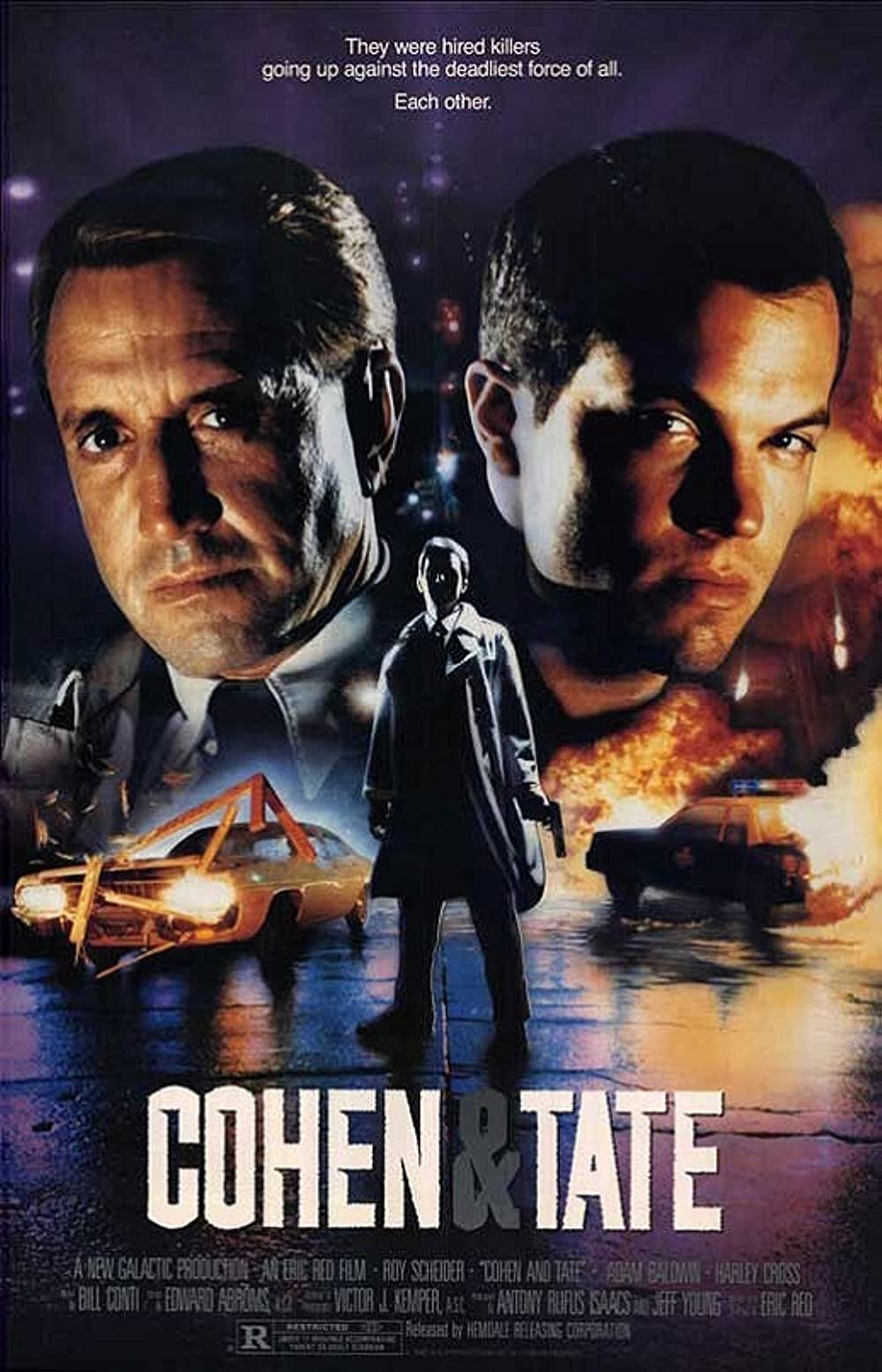
Cohen & Tate (1988)

cohen

By Richard Winters

My Rating: 6 out of 10

4-Word Review: Child witness gets kidnapped.

Travis (Harley Cross) is a 9-year-old who witnesses a mob hit and for his own protection both he and his parents (Cooper Huckabee, Suzanne Savoy) are put into a witness protection program where they are uprooted from the home they’d live-in and moved to an isolated place that has federal agents standing guard outside around-the-clock. One day the place gets invaded by Cohen (Roy Scheider) and Tate (Adam Baldwin), who are two hit men working for the mob. The mob wants to prevent Travis from testifying in court, so the two hit men kill the parents and the federal agents and then kidnap the boy and take him on a long road trip to Houston where the mob bosses can question him directly. Along the way Cohen and Tate bicker and make clear they do not like each other and Travis exploits this to get them to fight more and then uses it as a diversion to escape.

After writing the screenplays for The Hitcher and Near Dark Eric Red was finally given the green light to direct his own movie and tension-wise the film is compact, but visually it’s boring. The car ride taking place almost completely a night where we see nothing but the interior shots of an old, grimy car enveloped by pitch blackness is not interesting and having it instead take place in the daylight where the rugged, but scenic Texas landscape could’ve added ambiance would’ve worked better. The night setting also adds in a few logic loopholes like when the kid runs down the highway there’s tons of traffic, but why would there be so many vehicles in the dead of night and the middle-of-nowhere? Also, you’d think a least a few of those drivers who saw a kid running on the road might want to pull over and offer assistance, but none of them do.

The film’s only surprising element is seeing Roy Scheider play a bad guy, which he rarely ever did. The role was originally intended for Gene Hackman, who turned it down, and then offered to John Cassavetes, who also passed on it, which is ashame. Cassavetes, with his tall stature and hawk-like facial features would’ve been perfect. Scheider, for what it’s worth, is okay, but he looks frail especially when seated next to the much bigger and younger Baldwin making his character appear weak and vulnerable. The film wants to portray Scheider as being in-control, but that’s not really how it ever comes-off. 

The in-fighting between the hit men is a big problem as it telegraphs right away the eventual meltdown between the two and Bladwin’s character, as a young thug with a violent, quick triggered temper, is about as cliched as you can get. These guys don’t come-off as being very smart either making the film’s ironic theme at seeing this young kid outsmart them at every turn not that impressive since anyone with an IQ of 5 could’ve easily done the same thing. A well run criminal plan, or any plan for that matter, predicts unexpected possible problems upfront and has a Plan-B already in-place in-case they arise, but these guys seem like they never bothered to think through anything making their constantly perplexed expressions at every blunder that comes along unintentionally comical and more like they’re stooges instead of bad-ass killers.

The boy is another issue as he’s too savvy for his age. Most kids would be paralyzed with fear at being kidnapped by two thugs who’ve just killed his parents (it’s later learned that the father survived the attack, but upfront he didn’t know this). A normal kid would’ve sat in the back of the car crying and not known what to do, but this one acts super street smart and even talks back to the killers, which isn’t interesting or realistic. A better approach would’ve had him terrified and helpless at the beginning and then slowly becoming more emboldened as the story progressed. 

Spoiler Alert!

The ending is anti-climactic. A police helicopter spots the stolen vehicle that Scheider and the kid are in, so at the last second Scheider veers the car off the highway and drives it into the business district of Houston. However, there are no cars or people around even though it’s during the day. The police squad cars then quickly race in and surround them like they were waiting for him, but how would they have known he would end up in that area since he veered off the highway in an impulsive spur-of -the- moment way?

My Rating: 6 out of 10

Released: October 12, 1988

Runtime: 1 Hour 26 Minutes

Rated R

Director: Eric Red

Studio: Hemdale

Available: DVD-R (MGM Limited Edition Collection), Blu-ray


52 Pick-up (1986)

52

By Richard Winters

My Rating: 7 out of 10

4-Word Review: Blackmailed over sex tape.

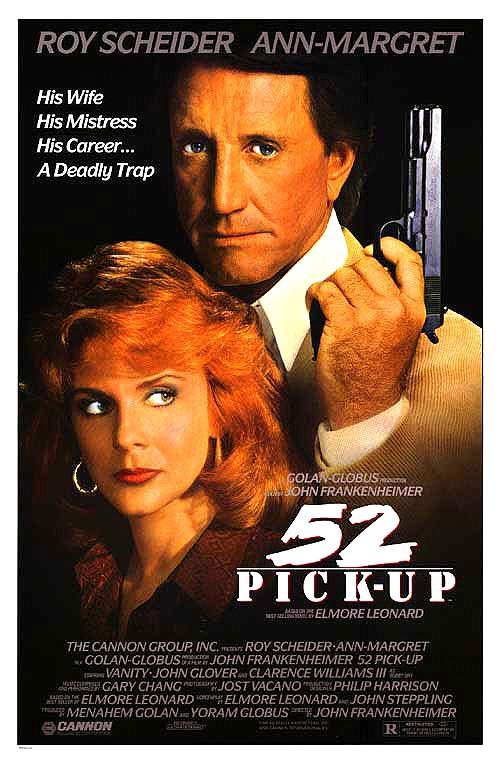
Harry (Roy Scheider) runs a successful construction company and is married to Barbara (Ann-Margret) who’s running for city council. One day Harry gets abducted by three men in hoods (John Glover, Clarence Williams III, Robert Trebor). They bring him to an abandoned building and show him a video tape that they’ve recorded featuring Harry’s steamy affair with a 20-something stripper named Cini (Kelly Preston). They demand $105,000 per year to stay quiet and if not they’ll release the tape to the press. Harry decides not to go to the police for fear it would jeopardize his wife’s political ambitions and instead does the investigating himself to find the tape and the men who made it and then turn-the-tables on them.

In 1984 The Cannon Group bought the rights to Elmore Leonard’s novel of the same name with the intent of turning it into a spy thriller with the setting changed from Detroit to Tel Aviv. Leonard was commissioned to write the script, but the drafts he submitted were deemed unacceptable and eventually someone else was hired as the screenwriter and the movie became known as The Ambassador2 years later John Frankenheimer, after having read the novel, decided he’d like to turn it into a movie in a more faithful version to the book. Since The Cannon Group still owned the rights they agreed to produce though several changes were made including having the setting in Los Angeles, which was mainly done for budgetary reasons.

While I’ve complained about other movies produced by The Cannon Group this one looks much more polished and could’ve easily been released by a major studio. I enjoyed the constantly moving camera that turns every scene into one unending tracking shot, which gives it a visual energy and allows the viewer to feel like they’re right there in the setting with the camera acting as their point-of-view as they move around amongst the action.

Many movies from the 80’s touched on the tawdry, underground lifestyles of Los Angeles, but would always pull-back before it became too distasteful and yet this one dives completely in and never leaves. By immersing the viewer into the seamy environment it helps them to better understand the sick nature of the bad guys and the elements that made them believe they could get away with it. It also features adult film stars from the era including Amber Lynn, Jamie Gillis, Tom Byron, and Barbara Dare. Porn legend Seka was also set to be in it, but the aging and apparently still quite horny Frankenheimer pestered her behind-the-scenes in an effort to have sex and even asked her out on a date, which was enough to get her to walk off the set.

The three antagonists are the most entertaining aspect. Glover gives a poetic quality to his character’s sliminess and is mesmerizing in his vileness. Clarence Williams III, best known for his work in the TV-show ‘Mod Squad’ has a creepy intensity that makes his scene riveting. Trebor, as the extremely anxious strip bar owner, makes breaking down in a panic an art form.

The problem is with the two leads who get upstaged by the baddies. In fact during the second-half the three villains receive more screen time than the heroes making it seem like the movie is more about them. Scheider’s insistence on trying to track down the culprits on his own with only an inkling of clues is intriguing to an extent, but he ends up finding their whereabouts too easily. Otherwise Scheider and Ann-Margret do nothing but react to the situation they’re in instead of propelling the action. It’s not because of bad acting either, but more due to the script that doesn’t flesh-out their characters enough to make them interesting, or for the viewer to care what happens to them.

My Rating: 7 out of 10

Released: April 16, 1986

Runtime: 1 Hour 50 Minutes

Rated R

Director: John Frankenheimer

Studio: The Cannon Group

Available: DVD, Blu-ray, Tubi

All That Jazz (1979)

all that1

By Richard Winters

My Rating: 7 out of 10

4-Word Review: Overworked choreographer battles exhaustion.

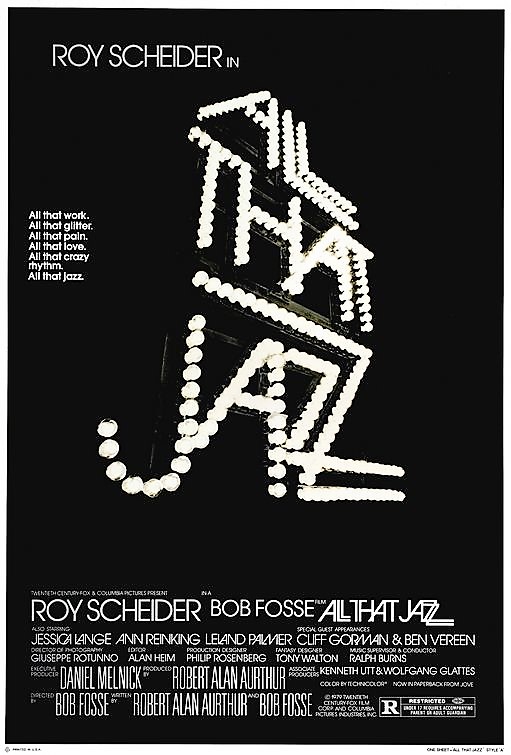
Joe (Roy Scheider) is a dance choreographer who’s busy staging his next play while also editing a film he has directed, which the Hollywood studio is demanding get completed. These pressures cause him to take his anger out on his dancers as well as his ex-wife (Leland Palmer), who’s helping to finance the play, as well as his live-in girlfriend Katie (Ann Reinking). As the deadline for both approaches he begins seeing visions of the angel of death (Jessica Lange) whom he has a running conversation with. Eventually he starts to have chest pains, which cause him to be sent to the hospital even as he continues to drink and smoke over his Dr.’s objections. When he finally does have a heart attack he’s whisked into surgery where he directs extravagant musical numbers inside his head while the producers of the play hope for his demise as their insurance proceeds will not only help them avoid a financial loss, but even make a net profit.

The film is based in large part on writer/director Bob Fosse’s own experiences. He started out as a dancer who eventually became a choreographer who shot to fame in the 50’s with such musicals as The Pajama Game and Damn Yankees. By the 70’s he had become an award winning film director and it was while he was staging the Broadway musical Chicago in 1975 and also completing the editing for the film Lenny that much of what happened here got played-out. The biggest irony though is that Cliff Gorman, who starred onstage as the comedian Lenny Bruce of which the film and play Lenny is based, plays the star of the fictional film that Joe is editing even though in real-life Gorman lost out on the starring film role to Dustin Hoffman simply because Hoffman had a more bankable name, which is a shame because from the clips seen here you can easily tell that Gorman was an edgier Lenny that would’ve made that movie stronger.

As for this movie it’s directed in similar style as Frederico Fellini’s 8 1/2. The art direction and editing, which both won an Oscar, come fast and furiously as it constantly jumps back-and-forth from reality to dream-like sequences. While this type of non-linear narration could prove distracting and confusing in most other films here it actually helps. The script does a good job of revealing the stressful and competitive nature of the dance business, but it doesn’t show us anything that couldn’t have been presumed already making these scenes less impactful and the dance numbers, some of which are provocative, more entertaining.

Some complained that Scheider, who by this time was better known as an action star, was miscast, though I came away impressed even with his pale complexion and thin frame (he lost weight to help replicate a sickly/exhausted appearance) that became a bit difficult to watch. It’s the character that he plays that I found to be the biggest issue as the guy is a complete jerk sans the few scenes that he has with his daughter, played by Erzsebet Foldi, who is the one person he treats nicely and I wanted to see more moments between them. The dance number that she and his girlfriend put on for him inside his apartment is the film’s brightest moment while the reoccurring segue of Joe getting up each morning and putting visine into his blood shot eyes before looking into a mirror and saying “It’s showtime, folks!” become redundant and annoying.

On the technical end it’s near brilliant, but as an emotionally impactful character study it’s a total flop. The protagonist is too selfish for anyone to care about and shows too little redeeming qualities, nor much of an arc, to make it worthwhile. Ultimately it’s an exercise in extreme self-loathing that will leave the viewer as detached from the proceedings as the characters who are in it.

My Rating: 7 out of 10

Released: December 16, 1979

Runtime: 2 Hours 3 Minutes

Rated R

Director: Bob Fosse

Studio: 20th Century Fox

Available: DVD, Blu-ray (Criterion Collection)

Jaws 2 (1978)

By Richard Winters

My Rating: 3 out of 10

4-Word Review: Another shark terrorizes Amity.

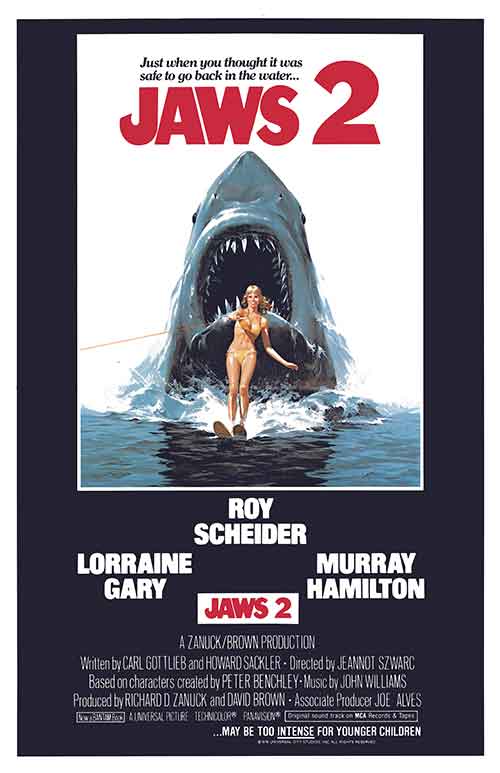
Chief Brody (Roy Scheider) fears that another shark is stalking the beaches of Amity when two divers disappear and then later a water skier and her speedboat driver are also killed. When Body goes to Mayor Larry Vaughn (Murray Hamilton) with his concerns the mayor and the rest of the council dismiss it and eventually fire Brody from his position when he continues to argue. His concerns are worsened when he finds that his two sons (Mark Gruner, Marc Gilpin) and their teen friends have snuck off onto a sailboat right were the shark attacks have been occurring.

Only four cast members return from the first one which includes the aforementioned Scheider and Hamilton as well as Lorraine Gary as Brody’s wife and Fritzi Jane Courtney as one of the council members. For me the biggest surprise was the return of Hamilton’s character as most likely he would’ve been voted out after making such egregious error in the first film and leaving the beaches open to further shark attacks after being told not to. I was also surprised that anyone would still want to come to the beach to swim anyways as the stigma of the area would most likely be quite strong.

Director John D. Hancock and his wife Dorothy Tristan who were first hired to direct the sequel had a much better, more believable plot idea. In their script Amity had become a ghost town and the economy in ruins. Mayor Vaughn and developer Len Peterson (Joseph Mascolo) build a resort on the island hoping to boost the tourism, but they use mob money to do it, which is why they end up resisting Brody’s dire warnings. Unfortunately the studio felt this concept was ‘too dark’ so Hancock and his wife were fired and replaced with a script by Howard Sackler and Carl Gottlieb that is basically just a bland rehashing of the storyline from the first one.

The first film was beautifully paced with each scene adding to the tension, but here there are a lot of lulls and the shark, which wasn’t seen much in the first one, doesn’t get shown enough here. The majority of time I kept feeling frustrated waiting for another shark attack to occur as any time the story is on land the film dies.

A good sequel should also always up-the-ante and having the plot built around just one shark doing all of the attacking just like in the first film doesn’t help to take the tension to the next level. Having a group of sharks attack at the same time would’ve helped add more shock appeal as people would now be battling sharks from multiple fronts and making the chances for survival all that more precarious.

Although it’s great seeing Keith Gordon and Donna Wilkes in their film debuts the rest of the teen cast is unlikable and the type of smart ass kids you wouldn’t mind seeing get eaten. There are also too damn many of them and the film would’ve been better served had it stuck to just Brody’s two sons on the boat and none of the others.

The way the shark ultimately dies is cool, but everything else falls flat. If you’ve seen the first one then there’s no reason to watch the sequel as it adds nothing to the theme and if you haven’t seen the first one then please skip this installment altogether and grab that one as it is far superior.

My Rating: 3 out of 10

Released: June 16, 1978

Runtime: 1Hour 57Minutes

Rated PG

Director: Jeannot Szwarc

Studio: Universal

Available: DVD, Blu-ray, Amazon Video, YouTube

Jaws (1975)

By Richard Winters

My Rating: 10 out of 10

4-Word Review: Shark in the water.

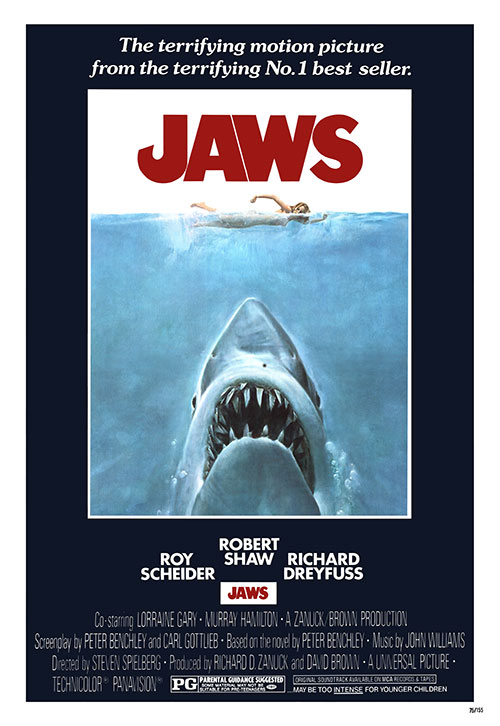
A young woman (Susan Backlinie) goes out for a swim late one night only to have her severed hand wash up on shore the next day, which causes the Amity Police chief Martin Brody (Roy Scheider) to fear that her death may have been caused by a shark. Amity mayor Larry Vaughan (Murray Hamilton) doesn’t want his town to risk losing business, so he has his coroner deny that a shark was responsible and hence the beach remains open, but then more attacks occur. Eventually an eccentric shark hunter named Quint (Robert Shaw), Matt Hooper (Richard Dreyfuss) from the Oceanographic Institute and Brody head out on a small fishing vessel called Orca to locate the shark and then kill it, but they find the underwater beast to be far bigger and more cunning than they had ever imagined.

With its exceptional ability to slowly build tension and keep the viewer riveted from the first frame to the last easily makes this the quintessential thriller. John Williams’s legendary score adds to the murky ambience and in many ways is more memorable than the shark itself. Director Steven Spielberg wisely adds a secondary layer to the narrative by creating colorful and distinctive characters, most notably Quint, who gives the proceedings a flavorful nuance and makes the conversations and interactions that occur between the three inside the boat more interesting than what happens in the water.

The most amazing thing though is how little the shark is actually seen and in fact you don’t even get a glimpse of him until about an hour in. Part of this was due to the difficulty of getting the mechanical creation to perform properly in salt water, but in the end this became a blessing in disguise as it’s the mystery and allusion to its large size that makes it so riveting. The viewer feels as helpless and confused as the men on the boat, which makes the climactic sequence when the shark suddenly does jump onto the boat all that more impactful.

Spoiler Alert!

The film though does deviate heavily from the Peter Benchley source novel and a legitimate argument can be made as to which one presents the story better. In the book the tone is darker and the characters less likable. For me this makes it more intriguing from a psychological bent as it conveys the idea that humans are like the shark that they hunt as they both selfishly devour everything around them. Spielberg though didn’t care for this interpretation so the novel’s darker subtext gets erased, but it still made me intrigued, as much of a classic as this movie is, to see a reboot where the narrative stayed more faithful.

Some of the book’s subplots got too involved particularly the one dealing with the mayor’s connections to the criminal underworld, so I’m glad that one got toned down.  However I felt the one though dealing with Hooper’s affair with Brody’s wife (Lorraine Gary) should’ve been left in as it would’ve added extra tensions between the two while on the boat while also seeing how people can learn to work together even when they hate each other.

In the book Hooper dies when the shark attacks the cage that he is in while in the movie he is able to escape and somehow hide from the shark. This though seemed unrealistic as sharks have special sensing organs known as electroreceptors that allow them to detect the electromagnetic field emitted from a moving animal or at close range even the heartbeat of an immobile one, which means the shark most likely would’ve figured out where Hooper was hiding and gotten him.

In the book the shark dies from its many wounds just as it gets a few feet from Brody while in the movie it’s killed when the scuba tank that it has in its mouth explodes when hit by a bullet, but a 2003 episode of Mythbusters proves that in reality this wouldn’t have happened. My main beef though is that by having the shark literally blow-up into little pieces it denies the viewer the chance at seeing what the beast looked like as a whole. Supposedly this was one giant of a shark, so viewing it strung up at the end would’ve been a cool thing to have seen.

End of Spoiler Alert!

Despite these many differences the film still works splendidly and I don’t mean to imply that it doesn’t, but I would still suggest reading the book afterwards as it gives the story and characters an added dimension.

My Rating: 10 out of 10

Released: June 20, 1975

Runtime: 2Hours 4Minutes

Rated PG

Director: Steven Spielberg

Studio: Universal

Available: DVD, Blu-ray, Amazon Video, YouTube

Blue Thunder (1983)

By Richard Winters

My Rating: 7 out of 10

4-Word Review: A technologically advanced helicopter.

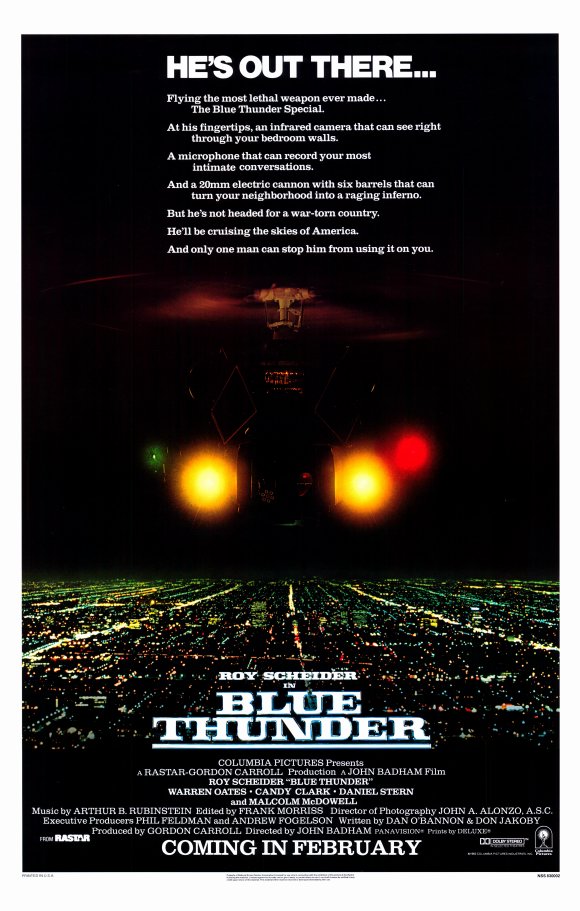
Frank Murphy (Roy Scheider) is a LAPD officer still suffering from flashbacks from his time in Vietnam while working now as part of the air patrol division where he mans a helicopter at night and gives assistance to the cops on the ground.  Due to his expertise he is given the chance to helm the first advanced helicopter called Blue Thunder, which has abilities to fight crime like no other machine before it. As he tests out the new product with his partner Richard (Daniel Stern) he overhears a conversation, through using the machines built-in microphones that can pick up voices from inside buildings, talking about using Blue Thunder for nefarious means. Frank records the conversation and then gets hounded by the bad guys who are led by his lifelong rival from his army days F.E. Cochrane (Malcolm McDowell). To escape their clutches Frank boards the helicopter and flies all over the city of L.A. while waiting for his wife Kate (Candy Clark) to get the incriminating tape to a TV-station where it will be broadcast for the public to hear, but Cochrane, who is an expert pilot as well, gets into another helicopter and tries to shoot Blue Thunder down.

The script was written by the prolific Dan O’Bannon who also wrote the scripts for Alien and Total Recall. He got the idea for this one while living in L.A. and constantly having a police helicopters routinely fly over his neighborhood at night. The original script was darker in tone and portrayed Frank as a psychotic who steals the helicopter and terrorizes the city until he is finally shot down, but that idea got nixed and like with most big-budgeted Hollywood projects got toned down to help appeal to a wider audience.

Personally I would’ve found the original idea more interesting as it also contained political overtones that get completely washed over here. The story here is pretty generic with one-dimensional villains and situations simply thrown in to create cheap conflict and nothing more.

What impressed me though was the modern visual style and effects. It hardly seems like a mid-80s movie at all let alone one that was actually filmed in late ’79 and early ’80. The overriding sentiment has a trendy feel and the cinematography is vivid and colorful. The helicopter action is the film’s biggest selling point and no matter how dippy the story gets the exciting aerial footage more than makes up for it. I loved the way director John Badham captures all sides of Los Angeles from its glitzy skyline to its more grimy and rundown working class areas. It’s also nice to have a REAL helicopter REALLY flying in the air over the city instead of computer generated effects, which makes many of today’s movies look fake and cheapens them while still keeping many of the ‘80s action flicks superior.

Scheider has never been a leading man that I’ve found particularly impressive as his presence seems transparent. However here his laid-back demeanor nicely contrasts with McDowell’s hyper one and makes the bad guy seem even more vindictive. Stern is engaging as Scheider’s partner and it’s too bad this wasn’t made into a buddy movie with Stern’s character staying on for the whole time. Clark is also enjoyable particularly with the wild look that she elicits with her eyes and the car chase that she has with the cops in an abandoned lot of a drive-In theater.

This also sadly marks Warren Oates last project. It was filmed in 1980 and he did a few other films after this one, but this was released last. Oates is one of the most distinctive character actors to ever grace the screen and even in a bland supporting role like the one here he still finds a way to enliven it.

My Rating: 7 out of 10

Released: May 13, 1983

Runtime: 1 Hour 49 Minutes

Rated R

Director: John Badham

Studio: Columbia Pictures

Available: DVD, Blu-ray, Amazon Video

The Outside Man (1973)

outside man 2

By Richard Winters

My Rating: 7 out of 10

4-Word Review: Hit man is marked.

Lucien (Jean-Louise Trintignant) is a French hit man hired by an American family to assassinate a mob boss (Ted de Corsia) who’s living in Los Angeles. He’s able to pull off the job relatively easily, but then after it’s over he finds that he’s been targeted by another hit man (Roy Scheider) who is relentless and chases Lucien all over the city. Nancy (Ann-Margret) is the stripper who comes to Lucien’s aid by getting her boyfriend to create a passport for him so he can return to France, but just as he is about to board the plane he decides instead to stay in the states and turn-the-tables on the man who’s chasing him while finding who is behind the double-cross.

The film, which was done by a French production company, but filmed on-location in the states, is a lot of fun. The many offbeat touches and various stabs at dry humor keep it interesting and original while still remaining suspenseful and exciting. Some of the best moments include a hitchhiker (Edward Greenberg) who tries to convert Lucien to ‘Jesus’ as well the funeral, which eventually turns into a wild shootout amongst the various mob factions and has a corpse embalmed in a sitting position with a cigar in hand.

I also liked the way director Jacques Deray captures Los Angeles. Usually when a film is done in the City of Angels we always get shown shots of the Hollywood Walk of Fame, movie star homes, the beachfront and of course the great Hollywood sign, but here we see none of that. Instead the film captures the city’s less glamorous side including the rundown neighborhoods and even a shootout that takes place in abandoned buildings from an amusement park, which all helps to give the movie a unique vision as well as allowing the viewer to appreciate a side to the city that they may have not known even existed.

Trintignant is terrific and his perpetual look of confusion as he gets faced with one unexpected surprise after another is memorable and helps carry the film. Ann-Margret is solid as the streetwise, but kindly stripper and Scheider is quite good as the steely killer. Georgia Engel, who later became famous for playing Georgette on the ‘Mary Tyler Moore Show’ is funny as a spacy housewife who comes into contact with Lucien as he is trying to run from his killer. I especially liked the way that when a gun is pointed in her face she doesn’t scream or panic, but instead responds with silence and a deer-in-headlights look. This is also a great chance to see a young Jackie Earle Haley in his film debut as her precocious 10-year-old son.

The film’s only real downfall is its ending, which is too downbeat and ambiguous. It’s almost like they spent so much time coming up with creative concepts for the rest of it that by the time they came to the end they just plain rang out of ideas, which is a disappointment, but as a whole it’s still a gem.

My Rating: 7 out of 10

Released: January 18, 1973

Runtime: 1Hour 44Minutes

Rated PG

Director: Jacques Deray

Studio: United Artists

Available: DVD (MGM Limited Edition Collection), Amazon Instant Video