Tag Archives: Richard Pryor

Superman III (1983)

By Richard Winters

My Rating: 2 out of 10

4-Word Review: Computer whiz corrupts Superman.

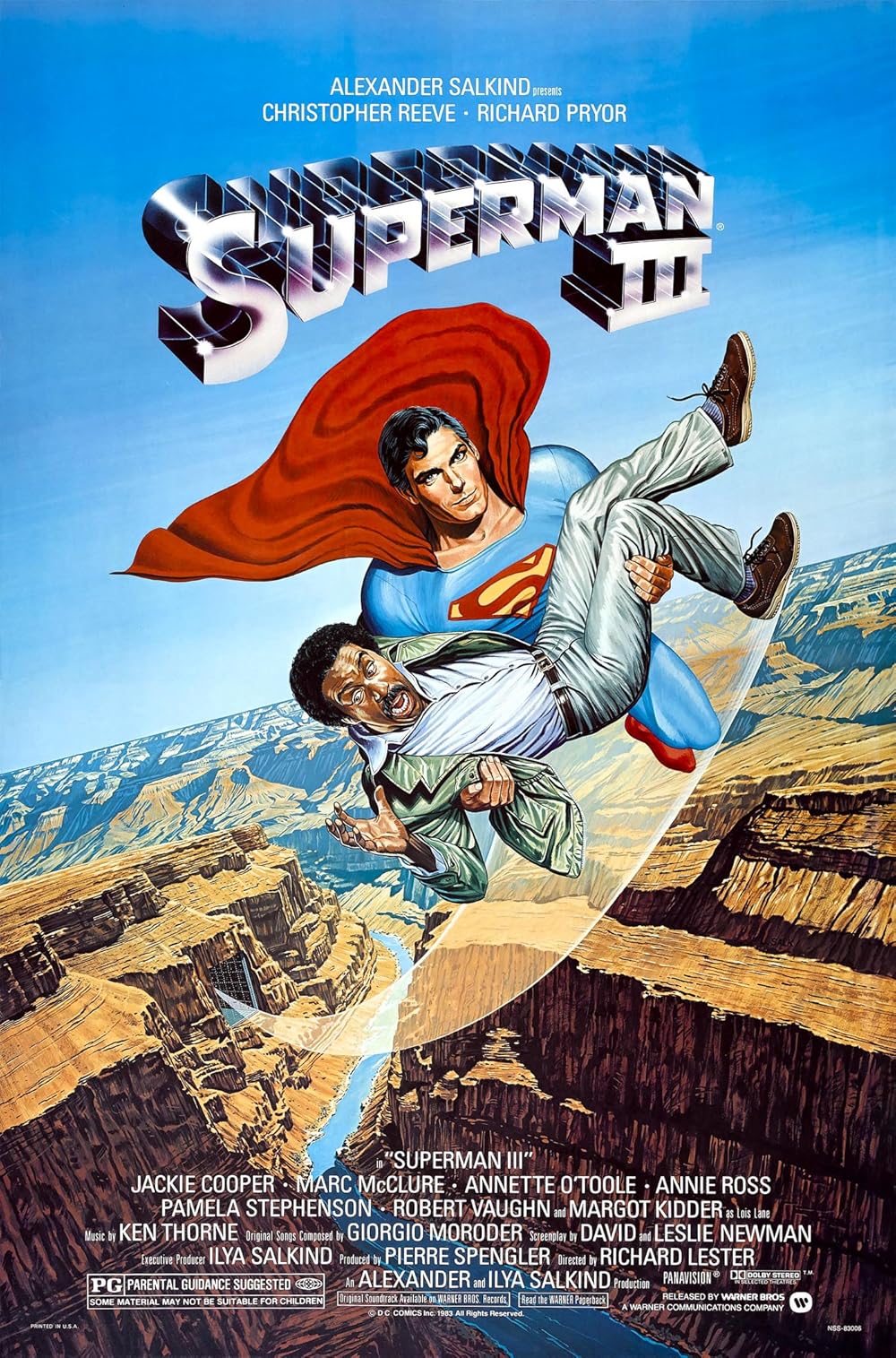
August ‘Gus’ Gorman (Richard Pryor) is an unemployed man looking for a job and comes upon the idea of training to become a computer tech when he sees it advertised on the back of a book of matches. Much to his surprise he excels as a student and is soon able to use his newfound computer knowledge to hack other programs including the payroll department at his company where he’s able to give himself a large, unearned monetary bonus. Ross Webster (Robert Vaughan), the company’s CEO, becomes aware of what Gus is doing, but is so impressed by his computer skills that instead of firing him he hires him to hack a weather satellite that will cause a rain storm in Columbia that will destroy the coffee crops and allow Webster to corner the market, but Superman intervenes and tempers the storm, so it isn’t as bad. This causes Webster to realize how detrimental to his plans Superman is and orders Gus to come create some synthesized Kryptonite in order to impair Superman’s ability. Gus researches the elements that make up Kryptonite on his computer and finds all of them except for one, so he arbitrarely adds tobacco in it for good measure. Instead of weakening Superman it turns him into an uncaring, sinister person who ‘drops-out’ of the hero saving lifestyle and becomes an anti-social person who shows no concern for others.

When Richard Donner, who had directed the first installment and 75% percent of the second one, got fired, he was replaced with Richard Lester. Lester had a far different vision for the Superman films. He disliked what he considered the ‘dark tone’ that Donner had given the first two and wanted a humorous quality put in. While I don’t mind some campiness Lester clearly goes overboard including the segment done over the opening credits that features unending slapstick that makes a mockery of the Superman franchise and drives the whole thing down to such a silly level that I wouldn’t have blamed anyone if they had walked out of the theater and demanded their money back.

Pryor was a big fan of the first two Superman movies and said as much when he was a guest on the ‘Tonight Show’. The Salkinds, who had proved already to have an unhealthy proclivity to the so-called ‘star power’ by casting Marlon Brando in the first film and paying him an outrageous sum even though his acting was subpar and a lessen known actor could’ve done a better job at half the price. No one ever came to a Superman movie simply to see Brando nor any other big-name actor, but for whatever reason the Salkinds didn’t understand this, so when they heard Pryor was interested in being in one of their films and he was a trop draw at the box office at the time, they admittedly signed him up.

Pryor, for his part, is highly engaging, but his schtick is out of place here. The script centers too much on his character making Superman seem like he’s only a co-star in his own movie. The character he plays makes no sense either as he’s portrayed initially as being a dumb guy who can’t hold down any job and then suddenly becomes a super genius with computers. However, there needed to be something shown in his background that would connect this, like he was really good with math, or coding, but instead it’s never explained. The movie makes it seem like it’s ‘dumb luck’ that he’s such a programming whiz and even he himself doesn’t understand it, which is just plain ridiculous especially as he continues to become more and more sophisticated with it.

While I liked the gaudy set design of Webster’s penthouse, and his rooftop ski slope, as a villain he’s a complete bore and seems too similar to Lex Luthor and his ditzy lady friend Lorelei, played by Pamela Stephenson, coming-off as being simply a younger version of Luthor’s main squeeze Miss Tessmacher. Webster’s evil sister Vera, played by Annie Ross, is equally dull and I have no idea why she was even put into the story as she adds little and doesn’t play-up her domineering persona enough to be even remotely interesting or amusing. Her character shows the same flaw as Pryor’s where she becomes really good at running a complex computer system too easily and too quickly.

The Lois Lane character gets minimized to the extreme where we see her briefly at the start and then quickly at the end. Supposedly this was due to a falling out that Margot Kidder had with the producers, but the Salkinds insisted it was more because they wanted to explore Superman’s romance with someone else, but Lois and Clark Kent’s relationship had gotten quite intense during Part II, so there needed to be some explanation with why now they were in the ‘friend zone’ like maybe perhaps she had found another boyfriend. The film though never bothers to come-up with any answer making it feel like there was no story cohesion between this one and the other two. Annette O’Toole, who plays the new love interest Lana Lang, is benign and the romantic chemistry between her and Kent is nil. 

David and Leslie Newman’s script lacks understanding in regard to technology and extreme naivety with the way Pryor’s character is able to use his computer to hack into other programs. Viewers today, who are much more sophisticated about the topic, will find the stuff here to be quite antiquated. The way the giant supercomputer gets completed is absurd too as it’s never shown who builds it. Was it done by just the four villains single-handedly, or by a large crew? Even if a crew did do it, it would take months if not years to construct and yet here it’s done in seemingly a day, or two. When Gus and Webster create an economic crisis by redirecting oil tankers you’d think the U.S. government would certainly get involved and investigate and would have computer experts on hand to trace back how and where the hacking occurred and at some point the two would eventually, at the very least, come under suspicion and yet here that never happens, nor even gets touched upon.

Spoiler Alert!

Some have complimented Reeve’s performance as the evil Superman, which is good, but the giant showdown that he and Clark Kent have in which they use they’re individual superpowers to try and take the other down, is too reminiscent between Zod’s gang and Superman from part II and thus comes off as redundant instead of exciting. 

I didn’t agree with Pryor’s character getting off-the-hook at the end either. Yes, he did ultimately save Superman’s life, but he also stole money and got involved in nefarious projects that broke many laws, so instead of being transported to a new location where he could get another job and ‘start fresh’ he should’ve been taken to a prison to serve his debt to society. Even if he was at heart ‘a nice guy’ he still did some wrong things and should’ve had to pay some sort of consequence. 

My Rating: 2 out of 10

Released: June 17, 1983

Runtime: 2 Hours 5 Minutes

Rated PG

Director: Richard Lester

Studio: Warner Brothers

Available: DVD, Blu-ray, Amazon Video, YouTube
Silver Streak (1976)

silver

By Richard Winters

My Rating: 8 out of 10

4-Word Review: Murder on a train.

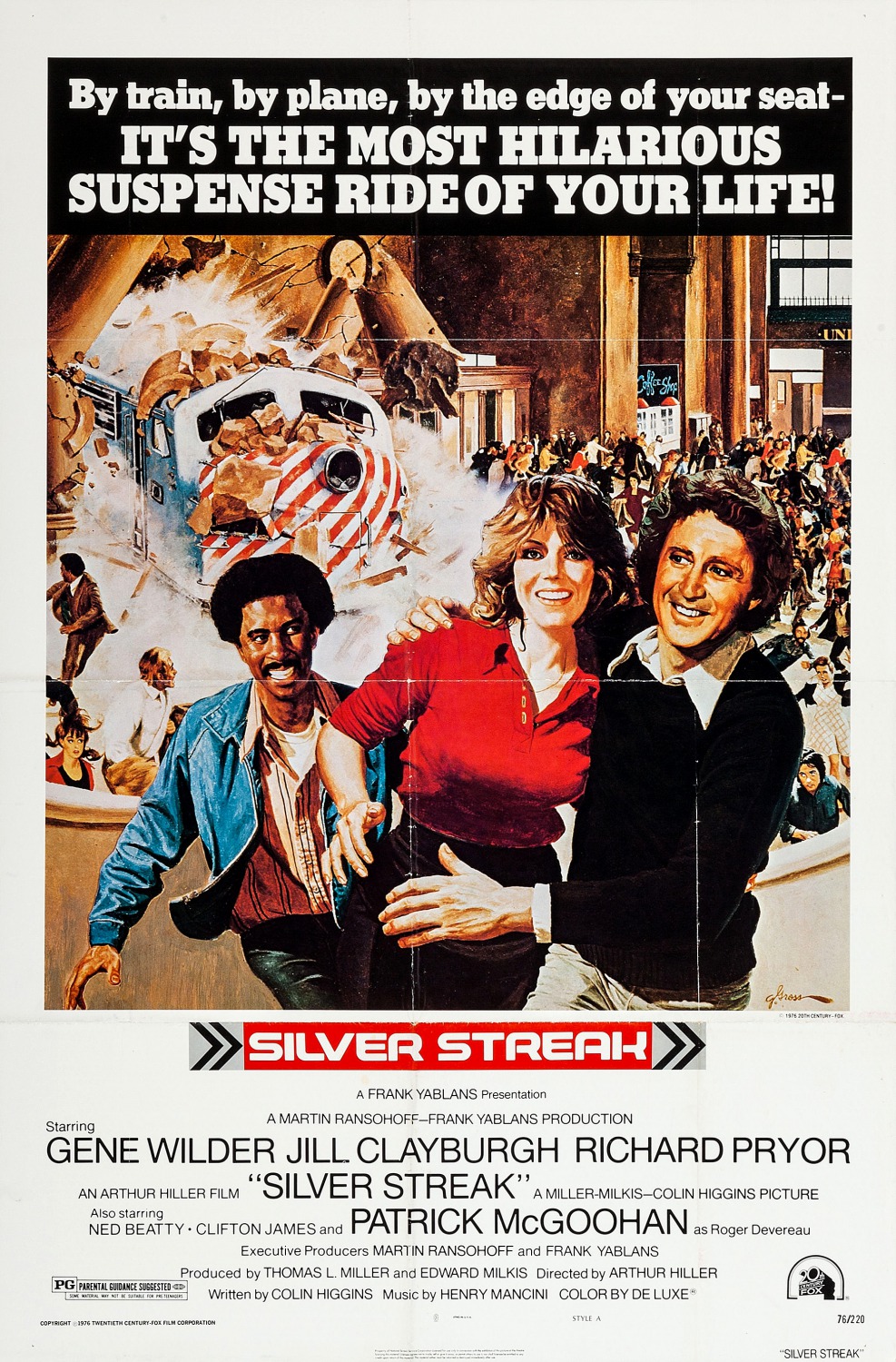
George (Gene Wilder) is a book editor taking a train ride from Los Angeles to Chicago. Along the way he gets into a relationship with Hilly (Jill Clayburgh) who is staying in the neighboring compartment. After a night of drinks they go back to her bed and begin making-out only for George to see a murdered body of a professor, whom Hilly works for as his secretary, get thrown off the train. Nobody else sees it except for him and everyone, including Hilly, believe it was a figment of his imagination, but George persists by doing the investigating himself. He goes to the compartment that the professor was staying in to see if he’s there, but instead he meets two men (Ray Walston, Richard Kiel) who throw him off the train. George then must find a way, in the middle of the empty desert, to get back on the train, so as to warn Hilly, whom he fears may be their next victim.

The script was written by Colin Higgins who up to that time was best known for having done Harold and Maude. He said he had always fantasized about meeting a beautiful blonde on a train and when it never panned-out in real-life he decided to write it into a story. Initially he was expecting an uphill battle to get it sold, but to his amazement it instead set-off a bidding war between Paramount and 20th Century Fox who both wanted to purchase the rights and it ended up selling for a then record $400,000. Originally Amtrak was going to be used as the setting for the Silver Streak, but the company became panicked that the film could cause bad publicity for them and ultimately refused to allow the studio to use any of their trains, so the film crew was forced to go north of the border and use the Canadian Rail System in its place while still pretending that it all takes place in the US when really all exteriors are Alberta, Canada and the skyline that gets seen in the distance that’s supposed to be Kansas City is really Calgary.

The reason the film works so well is that the comedy is on-target the whole way, but also manages to deftly blend it in with some nerve wracking action making the viewer let out belly laughs while also sitting-on-the-edge-of-their-seat at the same time. The pace is brisk with some amazing and very realistic stunt work that not only shows the train crashing through the wall of Chicago’s Central station, but also a few scenes with the character’s dueling it out on the roof of the locomotive as it’s going at high speeds. In fact the only slow spot in the entire movie is when Gene and Jilly make-out in the train car, which goes on too long and may make some people, including my conservative parents who watched the film with me when I first saw it on Showtime in 1982, as thinking this might be more a soft core porn flick than an action thriller and about ready to turn-if-off before it finally gets going with the plot.

Wilder, who was not Higgins’ first choice for the role as he intended it to be played by George Segal, is quite engaging and this was the first of several pairings that he did with Richard Pryor, who doesn’t appear until an hour in, but manages to take over quite nicely and makes a strong, memorable impression. Patrick McGoohan is sinister as the villain and one of the rare instances where in an otherwise comedy the bad guy isn’t funny and instead nasty, usually in comedies it’s considered mandatory that all the characters, even the bad guy, have some amusing moments, or lines, but McGoohan is just mean, which enhances the suspense element. Scatman Crothers, who initially seems to be playing an insignificant roles as the train’s porter, but in the end becomes quite crucial in getting everyone saved. Richard Kiel is good, though he speaks no dialogue, as one of McGoohan’s henchmen, in a role quite similar to the Jaws character that he played in two James Bond films that came out a year later, he even walks around with the same mangled up dental work in his mouth.

Spoiler Alert!

While the film works for the most part quite flawlessly I did find a few tidbits to quibble about. One is the scene where Gene accidentally bursts open the patrician door that divides his room from Jill’s who is busy dressing and doesn’t act startled when he suddenly breaks into her room, which I would think anyone, especially in a state of undress, would’ve responded with a scream and a look of shock, which would’ve made the segment funnier if she had.

Later on a police chief, played by Len Birman in a very bad impression of Mike Connors from ‘Mannix’, tells Gene that they know he’s innocent and have simply been putting-up manhunt posters with his picture on it for his own safety, so they could catch him and get him away from the evil McGoohan and his cronies who want to kill him. However, after he explains this he then hands Gene a gun and some bullets and tells him to come along with his men to help nab McGoohan who is still on the train, but how would this police chief know that Gene could handle a gun and was trained on how to shoot it, let alone even need him since his own men were well armed with rifles and could easily shoot down the bad guy themselves? There’s also another moment where the police chief shoots into a large crowd in an effort to hit McGoohan, which sends everyone into a panic and would be considered a major act of negligence for a cop to do.

Another scene has McGoohan explaining to Jill, Gene, and Richard about how he and his men never meant to really kill the professor, or at least not upfront, but when he did die that’s when they had to immediately ‘get’ a lookalike as an imposter to give everyone the idea that the professor was still alive. However, how exactly where they going to be able to find someone who looked so similar to the professor in such a quick, speedy way and then get him on the non-stop, fast-moving train?

The biggest exaggeration for me though is when Gene unhooks the back part of the train from the engine, while standing on a thin ledge and holding on for dear-life via a small metal rail and then able to successfully hop onto the train car that he had just decoupled from the other one. With them both going at high speeds I don’t think he’d be able to do it. Of course in the movie it gets done by a professional stunt man, who was able to time it, and rehearse it, to make it look easy, but in reality the average person would’ve either slipped, or missed grabbing the rail and thus fallen to the side of the tracks. This though could’ve actually been funny as we would then see Gene’s body roll on the ground and initially make it seem like he was hurt, or injured and then have him look up in aggravation and go: ‘Damn, I got thrown off the train for a fourth time!”

My Rating: 8 out of 10

Released: December 8, 1976

Runtime: 1 Hour 54 Minutes

Rated PG

Director: Arthur Hiller

Studio: 20th Century Fox

Available: DVD, Blu-ray, Amazon Video, YouTube
The Toy (1982)

By Richard Winters

My Rating: 1 out of 10

4-Word Review: Becoming a child’s pawn.

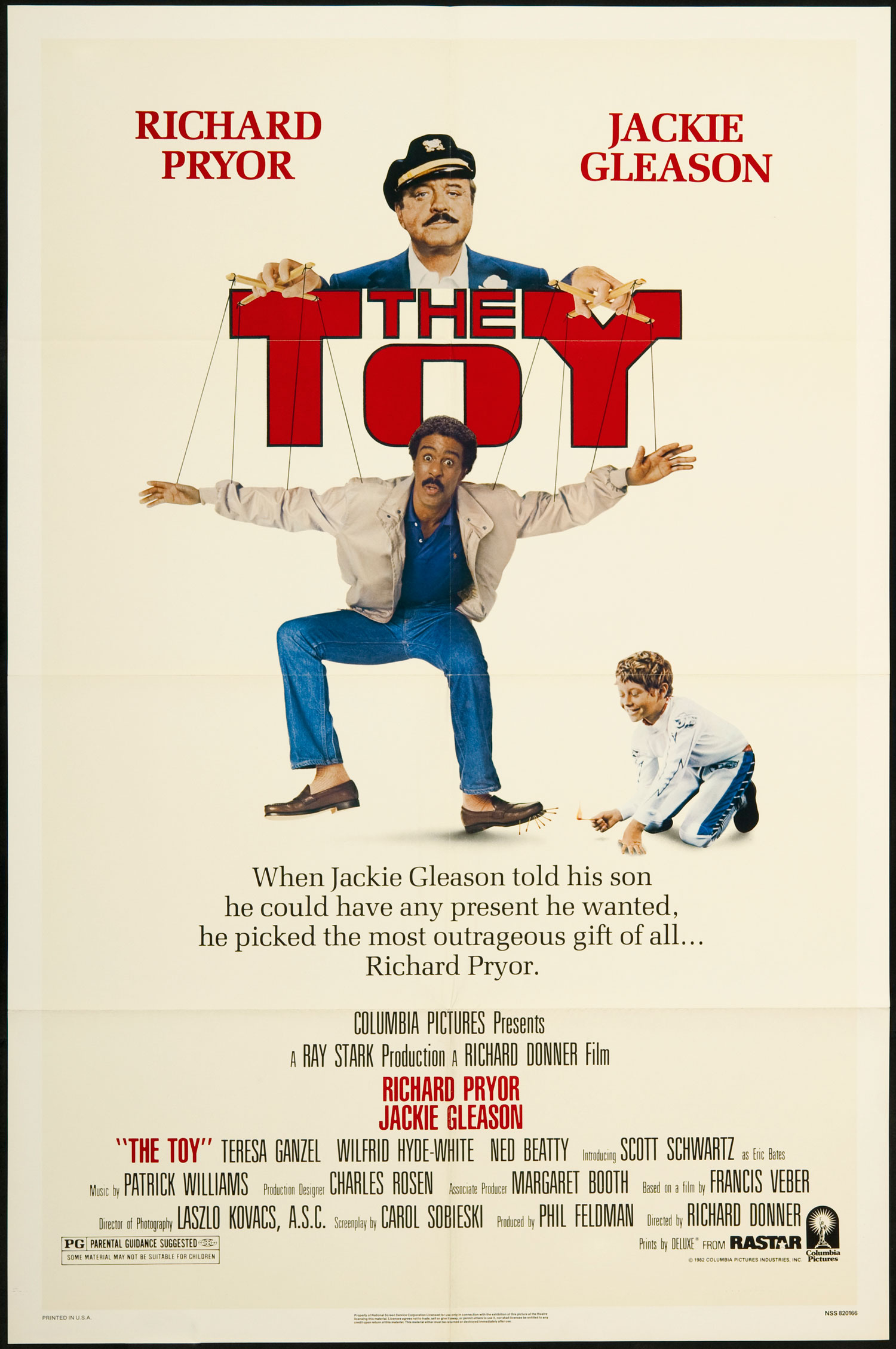
Jack Brown (Richard Pryor) is unable to find stable employment and at risk of being evicted from his home. In desperation he takes a job as a night janitor at a local toy store. It is there that he gets spotted by Eric (Scott Schwartz) the young son of business mogul Ulysses (Jackie Gleason). Eric is used to getting what he wants so when Jack inadvertently makes him laugh he decides to ‘buy’ him and turn him into his own personal ‘toy’. Jack is initially reluctant to agree to this, but when he’s offered a lot of money he eventually goes along with it. Initially the relationship between the two is quite awkward, but eventually they form a bond and Jack manages to teach Eric many important life lessons while also getting Eric’s father to realize that money can’t buy a son’s love.

When compared to the original French version this thing is painful to watch. Much of the problem stems around the fact that the satirical point-of-view from the first one gets watered down here. The French film took a lot of calculated potshots at capitalism and corporate hierarchy, but apparently Hollywood was afraid they’d be considered ‘unamerican’ if they took that route, so instead of sharp humorous insights we get tired formula dealing with a rich kid trying desperately to get his father’s attention whose selfish personality needs fixing.

Because the message is so muddled it becomes confusing what point it wants to take, so to make up for it,  they throw in all sorts of cringey life lessons crap like Pryor teaching Eric about the importance of friendship and even a a bit about ‘the-bird’s-and-the-bees’. After awhile it doesn’t seem like a comedy at all, but more like a tacky after school special your parents made you watch when you were in the third grade.

The humor that does get thrown-in gets equally botched. In the French version every comic bit that occurred fit into the film’s main them. Here though any gag that has the potential of getting a cheap laugh gets used whether it actually works with the main story or not. Many of which are tired, overused gags where you already know what the payoff will be before the set-up barely gets going.

Pryor’s casting was a bit controversial at the time due to him being black and then used as a ‘servant’ to a white kid, but the truth is Pryor is the only thing that saves it. He’s not exactly hilarious here, but his onscreen charisma is enough to at least keep it engaging. Gleason on the other hand, who was already in his mid-60’s at the time, seemed too old for the part although with the use of a wig he manages to camouflage it pretty well.

Schwartz, who is better known as the kid who gets his tongue frozen to a flagpole in A Christmas Story, and for his later career in adult movies, is annoying. In the French film I liked the kid, but the child character here is poorly fleshed-out having him go back-and-forth in irritating fashion from spoiled brat to emotionally needy tyke.

Ned Beatty makes the most of his small role, keeping his scenes funny when they could’ve easily been overlooked. Elderly character actor Wilford Hyde-White is amusing too and so is Teresa Ganzel as Gleason’s busty girlfriend, but virtually everything else falls flat. This includes an unnecessary side-story involving the Klu Klux Klan, which was not in the original film, and just extends this already excessive mess far longer than it needed to be.

My Rating: 1 out of 10

Released: December 10, 1982

Runtime: 1 Hour 42 Minutes

Rated PG

Director: Richard Donner

Studio: Columbia Pictures

Available: DVD, Blu-ray, Amazon Video, YouTube
Car Wash (1976)

By Richard Winters

My Rating: 2 out of 10

4-Word Review: Having fun washing cars.

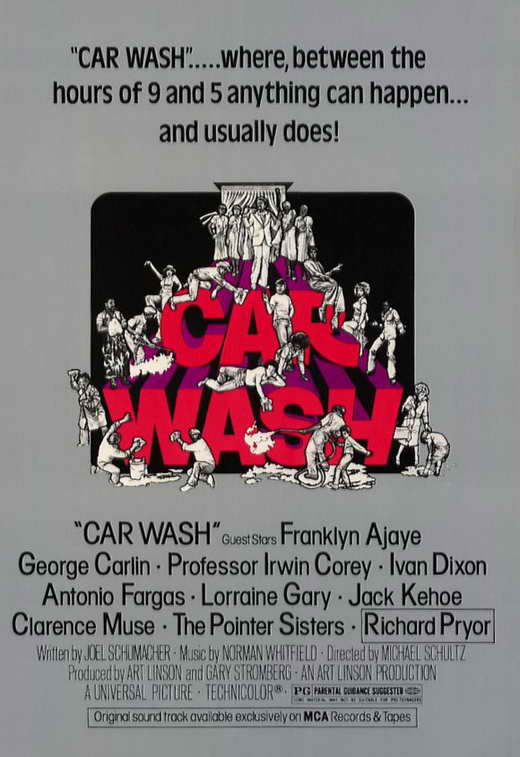
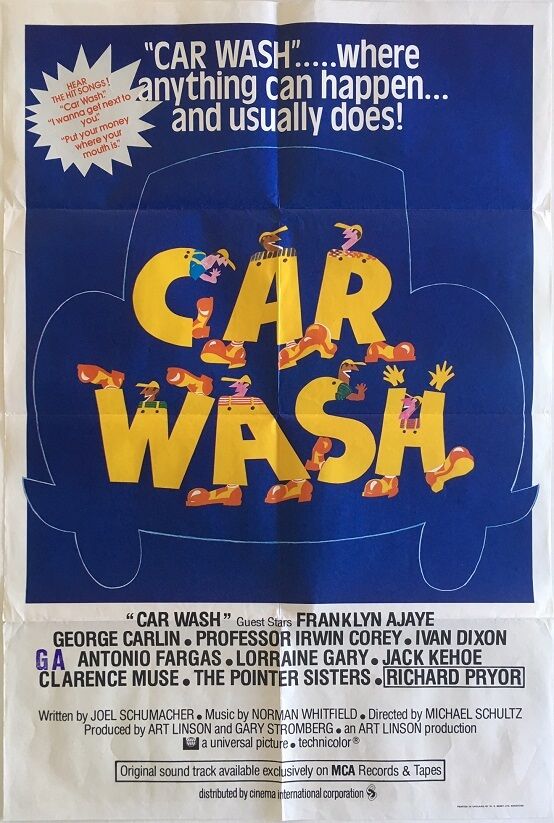
A look at the day-in-the-life of those working at a L.A. car wash. Mr. B (Sully Boyar) is the owner and frets about his employees not working hard enough, but too afraid to fire any of them for fear of retribution. Behind-the-scenes he’s having an affair with his young, but plain-looking receptionist Marsha (Melanie Mayron) who in-turn is more interested in a man with money and gets excited when a well-dressed one asks her out on a date. Lonnie (Ivan Dixon) is a recently released convict working at the car wash and raising a family, but finding it hard on the salary he’s given, which Mr. B refuses to raise. Duane (Bill Duke) is a Black Muslim revolutionary now going by the name Abdullah who preaches power to the people while Mr. B’s son Irwin (Richard Brestoff) who has just graduated from college and groomed to take over the business is more interested in being a part of the working class instead.

In many ways this could be described as a precursor to Clerks with a cinema vertite feel that captures the daily experience of working a mundane job quite well. The humor is restrained and never goes over-the-top making the dialogue between the cast and the pranks they play on each other believable and like something that could play out in just about any car wash or blue collar job across the country. The disco soundtrack, which includes the iconic title tune by Rose Royce, which is actually better than the movie itself, helps add to the 70’s ambiance as well as the fact that it was filmed on-location at an actual car wash, which has since been demolished, at 610 South Rampart Boulevard in Los Angeles.

Unfortunately there’s not enough plot, or character development to hold it all together. The loosely structured approach, which initially comes off as fresh and original, eventually grows tiring without any type of genuine drama or story line to keep it compelling. There are also too many amusing bits that could’ve been strung out longer and even enhanced, but instead end up getting dropped almost as quickly as they’re introduced.

The cast is filled with too many characters and it’s hard to keep track of them, or understanding why they’re needed. At most car washes I’ve been there’s usually only one employee, or maybe two at the most, to wax the car, or rub it down after it’s been through the wash, but here it takes literally 5 or 6 guys to work on one car, which seems ridiculous. Cutting the cast down would’ve helped and having it centered around one main person instead of doing the ensemble thing would’ve been even better.

The appearances of George Carlin and Richard Pryor add very little and their screen times are so brief I was surprised they even accepted the parts. I was also disappointed that Lorraine Gary’s part was so short too. She’s best known for playing Roy Schieder’s wife in the Jaws films. Here she plays a stuck-up Beverly Hills housewife who’s more concerned about how her car looks than in the fact that her young son is sick. Her haughty attitude creates a delightful culture clash and I really thought she could’ve added some funny friction had she stayed in it all the way through and I really thought she would especially after her son throws up in the car just as they are leaving the lot making me think she would’ve simply backed-up the car and had them clean out the vehicle’s interior, since they had just done the exterior seconds before, but instead she apparently just goes on driving, but who would do that?

There are also potentially interesting story lines that never get adequately explored. The affair between Mr. B. and Marsha was one of them, but another had to do with a ‘pop bottle bomber’ that was terrorizing the city. At one point the crew thinks it’s an old man (Irwin Corey) that comes into the place, but find that’s a false alarm, but it would’ve been exciting had they eventually come into contact with the real one, which could’ve added intriguing dynamics both with the characters and plot.

Originally this was to be a musical, but for whatever reason Universal nixed that idea and decided to turn it into a plain-old comedy instead. I’m not necessarily a fan of musicals, but in this case the songs and dance numbers would’ve helped tie everything together as the script is otherwise too unfocused to remain captivating past the first 30 minutes.

My Rating: 2 out of 10

Released: September 3, 1976

Runtime: 1 Hour 37 Minutes

Rated PG

Director: Michael Schultz

Studio: Universal

Available: DVD, Blu-ray, Amazon Video, YouTube
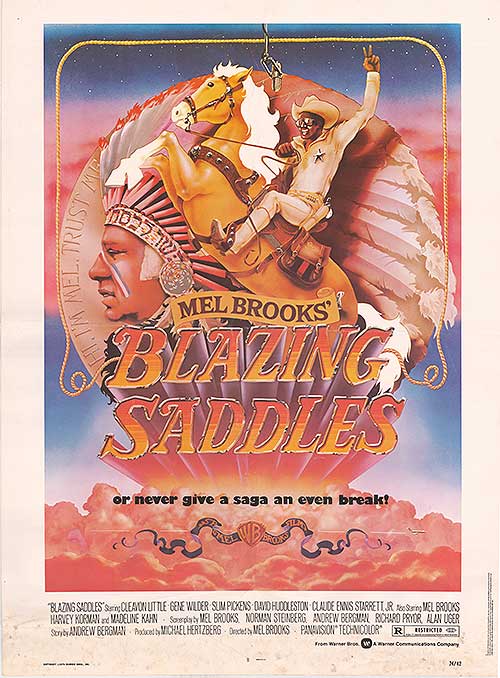
Blazing Saddles (1974)

By Richard Winters

My Rating: 7 out of 10

4-Word Review: Black man becomes sheriff.

Classic western parody centers on a new railroad being built during the 1870’s and how an attorney general named Hedley Lamarr (Harvey Korman) connives to have it run through a town called Rock Ridge, but in so doing devises a plan to have the residents run out, so the railroad can be put in. He hires a bunch of outlaws to ride into the town and terrorize the people hoping they’ll be scared off and move, but instead they put in a request to the state’s governor (Mel Brooks) for a sheriff. The inept governor gets tricked into hiring a black man named Bart (Cleavon Little) to act as the sheriff, which sends the racist residents of Rock Ridge into an outrage.

The film was known at the time for its outlandish humor, which thanks to political correctness is now considered even more outrageous and would most likely have no chance of being made today. The film’s biggest sticking point deals with its excessive use of the N-word, which writer/director Brooks was pressured to take out by the studio executives (along with many other things), but he resisted insisting that co-writer Richard Pryor and star Little had their blessing to keep it in and that most of the letters he received that were critical of the word being used were from white people. Personally I felt that it was realistic for its setting, which was supposed to be 1874, so in that regard it worked.

The stuff that got on my nerves was the constant anachronistic jokes dealing with people that weren’t even alive when the film’s setting took place. This type of humor gives the film too much of a campy feel and should’ve been scrapped. I was also disappointed when Gene Wilder talks to Little about his past and how he was accosted by a gun-toting 6-year-old, but the film doesn’t cut away to a reenactment of this, which would’ve been hilarious to see, even though it does do this when Little talks about his own past.

The funniest bits that I did find myself laughing-out-loud to where the ones involving Brooks as the cross-eyed governor, but I was frustrated that the streaming video that I watched did not have the scene where Brooks goes to the town of Rock Ridge and mistakes the wooden dummies that are there as being real-people. I remember this scene vividly when I watched it on network TV back in the 80’s and thought it was hilarious, but apparently this segment is only available on the Blu-ray version.

The acting by the supporting cast is great with Korman getting the best film role of his career. Liam Dunn is memorable as the town’s pastor and I got a kick out of Jessamine Milner as a racist old lady who later tries to make amends with Bart, but only under certain conditions. Madeline Kahn is quite good too in a send-up of Marlene Dietrich and rumor has it that she intentionally gave a bad performance in Mame, which was filming at the same time, just so the director would fire her, so she could then get the part here, but still be paid for that one as her contract stipulated guaranteed pay as long as she was terminated and didn’t quit.

The only bad performance comes from Little, who is just too serene and laid back almost like he’s treating the whole thing as a joke and doesn’t get into his part at all. I would’ve expected to see some anger from his character over the way he had been treated by white folks, but none is conveyed and instead he comes off like some guy picked off the street who mouths his lines and that’s about it. The part was intended for Richard Pryor who would’ve given the role the extra edge that it needed.

Spoiler Alert!

As controversial as the film is it’s the bizarre ending that has always had me the most baffled as it breaks the fourth wall and has the characters without warning go from the western time period into the modern-day. When I first saw this years ago I thought it was the weirdest thing I had ever seen and didn’t like it as I felt it ruined the story as I was enjoying seeing the town’s residents take matters into their own hands by literally beating up the bad guys as well as realizing that their racist ways were wrong. Having them suddenly thrown onto a Hollywood backlot made it too gimmicky and took away any possibility for some minor depth/message that the story might otherwise have had.

In retrospect I can only conclude that Brooks did this to show that these characters were never meant to be a part of the true west. In fact the whole reason that attracted him to the project, which was based off of an idea by Andrew Bergman, was because of its so-called ‘hip-talk’, which had 1974 expressions done in an 1874 setting.

If this was the case then the film should’ve started out with the characters in the modern day and then transported them via a time machine into the old west. The movie is so goofy anyways that I can’t see how this funky added element could’ve hurt it and then at the end when they return to the present it would’ve seemed more fluid and less like a cop-out where the writer’s ran out of ideas, so they decided to just go weird.

My Rating: 7 out of 10

Released: February 7, 1974

Runtime: 1Hour 33Minutes

Rated R

Director: Mel Brooks

Studio: Warner Brothers

Available: DVD, Blu-ray, Amazon Video, YouTube
Blue Collar (1978)

By Richard Winters

My Rating: 7 out of 10

4-Word Review: Workers rob their union.

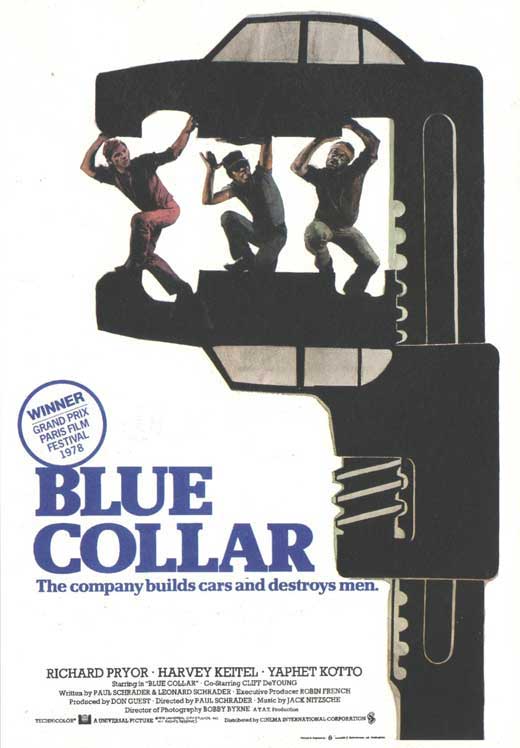
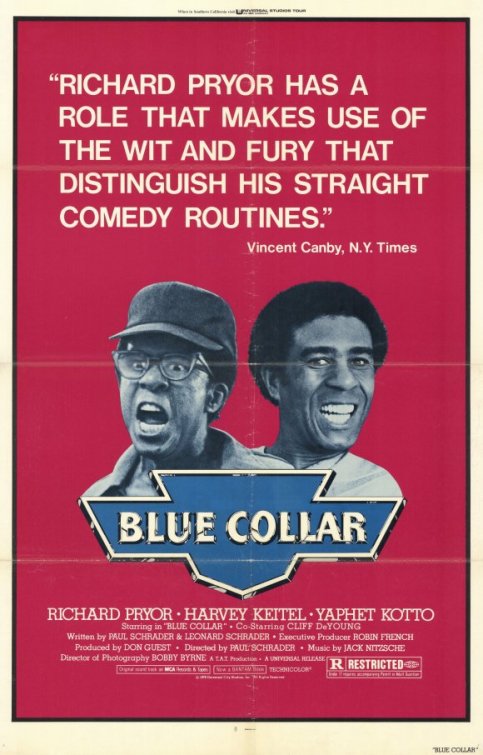
Zeke (Richard Pryor) Jerry (Harvey Keitel) and Smokey (Yaphet Kotto) work at an auto plant in Detroit and become increasingly frustrated with their union, which they feel is ripping them off. The three get the idea to rob a safe stored at the union office. The crime itself is a cinch, but they only get $600 dollars out of it even though the union reports to the press that $10,000 was stolen. Then they find paperwork detailing some of the union’s dirty loan deals and decide to use that as blackmail, but the union has other ideas.

This was the first film directed by Paul Schrader and although he has gone on record stating that he dislikes it and has never watched it since its release I consider it to be one of his best. The music by Jack Nitzsche is a bit heavy, but otherwise this is a strong hard-hitting look at the life of an auto worker a subject that doesn’t get tackled too often. The fact that the film takes no sides and shows that both management and unions can be equally corrupt gives the proceedings a refreshingly honest tone.

Personally I support unions, but I realize that like with everything some can be less than perfect and since reality is not black-and-white, but instead quite complex it’s important to show all sides of an issue. The whole inspiration for the film came when Schrader went to Detroit and interviewed actual assembly-line workers and found to his shock many of them hated their unions even more than management. Films like Norma Rae, which is still excellent, tend to portray a very one-sided narrative while this one makes you wonder who the good guys actually are especially as the three leads turn on each other for different reasons.

The biggest surprise is Richard Pryor who really drives this film with his excellent dramatic performance. He seems to be channeling his harsh upbringing to create an edgy and enduring character. I loved the way he critiques other black sitcoms like ‘Good Times’ and ‘The Jeffersons’ as well as the way he constantly says the f-word even when in front of his own kids. George Memmoli a very obese actor gets a memorable bit as a disgruntled factory work that destroys a vending machine when it won’t give him his coffee.

The film features two very unique scenes. One is where a character dies while being trapped inside a room where a car is being painted and it’s quite intense. The other scene features Keitel in a car chase as he tries to get away from some bad guys who want to shoot him. Most films capture a car chases from the outside-looking-in with shots showing both vehicles at a distance and the point-of-view of both drivers. This one stays only on Keitel’s perspective making the viewer feel like they are trapped in the car with him and thus making the chase a much more personal and frightening experience.

Due to the subject matter no auto company would allow the film to be shot at their plant, so the producers were forced to use the Checker Cab Company, but this was a much smaller plant and the viewer never gets a true feeling of the immensity of an actual auto factory. The film’s final shot is another distraction as it’s the one point where the movie suddenly becomes heavy-handed despite successfully remaining otherwise gritty. It’s still a strong story overall that brings out perplexing issues without supplying any easy answers.

My Rating: 7 out of 10

Released: February 10, 1978

Runtime: 1Hour 54Minutes

Rated R

Director: Paul Schrader

Studio: Universal

Available: DVD, Blu-ray (Region B/2), Amazon Video, YouTube

See No Evil, Hear No Evil (1989)

By Richard Winters

My Rating: 2 out of 10

4-Word Review: Handicapped men solve crime.

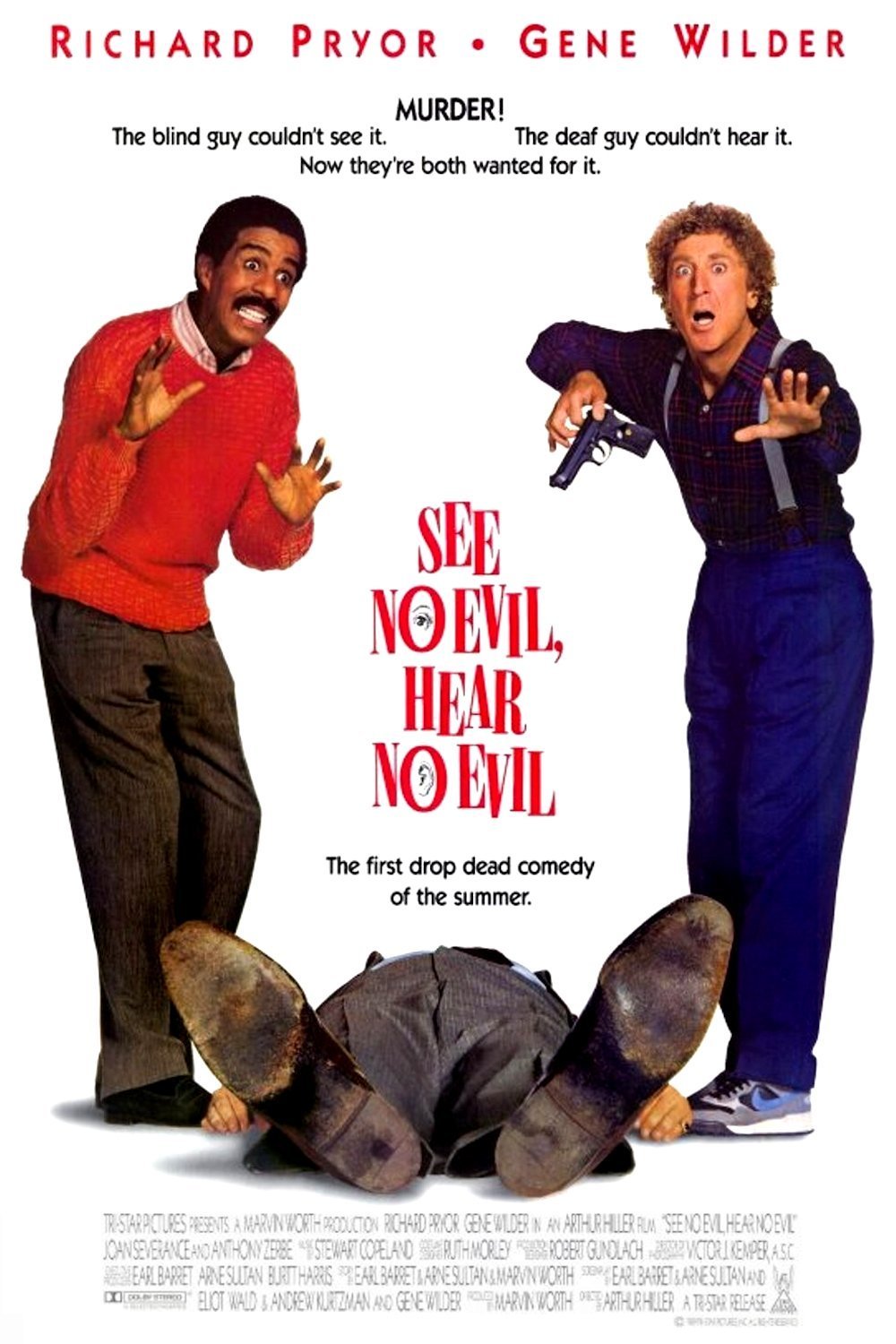
Wally (Ricard Pryor) is blind while Dave (Gene Wilder) is deaf. The two initially don’t get along, but find that they must work together after they witness a murder and the bad guys (Joan Severance, Kevin Spacey) come after them. The police are no help and threaten to jail Wally and Dave when they find them unreliable as witnesses so they figure out a way to escape and go on the run only to have their handicaps and personalities more of an obstacle than anything else.

This was the third teaming of Wilder and Pryor and it’s embarrassingly bad. The script is just a cheesy retooling of the mistaken identity scenarios of their first two films, Silver Streak and Stir Crazy with the handicap element thrown in to make it seem different, but it really isn’t. The laughs are definitely fleeting and in fact there are only two segments that even elicit a chuckle. One is an amusing barroom brawl while the other one features a gun showdown between the blind Pryor and the equally blind Anthony Zerbe.

Not only is the clichéd concept highly uninspired, but it depends on nonlogic to help propel it. For instance Wally, Dave and Wally’s sister Adele, played by Kirsten Childs, escape from the men chasing them by hiding inside a hotel room’s vent, but I’ve never come upon a vent in any hotel room that I’ve stayed at big enough to hold one person let alone three. Also, most vent screens must be screwed in from the outside, so how were these three people able to get the screen back on and fastened once they were inside the vent?

The chemistry between the stars is missing and their banter nothing more than strained babbling. The only moment where it shows slight potential is when the two men explained to each other how they came to have the afflictions that they do and how they learned to adjust to them making me believe this could’ve been a far better movie had it chucked the corny murder storyline and instead focused on the two trying to run a business or learning to rely on each to help them through the struggles of daily life.

Pryor, for what it’s worth, easily upstages Wilder who reportedly never liked the script and worked to rewrite it to make it less mocking to those with handicaps. There’s also a scene shot at night with the two talking on a park bench where it appears that some black object is trying to slide its way out of Wilder’s left nostril. I think it was simply the shadowy lighting, but I found it quite distracting and wondered why the cinematographer didn’t catch this while they were filming it and had the scene reshot at a different angle.

Alan North is engaging as the exasperated police sergeant and I wished that instead of him being an adversary to the two men he would’ve reluctantly helped them along. The two female cast members are generic, but Kevin Spacey, who speaks in an accent and has a large unexplained protrusion on his left check, is excellent and the best thing in this otherwise forgettable film.

My Rating: 2 out of 10

Released: May 12, 1989

Runtime: 1Hour 42Minutes

Rated R

Director: Arthur Hiller

Studio: TriStar Pictures

Available: DVD, Blu-ray, Amazon Video, YouTube
Some Kind of Hero (1982)

By Richard Winters

My Rating: 4 out of 10

4-Word Review: Soldier returns from Vietnam.

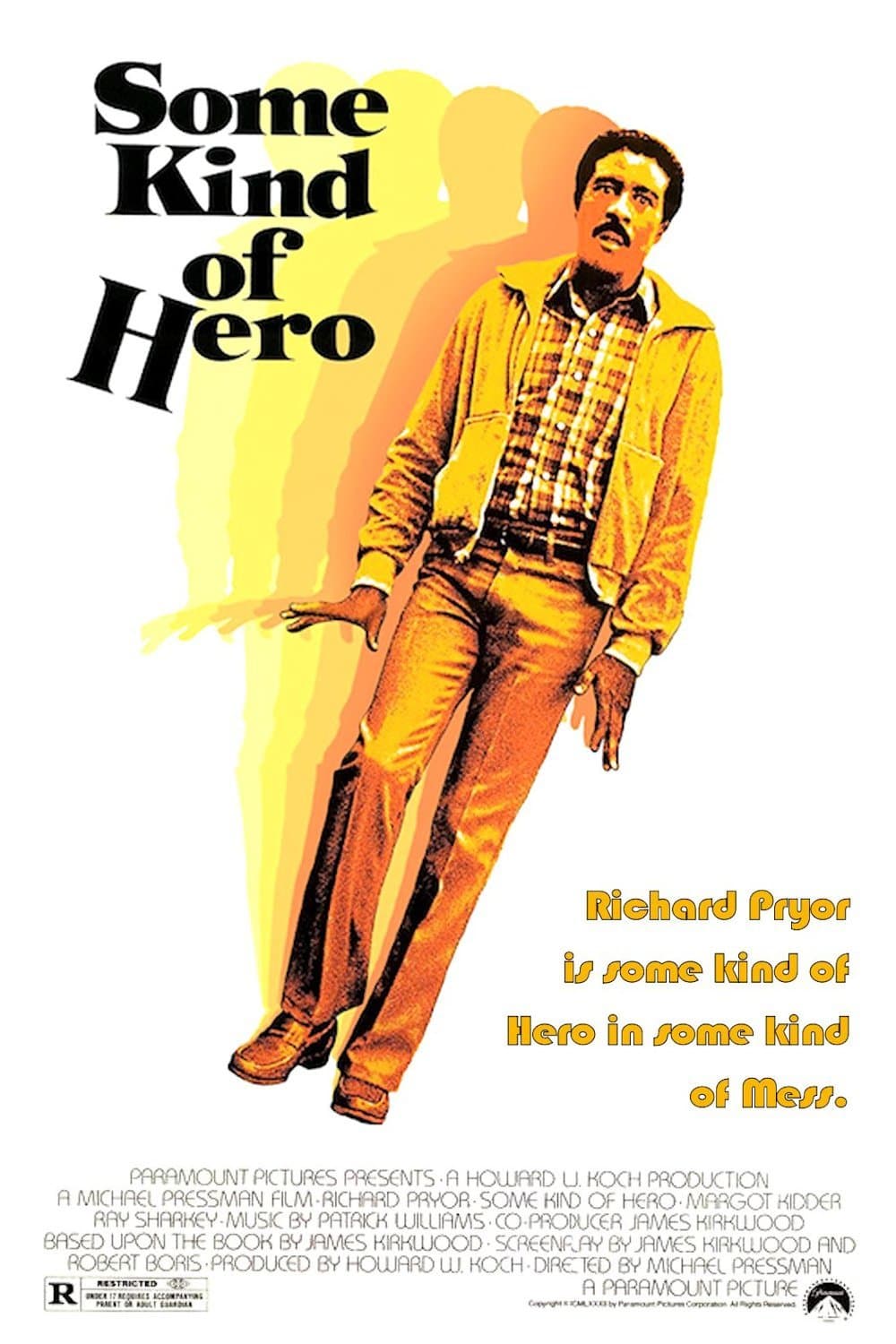
Eddie (Richard Pryor), who spent years as a prisoner of war in Vietnam, finally returns home, but finds that things have passed him by while he was gone. His wife (Lynne Moody) has fallen in love with another man and his mother (Olivia Cole) is in a nursing facility after having suffered a stroke. Because he was forced to sign a ‘confession’ to war crimes while under duress at the prison camp the army decides to withhold his veteran’s benefits and having no other source of income he decides to rob a bank, but things don’t go as planned.

The film, which is based on the book of the same name by James Kirkwood Jr., was meant to be a drama, but when Pryor signed on it was rewritten with comedy scenes added. Initially I thought Pryor wouldn’t be a good choice for the part as he is so well known as a funnyman, but it is actually his strong performance that helps carry the film through its rough spots.

The story starts out strong and despite having so many other movies that came out during that period that dealt with the same topic it is still quite gripping and revealing. The scenes dealing with Pryors’ incarceration and the harsh realities that he faces afterwards in civilian life all ring true and helps to make this an excellent movie for the first 45 minutes.

The film though starts to lose its footing with the introduction of Margot Kidder’s character. She plays a high-priced call girl who decides to go to bed with Pryor without charging him any money, but why? A sex worker isn’t going to make much of a living if she sleeps with guys for free and then getting into a relationship with him afterwards is even more farfetched. What’s so special about this guy that she falls in love with him compared to all the other men that she has already met through her line of work? Things get even dumber when Pryor insults her during an argument while visiting her apartment, but instead of throwing him out she leaves while saying she hopes he’ll ‘be gone’ when she gets back, but how can she trust he’ll not angrily tear up the place while she’s away? If it’s her apartment she should be in control and not the one who goes running.

Pryor’s character is confusing too. He becomes extremely nervous about robbing a bank to the point that he pees in his pants, but you would presume being a veteran and having seen the horrors of war he would find bank robbing to be not as tough. He also manages while bartering with some hardened gangsters to find the tenacity to turn them down when they give him a lowball monetary offer on some bank bonds that he has stolen, but how does he find the ability to be brazen in that situation, which many people would find equally intimidating, but not the other?

Also, Olivia Cole looks too young to be playing his stroke-victim mother and in fact was Pryor’s exact same age. I was expecting to see an old, withered woman with gray hair, but instead we get shown a black-haired woman looking around 40. Certainly there had to have been an older African American actresses available that would’ve been more age appropriate, so why not cast them?

Spoiler Alert!

What really kills it though is the ending where Pryor steals a briefcase full of bonds and uses that to get a large sum of money. Tacking-on such a fanciful-like ending where he is able to pull off a robbery that had long odds of succeeding minimizes all of the real world issues that came before it. Having a film start off by exploring realistic issues only to write-it-all-off with a ‘feel-good’ ending discredits the subject matter by taking a complex problem and then ‘solving it’ with a very unrealistic solution.

My Rating: 4 out of 10

Released: April 2, 1982

Runtime: 1Hour 37Minutes

Rated R

Director: Michael Pressman

Studio: Paramount

Available: DVD, Blu-ray, Amazon Video, YouTube
Brewster’s Millions (1985)

By Richard Winters

My Rating: 1 out of 10

4-Word Review: He spends thirty million.

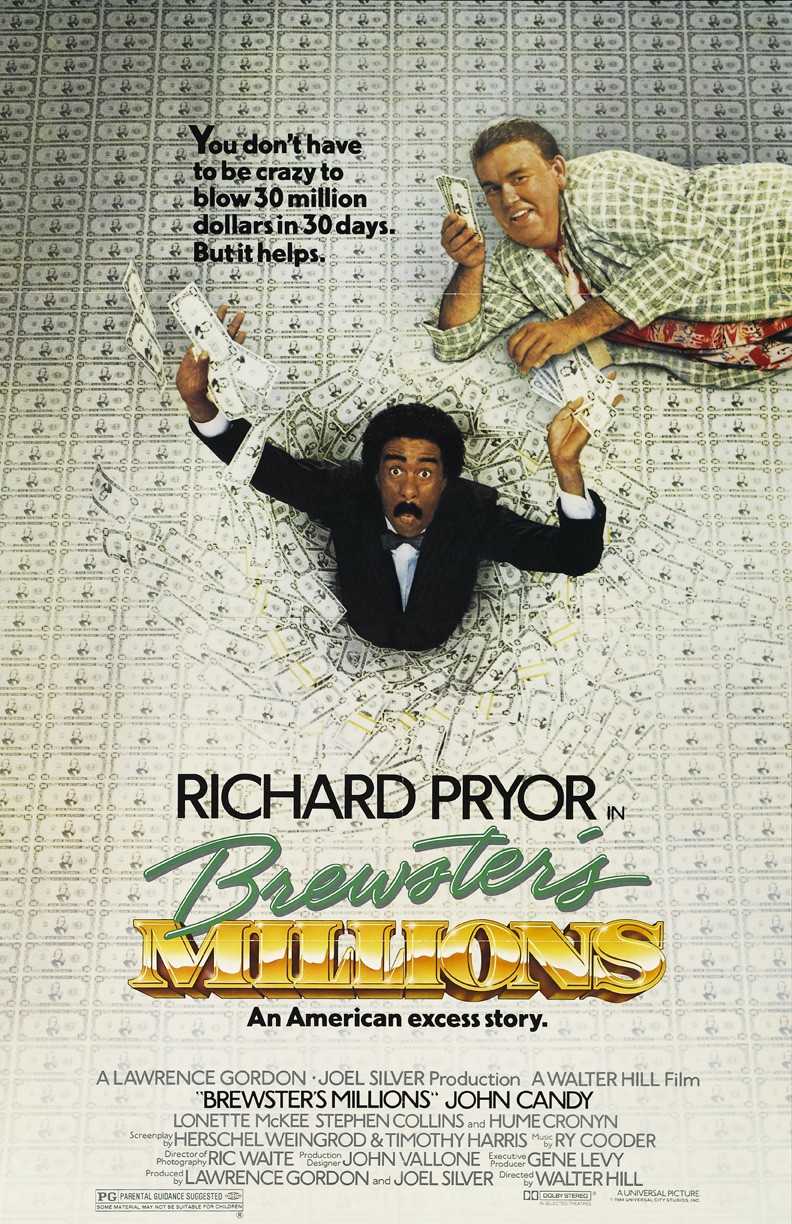
Richard Pryor plays Monty Brewster a struggling baseball pitcher in the minor leagues who has never earned more than $11,000 in a year, but finally gets his chance to be rich via a deceased uncle (Hume Cronyn) who leaves him a vast fortune, but with conditions. He must spend $30 million in 30 days in order to get $300 million and if not whatever is left over from the unspent $30 million will be given over to a law firm. He is also given the option to accept $1 million upfront with no strings, but he chooses the challenge only to find that spending a lot of money is even harder than making it.

The film is based on the 1902 novel of the same name by George Barr McCutcheon and this marked the seventh film version of that story. The novel though does things differently. In that version Brewster has already inherited one million, but given the chance to attain seven million if can spend the one million during a full year, which is a little more believable. Watching Brewster trying to spend the 30 million on any dumb thing that comes along gets dizzying and hard to keep track of until it eventually plays itself out by becoming a one-joke concept throwing out the same punchline over-and-over. Why the amount was raised to 30 million and the time span to spend it shortened isn’t clear. Possibly it was for inflation or simply to make it ‘more comical’, but it ends up getting wildly overblown.

With so many people out there who are poor and desperate it’s hard to be sympathetic to Brewster’s dilemma. Spending a lot of money foolishly simply to serve his own greed and attain even more isn’t exactly a noble mission. Had he at least tried to spend it on things that could help others, like in the novel, it might’ve made a little more of an emotional impact. The Pryor character is also portrayed as having very little confidence and therefore I would think in reality he would’ve just accepted the million, which in his eyes would’ve been a lot of money anyways and never bothered to take the challenge, which most anyone else would’ve found monumental and impossible.

Pryor isn’t funny at all and John Candy is far more amusing as his loyal friend, but unfortunately isn’t seen enough. Stephen Collins is good as the duplicitous Warren Cox and this also marks David White’s final film appearance, who is best known for playing Larry Tate on ‘Bewitched’ and whose name is strangely not listed in the film’s opening credits despite having a major role. Yakov Smirnoff and Rick Moranis can also be seen in brief bits.

The film was directed by Walter Hill who later referred to this as ‘an aberration’ and having only done it to ‘improve his bank account’. His forte is in action flicks and his attempt at comedy turns terribly flat from its first frame to its last. It is also in many ways similar to Trading Places, which coincidentally was written by the same screenwriter Hershel Weingrod, but that film was far better.

My Rating: 1 out of 10

Released: May 22, 1985

Runtime: 1Hour 41Minutes

Rated PG

Director: Walter Hill

Studio: Universal

Available: DVD, Blu-ray, Amazon Video, YouTube
The Busy Body (1967)

busy body

By Richard Winters

My Rating: 3 out of 10

4-Word Review: Find the dead body.

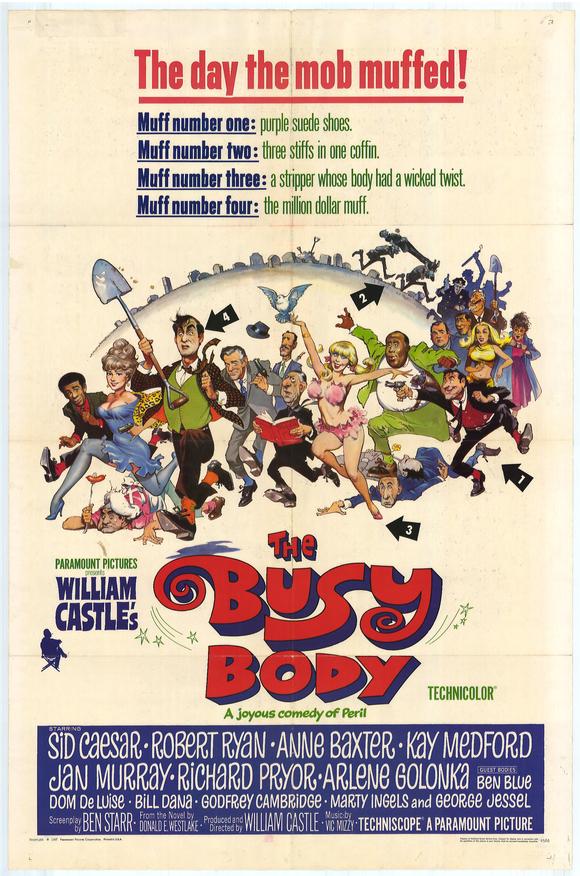
George Norton (Sid Caesar) is a nebbish mama’s boy who, for whatever reason, gets taken in by Charley (Robert Ryan) a Chicago mob boss. Charley even gives George a seat on his board of governors. When a fellow crime boss (Bill Dana) gets killed in a freak accident it is George who selects a blue suit for the corpse to wear at the funeral. Unfortunately that blue suit was lined with a million dollars and Charley demands that George dig up the body and retrieve the money, but when he does he finds that the body is gone and thus begins a long, winding, ‘madcap’ search for the missing body and money.

Noted horror director/producer William Castle decided late in his career to give comedy a stab and this is the result. The beginning is mildly amusing, but the humor gets terribly strained and a 100 minute runtime is just too long for such trite material. Everything gets suppressed into silliness with an overplayed music score that has too much of a playful quality to it making the whole thing thoroughly ingrained on the kiddie level from start-to-finish.

Dom DeLuise has an amusing bit as a mortician that would really rather be a hairdresser and Kay Medford is quite funny as George’s doting mother, but the rest of the supporting cast is wasted, which includes Richard Pryor, in his film debut, playing in a role that does not take advantage of his comic skill. Caesar is just not leading man material and his vaudeville-like shtick is quite passé and predictable. His co-star Ryan is far funnier and without having to try half as hard.

The plot goes off on wild tangents until it becomes impossible to follow and quite pointless. The whole production is horribly dated and will not appeal to kids or adults. In fact the film’s intended audience has long ago passed away making this thing a silly relic of its time and nothing more.

My Rating: 3 out of 10

Released: March 12, 1967

Runtime: 1Hour 40Minutes

Not Rated

Director: William Castle

Studio: Paramount

Available: DVD, Amazon Instant Video