Tag Archives: James Caan

The Gambler (1974)

gambler

By Richard Winters

My Rating: 5 out of 10

4-Word Review: Can’t control his addiction.

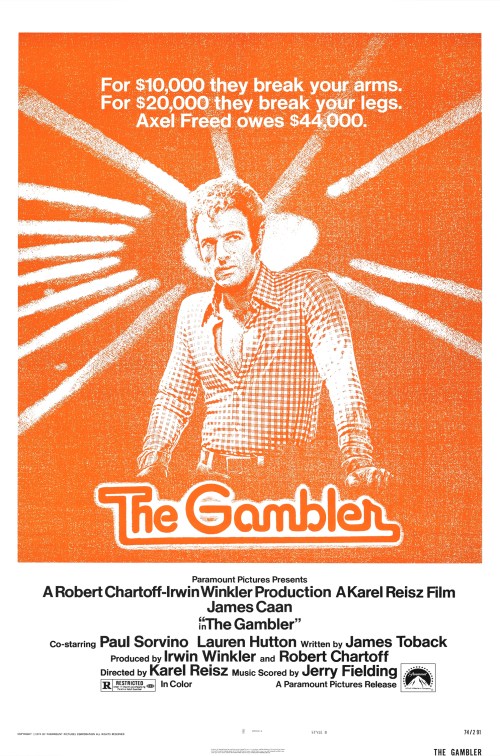
Axel (James Caan) is a college professor with a serious gambling addiction. He enjoys making bets on anything and everything whether it’s in a casino, over the phone betting on sports games, or out on the street playing one-on-one hoops with the neighborhood kids. No matter how much he loses he can’t stop from continuing the same pattern. When he owes $44,000 to the mob and they come looking for him and threatening his life he’s forced to ask his mother (Jacqueline Brookes) for the money and despite her disapproval she gives it to him out of her life savings, but then instead of paying off his debt he just uses it to gamble some more.

The screenplay was inspired by writer James Toback’s own life experiences and was initially written as a semi-autobiographical book before he decided to turn it into a script. The film is intriguing to a degree as gambling addiction is not anything that I’ve ever fully understood, so trying to fathom why some people would put up such huge sums of money to make a bet that they know they have a very good chance of losing, and even if they do lose will still continue to go on making bets anyways is baffling to me. Toback makes good efforts to try to explain the psych of a gambler’s mindset, which mainly gets revealed through Axel’s lectures to his class and at one point during a conversation with his bookie (Paul Sorvino) where he admits he could beat him with safe bets in competitions he was sure to win, but that this wouldn’t give him the same adrenaline rush, or ‘juice’, that placing a more riskier bet would.

Even with these explanations it still becomes gut wrenching watching him spiral out-on-control and dig himself deeper and deeper in a hole until you feel almost like turning away as it becomes genuinely painful, and frustrating, at seeing someone self-destruct the way this guy does. There are some very powerful moments including the scenes where the mother begrudgingly takes her money out of the bank to help him for fear he may lose his life if she doesn’t and her pained expression on her face as she does it really gets etched in your mind. Axel sitting in a bathtub listening to the final moments of a basketball game that he’s also bet big money on where the final score doesn’t go the way he wanted is also quite compelling.

The acting is strong with Caan giving a great performance that Toback originally wanted to go to DeNiro, who campaigned heavily for it, but director Karel Reisz choose Caan instead, only for Caan to state in later interviews that he hated working with him. Comedian London Lee, wearing an incredibly garish bowl haircut, is good in a very sleazy sort of way and Burt Young has a dynamic bit as an enforcer who tears up a lady’s apartment when her boyfriend is unable to repay what he owes. James Woods can be seen in a small role as a flippant bank teller though overall I still felt it was Brookes who steals it as the concerned mother and I was surprised she was not in it more nor that she didn’t get an Academy Award nomination as she really should’ve.

Despite a few powerful moments the pace is slow and there’s a lot of periods where it gets boring and nothing much happens. A lot of the blame goes to the fact that the main character has very little of an arch. He starts out already with the addiction gripping him and we can see what a problem it’s causing and the rest of the movie just continues to hit home this same point until it becomes redundant. It would’ve been better to have seen him before he had gotten into the whole gambling fix took over his life and personality, which would’ve created a far more interesting and insightful transition.

My Rating: 5 out of 10

Released: October 2, 1974

Runtime: 1 Hour 51 Minutes

Rated R

Director: Karel Reisz

Studio: Paramount

Available: DVD, Amazon Video
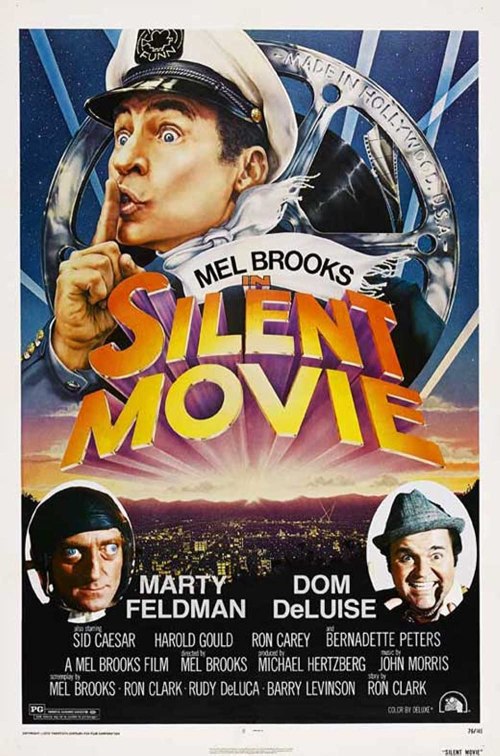
Silent Movie (1976)

silent

By Richard Winters

My Rating: 3 out of 10

4-Word Review: Marcel Marceau says no.

Mel Funn (Mel Brooks) was a one-time top Hollywood movie director, whose career spiraled downward due to alcoholism. He though, along with his two sidekicks, Marty (Marty Feldmen) and Dom (Dom DeLuise), aspires for a comeback. His idea is to make a silent movie, but the studio head (Sid Caesar) initially rejects it and only warms up to it when Mel convinces him that he can bring in some top name stars. Mel and his two buddies then set out to find the talent and although it isn’t easy they’re able to get Burt Reynolds, James Caan, Paul Newman, Anne Bancroft, and Liza Minnelli. The movie is eventually made, but then on opening night the one and only print of it gets stolen by a greedy conglomerate named Engulf and Devour, who want the studio that produced the movie to go under in order for them to take it over.

In 1975 after the success of Blazing Saddles and Young Frankenstein, writer-director Brooks was on top of the film world and I suppose any zany idea he came up with the studios would be willing to roll with considering his already built-in cult following, so it’s no surprise it got made. It even, to my surprise, did quite well at the box office pulling in $36 million from a $4 million budget though this was mainly due to the fact that Brooks had his legion of fans upfront who would be willing, if not running to see his next movie even if it was about farm pigs mating. What really flabbergasted me was how, at least at the time, most critics reviewed it favorably with Roger Ebert even giving it 4-stars. I for one though found very little that was funny and felt more like Anne Bancroft, who was Brooks’ wife, who responded negatively to Alan Alda when he congratulated the couple on it after watching it during an opening night screening. After describing how hard he laughed Bancroft then turned to her husband and said: “You see Mel, I told you some idiot would find this funny.”

A lot of the problem is with the script, or lack thereof where too much emphasis is placed on disconnected gags and not enough on  story. Many silent films from the era had intricate plot lines, so to say because the movie didn’t have dialogue, only title cards, so it had to remain simple is just not a good excuse. There needed to be more at stake and a threatening bad guy, some would say that Harold Gould, who plays the head of the conglomerate is the heavy, and he probably is, but he’s too bumbling, not seen enough, and there’s never any confrontation/showdown between him and Mel.

Having three guys essentially playing the protagonist didn’t make much sense either. I didn’t understand what bonded them, or since Mel was down-on-his-luck, where they would find the time, or money to traipse around in a snazzy little sports car all day and not have to work. There’s little distinction between the three and they could’ve been combined into one person, preferably Marty, whose odd face is perfect for this kind of material.

The humor is on the extreme kiddie level, which may disappoint some Brooks fans who at the time was known for his bawdy and even envelope pushing material. The gags aren’t all that imaginative. I think the only one I got a kick out during the entire 87-minute runtime was the heart machine at the hospital, which inadvertently gets turned into Pong, the very first video game. The Geriatric Lounge where no on one under 75 is admitted and everyone gets carded was alright too, but literally everything else falls flat and for the most part horrendously lame. The jokes have very little to do with the plot, which is anemic enough, and thus takes away from the main storyline as they just get haphazardly thrown in at regular intervals and in certain cases take quite a long time to play-out, which robs the movie of any momentum and makes it seem like it’s bogging down and going nowhere.

The cameos by the famous stars are wasted. I did like Bancroft, who does a rare comic turn from her usual drama forte, and is quite good particularly with the freaky eye trick that she does, which was taught to her by Carl Reiner. Paul Newman, who goes on a wild wheelchair race, isn’t bad either, but Reynolds segment doesn’t have enough going-on and Caan’s moments, in which the four try to eat melon balls inside his trailer that has a broken spring, is just plain silly and highly strained. In Minnelli’s bit she does nothing but just sit there as the other three try to sit down at her table while wearing body armor, which again takes agonizingly long to play-out and less sophisticated than a comic bit on ‘Sesame Street’.

I will give Brooks all the credit in the world with his ability and daring to come-up with what many people would consider an unworkable idea and have the guts to pull-it-off, or at least attempt to. However, like with History of the World, Part 1it becomes an overreach that can’t equal its grand concept. Having characters that weren’t broad caricatures and a script that didn’t rely so heavily on mindless shtick would’ve helped.

My Rating: 3 out of 10

Released: June 17, 1976

Runtime: 1 Hour 27 Minutes

Rated PG

Director: Mel Brooks

Studio: 20th Century Fox

Available: DVD

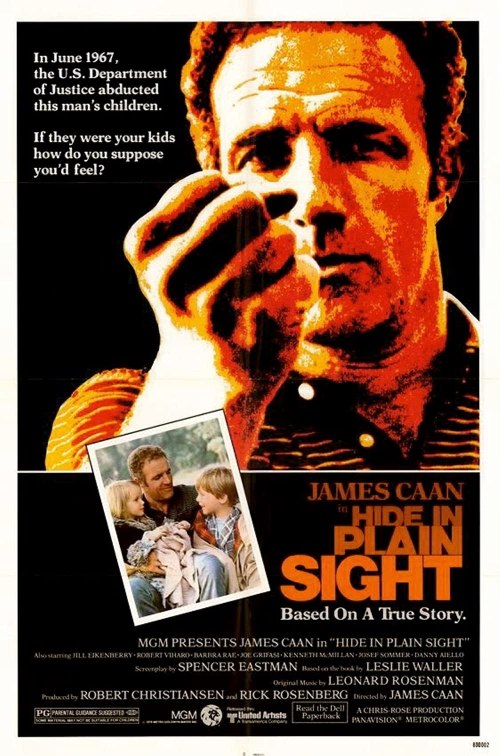
Hide in Plain Sight (1980)

hide

By Richard Winters

My Rating: 6 out of 10

4-Word Review: Searching for his children.

Thomas Hacklin (James Caan) is a divorced father of two children who has visiting rights to see his kids every weekend. One day when he arrives at his ex-wife Ruthie’s (Barbra Rae) residence he finds the home abandoned and no one around. He eventually learns that her and the kids have been put into the Witness Protection Program due to her remarriage to Jack (Robert Viharo) a gangster who qualified for the program when he became a state’s witness against the mob. Thomas’ efforts to find his kids prove futile and the authorities are no help, but he becomes relentless and hires a lawyer (Danny Aiello) to represent him in court, but even then the odds remain seemingly insurmountable.

The film is based on the novel of the same name by Leslie Waller, which in-turn was based on the actual experiences of Thomas Leonhard who one day in 1967 when he went to pick-up his kids for his weekly visitation found them gone and the house that they had been living in with his ex-wife Rochelle to have been abandoned. This then precipitated an 8-year crusade by Thomas to get them back, which proved to be a landmark legal battle, but on July 4, 1975 he was eventually reunited. The film though changed several things from the true story including adding in a subplot where Thomas gets followed by the mob and eventually leads to a violent confrontation. It also compresses the time span from 8 years to 18 months.

While I enjoyed the movie more than when I first saw it over 10 years ago the issues that I had with it during the first viewing remained the same. Most of it had to do with Caan’s, in this the only film that he directed, non-use of close-ups, which the studio heads complained about during the production. A good example of this is when Thomas and ex-wife are arguing on a public sidewalk the camera does not move-in, like in most movies, to allow us to hear what they’re saying, but instead pulls back, so they go further away, but what’s the point of seeing characters on the screen argue if we can’t hear what it’s about? Another scene has Thomas arriving at his ex-wife’s abandoned home, but instead of having the camera go inside with him as he enters it, it remains outside and then tracks around the home to the back door, which Thomas is seen leaving. This though lessens the impact as having the viewer visually witness the suddenly empty house would’ve been far more dramatic.

I did though like that many of the scenes were shot in Buffalo at the exact locations where the real-life incidents happened. The film reconstructs the look and feel of the 60’s quite nicely and many of the participants from the actual events coached the actors on how to perform their roles accurately. The acting is impressive especially by Viharo who’s mafia mobster caricature is right on-target. Kenneth McMillan is quite entertaining as a police detective who initially impedes Thomas’ efforts, but eventually has a change-of-heart. As with any great character actor, which McMillan clearly is, it’s what they add to the part that makes it interesting and here it’s his excessive eating with virtually each scene he’s in has him stuffing his face though I wondered how many takes were required to do each scene and if he ultimately overate and got himself sick while performing the role.

Spoiler Alert!

I was annoyed though with how certain fictional things that got added-in like Thomas’ dealings with the mob got played-down instead of up. The original script by Spencer Eastman called for a lengthy car chase and violent fist-fight, but Caan chose to take the subtle route making these moments less tension filled and possibly too slow and uneventful for some people to sit through. I was also amused how the actual reunion between the father and kids was different from the one in the movie where it’s portrayed as being a happy one. In real-life the kids disliked their father’s rules and ended up moving back with their mother showing how ironic life can be where you fight hard for something and then when you finally get it it ends up not being as great as you thought it would be.

My Rating: 5 out of 10

Released: March 21, 1980

Runtime: 1 Hour 32 Minutes

Rated PG

Director: James Caan

Studio: MGM

Available: DVD-R (Warner Archive Collection), Amazon Video

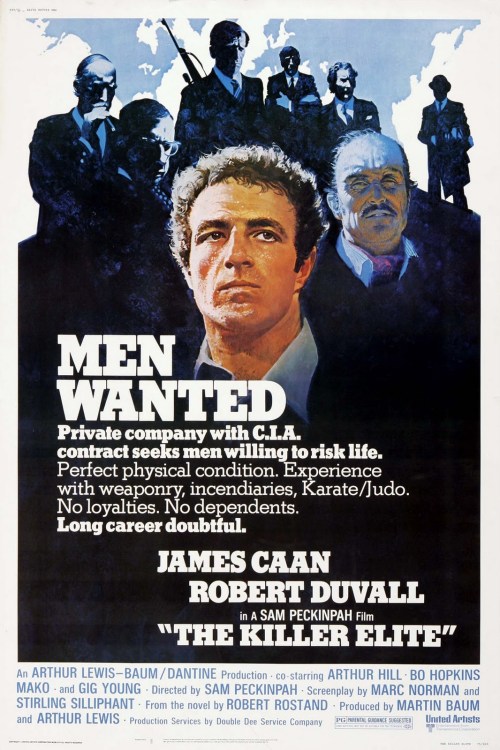
The Killer Elite (1975)

killer1

By Richard Winters

My Rating: 3 out of 10

4-Word Review: Betrayed by a friend.

Mike Locken (James Caan) and George Hansen (Robert Duvall) are two longtime friends and hit men working for a private agency affiliated with the CIA to carry-out covert missions. During their latest assignment Mike is shocked to see George turn on him by shooting him in the knee and elbow. While Mike is able to survive the incident he is forced to go through a long and painful rehabilitation and due to the injuries is no longer considered employable as a hit man. Mike though refuses to concede and goes through martial arts training were he learns to use a cane both for protection and offensive action. He assembles his old team while vowing to get revenge on George, but fails to realize that there’s someone else behind the scenes who’s pulling-the-strings and far more dangerous.

By the mid-70’s director Sam Peckinpah had achieved a strong following of admirers with his ground breaking action films that took violence and the way it was portrayed in films to a whole new level. While he had his share of critics his movies did well at the box office, which should’ve been enough to get him any assignment he wanted, but his notoriously cantankerous behavior on the set and alcoholism made him virtually unemployable. Mike Medavoy, the head of United Artists, decided to give him a reprieve by hiring him on to direct his next project, but it was under strict conditions that allowed the studio to have final say over all aspects, which in turn made Peckinpah’s presence virtually null and void. The film lacks the edginess of his other more well known pictures. The action really never gets going and much of it was intentionally toned down in order to get a PG-rating. The tension is also lacking and great majority of it is quite boring. There’s even brief moments of humor, which only undermines the story and makes it even more of a misfire.

I liked the casting of Caan, who has disowned the film, which he gives a 0 out of 10, and Duvall, this marked their 5th film together, but the script doesn’t play-up their relationship enough. I was hoping for more of a psychological angle like why would a loyal friend suddenly turn on his partner, which doesn’t really get examined. Duvall has much less screen time and there’s no ultimate confrontation between the two, which with a story like this should’ve been a must. The drama also shifts in the third act to Caan taking on Arthur Hill, who plays a undercover double-agent, which isn’t as interesting or impactful.

Caan’s shooting gets badly botched. I will give Peckinpah credit as the surgery scenes including the removal of the bullet is quite graphic, but how Caan is able to find help after he is shot is never shown. The assault occurs in a remote location, so technically he could’ve died without anyone knowing, so how he was able to find his way out and get the attention of a medical staff needed to be played-out and not just glossed-over like it is.

The introduction of Ninja warriors was another mistake. This was courtesy of Stirling Silliphant who had been hired to rewrite the script and wanted this element put-in since he and his girlfriend Tiana Alexander had studied martial arts under Bruce Lee and felt this would offer some excitement. The result is campy though a one critic, Pauline Kael, like it as she considered it a ‘self-aware satire’ though I was groaning more than laughing.

Some felt that Peckinpah had sold-out and this movie really made it seem like he had. Nothing gels or is inspired though I will at least credit him with the building explosion at the beginning, which was an actual implosion of an old fire house that he became aware was going to happen and quickly revised the shooting schedule, so he’d be able to capture it from across the street and then use it in the film, which does help though everything after it falls flat.

My Rating: 3 out of 10

Released: December 17, 1975

Runtime: 2 Hours 3 Minutes

Rated PG

Director: Sam Peckinpah

Studio: United Artists

Available: DVD, Blu-ray (Region B/2), Tubi, Amazon Video, YouTube

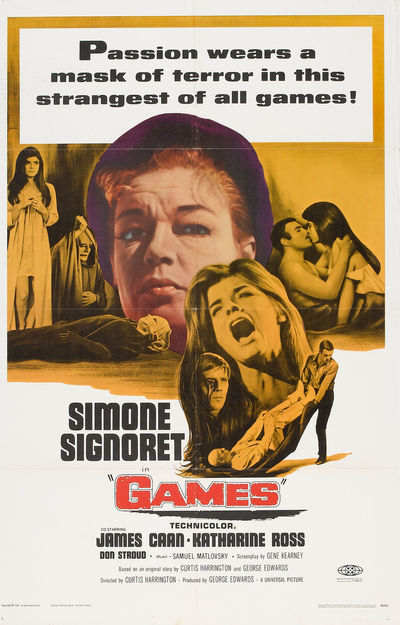
Games (1967)

By Richard Winters

My Rating: 5 out of 10

4-Word Review: Playing tricks on others.

Paul (James Caan) and his wife Jennifer (Katharine Ross) are an affluent upper East Side couple who are into illusion/magic trick shows and entertain their friends at posh parties that they hold inside their spacious townhome. One day Lisa (Simone Signoret) arrives at their door selling cosmetics only to fall ill when she gets inside the home. A doctor (Ian Wolfe) comes over and finds her condition to be only temporary and says she’ll recover in a day if given plenty of rest, so they decide to let her stay the night, which then becomes an extended visit as Lisa and Jennifer begin to bond. The two then start playing tricks on Paul by pretending that Jennifer is having an affair with their delivery boy named Norman (Don Stroud). Eventually Paul realizes he’s been duped, but wants to get revenge by pretending to catch Norman coming onto Jennifer the next day. This time Paul accidently shoots and kills him forcing the couple to get rid of the body without Lisa becoming aware, which they’re able to do, until Jennifer begins seeing what she believes to be Norman’s ghostly presence.

The film has potential, but consistently misses-the-mark and ultimately becomes a misfire. The games the two play are amusing, but nothing special though it’s enough to hold interest particularly at the beginning during the party scenes with all of their pretentious friends. The townhouse the two live in is ritzy and I enjoyed the design, but if you’re going to have a story take place in Manhattan then you better film it there and not on a sound stage in Los Angeles as the ambience of the neighborhood is missing and having almost all of the action take place in one setting eventually becomes claustrophobic.

The real problem though is with the characters. Signoret is fantastic and her presence helps immensely, but the way she enters into the story is ridiculous. What kind of couple would let a strange woman stay overnight in their home? If she’s sick then let her spend it at a hospital. Turning her one night visit into an extended stay is equally farfetched and where exactly did she find this wardrobe to wear when she initially just came over to peddle perfumes?

Ross’s character is a big mess too and it’s no wonder that she has referred to this film as being ‘terrible’ and it’s not her fault either. She’s quite beautiful as always and if you need an actress to give off the perfect scared expression she’s tops, but I didn’t understand why her character allowed herself to be so taken in. This was a couple used to playing tricks not only on their friends, but on each other, so why didn’t she have a more jaded reaction and presume that her husband really didn’t kill Norman and it was all some elaborate game?

Spoiler Alert!

The twist ending is a complete letdown as it hinges on Paul meeting Lisa a year earlier by chance and then springing this idea on her of scaring Jennifer to death to the point that she inadvertently kills someone, so that he can get at her fortune and split it with Lisa, but how would he know that he could trust Lisa to keep this secret and not go to the authorities, or tell Jennifer? It might’ve worked better had the third person been a lifelong friend/family member to Paul, and not just someone he met at random, and therefore not likely to betray him.

A double-ending would’ve been more satisfying as Lisa poisons Paul and walks away with the money, but Paul should’ve been cunning enough to try and poison Lisa first, or through mutual mistrust they poison each other and no one gets the money. An even better idea would’ve had Jennifer only pretending to fall victim to the ruse, so when Lisa walks outside with the suitcase full of money, after having killed Paul, Jennifer and the police squad could’ve been there waiting for her.

My Rating: 5 out of 10

Released: September 17, 1967

Runtime: 1 Hour 40 Minutes

Not Rated

Director: Curtis Harrington

Studio: Universal

Available: DVD-R (Universal Vault Series), Blu-ray

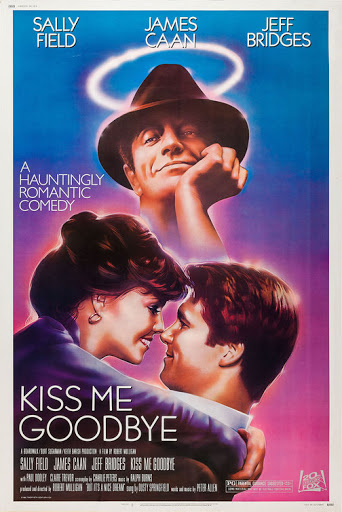
Kiss Me Goodbye (1982)

By Richard Winters

My Rating: 5 out of 10

4-Word Review: Her dead husband returns.

Three years after the death of her husband Jolly (James Caan) Kay (Sally Field) decides to move back into the house where her husband met his untimely fate when he fell down the home’s marble staircase. As she and her mother (Claire Trevor) get the home prepared for the arrival of her fiance Rupert (Jeff Bridges) she suddenly sees the vision of Jolly’s ghost in front of her. Only she can see, or hear it, which causes a great deal of confusion to those around her who all think she’s gone completely crazy.

The film is a loose remake of the Brazilian hit Dona Flor and Her Two Husbands, which in itself was based on the 1966 novel of the same name by Jorge Amado although this one does not have the erotic edge that made that film so famous. The comedy takes too long to get going, is a bit heavy-handed at times, and puts no new interesting spin on the ghost theme making it seem like just another modern updating of The Ghost and Mrs. Muir.

The introduction of the ghost should’ve occurred after the couple was already married instead of before as it offers both Rupert and Kay too much of an easy out and the stakes needed to be higher. Kay still seemed very much in love with Jolly as she had a complete shrine of him in one of their rooms, so it would seem once the ghost of him arrived she’d have second thoughts of going through with the marriage even though that’s not what happens. As for Rupert it would’ve made more sense had he just walked out of the situation altogether since all the red-flags where there even before the ghost came about that she wasn’t completely over her first marriage and unable to give Rupert the full attention that he  wanted.

The cast is game for the most part although I felt Bridges looked much too boyish here almost like he was still in high school. Caan though is quite engaging and the one element that holds it all together even though he apparently disliked doing it. It’s also great seeing Claire Trevor in her first film appearance in 15 years and the outfits and hats that she wears look quite chic. Paul Dooley has a good funny bit at the end playing a former priest who tries to exorcise the ghost out of the home, which he mistakenly thinks possesses Kay’s dog (Shakespeare).

Much to my surprise I ended up laughing much more than I thought I would. Two of my favorite moments occurs when Rupert and Kay go traveling to a country lodge and stop off at a cafe where Rupert pretends to have a conversation with the ghost much to the confusion of a young boy (Barret Oliver) sitting at the table next to him. The fight that the two have later on while at the lodge, which causes the break-up of another couple (Alan Haufrect, Maryedith Burrell), who start to take sides, is quite good too.

Spoiler Alert!

I was laughing so hard at points I was ready to give this a 7 or 8 rating, but then it gets ruined by the stupid ending. The idea that the ghost would agree to just leave and never come back again was too convenient. Why would he have bothered to come back to this life at all, if he was going to be gotten rid of so easily?

Having Rupert slip down the same staircase that took Jolly’s life looks cheesy and unintentional funny. Jolly’s death was cheesy enough, but to do it a second time with someone else was dumb and what’s worse is that Rupert, even when he smashes his head onto the hard ground, comes back to life with no injuries. Why even have this scene at all if there was no point to it?

A better ending would’ve had Rupert killed the same way as Jolly and then come back as a ghost just like Jolly and then Kay could’ve enjoyed the two men at the same time. Possibly even have the menage a trois that had been tapped into in the first film, but nixed here because it was deemed American audiences would’ve been too prudish to accept.

I also thought it was a bit unbelievable that Jolly had all these affairs behind Kay’s back while he was alive and she seemed to have no clue it was going on. Most married people usually have a sense something isn’t right even if they can’t prove it. Having Kay’s friend Emily (Dorothy Fielding) admit to fooling around with Jolly and Kay not be bothered by it and just go on being friends with her didn’t jibe with me either.

My Rating: 5 out of 10

Released: December 22, 1982

Runtime: 1 Hour 41 Minutes

Rated PG

Director: Robert Mulligan

Studio: 20th Century Fox

Available: DVD

Freebie and the Bean (1974)

By Richard Winters

My Rating: 7 out of 10

4-Word Review: Protecting a state’s witness.

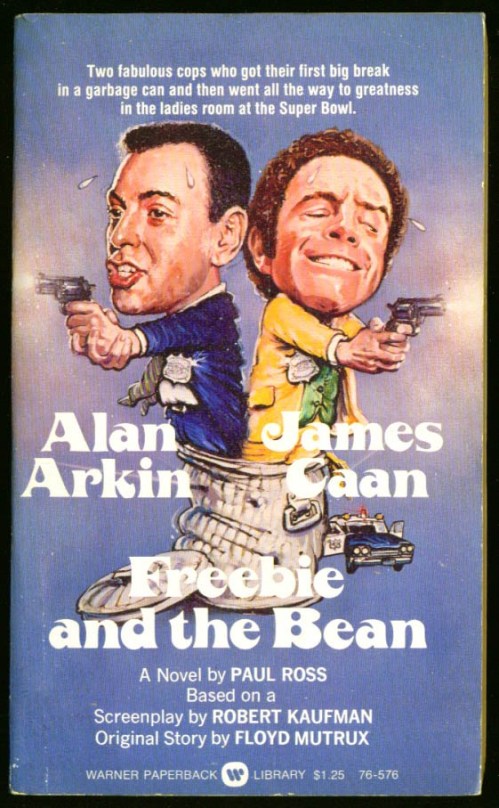
Detective Sergeant Dan Delgado (Alan Arkin) is ‘Bean’ while Detective Sergeant Tim Walker (James Caan) is known as ‘Freebie’. Together they are two San Francisco cops investigating a well-known racketeer named Red Meyers (Jack Kruschen). Just when they think they have enough evidence to bring him in they find that there’s a hit-man ready to kill him and it is now their job to keep the cantankerous Meyers alive until they can bring in a key witness to testify against him, which proves difficult.

The script was written by Floyd Mutrix who shopped it around to many studios before finally selling it to Warner Brothers because he felt he could trust then Studio Boss Richard Zanuck to keep the story in tact only to have the script go through massive rewrites once it was handed over to Richard Rush to direct. The story was originally conceived as being in the serious vein, but during rehearsals it was found that Caan and Arkin had a good comic chemistry together, so the dialogue took on more of a humorous take.

In many ways I liked the comic spin. This was in the age of Dirty Harry and The French Connection where cops had taken too much of a serious tone, so having something making fun of the trend is refreshing. The story itself remains gritty, which culminates in this odd dynamic where you find yourself laughing one minute and then cringing the next. My only complaint is that it seemed like Freebie and Bean where getting away with too much, the destruction of police property and reckless driving was one thing, but the way they would freely rough-up suspects under their care was another. Their ethical boundaries were so loose that real-life cops in the same situation would most certainly end up  getting reprimanded, at least hopefully.

The stunt work is worth catching as the car chases create a true adrenaline rush. The best one starts inside a dentist’s office, then goes out onto the streets where Caan, or at least his stunt double, rides a motorbike over the roofs of several cars in his pursuit of the bad guys, then proceeds to go through an outdoor art exhibit only to culminate inside the kitchen of a ritzy restaurant.

The supporting cast includes Loretta Swit as the wife of the crime boss who initially seems to have a very insignificant role, but it eventually works into being an integral part by the end. I also enjoyed Christopher Morley, who is a well-known female impersonator best remembered for playing Sally Armitage a character that was known as a woman who eventually came out as a man on the daytime soap opera ‘General Hospital’ that later inspired the movie Tootsie.  Here he plays a transvestite that Freebie meets briefly early on. Due to his small body frame Freebie initially considers him a ‘lightweight’ only to get the shock of his life when later on Morley proves to be far more able to defend himself than Freebie could’ve ever imagined in a unique fight sequence that I wished had been extended.

The casting that I had an issue was with Arkin and Valerie Harper as his wife. Usually these are great actors, but here they play Hispanic characters even though both were actually Jewish. Hearing Harper speak in a fake Spanish accent is quite annoying and the scene where the two bicker at each other would’ve had far better energy had it been played by actual Hispanics.

Spoiler Alert!

The part where Bean gets shot is problematic too. Normally I don’t mind having some reality seep into a story,  but here Bean being put out of commission is all wrong. The two had done everything together up to this point, so it cheats the viewer and the film’s chemistry with him missing during the climactic fight. Having him then miraculously recover after he’s taken away in the ambulance and pronounced dead makes the whole scenario ridiculous and implausible.

My Rating: 7 out of 10

Released: December 25, 1974

Runtime: 1 Hour 53 Minutes

Rated R

Director: Richard Rush

Studio: Warner Brothers

Available: DVD, Blu-ray, Amazon Video, YouTube

The Rain People (1969)

By Richard Winters

My Rating: 8 out of 10

4-Word Review: Needing to find herself.

Natalie (Shirley Knight) wakes up one day and decides to simply get in her car and drive off with no particular destination in mind. She has just found out that she is pregnant and not sure if she can or wants to handle the responsibilities that come with it. She leaves a note to her husband (Robert Modica) telling him she needs time away from him to think things through. During her travels she meets Jimmy (James Caan), otherwise known as ‘Killer’, he was a former football player straddled with a brain injury that has now left him mentally handicapped. She also meets Gordon (Robert Duvall) a traffic cop who pulls her over for a speeding ticket. The two eventually start to date, but the more Natalie tries to find herself the more lost she becomes.

The film was for the most part considered an ‘experimental’ one as the subject matter was years ahead of its time. While many road pictures of the day like Easy Rider took the male perspective this one dared to tap into the feminist viewpoint, which up to that point hadn’t been explored as much if at all. I enjoyed how the film questions the whole wife/mother idea, once considered ‘the ultimate destination’ for any woman, but here brings out the complex issues that come with it and how not every woman may want to be trapped by it, or even find contentment in that situation.

What’s even more interesting is that Natalie never really seems to go anywhere. Yes, she does get in a car and starts driving and passes by many picturesque places of rural America along the way, but trying to escape the clutches that she feels holds her back never goes away. Everyone she meets, including Gordon who’s stuck raising a young daughter (Marya Zimmet) that he wasn’t totally prepared for, seem to be in the same predicament as her making it feel like the further she drives away the closer she gets to where she started.

Francis Ford Coppola makes wonderful use of the rain and there are many shots of it particularly in the first half as we see it creating puddles on the road and even streaming down the car windows in close-up. The cloudy, murky weather acted as a nice motif to Natalie’s inner emotional state and the confusion that she was going through. The film’s promotional poster seen above is excellent too and brings out the moodiness of the movie with one perfect shot although seeing the couple kissing in the backdrop is a bit misleading as that’s one thing you definitely don’t see here despite Natalie’s efforts to try and find it. The two people should’ve, in order to be consistent with the theme of the film it was promoting, been seen standing side-by-side instead of hugging.

I also really loved Coppola’s use of flashbacks here, which gets sprinkled in throughout. I liked the scenes showing the couple in happier times during their wedding as it illustrates how relationships that go bad or don’t work out still had their good moments even if they were brief. The flashbacks dealing with Duvall trying to save his family from a burning house are quite revealing too as what he describes verbally through voice-over is quite different from what we see.

Leonard Maltin, in his review of the film, called the script ‘weak’, which I completely disagree with. Yes, not a lot happens, the random situations that Natalie goes through perfectly reflect what could happen to anyone on a trip, which I liked because the plausibility here is never compromised. She ends her journey feeling as lost as she did when she started, but I felt that was the whole point, so in my opinion the script is strong.

George Lucas, who worked as an aide on this production, filmed a 32-minute documentary of this movie as it was being made called Filmmaker, which is accessible on YouTube although the sound quality is poor. This film has several revealing moments including conflicts that director Coppola had with Knight, but what I found most interesting is that when the crew traveled down to Chattanooga they all cut their hair and shaved their beards,which included Coppola himself, as they felt the locales wouldn’t work with them unless they appeared clean-cut. Seeing Coppola with a rare non-beard look alone makes this short film vignette worth catching.

My Rating: 8 out of 10

Released: August 27, 1968

Runtime: 1 Hour 41 Minutes

Rated R

Director: Francis Ford Coppola

Studio: Warner Brothers

Available: DVD-R (Warner Archive), Amazon Video, YouTube

Slither (1973)

By Richard Winters

My Rating: 5 out of 10

4-Word Review: Searching for embezzled money.

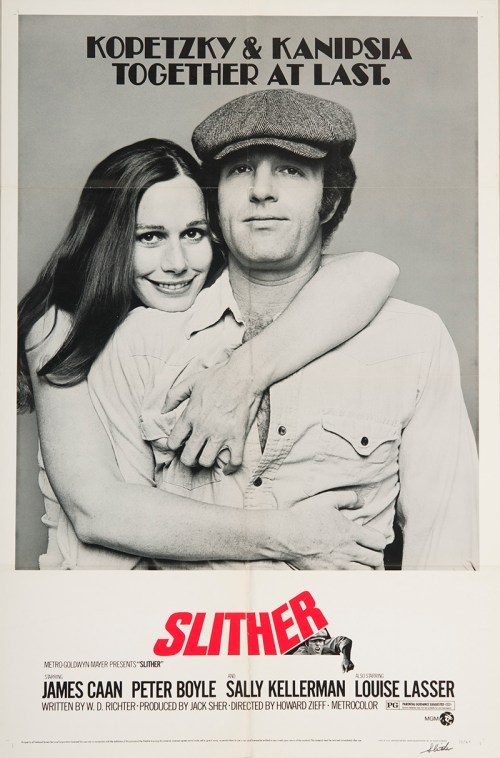
Dick Kanipsia (James Caan) is a former car thief who has just been released from jail and is now trying to go straight. While in prison he started up a friendship with Harry Moss (Richard B. Shull) and decides to go to his rural home for a visit. It is there that Harry suddenly gets shot by a mysterious gunmen, but just before he dies he informs Dick about a secret stash of stolen money that can only be retrieved by contacting his former partners in crime: Barry Faneka (Peter Boyle) and Vincent Palmer (Allen Garfield). Dick then goes on a road trip trying to find these two men while also coming into contact with a lot of oddball characters and situations along the way.

When I first saw this film over 20 years ago I really loved it and was impressed with W.D. Richter’s offbeat script that relies heavily on quirky scenarios and dryly humorous non sequiturs to help propel it. A theme he later polished to perfection in his most famous film the cult hit The Adventures of Buckaroo Banzai Across the 8th Dimension While I still enjoy the engaging set-up I’ve found that during subsequent viewings the unsatisfying ending ruins everything else that comes before it and ultimately hurts the movie as a whole, but first lets go over what I did like.

The chase element that gets incorporated into the story is cool and has a strong connection to the one in Duel. The idea of having these large black vans driven by a person we cannot see constantly chasing after our protagonist no matter where he goes is intriguing and helps create an interesting mystery angle. The unique design of the vans, which was a 1973 Dodge Rectrans Discover 25R,  featured no front doors, which coupled with its all-black exterior gives them a very threatening presence that is almost creepier than the truck used in Duel.

Caan’s detached persona helps separate him from all the nuttiness around him and makes him likable in the process. Boyle is amusing as his eventual cohort and Louise Lasser is surprisingly restrained as Boyle’s wife. You also get to see  film director Paul Thomas Anderson’s real-life mother, Edwina Gough, in a small role during a scene at a bingo tournament.

The only character though that I didn’t care for was Sally Kellerman’s who plays this semi-crazy lady that proceeds to just slow-up the pace of the film with every scene that she’s in. I admit the part where she robs a diner at gunpoint is kind of fun, but I’ve never been a fan of her breathless delivery and didn’t feel there was any need for her reappearing after her character was pretty much dropped from the story and forgotten and there’s never any explanation for how she was able to successfully track Caan down after he abandoned her.

Laszlo Kovac’s cinematography is good although it would’ve been nice had this been a genuine road movie where our main character would’ve been required to travel to highly varied settings/landscapes  in his quest to find the hidden money. I realize this would’ve upped the budget, but having to constantly stare at the dry, brown landscape of Stockton, California, where the majority of the shooting took place, is kind of depressing.

As I stated earlier it’s the ending that hurts the film more than anything. To sit through what is otherwise a creative plot only to find that it all just leads to nothing is a big letdown. I know that during the 70’s it was trendy to have anti-climactic movie finishes, but here there needed to be more of a payoff . Movies should also have the main character change in some way from what they were at the beginning, which doesn’t occur. Caan just quietly walks away from the chaos around him like everything he’s just went through was nothing more than a blip on his life’s radar and ultimately that’s the way the movie becomes with the viewer as well. Goofy enough to hold your attention, but never memorable enough to stay with you.

My Rating: 5 out of 10

Released: March 7, 1973

Runtime: 1 Hour 37 Minutes

Rated PG

Director: Howard Zieff

Studio: MGM

Available: DVD-R (Warner Archive), YouTube

Rabbit, Run (1970)

By Richard Winters

My Rating: 7 out of 10

4-Word Review: He’s maladjusted to adulthood.

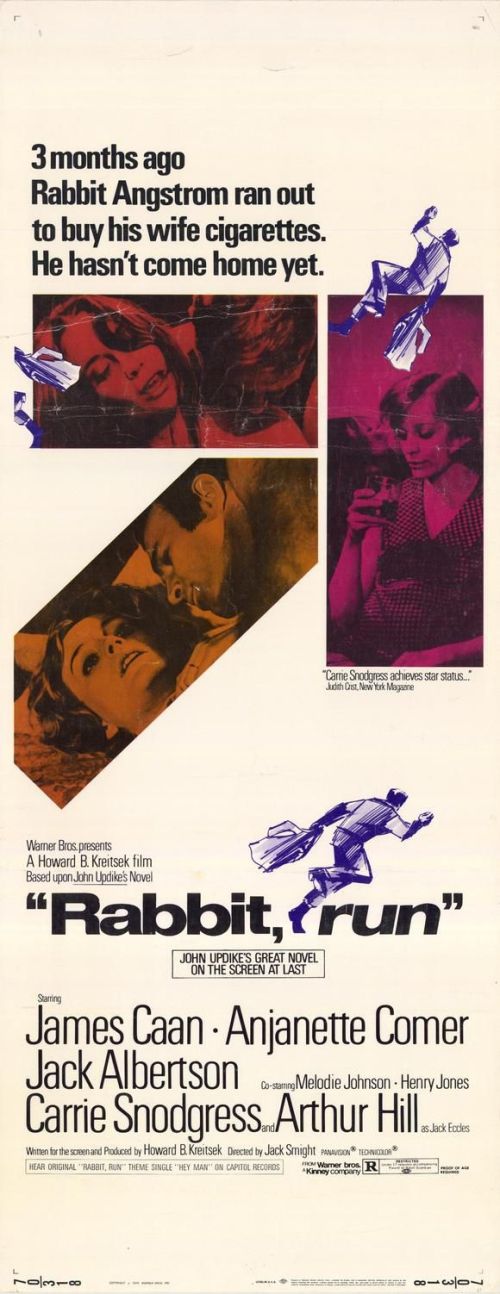
Harry (James Caan) was a basketball star in high school and nicknamed Rabbit because of his speed. Now he’s a middle-aged man working a thankless job and stuck in a loveless marriage with an alcoholic wife (Carrie Snodgress). One day he decides to just jump into his car and drive away from all of it. He meets his former coach (Jack Albertson) who hooks him up with a prostitute (Anjanette Comer) and the two begin a makeshift relationship, but that doesn’t work out either. Rabbit then decides to return to his wife just as she’s ready to deliver their second child only to ultimately have tragedy strike.

Although the film was not as well received by the critics as the John Updike novel that it’s based upon was I still cam away liking it. There are indeed some lulls but director Jack Smight nicely incorporates the on-location shooting of Reading, Pennsylvania where Updike was born into the story, which gives it a distinctive visual flair. The scene where Rabbit walks into his gray, dingy old apartment only to see his wife slouched on the sofa with a liquor bottle would make anyone want to get up and run out of there and visually you get a sense of what Rabbit is feeling and therefore you don’t totally blame him for doing what he does even as irresponsible as it is.

Caan gives a great performance in a part he was born to play and I was impressed with his long distance running that occurs both at the beginning of the film and the end. However, if would have been nice to have had some flashbacks showing the character in better times. It’s one thing to talk about the character’s success on the basketball court and it’s another to actually see it. It would’ve also helped explain his weird rendezvous with his coach as the old man tells him, much to Rabbit’s shock, that the most important thing in life is ‘tits and pussy’. I think the reason for this, without having actually read the book, is that as a teen the coach acted as a role model and put up a moral facade for his players, but now as both are adults he sees the more jaded side of the guy, but without the benefit of a flashback this point gets lost.

The characters are nicely multi-dimensional, which makes watching them interact fascinating. I enjoyed Arthur Hill as a minister who tries to redeem Rabbit only to admit that he has fantasized about doing the exact same thing that Rabbit did although his wife, played by Melodie Johnson, is too young and dresses too provocatively to ever be taken seriously as being an actual pastor’s wife.

Spoiler Alert!

Smight captures the book’s shocking elements nicely including the baby drowning scene in the bathtub where the viewer sees it from the infant’s underwater point-of-view. However, the moment where Comer gets pressured to ‘go down’ on Caan in an effort to perform fellatio with him, which she apparently did with some of her other customers, has clearly lost its edge since it’s a more mainstream sexual practice between couples now than it was back then although the pounding music that gets played over this sequence as they ‘debate’ whether to do it or not is good.

The ending though I found disappointing as it’s too similar to the one in Adam at 6 AM, which came out around the same time and had the film’s star Michael Douglas driving away from his obligations in a car while here Caan does the same, but only on his feet yet one can’t run away from things their whole lives. I was hoping to see how he changed during the different stages of his life, which this film doesn’t show. Updike wrote three follow-up novels to this story ‘Rabbit Redux’, ‘Rabbit is Rich’, and ‘Rabbit at Rest’, and I hope that they can remake this film while adding elements of those stories into it, which will create a fuller composite to the Rabbit character and his life, which this film lacks.

My Rating: 7 out of 10

Released: October 10, 1970

Runtime: 1 Hour 34 Minutes

Rated R

Director: Jack Smight

Studio: Warner Brothers

Available: DVD (Warner Archive), YouTube