Tag Archives: Faye Dunaway

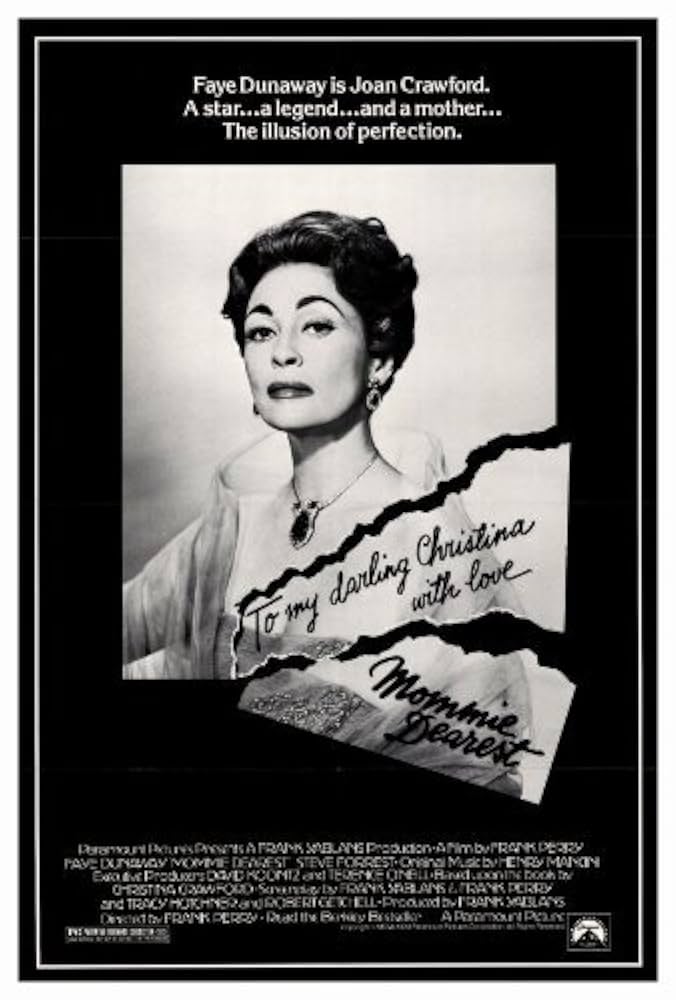
Mommie Dearest (1981)

By Richard Winters

My Rating: 6 out of 10

4-Word Review: Treating her children cruelly.

Joan Crawford (Faye Dunaway) is a famous actress who longs to have children, but unable to have any of her own. The adoption agencies reject her attempts to get a child because she’s divorced and a career woman, so she gets her boyfriend Gregg (Steve Forrest), who’s rich and influential, to pull-some-strings, which ultimately gets her a baby girl named Christina (Mara Hobel). Joan though proves to be a very strict parent and enforces harsh rules, which Christina rebels from and this leads to even harsher consequences. As Christina grows older, (Diana Scarwid) she begins a life on her own away from her mother including a fledgling acting career where she stars in the soap opera ‘Summer Storm’, but when she gets ill her mother, desperate to recharge her failing career, takes over Christina’s role while she’s recovering in the hospital that further erodes their already tenuous relationship. When Joan ultimately dies and Christina finds that both her and her brother have been written out of the will she decides at that point to write a tell-all book that will scratch away the glossy image of her famous mother and instead paint a ‘true’ portrait of who she really was.

The film is based on the autobiography of the same name written by Christina Crawford that was published in 1978 to much controversy as both family and friends denounced it as sensationalized and not an accurate portrait of Joan. Nonetheless it was a best seller, which quickly lead to a movie deal. Dunaway was excited to take the role convinced it would lead to her second Oscar, but instead, despite being directed by the talented Frank Perry, it was perceived as camp by both the critics and the public alike forcing Paramount to retool its marketing campaign selling it more as a dark comedy much to the dismay of the film’s producer Frank Yablans, who insisted it should be perceived as a serious drama.

On the one hand I think some of it is true. I have no doubt that Joan was a very strong-willed woman who had very particular ideas on child-rearing. Anyone who’s scratched-and-clawed their way to the stardom and able to maintain it over several decades would certainly have to be a driven person and I’m sure some of that would have to rub off in their home life. The scenes where she pushes Christina to be a better swimmer, so that she learns to understand the competitive world out there, made sense and parents pushing their children can happen a lot. Having her being controlling and a clean freak wasn’t all that surprising either and these scenes felt honest and revealing.

The problem is that the film makes no attempt to humanize Joan and instead becomes obsessed with portraying her as being a monstrous kook that scares everyone who’s around her including her dedicated servants who act in petrified fear every time they come near her.  The film fails to show any nuance and becomes a big trash feast intent at making her look as awful as possible and leaving no room to even consider the other side, which because she had already died by the time this movie was released, she wasn’t able to give. The most ridiculous moment, which wasn’t in the book, is when she goes into Christina’s room late at night while wearing white face cream that makes her appear almost demonic and then flies into a rage when she notices a wire hanger in her closet that is so over-the-top I’m surprised the cast and crew didn’t break out laughing while it was being shot.

There are issues with Christina too as she’s a little too good to be true. There are several scenes that had it been tweaked just a bit could’ve made her the difficult one instead of the mother. Case in point is when she refuses to do things that her mother asks that could easily be seen by some as Christina being a mouthy brat unwilling to do as she’s told and Joan simply stepping to create some discipline, which is why some attempt at balance would’ve helped and made it seem less like a cheap soap opera.

Spoiler Alert!

Another dumb scene comes near the end when Joan jumps on Christina and begins to strangle her and needs to be pulled off by two other women in the room (Rutanya Alda, Joycelyn Brando). It makes it look like she was close to dying had the two ladies not intervened, but Christina was at the time a grown woman and much younger than Joan, so she should’ve been able to defend herself and fight back. Having her essentially just lay down and take it seemed unrealistic and turning it into an all-out physical cat fight between the two would’ve far more entertaining and believable. Yet despite all this the production values are still top notch and in a tabloid sort of way it’s entertaining.

My Rating: 6 out of 10

Released: September 16, 1981

Runtime: 2 Hours 9 Minutes

Rated PG

Director: Frank Perry

Studio: Paramount

Available: DVD, Blu-ray, PlutoTV, Amazon Video, YouTube
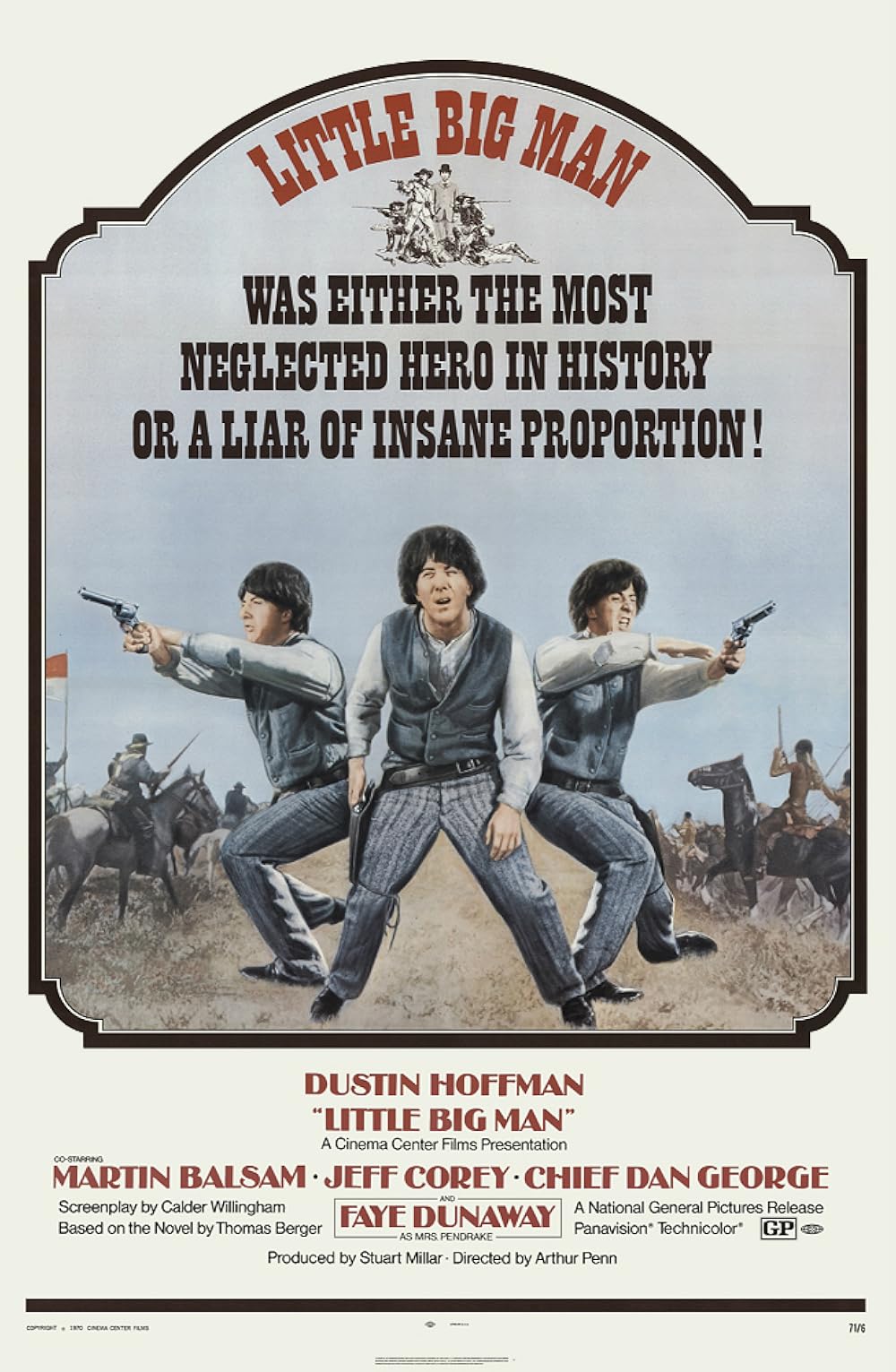
Little Big Man (1970)

By Richard Winters

My Rating: 8 out of 10

4-Word Review: Raised as an Indian.

Jack Crabb (Dustin Hoffman) has reached the age of 121 and agrees to a taped interview with a reporter (William Hickey). He recounts his life events including being kidnapped by Cheyenne Indians in 1859 when he was 10 and befriending their tribal leader Old Lodge Skins (Chief Dan George) who gives him the nickname Little Big Man. He then goes on to elaborate other life events like being captured by the U.S. Calvary where he is placed in the home of a Reverend (Thayer David) and his beautiful wife (Faye Dunaway) who despite her professed Christianity is having an affair with a soda shop owner, which disillusions Jack from religion altogether. He also goes through his marriage to a Swedish immigrant named Olga (Kelly Jean Peters) and how she gets kidnapped by the Cheyenne during a stagecoach ride and Jack’s attempts to find her, which reunites him with Old Lodge Skins and leads him to meet General Custer (Richard Mulligan), who he initially admires, but eventually learns to despise.

The film is based on the 1964 novel by Thomas Berger of the same name and wonderfully mixes the whimsical style of that book into the movie and maintains overall an excellent balance between quirky moments, of which there’s many and jarring scenes dealing with Indian Massacres by the U.S. Calvary, which remains effectively disturbing and impactful despite all the humor that goes on in between. The impressive cinematography by Harry Stradling Jr. that manages to capture the Big Sky Country, filmed on-location in Montanna where many of these historical events actually occurred, in all of its glory and makes you feel like you’ve genuinely been physically transported back to that era.

The most amazing element though, which comes up right away, is the makeup effects on Hoffman where he’s made to look about as elderly as you can get and hats-off to makeup artist Dick Smith to achieve it in such an effective way. While aging of characters has been attempted in other films, I’ve never seen it so realistic as here and in fact it still holds claim even after all these years in the Guiness Book of World Records as ‘The Greatest Age Span Portrayed by a Movie Actor’. My only quibble is that his eyes as an old man appear to be blue even though for the rest of the movie Hoffman’s eyes are clearly brown.

The acting all around is superb starting of course with Hoffman and then moving onto Dunaway whose first attempt at comedy this was and she’s really funny if not a complete scene-stealer. Thayer David awesome too as her bombastic minister husband and I wished there had been more scenes with him. Chief Dan George is quite memorable as the Indian Chief, he became the first Native American ever nominated for an Oscar for his work here, in a part that was originally intended for Marlon Brando who thankfully turned it down as having a genuine Native American makes it so much more compelling. Great work too by the lesser-known Kelly Jean Peters whose frantic screams of terror, as she’s being kidnapped, I found to be both funny and frightening at the same time.

While it doesn’t affect one’s enjoyment of the movie, the film does have a few drawbacks, or moments that could’ve been done slightly better. Having Hoffman constantly come back into contact with people he had been with years earlier got a bit too cute for its own good. I was okay with some of it, like his reunion with the Indian Chief, but having him literally re-meet everyone he had known before got unrealistic and almost monotonous. I also couldn’t understand why the people he meets again don’t recognize him right away as is the case with Dunaway, as Hoffman has a very distinct face that really doesn’t change much even as he ages, so forcing him to have to remind her who he was should’ve been quite unnecessary. Same goes in reverse with the reunion with his sister, played by Carole Androsky, I immediately recognized her voice even before seeing her face, but for Hoffman it takes a long time to remember who she is, but if I the viewer could detect her voice right away why couldn’t he?

Another issue is when he meets his wife Olga many years later when she’s become a part of an Indian tribe. When he married her she had a very strong Swedish accent and due to the language barrier could only say a very few words, basically just ‘Yah’. Then, when he sees her again, she speaks fluent English, but how could she have learned that by being in an Indian tribe? Also, she had completely lost her accent, which I don’t believe would happen. I’ve known people who have lived in this country for 30 or 40 years, but where originally from somewhere else and no matter how long they’ve been here, or how ‘Americanized’ they may become they still retain their original accent, or at least sufficient hints of it.

Spoiler Alert!

There’s also issues with the General Custer character. Acting wise I felt Richard Mulligan nailed it as he integrates a great blend of comic self-importance to him, but on the satire end it goes a little too far. He gets portrayed as being a complete buffoon with a clownish logic and such a severe narcissistic ego he’s unable to realize when everyone else around him thinks he’s an idiot. There were many different issues that went into the Battle of Little Big Horn, or more commonly known as Custer’s Last Stand, and this movie answers it by saying the guy running it was a self-deluded moron, which I suppose comically and emotionally is satisfying, but doesn’t sufficiently tackle the others nuances that were also involved. There’s also the argument over the demise of Wild Bill Hickok though having him get killed by a little kid was historically inaccurate I felt it was so humorously ironic that I was willing to forgive it.

The ending, where in the book Old Lodge Skins dies, but in the movie he doesn’t, annoyed some fans as well. Director Arthur Penn admitted in interviews that the earlier script drafts had him dying, but then he felt that would be ‘too depressing’ so they had him live, but I felt with such a picturesque back drop that having him lay down for his final resting place was appropriate. He was really old anyways and had also become blind, so having him get up and be led away by Hoffman was just prolonging the inevitable anyways, so they might as well have him go down when it was his time as ‘cheating it’ like they do here doesn’t really add all that much.

My Rating: 8 out of 10

Released: December 23, 1970

Runtime: 2 Hours 27 Minutes (Uncut) 2 Hour 19 Minutes (Studio Version)

Rated GP

Director: Arthur Penn

Studio: National General Pictures

Available: DVD, Blu-ray, Amazon Video, PlutoTV, YouTube

Barfly (1987)

barfly

By Richard Winters

My Rating: 6 out of 10

4-Word Review: Drunks at a bar.

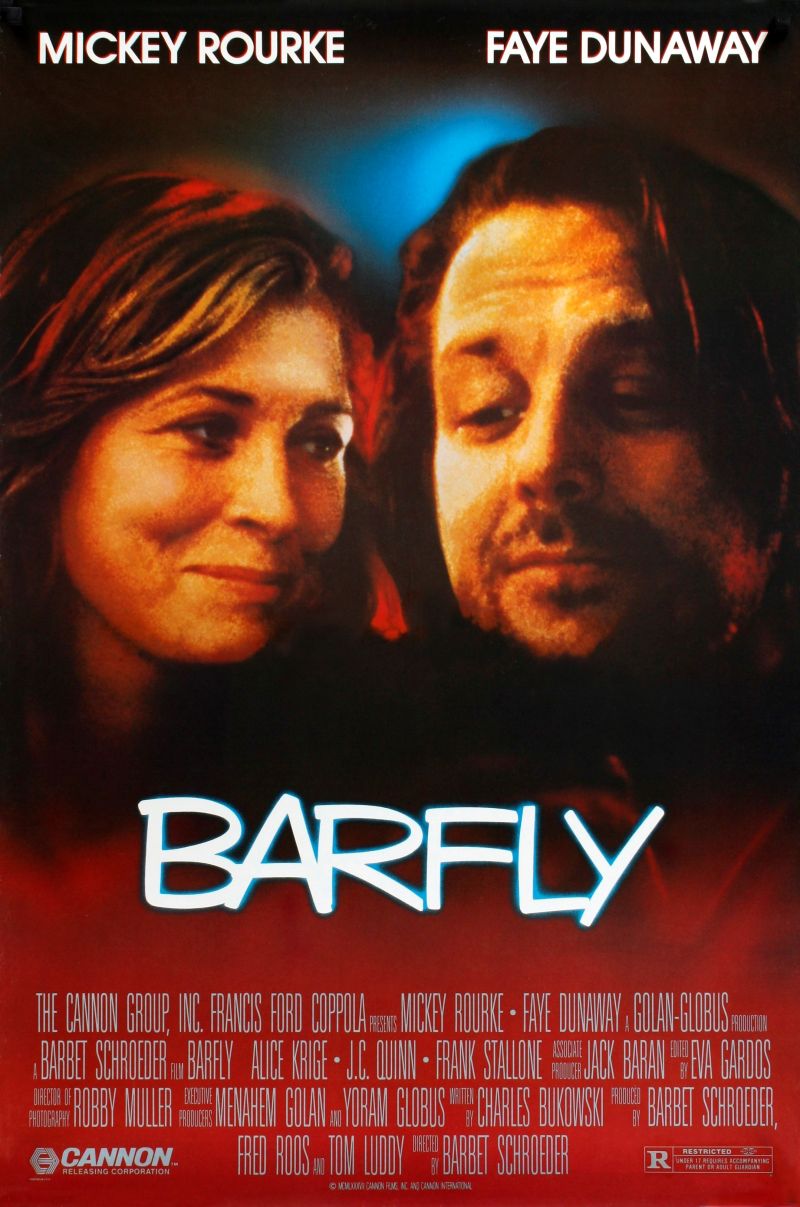
Henry Chinaski (Mickey Rourke) is a bum who has very little money, lives in a small rundown apartment that’s more like a sleeping room, and spends most of his time getting drunk at a bar across the street called The Golden Horn. It’s here where he gets into arguments with Eddie (Frank Stallone) the bartender. During one of their confrontations the two go out back and have a fistfight behind the building, which Henry unceremoniously loses. Feeling embarrassed and dejected he goes on a crusade to ‘win his title’ back by finding food in order to regain his energy, but when he rips a sandwich out of another customer’s hand, since he doesn’t have money he must steal from others, he gets thrown out of the bar by Jim (J.C. Quinn) the bar owner. He then stumbles his way to another waterhole named Kenmore where he meets Wanda (Faye Dunaway) a fellow alcoholic. The two create a makeshift bond and end-up going back to her place, an apartment paid for by a married man who covers for her life necessities, as a kept woman, as long as she’s willing to put-out when he wants it. Just when Henry thinks he might be falling in-love she betrays him by have a tryst with Eddie. Feeling dejected Henry turns back to the bottle only to have Tully (Alice Krige) show-up at the doorstep. She’s a publisher offering him a check of $500 in compensation for some of the poems and short stories that he had submitted, which she found to be both gifted and profound. Henry though isn’t sure he can accept the money as he’s more comfortable being poor and not used to being liked, or a part of the upper class, which for decades he had found snotty. Then Wanda comes back into his life and when she finds out about Tully she makes a personal vendetta to ‘put her out’ as she feels rightly or wrongly that Henry is ‘hers’ and no other woman can have him.

The film is based loosely on the life of Charles Bukowski, who used the character of Henry Chinaski in five of his novels and was considered his alter-ego. It was produced by the notorious Cannon Group a production company that had a portfolio of a hodge-podge of movies some of them of a decent quality and others that were anything but. Although they had made a commitment to finance this one it almost didn’t get made as the studio was going through a period of financial distress and felt this one required too much money to fund, so they threatened to pull-out until director Barbet Shcroeder appeared at their office with a Black and Decker power saw warning that he would cut-off one his fingers to show the world that ‘Cannon was cutting-off a piece of him by pulling out of the project’, which was enough to get the execs to change their mind.

As a film it works mainly because it used authentic Los Angeles locations, many of which Bukowski frequented in real-life, as the setting. The dismal interiors really help create a vivid look making the viewer feel they’re as trapped in the skid row surroundings as the protagonist and with no discernable way to get out. The apartment sequences are especially engaging not only for the scene, that comes near the end, where Henry finally busts in on his noisy neighbors where he has a memorable confrontation, but also at the beginning when he accidentally goes into an apartment that isn’t his, but since it looks just as bleak as his sans for some decorative window curtains, he at first doesn’t even know it.

As a character study it’s revealing though it does hinge on how much tolerance the viewer will have towards someone whose decidedly self-destructive at every turn. Rourke plays the part in an over-the-top way particularly the weird style he walks almost like he’s trying to put a touch of camp to it and I don’t blame Bukowski, who stated in a later interview that Rourke was ‘too exaggerated and a bit of a show-off’ in the part, which Bukowski ultimately felt that he ‘didn’t get right’ though he later warmed-up to it and possibly other viewers may as well.

Dunaway seemed more problematic playing a woman on the skids was definitely not a part of her repertoire and she seems miscast. She almost makes-up for it by appearing topless during the bathroom scene and then getting into a climactic catfight with Krige at the end, but I didn’t understand why the woman would be wearing what appeared to me as female business attire as that was something her character was not and therefore she should’ve had something more ragged to wear even if it was just a simple jeans and T-shirt.

Spoiler Alert!

The film has many quirky moments including the two paramedics that come to visit Henry on a couple of occasions, which almost steals the movie and make this seems more like a surreal, dark comedy than a drama. The leisurely pace I liked and seems more suited for a European audience that isn’t so plot driven, but I would’ve liked seeing Henry working more at his craft. He’s only shown writing a couple of times, which is so brief that I really didn’t think he was that committed to it and almost like a novice writing words on notebook paper making it a complete surprise when a publisher eventually does show-up. You’d think if he hadn’t even bothered to type out what he had written most publishers would’ve thrown it away making the moments with the agent seem almost dream-like and more a fantasy than the intended reality.

I was a bit turned-off by the ending. I remember reading an article back in the 80’s that this movie was an example of a ‘downbeat ending’ that Hollywood studios were shying away from. During the 70’s sad endings had become the standard, but by the 80’s they tended to not register as well with the public and thus making upbeat conclusions became the norm. However, the article had specifically pointed out this movie as having an ending, which ‘wasn’t a happy one’, but I didn’t get that impression. I thought maybe it would have Henry getting knocked out by Eddie during their fight ‘rematch’, but the camera tracks out of the bar, so we never see the results of the confrontation and it’s all left open, so it’s neither sad nor happy. My only conclusion is that the article’s author felt this was a ‘sad’ ending because Henry went back to his old ways of drinking versus becoming a successful writer, but for some people success is a scary thing and falling into their familiar habits, as bleak and destructive as they may seem to others, offers a weird form of security, so I felt it ended on a high note because Henry was doing what was right for him and with the type of people he felt comfortable with. Being rich and famous would never have worked with his personality and therefore he was better off without it.

My Rating: 6 out of 10

Released: October 16, 1987

Runtime: 1 Hour 37 Minutes

Rated R

Director: Barbet Schroeder

Studio: The Cannon Group

Available: DVD, Blu-ray, Amazon Video

The Champ (1978)

champ1

By Richard Winters

My Rating: 7 out of 10

4-Word Review: Idolized by his son.

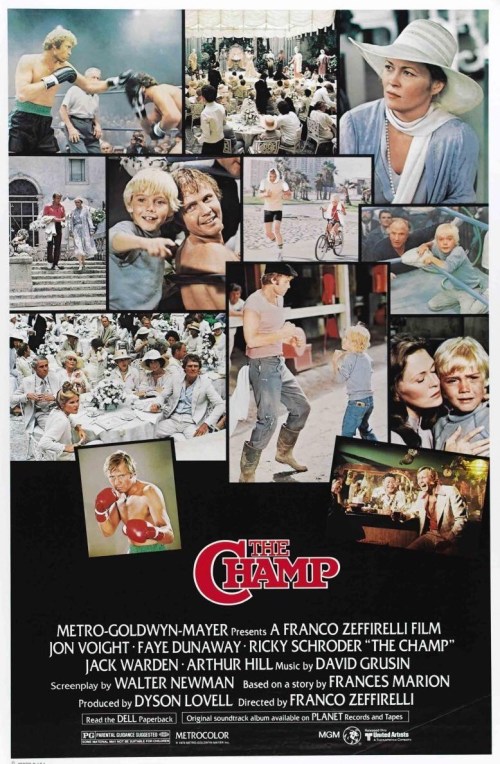
Billy (Jon Voight) is a former boxer whose been out of the ring for 7 years. Now at age 37 he works as a horse trainer. His 8-year-old son T.J. (Ricky Schroder) idolizes him and refers to his as ‘The Champ’ instead of dad. Billy though suffers from many inner demons including his perpetual drinking and gambling as well as not making enough money to sufficiently support either himself, or his son. Nonetheless he continues to go out gambling whenever given the chance and he manages to win enough money to buy his son a horse, which they name She’s a Lady. They enter Lady into a race where T.J. meets Annie (Faye Dunaway). Unbeknownst to T.J. Annie is his mother whom she gave up at birth, but now that she’s married to a wealthy man (Arthur Hill) she wants to have custody. Billy refuses to allow it, but when he loses the horse because of a gambling debt and Annie gives him the money to pay it off he eventually relents and has T.J. go live with her while he’s in jail for assault. Once he’s released the father and son reunite, but Billy realizes he must make more money in order to keep him and thus decides to go back into the ring one last time despite warnings from Jackie (Jack Warden), his former manager, that to do so could be life threatening.

The film is remake of the 1931 classic with Wallace Beery playing the part of the father and Jackie Cooper as the son. Director Franco Zeffirelli remembered watching it as a child and it having a profound effect on him. Then years later while he was in his hotel room while on-location filming another feature he saw it come on television and the film again moved him in such a way that he decided he wanted to do a remake. This though wasn’t the first remake as it had already been done in 1953 as The Clown starring Red Skelton though the story had been revised without the boxing theme and the climactic event at the end doesn’t take place at a sporting event, but instead a dangerous stunt that the lead character must do during a live broadcast of a TV special.

While this one stays more faithful to the original concept it was still panned by many critics as being overly sentimental and soap opera-like. Many who were fans of the original felt this one fell far short and complained about the long running time, this one runs of full 2-hours while the older one was only 83 minutes, with the feeling that it stretched the plot out too much and at spots was too slow. Though I’ve never seen the 30’s version I found myself genuinely wrapped up in the drama and the characters.

Many at the time complained that Voight was going back to the same type of Joe Buck character that he played in Midnight Cowboy, but I disagreed. That character was genuinely stupid, but Billy isn’t he’s just down-on-his-luck and suffering from basic human frailties, which made his situation far more compelling.

Schroder is an absolute jewel. He got the part after beating out over 2,000 others and it’s easy to see why. His ability to cry on demand with real tears streaming down his face is amazing and not something other actors are able to do. He’s cute and engaging without it ever getting forced, or overdone. His presence gives the film its energy and virtually the sole reason for why it works as well as it does.

The main complaint that I did have was with Annie. She’s marvelously played by Dunaway, who’s always been one of my favorite actresses and it’s a good role for her acting style as she’s excellent at playing characters that have a bit of a cold and aloof manner while not easily able to show their soft side, but with that said I still couldn’t understand what made the character tick, or her motivations. For one thing she seemed to have nothing in common with Billy, so what brought them together in the first place was a mystery and then having her abandon the kid while she went off living her life seemed pretty extreme. In most cases it’s the father that shirks the responsibility of raising the child, but here it’s reverse, but with no clear explanation as to why. There’s a vague excuse later on that it was so she could ‘pursue her career’, but then this doesn’t explain why she now wants to get close to her son. If she was selfish back then what made her change to suddenly want to be loving and caring? She went 7 years without ever seeing the kid, and did pretty well without him, so why now must she have him? I felt there needed to be some extra context added like she had been addicted to drugs when she had TJ, which then made her deemed unfit to raise him, but now that she had kicked the habit she wanted him back, or maybe she had suffered a miscarriage with her second husband and this made her feel guilty about the child she had let get away and this motivated her to want to seek out TJ, but without any of this added information the character comes-off as transparent, unrealistic, and unrelatable.

I will agree with Leonard Maltin in his review where he states that it looks like Faye wants to go to bed with her own kid. This occurs during the scene where Ricky is on her yacht and looking off in the distance while Faye comes up behind him and begins sniffing his hair like she’s getting turned-on by him. To call this a cringey, awkward moment is an understatement and it’s unintentionally laughable. Why it was left in, or why Zeffirelli thought it would be a good idea to put in I don’t know. The movie manages to recover, but it’s a segment that is indeed ridiculous.

The boxing element is another problem as it gets introduced way too late. It gets briefly mentioned throughout the first 2 acts and there’s even a quick scene where Billy shows up at a gym, but overall it gets played-out as a side-story only to suddenly, 90-minutes in, becomes the main focus, which gives the film a very disjointed feel. Jack Warden’s character doesn’t appear at all until near the end almost like it’s a tacked-on bit that doesn’t really flow with everything else that came before. The boxing scenes are impressive and helps to effectively expose the brutality of the sport, but I felt Billy’s training and decision to enter the ring should’ve been made sooner and the boxing scenes mixed-in throughout, but either way it’s still an competent tearjerker that shouldn’t leave a dry eye in the house.

champ2

My Rating: 7 out of 10

Release: March 20, 1979

Runtime: 2 Hours 3 Minutes

Rated PG

Director: Franco Zeffirelli

Studio: MGM

Available: DVD, Amazon Video, YouTube

Eyes of Laura Mars (1978)

By Richard Winters

My Rating: 1 out of 10

4-Word Review: Photographer sees killer’s perspective.

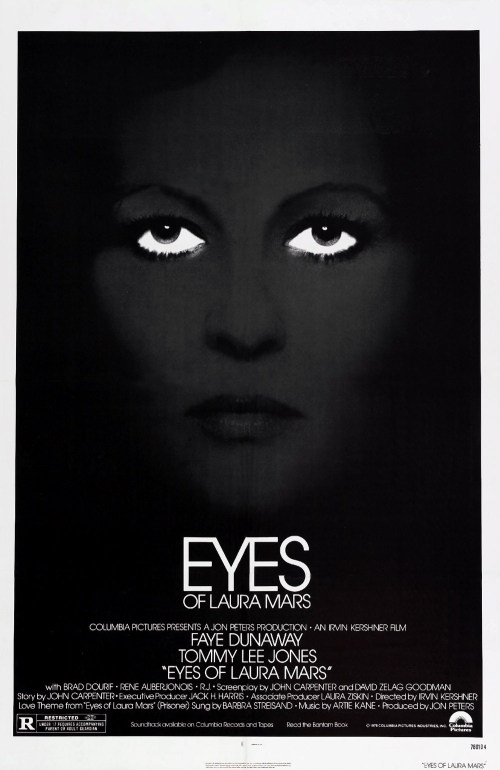
Laura Mars (Faye Dunaway) is a successful fashion photographer who enjoys putting a level of stylized violence into her photos, which makes her work controversial to some, but evocatively edgy to others. One day she starts seeing visions of people that she knows being murdered from the killer’s perspective. Later, when she finds out that her friends are being killed she goes to the police where the lead investigator John Neville (Tommy Lee Jones) tries to work with her in unmasking the killer’s identity.

Despite having John Carpenter’s name in the credits he never actually wrote the screenplay, but instead did an 11-page treatment that got rewritten by the studio with a completely different ending, which helps to explain why it gets so stupid from the very beginning. What annoyed me most were the segments showing the killings, which aren’t fully the killer’s perspective since they have cutaways showing a hand in the air with a knife in it, which is technically the point-of-view of the victim.

I also thought it was goofy that she sees these visions of the killings as they occur with one happening to her friend Elaine (Rose Gregorio) when Laura is just a few blocks away. When Laura arrives at the scene of the crime, which takes her less than a minute to do, the police are already there investigating, which has to be the fastest response time by any police force in the history of the universe.

Dunaway’s presence unfortunately just makes it worse. I’ve been a big fan of hers for years and in a good dramatic role with competent direction she can be fabulous, but here she overacts making her performance come-off as affected and even laughable. Many believe it was her starring role in Mommie Dearest, which came out three years after this one, that ushered in the downfall of her career, but I actually believe it started with this one.

Critic Leonard Maltin, in his review of the film, complained about Dunaway’s ‘kinky colleagues and their lifestyles’, which he deemed as being ‘ a real turn-off’, but I failed to see anything that was all that shocking or outrageous unless he was referring to the lesbian relationship between the two sexy models (Lisa Taylor, Darlanne Fluegel) that I quite frankly wouldn’t have minded seeing more of. As for the provocative artwork it is by today’s standards quite tame and certainly not something that I or most other people would pay good money to see, which made it hard to believe how Ms. Mars was able to afford such a snazzy luxury apartment, which looks like a place more suitable for a corporate businesswoman than a pad for an artist anyways.

The relationship between Dunaway and Jones is equally ridiculous especially since he gets into a relationship with her while the investigation is still ongoing, which breaks all professional and ethical boundaries. A more intelligent script would’ve had the police dismiss Ms. Mars’s claims upfront and consider her to be total loon, or investigate her as the prime suspect. The film also fails to answer the most pressing question, which is what great cosmic force caused her to have these visions in the first place?

My Rating: 1 out of 10

Released: August 2, 1978

Runtime: 1 Hour 43 Minutes

Rated R

Director: Irvin Kershner

Studio: Columbia Pictures

Available: DVD, Amazon Video, YouTube

The Thomas Crown Affair (1968)

By Richard Winters

My Rating: 8 out of 10

4-Word Review: Robbing his own bank.

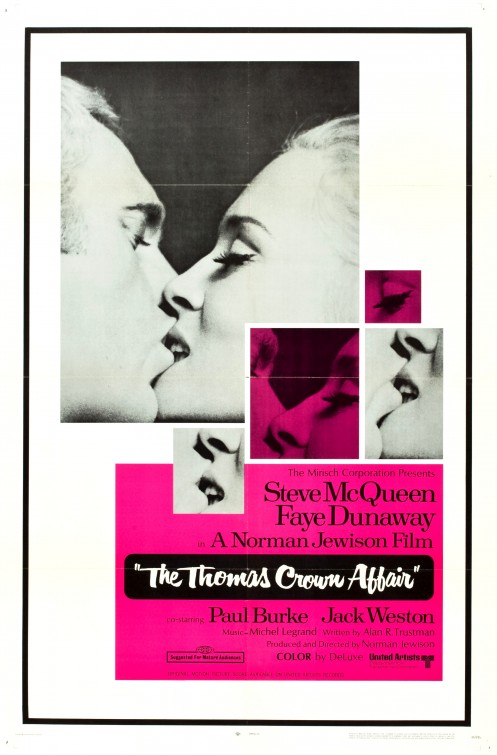
Thomas (Steve McQueen) is a bank executive who devises what he feels is the perfect crime. He hires five men who he does not know nor do they know each other to rob his bank in broad daylight and then dump the money in a trash can at a cemetery where he retrieves it. The heist works flawlessly, but then insurance investigator Vicki (Faye Dunaway) comes on the scene and she almost immediately eyes Thomas as the culprit. The two begin a torrid affair with Vicki openly telling him her suspicions and that she’ll do whatever it takes to prove it, but Thomas has other plans.

What makes this film stand out from all the other bank robbing movies is that the heist scene was shot using a concealed camera. Only the bank officials and guards were aware that a movie was being made while the rest of the people were actual customers convinced that what was happening was real making their reactions of fear genuine. The best part of this sequence though is when director Norman Jewison has the camera put onto a dolly and glides it through the tear gas that the thieves set off.

The film is famous for its use of the split screen particularly during the opening credit sequence as well as Michel Legrand’s award winning music. Legrand wrote the score after viewing a five hour rough cut and the movie was then edited to be in tandem with the music instead of being done in reverse, which is how it’s usually done. For me the music comes off as sappy and out-of-place making it seem more like a romance when it’s really a game of cat-and-mouse and the blaring score almost gets in the way of it.

The best thing is Dunaway and I really don’t care how many face lifts she may have had, or how many years it’s been since she’s had a relevant role because she’s still a great actress and her presence here proves it. She filmed this before her breakout movie Bonnie and Clyde was released and she takes complete control of every scene she is in. Her character also works in what was still traditionally perceived as a man’s role and thus making it kind of groundbreaking. I also like that she’s never seen as weak or vulnerable in the traditional feminine sense and instead remains quite determined and focused throughout while never swaying from using her femininity as a weapon and nothing more.

McQueen unfortunately, and I can’t believe I’m saying this as he’s one of my favorite actors,  ends up being the film’s weakest link as the role goes against his rugged persona, which is what he’s good at. He had worked with Jewison before in The Cincinnati Kid and lobbied hard for the part, but Jewison rightly felt that character was not the right fit, but ultimately he relented, which was a mistake. The only time he is effective is when he’s doing his own stunts or driving on the beach in a dune buggy but otherwise he’s transparent and utterly dominated by Dunaway.

The supporting cast is good especially Jack Weston as a mope who gets hired on to partake in the robbery and then works as the clumsy catalyst that helps unravel it, but I was disappointed that his character ultimately disappears too soon and would’ve liked him to have remained for the duration. Otherwise this slick production, which was written by Alan Trustman who worked at a bank and would spend his idle time fantasizing on how to rob it, holds up well and includes the famous chess game sequence that still sizzles.

As for the 1999 remake, which changes many key plot points, I’ve never seen it nor do I have any interest to. Pierce Brosnan and Rene Russo certainly make for an interesting pair, but I feel that if the original is a classic then it shouldn’t be touched and a law should be written disbarring remakes when they aren’t needed or asked for.

My Rating: 8 out of 10

Released: June 19, 1968

Runtime: 1Hour 42Minutes

Rated R

Director: Norman Jewison

Studio: United Artists

Available: DVD, Amazon Video, YouTube

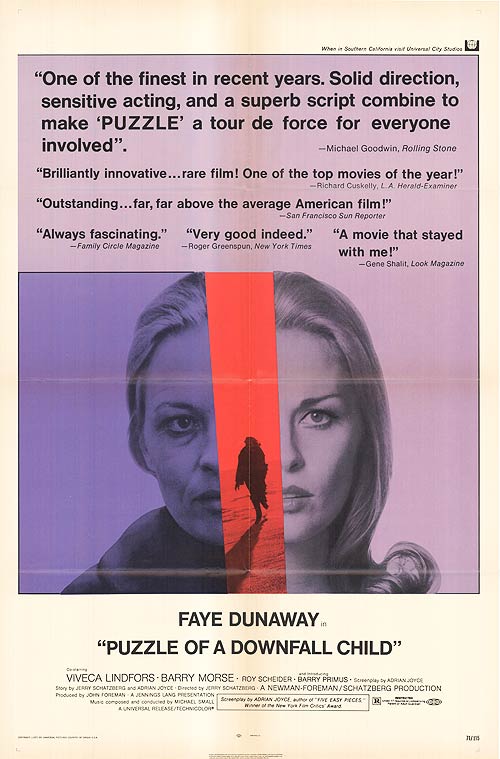
Puzzle of a Downfall Child (1970)

By Richard Winters

My Rating: 3 out of 10

4-Word Review: Fashion model is troubled.

Lou Andreas Sand (Faye Dunaway) was a once famous fashion model who now sits in an isolated seaside cabin telling her life story to Aaron (Barry Primus) who records her conversations which he plans to use as a basis for an upcoming film. Through her stories she describes of being molested at the age of 15 by a much older man, her bouts with drugs and alcohol, her time spent inside a mental hospital and how she jilted her fiancé (Roy Scheider) by running out on him on their wedding day.

This film marks the directorial debut of Jerry Schatzberg who up until that time was best known as a still photographer and having captured the cover of Bob Dylan’s seventh album Blonde on Blonde. The inspiration for the movie was the life of model Anne Saint Marie who Schatzberg interviewed much the same way that the Aaron character does in the movie.

Unfortunately the director clearly doesn’t understand what makes his main character tick as she comes off as this one-dimensional, self-destructive cliché whose perpetually sad tales of woo become increasingly more contrived as the film goes on. We get no insight as to why she behaves the way she does turning her into a maddening caricature that frustrates the viewer and allows for no empathy.

A great deal of effort was put into the film’s visual style and on that level it’s a fascinating achievement. Adam Holender’s cinematography is quite vivid and makes you feel like you’re right there in the same room with the characters, but the fragmented narrative that comes with it is unappealing. Certain interesting dramatic moments get dropped and never gone back to, or readdressed at a much later time long after the viewer has lost interest. I suppose this is the reason that the word ‘puzzle’ gets used in the title as we are supposed to ‘piece together’ this woman’s life and personality through the erratic bits that she gives us, but she only succeeds at becoming an enigma.

Dunaway is a great actress, but tends to do better in parts calling for strong or emotionally ambivalent women. Playing the roles of vulnerable people is definitely not her forte. She’s managed to do it a few times, but it’s not easy for her and here she fails at it completely as she doesn’t understand her character’s motivations any better than the viewer.

The one actress that does do well here is Viveca Lindfors who was a beauty in her day, but by this time was already aging into her later years and yet she commands the screen with the brief time that she is on it and had she been seen more she might’ve saved it. However, the story lacks substance fails to be compelling and leaves the viewer with a lot of fleeting, fragmented images and nothing more.

My Rating: 3 out of 10

Released: December 16, 1970

Runtime: 1 Hour 45 Minutes

Rated R

Director: Jerry Schatzberg

Studio: Universal

Available: DVD (Region 2), Blu-ray (Region B/2)

Three Days of the Condor (1975)

By Richard Winters

My Rating:  4 out of 10

4-Word Review: Who can he trust?

Joe Turner (Robert Redford) works at a New York City CIA office, which fronts itself as a literary agency for historical books. One day Joe decides to sneak out the back way in order to grab some food at a local deli. While he is away a team of assassins headed by Joubert (Max Von Sydow) enter the place and kills everyone inside. Turner, who goes under the code name Condor, returns to find his co-workers dead and no idea who did it, or why. He contacts the CIA headquarters, which is run by Higgins (Cliff Robertson), but soon decides he can’t really trust them and attempts to somehow find a way to survive on his own without returning to his apartment, as he is afraid the killers may be there. Through sheer desperation he kidnaps a woman (Faye Dunaway) at gunpoint and forces his way into her apartment where he hopes he will be able to buy himself enough time until he can figure out what is going on.

The film, which is based on the novel ‘Six Days of the Condor’ by James Grady, has an intriguing set-up, but ultimately gets ruined by having a protagonist become too skillful and shrewd at everything until he ceases to be just a regular guy on the run. For instance he is able to get into a telephone switchboard center much too easily and then uses the skills he had apparently learned as an Army Signals Corps technician to trace a call and find the whereabouts of the bad guy, but this is something a regular person couldn’t do and thus the tension is lost because it’s no longer just an everyman trying to survive, but instead a super-smart individual with convenient knowledge for every situation.

The script has too many situations where the bad guys make unbelievable dumb decisions as well making it seem that the odds really aren’t as stacked against our hero as it initially seems. For instance there is a scene where Redford invades the home of the CIA Deputy Director (Addison Powell) who is supposedly the man behind-the-scenes who had ordered the hit. Redford sits in a downstairs office of the home and plays music very loudly from a stereo until it awakens the CIA director and he comes down to investigate, but wouldn’t you think someone who works in a secret organization would know enough not to walk into a trap as he does here, but instead call the police if he heard a noise downstairs, or if he does come down at least do it while also holding a gun? Also, as a CIA director living in a mansion he should certainly have his home rigged with a security system, but Redford is able to get inside without a sweat even though we are never shown how. Also, why does Sydow the hit man not shoot Redford when he is alone with him in an elevator, which would be a perfect opportunity instead of waiting and trying to do it later at long distance when the two are outside and Redford is in a middle of a crowd and much harder to target?

The film’s lowest point though comes with Redford’s relationship with Dunaway. Only a woman with severe mental problems would magically ‘fall-in-love’ with a stranger in less than 24-hours after he accosts her with a gun and forces his way into her apartment. Even if one would argue that it’s the Stockholm syndrome it’s highly unlikely it would occur so quickly.  There’s even a stylized love making scene that seems too similar to the sex scene in another Dunaway film The Thomas Crown Affair. Besides with all the stress that Redford’s character was going through I’d think he’d be unable to perform in bed, or concerned that she was simply leading him on in order to put him in a vulnerable position, so she could take advantage of it and escape.

Von Sydow’s character, who’s willing to switch allegiances almost instantaneously depending on who’s paying him, is the only truly unique thing about this otherwise shallow thriller. Director Sydney Pollack, who appears briefly as a passerby on a sidewalk, does give the material the slick treatment and captures New York City nicely. There is also a well-choreographed fight scene inside Dunaway’s apartment, but the unsatisfying, limp ending leaves open too many unresolved issues.

My Rating: 4 out of 10

Released: September 24, 1975

Runtime: 1 Hour 57 Minutes

Rated R

Director: Sydney Pollack

Studio: Paramount

Available: DVD, Blu-ray, Amazon Video, YouTube

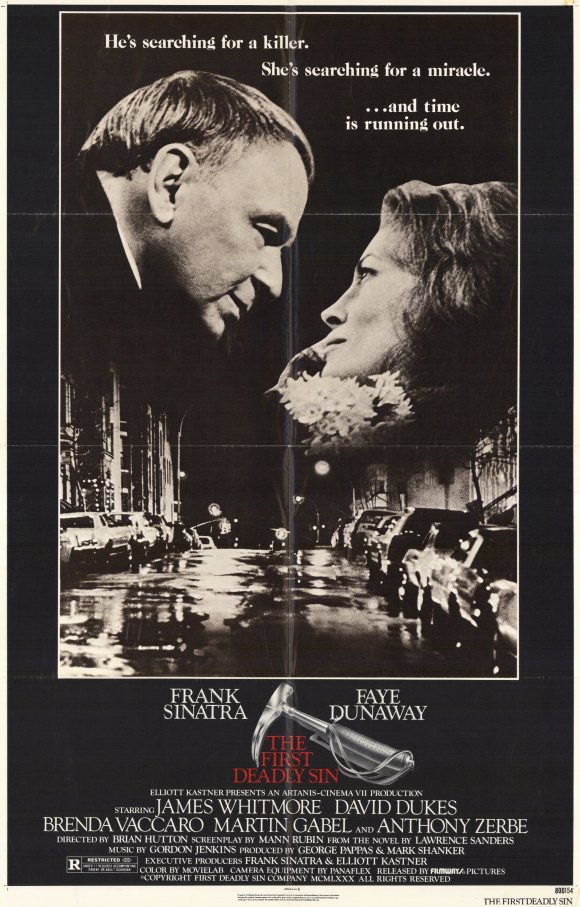
The First Deadly Sin (1980)

the first deadly sin

By Richard Winters

My Rating: 4 out of 10

4-Word Review: Aging cop tracks killer.

Based on the best-selling novel by Lawrence Sanders the story centers around Edward Delaney (Frank Sinatra) a cop only weeks away from retiring who becomes obsessed with tracking down a serial killer who hits people on the back of their heads with a sharp edge hammer as they are walking down the street. The problem is he has only a few clues to go on and his wife Barbara (Faye Dunaway) is in the hospital suffering from a mysterious illness that causes him additional stress and strain.

The film takes a refreshingly different approach to police work than what you will usually find in most Hollywood cop pictures. Instead of emphasizing exciting car chases and thrilling shoot-outs it instead analyzes the meticulous and often times tedious work that goes into following up every little lead while working inside a rigid system and under superiors that aren’t always supportive.  For the most part this is done quite well and at times it is even enlightening, but the whole first half is spent with Delaney trying to figure out what type of weapon was used in the killing even though we the viewer know what it is since we are shown the actual murder at the very beginning thus making the first hour seem quite derivative.

Having the film cut back and forth between scenes of Delaney and the killer doesn’t work. The psycho is played by David Dukes probably best known for playing the man who tries to rape Edith Bunker in a classic episode of ‘All in the Family’. He is a good actor, but scenes showing him alone are clichéd and at times even unintentionally funny. Director Brian G. Hutton should’ve cut them out completely as having the viewer come to realize who it is along with Delaney would have deepened the mystery angle and made it overall more intriguing.

The scenes with the sick wife don’t work either. For one thing we never find out what the mysterious illness is, which is highly frustrating and annoying. It also doesn’t make the plot or character any more interesting. Dunaway is a superior actress and she makes the most of the role’s limitations, but I felt an actress who was more Sinatra’s age would have made it more realistic instead of casting a woman who was 27 years younger.

I have always enjoyed Sinatra in his detective roles, but the character here isn’t as caustic as in some of his older films. For the most part he is pretty benign and even kind of boring. Joe Spinnell though makes the most of his bit part as an overzealous doorman who believes in rigidly following the rules and taking great pride in his doorman duties, but quickly willing to bend them the minute he is given some bribe money.

The final showdown between Delaney and the killer is quite unusual and much more low-key than you might expect. I enjoyed the twist that comes with it, but it lacks a strong impact and the film would have been better served had it had just a little more action.

This movie is also famous as being Bruce Willis’s film debut. He can be seen at the 1Hour 34Minute mark coming into a bar as Delaney walks out. He has a cap over his head and covering his eyes, but you can clearly see just by looking at his mouth that it is him.

My Rating: 4 out of 10

Released: October 3, 1980

Runtime: 1Hour 52Minutes

Rated R

Director: Brian G. Hutton

Studio: Filmways Production

Available: DVD, Amazon Instant Video

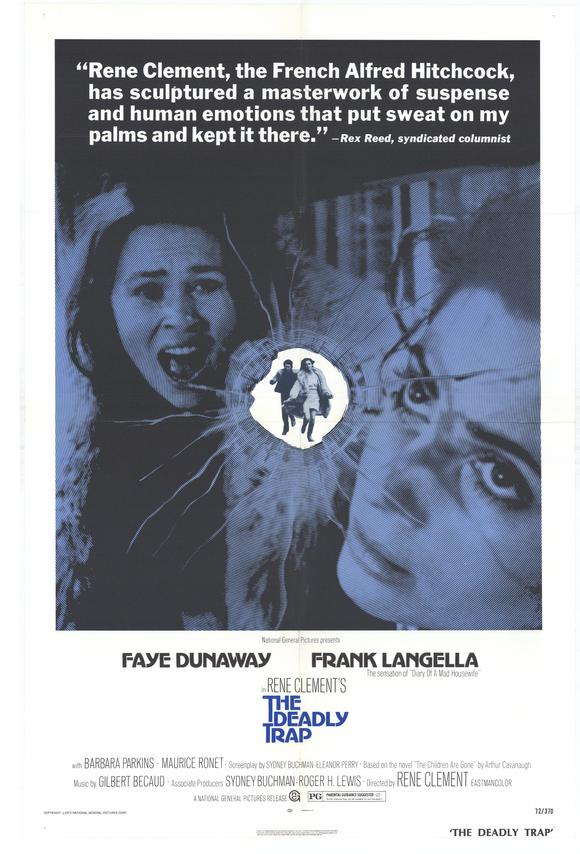
The Deadly Trap (1971)

the deadly trap

By Richard Winters

My Rating: 4 out of 10

4-Word Review: They have their kids.

Philippe (Frank Langella) works at a high-tech job in a large corporation. For years he has been giving trade secrets to a mysterious organization that pays him handsomely for his efforts. Now that he is married and has children he has decided he no longer wants contact with this underground entity, but they refuse to leave him alone. When he is no longer willing to corporate they kidnap his two children, which sends his emotionally and mentally fragile wife Jill (Faye Dunaway) over-the-edge.

Dunaway’s amazing performance is the one thing that really helps propel a film that is otherwise too laid-back. I have always been an admirer of hers, but her performance here is great because it is so different from any of the other characters that she has played. Normally she is cast in parts of strong or manipulative women, but here she plays someone who is very fragile and does it with amazing effectiveness. I felt like she was a completely different person and showed a side to her that I didn’t think she possessed. Her face and expressions accentuate the fragility and she looks quite beautiful.

Langella is good on the opposite end. He plays a cynical and aloof man who snaps at his wife in an annoyed manner at regular intervals. The contrasting personalities and dialogue between them is interesting. In many ways he seems to playing an extension to the character that he did in Diary of a Mad Housewife and given the fact that Eleanor Perry wrote the screenplays for both films makes me believe that there had to be more than just a passing connection there.

The story has some interesting underlying elements that manage to retain a modicum of intrigue, but Rene Clement’s direction is too leisurely. The first hour gets bogged down with too much conversation and certain tangents that go nowhere. It is only in the last half hour that things finally get going and has some interesting twists, but by then it is too late. It would have been better had we seen some sort of face to the organization instead of having them portrayed in such a vague way. The movie is also in need of a lot more action although the part where Jill and her kids get into a car accident and get thrown from the vehicle is impressive since actual bodies where used, which is something I had never seen done before.

Spoiler Alert!

The film features several loopholes that will end up confounding anyone. One is that when the children are kidnapped they are locked in an upstairs room that has a loaded gun stashed away in the closet. The children get their hands on it and use it against their captors, but you would think that a sophisticated and large criminal group that this organization supposedly is wouldn’t be so utterly careless as to leave it there. Also, when it is found that the couple’s downstairs neighbor Cynthia (Barbara Parkins) has a connection to this organization and kidnapping the police shoot her dead at point-blank range instead of just arresting her and interrogating her in order to find the whereabouts of the kids. The biggest problem though is the ending itself where the kids are saved and everybody becomes one big happy family, which doesn’t jive at all with the rest of the film that had a constant murky undertones and a couple that was always squabbling. By having this otherwise dark thriller suddenly become ‘The Brady Bunch’ at the end is jarring in tone. It also doesn’t answer the fact that the organization was never caught and therefore will continue to harass him again, so why should they be all happy when the bad guys could strike at any moment?

My Rating: 4 out of 10

Released: June 9, 1971

Runtime: 1Hour 36Minutes

Rated R

Director: Rene Clement

Studio: National General Pictures

Available: VHS, Warner Streaming