Tag Archives: Entertainment

Night Watch (1973)

night watch 2

By Richard Winters

My Rating: 3 out of 10

4-Word Review: Murder in the window.

Ellen Wheeler (Elizabeth Taylor) is an emotionally unstable woman recovering from a nervous breakdown. Her first husband died in a car crash along with his young lady lover. Now her second husband John (Laurence Harvey) is fooling around with Ellen’s best friend Sara (Billie Whitelaw). One night Ellen witnesses a murder at the abandoned house next door, but because of Ellen’s past mental state no one believes her. Even the police doubt her story, which starts to send her over-the-edge.

I saw this play about a year ago with a group of friends at a local church. It was written by Lucille Fletcher best known for having done Sorry Wrong Number, which was later turned into a classic film starring Barbra Stanwyck. Although the play started out slowly the twist ending was impressive and something no one in the audience had predicted, but what I liked even better was that when you went back and thought about it, it made perfect sense. I thought at the time that it would make a great movie and was interested in seeing what this film did with it. I felt that there was no way they could screw up such a great story, but somehow they managed to do it.

Director Brian G. Hutton adds a lot of elements to make it more cinematic that should have helped it, but it really doesn’t. I liked the flashback sequences showing the car crash of the first husband as well as Ellen visiting the hospital and identifying the bodies. These segments have a good nightmarish visual quality to them, but Hutton goes back to it too often and eventually wears it out. I also liked that the film shows the police inspecting the inside of the abandoned home, which in the play you never see, but I felt they could have done a lot more to make the place seem more distinct and creepy. There is also a skirmish between two people inside the place at the end that you can hear, but not see because it is too dark and shadowy, which was annoying. The music is effectively creepy, but it also has a ringing quality that quickly becomes irritating and gets way over-played.

This was just one of the many misfires that Taylor did during the 70’s that helped extinguish her otherwise illustrious career long before it should’ve. This one fares slightly better than the others, but not by much. Her affected British accent could seem annoying to some and sounds kind of like the put-on one that Madonna sometimes does although for the record Taylor’s is better than hers. Liz’s emotionalism is a bit too theatrical and may come off as unintentionally funny to certain viewers although seeing her go completely nutty is impressive and fun.

Harvey is all wrong as the husband. His cold, detached presence can work in certain roles, but definitely not in this one. In the play that I saw the actor cast in this part looked more middle-aged with a spare tire stomach, balding head, and graying sideburns, which is what I felt the role called for. This is a character that is overburdened with a stressful job and unstable wife and yet Harvey shows none of this. His slick black hair and turtleneck shirts, which were fashionable at the time, make him look like someone still going out to the trendy nightclubs to pick up young chicks… or guys.

Whitelaw is one of the best British character actresses of all-time, but her talents are wasted with a part that doesn’t allow her to show any range. Her blonde hairdo is nice, but Taylor’s histrionics dominate the proceedings and unceremoniously push Whitelaw into the background.

The play had a lot of humor especially with the Mr. Appleby character played here by actor Robert Lange. Unfortunately the movie turns it into a serious drama making it seem more like a soap opera instead of a mystery. I came away from this feeling that the live production that I had seen was far more entertaining and intriguing. I would suggest to viewers to skip this film and wait for a chance to see it done as a play as the movie does not do the story justice.

night watch 1

My Rating: 3 out of 10

Released: August 9, 1973

Runtime: 1Hour 39Minutes

Rated PG

Director: Brian G. Hutton

Studio: AVCO Embassy Pictures

Available: DVD (Warner Archive), Amazon Instant Video
Windows (1980)

windows 3

By Richard Winters

My Rating: 1 out of 10

4-Word Review: She’s obsessed with her.

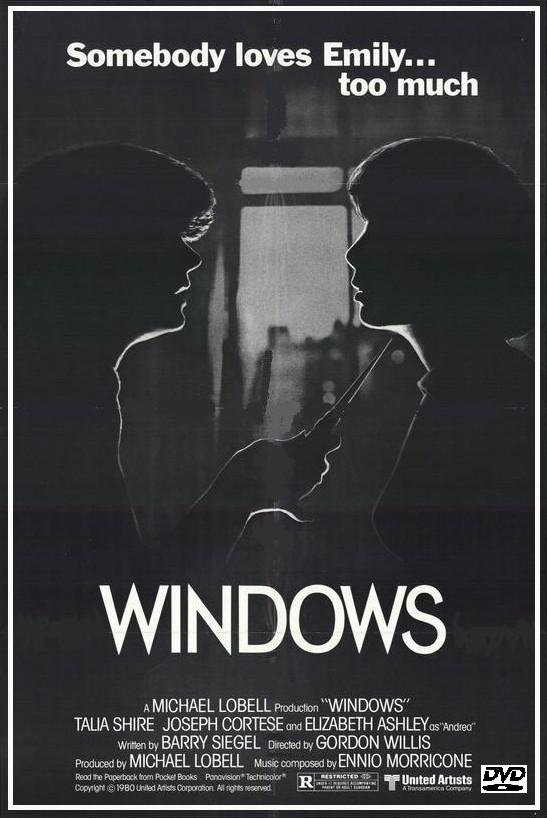
Emily (Talia Shire) is attacked in her apartment by a rapist (Rick Petrucelli) and when the police come to investigate the crime she starts to fall in love with Bob (Joe Cortese) the handsome police captain. Little does Emily know that her friend Andrea (Elizabeth Ashley) was behind the attack. She is a closet lesbian with a secret psychotic obsession for Emily who hired the man to rape her and record it, so Andrea could get-off on listening to the sounds of Emily moaning during the struggle. Now that Emily is going out with Bob it makes Andrea angry and her behavior becomes more dangerous and erratic.

For a thriller this film is extraordinarily low-key to the point that it also comes off like a drama, but fails on both ends. There is no mounting tension and little if any scares. The only one that they do have is when Andrea sticks Emily’s cat into a freezer and later it drops out of it like it was a Popsicle, which is actually unintentionally funny. There is also hardly any music. Ennio Morricone was hired to be the composer, but they don’t use him as much as they should. An amazing amount of the movie deals with the natural street sounds and ambience from life in New York, which is interesting for a while, but does nothing to elevate the tension, or create any excitement. Famed cinematographer Gordon Willis in his directorial debut seems more interested in capturing the New York skyline and creating shadowy interiors than actually making a movie with an original story, or interesting characters.

Shire is so quiet and awkward that she seems to be in a mental stupor. Her screen presence here is transparent and lifeless and it is easy to see why her leading lady status was brief. Cortese is no better as the male lead and the romantic side-story has no energy or chemistry and only helps to bog down an already boring story. Intercutting this with Andrea’s visits to her psychiatrist (Michael Lipton) successfully creates the first thriller to have no suspense whatsoever.

Ashley seems like the perfect choice for a homicidal lesbian, but the part is written in a way that doesn’t allow her to go over-the-top with it, which she should have although you do get to see her wearing quite possibly the biggest pair of sunglasses that I have ever seen. It might have worked better had the viewer not been aware from the start about Andrea’s psychosis and instead only revealed it at the end as a twist.

The climatic sequence between Emily and Andrea would be laughable if it weren’t so mind numbingly stilted and prolonged. The scene goes on for almost twenty minutes and features the two women standing in front of a window with Emily weeping incessantly while Andrea rambles incoherently. How anyone who was involved in the making of this movie would think anyone would flock to see this dull and contrived thing should have their brains checked. Has an air of pretense to it like it is trying to be a ‘sophisticated’ thriller, but it is pointless. If ‘Mystery Science Theater’ were still around this would be a great candidate for it.

My Rating: 1 out of 10

Released: January 18, 1980

Runtime: 1Hour 36Minutes

Rated R

Director: Gordon Willis

Studio: United Artists

Available: DVD, Amazon Instant Video

The Caretakers (1963)

the caretakers 2

By Richard Winters

My Rating: 6 out of 10

4-Word Review: Doctors with opposing viewpoints.

Two doctors working at a psychiatric hospital come at odds with each other over how to treat their patients. Dr. Donovan MacLeod (Robert Stack) believes in a more humanistic approach in treating mental illness including group therapy and more patient freedoms. Dr. Lucretia Terry (Joan Crawford) is hard-lined and exacts rules on her patients that have severe penalties if broken. The film examines their infighting and how it affects their patients.

Director Hall Bartlett has a nice cinema-verte style to the material that manages to avoid being ‘Hollywoodnized’ or overtly sanitized. The subject is approached in a matter of fact way and the patients are not portrayed as ‘crazy’ or ‘scary’, but instead as sick people looking to get well and learning how to do it. The opening sequence done over the credits and featuring all sorts of moody artsy drawings have an excellent avant-garde flair.

Polly Bergen is effective as Lorna a middle-aged mother and housewife who suffers a nervous breakdown and begrudgingly becomes a member of Dr. MacLeod’s therapy group. Some of her acting particularly when she is having her breakdown is theatrical and over-the-top, but I did like the way Bartlett shows things from her perspective allowing the viewer in a visual sense to feel what she is going through and makes one compassionate and sensitive to her condition.

It is great to see Crawford as always and the scene showing her in a leotard and teaching the other nurses judo lessons is a gem and much too brief. I was hoping to have her play up the part of the heavy more making her almost like a Nurse Ratched, which she could have easily done to perfection, but unfortunately the script doesn’t take advantage of it. I was also disappointed that we never see Crawford ever dealing directly with her patients, which seemed to me should have been necessary.

Stack in the lead is terrible and completely wrong for the part. The role required a man with a more youthful appeal instead of the middle-aged Stack who never displays the kind of sensitivity and compassion that his character supposedly has. Instead he delivers his lines in a stiff and monotone fashion and comes off like he came from the old school of acting.

The scene where his character allows the patients to go to an outdoor park for a picnic and mingle with the staff unsupervised seemed to be pushing the plausibility meter to the extreme. It also makes him look like a complete schmuck who should have known better especially when one of his patients leaves the picnic and runs away while he chases after her in a panic.

The supporting cast is outstanding showcasing many up and coming stars and is one of the major highlights for watching the film. Barbara Barrie is great as the silent and troubled Edna. Janis Paige is excellent as the brassy prostitute Marion. Susan Oliver gives one of her best performances as a young nurse who is just learning how to deal with those with mental illness and Robert Vaughn is also effective as Lorna’s long suffering and confused husband. This is also a great chance to see a young Van Williams before he starred as the Green Hornet as well as the beautiful Sharon Hugueny whose promising acting career was cut short when she was hit years later by a speeding police car.

If you come to this film looking for genuine insight into the illness you will be disappointed as it goes only to the most elementary level into the area of psychiatry. MacLeod’s speeches about how his group therapy can be a ‘cure’ to mental illness are shallow and almost laughable. However, for the era the film manages to be gritty and slick enough to pass as entertainment.

My Rating: 6 out of 10

Released: August 21, 1963

Runtime: 1Hour 37Minutes

Not Rated

Director: Hal Bartlett

Studio: United Artists

Available: VHS, DVD, Amazon Instant Video, Netflix streaming

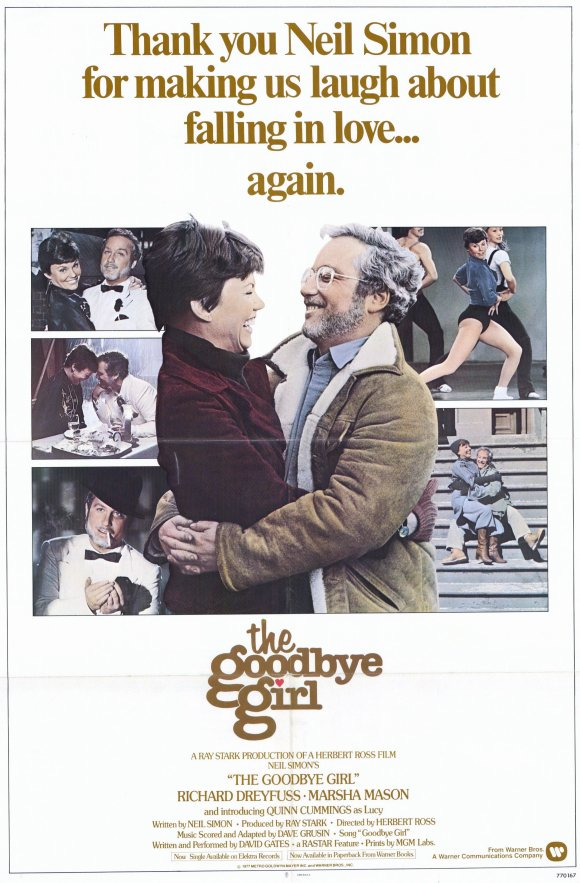
The Goodbye Girl (1977)

the goodbye girl 2

By Richard Winters

My Rating: 7 out of 10

4-Word Review: Goodbye doesn’t mean forever.

Paula (Marsha Mason) is a ‘dumped on’ single parent, whose live-in boyfriend has just left her, and now must contend with Elliot (Richard Dreyfuss) a rather obnoxious man who is subletting the apartment. Despite long odds the two end up ‘falling in love’ in this rather obvious, mechanical love story that is finely tuned to the female, especially those from that era. (The macho guy viewer will have run out of the room long before David Gates even has a chance to sing his soft rock title tune).

This was made when writer Neil Simon was still considered in vogue, although his patented one-liners are sparse and when they do come they are more cute than funny. This in some ways seems a retooling of his earlier ‘lovers in a New York apartment’ film Barefoot in the Park. Only here it’s a little rougher around the edges so it can appeal to a ‘hip’ audience. No clean-cut, cutesy newlyweds instead these people are more jaded to modern sensibilities and will routinely live with their partner even when they are not quite yet divorced.

If you can get past a rather strong late 70’s feel (gotta love that Fonzi poster hanging in the bedroom) then the characters remain solid and believable. No beautiful models living lavish and exciting lifestyles. These are average people just trying to make ends meet and find a little happiness along the way. It also doesn’t just show them when they are together, but also when they are out and alone in the ‘real world’, which allows us a rounded and sympathetic view of them.

Dreyfuss basically plays his usual opinionated, abrasive self. Whether the viewer sees the intended charm underneath is completely up to their own personal tolerance. His performance is good, but not exactly screaming for an Academy Award, which he won anyway, but then poked fun of it when he later hosted ‘Saturday Night Live’ on May 13, 1978.

Mason, who at the time was married to Simon, is the one who should have won it. Her performance is both believable and fluid. You truly see a lot of everyday people in her characterization and she clearly carries the film.

Quinn Cummings, as Paula’s daughter, is cute without being too precocious. Her sensibilities help compensate for the sometimes emotional immaturity of her adult counterparts. Though it really looks and seems dumb to have a ten year old still smearing food on the edges of her mouth and wearing a big napkin around her neck while eating.

Although I don’t always have a great eye for continuity errors this one has a doozy. When Dreyfuss comes home one night drunk he knocks over a table with a lot of stuff on it. He sticks his head out the window to shout something into the night air and then two seconds later comes back to where the table is standing and everything on it is neatly set.

My Rating: 7 out of 10

Released: November 30, 1977

Runtime: 1Hour 51Minutes

Rated PG

Director: Herbert Ross

Studio: Warner Brothers

Available: VHS, DVD, Amazon Instant Video

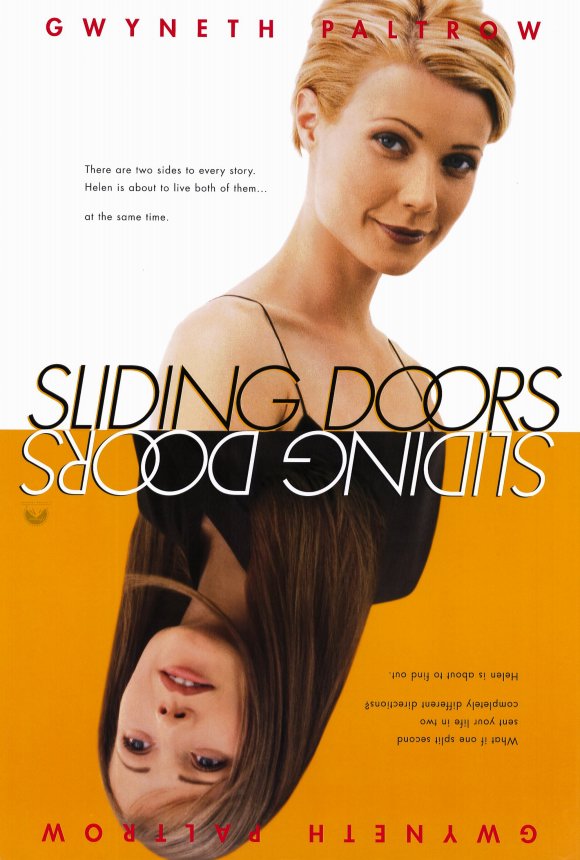
Sliding Doors (1998)

sliding doors

By Richard Winters

My Rating: 5 out of 10

4-Word Review: Two scenarios in one.

This movie examines the life of a woman named Helen (Gwyneth Paltrow) who lives in a parallel universe. In one story she makes it through the sliding doors of a train and comes home to find her boyfriend in bed with another woman. In the second story she misses the train and does not find out about the affair.

The novelty keeps your attention for a while as the director Peter Howitt cuts back and forth between the two stories nicely. They evolve in interesting ways, but then instead of veering off into separate directions they start to come together until the one story ends up being pretty much like the other. This then negates the original idea altogether and makes it just another ‘chick flick’. The boyfriend Gerry (John Lynch) has to be one of the most pathetic out there. Not only does he have the audacity to have an affair on the beautiful and sweet Helen, but he does it while she is supporting him so he can sit home all day and write a book! He also seems to be unable to ever stand up for himself and he has a Hugh Grant type hairstyle that seems to only look good on Grant and nobody else. Jeanne Tripplehorn as the other woman is extremely cold and bitchy to the point that you wonder why anyone, even this twit, would want to have a relationship with her. Helen’s other love interest James (John Hannah) is charming in too much of a prepackaged sort of way and at times it seems to come off like he is a stalker even though that is not the intention. Also Paltrow ends up becoming afflicted with the ‘Ali MacGraw syndrome’ as she is shown lying in a hospital bed after a bad accident with no scratches or bruises and looking as beautiful as ever.

On the positive side Paltrow is really pretty to look at and speaks with an effective British accent, which takes a little getting used to, but she does it well. She sports two different hairstyles and looks good in both, but with the second one it starts to make her look exactly like Susan Dey from the 80’s TV-show ‘L.A. Law’.

The movie is fun for a while, even engaging, but eventually it throws in too many dramatic twists. The boyfriend is beyond pathetic and Tripplehorn, as his lover, seems to be running for bitch of the century.

My Rating: 5 out of 10

Released: April 24, 1998

Runtime: 1Hour 39Minutes

Rated R

Director: Peter Howitt

Studio: Miramax Films

Available: DVD, Amazon Instant Video

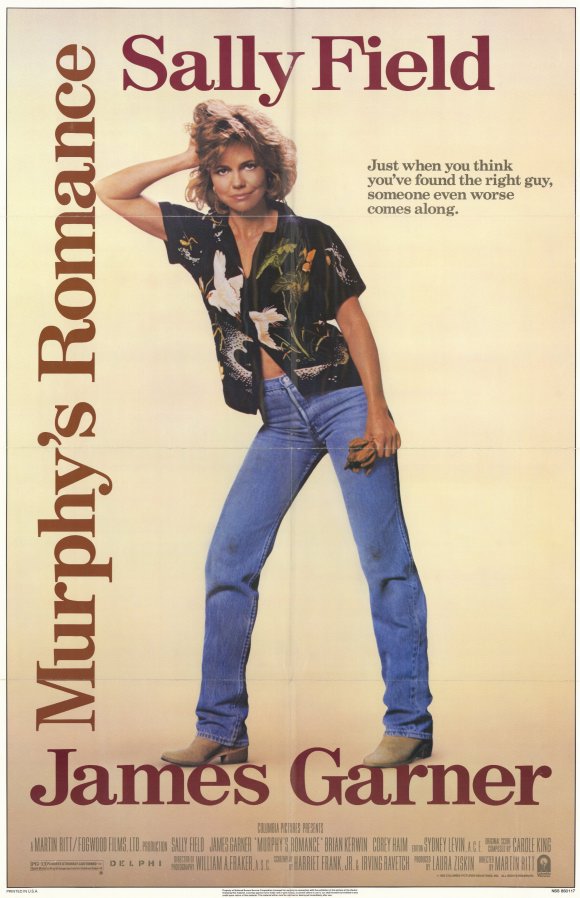
Murphy’s Romance (1985)

murphys romance 2

By Richard Winters

My Rating: 6 out of 10

4-Word Review: Love blossoms in desert.

Emma (Sally Field) is a divorced mother with teenage son Jake (Corey Haim) who moves to a small Arizona town and try to singlehandedly start up a horse ranch. Once there she meets Murphy (James Garner) an older gentleman who she starts to have feelings for only to have her ex-husband Bobby Jack (Brian Kerwin) show up and try to rekindle their relationship.

This is a very leisurely paced romantic movie that doesn’t add anything new to the genre, but does end up going down like a cold drink on a hot afternoon. The dialogue is snappy and the wrap-up quite pleasing. It keeps things on a realistic level by showing Emma struggling with a lot of chores and financial constraints and thus making it perfectly relatable to those who have moved and tried to start over. It is also nice to see Haim when he was still a cute kid and before he became the 80’s poster boy for trouble child stars. Unlike other romantic comedies there is no one moment that is particularly funny or engaging however the scene involving Bobby Jack and Murphy fighting over Emma during a country dance party is amusing.

On the negative side it tends to be too formulaic. It only gets interesting when the ex-husband arrives, but then the film plays this scenario out in much too obvious a fashion. It would have been better had the ex-husband not been such a prototypical jerk and there had been more conflict and intrigue as to who she would end up choosing.

There is also a scene where Bobby Jack tackles Emma into a mound of hay in an effort to rekindle some of their old passion, but Emma ends up becoming allergic to the hay. Although this was clearly done for obvious laughs it doesn’t seem too believable. This is a woman, who by her own admission, has been working with hay and horses since she was child so this affliction would have become apparent long before then or at least during the several hours that it is shown where they are shoveling it into the stalls. It is possible that she was only faking this reaction in order to get away from him, but if that were the case then it should have been made more clear to the viewer

This is tailor made for the romantic diehards and they should enjoy it even though others may find it only passable.

My Rating: 6 out of 10

Released:  December 25, 1985

Runtime:  1Hour 47Minutes

Rated PG-13

Director: Martin Ritt

Studio: Columbia

Available: VHS, D VD, Amazon Instant Video

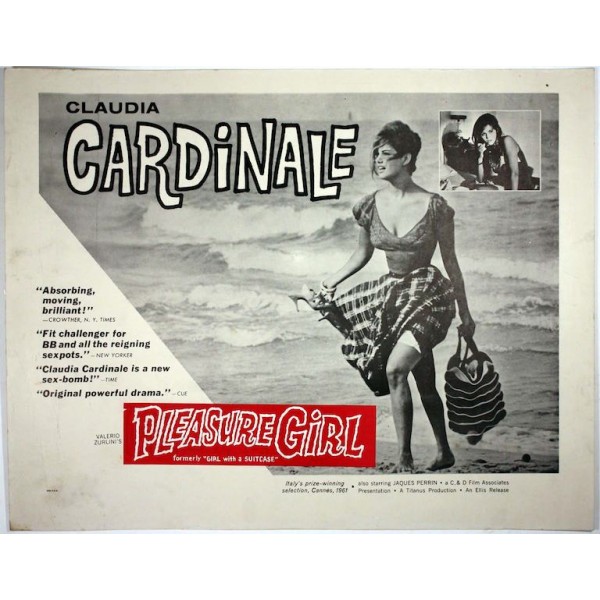
Girl with a Suitcase (1961)

girl with a suitcase

By Richard Winters

My Rating: 9 out of 10

4-Word Review: She likes shy guy.

This movie will start off a week long theme of romance movies in celebration of Valentine’s Day, which will be on the 14th. One romance movie from each decade will be reviewed starting with this sleeper from Italy that is well worth seeking out.

The story is about Aida (Claudia Cardinale) a young woman who is abandoned at a gas station after having a fight with her boyfriend. When she eventually tracks him down at his house she finds that she is actually more attracted to his younger brother Lorenzo (Jacques Perrin). Although Aida is more worldly-wise and Lorenzo shy and sheltered the two slowly form a bond that becomes emotionally compelling.

This is one of those films that despite being made over 50 years ago is still amazingly fresh. The characters are believable and reveal different layers of themselves in interesting ways. Claudia has never looked more beautiful and her performance here may be her best. Perrin is also excellent and the viewer cannot help but emphasize with him. The film packs some very powerful scenes and imagery that stays with you long after it is over and it manages to do it in a natural way that never seems forced.

If I have one complaint it is the fact that it becomes bit protracted especially at the end. Shaving the runtime by 30 minutes would have helped and possibly even made it stronger. However, Valerio Zurini’s direction is still top-notch.

The film features two fascinatingly fractured characters that are played to the zenith by the two leads. This is a film that deserves way more attention. The script, direction, and black and white cinematography are superb.

My Rating: 9 out of 10

Released: February 9, 1961

Runtime: 1Hour 55Minutes

Not Rated

Director: Valerio Zurlini

Studio: Ellis Films

Available: VHS, DVD

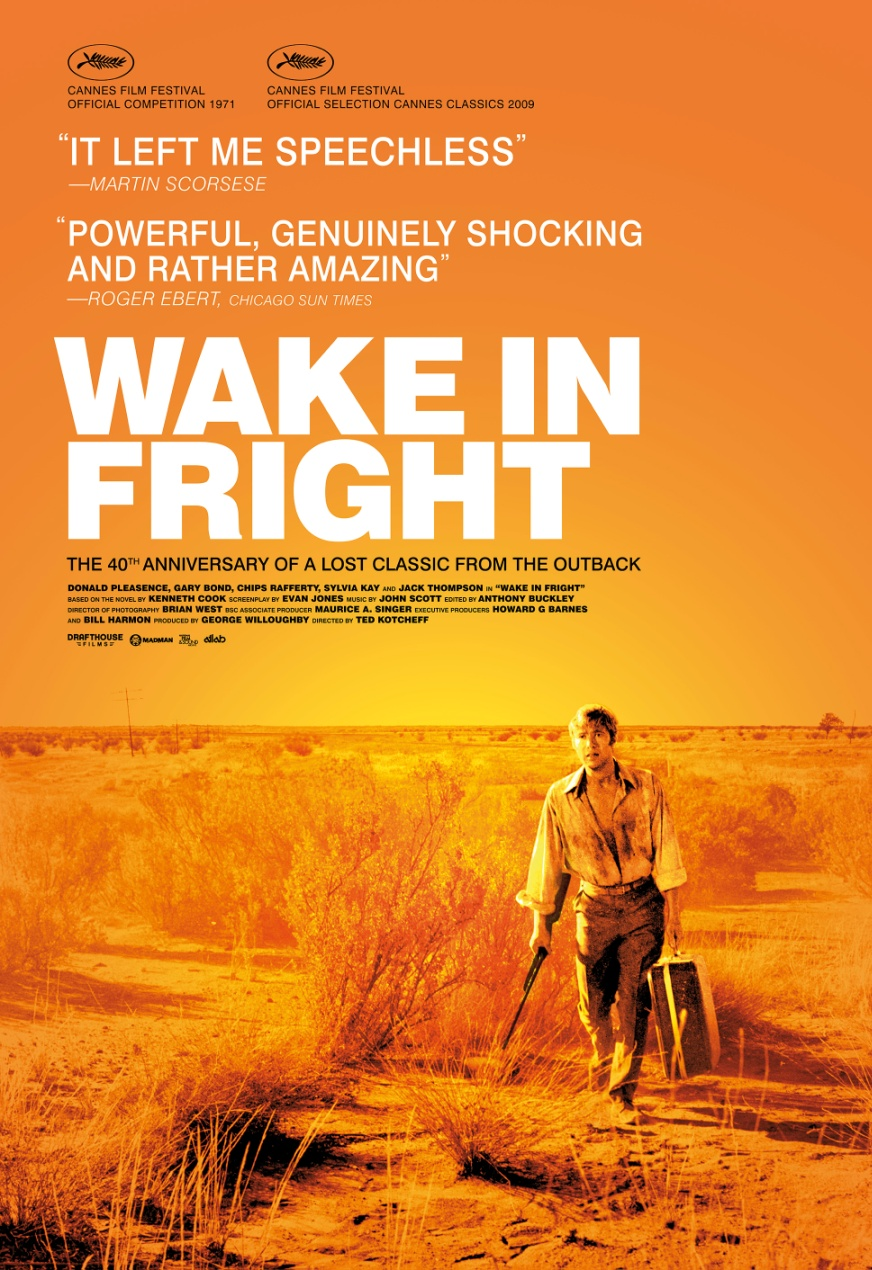
Wake in Fright (1971)

wake in fright 3

By Richard Winters

My Rating: 8 out of 10

4-Word Review: The middle of nowhere.

To an extent this is a one of kind film that is handled in such a raw and unpretentious way that it is like no other film you have ever seen before. The opening shot alone is amazing. You see a birdseye view of an isolated schoolhouse in the outback where our main character teaches. The camera then turns at a full circle and you see that there is absolutely nothing for miles in any direction. The desolation is mind boggling and it’s isolation at its purest.

Not only does this very inspired shot get its point across, but it also becomes the essence of what the film is about by trying to get you to understand the ruggedness of its characters by immersing you into their environment. It’s an uncompromising film full of startling images.

The story deals with a British schoolteacher John Grant (Gary Bond) who, through a loss in gambling, becomes trapped in the isolated outback town of Bundanyabba. He is cultured and educated and his sensibilities can’t mesh with the raw simplistic elements of the people in it.

It’s a highly intriguing viewpoint that not only captures man’s ever daunting task at dealing with nature, but also the overall reality of his existence and even himself. It makes you feel you are right there experiencing the same onslaught with him. There are also some interesting low key scenes proving that one of the biggest hurdles one must fight when in these places is actually just the boredom.

I do have to warn readers that the film has a very prolonged brutally explicit kangaroo hunting scene that features the actual killing of the animals. It even shows the men physically beating up on some wounded kangaroo’s and then viciously slashing their throats in a mocking fashion. Although I do feel that these scenes leave the viewer with the intended strong, raw impact and I like the lighting during the nighttime hunt that allows for a surreal element I still admit this may be a very difficult watch for some and may turn them off from viewing the film altogether. Apparently there were quite a few people that walked out of the film during this scene when it was shown at the Cannes, so be prepared.

Star Bond is excellent. You can relate to his anger and defiance at being somewhere he doesn’t want to be as well as feeling his desperation, exhaustion, and eventual surrender.

For many years this film sat in almost virtual obscurity, but after an exhaustive worldwide search a print of the film was finally found in the back of a Pittsburgh warehouse in a canister with a ‘to be destroyed’ label on it. Fortunately the print was saved and the restoration process is fantastic with colors that are bright and vivid. Director Ted Kotcheff captures the region in all of its rustic, desolate glory including the incredible crystal blue sky.

Reportedly many Aussies dislike the film as they feel it creates a negative stereotype. However, I don’t see it that way. I love the county and people and consider this more of a portrait of what happens when people are stuck in an isolated environment, which technically could be anywhere.

wake in fright 2

My Rating: 8 out of 10

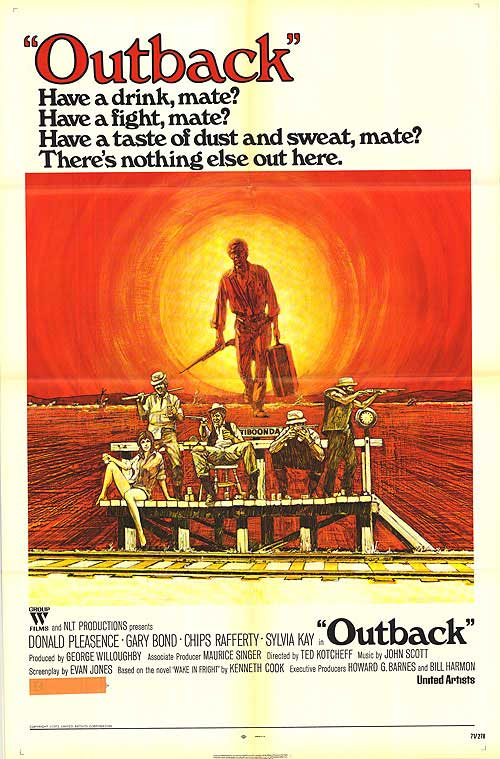
Alternate Title: Outback

Released: October 13, 1971

Runtime: 1Hour 49Minutes

Rated R

Director: Ted Kotcheff

Studio: United Artists

Available: DVD (Region 1 & 2) Blu-ray, Amazon Instant Video

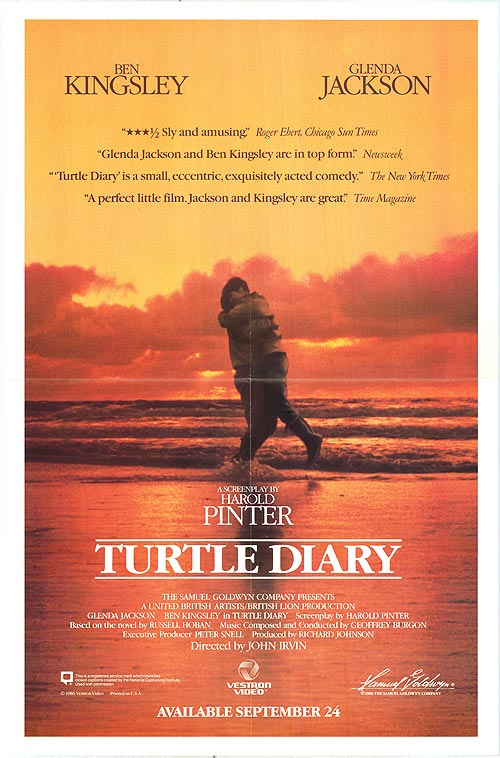
Turtle Diary (1985)

turtle diary 1

By Richard Winters

My Rating: 5 out of 10

4-Word Review: They free the turtles.

William (Ben Kingsley) becomes fixated with the idea of freeing the sea turtles at the London Zoo and returning them to the ocean. Neaera (Glenda Jackson) starts to have the same dream. The two get together and with the help of the kindly zookeeper George (Michael Gambon) begin to execute their plan.

Although well received by the critics at the time of its release I felt the film never seemed to gel. The plot is too thin and there is no explanation as to why William got so worked up about the turtles being in captivity. I felt there needed to be something shown in his history or character to explain this motivation. After all there are thousands and thousands of people that go to this zoo each year and none of them seemed to get worked up about the same idea. Also, why just the turtles? If William’s problem is seeing an animal that is not in their natural habitat then why not free all the species in the complex.

The plan also goes off way too seamlessly. What are the odds that the zookeeper would be in agreement with them and pretty much do all the work for them in setting it up to the point that all they end up doing is driving the turtles to the ocean. The story would have been a lot funnier and exciting had they somehow had to do it all themselves and behind the scenes. As it is here it becomes almost a non-event that barely holds any interest. Also, I have never heard of a zoo that decides not to press charges when they find that the turtles have been stolen or not firing the employee when they find that he had something to do with it.

The way Neaera and William get together is equally uninspired. They seemingly just keep bumping into each other and through sheer circumstance find out they have the same motivations. I was expecting something a little more creative and humorous. Neaera’s attempts at getting William’s address is particularly forced and contrived. In fact almost all of the conversations that they have with the exception of one where Neaera describes a weird dream that she had is very ordinary. The dialogue they have while traveling to the ocean is the blandest and none of it reveals much about the characters who end up being pretty forgettable.

Watching them carry the turtles to the open water has no emotional impact at all. It is not even the climatic sequence as it happens with 30 minutes left of the film. The rest of the movie concerns William’s dealings with the other people in his flat, which is mainly pointless.

The screenplay was written by celebrated writer Harold Pinter, who has an amusing cameo as one of the customers at William’s bookstore. Pinter was famous for his cutting edge and provocative plays of the 50’s, 60’s, and 70’s many of which I found to be quite fascinating, but this thing seems to be the polar opposite. The story and execution is standard while lacking any flair or pizazz. I can handle low-key and subtlety and many times relish it, but there still needs to be something more to it. More quirkiness and humor was needed as well as some tension. The film as it is here is flat and seems to waist a potentially unique idea as well as its cast.

My Rating: 5 out of 10

Released: September 10, 1985

Runtime: 1Hour 37Minutes

Rated PG

Director: John Irvin

Studio: The Samuel Goldwyn Company

Available: VHS

The Split (1968)

the split

By Richard Winters

My Rating: 5 out of 10

4-Word Review: Robbery during football game.

Since today is Superbowl Sunday I wanted to come up with a film from the 60’s with some sort of football theme and decided to dig this one out of the obscure pile that has just recently been released onto DVD through the Warner Archive label. The film has two special distinctions. For one it is the first movie to ever get an R rating under the MPAA’s then new rating system. It also shows scenes from two actual football games. The first one is a game between the Los Angeles Rams and the Atlanta Falcons that was played on December 3, 1967 and won by the Rams 20 to 3. The second game shown was one played a week later between the Rams and the Green Bay Packers where the Rams also prevailed by a score of 27 to 24.  Both games were played at the L.A. Coliseum with the plot of this movie taking place at another part of the stadium during these games although it is clear that the scenes involving the actors was done on a studio soundstage.

The story, which is based on a novel by the prolific Donald E. Westlake, involves a group of criminals who pull of a daring robbery during the football game, but when it comes to splitting up the money things go awry and they are soon turning on each other.

The crime itself isn’t all that interesting and tends to be a bit plodding with a minimum of suspense. Having things go wrong at the end and the group start turning on each other is redundant since they had been bickering amongst themselves from the very beginning. The characters are all unlikable making it hard for the viewer to get wrapped up into the plight of which of them gets the dough and which doesn’t. Personally I was hoping they would all just get killed off and no one would get any money because their constant yelling and fighting quickly becomes tedious and tiring.

The film’s one main highlight is a fight between Jim Brown and Ernest Borgnine, which carries the novelty of the fact that the two had a similar type of confrontation just a year earlier in the film Ice Station Zebra. Here, like in that film, Borgnine seems to get the best of Brown, which doesn’t make any sense because Brown was athletic, muscular and twenty years younger. There is also a scene where Borgnine puts his fist through a picture on the wall and shatters the glass. However, not only does he not wince in pain, which would be expected, but it somehow doesn’t even cause him to bleed.

Brown can sometimes be good in certain supporting roles, but as a leading man he can’t carry the picture. His facial expressions make him look like he is almost bored and just walking through the role. I know he was a great Hall of Fame running back, but that doesn’t mean he will turn into a great actor and casting him in lead roles of major studio pictures seemed awfully risky.

Warren Oates is terrific as always in a supporting role as one of the group’s henchmen. Donald Sutherland is also really good as another member of the group. I loved his Cheshire cat-like grin as well as his bowl haircut that gives him a creepy look. Julie Harris also sports a different style of hairdo from her usual short cut and she looks attractive as well as being near perfect in her part as an icy cold bitch that has no qualms about torturing a man to death in order to find her money.

SPOILER ALERT!

One of the biggest problems I had with the film was a plot twist that should have made it more interesting. It involves the James Whitmore character who plays the landlord of Diahann Carroll who is Brown’s girlfriend and hiding the stolen money in her apartment. Whitmore enters her place when she is alone and tries to rape her. Seeing an old wrinkled guy attacking a hot young black woman is wild in itself, but he also finds a machine gun in her dresser and holds it like he is masturbating with it and spews its bullets into her body like it is his ejaculation, which I found to be edgy and cool. He also finds the money and takes it for himself while making an anonymous phone call to the police to implicate Brown as the killer. However, when the police detective played by Gene Hackman investigates the case they quickly find out it was the landlord who did it, but it was never explained or shown how they came this conclusion as well as the fact that they end up killing him, which is completely glossed over and mentioned just briefly when the other characters read about it the next day in the newspaper. To me this created a major plot hole that needed to be filled.

The film also has a twist ending that doesn’t work and is very confusing. It happens as Brown is walking through the airport at the end with his share of the money and he hears what sounds like Diahann Carroll’s voice calling his name and he turns around with a shocked expression before the frame freezes and cuts to the credits. However, Carroll’s character was clearly killed and Brown saw the dead body, so how did she come back to life? Some viewers have stated that they think the voice was all inside Brown’s head, but that still needs to be explained and would normally prove frustrating to the viewer, but since the film is so bland it really doesn’t matter.

I feel I am being very generous in giving this picture 5 points, but the direction is fast paced and nicely compact and the jazzy Quincy Jones score is groovy. However, it certainly isn’t worth missing the big game for, nor any other game for that matter.

My Rating: 5 out of 10

Released: November 4, 1968

Runtime: 1Hour 30Minutes

Rated R

Director: Gordon Flemyng

Studio: MGM

Available: DVD (Warner Archive), Amazon Instant Video