Tag Archives: Diane Keaton

Love and Death (1975)

By Richard Winters

My Rating: 5 out of 10

4-Word Review: Attempting to assassinate Napolean.

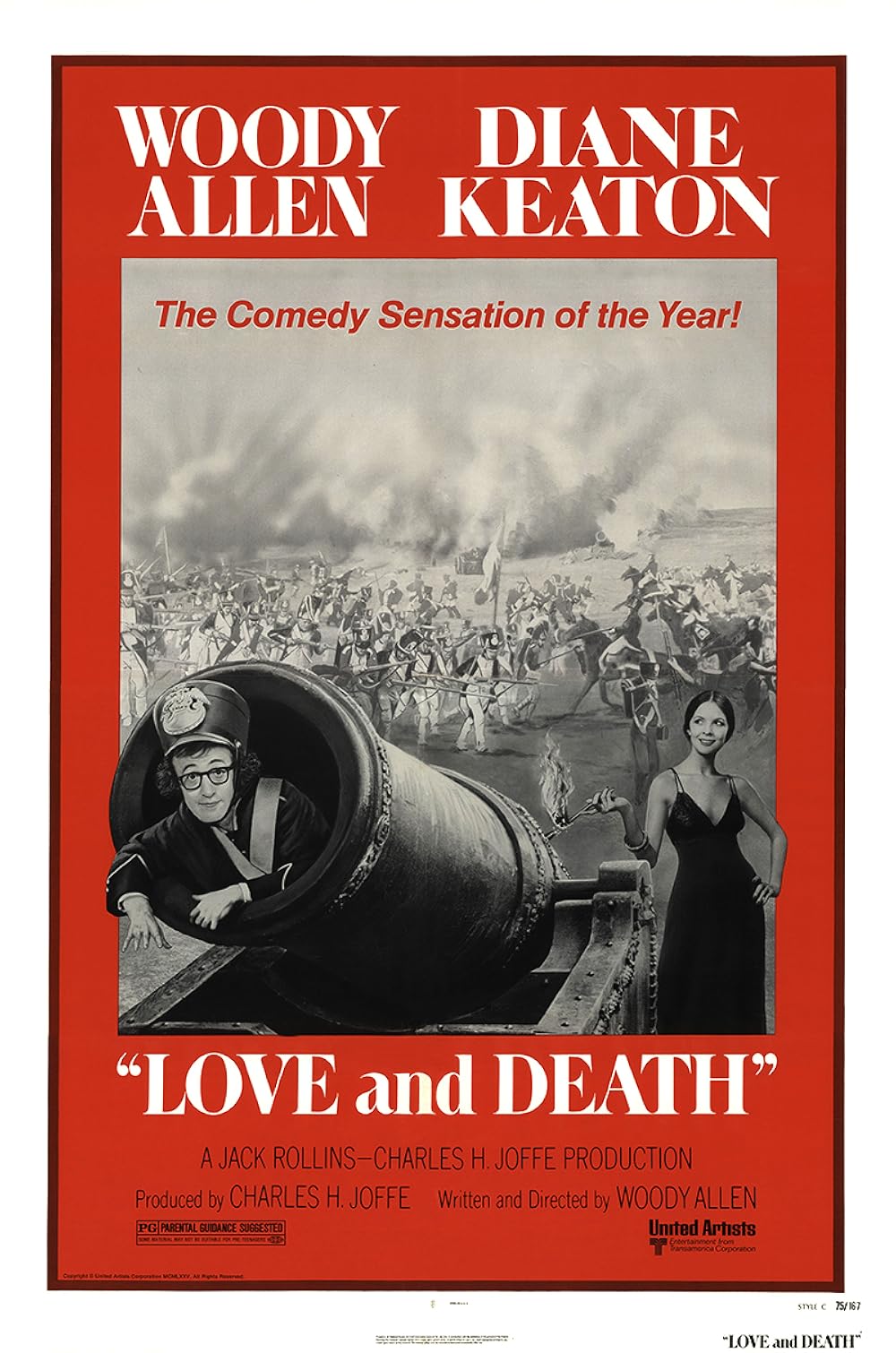
Boris (Woody Allen) is a scrawny guy who gets overlooked by others as his three brothers tower over him. He’s secretly in love with Sonja (Diane Keaton) who he’s been friends with since childhood, yet she’s instead infatuated with Ivan, one of Boris’ brothers. However, none of his brothers are into her, so she marries someone else while Boris remains a bachelor who occasionally fools around with beautiful women like a Countess (Olga Georges-Picot), which causes her lover Anton (Harold Gould) to challenge Boris to a gun duel. Thinking Boris won’t be able to survive the dual Sonja agrees to marry him if he survives, which he miraculously does. Once married they then concoct a plan to assassinate Napolean (James Tolkan) unaware that who they’re really going after is actually an undercover double.

Allen was in the midst of writing a screenplay dealing with a New York couple who try to solve a murder, which became Manhattan Murder Mystery, but was going through a writer’s block, so he began reading a novel about Russian history, which then inspired him to write this script. Since it was nearing the deadline to have a script ready for production, he decided to submit this one, which immediately went into filming while the other one didn’t end up getting completed until 1993.

Many critics and fans at the time liked this one and it ended up making $9 million at the box office off of a $3 million budget with Gene Siskel especially enjoying it as he gave it 4 stars while commenting that he liked Allen’s return to a ‘gag driven dialogue’ versus ‘attempting to develop a story’, but personally for me I felt this was what was wrong with it. While it does start out funny as it parodies 18th Century Russian society and has one really great bit dealing with a ‘hygiene play’ warning soldiers about VD and condoms it does tend to meander quite a bit. The middle part is the most sluggish with many of the gags falling flat almost like he’d run out of ideas and was just trying to desperately throw anything in to keep it going making it come off more like an unending skit instead of a movie.

Allen’s presence while amusing most of the way becomes a bit of a detriment. Much of this can be blamed on the fact that he’s playing essentially the same character that he does in all of his movies. Case in point comes at the beginning before he officially says anything on screen and I thought to myself I bet he’s going to mention something about atheism and sure enough that’s exactly what he does talk about making it predictable and redundant. Would’ve been nice for irony’s sake had he played someone who had a deep belief in God only to lose his faith after he goes through the war, which would’ve created a nice character arc of which there really isn’t one.

There’s also the issue of him having no Russian accent nor making even a slight attempt at one. Granted Keaton doesn’t speak in an accent either though maybe you can chalk it up to her great acting that she still seems of the period anyways while Allen very much comes off like someone who doesn’t really belong there. He repeatedly makes anachronistic statements, which from time to time are amusing, but technically don’t fit within the setting. It actually would’ve made more sense to have Allen simply be a modern-day New Yorker who finds a time machine and gets zapped away into 18th Century Russia and then wanders around making comments about things, which wouldn’t have disrupted the film all that much and besides adding one little scene at the beginning showing him going into the time travel contraption there wouldn’t have needed to be anything else changed. It literally would’ve been the exact same movie and in some ways been a lot funnier, and perceptive, because of it.

It does end on a strong note as it pokes fun of Ingmar Bergman movies and even has Jessica Harper showing up. Yet I still felt most of the way it throws in whatever it can for a cheap laugh with much of the jokes, particularly in the middle, not really landing. Many fans didn’t like the way Allen crossed over to doing drama just a few years later, but after watching this I started to believe he had used up all of his comical concepts that by this time was just repeating itself and thus his foray into more serious subjects was inevitable.

My Rating: 5 out of 10

Released: June 10, 1975

Runtime: 1 Hour 25 Minutes

Rated PG

Director: Woody Allen

Studio: United Artists

Available: DVD, Blu-ray, Amazon Video, YouTube
Interiors (1978)

interiors

By Richard Winters

My Rating: 8 out of 10

4-Word Review: Artistic family harbors turmoil.

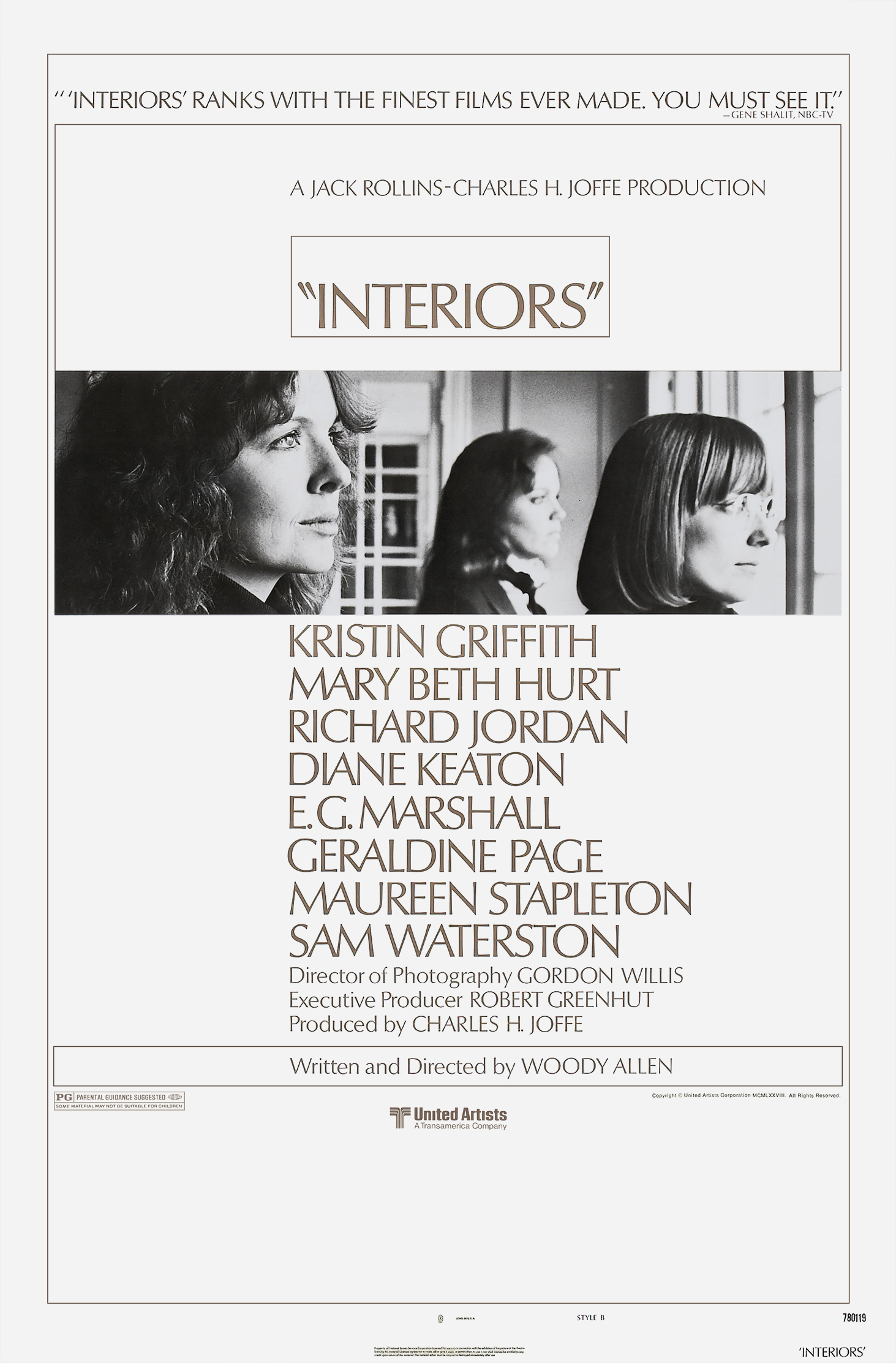
Eve (Geraldine Page) is an interior decorator whose emotions she keeps bottled-up and who also has a controlling and temperamental nature to not only her husband Arthur (E.G. Marshall), but also her three grown daughters: Renata (Diana Keaton), Flyn (Kristin Griffin), and Joey (Mary Beth Hurt). One morning, while at the breakfast table, Arthur announces to not only Eve, but also the two other daughters present, that he wants a separation though he insists it’s not ‘irrevocable’. Eve becomes upset and refuses to face it. While the two do separate she continues to cling to the delusion that they’ll ultimately reunite. When it finally becomes painfully clear that is not going to happen she then attempts suicide. While she’s in the hospital recovering Arthur goes out and meets Pearl (Maureen Stapleton) whom he quickly falls in love with. When he brings her home to meet the family they’re shocked at how he intends to marry her while his former wife is still in the hospital. This then brings out the hidden hostilities that the daughter’s feel towards their parents as well as each other and in Renata’s case the repressed envy that her own husband Frederick (Richard Jordan) feels for her.

This was Woody Allen’s first dramatic film, which was a big deal when it was first released as he’d only done wacky comedies before this and many were curious and apprehensive about him trying something so completely different from his past work. While he’d been trying to get a drama produced for years his investors constantly nixed the idea fearing that because he attracted audiences through his funny stuff that anything with a serious nature would turn-off would-be theatergoers and be a financial flop, but after the monumental success of Annie Hall they finally decidedly to relent and gave Woody the chance to spread his artistic wings.

The result overall is downright impressive. It’s clearly inspired by the films of Ingmar Bergman, his cinematic idol, but in some ways this is even moodier and more poignant than some of his stuff. While his later dramas fell into becoming a cliche of themselves using many of the same elements taken from this one, namely pretentious artistic characters living in New York who suffer from pretentious problems and relationships, here it’s fresh making the issues that they go through seem illuminating versus rehearsed and contrived like in some of his later works.

That’s not to say I didn’t find some problems here. The fact that we have characters, in this case Keaton, talking directly to the screen, apparently in an attempt to show that she’s speaking with a therapist, is a bit of a cop-put as she’s able to convey her deep seated thoughts and feelings verbally without forcing the director to have to show it through her actions and conversations, which may be more difficult to do, but also more rewarding for the viewer. Arthur’s decision to tell Eve that he wanted to leave while sitting a the meal table with the two daughters present seemed rehearsed. Normally when a couple decides to split they do it privately and have it out through a discussion or argument versus a canned speech that Arthur does, which comes-off like he’s orating in front of a group of people.

Woody’s attempts though to show the struggles and challenges people have who pursue creative endeavors I felt were quite well done. In his later dramas I found it annoying how many characters worked as artists because it reality only a very small portion of the populace can make a living that way, but here I was able to forgive it. I liked how we see close-up the challenges of this by the way Renata writes a poem on paper but is constantly scratching out words that she puts down showing the many drafts an author must go through before it eventually might come-out perfectly. The fact that it’s later revealed that her father helps fund her poetic passions made sense too as a poet able to live-off of their writings is about as rare as it gets.

Richard Jordan’s character is the one I found the most fascinating and I was genuinely surprised that while other cast members were nominated for the Oscar he wasn’t even though to me he’s superb.  The way his character broods incessantly about not getting the critical accolades that he expects and how it turns him into a mopping, alcohol drinking mess who snips at his wife’s perceived shortcomings in an immaturely emotional attempt to bring her down to his level was completely on-target composite of the insecure artist. The scene where he tries to rape Flyn, so he can have the pleasure to ‘fuck someone who’s inferior to me’ fit the personality of someone who harbors frustration that they’re able to mask with a veil of civility most of the time but will allow it to come-out when alone in the presence of someone more vulnerable.

The real star though is the cinematography by Gordon Wills, who ironically went on to make his directorial debut in a movie called Windowswhich was the original title for this one. The gray, cold color schemes and shots showing an ice-covered tree branch effectively reflects the icy emotions of the family and the lack of music with long pauses of silence and empty rooms help symbolize how alienated each member is from the other. The most pronounced moment involving the crashing waves of the ocean and the almost dream-like ‘conversation’ that Joey has with her mother is by far the film’s most memorable element and something that will stay with you long after it’s over.

My Rating: 8 out of 10

Released: August 2, 1978

Runtime: 1 Hour 32 Minutes

Rated R

Director: Woody Allen

Studio: United Artists

Available: DVD, Blu-ray, Freevee, Pluto, Amazon Video, YouTube

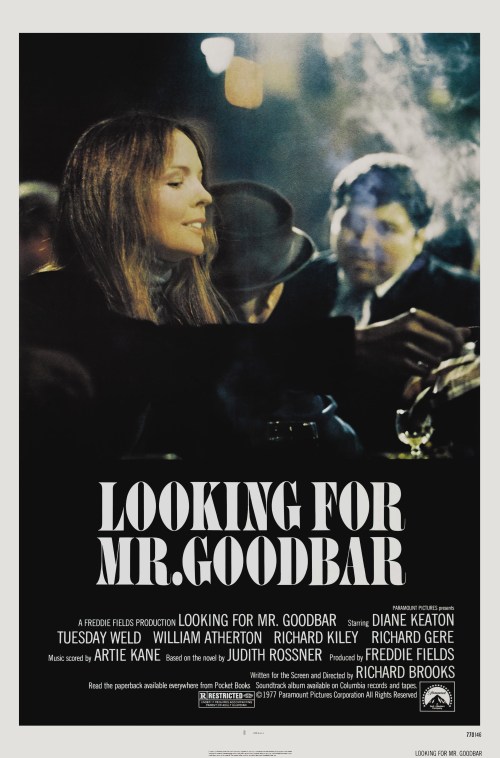
Looking for Mr. Goodbar (1977)

looking

By Richard Winters

My Rating: 7 out of 10

4-Word Review: School teacher sleeps around.

Theresa (Diane Keaton) is a young school teacher trying to get over the break-up with Martin (Alan Feinstein) a married college professor of whom she’d been in a relationship with for several years. Tired of living with her parents (Priscilla Pointer, Richard Kiley) and her domineering father she decides to get a studio apartment near the club scene. She picks-up Tony (Richard Gere) at a bar one night and takes him home. His volatile, drug induced behavior scares her at first, but eventually she enjoys his unpredictable ways. When he disappears for long periods she begins bringing more strangers home finding the one-night-stands to be a liberating change from her repressive catholic upbringing, but the more she partakes in this edgy lifestyle the more danger she puts herself in.

The film is based on the Judith Rossner novel of the same name, which itself is based on the true story of Roseann Quinn. Quinn was a school teacher living in New York City who had a propensity of bringing home men she’d meet from a bar that was across the street from her studio apartment. On the evening of January 1st, 1973 she invited John Wayne Wilson, a man she met at the bar, back to her place for intended sex, but instead it resulted in murder when he was unable to achieve an erection and he felt she was making fun of him.

Rossner read about the incident in a newspaper and became intrigued with the case and intended to write about it for an upcoming article in Esquire magazine, but the editor feared legal action since it was based on an actual case and reneged on the assignment, so Rossner turned it into a novel using fictional names for the real-life people. It got published in 1975 to rave reviews and instantly became a best seller, which caught the attention of writer/director Richard Brooks who had turned other true crime stories into hits such as In Cold Blood and felt he could do the same with this. In fact the film did quite well as it raked in $22.5 million and was the top movie in the country on its opening weekend.

While Rossner openly detested the film version I felt it does a great job of exposing the bleak, lonely existence of the 70’s single’s scene and how sexual liberation can end up being just as much of a trap, if not more, as monogamy. The dim, dark lighting, particularly inside Theresa’s apartment brings out the grim existence, and twisted personalities, of its characters nicely. The viewer feels as caught up in the depressing, aimless world as the protagonist and its the vividness of the 70’s young adult, city culture that makes this an excellent film to see simply to understand the motivations of the people who lived it. While on paper reading about someone that was a school teacher for deaf students during the day turning into a reckless, sexually promiscuous lady by night may seem shocking and hard to fathom, the film seamlessly fills-in-the-blanks to the extent  that you fully grasp, from her stifling family and religious upbringing as well as her painful break-up and insecure body image, to what drove her to it and thus cultivates a very revealing character study.

Keaton, Kiley and Tuesday Weld, who plays Theresa’s older sister who experiments with the wild lifestyle herself, are all stand-outs, but the film also has some great performances from actors who at the time were unknowns. Gere is especially good, quite possibly one of the best acting jobs of his career, as the creepy, but still strangely endearing Tony. LeVar Burton has very few lines, but still makes an impression with his pouty facial expressions as the older brother to one of Theresa’s deaf students. Tom Berenger though turns out to being the ultimate scene stealer as the psychotic who’s so on edge with his personal demons that he lashes violently out over the smallest of provocations.

Spoiler Alert!

While the film is known mainly for its notorious ending, which still packs a bit of a punch, its effect is muted by director Brooks unwisely telegraphing it ahead of time. Virtually the whole movie is done from Theresa’s point-of-view and yet at the very end it cheats it by having a scene between Gary and his gay lover giving the viewer an unnecessary warning about his mental state, which wasn’t needed. For one thing in the real-life incident the assailant was a married man and not gay, so adding in the gay subtext and using it to explain his psychosis could be considered homophobic and armchair psychology. It also hurts the shock value as the audience knows what’s coming versus having them as surprised as Theresa when he suddenly lashes out unexpectedly, which would’ve made for a more emotionally impactful, gripping finish.

My Rating: 7 out of 10

Released: October 19, 1977

Runtime: 2 Hours 16 Minutes

Rated R

Director: Richard Brooks

Studio: Paramount

Available: DVD

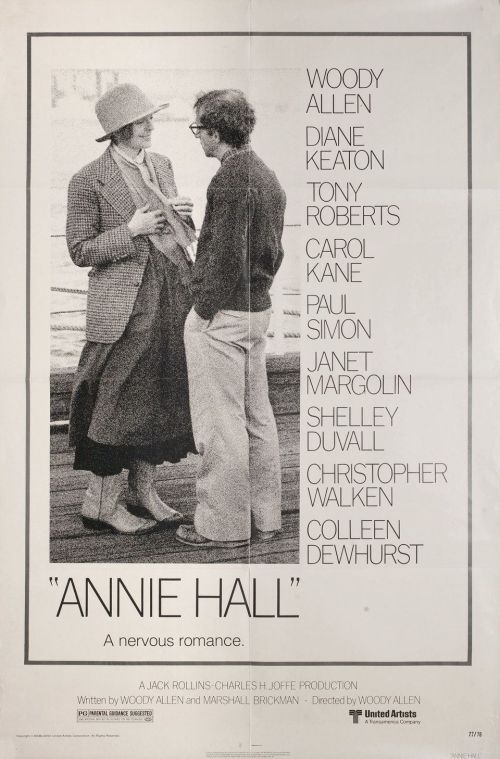
Annie Hall (1977)

By Richard Winters

My Rating: 10 out of 10

4-Word Review: The perfect date movie.

Alvy Singer (Woody Allen) is a professional stand-up comic going through a mid-life crises. Now in his 40’s he’s already been twice divorced and feeling like he may be unable to get into a solid, satisfying relationship. Then he meets Annie (Diane Keaton).  The two forge ahead into a relationship and things work well for awhile, but then the insecurities from both partners begin creating issues.

This film, which won the Academy Award for Best Picture, as well as Best Screenplay and Best Director (Academy Award for Best Actress too) has all the trappings of what I consider to be the perfect date movie. Some may disagree as the relationship between these two characters remains rocky throughout, but that’s why I think it’s so good. Other romance movies gloss over the different stages that a relationship goes through. They either rush past the start making it seem like the two people fall-in-love at first glance and immediately become a couple, or focus too heavily on the ups-and-downs of the dating phase, but then once they get married act like it’s ‘happily-ever-after’.

Here we’re given the whole shebang. We see the awkward start, which forms into an equally awkward relationship that eventually unravels once both partners realize they have different needs, much like in reality. I enjoyed how each person plays the same role, but at different times. Sometimes it’s Annie that wants to rekindle the romance while at other points she wants to break free and then at times its reversed with Alvy being the one trying to leave, or wanting to get back together. This is why I consider this to be a good date movie, especially for young couples, as they need to see that a relationship is a work in progress that constantly needs nourishing. The dynamics can evolve and both partners must be willing to adjust to the every changing needs of the other in order to keep it going.

The film is also filled with a lot of funny highly original bits that I haven’t seen done before or since. I loved the segment where subtitles get added to a scene revealing what Annie and Alvy are really thinking about each other while they have a psuedo intellectual conversation. The scene where the spirit/soul of Annie steps out of her body and then sits and watches Alvy and Annie making love in bed is funny too as is the dueling analysts bit (where the screen is split and  we see/hear Alvy and Annie talking about their romantic difficulties to their respective therapists at the same time.) This same approach occurs again with Alvy and Annie’s ‘dueling families’. Honorable mention must also go to animated bit with Woody and the Evil Queen from Snow White.

The only sad aspect is that the movie’s original cut ran 2 Hours and 4 Minutes, but the studio wanted it whittled down to a 90 minute runtime forcing many other potentially engaging bits to end up on the cutting room floor. Some of the bits that sound interesting featured Alvy’s grade school classmates in the present day, a junk food restaurant segment with Danny Aiello, as well as a fantasy segment where the New York Knicks basketball team competes against a team of 5 philosophers. Another scene had Alvy and Annie visiting hell that was reworked 20 years later and put into the film Deconstructing Harry.

Spoiler Alert!

Some of my film friends consider the ending to be an unhappy one, but I disagree. Yes, their relationship ultimately doesn’t work out and they decide to just remain friends instead, but for some couples this is actually the best option. The two were still on speaking terms and weren’t stalking or jealous of each other. Both had adjusted to the breakup and were ready to move-on. Not every relationship your in, even the ones that were fun for awhile, are meant to last and that’s okay.

My Rating: 10 out of 10

Released: March 27, 1977

Runtime: 1 Hour 33 Minutes

Rated PG

Director: Woody Allen

Studio: United Artists

Available: DVD, Blu-ray, Amazon Video, YouTube
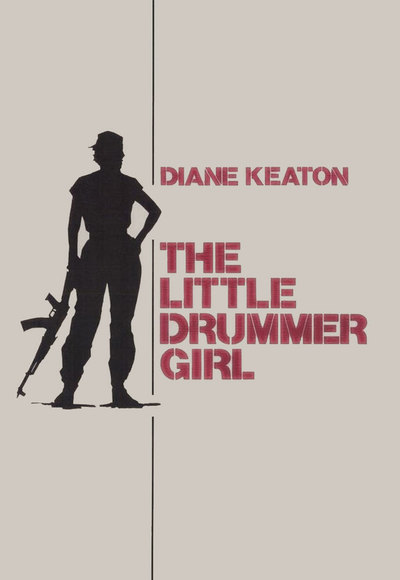
The Little Drummer Girl (1984)

By Richard Winters

My Rating: 5 out of 10

4-Word Review: Actress infiltrates terrorist organization.

Charlie (Diane Keaton) is a stage actress with pro-Palestinian leanings who’s living in Israel. After a Palestinian bomber kills a Israeli diplomat and his family she gets recruited by a pro-Israeli spy organization to pretend to be the bomber’s brother’s girlfriend. At first she resists, but eventually she puts her acting skills to work until she gets deeper and deeper into the quagmire and begins to question what she really stands for.

The story, which is based on the novel of the same name by John Le Carre, who appears briefly in the film as a police chief, has a lot of exciting moments and a few unexpected ones. For the most part I found the plot intriguing and the twists and turns to be interesting although if the viewer doesn’t pay close attention they could easily become lost.

Klaus Kinski’s performance makes it worth seeing. He suffered from mental illness in his personal life and due to that as well as his unique facial features usually stymied him in roles of madmen, or troubled individuals, but here he plays someone who is actually normal and does a convincing job of it. His presence definitely enlivens the proceedings to the point that he should’ve been the sole face of the Israeli organization and not crowded out by a throng of assistant players who are not interesting and become clutter to both the story and visuals.

Keaton is great here too and one of the main reasons that the film remains as interesting as it does. Her emotional confusion comes off as sincere and the fish-out-of-water concept where she gets thrown into a world that she is not used to and must use her wits and acting talent to get by is at first riveting.

Unfortunately the second half goes too far to the extreme where Charlie no longer resembles the same person that we met at the beginning. Some may argue that this is her character arch, but she still needs to have a consistent foundation and not morph into something completely different with no roots to what she was before. She starts out as someone only going along with the charade because she’s forced into it. She’s very clumsy at first, but then by the second half is able to put a gun together while blindfolded and seamlessly detonate a bomb without a sweat like a seasoned spy with years of experience.

She’s given an opportunity to get out and yet she decides to proceed even as things get more dangerous, which makes little sense since she didn’t conform at all with the political sentiments of the organization that recruited her. Any regular person would have a mental/emotional breakdown at seeing someone killed before their very eyes, or required to go to bed with a stranger that she barely knew, and the fact that she doesn’t reveals how the filmmakers had a very poor grasp on the character.

All of this could’ve been avoided had they modeled her after the one in the book. For the film the producers decided to portray Charlie as being similar to Vanessa Redgrave, but in the book the character was inspired after Janet Lee Stevens who was an American journalist, human rights activist, and Arabic literature scholar who traveled to the Middle East as an interpreter and had no connection to acting. Having the film focus on a young activist whose extreme idealism ends up getting her in-over-her-head would’ve been more compelling and believable. Throwing in the acting angle just doesn’t work and ends up becoming its biggest liability.

My Rating: 5 out of 10

Released: October 19, 1984

Runtime: 2 Hours 10 Minutes

Rated R

Director: George Roy Hill

Studio: Warner Brothers

Available: DVD (Warner Archive), Amazon Video, YouTube

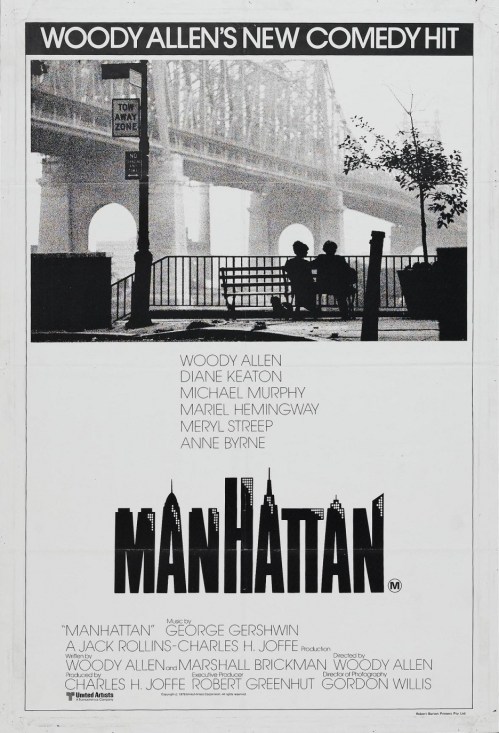
Manhattan (1979)

By Richard Winters

My Rating: 5 out of 10

4-Word Review: Writer has relationship issues.

Isaac (Woody Allen) is an unemployed TV writer who’s currently dating Tracy (Mariel Hemingway) a 17-year-old girl, but he feels guilty about this and thinks it’s only a matter of time before she moves on to someone else that is more her age. In the meantime he begins seeing Mary (Diane Keaton) who is the mistress to his best friend Yale (Michael Murphy). Eventually Isaac falls for Mary, but she then goes back to Yale forcing Isaac to beg Tracy to come back to him even as she’s prepares to go off to London to study acting.

Although this film became a critical darling I agree more with Allen himself who considers this to be the least favorite out of all of the movies he’s directed. The much ballyhooed black-and-white cinematography is a detriment especially when it shows the fireworks going off above the skyline, which if done in color would’ve been vibrant, but here it’s less than thrilling. The film also doesn’t give you much of a feel for the city since all it does is give brief shots of the skyscrapers and never any of its eclectic neighborhoods, shops, street life, or people. Looking at various photos of the city in Wikipedia gives one a far better visual taste of Manhattan then this film ever does and the George Gershwin score has unfortunately lost its uniqueness since United Airlines used it for many years for its ad campaign and I kept thinking of that the whole time it gets played here.

Allen’s trip with Keaton to a planetarium is interesting visually and their facial expressions during a visit to a concert is amusing, but otherwise the storyline dealing with their budding romance is boring and predictable. It’s fun to see, and a testament to Keaton’s great acting ability,  her playing a completely different type of person than the one she did just two years earlier in Annie Hall, but the character itself is off-putting and not someone most men would want to warm-up to. Maybe it’s the way she thinks that just because she’s from Philadelphia that makes her or anyone else from there morally superior, which I realize is meant to be amusing, but I didn’t find it that way mainly because I know people in real-life who are actually like that.

Allen’s visits with his ex-wife, played by Meryl Streep doesn’t jive either because I could not believe that they were ever compatible enough to ever have gotten married in the first place.  It’s also weird that her new partner Connie (Karen Ludwig) remains so civil and calm when in Allen’s presence since he apparently tried at one time to run her over with a car, which to me would make her not want to be anywhere near him, or even allow him into her home.

Allen’s relationship with Hemingway is the film’s only interesting aspect. Some of course may consider this to be controversial due to the wide age differences between the two although technically in the state of New York the age of consent is 17, so in the eyes of the law it was legal even though the characters themselves amusingly don’t seem aware of this. What I liked though was that Hemingway, despite being so young, comes off as the mature one in the relationship and when they’re shown walking side-by-side she is actually taller, which I found to be the funniest part of the whole movie. She also does a very convincing cry, which isn’t easy.

Unfortunately the relationship also leaves open a plethora of questions that the movie never bothers to answer. For instance where are her parents and what do they think of her living with a 42-year-old man? What do her friends think of Allen and what exactly does she see in this scrawny, whiny little man to fall-in-love with him anyways?

Supposedly her character is based on actress Stacey Nelkin who had a on-going relationship with Allen for 8 years starting when she was 16, but that made more sense because she was a young would-be starlet who most likely was mesmerized by Allen as a well-established director and who she probably saw as being her ticket to possibly breaking into the business, but here Isaac is an unemployed nobody yammering incessantly about things like Ingmar Bergman, which is something most teens can’t get into, so again I ask what does this Hemingway character see in this guy that would make her want to move in with him?

I’ve been a fan of many of Allen’s other films especially his comedies from the early 70’s and some of his dramas too, but this one left me cold. I felt that way when I first saw it over 20 years ago and nothing changed upon the second viewing as it seems to be cramming in three diametrically different storylines giving it kind of a jumbled narrative instead of just focusing on one.

My Rating: 5 out of 10

Released: April 18, 1979

Runtime: 1 Hour 36 Minutes

Rated R

Director: Woody Allen

Studio: United Artists

Available: DVD, Blu-ray, Amazon Video

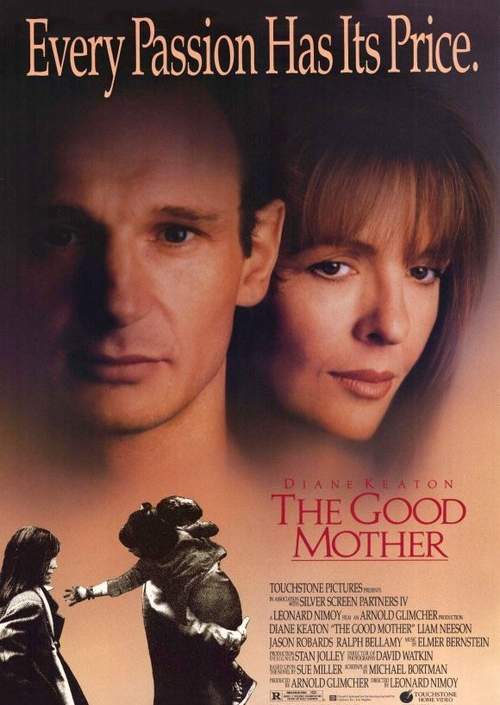
The Good Mother (1988)

good-mother

By Richard Winters

My Rating: 4 out of 10

4-Word Review: She losses her daughter.

Anna (Diane Keaton) is a frigid woman who divorces her husband Brian (James Naughton) of many years and gets joint custody of their 6-year-old daughter Molly (Asia Vieira). After spending some time being single she meets up with an artist named Leo (Liam Neeson) who opens her up to a whole new sexual awakening. Her new liberated lifestyle affects her daughter as well. When Molly catches Leo getting out of the shower naked she inquires if she can touch his penis, which he allows and then later she crawls into bed with the couple as they make love. When Brian hears about this he demands full custody, which pits Anna against Leo as she fights the system to keep her daughter.

Keaton’s performance is the best thing as she plays the mother role for the third time in a decade and the exact reverse predicament of the character that she portrayed just before doing this one where she got stuck with a child that she didn’t want while here she loses one. I enjoyed Neeson’s Irish accent and Vieira is cute while it’s great seeing old-timers Ralph Bellamy and Teresa Wright in supporting roles.

Leonard Nimoy’s direction is solid for the most part. He was just coming off tremendous success with his earlier hit 3 Men and a Baby, so it was nice to see him take a creative challenge by tackling a different genre.  The story’s sensitive subject matter  is handled well including most importantly the scene showing the girl in bed with the two adults although the various other moments showing Anna’s and Leo’s intimacy is a little uncomfortable, but still captured tastefully without ever feeling that it is being overtly erotic.

The film’s biggest failing is the story itself. Although based on the best-selling novel by Sue Miller it doesn’t have enough twists to be compelling or enough of a visual quality to be cinematic. Too much time is spent at the beginning dealing with Anna’s childhood experiences with her cousin Babe (Tracy Griffith) that only has a thin connection to the rest of the plot and could’ve easily been cut and simply alluded to instead. The courtroom scenes lack impact and offer no new interesting revelations. The film also doesn’t bother to show two of the story’s most dramatic moments, which is when Molly tells her father about her experiences with Leo, or when Anna confronts Leo about it later, which to me should’ve been a must.

The ending leaves little impact making me wonder what point the filmmakers where trying to convey, or why a viewer should sit through it especially since it’s not based on a true story and meanders too long just for it to come to a very vague resolution.

My Rating: 4 out of 10

Released: November 4, 1988

Runtime: 1Hour 43Minutes

Rated R

Director: Leonard Nimoy

Studio: Touchstone Pictures

Available: DVD, Amazon Instant Video, YouTube

Baby Boom (1987)

baby boom

By Richard Winters

My Rating: 5 out of 10

4-Word Review: Yuppie inherits a baby.

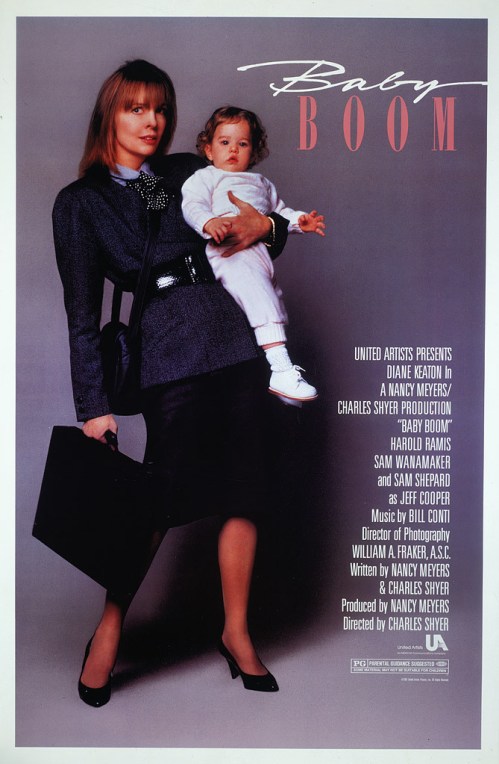
J.C. Wiatt (Diane Keaton) is a successful businesswoman who has risen to the top of the corporate world by being quite literally ‘married-to-her-job’, which is just fine with her boss (Sam Wanamaker) as he is the same way and demands nothing less. Out-of-the-blue she gets a call that a distant relative has died and sent her an inheritance. She initially thinks it’s money only to find to her shock that it’s a baby girl instead. J.C. lacks any parenting skills and has difficulty even putting on a diaper, let alone knowing the right sized one to buy. Her annoyance slowly grows to bonding as she finds raising a young one has rewards far greater than her previous yuppie lifestyle could offer.

The premise for this thing is whacked. What kind of halfway normal parent would write a will that has their child shipped off to a distant relative that they haven’t had contact with since 1954 in the event of their death? Certainly there had to have been some close friend or family member that they knew of who would’ve been far more appropriate and could’ve been forewarned that they were the intended god parent. It’s almost like the parents just threw the child off a cliff and hoped someone down below would catch her.

The Harold Ramis character should’ve been chucked from the beginning. He plays her live-in boyfriend, but if someone is working 70 to 80 hours a week then they would have little time for a social life let alone a normal, healthy romantic relationship. The idea is to show that this character’s life is imbalanced, so might as well portray her as being alone and desperate need for genuine human contact making the baby’s presence all the more significant.  Ramis disappears quickly as he bails on her the minute she decides to keep the kid, so why bother introducing him at all?

Although likable I didn’t feel Keaton was the best choice for the part. The character is given the nickname of ‘tiger lady’, but to me that would signify having traits that are cold, steely and bitchy, but Keaton never displays these. Cybil Shephard or Candice Bergen with her Murphy Brown persona would’ve been a better pick and made the character’s transition from cutthroat businesswoman to loving mommy all the more vivid.

The film does have some funny bits and the twin girls who play the part of the infant are cute and respond well to the camera. I even enjoyed when J.C. begins to bond with the girl, but Bill Conti’s musical score gets overplayed during these segments and his cutesy melody gives these otherwise  touching moments too much of a heavy-handed feel.

I certainly liked the message, but writer/director Charles Shyer tries too hard to get it across. Having the character suddenly move out to the country seemed too severe of a shift. This is the type of person who thrived in a big city atmosphere and I don’t think she’d ever fully adjust to the slow pace of the rural lifestyle, which makes this plot twist, in a movie that goes on too long to begin with, come off as a misguided tangent that isn’t interesting or believable and the ending itself is too idealistic.

My Rating: 5 out of 10

Released: October 30, 1987

Runtime: 1Hour 50Minutes

Rated PG

Director: Charles Shyer

Studio: United Artists

Available: DVD, Amazon Instant Video

Shoot the Moon (1982)


By Richard Winters

My Rating: 7 out of 10

4-Word Review: A look at divorce.

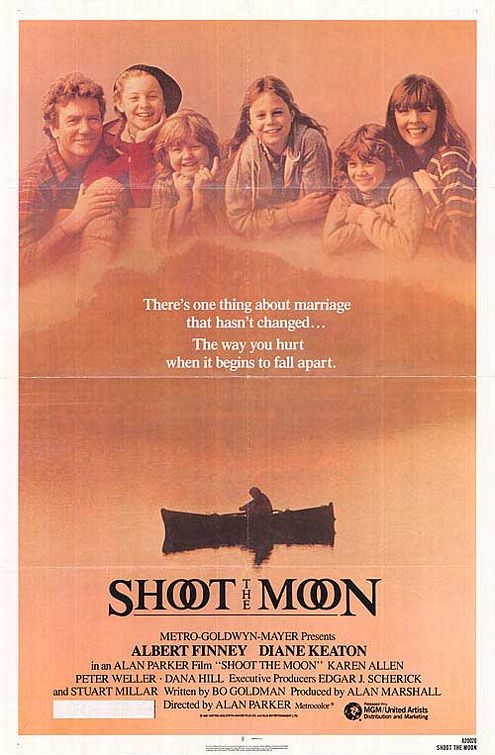
After fifteen years the marriage between George and Faith Dunlap (Albert Finney, Diane Keaton) finally dissolves. He has been carrying on an affair with another woman (Karen Allen) and so he is forced to move out of their house and away from their four daughters. Sherry (Dana Hill) the oldest is angry at him and refuses to speak or even spend time with him when he has custody of the children, which starts to create major friction. Faith begins a relationship with Frank (Peter Heller) a handyman who has come over to build a tennis court in their backyard and when George finds out about this his simmering temper eventually boils over in an uncontrolled and frightening way.

If there is one thing you take away from this film it is in the luscious photography of the San Francisco bay area. The large, isolated two-story house looks almost like a dream location and was specifically built for the picture and filmed in Nicasio, California. The scenes showing George writing at his typewriter next to a window exposing crashing waves of the ocean and well as his pondering things in a small rowboat all alone in a still lake have the same dream-like quality and an ambience that allows for a rush to the senses.

The film also has an interesting music score because there is no composer credited for it even though it has pieces of simple piano interludes played throughout, which effectively reflects the mood of the film and characters and proves once again that less truly is more.

The family life scenes are on-target with everything from the perpetually chaotic atmosphere of four kids running around with endless energy to the always cluttered rooms and the mother seen picking up their discarded toys and clothes. The children are portrayed as being realistically perceptive and ask some pointed questions and not as naïve as most adults may like to believe. Hill is a real standout and her final meeting with her father late at night on a dock beside a lake is touching. Although she was 18 at the time because of her severe diabetes that stunted her growth she looks very much like the 13-year-old that she was portraying.

There are some memorable scenes including the amusing moments inside and outside a courtroom as well as Faith and George having a shouting match inside a fancy restaurant that ends up involving another couple sitting next to them. George’s angry tirade at the end in which he destroys the brand new tennis court with his car is exhilarating.

The only liability is with Finney himself. Normally he is a superior actor, but he is miscast here. For one thing there was too much of an age difference between him and Keaton and at times he almost looks more like her father. Weller who plays her boyfriend seems much more like her type and he would have been a better choice as the husband. Finney’s character borders on being unlikable and comes off at times as being a prick of the highest order. His blowups at Faith for seeing another man and at Sherry for not talking to him seem unreasonable especially since he started it all by having an affair. I did like the part though were he helps Timmy the young son of his new girlfriend late at night when he gets sick and the comment that his new girlfriend makes to him when he comes back to bed with her is a gem.

The film gives a great overall look at the emotional side of divorce, but it fails to dig any deeper.  We gain no real insight to these characters or what caused the marriage to go bad in the first place, which ultimately makes this otherwise slick production rather shallow and placid.

My Rating: 7 out of 10

Released: January 22, 1982

Runtime: 2Hour 4Minutes

Rated R

Director: Alan Parker

Studio: MGM

Available: VHS, DVD, YouTube