Tag Archives: Charles Durning

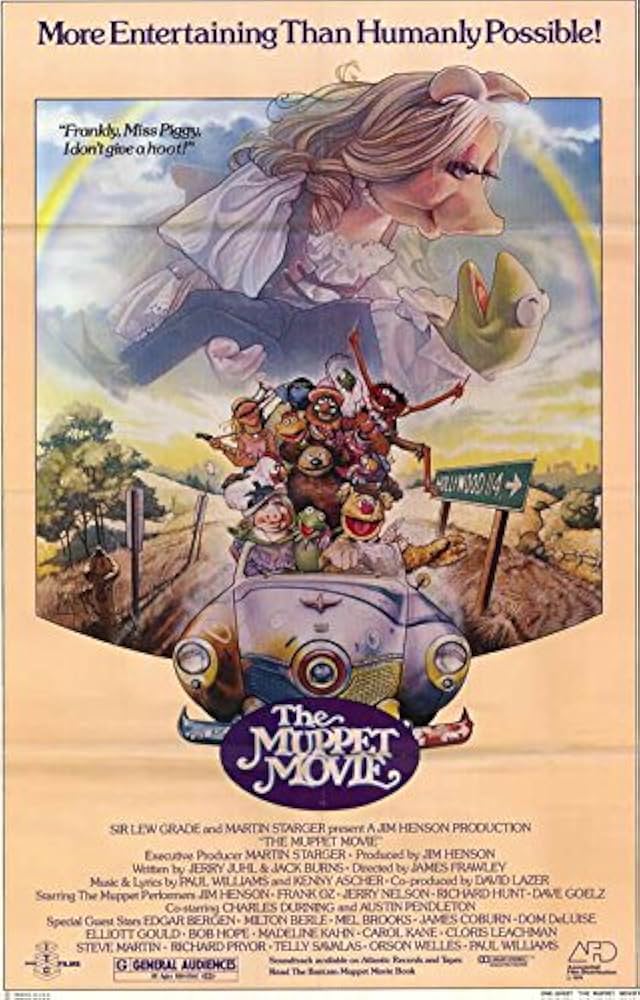
The Muppet Movie (1979)

By Richard Winters

My Rating: 7 out of 10

4-Word Review: How they became famous.

Kermit (Jim Henson) is a lonely frog living in a Florida swamp who dreams of one day making it to Hollywood and becoming famous. He then meets talent agent Bernie (Dom Deluise) who hears Kermit singing a song with a banjo and becomes convinced that the frog has what it takes to become a star. He hands him his card and tells him to give him a visit when it makes it to California. Kermit then sets-off on a cross-country trip and along the way meets several other characters all looking for their big-break including Fozzie Bear, a struggling comedian, and Miss Piggy (Frank Oz) who wants to become a fashion model. They tag along on the trip with Kermit while pilling into Fozzie’s Studebaker as he drives them to the west coast, but then they meet up with Doc Hopper (Charles Durning), an owner of restaurants who specializes in frog legs, who wants Kermit to be his new spokesmen in some commercials that he’s producing, but Kermit declines. However, Doc refuses to take no for answer and chases after the gang and using increasingly more sinister methods in order to get the frog to change his mind. 

Due to the success of ‘The Muppet Show’ creator Jim Henson was given financing to produce his own movie featuring the same puppet characters audiences had grown to love from the program. Since this would be a large-scale production great effort had to be put into making the muppets appear real and able to blend into an actual outdoor setting versus having everything done on a sound stage like it was in the TV-show. Henson refused to compromise on anything and insisted that money would not be a limitation, and this included the segment where Animal, one of the muppet characters, grows to giant proportions. Initially the idea was to keep the puppet the same size and place him on a miniaturized set, which would’ve cut down on costs, but Henson felt this didn’t look convincing enough, so instead they constructed Animal’s head to gigantic proportions that measured over sixty feet, which called for way more money and was very time consuming, but ultimately worth the effort. 

The story itself is pedestrian and relies, similar to the TV-show, with rapid fire quips and comebacks much like in old vaudeville. On the surface the humor is corny, and some could find the whole thing silly, but enjoyment comes with the puppet characters that are made to be like caricatures of humans, and their amusing responses and reactions. It’s also filled with a lot of great songs all written by the talented Paul Williams, who appears briefly. Normally in movie musicals the songs end up sounding the same and it starts to feel like we’re just listening to the same loop done over and over, but here each music bit has a distinct beat and a good toe-tapping quality, which not only adds to the fun, but actually helps move the story along versus holding it up. 

The only drawback is the massive amount of guest star appearances. There are many familiar faces, but most of them are only in it for a half-minute, or so and few of them have anything that’s actually funny to say, or even moderately clever. Performers like Bob Hope, Richard Pryor, Madeline Kahn, and Edgar Bergen, in his last screen appearance before dying just a couple weeks later, are essentially wasted in bits that add nothing and could easily have been excised and not missed. However, there’s a few cameos that do work including Steve Martin as an annoyed waiter, Cloris Leachman as a receptionist allergic to animal hair and Orson Welles who comes on near the end and has the film’s best line. Mel Brooks also quite memorable in an over-the-top send-up of a German mad scientist. 

Durning though is the one exception as he is more like a main cast member and in it quite a bit. Of course, he’s an outstanding character actor and a personal favorite and he shines here as well particularly with his attempt at a Cajun accent, but it seemed a bit ridiculous for a guy to go to such extreme measures just to get Kermit to be in his commercials. A better storyline would’ve had Kermit witness Durning turning one of his family members, perhaps one of his distant frog cousins, into a frog legs meal and thus threaten to turn Durning into the authorities and this would cause him to chase after him in order to try and keep him from squealing.  It also would’ve been nice had he shown a change-of-heart at the end and come around to being a friend to the muppets versus remaining an adversary. It comes close at one point when Durning realizes he doesn’t have any real friends like Kermit does, but I would’ve liked to have seen him come to grips with his aggressive personality and make amends to do better moving forward. 

My Rating: 7 out of 10

Released: June 22, 1979

Runtime: 1 Hour 35 Minutes

Rated G

Director: James Frawley

Studio: Associated Film Distribution

Available: DVD, Blu-ray, Amazon Video, YouTube
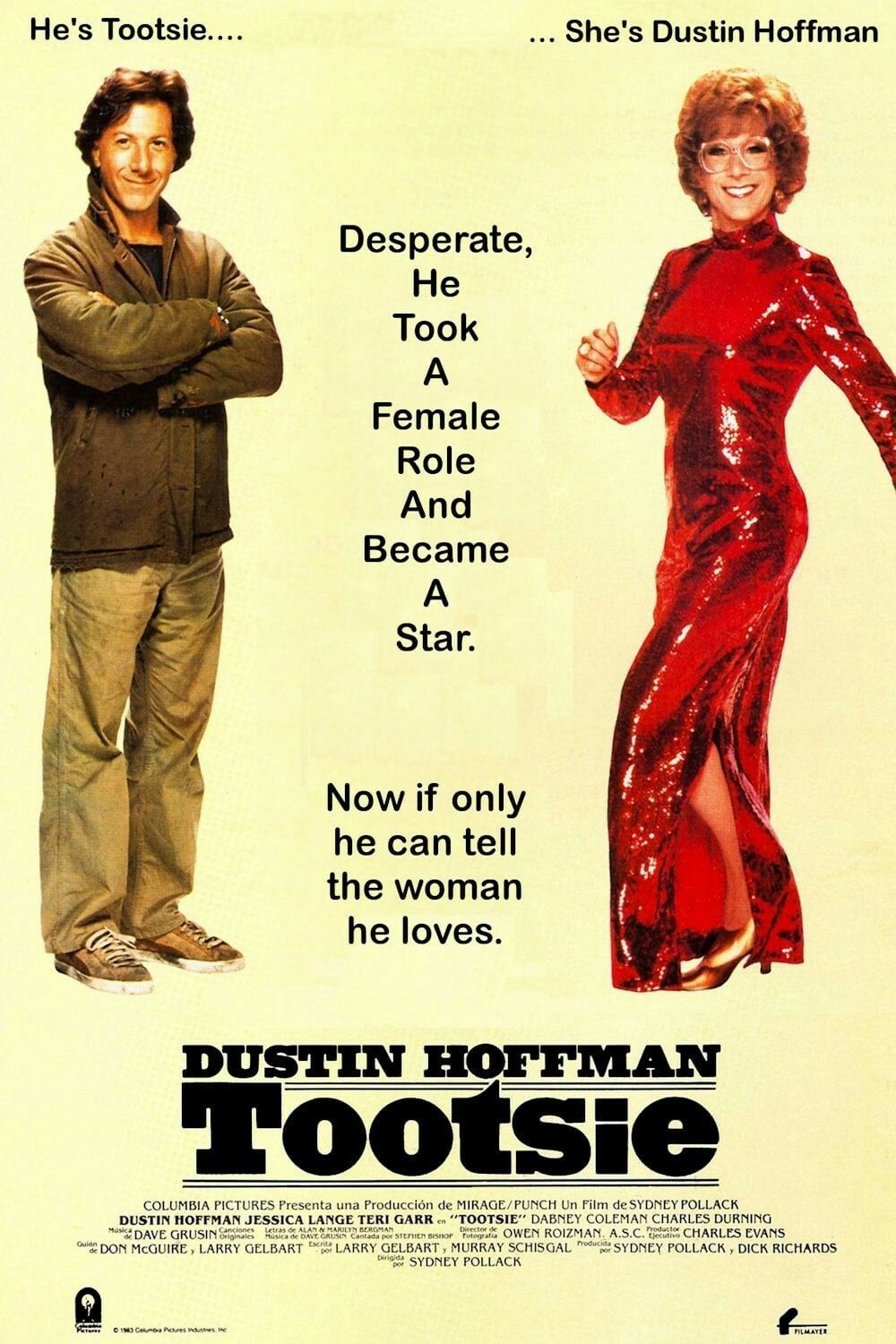
Tootsie (1982)

By Richard Winters

My Rating: 7 out of 10

4-Word Review: Pretending to be female.

Michael (Dustin Hoffman) is a talented actor but having difficulty finding employment due to his demanding nature and inability to get along with directors. His friend Sandy (Teri Garr) is auditioning for a part in a soap opera, and he helps her prepare for the role and even takes her to the audition only to learn that she was rejected before given any chance to do a screentest. It’s at this same time that he learns his agent George (Sydney Pollack) hasn’t gotten him a chance to audition for another role because in his words ‘no one will work with him’. Michael then decides to disguise himself as a woman named Dorothy Michaels in an effort to get the role that Sandy was turned down for so as to raise money to produce a play that will star Sandy. While he does get the part, he also becomes a big star with everyone believing that Dorothy really is a woman, which cause many complications in both his personal and professional life making him feel like he wants to end the charade and go back to his normal identity, but not quite sure how to do it. 

The genesis for the story began all the way back in 1970 and was based on an off-Broadway play by Don McGuire titled ‘Would I Lie to You?’ about an out of work stage actor who dresses as a woman to get a big part. Director Dick Richards adapted the plot into a screenplay, and it got shopped around for many years, but to no avail. Then in 1980 cross-dressing actor Christopher Morley played the role of a woman named Sally Armitage in the soap opera ‘General Hospital’. The part was played straight with the viewers under the impression that it really was a female, and Sally even gained the romantic interest from the character Luke, played by Anthony Geary, only to eventually reveal that she was really a man, which was a ratings hit and thus lead to renewed interest in this script. Eventually Dustin Hoffman got a hold of it and decided he wanted to take it on under the condition that was given full creative control and even hired his own people, Larry Gelbert and Murra Schisgal, to rewrite the story to his liking. 

Personally, my favorite parts of the film come at the beginning where we see Michael’s struggles as an actor as well as all of his thespian friends giving one a glimpse at just how hard the business is and how few people can make an actual living in it. Watching both him and his roommate Jeff, played by Bill Murray, working as waiters, but still talking about their acting ambitions while on that job was on-target. Garr gives a great performance as a struggling would-be actress who is full of insecurities and letdowns and a perfect composite of many young women who find the auditioning process grueling and thankless and for this reason, I felt she should’ve won the Oscar instead of Jessica Lange as her part as the love interest wasn’t as interesting, or honest. 

Murray is terrific as the roommate in an unusual part for him as his over-the-top clownish, snarky, frat boy persona is kept under wraps and instead he plays the part straight, but his sardonic responses to things are great. Director Pollack, who took on the role of Michael’s agent at the request of Hoffman and thus making it his first acting role in almost 20 years, is quite good too particularly with how his exasperated nature feeds off of Hoffman’s hyper one and their conversation inside his office is the movie’s highlight. Charles Durning has a few key moments as well playing Lange’s lovesick father who begins to fall for Dorothy though any man that would give a woman an engagement ring before they’d even been out on a single date has to be a bit loopy.

Hoffman falls into the woman role easily and it would be hard to recognize him had the viewer not known about the disguise beforehand though I felt the way Dorothy walked and moved her hands and arms made her seem like Mrs. Butterworth the animated character from the maple syrup commercials. It’s also hard to imagine he wouldn’t have been found out a lot sooner especially since he collected a weekly paycheck from the company, which would’ve required him to give them his social security number, which in-turn would’ve exposed who he really was. Being on magazine covers where he supposedly does interviews as Dorothy should’ve been equally problematic as the reporters would’ve asked him (her) about her past like what other stuff did she act in, where was she from, and where did she graduate. Stuff that’s very much standard questions in any interview and when he (she) couldn’t come up with anything or made-up stuff that could easily be background checked would’ve then raised red flags and brought the ruse to a very quick halt.

Spoiler Alert!

Soap operas were no longer broadcast as live and hadn’t been since 1963, so that story angle doesn’t fly either. Yes, I realize the idea was that it was taped and only had to done live as an emergency when one of the tapes got destroyed, but in reality, the taping would’ve been done so far ahead (usually by several weeks) that even if a video did somehow get corrupted there still should’ve been plenty of time to refilm it before reaching the actual air date. 

The ending it a bit disappointing as well. Sure, it’s nice seeing Lange putting her arm around him as they walk down the sidewalk showing that the two had made up after his secret identity was exposed, but it doesn’t answer what happened to his career. He did this whole thing to help finance a play for Sandy, so what became of that? Also, were casting agents so impressed with the way he fooled everybody that they now were willing to hire him, or was he still blacklisted? These were all major motivations for why he did the ruse, so there should’ve been clarity to what became of it. 

My Rating: 7 out of 10

Released: December 17, 1982

Runtime: 1 Hour 56 Minutes

Rated PG

Director: Sydney Pollack

Studio: Columbia Pictures

Available: DVD, Blu-ray, Amazon Video, YouTube

A Tiger’s Tale (1987)

tiger

By Richard Winters

My Rating: 3 out of 10

4-Word Review: Falling for girlfriend’s mother.

Bubber (C. Thomas Howell) is a high school student who’s dating Shirley (Kelly Preston) yet becomes more interested in Rose (Ann-Margaret) Shirley’s mother. The problem is Rose is an alcoholic and scared of snakes, which Bubber has as a pet and tigers, which Bubber also has as a pet. Despite all this the two slowly hit-it-off while keeping it a secret from the increasingly suspicious Shirley. Eventually she catches them in the act when she sees the two running naked at a drive-in where they tried to make love outside, but got attacked by fire ants. To get revenge Shirley pricks a hole in Rose’s diaphragm, so that she gets pregnant with Bubber’s baby. Bubber though intends to move-in with Rose to help her raise it, but Rose considers an abortion.

It’s impossible to say where this movie goes wrong mainly because it never gets going in the first place. It’s based off of the novel ‘Love and Other Natural Disasters’ by Allen Hannay III, who was paid $80,000 to have the rights to it sold to Vincent Pictures, which was owned and run by Peter Douglas, the third son of Kirk Douglas and brother of Michael. Peter then converted it into a screenplay, but without having read the book I couldn’t help but feel that something got lost in the transition. This is a big problem when novels get turned into movies as films don’t have as much depth to the story and characters as books typically do, which is why most people who enjoyed the story in book form usually end up disappointed when they see it as a movie. The elements are there for something potentially interesting, but Douglas, who also directed, doesn’t have the ability to put it altogether, which is probably a good reason why he’s never written, or directed any movie since.

I liked the setting, filmed in Waller County, Texas, but it doesn’t give the viewer enough feel of the region. Just showing the exterior of the homes and the drive-in isn’t enough. We need to see the town that they live-in in order to understand the characters and learn what makes them tick and the environments they are brought up in can have a lot to do with that, but when that environment gets captured in an ambiguous way, like here, it doesn’t help.

The story seems to want to tap into the themes of The Graduate, but that was a brilliant film and if you can’t top that, or at least equal it, then it’s best not to even try. Ann-Margaret is supposed to be an alcoholic, but we only see her with a drink in her hand at the start and then the rest of the time she seems quite sober. I also didn’t like the way she see-saws between being vampish at one moment and then a mature adult who gets real preachy with Bubber the next. It’s like someone with a split personality who isn’t fleshed-out and the same can be said for Howell’s character too.

There was potential for some funny bits like when Rose goes over to Bubber’s house and tells him she’s really frightened of snakes and then gets undressed and into bed with him. The camera then pans down to show a snake slithering under the covers and I thought this was the beginning of a really hilarious moment, but then the film cuts away. Later on Rose is shown to be comfortable in the presence of Bubber’s snake, but we never witness her transition, which was a missed opportunity for character development.  The scene where Rose and Bubber going running naked at the drive-in is dumb too because apparently only Shirley notices them even though with the screaming that the two were making it would’ve made anyone at the drive-in look-up and not just her.

Even the reliable Charles Durning gets wasted and becomes as dull as the rest. In fact the only thing that  I did enjoy was the tiger. I must commend Howell for being willing to get into a cage with it and stick his hand inside it’s mouth, but I was confused why the tiger is playful one second and then proceeds to try and attack Howell the next. Also, why would Howell want to get back into the animal’s cage later after he almost got his leg bite-off before? Even with that in mind I still felt the tiger was cool, the scene where he kills and eats a pooch of some customers that were just passing through is amusing in a dark sort of way and when he’s eventually set free is the only memorable moment in what is otherwise a misfire.

My Rating: 3 out of 10

Released: August 22, 1987

Runtime: 1 Hour 37 Minutes

Rated R

Director: Peter Douglas

Studio: Vincent Pictures

Available: DVD-R (dvdlady.com)

Mass Appeal (1984)

mass appeal1

By Richard Winters

My Rating: 6 out of 10

4-Word Review: Priest and deacon argue.

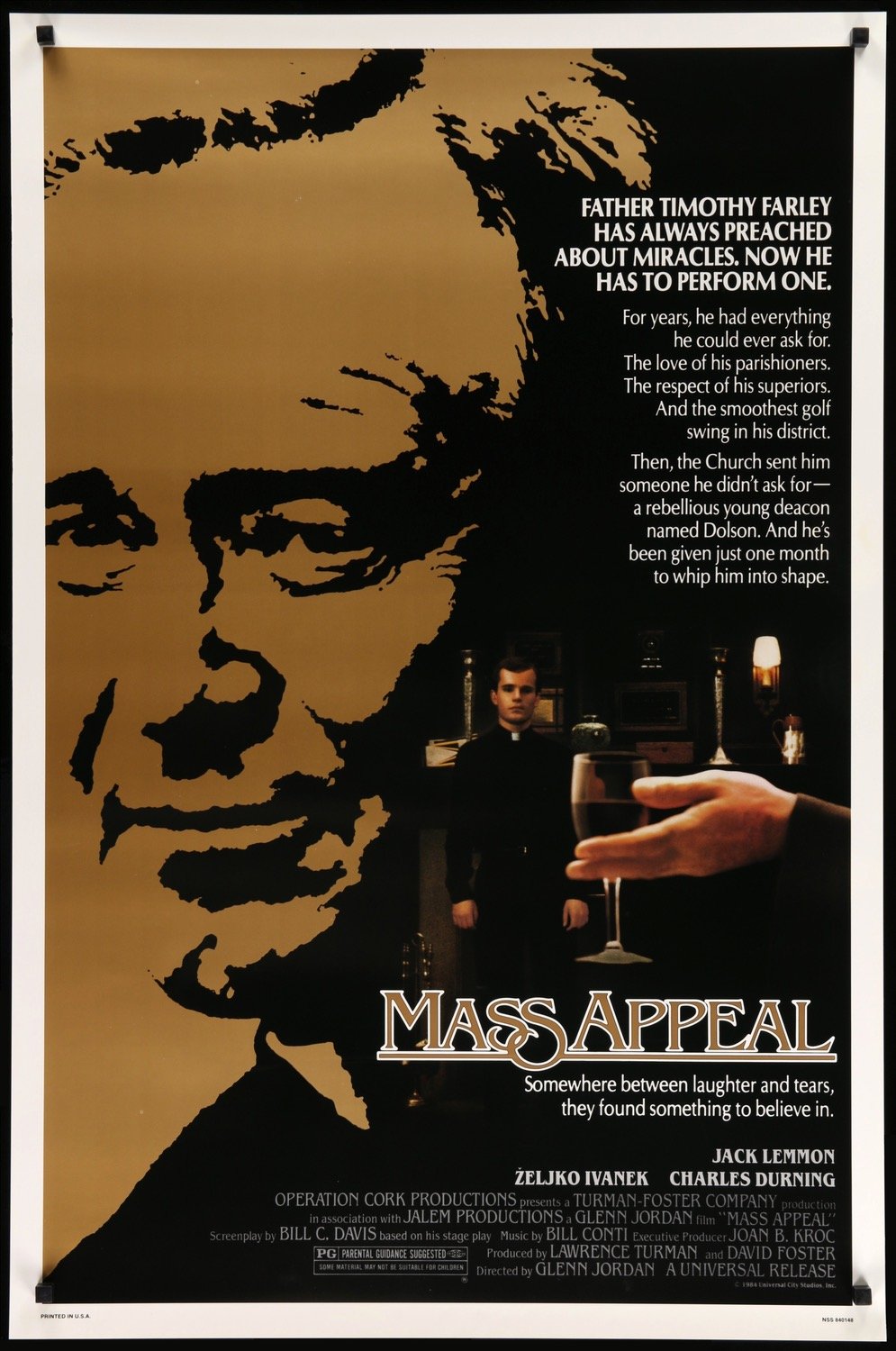
Mark (Zelijko Ivanek) is a young rebellious man attending Catholic seminary, who has a rigidly idealistic approach to how he thinks things should be especially within the church and will routinely clash with his superiors. Father Tim Farley (Jack Lemmon) is a middle-aged man who enjoys not rocking-the-boat and basically just telling people what they want to hear specifically his congregation while avoiding controversial issues at all costs. Tim is put in charge of Mark for a month in hopes that he can teach him to be more tactful and not such an outward firebrand. The two argue quite a lot, but eventually start to bond. When Mark divulges that he had sex with other men in the past and that he has admitted this to the Monsignor (Charles Durning), which could get him kicked-out of the seminary, it puts Tim in a tough bind. Will he stand-up for Mark by refusing to allow the Monsignor to use Mark’s past against him, or will he slink away like he always has to the safety net of the quiet life where he avoids making a stir of any kind?

The film may seem initially like it’s a spiritual one as there are many scenes shot inside the church during Sunday mornings where it perfectly captures the ambiance of a church service including having the mothers quarantined inside a glass ‘crying room’ where they take their babies when they get cranky, but are still able to interact with everyone else via microphones. Yet the more you get into the movie the less religious it is with the centerpiece of the story being instead universal to everyday life as it deals with the different perspectives of the generations and how one wants to vigorously challenge the system while the other is content with accepting things as they are. The arguments that the two have could easily be transferred to debates in other areas of life whether it’s politics, or even business.

The story is based on a two character play, written by Bill C. Davis, that was first performed in small theaters with Davis playing the part of Mark Dolson, a character not unlike himself. Eventually it caught the attention of actress Geraldine Fitzgerald, who agreed to direct it while also helping to revise the script, which then lead to it being produced on Broadway with Milo O’ Shea as the priest and Eric Roberts, who later got replaced by Michael O’Keefe, as Dolson.

The movie made changes from the play including adding in characters like the Monsignor and Margaret, played by Louise Latham, who works as Tim’s housekeeper. I had no problems with the Monsignor role, which is well played by Durning, who makes a strong presence to the plot, but the Margaret character seemed a bit too extreme as she overreacts to saying even a little white lie and like it might get her ‘in trouble with God’. To me this was an unrealistic portrait of a theist as I don’t think they’re quite this stringent and can lie and sin at times like anyone else. It also made me wonder that if she’s so obsessed with being a ‘perfect Catholic’ then her friendship with Mark, who she gets along with initially, would turn frosty after she found out hat he had gay sex because in her mind, if she’s to follow the same Catholic principles, would go against the teachings, so she technically she shouldn’t be associating with him even though this doesn’t actually happen.

Spoiler Alert!

My main beef with the film, which is captivating for at least the first 45-minutes before it becomes too much like a filmed stageplay, is that we never get to see whether Mark is able to stay in the seminary, or not. The movie acts like the big payoff is seeing Tim give this fiery sermon in Mark’s defense, but I would’ve been more interested in seeing how the congregation responded to it. Did they come to Mark’s aid like Tim hoped, or did they turn on Tim and have him banished to a small church in Iowa, which he feared? Not having these questions answered doesn’t bring the story to a satisfying conclusion.

My Rating: 6 out of 10

Released: December 14, 1984

Runtime: 1 Hour 39 Minutes

Rated PG

Director: Glenn Jordan

Studio: Universal

Available: DVD-R (Universal Vault Series)

I Walk the Line (1970)

By Richard Winters

My Rating: 8 out of 10

4-Word Review: Sheriff covers for moonshiners.

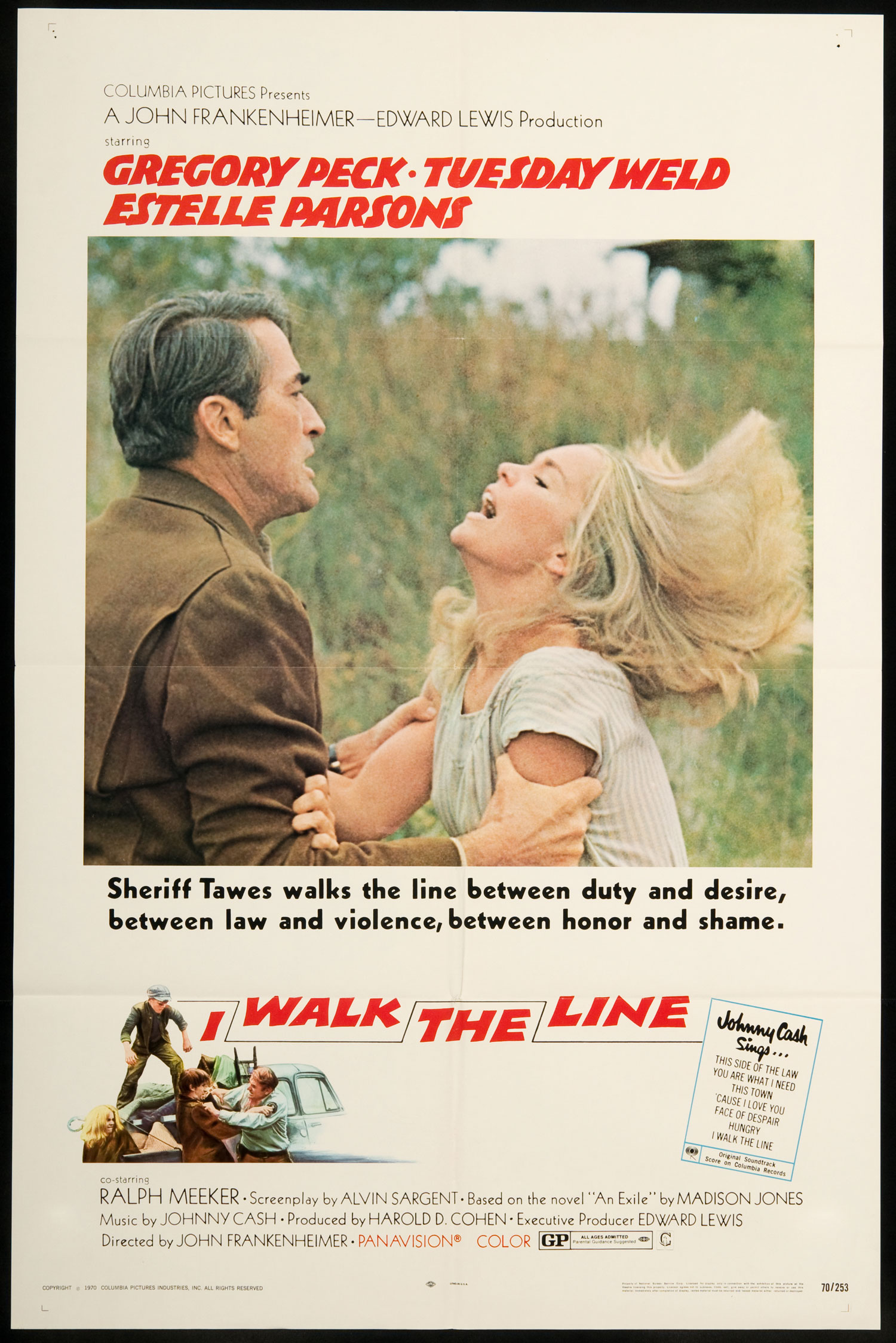
Aging Sheriff Henry Tawes (Gregory Peck) has always been a strong pillar of his community, but recently has found himself bored with his domestic life and looking for diversion. He becomes smitten with Alma (Tuesday Weld) a young woman half his age, who lives on the poor side of town with her father (Ralph Meeker) who runs an illegal distillery. Despite the risks Henry begins an open affair with her with her family’s blessing as long as Henry agrees not to report their distillery, but then a federal agent (Lonny Chapman) arrives in town threatening to shut down every moonshiner he finds. Henry’s deputy Hunnicutt (Charles Durning) also becomes suspicious of Henry’s shady actions, which forces Henry to take some calculated risks, which all backfire on him in shocking ways.

This film is a perfect testament to something that I’ve mentioned before on this blog, which is how shooting a film on-location in an actual small town versus one being built on a studio backlot can make all the difference on whether it succeeds at the box office, or not. This one was done in the tiny hamlet of Gainesboro, Tennessee, which has just over a 1,000 people and in fact its downtown, which includes the prominent courthouse, barely looks any different now then it did when principle photography took place in October of 1969. Director John Frankenheimer makes good use of the townsfolk focusing in on their old, weathered faces at the beginning and glum expressions, which helps accentuate Henry’s bored and static life as well as the abandoned, decrepit house the lovers meet-in, which illustrates their empty, vanquished souls.

The script by Alvin Sargent, which is based on the novel ‘An Exile’ by Madison Jones, allows the visuals and action to do most of the talking while keeping the dialogue subtle and concise. I even enjoyed the music interludes by Johnny Cash. Some critics at the time complained that there was no need for this as Johnny’s words that he sings seem to be simply explaining what the viewer is already seeing onscreen, but the music still conveys a raw southern flavor and Cash’s singing style makes it seem more like he’s talking to the viewer and like he’s another character in the film.

Peck’s performance is good here despite the fact that Frankenheimer wanted Gene Hackman for the role, but was forced to settle with Peck because he was already under contract with the studio. Normally Hackman would’ve been the better choice, but here Peck’s usual stiffness and detached delivery brings out convey his character’s inner turmoil. Durning is outstanding as his nefarious deputy and with his energetic and impulsive presence because an interesting contrast to Peck’s more reserved one.

Spoiler Alert!

Weld is great too even though the part she plays seems very similar to the one that she did in Pretty Poison although here at least the character isn’t portrayed as being completely evil, but instead somewhat naive and sheltered, which helps make her more multi-dimensional. Her motivations though are confusing and the film’s one major drawback. I could not understand, and the film never bothers to make clear, why she’d want to stay stuck with her family and their dismal, impoverished situation. Granted she didn’t really love Henry, which is obvious, but she had already manipulated him quite a bit,  and even had sex with him,so why not run off with him like he wanted and use his money to live a better life while also siphoning some of it back to her family to help them too?

Even if one would argue that she had a close-knit bond to her family it still doesn’t make sense. Many young woman have close ties to their family, but at some point they still leave the nest especially when vanquished to abject poverty otherwise. With her good looks a lot of doors could be opened, so why not see what else is out there? It comes out later that she’s married to another man who’s in jail, but the film glosses over this like she’s not any more in love with him than Henry and still doesn’t help to explain much. It also would’ve worked better had the viewer been left in the dark until the end as to whether she was really in-love with Henry or not instead of making it obvious that she was playing him, which lessens the shock effect for what occurs at the end.

My Rating: 8 out of 10

Released: October 12, 1970

Runtime: 1 Hour 37 Minutes

Rated GP

Director: John Frankenheimer

Studio: Columbia Pictures

Available: DVD, Amazon Video, YouTube

When a Stranger Calls (1979)

By Richard Winters

My Rating: 5 out of 10

4-Word Review: Babysitter receives harassing calls.

Jill Johnson (Carol Kane) gets asked by the Mandrakis (Rutayna Alda, Carmen Argenziano) to babysit their two children, who are already asleep, while they go out for the evening. While Jill is there she starts receiving harassing calls from an anonymous man asking about the children. Jill eventually calls the police who find out that the call is coming from inside the house, but fortunately the police arrive in time before the killer (Tony Beckley) can get to her. She recovers from the incident and moves on with her life by getting married and having two kids of her own only to find that the man has escaped from the mental hospital and coming after her again.

This is an extension to director Fred Walton’s 1977 short film The Sitter with the first 22-minutes almost the same as that one, but not quite. The opening bit is much better handled here with close-ups of a pendulum on a clock swinging back and forth and Jill hearing noises in the house only to find that it’s the ice dispenser in the refrigerator, which are all the scenes that were not in the first film. Kane is also a better actress and her ability to convey fear elicits more tension from the viewer, but I still found it annoying that she reiterates the same line that the babysitter in the first film did where she states to the police that she’s ‘all alone in the house’ when technically there’s supposedly two sleeping kids upstairs.

The second act is where this thing goes off on a wild tangent by focusing almost exclusively on the killer, whose name is Curt Duncan, as he attempts to survive on the streets in the most seedy part of the city while a police investigator named John Clifford (Charles Durning), who worked on the earlier case and is now a private investigator, is determined to kill Duncan for what he did to the two children. To some degree this is a refreshing change of pace as most horror films like to demonize the killer making him seem like a soulless monster who kills people robotically while here the psychopath is portrayed as a vulnerable and confused human tormented by inner demons that he cannot control.

Watching him try to form a bond with a woman (Colleen Dewhurst) that he meets at a bar simply for human contact is interesting because most psychos don’t just murder everyone they meet even though in a conventional horror flicks you’d get the impression that they do. In reality many of them can be married, hold down regular jobs and have what appears to be a normal life only to do their killings on the side and the film scores definite points by examining this aspect that we’re not used to seeing, but it also makes him less scary, which ultimately hurts the tension.

The biggest problem is that Jill the main character completely disappears for a whole hour only to reappear again at the very end, which is too long. If this is a person that the viewer is supposed to care about then she needs to be in the film a lot more possibly cutting back and forth between her recovering from the incident and meeting someone that she will marry while also going back to Duncan and what he’s doing instead of just exclusively concentrating on Duncan as it does.

Spoiler Alert!

The ending in which Duncan tracks Jill down and tries to kill her makes no sense at all. How did the killer, who has no money and is basically homeless, find out where she lived? She has gotten married and most likely a new last name, so just saying he found her address listed in a phone book doesn’t work. How did he know the phone number to the place where she was attending a dinner party and for that matter how was he able to break into her house undetected while squad cars were patrolling it? Better yet how was Charles Durning, who ends up shooting the guy, able to get into the house as just a few minutes earlier he was shown inside a hotel room? Why was the killer so obsessed with tormenting Jill anyways, which are all good questions that never get answered and leaves open too many plot holes to be fully effective.

My Rating: 5 out of 10

Released: October 26, 1979

Runtime: 1 Hour 37 Minutes

Rated R

Director: Fred Walton

Studio: Columbia Pictures

Available: DVD, Blu-ray

Sharky’s Machine (1981)

By Richard Winters

My Rating: 6 out of 10

4-Word Review: Cop tracks hooker’s killer.

Tom Sharky (Burt Reynolds) is a veteran cop who gets demoted to the vice division after getting involved in a drug deal bust gone wrong. It is here that he begins a 24-hour surveillance of high-class hooker Dominoe (Rachel Ward) who’s seeing a candidate for Governor that may have mob ties and could threaten not only her life, but Sharky’s as well.

This film marked Reynolds thankful break from his yahoo car chase comedies and helped albeit briefly revitalize his career and return him to being an actor who could parlay various genres as opposed to an aging actor relegated to lame B-comedies. For the most part his foray into this Dirty Harry clone is effective and proves he could still act when given the right material. As opposed to some of his earlier cop flicks such as Shamus his character here is not the source of any of the humor, but instead he plays it completely straight while simply responding to some of the goofy people and situations around him, which works just as well.

This also marked his third stab at directing, which is effective. I liked the gritty feel that permeates just about every shot and there’s some good, exciting, hard-edged action. I also like the leisurely pace that takes its time in telling the story and focuses at least somewhat on the investigation aspect of police work particularly the forensic end, which I wished had been extended more. What got me though and which gets a bit excessive is the obsession with the Westin Peachtree Plaza, which at the time was Atlanta’s tallest building, and the way the camera slowly zooms in on the skyscraper almost like it wants to make love to it.

Reynolds surrounds himself with an aging cast, men well over the age of 50 and 60, which I think was intentional because by comparison it makes him, who was 45, appear much younger. However, in retrospect I think this idea was a mistake. It’s not like these old pros were bad because they’re not in fact Charles Durning is quite amusing as Reynolds’ superior who gets off listening to the dirty talk between a hooker and her customer as well as looking over the luxurious apartment of a crime kingpin and stating “I think we’re working on the wrong side”, but these veterans do not help bring in younger viewers, which could’ve broadened Reynolds appeal and the whole reason why his star status tumbled during the 80s because his fan base was getting older while newer audiences weren’t being brought in.

Spoiler Alert!

The story is entertaining, but eventually jumps-the-shark when Domino supposedly gets shot and killed only to have it turn out to be some minor character named Tiffany instead, which doesn’t make a  lot of sense as dental records would’ve identified who the real victim was during the autopsy. It also would’ve made Sharky’s obsession to nab the shooter more compelling and personal had the victim really been Domino, who he was starting to have feelings for, instead of some woman he knew nothing about.

Their romantic angle might be the first time that a hooker falls-in-love with a vice cop. The fact that she’s initially defensive towards him, but then this leads to romance after he gets on top of her and slaps her across the face while also stating during a heated exchange “Don’t make me have to say what you really are!” is probably the most absurd thing of all.

Casting Henry Silva as the psycho gunman is boring because he’s played this type of role too many times and it’s just no longer interesting seeing him do it. Also, Reynolds main nemesis throughout the film was Vittorio Gassman who orchestrated the crimes and that’s who Reynolds should’ve been chasing down at the end instead of the lowly gunman who was simply carrying out orders.

The record breaking stunt showing Dar Robinson (doubling as Silva) doing a 220 foot free-fall from Atlanta’s Hyatt Regency Hotel really isn’t as impressive as it sounds. I remember watching a behind-the-scenes documentary showing what lengths the film crew went to capture it, but you end up only seeing a few seconds of it in the actual film making it seem like it really wasn’t worth the effort to put in.

My Rating: 6 out of 10

Released: December 18, 1981

Runtime: 2 Hours 2 Minutes

Rated R

Director: Burt Reynolds

Studio: Orion Pictures

Available: DVD, Blu-ray, YouTube

Twilight’s Last Gleaming (1977)

By Richard Winters

My Rating: 6 out of 10

4-Word Review: Nuclear silo under siege.

Loosely based on the novel ‘Viper Three’ by Walter Wager the story centers on Lawrence Dell (Burt Lancaster) a former military general who was sent to prison on trumped on murder charges, but manages to escape and is now out for revenge. With the help of three accomplices (Paul Winfield, William Smith, Burt Young) he breaks into a nuclear silo and threatens to launch it unless the President (Charles Durning) agrees to come clean on the government’s secret agenda in regards to the Vietnam War.

I’ve never read the film’s source novel, but have been told that this takes many liberties with it. The biggest problem is that it jumps ahead too quickly showing the four men right away breaking into the silo when it should’ve started back further to when they escaped from the prison and how they were able to get the access codes in order to break into the silo system to begin with. Winfield has a few great lines and Smith’s hair-trigger personality allows for interesting conflict, so these characters should’ve remained, but instead they are unwisely killed off leaving only Lancaster to pace around nervously, which quickly becomes boring.

Whenever someone escapes from prison the nearby area gets warned usually through the media. Certainly military personnel would’ve been put on high alert and thus making Dell’s ability to break into the silo, which was too easy to begin with, much less likely. The fact that a crazed general could break into a silo system and threaten to start WW III and have it never leaked to the media is highly unlikely as well, which along with various other loopholes makes this thing hard to fully get into.

Charles Durning is a great supporting actor, but here is badly miscast as the President. His facial expressions during his phone calls with the other Generals warning him of what is going on are unintentionally comical and too much time gets spent focusing on him contemplating on whether he’ll given into Dell’s demands until it seems like he is the star and Lancaster only a secondary player. Having him described as being an ‘honest politician’ and ‘a President who would never lie’ seems like an oxymoron as I don’t think a politician could even survive in Washington if they weren’t able to spin the truth sometimes and only helps to make the character seem too idealized.

Spoiler Alert!

This thing though really ‘jumps-the-shark’ at the end as I cannot imagine any circumstance where the secret service would allow the President of the United States to enter into a nuclear silo all alone and be used as a hostage. If they were real desperate they might try to pawn off an imposter in an attempt to fool them, but never the actual President as it would put him into too vulnerable a position. Also, the ‘shocking secret’ about why the U.S. got involved in the Vietnam War really isn’t all that earth shattering and certainly not worth sitting through simply to find out.

End of Spoiler Alert!

Director Robert Aldrich’s prolific use of the split screen is the one entertaining aspect and almost enough to overlook its other many faults, but at best it’s only a mindless programmer that manages to elicit minor tension only if you don’t think about it too hard.

My Rating: 6 out of 10

Released: February 9, 1977

Runtime: 2 Hours 26 Minutes

Rated R

Director: Robert Aldrich

Studio: Allied Artists

Available: DVD, Blu-ray

The Hindenburg (1975)

By Richard Winters

My Rating: 3 out of 10

4-Word Review: Blow up the zeppelin.

Based on the 1972 novel by Michael M. Mooney the story centers on Colonel Franz Ritter (George C. Scott) who was a part of Luftwaffe, which was the aerial warfare branch of the Nazi government and was employed to protect the Hindenburg zeppelin on its voyage across the Atlantic. Rumors had swirled that hostilities towards the Nazi party could cause a terrorist attack on anything connected to them and since the airship is German made it made it a prime target. Martin Vogel (Roy Thinnes) assists Ritter in his investigation, but the two find themselves at constant odds as they must sort through a wide array of suspicious passengers all of whom have the motivation and ability to cause harm to them and everyone else.

The film of course is based on the actual explosion of The Hindenburg zeppelin that occurred on May 6, 1937 in Lakehurst, New Jersey. Although there had been bomb threats made against The Hindenburg before its flight and the theory was investigated there has never been any hard proof that is what caused its destruction. The story is completely speculative, which is primarily the reason why the film is so weak and uninvolving. Conspiracy theories can be interesting if there is some hard evidence to back it up, but this thing makes it all up as it goes along. The fact that it occurred so long ago only heightens how pointless it is. Everyone that was involved is now dead, so even if there is some truth to what it is propagating what difference could it possibly make now?

Richard Levinson and William Link who wrote the script where known for their love of mysteries and helped to create both the ‘Columbo’ and ‘Murder She Wrote’ franchises, but their character development was not one of their stronger suits. The cast of characters here are bland and cardboard with nothing interesting to say. I’m surprised that they managed to corral a decent list of big name stars to appear as they have little to do and for many of them are seen only briefly. William Atherton gives the film’s only interesting performance and I did like Charles Durning as the ship’s captain as well, but that is about it.

The recreation of the airship, which was painstakingly done by a group of 80 artists and technicians who worked around-the-clock for 4 straight months on it is impressive and resulted in a highly detailed 25-foot-long model. Watching it glide through the clouds are the film’s best moments as is the scene where Atherton’s character tries to repair a hole in the outer fabric and almost slips to his death.

(Below is a pic of the actual Hindenburg along with the model used in the film.)

The climactic explosion, which should’ve been the film’s most exciting moment, comes off instead, like everything else in the movie, as protracted and boring. Director Robert Wise decided not to recreate the ship’s fiery end through special effects, but instead spliced in scenes of the character’s trying to escape the burning wreck with black-and-white newsreel footage from the era. This results in distracting the viewer and emotionally taking them out of the movie at its most crucial point because up until then everything had been in color and then suddenly it shifts to black-and-white making it seem like we are no longer following the same movie. The actual explosion and subsequent fire happened very quickly, in less than 2 minutes, but here it gets stretched to almost 8, which makes it seem too ‘Hollywoodnized’ and not authentic or compelling.

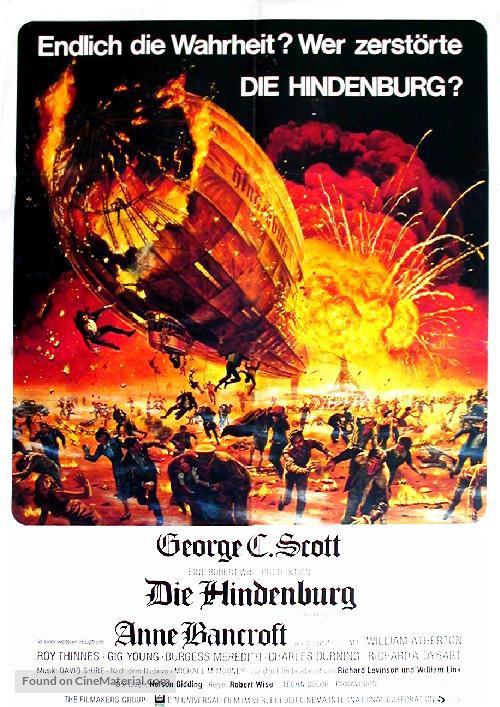
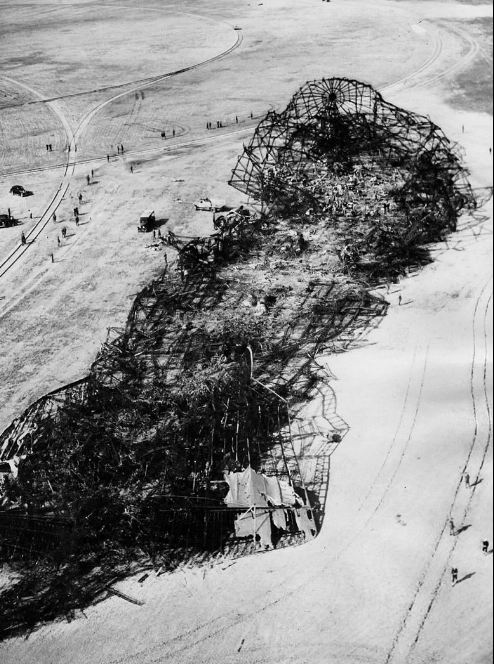
(Below is a pic of the Hindenburg explosion along with the burned out skeleton of the ship as captured the day after the incident.)

My Rating: 3 out of 10

Released: December 25, 1975

Runtime: 2Hours 5Minutes

Rated PG

Director: Robert Wise

Studio: Universal

Available: DVD, Amazon Video, YouTube

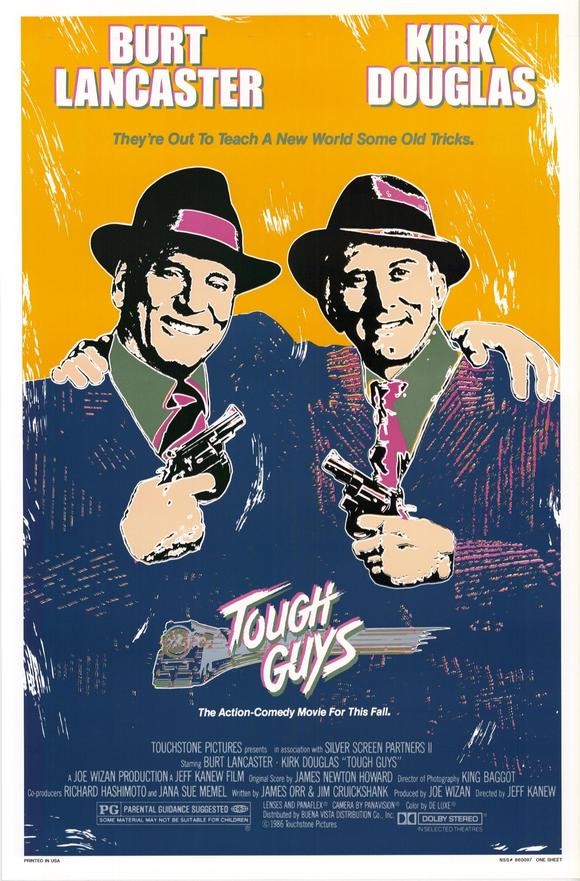
Tough Guys (1986)

tough guys

By Richard Winters

My Rating: 3 out of 10

4-Word Review: Old guys go 80’s.

Harry Doyle (Burt Lancaster) and Archie Long (Kirk Douglas) are two old-time crooks, the last men to rob a train, who are released from prison and find life on the outside to be tough going.

The comedy and story are extremely predictable and too exaggerated to be entertaining or humorous. Having two elderly seventy-year-old guys beat up two young gun wielding punks or a street gang is unrealistic and the film loses any validity in the process. The film also plays-up 80’s fashions and attitudes until they are no longer funny. The musical soundtrack stinks and Kenny Rogers’s opening song isn’t much better.

Yes, it is fun to see Douglas and Lancaster together again, but it would have been better if they weren’t wearing those tacky, dated suits. Eli Wallach as a severely nearsighted hit-man is the best thing. His lines are amusing and he needed to have had more screen time. Charles Durning also does well in support.

This uninspired film should have been much better especially when considering the star quality. It does come to life a bit during the final train robbing sequence, but only marginally and I really could’ve done without having to see Douglas’s bare bottom.

My Rating: 3 out of 10

Released: October 3, 1986

Runtime: 1Hour 44Minutes

Rated PG

Director: Jeff Kanew

Studio: Touchstone Pictures

Available: VHS, DVD (Region 2), Amazon Instant Video