Tag Archives: Bud Cort

Harold and Maude (1971)

By Richard Winters

My Rating: 9 out of 10

4-Word Review: Falling for older woman.

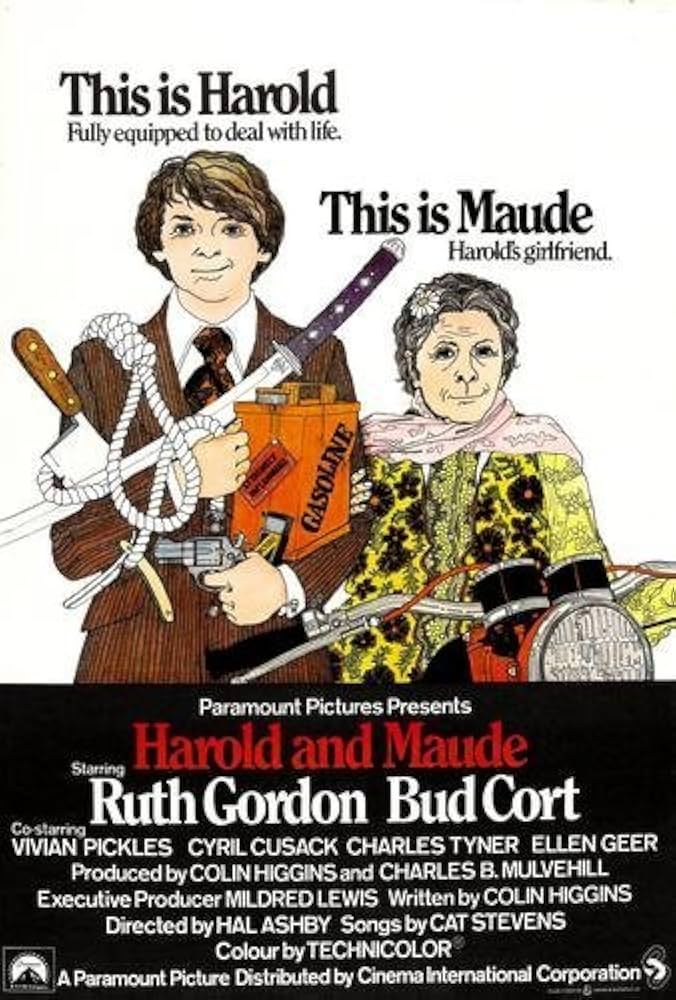
Harold (Bud Cort) is a young man still living at home with his mother (Vivian Pickles) who is an upper-class socialite that dominates Harold at every turn. Harold resents his mother’s control and thus stages fake suicides as a way to rebel. She in turn devises ways to ‘cure’ him of his death obsession by buying him a new car, which he turns into a mini hearse, setting him up on blind dates and even trying to get him recruited into the army. All of these ploys fail, and the real turnaround doesn’t occur until he meets Maude (Ruth Gordon) a kooky old lady with a carefree spirit. The two nonconformists form a strong bond and eventually a romance. When Harold announces that he plans to marry her it causes shock and disgust with all those who know him.

While this film has become a huge cult hit, there’s even a theater in Essen, Germany where it’s been shown, outside of a 10-week period during COVID, continuously since June 6, 1975, it was a box office flop when first released. Many prominent critics at the time panned it including Roger Ebert who gave it only 1 star out of 4. The two main reasons for this were the ultra-dark humor and offbeat storyline, which might’ve been a bit ahead of its time, but also some of it I suspect had to do with the editing. Director Hal Ashby, who was an editor before he ventured into directing, does a lot of long takes here, which is unusual for a comedy. Usually, humorous films consist of quick takes and a fast pace, but here the jokes particularly Harold’s suicide pranks are very drawn out to the point you don’t really see the joke happening until the payoff. While I loved this approach and consider to be the genius of both the movie and Ashby others especially in that time period could consider it off-putting and confusing as audiences are used to having their comedy spelled out for them and not to have to search for it.

The acting is splendid with the two leads nailing their characters perfectly. Cort was warned that if he took this role, he’d be type casted for ever after and it’s true his career flatlined, but with his slim physical build and unique face his choice of leading parts would’ve been limited anyways. Gordon on the other hand was in the midst of a career resurgence and her appearance here helped cement her for old lady roles for the next decade and a half.

While overshadowed it’s important not to forget the supporting cast, who are all fantastic as well. Vivian Pickles is great as Harold’s domineering mother. The argument could be made that she’s too much of a caricature and they would be right, but the scene where she answers Harold’s dating profile for him really had me laughing. Charles Tyner as the one-armed army recruiter who becomes shocked when Harold gets too enthusiastic about killing is good as is Eric Christmas who becomes physically repulsed when describing how sex might go between a young man and an old lady. Tom Skerrit billed as ‘M. Boorman’ in refence to Nazi war criminal Martin Boorman whom he once joked was probably ‘hiding out as a motorcycle cop’ is highly engaging as an exasperated policeman futility trying to write Maude a traffic ticket.

Spoiler Alert!

On the negative end, while minor, I did feel that Harold’s suicide pranks would be very hard if not impossible to pull off. The opening one which has him dangling from the ceiling with his feet clearly off the floor should’ve logically killed him. The scene where we see him through a window presumably setting himself on fire only to then immediately have him appear in the room is something he would not have been able to pull off alone and would’ve at the very least needed the help of someone else, but the film acts like he did it all on his own.

Maude’s car stealing doesn’t make sense either. She seemingly is able to simply hop into someone’s car and drive off with it like everyone just leaves their car doors unlocked and the keys in the ignition, which isn’t likely. If the explanation was that she was hotwiring them then this should’ve been shown, if even just briefly.

Maude’s suicide at the end was a mistake and I agree with critic Vincent Camby who complained that this made the movie seem ‘hypocritical’. She was a character that was so excited about life that it made no sense why she’d suddenly decide to end it. Some may say that she was haunted by memories of when she was in a concentration camp, but if that were the case then why didn’t she do it already at ag 50, 60, or 70? It also makes her seem selfish as she knew how Harold felt about her and killing herself was going to make him extremely upset and yet her response when he becomes horrified at the news that she’s taken some pills is quite detached like she never bothered to take his feelings into account. She was at the age where she could’ve fallen over dead at any moment from natural causes and the film should’ve ended with her dying that way instead.

My Rating: 9 out of 10

Released: December 20, 1971

Runtime: 1 Hour 31 Minutes

Rated PG

Director: Hal Ashby

Studio: Paramount

Available: DVD, Blu-ray, Amazon Video, Pluto TV, YouTube
Hysterical (1982)

hysterical1

By Richard Winters

My Rating: 1 out of 10

4-Word Review: Ghostly witch haunts lighthouse.

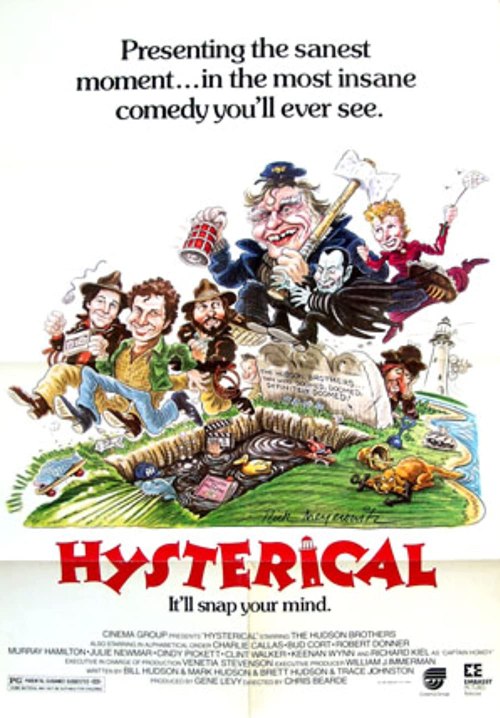
While Casper (Bill Hudson) has had success writing racy novels he longs to author something of a serious quality and thus uproots out of New York and drives across the country to Oregon where he takes-up residence in a town called Hellview. It is there that he rents a lighthouse as he feels it’s secluded locale will give him the quiet that he needs to complete his book. However, he’s unaware that the place is haunted by Venetia (Julie Newmar) a woman who committed suicide at the lighthouse 100 years earlier. She now sees this as an opportunity to resurrect Captain Howdy (Richard Kiel) a man she was in-love with, but who she killed when he threatened to dump her and return to his wife. As Casper notices more and more bizarre occurrences happening at his place he requests the services of Dr. Paul Batton (Mark Hudson) and his assistant Fritz (Brett Hudson) to aid him in solving the supernatural mystery.

This was the one and only film to feature the Hudson Brothers, which were a famous teen idol band who rose to fame in 1974 when they were a summer replacement series for the ‘Sonny and Cher Show’ only to get enough good ratings that they were offered their own Saturday morning show ‘The Hudson Brothers Razzle Dazzle Show’ during the 1974-75 season. The brothers came from humble beginnings born in Portland, Oregon and raised by a single parent mom after their father announced one day, when they were quite small, that he was ‘going out to get some cigarettes’, but then never returned. They formed their band when there were still just kids and first called themselves the My Sirs and then The New Yorkers followed by Everyday Hudson and then just Hudson. Their biggest success came during the mid-70’s where they had a couple of top 40 Billboard hits including ‘So You Are a Star’ and ‘Rendezvous’  though by the end of the decade their fame had significantly faded and their final studio album ‘Damn Those Kids’, which was released in 1980, failed to sell at all.

The fact that these guys were no longer a big act makes is surprising that they would’ve been given the funding to make this film, which was shot in the fall of 1981 as they were clearly on a career decline. The script is credited as being written by the three brothers with help from Jeffrey Ganz who got brought in as a ‘comedy consultant’. The humor derives almost exclusively  as a collection of gags that poke fun of famous scenes from popular horror movies of the day. Unfortunately none of it is funny and results in coming-off as quite cheap and cheesy. It’s also not clear what age group they were going with here as the band, during the 70’s, was quite popular with children and the film does have a lot of silly, cartoon-like bits that they would enjoy, but it’s also laced with stuff more attuned to older adolescence and even one moment that features a topless woman. The special effects are corny and having the victims of Captain Howdy turn into zombies the second they’re killed isn’t very inspired. Since they become zombies after getting axed to death you’d think they’d have obvious flesh wounds and missing limbs, but here they don’t just faces that become pale white and regurgitating the phrase ‘What difference does it make?’ and that’s it.

The film’s only cool moment is when the zombies do a rap song and dance, which is amusing, making me believe this would’ve worked better as a horror musical like Rocky Horror Picture Show. I was surprised too that the brothers never break-out into their old rock routine especially since it’s built into the script that the zombies respond well to music. The brothers don’t even do the film’s opening and closing song, which is instead sung by a female performer named Harriet Schock.

The cast is filled with a lot of familiar character actors, with some of them, like Bud Cort as a lispy mad scientist, doing okay. It’s funny seeing Murray Hamilton playing a mayor who’s reluctant to close the beaches since that’s the exact same role he played in Jaws, but this irony quickly wears thin. Robert Donner, doing a send-up of Crazy Ralph from Friday the 13th, where he proclaims “You’re doomed” to everyone he meets gets old real fast. Other actors like Keenan Wynn, who was related to the Hudson family through marriage and appeared here in a small and insignificant role as a favor, gets completely wasted.

Today this film sits in absolute obscurity and deservedly so. The Hudson Brothers themselves, though all still living, are relics of the past as well. Lead singer Bill is probably better known as being married to Goldie Hawn and the father of actors Kate and Oliver Hudson.

My Rating: 1 out of 10

Released: December 22, 1982

Runtime: 1 Hour 27 Minutes

Rated PG

Director: Chris Bearde

Studio: Embassy Pictures

Available: DVD-R

Die Laughing (1980)

By Richard Winters

My Rating: 1 out of 10

4-Word Review: Cabbie accused of murder.

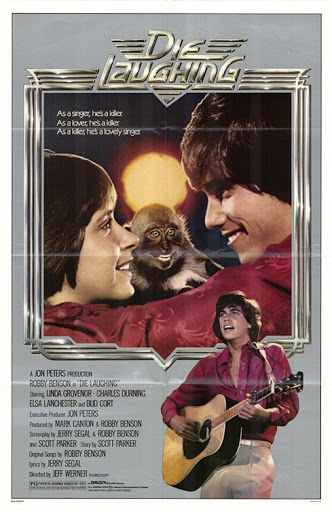
Pinsky (Robby Benson) works as a San Francisco cab driver during the day, but aspires to being a professional singer and attends numerous auditions, but to no avail. One day he picks up a passenger who gets shot and killed while in his cab and Pinsky is mistakenly tabbed as being the killer. Feeling he has no other options he takes the briefcase that the victim was carrying and hides out at his girlfriend Amy’s (Linda Grovenor) apartment. Inside the box they find a live monkey who has apparently memorized the secret formula for turning atomic waste into the plutonium bomb and it’s now their job to keep him away from Mueller (Bud Cort) and his cohorts who want to kidnap the monkey and use what he knows for nefarious purposes.

The film starts out with some potential as it uses Benson’s wide-eyed, deer-in-headlights persona to good comical use, at least initially. Unfortunately by the second half it pivots too much the other way and the minor laughs at the beginning get completely lost when he suddenly becomes this seasoned spy who can quickly think on his feet and outsmart the bad guys at every turn.

Again, this is just an ordinary Joe whose main drive is to make it into the music business, so why get so emotionally invested in a spy case that does nothing but get him deeper and deeper into a dangerous situation? Why not just give the bad guys what they want, hope it appeases them enough that they’ll set you free and then go to the authorities, who are much better positioned to handle this situation, and let them do the rest?

I also thought it was ridiculous that when the couple are tied up and thrown into some dark backroom that they do not respond to the predicament, like any normal person would, with fear and panic, but instead use the moment to become romantic! The fact that they manage to untie each other by biting down on the thick ropes that bind them is absurd as the only thing that would accomplish is a lot of broken-off teeth.

Benson’s musical interludes are a bore and he ends up singing the same damn song three different times. He also performs at a concert when just a little while earlier he was being surrounded by spies ready to push him off of a ship, which would be such a traumatic experience for most people that it’s doubtful he’d be able to emotional calm down enough to focus on singing, or do anything for a long time afterwards.

The story also suffers from having too many villains, Cort is the main one, but he’s seen only intermittently while a bunch of others busily chase Benson around until it becomes dizzying trying to keep track of them all. The plot itself is overblown, relies heavily on worn-out spy genre cliches making it come off like a cheesy parody of James Bond that will cause many viewers to be rolling-their-eyes almost immediately at the campy, strained gags.

My Rating: 1 out of 10

Released: May 23, 1980

Runtime: 1 Hour 48 Minutes

Rated PG

Director: Jeff Werner

Studio: Orion Pictures

Available: DVD-R (Warner Archive), Amazon Video, YouTube

Electric Dreams (1984)

By Richard Winters

My Rating: 2 out of 10

4-Word Review: His computer becomes jealous.

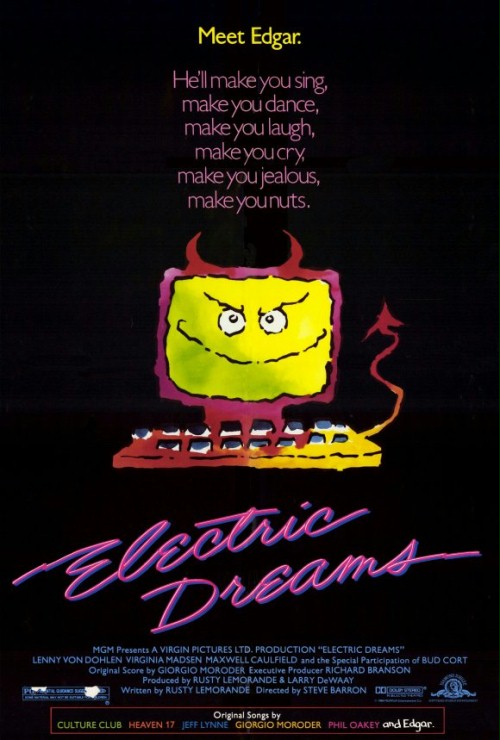
Miles (Lenny Von Dohlen) is a young architect seeking to get his life more organized, so he buys a personal computer (voice of Bud Cort) and sets it up in his apartment. A beautiful young cellist named Madeline (Virginia Madsen) moves in next door to him and practices her cello each day while at home. Miles’s computer, which goes by the name of Edgar, overhears her playing and falls in love with the sound and her in the process. When Miles becomes attracted to her the jealous computer tries everything it can to thwart their relationship.

I enjoyed the imaginative visual style implemented by Steve Barron in directorial debut. In fact it’s the film’s only selling point as the bland script offers little that is funny or interesting and drags on at a snail’s pace with hardly anything actually happening.

Sometimes it’s fun watching films from a bygone era and seeing how much technology has changed, but this thing gets so fanciful with it that it becomes illogical instead. Clearly the filmmakers had no understanding at how a computer actually works as this machine is able to do things that no normal PC could. For instance it’s able to make the knob on Miles’ door turn hot, so he can’t leave his apartment. It’s also able to connect to the servers of Miles’s credit card company even though this is before the advent of the internet and somehow shut off his credit. There’s also a scene where Miles pours champagne on the computer’s keyboard, which doesn’t permanently disable it even though we all know that in reality it would’ve.

It takes too long for the computer to become evil and then when it does it ends pretty quickly. The machine lacks a distinctive look and should’ve been made more ‘evil’ appearing, which would’ve helped coincide with the film’s otherwise flashy visual look. Bud Cort’s voice talents go to waste as it gets electronically altered until it’s unrecognizable and therefore could’ve been anyone’s.

Madsen is good, but the story is geared too much towards the preteens. The trite, overly innocuous script needed more bite, or an added edge to make it interesting to adults who will most assuredly be bored.

My Rating: 2 out of 10

Released: July 20, 1984

Runtime: 1Hour 32Minutes

Rated PG

Director: Steve Barron

Studio: MGM

Available: DVD (Region 2 and 0)

The Strawberry Statement (1970)

strawberry statement 4

By Richard Winters

My Rating: 5 out of 10

4-Word Review: Students go on strike.

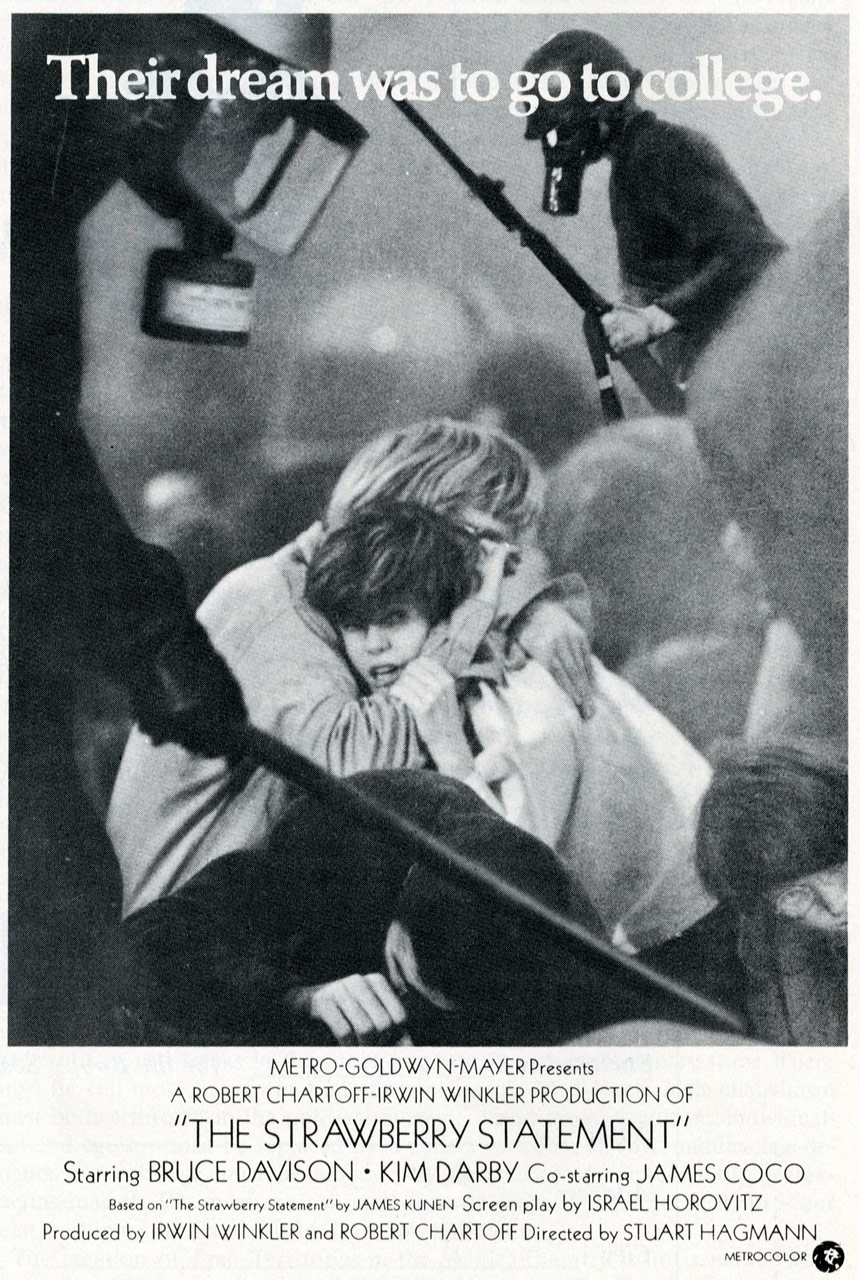
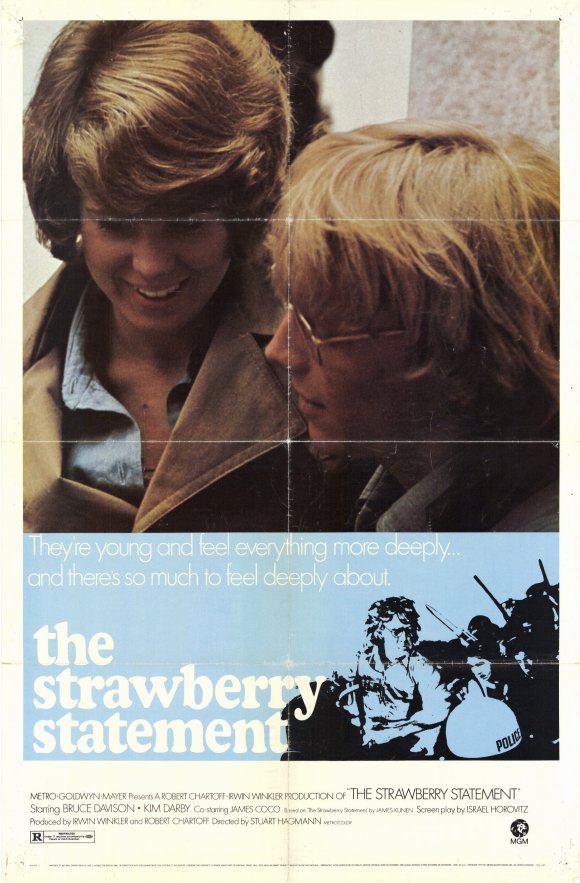
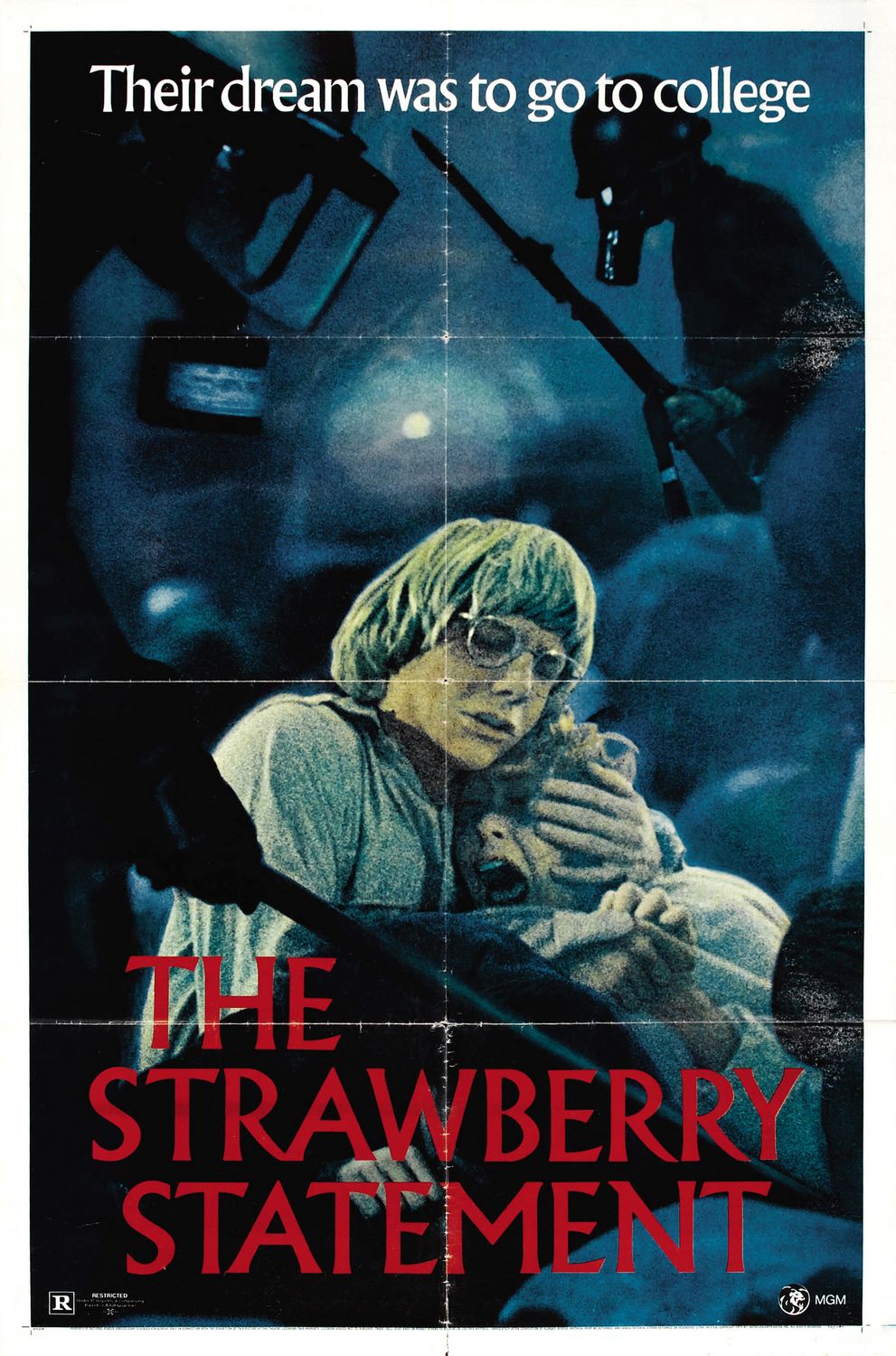
Simon (Bruce Davison) is a young college student attending a university simply as a means to get an education and find himself a good job. He has no real interest in the student revolt going on, but as a lark and a way to meet girls, he decides to passively get involved with students who have taken over the administrator’s building in protest of the school’s plan of building a gymnasium in an African American neighborhood. Slowly Simon finds himself taking up more of their cause and embracing their stance especially after meeting Linda (Kim Darby) who is much more of a student radical, but the two are ill-prepared for the brutal outcome when exasperated school officials have the police violently storm the building and haul the students out.

The film is based on the book ‘The Strawberry Statement: Notes of a College Revolutionary’ by James Kunen, which in turn is based on his experiences of being involved in a student sit-in that took place at Columbia University in April of 1968. The book’s narrative had more of an engagingly detached manner as it looked at the contradictions and hypocrisies of both sides while the screenplay by Israel Horovitz is nothing more than a commercialized effort to cash in on the counter-culture emotions of the time while glossing over or ignoring some of the book’s more perceptive points. The plot is too loosely structured and relies heavily on artsy camerawork and moody music to propel it until you get an hour into it and realize that nothing much has really happened. The whole thing would’ve been better focused had it been done with a voice-over narration by the main character.

strawberry statement 3

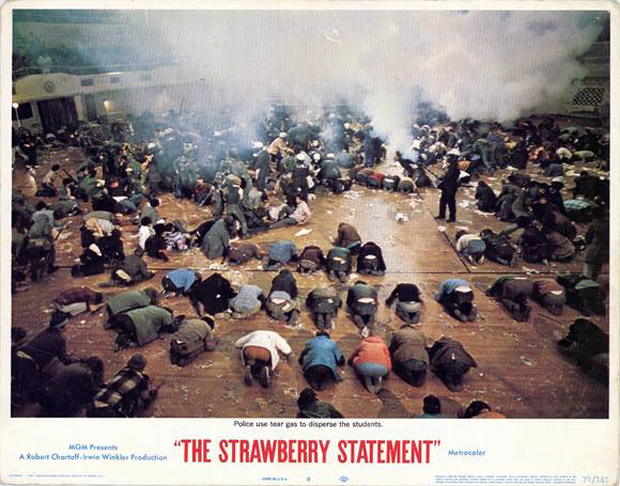
Although at times it borders on being pretentious I still found director Stuart Hagmann’s camerawork to be intoxicating especially the bird’s eye view of the students forming into several large circles as a way to block the police from entering and taking them out. Some of the scenes involving the demonstrations look staged and phony especially when compared to similar scenes of actual protests that were captured in Medium Cool that came out around the same time. However, the scene where the students grab a police officer, strip off his pants and force him down the slide and onto the swings at a children’s playground is downright amusing. The climatic sequence where the students are violently herded out of the building while sprayed with tear gas is well captured and by far the most startling and memorable thing about the movie.

Davison gives a solid performance and creates a middle-of-the-road character that is engaging enough to hold the thing together. It’s also great seeing Bud Cort playing an atypical role of an amorous girl-crazy coed who’s constantly looking to get laid. This film also marks the film debuts of David Dukes, Jeannie Berlin, Paul Willson, Andrew Parks, Kristina Holland and soap actress Jess Walton. You can also spot Horovitz and Kunen in brief cameo parts as well as character actor James Coco as a deli owner who’s all too willing to have his placed robbed simply so he can collect the insurance money.

Although they wanted to shoot the movie at Columbia where the incident actually occurred they were unable to get permission and were forced instead to do it at Berkeley, which in some ways helped it as the liberal, free-spirited look and mood of the region helped match the tone of the story. Ultimately though the film fails to ever really gel and comes off as being too placid and generic while failing to distinguish itself from the myriad of other student protest movies from that era.

strawberry statement 2

strawberry statement 1

My Rating: 5 out of 10

Released: June 15, 1970

Runtime: 1Hour 49Minutes

Rated R

Director: Stuart Hagmann

Studio: MGM

Available: DVD (Warner Archive), Amazon Instant Video

Brewster McCloud (1970)

brewster mccloud 1

By Richard Winters

My Rating: 9 out of 10

4-Word Review: Flying in the Astrodome.

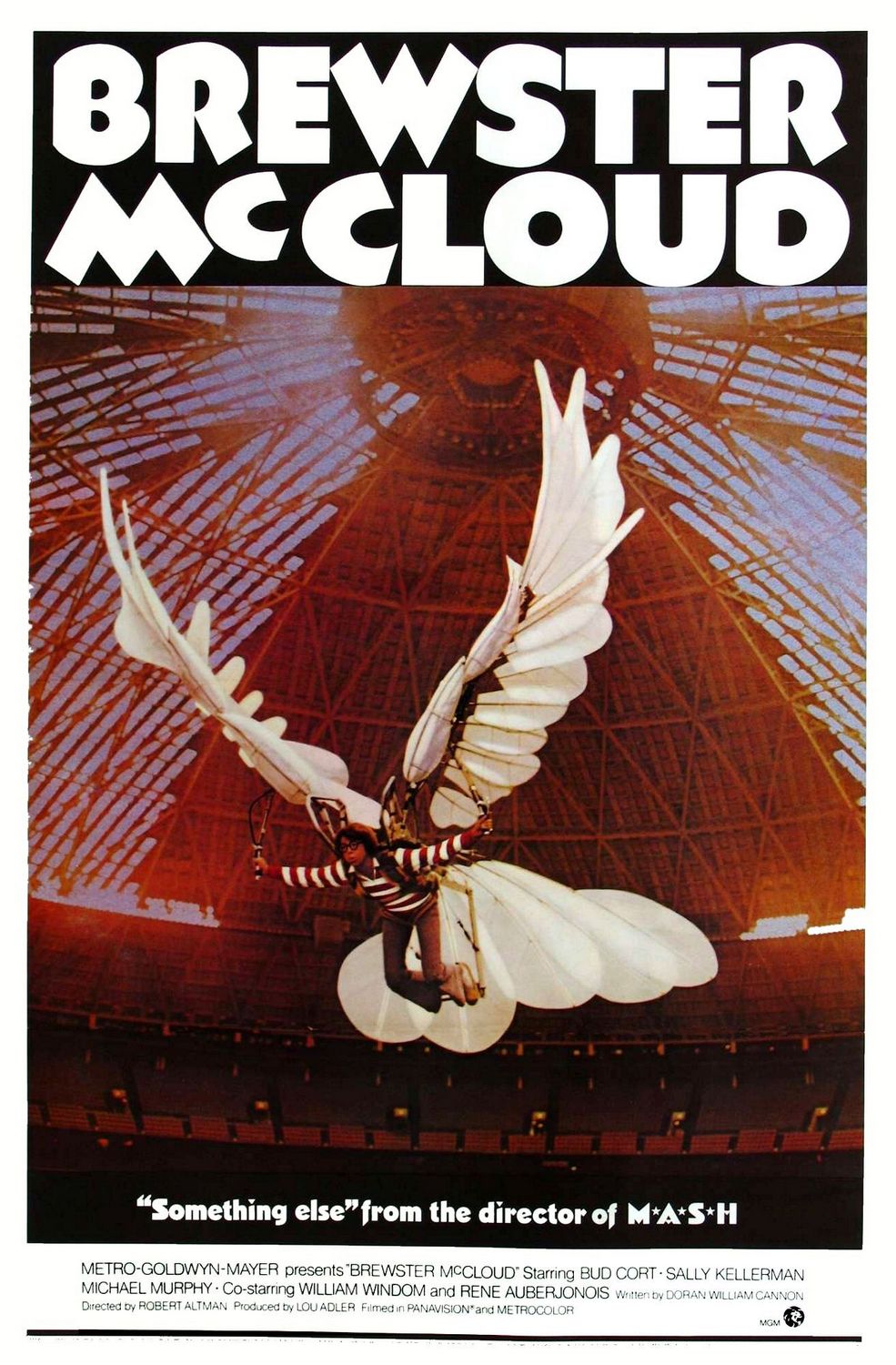
Brewster McCloud (Bud Cort) is a young man who lives and hides inside the giant Astrodome in Houston, Texas. He dreams of one day flying like a bird and secretly works on building a contraption that will help him do it while being aided by a mysterious guardian angel named Louise (Sally Kellerman). Meanwhile strangulations start occurring all over the city and the police become convinced that Brewster may have something to do with it. As he gets ready to ‘spread his wings’ and fly for the first time the police surround the place and try to arrest him.

This film is reportedly director Robert Altman’s favorite out of all the ones that he did and it is easy to see why. The quirky, offbeat script by Doran William Cannon nicely compliments Altman’s free-form, cerebral style. The film works on many different levels with every shot and scene being unique and a kind of story in itself. The dream-like quality is nicely balanced with harsh realities creating an interesting theme that touches a wide array of senses. Although this film is never mentioned in relation to car chases the one that is has is exciting and well photographed without any of the jump cuts that you normally see.

The city of Houston gets captured well and I liked the fact that Altman stayed away from the downtown and instead focused more on the neighborhoods and city streets. The filming of the inside of the Astrodome is the most impressive and the building becomes like a third character. It may seem hard to believe now, but at one time it was considered ‘the eighth wonder of the world’ and was the very first dome stadium in existence. Watching Cort fly around on the makeshift wings he creates gives off an exhilarating feeling especially with the way Altman captures it against the backdrop of the stadium’s ceiling filled with skylights. The best shot in my opinion though is the bird’s-eye view of seeing Kellerman walking the entire length of the field and out the exit.

The broad and amusing characterizations are fun and Altman gives his actors wide range to create them. Some of the best ones are Stacy Keach who is unrecognizable under heavy make-up as an elderly, cantankerous and greedy landlord who goes reeling down the city streets in nothing but a wheel chair. Bert Remsen is good as a corrupt and racist policeman who even beats and berates his own family. Michael Murphy is interesting as a narcissist, hotshot detective who ends up killing himself and Rene Auberjonois as the lecturer who slowly turns into a giant bird as the film progresses. There is even the aging Margaret Hamilton who says a few curse words and dies while wearing her ruby red slippers.

The film is one-of-a-kind and perfect fare for those looking for something offbeat and diverting. The kooky opening and ending title sequences alone make it worth it. My only real complaint would be the fact that supposedly a bird is committing all these strangulations, but we never see how. All the viewers see is the victims getting bird poop on them and nothing more. I realize this might have been technically difficult to film or visualize, but for such an otherwise creative movie this seems like a bit of a cop-out.

My Rating: 9 out of 10

Released: December 5, 1970

Runtime: 1Hour 45Minutes

Rated R

Director: Robert Altman

Studio: MGM

Available: VHS, DVD

Why Shoot the Teacher? (1977)

why shoot the teacher 2

By Richard Winters

My Rating: 8 out of 10

4-Word Review: Not a good job.

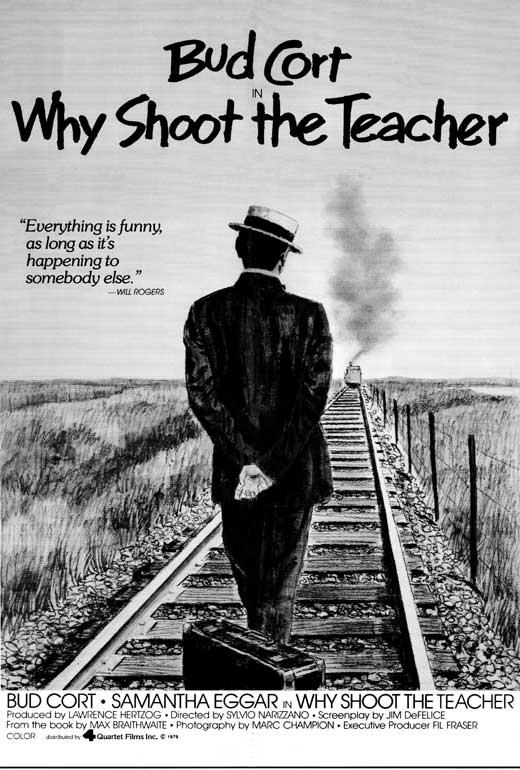
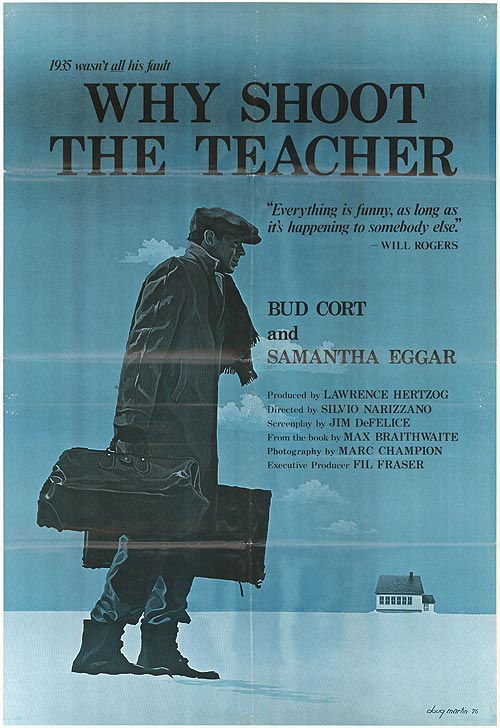
If you hate your job then watching the escapades of Max Brown (Bud Cort) dealing with his should make you feel a lot better about yours, or even lucky. The setting is 1935 and Max has traveled to an isolated farming community in Saskatchewan Canada in order to live out his dream of being a school teacher. The problem is that he must live in the dingy basement of the school that has no running water and an outhouse that gets regularly overturned by the rowdy school children, sometimes with Max in it, and he is only paid $20 dollars a month for his efforts, which even back then was a paltry amount. What is worse is that the district can’t even afford to pay him so instead gives him promissory notes and forces him to be dependent on the generosity of the townspeople for his food. Since he had to borrow money for his train ride up there he is unable to go back and forced to spend the harsh Canadian winter all alone while dealing with difficult students and indifferent parents and adults.

Cort really shines. The fact that through all his diversity he still remains civil and upbeat makes the character quite appealing even though he does evolve and at times compromises from his initial ideals. The best example of this is when he eventually, despite his initial reluctance, uses the strap on one of the older bigger students while the rest of the school children watch through the school windows. Although Cort is best known for his starring role in Harold and Maude I’d actually say this is his best all-around performance.

Samantha Eggar another under-appreciated and underused performer is terrific in support as Alice Field a woman transplanted from England who like with Max finds herself alienated and unconditioned to the harsh climate. She also has a really amusing line when she states “Canada is a nice country…sometimes…in the spring.”

Filmed on-location in the tiny town of Hanna, Alberta the sprawling wheat fields create a tremendous sense of isolation as well as a distinctive sense of natural beauty. The story is filmed during all three seasons, which makes the viewer feel like they are battling the rigorous Nordic climate right alongside Max. One of the funniest moments is when the word ‘Spring’ is flashed on the screen while a raging blizzard goes on behind it making Canada one of the few places that can make Minnesota, where I am originally from, seem like a mild climate.

The film is wonderfully vivid and creates a rich multi-textured tapestry of life on the prairie. By keeping everything on a realistic level it helps recreate what life must have been like for a lot of rural school teachers during the period, which is what makes it so fascinating. The film’s faded washed-out color and archaic low budget technical approach only helps to accentuate the look and feel of the period. There are shades of Wake in Fright here that also dealt with a man teaching school in an isolated school house while battling the elements and I found it interesting to note that Ted Kotcheff who was the director of that film was listed as a production consultant on this one.

My only complaint about the film was the misleading title. There is no shooting of any kind of the teacher, or even any talk of it. Why they came up with that title, which is based on the book with the same title is a mystery. Unfortunately it may give some people the idea that this is a violent film when nothing could be further from the truth and may turn-off potential viewers from enjoying this endearing slice-of-life comedy/drama.

why shoot the teacher 1

My Rating: 8 out of 10

Released: June 23, 1977

Runtime: 1Hour 39Minutes

Rated PG

Director: Silvio Narizzano

Studio: Lancer Productions Limited

Available: VHS, DVD, Amazon Instant Video, YouTube