Ruby (1977)

By Richard Winters

My Rating: 7 out of 10

4-Word Review: A haunted drive-in.

In 1935, Ruby (Piper Laurie) goes out on a date with her mobster boyfriend Nicky (Sal Vecchio). While they take a walk around a swamp they are ambushed by other mobsters who shoot Rocky dead. 16 years later Ruby is living with her mute daughter Leslie (Janit Baldwin),who was born on the night of the shooting, as well as her lover Vince (Stuart Whitman) and a blind, wheelchair bound ex-mobster Jake (Fred Kohler Jr.). She makes money running a local drive-in theater where strange deaths begin to occur convincing her that Nicky’s spirit has come back from the dead and is now out to destroy her.

The film, which was directed by Curtis Harrington, starts out rocky. The period atmosphere doesn’t seem completely authentic and the editing is choppy. I also didn’t like that everything takes place at night. I wanted more of a visual layout of the drive-in, maybe even a bird’s-eye view and some idea of the town that they lived in, which you never see. The scenes of the swamp don’t look genuine either and like it was all done on an inside soundstage.

Initially I found the ghost effects to be cheesy especially when the projectionist (Eddy Donno) starts seeing things moving around on their own, which came off as too tacky. The film would’ve been better had it not giving it all away right up front that there was a ghostly presence and it instead made it more like a mystery. However, once it started to catch its stride, which happens around the second act, it gets better. I felt the atmosphere was creepy and I enjoyed the spooky visions that Ruby sees of Nicky. Some of the possession scenes that occurs with her daughter Leslie, which comes off like an The Exorcist rip-off, but I’m not going to quibble, are cool too.

The best moment though is when one of the victims, played by Jack Perkins, gets impaled by a metal pole and then hung from the pole onto the outdoor movie screen. It’s cool too the way the camera captures his dead hanging body close-up and then far away where he looks like nothing more than a small fly on a white board. However, with that said there should’ve been some scene showing how they removed the body from the screen as the movie makes it seem like they just left it there, which wouldn’t have gone over well for the paying patrons to have to gaze at a dead body while their movie is playing.

Spoiler Alert!

The ending has a bit of a controversial history. Originally director Harrington wanted to have Ruby and Nicky go off to the swamp hand-in-hand like they had rekindled their romance, but writer/producer Steve Krantz wanted a darker twist, so he hired Stephanie Rothman to film an extended sequence where Ruby gets attacked by Nicky underwater. None of the actors were supportive of this new scene being added on, so they refused to come back for a reshoot forcing the production crew to use a stand-in to replace Piper and a skeleton in the place of Nicky. The scene is short enough that it works and personally I liked that it got added in as ending it on a romantic note seemed too hooky especially for a horror movie.

My Rating: 7 out of 10

Released: June 23, 1977

Runtime: 1 Hour 25 Minutes

Rated R

Director: Curtis Harrington

Studio: Dimension Pictures

Available: DVD, Amazon Video

The Gore Gore Girls (1972)

By Richard Winters

My Rating: 1 out of 10

4-Word Review: Somebody’s killing the strippers.

Private investigator Abraham Gentry (Frank Kress) gets hired by Nancy (Amy Farrell), a reporter for The Globe newspaper, to investigate the murder of a stripper named Suzy Cream Puff (Jackie Kroeger). Abraham will get $25,000 to investigate the case and another $25,000 to solve it as long as he gives The Globe the exclusive story. Soon more strippers turn up dead and Abraham starts to have a long list of suspects including Grout (Ray Sager) a Vietnam veteran who enjoys smashing melons with faces drawn on them, similar to how the strippers got their heads smashed, in order to relieve his post traumatic stress disorder.

This was schlockmeister Herschell Gordon Lewis’ final film until 2002 and was meant to be a combination between the lighthearted nudies that he made in the early 60’s and the more graphic gore films that he did in the later part of the decade. The result though is a misguided mess where it seems more like a gag reel with tacky gore thrown in at certain intervals than a horror film.

The production values are really cheap even for a low budget production and contains basically just a few settings. One features the cramped living room of Abraham’s house that looks to be nothing more than a one bedroom apartment, which doesn’t quite make sense since the guy is a world famous detective you’d think he be living in a plush place especially with his elitist attitude. The other setting, which takes up the majority of the story, is the strip club that looks like it was filmed in the corner of somebody’s dingy basement.

The gory murders aren’t much fun and would be considered quite sick if they weren’t so tacky and fake. The jump cuts are the biggest problem as the bad guy kills the stripper one second and then in the next frame has seemingly been able to skin their heads completely and crushed their skulls, which is too quick. The ping pong ball sized eyeballs that the killer gouges from their heads are ridiculous looking too as eyes are actually oval shaped and not round as presented here.

The stripping routines take up too much of the runtime and seem put in simply to pad the anemic plotline. I’m not going to complain about watching beautiful women taking off their clothes, although to be honest the women here aren’t so hot, but I got real tired of hearing the same music played over and over again during each different set. Aren’t strippers allowed to come up with their own music and dance routines, or is that a new phenomenon that wasn’t a thing back in the 70’s?

I hate to psycho-analyze a film director and have never done it before, but the misogyny here is rampant. If there had been one strong, smart woman character present then it would’ve have been a issue, but instead females get portrayed here as being incredibly dumb and easily manipulated. The Nancy character is shown to be unable to take care of herself and needs a man present to look out for her particularly when she passes out on a city sidewalk after having only a couple of drinks. She faints and screams at the sight of a dead body too while the man remains stoic and shows no emotional reaction at all. Maybe this was supposed to be a part of the ‘comedy’, but it comes off as severely dated and out-of-touch with the times.

My Rating: 1 out of 10

Released: September 22, 1972

Runtime: 1 Hour 21 Minutes

Director: Herschell Gordon Lewis

Rated X

Studio: Lewis Motion Picture Enterprises

Available: DVD, Blu-ray, Amazon Video

The Last House on the Beach (1978)

By Richard Winters

My Rating: 7 out of 10

4-Word Review: Robbers hold nun hostage.

Aldo (Ray Lovelock) leads a gang of three robbers who stage a bank robbery in broad daylight, but things go wrong and lives get lost. During the getaway their car breaks down and they’re forced to hideout in a nearby home that sits next to a beach. Inside the home is Sister Christina (Florinda Bolkan) a nun who takes in wayward teen girls and helps them find their way. She was in the middle of rehearsing a play with them when the men break-in. The thugs soon takeover, raping two of them while terrorizing the rest. At first the women are compliant, feeling they have no other choice, but eventually they decide they’ve had enough and turn-the-tables on their captors.

While this film will initially come-off as just another Last House on the Left rip-off the production values are much better than most American low budget cheapies and the location quite scenic. The place didn’t look like any type of religious school to me and more like an ocean front pad for a rich person, it was more than likely the home of one of the film’s producers who decided to use it in place of a real school to save money, but the setting ultimately still works. Too many other horror movies feel the need to go for the cliché, like having things take place at night in some abandoned building, or rundown home, so having it work against this is a refreshing change. In some ways it makes it even scarier because it shows that bad things can happen even in the affluent suburbs and that nobody is truly immune from crime and violence.

I liked the way the bad guys were all good-looking too especially Aldo whose face could be on the cover of  teen heartthrob magazine. Again, other horror films feel the need to make the killer look menacing, disfigured, or creepy in some way, but working against this stereotype makes it more unsettling by showing that anyone can harbor evil. The women are all good-looking too with great figures, but in this regard it doesn’t work as it didn’t seem realistic that only women who looked like models would join this school and there needed to be at least one plain-looking, overweight one to give it balance.

The set-up happens a bit too quickly. It would’ve been more frightening if things had been shown at the start from the women’s perspective, rehearsing for the play, and then having these robbers burst in unannounced versus showing the robbery, which ends up getting reshown through flashback later on anyways, and everything from the men’s perspective. Horror works when there’s a surprise and in that regard this film misses a prime opportunity early on.

However, once it kicks in I was surprised how compelling it was. There isn’t a lot of violence, but when there is it’s bloody and pretty graphic, even the injury that one of them receives (Stefano Cedrati) looks quite realistic, and shown close-up, and I liked how this becomes and on-going part of the plot and doesn’t just magically heal and get forgotten.

The film also features two prolonged rape segments with the first one done in slow motion. Some may say this is exploiting the situation, but ultimately it ends up making it even more unsettling. The second rape  is equally disturbing as it features a woman (Sherry Buchanan) being violated by a wooden cane and done from her point-of-view.

Spoiler Alert!

The ending for me was the best part. Rape and revenge flicks have been done a lot and there’s also been films like Straw Dogs where a wimpy guy ultimately turns violent through necessity, but this film does it better than those. Seeing the angry looks on the once tranquil women’s faces as they take turns beating the man to death was actually pretty shocking as you’re not quite expecting it. It successfully hits-home the fact that anyone can be provoked into violence even those that deny they have that ability and gets the viewer to realize they harbor that tendency too since these guys were so vile you actually end-up enjoying seeing their comeuppance.

Alternate Title: La Settima Donna

My Rating: 7 out of 10

Released: April 20, 1978

Runtime: 1 Hour 26 Minutes

Not Rated

Director: Francesco Prosperi

Studio: Magirus Film

Available: DVD, Amazon Video

The Brotherhood of Satan (1971)

By Richard Winters

My Rating: 7 out of 10

4-Word Review: Devil worshippers kidnap children.

Ben (Charles Bateman) and his girlfriend Nicky (Ahna Capri) along with Nicky’s 9-year-old daughter K.T. (Geri Reischl) are driving through the New Mexico desert when they come upon a gruesome car accident where the vehicle and people inside it were crushed by some unknown force. When they go into the nearby town to report it they find the people there to be acting strangely and showing an unhealthy liking to their daughter. This causes them to get back into their car and drive away, but a blow-out tire forces them to return and face head-on a secret group of Satanists lead by Duncan (Strother Martin) the town’s doctor.

This movie, with a script written by Sean MacGregor who would later go on to direct another horror movie dealing with children called Devil Times Fiveis interesting in that it gives very little away. The viewer is as confused as the lost family about what is going on, which makes for a refreshing change-of-pace from the conventional horror, which always seems to feel the need to spell everything out instead of forcing the viewer to try and piece things together on their own. It also makes one feel like they’re in the same shoes as the family and more sympathetic to their quandary since you’re essentially going through the same confused state as they are.

Director Bernard McEveety allows the creepiness to take precedent over the plot. I loved the way it takes full advantage of the isolation of the town, filmed on-location in Hillsboro, New Mexico, which sits in the southwest portion of the state. I’ve driven through New Mexico several times and have always found the desert landscape there to be boring, but McEveety puts this to good use especially when the daughter goes missing and the camera does a full 180 degree turn showing how vastly desolate the region is and making the parent’s desperate search even more frantic.

The plot’s drawbacks centers around the unlimited cosmic power that these devil worshippers seem to have where they’re able to kill people through children’s toys without the culprits themselves being physically present. They’re also able to trap people in the town, and not allow any outsiders in, in ways that is never made completely clear. Having limits to the powers and showing how the group is able to implement them would’ve helped fill-in-the-blanks that is otherwise missing. To a great extent I felt it would’ve worked better had there been no magical powers at all and members of the group, the majority of them being elderly, would’ve had to do the evil deeds themselves. Watching otherwise harmless looking old people kill the various parents of the children they kidnap would’ve been far more startling to see then just having people fall over dead after looking at a child’s toy.

The idea that the sheriff and the deputy (L.Q. Jones, Alvy Moore) would be completely in the dark and not know about a satanic group secretly meeting in the town they lived in didn’t seem believable. I was born and raised in a small town, that was slightly more populated than the one portrayed here, and believe me word travels fast in those locations. Rumors and gossip are the way of life. It’s simply impossible to keep any type of secret, especially one as massive as this. The fact that the sheriff and deputy could live there and mingle with everyone and not get some inkling of suspicion is just too hard to believe. Since the group had all these massive magical powers anyways that they used to kill everyone else why didn’t they also then use it on the sheriff to get rid of him and then their problems would’ve been over, but they don’t, which creates a major plot hole.

However, if you approach the film for its creepy atmosphere alone then it’s still a winner. I liked too that very little music gets used and when it does it’s very subtle. Too many other horror films feel the need for a loud, booming score that usually gets in the way. If the atmosphere is done right there should be no need for excessive music in fact one of the creepiest moments in the movie for me is watching a brainwashed young child, played by the director’s young son, walk out of his own home and into the dark stillness of the night, with only the sound of the night breeze being heard.

My Rating: 7 out of 10

Released: August 6, 1971

Runtime: 1 Hour 32 Minutes

Rated PG

Director: Bernard McEveety

Studio: Columbia Pictures

Available: DVD, Amazon Video, YouTube

Savage Weekend (1980)

By Richard Winters

My Rating: 6 out of 10

4-Word Review: The first slasher movie.

Maria (Marilyn Hamlin), who has a very contentious relationship with her ex-husband Greg (Jeff Pomerantz), but who is now in a relationship with Robert (Jim Doerr) a successful businessman, decides to take a weekend trip with some friends to upstate New York. Robert is having a large boat built there and wants to see its progress. The quiet country atmosphere seems like the perfect spot to getaway until a masked killer shows up killing each of them one-by-one.

While Halloween typically gets credited as being the forerunner to the modern day slasher film it’s actually this one that was the first and don’t let the release date fool you. This was filmed in the summer of 1976, a full two years before Halloween came out, but was shelved by its distributors as they thought the concept of a mysterious masked killer was ‘too weird’ and wouldn’t catch on only to eventually release it to theaters once they saw the success of Halloween.

The concept for this came about completely by accident. Writer/director David Paulson was originally hired to write a screenplay for a completely different type of movie, but the investor then retracted the majority of the money he promised leaving Paulson with a mere $20,000 to work with. He decided with such little funds he’d be forced create a story that required a single setting and then came up a scenario that would make the characters stay there and thus the killer-on-the-loose idea was born.

The critics were originally not kind: TV Guide subscribed this as a ‘reprehensible exploitation film’ and ‘the gore effects are extremely gruesome’, which just isn’t true. At best the blood is quite minimal especially when compared to today’s slashers. In fact you’ll find more explicit gore in modern dark comedy films like Shaun of the Dead than you will here.

Critic Joe Baltake criticized the Nicky (Christopher Allport) the gay character stating that he ‘set gay rights activism back several decades’, which I totally disagree with. I actually liked Nicky and was impressed at the way he walked into a backwoods bar and when the rednecks tried to hassle him he single-handedly kicked their asses, which to me worked completely against the gay stereotype.

Through the years critics have become much kinder to this film and its attained a strong cult following and deservedly so. Despite being made 4 decades ago it actually comes off as fresh and inventive because it’s not stifled by the conventional ‘rules’ of the formula, which we’ve become so accustomed to now. I liked how the film opens with a point-of-view shots of our heroine running madly through the forest making the viewer feel they’re the ones being chased.

The fact that the majority of it takes place during the daytime actually makes it scarier especially with it’s weird yellowish tint that permeates every shot. I’m not sure if this was intentional or just a poor film transfer, but it helps to create a surreal look. I also really loved seeing the skeleton of the large boat that was being built inside an abandoned shed. I presume with the low budget this was not made for the story and instead simply worked into the script when the producers came upon it while scouting for locations, but the effect is cool especially when the cast walks around inside it.

The soundtrack is way different from the conventional horror film as well with a country tinged sound and at one point even a classical dance piece, but after watching soooo many scary movies with the same old Friday the 13th-like sound I was more than happy to hear something different. The characters are also multi-dimensional with distinctive personalities. Usually I more than happy to see a cardboard slasher film cast get hacked-up, but here I kind of wanted them to stay around as they were interesting. The murders also don’t work in a mechanical way, but instead start occurring suddenly to the shock of everyone else, which gives it more of a real-time feel.

The only real negative is that despite having a strong beginning and ending the middle part is slow. There’s still enough interactions between the characters to hold mild interest, but there’s no running tension. A good horror movie should be creepy to some degree from beginning to end, but the second act veers off too much making it at times seem more like a soft core porn flick, but overall for the horror connoisseur I’d still recommend this.

My Rating: 6 out of 10

Released: November 14, 1980

Runtime: 1 Hour 28 Minutes

Rated R

Director: David Paulsen

Studio: Cannon Group

Available: DVD, Blu-ray (Region 1), Amazon Video

Kingdom of the Spiders (1977)

By Richard Winters

My Rating: 4 out of 10

4-Word Review: Tarantulas take over town.

Rack (William Shatner) is a veterinarian residing in a rural Arizona town who gets a call one day from a local rancher (Woody Strode) complaining that his prize calf has come down with a mysterious illness. Rack examines the animal, but can’t come to any conclusion so he sends the animal’s blood sample off to a university lab. Diane (Tiffany Bolling) a arachnologist then arrives telling him that the animal was killed by a massive dose of spider venom. At first Rack does not believe her, but as more animals and then eventually people start to fall prey to the same aggressive spiders the two soon pair up to help try to save the rest of the town and themselves.

Over $50,000 of the film’s $500,000 budget was spent on procuring 5,000 tarantulas for the film’s shoot, but personally I didn’t think it was enough. Shots showing the spiders ‘invading’ by having them lining the town’s roadways weren’t really all that frightening because there was still ample space between the spiders that a person could easily step around them and not get bit. The spiders are also very slow, so a potential victim should have plenty of time to get out of the area once they saw them converging.

The idea that the spiders are doing this is because of the heavy use of pesticides doesn’t logically work. For one thing spiders are not like ants and do not create working colonies. They are anti-social and do things alone. They can even be cannibalistic, which is why the production crew was forced to keep each of the 5,000 tarantulas in separate containers to avoid having them eat each other. With this all in mind why then would they begin behaving in ways that’s so unnatural to their species? Being desperate for a new food source is one thing, but how could the spiders communicate with each other to get them all to work together that are completely alien to their nature? Sometimes it’s very hard to get humans to work together even when they know it’s in their best interests, so suddenly getting an anti-social species to do it is breaking astronomical odds.

Another issue is how do these spiders suddenly get so smart? For instance the spiders sneak onto a crop duster plane and kill the pilot (Whitey Hughes) who was going to spray down a pesticide that would’ve destroyed their spider hills, but how would spiders have the sophistication to know that was what he was doing? Spiders cannot speak or understand English, so it’s not like they could’ve ‘overheard’ what the people were planning to do and then went on the counter-attack though that’s ultimately what the movie tries to convey happened.

The film is too dependent on viewers being creeped out at the sight of spiders and hoping that will be enough to carry through for the entire movie as pretty much nothing else happens that’s genuinely scary. Just a lot of shots of spiders slowly moving around while the actors scream in horror and try to flick them off and that’s about it. The ultimate irony is that tarantula bites are not lethal and will cause only a minor irritation similar to that of a bee sting.

Spoiler Alert!

I did however like the film’s ending which has the spiders covering the entire town with a giant cobweb. While it’s obvious that the shot of the cobweb over the town is clearly that of a painting I still felt it was a cool concept, but this needed to come in to play during the second act. Showing how the people fought through this new dilemma would’ve given the story a more creative direction instead of just waiting to the very finish to introduce it and then abruptly ending just when it finally started to get interesting.

My Rating: 4 out of 10

Released: August 24, 1977

Runtime: 1 Hour 35 Minutes

Rated PG

Director: John ‘Bud’ Cardos

Studio: Dimension Pictures

Available: DVD, Blu-ray, Amazon Video

Fright (1971)

By Richard Winters

My Rating: 4 out of 10

4-Word Review: Psycho torments a babysitter.

Amanda (Susan George) is a college student who earns money part-time by working as a babysitter. One night she takes a job with the Lloyds (Honor Blackman, George Cole) who assign her to watch after their sleeping toddler (Tara Collinson) at their isolated wooded estate while they go off to a dinner party. Once the couple leaves Amanda begins hearing strange noises and becomes convinced that someone outside is watching her unaware that Mrs. Lloyd’s ex-husband (Ian Bannen) has escaped from the nearby insane asylum and now looking to attack anyone inside.

While the babysitter-terrorized-by-a-psycho theme may now be considered a cliché with such popular films as Halloween and When a Stranger Calls having successfully done it it’s important to realize that this film did it first and to some extent does pretty well although it does veer off from the formula. I did like the creepy set-up where an extended amount of time is given to building up the atmosphere. Some of the best moments are seeing the shadowy images on the other side of the window and not knowing who it is. The film is most effective when it’s seen from Amanda’s point-of-view making the viewer feel trapped inside the home alongside her, but weakens when it cuts away to the outside, which lessens the tension.

Having Amanda’s boyfriend Chris (Dennis Waterman) arrive doesn’t help. The fear hinges on Amanda feeling that she is all alone in this big strange house in the middle-of-nowhere and entering more people into the mix takes that element away.

The film is unusual in that unlike the other thrillers with a similar plotline the parents here figure heavily into the story. Instead of just focusing exclusively on the babysitter the films consistently cuts between her scenes and the scenes of the couple at the party. In many ways its the mother that becomes the real star, which is fine to an extent, but the part is played by Honor Blackman, a very gifted actress, but at age 46 was looking way too old to be the mother of such a young child.

The film is also unusual in that when the police arrive it doesn’t just end in fact that’s when it starts to get going with the entire third act filled with this long protracted stand-off. To some degree I felt this made it more realistic as real-life hostage situations can happen with long ‘negotiating’ session between the police and the person inside. Police aren’t always able to immediately take control of a situation either and can sometimes be just as helpless as the victim, but in the process this approach takes away the confrontational element between Amanda and the psycho, which would’ve been more interesting at seeing how she could use her wits to outsmart the bad guy that never really gels.

Susan George really doesn’t figuring in as much of the action as you’d initially expect spends most of the time just crying and looking scared. The 3-year-old child, which was played by the daughter of the film’s director Peter Collinson, doesn’t help matters either. I found it very hard to believe that any child could remain asleep such as this one when Amanda and the psycho stood over her crib talking and at certain points even shouting. The child never screams or cries either even when a sharp piece of a broken-off mirror is put to her throat.

Bannen can be amazingly creepy, I enjoyed his work in The Offence where he played a suspected child killer being interrogated by Sean Connery, but here he’s given a bit too much latitude and becomes a caricature. Having him seesaw between being child-like to behaving aggressively comes off as manufactured and more strained than frightening.

Spoiler Alert!

The ending, in which Amanda shoots and kills the psycho, does not work. For one thing Bannen had already handed over the child to the mother and at that point was completed surrounded by the police with nowhere to run, so killing him wasn’t needed. It’s questionable how and where Amanda got the gun, supposedly it was the one that an officer had put down earlier, but how she was able to sneak up and get it from him is never explained. Also, she had most likely never shot a gun before, in Great Britain most people don’t own guns, so she’d probably not have been able to hit him, especially in her shaky emotional state, at a long distance, which makes this scene dumb and unnecessary.

My Rating: 4 out of 10

Released: September 18, 1971

Runtime: 1 Hour 27 Minutes

Rated PG

Director: Peter Collinson

Studio: British Lion Film Corporation

Available: DVD, Blu-ray, Amazon Video

Blood and Lace (1971)

By Richard Winters

My Rating: 3 out of 10

4-Word Review: Trapped in an orphanage.

Ellie Masters (Melody Patterson) finds herself an orphan after her mother, who worked as a prostitute, is found in bed with a john both dead via bludgeoning by a hammer. Since she’s still a minor she’s required to move into an orphanage run by the corrupt Mrs. Deere (Gloria Grahame) who treats the children as slaves and when any one of them tries to escape they’re met with stern justice from resident handyman Kredge (Len Lesser) who’s in complete charge of all disciplinary functions.

The film was written by Gil Lansky who wrote some interesting cult film-like stuff in the early 70’s including The Night God Screamedwhich had some offbeat touches and worth checking out. This one too has potential, but unfortunately the production values are so bad it gets virtually ruins before it even has a chance. The chief complaint is the music. Since it was produced on a budge of only $200,000 the producers decided, in an effort to save money, that they’d use music from the free library and thus the soundtrack sounds more like something out of an old monster movie from the 40’s and ends up giving the whole thing a very tacky quality. It also gets overplayed making me genuinely consider watching it with the sound turned down especially during the chase or action sequences. Had I been in charge of production I would’ve gladly spent the money to hire a composer who could’ve given it a more appropriately modern sound, which was much needed, and would’ve felt that any money spent to get it would’ve been worth it.

The scenes in the orphanage don’t elicit much tension either and this is mainly because it looks like it would be very easy to escape from it and not as much of a prison-like atmosphere as you’d expect. The kids are able to walk freely about and not locked in their rooms or chained to their beds, which would’ve made more sense. Kredge looks too middle-aged, Lesser was 48 when it was filmed, and not necessarily in good enough shape to physically bully the kids the way he does. There needed to be more guards present who had guns and knives to keep the kids in line. Grahame also looks to thin and frail and I felt Melody, who appears much older than 18, could’ve easily overpowered her and was quite frankly frustrated that she didn’t. Her character is sassy and worldly-wise for the most part, but then also a bit too pathetically complaint to Grahame’s authority when she really didn’t have to be.

I did though like Patterson’s performance overall, she’s best known for playing Wrangler Jane in the 60’s TV-show ‘F-Troop’, but here shows an edgier side and coupled with her cute face could’ve gone on acting in many more movies, but instead after filming this she married actor James MacArthur and put her career on hold in order to move to Hawaii to be closer to him and this ultimately ended up being the last movie she did. I was also impressed with Lesser. It’s always interesting to see which actors remain professional and put in a strong acting effort even when the production is of a low grade level and in that regard he deserves accolades. I was not however as impressed with Grahame as she comes off a bit too one-note and the part would’ve been better served had it been played by a bigger bodied actress such as Shelley Winters, who would’ve been better able to convey a more imposing presence.

The film has become most famous for its opening bit, which shows a mystery assailant holding a hammer and killing their victim’s with it, but all done from his point-of-view similar to the opening bit from Halloweenwhich came out 7 years later. For the most part I liked how it gets done here, it’s the best part of the whole movie, and in some ways enjoyed this version better. My only caveat would be that I wished it hadn’t shown the hammer striking the victims as too much stop action camera work and fake blood gets used, which makes it look amateurish. The camera should’ve simply focused solely on the hammer going up-and-down and only cutting briefly to the blood-soaked victims for a brief shot after they had already been dead.

My Rating: 3 out of 10

Released: March 17, 1971

Runtime: 1 Hour 27 Minutes

Rated GP

Director: Philip S. Gilbert

Studio: American International Pictures

Available: Amazon Video

The Fifth Floor (1978)

By Richard Winters

My Rating: 3 out of 10

4-Word Review: Institutionalized against her will.

Kelly (Dianne Hull) is a young adult just starting out by working at a local disco bar while trying to save up enough money to go to college. While at the disco she sips a drink that was meant for somebody else and in the process ends up going into seizures. After she gets rushed to the hospital it is found that the drink had been laced with strychnine, but the doctors feel she took the drink knowing it was poisoned in an attempt to kill herself, so she is directed to spend 72 hours at the hospital’s psyche ward, which is on the fifth floor. It is there that she can be monitored by the trained staff to make sure she will not try to kill herself again. Unfortunately one of the orderly’s who works there, Carl (Bo Hopkins), takes a sexual interest in Kelly and uses his authority to try and force her into compromising situations.

The film starts out okay, which is mainly due to Hull’s performance, who is able to create enough of a three-dimensional character that you see her as a real person and care about her fate. Although she has not been in anything since 1991 and has since then spent her time working as an acting coach, she did do a lot of good performances in other films during the 70’s including her work in Aloha Bobby and Roseso it’s no surprise that her presence here would help lift up the material. I was particularly impressed with the seizures she goes through on the disco floor, which looked quite genuine, and the way she allowed herself to be put in some very vulnerable scenes that would be hard for other performers to do including where she is naked while her captor isn’t and who then proceeds to carry her around.

Unfortunately once things pivot over to the psych ward it goes downhill completely. Instead of raising the tensions it just gets boring. Sharon Farrell gives a strong performance as one of the other patients, in fact it is her image on the film’s promotional poster seen above and not Hull’s even though Hull was technically the star, but the rest of the people stuck there seem too normal and too nice. It becomes almost like Hull finding a new clique of friends. She actually comes off more frazzled when she’s on the outside then when she’s actually at the hospital where for the most part she bonds well with the other patients. I also thought it was ridiculous that these patients were allowed to go to a zoo and able to mingle with the public with only light supervision. If these people are deemed so ‘dangerous’ that they must be institutionalized then I would think they shouldn’t be allowed out into the public at all.

The film’s biggest failing though is that it acts like what we see here is provocative and shocking when it really isn’t. Too many other films have been done involving the same dark side of insane asylums that what happens here adds nothing new to the discussion. In fact it ends being quite predictable and cliched instead.

The only redeeming aspect is Hopkins who is quite effective. Every time you seem him you cringe, but not so much because he overplays it, but instead by doing the exact opposite. He’s more just your rural hayseed looking too take advantage of the situation to satisfy his basic carnal instincts behaving more like a typical thug you could bump into anywhere than an over-the-top psycho, which is why it works. You feel like there’s probably a lot more just like him out there, some even working in ‘respectable’ positions, who are just waiting to exploit the situation the minute nobody is looking, which in the end is the one true horror you get from the film that actually succeeds.

My Rating: 3 out of 10

Released: November 15, 1978

Runtime: 1 Hour 30 Minutes

Rated R

Director: Howard Avedis

Studio: Film Ventures International

Available: YouTube

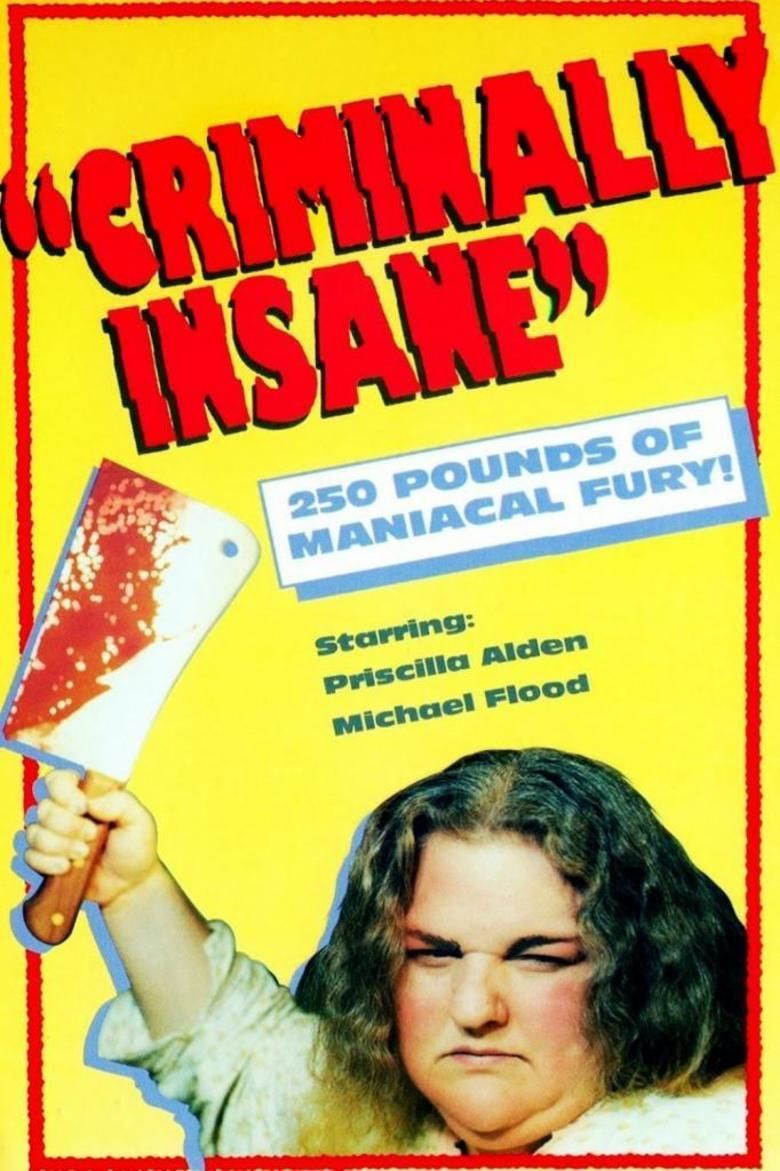
I Dismember Mama (1972)

By Richard Winters

My Rating: 1 out of 10

4-Word Review: He only likes virgins.

Albert (Zooey Hall) hates his rich mother (Joanne Moore Jordan) and at one point attempted to kill her, which got him institutionalized, but he manages to escape and is now back on the streets attempting to kill her once again. When he arrives at his old residence he meets Alice (Marlene Tracy) who’s now working as his mother’s maid. He promptly kills her, but then Alice’s 11-year-old daughter Annie (Geri Reischl) arrives asking for her. Albert is immediately taken in with the child’s innocence and purity and becomes determined to ‘save her’ from the jaded world around them. He concocts a story that her mother suddenly got sick and had to go to the hospital, so the two spend the day frolicking around at a park and later take part in a mock wedding, but by nightfall Albert’s dark urges return and this time his target is Annie.

This is yet another example of an underground 70’s exploitation flick that promises to deliver shocks via its provocative storyline, but ultimately has hardly any. The pacing is poor and filled with talky scenes that get extended far longer than they should. The dialogue lacks bite and there needed to be more action. For instance Albert’s attacking his mother should’ve been shown possibly as a flashback and not just talked about in passing. Albert’s overpowering of a hospital attendant (James Tartan) in order to escape from the institution doesn’t get shown either we just see the guard’s dead body after the carnage is over while in-between we get treated to a long extended conversation between Albert’s mother and his psychiatrist (Frank Whiteman), which is both boring and pointless.

Hall is poor in the lead and unable to convey more than one facial expression or voice tone. I didn’t like the way Reischl’s character gets written either as she’s portrayed as being too innocent and naïve. Sure kids will be more sheltered to real-world horrors than adults, but they’re not stupid and have a fear instinct like anyone else. When a creepy guy unexpectedly answers the door the warning flags would be going off for any typical 11-year-old, which was the age she was when this was filmed, and her character should’ve, and most likely would’ve been in reality, far more defensive and cautious.

I was also confused why Reischl, who is better known as being the ‘fake Jan’ who replaced Eve Plumb in the short-lived ‘The Brady Bunch Variety Hour’, got listed in the credits under the title of being ‘introduced’ like she was brand new to the film scene when she really wasn’t as she had already appeared in another horror flick The Brotherhood of Satan, which had been filmed in 1969 and released to theaters a full year before this one.

When I first watched this movie back in the summer of 1987 it had what I considered at the time one of the dumbest segments I had ever seen. It features Albert walking into a pool hall eyeing an attractive woman (Rosella Olsen) and telling her how rich he is, which is enough to get her to dump the boyfriend (Robert Christopher) she is out on a date with and immediately jump into Albert’s arms, which to me was just to heavy-handed to believe. (If picking up women could only be this easy.)However, after seeing it a second time I now consider this as attempted satire, but the segment should’ve had  a better payoff. Instead of the jilted boyfriend later crying over her dead body, after Albert had killed her, he should’ve laughed and considered it ‘sweet revenge’ for her having publicly dumped him in humiliating fashion earlier.

The film has come under attack by some for its perceived pedophilia storyline. Critic John Kenneth Muir in his review stated that watching it made him ‘feel dirty’ and the pedophilia theme ‘went too far’ for a film that had ‘no aspirations to be anything but entertainment’. Personally I found this take to be virtue signaling and disagree with it on several points.

First I don’t think this was ever meant to be ‘entertainment’. Instead it was intended like a lot of other underground flicks at that time to shock and appall and then bank on the morbid curiosity of people to fill the theater seats simply to see ‘what all the fuss is about’.

Most importantly I don’t think Albert initially saw Alice as a sexual conquest, but more as someone he wanted to protect from the awful world around them. He wanted to save her innocence instead of taking it away. Yes, it’s true there is a scene when she is sleeping in a hotel room and he starts to have impulses to deflower her, but he fights them off and then goes out to a bar where he attacks another woman who is well over 18. The perceived pedophilia theme lasts for only a couple of minutes and really doesn’t take up the bulk of the runtime like some critics seem to think it does, or want you to believe.

My Rating: 1 out of 10

Alternate Title: Poor Albert & Little Annie

Released: April 1, 1972

Runtime: 1 Hour 25 Minutes

Rated R

Director: Paul Leder

Studio: Valiant International Pictures

Available: DVD