The Ambassador (1984)

ambassador

By Richard Winters

My Rating: 7 out of 10

4-Word Review: Searching for porno film.

Peter (Robert Mitchum) is a US Ambassador to Israel who has an idealistic view on how to find peace in the Middle East by bringing together young Jews and Muslims who he hopes will work together for middle ground solutions. Not everyone including Peter’s own security agent Frank (Rock Hudson) thinks this is realistic. Peter’s wife Alex (Ellen Burstyn) feels ignored by her husband and falls into the arms of a much younger man named Hashimi (Fabio Testi) who just so happens to work for the PLO (Palestine Liberation Organization). Alex’s rendezvous with him are sexual in nature and during one of their meetups they are secretly recorded on film. Peter then gets blackmailed to pay a large sum of money, or risk having the movie broadcast on TV. Peter refuses to comply and orders Frank to find the whereabouts of the blackmailers hoping to retrieve the original print before it can be seen by anyone else.

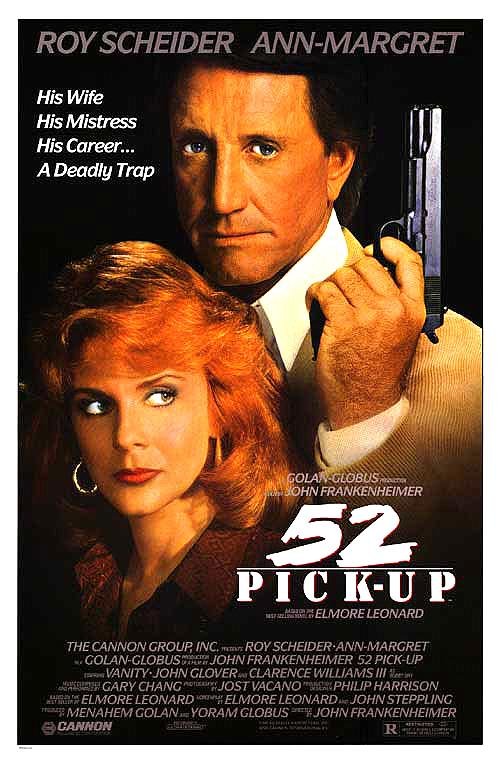
This was yet another film shot on-location in Israel that was produced by Menahem Golan and his cousin Yoram Globus, who bought the production company known as the Cannon Group during the 70’s and were notorious for producing, and sometimes writing and directing, a lot of slap-dash action flicks that were made in such a quick, assembly line style, that it got them the nicknames of the Go-Go- Boys. This film isn’t as bad as some of those and features tight editing and interesting twists. It was inspired by the 1974 Elmore Leonard novel ’52 Pick-Up’ and Leonard himself was hired to write the screenplay, but after his first two drafts were rejected he walked-out. The only elements of the story that was retained was the sex film blackmail plot, but everything else was changed though 2 years later the Cannon Group produced 52 Pick-Up that starred Roy Scheider and Ann-Margaret that was more faithful to the original book.

Surprisingly the best thing about this version is Hudson and while I’ve been critical about some of his other performances he shines here despite being already quite ill and looking gaunt and not as muscular. The role had originally been offered to Telly Savalas, but due to scheduling conflicts he had to bow out and Hudson was brought in just a week before filming began. Even with his poor health he takes part in most of the action and has a strong presence though reports were that he and Mitchum did not get along and had many arguments throughout the shoot.

Mitchum, who took the role after getting accused of being anti-semitic and a holocaust denier, is wonderful despite his age and face that has a very tired and worn-out look. Burstyn is excellent too and I was genuinely shocked at her nude scene, no body double here, and at age 51 still looked great doing it.

Spoiler Alert!

The film’s ending had me rolling-my-eyes a bit with the way it’s able to bring together these Jewish and Muslin students at a remote location and somehow get them to see eye-to-eye on things, which seemed too easy and romanticized. The proceeding bloodbath did take me by surprise though having Mitchum conveniently leave the scene and is therefore not a part of the carnage that kills everybody else seemed like it would come-off as suspicious to others. The viewer knows he had no idea of the pending massacre, but the other characters don’t and having him quietly leave just before the shooting commenced would make some believe that he had something to do with it, or maybe even set-up the students to get killed and thus be despised by the other people at the end instead of considered a visionary hero like he is.

My Rating: 7 out of 10

Released: May 12, 1984

Runtime: 1 Hour 37 Minutes

Rated R

Director: J. Lee Thompson

Studio: Cannon Film Distributors

Available: DVD-R (MGM Limited Edition Collection) Blu-ray

Dirty Dishes (1978)

dirty1

By Richard Winters

My Rating: 5 out of 10

4-Word Review: Housewife has nervous breakdown.

Armelle (Carole Laure) is a full-time housewife taking care of 2 young boys while her husband Marc (Pierre Santini) works a job designing car tires. Armelle is bored with the mundane chores that she must do day after day and looks forward to Thursday evenings, which is the one night that her and husband can go out, but since Marc’s job has become very demanding he can no longer do that, which makes her feel even more shut-in. She occasionally goes out with her two friends (Liliane Rovere, Liza Braconnier), but they’re trapped in the same thankless domestic routine as she is. One day she snaps and has a sexual tryst on her cluttered kitchen floor with an architect (Daniel Sarky) who works across the street, but this doesn’t subside her feelings of rebellion, so she steals a car, which almost gets her in an accident. Eventually her husband realizes her frustrations and promises that things will be different, but will this really bring the change that she wants?

Written and directed by the daughter-in-law of the legendary filmmaker Luis Bunuel, the film is a mixture of Diary of a Mad Housewife that came out 8 years earlier and Women on the Verge of a Nervous Breakdown, which was released 10 years after this one. There’s even a bit of Jeanne Dielman mixed in for good measure. The one thing that this film does do well is focusing on the mundane tasks that she does each day, which gives the viewer a clear impression of her trapped feeling. Unfortunately it doesn’t go deeper than that and ends up just being another feminist comedy that fails to have anything unique to say from the other films from that era with the same theme.

There are a some amusing lines uttered here and there, but the laughs are sporadic and there should’ve been tighter editing, which would’ve given it a frenetic pace and made the absurd moments seem less out-of-place. There’s also a few really weird tangents that come out of nowhere including a psychotic man that invades the families picnic at a park and tries running them down with his car that has no connection to the main story and wasn’t needed as was the segment at a grocery store where Arnelle breaks up a fist-fight between two men only to find that she’s been a victim of a candid camera-like prank.

There are a couple of good poignant moments particularly the scene where the couple is lying in bed and Armelle states to her husband that she feels scared and he replies: “Why, are you afraid something is going to happen to you?” and she responds: “No, I’m afraid nothing will happen and everything will remain the same.”, which hits home the characters quandary perfectly.

Laure’s is radiant and soaking in her beauty helps smooth over the slow spots. The scene where she gets rejected as a model of a dish detergent ad because she’s ‘too beautiful and no one would ever believe she does her own dishes’ is quite funny as that’s all we’ve seen her do since the film began.

The ending however offers no conclusion or answers. The character remains stuck in the same situation that she was at the start with only vague promises from the spouse that things ‘would be different’, but in cases like these that usually means things will eventually just go back to the way things were. The viewer needs to see the change for themselves, or how the character learns to adapt to the problem by finding ways to make the monotony seem more interesting, but the film shows none of this making it feel ultimately like a waste of time as both a satire and character study.

My Rating: 5 out of 10

Released: April 19, 1978

Runtime: 1 Hour 35 Minutes

Rated R

Director: Joyce Bunuel

Studio: Planfilm

Available: VHS

The Sex O’Clock News (1985)

sex4

By Richard Winters

My Rating: 4 out of 10

4-Word Review: News stories about sex.

KSEX is a TV-station that’s modeled like an ordinary broadcast station that has a 2-person anchor team (Doug Ballard, Lydia Mahan) that delivers the news and a show similar to ‘Entertainment Tonight’ that talks about the latest gossip in Hollywood and is hosted by Bill Wright (Wayne Knight) and Wanda Bennett (Kate Weiman). It even has a sports desk lead by Marty Cohen (Rob Baartlett). The only difference between these news shows and the regular ones is that the reports deal exclusively with sexual topics from nude car washes to abusive game shows.

This was yet another attempt to replicate the success of Kentucky Fried Movie that worked off of a collection of short raunchy skits loosely based around a bawdy theme. The unique genre began with The Groove Tube in 1974 and got imitated by many other independent filmmakers throughout the ’70’s who liked the format because it could be made on a low budget and yet still attract attention due to the outrageous humor. Some of them, which are too many to list here, were mildly funny while others fell flat. By the 80’s this type of movie had pretty much burnt itself out and was no longer in vogue. Only one other Amazon Women on the Moon was made, but since 1987 this genre has gone dark and most would probably say, due to the dubious quality, is probably for the best.

This one is borderline. Not all the skits work, but it does go for a darker edge, which helps. This was part of the problem with the others is that they had this idea that just showing breasts, or making a sexual reference would be enough to get a titillated giggle from the audience, like everybody is just a perpetual 7th grader, but by the 80’s with the proliferation of porn easily attainable at video stores, just making a movie with nudity was no longer provocative enough, so this one digs deeper with material of a very political Incorrect nature.

Some of the ones I found amusing, though others might find offensive especially in this day and age, was the bit promoting suicides by having people jump off the Golden Gate Bridge and captured for posterity on either VHS or Beta. There’s also the report dealing with violent nuns trained to beat-up and even kill anyone that doesn’t convert to Catholicism. A vacation cruise for overweight people is kind of amusing as is a wrestling match between Joan Rivers and Elizabeth Taylor (lookalikes not the actual celebrities) where there’s a lot of quips dealing with Taylor’s weight. There’s also a segment dealing with a transsexual beauty pageant, that might’ve offended more if it were actually funny and a skit dealing with a clinic that does experimental surgery on gay men to turn them straight, or as the anchor states: “they walk in a fruit and leave a vegetable”.

Sprinkled in-between are ads like the Jesse James School where people are sent training materials through the mail on how to become a successful bank robber. There’s also a long segment dealing with a game show called ‘You Bet Your Ass’ where a family, whose father is on death row, must answer each question correctly, or their dad gets fried on the electric chair, which has a decent payoff though it takes too long to get there.

Like with the other films from this genre there’s spotty laughs here and there, but it lacks momentum. Despite the short running time I kept glancing at my watch waiting for it to be over. The production values are cheap giving it a home movie quality and the overall design of the news studio is unimaginative there also isn’t any young future comic star that eventually rose to the top as no one from this cast ever became famous. Unless you like seeing a movie with tasteless humor of a bygone era that could clearly never be made today, there’s really no other reason to watch it.

My Rating: 4 out of 10

Released: August 9, 1985

Runtime: 1 Hour 17 Minutes

Rated R

Director: Romano Vanderbes

Studio: Chase Films

Available: DVD-R (dvdlady.om)

Dark Sunday (1976)

dark1

By Richard Winters

My Rating: 6 out of 10

4-Word Review: Preacher versus drug dealers.

Reverend Lowery (Earl Owensby) works to get teens hooked-on drugs off the city streets and sober, which annoys local drug dealers who order a hit on him. When his family are on a camping trip two hit men (Ron Lampkin, Jac Cashin) shoot both of Lowery’s sons (Todd Reep, Jeff Reep) and his wife (Maggie Lauterer). When Lowery tries coming to their aid he gets shot several times, but manages to survive though with a severe limp and inability to speak. Once out of the hospital he goes on a silent mission to get revenge on those that killed his family while also stopping the dealers from selling anymore drugs and getting them off the streets once and for all.

This is third film of Earl Owensby who in 1973 decided to take a stab at filmmaking by building a studio near Shelby, North Carolina and making movies that he deemed to have ‘old-fashioned values’ and away from the sex and violence of Hollywood. While his movies didn’t have any nudity they did have its fair share of violence, which his critics considered to be hypocritical, but in any event they made money especially on the grindhouse circuit and enough of a profit that it allowed him to continue making movies up to 1991. While other regional directors like John Waters and Charles B. Pierce where able to gain enough attention with their movies to ultimately get a Hollywood contract Owensby never did. Some say it was because he labeled himself a conservative, which automatically made him an outsider with Tinseltown.

Whatever the reason this movie really wasn’t all that different from the Hollywood revenge dramas like Dirty Harry and Walking Tall and I was surprised how watchable it was. It does go on longer than it should and the opening features several jump cuts, which gives it an extreme amateur feel. There’s also way too many scenes that take place in back alleys. Granted it works with the plot, but I still got the feeling it was shot at these locations because it was less likely to get noticed by the authorities for shooting without a permit.

The film was controversial for the amount of violence and was banned from several countries. The shootings could be considered extreme when you see little kids shot directly in the chest and then violently thrown backwards. There’s also a nifty death where one of the drug dealers known as Candyman (Chuck Mines) drowns by having his face shoved into a toilet bowl though this would’ve had better effect had it been shot from above versus to the side. In either case the shootings get redundant and there should’ve been more creative deaths instead of just at the hands of a rifle.

What I did like was that the protagonist suffers lasting injuries and doesn’t just miraculously recover like heroes in a Hollywood movie do. However, with that said, the limp that he gets stuck with, which forces him to walk with a cane, completely disappears during the final foot chase where he’s able to climb ladders connected to buildings even better than the able bodied detective who’s chasing after him.

You would’ve also thought that since he was such a well-loved preacher in his community and lead a big  congregation that they would’ve come to his aid after he was injured by finding him some housing and maybe even a job instead of him becoming this lonely homeless person that no one seemed to know. If he had grown bitter and lost his faith due to what happened to his family and thus rejected their offers of help that’s fine, but a scene showing this needed to be inserted.

It might’ve worked better too had it started from the perspective of the prostitute (Monique Prouix) who takes the homeless Lowery into her apartment because she feels sorry for him and considers him harmless. Then the violent deaths of the drug dealers would force the viewer to connect the dots to Lowery and ultimately through flashback show what happened to his family at the end, which then would’ve given the film an element of mystery and more layers. I was also taken off-guard by the very downbeat ending, which I hadn’t expected and didn’t feel was necessary, but does conform to the ‘everything is terrible’ theme, which was a prevalent in most 70’s movies.

My Rating: 6 out of 10

Released: August 17, 1976

Runtime: 1 Hour 42 Minutes

Rated R

Director: Jimmy Huston

Studio: Intercontinental Releasing Corporation

Available: DVD-R (dvdlady.com)

Dirtymouth (1970)

dirtymouth1

By Richard Winters

My Rating: 7 out of 10

4-Word Review: Comedian arrested for obscenity.

Lenny Bruce (Bernie Travis) is a struggling nightclub comedian looking to try to differentiate himself from the others. Tired of doing stand-up at rundown bars where he pretty much is nothing more than a MC introducing the next act he decides to start telling jokes each time he gets onstage and then when that gets a few laughs he begins making them edgier by sprinkling in elements of sex, politics, and religion. This gets him the much desired attention and gigs in bigger venues. However, not everyone likes his brand of humor and when he offends a group of elites at a show in Philadelphia they go on the offense. First they try having him arrested for illegal drug possession and when that fails they go after him for his controversial material where he gets arrested onstage by the police in San Francisco for using profanity during his act. Lenny fights the case in court, but finds that his once blossoming career has dried up as no one will hire him for fear of controversy and with everyone turning against him, even his own agent (Wynn Irwin) and girlfriend (Courtney Simon) he falls into a deep depression.

This obscure, low budget film does start-out rocky featuring vaudeville-like court proceeding skit that attempts to make fun of the trial, but only succeeds at looking dumb and amateurish. The opening credits are shown over a toilet bowl before being ‘flushed’ away, which some may find innovative and creative while others will consider it tacky. There’s also a lot of extraneous footage, particularly at the start, showing Lenny aimlessly walking down the street. While this helps to give a good visual ambiance of the period it certainly does not progress the story.

What I did like was the way we see Lenny go from the bottom up to the top versus already starting it with him famous and in trouble. While it’s been many years, more like a few decades, since I’ve seen Bob Fosse’s better known Lenny, which starred Dustin Hoffman, I did find that element, where Lenny’s humble beginnings weren’t shown, to be a detraction. This film sticks you inside the seedy clubs that he played at and keeps you there. You connect with Lenny and his feelings of being trapped in these places and his urgency to doing whatever he could to stand-out and move-up. You also come to understand his dark humor as anyone who would have to work at these places, and deal with the many drunks that he did, would turn edgy and sarcastic as well.

Bernie Travis, who was a stand-up comedian in his own right, and died at a young age that wasn’t much older than Bruce’s when he died, gives an interesting performance. Some say Cliff Gorman, who played Bruce in the Broadway version, did the best, but Travis comes close. You definitely sense the comedian’s ambition and his annoyance with others. The fact that he’s abrasive and not entirely likable is a good thing as I’ve heard many comedians, even the famous and well-liked ones, can be jerks offstage as there’s so much pressure to be funny that in order to release the tension they can sometimes be unpleasant in private and this film successfully brings out that dynamic particularly when Lenny goes onstage and angrily lashes out at the obscenity charges in a rage-filled rant that’s genuinely electrifying and leaves those in the audience with their mouths agape.

Producer Marvin Worth, who owned the rights to two books that Bruce had written, sued this film upon its release for copyright infringement, which limited its exposure and kept it out of most theaters. When the Bob Fosse movie, which was produced by Worth, came out four years later, this film got totally eclipsed and largely forgotten, which is a shame. Not everything works, but it does have a few memorable moments including what looks to be unscripted, filmed interviews of actual potential jurors, some of whom are quite elderly, who get asked what words they deem to be ‘obscene’ and their responses are priceless.

My Rating: 7 out of 10

Released: September 10, 1970

Runtime: 1 Hour 42 Minutes

Rated R

Director: Herbert S. Altman

Studio: Superior Pictures

Available: None

Love Scenes (1984)

love1

By Richard Winters

My Rating: 0 out of 10

4-Word Review: Aging actress does erotica.

Val (Tiffany Bolling) is an accomplished Hollywood actress who gets pressured by her husband Peter (Franc Luz) to perform the starring role in the latest movie that he’s directing. Peter’s producer Sidney (Jack Carter) wants Val to do a nude scene, which he feels will generate enough controversial attention that it will get people ‘lining-up around the block’ to see it. Val resists at first, but finally agrees. However, once the movie starts filming she finds she that she’s turned-on by her co-star Rick (Daniel Pilon) and instead of rebuffing him like the script calls for the two make-out. Peter likes the energy that the scene creates and decides to leave it in and then, much to the disappointment of screenwriter Belinda (Julie Newmar), rewrites the story to accommodate the clear attraction that the two stars have for each other. In the process it begins pushing Val and Rick more and more towards each other and the two start having an affair off-screen. By the time the self-absorbed Paul realizes this he fears it may be too late to save their marriage.

Incredibly sterile story, despite the saucy elements, that seems to be aimed at an audience from a bygone era that felt nudity onscreen was ‘shocking’ and having affairs, or even thinking of someone else besides one’s spouse in a lustful way to be ‘scandalous’. The film that they’re making, which is supposed to be ‘envelope pushing’ is benign soap opera stuff and the sex scenes, in comparison to all the raunchy teen comedies that came-out in that same decade, would barely excite or turn-on anyone.

My biggest beef was the unrealistic way it portrays the business. Instead of exposing the real ins-and-outs like it should’ve they focus on the way they think audiences presumed it works. Case-in-point is Belinda who gets offered $50,000, which would be $142,577 in today’s dollars, to write the script even though she has no experience. Later she becomes outraged when they require her to do rewrites and then irate, to the point of walking-off the set, when the actors ad-lib their lines instead of reading them verbatim despite the fact that these things are quite common during filming and since she used to be a movie actress before turning to screenwriting she would’ve known that.

While Bolling gives a  good performance I had a lot of issues with her character. She seems genuinely thrown-off when she becomes attracted to her co-star despite this happening more than you think and a great example of it would be Richard Burton and Elizabeth Taylor, so why is this supposedly veteran actress so naive about this phenomenon? If she’d been faking orgasms for 5 years with her husband as she admits to I would’ve thought her eyes would’ve been wandering a hell of a lot sooner than it does anyways. She also gets shocked when her friend, played by Britt Ekland, confesses to being into other women even though in Hollywood gay people have always been quite prevalent and this admission wouldn’t be anything wild to hear and yet she acts like it’s a ‘weird’ concept that she needs time to adjust to almost like she’d been living in a cave.

Jack Carter gives a funny performance as a cigar chomping producer, which of course is an extreme caricature, but at least he’s amusing. Had the film tried to be a satire the concept might’ve worked and maybe even been entertaining, but going the soap opera route makes it shallow and torturous to sit through.

My Rating: 0 out of 10

Released: September 10, 1984

Runtime: 1 Hour 28 Minutes

Rated R

Director: Bud Townsend

Studio: Playboy Productions

Available: DVD-R (dvdlady.com)

Saint Jack (1979)

saint1

By Richard Winters

My Rating: 7 out of 10

4-Word Review: American pimp in Singapore.

Based on the 1971 novel by Paul Theroux the story centers on Jack Flowers, an American who comes to Singapore in hopes of starting-up a profitable brothel and then moving back to the states a rich man. He finds the challenges more staggering than he initially thought and is constantly looking over his shoulder for the syndicate who would like to crush his business so it won’t compete with the other more established brothel’s in the region. In order to cover what he’s doing he works with a Chinese executive as a liaison for his clients. One such person is William (Denholm Elliot) a timid British accountant with a heart condition who has traveled to the area on an assignment. Jack enjoys William’s quiet demeanor and grows fond of him only to be heart-broken when he dies suddenly, which eventually changes Jack’s perspective on things specifically when he’s asked to take part in the blackmail scheme of a U.S. Senator (George Lazenby).

By the late 70’s director Peter Bogdanovich had fallen on hard times. He began the decade doing the acclaimed and award winning The Last Picture Show and followed it up with the equally impressive Paper Moon However, after the critically panned musical At Long Last Love his career began to tumble. He tried following this up with Daisy Miller, but it appealed to only a small audience. Nickelodeon was his attempt at returning to slapstick comedy that had won him success with What’s Up Doc, but it dived at the box office too making this once promising young talent feel fully washed-up. In an attempt for a revival he decided to go in a completely different direction by doing something with a gritty realism.

Cybill Shephard, whom Peter was in a relationship with at the time, had read the Theroux novel when it was given to her by Orson Welles in 1973. She had suggested he make it into a movie, but he had initially resisted. Then in 1978 when she sued Playboy for publishing unauthorized nude photos of her she got rights to turn the book into a movie as part of the settlement and Bogdanovich decided at that point he would do the project. Since Singapore officials were aware of the book, which had not portrayed their country in a positive light, he was forced to create a mock synopsis called ‘Jack of Hearts’, a benign love story that he used to convince the government that was the movie he was making so he could get the permission to film there, which was worth the effort as the unique ambiance of the setting is the main thing that propels the movie and could not have effectively been recreated had it been done inside a Hollywood studio lot.

Gazzara’s performance is another chief asset as he’s never at a loss for quick quips, or sarcastic replies. I loved the way he’s shown constantly moving, never sitting still in one place for too long, which nicely accentuated his situation of needing to ‘on the move’ in order to stay one-step ahead of the bad guys. Elliot is excellent as well in an atypical role. Usually he does well playing stern, jaded, and detached types, but here conveys a genuinely sensitive person who seems cut-off from the worldly ways. Lazenby, best known as the one-and-done James Bond from Her Majesty’s Secret Service, gets a small, but pivotal role as a closeted gay politician who takes a stroll in the middle of the night to hook-up with a male prostitute while Jack secretly follows him that has a great voyeuristic quality and the film’s most memorable moment.

Out of all of his movies Bogdanovich has stated that this one and They All Laughed were his two favorites. Some may not agree as the story has a fragmented style where things happen all of sudden and without forewarning. Yet for me this helped emphasize the reality of Jack’s shaky environment. While hailed by many as a great director’s least known work it deserves to be seen more and when compared to his other output clearly unique and original.

My Rating: 7 out of 10

Released: April 27, 1979

Runtime: 1 Hour 52 Minutes

Rated R

Director: Peter Bogdanovich

Studio: New World Pictures

Studio: DVD, Blu-ray, Fandor, Plex, Tubi, Amazon Video

Crossover (1980)

patman1

By Richard Winters

My Rating: 3 out of 10

4-Word Review: He’s slipping into insanity.

Mr. Patman (James Coburn) works as a nurse at a psychiatric ward in Canada. While he enjoys his work and the patients respond well to his methods he’s put-off by some of the other doctors and administrators who he feels don’t really care about the people they’re supposedly trying to help. He’s also carrying on an affair with two women. One is Nurse Peobody (Kate Nelligan) who works at the same hospital he does and the other is Abadaba (Fionnula Flanagan) the wife of his landlord. While trying to juggle these two women and dealing with the pressures of his job he begins seeing strange visions and fears the he may be losing his mind.

This is quite similar to Beyond Reasonwhich starred Telly Savalas. This one though fared a bit better at least for the first 20 minutes. I liked the way the hospital and the patients are portrayed where their impulsive and unpredictable behavior gives it a certain creepy vibe and the staff needs to be high alert at all times, or face the consequences, which for me brought out the realistic stresses of doing a job like that. The bleak, gray, and rainy setting of Vancouver, shot there to take advantage of the Canadian tax concessions that were given to film production companies at the time, helps accentuate the grim elements.

The film though fails to take advantage of what could’ve been an intriguing plot. Not enough weird visions are seen and the few that are, are underwhelming. It should’ve been approached as a thriller and filled with all sorts of nightmarish and surreal imagery that could’ve helped build the tension, but instead it gets treated as a drama with long talky segments between Coburn and his two girlfriends that bogs the whole thing down until you don’t care what happens. John Guillermin, the director, had helmed many successful features before this one including: King Kong, Death on the Nile, and The Towering Inferno, but shows no panache here and seems to be giving the material only a half-hearted effort. It might’ve done better had John Huston, who was the original choice to direct, had been hired instead.

Coburn, who stated that he did the movie due to an interest in the character who decides he finds the crazy world inside the hospital more comforting than the outside one, but later admitted that had he read the script after its numerous rewrites instead of accepting the offer upfront, he most likely would’ve rejected it, is excellent and the only good thing about the movie. Nelligan, who described the film as being a ‘nightmare’ while working on it as well as calling it an embarrassment, is not as interesting and the entire supporting cast is blah though the young woman patient named Miss Montgomery, played by Tabitha Harrington, who enjoys walking around nude at least offers some diversion.

The script was written by Thomas Headly Jr. in 1971 who later went on to write Flashdancewhich storywise is quite different from this. There’s also a twist ending, though I figured it out long before it gets there and others most likely will too. I feel this was the type of concept where it started with the ending and then gotten written from there, but more side elements were needed instead of just relying on the twist to make it interesting, which for a 30-minute episode of ‘Twilight Zone’ might’ve worked, but as a feature film it gets stretched too thin.

Alternate Title: Mr. Patman

My Rating: 3 out of 10

Released: September 5, 1980

Runtime: 1 Hour 37 Minutes

Rated R

Director: John Guillermin

Studio: Film Consortium of Canada

Available: DVD-R (j4hi.com)

Tapeheads (1988)

tape

By Richard Winters

My Rating: 5 out of 10

4-Word Review: Starting a video company.

Ivan (John Cusack) and Josh (Tim Robbins) are two slackers who can’t hold down a job for too long. After getting fired as security guards they decide to start-up their very own music video production company, which they name ‘Video Aces’. They find it tough going with many people, like with one producer, the sly Mo Fuzz (Don Cornelius), trying to get them to do the work on spec where they’re forced to make the video using their own funds with the vague promises of potential money later on after they’re ‘discovered’. They finally hit-on the idea of promoting the singing duo the Swanky Modes (Sam Moore, Junior Walker) a soul group that the two idolized in the 70’s when they were kids. Their plan is to hijack a Menudo concert and have the Swanky Modes sing in their place and thus exposing their music to a whole new audience.

The film is produced by the former Monkee Mike Neismith, who had earlier produced the very successful cult hit Repo ManUnfortunately this one doesn’t work quite as well. Much of the problem is that it’s directed by Bill Fishman whose background is in music videos and not filmmaking and it shows. Repo Man succeeded because it was centered around a character and it also had a better mix of quirky comedy and story development. This one is handled in a more slap-dash way. Cusack and Robbins both give excellent performances, but are only seen intermittently and they never really grow or evolve like a character in a good movie should nor do they earn their way into the next scene. Instead they become almost like Barbra Eden from ‘I Dream of Jeannie’ where they just seem to pop in and out of these weird scenarios with bizarre people. The plot is thin and more like a collection of wacky skits. Even as satire it fails because it pokes fun of so many various things, in a completely rambling way, that it becomes unclear what the point, or message is supposed to be. There are certainly some clever, funny bits, but ultimately it comes-off more like an experiment gone awry than a movie.

While the cast is filled with a lot of recognizable faces most of them aren’t seen much. I was disappointing that Doug McClure, as Josh’s exasperated and disapproving dad, wasn’t in it more as he had he potential of creating some interesting confrontations. Susan Tyrrell gets wasted too, which is a shame as she talks here with a high society accent, but  I do remember her saying in an interview that she considered herself a ‘lazy person’ who only did movies for the money and would drop-out altogether if she didn’t need to earn a living, so in that respect maybe she didn’t mind the small bit. Lee Arenberg, who plays a security guard, is only in the beginning, but should’ve returned as he’s seen eating Twinkies while sitting on a toilet inside a public stall and anyone who does something that gross deserves more attention.

Some of the roles are bigger. Mary Crosby, the daughter of Bing Crosby, who starred in the infamous Ice Pirates, 5 years before this one, which virtually killed her film career before it began, does quite well here as a duplicitous agent and actually seems to get more screen time than the two stars. The aging Clu Gulager is quite funny as a Presidential candidate with major skeletons in his closet. The best one though is King Cotton (real name Richard Sony) who was the lead vocalist of the blues band Navasota in the 60’s. Here he plays a restaurant owner who partakes in a wacky music video to promote his business with one version shown during the film and another one called ‘Roscoe’s Rap’ that gets played at the end over the closing credits with both being quite memorable.

My Rating: 5 out of 10

Released: January 22, 1988

Runtime: 1 Hour 33 Minutes

Rated R

Director: Bill Fishman

Studio: Filmstar

Available: DVD, Plex

The Farmer (1977)

farmer1

By Richard Winters

My Rating: 7 out of 10

4-Word Review: Country man seeks vengeance.

Kyle (Gary Conway) returns from fighting in WWII a decorated hero, but finds when he gets back home that trying to run a profitable farm to be tough going and risks having it foreclosed on by the bank. One night while swerving to avoid an animal on the road professional gambler Johnny (Michael Dante) gets injured in a car accident near were Kyle lives. Kyle and his friend Gumshoe (Ken Renard) nurse Johnny back to health and for repayment Johnny gives Kyle $1,500, which is enough to help his farmstead survive for a little while longer. Johnny though soon gets into trouble with racketeer Passini (George Memmoli) who permanently blinds him by dumping acid on his face. Johnny wants revenge and hires Kyle, who’s farm continues to struggle, to do it by having him use his superior shooting skills to kill-off Passini and his men while using Johnny’s inside knowledge to track them down. At first Kyle resists, even after Johnny offers him $50,000, but when one of Passini’s men (Timothy Scott) burns down Kyle’s barn, kills Gumshoe, and rapes his new girlfriend (Angel Tompkins) he then decides to go on the warpath.

This has become, especially in the past decade, known as a ‘lost film’. It had never been shown on broadcast TV nor cable and had never received a DVD release, or Blu-ray, or even VHS. It became impossible to find even a bootleg copy and many had become convinced this was the obscure of the obscure. Code Red promised 10 years ago, much to the excitement of rare film collectors, to release it on DVD, but after some promotion the deal fell through, which frustrated many and gave this film even more of a cult status. Some had come to believe that maybe the movie was simply a ‘myth’ and really didn’t exist at all. Just when everything looked bleak Scorpion Rising gave it a Blu-ray release in February of this year and the print is excellent and the film itself isn’t bad either.

It’s noted for its graphic violence, which may have been the chief reason it never got shown on TV or cable. Some of it is quite cruel, particularly the acid scene and the rape is quite intense too. This tough does effectively get the viewer emotionally riled-up making them want to see Kyle get revenge and relishing the third act when he does. The revenge scenes are just as bloody, but I was disappointed that, as graphic as the movie is, the segment where Kyle shoves one of Passini’s men out a high-story window is not shown. The camera cuts away when Kyle pushes him instead of seeing the body drop down which might’ve been hard to film since a parade was going on below, but an effort should’ve been made.

Conway’s acting is only adequate though he does at least convey a stoic quality. Angel Tompkins does better and while some of her other B-movie roles weren’t so great this one is clearly her best and proves she could act versus just looking pretty. Memmoli is memorable as the slimy villain and he should’ve been in it more, but he got injured on the set while riding in a stunt car and was cooped-up in a hospital during most of the production, which also ultimately lead to his career downfall and death. The former comic who graduated into character actor roles had always struggled with weight, but had gotten himself down to 190 pounds when he was in this movie, but when the accident occurred and he was laid-up his weight ballooned out to as high as 490 and causing him to have to turn down subsequent film parts due to his physical limitations.

The review in Maltin’s book claims that there’s a lot of ‘anachronistic errors’ in the movie and having read the review beforehand I kept my eagle-eye out looking for them, but I really didn’t see any. Again I never lived in the 40’s and technically Maltin, who was born in 1950, didn’t either, but to me I felt it came-off okay. I liked the way it approaches the era in a gritty way versus a nostalgic one and the frequent use of the hand-held camera, which was ahead-of-its-time. The surprise twist at the end isn’t bad either.

My Rating: 7 out of 10

Released: March 9, 1977

Runtime: 1 Hour 37 Minutes

Rated R

Director: David Berlatsky

Studio: Columbia Pictures

Available: Blu-ray