Loot (1970)

loot 3

By Richard Winters

My Rating: 8 out of 10

4-Word Review: They are all greedy.

Every Friday this month I will review the Top 5 best and most outrageous black/dark comedies from the 70’s. There were many to choose from, but these five have stood the test of time and remain as potent and hilarious as they were when first released. Today’s film was written by Joe Orton who died before ever seeing his play made into a movie and despite being top-notch in every aspect remains unjustly overlooked and hard-to-find.

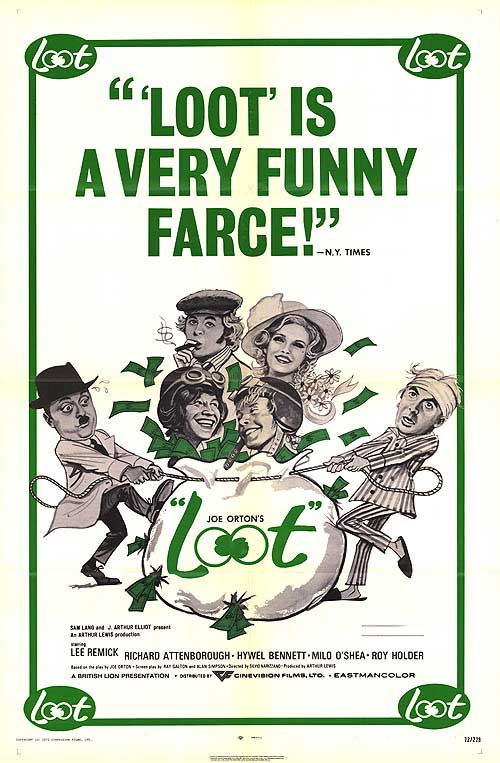
The story deals with Dennis and Hal (Hywell Bennett, Ray Holder) two friends who decide to rob a bank next to a funeral home and hide the stolen money inside the coffin of Hal’s late mother. Problems ensue when Inspector Truscott (Richard Attenborough) starts to suspect the boys have something to do with it and incorporates brutal interrogation tactics to get the truth out of them. Then there is Nurse Fay (Lee Remick) who may have had something to do with Hal’s mother’s death and is inclined to want a piece of the action. All of this occurs inside Hal’s house, which is also a bed and breakfast run by Hal’s Father McLeavy (Milo O’Shea) who remains oblivious to all of the shenanigans and only worried about getting a decent burial for his departed wife.

The film is fast and funny and retains all of Orton’s dark and acidic wit. It is full of one-liners, sight gags, odd characters, and bizarre, unexpected comical twists, with ninety-eight percent of it being clever and funny. The best is the funeral procession when Dennis, who is driving a hearse that is carrying the deceased, finds out that the vehicle has lost its brakes and careens down the streets at high speeds with all the other cars in the procession try to keep up with it while driving equally fast.

Director Silvio Narizzano shows a terrific grasp on the material. Unlike Entertaining Mr. Sloane the only other film adaption of Orton’s work this film has a terrific pace that starts with a bang and never lets up. Narizzano also infuses a lot of imaginative camera angles, edits, and set design to give the thing a nice edgy, off-color feel. Outdoor action is nicely balanced with the indoor scenes to create a good cinematic feel and it never seems like a filmed stage play. There are some interesting homoerotic overtones as well including having Dennis and Hal blow a hole in the bank wall, crawl through it and take the money, then crawl back out and stuff it into the coffin while being completely naked.

Remick has one of her most interesting and unique performances in her already illustrious career as she is quite amusing looking almost like Marilyn Monroe with her dyed platinum blonde hair and authentic sounding British accent. Attenborough is memorable playing against type. Usually he is best at meek and passive types, but here he almost steals the film as the aggressive Inspector with a Hitler mustache. His best moment comes when he picks up a glass eye from the floor and in one brief second sticks out his tongue and licks it, which is done in vivid close-up.

The bouncy, psychedelic score by Steve Ellis helps give the proceedings attitude and personality. Why this film has never been released on DVD or Blu-ray is a mystery. The humor remains sharp and a whole new throng of fans could be acquired if they were just able to see it.

My Rating: 8 out of 10

Released: May 1, 1970

Runtime: 1Hour 41Minutes

Rated R

Director: Silvio Narizzano

Studio: British Lion Film Corporation

Available: VHS
Cry-Baby (1990)

cry baby 1

By Richard Winters

My Rating: 4 out of 10

4-Word Review: The Greasers are cool.

Director John Waters films, which are sometimes referred to as ‘an exercise in bad taste’, are indeed an acquired taste.  Some label his films from the late 60’s and early 70’s like; Mondo-Trasho, Pink Flamingoes, and Female Trouble to be tasteless, exploitative, and trashy. Yet those films also have a very fervent following. I for one found them to be perversely brilliant.  However, when Waters decided to ‘sell-out’ and go more mainstream Hollywood, his stuff became too toned-down. The humor lost all of its edge. The original Hairspray that came out in 1988 was a particular disappointment. It seemed like nothing more than a stretched out sitcom with musical numbers.  This film, which came out two years later, does only slightly better.

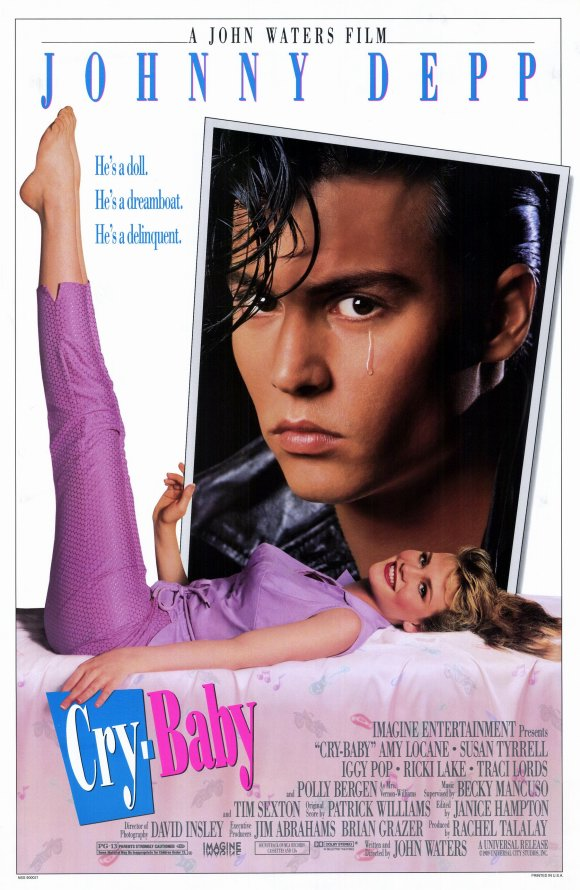
The setting is a 1950’s Baltimore High School that has an intense rivalry between the leather jacket wearing, motorcycle riding ‘greasers’ and the more refined All-American clique. The lightweight story  follows a young, clean-cut girl (Amy Locane) who secretly longs to go out with the head of the greasers (played by Johnny Depp), but can’t due to her social standing.

If the film does anything right it is the fact that, in typical John Waters style, everything gets played up to the extreme.  The ‘model’ students are really snobby and annoying and the animosity between the cliques is strong. However, I couldn’t help but feel that there was a certain grain of truth to all this especially in that era where ones ‘reputation’, whether it be good or bad, was taken more seriously than it may be today. I thought the casting of Locane in the lead was perfect.  She has an appealing, girl-next-door face and her hidden feelings of wanting to venture out of her repressive social role are certainly relatable.  I also loved Depp in the male lead role. He is a gifted actor, but sometimes he seems to take himself too seriously, so it was fun seeing him ham it up. Female viewers may also like the fact that there is an extended scene where he is shown wearing nothing but his underwear.

The casting of the supporting actors is equally inspired if not incredibly quirky.  Polly Bergen gets what might by her finest role in her long, but modest career. Here she plays Locane’s very rigid, upstanding Mother that ends up loosening up a bit in amusing fashion.  Joe Dallesandro and Joey Hetherton are a hoot as an extremist religious couple.  David Nelson and Patty Hearst (yes, the same one that was kidnaped in the 70’s) are equally funny as the surbanites.  Waters veteran Mink Stole has a bit playing the most entertaining iron lung victim since Jose Ferrer played one in The Big Bus.  Kudos must also go out to Kim Holden who sports one of the most hilariously ugly faces since Cloris Leachman’s Nurse Diesel character from High Anxiety. The only mistake here is that they didn’t make the Holden character a villain, which they should’ve in order to really play it up.

Some of the comedy does have its moments.  I liked the part where parents go to an adoption agency and ‘shop’ for children who are set up like mannequins in a display window. The climactic car chase sequence in which the rival gang leaders play the infamous game of ‘chicken’ while riding on the roofs of their cars only to end up crashing into an actual chicken coop, is good. The rest of the film though is too silly and cartoonish without the outrageousness of Water’s earlier films.

The story is also too pedestrian without offering any new insight or perspective.  The characterizations are over-the-top broad and the whole thing ends up being vapid and forgettable despite a few chuckles here and there.  There are also some musical numbers in this, but the songs all sound alike.  The dance routines are dull and unimaginative, looking like they were done without a choreographer present.

Waters earlier work is still far better as it was independent film-making at its purest. Those films also starred Divine who is sorely missed here (she died a few years before). Of course any film that has Susan Tyrrell in it, arguably the most eccentric actress to ever grace the screen, gets a few more points, but not enough to save it.

My Rating: 4 out of 10

Released: April 6, 1990

Runtime: 1Hour 25Minutes

Rated PG-13

Director: John Waters

Available: VHS, DVD, Blu-ray, Amazon Instant Video

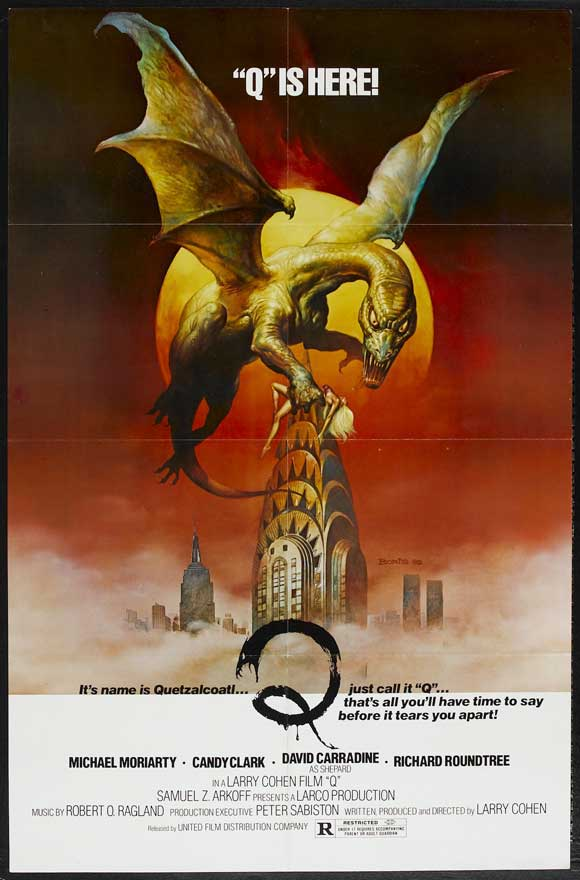
Q (1982)

Q

By Richard Winters

My Rating: 5 out of 10

4-Word Review: Giant bird eats humans

In celebration of cult writer/director Larry Cohen turning 72 on July 15th all this month on Mondays I will review five of his films that he did during the 80’s. Now Cohen will probably never win an Academy Award and may never be mentioned in the same context as Spielberg, Kubrik, or Hitchcock, but the man has had one hell of a career nonetheless. He has been writing for either television or movies since the late 50’s and continues to churn out creative, innovative stories and scripts. Not all of them are completely successful and some of them do misfire, but his ability to survive in the difficult, competitive Hollywood landscape and make his movies on his terms with virtually no studio interference is an amazing achievement in itself and therefore deserves recognition.

larry cohen 3

This film like most of his others has a completely outlandish plot this time involving a giant lizard-like bird that is actually the Aztec god Quetzalcoatl brought back to life and nesting inside the top crown of the Crysler Building in downtown Manhattan. The bird lays a giant egg and feeds itself on unsuspecting people.  Jimmy Quinn (Michael Moriarty) is an out-of-work lounge singer who comes upon the bird’s nest accidently while running from the cops after a botched jewelry store robbery. He decides to use his knowledge of the whereabouts of the bird to his advantage and demands that the city pay him a million dollars before he leads them to it.

Despite the crazy plot the execution is rather conventional. There are long periods of seemingly unending dialogue that is not interesting and does not propel the movie along. The bird attacks are too brief and needed to be strung out more. The movie would have worked much better and had it had a consistent tongue-in-cheek approach and editing that was more kinetic and lucid-like.

Moriarty saves the film with entertaining, edgy performance. This is a man who is known for his erratic behavior off-screen, which pretty much killed his career. In 1971 while performing on stage in a play in Houston he suddenly broke from character and told the audience as well as his fellow cast members that he felt tired and didn’t want to continue and then promptly walked off stage and went home. He was also fired from his most famous role as Ben Stone in the hit series ‘Law and Order’ for similar types of odd incidents and yet that is exactly why he is so perfect here. He gives the thing a much needed boost of weird energy and I especially liked the part when he leads two of his partners in crime up to the bird’s nest and when the bird starts feeding on them he climbs down the ladder shouting:

“Eat them! Eat them! Crunch! Crunch! Eat them! Eat Them!”

I also enjoyed when he is sitting at the bargaining table with the city and police officials demanding a million dollars before he tells them the whereabouts of the bird and insisting that it all must be tax free because:

“I’ve never paid taxes before in my life and I don’t intend to start now.”

His character is lazy, conniving, cowardly, bombastic, self-centered, egotistical, talentless, and deluded and yet strangely endearing and I even felt a bit sorry for him at the end. Candy Clark as Joan his more grounded and conscientious girlfriend makes for a good contrast.

I wasn’t as crazy about David Carradine as the tough New York cop who deals with Jimmy during his investigation. Carradine seems too aloof and detached and this doesn’t help to create any tension. Richard Roundtree as his partner is much better and I would have had him the sole investigator and cut Carradine out completely.

The special effects are a little bit better than what I had initially feared for a low budget 80’s flick, but they are not real great either. The bird when shown flying through the air just doesn’t seem gigantic or frightening enough and ends up looking like a poor man’s Ray Harryhausen creation. The final shootout with the bird was clearly done on a matted screen and looks very tacky. I actually thought the baby bird that comes out of the egg was the only halfway scary and effective moment in the whole film.

What Cohen does get right is reflecting the ambience and culture of the New York neighborhoods and crowded street culture. The aerial footage of New York’s skyline is also spectacular.

My Rating: 5 out of 10

Released: October 29, 1982

Runtime: 1Hour 33Minutes

Rated R

Director: Larry Cohen

Studio: Larco Productions

Available: VHS, DVD, Blu-ray

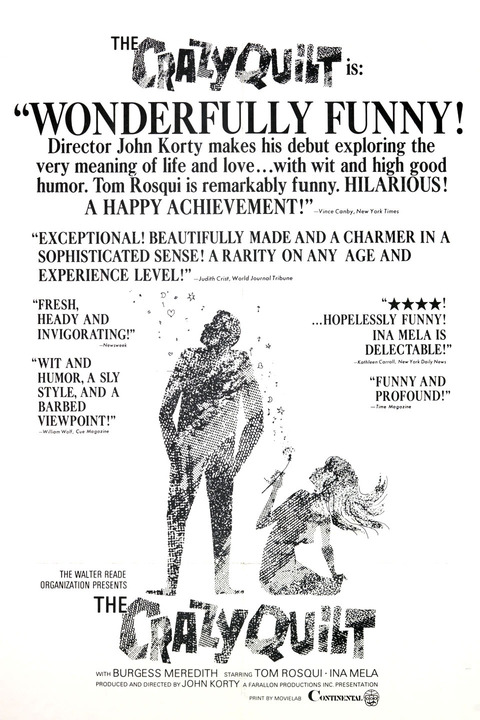
The Crazy-Quilt (1966)

crazy quilt 2

By Richard Winters

My Rating: 6 out of 10

4-Word Review: Married to your opposite

This film is based on the short story ‘The Illusionless Man & the Visionary Maid’ by Allen Wheelis and centers around Henry (Tom Rosqui) a hard-bitten realist with no illusions to anything. He lives a rather solitude life working as a termite exterminator. Then one day while walking in a park he bumps into Lorabella (Ina Mela) who is his complete opposite. She is full of ideals, dreams, and fantasies. Despite an awkward courtship the two get married and the film deals with the rocky, winding road that it takes.

This was the directorial debut for John Korty who later went on to direct the critically acclaimed TV-movies ‘Go Ask Alice’ and ‘The Autobiography of Miss Jane Pittman’. His talents are on full display here as he institutes a visual design to a story that initially doesn’t have any. I loved some of the picturesque moments particularly when Henry and Lorabella take a long quiet walk in a wide open field that eventually stretches all the way into a forest. The black and white cinematography gives it just the right cinema vertite feel and the music is perfect especially the flute solo. In an age of overblown plots and mind numbing special effects it is nice to see someone take a risk with a story that is subtle, basic, and restrained. There is some nice simple, but profound moments here that could never be replicated in the big budget productions, but have a great impact here. Despite the whimsical nature many people are sure to see a bit of themselves in the characters and it is its ability to tap into that very basic, universal truth that makes this film special and unique.

The casting is astute. Rosqui is spot-on as the realist. He has a perpetual scowl on his face that is just right for the character and seems to remain even in the brief moments when he is smiling. Mela is equally good. Her expressive eyes, delicate features, and wispy voice perfectly reflect the traits of her character and the camera captures her well. She never appeared in another movie and I was sad to hear that she died at a young age.

Initially I was put-off by the Lorabella character falling so madly in-love with Henry after she bumps into him and following him all around even though he responds to her in a very cold and reticent way. I felt it was unrealistic that someone wouldn’t notice the obvious aloofness, but then I realized that is the characters whole problem. She projects traits onto the people she meets as well as everything else in life from her own quirky mind that aren’t really there. This comes to an amusing head when she has affairs with various different men where she shows the same tendency and ends up consistently getting the same empty result. These vignettes are the funniest moments in the film as well as the scene where she bakes Henry a chocolate cake that is shaped to look like a giant termite.

I really have only a few complaints with the film. One is the voice-over narration by Burgess Meredith. Meredith has a great voice and a few of his lines are gems particularly his opening monologue and
the very last one. However, there were moments when I would rather have heard what the characters were saying especially when the couple goes to an art museum as I thought it would be interesting to hear the different interpretations each character had to each display. Near the end in an attempt to show the characters aging Henry’s hair is dyed white, but it looks tacky like it was frosted on in a similar way that is done to white Christmas trees. I also thought it was strange that in the very final scene his hair suddenly goes back to being black, which didn’t make any sense.

Since this film is very obscure and had a limited run upon its initial release the only way to obtain it is through the director’s personal website at www.johnkorty.com The neat thing here it that when you order a copy Korty personally signs the DVD and even sends you a letter along with it. For a lifelong film collector such as myself I thought that was pretty cool and it even made my day.

My Rating: 6 out of 10

Released: October 3, 1966

Runtime: 1Hour 10Minutes

Not Rated

Director: John Korty

Studio: Continental Distributing

Available: DVD at www.johnkorty.com

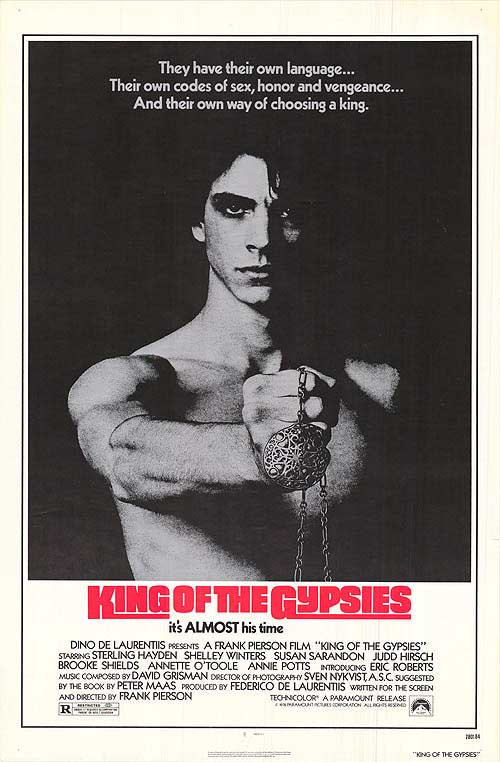
King of the Gypsies (1978)

king of the gypsies

By Richard Winters

My Rating: 5 out of 10

4-Word Review: Daddy is a psycho

Dave (Eric Roberts) is the rebellious son of Groffo (Jud Hirsch) who no longer wants to be a part of the gypsy clan that he was raised in and instead a part of the American dream. However, when Dave’s grandfather Zharko (Sterling Hayden) lies dying in his hospital bed he gives the coveted medallion to Dave making him the new king of the gypsies. This sends Groffo into a jealous rage and orders two men to go out and kill Dave who now must elude them while trying to get his life together and help get his younger sister Tita (Brooke Shields) out of the clan as well.

Although far from being a complete success the film does manage to have a few unique and even memorable moments. The best is when a young Dave is used as a decoy in an attempt to rob a jewelry store. His mother Rose (Susan Sarandon) pretends to be a customer looking over some diamonds. When Dave creates a ruckus she tries to calm him down by having him drink a glass of water while also having him swallow a diamond that she has discreetly lifted from the display table. They are then able to walk out of the store when the merchants are unable to prove that they stole it only to have Rose later retrieve the jewel when Dave poops it out. Having Groffo put a 10-year-old Dave behind a wheel of a car and drive it down a busy Brooklyn Street is about as nerve-wracking as any car chase I’ve seen. The scene where Groffo tries to physically force Dave to have sex with his own mother is also incredibly startling.

However, despite these few interesting moments the film overall never really gels. The first half showing how the gypsy people live seems a bit clichéd and the way they openly cheat other people in order to make a living makes them unlikable and uninteresting. The only time it ever gets half way compelling is when it shows Dave struggling to survive on the mean streets of New York after he runs away from his psychotic father. Unfortunately this gets ruined when it constantly brings his family and past coming back to haunt him. The cat and mouse game that he plays with his father is not original and Hirsch makes for a very boring villain. He is unable to convey a menacing quality and thus there is never any real tension. The violin soundtrack compliments the gypsy tradition, but eventually becomes annoying.

Roberts is solid in his film debut. His voice-over narration coupled with his raw delivery is effective. Had the film focused solely on him and left out the silly gypsy sub-plot it would have worked much better.

Sarandon gives it some energy and she has the most effective accent. Shields is pretty much wasted and appears in only a handful of scenes. The biggest irony here is that the two played a mother and daughter before in Pretty Baby, which came out just 7 months before this one.

Hayden really seems to be having fun as the bombastic self-proclaimed King Gypsy. Watching him feud at the beginning with Michael V. Gazzo who plays the head of another gypsy clan is somewhat diverting. It is also interesting to see Shelly Winters in a part that has less than three speaking lines. This woman never seemed to ever want to shut up both on-screen and in interviews, so seeing her in a part that allows for so little dialogue is quite a novelty, but she still succeeds with it particularly in the part where she grieves over her dead family members.

It is fun to see a young Danielle Brisebois as well as Matthew Labyoreaux who later went on to play Albert in ‘Little House on the Prairie’. Annie Potts is good in a brief part and Patti LuPone makes her film debut in an uncredited bit.

My Rating: 5 out of 10

Released: December 20, 1978

Runtime: 1Hour 52Minutes

Rated R

Director: Frank Pierson

Studio: Paramount

Available: VHS, DVD, Amazon Instant Video

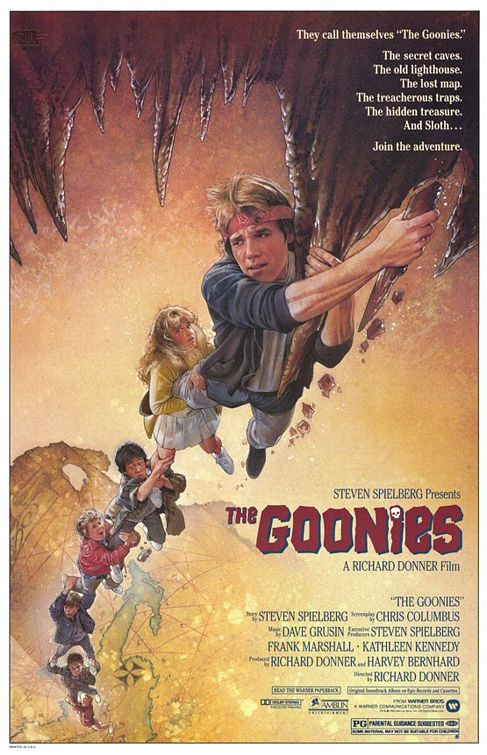
The Goonies (1985)

the goonies 1

By Richard Winters

My Rating: 7 out of 10

4-Word Review: Kids hunt for treasure

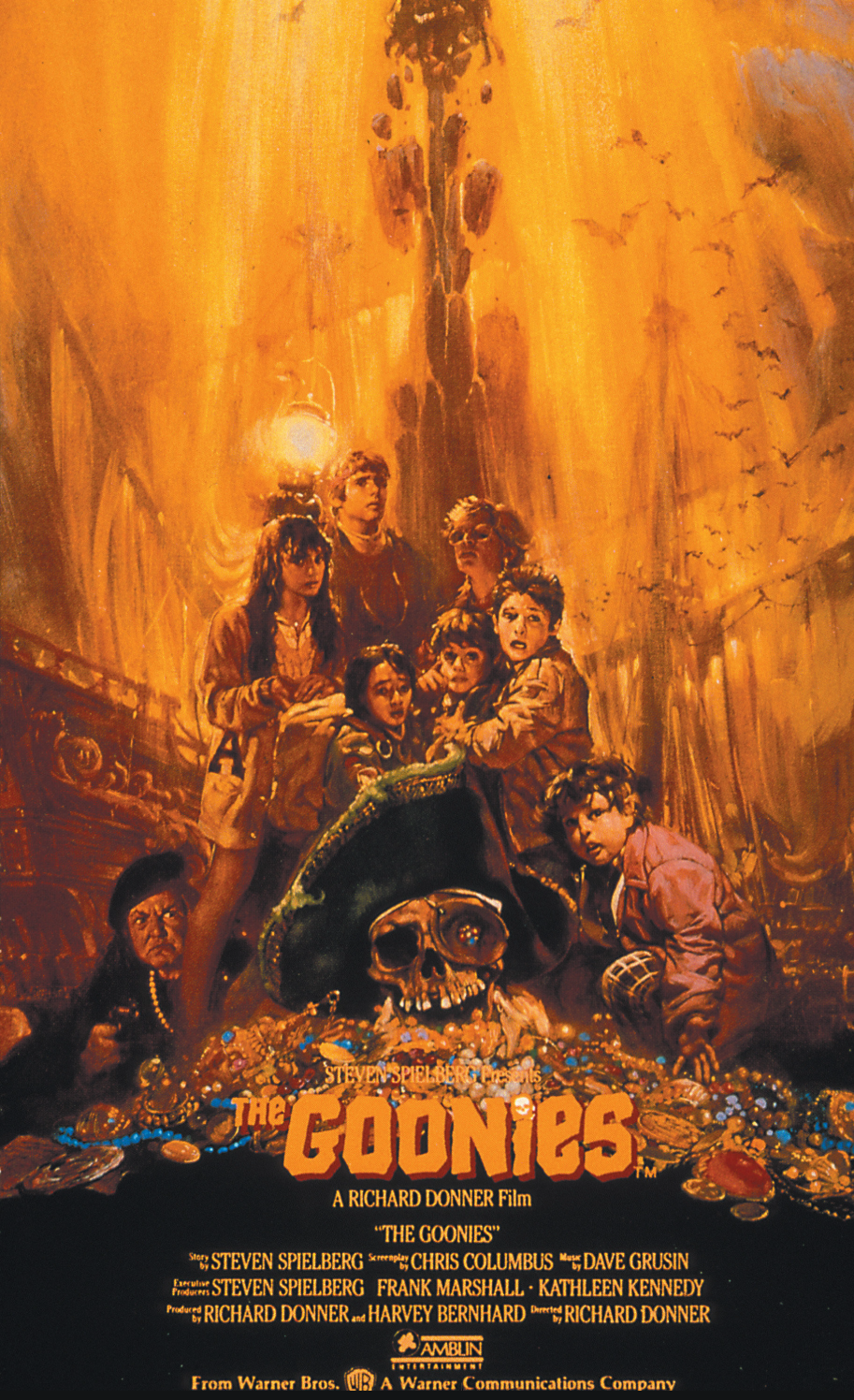
Mikey’s (Sean Astin) parents are risking having their house foreclosed, which will force them to move out of the region and Mikey will then lose touch with all of his friends. In an effort to save the home he and his four friends find a treasure map in the attic and they decide to follow it. On the way they bump into the infamous Fratelli family who compete with the boys for the treasure as well as threatening to kill them.

The concept is great and full of the type of grand adventure any 10-year-old boy dreams about. The action is generally entertaining and moves at a rapid-fire pace, which at times borders on becoming dizzying. However, the whole thing becomes increasingly more fabricated and fairy tale-like and inserting some subtly and restrained would have helped create a better balance.

The comedy is actually quite funny most of the way and I really enjoyed the opening car chase and wished that it had been strung out a little bit more. It does though become a bit too slick for its own good. Any peril the characters find themselves in immediately gets resolved in some cutesy way and thus there is never any type of real tension.

The special effects are not on par with what you might expect from a Steven Spielberg production. The big boulders that come crashing down around them look very much like the ceramic creations that they are. The bats that fly out at them also look unrealistic, but I will give credit for the pirate ship. There are also all sorts of gadgets and booby traps that the kids run into that was supposedly built in 1632 by the pirates, but I found it hard to believe after 300 plus years that stuff would still be functioning.

The young cast is okay, but it is asking too much that these kids carry the picture and it would have been better had some veteran actor been cast as an adult who goes along with them in order to give the thing a little more stature. Astin though gives a good effort in the lead and at certain angles looks exactly like his famous mother Patty Duke although I could have done without his strained ‘our time’ speech. Corey Feldman is also quite engaging especially at the beginning when he translates things for Mikey’s Spanish speaking maid (Lupe Ontiveros).

I wasn’t so crazy about Jeff Cohen who plays the fat kid named Chunk as there are just too many fat stereotypes with the character. The jokes involving his propensity for food are clichéd and tiring although his puke story does earn him a few points.

I thought it was good that actresses Martha Plimpton and Kerri Green join the boys later on by playing older teenage girls. Green’s character may be a bit too much on the prissy side and the fact that she could have romance on her mind as they are trapped in a dark and dangerous cave seemed almost absurd, but Plimpton is solid.

Anne Ramsey is terrific as the villainous mother of the two bad guys (Robert Davi, Joe Pantoliano). In many ways I thought she was more engaging here than in her most famous role in Throw Momma from the Train.

The film is a bit too good natured and at times becomes like a live-action kiddie cartoon. I also thought Cyndi Lauper was a terrible choice for the soundtrack, but despite all that I still found it to be fun and perfect non-think escapism.

the goonies 2

My Rating: 7 out of 10

Released: June 7, 1985

Runtime: 1Hour 54Minutes

Rated PG

Director: Richard Donner

Studio: Warner Brothers

Available: VHS, DVD, Blu-ray, Amazon Instant Video

The Sidehackers (1969)

sidehackers

By Richard Winters

My Rating: 2 out of 10

4-Word Review: Rape, murder and mayhem

This low budget flick is probably best known as having aired on an episode of the old ‘Mystery Science Theater 3000’ TV-show. At the time the writers had not watched the movie all the way through before deciding to use it for the show and when they came upon a rape sequence half-way through it they had to edit it out and have Crow  simply explain that the character was now dead. It is also famous for being directed by Goldie Hawn’s then husband Gus Trikonis. In fact Goldie auditioned for one of the parts in the film, but since she wasn’t well known at the time she got turned down.

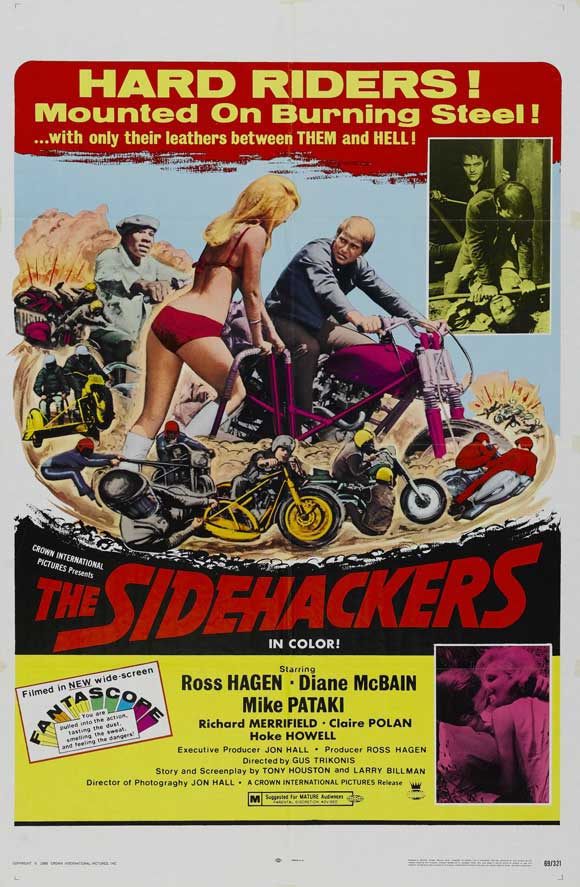
The story centers around Vince (Ross Hagen) a motorcycle racer involved in the sport of sidehacking where a passenger rides along in a sidecar connected to the motorcycle and uses his body weight to help steer the bike around curves and turns.  The psychotic J.C. (Michael Pataki) watches the sport and wants to work with Vince, but Vince becomes aware of J.C.’s volatile personality and turns him down. This angers J.C. and later when his girlfriend Paisley (Claire Polan) falsely accuses Vince of having tried to rape her J.C. flies into a rage. He and his men attack and beat up Vince and then rape and murder Vince’s girlfriend Rita (Diane McBain). Vince then spends the rest of the film trying to track down J.C. and getting his revenge.

The only diversion of this otherwise run-of-the-mill drive-in drama is the scenes involving the racing, which is better known as sidecarcross. Trikonis captures the racing in vivid style giving the viewer a good feel of the sport. Personally I thought it would be excessively dangerous for the passenger who puts himself into a very vulnerable position as he tries to steer the bike from the side and could easily fall off, or be hit by the other bikes that zoom around him. The shots of the crowd seem to show them as really being into it, but I felt that after watching it for a few minutes it would get monotonous.

With that said it is still the most interesting aspect of the film and I felt the story should have revolved around it. For instance having J.C. try and sabotage one of Vince’s races, but instead the racing scenes are shown only at the beginning before devolving into just another stale and redundant revenge drama. The dialogue is stilted, the characters bland, and the direction lifeless. Boredom quickly sets in and never goes away.

The music score is particularly horrendous. With the exception of the final fight scene when it does have a nifty psychedelic quality it is very sappy and terribly harmonized. Hearing it played over shots of Vince and Rita frolicking merrily through some open fields may be enough to make some viewers gag.

Pataki gives a good intense performance as the psycho and at times goes a bit over-the-top, but with this type of production that can only help it. The rest of the acting like everything else seems amateurish. If you want to seek this film out simply to catch the scene that was cut from the TV broadcast I would say it isn’t worth it. The sequence is not all that graphic and it is shown only as a flashback, which takes less than a minute.

My Rating: 2 out of 10

Released: May 12, 1969

Runtime: 1Hour 22Minutes

Alternate Title: Five the Hard Way

Rated M

Director: Gus Trikonis

Studio: Crown International Pictures

Available: DVD (The Savage Cinema Collection)

Wanda Nevada (1979)

wanda nevada

By Richard Winters

My Rating: 3 out of 10

4-Word Review: Go for the gold.

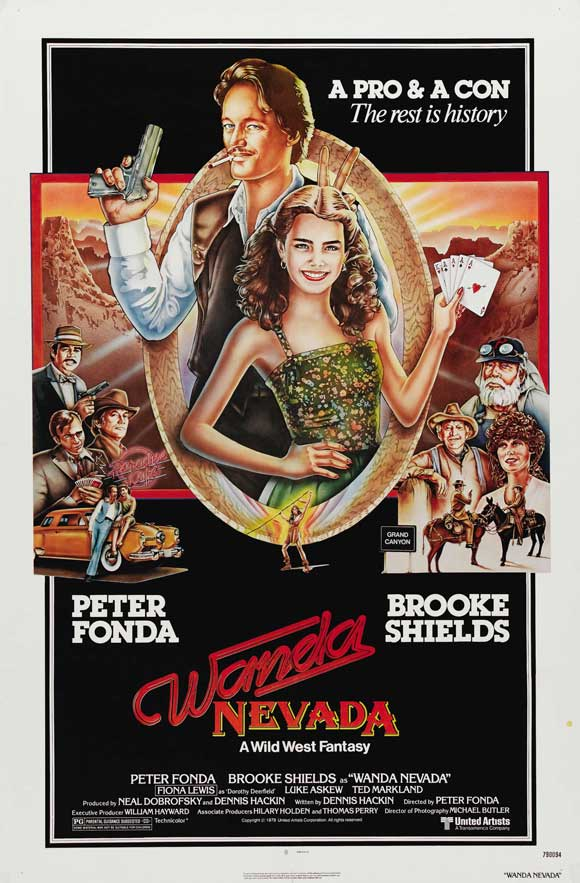
Wanda Nevada (Brooke Shields) is a 13-year-old runaway from an orphanage. Beaudray Demerille (Peter Fonda) is a drifter/con-man who ‘wins’ her during a poker game. The two don’t get along at first, but then they come into contact with an old prospector (Paul Fix) who tells them of gold that can be found in the Grand Canyon. They follow his map, but find weird unexplained events begin to occur the closer they get to the treasure.

Uneven mix of gritty western/comedy doesn’t ever gel. This is a far cry from The Hired Hand, which Fonda directed 6 years earlier. Although that was not a perfect film it still had a great cinematic style and moody flair that this one completely lacks. The story is slight and predictable and goes on much too long with a laid back pace that while not completely boring is never very interesting either. The biggest hurdle though is the fact that we have a 13-year-old girl and a man in his 30’s not only expressing their love for each other, but forming a relationship, which many viewers will probably find quite creepy.

Shields is great and helps give energy and flair to an otherwise lackluster production. She displays a nice sassy attitude and her facial expressions are amusing. She looks ready to blossom into late adolescence and many times seems to show more acting ability and charisma than her older counterpart.

The supporting cast is good although they appear much too briefly. Unique character actor Severn Darden is on hand who tries to steal Wanda away from Beaudray, but just when his character starts to get interesting they have him killed off. Peter’s dad Henry appears in a cameo looking almost unrecognizable in a long beard and bug-eyed goggles. Brooke’s real-life mother Terri has an amusing scene as a hotel clerk. Fix is also good in what turned out to be his last film.

On the flip side Luke Askew and Ted Markland are boring as the bad guys who chase after Wanda and Beaudray through the canyon. Their comical banter is unfunny and their bumbling ways allows for no tension.

The scenery is gorgeous and if you’ve never made it out west you’ll feel like you have after you’ve seen this. The best views are the bird’s-eye shots of the two rafting down a river. The color is bright and vivid and an overall excellent transfer from MGM’s Limited Edition library.

In some ways this film reminded me of Mackenna’s Gold as both films had a similar plot and both also added in a mystical element at the end. However, like in the other one the special-effects look cheap and hokey. The light pleasing quality is hampered by an otherwise bland execution. Why it was chosen for the setting to be the 1950’s instead of the present day I am not sure as it doesn’t add anything to the plot.

My Rating: 3 out of 10

Released: June 10, 1979

Runtime: 1Hour 45Minutes

Rated PG

Director: Peter Fonda

Studio: United Artists

Available: VHS, DVD, Blu-ray (Import)

I Can Make You Love Me (1993)

stalking laura 2

By Richard Winters

My Rating: 7 out of 10

4-Word Review: Stalking is his passion.

To any true film fan TV-Movies have always been considered vastly inferior to the theatrical kind and I would be the first to agree.  However, there is one area where they can shine and that is in their depictions of true-life crimes. Mainly this is because they give it more time as they are usually shown in two parts over consecutive nights.  Also, their lower budgets worked better in recreating the docu-drama style.

Over the years there have been some classics in this area that have helped bring substance to the headlines as well as a better understanding of the victims, the perpetrators and the investigation. Some of the best that I would suggest would be Helter Skelter (1976) starring the Emmy-award winning Steve Railsback as Charles Manson.  The Deliberate Stranger (1986) with Mark Harmon as serial killer Ted Bundy.  There is also Deadly Intentions (1985), A Death in California (1984) with Cheryl Ladd as a woman who falls in love with her rapist, and my personal favorite Fatal Vision (1984) about the infamous Dr. Jeffrey Macdonald.

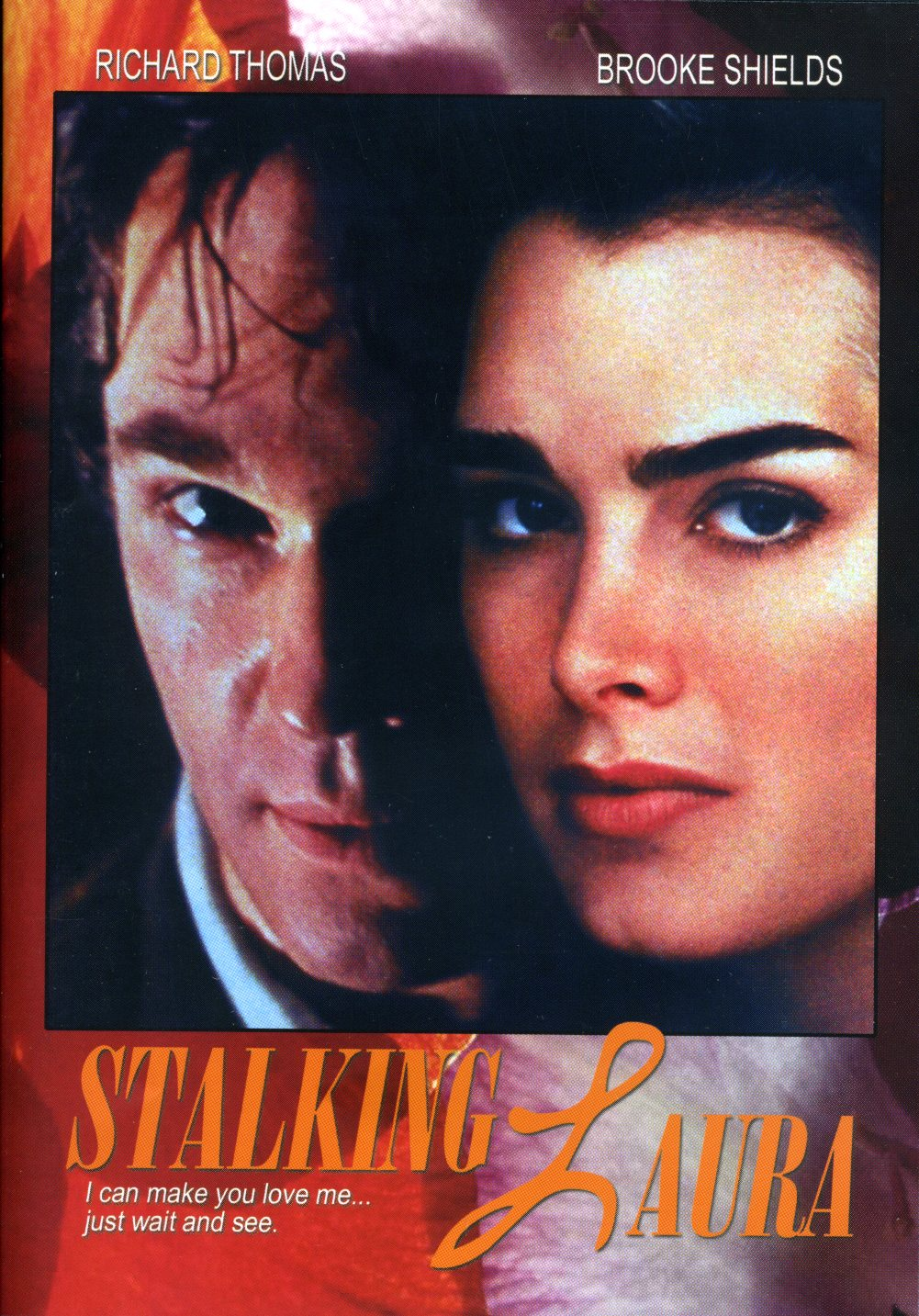
This film deals with the case of Richard Farley (Richard Thomas) that helped develop California’s first anti-stalking laws. Farley was a pudgy, middle-aged man who worked as a computer programmer at a company named ESL in Sunnyvale, California in 1984.  He had been there for 9 years and had no criminal record, but became unhinged when he met an attractive 23- year- old new employee named Laura Black (Brooke Shields).  He began to follow her around constantly as well as sending her gifts and love letters on a daily basis.  When she refused his advances he became even more persistent.  This continued for 4 years until, through his obsession, he ended up losing his job, his house, and his entire life savings, but his stalking continued. Black finally filed a restraining order against him, which sent him into a rage.  He armed himself with an array of guns, stormed the company and shot seven employees including Black, who managed to survive.

Unlike some of the previous movies that I mentioned above, this film did not get the two-part treatment.  Everything that happened gets crammed into 95 minutes, which makes a lot of it seem rushed.  Although the events took place over a four year period, the movie gives you the impression that it was just a few quick months. For the sake of time the film seems to leave certain interesting facts out, which is a shame.  For instance, in real-life Farley actually stood in front of Black’s house for hours going through every conceivable combination on her garage door opener until he was finally able to crack it.  There are also certain things that Farley expressed to Black through his letters that he ends up telling verbally to her here, which causes some of the dialogue to seem awkward.

The film was also not given much of a budget.  It was filmed on a grainy, videotape type of film stock that looks like it was done on somebody’s camcorder.  The story took place in California and yet for whatever reason it ended up being filmed in Topeka, Kansas and the differences in the landscapes are obvious and even a bit disconcerting.

Where the film really seems to come together is during the final 30 minutes where it recreates the office shooting. This sequence is well choreographed and makes you feel like you are right there.  The conversations that Farley has with the negotiator during these scenes are revealing.  I was confused after reading the accounts of the incident as to why Farley would have only shot Black once (in the shoulder) and then allowed her to escape.  Apparently, through his conversations with the negotiator, this was his intention.  He only wanted to injure her and then force her to survive so she would have to live with the ‘guilt’ of having ‘caused’ this by refusing to go out with him.

Another big selling point is the performances of the two leads. Richard Thomas as Farley is astounding.  He does not resemble the actual Farley, but makes up for it with a convincing portrayal that leaves a lasting impression. Shields is excellent as well. Normally I never gave her much credit in the past, but found a new appreciation for her acting ability here.  She does an especially good job during the scenes where she is shot and trying to escape.  It seemed like she was genuinely stressed and in real pain.

Another thing I liked here is that the character of Laura Black is portrayed as being very determined, resourceful, and strong.  She had to struggle with the company about this matter as initially they sided with Farley and was convinced that she must have ‘lead him on’. I felt it was a testament to her strength that she continued to keep working at the company and was still working there five years later when this film was made.

If you find true-life crimes to be intriguing and enjoy seeing them recreated to help your understanding of them, then TV-movies are you best source for this type of genre.  I felt that this case, with its myriad of psychological implications, was no different.

My Rating: 7 out of 10

Released: February 9, 1993

Runtime: 1Hour 32Minutes

Alternate Title: Stalking Laura

Not Rated

Director: Michael Switzer

Studio: Leonard Hill Films

Available: DVD

Improper Channels (1981)

improper channels

By Richard Winters

My Rating: 1 out of 10

4-Word Review: The system is screwed.

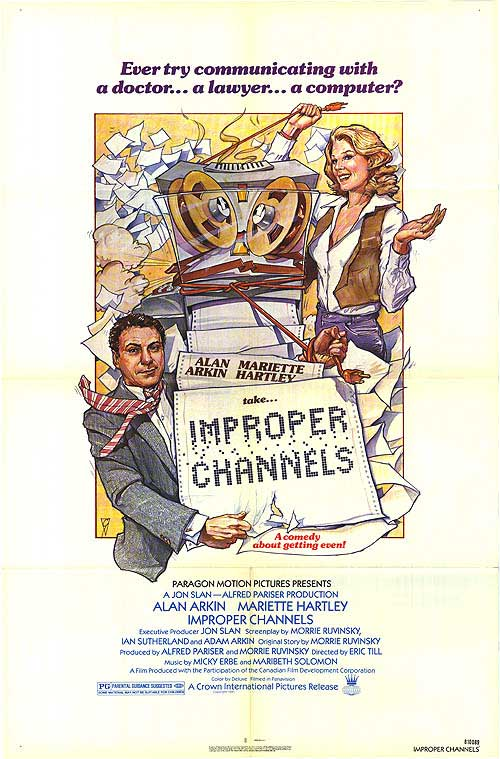
Jeffrey Martley (Alan Arkin) is a middle-aged man soon to be divorced from his wife Diana (Mariette Hartley) who is driving along in his car with his 5-year-old daughter Nancy (Sarah Stevens) when he is forced to put on the brakes quickly in order to avoid hitting another vehicle. Sarah, who was not wearing a seatbelt since there were no such seat belt laws at the time, falls to the car floor and hits her head. It is a minor bruise, but Jeffrey takes her to the hospital as a precaution. As the doctors are examining her social worker Gloria (Monica Parker) overhears Jeffrey’s conversation with the medical staff and thinks that the injuries may have come from child abuse. She takes the child out of his custody and puts her into a protected foster home while she uses the help of a computer expert (Martin Yan) to come up with as much dirt from Jeffrey’s past as she can in order to prevent him from getting her back. Jeffrey and Diana hire a lawyer and try to fight the charges, but find that the system is against them.

This is a wretched attempt at satire that never gets off the ground. Director Eric Till’s bland direction makes this thing look like a TV-movie and the majority of it is more like a drama. The comedy is not very funny and the little that there is comes off as forced and out of place. Jeffrey’s and Diana’s situation becomes more harrowing as it goes along and this thing probably would have worked better and been more riveting had they kept it at a realistic and dramatic level all the way through.

The social workers are portrayed as being completely inept, incompetent, and malicious without any balance making me wonder if the writers had a major grudge against them in real-life. Gloria’s boss Harold Cleavish (Harry Ditson) is particularly unlikable and comes off as an all-around prick in every way. However, he does get the film’s one and only funny line when he chastises Gloria for believing that the social services profession is about helping people:

Harold: I have been in social services for 9 years and in that time I haven’t helped anyone and I hope to God that I never will. If you really want to help humanity then become a prostitute.

Hartley is a wonderful actress and I will never forget her Emmy award winning performance in a guest spot on ‘The Incredible Hulk’ TV-show unfortunately her career never took off despite a great debut in Sam Peckinpah’s Ride the High Country. Today most people probably know her for her Polariod commercials that she did with James Garner back in the 80’s. Even so she is great here and gives the material more effort than it deserves. Arkin who has played the man against the system many times seems strangely reserved.

The most annoying thing about the film is the ending where Jeffrey turns-the-tables and tries sticking it to the system. Having an average man who works as an architect and has no special computer experience break into the computer systems of the social welfare office and erase his records and send everything on the fritz is too exaggerated. Having him dump out streams of computer printout paper from the office windows and line the city streets with it is too goofy and unbelievable to be even slightly humorous. The filmmakers display a limited and confused understanding of the technological revolution and treat it like it is nothing more than a passing fad that can be easily taken down by the common man. The pat and silly wrap-up makes light of an otherwise serious issue and thus makes the entire production stupid and pointless.

My Rating: 1 out of 10

Released: April 17, 1981

Runtime: 1Hour 32Minutes

Rated PG

Director: Eric Till

Studio: Crown International Pictures

Available: VHS