The Possession of Joel Delaney (1972)

the possession of joel delaney

By Richard Winters

My Rating: 7 out of 10

4-Word Review: Possessed by his friend.

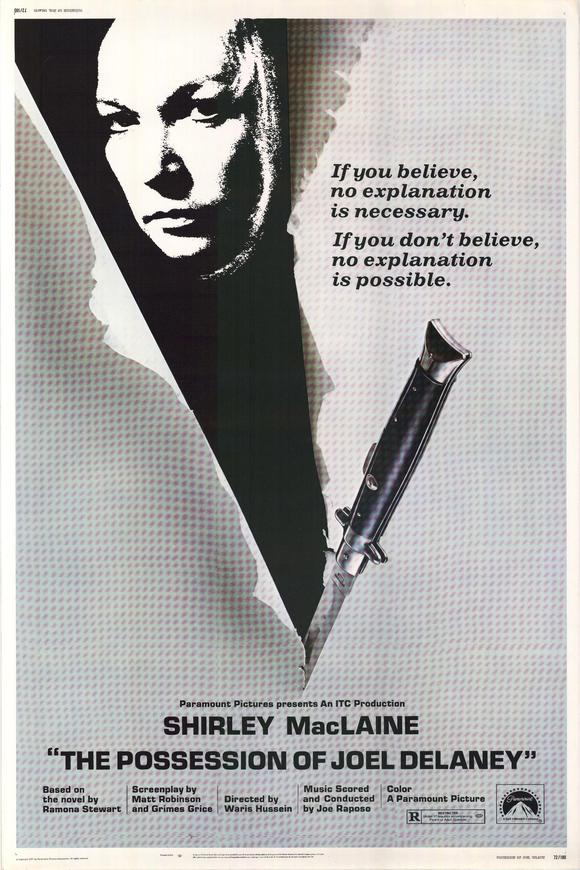
Norah (Shirley MacLaine) is a divorced mother of two living in a well-off neighborhood of New York that is also keeping a watchful eye on her younger brother Joel (Perry King). He is a recent college grad returned from an overseas stay and still looking to find his way in the world. He lives in a poorer section of town and does so to keep a distance between he and his sister who he feels has domineering traits like his now deceased mother. As things progress he begins to show odd, frightening behaviors that at times turn violent and when conventional therapy doesn’t help Norah turns to a Puerto Rican witch doctor that is convinced that Joel is possessed.

What makes this film so intriguing is that it has far more layers than a typical horror film and its most interesting aspect isn’t the occult at all, but instead the vivid look at New York’s contrasting socio-economic and cultural make-up. It shows how buffered the rich are from the poverty stricken areas of the city and how completely helpless they become when thrown into that environment. In fact Norah’s most frightening moments are when she is taken out of the safety zone of her pampered lifestyle than in dealing with the possession of her brother.

MacLaine’s character is not too likable, but this ends up being a positive. Her exchange with a clerk at a mental hospital when she expects to receive preferential treatment is amusing as is her obliviousness to her surroundings when she walks into a rundown tenement building wearing a gaudy fur hat and coat only to later finally get the sense to take it off when walking down the street of a tough neighborhood.

King is perfect choice for the role as his clear blue eyes give off a naturally creepy look and his moments of possession are some of the most unnerving parts of the film although I would have liked more time to have been given showing him in more of a normal state. His relationship with his sister also exposes an underlying sexual theme that never gets sufficiently explored

Although the terror is more cerebral it still has some choice moments including a shot of a decapitated head of a woman hung over her nude body as well as Maclaine’s extremely odd reaction to it. The ritual involving the attempted removal of the dead soul from Joel’s body has a nice cinema vertite flair and when the man lights some kerosene on the floor and steps in it with his bare feet it looks genuine and not staged. The climatic sequence that takes place in a remote beach house is intense and includes the controversial scene showing a young boy being forced to strip as well as a young girl having to eat dog food from a dog dish that was excised from many prints, but intact on the Legend Films DVD release. There is also a cool twist that occurs at the very, very end.

My Rating: 7 out of 10

Released: May 24, 1972

Runtime: 1Hour 45Minutes

Rated R

Director: Waris Hussein

Studio: Paramount

Available: DVD
See No Evil (1971)

see no evil

By Richard Winters

My Rating: 7 out of 10

4-Word Review: Psycho stalks blind girl.

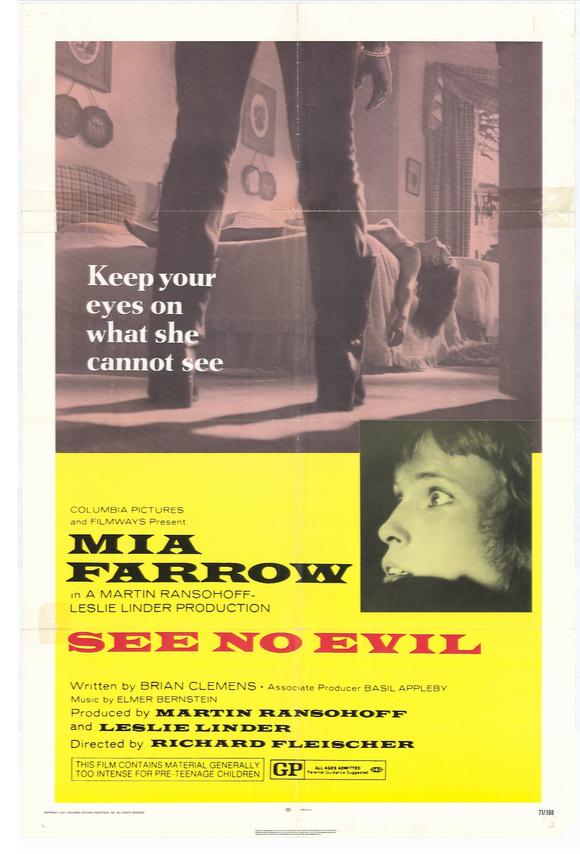
Sarah (Mia Farrow) is a young woman who becomes permanently blinded during a horse riding accident. After months of rehabilitation she returns to her family home in the English countryside. Dealing with her new handicap is awkward at first, but things go genuinely smoothly. Unfortunately a psychotic man harboring a petty grudge lurks in the shadows. One day while Sarah is away he murders her entire family and when she returns he goes after her, but the viewer is as in the dark as she is to his identity as all that is shown are the nifty looking cowboy boots that he walks in.

Veteran director Richard Fleischer takes Brian Clemens compact script and turns it into a visual masterpiece. The camera angles and shot compositions are not only perfect, but highly creative. One of the highlights is when Sarah comes home and doesn’t realize at first that her family is dead and only slowly becomes aware of it along with the viewer. The countryside, which was shot near Berkshire, England, is majestically captured particularly during the horse riding sequences. The pace is fast and intense and never lets up with twists that prove to be quite interesting.

Farrow has a limited range as an actress, but her delicate features and the character’s self-reliant nature make her easily likable and the viewer immediately becomes empathetic to her plight. The rest of the characters are well-rounded and believable with noted character actress Lila Kaye in a small, but memorable role as a gypsy mother.

The fact that the identity of the killer is kept a secret until the very end is an added bonus, but you actually do see his face in an earlier scene, but are not made aware that it is him, which I thought was pretty cool. The only misgivings that I had in this area is the fact that the killer supposedly murders these people in a fit of revenge for accidently splashing water on his precious boots when they drove past him in a car, but then later after he kills them he goes to bed and allows the droplets of blood from his victims to dry on his boots while he sleeps even though I felt with his obsessive preoccupation with them that he would have wiped that off right away. Also, for a man who brazenly murders a family in broad daylight for such a petty reason he seems to get a little too nervous about it afterwards even though if he is that crazy I would think that he would have remained cocky about it and felt that he would be able to murder anyone else who got in his way. He also puts up no fight in the end when he finally gets cornered making him look wimpy and making the climax a bit of a letdown.

Overall though I found this thriller to be highly entertaining and its effect has not diminished through repeat viewings. They don’t seem to be able to make them like this anymore, which is unfortunate.

My Rating: 7 out of 10

Alternate Title: Blind Terror

Released: September 2, 1971

Runtime: 1Hour 29Minutes

Rated GP

Director: Richard Fleischer

Studio: Columbia Pictures

Available: DVD, Amazon Instant Video

True Stories (1986)

true stories

By Richard Winters

My Rating: 4 out of 10

4-Word Review: Eccentric people of Texas.

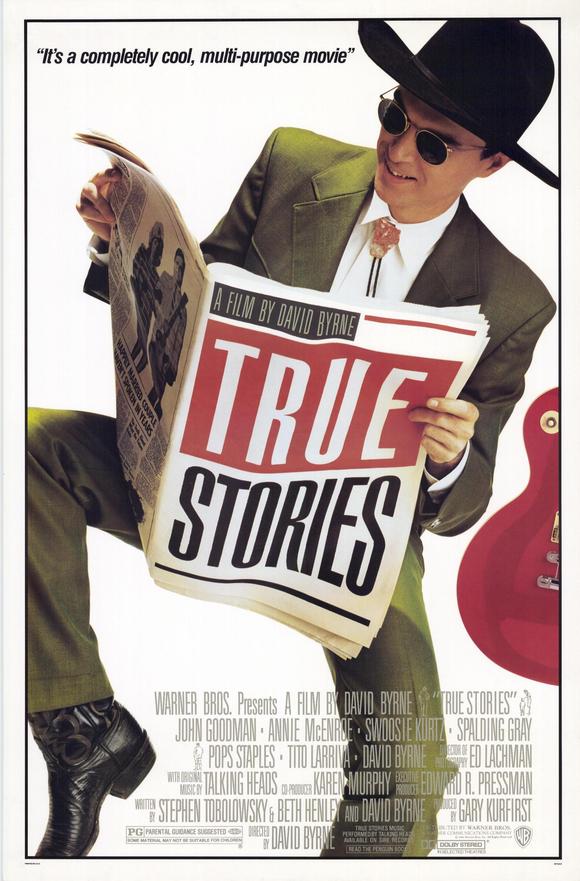
David Byrne the founder member of the influential Talking Heads rock group tries his hand at filmmaking, which to date has been his only directorial foray of a feature film and not including two documentaries that he did in the late 80’s and early 90’s. This film centers on weird characters that were inspired from tabloid magazine stories and the list of eccentric people include The Lazy Woman (Swoosie Kurtz) who is so rich that she never needs to get out of bed and has a wide array of servants or robotic hands to help her do everything. There is also John Goodman as a single man desperately seeking a mate, Jo Harvey Allen as a chronic lying woman and Alix Elias as The Cute Woman.

The film starts out with promise. Byrne focuses on interesting symmetrical designs and colors. I also liked how every other shot seems to focus on the vast flat emptiness of the Texas landscape as well as showing rows and rows of steel sheds something that no other filmmaker would think of doing, which helps give this a unique vision. The humor is consistently offbeat and amusing with my favorite moment coming during a fashion show where the runway models are shown to wear increasingly more outlandish outfits all to the excitement of an enthusiastic audience. Byrne’s parody of driving his car in front of a blue screen is also quite funny.

Goodman is a delight not only when he gets behind the microphone and sings ‘People Like Us’, but also his TV-ad looking for eligible women. Kurtz is quite funny too especially with her entranced look while watching banal and inane TV-shows. Spalding Gray adds a good presence and the scene where he tries to create the layout of a town while using food at a dinner table is great.

Unfortunately the film ends up being a misfire mainly because it has no real plot to speak of. The quirky ideas and goofy characters are wasted in a directionless movie that goes nowhere. Certain innovative touches like having a group of children coming out of an empty field to sing a song become confusing and pointless. Byrne’s own presence as an onscreen narrator quickly loses it welcome and eventually becomes annoying. It manages to come together a little during the last half-hour with some much needed cohesion, but it is not enough to save it.

My Rating: 4 out of 10

Released: October 10, 1986

Runtime: 1Hour 30Minutes

Rated  PG

Director: David Byrne

Studio: Warner Brothers

Available: VHS, DVD, Amazon Instant Video

September 30, 1955 (1977)

september 30 1955

By Richard Winters

My Rating: 4 out of 10

4-Word Review: Death of a legend.

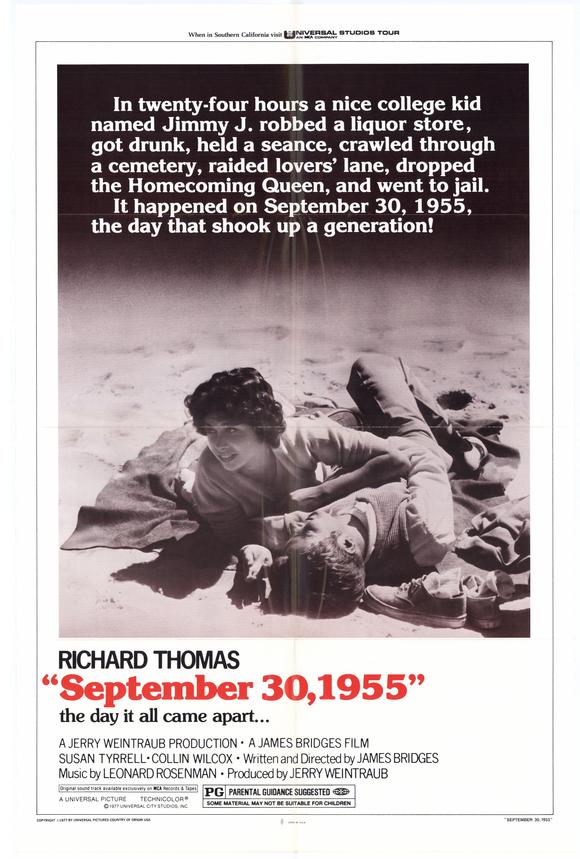
The title represents the date that the legendary actor James Dean died in a car crash and his death has an adverse effect on a group of teens in a small southern town.

Richard Thomas is the main character who, along with his girlfriend Billie Jean (Lisa Blount), seems to get the most upset. Although some of his actions may seem fanatical it is really not as extreme as you may think or could’ve been and at no time does he ever lose sight of reality. For the most part the story is more a look at lost young souls searching for an identity than it is on celebrity worship.

The plot itself is slow with scenes that become unnecessarily drawn out with heavy-handed drama. The ending is unsatisfying as it doesn’t even give us a hint as to whatever became of these characters that are all left hanging in unfinished scenarios making the whole thing seem like just another sappy 70’s teen romance/ tragedy.

Beyond the poor structure there are some good points. One is the chance of seeing budding young talents like Tom Hulce, Dennis Quaid and Dennis Christopher working together and carrying a film. The other is director James Bridges who shows strong insight into Dean’s mystic and why he made such a powerful connection with the youth giving one the feeling that Bridges himself was a big Dean fan at the time as well. He also makes an effective statement about how many lost, lonely souls there are out there and the stifling nature of small town life. His recreation of the period is excellent and the interactions between the characters seem real and authentic. The assessment of the era is honest without being condescending and you feel like you are a part of the 50’s experience, which is interesting and fun.

Unfortunately it becomes too labored and trapped by the sensibilities of a bygone era while also being completely humorless and too talky.

My Rating: 4 out of 10

Released: August 6, 1977

Runtime: 1Hour 41Minutes

Rated PG

Director: James Bridges

Studio: Universal

Available: DVD (Universal Vault), Amazon Instant Video

Thunder and Lightning (1977)

thunder and lightning

By Richard Winters

My Rating: 2 out of 10

4-Word Review: More southern fried nonsense.

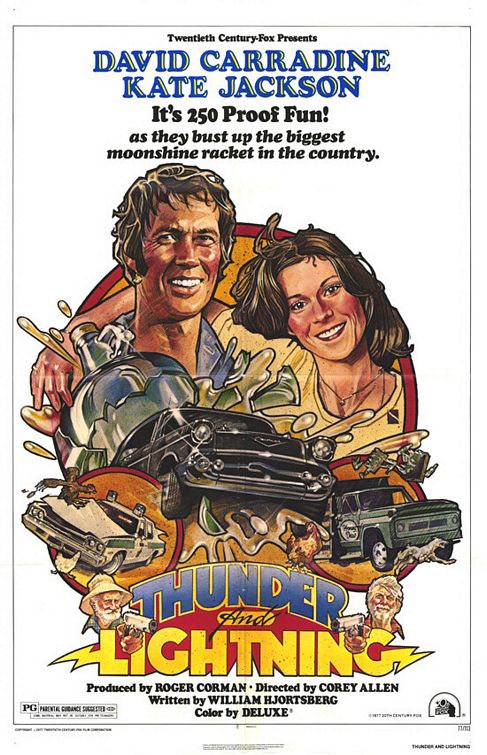
This is incredibly contrived good ol’ boy nonsense about competing moonshiners that gets taken into overdrive and just an excuse for a lot of smash-up car chases.

The filmmakers seem compelled to come up with every southern stereotype they can think of. There is the grizzled, uneducated, overall wearing, backwoods moonshiners, as well as the beer swilling pick-up truck driving rednecks with names like Bubba and Scooter, virtuous, but spunky southern daughter with an annoying hick accent and even a scene where a couple of down home boys jump into a car and shout “yahoo!” as it takes off. After about ten minutes this one-dimensional, uninspired mess makes you feel like you are brain dead.

The production values are poor with muffled sound and fast edits that makes some of the action hard to follow. The whole thing looks rushed and haphazardly put together simply so it could quickly cash in on the success of Smokey and the Bandit.

David Carradine’s performance is much too subdued as he seems to have no energy and is just mouthing his lines. Kate Jackson is pretty, but her personality is much too strong. The only fun piece of casting is Sterling Holloway in his last film appearance. He is probably best known as the voice of Winnie the Pooh and here plays a moonshiner.

The film does manage to have a few good moments. One is a unique speed boat chase done on a large swamp as well as is a segment where a minister preaches his sermon while wrestling with an alligator. There are also two hit men who like in Pulp Fiction have unusual conversations. Some of the strange topics include too much violence on TV, Captain Kangaroo, and even Norman Vincent Peale. There is even a cool inside joke that occurs when actor Charles Napier is having a fight with Carradine and he shouts out “Hey asshole knock off the Kung Fu shit!”

My Rating: 2 out of 10

Released: August 24, 1977

Runtime: 1Hour 35Minutes

Rated PG

Director: Corey Allen

Studio: 20th Century Fox

Available: VHS, DVD, Amazon Instant Video

Play It As It Lays (1972)

play it as it lays 2

By Richard Winters

My Rating: 2 out of 10

4-Word Review: Her life is empty.

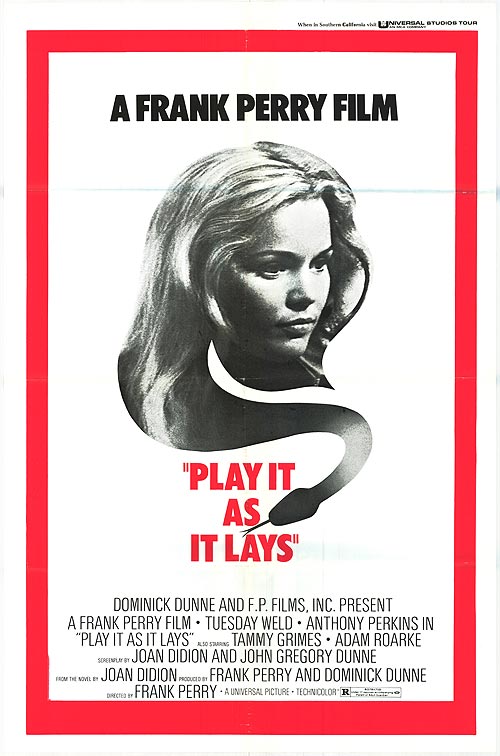
If there ever was a title that aptly described its picture it’s this one as this thing truly does just lay there like a dead body. It’s another one of those stories about a beautiful actress/model (Tuesday Weld) who has fame, fortune, and looks and yet still feels empty. She is a part of the ‘been there, done that’ crowd that now wonders what there is left to do and the plot gets told in a fragmented narrative that at first seems diverting, but eventually goes nowhere.

It was made in an era where if the message wasn’t sad and depressing then it wasn’t ‘important’. The filmmakers have already made up their minds that life is depressing and meaningless and then proceed to beat the viewer over the head with it in each and every scene. Supposedly then the audience is to walk away thanking them for the beating.

The characters represent everything that is irritating about the Hollywood crowd. They are self- absorbed and self-loathing. They fail to put meaning into their lives and yet somehow life has failed them if meaning doesn’t just come up and punch them in the nose. Whine and moan, take a drug hit, whine and moan, go to bed with a stranger, and whine and moan some more.

It’s hard to become attached to those who are so detached from themselves and even harder to like those who can’t stand themselves. Eventually you just give up, especially when the film works on the same spiritless level as the characters. You begin to just laugh at it since every despondent look and quasi philosophical discussion soon becomes redundant making this drama more like high cliché.

Weld and Antony Perkins teamed up earlier in Pretty Poison which has a much more original storyline and interesting characters and you should watch that one instead.

My Rating: 2 out of 10

Released: October 19, 1972

Runtime: 1Hour 39Minutes

Rated R

Director: Frank Perry

Studio: Universal

Available: None at this time

The Trip to Bountiful (1985)

the trip to bountiful 1

By Richard Winters

My Rating: 7 out of 10

4-Word Review: Old lady goes home.

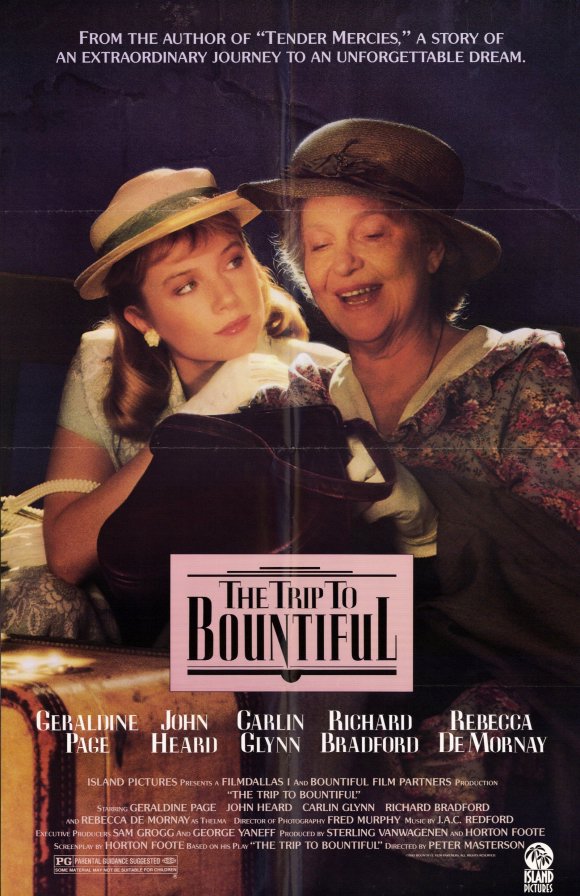
Carrie Watts (Geraldine Page) is an elderly woman living inside a cramped apartment with her grown son Ludie (John Heard) and his wife Jessie Mae (Carline Glynn) in Houston, Texas during the 1940’s. Carrie dreams of one day returning to her childhood home in the small town of Bountiful and ‘escaping’ from Jessie Mae who is overbearing and treats her like a child, but she lacks the transportation or funds. She secretly hides her government checks with the hopes of saving enough to take a train. When she finally makes it to the train station she finds there is no longer any stops to her old town, which is now essentially abandoned, but with the help of the local sheriff (Richard Bradford) he takes her there while Ludie and Jessie follow close behind determined to drag her back with them.

Peter Masterson’s directorial debut shows a great appreciation for Horton Foote’s script as it manages to stay true to the period and tone. I especially liked the part where Carrie describes the quietness of her childhood home while the camera slowly pans the yard and allows the viewer to essentially experience what she is talking about. The recreation of the ‘40s is on-target making you feel like you are living there yourself. Having some tunes of the era playing on a phonograph in the background is a great touch and it’s nice to hear a soundtrack that isn’t from the preverbal classic rock period.

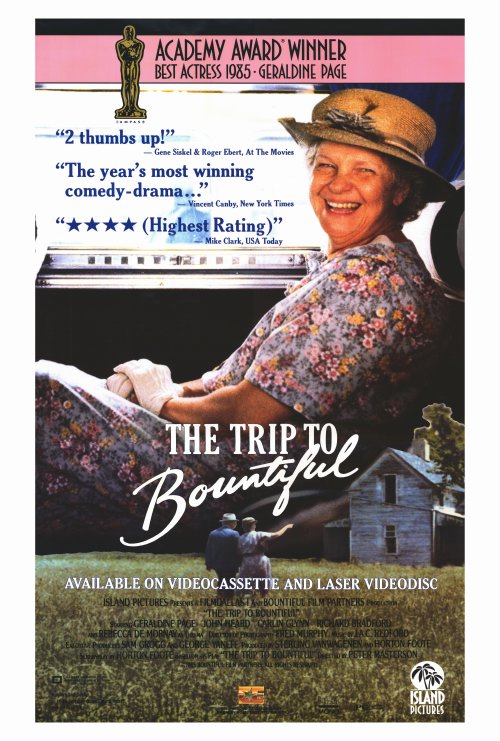
Page shines in her Academy Award winning performance. She has played evil characters with such a relish for most of her career that it is nice seeing her portray a sweet old lady for once and do it so well. Her presence adds to every scene she is in and helps make them more interesting particularly with her conversation on the train with Thelma (Rebecca De Mornay) and the way she holds up everyone in line at the train station specifically two men standing behind her who in real life where her twin sons. She also manages to cry effectively with tears actually coming out of her eyes as opposed to De Mornay whose tearless attempts at it where so pathetic it seemed almost embarrassing.

Carlin is quite good in the snippy adversarial role and I was surprised she didn’t at least get a nomination for her efforts. Heard is solid as a sort of mediator and De Mornay is perfect for the part simply because her fresh youthful face makes a great contrast to Page’s worn one.

The on-location shooting adds a lot of flavor and helps to make this superior over its original stage version. The story itself is slow moving, but a wonderful character study on aging that at times manages to be dryly humorous, honest and sad, but never maudlin.

the trip to bountiful 2

My Rating: 7 out of 10

Released: December 20, 1985

Runtime: 1Hour 48Minutes

Rated PG

Director: Peter Masterson

Studio: Island Pictures

Available: VHS, DVD

Our Time (1974)

our time 2

By Richard Winters

My Rating: 6 out of 10

4-Word Review: She gets an abortion.

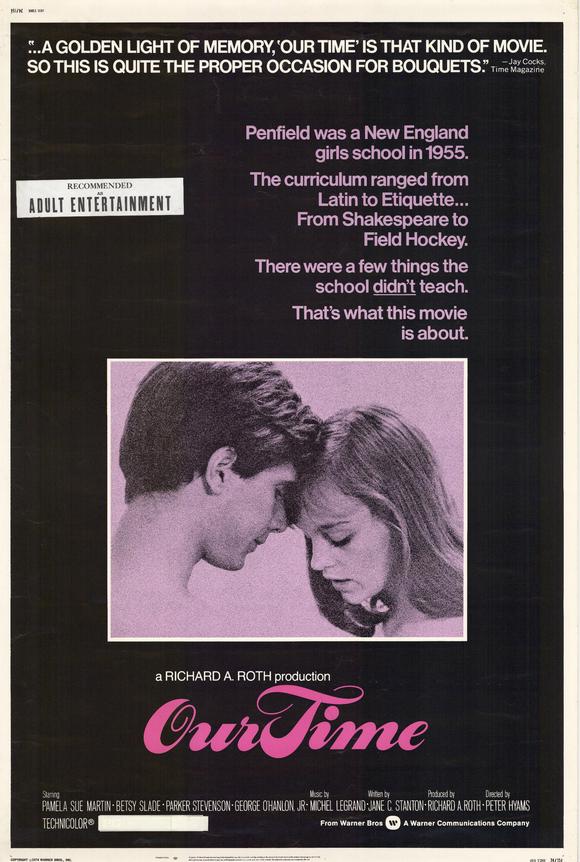
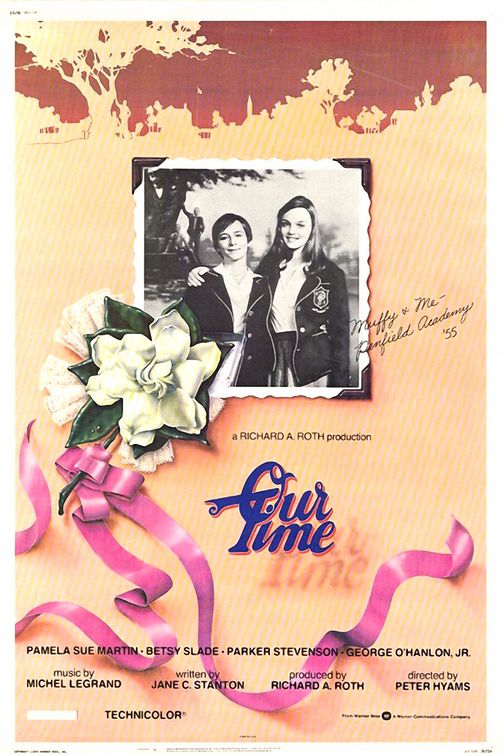
Abby (Pamela Sue Martin) and Muffy (Betsy Slade) are two teen girls and the best of friends that are attending a New England all-girls school during the 50’s. Abby is in love with Michael (Parker Stevenson) and the two sneak off one weekend and consummate their relationship, which makes Muffy jealous. She is not as pretty as Abby and has a hard time getting boyfriends, but decides one night during a Christmas party to have sex with Malcolm (George O’Hanlon Jr.) in the backseat of a car simply to feel what it is like. Their experience isn’t as enjoyable, but Muffy becomes pregnant anyways and the four then spend the rest of the time looking for an underground abortionist to terminate her pregnancy.

On the technical end the film is slick. I particularly liked the opening tracking shot that takes place in a church. The camera starts at the front of the church showing a close-up of the headmaster singing with the choir and then pulls back down the side aisle to show Abby sneaking in late and then goes back up the middle aisle as she looks for a seat. In fact just about every scene features some form of a tracking shot, which may get a little overdone, but helps give the film a certain visual liveliness. Unlike Leonard Maltin who in his book described the color photography as being ‘bad’, I found it to be quite vivid with a nice soft focus lens that gives it a nostalgic-like appeal.

The story itself is predictable, but I enjoyed the sometimes humorous takes of the sexual repressive, stifling attitude of the era and how the students were made to feel like they were being watched and monitored at every second. Abby’s and Michael’s sexual encounter inside a hotel room is quite amusing, but the one done later on between Muffy and Malcolm is painful to watch and not very realistic, looking more like two clothed bodies on top of each other without much effort to simulate the sexual motions.

Martin is excellent in the lead and ironically starred just two years earlier in a similar film about a young unwed woman looking for an abortionist entitled To Find a Man. Stevenson, who later co-starred with Martin in ‘The Hardy Boys/Nancy Drew Mysteries’ TV-show looks like he is barely past puberty. Jerry Hardin, Cliff Emmich, Robert Walden and Debralee Scott can all be seen in brief bits. This is also the only other film appearance of Karen Balkin, who played the bratty student in The Children’s Hour and plays a similar type of character here.

The only issue I had with the film is with the abortion segment. Overall, from a purely dramatic level I felt these scenes were compelling and the best moments in the movie, but it seemed unrealistic especially from a 1950’s perspective that none of the four would try to convince Muffy to keep the baby. It almost comes off like these are 70’s teens with more modern sensibilities that were transplanted into a different time period than actual characters from a bygone era. The plot also becomes more like a political statement than a story and seems to lean too heavily on a liberal point-of-view.

our time 3

My Rating: 6 out of 10

Released: April 10, 1974

Runtime: 1Hour 30Minutes

Rated PG

Director: Peter Hyams

Studio: Warner Brothers

Available: DVD (Warner Archive)

The Children’s Hour (1961)

childrens hour

By Richard Winters

My Rating: 4 out of 10

4-Word Review: Ruined by a lie.

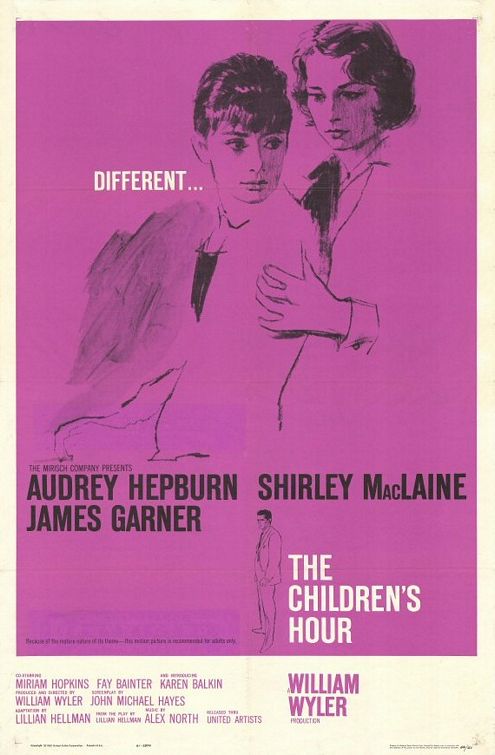
Martha and Karen (Shirley Maclaine, Audrey Hepburn) are two single young women running an all-girl’s school. They have the respect of the community and the parents, but that suddenly changes when one of the students named Mary (Karen Balkin) decides to spread a rumor that Martha and Karen are lovers. This sends everything into an uproar. All the students are moved out and the two women find themselves fighting desperately for their reputations and livelihoods. Karen’s boyfriend Joe (James Garner) remains their staunch supporter, but eventually even he begins to have his suspicions.

The film is based on the landmark play written by Lillian Hellman which ran for 691 performances in 1934 and was based on a true incident that happened in Scotland in 1810. The original film version of the play was made in 1936 and entitled These Three that was also directed by William Wyler and starred Miriam Hopkins as Martha who in this film plays Martha’s Aunt Lily. That film was heavily watered down with the lesbian element completely taken out and instead has the rumor revolve around the two teachers being in love with the same man.

This second film version was supposed to be more like the play, but hardly seems worth the effort. Although Wyler makes some attempts to make it seem more cinematic it still comes off very much like a filmed stage play and a static one at that. Lots and lots of talk with a narrative that is quite plodding and predictable. Having the story work more in a fragmented style might have helped, but either way it is never very engrossing or compelling. It also completely skips over the libel trial, which I thought could’ve given some added drama and it never completely explains why the Aunt Lily character avoided testifying. She comes up with the lame excuse that she was touring with her show, but I felt it was more because she secretly knew Martha was a closet lesbian and didn’t want to have to confront that and the film should’ve made this more clear.

It is also unintentionally funny at times especially the part where actress Fay Bainter’s eyes get bigger and bigger as Mary whispers her ‘shocking’ secret into her ear. Balkin also overdoes the facial expressions, which was probably due to too much coaching on the part of Wyler, but with that said her presence in the film is fun and gives the proceedings a liveliness that is otherwise stagnant.

The film really isn’t all that groundbreaking either and handles the delicate issue in too much of a timid way. For instance there is a scene where Martha admits to her homosexual feelings and states that she feels ‘ashamed’ for having them and Karen counsels her by stating that ‘you did nothing wrong’ because ‘nothing happened’, but what if it had then would it have been wrong? I tend to lean towards the latter making the production seem as stale and prejudicial as the public at the time. I was also confused as to how the two women could remain living at the school when all the students had moved out and they no longer had any income, or how they were still able to have groceries delivered to them.

My Rating: 4 out of 10

Released: December 19, 1961

Runtime: 1Hour 47Minutes

Not Rated

Director: William Wyler

Studio: United Artists

Available: DVD, Blu-ray, Amazon Instant Video

Last Night at the Alamo (1983)

last night at alamo

By Richard Winters

My Rating: 6 out of 10

4-Word Review: Life at the bar.

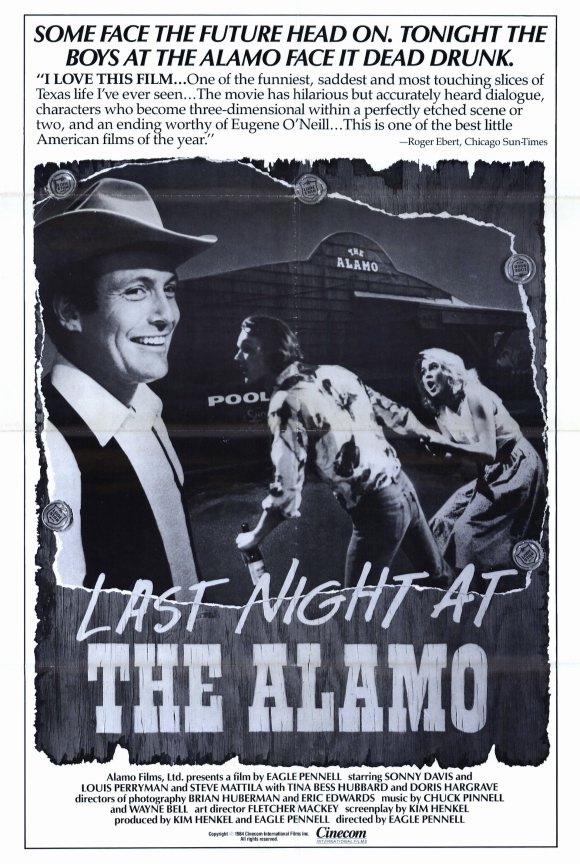
It’s the last night of business for The Alamo bar in Houston, Texas. Some developers have purchased the land and plan on constructing a skyscraper on the site much to the dismay of the regular patrons. There’s Icabod (Steven Mattila) a wiry, creepy looking fellow who seems to bitch about everything and anything. There is also Claude (Lou Perryman) who has just been kicked out of his house by his wife and spends he majority of the night on the phone begging her to let him comeback as well as Cowboy (Sonny Carl Davis) who has big dreams of becoming a Hollywood star, but can’t seem able to hold down a job for any lengthy duration.

The film was shot in black-and-white on a measly budget of $25,000. The majority of it was done inside a place called The Old Barn, which was a popular neighborhood bar in Houston. The scenes where done during the day, so as not to interfere with the regular customers coming in during the evening. Kim Henkel who is best known for penning The Texas Chain Saw Massacre wrote the screenplay as well as appearing as a character named Lionel. Director Eagle Pennell appears briefly as Bo and his wife Peggy can be seen as Ginger.

What makes this film so interesting is the fact that nothing really happens. Instead it gets filled with a lot of rhetorical arguments, insignificant conversations and down-and-out characters much of what you’re likely to find on a regular night at any neighborhood bar across the country. The film takes the ‘Cheers’ format, but with more of a caustic, darker sense of humor. Although this minimalistic approach may sound boring it actually isn’t and in many ways is surprisingly engaging, refreshing and even daring.

The eclectic cast, many of whom were local performers who had not appeared in a film before, really helps. The Davis character who wears a big cowboy hat to cover up is balding head and goes to great lengths to try to save the bar even calling the state capitol in Austin for assistance only to find that there is nothing they can do because nobody ‘important’ had ever gone there is especially endearing. Perryman, who was tragically murdered in 2009, is quite amusing in his desperate attempts to reconcile with his wife and Mattila has his moments as well particularly when he decides to hold a conversation with a wall because he feels it’s more interesting than talking to his girlfriend.

Barflies young and old should appreciate this low budget gem as it hits the essence of bar life and those that frequent them head on while taking an offbeat approach that most Hollywood films wouldn’t dare to do. Henkel and Pennell reteamed 10 years later to create the similarly themed Doc’s Full Service about people who frequent a Texas service station.

My Rating: 6 out of 10

Released: October 2, 1983

Runtime: 1Hour 21Minutes

Not Rated

Director: Eagle Pennell

Studio: Cinecom Pictures

Available: VHS