Heroes (1977)

heroes

By Richard Winters

My Rating: 4 out of 10

4-Word Review: Adjusting to civilian life.

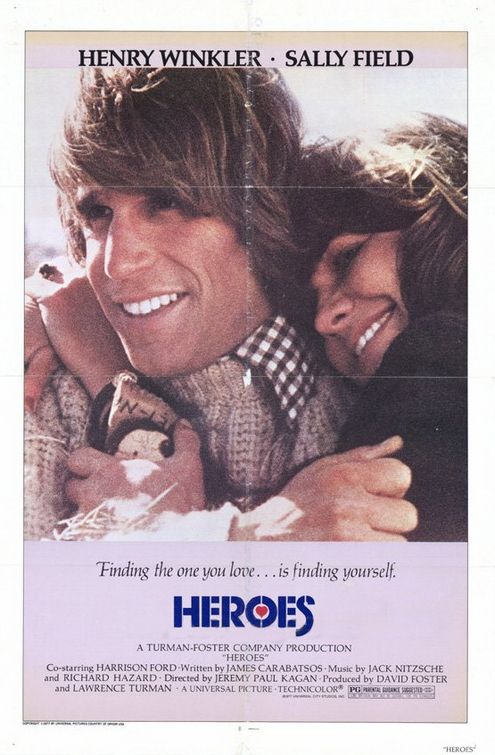
Jack (Henry Winkler) is a Vietnam Vet. still suffering from nightmares from his war time experiences. He has been in and out of the psyche ward at the veteran’s hospital, but has come up with an idea that he feels will makes both him and his buddies a lot of money. He wants to start a worm farm to be used as fisherman’s bait, but must board a bus to California to do. There he meets Carol (Sally Field) a woman who is engaged to be married and was a war protester during the 60’s. The two don’t get along at first, but eventually a relationship is made as she and his cousin Ken (Harrison Ford) help Jack fulfill his dream.

The movie is well filmed for the most part and even has a nicely shot and exciting foot chase down the busy streets of Manhattan, but the script by James Carabatsos, who was a Vietnam Vet. himself is too loosely structured and only glosses over the many issues that veterans face, which gives the whole thing a very shallow feeling. The only time we ever see any type of flashback’s to the experiences that Jack had while fighting in the war is at the end even though I felt the film would’ve been much stronger had this been shown throughout. The comical segments are misplaced and the story would’ve worked better had it just stuck to the drama.

The film also spends too much time with Jack and Carol’s budding romance, which for the most part comes off as forced. The cutesy ways that the two are shown constantly bumping into each other as their relationship ‘blossoms’ is contrived and having the two already as a boyfriend/girlfriend from the very start would’ve helped focus things more solely on Jack, which it doesn’t do enough of. I also felt that the segment where Carol pays for damages that Jack does at a café and then goes with him and his buddy Ken to an isolated location where she is promised to get paid back for it didn’t seem realistic. I realize this was the ‘70s where people were more relaxed about meeting strangers, but it still seemed dangerous and impractical for a lonely woman to be driving off with two men she had only met and were already acting peculiar to begin with.  A normal person would’ve simply sued him in small claims court to get back the money that they felt was owed.

Winkler does a terrific job in the lead and I felt it was a shame he hadn’t pursued his film career further instead of languishing away in television. Field is good as well as is Ford playing against type as a country hick. Character actor Stuart Margolin has a fun bit as a driver who picks the two up as they are hitchhiking and Val Avery is amusing as the bus driver who becomes increasingly annoyed at Jack’s antics.

The film has its share of pleasing moments, but on the whole it’s shallow and forgettable. There have been so many other better films on the subject that this one seems barley worth even mentioning.

My Rating: 4 out of 10

Released: November 4, 1977

Runtime: 1Hour 53Minutes

Rated PG

Director: Jeremy Kagan

Studio: Universal

Available: DVD, Amazon Instant Video
The Devil and Max Devlin (1981)

devil and max devlin

By Richard Winters

My Rating: 2 out of 10

4-Word Review: Working for the devil.

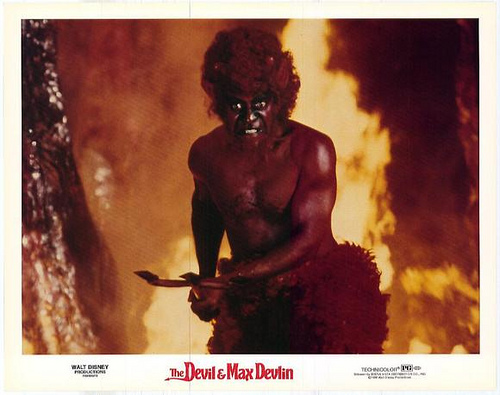
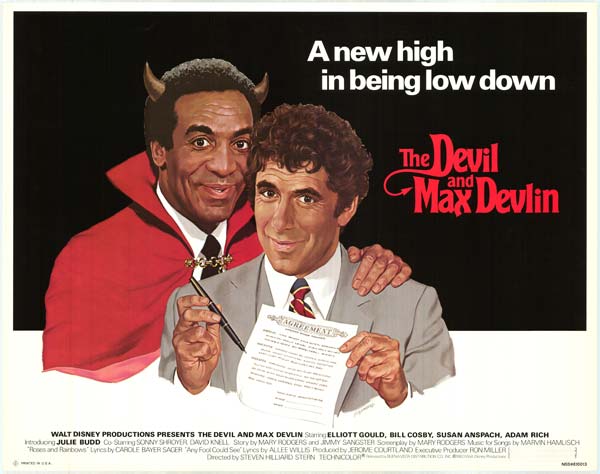
Max (Elliot Gould) works for a slumlord and does whatever he can to make life miserable for the tenants who rent from him. After getting run over by a bus while trying to chase down a delinquent tenant he finds himself in hell and face-to-face with the devil (Bill Cosby) who gives him a deal that will allow him to get out of dealing with ‘Level 4’, which is supposedly one of the harsher penalties for hell dwellers. The deal consists of Max getting three people to sign over their souls at which point Max’s will be freed, but as Max gets to know the people including that of 10-year-old Toby (Adam Rich) whose mother Penny (Susan Anspach) he is interested in marrying he becomes reluctant to follow through with it.

This movie was part of Disney’s effort to break away from the kiddie-like slapstick of their 70’s films and become edgier and more ‘hip’. This film along with The Black Hole, Condorman, and Tron where all produced to attract an older teen audience and gain a trendier appeal, but it pretty much failed and this movie was the worst of them. Part of the problem is that the main character is a man in his 40’s, which kids and teens cannot relate to. Most films need to have a protagonist the same age as its intended audience in order to build that connection and this one doesn’t. It’s also very slow with little or no action. I found myself completely bored with it during the second hour and I can only imagine what a 10 or even 13-year-old must have felt. The humor is minimal and not funny. It also lacks any type of ‘coolness’ with a plot that isn’t any more sophisticated than the formulaic stuff it had already been churning out, which at least was engaging on a mindless level, which this one isn’t.

I liked the scenes shown from hell, but that is about it. The script, which was written by Mary Rodgers who had earlier success with Freak Friday seems unable to understand things from a teen’s perspective while being quite predictable in the process. Also, the reasons for Max going to hell, which include cheating on a test in the 4th grade and stealing candy from a store as a child seem awfully trite. If hell truly does exist and minor stuff like that is enough to get people sent there then the majority of us will be going and heaven will be a very empty place.

Gould does surprisingly well, but I still felt he was miscast. Cosby is wasted and barely even used although the scene near the end where he appears in devilish makeup is effective and creepy. Anspach is equally wasted and Ronnie Schell who plays as an aggressive talent agent wearing some very loud suits is seen much too briefly.

This one is a definite pass even for Disney fans. It’s too edgy and scary for little kids, not hip enough for teens while being too watered down for adults.

devil and max devlin2

My Rating: 2 out of 10

Released: March 6, 1981

Runtime: 1Hour 36Minutes

Rated PG

Director: Steven Hilliard Stern

Studio: Buena Vista Productions

Available: DVD, Amazon Instant Video
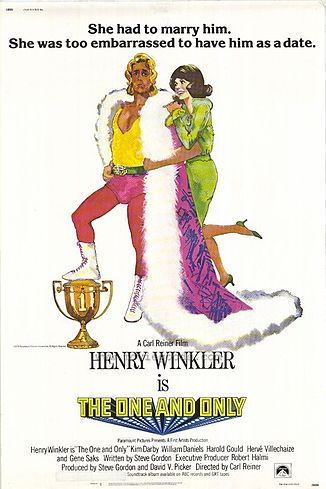
The One and Only (1978)

the one and only 1

By Richard Winters

My Rating: 4 out of 10

4-Word Review: Struggling actor becomes wrestler.

Andy Schmidt (Henry Winkler) is a college student with a driving ambition of becoming a star. He is constantly doing things to be the center of attention including being a scene stealer in every stage play that he is in even if his role is minor. He meets and falls in love with Mary (Kim Darby) and the two move to New York, but find that life in the big city can be difficult especially when Andy is unable to secure any type of acting gig. Then by chance he meets Milton (Herve Villechaize) who is a dwarf wrestler that gets Andy connected to his promotor Milton (Gene Saks). Milton thinks Andy’s need for attention and flamboyance would be perfect for the theatrics of the wrestling world and although he is initially reluctant eventually starts to love it even when his wife hates it and threatens to leave him unless he quits.

Winkler’s performance is the film’s driving force and outside of his signature role as The Fonz this has to be his best work. I enjoyed the variety of characters that he plays in the ring, but the character himself tends to be quite obnoxious and borders on being a complete turn-off especially at the beginning. It is also hard to believe that anyone could fall in love with someone who is so extremely narcissistic and self-centered making the whole romance angle seem forced. The role also, during the scenes when he is in the ring and wearing very little, shows just how short and puny Winkler really is.

The script by Steve Gordon, who later went onto to pen and direct the Dudley Moore version of Arthur, seems reluctant to dive completely into the wrestling angle even though these scenes are by far the most interesting and funniest and when it gets away from the ring its predictable and contrived. I also couldn’t understand how they were able to maintain an apartment as small as it was when Andy was unable to get any type of job or income and the idea that they had unprotected sex and brought in an infant into the world when they could barely support themselves seemed utterly ludicrous. The film’s setting is during the 50’s, but it never comes full circle into the 70’s making it seem incomplete and the characters not as evolved as they could’ve been.

Darby does well in her part and works as a nice anchor to Winkler’s unbridled zaniness. I also really liked Polly Holliday best known for her role as Flo on the long running TV-series ‘Alice’ as Darby’s uptight mother who finally lets loose at the very end while watching Andy in a wrestling match. Saks has a lot of funny lines especially the running joke dealing with his ‘weird’ son, but his glasses that seem glued to his forehead eventually became annoying to look at.

On the negative side you also have rotund actor Richard Karron who’s excessively hairy, flabby physique, which gets shown in all of its unglorious splendor during one particular match may possibly be one of the grossest sights ever put on celluloid. The casting of the infant is another issue as when he is shown in the hospital he has a full head of blonde hair and then in all the subsequent scenes he has dark black hair.

My Rating: 4 out of 10

Released: February 3, 1978

Runtime: 1Hour 37Minutes

Rated PG

Director: Carl Reiner

Studio: Paramount

Available: DVD, Amazon Instant Video

Static (1985)

static 1


By Richard Winters

My Rating: 5 out of 10

4-Word Review: Everybody sees only static.

Ernie Blick (Keith Gordon) works at a crucifix factory, but dreams of making it big with his secret invention. The whole town that he lives in is abuzz about it and many take bets as to what it is. However, once Ernie unveils it no one is impressed. Ernie insists that he has created a device that can show live images of heaven, but all anyone else can see on the TV screen is static. Ernie becomes frustrated that no one can appreciate what he has done so he hijacks a bus carrying a group of senior citizens in order to create a media event that will allow him to share his invention with the rest of the world, but things don’t go as planned.

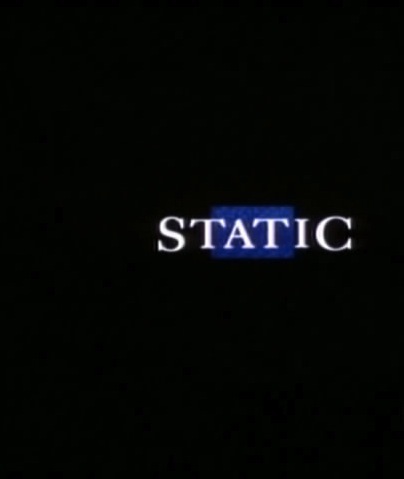
The film has that refreshing look and feel of an authentic indie flick made long before it was trendy and still in its infancy of being a trailblazer for original ideas. It’s fun and clever most of the way including a memorable shot of Ernie’s weird crucifix collection. The humor is subtle and hip with a cool music selection from lesser known 80’s bands. Director Mark Romanek shows great visual flair with his use of unique settings and color designs. The dialogue and characters are both engaging and quirky. I also loved the opening credits, which features a small, static filled TV screen in the distant background along with the sound of a low hum, which I found to be strangely hypnotic.

Gordon, who co-wrote the screenplay, does well in a difficult role where the viewer is supposed to find him likable and appealing despite the fact that he is clearly a bit unhinged. Amanda Plummer as his girlfriend gets a rare turn as being the most normal one in the film, which is interesting. Bob Gunton has a few choice moments as a conniving preacher man named Frank and Jane Hoffman is amusing as a senior citizen who tries to help Ernie on his mission.

Unfortunately the story doesn’t carry the quirky idea to a successful completion. It might have worked better had there been some image of some kind seen and then everyone could’ve debated whether that was indeed heaven or not instead of just seeing static, which comes off like a big buildup to nothing. The satire is too obvious and its overall message frustratingly vague. The violent and completely unexpected tragic ending is jarring and unnecessary and ruins its otherwise pleasant, whimsical tone.

There is also a scene where Gordon and Plummer go to a restaurant and order food, but when it gets served they barely touch it and then a minute later get up and leave after paying the bill, but why pay for something or even order if you’re just going to leave it there untouched? This is an annoying thing that I’ve seen happen in other films as well. I hate to sound preachy, but sometimes when I see these types of scenes I feel like screaming ‘There’s kids starving in Africa, so don’t waste your food people’!

static 2

My Rating: 5 out of 10

Released: October 1, 1985

Runtime: 1Hour 33Minutes

Rated R

Director: Mark Romanek

Studio: Siren

Available: VHS 

The Getaway (1972)

getaway 1

By Richard Winters

My Rating: 8 out of 10

4-Word Review: Bank robbery goes bad.

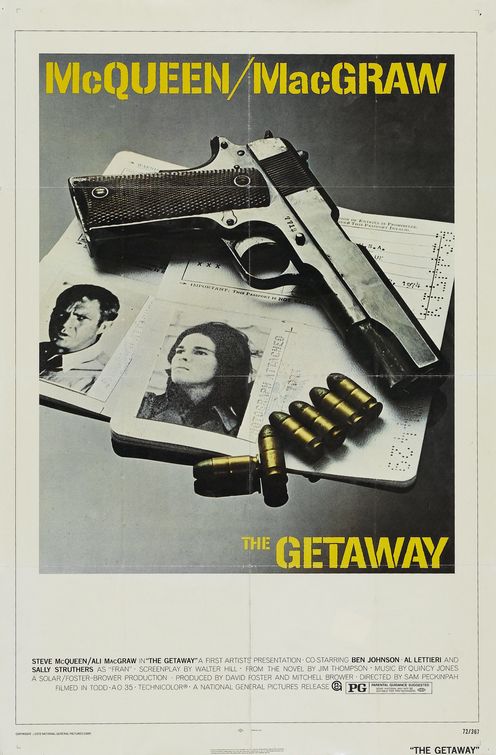
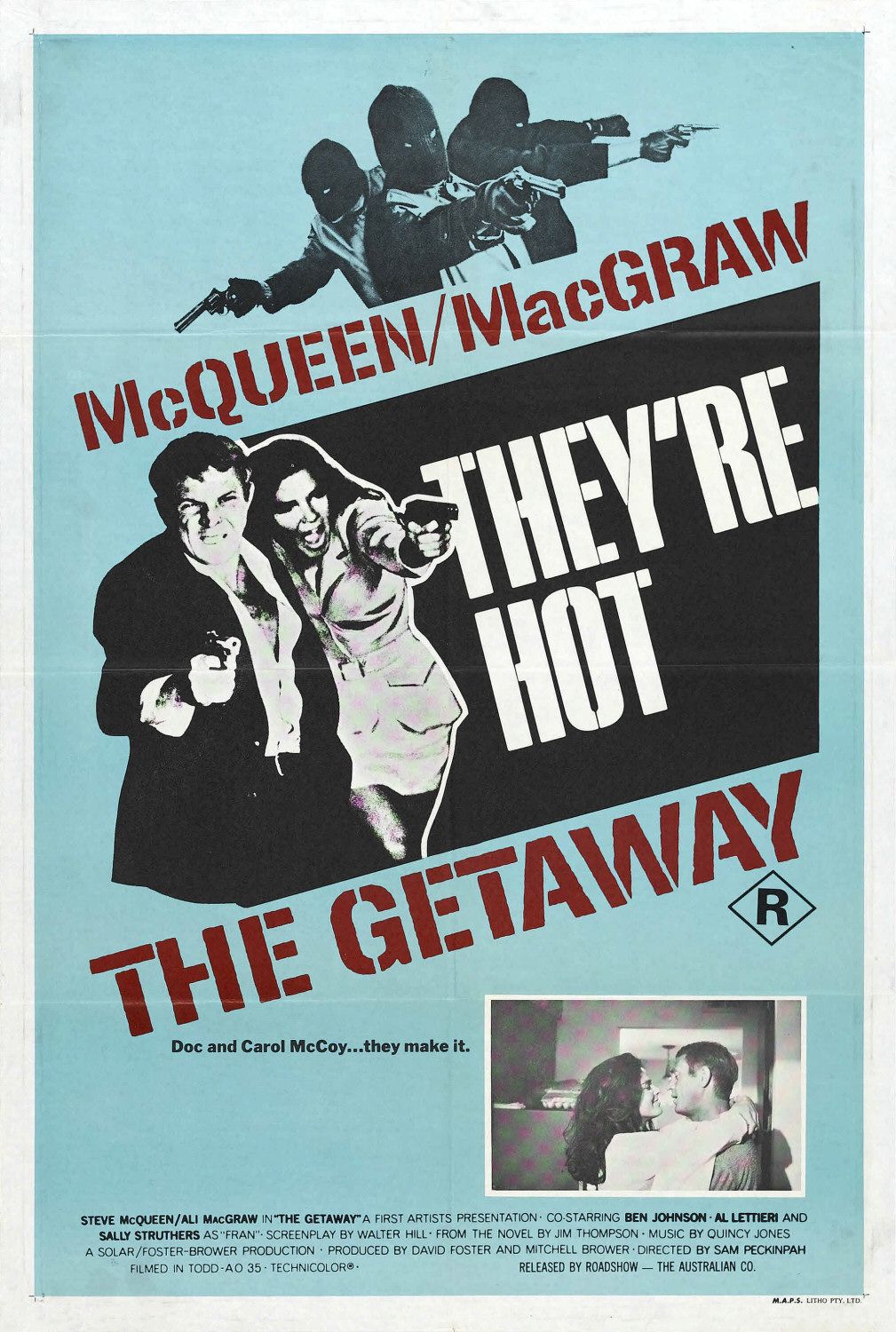
Based on pulp writer Jim Thompson’s novel the story centers on Doc McCoy (Steve McQueen) who is stuck in the Texas State Prison and itching to get out. He gets his wife Carol (Ali MacGraw) who is on the outside to strike a deal with Sheriff Jack Benyon (Ben Johnson) where he will get a release as long as he agrees to rob a bank using Benyon’s men. Doc is somewhat reluctant, but agrees to go along with it only to find that after the robbery he has been double-crossed and now along with his wife must make a dash for Mexico while being chased by the cops and going through a wide assortment of unexpected obstacles.

Action director guru Sam Peckinpah has done many classic films most notably The Wild Bunch and Straw Dogs, but this one has always been my favorite as it’s a nice mix of action, character study and comedy. In fact it’s the subtle humor that I like best. I get a kick out of the shot showing Benyon’s brother’s henchman riding in a convertible down a highway while having their hands on their cowboy hats in order to keep them from blowing off. I also chuckled at the book actor Dub Taylor has in his back pocket while cowering under a table during a shootout or what actor Al Lettieri immediately does after finding a dead man hanging in a bathroom.

Peckinpah also makes great use of sound particularly at the beginning where during the opening credits we hear no music, but instead the monotonous sounds of the machines inside the prison workshop, which helps convey Doc’s increasing frustration and this sound doesn’t stop until the exact second that the prison doors open up and allows him out. When there is music it’s effective and distinct particularly the harmonica solos by Toots Thielemans.

Of course Peckinpah’s trademark action sequences are excellent and maybe even superior to his other films because the situations are more unique including an exciting segment showing the couple trapped inside a garbage truck as well as an impromptu shootout along the main street of Fabens, Texas. The only complaint is the scene where Doc’s car goes crashing through someone’s front porch and yet the car shows no visible damage; one shot does show a crack in the corner of the windshield, but then in the next shot it has magically disappeared.

McQueen’s ability to show effortless cool and make an edgy character likable proves what a legendary actor he is and it’s a shame that he doesn’t get placed with the best of them amongst casual movie fans because he really should. MacGraw is at the peak of her beauty here and her moments of vulnerability are great. Struthers gives the best performance of her career as an unfaithful wife of a kindly veterinarian (Jack Dodson) and Lettieri, who unfortunately died at the young age of 47 just 3 years after this film’s release by a heart attack brought on by severe alcoholism, which was already painfully apparent to the cast and crew during the filming of this adds great tension as Doc’s double-crossing partner.

The film also makes great use of its Texas locations bringing out the ruggedness of the region without overdoing it. I particularly liked the scenes in the junkyard as well as footage shot on-location inside the Huntsville prison using actual prisoners and the longshot showing the flat, barren landscape that Doc first sees when he gets out.

I’ve watched this movie many times and never cease to grow tired of it. In fact it seems even more original after multiple viewings. It was unwisely remade in 1994 that starred Alec Baldwin, who doesn’t come close to McQueen’s stature. This version is by far the better one and the other should be avoided.

getaway 2

My Rating: 8 out of 10

Released: December 13, 1972

Runtime: 2Hours 2Minutes

Rated PG

Director: Sam Peckinpah

Studio: National General Pictures

Available: VHS, DVD, Blu-ray, Amazon Instant Video, YouTube

Outlaw Blues (1977)

outlaw blues

By Richard Winters

My Rating: 4 out of 10

4-Word Review: Singer on the run.

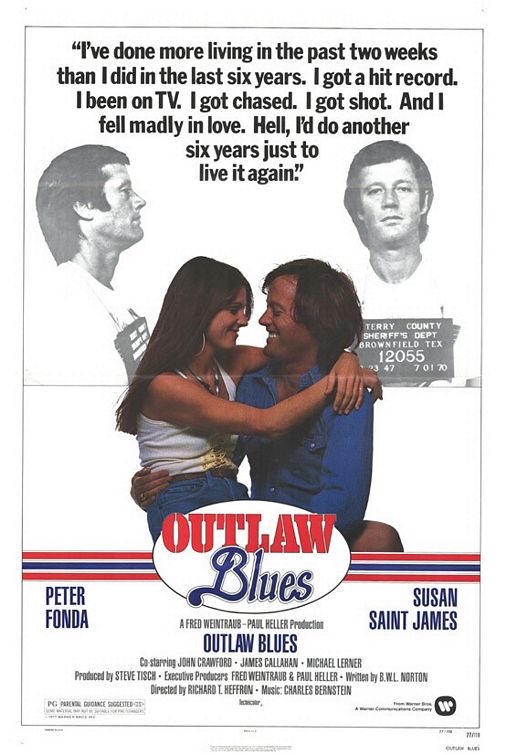
When country music giant Garland Dupree (James T. Callahan) visits a Texas prison in order to hold a Johnny Cash-like concert for the inmates he meets up with Bobby Ogden (Peter Fonda) a prisoner who while spending time in jail has written a song called ‘Outlaw Blues’. Garland likes the song so much that he decides to steal it and make it his own only to be confronted by Bobby who once out on parole will stop at nothing to get it back and expose Garland for the fraud he is. With the help of Tina (Susan Saint James) who acts as his manager he does just that, but finds himself again on the run from the cops after accidently shooting Garland during a confrontation inside a recording studio.

This film is notable for not only being filmed in Austin, Texas, but also being the first film to ever use Austin as a setting. The movie can be fun for people from the area especially those living in the city during the mid-‘70s. There are a lot of car chases that occur in the center of town making it entertaining to see all the old buildings some of which still stand today. The scene that takes place at what was then called Texas Memorial stadium during halftime of a Longhorn’s football game where Tina and Bobby take part as members of the marching band is pretty cool as is Tina’s serene houseboat that she lives in and has docked on the Colorado River.

Unfortunately the story itself evolves little and relies heavily on a lot of car chases and clichéd one-dimensional characters. Bobby’s hit song is too low key and melodic making it hard to imagine why so many people would get so crazy about it as a more up tempo country/rock sound would have worked better and given the soundtrack more of a kick.

The film also suffers from a few goofs and lapses of logic. The biggest one is when a lone cameraman films Bobby accidently shooting Garland and it gets replayed on the evening news. Yet when it gets shown it has several edits and footage of the incident from different viewpoints and angles, which if truly shot by just one camera wouldn’t have been possible. The idea of having Garland chasing Bobby down through the streets of Austin in broad daylight while shooting at him is utterly insane even for a deluded, egotistical character that he is as it would just get him thrown into jail. Since the Garland character is portrayed as having a lot of money then he should do what most rich people do when they want someone dead, which is hire someone else to do it while creatively covering up the paper trail.

Fonda too laid back in the lead and comes off as transparent and boring. Saint James, Callahan and John Crawford as an obsessed police chief lend some amusing support, but their presence as well as a nifty boat chase at the end cannot save a film that is otherwise generic and silly.

My Rating: 4 out of 10

Released: July 15, 1977

Runtime: 1Hour 40Minutes

Rated PG

Director: Richard T. Heffron

Studio: Warner Brothers

Available: VHS, DVD (Warner Archive)

Wise Guys (1986)

wise guys

By Richard Winters

My Rating: 3 out of 10

4-Word Review: Hiding from the mob.

This review contains some Spoilers!

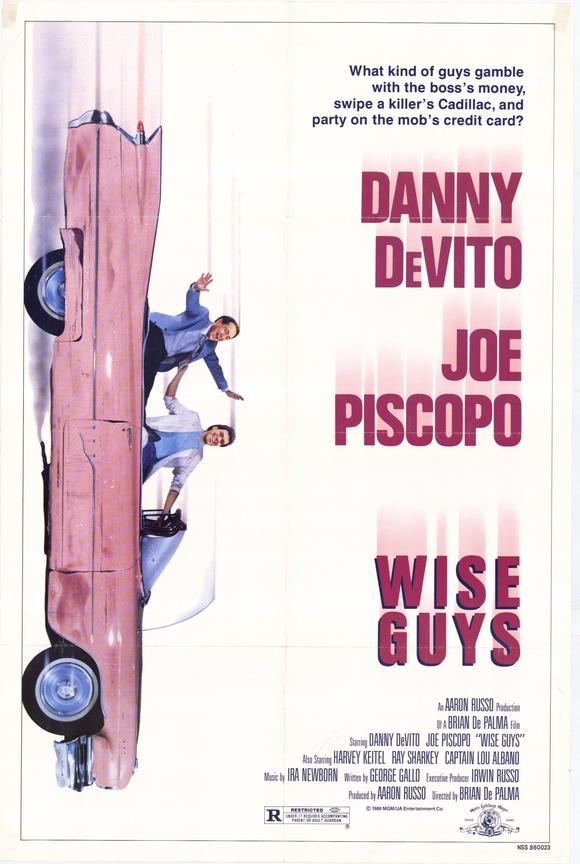
Harry and Moe (Danny DeVito, Joe Piscopo) work as errand boys for a Newark, New Jersey mob run by Castelo (Dan Hedaya). They are tired of doing all the odd, dangerous jobs that no one else wants to and long to one day break away and open up their own restaurant, but lack the required capital. Then one day they are assigned to go to the track to bet on a certain horse, but Harry is convinced that another one will win, so they place all $250,000 dollars on that one only to lose. Now they must go on the run searching for Harry’s Uncle Mike who they hope can replenish them with the lost money before the mob’s henchman The Fixer (Captain Lou Albano) catches up with them to dispense their punishment.

Director Brian De Palma returns to his comical roots of Hi Mom! and Greetings, but unfortunately this film lacks the creativity and originality of those and instead comes off as just another tired, generic 80’s comedy. The attempted twists are not interesting or surprising. Having them lose on a ‘sure thing’ after they initially start gloating when it looks like their horse would win is comedy writing 101. The Sting-like ending is equally contrived and something I figured out long before it gets revealed. Again, you simply have to know the rules of a Hollywood comedy, which states every ending must be a ‘feel good’ one, so if a main character suddenly dies you automatically know there’s got to be some sort of catch to it such as is the case here.

The motivations of the characters are loopy. For one thing going back to their boss while putting up only a mild resistance after they’ve lost the money for what will most definitely be punishment and torture seems dumber than dumb even for these dimwits. The idea that they would both stay loyal to one another even during torture is not believable. Yes it may sound noble, but realistically especially when their families were being threatened it would have to be expected that at least one of them would crack and betray the other. Then the boss has them assigned to kill the other one and for a while they both secretly consider it, but this doesn’t make sense either because if they are going to remain so loyal to the other during torture then shouldn’t it be expected that they would immediately tell each other that they’ve been pegged to kill the other and then come up with some alternative plan to get out of it?

The destruction of Fixer’s convertible becomes another logical blunder. Yes, they both despise him and the chance at destroying his prized possession would seem tempting to anyone in their shoes, but they also need his car to get away and go places, so destroying it until it is literally inoperable becomes really stupid.

DeVito is great at playing arrogant, sarcastic jerks, but as a sympathetic good guy he is benign and out-of-place. I also didn’t care for wrestler-turned-actor Albano’s presence as his character is too one-dimensionally crude and obnoxious and the part where he is shown lying on his back with his big fat belly exposed is just plain gross to look at.

There have been some great gangster movies throughout cinema history, but they all tend to be ones that take the genre seriously and when they try to give it a comical spin it comes off as lame like this one. The part where Harry’s grandmother (Mimi Cecchini) reveals a million dollar bills that she has ‘stuffed under her mattress’ and the way all of Castelo’s henchmen eagerly light up his cigarette every time he puts one in his mouth, which happens twice with the second time being the gem, are the only two mildly amusing moments in this otherwise flat comedy.

My Rating: 3 out of 10

Released: April 18, 1986

Runtime: 1Hour 40Minutes

Rated R

Director: Brian De Palma

Studio: MGM

Available: VHS, DVD, Amazon Instant Video
Urban Cowboy (1980)

urban cowboy 1

By Richard Winters

My Rating: 3 out of 10

4-Word Review: Ride the mechanical bull.

Bud (John Travolta) has just moved to the big city of Houston and is looking to fit-in and prove himself to the local crowd. He finds his niche at a local hang out called Gilley’s where he gets noticed for the way he rides the mechanical bull that is there. He also meets Sissy (Debra Winger) who he quickly falls in love with and marries. Sissy takes an interest in riding the bull as well, but Bud refuses to allow it as he is afraid it might compete with his own macho image. When she does it anyways he becomes angered and the two break-up, but secretly long to get back together especially when the other relationships that they get into aren’t as fulfilling.

This movie, which is based on a magazine story, is highly disjointed and doesn’t have any type of seamless pace. There is way too much footage of people dancing on the barroom dance floor and the amount of songs that get played, which ends up being 30 as I counted them during the closing credits, is too many. The songs themselves are great, but by playing so many it starts sounding more like a radio station playlist than a movie soundtrack. The Texas caricatures also get overdone. In this movie everybody wears a cowboy hat even though I have now been living in this state for 4 months and can count on the fingers of one hand how many people I’ve seen wearing one since I’ve moved here. The Texas drawls of the characters are a bit too heavy and at one point during Bud’s job interview the interviewer refers to Bud as ‘boy’ or more aptly ‘Bo-AH’. I realized that this was made 35 years ago, so it may just be life from a different era, but it still seemed over-the-top and not a balanced, realistic view of the state as a whole.

Travolta’s presence doesn’t help as it reminded me of Saturday Night Fever as both of those characters go through the same type of growing pains into manhood. The sexist, immature way that he treats Sissy really got on my nerves and he was certainly not the type of character I would want to make the center point of a movie. Winger on the other hand is beautiful and far more appealing. The fact that she gets treated just poorly by her second boyfriend (Scott Glenn) is equally irritating and I started to wish they had written out the two dipshit male leads completely and made her the sole centerpiece of the story. I also liked Barry Corbin in support as Bud’s uncle, but the way he dies by getting struck by lightning is hooky.

The riding the mechanical bull stuff to me looks unintentionally funny and even strangely sexual. It’s also not all that interesting to watch and quickly becomes repetitive to look at, which severely diminishes the ‘exciting’ climatic sequence that it’s built around. The only scene involving the mechanical bull that I did like is when Winger gets on it and starts riding it in all sorts of different provocative poses, which was fun and sexy.

The second half of the film loses its focus completely and instead of being this intended gritty ‘boy-to-man’ drama becomes more like a soap opera where the emphasis is on whether Sissy and Bud will get to back together, which is not that interesting or original and the schmaltzy ending is Hollywood at its clichéd worst.

My Rating: 3 out of 10

Released: June 6, 1980

Runtime: 2Hours 12Minutes

Rated PG

Director: James Bridges

Studio: Paramount

Available: VHS, DVD, Amazon Instant Video, YouTube

Vanishing Point (1971)

vanishing point 1

By Richard Winters

My Rating: 7 out of 10

4-Word Review: Racing to San Francisco.

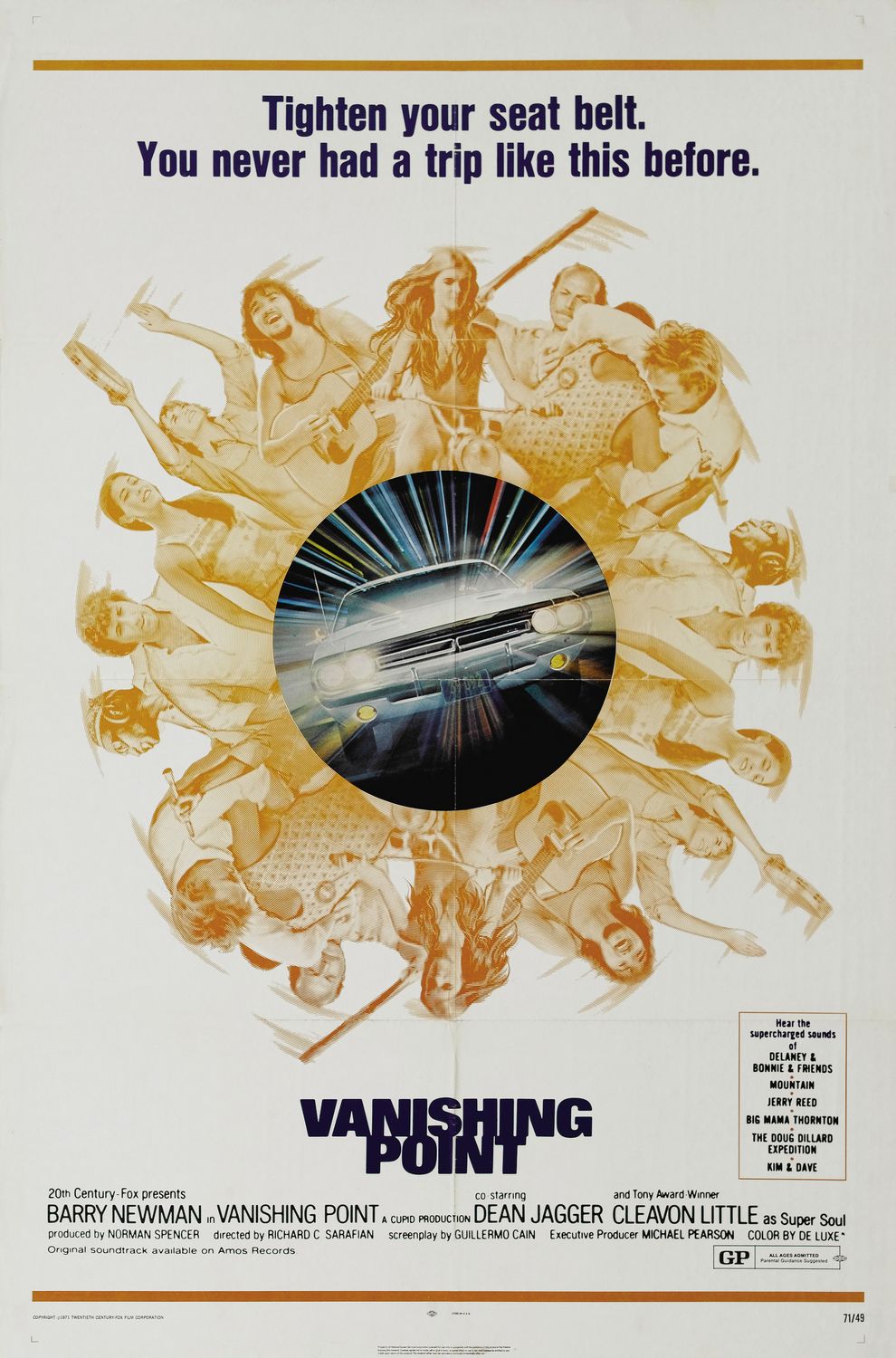
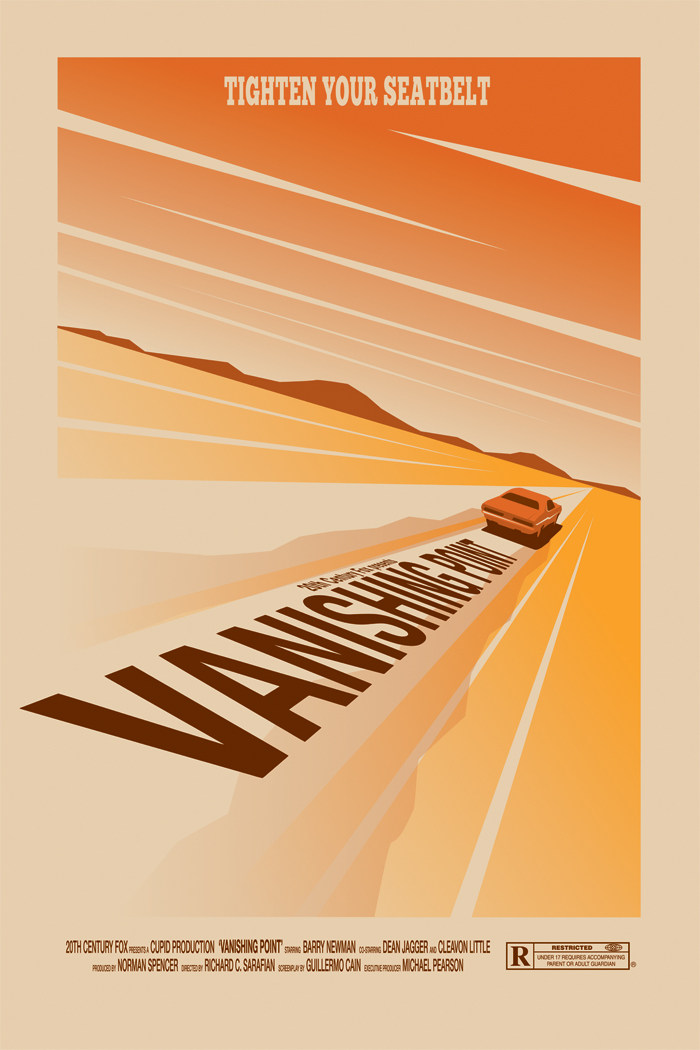
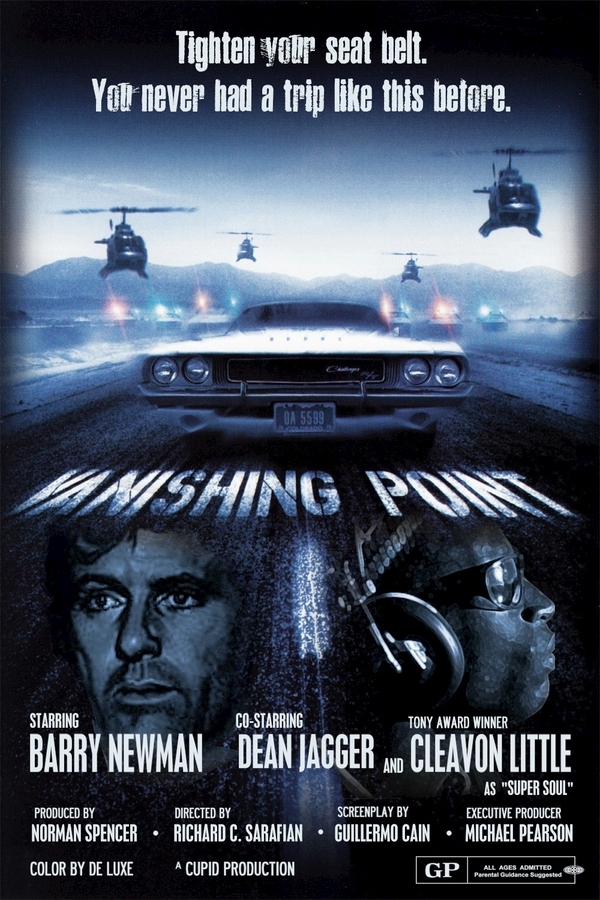
Kowalski (Barry Newman) is a car delivery driver whose next assignment has him driving a white Dodge Challenger R/T 440 Magnum from Denver to San Francisco. He is a former cop who seems disillusioned and detached from the world around him. To give his existence some meaning he decides to ‘challenge’ himself by making the delivery in record time and even makes a bet with a local drug dealer while purchasing some ‘uppers’ that he can get to San Francisco by 3:00 the next day. As his record drive proceeds he gets the attention of the local law enforcement from every state that he drives through, but none of them are able to stop him despite all efforts. He also attracts the attention of a local blind, black DJ named Super Soul (Cleavon Little) who has access to the police radio frequency and able to help Kowalski with his goal.

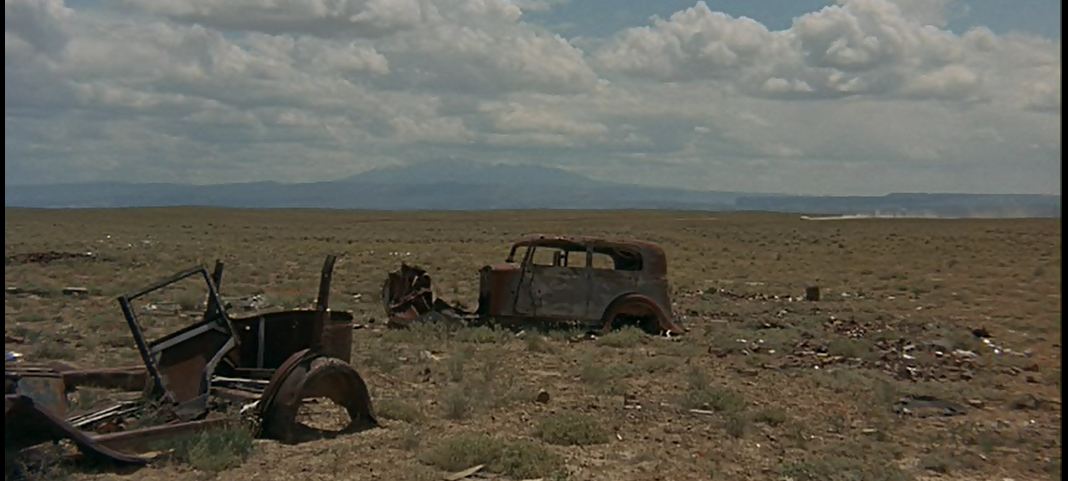
Richard C. Sarafain’s direction and John Alonzo’s cinematography are the real winners here. In fact my favorite scenes from this film are the long distance shots capturing the car driving along the lonely highways to the backdrop of the stunning western skies and its rugged, sandy landscape. This is a movie that will appeal to one’s emotional senses and bypass the need for logic. Certain things aren’t fully explained particularly Kowalski’s past, but the fact that it isn’t makes it more enjoyable. It’s the connection with his need for speed, escape and non-conformity that attracts us and it’s the adrenaline that propels the movie and viewer’s interest forward thus making this one of the quintessential road movies from its era or any other.

Capture 1


Capture 2

Newman seems an unusual casting choice as he really doesn’t have the dynamic star power or all that many lines of dialogue. He is also clearly in his mid-30’s for a part that seems better suited for some renegade, long haired 20-year-old, but in some ways his presence makes the movie more intriguing and distinctive by showing middle-aged people can have a dormant desire to rebel as well and sometimes even more so.

Little is terrific in what is probably the best performance of his career even though it seemed highly improbable and even ridiculous for a black DJ playing soul tunes at a radio station located in a small, isolated town inhabited by conservative, white, racist people. Severn Darden is edgy as a traveling evangelist and Dean Jagger is appealing as an old-time snake hunter. On the flip side of the 20th Century Fox DVD you can see the extended U.K. release that features a brief scene with Charlotte Rampling as a hitch-hiker. This sequence was intended to be allegorical, but really isn’t that impressive even though Rampling is quite attractive with her hair highlighted with blonde streaks.

Spoiler Warning!

The ending, which features Kowalski intentionally driving into some bulldozers parked in the middle of the road, which kills him instantly in a ball of flames, has proved through the years to be quite controversial and filled with many interpretations. I found it to symbolize Kowalski’s ultimate need for escape as he realized that he could never achieve the true freedom that he wanted, so he decided in a way to become a martyr and take his chances in another world beyond this one. The wry smile seen on his face just before he does it signifies the ‘fuck you’ that he gives to the authorities who are convinced that they finally have him cornered but really don’t. It also connects to the death of the counter-culture movement who by that time had realized that their dream of a utopian society filled with complete individual freedom and outside of mainstream control was never going to happen.

End of Spoiler Warning!

vanishing point 4


vanishing_point

My Rating: 7 out of 10

Released: January 15, 1971

Runtime:  1Hour 45Minutes (U.K. Version) 1Hour 39Minutes (U.S. Version)

Rated R

Director: Richard C. Sarafain

Studio: 20th Century Fox

Available: DVD, Blu-ray

The Christian Licorice Store (1971)

christian licorice store 2

By Richard Winters

My Rating: 2 out of 10

4-Word Review: He searches for answers.

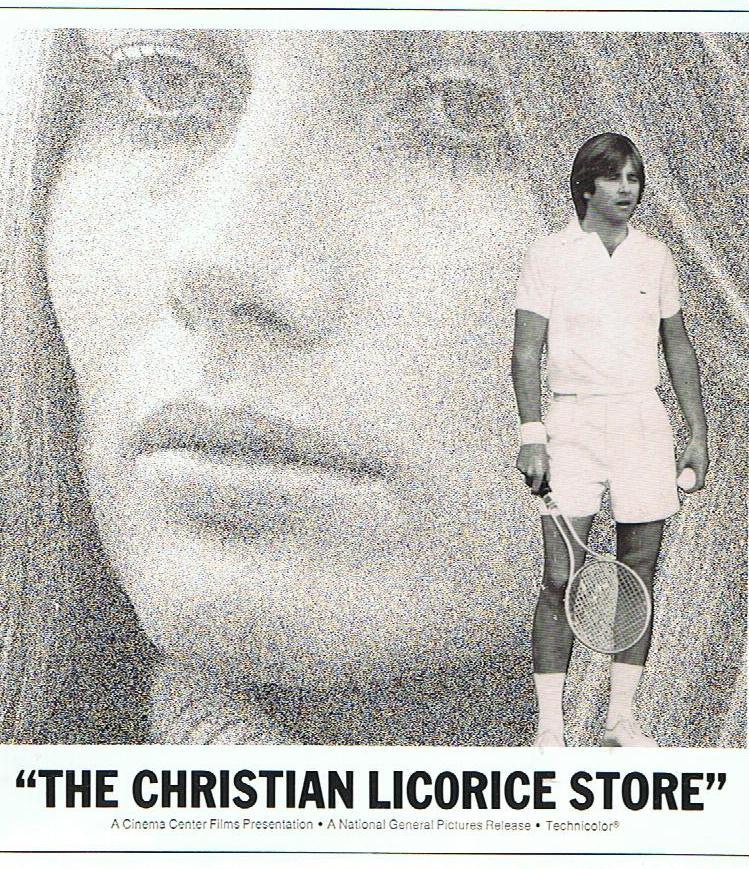
Cane (Beau Bridges) is a successful tennis player who has a close bond with Jonathan (Gilbert Roland) his mentor/coach who at one time during the 30’s was a tennis star himself. Things seem to be going well for him both on and off the court. He even starts fitting in with the chic Hollywood crowd and invited to some of their swanky parties. He meets Cynthia (Maude Adams) a beautiful photographer and their relationship begins to sizzle. Then Jonathan dies suddenly in his sleep and the emptiness in Cane’s life and the people in it come to a head. He begins searching for meaning and finds nothing, which eventually drives him away from his girlfriend, career and life in general.

The film was directed by James Frawley who is the son of actor William Frawley best known for his portrayal of Fred Mertz on the old ‘I Love Lucy’ episodes. James himself dabbled in acting a bit before turning to directing, but proves here to be completely in over-his-head. The attempt to replicate the French new wave type of filmmaking that had become so trendy at that time and done quite well by accomplished directors like Jean Luc Goddard and Michelangelo Antonioni is a disastrous dud and all the more reason why the artsy stuff should stay with the Europeans who have a better handle on it. From the very first shot forward this thing limps along with no pace, story or momentum. The cinema verite-styled takes go on for too long without enough visual flair to help carry it. The perceived ‘sophistication’ is nothing but an empty façade and an embarrassment to watch making it no wonder that the studio shelved this thing for 2 years before finally letting it out to a limited release.

Bridges does well, but the material offers him little to work with. Adams is surprisingly strong and this may be one of her best performances in an otherwise overlooked career. Silent film star Roland is solid as well particularly with the discussion he has with the two leads about aging and the quick passage of time, but he exits the story too quickly. Legendary French director Jean Renoir is the ultimate scene stealer even though he is only in it for less than five minutes, but clearly shows in that brief period how to own the screen and make the most of it in an almost effortless fashion.

The only thing that I liked about this sleep inducing 90-minute bore and actually even found original is the party scene where Beau meets up with several famous directors of the day including Monte Hellman and Theodore J. Flicker. The camera pans between several different side conversations of the various groups of people there and then everyone goes into a small theater to screen a new film where they then watch the opening credits to this film that they are all in, which I found to be kind of cool.

My Rating: 2 out of 10

Released: November 15, 1971

Runtime: 1Hour 30Minutes

Rated R

Director: James Frawley

Studio: National General Pictures

Available: None at this time.