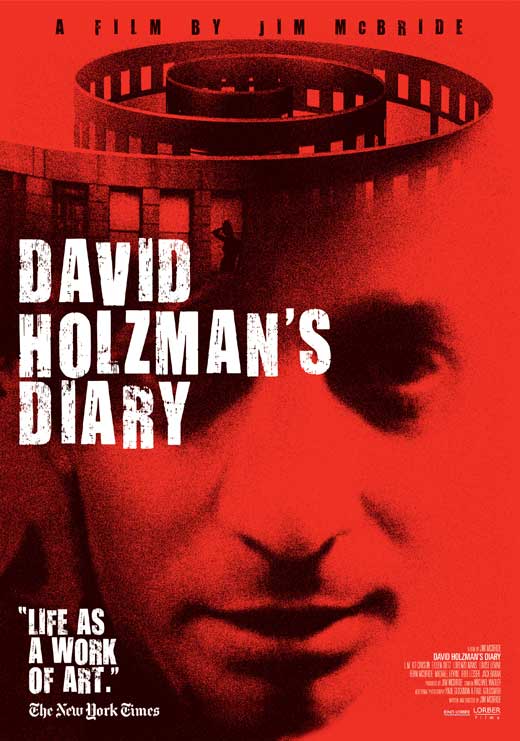
David Holzman’s Diary (1967)

david holzman 1

By Richard Winters

My Rating: 8 out of 10

4-Word Review: He records his life.

David (L.M. Kit Carson) is a young college-aged movie fan who wants to use the camera to not only record his life, but help him better understand and interpret reality. Unfortunately he finds that instead of clarifying things the camera instead brings out even more of reality’s complexities making his life and the world he is in even more confusing. It also inadvertently exposes a darker side to his personality that he wasn’t aware of which his voyeurism to both an attractive woman across the street as well as his live-in girlfriend Penny (Eileen Dietz) who eventually gets fed up with his film and him and moves out.

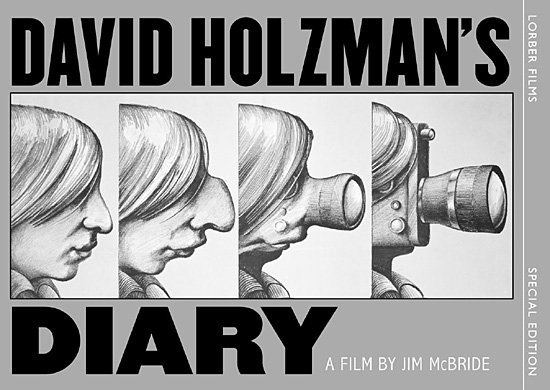
I realize the saying ‘ahead of its time’ can get a bit overused, but this is one case where that term really fits. This movie is cool on many different levels and features scenes and segments that you will never see done anywhere else. The Cinema verite style is perfect and I loved how the camera gets turned on itself as we are given a good background and visual to the type of camera that was used and why for its time was considered a cutting edge piece of machinery. The scene where he takes a shot of every image that he saw during a night of television viewing and then plays it back creating a mosaic of flashing images from shows and commercials is equally cool. The segment where he interviews a woman, which was apparently a man dressed in drag, but quite hard to tell, who stops her car in the middle of the street to tell him of her candid sexual desires while holding up traffic is quite amusing as is the part where he stalks a nervous lady from a subway car out onto the city streets.

The film also successfully transcends its time period. I have always said it is very easy to tell the time period or decade a movie was made usually after viewing it for only a few minutes, but this was one case where it is actually quite hard to tell. The detached, hip nature of the protagonist is still trendy and the film’s existential philosophical approach dealing with an artist’s need to recreate reality, but ultimately failing is as relevant today as ever. The loosely structured ad-libbed dialogue gives it a legitimate documentary feeling and was so believable that when audiences first viewed it during the 60’s they booed when they saw the closing credits and realized it had all been made-up. This was also the first American film to use the f-word and one of the first to feature full nudity, which is done by the attractive Dietz who later went on to play the face of the demon in the movie The Exorcist.

Although I saw this movie many years earlier and was already a big fan I watched it again during a special showing at the The Marchesa Theatre in Austin as a tribute to the film’s star who passed away in October of 2014. Afterwards many people got on stage to talk about how Carson had inspired them with their lives and careers and it included his son Hunter Carson as well as film director Guillermo del Toro who was probably the most entertaining.

If the film has any drawbacks it’s in the use of black frames that are shown in between shots where for several seconds the viewer will see no image at all and at times only a voice over. This might’ve been done for effect, but ends up giving it too much of an amateurish feel. There are also times when the camera stays too fixated on its subject making it look too much like talking heads with not enough cutaways or interesting camera angles. Overall though it’s still one-of-a-kind and worth checking out for a glimpse at experimental and original filmmaking at its purest.
david holzman 2

My Rating: 8 out of 10

Released: October 3, 1967

Runtime 1Hour 14Minutes

Not Rated

Director: Jim McBride

Studio: Direct Cinema Limited

Available: DVD, Blu-ray, Amazon Instant Video
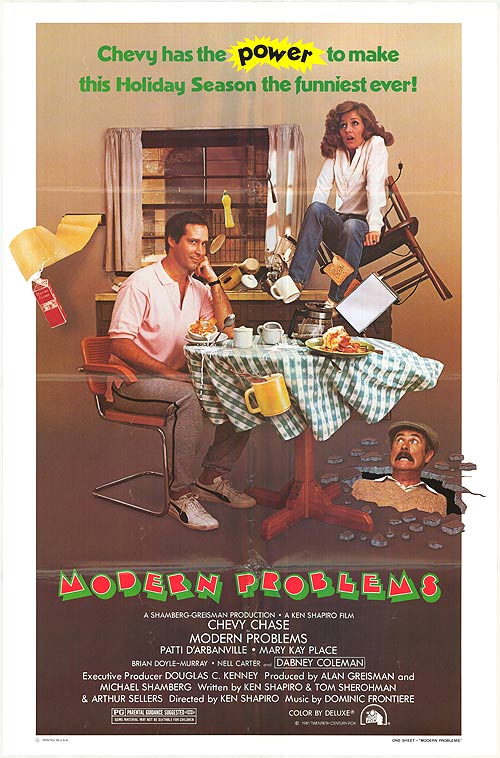
Modern Problems (1981)

modern problems

By Richard Winters

My Rating: 2 out of 10

4-Word Review: Chevy acquires telekinetic powers.

Being dumped by his girlfriend (Patti D’Arbanville) and working a stressful job as an air traffic controller Max (Chevy Chase) finds himself falling into a deep depression. Then one night while following a truck home that is carrying nuclear waste he and his car get sloshed with a greenish liquid that spews out the back end of the truck’s tank. Soon afterwards he realizes that he can make objects move and uses this new found ability to try and win his girlfriend back while getting revenge on her new boyfriend (Mitch Kreindel).

The film is written and directed by Ken Shapiro who earlier teamed up with Chase to do The Grove Tube and like with that one the story is widely unfocused throwing in gags that have nothing to do with the central theme. It takes too long for Max to acquire his special powers and when he does it doesn’t go far enough with it wasting a potentially creative idea on what turns out to be just another comedy dealing with modern day relationships. The movie is horribly dated with a bit having Chase sniff up some white ‘demon dust’ in a not so subtle take on cocaine that at a time when free basing was still considered trendy might’ve been considered ‘cool’ and ‘hilarious’ by its intended audience. The opening segment is insulting to actual air traffic controllers as it makes them all look like they’re lazy and incompetent and the silly cartoon-like sounds added to the special effects gives the whole thing a very kiddie-like feel.

The logic of this thing is crazy as well. I realize being exposed to nuclear waste can bring cancer, birth defects and a wide assortment of other ailments, but nowhere have I read that it can cause telekinesis making the whole premise dumb and dubious from the start. The idea of having all these amazing powers, but only using them sparingly while moping around hoping somehow to get back into his girlfriend’s favor seems quite limiting as most people with his abilities would have much broader ambitions like saving the world or even conquering it for that matter. Although politically incorrect there could’ve been a wide array of things that he could’ve done to ‘win his girlfriend back’ like suspending her in mid-air until she agrees to see him exclusively. Also, when he notices that he is glowing green and has spots all over his face when looking into a mirror you would think he would immediately run to the nearest doctor, but doesn’t and when he finally does expose his powers to everybody else by levitating the Dabney Coleman character the other people in the room respond with a ho-hum attitude instead of screaming and running away like a normal person would.

Chase’s deadpan talents get wasted here and during the second half he becomes almost comatose during a lame parody of The Exorcist. Dabney Coleman gets equally wasted as he speaks in a weird accent while playing his trademark egotistical character that for some reason isn’t as engaging as it usually is. You also get to see a shot of his bare ass, which to me wasn’t a good thing, but there is a thread on IMDB with people stating in all seriousness that it is one of the ‘best looking asses ever’, ‘pure perfection’ and ‘the greatest moment in cinema history’, so I guess to each his own.

My Rating: 2 out of 10

Released: December 25, 1981

Runtime: 1Hour 29Minutes

Rated PG

Director: Ken Shapiro

Studio: 20th Century Fox

Available: VHS, DVD, Amazon Instant Video

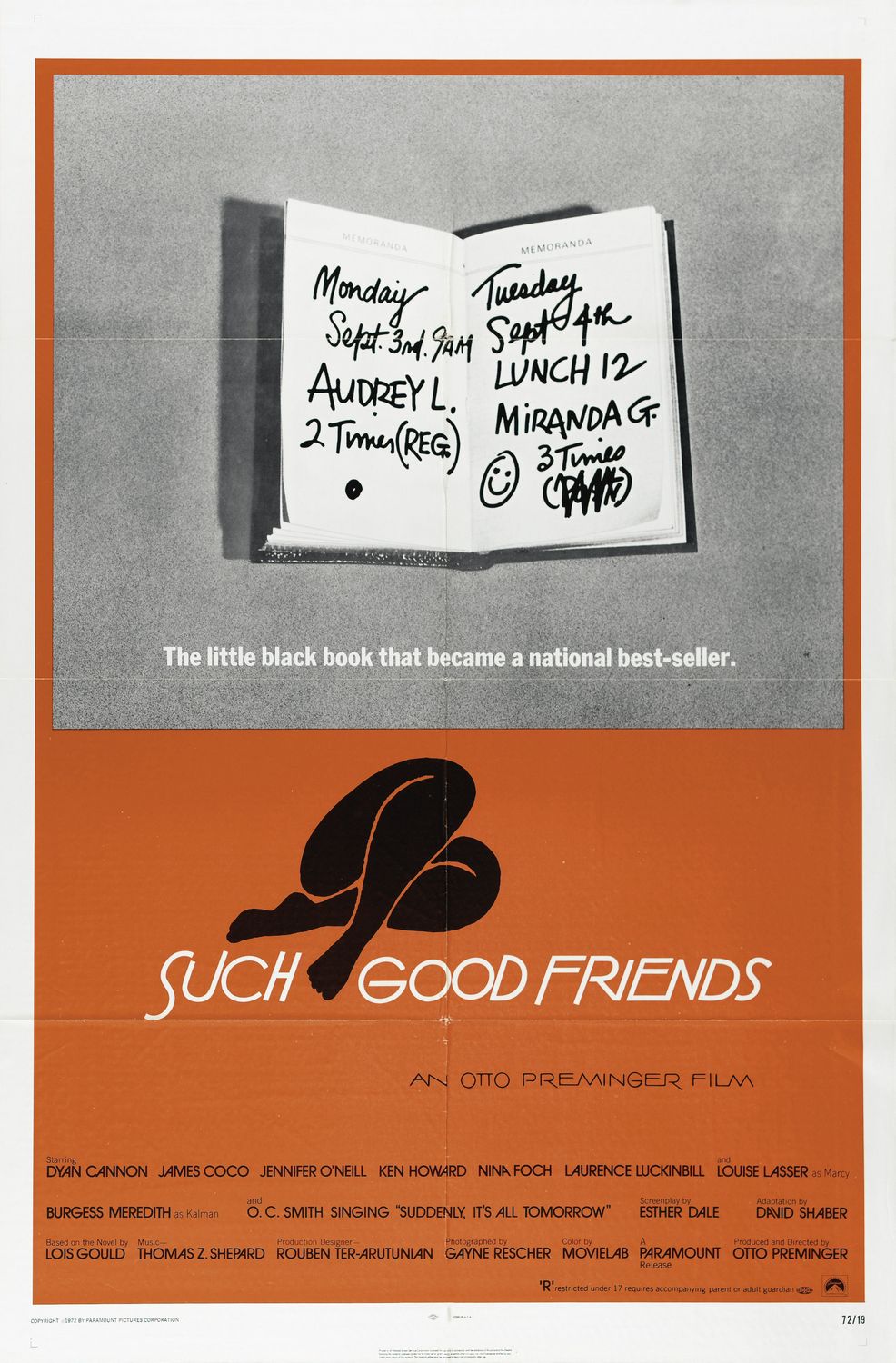
Such Good Friends (1971)

such good friends 1

By Richard Winters

My Rating: 8 out of 10

4-Word Review: Her husband fools around.

Julie (Dyan Cannon) is a well-off New York Housewife living in a swanky Manhattan apartment with her husband Richard (Laurence Luckinbill) who is the successful editor of a New York fashion magazine. Her life seems fulfilled and happy until Richard goes into the hospital for routine surgery, which has unexpected complications that sends him into a coma. While going through some of his personal belongings she comes upon his little black book that lists all sorts of sexual conquests he has had with her friends, which first leads the devastated Julie into considering suicide, but then ultimately into revenge.

This film can be considered Otto Preminger’s swan song as the two movies he made after this weren’t worth watching. This movie also proves to be a giant improvement from the awful Skidoo that he did just three years before where he tried unsuccessfully to get with the ‘hip generation’, but failed miserably. It has the same irreverence and satire as that one, but it is much more disciplined and sophisticated and makes its point without going overboard. It also shows that despite his renowned cantankerous nature behind-the-scenes he was still a gifted director who managed to span five decades with movies that had vastly different styles and themes and he deserves to be labeled a filmmaking legend.

I loved the way the camera spins around in a circle during a scene inside a New York art museum as well as some breathtaking shots of the New York skyline while on top of Jennifer’s and Richard’s condominium. The fractured narrative that deals heavily with flashback sequences is also nicely handled though the scenes showing a middle-aged Cannon trying to look like she is an adolescent while wearing pigtails looks tacky and should’ve been scrapped.

The film is based on the Lois Gould novel of the same name and while that book had a much more serious tone the movie gives the material more of a satirical spin much like Diary of a Mad Housewife, which Preminger had scriptwriter Elaine May (who gets credited as Ester Dale) watch before writing this one. The result is endlessly witty dialogue and some near brilliant conversational exchanges between the characters. Some of the best bits are Jennifer’s discussions with Richard’s doctors who seem reluctant to take responsibility for their medical blundering as well as Jennifer’s awkward sexual encounter with her friend Cal (Ken Howard) when he is unable to ‘rise to the occasion’.

Although she has a face that can show pain and sadness well Cannon may not have been the best choice and some other actresses would’ve been more interesting in the part. Apparently Preminger had her in tears already on the first day and she has in subsequent interviews called him a ‘horrible man’. The scene showing her naked in a snapshot is actually that of another nude model with Cannon’s face cropped on it.

James Coco is great in support and I was genuinely shocked that it didn’t get him nominated for best supporting actor. The scene where Cannon is undressing him for some sex and he tries desperately to distract her while he takes off a corset that he is wearing underneath is frickin’ hilarious. Burgess Meredith has an outrageous moment where he is seen nude while attending a posh party and only his genitals are covered by a book hung from a belt that he is wearing.

The only real negative is the ending that is too serious and somber and deflates the energy from the film’s otherwise snarky tone. Some of the music used doesn’t work with the scenes either including the O.C. Smith song played over the closing credits. Otherwise it’s as fresh, original and timely as it was when it first came out and ripe to be rediscovered by the right audience. The title sequence created by Saul Bass that is used to open the film is diverting and I wished it had been extended.

My Rating: 8 out of 10

Released: December 16, 1971

Runtime: 1Hour 42Minutes

Rated R

Director: Otto Preminger

Studio: Paramount

Available: DVD, Blu-ray, Amazon Instant Video
Raw Force (1982)

raw force 1

By Richard Winters

My Rating: 2 out of 10

4-Word Review: Ghosts of martial artists.

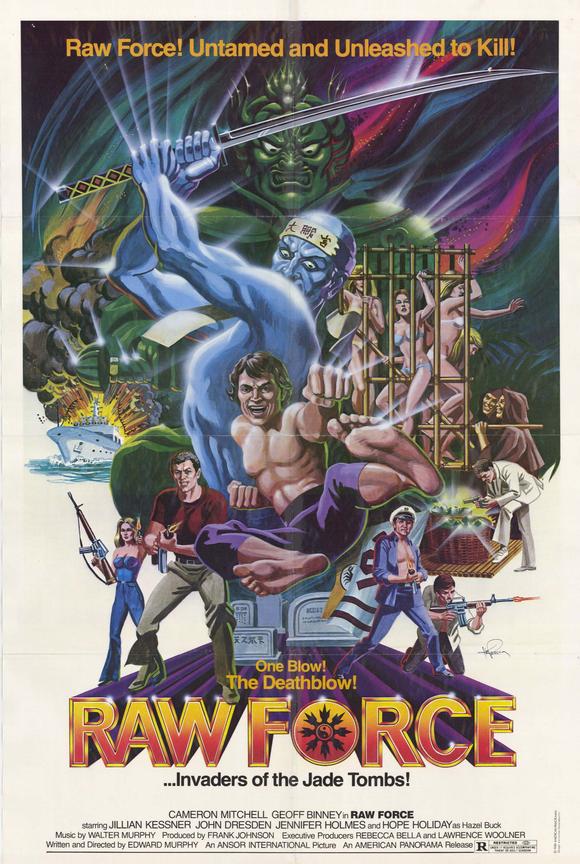
A group of martial arts students board a boat owned by Hazel (Hope Holiday) and piloted by Harry (Cameron Mitchell). During their ride the boat catches fire and they are forced to abandon it and get into a raft. After several days at sea they come upon an island that is the home to some ghosts of famous martial artists as well as a female slavery ring run by a group of monks. When the three groups meet it becomes a wild ride of sex and violence.

The film, which was shot entirely on-location in the Philippines, is clearly an exploitation cheapie and on the sex side it does pretty well as there is an abundance of nudity particularly during the first 45 minute or so that should satisfy any voyeur since the models for the most part are pretty good looking. However, the script is corny and dumb. Way too much time is spent on the set-up featuring a lot of stale conversations between wooden characters and comic sidelights that are silly and uninspired. The action itself is poorly captured and not very exciting while lacking in blood or realistic looking special effects.

Veteran character actress Holiday is actually the best thing playing a ditzy middle-aged woman sharing a love/hate relationship with Mitchell. Carl Anthony who plays Lloyd a man who considers himself much more of chick magnet than he really is amusing and Camille Keaton best known for her role as Jennifer Hills in the original I Spit on Your Grave and slated to star in its recently announced sequel has a bit part as a ‘girl in toilet’.

This film may be good for a few laughs on a bad 80’s movie night with friends, but the limited budget doesn’t allow it to distinguish itself from the myriad of other B-grade features that came out at the same time. The film’s one and only good moment comes during a scene at a bar where a fight breaks out and the naked lady stripper continues to dance on the bar top while remaining completely oblivious to the action around her.

My Rating: 2 out of 10

Alternate Title: Kung Fu Cannibals

Released: July 9, 1982

Runtime: 1 Hour 26Minutes

Rated R

Director: Edward D. Murphy

Studio: American Panorama

Available: VHS, DVD, Amazon Instant Video

City Heat (1984)

city heat

By Richard Winters

My Rating: 5 out of 10

4-Word Review: Clint and Burt together.

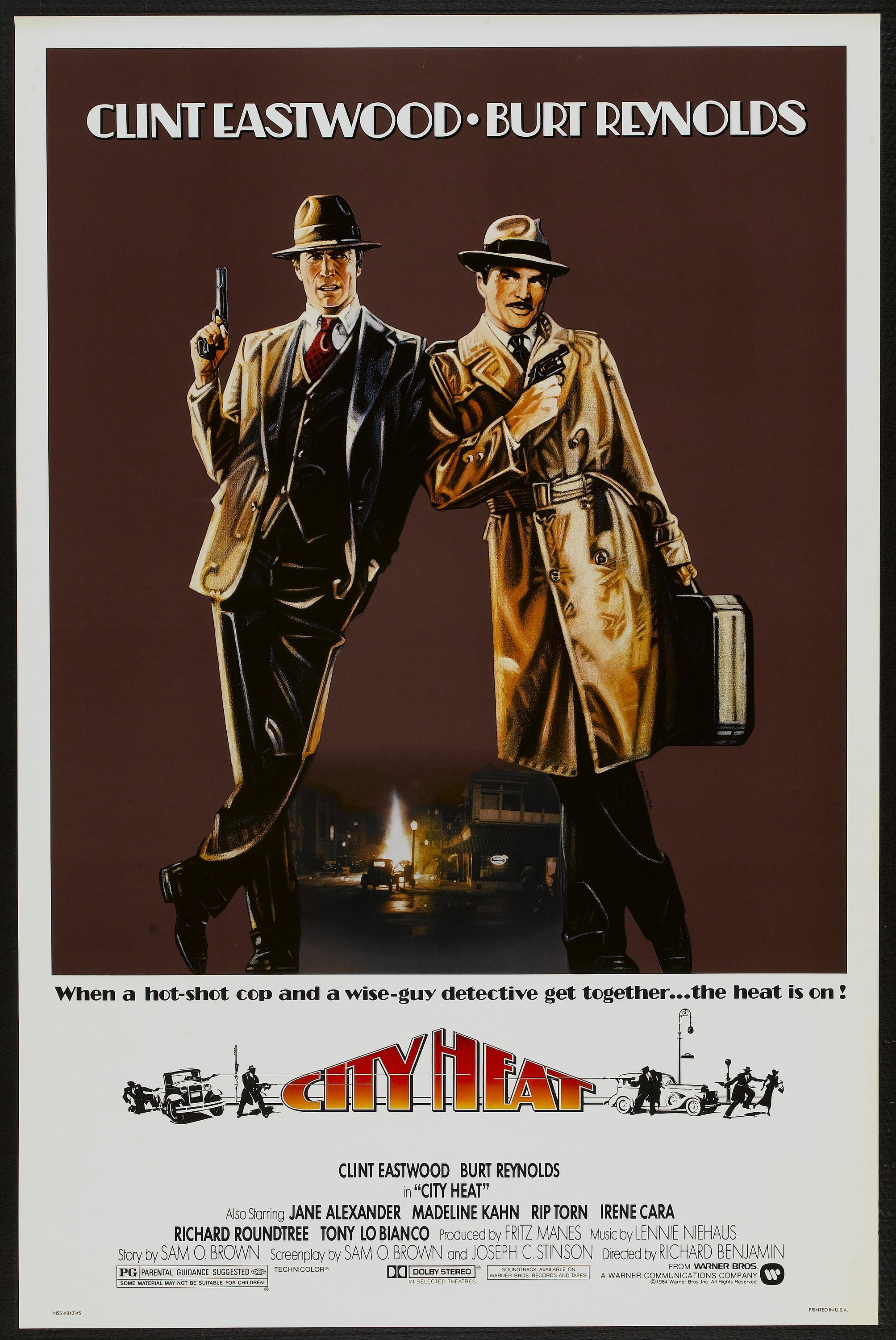
Mike Murphy (Burt Reynolds) is a private eye living in 1930’s Kansas City who at one time worked as a cop. When his friend Dehl (Richard Roundtree) gets murdered after obtaining the secret accounting records of a local mobster and then trying to blackmail him with it Mike goes on a mission to find the culprit, but soon finds himself in over his head. His former police partner Speer (Clint Eastwood) gets involved and the two reluctantly work together to solve the case despite the many clashes with their personalities and methods.

The script was written by Blake Edwards who gets credited under the pseudonym Sam O. Brown. He was originally slated to direct, but Burt didn’t want to work with Edward’s wife Julie Andrews who was cast in the role that later went to Madeline Kahn because the two had clashed just a year earlier while starring in The Man Who Loved Woman. Clint desired a less intense director at the helm, so the two used their star status to have Edwards yanked from the project and replaced with actor-turned-director Richard Benjamin. The result is a strange mish-mash of a movie that at times seems like a pedestrian action flick and at other moments becomes a campy comedy.

The film starts off well. I enjoyed the fight Reynolds with has with two men inside a café while Eastwood sits back and does nothing, but things deteriorate quickly after that. Part of the problem is Eastwood and Reynolds are only funny when they are seen together and working off of each other’s contrasting styles. Alone there are boring at least here with Eastwood playing too much of a caricature of himself while Reynolds is unconvincing as a tough guy. The film would’ve worked much better had the two been partners from the very beginning instead of throwing in this contrived bitterness between the two, which is never funny or interesting.

Outside of Rip Torn’s performance as a rival gang boss the supporting cast is wasted especially Jane Alexander in a thankless throwaway role as Reynold’s secretary. Kahn manages to have some redeeming moments when she gets kidnapped by the mob and then beats her captors at poker, but it is not enough. Irene Cara sings a few good tunes, but proves to be weak as an actress.

The shootouts are great and the best thing in the movie as unlike the rest of the film they manage to have a nice balance between being exciting and funny. Unfortunately the plot itself is overblown, confusing and formulaic and a prime example of a Hollywood production relying too much on the charisma of its two stars while failing to supply them with material that is fresh or original.

My Rating: 5 out of 10

Released: December 7, 1984

Runtime: 1Hour 33Minutes

Rated PG

Director: Richard Benjamin

Studio: Warner Brothers

Available: VHS, DVD, Amazon Instant Video, YouTube

Mr. Sycamore (1975)

mr sycamore 1

By Richard Winters

My Rating: 4 out of 10

4-Word Review: Mailman becomes a tree.

Bored with his job as a mailman and unhappy in his marriage John Gwilt (Jason Robards) decides one day to turn himself into an oak tree. He digs a hole in his backyard and ‘plants’ himself into it where he stands there day and night waiting to become a tree while his wife Jane (Sandy Dennis) tries desperately to talk him out of it, his neighbor Fred (Robert Easton) laughs at him and his minister (Mark Miller) tries to have him committed.

The film, which is based on a 1942 Broadway play, has a certain whimsical tone to it that might be pleasing to some if in the right mood and there is a certain strange intrigue at wondering just how this thing will end and whether he will eventually turn into a tree or not. However, the material would be better suited as a film short and the offbeat quality gets lost in a script that deals solely with a long parade of people who come into contact with John and their predictably shocked and confused responses when finding out what he is trying to do. The low budget is also an issue and outside of showing the inner-workings of a mail processing machine at the beginning there is no visual style at all.

Robards is a natural for the part, but he had already played a nonconformist looking to drop out of society earlier in the film and stage play A Thousand Clowns making his appearance here seem almost like typecasting. Jean Simmons gets wasted in a small bit as John’s secret love interest. Dennis, who usually plays kooky characters, becomes the most rational one here, which ultimately is the film’s weirdest element.

This definite curio does have a few amusing moments, but it lacks a second act or interesting side story and eventually talks its strange concept to death until it becomes boring.

My Rating: 4 out of 10

Released: December 12, 1975

Runtime: 1Hour 28Minutes

Rated G

Director: Pancho Kohner

Studio: Film Ventures International

Available: VHS

The Laughing Policeman (1973)

the laughing policeman 1

By Richard Winters

My Rating: 7 out of 10

4-Word Review: This policeman isn’t laughing.

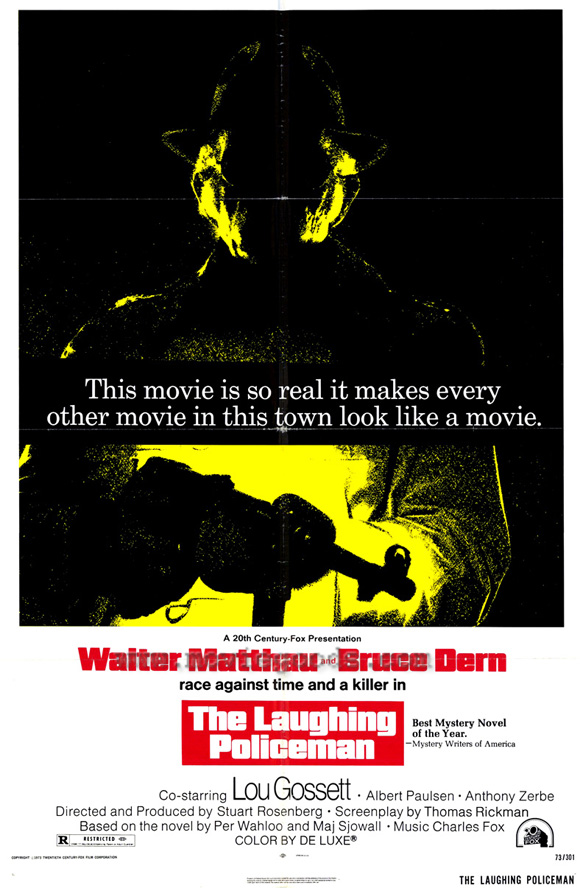
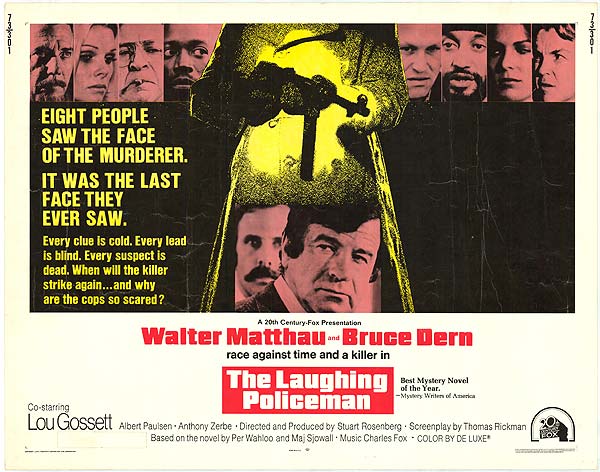
8 passengers on a San Francisco bus are slaughtered to death by a mysterious gunman for no apparent reason. When Police Sargent Jake Martin (Walter Matthau) investigates he finds that his patrol partner is one of the victims. He soon learns that his partner was working on another case during his off hours dealing with a murdered prostitute that Jake had also worked on, but couldn’t crack. He begins to believe the two cases are somehow connected, but his brash department head (Anthony Zebe) doesn’t agree and thinks it is a waste of time to pursue the possible connection while also sticking him with Leo (Bruce Dern) a younger cop who doesn’t always like to play within the rules and whose manner and methods conflicts with Jake’s.

The film, which is based on the novel by Per Wahloo and Maj Sjowall who also did the book version for Man on the Roof, has a finely detailed gritty nature about it that looks at the methods of a police investigation in a realistic and unglamorous fashion, which significantly helps this one stand out from the usual cop dramas. I loved the way they searched for clues on the bus and the autopsies of the victims as well as pursuing leads that never pan out, which is a very common occurrence in most police investigations, but rarely is ever shown in movies. There is even a shot of a tow truck removing the disabled bus from the accident scene once the investigation is completed.

Although the novel’s setting was Stockholm the movie transplants the action to San Francisco making the Bay City almost like a third character. Director Stuart Rosenberg manages to nicely capture the eclectic vibe of the area and the disdain many people had for the police during that era. The movie also uses very little music, which is a major asset and helps accentuate the realism. Outside of the closing credits the only time there is really any other music is near the end when Jake and Leo start following a suspect, which comes off as jarring and should’ve been left out.

Matthau who’s mostly known for his comedic parts does well in an atypical role, which due to his casting and the film’s strange title may make some think it is a comedy though this is far from it. Dern is terrific in a role that takes full advantage of his edgy acting style and I liked how the two characters don’t get along at first, but eventually get past their differences and use each other’s unique strengths to their advantage. I was disappointed though that there is a side-story dealing with Jake’s tumultuous relationship with his teenage son that gets introduced early on, but then dropped and completely forgotten during the second half.

Louis Gossett Jr. gets a star making turn as a brash street cop and Zerbe is superb in support as the gruff police chief. Joanna Cassidy has a brief, but interesting bit as a witness and I liked the shot showing her and Dern sitting amidst a row of tables with table legs made to look like human ones. It’s also amusing to note that Albert Paulsen’s character who becomes the main suspect in the film never utters a single word of dialogue.

Spoiler Alert!

The film’s biggest downfall though is with its ending. It is very hard to believe that a character such as Paulsen’s that is portrayed as being rich and having a lot of connections would feel the need to shoot and kill the bus passengers himself as most if not all rich people simply hire someone else to their dirty work. I also didn’t think that someone who walks down the street surrounded by lawyers would crack as quickly as this one does when Matthau comes to question him about the case. A typical well-off businessman would simply ‘lawyer-up’ and trust that the minimum evidence that the police have would not hold up in court instead of jumping into his car and racing down the city streets in a panic such as he does here. The finale becomes too conveniently Hollywood-like and seems to sell out on the film’s original concept, which left this viewer with a flat and ambivalent feeling towards it when it was over.

the laughing policeman 2

End of Spoiler Alert!

My Rating: 7 out of 10

Released: December 20, 1973

Runtime: 1Hour 52Minutes

Rated R

Director: Stuart Rosenberg

Studio: 20th Century Fox

Available: DVD

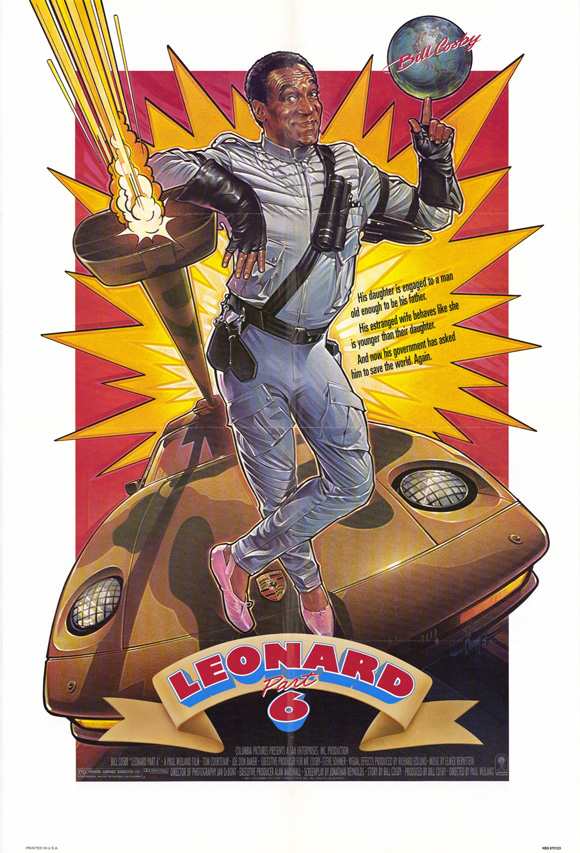
Leonard Part 6 (1987)

leonard part 6

By Richard Winters

My Rating: 1 out of 10

4-Word Review: One really bad movie.

Leonard Parker (Bill Cosby) is a former CIA agent who is now retired and running a restaurant in San Francisco while trying to reconcile things with his wife (Pat Colbert) and  keeping his college-aged daughter (Victoria Rowell) from marrying a man in his 60’s (Moses Gunn). Unfortunately for him a crazed vegetarian by the name of Medussa Johnson (Gloria Foster) has managed to somehow brainwash all the animals to kill people and Leonard is appointed the only person able to stop it. He is reluctant at first, but with the help of his ever supportive butler Frayn (Tom Courtenay) he puts on his action suit for one last adventure at saving the world.

The film, which was written by Cosby, starts out okay enough with a funny bit dealing with a shootout inside the kitchen of a busy restaurant, but then quickly devolves. Part of the problem is an over emphasis on Leonard’s boring domestic life and attempts at winning back his wife, which makes the whole thing seem like two movies in one. In fact the first 35 minutes are spent with Leonard acting very much like a Cliff Huxtable while arguing with his rebellious daughter about her lifestyle choices before it even gets into the spy/action part. When it finally does get into the adventure segment it becomes weird, surreal and confusing with some of the most pathetic attempts at special effects you’ll ever see.

The film also offers no backstory for how the Medussa character was able to ‘brainwash’ the animals even though one was sorely needed. Elmer Bernstein’s musical score is generic and is pretty much made up of bits and pieces of other famous scores from other films or shows including the theme from the 80’s medical TV-show ‘St. Elsewhere’. As for the spy spoofing aspect the film fails to be funny at all and comes off like no one involved in this ever actually watched a spy film to really know what they were trying to make fun of.

The weakest link is Cosby who gives a terrible performance that shows none of his charisma that he has brought to his other projects. He appears uncomfortable and completely upstaged by his supporting cast including even that of Joe Don Baker. Foster is great as the campy villain and it’s just too bad that her efforts had to be wasted in such a bad film. Courtenay is amusing in support, but his talents deserve better material. Jane Fonda is fun in a brief bit playing herself in a send-up of her 80’s exercise videos.

Director Paul Weiland shows some potential with a wacky, stylish design, but was unfortunately too intimidated to give Cosby any real direction and simply allowed the project to become an embarrassing self-indulgent ego tangent on the part of the star. Unless you’re in the mood for a really bad movie night I would suggest staying away from this one as there are hurricanes and tornadoes that are less disastrous than this.

My Rating: 1 out of 10

Released: December 18, 1987

Runtime: 1Hour 26Minutes

Rated PG

Director: Paul Weiland

Studio: Columbia Pictures

Available: VHS, DVD, Amazon Instant Video

Gentle Savage (1973)

gentle savage 2

By Richard Winters

My Rating: 3 out of 10

4-Word Review: Indian accused of rape.

Camper John (William Smith) is an Indian living in a small town who gets accused of raping a white girl (Betty Ann Carr) by Ken (Kevin Hagen) her stepfather even though it was actually Ken who did it. The hidden prejudices of the predominantly white folks come to light against the nearby Indian community. Both sides take up arms and become intent on crushing the other causing hysteria and violent outbreaks while Camper John tries hiding out until it blows over.

If there is anything distinctive about this otherwise formulaic and predictable low budget drama is the fact that it paints vigilantism as more of a problem than a solution even if the one side feels completely justified, which I found to be a refreshing and more realistic take on the issue especially as the Indian group becomes as vindictive, violent and hateful as the people they are trying to fight. However, it would’ve been nice had there been at least one white person who wasn’t portrayed as being completely narrow-minded and bigoted, which in a lot of ways comes off as reverse racism by the filmmakers.

The music is loud and overly dramatic, which gives the proceedings a very heavy-handed feel. In a lot of ways it comes off as a poor man’s Billy Jack, which was already pretty amateurish and one-dimensional to begin with although still far better than this thing. The 75 minute version that I viewed had an abrupt ending that seemed incomplete and failed to tie up many loose ends, but I wasn’t complaining as even with the abbreviated runtime it was still highly protracted, overblown and tedious with the scene of a water tower tank exploding and dousing everyone on the street with tons of water being the only slightly diverting moment.

Smith is intense in the lead, but he should’ve been given more dialogue especially at the beginning as the viewer barely gets to know or understand him before being jettisoned into his quandary. Character actor R. G. Armstrong who normally plays menacing characters is quite wimpish here as a bartender who gets held down and forced to swallow drink after drink when he tries closing down the bar before the patrons were ready. Hagen is competent as the bad guy, but casting Gene Evans and Joe Flynn as a bumbling sheriff and deputy in an attempt at misguided ‘comic relief’ in the Last House on the Left-type vein was a big mistake. One scene even has them handcuffed together wearing nothing but their underpants while forced to walk across the desert, but it all adds little and takes away from the tension, which is the only time that this flat film ever becomes mildly diverting.

My Rating: 3 out of 10

Alternate Title: Camper John

Released: March 7, 1973

Runtime: 1Hour 25Minutes (Full Version)

Rated R

Director: Sean MacGregor

Studio: Cinemation Industries

Available: None at this time.

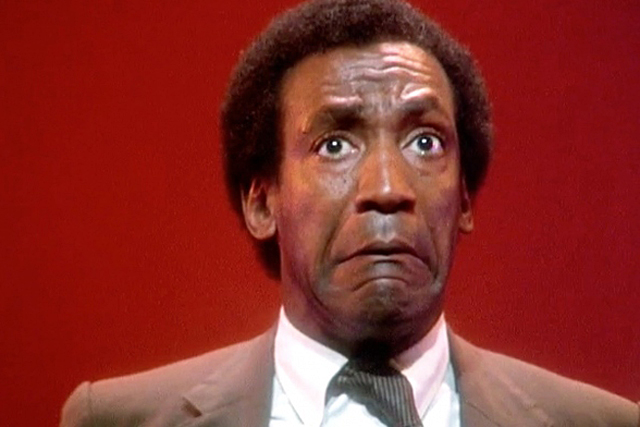
Bill Cosby: Himself (1983)

bill cosby 2

By Richard Winters

My Rating: 3 out of 10

4-Word Review: The Cos onstage routine.

Filmed in Hamilton, Ontario the movie centers entirely on Cosby in concert as he sits in front of a very enthusiastic audience doing many of his typical onstage routines including takes on child rearing, family life, marriage, dentist visits and even fart jokes. There is also a bit at the beginning about people who go out on weekends to party and get drunk only to regret it on Monday morning, which I found to be the funniest.

Although not R-rated the humor is still edgier than you might expect at one point he even says the word ‘asshole’ and uses his chair like it is a toilet that he is throwing up into. The material isn’t exactly fresh either as some of the jokes were already used during the pilot episode of his 60’s comedy TV-show. The opening credit sequence, which shows black and white pictures of kids and teenagers, which may or may not be his own is good because it features The Cos doing a parody of the Bill Withers’ song ‘Just the Two of Us’ only here it gets called ‘Just the Slew of Us’. Cosby’s entrance onto the stage in which he enters to the roar of the crowd and then leaves and comes back again to more applause is funny and shows his incredible ability to work an audience while looking completely at ease.

These days of course with the rape allegations this film along with everything else he has done has taken on a sour note. Some may not want to watch it simply for that reason and that’s fine. I’m conflicted a bit with the whole thing due to the fact that there are so many women suddenly coming forward after remaining silent for so many years like they just want to ‘jump on the bandwagon’ for whatever reason, but ultimately there is too many of them at this point to believe that they all could be lying.

The way I figure it, it all makes sense because in Hollywood the celebrity has access to a wider circle of attractive, younger people that a regular person doesn’t, which is why most marriages and relationships there don’t last because it’s just too easy to find someone else no matter what the age or looks of the star may be. Don Knotts in his 70’s managed to date and marry an attractive blonde in her 30’s. Dick Van Dyke who is near 90 is married to a woman in her 40’s and Carol Burnet in her early 80’s is married to a man in his 40’s. Tinseltown is full of people with trophy-like girlfriends (or boyfriends) to the point that it is the norm and even acceptable, but for Cosby it would’ve ruined his career because his whole act hinges on family values. So by drugging them to which he is accused of was his way of ‘fooling around’ and taking advantage of his celebrity status while still keeping his ‘clean-cut’ image intact and banking on the fact that no one would believe them if they ever did decide to come forward.

However, the biggest controversy in this instance is even calling this a movie to begin with. Most films even a documentary have some cutaways or visual variety, but this has none. We don’t even get to see the faces of the audience. The camera stays glued to Cosby from beginning to end, which despite his engaging nature and mildly funny jokes becomes incredibly tedious to sit through and watch.

My Rating: 3 out of 10

Released: May 20, 1983

Runtime: 1Hour 43Minutes

Rated PG

Director: Bill Cosby

Studio: 20th Century Fox

Available: DVD