The Deadly Tower (1975)

deadly tower

By Richard Winters

My Rating: 7 out of 10

4-Word Review: Sniper in the tower.

This made-for-TV movie chronicles the events of August 1, 1966 when 25-year-old ex-Marine Charles Whitman (Kurt Russell) climbed to the top of the University of Texas campus tower and shot and killed 16 people while wounding a total of 32. The story intercuts between scenes showing Whitman preparing for the shooting while also looking at the private life of Officer Ramiro Martinez (Richard Yniguez) who eventually climbed up the tower to stop Whitman’s slaughter.

For the most part the film is taut and methodical and well above average for a TV film although Gilbert Roland’s voice over narration was unnecessary and a bit cheesy. The only time there is any music is during the scenes showing Whitman killing his mother and wife with a knife, which gets a bit too overly dramatic, but otherwise it comes off almost like a documentary making the viewer feel that they are right there as it is happening. It was filmed at the Louisiana State Capitol, which looks a bit different than the actual clock tower, but still similar enough that it works.

Russell who had just come off starring in a long line of Disney films is perfect in the role and even closely resembles the real Whitman. The fact that he has very few lines of dialogue is an asset and helps to make the character more foreboding and threatening. The rest of the all-star cast does pretty well although Forsythe’s character seems added simply to promote the gun control issue. Clifton James appearance as one of the police sergeants was misguided because he had already done a comic caricature of a redneck sheriff in the James Bond film Live and Let Die, so it was hard to take him seriously here and it took me out of the movie a bit because it kept reminding me of that one as well as his goofy policeman role in Bank Shot.

The film also takes liberties with the actual events in strange ways that makes no sense. For instance in the film when Whitman comes upon the tower receptionist he simply guides her to the elevator and tells her to leave, but in real-life he knocked her to the ground and split her head open before later shooting her. Also, in the film the first victim that he hits from the tower is a male, but in the actual incident it was an 18-year-old female who was eight months pregnant. The story also erroneously credits Martinez with the one who killed Whitman when the later autopsy found that all four shots that Martinez fired at Whitman missed him and it was actually the two shots fired by Officer Houston McCoy who stepped in after Martinez had emptied his rounds that proved to be the lethal hit. In fact Officer McCoy’s name gets changed here and is listed as C.J. Foss and is played by actor Paul Carr as a minor throwaway part that is barely seen at all.

Both McCoy and Martinez sued the producers for the inaccuracies. Martinez was upset because his wife was portrayed as being pregnant and Hispanic when in reality she had been German-American. The sidelight drama of some marital discord between the two was also apparently untrue and should’ve been left out completely as it adds nothing and bogs the thing down as a needless Hollywood-like soap opera.

My Rating: 7 out of 10

Released: October 18, 1975

Runtime: 1Hour 40Minutes

Director: Jerry Jameson

Studio: MGM

Available: DVD (Warner Archive)
Honeysuckle Rose (1980)

honeysuckle rose

By Richard Winters

My Rating: 4 out of 10

4-Word Review: On the road again.

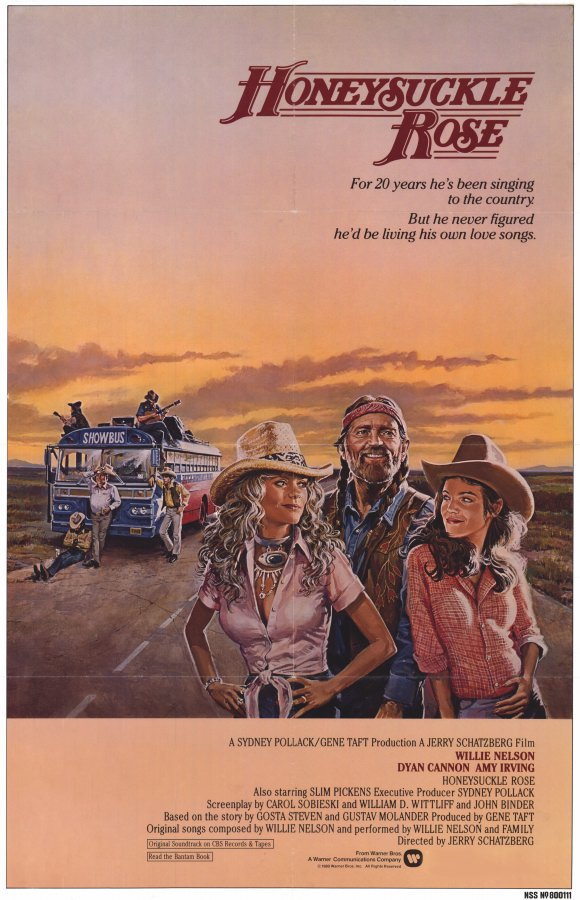
Buck Bonham (Willie Nelson) is a country music singer who enjoys life on the road traveling to different concert venues with his band much to the consternation of his wife Viv (Dyan Cannon) who wants him to stay home more and help raise their child. When his longtime guitarist Garland (Slim Pickens) decides to retire they bring in Garland’s daughter Lily (Amy Irving) as a temporary replacement. Then Buck starts fooling around with Lily, which creates turmoil both with Buck’s relationship with his wife as well as Lily’s relationship with her father.

After his successful stint in Electric Horseman this film was supposed to send Nelson to the next level as a leading man, but fails miserably because the guy just can’t act. In fact he conveys his lines in such a laid back manner it’s almost like he’s half-asleep and not even there. His screen presence is nil and he ends up being badly upstaged by both Cannon and Pickens. I realize he is considered a country music legend and has many adoring fans, but personally his trembling voice type of singing is not for me. Out of the many, MANY songs that he sings during the course of this picture the only one I even remotely liked was ‘A Song for You’ and even then I consider the Leon Russell version to be far superior.

The film like its star is too laid back. It takes a full 30 minutes before we get anything even resembling a plot going. There’s lots of concert footage and scenes taken on their traveling bus, which to some extent gives the viewer a good taste of what life on the road is like, but then it becomes excessive. It’s almost like a concert movie with the slightest of plots intermittingly mixed in for good measure. The story itself is too obvious and takes too long to play out and then when it finally gets going and we have some actual dramatic tension it then resolves too quickly.

Cannon is pretty good and even does her own singing. Irving on the other hand seems in-over-her-head and looks quite uncomfortable playing on stage. She got nominated for a Razzy award for worst supporting actress and I felt it was well deserved. Rodeo clown-turned-actor Pickens is super in one of his best roles that allows him to show both his comedic and dramatic side. Lane Smith is hilarious in a brief, but funny stint as an aggressive agent looking to get his client, a guitarist who wears some very loud suits, into the band while also trying to push some cheesy money making schemes on the side.

The part where Pickens attacks Nelson with a gun and chases him all around a lonely beach is amusing as is their drunken bus ride along an isolated Mexican highway. I also liked Irving meeting with her father after the secret of her affair has come out as well as her moment of apology to Cannon, but this all comes during the film’s final 20 minutes. Before then it’s just a lot of stock footage of Nelson on stage, which is nice if you enjoy his singing, but not if you’re looking for an actual movie, which at times this barely seems to be.

My Rating: 4 out of 10

Released: July 18, 1980

Runtime: 1Hour 59Minutes

Rated PG

Director: Jerry Schatzberg

Studio: Warner Brothers

Available: VHS, DVD, Amazon Instant Video

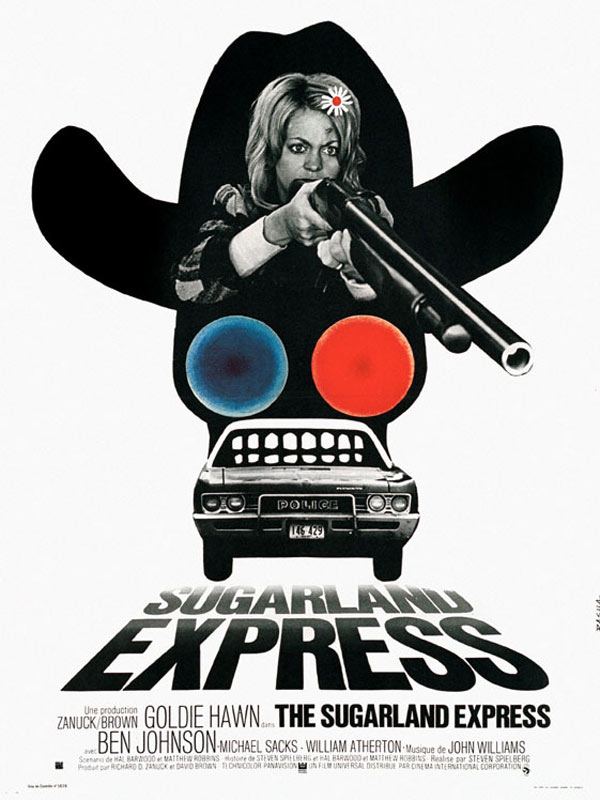
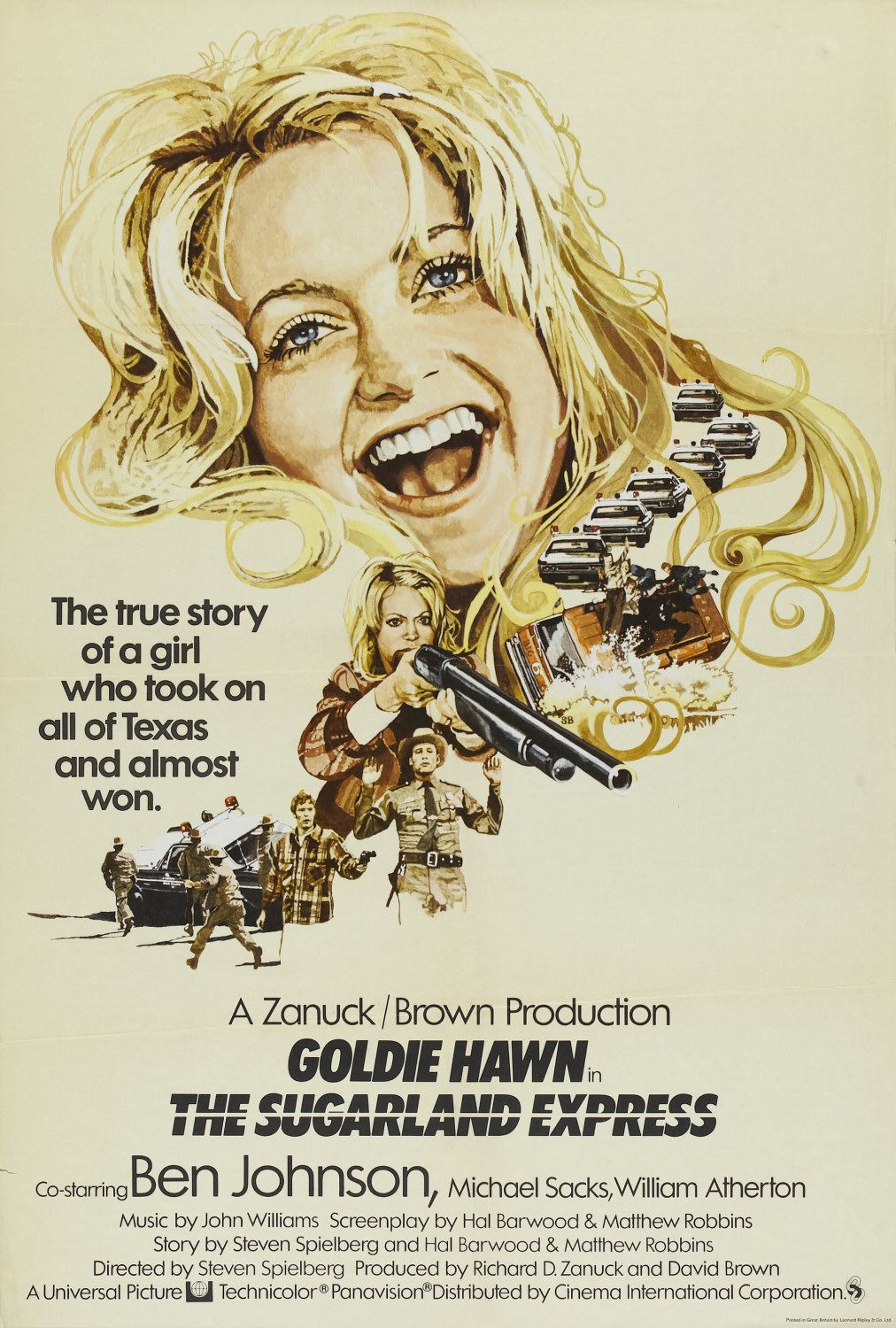
The Sugarland Express (1974)

sugarland express 4

By Richard Winters

My Rating: 7 out of 10

4-Word Review: She wants her baby!

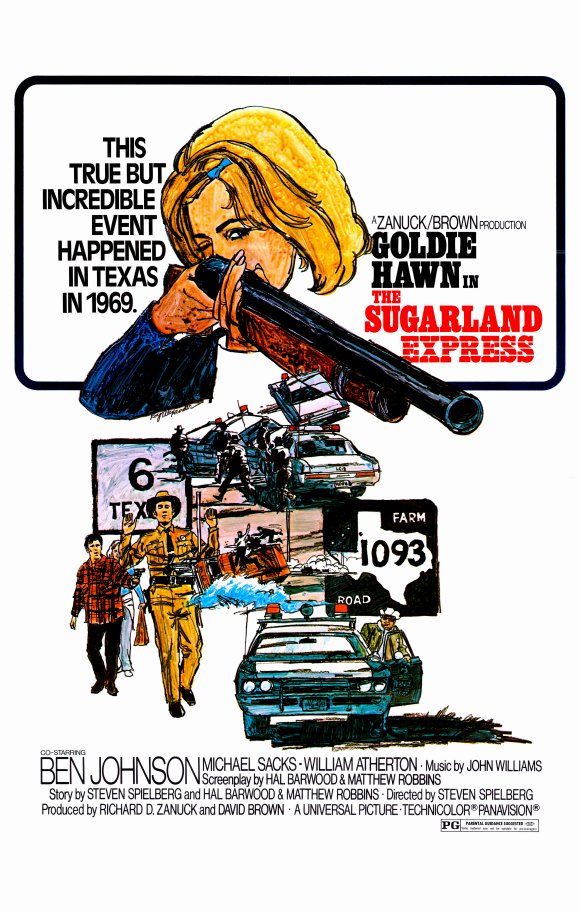
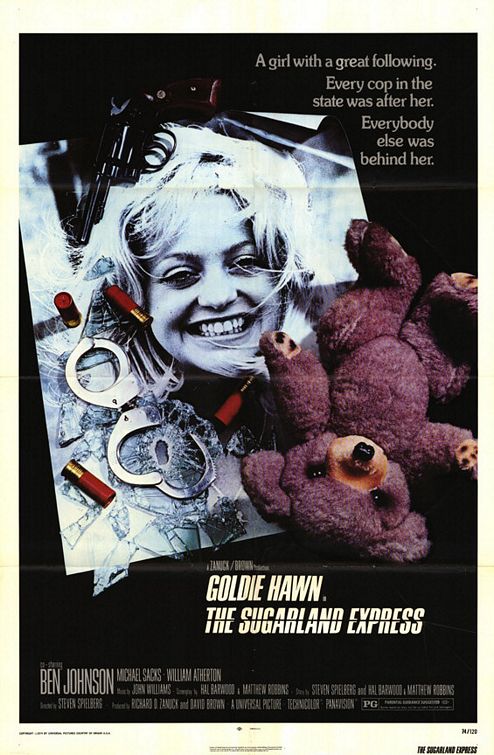
When her baby is put into a home with foster parents Lou Jean (Goldie Hawn) will have nothing of it and helps her husband Clovis (William Atherton) break out of pre-release prison in an attempt to steal the child back. The two hitch a ride with an older couple (A.L. Camp, Jessie Lee Fulton), but when the car gets pulled over by Officer Maxwell Slide (Michael Sacks) they panic and drive off. The officer is able to track them down when their car crashes, but when he goes to investigate the accident Clovis pulls the officer’s own gun on him and uses it to take him hostage. They speed off in his patrol car, which soon gets the entire Texas Highway Patrol after them as well as creating a media frenzy in a slow moving car chase that spans 2-days and 300 miles.

This film marks director Steven Spielberg’s full-length theatrical feature film debut and the result is highly entertaining. He takes an odd moment in history and helps infuse a playful quirkiness to the proceedings while also gently nudging the Texas stereotype. The music by John Williams and especially the harmonica solos by Toots Theilemans help cement the mood and tone. This is also the first film to use a panaflex camera and the first ever to feature a tracking shot from inside a car.

There are enough original and humorous scenes to make this well worth catching. The scene in which the police bring in a Porto potty so Lou Jean can stop and take a pee is hilarious as is the moment where their car runs out of gas and Captain Harlan Tanner (Ben Johnson) who is technically ‘chasing’ them must push their car with his to the nearest gas station. The impromptu TV interview done during the chase is great as is the first CB conversation that Tanner has with the three inside the patrol car. The best moment though is when they go through a small town where the main street is lined with onlookers and well-wishers who hand the three all sorts of gifts and encouragement through the car windows as they slowly drive through.

sugarland express 2

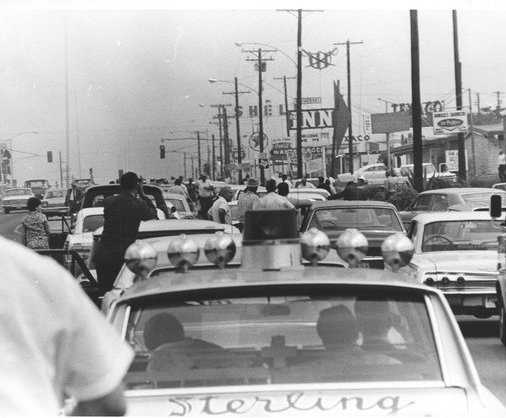
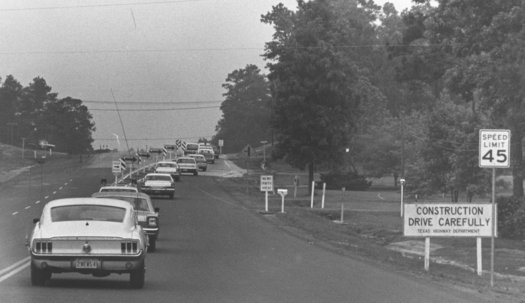
Of course as with any true story the movie takes many liberties and I researched the incident by reading actual newspapers reports from that era and found this to be the jest of what actually happened. It all started in the early morning hours of May 3, 1969 when Ila Faye Dent (1947-1992) and her husband Robert where chased by the Port Arthur police for speeding. The couple managed to evade them by abandoning their vehicle and fleeing on foot into a heavily wooded area. They eventually came upon a ranch whose owner called the police to say that he had been attacked by two hitch-hikers. Patrolman Kenneth Crone, whose character is played by Michael Sacks and who also appears briefly in the film as a sheriff’s deputy, answered the call. When he arrived on the scene Robert pulled a gun on him and forced him back into his patrol car where the three then took off in the vehicle that started the massive 200 mile slow speed chase that attracted hundreds of police cars as well as onlookers and media outlets. Their destination was Wheelock, Texas where Ila Faye wanted to visit her two children from her previous marriage that where now staying with her parents. They had no intention of kidnapping them like it is portrayed in the film only to visit them for 15 minutes, which Captain Jerry Millter (portrayed by Ben Johnson) initially agreed to allow, but then later reneged.

sugarland1


Ila Faye Dent portrayed by Gold Hawn in the film

sugarland2

The actual car chase as it occurred on May 3, 1969.

sugarland3

The changes that Spielberg and his team of two writers made to the story doesn’t help and I wish they had been more accurate with it. The biggest issue is the fact that the actual chase lasted for only about 5 hours while in the film it gets extended for 2 days, which doesn’t work because the part where they sleep overnight inside a car lot kills the momentum and makes for a draggy middle. The use of foreshadowing becomes too obvious and heavy-handed. The child-like enthusiasm by the two main characters is initially fun, but their notion that they can somehow take the police on a wild car chase and snatch back their child without having any consequences seems too unrealistically naïve even for a pair of country bumpkins as they are portrayed.

Spoiler Alert!

The film’s biggest downfall though and the main reason it didn’t do well in the box office is with its downbeat ending. From a directorial stand point I liked it as Spielberg infuses all sorts of interesting elements into it including making the house in which the child supposedly is staying look very foreboding and ominous as well as a brief shot of a teddy bear being thrown out a car window and laying the road while the cars speed all around it. However, seeing Clovis get shot is jarring and takes away from the film’s otherwise lighthearted tone. In the real life incident the husband did indeed get shot and killed although it happened differently than the way it gets played out here, so I don’t really have anything against showing it, but film should’ve added in a brief moment showing Lou Jean being reunited with her child after her stint in prison, which also really happened. I realize the denouncement mentions this in text over the credits, but visually showing it would’ve made more of an impact and helped the audience leave the theater with an upbeat feeling.

End of Spoiler Alert!!

sugarland express 3


sugarland express 1

My Rating: 7 out of 10

Released: April 5, 1974

Runtime: 1Hour 52Minutes

Rated PG

Director: Steven Spielberg

Studio: Universal

Available: VHS, DVD, Blu-ray, Amazon Instant Video, YouTube

Black Widow (1987)

black widow

By Richard Winters

My Rating: 4 out of 10

4-Word Review: She kills her husbands.

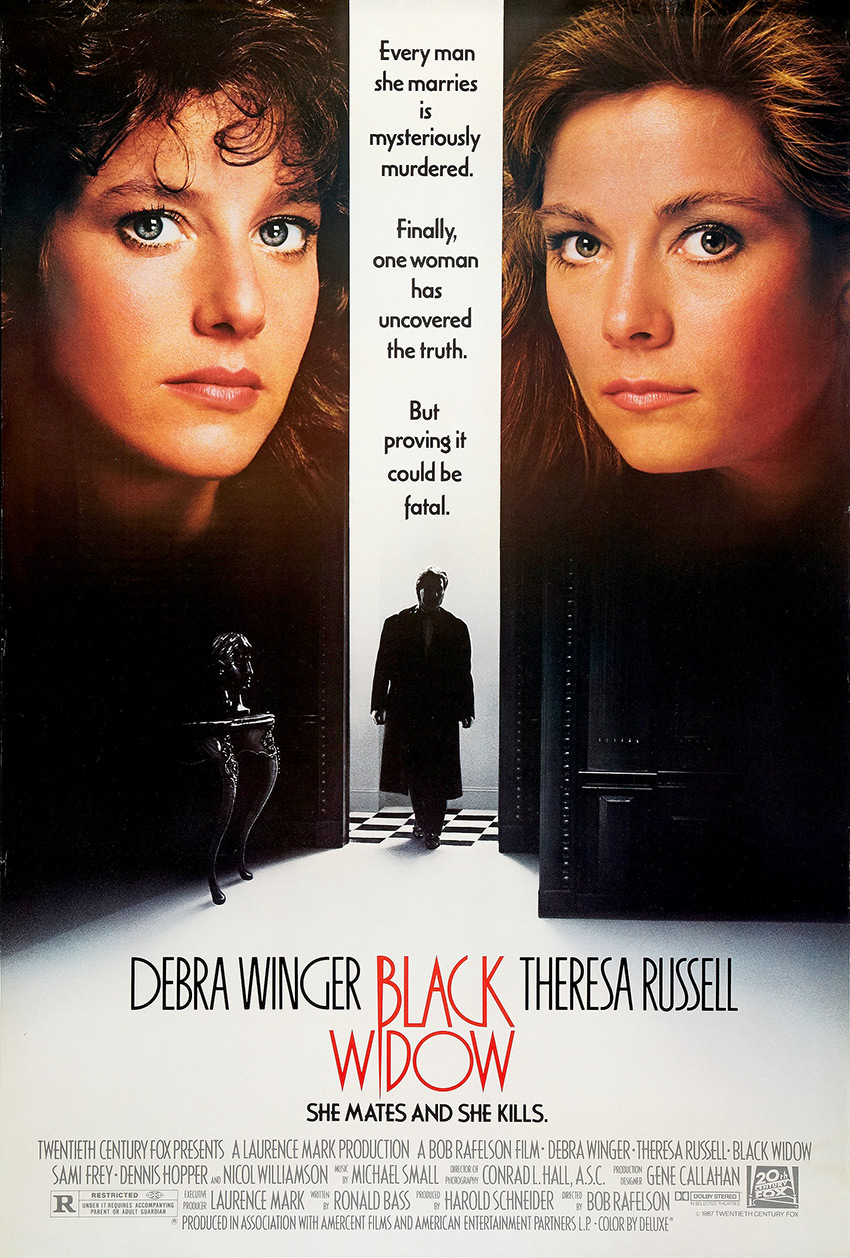
A federal agent named Alexandra (Debra Winger) tracks an elusive woman named Catherine (Theresa Russell) who marries rich men and then kills them off to inherit their fortune. Catherine is constantly changing her identity making it tough for her to track and Alexandra’s superiors do not share her same passion for the case nor believe there’s even a case at all. Finally while in Hawaii Alexandra manages to make contact with the woman and the two become fast friends only to have Alexandra become the next target when Catherine starts to suspect that she’s been double-crossed.

The film’s biggest asset is Conrad L. Hall’s cinematography, which is uniformly gorgeous and breathtaking. I loved the outdoor shots of Hawaii most notably the open terrain and the volcano as well as the scuba diving underwater sequence. The shots of the Seattle skyline and woodsy cabin are equally good making this on a visual level a top notch production. Winger is great in the lead even if her character lets down her guard a few too many times. I also enjoyed James Hong a perennial character actor who gets his most memorable role as a sleazy private investigator. It’s also fun to go back to what life was like before the internet, cellphones and debit cards and where ‘disappearing’ was so much easier.

Ronald Bass’s script though is shallow and formulaic. Just as it should be getting exciting it instead becomes boring and the slick twist at the end cannot overcome all of its loopholes. I found it surprising that Alexandra would be the only person in the world that would be on to this woman. Wouldn’t the relatives of the deceased start to suspect her as well? One segment has Catherine agreeing to give some relatives a large sum of money as a ‘gift’ to get them off her back, but what about the relatives of the first two husbands? The police work is also extremely sloppy. One of the husbands was allergic to penicillin, which is what Catherine uses to kill him, but they never think to test for it or investigate to see if Catherine had recently acquired a prescription for it, which she had. I also couldn’t figure out why Catherine would want to robotically go right back out and marry another rich man just after killing another. Why not ‘enjoy the fruits of her labor’ as it was and live it up with the money she already acquired from the last one before going through all the stress and planning of nabbing the next?

In fact the most frustrating thing about the film is the Catherine character as we never learn what motivates her or anything about her background. Alexandra is asked at one point what she thinks motivates this woman and she responds that it’s ‘not important’, but actually it is because it helps create a three-dimensional character instead of this evil prototype that gets increasingly more boring as the film progresses.

There is also a twist in the film where Catherine has one of her husband’s sign over his fortune to charity in his will, which helps him believe that she is not after him for his money, but then after he is killed it is learned that his legal residence was actually Florida, which has something called a ‘Mark Main’ statute that invalidates any bequest to charity that is made in a will six months before his death and thus allows the inheritance to go back to the surviving spouse, which Catherine takes full advantage of, but are we the viewer really expected to believe that Catherine knew about this loophole all along? Who researches that kind of stuff or even thinks to research it? Okay, so maybe she had some area of legal expertise in her background, but then why is she also such an expert at poisons and forgery and all the other stuff that she does and gets away with in order to stay ahead of the police? Haven’t these filmmakers ever watched an episode of ‘Columbo’ where even the smartest of killers will eventually screw up because it is simply humanely impossible to be ontop of everything like the character here is? By making the villain so over-the-top cunning and conniving while also cool under pressure hurts the tension instead of heightening it because it throws the believability factor out the window and ultimately makes this otherwise slick thriller empty and forgettable.

My Rating: 4 out of 10

Released: February 6, 1987

Runtime: 1Hour 42Minutes

Rated R

Director: Bob Rafelson

Studio: 20th Century Fox

Available: VHS, DVD, Amazon Instant Video

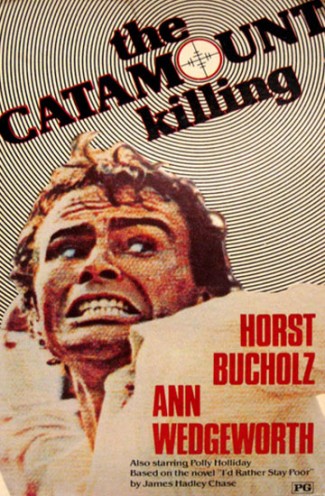
The Catamount Killing (1974)

catamount killing 2

By Richard Winters

My Rating: 3 out of 10

4-Word Review: They’re wracked with guilt.

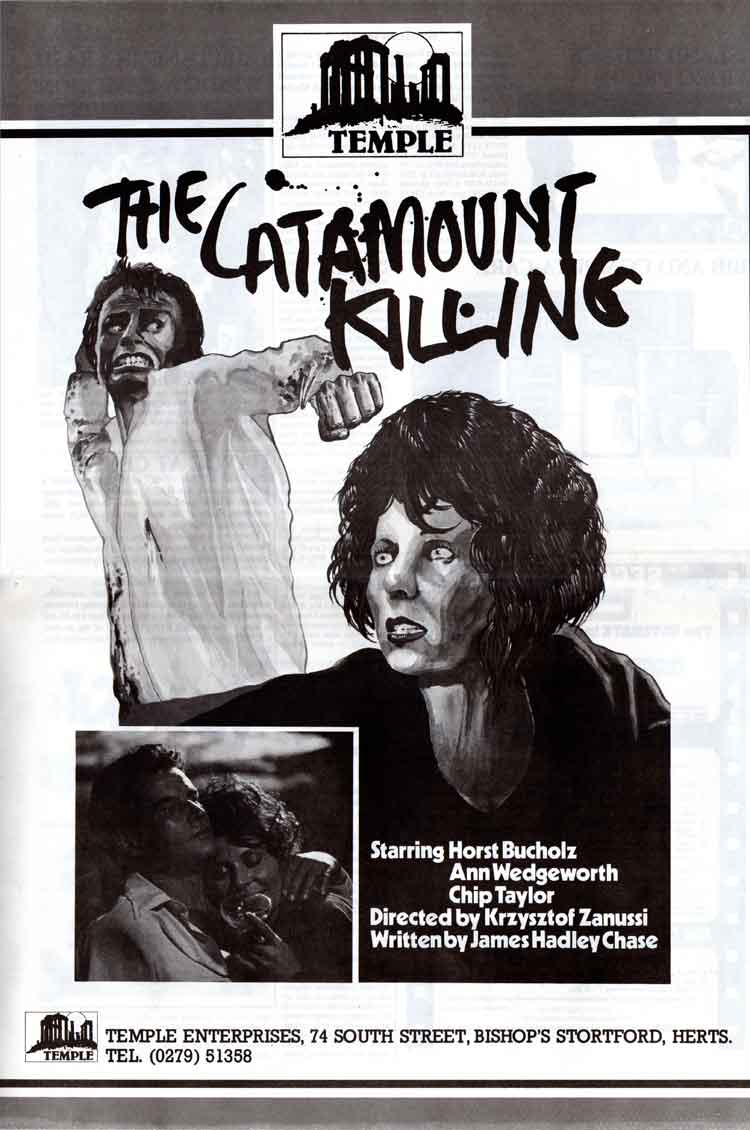
Mark (Horst Buchholz) is a recent divorcee who has moved to a small town and gotten a job as the new bank manager. The bank is small and not adequately guarded giving him the idea to pull off a robbery as an inside job. He seduces the emotionally fragile Kit (Ann Wedgeworth) into helping him with his plan. Initially things go smoothly, but then they begin feeling guilty over what they’ve done especially since the robbery involved the death of someone else. Then Kit’s daughter Iris (Louise Caire Clark) becomes suspicious that her mother might’ve been involved, which causes the couple to unravel in dramatic fashion.

I hate to use the fact that this is a low budget film as a reason for why it’s poor as not every movie has to have state-of-the-art special effects to be entertaining and good story telling and competent direction are still the foundation of a good movie and that can be accomplished on the most miniscule of budgets. However, this film, which was filmed on location in Bennigton, Vermont, looks cheap and stale. The camera work is unimaginative and it does not take advantage of some of the historical landmarks in the town where it was filmed making the background and setting look blah and uninteresting. Its loud, crashing orchestral music score would be better suited for a Hollywood epic and is pretentious and out-of-place here.

The set-up moves too fast and could’ve been the result of watching the American version, which is 11 minutes shorter than the European one. Either way it’s poorly constructed with the two falling in love and plotting the crime without much background information given about them making it all seem forced and rushed. The robbery itself isn’t unique and when compared to other bank robbery movies this one is weak and forgettable.

Buchholz gives a strong performance, which helps the limp material to some degree. Wedgeworth is outstanding. Somehow her soap opera-styled histrionics and Texas accent is something I’ve always found appealing and makes for a fun performance. This also mark the film debut of Polly Holliday who appears briefly sporting a foreign accent that does not sound too believable.

There are enough twists to keep it plausible and mildly engrossing, but the ending lacks impact and like the rest of the movie falls flat. The plot is based off the novel ‘I’d Rather Stay Poor’ by James Hadley Chase, which I suspect would be a far superior version to this.

catamout killing 1

My Rating: 3 out of 10

Released: August 11, 1974

Runtime: 1Hour 22Minutes (American Version)

Rated PG

Director: Krzysztof Zanussi

Studio: Starlight

Available: VHS, DVD-R, Amazon Instant Video

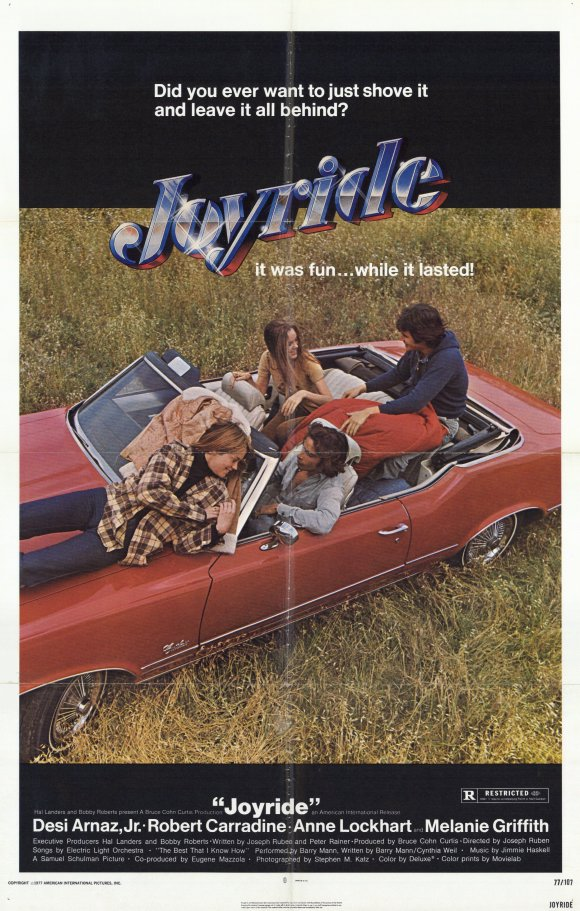
Joyride (1977)

joyride 2

By Richard Winters

My Rating: 4 out of 10

4-Word Review: This joyride turns joyless.

Scott (Desi Arnaz Jr.) is bored with his job and finds that his friend John (Robert Carradine) is too. With John’s girlfriend Susie (Melanie Griffith) in tow they decide to drive up to Alaska where they hope to get jobs on the pipeline. Unfortunately they end up facing a lot of unexpected problems and eventually are forced into robbery with the Canadian Mounted Police hot on their tail.

The film was written and directed by Joseph Ruben who later went on to do much better things, but this isn’t too bad for the most part. It has a good pace without any of the static drama or wooden dialogue typical with these types of features during that era. The situations are for the most part believable and mildly engrossing. The film also features two very unique scenes including that of a genuine pissing contest, which John wages and wins with some fellow bar patrons and a scene where the trio is forced to eat dog food that by the looks on their faces seems to have been the real thing.

Unfortunately the film tends to ramble and takes a lot of predictable dramatic twists while failing to add any new perspective to it. The characters seem ill-prepared for many of the expected problems that they face, which any sensible viewer could’ve predicted would happen from the get-go. It’s also unrelentingly downbeat. I was expecting a little more frivolity and humor, which could’ve helped and I also thought it was unrealistic that every person they meet in the town turns out to be corrupt, conniving or mean.

It’s interesting to some extent to see the next generation of baby boomers or those who were too young to get involved in the protest movement during the 60’s, but still trying to carry on the counter-culture torch during the mid and late 70’s. The four leads are all offspring of famous celebrities, which is the film’s one true novelty and I couldn’t help but wonder while I viewed this what their presumably more conservative parents must’ve thought while watching their kids in this playing characters that are quite jaded and with no shortage of sex, nudity and cursing.

Arnaz Jr. is the weakest link and quite transparent while lacking the charisma needed for a lead actor. Carradine is good and it’s nice seeing him not playing a nerd type. Griffith is cute and there’s even a glimpse of her bare bottom during one segment when she flashes some passing motorists. The most dynamic performance though goes to Anne Lockhart who appears later on and acts as a love interest for Scott. Her character is sassy and real while helping add some needed dynamics and it’s a shame she didn’t stay for the entire duration.

The second half where they decide to rob the payroll department and then go on a mad car chase across the northern Canada has a few fun moments. Unfortunately the viewer is left hanging as we are never shown if they ultimately get away or are caught, which is frustrating and ends up being a cop-out of the highest order.

My Rating: 4 out of 10

Released: June 6, 1977

Runtime: 1Hour 32Minutes

Rated R

Director: Joseph Ruben

Studio: American International Pictures

Available: DVD

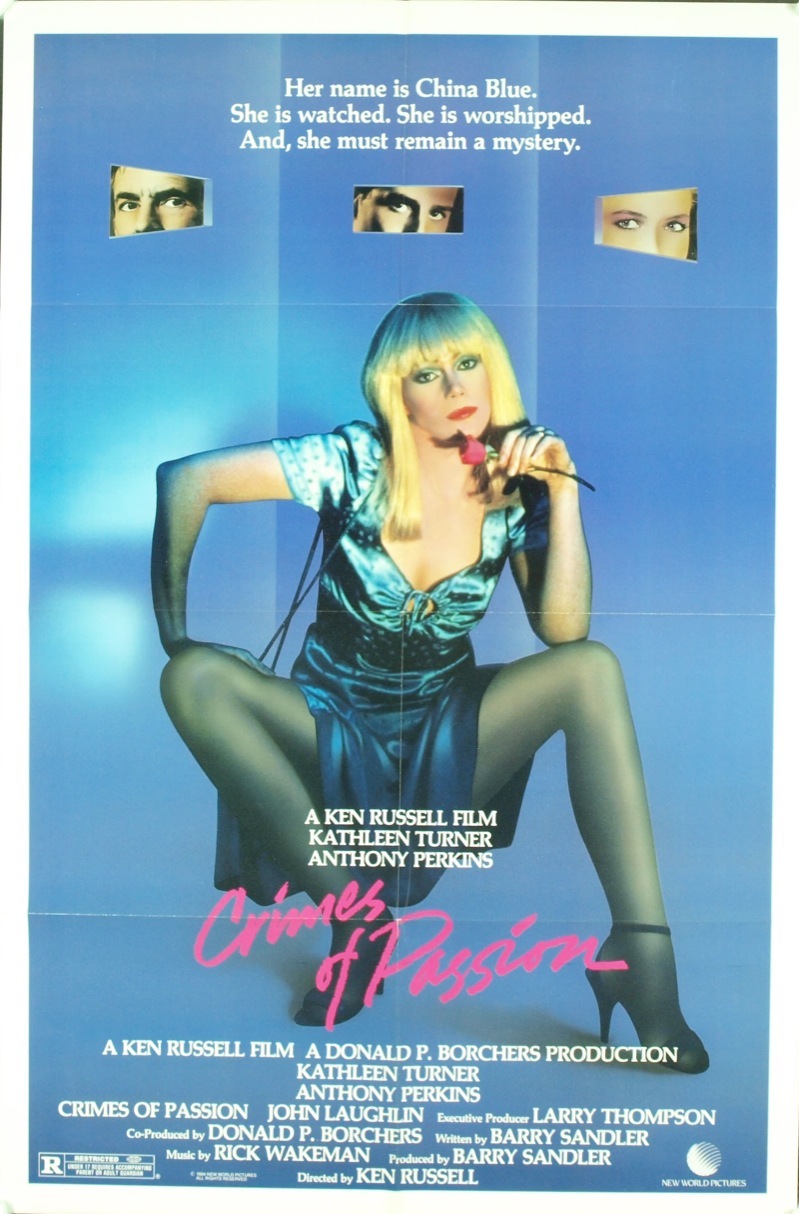
Crimes of Passion (1984)

crimes of passion

By Richard Winters

My Rating: 1 out of 10

4-Word Review: Moonlighting as a hooker.

Bobby (John Laughlin) is suffering from marital problems at home while also having trouble keeping up with his kid’s expenses, so he looks for a part-time job and gets hired by Lou Bateman (Norman Burton) an owner of a fashion clothing studio to work as a private investigator by following around one of his designer’s named Joanna (Kathleen Turner) who he is convinced is selling his patents to a competitor. What Bobby finds instead is that Joanna is actually working as a hooker in the seedy red light district and using the name of China Blue, which gets Bobby more infatuated with her. Soon they are locked into a passionate affair, but unaware that China/Joanna is also being stalked by a crazy street preacher named Peter Shayne (Anthony Perkins) who is suffering from demons of his own while also harboring strange ideas on how to ‘save her’.

The film, which is directed by Ken Russell who can sometimes be brilliant and other times horribly self-indulgent, is annoying from the beginning. The recreation of a therapy group is wooden and artificial and the sex scenes are over-the-top with characters that are one-dimensional and poorly fleshed out. The gaudy color schemes and flashing lights used to recreate the seedy hotel look quickly become repetitive and irritating. It’s hard to tell whether Russell is trying to be serious or campy, but it’s a mad mixture that ends up being a pointless mess. Rick Wakeman’s obnoxious electronic music score and the cliché ridden Psycho-like finale simply add insult to injury.

The script by Barry Sandler is shallow and filled with plot devices that make no sense. Rarely do prostitutes ever fall in love with one of their clients and many create a defense to keep that part of their lives separate from their personal one and vice-versa, so the fact that Joanna and Bobby get into a relationship so quickly and seamlessly while failing to explain why she would find Bobby so ‘special’ out of all the other men she had already had indiscriminate sex with makes this dumb movie even more absurd. It’s also hard to believe that Joanna would be such a great employee as she is described to be by her boss when she is going out every night having sex with strange men at all hours. I would think at some point she’d become exhausted and her productivity at her day job would be effected. I also thought it was a bit goofy why someone would hire Bobby as a private investigator to begin with when he had no experience in that area.

Annie Potts gives the film’s all-around best performance particularly during a strong scene involving her character in bed with Bobby and her roundabout way of admitting that he no longer satisfies her. Laughlin is okay, but bland and the segment where he dresses up as a giant penis having an erection is downright embarrassing. Perkins is fun as the flamboyantly weird reverend and I got a kick out of his singing as well as his bag full of sex toys, but in the end it’s just a bad rendition of Norman Bates that typecasts him while discrediting his earlier more serious efforts.

The scene where China visits an old man who has only a few months to live is the movie’s one and only interesting moment. Had there been more of a history shown to Joanna’s character and why this seemingly intelligent woman did what she did I might’ve have been able to get into it more instead of being completely bored with it. The sexual imagery was considered quite ‘shocking’ and explicit for 1984 standards, but now comes off as benign and hooky especially since one can find far more graphic stuff simply by casually surfing any one of the thousands of porn sites on the internet today.

My Rating: 1 out of 10

Released: October 19, 1984

Runtime: 1Hour 47Minutes

Rated R

Director: Ken Russell

Studio: New World Pictures

Available: VHS, DVD

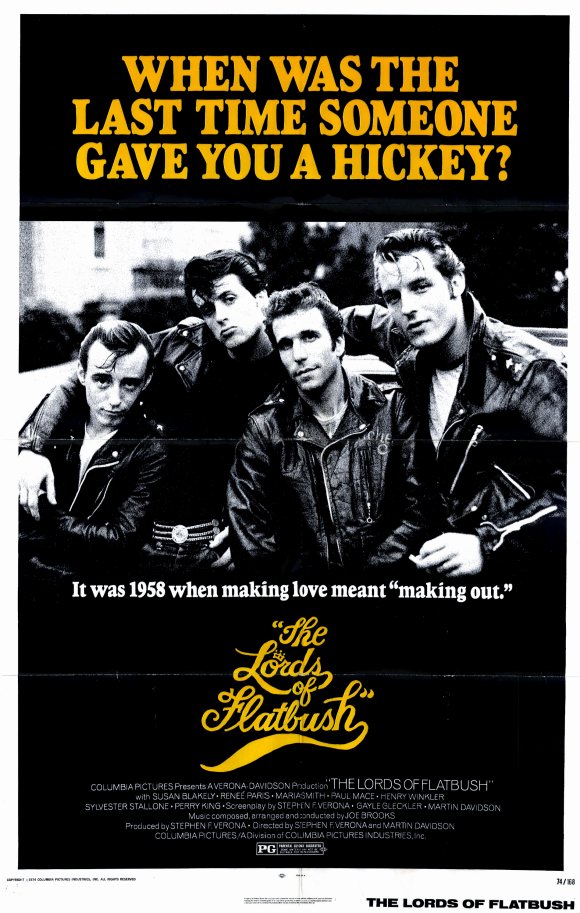
The Lord’s of Flatbush (1974)

lords of flatbush 2

By Richard Winters

My Rating: 6 out of 10

4-Word Review: Sly and the Fonz.

Butchey (Henry Winkler) forms a leather jacket gang with his friends at a Brooklyn city high school during the 1950’s. The group is made up of Stanley (Sylvester Stallone) who is forced to marry his girlfriend when he gets her pregnant and Chico (Perry King) who romances the pretty new girl in school named Jane (Susan Blakely). As they grow into adulthood they find themselves drifting apart as new interests and demands begin to appear.

This film can best be described as a B-version of American Graffiti that came out just a year earlier. The production values are shoddy with a grainy picture that looks like it was filmed on somebody’s home camera. The story works in fragmented style that comes off more like a series of vignettes than an actual plot. Chico’s romance with Jane happens too quickly and seems artificial from the start especially since they are from ‘opposite sides of the tracks’. The actors themselves are clearly well over 18 and in Stallone’s case almost pushing 30 making their presence and the overall 50’s feel seem unauthentic.

The one thing that saves it is that there are some funny scenes as well as moments of decent drama and character development. The part where Stallone barters with a jeweler over the price of the wedding ring is quite good. I also liked the scene where the boys get together to intimidate a guy who is dating Chico’s girl only to run in fright when the other guy brings in a team of football players to defend him. However, the opening bit dealing with the teens misbehaving in class is not funny at all and I ended up feeling sorry for the teacher who was only trying to do her job.

Although given top billing Winkler is underused and almost forgettable. King is the real star and does quite well while also creating a multi-dimensional character. Stallone steals every scene he is in and proves to be much more adept at comedy than you might think. You can also glimpse Ray Sharkey, Armand Assante and Brooke Adams as wedding guests.

The film also features model-turned-actress Susan Blakely in only her third feature who does well playing the ‘good girl’, but the scene where Chico pressures her into having sex and she resists while asking him what color her eyes are in an attempt to see if he really ‘knows’ her and not just using her makes no sense. For one thing her big, blue eyes are the most prominent part of her face. Anyone, even a stranger, who glances at her face for even a second would know the color of her eyes, and thus having her ask someone what color they are is ridiculous already and then having them unable to tell her makes it the dumbest part of the whole movie.

susan blakely

My Rating: 6 out of 10

Released: May 1, 1974

Runtime: 1Hour 26Minutes

Rated PG

Director: Martin Davidson and Stephan Verona

Studio: Columbia Pictures

Available: VHS, DVD, Amazon Instant Video

The Revolutionary (1970)

the revolutionary 2

By Richard Winters

My Rating: 6 out of 10

4-Word Review: He fights against capitalism.

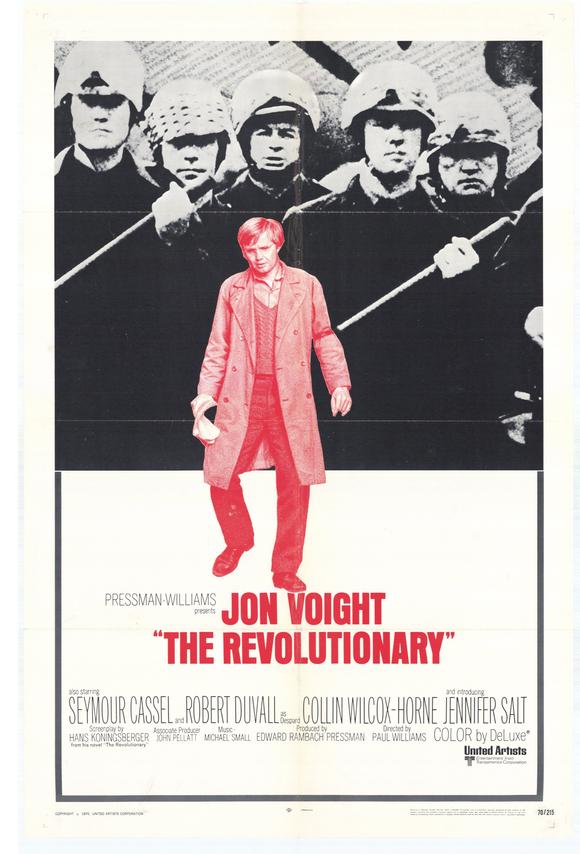
Jon Voight plays a college student involved in a student protest group called The Radical Committee. They push for social change particularly with a more communist/socialist style of government, which he becomes fonder of after working with Despard (Robert Duvall) a nearby factory worker who’s trying to start a union up at his plant. After being suspended from the school for his radical views he becomes frustrated at seeing how his work and actions seem to have very little influence or effect. He then meets up with Leonard (Seymour Cassel) who is a more seasoned radical and not shy about using violent or unethical methods to make his point and pressures Voight to start doing the same.

On the whole despite its slow pace this is a slickly produced intriguing character study. I enjoyed the grainy pictures of the 1917 Bolshevik Revolution shown over the opening credits, but I didn’t like the film’s choice of on-location shooting. Supposedly it takes place in a small American city, but it doesn’t resemble one since it was filmed in London, which gives everything from the old buildings to roadways and sidewalks a European look that you never see in any American town or city. There is also no explanation initially about what the students are protesting against or why they are at odds with the school, which makes the storyline seem generic and hard to get into at first.

I loved Voight’s character as it is similar to his Joe Buck one in Midnight Cowboy with all of the social awkwardness, but fortunately he is not as painfully dumb. It is interesting to see how such a highly intellectual man with strong opinions and ideals can still at times be quite timid. I was looking forward to seeing the character go through a transition and was disappointed that it took so long to get there.  To me the ending should’ve been the beginning and the fact that it isn’t hurts the film’s overall impact. I was also confused as to why the Jennifer Salt character, who plays a young lady from an affluent family, would find Voight so appealing, or why she wanted to continue to go out with him, which to me demanded more of an explanation.

The scene in which a mob gets attacked by some riot police is photographed in a way that makes it intense and startling and could’ve been extended even more. The ending is nerve wracking and great example of how complete silence without any music can sometimes create far more tension. Unfortunately the ambiguous resolution is a disappointment and after such a long and deliberately slow build-up comes off almost like a cop-out.

My Rating: 6 out of 10

Released: July 15, 1970

Runtime: 1Hour 40Minutes

Rated R

Director: Paul Williams

Studio: United Artists

Available: DVD (MGM Limited Edition Collection), Amazon Instant Video

Hot Pursuit (1987)

hot pursuit 2

By Richard Winters

My Rating: 1 out of 10

4-Word Review: He misses the plane.

Danny (John Cusack) attends a private school and when he flunks his chemistry test he’s not allowed to leave with his girlfriend’s family on their trip to the Caribbean. Then his professor inexplicably gives him a reprieve, which allows him to go anyways, but he misses the plane and is forced to play catch-up. First he meets up with some locals, but when their jeep gets submerged in water he takes up with a captain (Robert Loggia) who strands him out at sea. Meanwhile his girlfriend and her family have problems of their own when they inadvertently come into contact with drug smugglers.

The film is poor from the get-go and wastes Cusack’s appeal with material that lacks any imagination. The basic premise is derivative and the characters are one-dimensional. The plot plods along too slowly and the various hijinks that Danny finds himself in aren’t funny at all. The natives that he first meets up with are a bit on the creepy side and Loggia’s captain character is an over-the-top caricature that adds little.

The film’s biggest problem is its severe shift in tone. It starts out as an escapist comedy, which would’ve been alright had it actually been funny, but then ends up turning into a thriller when the family gets kidnapped by drug kingpins and it’s up to Cusack to get them out. Had it tried to keep some humor going during the tension it might’ve worked, but instead it gets unnecessarily serious and implausible with characters that are so poorly fleshed-out that the viewer really doesn’t care what happens to them making the climatic sequence boring and prolonged.

Cusack is good as always and I kind of liked him with his long hair look, but the character tends to be a bit too clean-cut. A young Ben Stiller appears here in his film debut and seeing him play against type as a leering, cocky bad guy is the only interesting thing about this movie and makes it somewhat worth catching.

My Rating: 1 out of 10

Released: May 8, 1987

Runtime: 1Hour 33Minutes

Rated PG-13

Director: Steven Lisberger

Studio: Paramount

Available: VHS, DVD, Amazon Instant Video, YouTube