Young Einstein (1988)

young einstein

By Richard Winters

My Rating: 4 out of 10

4-Word Review: The first rock star.

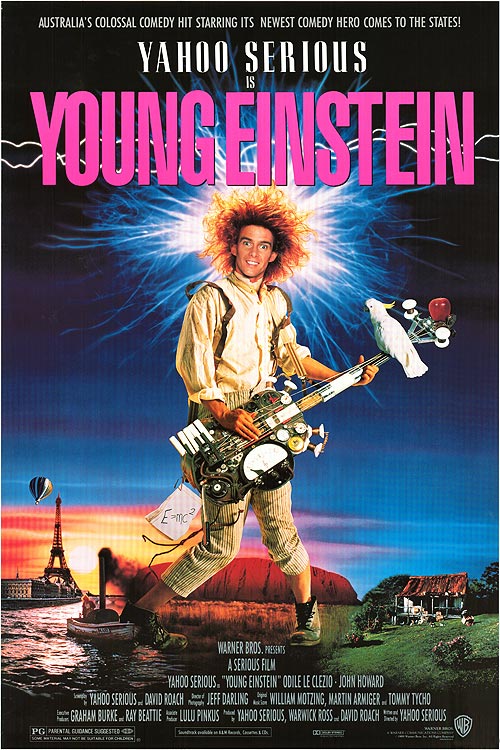
Forget all those things that you’ve read in the history books because they’re all wrong. Albert Einstein was never born in Germany instead he was the son of an apple farmer in Tasmania who grew up to not only invent the theory of relativity, but also rock ‘n’ roll, the electric guitar, bubbles in beer and even surfing. He also had a bad haircut that looked just like Carrot Top’s.

The term one-hit-wonder gets used a lot in the music business to describe a band or singer that comes out of nowhere, gets a chart topping hit and then proceeds back to obscurity. Normally it’s never used in movie jargon, but if it was this would be a perfect example. Writer/director/star/composer Yahoo Serious, whose birth name was Greg Pead until he had it legally changed in 1980, seemed to be the next creative prodigy when he concocted this thing after spending years making educational documentaries. It was a huge success in Australia, which was enough to get Warner Brothers to pick it up as they thought they had another Crocodile Dundee on their hands and spent $8 million promoting it only for it to fail dismally at the box office and in effect so did Serious’ career as he has not made a movie, or even been in one since 2000.

To some extent I was initially surprised at how well directed it was and how Serious showed an astute eye for detail. I loved how he captured the majestic Australian landscape and the music score is quite distinctive and cool. The humor is funny, but mostly when it involves a visual device that has nothing to do with the action. For instance there is a homeless man in one scene carrying a sign stating ‘The end is near’, but instead of spelling ‘near’ in the conventional way it gets spelled as ‘nigh’ to replicate his Aussie accent.

Unfortunately the comedy stays too much at an innocuous level, which is why I believe it didn’t catch on here, or become a cult hit despite its potential. Everything is geared exclusively to a preteen audience, who may love it, but for it to appeal to adults or a more discriminating viewer it needed to have a darker edge, or some attempts at satire instead of just complete, non-stop silliness.

Serious is only so-so as the lead. He certainly does have the chiseled, boyish good looks that could make the young teen girls swoon, but he had too much of a laid-back, mellow persona and seemingly unable to convey any other type of emotion. His radical, punk-like hairstyle starts to become a distraction to the point where you find yourself looking at it even when you don’t want to.

Originally the script was called ‘The Great Galute’ and was a story about some ordinary fella who invented the electric guitar and the Einstein angle was only added in after Serious took a boat ride down the Amazon and noticed a kid wearing an Albert Einstein T-shirt. In a lot ways the film would’ve been better had it stayed with its initial concept as it’s a bit disrespectful to the actual person and it’s never even remotely funny that this guy with a perpetual surfer dude mentality could’ve really been a super genius.

The ridiculous plot proceeds to get dumber as it goes along until it becomes just downright embarrassing by the end. The romantic side-story and the film’s villain (John Howard) are pointless, boring additions that add nothing and should’ve been scrapped. The film would’ve been more successful had it done away with a conventional narrative completely and instead taken the Jacques Tati approach where all emphasis was placed on visual non-sequiturs as this was the only time that I found the film to be even slightly engaging.

My Rating: 4 out of 10

Released: December 15, 1988

Runtime: 1Hour 31Minutes

Rated PG

Director: Yahoo Serious

Studio: Warner Brothers

Available: DVD, Amazon Instant Video, YouTube
Nicholas and Alexandra (1971)

nicholasandalexandra1

By Richard Winters

My Rating: 9 out of 10

4-Word Review: The last Russian Tsar.

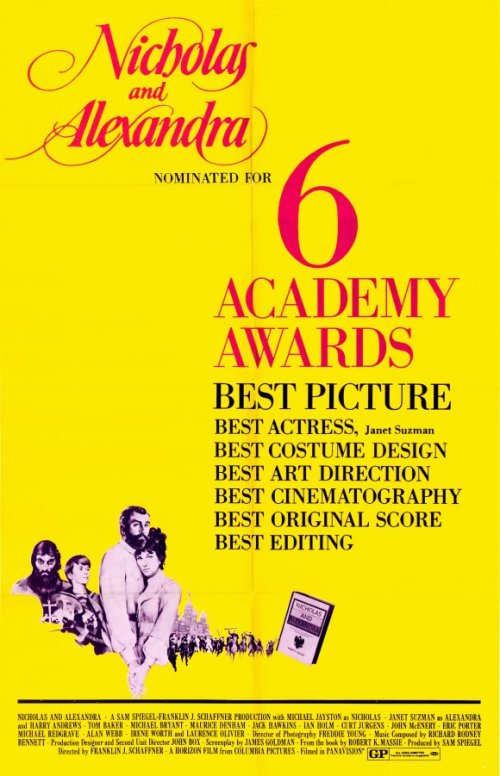
This film chronicles the life of Tsar Nicholas II (Michael Jayston) of Russia and his marriage to Alexandria (Janet Suzman). Based on the novel by Robert K. Massie it examines the height of his power and his apathy to the poverty of his people and his reluctance to listen to their needs, or consider a more democratic form of government. It also looks at his personal life including the birth of his son Alexei (Roderic Noble) who is diagnosed with hemophilia and his wife’s over-reliance on Grigori Rasputin (Tom Baker) a man pretending to have divine connections who ultimately uses his influence on Alexandra to take control over her political affairs when her husband is away. The film also portrays Russia’s involvement during WWI as well as the Tsar’s downfall and eventual exile in Siberia with his family.

The film is basically split up into three parts with the first hour looking at Nicholas’ family life while intercutting with scenes showing the discontent of the Russia people and the efforts of Vladimir Lenin (Michael Bryant) to create a revolutionary form of government. The second hour examines Russia’s war involvement and the many warnings that Nicholas is given not to get involved in it, but foolishly decides to anyways, which ultimately creates massive upheaval. The third hour looks at his abdication of power and the family’s exile and virtual imprisonment at the Ipatiev House in Yekaterinburg where they nervously await their fate.

Initially I thought the third hour would be the weakest as we all know they get shot and killed execution style, but to my surprise it is actually the strongest part of the film. To an extent tearing the characters away from their plush surroundings and forcing them to exist in bleak, squalor-like conditions actually humanizes them and allows the viewer to empathize with them particularly the four daughters who had nothing to do with their father’s harsh policies and just wanted a chance to grow up and live a normal life. The scene where the family is herded into the basement of the home in the early morning hours and forced to sit silently while awaiting their executioners is quite possibly one of the most intense moments ever captured on film.

The performances are uniformly strong particularly Suzman’s as well as Baker as the evil Rasputin who’s drawn out death scene may be one of the longest in movie history. Laurence Olivier in a small, but pivotal bit as the Prime Minister gets two commanding moments including his speech after the Bloody Sunday massacre and later his strong misgivings about the country’s war involvement.

The film is full of brilliant cinematography, direction, costumes and set pieces and is certainly something that must be watched on the big screen to be fully appreciated. I enjoyed the lavish interiors of the Winter Palace especially their walks down the elegant hallways that are lined with Royal guards, but found it equally interesting when Nicholas returns there after the war and forced to walk down these same hallways, which are now darkened and rundown. The many long distance shots of the flat and majestic landscape is also impressive particularly a view of a rolling sunflower field.

Although this film has never attained the well-known classic status of Doctor Zhivago, and in fact this was producer Sam Spiegal’s answer to that film when he was blocked from working on it, I still found it to be every bit as compelling and well directed.

My Rating: 9 out of 10

Released: December 13, 1971

Runtime: 3Hours 8Minutes

Rated GP

Director: Franklin J. Schaffner

Studio: Columbia Pictures

Available: DVD, Blu-ray, Amazon Instant Video


The Honkers (1972)

honkers 3

By Richard Winters

My Rating: 5 out of 10

4-Word Review: Rodeo star is selfish.

Lew Lathrop (James Coburn) is an aging rodeo star who returns to his hometown after an extended absence, which stirs up resentment and trouble wherever he goes. His wife Linda (Lois Nettleton) still has feelings for him despite her anger at him leaving her and never being able to stay faithful. It seems that the only true friend that he has and one that remains loyal to him even through his many shortcomings is rodeo clown Clete (Slim Pickens), but even this gets put to the test when Lew decides to jeopardize is family life once again when he decides to go after local hottie Deborah (Anne Archer) a young woman just past the age of consent who enjoys flirting with older men and shows no reluctance in having her way with them.

The film was directed by actor Steve Ihnat who never saw the final product put on the big screen as he died from a sudden heart attack at the young age of 37 five days before the film’s release. Much like with Junior Bonner and JW Coop, which came out at the same time, this has an authentic feel with the necessary level of grittiness and good rodeo footage,  but the scenes go on too long and the pace is too laid back. One shot has Coburn walking down the city sidewalk for a full several minutes with nothing else happening. Extended shots of a downtown parade and broncos bucking off cowboys in the rodeo ring are all nice, but fail to propel the plot, which seems pretty thin anyways and almost makes this come off like a documentary than a feature film.

Coburn is his usual engaging self, but seems genuinely uncomfortable getting on the broncos and even a bit out-of-place in the role. Pickens is outstanding in support it what may be the best film role of his career. Usually, especially with his country accent, he would get subjugated to hillbilly parts, but here he gets to show his dramatic side by playing a rodeo clown, which is what he did for many years in real-life before becoming an actor. Archer, in only her second film role is quite seductive and possibly at her most beautiful though the many shots showing her wearing headbands start to make her resemble Pocahontas.

Filmed entirely on-location in Carlsbad, New Mexico director Ihnat manages to take full advantage of the rustic western landscape and brilliant blue sky of the region, which is a major plus. The ending has a nice surreal quality and the story does manage to pick up a bit during the second half, but it still could’ve been better trimmed and more compact.

My Rating: 5 out of 10

Released: May 17, 1972

Runtime: 1Hour 42Minutes

Rated PG

Director: Steve Ihnat

Studio: United Artists

Available: None at this time.

Pretty in Pink (1986)

pretty in pink

By Richard Winters

My Rating: 5 out of 10

4-Word Review: Poor girl dates preppy.

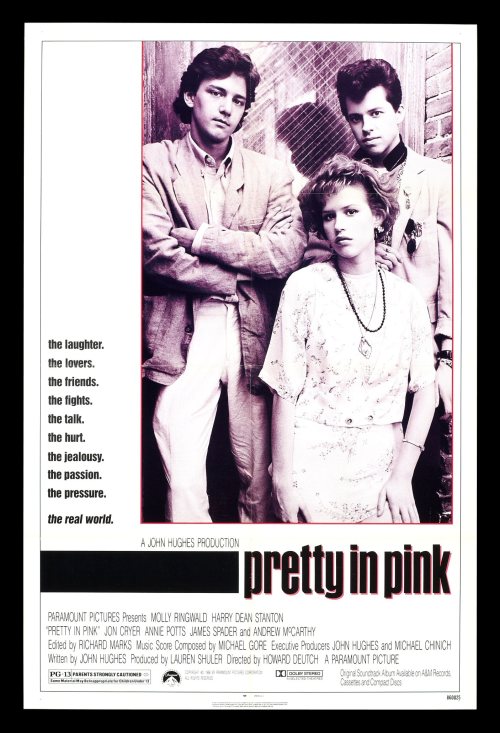
Andie (Molly Ringwald) is a teen girl from the poor side of town who one day while working at a record store meets Blaine (Andrew McCarthy) a rich, handsome, preppy kid that she immediately takes an interest in. A few days later he asks her out much to the dismay of her geeky friend Duckie (Jon Cryer) who has a secret crush on her. Blaine’s friend Steff (James Spader) is also angered about it because he had asked Andie out earlier and been rejected and these two factors cause a strain on their relationship and forces both of them to consider ending it.

One of the problems that I had right away with the film is the fact that with the exception of Ringwald, the majority of the cast who are playing these so-called teenagers were in reality way past adolescence and looking too mature. Kate Vernon, who plays a snotty girl named Benny, actually looks older than her female instructors. McCarthy and Cryer were also in their 20’s and manage to pull it off, but Spader who was 25 at the time doesn’t. He gives a great performance nonetheless, but I kept wondering with so many star struck teens out there dying to get into the business that the producers couldn’t have gotten performers that were more at the actual age of the characters.

Ringwald is fantastic in a vehicle tailored made for her and one that she really cruises with. I particularly liked her facial expressions while she attended a frat party and the moment where she decides to go to the prom despite not having a date simply to show them that they can’t ‘break her’ is fantastic. However, I wasn’t so crazy about the inferred idea that she was dating Blaine simply because he was from a rich family and could help her escape from her otherwise poor/ humble surroundings as it toys with the concept of ‘marrying-into-wealth’ which is too old fashioned. A young lady today should feel that she can work her way up the social/economic ladder on her own and not be dependent on some guy to do it for her.

I had equally mixed feelings involving Duckie. Cryer certainly gives an engaging performance, but the character’s excessive and constant need for attention-seeking humor gets overdone and I wished it had been toned down and the character made to be a little less geeky. The part where he has an instant meltdown when he finds out that Andie is dating someone else is also too extreme as it makes him seem dangerously possessive especially since he and Andie were just friends. Later when he is rude to Blaine at a nightclub only helps to make him look even more emotionally unstable.

I had this same issue with Steff who gets aggressively angry at Blaine for dating Andie and even threatens to end their friendship because of it, which to me was a complete overreaction. Sure he might be upset about it, but in real-life I think he would’ve expressed his displeasure in more subtle ways,or even just gotten over it since he was apparently sleeping with Benny who was a lot hotter looking than Ringwald anyways. In reality people generally want to hide their hurt feelings and not respond so overtly when things don’t go their way because they are usually smart enough to realize it will just make them look like a sore loser otherwise.

The Blaine character has problems too although different from the other two. The first issue is when he is at the record store and hands Andie an album cover showing Steve Lawrence, a famous crooner from the early ‘60s and frequent guest star on the old ‘Carol Burnet Show’ and asks Andie if he’s ‘hot’ or ‘trendy’. Now, I was teenager myself during the ‘80s and was in no way ever affiliated with the ‘hip crowd’, but even I and my nerdy friends where savvy enough to know that Steve Lawrence would never be considered an idol with ‘80s teens nor humiliate ourselves by asking anyone if he was. The fact that he does ask makes him seem almost mentally ill or someone who’d been living in a cave, which would be enough for most young women not to want to date him because they would think he was ‘weird’ or strangely disconnected.

The scene that takes place in the school’s library where he sends her a message via the school’s compute and even somehow manages to upload a picture of her is also dumb. Remember this was BEFORE the internet and sending emails and communications via a computer weren’t common or likely especially when they weren’t even their own, but public ones instead. In a later conversation this gets described as a ‘computer trick’ that he knows, which I guess suffices as being screenwriter John Hughes’ feeble attempt at ‘explaining it’.

In a lot ways this seems like just a basic reworking of the formula that was already used with much better success in Sixteen Candles with Cryer playing an off-shoot of Anthony Michael Hall’s character and Harry Dean Stanton as Ringwald’s sensitive father substituting for the one played by Paul Dooley in the first film. I was also disappointed that we never even briefly get to see Andi’s mother who was divorced from her father but gets discussed quite a bit and there’s even a picture of her sitting on Andie’s bedside table, which to me should’ve been enough to justify some sort of appearance by her at some point.

I liked the scene, at least on an emotional level, where Duckie physically attacks Steff after he makes a disparaging remark about Andie, but on the logical end it’s off-kilter. For one thing Andie wasn’t aware of the remark and for Duckie to take on some guy who was clearly much bigger than him it would’ve made more sense for her to have heard it and been hurt by it in order for him to come so aggressively to her defense. A later scene that takes place at the prom where a super-hot girl turns around and out-of-nowhere shows an immediate interest in Duckie who’s just standing there seemed too dream-like and fanciful.

I never saw this film when it first came out and only reviewed it now at the suggestion of some female friends in order to commemorate the 30th anniversary of its release and I have to be honest I was expecting something a lot better especially since it has attained such a strong cult following. Maybe it’s the nostalgic value that gives it its allure, but on a purely cinematic level it’s average at best with a screenplay that only touches the surface of the teenage experience while relying too heavily on age-old and very obvious dramatic devices to help propel it.

My Rating: 5 out of 10

Released: February 28, 1986

Runtime: 1Hour 36Minutes

Rated PG-13

Director: Howard Deutch

Studio: Paramount

Available: DVD, Amazon Instant Video, YouTube

“something big” (1971)

something big 1

By Richard Winters

My Rating: 4 out of 10

4-Word Review: Kidnapping the colonel’s wife.

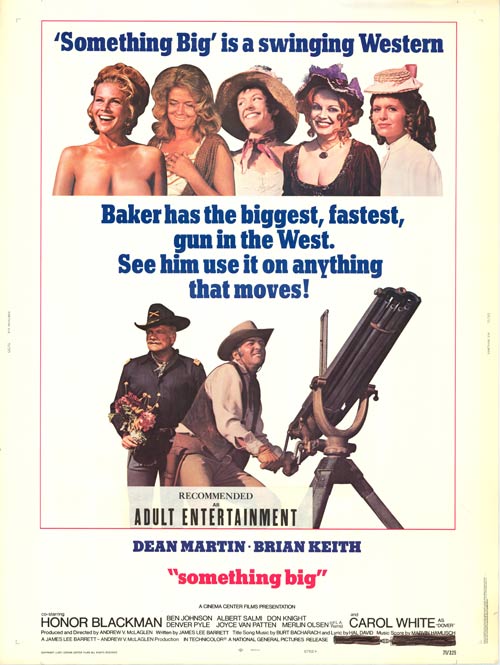
Joe Baker (Dean Martin) is an aging bandit looking to do “something big”. He becomes aware of a hoard of treasure being hidden inside a church that sits just across the border and safely guarded by a throne of Mexican bandits. Joe figures that to be able to overpower them he’ll need a Gatling gun and turns to black market dealer Jonny Cobb (Albert Salmi) who agrees to sell him one in exchange for a woman as he’s been without the company of one for “too long”. Joe then begins robbing stagecoaches in a mission to find a woman attractive enough for Jonny’s tastes. After several attempts he finds one who just happens to be the wife of the cavalry colonel (Brian Keith) who then goes on a mission to rescue her while attempting to put a kibosh on Joe’s plans.

This is another film that was given a ‘bomb’ rating by Leonard Maltin that I didn’t think was all that desrved. It’s certainly no classic but James Lee Barrett’s script if full of dry humor and offbeat touches that manages to keep things consistently amusing. Some of my favorite bits include Martin traveling around with a small pooch in his saddle pocket, or his horse having gold crown teeth. Don Knight as his Scottish travel companion Tommy who carries his bagpipes with him at all times and will even occasionally play them as they enter new frontier towns is funny too.

Keith is spot-on as the slightly stuffy colonel who is stuck with incompetent underlings and just wants to move on with his impending retirement in peace, but can’t. His facial expressions alone are terrific and he gives a far more nuanced performance than co-star Martin and should’ve been given top billing.

The attractive and sassy Honor Blackman is great as Keith’s wife and could easily be considered a ‘milf’ by today’s male audience. Joyce Van Patten and Judi Meredith as two women living on a lonely ranch willing to have sex with any man that comes along, including the uptight colonel, are quite funny as is Salmi with his garishly discolored, tobacco stained teeth.

The climax features some nifty gun action including seeing Martin use his Gatling gun to shoot down the bandits in domino-like fashion, but for the most part the script is too leisurely paced and in desperate need of more confrontation and elaborate scenarios. Marvin Hamlisch’s soft-rock score is out-of-place for the time period and the theme song sung by former Paul Revere and the Raiders front man Mark Lindsey doesn’t have any type of western feel to it. I also got tired of hearing the phrase “something big” mentioned over and over again. Initially it seemed cute and clever to repeat the film’s title in the dialogue, but it eventually goes overboard.

My Rating: 4 out of 10

Released: November 24, 1971

Runtime: 1Hour 48Minutes

Rated GP

Director: Andrew V. McLaglen

Studio: National General Pictures

Available: DVD

Oh! Calcutta! (1972)

oh calcutta 1

By Richard Winters

My Rating: 1 out of 10

4-Word Review: No clothes no problem.

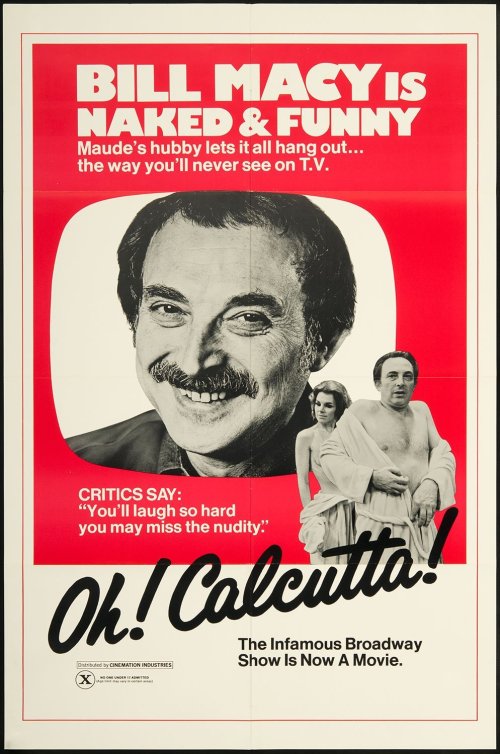
This film is based on the long running stage play that ran from June 17, 1969 to August 12, 1972 and later revived in the ‘80s to become one of the longest running shows in Broadway history. This version was taped in front of a live audience on a closed sound stage and then broadcast on pay-per-view, which eventually was transferred to theaters in ’72. It has a mainly nude cast performing in skits with a sex related theme and later became popular for featuring Bill Macy who went on to star as Walter in the hit TV-show ‘Maude’.

The film starts out interestingly enough as it shows the audience members filing in and examines the nervous looks on their faces as this was when nudity on stage was all still quite new and controversial. The film then cuts back and forth between the audience and the backstage cast who are in-the-buff and getting ready to perform.  They then come out on stage in bathrobes and do an Avant-garde-like dance sequence in which their names get matted over the screen while they flash the audience.

It then goes into the skit portion and everything goes rapidly downhill from there. The first segment isn’t funny at all and actually quite disturbing. It deals with two adults pretending to be teens who are starting to become aware of their sexual awakenings. The boy, who is named Jack, takes out a ruler in order to put it up Jill’s ‘thing’ to make sure it will be deep enough to fit in his ‘thing’. She becomes reluctant, so he tackles her and forcibly rapes her while killing her in the process. Unable to grasp what he has done he props her up and has a ‘conversation’ with the corpse before walking away and allowing the camera to zoom in on a close-up of her vacant, empty eyes.

The second segment deals with the cast reading letters of sexual fantasies written by anonymous authors that isn’t as titillating as it sounds. The third segment deals with a man who has become bored with his sex life and wants his reluctant girlfriend to try out some new fetishes. This segment is particularly boring because during the time the couple is having sex the viewer is treated to watching three minutes of a matted picture of a city skyscraper instead.

After this there is a skit dealing with a conservative couple inviting over some swingers as well as a segment dealing with an examination done at a doctor’s office, which is has a vaudeville theme and comes complete with cheesy cartoon sound effects.

There was a time when the mention of sex or nudity shown of any kind would be deemed ‘controversial’, but that period is long gone and this insipid thing hasn’t aged well at all. In fact there are old episodes of the ‘Love Boat’ that are more provocative and funnier than anything you’ll see here.

oh calcutta 2

My Rating: 1 out of 10

Released: June 16, 1972

Runtime: 1Hour 40Minutes

Not Rated

Director: Jacques Levy

Studio: Cinemation Industries

Available: DVD (out-of-print)

Against All Odds (1984)

against all odds

By Richard Winters

My Rating: 4 out of 10

4-Word Review: Searching for missing girlfriend.

Terry Brogan (Jeff Bridges) is an aging football player who gets cut from the team and in desperate need of cash. He reluctantly accepts a paying assignment from his friend Jake Wise (James Woods) which has him traveling to Mexico in search of Jake’s girlfriend Jessie (Rachel Ward) who just so happens to also be the daughter of the team’s owner (Jane Greer) that cut Terry from the squad. Terry manages to find Jessie rather quickly and the two promptly fall in love, which propels a string of odd events that soon has Terry embroiled in a complex criminal scheme that threatens both his life and others.

This film is a remake from the 1947 film noir classic Out of the Past, but it does not fare as well as the original. The main problem is that it requires the viewer to make some major leaps in logic and only proceeds to get more implausible as it goes along. The fact that both Jake and the team’s owner want to hire Terry to find Jessie is the biggest issue. Why would these two want to throw gobs of money at someone who has no experience in finding people or know the first thing about the process. They wouldn’t hire him to fix their car if he had no experience in that area, so why expect him to have any ability in finding a missing person. Professional private eyes have spent years tracking down people and have attained skills that a novice wouldn’t, so why not just leaf through the Yellow Pages of their local phone book and hire a private investigator with good credentials to do the job instead?

Terry also locates Jessie much too quickly. Mexico has a population of 125 million people and yet in only a couple days he miraculously spots her buying food from across the street from where he is having a drink. In equally miraculous fashion she is somehow able to, after only speaking to him briefly, figure out which hotel he is staying at and bursts into his room unannounced the next day, which is also dumb because who leaves their hotel room door unlocked especially when staying in a foreign country? Later the Alex Karras character is somehow able to find the two as they make love inside an ancient Mayan temple deep inside the remote jungles of the Yucatan, which again is highly questionable and probably even more implausible than the other two examples mentioned above.

The motivations of the characters are another issue. There’s a scene where the Swoosie Kurtz character, as a favor to Terry, goes into a dead man’s office to retrieve some important files from a safe while having a Doberman growling at her and a corrupt security guard ready to harm her at any second, but why someone would put their life on the line for somebody that they really don’t know that well is nebulous and in reality wouldn’t occur.

There is also a scene involving Jake and Terry drag racing down the busy streets of L.A. in broad daylight. Some fans of the film consider this to be quite exciting, but I found it to be unrealistic as it is hard to believe that they could get away with it without catching the eye of a traffic cop as they were doing it. Having two middle-aged men be so utterly reckless not only with their own lives but those of the other drivers is also hard to imagine and puts their most prized possessions, which is their snazzy sports cars in jeopardy of getting totaled. Going to some other less traveled place to do their off-road racing would’ve made more sense.

On the plus side Larry Carlton’s moody soundtrack is great and helps create just the right tone. I also thought Ward was a perfect choice for her role as she is quite sensual and seductive without ever overdoing it. The film also scores with its breathtaking Mexican scenery.

I liked that Greer, who starred in the original version, gets cast as Ward’s mother and although I felt Richard Widmark does quite well as the heavy I was disappointed that the role wasn’t offered to either Robert Mitchum or Kirk Douglas as they had appeared in the original as well.

The plot features many twists, which keeps it mildly interesting, but it also borders on getting convoluted and is never emotionally compelling. The ongoing love affair between the two leads ends up being annoying as well. For one thing she two-times him while also bailing on him the moment things got tough. If a person does that to someone once they will do it to them again if given the chance, so ‘losing’ her wasn’t much of a loss and makes the image of her crying for him, which gets shown over the closing credits, all the more melodramatic and over-the-top.

My Rating: 4 out of 10

Released: March 2, 1984

Runtime: 2Hours 1Minute

Rated R

Director: Taylor Hackford

Studio: Columbia Pictures

Available: DVD

A Man, A Woman and a Bank (1979)

man a woman and a bank 2

By Richard Winters

My Rating: 3 out of 10

4-Word Review: A very large withdrawal.

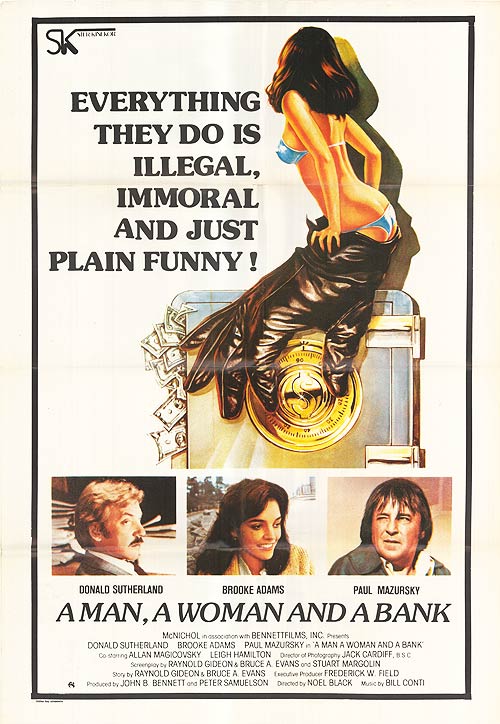
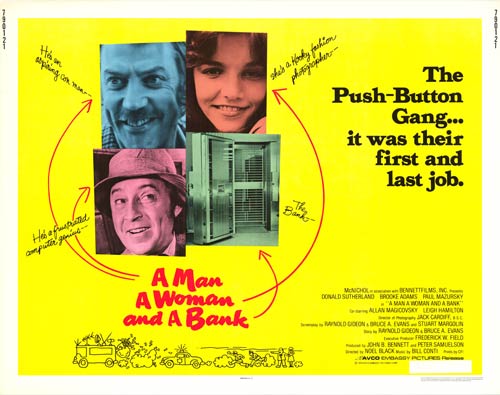
Small-time crook Reese (Donald Sutherland) teams up with his computer expert friend Norman (Paul Mazursky) to pull of what they hope will be the perfect crime. Their plan is to reprogram the alarm system of a bank while the building is still under construction. Then when it finally gets completed they’ll break into the vault undetected and walk away with a cool 50 million dollars. Things though get off to a rocky start when commercial photographer Stacey (Brooke Adams) snaps of picture of Reese as he is stealing the blueprints of the building. In an effort to get the negatives back he tracks her down, but ends up falling in love with her instead putting their elaborate plan at risk.

There’s been a million and one bank robbery films done and many of them can be quite entertaining, but this one misses the mark from the very beginning. For one thing it gives us no backstory to the characters, or how they were able to come up with the idea in the first place. Giving a compelling reason for the viewer to become emotionally attached to the characters and their quest helps and this film fails to give it. The plan itself seems too easy and full of a lot of potential pitfalls that the script conveniently overlooks. The idea that the Norman character would be able to break into the bank’s security system by simply feeding the computer with a lot of useless usernames until it finally breaks down and starts spitting out the secret information is in itself quite questionable.

The pacing is poor and the story meanders onto several different story threads that have nothing to do with the crime. Analyzing Norman’s marriage difficulties and Stacey’s troubles with her possessive boyfriend (Allan Kolman) seems like material for a whole different movie and does nothing to help keep the interest going in this one. In fact the movie spends so much time on these other tangents that the robbery begins to seem almost like a side-story.

Stars Sutherland and Adams reunite after starring in Invasion of the Body Snatchers just a year earlier. The two share a good chemistry, but Sutherland is too laid back in the role and Adams’ hyper energy helps only so much. The film’s best performance and ultimate scene stealer is Mazursky who is completely on-the-mark as the nervous friend and gets quite a few good lines.

The film does have a couple of unique scenes that I liked including a collection of candles made to look like well-known game show hosts and a security guard who does jumping jack exercises only to light up a cigarette the minute he sits back down. The crime though is boring and does not offer enough tension. I was almost hoping they’d end up getting caught as they are able to pull it off too easily with a plan that I don’t think would ever work in real-life.

man a woman and a bank

My Rating: 3 out of 10

Released: September 8, 1979

Runtime: 1Hour 41Minutes

Rated PG

Director: Noel Black

Studio: AVCO Embassy Pictures

Available: DVD

Lucky Lady (1975)

lucky lady

By Richard Winters

My Rating: 6 out of 10

4-Word Review: Three’s not a crowd.

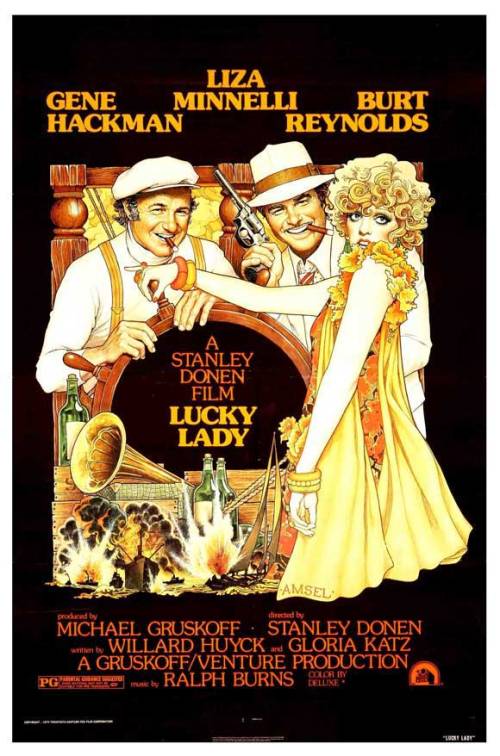
Walker (Burt Reynolds) and Claire (Liza Minnelli) make money by helping people illegally cross the Mexican border into the states, but when their third partner in the business dies and they almost get arrested they decide to get into an easier line of work. With the help of Kibby (Gene Hackman) they become rum-runners who transport liquor by boat under the cover of night during the prohibition era. As the three start to have some success and get to know each other they also form a love triangle and spend their evenings involved in a ménage-a-trois.

If you’re in the mood for non-think, grandiose style entertainment made in the same vein of classic movies from Hollywood’s golden era then you should find this more than satisfying. The plot moves along at a nice breezy pace with characters that are distinct and fun and full of snappy dialogue. The majority of the story takes place on water, but manages to remain quite exciting and ironically only becomes waterlogged when it goes on land. The lavish sets are splendid and the film could be enjoyed by simply taking in those alone.

The three leads are in top form and play against type. Minnelli, who actually looks sexy here in a flapper styled hairdo, is quite amusing with her acerbic one-liners. Reynolds is great as the klutzy member of the trio and Hackman is solid as always playing someone who seems meek at first, but eventually takes over things with his patented strong personality. Unfortunately John Hillerman, best known for playing Higgins in the ‘Magnum P.I.’ TV-series, is the only weak link of the cast playing a bad guy that never conveys enough menace to be truly threatening.

A young Robby Benson who was 18 at the time, but looks more like 14 is quite good in support. I was never all that impressed with the former teen heart throb, but here he is effective playing a shy kid who says little, but when he does say something it’s a gem. Geoffrey Lewis is also quite funny as an inept Captain of the Coast Guard. Mills Watson, who is best known for playing Deputy Perkins on the ‘The Misadventures of Sheriff Lobo’ TV-series can be spotted in a couple of scenes. IMDb does not have him listed here, but I recognized him and his name does come up on the closing credits as a character named Giff.

For lightweight entertainment the film does have quite a few action sequences that are surprisingly well choreographed and even quite bloody, but the climatic sequence becomes too cartoonish. I was also disappointed that the one unique element of the story, which is the three getting into a relationship, is only mildly touched upon and basically forgotten after the first hour. The film could’ve gone a lot farther with that and even made it the centerpiece of the plot, which would’ve helped make it more character driven and groundbreaking.

My Rating: 6 out of 10

Released: December 25, 1975

Runtime: 1Hour 58Minutes

Rated PG

Director: Stanley Donen

Studio: 20th Century Fox

Available: DVD


Throw Momma from the Train (1987)

throw momma 1

By Richard Winters

My Rating: 8 out of 10

4-Word Review: Two guys trade murders.

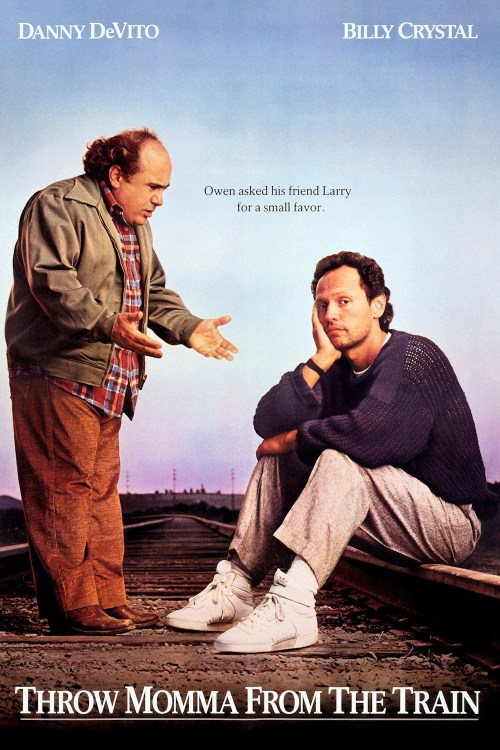
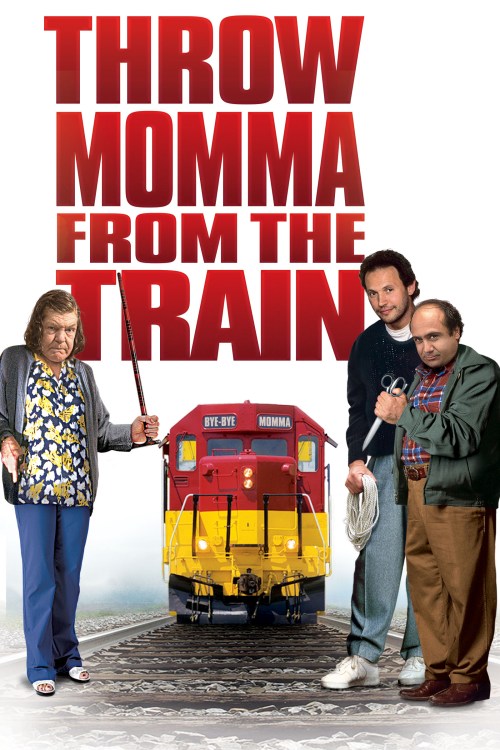
Larry (Billy Crystal) is a creative writing teacher who’s bitter about his ex-wife (Kate Mulgrew) stealing his story idea and using it to write a successful novel that has made her rich and famous while he wallows in the realm of writer’s block. Owen (Danny DeVito) is a writing student taking one of Larry’s classes who is stuck living with his miserable mother (Anne Ramsey) who he’d like to see dead. After watching the movie Strangers on a Train he comes up with what he thinks is a brilliant solution. He’ll murder Larry’s ex-wife while Larry in turn will murder his Momma. Owen does his part, but Larry is reluctant to pull his end of the ‘deal’.

DeVito gets a lot of accolades for his acting, but in many ways I think he is an even better director and doesn’t get enough credit for it. This movie was way ahead-of-its-time and ushers in many interesting juxtapositions and edits that we take for granted now, but was considered quite novel back then. I loved the close-up of Owen’s Hawaiian shirt with palm trees and then a jet plane formatted over it, which is used to cut to the next scene as well as the scene showing Larry’s students sitting in class and then the camera panning over in one take to Larry sleeping on the sofa in his apartment. The segments with a camera spinning around the characters is good and gives it a very Hitchcock feel especially the one with Larry lying on the floor as the camera rotates above him, but the best directorial touch is when Owen goes bowling while imagining that the pins are his mother.

Ramsey’s performance as the ultimate mother from hell is another selling point and one that has made this a cult classic. The fact that the woman was dying of cancer at the time and was in severe pain during the entire time that the movie was being filmed makes it all the more impressive. My only complaint is that it would’ve been nice had there been at least one moment where her character revealed a softer side and made her seem at least slightly human. I also felt that her eventual demise was quite unimaginative especially for a film that was otherwise very creative.

DeVito scores as well in his performance of the nebbish grown son in a character that could’ve easily been unlikable had it not been perfectly balanced, which he does marvelously. Crystal is excellent as a sort of sane everyman stuck in a very insane situation. His best part comes when he paces his house endlessly while trying desperately to come up with the opening sentence of his novel, which I found to be one of the funniest moments in the movie and something every struggling writer can relate to.

The wrap-up is a bit too good natured and works against the story’s otherwise dark comical roots, but it still gets a few points for showing Owen’s children’s pop-up book that he made, which illustrates the film’s scenario.

throw momma 2

My Rating: 8 out of 10

Released: December 11, 1987

Runtime: 1Hour 28Minutes

Rated PG-13

Director: Danny DeVito

Studio: Orion Pictures

Available: DVD, Blu-ray