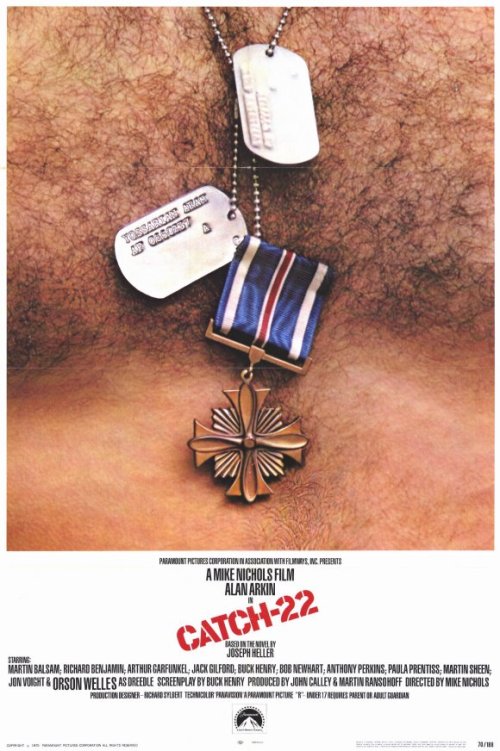
Catch-22 (1970)

catch 22 2

By Richard Winters

My Rating: 8 out of 10

4-Word Review: The insanities of war.

Having to fly numerous combat air missions has sent Word War II fighter pilot John Yossarian (Alan Arkin) to the brink of insanity. He goes to his unit’s psychiatrist Dr. Daneeka (Jack Gilford) asking him if he can be sent home. The doctor admits that anyone who feels that they are going crazy shouldn’t be flying, but there’s a problem known as ‘Catch-22’, which states that anyone who no longer wants to fly combat missions isn’t crazy but normal and therefore John’s request is denied and he is forced to remain while observing how utterly ridiculous everyone else is, particularly his military superiors, even though they’re considered to be the ‘normal’ ones.

The film is based on the best-selling novel by Joseph Heller, who started writing his novel in 1953 and would only spend 1-hour each day working on it until finally completing it 8 years later. The story is very loosely based on some of his experiences and emotions that he had as a fighter pilot during the war and it’s always nice watching something that was done, no matter how satirical, from an insider’s perspective and his numerous potshots at the nonsense that makes up the military hierarchy could easily be parlayed to anyone who has had to deal with bureaucracy at any level.

Certain changes were made in the novel’s transition to the big-screen, but overall screenwriter Buck Henry does well in bringing the fragmented narrative vibe of the book to the film. I was really impressed with the aerial sequences, which used the B-25 Mitchell and took 6 months to film. The cinematic style was years-ahead-of-its-time as well including having things occur in the background of a scene that has no connection to what the characters in front of the camera are discussing and at times even oblivious to.

The film features many laugh-out-loud segments with my favorite being the part where Yossarian attends a military award ceremony and accepts his medal while being, to the shock of the military brass that is handed out the medal, stark naked. Anthony Perkins, who plays the hopeless chaplain, is also quite funny in a rare, but interesting turn in a comedic role.

One of the things that I didn’t like about the film, although it didn’t bother me quite as much as it did when I first saw the movie many years ago, is the way the tone shifts from being quirky and hilarious at the beginning to somber and serious towards the end. I realize that the novel works in the same way, but the first half of the film successfully balanced the line of exposing the absurdities of war in a comedic vein while still showing the serious consequences without ever getting overwrought, so it’s a shame that the second half couldn’t have worked the same way instead of leaving the viewer with a gloomy, depressed feeling when it’s over and almost forgetting completely about the comedy that came before it. I also believe this is why this film failed at the box office while the similar M*A*S*H succeeded simply because that movie remained funny all the way through.

Arkin, in the lead, is miscast and seems too old for the part. His nervous, hyper persona doesn’t work and would’ve been more effective had it been toned down by being played by a younger actor who was more emotionally detached. The rest of the supporting cast though is great including Martin Balsam who makes cinematic history by being the first actor to ever appear sitting on a toilet in a movie.

My Rating: 8 out of 10

Released: June 24, 1970

Runtime: 2Hour 2Minutes

Rated R

Director: Mike Nichols

Studio: Paramount

Available: DVD, Amazon Instant Video, YouTube
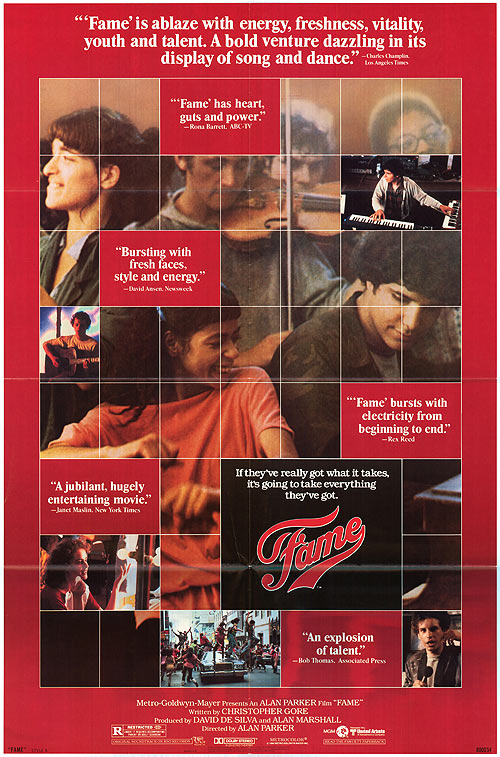
Fame (1980)

fame 3

By Richard Winters

My Rating: 4 out of 10

4-Word Review: School of Performing arts.

Filmed at the now demolished Haaren High School the film is intended to be a showcase of New York’s famous Fiorello LaGuardia High School that specialized in training students in the arts, dance and drama. The story centers on an eclectic mix of teens that join the school. There’s Doris (Maureen Teefy) who is pushed by her mother (Tresa Hughes) into becoming a singer/actress despite suffering from horrible stage fright. Leroy (Gene Anthony Ray) wants to become a dancer despite not being able to read while Ralph (Barry Miller), Montgomery (Paul McCrane) and Bruno (Lee Curreri) all suffer from personal demons/insecurities of their own.

I’m sure in its day this came off as fresh and exhilarating, but time has not been kind to it. The film starts out with the teens auditioning to get into the school, which might have been interesting had it not come off as a poor man’s version of ‘American Idol’, which has dulled our senses so much to the audition process that anything else now seems second-rate. I think what surprised me most about these scenes is how patient the judges/instructors were as all of the teen’s auditions were quite poor and they should’ve been politely escorted out a minute into them instead of being allowed to continue on with something that was clearly not working. What shocked me even more though is that several of the main characters gave horrid auditions that made it look like they had no talent at all and yet somehow they were accepted into the school anyways making it look like this wasn’t necessarily a place for gifted students after all, but instead just someplace willing to bring in any loser that wanted in.

The characters aren’t appealing either. Doris is much too neurotic; Montgomery is boringly benign and Ralph comes off as an obnoxious, attention-seeking clown. There are many scenes showing the students being highly disrespectful to their instructors that normally would’ve gotten them kicked out of any other school, but here for some reason they don’t. Out of all the students Coco (Irene Cara) was the only one I liked as she had genuine talent and also seemed much more dedicated, but the film ends up degrading her by having her character go to a rundown apartment of some slimy producer who wants to ‘audition’ her for his next film even though it is quite obvious to any viewer that the guy is a first-rate sleazebag and his audition is clearly just a set-up to a scam, or in this case an underground porno.

The script is filled with a lot of unresolved storylines and loopholes. For instance Leroy is unable to read and when this gets discovered he tears up the school in a fit of rage and yet somehow still remains a student for the full four years. Did he eventually teach himself how to read and pay for the damages that he caused? These pertinent questions never get answered, but really should’ve.

I enjoyed the shots capturing the New York’s busy and sometimes dangerous city sidewalks as well as a bird’s-eye shot of Times Square. The scene where a couple of students go to a showing of The Rocky Horror Picture is great, but the rest of the movie is just one long mish-mash. At certain points it tries to be a gritty drama and then at other times it breaks out into tacky dance routines. Instead of being a compelling drama it’s more of a broad overview and would’ve worked much better had the number of main characters been paired down to just one or two and the time span cut from four years to just one.


My Rating: 4 out of 10

Released: May 16, 1980

Runtime: 2Hours 13Minutes

Rated R

Director: Alan Parker

Studio: MGM

Available: DVD, Blu-ray, Amazon Instant Video, YouTube
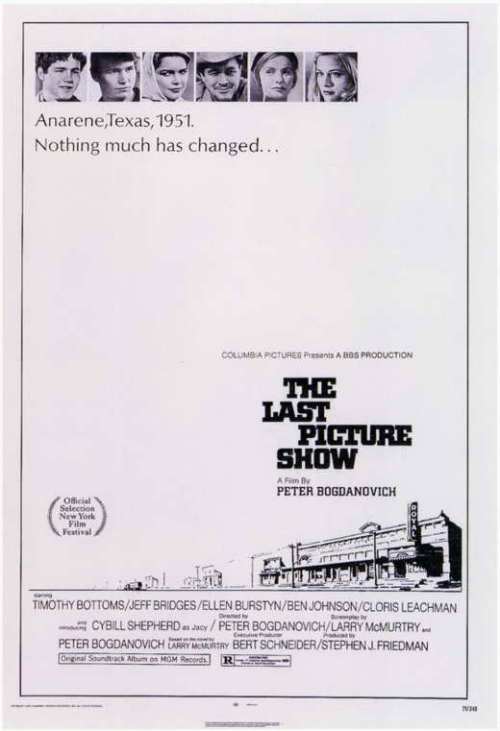
The Last Picture Show (1971)

last picture show 1

By Richard Winters

My Rating: 9 out of 10

4-Word Review: A Texas sized drama.

Based on the Larry McMurtry novel, who also co-wrote the screenplay, the story deals with the inter-workings and relationships of a people living in a small Texas town known as Anarene during the years of 1951 and 1952.  There’s Duane (Jeff Bridges) and Sonny (Timothy Bottoms) two high school seniors who are also best friends. Duane dates the highly attractive Jacey (Cybill Shepherd) who seems more geared to playing the field with every guy in town and even makes a play for Sonny, which seriously affects his relationship with Duane. There’s also Ruth (Cloris Leachman) the lonely coach’s wife who begins a brief affair with Sonny until he decides to bail-out for the more attractive Jacey. Sam (Ben Johnson) makes up part of the older generation still stuck in the dusty town and trying to make ends meet by running the local movie theater and pool hall both of which come to a halt when he dies suddenly.

I saw this film just recently outside on the big screen as part of the Texas Film Heritage and Preservation Society here in Austin. Although I had seen it before I was hit with how much more impressive and visually sumptuous it is on the big screen. Robert Surtees’ black and white cinematography is top-notch and the main ingredient to what makes it so spellbinding, so much meticulous attention is taken into each and every shot that one could almost watch this with the sound down and still find it thoroughly compelling.

Director Peter Bogdanovich takes great care to make sure that all of the elements are there and spins them together like a well-crafted machine so the viewer learns bit and pieces about these characters and their attitudes through each shot and camera angle that comes along. Filming it on-location in Archer City where McMurtry grew up helps accentuate the authenticity as does playing the country music from the period although I could’ve done with a little less of that and more of the sound of the wind and dust crackling across the barren region instead.

What surprised me most was how interesting and varied the love making scenes where and how instrumental they became to the film as a whole. One of the most memorable ones is when Sonny first tries to make love to Ruth, but is quite awkward about it. We see the pained expressions on both of their faces, hear the rusty springs of the mattress, and then finally witness Ruth’s attempts to shield her crying and frustration from Sonny. Duane’s futile attempt at sex with Jacey later on is also good particularly the fiery look of anger spewing from Jacey’s eyes when he is unable to perform. The scene involving a mentally challenged young man pushed into attempting sex with an obese and caustic prostitute inside the backseat of a cramped car is both darkly funny and sad, but the most provocative love making moment comes near the end when Jacey has sex with her mother’s boyfriend (Clu Gulager) on top of a pool table inside a dark and lonely pool hall while bracing the table’s side pockets with her hands for leverage.

The performances are all-around outstanding and both Leachman and Johnson won the Academy Award for their work here, but I still came away feeling, just like I did twenty years ago when I first saw this film, that Shepherd does the best job and leaves the most lasting impression. I love how her character slips between being insecure and indecisive to cunning and conniving and Shepherd’s facial expressions are completely on-target all the way. Her striptease done on top of a diving board is still pretty hot and my only complaint about the character is the way she elopes with Sonny and then completely bails on him the next day. I realize she didn’t love the guy and she’s just used him like she did others, but I didn’t understand what her motivation was in this instance as she seemed to get little if anything out of it.

I was also a bit disappointed that the Coach Popper character played by Bill Thurman didn’t have a bigger role in the story. The way he berates his players during practice is amusing and would most likely get coaches in today’s more sensitive world in hot water. I also found his constant spitting of tobacco juice into a cup that he carries around with him to be grotesquely amusing, but my biggest beef is the fact that we have a main character screwing his wife and the whole town knows about it, but never any reaction from the man himself. Maybe he was aware and didn’t care, but the movie should’ve made an attempt to show this, or at least some interaction between Sonny and the Coach since Sonny was at one time one of his players, which would have to make things quite awkward whenever they would bump into each other and in a small town that would most likely happen on more than a few occasions.

Overall though this is a great movie and I was surprised at how frank and explicit it was despite its 1950’s setting. Some may argue that it was done with too much of a revisionist mindset and things weren’t quite this wild, but others, like myself, will insist that it probably was, but just not talked about as much.

My Rating: 9 out of 10

Released: October 22, 1971

Runtime: 2Hours 6Minutes (Director’s Cut)

Rated R

Director: Peter Bogdanovich

Studio: Columbia Pictures

Available: DVD, Blu-ray, Amazon Instant Video

Life Size (1974)

life size 1

By Richard Winters

My Rating: 5 out of 10

4-Word Review: A sex doll obsession.

Michel (Michel Piccoli) runs a successful dental practice, but finds that his life is empty and his marriage to his wife Isabelle (Rada Rassimov) is no longer working. He has cheated on her before, but those affairs left him with the same empty feeling, so this time he decides to take a different route by purchasing a life size sex doll that looks so real that she almost seems human. He takes her everywhere and even brings her along to a visit with his mother (Valentine Tessier) so she can meet his new ‘girlfriend’.  The doll becomes the centerpiece of his very existence and he spends every waking moment he can with her until he sees footage, from a closed circuit camera that he has set-up in his house, of one of friends having sex with her while he was away. He becomes outraged at her ‘betrayal’ and decides that her punishment will be ‘death’.

The film, which can best be described as an early, distant cousin to Lars and the Real Girl, definitely has its share of unique and memorable moments. Writer/director Luis Garcia Berlanga does an admirable job of analyzing just what might happen if sexual fantasy gets taken to its most extreme level. The scenes showing Michel taking the doll to a clothing store in order to be measured and fitted with the latest fashions and marrying the doll in a makeshift wedding are by far the film’s two best segments.

However, it’s Michel’s scenes with his wife that I found to be the most unsettling. The scene where he fondles his wife’s naked breasts late at night as she sleeps while looking at a picture of the doll is quirky enough, but then later on, in the film’s most disturbing moment, she tries immersing completely into his sexual fantasy by pretending to be a sex doll herself in a desperate attempt to win him back.

What is initially considered the sexual substitute to the real thing soon becomes the preferable choice here and it reminded me of an article I read in a science journal a few years back about young men in their 20’s forced to be prescribed Viagra because they were no longer able to achieve erections with their wives/girlfriends because the proliferation of porn on the internet had somehow dulled their senses to real sex to the point that they found it to be a ‘turn-off’. Now, if you are a fan of porn then that’s great and I don’t mean to be appear like I’m trying to knock it, but I did find it fascinating that elements of that article correlated to what this film was showing and how successful this movie was at foreshadowing the phenomenon’s that we are now seeing in our modern day culture.

Although the film is adequately directed and more of a psychological study than a perverse sleaze feast it’s still not an overall success. The main issue is that the main character acts overtly freaky about the doll from the very beginning without enough backstory to tell us why and simply saying it’s due to a unhappy marriage is not enough. A far more compelling concept would’ve been to portray the main character as being more ‘normal’ by having him feel awkward about the doll and even a bit embarrassed only to grow increasingly more obsessed as the film progresses until his ultimate infatuation with it shocks even him.

Alternate Titles: Grandeur Nature, Love Doll, Tamano Natural

My Rating: 5 out of 10

Released: August 21, 1974

Runtime: 1Hour 41Minutes

Rated X

Director: Luis Garcia Berlanga

Studio: Cinema International Corporation

Available: None at this time.

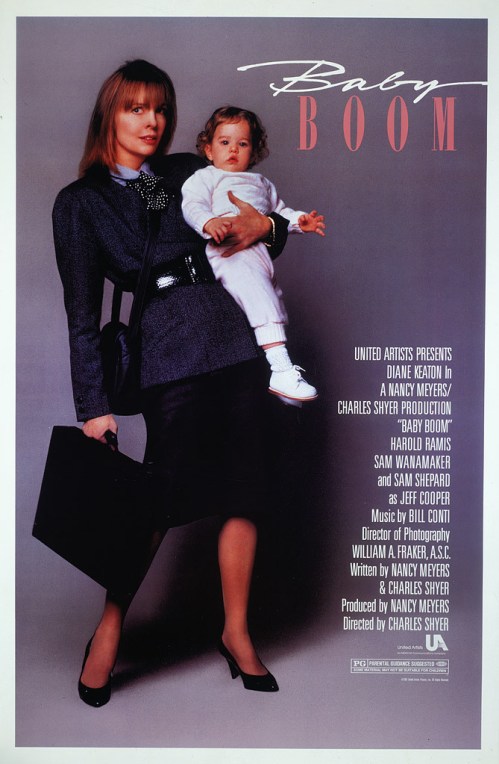
Baby Boom (1987)

baby boom

By Richard Winters

My Rating: 5 out of 10

4-Word Review: Yuppie inherits a baby.

J.C. Wiatt (Diane Keaton) is a successful businesswoman who has risen to the top of the corporate world by being quite literally ‘married-to-her-job’, which is just fine with her boss (Sam Wanamaker) as he is the same way and demands nothing less. Out-of-the-blue she gets a call that a distant relative has died and sent her an inheritance. She initially thinks it’s money only to find to her shock that it’s a baby girl instead. J.C. lacks any parenting skills and has difficulty even putting on a diaper, let alone knowing the right sized one to buy. Her annoyance slowly grows to bonding as she finds raising a young one has rewards far greater than her previous yuppie lifestyle could offer.

The premise for this thing is whacked. What kind of halfway normal parent would write a will that has their child shipped off to a distant relative that they haven’t had contact with since 1954 in the event of their death? Certainly there had to have been some close friend or family member that they knew of who would’ve been far more appropriate and could’ve been forewarned that they were the intended god parent. It’s almost like the parents just threw the child off a cliff and hoped someone down below would catch her.

The Harold Ramis character should’ve been chucked from the beginning. He plays her live-in boyfriend, but if someone is working 70 to 80 hours a week then they would have little time for a social life let alone a normal, healthy romantic relationship. The idea is to show that this character’s life is imbalanced, so might as well portray her as being alone and desperate need for genuine human contact making the baby’s presence all the more significant.  Ramis disappears quickly as he bails on her the minute she decides to keep the kid, so why bother introducing him at all?

Although likable I didn’t feel Keaton was the best choice for the part. The character is given the nickname of ‘tiger lady’, but to me that would signify having traits that are cold, steely and bitchy, but Keaton never displays these. Cybil Shephard or Candice Bergen with her Murphy Brown persona would’ve been a better pick and made the character’s transition from cutthroat businesswoman to loving mommy all the more vivid.

The film does have some funny bits and the twin girls who play the part of the infant are cute and respond well to the camera. I even enjoyed when J.C. begins to bond with the girl, but Bill Conti’s musical score gets overplayed during these segments and his cutesy melody gives these otherwise  touching moments too much of a heavy-handed feel.

I certainly liked the message, but writer/director Charles Shyer tries too hard to get it across. Having the character suddenly move out to the country seemed too severe of a shift. This is the type of person who thrived in a big city atmosphere and I don’t think she’d ever fully adjust to the slow pace of the rural lifestyle, which makes this plot twist, in a movie that goes on too long to begin with, come off as a misguided tangent that isn’t interesting or believable and the ending itself is too idealistic.

My Rating: 5 out of 10

Released: October 30, 1987

Runtime: 1Hour 50Minutes

Rated PG

Director: Charles Shyer

Studio: United Artists

Available: DVD, Amazon Instant Video

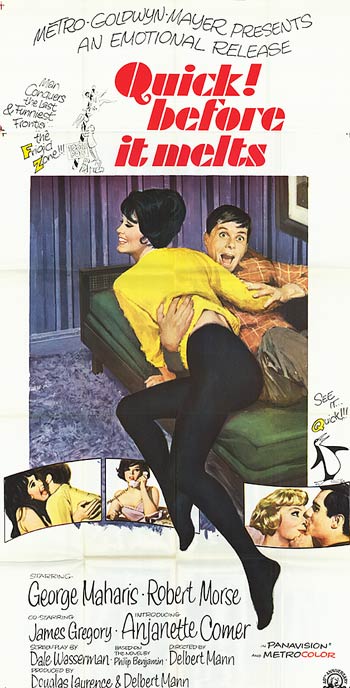
Quick, Before it Melts (1964)

quick 1

By Richard Winters

My Rating: 2 out of 10

4-Word Review: Stuck in the cold.

Oliver Cannon (Robert Morse) is a lowly newspaper reporter who gets sent to the Antarctica by his boss Mr. Sweigert (Howard St. John). Sweigert not only dislikes Oliver, but also wants to keep him away from his daughter Sharon (Yvonne Craig) who intends on marrying him. To his surprise Oliver accepts the assignment feeling that the South Pole is the ‘last great frontier’ and wanting to expose the harsh environment of the region to his readers who may not otherwise realize quite what it is like. Yet once he arrives he quickly wishes to leave, but can’t. He then concocts a plan with Peter (George Maharis), who is  another  American stranded  there, to fly in a planeload of beautiful women, so at least their time there can be enjoyable and sexy.

The script is virtually plotless and amounts to nothing more than broadly written, flatly comical scenarios loosely tied into the Antarctica theme. It’s basically just another contrived, generic ‘60s sex comedy that lacks bite or imagination. The only mildly amusing part about it is the real-life penguin that acts as a carrier pigeon by delivering mail and messages to the various residents.

I was surprised that Maharis chose to be in this as he was a strong, highly underrated dramatic actor who was one of the main reasons for the success of the acclaimed TV-series ‘Route 66’. In fact he left that show before the end of its run mainly to take advantage of all the movie offers that were coming in, but choosing to do this silly thing as his first one especially when he isn’t even the star of it is baffling. His career ultimately was ruined when he was caught having sex with a gay hairdresser inside the men’s bathroom of a gas station during the mid-‘70s, but appearing in fluff like this certainly didn’t help it.

Morse on the other-hand seems well suited for the material and performs admirably. This film also has, in her film debut, Anjanette Comer who later had roles in many interesting cult films. In fact both Morse and she later reteamed to star in The Loved One just a year after doing this one. That film is far superior and a movie you should definitely see while avoiding this one at all costs.

My Rating: 2 out of 10

Released: October 5, 1964

Runtime: 1Hour 38Minutes

Not Rated

Director: Delbert Mann

Studio: MGM

Available: DVD (Warner Archive)

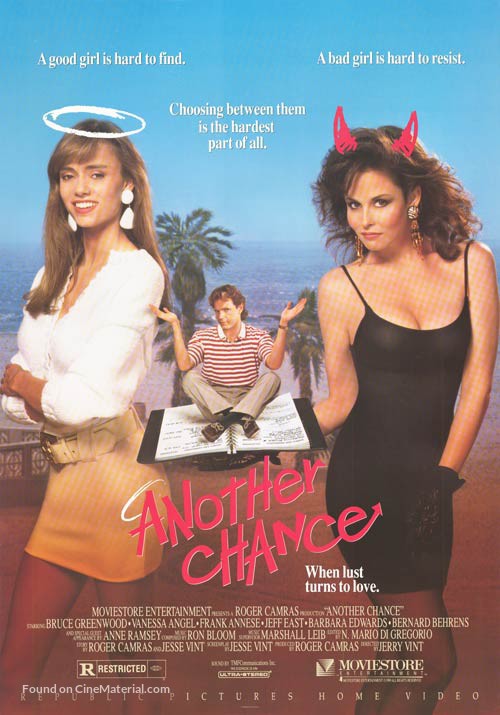
Another Chance (1989)

another chance 1

By Richard Winters

My Rating: 2 out of 10

4-Word Review: Jaded playboy seeks redemption.

John Ripley (Bruce Greenwood) enjoys trying to bed every attractive woman that comes along. He even has his dog Rocky trained to bite on their purses and lead them over to him wherever he may be sitting. He is a big star on the daytime soaps and uses this position to take advantage of every young, nubile starlet willing to go to have sex with an established actor if it can in some way help boost their career. Then he meets the beautiful Jackie (Vanessa Angel) and starts to have strong feelings for her, but she catches him with another woman and it’s all over. He tries to win her back, but in the process loses his job and home. While working a part-time gig at a look-a-like show he gets into an ugly confrontation with a psychotic man resembling Humphrey Bogart (Robert Sacchi) who pulls out a gun and shoots him on the spot. John then finds out that he has been banished to hell, but pleads for one more shot at redemption, which he is given, but only if he can win back Jackie’s heart.

The film, which was written and directed by B-actor Jesse Vint, certainly has a crazy wide open storyline that seems to want to mix in the mindset of today’s modern world with that of spiritual one, which doesn’t work at all. Initially I thought the heaven and hell thing was thrown in simply as a plot device, but the more it continued the more I became convinced that this movie was intended to be religious one even though it gets enveloped inside the jaded world of modern day Hollywood, which just makes it all the more loopy.

In more competent hands this might’ve worked as an interesting curio, but the script needed to be better focused and the editing much tighter. The narrative is too heavy-handed to take seriously and everything gets photographed in a flat sort of way making the whole thing seem on par to a TV-movie instead of a theatrical one.

Greenwood gives an engaging performance and helps make a potentially unlikable character more tolerable. Angel is good too and it’s too bad she couldn’t have been in more scenes. The supporting female cast is overall quite attractive, but they’re all made to dress and act like bimbos. Anne Ramsey is on-hand for a brief bit as John’s crabby landlady and Allan Rich has a supporting role as a sleazy agent, but overall the one thing I liked most about the movie was Rocky the dog and that’s about it.

My Rating: 2 out of 10

Released: May 5, 1989

Runtime: 1Hour 38Minutes

Rated R

Director: Jesse Vint

Studio: Moviestore Entertainment

Available: VHS

Chastity (1969)

chasity 1

By Richard Winters

My Rating: 6 out of 10

4-Word Review: Hardships of a runaway.

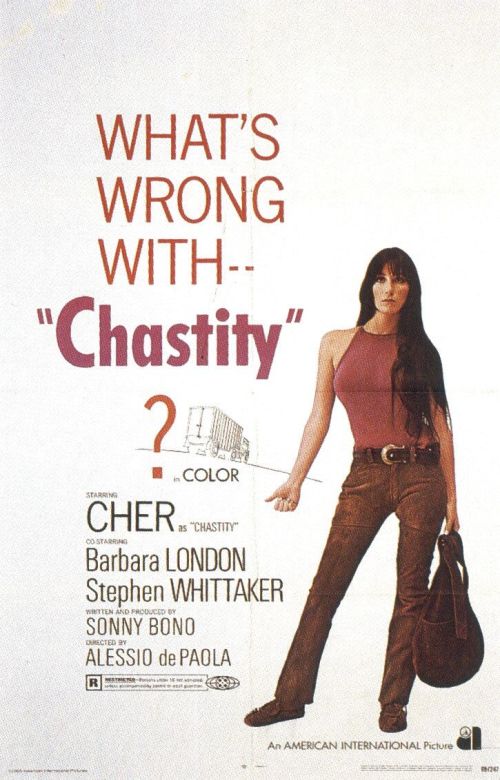
Chastity (Cher), in an attempt to escape her troubled past, runs away from home. She initially hitches a ride with a truck driver (Elmer Valentine) who seems to have only one thing on his mind, so she leaves him and meets up with a younger man named Eddie (Steve Whittaker) who she takes a liking to. He brings her back to his place and she spends the night there, but then worries that things may be moving too fast, so she leaves him. She then treks down to Mexico where she gets a job at a whorehouse. The woman (Barbara London) who runs the place becomes sexually attracted to Chastity and makes an attempt to start a lesbian relationship with her, but Chastity is uncomfortable with this and runs away again. She then meets back up with Eddie hoping to restart their relationship, but her demons from the past catch up with her and make that impossible.

The film was written and directed by Sonny Bono and I got to admit I was surprised at how genuinely riveting this was. The dialogue is sharp with a definite cinema vertite feel. There’s little or no action, but like with a Jim Jarmusch film you still find yourself glued to it and interested in picking up any little nuance that happens. The subject matter is frank and uncompromised and there’s even a little bit of nudity as we see Cher naked from both the top and backside.

The plot is unstructured and works more as a portrait to the tough situations most runaways fall into than in actually telling any type of story with a beginning, middle and end. However, it flows pretty well and has some memorable scenes including Chastity’s attempts to change the oil in a stranger’s car, her visit to a church and most especially her stay at the whorehouse and the way she successfully fleeces money out of a shy and unsuspecting teenage boy customer (Tom Nolan).

Cher is outstanding and the main reason to why this thing is so compelling. Apparently she was unhappy with her performance and refused to do another film until 13 years after this one, which is a shame as she shows definite signs of being a star-in-the-making and she looks so young that she seems almost like a different person than the one we’ve become so accustomed to seeing.

My only quibble is the fact that we get very little insight to the character’s past or why she’s running away. At the very end we do start to hear some voices, which are apparently going on inside her head and that of her parents, but it was too late to bring that up and should’ve been introduced earlier. The ending is vague and leaves the viewer in-the-dark as to what the ultimate fate of the character is, which is frustrating.

My Rating: 6 out of 10

Released: June 24, 1969

Runtime: 1Hour 25Minutes

Director: Alessio de Paola (Sonny Bono)

Rated R

Studio: American International Pictures

Available: DVD

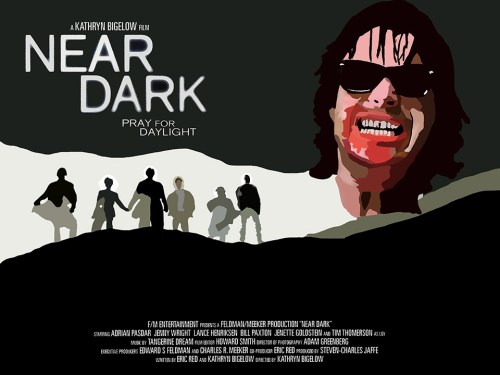
Near Dark (1987)

near dark

By Richard Winters

My Rating: 5 out of 10

4-Word Review: Vampires in a van.

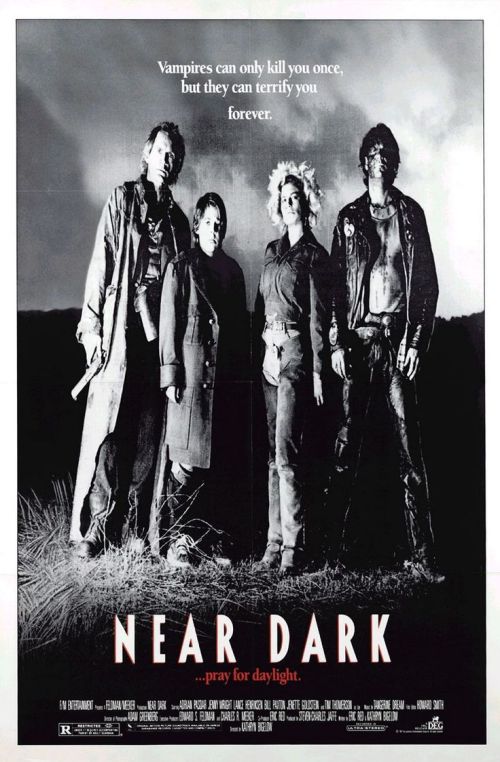
Caleb (Adrian Pasder) is a farm boy who spots the attractive Mae (Jenny Wright) one night while cruising around in his pick-up. He decides to take her for a spin and the two initially get along until they kiss and she bites him on his neck, which makes him very sick. As he is trying to get back to his farm where his father and sister live (Tim Thomerson, Marcie Leeds) he gets hijacked by a van carrying other vampires (Lance Henriksen, Bill Paxton, Jenette Goldstein, Joshua John Miller) who try to teach him how to hunt and kill humans, which is something Caleb isn’t ready to do despite his new found necessity of needing blood in order to survive.

Compared to other ‘80s vampire flicks this one is far and away ahead of the rest. I liked how Caleb’s transformation into a vampire is very emotionally and psychologically jarring, which is how I think it would be, even though other films from that period would gloss over this like it was no big deal. I also liked the way it circumvents the irritating erotic overtones by showing Caleb and others sucking up the blood from a human’s neck like a thirsty man coming from a desert instead of portraying it in some sort of cheesy sexy way. The film also has its share of genuinely horrifying moments including a long, drawn out scene inside a hick bar that is violent and ugly, but also quite effective and makes these vampires the menacing characters that they should be.

The acting is all-around quite good including having three actors from Aliens, which is amusingly displayed as the film being shown at a local theater in the small town that Caleb passes through. I was also impressed with the two child stars. Miller, who is the son of Jason Miller who played Father Karras in The Exorcist, is effectively disturbing as this baby-faced kid with a potential of doing some very nasty things. Leeds is also solid as a young, cute girl with some very down-to-earth sensibilities.

The special effects are great and I was impressed with how the vampire’s skin would burn when exposed to daylight, but I also had a bit of a problem with this as well. For one thing the burn would appear so severe that it looked like nothing short of grafting could repair it and yet we would see them in the next scene with their skin fully healed, or looking like it had been smeared with coal and nothing more.

I was also confused with how these vampires manage to obtain such super-human strength. They possess the same bodies that they had when they were human with no apparent additional muscle mass, so where is this extra strength coming from? Is it ‘magic’ and if so where does that come from? This film tries so hard to keep everything on a gritty and real level, but that unfortunately gets hurt by having this illogical and unexplained phenomenon thrown in.

The astronomical odds that these vampires would meet up with Caleb’s father and sister at some random, isolated hotel is a bit hard to fathom as well, but I was willing to forgive it as the one loophole every story is allowed to have. However, the scene where Miller’s character takes Caleb’s younger sister back to the motel room to watch TV and they find that all the stations have signed off for the night just doesn’t hold true. By the late ‘80s, which was when this movie was made and takes place, most broadcast stations where working 24 hours and most if not all hotels where offering basic cable, which included free HBO and these stations were definitely broadcasting throughout the wee hours making this scene completely false for the period it was in.

The film did poorly at the box office when it was first released, but has managed to attain a strong cult following since. I liked most of it, but didn’t care for the eternally thumping music score that gets played in literally every scene and gives it too much of a music video feel and the climactic finish, which is exciting and has some terrific special effects, became too protracted for my tastes.

near dark 2

My Rating: 5 out of 10

Released: October 2, 1987

Runtime: 1Hour 34Minutes

Rated R

Director: Kathryn Bigelow

Studio: De Laurentiis Entertainment Group

Available: DVD, Blu-ray

Westworld (1973)

westworld 2

By Richard Winters

My Rating: 8 out of 10

4-Word Review: Cowboy robot goes berserk.

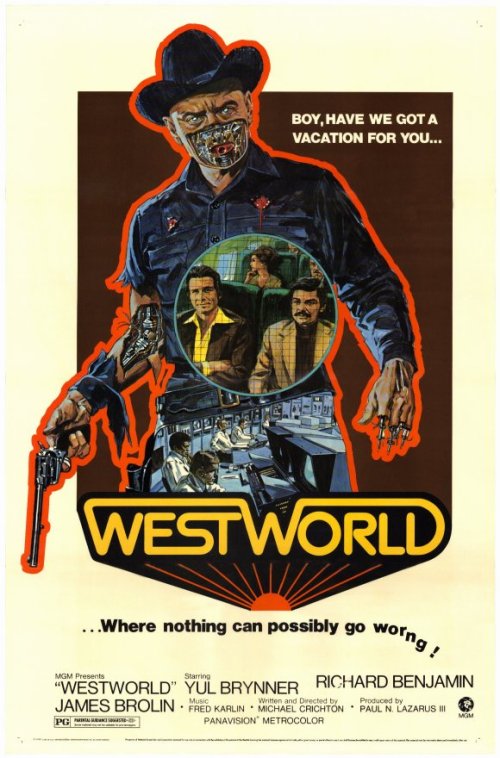
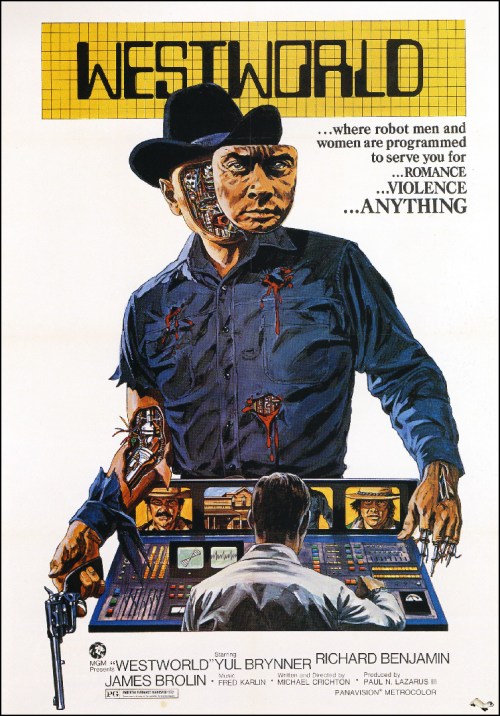
Peter and John (Richard Benjamin, James Brolin) are two buddies who decide to take the vacation of a lifetime by visiting an amusement park that replicates the old west. The people inside the park are actually robots who are so lifelike that it’s almost impossible to tell them apart from humans. Gunfights, barroom brawls and even whorehouses are the name of the day. At first both men enjoy their stay, but then the robots begin to act erratically especially the nameless gunslinger (Yul Brynner) who chases Peter throughout the park determined to kill him and no one, not even the technicians running the place, are able to stop him.

Michael Crichton’s directorial debut is a smashing success. The film is compact making for maximum use of tension and excitement and I liked how some sequences were done in slow motion. What I liked most about the film though is the way it gives the viewer a three dimensional viewpoint. Not only do we see things from the perspective of the main characters, but also the technicians behind the scenes and at one point even the robots.

The story brings out many interesting themes. Most people will jump on the man-versus-machine concept, but the one I liked better was how we have these suburbanite males living otherwise cushy lifestyles deciding they want to ‘prove their manhood’ by roughing it in some sort of adventure setting. However, pretending to be ‘rough and tough’ cowboys means nothing when ultimately it’s all still in a safe and contained setting where ‘nobody gets hurt’. In the real west there was no such things as ‘time outs’ or ‘safe places’, which is why I actually found it quite amusing when the robots do go berserk because it was the one thing that kept these suburban softies egos in-check and gave them a true taste of what the west was REALLY like.

A few things though that did bother me was the scene where Peter has sex with one of the female robots and enjoys it, which seemed weird to me because I would think having intimacy with a machine would have to feel way different than one with a human. We are told earlier that the only way to tell these robots apart from real people is by looking at their hands, which the technicians apparently haven’t yet been able to perfect and yet they were somehow able to get the vagina ‘just right’?!

I also found the idea that these robots would be given guns with real bullets to be absurd. Apparently the humans are also given real guns, but they’re equipped with sensors that detect body heat and therefore will shut off if aimed at a real person and if that were the case then the robots guns would do the same and therefore the scene where the gunslinger shots and fatally injures one of them would be negated.

I also found it equally preposterous that these same techs who were able to create such brilliant life-like robots would be dumb enough to make a control room that would lock-up when the power shut off and not allow them to escape. Certainly someone during the building stage would’ve had the brains to think up a secondary, emergency route to use should that situation occur, which makes the scene where they all suffocate seem quite laughable.

Having the robots all malfunction due to some ‘contagious-like disease’ that runs rampant amongst them didn’t really register with me either. To me it’s an overblown concept that would’ve worked better had it just been the gunslinger robot that goes crazy and relentlessly chases the two. He may even kill others who do try to stop him, which I think would’ve heightened the menacing quality of the Brynner character, which is already strong, even more.

Overall though it’s still a great movie with a terrific performance by Brynner as well as Benjamin playing a sort-of everyman who seems wimpy at first, but eventually learns to survive by using his brains over brawn.

westworld 1

My Rating: 8 out of 10

Released: November 21, 1973

Runtime: 1Hour 28Minutes

Rated PG

Director: Michael Crichton

Studio: MGM

Available: DVD, Blu-ray, Amazon Instant Video, YouTube