Staying Alive (1983)

By Richard Winters

My Rating: 2 out of 10

4-Word Review: Tony juggles two women.

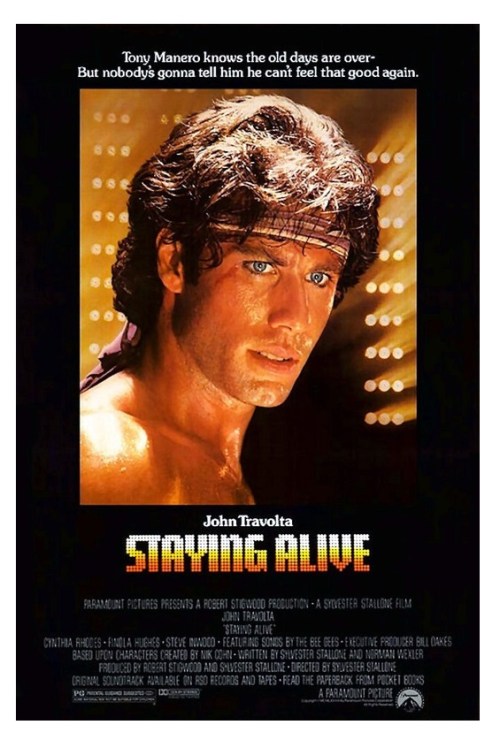
It’s been 5 years and Tony Manero (John Travolta) is still struggling to make it big in the dancing world in this sequel to Saturday Night Fever. Now instead of working at a paint store he’s employed as a nightclub waiter while spending his days desperately going to every agent in New York looking for a break, but getting none. He’s in a relationship with Jackie (Cynthia Rhodes), but when a hot new dancer named Laura (Finola Hughes) catches his eye he decides to have a fling with her, which further complicates the fact that all three of them are dancing in the Broadway production of ‘Satan’s Alley’.

The idea of turning a classic movie into a sequel should’ve been given the kibosh from the start as that film conveyed such a perfect slice-of-life tale that it didn’t need any continuing. This film also doesn’t have any of the key players from the first including Donna Pescow and Karen Lynn Gorney. It was Travolta’s and Gorney’s relationship that made that movie sizzle, so if you’re not going to have her then why even bother making it as it’s hollow and incomplete otherwise. Too much time had also elapsed and disco was no longer trendy by the early ‘80s, so to compensate they tried gearing it more to the struggles of working on a dance line, but only succeeds at making it seem like a poor man’s version of A Chorus Line.

The romantic angle is uninteresting. Tony becomes attracted to Laura in the same way that he did with Karen Lynn Gorney, which was by watching her dance, which makes it formulaic and redundant. The Laura character is also quite kooky by constantly giving Tony the hot-and-cold act making her seem like someone with a split personality disorder. Jackie on the-other-hand is dull and catches on to Tony’s two-timing too quickly and then does nothing about it, which kills off any possible tension or drama. Tony himself is equally useless. Travolta plays him well, which is the only saving grace, as he manages create an engaging character despite the shitty way he treats Jackie, which normally would make him unlikable.

The scenes between Tony and his mother (Julie Bovasso) are touching and the best moments in the film although she’s played more like a real person here and not the comic caricature like in the first one. The garish set designs and special effects used to create the scenes for the play ‘Satan’s Alley’ at the end may be good for a few laughs, but it’s so over-the-top and campy that it degrades any serious intention that the film may have otherwise had. Watching the older audience members including Tony’s mother stand-up and applaud the play after it was over seemed disingenuous as I think most of them would in reality be rolling-their-eyes  and asking themselves ‘what the hell did I just watch’ instead.

The musical score, which was such a strong element in the first film, is completely lacking. Instead of a pounding soundtrack we get jazzy songs better suited for a quiet lounge. Absolutely nothing works except maybe inducing 93 minutes of boredom, which in that regards it does quite successfully.

My Rating: 2 out of 10

Released: July 11, 1983

Runtime: 1 Hour 33 Minutes

Rated PG

Director: Sylvester Stallone

Studio: Paramount Pictures

Available: DVD, Amazon Video, YouTube
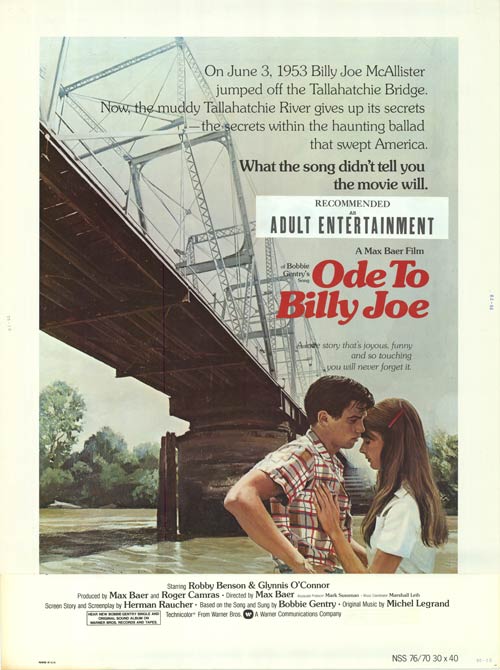
Ode to Billy Joe (1976)

By Richard Winters

My Rating: 2 out of 10

4-Word Review: Where is Billy Joe?

Based on the hit 1967 single sung by Bobbie Gentry this film attempts to reenact what occurred in the ballad as well as explain the song’s mystery elements with a screenplay co-written by Gentry herself. The story centers on Bobbie Lee (Glynnis O’Connor) a 15 year-old girl living on a farm and longing to satisfy her newfound sexual awakenings. She becomes attracted to a local boy named Billy Joe McAllister (Robby Benson) and he to her, but her conservative father (Sandy McPeak) won’t allow her to bring over ‘gentleman callers’ until she is 16, so she runs off into the woods with him only to learn that he harbors a dark secret that if it became known to the public could ruin his life.

While the film did quite well by grossing $27 million at the box office on only a $1.1 million budget I felt it was a mistake to turn the classic song into a movie. Sometimes things are more interesting when the mystery angle is left unanswered, and having it explained especially with the lame way that it gets done here, tarnishes the song’s mystique.

For years Gentry said that the point of the song was never about why Billy Joe jumped off the bridge or what he threw off of it, but instead the relationship of the song’s narrator with her family and how completely oblivious they were to her feelings, which the movie doesn’t recreate. In the song the father is portrayed as being ambivalent and distant towards his daughter and yet in the film for some ill-advised reason he is kindly and connected, which isn’t as interesting.

Hiring Herman Raucher to co-write the screenplay was a mistake as well. He had great success with Summer of ’42, but pretty much tries to turn this into the same glossy romance as that. He even brings along the same composer Michel Legrand whose orchestral score is completely out-of-place with the story’s country setting.

The script also adds some crazy side-stories that have nothing to do with the main plot or the song that it is based on. One of them includes having prostitutes shipped in from nearby Yazoo City to have sex with all men from the town, who line up one-by-one seemingly guilt free, to fuck the ladies while attending a small jamboree. Now, I was not alive during the ‘50s, but I know people who were including my parents, who insist that it was every bit as oppressive and conservative as its reputation states especially in the rural areas such as this film’s setting. I realize that prostitution is considered the ‘world’s oldest profession’ and I’m sure in some underground big city clubs of that period you could find some, but bringing them to some small town where everybody knows everybody else and having the men jumping in for quite literally ‘roll-in-the-hay’ with them (as this took place on a barnyard floor) with all of their friends watching and not worrying that this would get back to their wives or ruining their reputations, as rumors spread like wild fire in small  towns, is just too far-fetched and ridiculous to be believable.

Benson is great in the lead and James Best is strong too in a small, but crucial role, however O’Connor seems miscast. She’s attractive and has been good in other films, but she plays the part as being very outspoken and strong-willed where in the song that same character came off as more introverted and quiet. She also seemed too worldly-wise for a 15-year-old especially one that had never ventured out of her town although the bit where she sticks her head into a toilet bowl and shouts ‘hello’ may be worth a few points to some.

If you spent sleepless nights trying to figure what it was that Billy Joe threw off that Tallahatchie Bridge then you may find this film’s clichéd and corny answer to it as disappointing.  It also takes way too damn long to get there while forcing the viewer sit through many long, drawn-out scenes in-between.

In fact the only thing that the movie does get right is its on-location shooting that was done in LeFlore County, Mississippi that was the actual setting to the song. However, even this gets botched because the Tallahatchie Bridge that Gentry describes in her song, which was near the small town of Money, was destroyed in 1972 and the bridge used in the film was a different one located near the town of Sidon that also ended up getting demolished in 1987.

My Rating: 2 out of 10

Released: June 4, 1976

Runtime: 1 Hour 46 Minutes

Rated PG

Director: Max Baer Jr.

Studio: Warner Brothers

Available: DVD, Amazon Video, YouTube
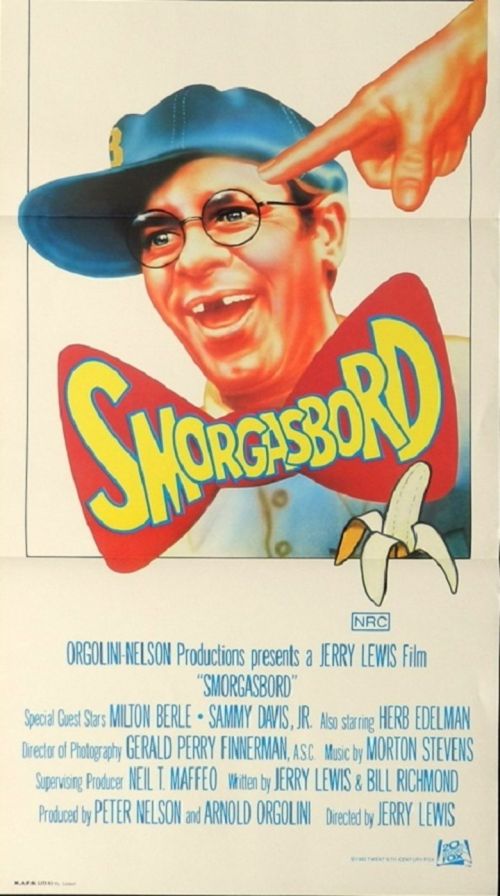
Cracking Up (1983)

By Richard Winters

My Rating: 0 out of 10

4-Word Review: Jerry needs a psychiatrist.

Jerry Lewis films were long considered light on plot and long on pratfalls with the minimum of character development, but this film, which was his attempt at sketch comedy, makes those others look sophisticated by comparison. The story if you can call it that deals with a man named Warren Nefron (Lewis) whose attempts at suicide do not succeed so he goes to a psychiatrist (Herb Edelman) who he hopes will convince him to live despite feeling like a failure at everything that he does.

The humor has no focus to it at all. Had the comedy bits dealt with the same interconnected theme then I could at least give it some credit, but instead everything gets thrown in with almost no coherence. One minute it’s poking fun at airlines, then 16th century France, hospitals and even art museums. The shtick is excessively broad and Lewis, who also directed, tries milking it too much by staying on jokes long after they’ve played out making what is already lame even more irritating.

What surprised me is how Lewis never tried to evolve his brand. The film was made in the early ‘80s, but could’ve easily been done in the 60’s. No attempt is made to update his comedy with the times, to make it seem trendier, or connect him with a rising star from the decade to help bring in younger viewers. Instead he casts in supporting roles the stars from yesteryear like Milton Berle and Sammy Davis Jr. while continuing on with the exact same pratfalls that he did in the ‘50s that may have seemed somewhat funny back then, but now comes off as predictable and redundant. This movie will only appeal to his aging and already established fans while teens and young adults will most assuredly consider it dated and stupid.

For me the funniest thing about it is what occurred behind the scenes when the studio tried playing it in front of a test audience.  Showing films to a test audience is a standard practice and helps studio heads ‘tweak’ certain parts of a film that aren’t working, or even re-film entire new scenes if it’s found that audiences didn’t take well to the one that was shown to them initially. Studios want to try to save what they have as they’ve put a lot of money into the product and don’t want to just discard the whole thing if they don’t have, but the response to this one was so universally bad in every way that they decided it had literally no chance and no amount of changes could save it, so it was shelved permanently and never released theatrically in the United States.

There are only two moments in this mess that I found even mildly diverting. One comes when Edelman asks Lewis if his parents were related…like maybe being cousins, which is something that every character in every Lewis movie should ask him when he goes into one of those annoying, man-child routines of his. Another comes at the very end during the closing credits where they show behind-the-scenes outtakes. One has Lewis lifting Davis, who was a very small man, into the air  and pretending like he was some sort of trophy that he had won while Davis yells at him to ‘Put me down! Put me down!’

My Rating: 0 out of 10

Alternate Title: Smorgasbord

Released: April 13, 1983 (France)

Runtime: 1 Hour 29 Minutes

Director: Jerry Lewis

Rated PG

Studio: Warner Brothers

Available: DVD, Amazon Video

The Barefoot Executive (1971)

By Richard Winters

My Rating: 6 out of 10

4-Word Review: Chimp picks the hits.

Stuck working in a television network’s mailroom, Steven (Kurt Russell) longs for his big-break into the programming department as his previous attempts to impress upper management (Harry Morgan, Joe Flynn) have all failed. Then his girlfriend Jennifer (Heather North) is put in charge of taking care of her neighbor’s chimp while they are away. To Steven’s surprise the chimp shows an uncanny ability to know which TV shows will be a success and which will flop. He decides to use the chimp’s talents and pretend that they are his own, which he hopes will finally let him climb up the corporate ladder.

This film is a little bit different from all the other Disney flicks from that era in that there aren’t the slapstick hijinks or the patented car chase. The emphasis is instead on satire that for the most part hits the mark. It also has a protagonist that isn’t so squeaky clean either. Russell’s character is more than willing to lie and even cheat if he thinks it can help him move ahead and although he has a slight tinge of guilt about it’s never enough to get him to completely mend his ways, which helps to make him seem more human and the situation more believable.

Joe Flynn is quite funny in support. He was a comic character actor who had a great ability to play both exasperated authority types as well as meek subordinates and here he does both. He also has an amusing scene with Wally Cox on top of a ledge of a high rise building and I couldn’t help but think about the irony as I watched these two carry out the scene that only three years after this film’s release these otherwise healthy looking middle-aged men would both be dead. There’s also the novelty of seeing two alumni from ‘I Dream of Jeannie’ appear here with Hayden Rorke, who played Dr. Bellows on the TV-show and a TV exec here, and Bill Daily who ironically plays an airplane navigator, which he also later did on ‘The Bob Newhart Show’.

The film’s funniest moment though is actually just a throwaway bit where a news reporter, played by Jack Smith, goes out and gets the opinions of people on the street about their take on the rumors that a chimp is picking the TV shows that they watch. He interviews one woman (Iris Adrian) who at first scoffs at the notion, but then thinks about how all of her favorite shows get cancelled and how so many stupid ones gets put on the air and then comes to the conclusion that a monkey running the network makes perfect sense. It brought to mind a memoir written by legendary screenwriter William Goldman detailing in his opinion how studio execs really don’t have any clue what film will become a hits, which becomes the film’s best joke as in all honesty you’d have just as much luck with a chimp picking the stuff as you would a person.

My Rating: 6 out of 10

Released: March 17, 1971

Runtime: 1 Hour 36 Minutes

Rated G

Director: Robert Butler

Studio: Buena Vista

Available: DVD, Amazon Video, YouTube

Winter Kills (1979)

By Richard Winters

My Rating: 6 out of 10

4-Word Review: Who assassinated his brother?

19 years after United States President Timothy Kegan is assassinated and an independent investigation concluded that it was the act of a lone gunman, his younger brother Nick (Jeff Bridges) gets a deathbed confession from a man (Joe Spinell) insisting he was the real killer hired by a secret underground organization. Nick goes to his rich father (John Huston) with the news and then decides to do an investigation of his own, but becomes entangled inside a web of lies and deceit that drives him further away from the truth instead of closer.

The film is based on the novel by Richard Condon and in many ways is a stunning filmmaking debut for director William Richert. The cinematography by Vilmos Zsigmond is richly textured with a colorful variety of backdrops, sets and atmosphere making it visually soar while the surreal tone helps give it an added edge.

Unfortunately the film suffered from many behind-the-scenes issues including running out of funding and forcing the cast and crew to put the production on hold while they went overseas to shoot The American Success Company in Germany and then used the proceeds from that one to finish this one. The final result is a fragmented narrative that at times gets too rushed. The story was significantly paired down from the novel, which leaves open a lot of loose ends and it should probably be remade as a miniseries.

The story is also permeated with a lot of dark humor which only makes the viewer even more confused. Some of it is genuinely funny, but it’s unclear what it’s trying to satirize. Certain absurd situations and oddball characters get thrown in for seemingly no reason and takes away from the otherwise compelling storyline while leaving the viewer baffled as to what the point of it was supposed to be and could easily explain why it bombed so badly at the box office during its initial run.

The casting is interesting. Jeff Bridges usually gets stuck in bland, transparent roles and that’s no different here, but he’s surrounded by so many eccentrics that his otherwise vanilla delivery seems refreshing and distinct. Huston is the real star in a bravura performance that steals the film and makes it memorable. There’s also a lot of recognizable supporting players that are on only briefly and if you blink you’ll miss them. This includes an uncredited appearance by Elizabeth Taylor who comes on near the end and has no lines of dialogue, but does clearly mouth the words ‘son-of-a-bitch’.

If you are looking for something that is offbeat, but still intriguing then this is well worth the effort. If it weren’t for its misguided humor this thing could’ve really had an impact although it does reveal its cards too soon and I was able to guess the twist ending long before it actually happened, but as a whole it has its moments and a potential cult following or sure.

My Rating: 6 out of 10

Released: May 11, 1979

Runtime: 1 Hour 26 Minutes

Rated R

Director: William Richert

Studio: AVCO Embassy Pictures

Available: DVD, Amazon Video

Fantastic Voyage (1966)

By Richard Winters

My Rating: 6 out of 10

4-Word Review: Inside the human body.

When a Soviet scientist (Jean Del Val), who has sought asylum in the US and has crucial top secret information to give to the government, is shot in an attempted assassination, which leaves him comatose, it is up to a team of five American agents (Arthur Kennedy, William Redfield, Raquel Welch, Donald Pleasance, Stephen Boyd) to go inside his body through miniaturization and remove the blood clot on his brain with the help of a laser. The miniaturizing process is a new invention that only lasts sixty minutes before the person, or object that has been made smaller will begin to regrow. The participants must work fast, but there is an added problem as one of them is also secretly a spy who is intent on undermining the mission.

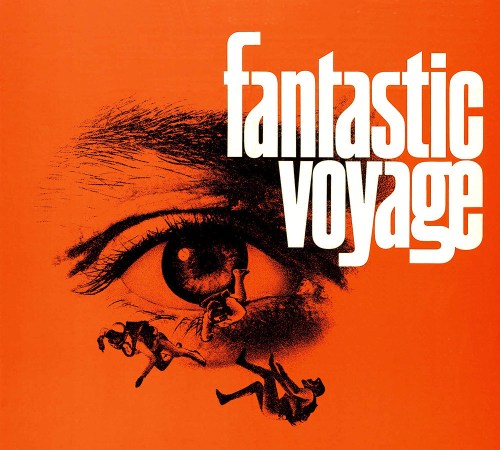
The film is hailed as a classic by many and this is mainly due to its special effects, which even in this day and age aren’t bad. The question of what gets represented here is what it would really look like if a person were put into an actual body is hard to tell, but the effects are exciting even though the characters were simply matted in front of a green screen to create the psychedelic looking background.  Yet I was still impressed as it gives off a sort-of surreal vision that made me feel like I had been transported to some foreign world along with the cast.

The script though unlike the effects is about as amateurish as you can get and if the action hadn’t been so meticulously designed this might’ve been considered a movie more suited to a camp film festival. For one thing it moves too fast particularly at the beginning. There needed to be more of a backstory about how this miniaturization process had been invented, how long it had been put to use, whether it was safe to use and who was the first to try it and had that person had any after effects none of which gets explained and is simply glossed over.

The characters are also overly obedient and willing to take on any assignment with little if any objection no matter what the potential danger. The Stephen Boyd character gets driven to the science lab and then when told that he’ll be shrunk to the size of a fingertip he puts up very little argument even though anyone else would be frightened about the prospect. Having one of the other characters call home to loved ones, or refuse to go on it would’ve helped make them seem less one-dimensional and robotic.

The crew’s conversations are boring and done in too much of a rhythmic way. Anytime an unforeseen problem arises one of them almost immediately comes up with a solution to it. We learn nothing about these people as the journey progresses nor care all that much about them. In fact the only interesting verbal exchanges that do occur are between Edmund O’Brien’s character and Arthur O’Connell’s who are inside the lab and monitoring the proceedings.

I do not have enough background in the science arena to know how authentic any of this is, but Isaac Asimov who was hired to write the novelization to the movie, stated that the script was full of ‘plot holes’. The one thing that did stand out to me was the part where the crew members are inside the patient’s inner ear and all the doctors inside the lab are forced to stand perfectly still and not make any noise as the sound vibrations could prove dangerous. However, it’s virtually impossible for there to be no noise at all. Even if someone tries to be perfectly quiet other noises that are less conspicuous would become more prominent like breathing, heartbeats, or other background sounds. In either event there would still be sound waves going through the patient’s ear long before one of the nurses accidently drops a medical utensil on the floor like they do here.

For popcorn entertainment it’s not too bad. In fact my favorite part was watching the process of how the crew gets miniaturized, which is actually pretty cool, but this is one of those films were you clearly can’t think about it too hard or it will ruin your enjoyment.

My Rating: 6 out of 10

Released: August 24, 1966

Runtime: 1 Hour 41 Minutes

Not Rated

Director: Richard Fleischer

Studio: 20th Century Fox

Available: DVD, Amazon Video, YouTube
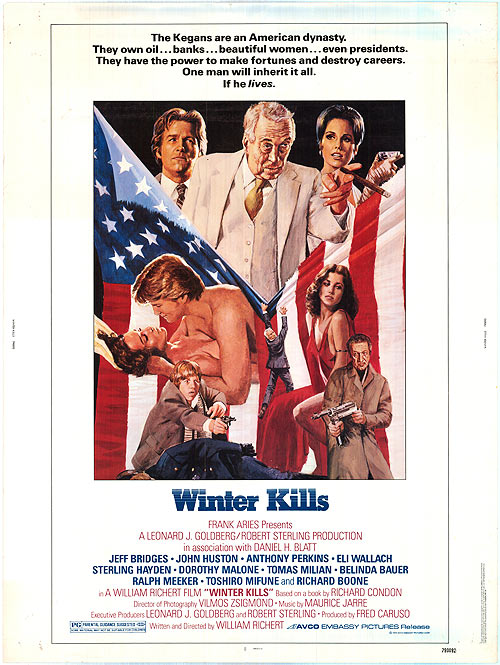
Russian Roulette (1975)

By Richard Winters

My Rating: 4 out of 10

4-Word Review: Trying to stop assassination.

When a Soviet leader decides to visit Vancouver the Russian Embassy puts the Canadian authorities on alert about Rudolf Henke (Val Avery) who moved to Canada many years back, but is reported to still hold grudges about the Soviet Union and could be a sniper threat. Timothy Shaver (George Segal) is then secretly hired to kidnap Henke while the Soviet leader is in town and then let him go once that leader has left. However, when Shaver gets to Henke’s apartment he finds out that he has already been abducted by somebody else, which leads him to believe that he is being made a pawn to an even bigger conspiracy and that he may become their next victim.

The story is based on the novel ‘Kosygin is Coming’ by Tom Ardies and the first 45 minutes of this are actually quite diverting. Director Lou Lombardo gave his actors the freedom to ad-lib and he instills some quirky humor, which made me believe this was going to be a new wave-like actioner that deftly mixes in the offbeat perspective with a story that had an intriguing mystery angle.

Unfortunately the second half devolves into cheesy action flick with all the usual formulaic trappings. The biggest problem is introducing the Russian bad guys who speak in inauthentic, corny accents that made them become like caricatures that lessens the tension instead of heightening it. The film would’ve been better served had it not shown the villains at all until the very end and kept things solely focused on Segal as he tries desperately to figure out what is going on while being chased by a mysterious group of people whose motives are unclear.

There are a couple of stupid moments as well.  One of them occurs when Segal and his girlfriend played by Cristina Rains return home. She immediately runs into the bathroom to take a pee, but then just as quickly comes back out wearing a strange expression. Segal then walks in to see a dead body of a murdered stranger sitting on the toilet. I know this may make me sound like a sexist to some, but the truth is women have a tendency to scream when they are startled and sometimes for a lot less than an unexpected sight of a corpse in their bathroom, so having her not instinctually scream here (hell even I would’ve probably let out a shrill yell at that point) is dumb.

Another part has Segal and Rains handcuffed and sitting in a backseat of a car that is being driven by one of the Russian bad guys. Segal, in an apparent attempt to escape, kicks the Russian guy in the back of his head, which sends the car reeling off the road and overturning into a ditch. However, this to me seemed dangerous because what guarantees that Segal and Rains wouldn’t be injured when that occurs. As it turns out the driver ends up conveniently dying in the crash, but miraculously the couple get out of the badly banged up car without even a single scratch, which is beating astronomical odds!

Segal wasn’t the best choice for the role. He spent the 70’s decade playing mostly in light comedies and romances, which he is more adept at, but presumably took the part to help stretch his acting resume and avoid being typecast. It doesn’t fully work and there were other actors who would’ve been better able to reflect the film’s gritty tone although watching Segal do mostly his own stunt work as he climbed out to the top of the roof of The Fairmont Hotel in downtown Vancouver does deserve kudos.

The supporting cast proves to be more interesting. I enjoyed seeing Louise Fletcher in her second movie after coming out of a 10-year hiatus. She has only a small role here, but she makes an impression nonetheless and it’s interesting seeing her play a person with such a sunny disposition when later that same year she portrayed the dour Nurse Ratched, which only proves what a talented actress she really is.

Val Avery is equally good in a part that has no lines of dialogue, by his own insistence, but still ends up being a scene stealer not only at the end when he stumbles into a scared crowd while wearing a bomb, but also in an earlier scene where he plays a cruel trick on a group of children playing roller blade hockey in the street.

Unfortunately the rest of the movie doesn’t have enough of a payoff. The action gets overplayed and the blaring music takes away the sophisticated feel and puts it more on the level of a bubblegum TV-show. Some good potential gets marred by an indecisive director who reportedly was suffering from drug addiction at the time and the effects show.

My Rating: 4 out of 10

Released: August 20, 1975

Runtime: 1 Hour 33 Minutes

Rated PG

Director: Lou Lombardo

Studio: AVCO Embassy Pictures

Available: DVD

The Internecine Project (1974)

By Richard Winters

My Rating: 6 out of 10

4-Word Review: Killing off his enemies.

Robert Elliot (James Coburn) is a former spy whose been given an offer as government advisor, but he must get rid of four people (Ian Hendry, Michael Jayston, Harry Andrews, Christiane Krueger) who hold secrets to his past before he can accept the position. To accomplish this he comes up with an ingenious plan, which consists of tricking these four to kill each other off all on the same night at around the same time while Robert sits comfortably at home and tracks their progress.

This is the type of intricate plot  that usually works best as a novel, but director Ken Hughes has things pretty well thought out. The first half isn’t too gripping, but once Robert’s scheme gets going it becomes quite intriguing. The plan certainly does border on being over-the-top and too dependent on the participants doing everything exactly as their instructed in order for it to be successful, but overall I felt it could’ve been possible, which is the main ingredient that makes it work as it manages to remain delicately within the realm of believability.

The supporting cast play their parts to the hilt complete with nervous ticks and flawed personalities, which helps add a fun dimension. Although clearly done on a modest budget the camera work and set design are creatively handled including one unique scene where the victim gets strangled by her killer through a shower curtain.

I also liked how one of the killers played by Christiane Kruger requires her instructions, which are given to her verbally by Coburn, to be repeated and written down as she is afraid she might forget them otherwise. I would respond in the exact same way even though most other movies in this genre will have the instructions spoken very quickly and only once, which would always make me wonder how they’re able to keep it all straight.

The only downside is the twist ending that seems like it was thrown in as a cutesy way to the end the film without much thought put into it. A really good twist should have some foreshadowing earlier that doesn’t seem all that important at the time and then when it’s all over allow the viewer to think back and go ‘A-ha, I should’ve seen that coming!’, but that’s not the case here.

If anything I would’ve had Lee Grant’s character more instrumental to the outcome as I could see no other purpose for her presence otherwise. I spent the whole film wondering why she was even in the movie and when it was over I was still asking that same question. She’s a beautiful lady, but her role is unfocused. One minute she’s feisty feminist and then the next she’s an emotionally needy wreck. She plays it well, but her efforts do nothing to propel the plot.

My Rating: 6 out of 10

Released: July 24, 1974

Runtime: 1 Hour 29 Minutes

Rated PG

Director: Ken Hughes

Studio: Allied Artists Pictures

Available: DVD, Blu-ray, Amazon Video

Teen Wolf Too (1987)

By Richard Winters

My Rating: 1 out of 10

4-Word Review: Werewolf goes to college.

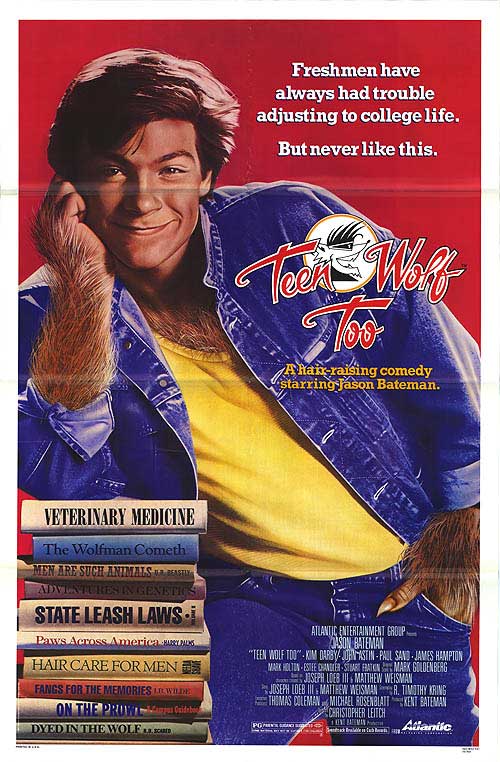
Todd Howard (Jason Bateman) is the cousin of Scott who was the protagonist in the first installment of this series. Like with Scott, Todd has inherited the same werewolf tendencies although he is not fully aware of it as he enters into college on a boxing scholarship despite having very little athletic ability. However, once he gets into the ring the wolfman inside him comes out and he becomes an unstoppable boxer that allows his team to win and brings prestige to the university, but it also goes to his head as he becomes arrogant and obnoxious to all those around him.

The film starts out with a nice opening sequence showing the grounds of beautiful Pomona College, where it was filmed, but outside of that it’s downhill from there. The story repeats too many of the same gags that were in the first film and adds nothing new to the formula. It strays slightly by having the main character become arrogant, but this lasts for only a brief period before he mends his ways and goes back to the same guy that he was initially, which makes this plotline seem almost nonexistent.

The amount of time that he spends as the wolf is shockingly small. It takes 45 minutes before he completely transforms into the werewolf and then the final 32 minutes has him going back to being human as he learns the importance of ‘just being yourself’. Audiences aren’t looking for another preachy ‘life-lesson’ flick. They want something diverting and if the title says Teen Wolf then make it that way by having the majority of the runtime with him in that form and not just turn it into a side issue that eventually gets forgotten.

I had problems with the college atmosphere as well. I definitely like the on-location shooting, but the behavior of the students seems more like high school including cruel practical jokes as well as cliques that usually disappear when students get into their late teens.

John Astin’s administrator character is way over-the-top too. He plays the part in a fun campy way despite wearing a dreadful wig, but he comes off more like a domineering principal of the small high school than a college dean of major university who wouldn’t have the time to be so hands-on let alone get to the know the kids so personally as the student body would be too big.

The worst part though is the climactic boxing sequence, which becomes excruciating to sit through as it mixes in every annoying sports cliché that you can imagine. The attempt to recreate an exhilarating Rocky-like final is so horribly botched that goes beyond just being embarrassing.

The concept is intriguing, but the producers have to give the idea a chance to breath and not compress it into just another manufactured, sanitized flick aimed solely at the preteen crowd. There are so many interesting angles that the story could’ve gone that it’s a sad waste seeing what they end up doing with it.

My Rating: 1 out of 10

Released: November 20, 1987

Runtime: 1 Hour 34 Minutes

Rated PG

Director: Christopher Leitch

Studio: Atlantic Releasing Corporation

Available: DVD, Blu-ray, Amazon Video

Cannonball Run II (1984)

By Richard Winters

My Rating: 1 out of 10

4-Word Review: Too much lame humor.

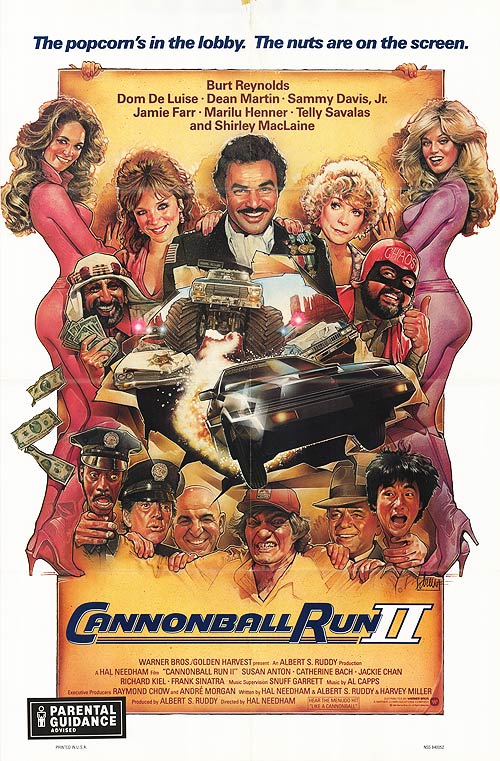
Since the first installment of this franchise ended up taking in $72 million and becoming the 6th highest grossing film of 1981 the studio heads in their typical fashion decided to capitalize on it and squeeze as much breath out of the cornball concept as they could, which lead to this ill-advised sequel. As lame as the first one was this one is even worse and even less focused on racing.

The actual race, if you can call it that, doesn’t begin until 45 minutes in with the whole first half spent dealing with the silly backstories of how each ‘zany character’ decides to get back into the event, which is all very unnecessary and just an excuse to bombard the viewer with an onslaught of stupid gags that are on a kindergarten level. Once the race does get going it’s spent dealing with cartoonish stunts and then ends with a long drawn-out fight between the drivers and some gangsters, which makes it seem like it shouldn’t be called a racing movie at all.

Roger Ebert described the film as “one of the laziest insults to the intelligence of moviegoers that I can remember” and he’s right. Some silly humor is okay, but there needs to be another added element. For instance in The Gumball Rally, which wasn’t all that great, but still far better than this, there was the same silliness, but at least there was also one scene showing from a driver’s point-of-view a car speeding down the closed off streets of Park Avenue, which was that film’s best moment. In Paul Bartel’s Cannonball! you had a horrific car crash, which was controversial, but at least gave it some sort of edge. This film has no edge it’s just one-dimensional stupidity from the first frame to the last. The opening sequence is almost shot for shot the exact same as the one in the first installment, which shows how limited writer/director Hal Needham’s creative well likely was.

The only interesting aspect about it as with the first movie is the eclectic cast. Dean Martin for what it’s worth looks much more energized here than he did in the first one and Sammy Davis Jr. is quite funny and if they had built the film around him it would’ve been an improvement. It’s also fun seeing Richard Kiel playing a more normal type of person and not just a doofus giant caricature like he usually got stuck with. However, this installment also has Alex Rocco and Abe Vigoda playing gangsters who try various inane ways to stop Jamie Farr’s Arab character from winning, which makes the stunts in an old Wily E. Coyote/Road Runner cartoons seem genuinely highbrow by comparison.

I was surprised to see Shirley MacLaine in this thing. She possibly took the part so she could reunite with her Rat Pack co-stars even though she never appears in any scene with them, but she had just gotten done winning the Academy Award for Terms of Endearment and it was like receiving all the accolades and prestige that comes with that award and then immediately throwing it all in the toilet by doing something that was completely beneath her talents. Her part is quite small and insignificant. Marilu Henner, who plays her partner as two out-of-work actresses disguised as nuns, comes off better and looks younger and prettier, which made me think Maclaine’s role could’ve been excised completely and simply combined with Henner’s.

What’s even more surprising is the presence of Reynolds. Back in 1982 he stated that he wasn’t going to do anymore ‘car chase movies’ and even turned down on an offer to star in Smokey and the Bandit III for that reason, so then why star in something that is just as bad or even worse. I think he can be a strong actor if given a good script and  I meet the man back in 1995 and shook hands with him during a book signing, so I don’t mean to seem overly harsh, but his brand became stigmatized by doing too many of these ‘good-ole’ boy’ productions and he was never able to recover. He had a brief renaissance with Boogie Nights, but that was about it. Starring in ‘Evening Shade’ doesn’t count because TV work is considered a downgrade from being in the movies and usually only taken when the movie roles dry up. The scene where he dresses up in a harem costume and pretends to be a female dancer is particularly demeaning and has to be considered an embarrassing career low point for any star that was once considered a male hunk.

Fortunately the audiences had wised up and after a strong opening weekend the film’s box office returns plummeted and it only ended up grossing $28 million, which was far less than the first one. This thankfully slowed up the need to make any more cannonball movies although in 1989 they made one more called Speed Zone, which because I’ve become very burnt out with these car racing flicks will be reviewed at a later time…a MUCH later time.

My Rating: 1 out of 10

Released: June 29, 1984

Runtime: 1 Hour 48 Minutes

Rated PG

Director: Hal Needham

Studio: Warner Brothers

Available: DVD, Amazon Video, YouTube