Rituals (1977)

By Richard Winters

My Rating: 2 out of 10

4-Word Review: Nightmare in the woods.

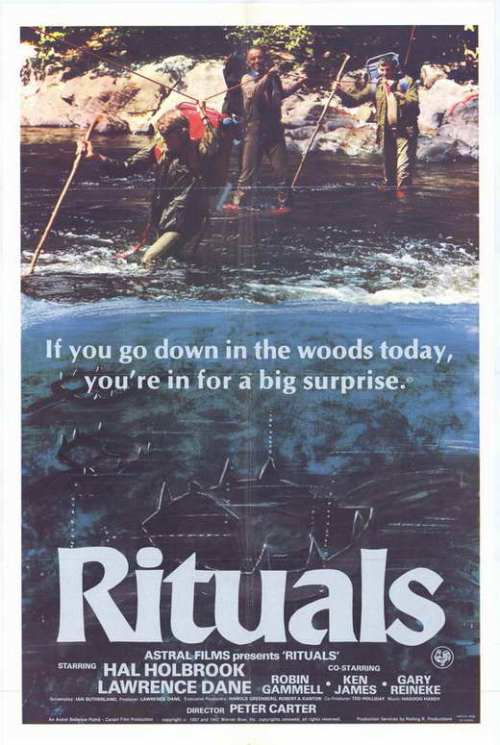
Five middle-aged doctors (Hal Holbrook, Lawrence Dane, Robin Gammell, Ken James, Gary Reineke) take a trip into the Canadian wilderness in what they hope will be a fun weekend retreat, but soon bizarre things begin to occur including having all of their hiking boots stolen from them in the middle-of-the-night. It eventually becomes clear that they are being stalked by an unforeseen adversary who’s intent on playing mind games with them while slowly picking them off one-by-one.

This was Canada’s answer to Deliverance and while great effort was made to lift it above the usual mindless slasher film level it still doesn’t work and remains flat and predictable all the way through. One of the things that I really liked about Deliverance was that it was filmed on-location in the Georgia backwoods and this film takes the same approach by being shot in the dense forests of northern Ontario, but the result isn’t as satisfying. In Deliverance the location becomes like a third character while here it amounts to being just a backdrop.

The film has too much of a creepy musical score that makes it clear that it wants to mold it into a horror film and only helps to give it a formulaic feel. Deliverance was never mechanical and instead came off more like a drama that suddenly turns ugly without warning, much like life sometimes, while this thing seems more staged and rehearsed.

The cast is top-notch and puts great effort into their roles and the rigorous requirements of doing all of their own stunts. Yet the result is shallow as there’s no distinction between the characters who come off as stereotypically jaded middle-aged businessmen. Watching their personalities unravel as the grueling journey proceeds isn’t riveting since they seemed broken from the beginning and the viewer doesn’t care if any of them survive it or not.

The tension is minimal and the nemesis never gets revealed until the very end. At points I felt that having a bad-guy wasn’t needed and the story could’ve been stronger had it focused around the men getting lost in the woods through no one’s fault but their own and then their ultimate struggle with the elements. The mountain man (Michael Zenon) is much too crafty anyways and pulls off things that no normal person could making the culprit seem like a mysterious enigma that transcends the bounds of reality and makes the film too unbelievable to take seriously.

My Rating: 2 out of 10

Released: July 21, 1977

Runtime: 1 Hour 40 Minutes

Rated R

Director: Peter Carter

Studio: Canart Films

Available: None at this time.
Impulse (1974)

By Richard Winters

My Rating: 2 out of 10

4-Word Review: William Shatner kills people.

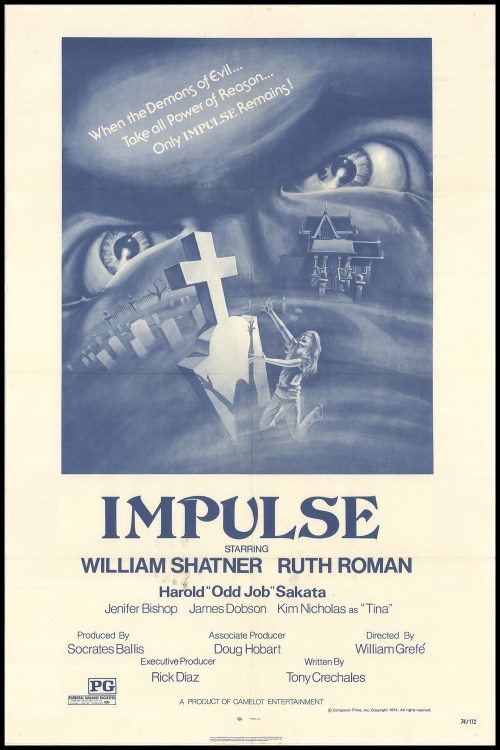
As a boy Matt Stone (William Shatner) witnesses a man trying to rape his mother (Vivian Lester) and that sight scars him psychologically. As an adult, when ‘triggered’, he goes into murderous rages. Young Tina (Kim Nicholas) watches him off a business associate of his named Karate Pete (Harold Sakata) and tries to warn her mother (Jennifer Bishop) about his dark tendencies, but she refuses to listen and begins forming a relationship with Matt. When Matt realizes that Tina is on to him he tries to kill her before she can tell anyone else.

Although this film has a reputation of dealing with child molestation, and had an original title of Want a Ride Little Girl?, there is no evidence of it. Matt only kills women who are above the age-of-consent and his dealings with Tina have no sexual overtures. The script is actually quite pedestrian and loaded with nothing but cardboard characters and contrived situations that fail to be either distinctive or memorable.

William Shatner’s acting is the only horrifying thing about it. His facial expressions are better suited for cheap camp and his loud, plaid leisure suits are enough to hurt your eyes along with a wig made for a storefront mannequin. You can also spot his real-life wife at the time, Marcy Lafferty, playing a hotel desk clerk.

Sakata’s appearance is another detriment. I could see why he wasn’t given any speaking lines in Goldfinger because every time he does open up his mouth he comes off like someone who has no business being in front of the camera. Ruth Roman, who was a star during the ‘40s, but took on token supporting roles during the ‘70s gives the middling material some effort, but only if you can get past her raspy, smoker’s voice.

The only good thing is Kim Nicholas, a young blonde child performer who acted in only 5 movies, but who outperforms her adult counterparts by a mile. She conveys her lines with solid conviction and has just the right facial reactions. You could almost say that she carries the movie, but there is one scene where she stands in the middle of the road so she can force any car that comes by to stop and then uses this chance to bum a ride of off them, but no child or adult in their right mind would do something so dangerous, which only proves how stupid and poorly conceived this pathetic thing is.

My Rating: 2 out of 10

Alternate Title: Want a Ride Little Girl?

Released: January 31, 1974

Runtime: 1 Hour 26 Minutes

Rated PG

Director: William Grefe

Studio: Camelot Films

Available: DVD

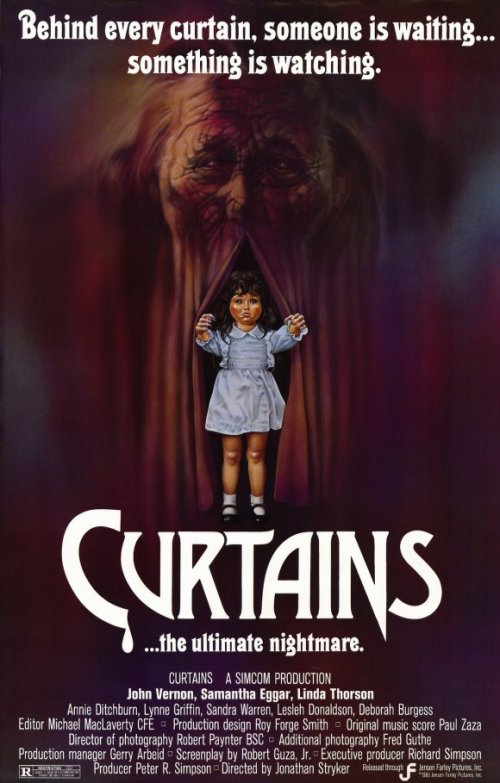
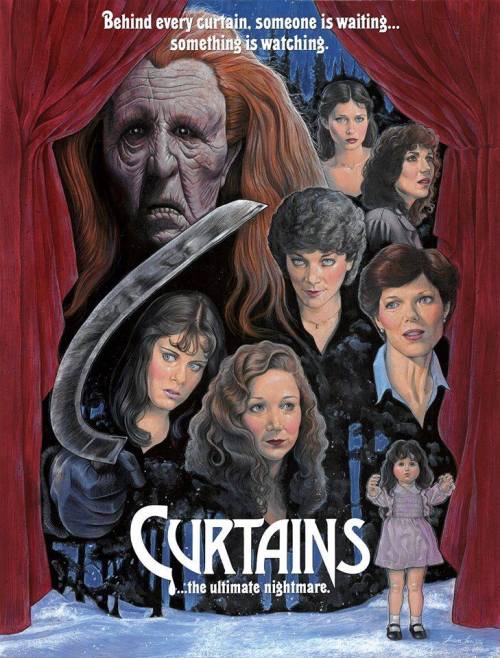
Curtains (1983)

By Richard Winters

My Rating: 1 out of 10

4-Word Review A very deadly audition.

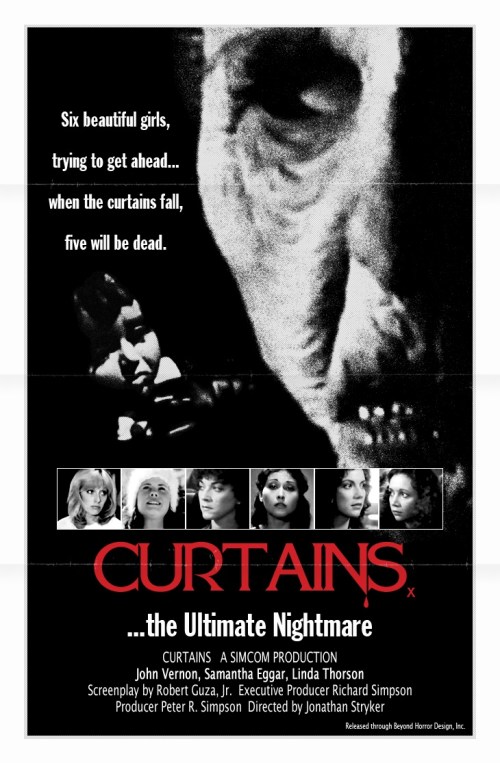
Well-known movie director Jonathan Stryker (John Vernon) is producing a new film and aging actress Samantha Sherwood (Samantha Eggar) presumes she’ll get the starring role like with all of his other productions, but this time Stryker has a catch. He tells her that to prepare for the part she must commit herself to a mental institution to better understand the character she is to play. The desperate Samantha agrees, but then realizes Jonathan has no intention of getting her out once she is inside, so she escapes and seeks revenge at Jonathan’s secluded wintertime mansion where he is auditioning six younger actresses for the role. Now suddenly everyone starts dying off at the bloody hands of a masked assailant. Is the killer Samantha in disguise, or could it be one of the other actresses willing to kill in order to get the part?

The film starts out okay. I liked that we are shown a brief background to these actresses before they get to the mansion, which helps make them seem more like real people and less like caricatures. The mansion where the action takes place has an interesting exterior/interior and I loved the pristine winter time landscape, but that is pretty much where the good points end.

The narrative is horribly disjointed and most likely a result of a lot of rewrites and reshoots that had the production shelved for up to three years before it was finally released. The opening sequence done inside the asylum is clichéd to the extreme and makes the film come off as a complete campfeast. The idea that someone would intentional try to get themselves committed simply to get a movie role is stupid and overall there are no scares or frights at all.

The killings are mechanical and unimaginative. I couldn’t understand how this killer was able to sneak up on people and literally magically appear at the most in opportune times. For instance a victim, played by Lesleh Donaldson, manages to escape the clutches of the bad guy and proceeds to make more distance between her and him by running through a snow capped forest. She briefly stops to catch her breath by a random tree and wouldn’t you know that’s the one tree that the killer is hiding behind.  Another segment has a victim (Anne Ditchburn) dancing by herself in a big empty room where the killer somehow sneaks up right behind her, which I would argue couldn’t happen. Everyone has a sense when someone else starts getting too close to them, especially in a room devoid of anyone else, and she would’ve detected the killer’s presence long before he got right behind her.

The ending in which the killer chases the final victim through an array of old stage props inside the mansion’s basement gets overly prolonged. The young women end up looking too much alike, so it was hard to have any empathy for them because they weren’t distinctive enough and the story would’ve worked better had it taken the concept of Dead of Winter where just one woman goes to the isolated place for the audition and thus allow the viewer to create more of a connection to the protagonist.

The only bright spot is Eggar. Her starring movie roles from the ‘60s and early ‘70s were now long gone and much like the actress she portrays was forced to take cheap low budget horror offers to remain busy, but she still gives it a 110% effort. What impressed me was how different her character was from any of her others. In those earlier films she was mainly a young, sensitive and idealistic woman, but here she is cold, conniving and bitter proving that she must be a great actress if she is able to play such opposite personalities in the same convincing way. It’s just unfortunate that the filmmakers didn’t share that same type of professionalism as the sloppy execution destroys any potential that it may have had.

My Rating: 1 out of 10

Released: March 4, 1983

Runtime: 1 Hour 29 Minutes

Rated R

Director: Robert Guza Jr.

Studio: Norstar Releasing

Available: DVD, Blu-ray, Amazon Video

It’s Baaaaaaaaack!

Scopophilia is proud to announce the 6th annual horrorween feast where we review only horror movies and nothing but horror movies for the whole month of October! From the sickest to the dumbest and the goriest to the laughable. We’ll also include classics, the not-so-classic and even a  few you may never have heard of. So, don’t be a scared baby and stay tuned!!!!

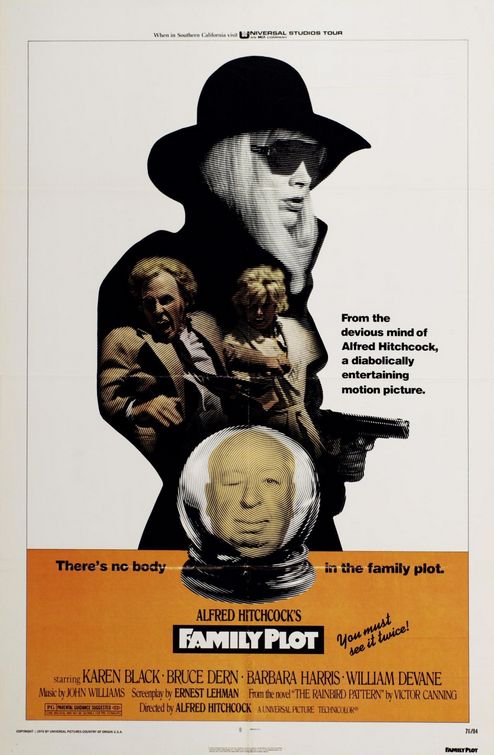
Family Plot (1976)

By Richard Winters

My Rating: 4 out of 10

4-Word Review: Alfred Hitchcock’s last movie.

Blanche Tyler (Barbara Harris) is a phony psychic whose client, the rich heiress Julia Rainbird (Cathleen Nesbitt) offers her a reward of $10,000 if she can use her ‘psychic abilities’ to find Julia’s long-lost nephew who was given up for adoption years earlier. Blanche employs her boyfriend George (Bruce Dern) who works as a cabbie in-between acting gigs, to find the man. George ends up stumbling upon someone who he thinks may be him, Arthur Adamnson (William Devane), but ends up getting in-over-his-head when Arthur proves to have ulterior motives.

The film’s claim-to-fame is that it was the last one directed by Alfred Hitchcock, which is probably the only good thing to say about it. Technically it’s not bad, but it’s not terribly interesting either. Everything that gets done here has been done before in other films with more interesting results. This includes a sequence where Blanche and George’s car goes careening down a mountain highway with no breaks, which isn’t exciting at all and looks clearly shot in front of a green screen.

After completing the far edgier Frenzy I was expecting Hitch to try and push the envelope even more, but instead he draws back with a pedestrian story that’s full-of-holes.  It was based on the novel ‘The Rainbird Pattern’ written by Victor Canning, which had a darker tone. Screenwriter Ernest Lehman wanted to capture that same tone here, but Hitch pushed him instead for a lighter quality that borders on camp, but ultimately comes off as gimmicky. The ending is particularly limp and for someone once dubbed the ‘Master of Suspense’ there is very little of it here.

The only moment that stuck out for me is where Blanche and George sit down to eat hamburgers. Normally actors in films rarely eat the food that they’re served and will usually either take small nibbles, or simply leave it on the plate without taking a single bite, but here both Dern and Harris take big bites from their burgers while continuing to talk. At one point a piece of burger spits out of Dern’s mouth as he speaks and he instinctually holds up his hand in front of his mouth in an embarrassment, which was strangely left in. Most directors would’ve quickly stopped the scene and reshot it, but instead Hitch decided to let it continue, which adds an odd realism probably not seen anywhere else.

The casting is the only real bright spot especially Devane, who normally played good guys, but takes a turn as a villain here and does quite well. In fact it’s the best performance of his career. Unfortunately the two women (Harris and Karen Black who plays Devane’s girlfriend) are wasted and for the most part have very little to do. Black’s role could’ve been cut out completely in a film that especially when compared to the director’s earlier works is a huge disappointment.

My Rating: 4 out of 10

Released: April 9, 1976

Runtime: 2 Hours 1 Minute

Rated PG

Director: Alfred Hitchcock

Studio: Universal

Available: DVD, Blu-ray, Amazon Video, YouTube

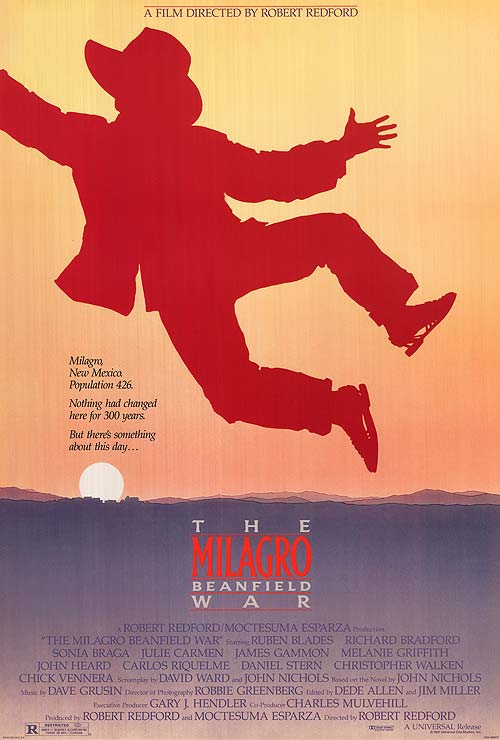
The Milagro Beanfield War (1988)

By Richard Winters

My Rating: 8 out of 10

4-Word Review: Small town fights developer.

Milagro, New Mexico becomes the centerpiece to controversy when a rich developer (Richard Bradford) decides to build a resort, which cuts off the water supply to the rest of the struggling inhabitants of the nearby town. Joe Mandragon (Chick Vennera) is one of those farmers who is frustrated with the current situation and in a fit of rage kicks a water valve, which allows water to flow into his field where he soon begins to grow beans. Kyril Montana (Christopher Walken) is then sent in by the rich tycoons to ‘settle-the-score’, which only helps to make the town’s resistance to the development even stronger.

The film is based on the 1974 novel by John Nichols and was directed by Robert Redford eight years after he helmed his first feature the very successful Ordinary People. From a completely technical standpoint the film shines in all areas as it delightfully mixes whimsical comedy with harsh real-world issues and manages to keep the tone consistent throughout. My favorite element was the difficulty the activists had in getting the townspeople  ‘on-the-same-page’ and organized to fight their mutual enemy, which illustrated one of the biggest challenges to fighting for social change where just trying to convince and mobilize others is sometimes the toughest part.

John Heard has the film’s best character arch playing a former political activist who dropped out of trying to change-the-world years ago, but after sufficient prodding finally gets back to his old form in one very fiery and memorable moment. Walken is quite good in reverse playing a man sent to initially squash the rebellion only to eventually soften a bit (just a bit) on his stance. Carlos Riquelme is delightful as the elderly Amarante who despite being weak with age fights-the-good-fight including a hilarious scene where he precariously tries to drive a bulldozer.

I wasn’t quite as crazy about Daniel Stern’s inclusion. He plays his part well and the character is likable, but I didn’t understand the need for him in the story. It almost seemed like the filmmakers didn’t trust that the Hispanic cast alone could carry it and a white guy needed to be added in in order to usher in a more mainstream demographic. Vennera is weak only because he constantly reminded me of Bruno Kirby Jr. and could’ve easily passed off as his twin in both his looks and voice.

The only argument I would have against the film, which is otherwise a charmer and does not in any way deserve the outrageous R-rating that it was given, is the addition of Robert Carricart as the Coyote Angel that only Riquelme’s character can see. To an extent this cheapens the struggles that the townspeople go through because it gives what is otherwise a serious problem too much of the fable-like treatment. I would’ve preferred a grittier approach focusing solely on the efforts of the people to create the change, which would’ve left a stronger emotional impact and avoided telegraphing the idea that it was all going to work-out due to this extra magical force.

My Rating: 8 out of 10

Released: March 18, 1988

Runtime: 1 Hour 57 Minutes

Rated R

Director: Robert Redford

Studio: Universal

Available: DVD, Amazon Video

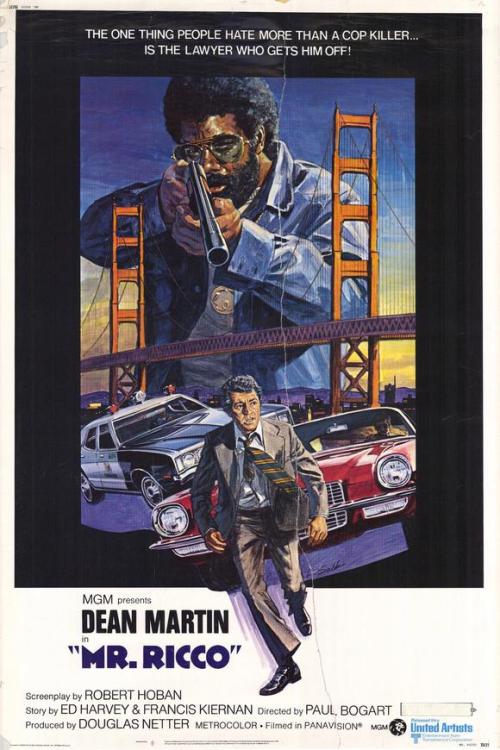
Mr. Ricco (1975)

By Richard Winters

My Rating: 6 out of 10

4-Word Review: Lawyer’s client turns homicidal.

Joe Ricco (Dean Martin) is an aging attorney living in San Francisco who represents Frankie Steele (Thalmus Rasulala) a black militant accused of murder. Ricco manages to get the charge overturned and Steele walks away a free man, but soon violent murders begin occurring with witnesses pointing to Steele as the culprit. Then Ricco himself becomes a target of Steele’s murderous rage, but no one can seem to figure out why.

This would become Martin’s last starring vehicle and putting the old Rat-Pack star in a genre that completely belies his image was not a bad idea. The story itself is solid with lots of interesting twists that remains both gritty and believable while also allowing for a few humorous sidelights to trickle in. The action is well staged and director Paul Bogart captures the Bay City ambience with a vivid and engaging style.

Martin’s presence is both good and bad. Initially he comes off as tired and out-of-place with a speaking style that makes him seem eternally inebriated, but he manages to pick-up some energy as it goes along. The way he uses his dog to help him cheat at golf and his desperate attempts at getting the last ounce of toothpaste out of its tube are all quite amusing. However, there is no way that this aging, out-of-shape white dude, who was 58 at the time, but looking more like 70, would be able to beat up a well-built black streetfighter like Steele. It is also quite nebulous that this ‘I don’t like guns and I don’t like carrying them around’ guy would be able to be such a good shot when he’s finally forced to use one.

The ultimate identity of the killer is a surprise and I don’t think anyone will be able to guess who it is, so in that regard it remains relatively intriguing, but for whatever reason I still found my attention waning. I’m not sure why as the editing is crisp and the narrative keeps revealing new plot points at a good pace. The direction is also sufficiently lively and yet when it’s all over it still ends up being just a competently done, but ordinary police thriller.

My Rating: 6 out of 10

Released: January 28, 1975

Runtime: 1 Hour 38 Minutes

Rated PG

Director: Paul Bogart

Studio: MGM

Available: DVD (Warner Archive), Amazon Video 

Somebody Killed Her Husband (1978)

By Richard Winters

My Rating: 1 out of 10

4-Word Review: Searching for spouse’s killer.

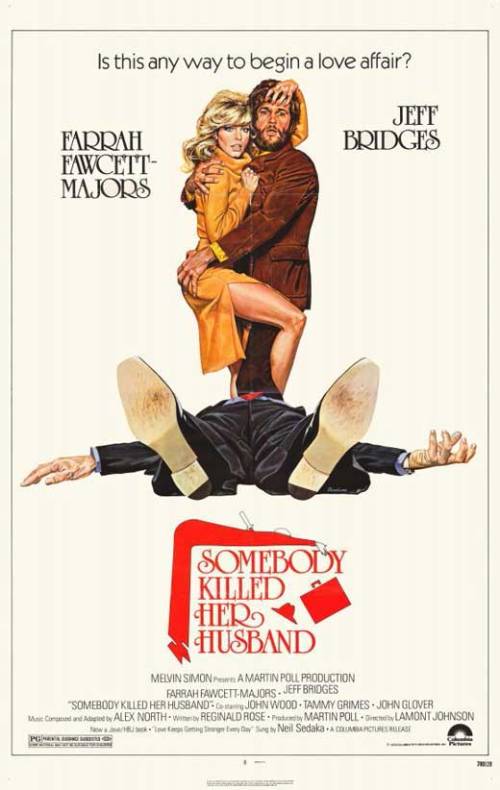
Jerry Green (Jeff Bridges) is a frustrated, would-be crime novelist who spends his days working as a clerk at a toy store while dictating to himself crime scenarios he plans on using in his stories that no one ever reads. One day he spots a beautiful woman named Jenny (Farah Fawcett) and he starts up a conversation with her, which quickly leads into a relationship. The problem is that she is already married, but that doesn’t stop the two from pledging that they’ll get married anyways until the husband turns up dead and they go on a mad search to find who did it before the police find out and accuse them of the crime.

This film was supposed to be Fawcett’s break-out role that was going to lead her into big-screen stardom, but it was such a disaster that it pretty much killed her aspirations before they even began. A lot of it is her fault as she got out of her ‘Charlie’s Angels’ contract after only one season, which enraged the show’s producer Aaron Spelling who threatened to sue any studio that offered her a film role, so she lost out in getting the starring part in Foul Play and was forced to accept this uninspired thing on the rebound.

She comes off looking like someone not ready for the big-time and in serious need of more acting training. Bridges is the far better performer and the only one that breaths any energy into it to the point that it would’ve been more entertaining had he been alone and Fawcett not appeared at all.

The romance itself is so corny and clichéd it’s embarrassing. Bridges falls in love with her the second he sees her and then after only a few minutes into their first date the two are already expressing their undying love for the other. I was also confused about why the Fawcett’s character would have married her husband (Laurence Guittard) to begin with as he is an arrogant prick of the highest order. My only guess is she did it because he had a lot of money and if that is the case then she shouldn’t act all that surprised or dismayed with what she ended up with.

Director Lamont Johnson had done some reasonably competent stuff in the past as did screenwriter Reginald Rose, who in better times penned the screenplay for Twelve Angry Men, but this thing looks like it was done by clueless amateurs. The first half-hour is so flatly photographed that I was surprised it didn’t immediately raise alarm bells from the studio heads while they watched the daily rushes.

The mystery angle allows for modest interest, but it ends up getting overly convoluted and culminates in a chase through a department store that is too dark and shadowy it’s hard to follow what is going on. Apparently the industry execs thought Fawcett’s celebrity status at the time, as she was coined as being ‘the most beautiful woman in the world’ by one mag, would be enough to smooth over the film’s glaring faults and still attract moviegoers, but in hindsight it should’ve never have been released as the box-office-bomb red flags are quite apparent right from the start.

My Rating: 1 out of 10

Released: September 29, 1978

Runtime: 1 Hour 37 Minutes

Rated PG

Director: Lamont Johnson

Studio: Columbia Pictures

Available: None at this time.
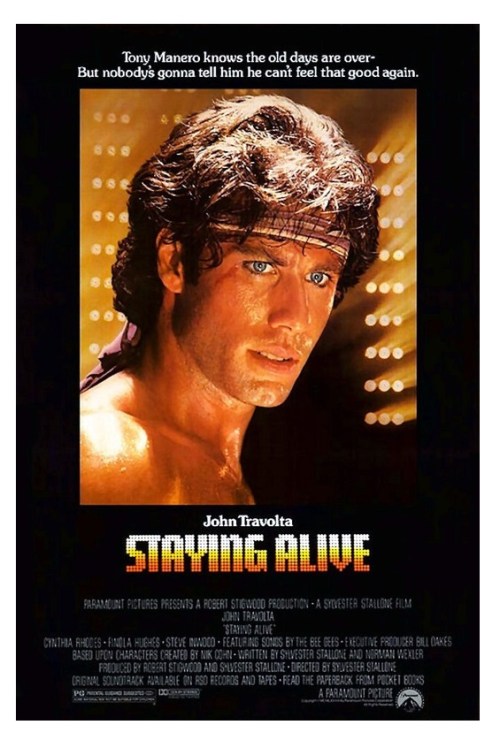
Staying Alive (1983)

By Richard Winters

My Rating: 2 out of 10

4-Word Review: Tony juggles two women.

It’s been 5 years and Tony Manero (John Travolta) is still struggling to make it big in the dancing world in this sequel to Saturday Night Fever. Now instead of working at a paint store he’s employed as a nightclub waiter while spending his days desperately going to every agent in New York looking for a break, but getting none. He’s in a relationship with Jackie (Cynthia Rhodes), but when a hot new dancer named Laura (Finola Hughes) catches his eye he decides to have a fling with her, which further complicates the fact that all three of them are dancing in the Broadway production of ‘Satan’s Alley’.

The idea of turning a classic movie into a sequel should’ve been given the kibosh from the start as that film conveyed such a perfect slice-of-life tale that it didn’t need any continuing. This film also doesn’t have any of the key players from the first including Donna Pescow and Karen Lynn Gorney. It was Travolta’s and Gorney’s relationship that made that movie sizzle, so if you’re not going to have her then why even bother making it as it’s hollow and incomplete otherwise. Too much time had also elapsed and disco was no longer trendy by the early ‘80s, so to compensate they tried gearing it more to the struggles of working on a dance line, but only succeeds at making it seem like a poor man’s version of A Chorus Line.

The romantic angle is uninteresting. Tony becomes attracted to Laura in the same way that he did with Karen Lynn Gorney, which was by watching her dance, which makes it formulaic and redundant. The Laura character is also quite kooky by constantly giving Tony the hot-and-cold act making her seem like someone with a split personality disorder. Jackie on the-other-hand is dull and catches on to Tony’s two-timing too quickly and then does nothing about it, which kills off any possible tension or drama. Tony himself is equally useless. Travolta plays him well, which is the only saving grace, as he manages create an engaging character despite the shitty way he treats Jackie, which normally would make him unlikable.

The scenes between Tony and his mother (Julie Bovasso) are touching and the best moments in the film although she’s played more like a real person here and not the comic caricature like in the first one. The garish set designs and special effects used to create the scenes for the play ‘Satan’s Alley’ at the end may be good for a few laughs, but it’s so over-the-top and campy that it degrades any serious intention that the film may have otherwise had. Watching the older audience members including Tony’s mother stand-up and applaud the play after it was over seemed disingenuous as I think most of them would in reality be rolling-their-eyes  and asking themselves ‘what the hell did I just watch’ instead.

The musical score, which was such a strong element in the first film, is completely lacking. Instead of a pounding soundtrack we get jazzy songs better suited for a quiet lounge. Absolutely nothing works except maybe inducing 93 minutes of boredom, which in that regards it does quite successfully.

My Rating: 2 out of 10

Released: July 11, 1983

Runtime: 1 Hour 33 Minutes

Rated PG

Director: Sylvester Stallone

Studio: Paramount Pictures

Available: DVD, Amazon Video, YouTube

Ode to Billy Joe (1976)

By Richard Winters

My Rating: 2 out of 10

4-Word Review: Where is Billy Joe?

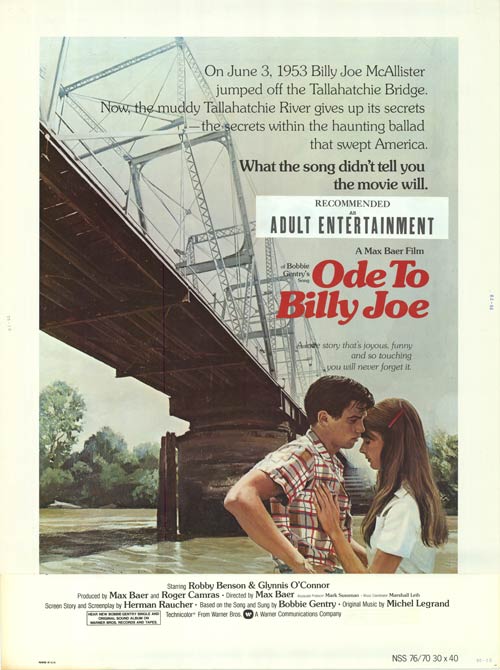
Based on the hit 1967 single sung by Bobbie Gentry this film attempts to reenact what occurred in the ballad as well as explain the song’s mystery elements with a screenplay co-written by Gentry herself. The story centers on Bobbie Lee (Glynnis O’Connor) a 15 year-old girl living on a farm and longing to satisfy her newfound sexual awakenings. She becomes attracted to a local boy named Billy Joe McAllister (Robby Benson) and he to her, but her conservative father (Sandy McPeak) won’t allow her to bring over ‘gentleman callers’ until she is 16, so she runs off into the woods with him only to learn that he harbors a dark secret that if it became known to the public could ruin his life.

While the film did quite well by grossing $27 million at the box office on only a $1.1 million budget I felt it was a mistake to turn the classic song into a movie. Sometimes things are more interesting when the mystery angle is left unanswered, and having it explained especially with the lame way that it gets done here, tarnishes the song’s mystique.

For years Gentry said that the point of the song was never about why Billy Joe jumped off the bridge or what he threw off of it, but instead the relationship of the song’s narrator with her family and how completely oblivious they were to her feelings, which the movie doesn’t recreate. In the song the father is portrayed as being ambivalent and distant towards his daughter and yet in the film for some ill-advised reason he is kindly and connected, which isn’t as interesting.

Hiring Herman Raucher to co-write the screenplay was a mistake as well. He had great success with Summer of ’42, but pretty much tries to turn this into the same glossy romance as that. He even brings along the same composer Michel Legrand whose orchestral score is completely out-of-place with the story’s country setting.

The script also adds some crazy side-stories that have nothing to do with the main plot or the song that it is based on. One of them includes having prostitutes shipped in from nearby Yazoo City to have sex with all men from the town, who line up one-by-one seemingly guilt free, to fuck the ladies while attending a small jamboree. Now, I was not alive during the ‘50s, but I know people who were including my parents, who insist that it was every bit as oppressive and conservative as its reputation states especially in the rural areas such as this film’s setting. I realize that prostitution is considered the ‘world’s oldest profession’ and I’m sure in some underground big city clubs of that period you could find some, but bringing them to some small town where everybody knows everybody else and having the men jumping in for quite literally ‘roll-in-the-hay’ with them (as this took place on a barnyard floor) with all of their friends watching and not worrying that this would get back to their wives or ruining their reputations, as rumors spread like wild fire in small  towns, is just too far-fetched and ridiculous to be believable.

Benson is great in the lead and James Best is strong too in a small, but crucial role, however O’Connor seems miscast. She’s attractive and has been good in other films, but she plays the part as being very outspoken and strong-willed where in the song that same character came off as more introverted and quiet. She also seemed too worldly-wise for a 15-year-old especially one that had never ventured out of her town although the bit where she sticks her head into a toilet bowl and shouts ‘hello’ may be worth a few points to some.

If you spent sleepless nights trying to figure what it was that Billy Joe threw off that Tallahatchie Bridge then you may find this film’s clichéd and corny answer to it as disappointing.  It also takes way too damn long to get there while forcing the viewer sit through many long, drawn-out scenes in-between.

In fact the only thing that the movie does get right is its on-location shooting that was done in LeFlore County, Mississippi that was the actual setting to the song. However, even this gets botched because the Tallahatchie Bridge that Gentry describes in her song, which was near the small town of Money, was destroyed in 1972 and the bridge used in the film was a different one located near the town of Sidon that also ended up getting demolished in 1987.

My Rating: 2 out of 10

Released: June 4, 1976

Runtime: 1 Hour 46 Minutes

Rated PG

Director: Max Baer Jr.

Studio: Warner Brothers

Available: DVD, Amazon Video, YouTube