Category Archives: Thrillers/Suspense

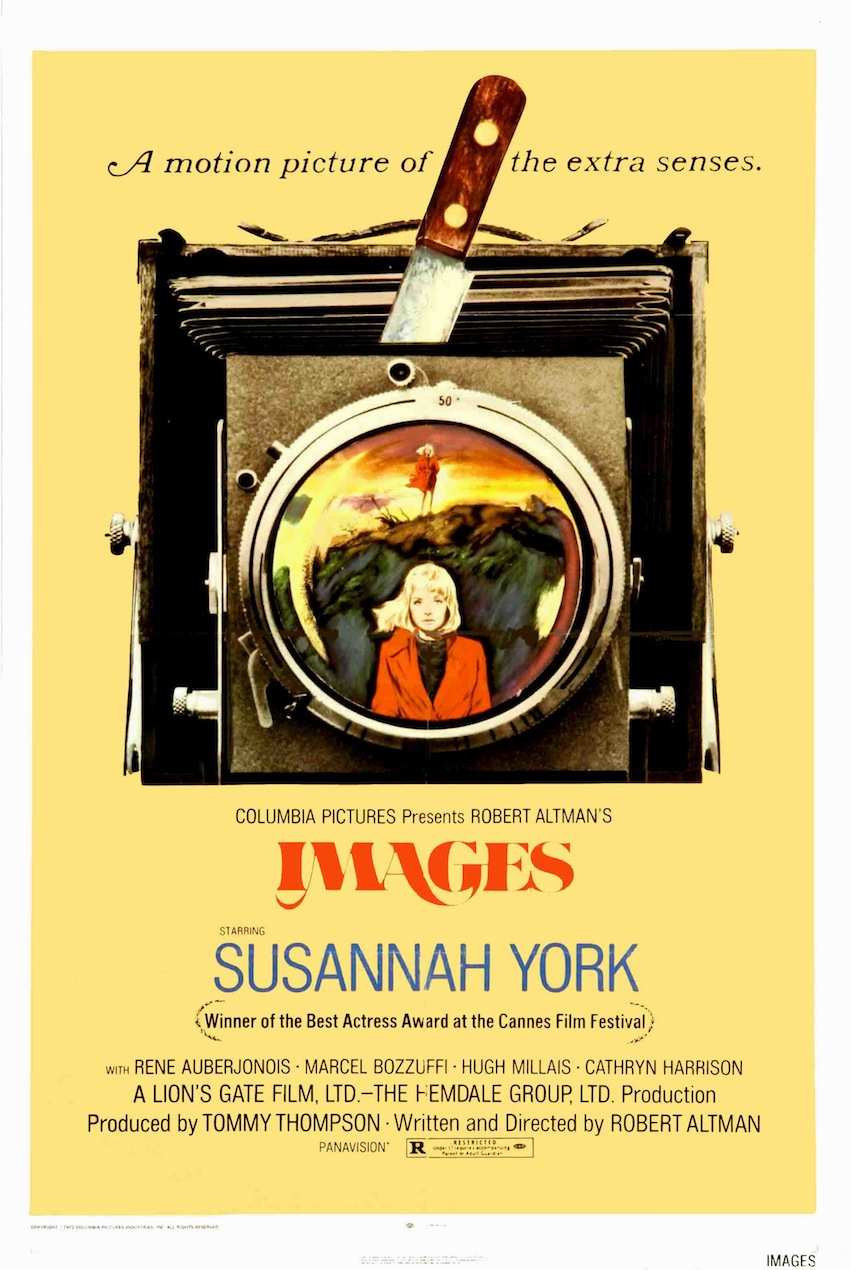
Images (1972)

images

By Richard Winters

My Rating: 8 out of 10

4-Word Review: Demons of the mind.

This is the missing link for any Robert Altman fan or detractor as this is different from any of his other films and completely original from beginning to end. Not only was it way ahead of its time, but proves that he is deftly skilled at handling any directorial task or material.

The story involves a tormented and emotionally fragile woman named Cathryn (Susannah York) who starts to see strange visions. These visions seem so real that she can no longer tell if they are all just inside her head and decides the only way to get rid of them is to mentally ‘kill’ them, but this in turn only leads to further complications.

What really makes this a unique film is that you get inside this woman’s head and actually start to understand her logic and experience her torment. The film also makes terrific use of silence and uses it to accentuate the isolation that the character feels. The setting has a sort of surreal quality and the location of the house is impressively remote.

York has a knack for playing victimized and vulnerable women. In many ways her role here seems like an extension of her character from The Killing of Sister George. Although she makes you sympathetic to her predicament her screams are too screechy and fail to attain the shrillness that would create the startling effect that the filmmakers desired.

The real star may actually be Vilmos Zsigmond and his cinematography. His framing and composition is not only flawless, but breathtaking. He makes the wintertime Irish countryside look like a whole different world and the stillness of the lake that is shown seems almost unreal.

There are a few too many obvious and clichéd shots of mirrors and puzzles and it could also gone much further with its unusual premise. Still this is a unique and entertaining movie that should keep you guessing all the way to the end. The pace is slow, but deliberate with a payoff that is worth it.

My Rating: 8 out of 10

Released: December 18, 1972

Runtime: 1Hour 41Minutes

Rated R

Director: Robert Altman

Studio: Columbia Pictures

Available: DVD

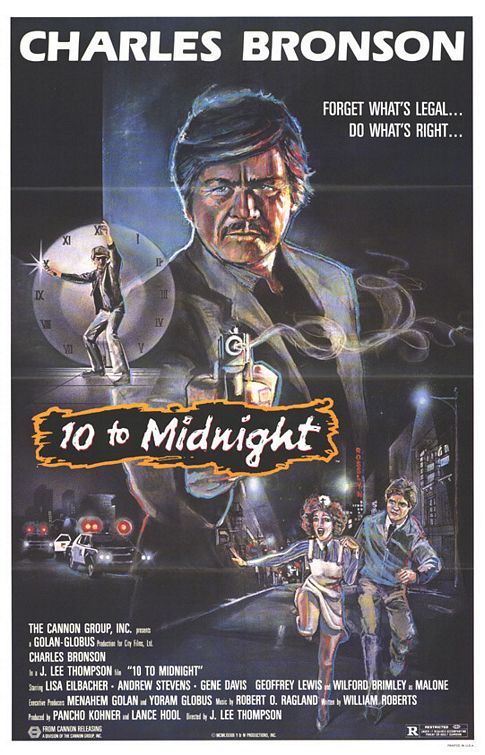
10 to Midnight (1983)

10tomidnight

By Richard Winters

My Rating: 3 out of 10

4-Word Review: Killer in the nude.

Warren Stacy (Gene Davis) has little luck with women and kills those who have previously rejected his advances and does so while being in the nude. Leo Kessler (Charles Bronson) is the cop on his case, but doesn’t have enough evidence to arrest him, so he decides to steal some of the blood sample from Warren’s latest victim, which is being stored at the police lab and is the very rare AB type and plant it on Warren’s clothing when he is not in his apartment. Warren is then brought in for questioning and when police find the clothing and blood evidence he is arrested, but Leo eventually admits to planting the evidence and is fired. The incensed Warren decides to get his revenge by going after Leo’s grown daughter Laurie (Lisa Eilbacher) and it is up to Leo to try and stop him before it is too late.

The film has an interesting twist to the Dirty Harry police-type dramas that too many times were solely focused on the renegade cop doing whatever it takes to bring in the bad guy no matter how many rules he broke in the process. However, this film nicely explores to an extent the reason for due process and how an overzealous cop can sometimes be more of the problem than the solution. Unfortunately it is not enough to save it as the majority of the movie is too routine and mechanical.

The action segments are unexciting and poorly directed. The scene where one of Warren’s victims just stands there whimpering while making no attempt to struggle and fight back seems artificial and dull. The final foot chase between Warren and Laurie looks staged and photographed in a way that offers no tension.

Davis is boring as the villain and has a deer-in-headlights look. His body movements are stiff and robotic and he delivers his lines in a monotone fashion. His pretty-boy male model face adds nothing and his nude scenes, which are shown only from the back does not add the spark that was intended. A good thriller needs a bad-guy actor that commands the screen, but Davis doesn’t even come close and makes Bronson who isn’t considered all that strong of an actor to begin with look brilliant by comparison. This film could have been much stronger had an established and talented character actor been given the role like John Malkovich or John Turturro.

Andrew Stevens is adequate as Leo’s young by-the-book partner, but Eilbacher is quite dull. Wilford Brimley adds some personality as an investigator, but is underused and Geoffrey Lewis scores a few points as Steven’s conniving lawyer.

There is a scene where Leo and Andrew are driving alone and having a conversation inside an unmarked squad car that brought to mind one of my biggest pet peeves, which are characters in movies never wearing their seat belts. I have always worn mine whether I am in my car or someone else’s and of course these days it is the law, but it seems almost insane that police characters wouldn’t especially since they could be careening down the street at high speeds at any second if they are suddenly dispatched to a crime scene. Having them not wear seat belts does not make them look anymore macho and instead makes them come off as stupid and reckless.

My Rating: 3 out of 10

Released: March 11, 1983

Runtime: 1Hour 41Minutes

Rated R

Director: J. Lee Thompson

Studio: Cannon Film Distributors

Available: VHS, DVD, Amazon Instant Video

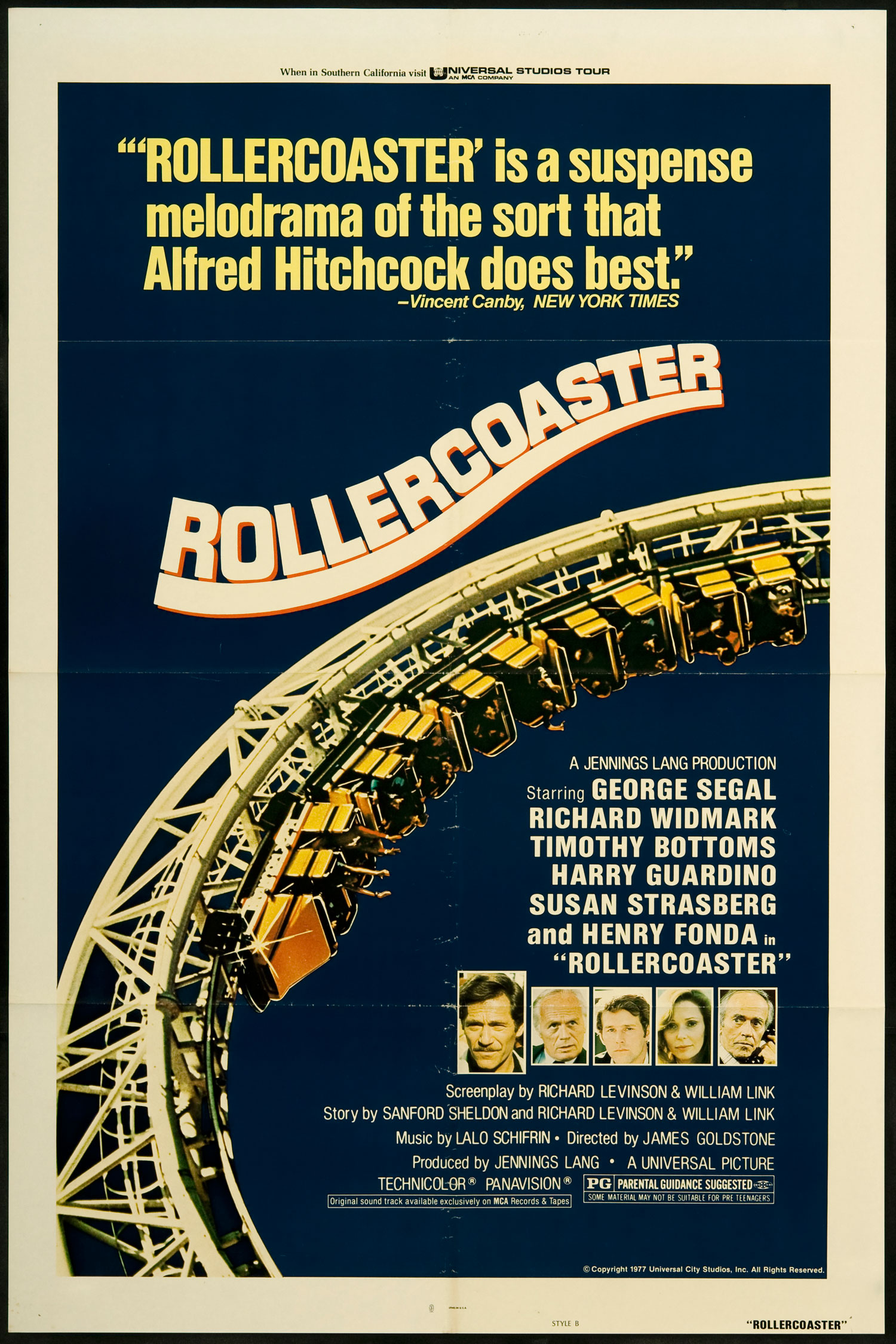
Rollercoaster (1977)

rollercoaster

By Richard Winters

My Rating: 5 out of 10

4-Word Review: Extortionist blows up rollercoasters.

A young man who is never given a name and is played by Timothy Bottoms is able to make home-made radio controlled bombs that he attaches to roller coaster rides at amusement parks. He threatens to blow up a major one during a big event unless he is given 1 million dollars. It is then up to Harry Calder (George Segal) the chief investigator to find the extortionist and the two end up playing an elaborate game of cat-and-mouse.

The film’s pacing is poor. It opens with the extortionist blowing up a roller coaster and Segal coming to investigate and then all of a sudden it cuts to an uninspired ten minute segment involving Segal’s family life before it finally gets back to the investigation. Outside of seeing a young Helen Hunt as his daughter, the family scenes offer nothing and should have been scraped completely.

Despite having ‘disaster epic’ written all over it the filmmaker’s unwisely decided to make this more of an ‘intellectual thriller’ with very little action or special effects. The only real action/special effects come at the beginning when Bottoms blows up a coaster and everyone on it comes crashing down. However, it looks too sanitized and fake as it is far too obvious that it is dummies inside of the coaster cars and not real people.

As the villain Bottoms has got to be one of the dullest you will ever see. Absolutely nothing about him is interesting and there is no back story given as to why he is doing this or how he manages to be so very clever. Henry Fonda is wasted in a ridiculously small and insignificant role and one wonders why he would have even taken it.

Segal plays his part with a good ‘everyman’ quality that makes him easily relatable and it is nice to see him living in an apartment that is reasonably sloppy. It is also fun to watch him ride a roller coaster while everyone else is screaming he just sits there looking bored. Richard Widmark is equally good and possibly at his most gruff and abrasive and the sparing relationship that he has with Segal is entertaining. The intricate cat-and-mouse game that Segal plays with Bottoms isn’t too bad either. There are a few impressive shots where the camera is mounted on the front roller coaster car and then is glided along the tracks at high speeds giving the viewer of a very realistic feeling of actually being on a roller coaster.

Ultimately the film just does not live up to expectations and needed more special effects, more action, more suspense, and just plain more disaster. The bad guy should’ve been more distinctive and a much more prominent role for Fonda as some feel he may be one of the great actors of all time so if you got him use him.

My Rating: 5 out of 10

Released: June 17, 1977

Runtime: 1Hour 59Minutes

Rated PG

Director: James Goldstone

Studio: Universal

Available: DVD

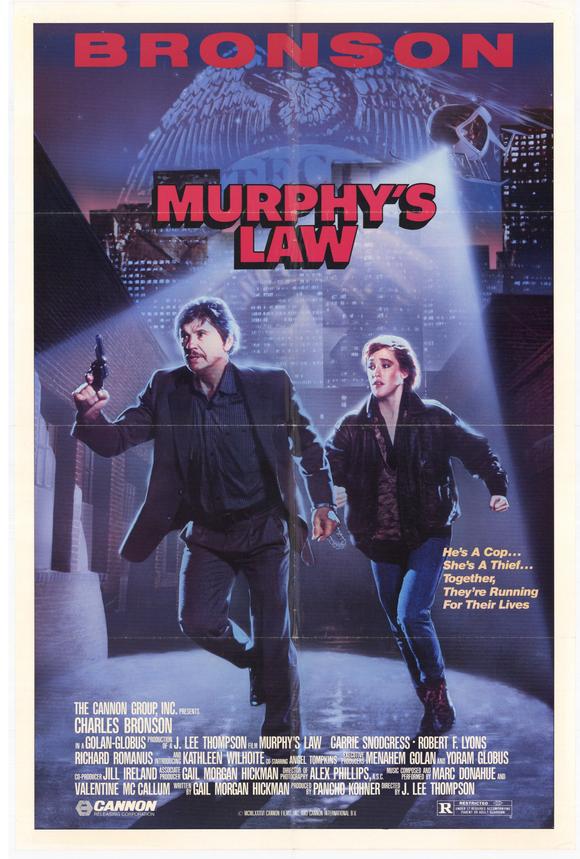
Murphy’s Law (1986)

murphys law

By Richard Winters

My Rating: 6 out of 10

4-Word Review: Psycho frames arresting cop.

Jack Murphy (Charles Bronson) is an aging cop who drinks too much and has lost a bit of an edge as he even ends up getting taken advantage of in embarrassing fashion by a young female carjacker named Arabella (Kathleen Wilhoite). Now he is being stalked by Joan Freeman (Carrie Snodgress) a criminal he put into jail ten years ago, but is now free and out for revenge. When she frames him for the murder of his ex-wife Jan (Angel Tompkins) he goes on the run. The problem is that he is now handcuffed to that same gal he arrested for carjacking and not only is there a big difference in their ages, but they also can’t agree on anything nor get along.

This is a fun and lively action flick that manages to put a new spin on the Bronson formula. The pairing of Chuck with a young actress is great and the main reason this is so diverting although the idea of having female psychotic wasn’t bad either. The action is pretty good including a nifty chase inside an airport as well as the exciting climactic sequence filmed inside the famous Bradbury Building that takes full advantage of the building’s multi-level balconies in its central atrium.

Wilhoite is peppy and engaging and seems to have no problem holding her own with a much older and more established actor. The wide variety of insulting adjectives that she uses on everyone and anybody is fun although it ends up getting a bit overplayed.

Bronson looks tired and washed-up, but it works great with his character and I thought this was one of his best latter career performances and when he needs to he can still kick-some-ass which is also fun. My only complaint is the character’s tendency to somehow ‘humiliate’ certain people by implying that they are gay which makes him seem homophobic and the film dated and out-of-touch.

Snodgress is excellent in a rare turn for her as a heavy. The age lines on her plain, but still uniquely attractive face has a certain odd sexual appeal especially as the blood of her victim’s splatters across it. The only issue I had with her character is that she enters one of her victim’s homes without a weapon of her own and instead uses the victim’s own rifle which is hanging on the wall to shoot him and although she is shown loading it with bullets that she apparently brought along my question would be how would she know they were the right bullets for that type of gun especially since she had never been to that place before?

Richard Romanus plays Frank Vincenzo another one of Jack’s nemesis and I got a kick out of his sobbing when Jack plays a game of Russian roulette with him. The character is also unique in that he wears a very visible hearing aid, which is interesting to one extent, but it never comes into play so I wasn’t sure why it was put in.

Despite some interesting variations it still ends up being rather one-dimensional and mechanical. It is entertaining to watch, but nothing memorable. Bronson’s wife Jill Ireland does not appear here, but gets listed as the film’s co-producer.

My Rating: 6 out of 10

Released: April 18, 1986

Runtime: 1Hour 40Minutes

Rated R

Director: J. Lee Thompson

Studio: The Cannon Group

Available: VHS, DVD

Eye of the Devil (1966)

eye of the devil 2

By Richard Winters

My Rating: 7 out of 10

4-Word Review: Husband is a pagan.

Vineyard owner Philippe (David Niven) is called back to the castle of Bellenac when it is found that they are suffering from another dry season. Philippe’s wife Catherine (Deborah Kerr) and his two young children follow him there a few days later despite his insistence that they not come. Once there Catherine finds everyone’s behavior to be quite odd including a menacing brother and sister (David Hemmings, Sharon Tate) who make Catherine uneasy, but nothing prepares her for the real reason that her husband is there nor its shocking outcome.

Although several directors worked on this project including Michael Anderson the credit is ultimately given to J. Lee Thompson, who is probably best known for his frequent collaborations with Charles Bronson. Despite the different directors the film is very fluid and well produced. In fact it is the directing that makes this film high enjoyable. The lighting, editing, imagery and evocative camera work make this a near brilliant work from a visual level. Turning down the sound and appreciating it for its aesthetic style alone is more than enough and the on-location shooting done at the Chateau de Hautefort is excellent.

Tate is stunningly beautiful and the photography makes the most of it watching her sit out and get drenched by the rain is actually kind of sexy. She had bit parts in two films previous to this, but this is still credited as her official film debut.  Although her voice was dubbed she still is effective with a character that straddles the line between being sensual and creepy. The part where the Niven character viciously whips her while she wriggles around on the floor and then in the end turns around and smiles like she enjoyed it was year’s ahead-of-its-time and definitely pushing-the-envelope for that period.

Kerr came in to replace Kim Novak who was injured during filming and unable to complete the picture. Normally she always gives a superior performance, but her she seemed miscast. The only facial expression she seems able to show here is that of shock and fright and the character and scenario seems to be too much of an extension to the one that she did in The Innocents just a few years earlier. Both she and Niven seemed too old to be parents of such young children. He was already in his mid-fifties and she in her mid-forties and the film would have been better served had a young attractive couple in their 20’s been cast in the part.

Niven has always done so well being cast in likable roles that having him play someone with a dark personality doesn’t quite work and he looks uncomfortable in the part. Both Donald Pleasance and David Hemmings are underused and not given enough lines or screen-time.

The story itself is rather one-dimensional. The final sequence features some great shots and editing of Kerr running through some underground tunnels of the castle, but the outcome is quite predictable. The script lacks that added perspective or twist to make it truly memorable and is the weakest element in this otherwise visually arresting production.

eye of the devil 4

My Rating: 7 out of 10

Released: July 8, 1966

Runtime: 1Hour 32Minutes

Not Rated

Director: J. Lee Thompson

Studio: MGM

Available: DVD (Warner Archive), Amazon Instant Video

Streetwalkin’ (1985)

streetwalkin

By Richard Winters

My Rating:  6 out of 10

4-Word Review: Runaway turns to prostitution.

The actress I had a crush on when I was growing up was Julie Newmar best known as Catwoman from the old ‘Batman’ TV-series. I know that there have been several other actresses that have played the part, but Julie always brought in a sensual level that the others didn’t.  She also had a perfect hour glass figure and in that skin tight costume what man young or old could resist her. The fact that she balanced her performances with a hammy side, which the producers allowed her to freely ad-lib, is what always made her appearances on the show for me as an 11-year old kid, much anticipated and special.

Her Catwoman role was by far not the only thing that she did as she also starred in her own series as Rhoda the Robot in the TV-show ‘My Living Doll’ with Bob Cummings. She was also nominated for an Emmy for her performance in two memorable episodes of the classic series ‘Route 66’. In fact her performance here as the quirky non-conformist Vicki Russell I feel is the best of her career and now that this great show is finally available on DVD it would be well worth checking out.

Her movie credits aren’t too bad either. She co-starred in the classic 50’s musical ‘Seven Brides for Seven Brothers’ and also recreated her Tony award winning role as an over-sexed Swedish woman tempting her staid American host (James Mason) into fathering her baby. She also starred in ‘For Love or Money’ with Kirk Douglas and ‘Mackenna’s Gold’ with Gregory Peck. This was probably her best film performance as she plays a volatile and aggressive Indian woman and has no dialogue, but does appear nude from the backside.

In 1977 she married for the first time and dropped out of the business in order to spend more time with her husband. However, by 1983 it had ended in divorce and when she tried to get back into the movies she found the pickings to be slim. She co-starred with Tina Louise (Ginger from ‘Gilligan’s Island) in a film called ‘Evils of the Night’ that looked like it was made on a budget that wouldn’t be enough to buy a happy meal at McDonald’s. Her other film roles from the 80’s and 90’s weren’t much better with the possible exception being this one.

Here she plays the part of Queen Bee an older prostitute who befriends Cookie (Melissa Leo) who has run away from home with her brother and just starting out as a streetwalker. When Cookie realizes that her pimp/boyfriend Duke (Dale Midkiff) has beaten up her friend Heather (Deborah Offner) she becomes afraid of him and decides to start working for a new pimp. When the vengeful Duke becomes aware of the betrayal he begins to stalk her, which forces her to go on the run.
Newmar3

For the most part I found this film to be redundant. Yes it is hard hitting and at times quite vulgar and graphic, but it really doesn’t show anything we haven’t seen before. The storyline is basic and predictable. The scene where Duke beats up Heather is unpleasant and a bit unsettling. If this film managed to give us some new insight into the life of a prostitute I might have given it some credit, but it doesn’t and instead becomes intent in wallowing in its own sordidness.

Of course if you’re into trashy cinema then this thing might do the trick (no pun intended). The film has a tight pace and it is never boring. The fight scenes are well choreographed and for the most part realistic looking and for whatever reason I found myself caught up in the story during the second half and seeing whether our heroine would escape the relentless psycho.

Leo is excellent and it is no surprise that she would later go on to have an impressive acting career and even win the Oscar. She shows a nice vulnerability and creates a character that is real and appealing.

Midkiff is impressive as the brutal pimp. The part where he tears up Cookie’s apartment in a psychotic rage is intense and well handled.

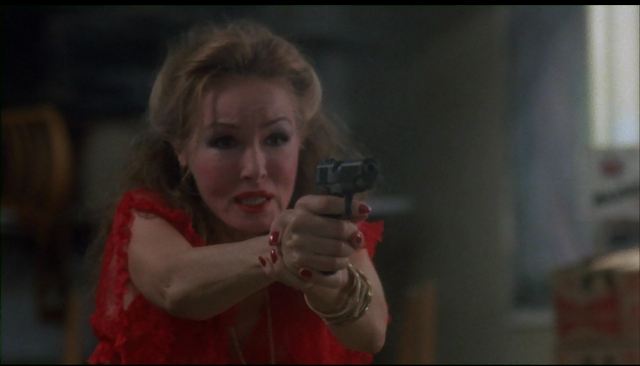
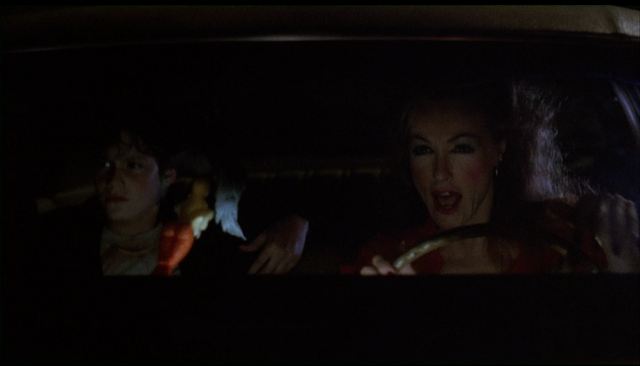
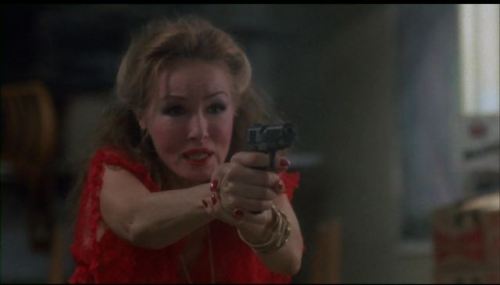
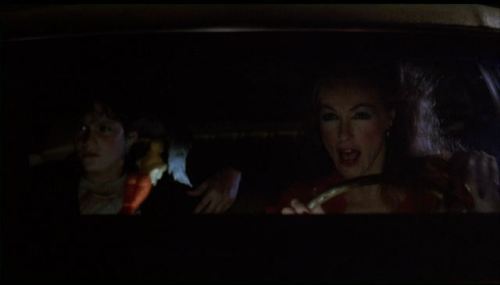
Newmar isn’t seen much in the first half, but comes on strong at the end. I loved seeing her shooting at Duke with a gun and when he escapes out onto the streets she gets into a car and tries running him down, which is pretty cool.  Having an older actress mixed in with a lot of younger ones creates a nice balance and hearing an actress who I grew up seeing on a kid’s show and now hearing her spew out the F-bomb is kind of funny.
Newmar4

Like I said personal taste will dictate whether you like this or not, but it is interesting to note that besides Leo and Midkiff a lot of other young performers got their start here, which then blossomed into successful careers. The others include: Randall Batinkoff, Greg Germann, Khandi Alexander and Leon, which is impressive and should make this a much sought after curio by fans who wish to see their favorite actor when they were just starting out.

My Rating: 6 out of 10

Released: September 20, 1985

Runtime: 1Hour 26Minutes

Rated R

Director: Joan Freeman

Studio: Concorde Pictures

Available: VHS, DVD

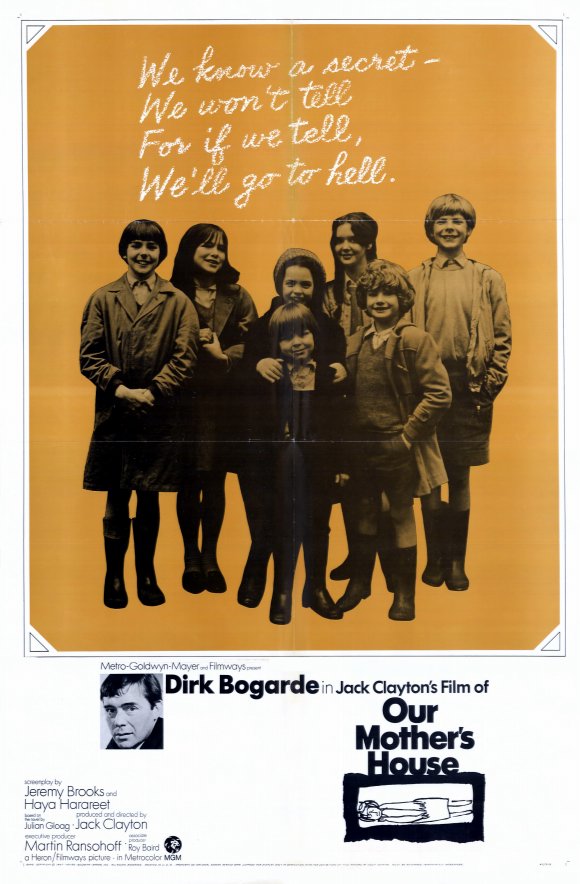
Our Mother’s House (1967)

our mothers house 1

By Richard Winters

My Rating: 6 out of 10

4-Word Review: Life after mother dies.

Seven children live with their mother inside a large English house. She is sickly and when she dies they decide to keep it a secret by burying her body in the back garden and then continuing on as normal as they fear they will otherwise be sent off to an orphanage. Things go surprisingly well for the most part, but then their alcoholic father Charlie (Dirk Bogarde) reappears after a long absence, which sends everything spiraling out of control.

Director Jack Clayton lends an amazing amount of control and freedom to the child performers and the result is fantastic. The kids give solid performances and really carry the movie. Margaret Brooks as Elsa is a standout and shows great maturity especially with the way she stands up to the Bogarde character. Phoebe Nicholls is also terrific and looks like a young Sandy Dennis. Mark Lester did this just before doing his star turn in Oliver and he is cute, but his stuttering is annoying.

Although the character is obnoxious, one-dimensional and predictable Bogarde does a fine job as always in his part in what was a bit of an offbeat turn for him as he doesn’t appear until about forty-five minutes in. Yootha Joyce is entertaining with her bit as the children’s callous nanny. She has interesting facial expressions and voice tones, which makes the most of her otherwise small role. She is probably most famous for playing the equivalent of the Mrs. Roper character in the British version of ‘Three’s a Company’, which was ‘Man about the House’ and it is a shame that alcoholism cut both her career and life short.

The film weaves an interesting atmosphere and this is the type of story where you have no idea where it is going. I also liked some of the side diversions that Clayton incorporates including having the children take a boat ride around the famous Dinosaur Court in the Crystal Palace Park. Erected in 1854 these were the very first dinosaur sculptures ever made in the world.

I also found it interesting that there are scenes showing the children praying and even reading Bible verses. This is not a spiritual film in any way and I personally have no stand on the issue, but it brought to mind how mainstream films today never show anyone ever praying even though a lot of regular people still do it and by putting it into the story it makes it more realistic instead of less.

The only real issue that I had with the movie that otherwise has some very intriguing elements is the ending, which comes pretty close to being a copout and leaves way too many loose ends open.

My Rating: 6 out of 10

Released: October 9, 1967

Runtime: 1Hour 44Minutes

Not Rated

Director: Jack Clayton

Studio: MGM

Available: YouTube

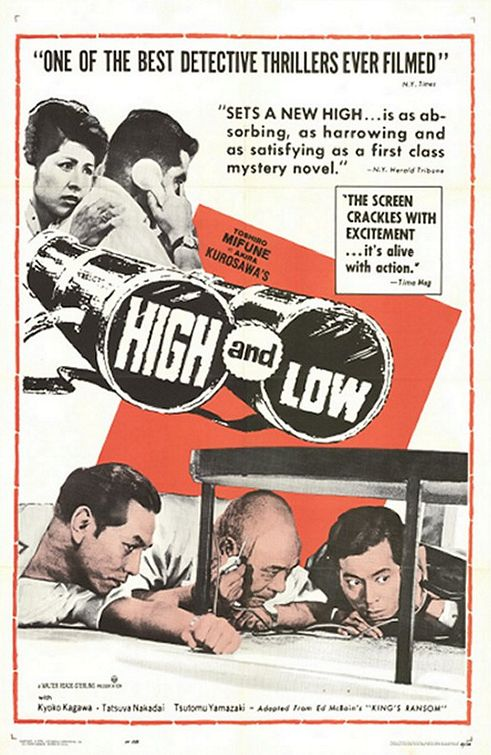
High and Low (1963)

high and low

By Richard Winters

My Rating: 7 out of 10

4-Word Review: Pay ransom go bankrupt.

Kingo (Toshiro Mifune) is an executive of a shoe company who finds out that his chauffeur’s son has been kidnapped and comes under tremendous pressure to pay the ransom even it will make him bankrupt.

As with all of Akira Kurosawa’s films the production values are solid and the story is well paced. The very methodical police work and investigation is interesting and enlightening. It’s certainly nothing like today’s CSI shows, but well done for its period. The ending scene where Mifune faces the kidnapper leaves a strong and memorable impression.

However, on the negative side the set-up to the kidnapping happens too quickly without any type of buildup or tension. Almost the entire first hour takes place inside the living room of Kingo’s hilltop house and it would’ve helped to have some cutaways to other locales.  Mifune, who is billed as the star and gives a great performance disappears during the second hour only to finally reappear at the very end and I felt it would’ve been stronger had he been involved more in the investigation. Also, the revealing of the kidnapper is unexciting and a big letdown.  I had a hard time understanding why a guy who was so very crafty and sophisticated in every facet of his planning of the kidnapping would suddenly get so conveniently dumb and sloppy at the very end.

This is a decent Kurosawa entry, but in my opinion not one of his best. Yet it is still good enough to keep you captivated from beginning to end.

My Rating: 7 out of 10

Released: March 1, 1963

Runtime: 2Hours 23Minutes

Not Rated

Director: Akira Kurosawa

Studio: The Toho Company

Available: DVD, Blu-ray (The Criterion Collection)

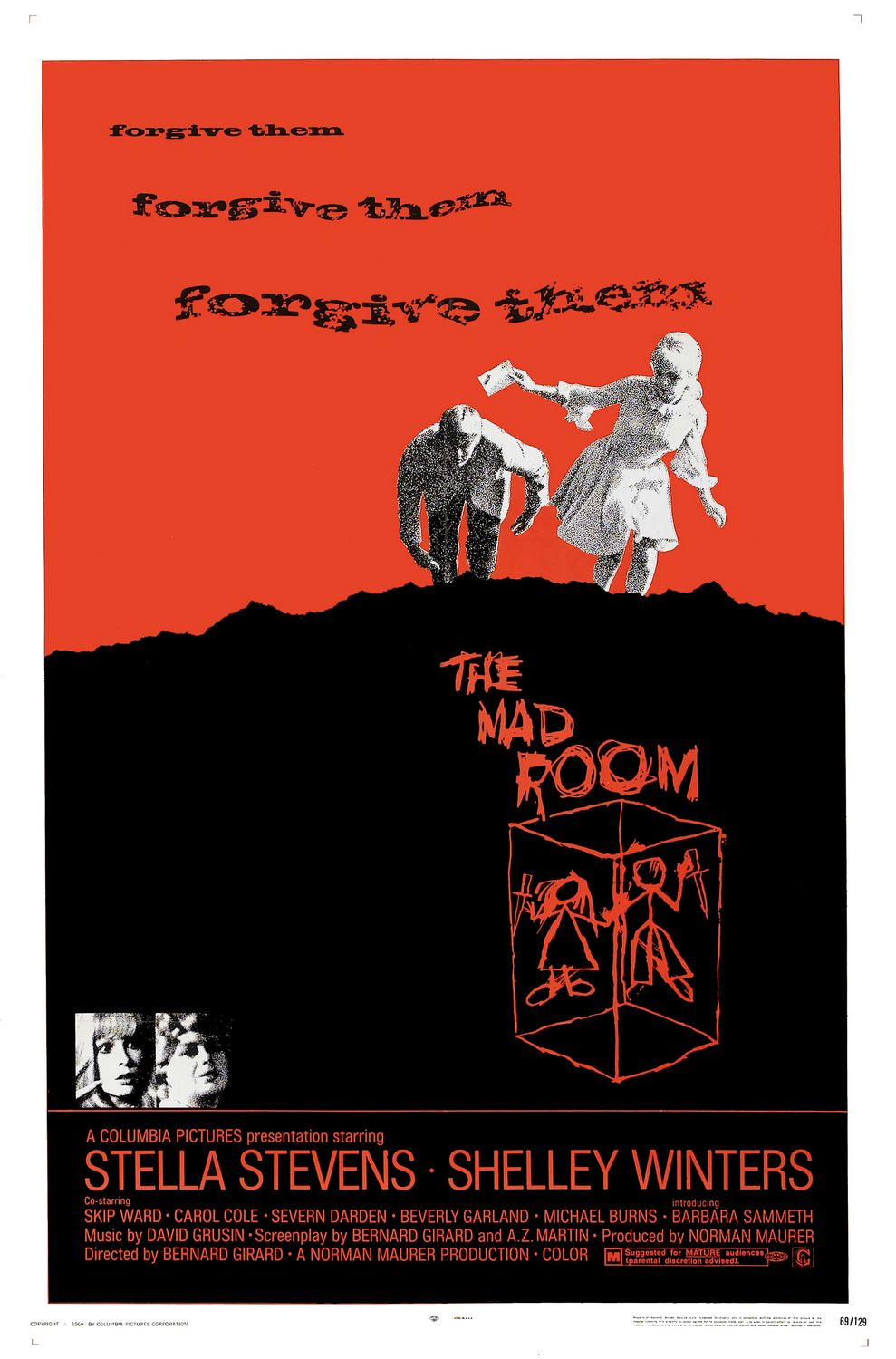
The Mad Room (1969)

the mad room

By Richard Winters

My Rating: 4 out of 10

4-Word Review: Children murder their parents.

In 1957 George (Michael Burns) and Mandy (Barbara Sammeth), a brother and sister ages 6 and 4, murder their own parents in cold blood. No one knows for sure which one of them did it except that their older sister Ellen (Stella Stevens) witnessed them standing over their dead bodies in blood soaked clothes. It was her testimony that got them locked away into a mental institution, but now 12 years later they are set free into Ellen’s care. Ellen is now living with and working for wealthy widow Mrs. Armstrong (Shelley Winters) who agrees to allow the children to move in to her sprawling mansion, but then the murders begin to reoccur, but this time Ellen decides to cover up for them in order to avoid the humiliation and publicity.

This film, which is a remake of 1941’s Ladies in Retirement starring Ida Lupino, starts out with a bang by using some interesting visuals during the opening credit sequence. We are also shown flowers finger painted by the children using the dead parent’s blood on the walls of the victim’s bedroom, which I felt sent this thing to unprecedented darker depths especially for its time period. Unfortunately the film cannot sustain its initial momentum and devolves into a talky script that lacks much action or scares. Director Bernard Girard’s stylish direction keeps it watchable, but the film fails to achieve its full potential. Dave Grusin’s excellent music score manages to keep the tension going even when the script can’t.

Stevens looks gorgeous, but unfortunately her acting is sterile. Her wide blue eyes seem to reflect her empty performance and her presence weakens the film. The younger performers who play her brother and sister upstage her particularly Sammeth in her film debut.

I have always loved Winters as a character actress, but her goofy character hurts the dark undertones at least at the beginning. She does improve as it goes along and I enjoyed the way she reacts when Ellen tells her about her sibling’s dark secret and I was disappointed she didn’t remain through the film’s entire duration. Beverly Garland is a scene stealer as an embittered alcoholic wife who makes a big stink at a party and then a little later commits a shocking act.

If there is one thing that really ruins the movie it is the lame, limp ending, which has to be one of the most uneventful finales I have ever seen especially for a thriller. When the credits started to roll I literally did a double-take and asked myself. That’s it?? We just sat through 95 minutes of buildup just for that?? This was also another film where I figured out its twist ending long before it happened and when the ‘surprise’ revelation does come about it is unexciting and even anticlimactic.

My Rating: 4 out of 10

Released: May 1, 1969

Runtime: 1Hour 33Minutes

Rated M

Director: Bernard Girard

Studio: Columbia Pictures

Available: DVD, Amazon Instant Video

Strait-Jacket (1964)

strait jacket

By Richard Winters

My Rating: 6 out of 10

4-Word Review: Giving them the ax.

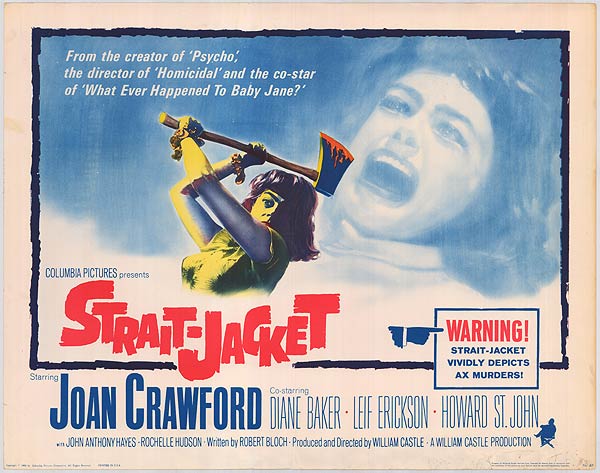
Lucy Harbin (Joan Crawford) comes home early one night from a trip only to find her husband Frank (Lee Majors in his film debut) in bed with another woman. This enrages her so much that she grabs an ax and chops off both of their heads all while in front of her young daughter.  After being institutionalized for 20 years she is released and sent home to live with her now grown daughter Carol (Diane Baker). Unfortunately the ax murders begin happening again and all signs seem to point to Lucy having a bad relapse.

Director William Castle keeps the proceedings compact enough to be entertaining, but borrows too many elements from Psycho and What Ever Happened to Baby Jane? while also adding a few to many gimmicks. Having the setting take place on a rural hog farm gives it a little extra atmosphere. The wrap-up is nice, but halfway through the film I had already figured out the twist ending and thus making the final revelation not as shocking or interesting as I think the filmmakers intended.

I realize the gore factor here is quite sanitized when compared to today’s horror movies and yet the scene where Lucy axes her hubby is actually quite effective. We see the shadow of the husband’s body with his head popping off like a cork coming out of a wine bottle. Instead of cutting away like most other films do it cuts back to Joan’s face where she continues to whack and whack and whack while her eyes get wilder with rage, which in many ways makes this far better and more fun than most other ax wielding movie scenes.

The film also brings out an interesting loophole. Namely the fact that can a woman be considered crazy for wanting to chop off her husband’s head after finding out he is unfaithful or is she simply giving the two-timing cad his just desserts.

Baker is good in support and her face is adorable. Her restrained performance nicely compliments Crawford’s more hammy and histrionic one. In fact some may consider Crawford’s acting to be over-the-top and unintentionally funny, but on a camp level it is fun. I realize both her wig and clacking bracelets become a major plot point, but I disliked both. The wig makes her look too much like an old, haggard version of her famous Mildred Pierce character and the constant clacking from the bracelets becomes annoying.

It was interesting to see Leif Erickson cast as a family friend who tries to work with Lucy and her emotional instability as he was at one time the husband of Frances Farmer an actress who also suffered from mental illness and I kept one wondering the whole time whether he was channeling those experiences into his character here. George Kennedy can also be spotted, but his almost unrecognizable as he has jet black hair here, a much thinner frame, and a pair of buck teeth.

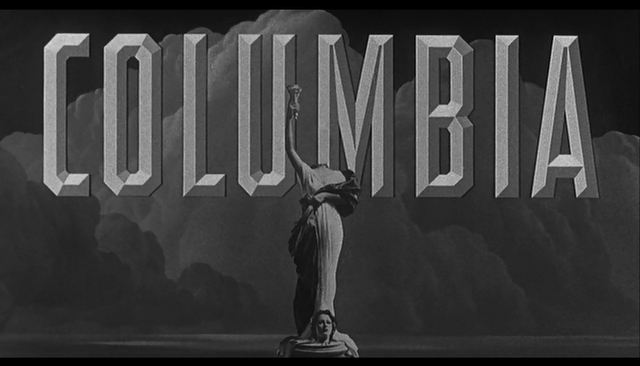
Probably the film’s best gimmick comes at the very end where the famous torch carrying lady on Columbia Pictures logo is seen with her head cut off and having it lying on the ground beside her feet.

Capture 334

My Rating: 6 out of 10

Released: January 19, 1964

Runtime: 1Hour 33Minutes

Not Rated

Director: William Castle

Studio: Columbia Pictures

Available: VHS, DVD, Amazon Instant Video