Category Archives: Surreal/Fantasy

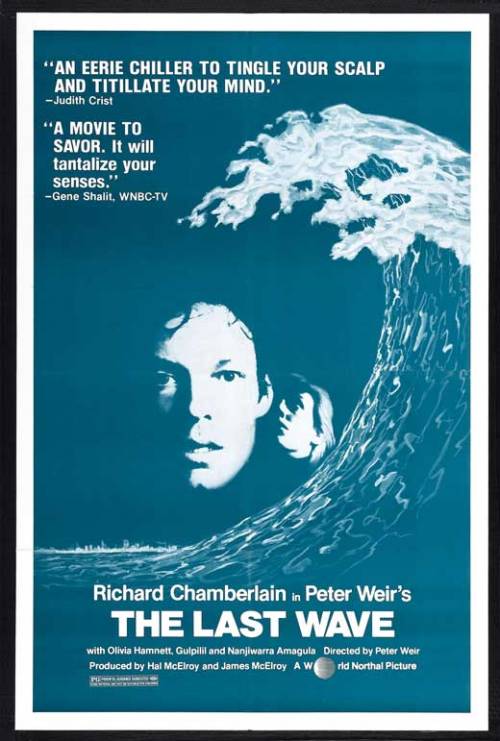
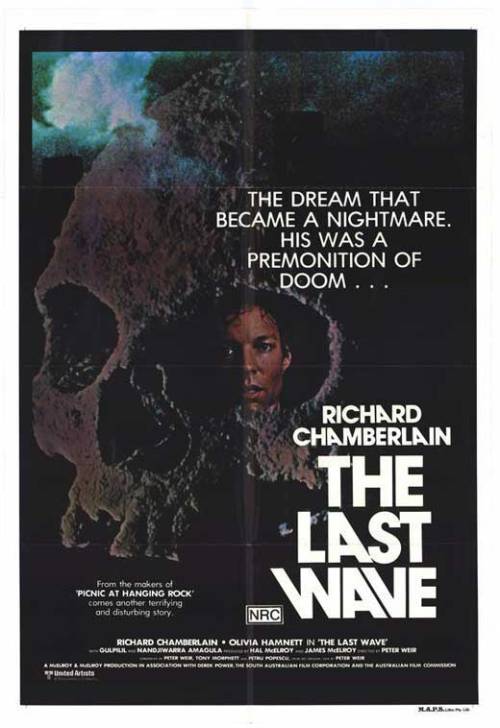
The Last Wave (1977)

last wave 2

By Richard Winters

My Rating: 6 out of 10

4-Word Review: Suffering from strange premonitions.

David Burton (Richard Chamberlain) is a lawyer working in Sydney, Australia who is hired to defend some aborigines that have been accused of murder. David’s specialty is taxation law and he feels overwhelmed in this new role, but still takes it on with an earnest dedication, but in the process begins to experience strange dreams and even sees one of his clients, Chris (David Gulpilil), in them. This coincides with weird weather events that begin occurring all over the continent including the phenomena of black rain. David can’t help but feel that somehow this is all connected and after doing extensive research finds that tribal aborigines have a belief system involving what they call dreamtime in which spirits from another world communicate with us through our dreams and David has been the chosen recipient due to his lifelong ability to dream of events in his sleep that eventually occur later in real-life.

The film, which is directed by the gifted Peter Weir, has terrific imagery that almost makes-up for its other shortcomings. There have been a lot of movies that have tried to create creepy nightmare segments, but the ones here work much better than most and gave this viewer an effectively spooking feeling. The silhouette of the aborigines in the pouring rain, the shots of a large seismic wave and use of tribal music all get used to ultimate effect. Even the rain storms become fascinating to watch. None of them were actual ones, but instead large firehoses were employed along with giant fans to create a sort-of surreal stormy effect that actually looked better than the real thing.

The story though borders on being convoluted and would’ve worked better had the movie been given a longer runtime. The first hour is spent with the viewer seeing a lot of strange events that make no sense and are given no explanation. It is only after about an hour in that some expert, who’s given no formal distinction to what their line of study is or degree, explains to David the importance that dreams have to the aborigine culture, which helps tie things together, but this should’ve occurred earlier as some viewers will probably find it too confusing and off-putting otherwise.

Chamberlain is his usual bland self, but okay in this type of role as it doesn’t demand anyone who is colorful. The character though is supposed to be this very pragmatic individual, but he seemed to buy into the mystical qualities of the aborigine belief system much too quickly. A person with a practical approach to life would most likely be quite cynical to the events as they first occurred and even reluctant to base any value on his own nightmares, at least initially.

The ending is a major letdown. For one thing we have the main character inside an ancient sacred site beneath a sewer system where he suddenly has to start ‘thinking out loud’ by explaining what he is seeing on the drawings along the wall even though the viewer could’ve figured this out for themselves without the ‘narration’. The ambiguous conclusion is frustrating and makes sitting through the rest of it feel like a big waste of time.
last wave 1

My Rating: 6 out of 10

Released: November 13, 1977

Runtime: 1Hour 45Minutes

Rated PG

Director: Peter Weir

Studio: Cinema International Corporation

Available: DVD (Criterion), Blu-ray (Reg. B), Amazon Instant Video
The Jogger (1988)

Capture 81

By Richard Winters

My Rating: 5 out of 10

4-Word Review: Jogging can be deadly.

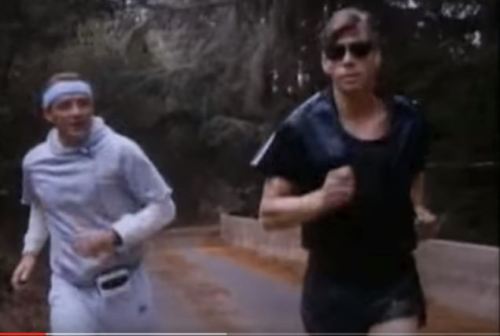
Jerry (Terry O’Quinn) is a high-strung businessman with a type A personality who has been told by his doctor to take up jogging to help relieve is stress and improve his health. Like with everything else he goes overboard with it. Jogging excessively until it becomes like a second job. One day while out on another one of his morning runs he comes upon another jogger (Tom Morga). Jerry decides to challenge the man to a race and he ends up winning it making him feel quite vindicated, but the other jogger does not take kindly to losing. He begins to chase Jerry around the park while attempting to stab and kill him. When Jerry is finally able to make it back to his house he realizes that the jogger has followed him and he continues with his assault. In fact wherever Jerry goes the jogger follows making him believe that he will not be able to get rid of him unless he fights back.

For a low budget short film this isn’t too bad. The editing and camerawork is crisp and professional. We get a good idea of Jerry’s character in a short amount of time and it’s great seeing O’Quinn in an early role. The action is exciting and there is enough tension to keep it interesting. There are even a few genuine unexpected jolts and a surprise ending.

The story initially seems original, but as it progresses you realize that it is just another retelling of the classic ‘The Twilight Zone’ episode entitled ‘The Hitch-Hiker’ in which the Inger Stevens character is constantly hounded by a mysterious hitch-hiker who turns up wherever she goes. The surreal elements that get thrown into this thing don’t help and I would’ve liked something that had stayed more realistic and been more subtle. Yet it’s still enjoyable enough for its short running time and some may find the scenario to be more creative than I did.

My Rating: 5 out of 10

Released: 1988

Runtime: 25Minutes

Director: Robert Resnikoff

Available: None at this time.

Il Piccolo Diavolo (1988)

il piccolo 2

By Richard Winters

My Rating: 6 out of 10

4-Word Review: Priest befriends a demon.

Father Maurice (Walter Matthau) is a tired and aging priest who is beginning to question both his faith and existence. One day he is called to exorcise a demon from an older woman and when he does so out pops a funny looking man named Giuditta (Roberto Benigni) who claims to be the demon. At first Father Maurice does not believe him, but after seeing that Giuditta’s reflection does not appear in a mirror he begins to realize that he is dealing with some spirit from another realm. His attempts at trying to get rid of him are futile and eventually he learns to enjoy the companionship that Giuditta offers and even considers him to be a strange blessing in disguise.

There have been many parodies done of The Exorcist, but this one manages to be one of the better ones because it doesn’t stick with the formula. Instead it takes the possession angle and gives it a whole new spin while avoiding the clichés and becoming more like a whimsical character study instead of a horror rip-off.

Benigni, who also directed, is in top form and his naïve, child-like character is quite engaging and helps make him a solid scene stealer throughout. He even manages to do the impossible and upstage the always reliable Matthau, although for the record Matthau is still good and it’s fun seeing these pros with extremely contrasting acting styles work together with a chemistry that is surprisingly strong.

The film features many funny and original moments. One of my favorites is when Giuditta goes into a long, detailed conversation about being ‘inside’ the old woman for days on-end much to the shock of the staid priests at the dinner table who think he is referring to sex. Giuditta’s reliving himself late at night in a park in which his pee shoots out like water from a garden hose is hilarious as well as his over-infatuation with a the alarm on a man’s wristwatch while riding on a train.

Why this charming little gem of a movie has never been released in America despite its big name stars is hard to understand. The film’s only real drawback is that it inserts a romantic angle during the second-half in which Giuditta falls in-love with Nina, which is played by Nicoletta Braschi who later married Benigni in real-life. Although Braschi is amusing and shares Benigni’s child-like, offbeat persona, the camaraderie between Matthau and Benigni is what makes the film work and that is where the focus should’ve stayed.

My Rating: 6 out of 10

Released: July 3, 1988

Runtime: 1Hour 43Minutes

Not Rated

Director: Roberto Benigni

Studio Yarno Cinematografica

Available: VHS (English Subtitles), DVD (Italian Language only) (Region 0)

Big Top Pee-Wee (1988)

big top pee wee

By Richard Winters

My Rating: 2 out of 10

4-Word Review: Pee-Wee joins the circus.

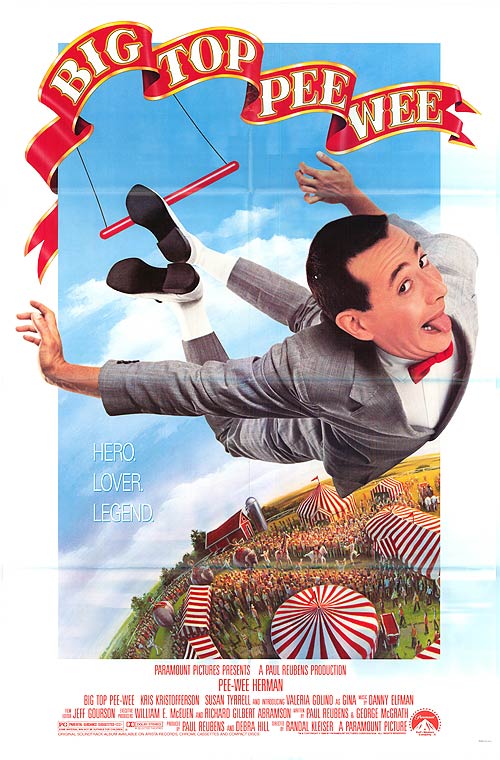
Pee-Wee (Paul Reubens) is now living the quiet life of a farmer. He’s not too popular with the older townsfolk of the neighboring small town where he resides, but manages to find friends with the circus that blows in after a violent storm. Although he is currently engaged to Winnie (Penelope Ann Miller), who is the beautiful local schoolteacher, he soon finds himself entranced with the trapeze artist Gine (Valeria Golino), which causes a great deal of conflict especially after Winnie finds out about it.

I’m not exactly sure why Tim Burton wasn’t brought in to direct this sequel and it could have something to do with the fact that a different studio produced it, but his vision is noticeably missed. Randal Kleiser has directed some good movies of his own, but never anything in this type of genre. It was Burton’s direction and not Pee-Wee’s persona, which is rather one-dimensional and can only be amusing in small doses, that made the first film the success that it was.  Burton infused a lot of garishly colorful sets, oddball characters that complemented Pee-Wees’, and a surreal storyline that all helped to make it strangely intriguing and funny, but here we get none of that.

Instead it is a contrived and conventional storyline that goes nowhere and just isn’t original enough to be worth catching. The first half comes off as disjointed and makes little sense. Pee-Wee seems to have gone back into time as the people in the town where he lives all wear clothes and drive cars that look that they are from the 1940’s, but with no explanation for why that is. The presence of the circus is equally stupid as it seems to have quite literally ‘blown in’ with the storm and into Pee-Wee’s backyard.

The film really gets boring when it focuses on the romantic subplot, which is what takes up the film’s whole second half. One big issue is why would two really beautiful women find this man-child attractive to begin with? A much funnier scenario that would’ve kept more with the bizarreness of the character would be for him to have a romance with one of the sideshow freaks at the circus like the bearded lady, or even the Siamese twins, which could’ve been played up to an even funnier level by having both twins in-love with him and compete for his affections, or having one in-love with him while the other couldn’t stand him.

In either case the film is just not weird enough to be entertaining and it also leans towards the formulaic by having most of its humor aimed at the kiddie crowd, which the first one had thankfully avoided. A definite letdown when compared to the first one.

My Rating: 2 out of 10

Released: July 22, 1988

Runtime: 1Hour 26Minutes

Rated PG

Director: Randal Kleiser

Studio: Paramount

Available: DVD, Amazon Instant Video, YouTube

O Lucky Man! (1973)

o lucky man

By Richard Winters

My Rating: 9 out of 10

4-Word Review: A young man’s journey.

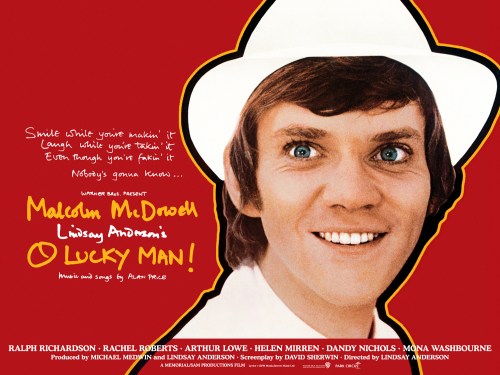
Mick (Malcolm McDowell) is a wide-eyed young man entering into the adult world and full of Horatio Alger-like illusions of working real hard and becoming insanely rich while doing it. His first job is as a coffee salesman where he is told that ‘the-sky’s-the-limit’ in regards to his earning potential, so with the carrot-on-the-string firmly in place he dives into it, but ultimately finds little to show for it. He then meets up with a rich tycoon ( Ralph Richardson) and essentially becomes the man’s lapdog assistant only to learn that this doesn’t work either. After spending time in jail he comes back out into the world as a ‘reformed’ man extoling on the idealistic virtues of humbleness only to again meet with aversion and failure.

The film, which is based on an original idea by McDowell, is essentially a broad look at society’s many socio-economic class levels and how easy it is to fall down it, but hard to move up. Some consider Glengarry Glen Ross to be the bleakest indictment on the sales profession, but having worked in the business when I was like the character here first getting out into the working world I can say that this one is even more searing and accurate.

On a wider scope the film successfully works as a critical statement on capitalism, which due to the purveying political climate of the day most American audiences are just now ready to catch up to. Mick’s journey is more his eventual disillusionment as he slowly realizes that being a ‘go-getter’ and having a ‘good attitude’ isn’t going to be enough as the system is rigged so that the individual is more likely to lose than win and can’t really function otherwise. His efforts then become exploited while helping to make someone else richer as he tolls in the bottom rung doing lateral moves into areas that have potential promise, but only produce the same results.

Although the character’s perpetual delusions of grandeur become a bit annoying McDowell plays the part well. The intent was for him to play against type from the one that he did just previously in A Clockwork Orange by portraying someone who is clean-cut, respectful and obedient, but with all the transitions that the character goes through and at one point even having him strapped to a chair in much the same way that he was in the Kubrick film it eventually comes off more like a continuation of that part than a completely different one.

The fun of watching the film is seeing the supporting cast playing dual roles. Arthur Lowe is great especially in the part where he gets put into heavy black make-up to play the leader of a fictitious foreign nation. Rachel Roberts is good too with the erotic scene where she transfers coffee from her mouth into McDowell’s and then later as a poor woman who commits suicide, which has a foreboding quality to it since Roberts ended up doing the same thing five years later in real-life.

Fans of Helen Mirren will enjoy seeing her when she was much younger and playing the part of a rebellious daughter. I also liked the way Alan Price and his band fits into the film. They do the movie’s soundtrack, which is quite good, but instead of having their music played over the action the movie cuts away and captures them doing their renditions inside a sound studio, which in any other case would be considered distracting, but here helps accentuate the film’s  already cerebral tone. It’s also amusing how the band ends up becoming a part of the story as the McDowell character almost gets hit by their van, which allows the opportunity for Price to say the film’s best line “Are we suing you, or are you suing us?”

The film is full of many surreal and original moments and is so consistently inventive that you hardly notice its three hour runtime. However, to me the best part about it is the way it attacks and criticizes the status quo, which is something that no Hollywood movie ever does.

My Rating: 9 out of 10

Released: March 26, 1973

Runtime: 2Hours 58Minutes

Rated R

Director: Lindsay Anderson

Studio: Warner Brothers

Available: DVD, Amazon Instant Video, YouTube

Eraserhead (1977)

Eraserhead

By Richard Winters

My Rating: 6 out of 10

4-Word Review: Couple has deformed baby.

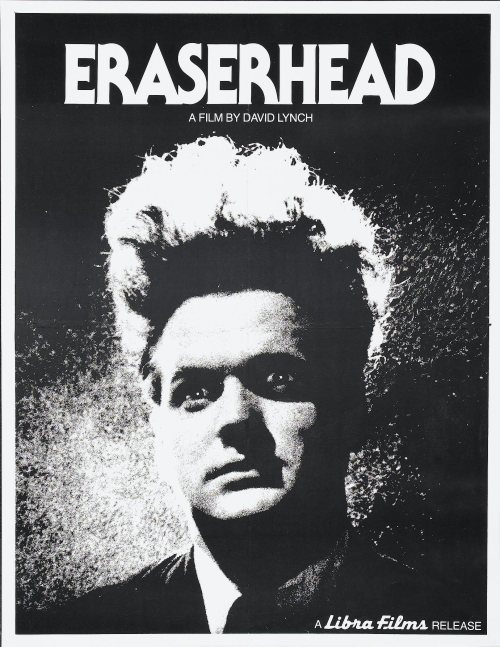
In David Lynch’s first feature length film, a movie that took almost 5 years to make and had a good deal of it financed by Sissy Spacek and her husband, we have a surreal almost cryptic-like tale detailing a lonely man named Henry (Jack Nance) and his ultimate descent into a madness as he is forced to take care of severely deformed child while also harboring the dark urge to kill it.

It is hard to say whether one can like or dislike this as it goes so far out of the conventional form of film narrative that it seemingly defies all genres and puts itself into a category all its own. On a sheer technical level it is quite impressive especially when you factor in its shoestring budget and array of production set-backs. Each scene is meticulously detailed with wild and unsettling imagery that on a purely visual level will be more than enough to leave an impact. Overall the film is cold, ugly and unyielding, but helped tremendously by Nance’s presence as a sort of detached everyman who seems as confused and aloof to his surroundings as the viewer.

To me the most jarring image is the baby, which is incredibly lifelike. Had it came off looking fake, or like some puppet or Claymation attempt the film would’ve been a failure, or deemed laughable, but this thing is freaky looking to the extreme and Lynch spares no expense in getting the camera close up to it, which could force some viewers to turn away. Supposedly it was made from the embalmed fetus of a calf, but no one knows for sure and the crew was forced to blind fold themselves when Lynch set it up, so the secret would never come out. Either way it is effective and it manages to move its eyes and mouth almost like it were real and coming off as far more authentic than any computerized effect.

Spoiler Alert!

Of course the most confounding thing about the film is its story and symbolism’s that can be interpreted in a million different ways depending on the viewer’s own perspective. For what it’s worth I’ll give you my interpretation, which isn’t that complicated. To me the deformed baby symbolizes Henry’s soul, which has been mangled by the soulless world that he lives in, which would explain why he is so extremely passive because he is simply a walking zombie. The scene where his head pops off and the ugly child’s head pops into its place only reinforces this. The lady that he sees in the radiator is an angel from heaven and the beautiful lady that lives across the hall from him is the devil who entices him with sex, but when she realizes he has no soul to take, just an ugly mangled remnant of one, which gets exposed to her when she sees him standing in the doorway, she quickly loses interest and moves onto someone else. When he finally kills the baby he is essentially killing himself, which then explains why he ends up in the final scene in heaven with the lady in the radiator.

The man in the planet that we see at the beginning represents Henry’s own subconscious as he quarrels within his mind at the thoughts of killing the child. The man could also represent the world at large and how it controls everyone with its levers, which when Henry finally kills himself they start to have sparks fly from them and the man struggles in containing them, which shows that Henry has now ‘broken free’ from the man and this world by taking his own life.

End of Spoiler Alert!

Some consider this a horror pic, but I found certain parts of it to be quite funny in a darkly humorous way particularly the segment where Henry goes to visit his girlfriend’s parents. To me the most horrifying thing about is the way it challenges the viewers to question their own morality by forcing them to face the difficult quandary or what they would do if put into the same situation as Henry and forced to care for a hideous looking baby that some would consider would be better off dead.

My Rating: 6 out of 10

Released: September 28, 1977

Runtime: 1Hour 29Minutes

Not Rated

Director: David Lynch

Studio: Libra Films International

Available: DVD (Criterion Collection), Amazon Instant Video

The Princess Bride (1987)

princess bride 1

By Richard Winters

My Rating: 7 out of 10

4-Word Review: Grandson likes bedtime story.

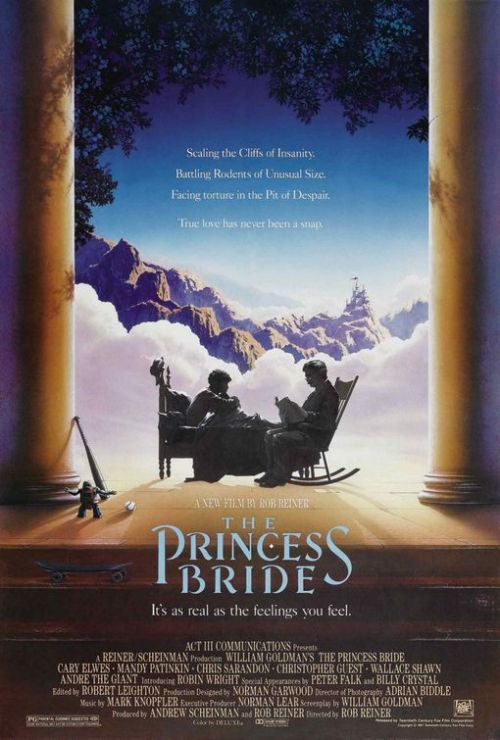
Based on the 1973 William Goldman novel, who also wrote the screenplay, a grandfather (Peter Falk) arrives to read to his sick grandson (Fred Savage) a fairytale. Initially the grandson is more interested in playing video games, but soon finds himself enraptured with the story despite his initial reluctance. The tale involves a country girl named Buttercup (Robin Wright) who falls in love with a farmhand named Westley (Cary Elwes). When Buttercup mistakenly thinks that Westley has been killed by some pirates she agrees to marry Prince Humperdinck (Chris Sarandon) only to end up getting kidnapped before her wedding and saved by Westley who was never dead to begin with. The two then must fight off the evil Prince who still insists on marry Buttercup and doing away with Westley.

The film, which was directed by Rob Reiner and produced by his former ‘All in the Family’ creator Norman Lear, is engaging from beginning to end and filled with endlessly funny dialogue and exciting adventures that remain pleasantly amusing throughout. My favorite moment is seeing a completely unrecognizable Billy Crystal hamming it up as an old man magician who tries to revive Westley while sounding like a comedian from vaudeville.

The special effects are impressive especially the shot showing Buttercup’s three kidnappers climbing a rope up a steep mountain while being followed close behind by Westley. To me though the best part is when Westley gets attacked by what appears to be a giant rodent that, with the exception of his fake looking fur, looks amazingly real and not like a stuntman in a body suit or a computerized image.

The performers are well cast with my favorite being former wrestler Andre the Giant who steals it despite having no acting experience and at times difficulty enunciating his words. The only negative is Christopher Guest as a six fingered man who supposedly attacked the Mandy Patinkin character when he was a child, but now that Patinkin has grown he faces Guest again even though Guest looks to be practically his same age and not someone who should be significantly older.

The story is basic and lacks the grandiose and dark quality that many of the classic Grimm fairytales possess. The banter between the grandson and Grandfather is fun and I wished it had cut back-and-forth between the two and the story more often than it does. The context is simple and straight forward and its ‘message’ of teaching kids to learn to enjoy reading is a bit too obvious, but overall as non-think escapism it scores a bullseye and through the years has managed to acquire a strong cult following.

My Rating: 7 out of 10

Released: September 25, 1987

Runtime: 1Hour 38Minutes

Rated PG

Director: Rob Reiner

Studio: 20th Century Fox

Available: VHS, DVD, Blu-ray, Amazon Instant Video, YouTube


The Raven (1963)

raven 2

By Richard Winters

My Rating: 6 out of 10

4-Word Review: The search for Lenore.

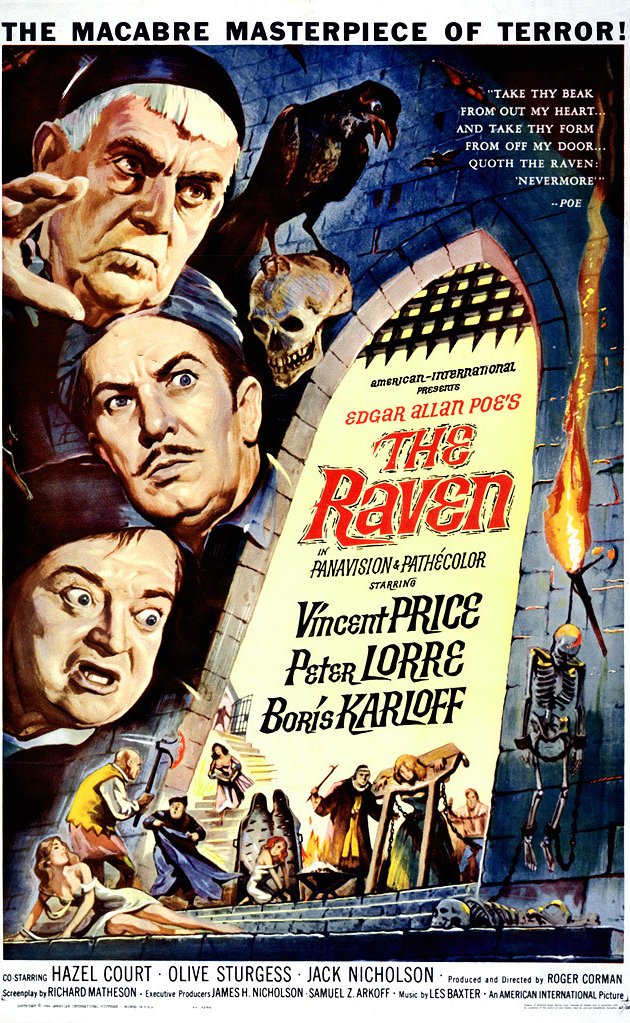
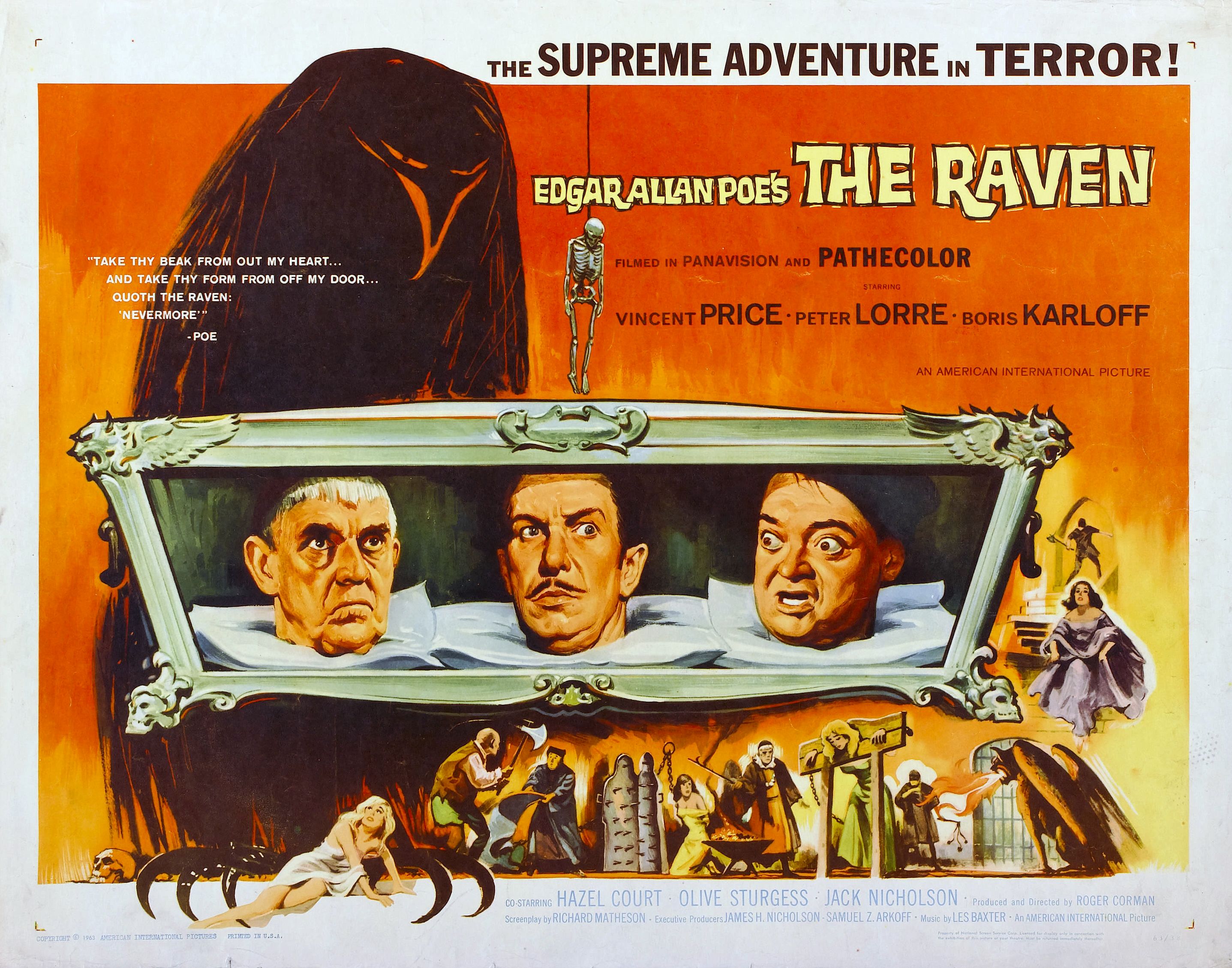
Dr. Craven (Vincent Price) is a former sorcerer who one night is visited by a talking raven. The raven is actually Dr. Bedlo (Peter Lorre) who has been turned into a bird by the evil Dr. Scarabus (Boris Karloff). Craven manages to concoct a potion that allows Bedlo to turn back into his human form and in appreciation he tells Craven that he has seen Lenore (Hazel Court), who Craven was once married to and was thought to be dead, living with Scarabus in his castle. Craven decides to pay Scarabus a visit to see if this is true and brings along his daughter Estelle (Olive Sturgess) as well as Bedlo and Bedlo’s son Rexford (Jack Nicholson). When they arrive they are greeted by the conniving wizard who at first denies any wrongdoing, but it soon becomes clear that he is jealous of Craven’s powers and wants to attain them for himself, which leads to a climactic cosmic duel between the two sorcerers.

This film marked the fourth collaboration between writer Richard Matheson and director Roger Corman and for the most part it is an entertaining success. The two apparently had so much fun creating the comic story of ‘The Black Cat’ in Tales of Terror trilogy that they decided to do a feature length horror/comedy that is very loosely based on the Edgar Allan Poe poem. Despite being shot in only 15 days the film isn’t as limited by Corman’s usual low budget constraints and I was genuinely surprised how imaginative the special effects where and the overall impressive background sets.

The film’s biggest boost is clearly the three lead actors who are all at their absolute peak. I especially enjoyed Lorre who brazenly steals every scene he is in and ad-libbed many of his funny lines much to the consternation of his co-stars. In fact if Lorre wasn’t in this it wouldn’t have been half as enjoyable. A young Nicholson as his son is equally entertaining and the frosty relationship that the two characters have was apparently a carry-over from how they felt about each other from behind-the-scenes.

Some of the effects are clearly animated, which looks tacky and as the group arrive at Scarabus’ castle one can see that the place is merely a painting matted on the screen. The story also does have its share of lulls, but all of this gets forgiven by the climactic sorcerer’s duel, which is the film’s highlight.

raven

My Rating: 6 out of 10

Released: January 25, 1963

Runtime: 1Hour 26Minutes

Not Rated

Director: Roger Corman

Studio: American International Pictures

Available: VHS, DVD, Amazon Instant Video

Splash (1984)

splash 2

By Richard Winters

My Rating: 5 out of 10

4-Word Review: Man falls for mermaid.

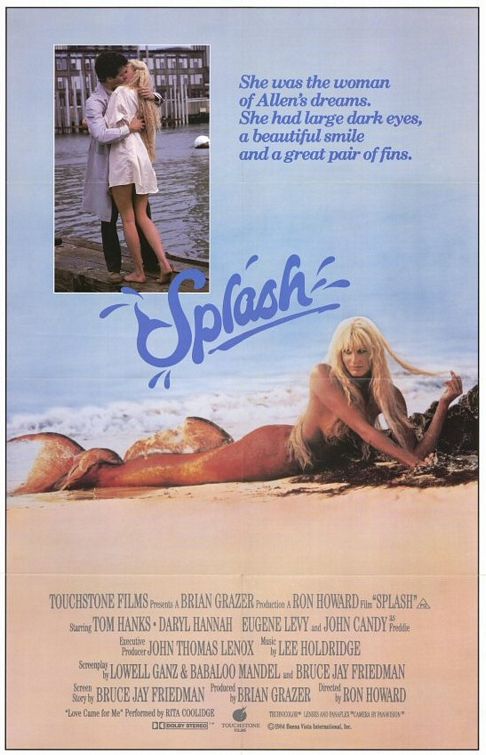
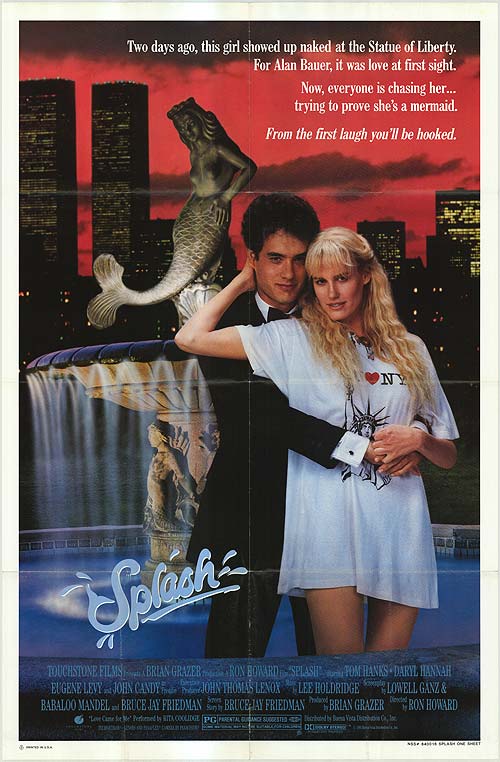
Allen (Tom Hanks) is stuck in a hapless job and a string of loveless relationships. After his last live-in girlfriend leaves him he becomes convinced that he will never find true love. Then on a whim he takes a trip to Cape Cod and goes out into the harbor in a small boat despite not being able to swim. When the engine conks out and he attempts to restart it he gets knocked into the water and his saved by a mysterious mermaid (Daryl Hannah). He returns to his New York home and mundane life only to find that the mermaid has sprouted legs and followed him. Allen doesn’t recognize the woman as the one who saved him, but he’s immediately smitten by her beauty nonetheless. They start up an awkward relationship, but when Allen proposes marriage she tells him she can’t as she has a dark secret, which is the fact that when she gets wet her legs turn into fins.

This was Ron Howard’s third foray behind the camera on a theatrical film and for the most part it’s a success. I enjoyed the mix of fantasy and surrealism and a love story that is cute, but not too cute. I loved the big city ambience including a scene involving classical street musicians and a visit to an outdoor ice skating rink. The climatic car chase through the downtown is funny especially when a group of soldiers manually overturn a taxi cab that is in their way.

Unfortunately the script, which is credited to four different writers, is full of major loopholes that to me ended up getting in the way of my enjoyment. I realize as a budding/struggling screenwriter that it is difficult to write a plot that is completely logical in every way and every story even the really good ones will usually have a few minor implausibility’s that one can overlook and forgive, but this one goes way beyond that.

For one thing I thought it was absurd that this mermaid who knew nothing of the English language when she came could somehow learn the language in one day simply by watching television. Yes, she may be able to pick up on some words, but to be able to learn their meanings and context is another story that just wouldn’t be possible for anyone to realistically grasp in such a short period of time. Besides I thought it was more interesting when she didn’t speak and it could’ve worked on that level alone. And while we’re at it who ended up paying for all those televisions in the department store that she destroys while in front of the sales staff when she states her name in such a high pitch that it explodes all of the screens?

I was also confused how the Eugene Levy character was able to track down the Hannah character and able to stalk her in his attempt to get her wet and expose her as a mermaid. He initially spots her under the ocean, but then later reads about her in a newspaper, but the article did not mention her name or whereabouts because at the time she hadn’t reconnected with Allen, so how would he know where to find her especially in the big, congested metropolis of New York?

I also had trouble with the scene where John Candy, who plays Allen’s brother, helps the Levy and Allen sneak the mermaid out of a science lab, but then ends up staying to take the blame while the others leave. The Candy character had no invested interest in the mermaid and came along only to help out, so why should he be the fall guy, or even agree to it?

Spoiler Alert!

There is also a scene where the mermaid buys Allen a giant water fountain and has it placed in his bedroom, which makes no sense because the doorway was clearly not big enough to get any of it through it. My biggest beef though is with the ending where the viewer learns that as long as Allen is with the mermaid he will be able to breathe underwater without any apparatus, which defies all laws of physics and seems thrown in to appease the hopelessly romantic masses who will buy into any contrived ‘happy ending’ no matter how utterly illogical. In some ways the idea that he couldn’t go with her and she would come back to visit him on occasion would’ve worked better because then they wouldn’t have to be with each other 24/7, which usually ends up being the cause of most break-ups anyways.

End of Spoiler Alert!

There is also the issue of how the mermaid manages to sprout human legs. Apparently there is a scene in the special edition DVD showing an old sea hag casting a spell on the mermaid, which allows her to have legs, but only for a short time. This scene was cut from the original release, which was a mistake as it was necessary to help explain the rest of the plot.

The movie does have its share of good points especially the casting of Hannah who seems born to play this role, but the truly great films do not require the viewer to overlook so many logic loopholes and unanswered questions in order to enjoy it.

splash 1

My Rating: 5 out of 10

Released: March 9, 1984

Runtime: 1Hour 51Minutes

Rated PG

Director: Ron Howard

Studio: Buena Vista

Available: VHS, DVD, Blu-ray, Amazon Instant Video, YouTube

Hello Again (1987)

hello again 4

By Richard Winters

My Rating: 3 out of 10

4-Word Review: Her life after death.

Lucy (Shelley Long) is married to Jason (Corbin Bernsen) a well-off plastic surgeon, but finds that she doesn’t fit in with his snobby clientele and feels out-of-place whenever she tries to hang out with them at dinner parties. She turns to her wacky friend Zelda (Judith Ivey) who dabbles in the occult, but her spells and magic do little until Lucy chokes on a chicken ball and Zelda is able to magically bring her back to life one year later. Now Lucy finds a new lease on things. Jason has gotten remarried to her former friend Kim (Sela Ward) and she uses this news to find a new love of her own and she’ll have to do it quickly because if she doesn’t find true love by the next full moon she’ll go right back to being dead again.

This is the second collaboration between director Frank Perry and writer Susan Isaacs and while their first effort Compromising Positions was just barely passable this one doesn’t even make it to that level. The script is unable to settle on any type of genre as it dabbles in drama, romance, comedy, social satire and fantasy, but ends up being only shallow nonsense in the end. A few of the tangents that it takes has potential to be interesting, but then it doesn’t go far enough with it. The comedy is light and inconsistent with the funniest moment being the one that was shown in its trailer where Lucy comes back to life and finds her shocked husband and friend in bed together and after that there’s very little else that’s even mildly amusing.

The fantasy elements are poorly thought out and leave a lot of unanswered questions. The climactic showdown between Lucy and Kim is flat and the caricatures of the rich and snobby crowd are clichéd to the extreme. I also didn’t find the scene where she chokes on a chicken ball to be a laughing matter as according to government statistics over 3,000 people in this country choke to death each year and if they really wanted to create some sort of goofy death it should’ve been something much more over-the-top.

Long isn’t leading lady material. Her image is so ingrained with the uppity and prim Diane Chambers persona from ‘Cheers’ that having her portray someone who is kind and humble comes off as insincere and phony and her attempts at being a comical klutz is annoying and completely unfunny.

This was Perry’s final directorial effort. He burst onto the film scene in the ‘60s and showed flashes of brilliance and new age vision, but his career declined markedly once he divorced from his screenwriter wife Eleanor and the stuff he did afterwards was barely even worth a look. He eventually was diagnosed with cancer and spent the last years of his life battling the disease and in 1995 even made a documentary about his fight called On the Bridge, which was far more compelling than this tripe.

My Rating: 3 out of 10

Released: November 6, 1987

Runtime: 1Hour 36Minutes

Rated PG

Director: Frank Perry

Studio: Buena Vista Pictures

Available: VHS, DVD, Amazon Instant Video, YouTube