Category Archives: Road Movies

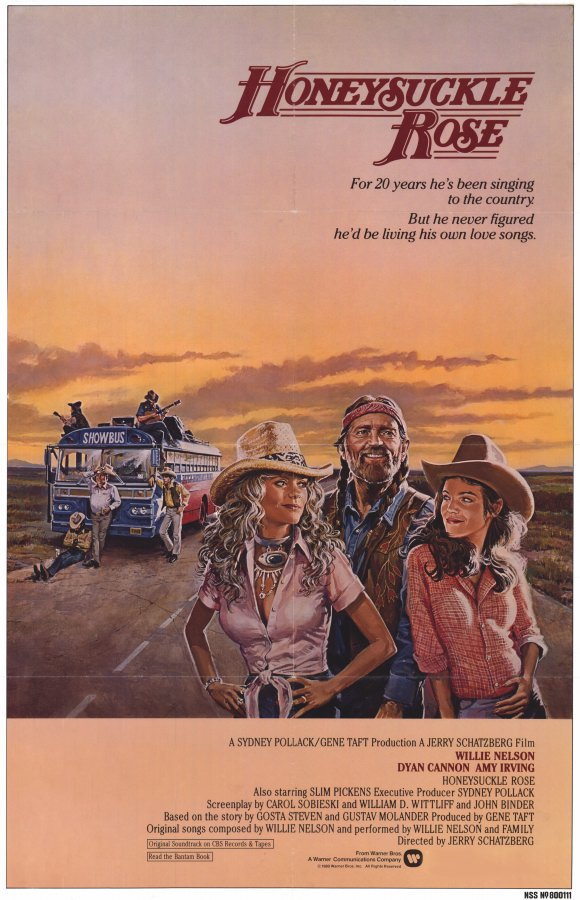
Honeysuckle Rose (1980)

honeysuckle rose

By Richard Winters

My Rating: 4 out of 10

4-Word Review: On the road again.

Buck Bonham (Willie Nelson) is a country music singer who enjoys life on the road traveling to different concert venues with his band much to the consternation of his wife Viv (Dyan Cannon) who wants him to stay home more and help raise their child. When his longtime guitarist Garland (Slim Pickens) decides to retire they bring in Garland’s daughter Lily (Amy Irving) as a temporary replacement. Then Buck starts fooling around with Lily, which creates turmoil both with Buck’s relationship with his wife as well as Lily’s relationship with her father.

After his successful stint in Electric Horseman this film was supposed to send Nelson to the next level as a leading man, but fails miserably because the guy just can’t act. In fact he conveys his lines in such a laid back manner it’s almost like he’s half-asleep and not even there. His screen presence is nil and he ends up being badly upstaged by both Cannon and Pickens. I realize he is considered a country music legend and has many adoring fans, but personally his trembling voice type of singing is not for me. Out of the many, MANY songs that he sings during the course of this picture the only one I even remotely liked was ‘A Song for You’ and even then I consider the Leon Russell version to be far superior.

The film like its star is too laid back. It takes a full 30 minutes before we get anything even resembling a plot going. There’s lots of concert footage and scenes taken on their traveling bus, which to some extent gives the viewer a good taste of what life on the road is like, but then it becomes excessive. It’s almost like a concert movie with the slightest of plots intermittingly mixed in for good measure. The story itself is too obvious and takes too long to play out and then when it finally gets going and we have some actual dramatic tension it then resolves too quickly.

Cannon is pretty good and even does her own singing. Irving on the other hand seems in-over-her-head and looks quite uncomfortable playing on stage. She got nominated for a Razzy award for worst supporting actress and I felt it was well deserved. Rodeo clown-turned-actor Pickens is super in one of his best roles that allows him to show both his comedic and dramatic side. Lane Smith is hilarious in a brief, but funny stint as an aggressive agent looking to get his client, a guitarist who wears some very loud suits, into the band while also trying to push some cheesy money making schemes on the side.

The part where Pickens attacks Nelson with a gun and chases him all around a lonely beach is amusing as is their drunken bus ride along an isolated Mexican highway. I also liked Irving meeting with her father after the secret of her affair has come out as well as her moment of apology to Cannon, but this all comes during the film’s final 20 minutes. Before then it’s just a lot of stock footage of Nelson on stage, which is nice if you enjoy his singing, but not if you’re looking for an actual movie, which at times this barely seems to be.

My Rating: 4 out of 10

Released: July 18, 1980

Runtime: 1Hour 59Minutes

Rated PG

Director: Jerry Schatzberg

Studio: Warner Brothers

Available: VHS, DVD, Amazon Instant Video

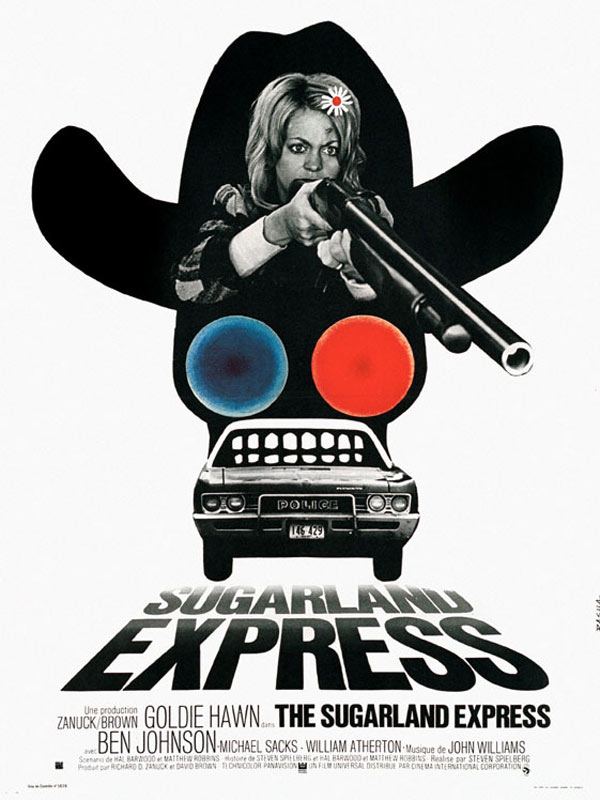
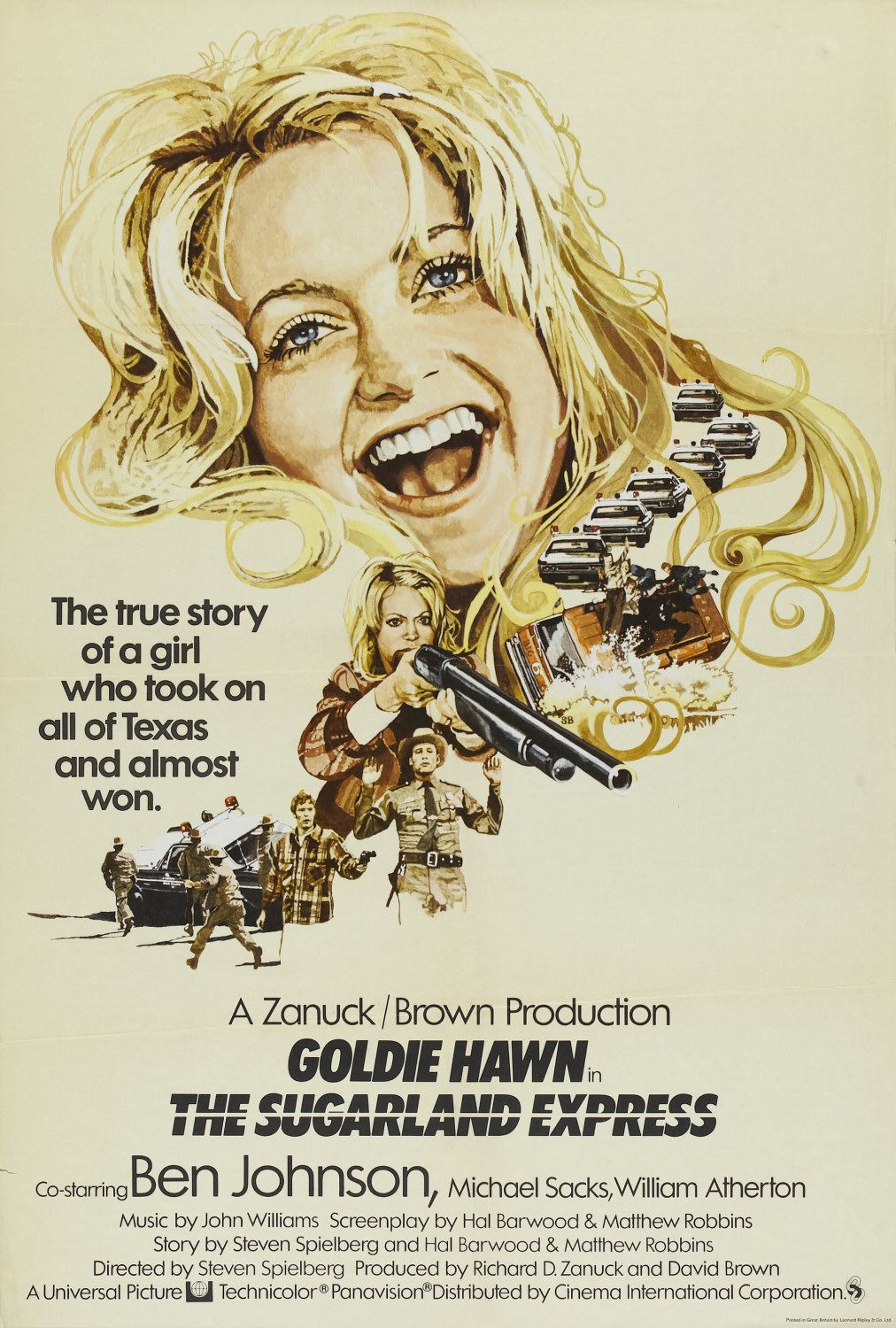
The Sugarland Express (1974)

sugarland express 4

By Richard Winters

My Rating: 7 out of 10

4-Word Review: She wants her baby!

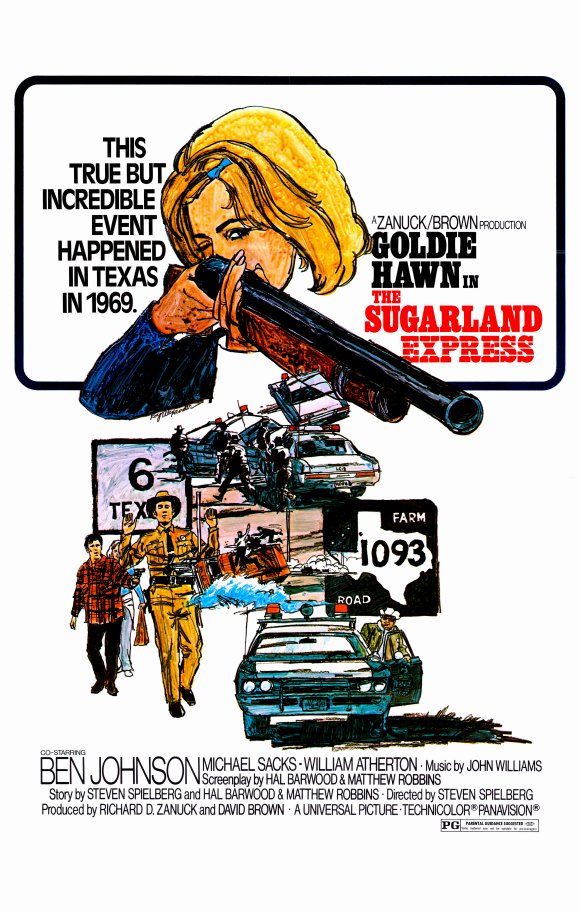
When her baby is put into a home with foster parents Lou Jean (Goldie Hawn) will have nothing of it and helps her husband Clovis (William Atherton) break out of pre-release prison in an attempt to steal the child back. The two hitch a ride with an older couple (A.L. Camp, Jessie Lee Fulton), but when the car gets pulled over by Officer Maxwell Slide (Michael Sacks) they panic and drive off. The officer is able to track them down when their car crashes, but when he goes to investigate the accident Clovis pulls the officer’s own gun on him and uses it to take him hostage. They speed off in his patrol car, which soon gets the entire Texas Highway Patrol after them as well as creating a media frenzy in a slow moving car chase that spans 2-days and 300 miles.

This film marks director Steven Spielberg’s full-length theatrical feature film debut and the result is highly entertaining. He takes an odd moment in history and helps infuse a playful quirkiness to the proceedings while also gently nudging the Texas stereotype. The music by John Williams and especially the harmonica solos by Toots Theilemans help cement the mood and tone. This is also the first film to use a panaflex camera and the first ever to feature a tracking shot from inside a car.

There are enough original and humorous scenes to make this well worth catching. The scene in which the police bring in a Porto potty so Lou Jean can stop and take a pee is hilarious as is the moment where their car runs out of gas and Captain Harlan Tanner (Ben Johnson) who is technically ‘chasing’ them must push their car with his to the nearest gas station. The impromptu TV interview done during the chase is great as is the first CB conversation that Tanner has with the three inside the patrol car. The best moment though is when they go through a small town where the main street is lined with onlookers and well-wishers who hand the three all sorts of gifts and encouragement through the car windows as they slowly drive through.

sugarland express 2

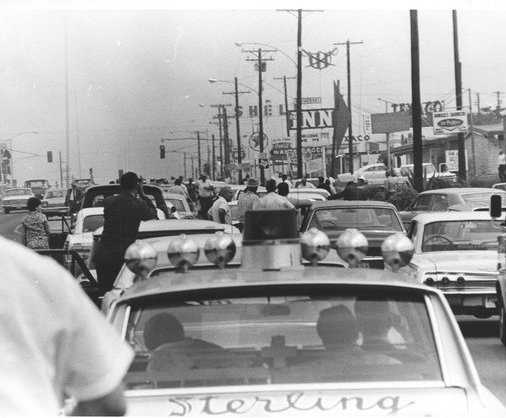
Of course as with any true story the movie takes many liberties and I researched the incident by reading actual newspapers reports from that era and found this to be the jest of what actually happened. It all started in the early morning hours of May 3, 1969 when Ila Faye Dent (1947-1992) and her husband Robert where chased by the Port Arthur police for speeding. The couple managed to evade them by abandoning their vehicle and fleeing on foot into a heavily wooded area. They eventually came upon a ranch whose owner called the police to say that he had been attacked by two hitch-hikers. Patrolman Kenneth Crone, whose character is played by Michael Sacks and who also appears briefly in the film as a sheriff’s deputy, answered the call. When he arrived on the scene Robert pulled a gun on him and forced him back into his patrol car where the three then took off in the vehicle that started the massive 200 mile slow speed chase that attracted hundreds of police cars as well as onlookers and media outlets. Their destination was Wheelock, Texas where Ila Faye wanted to visit her two children from her previous marriage that where now staying with her parents. They had no intention of kidnapping them like it is portrayed in the film only to visit them for 15 minutes, which Captain Jerry Millter (portrayed by Ben Johnson) initially agreed to allow, but then later reneged.

sugarland1


Ila Faye Dent portrayed by Gold Hawn in the film

sugarland2

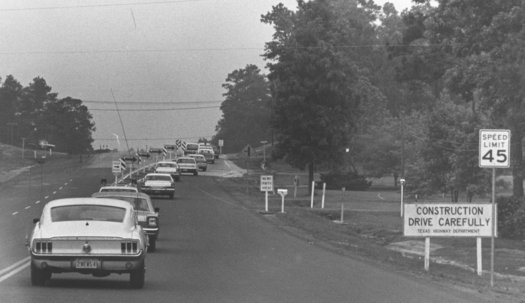
The actual car chase as it occurred on May 3, 1969.

sugarland3

The changes that Spielberg and his team of two writers made to the story doesn’t help and I wish they had been more accurate with it. The biggest issue is the fact that the actual chase lasted for only about 5 hours while in the film it gets extended for 2 days, which doesn’t work because the part where they sleep overnight inside a car lot kills the momentum and makes for a draggy middle. The use of foreshadowing becomes too obvious and heavy-handed. The child-like enthusiasm by the two main characters is initially fun, but their notion that they can somehow take the police on a wild car chase and snatch back their child without having any consequences seems too unrealistically naïve even for a pair of country bumpkins as they are portrayed.

Spoiler Alert!

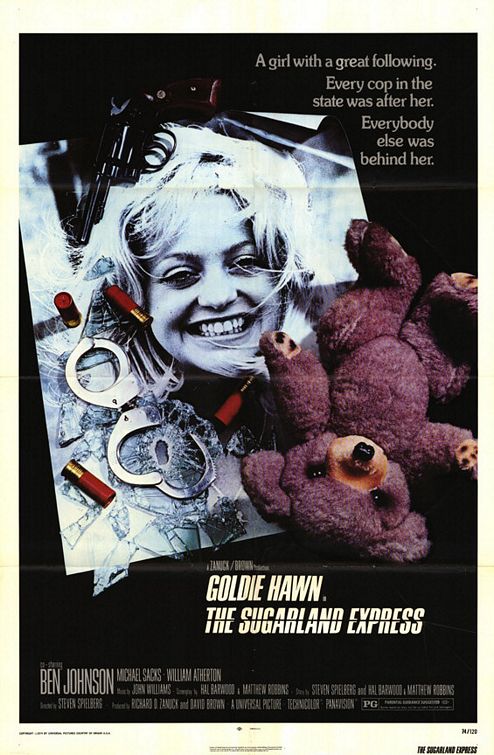
The film’s biggest downfall though and the main reason it didn’t do well in the box office is with its downbeat ending. From a directorial stand point I liked it as Spielberg infuses all sorts of interesting elements into it including making the house in which the child supposedly is staying look very foreboding and ominous as well as a brief shot of a teddy bear being thrown out a car window and laying the road while the cars speed all around it. However, seeing Clovis get shot is jarring and takes away from the film’s otherwise lighthearted tone. In the real life incident the husband did indeed get shot and killed although it happened differently than the way it gets played out here, so I don’t really have anything against showing it, but film should’ve added in a brief moment showing Lou Jean being reunited with her child after her stint in prison, which also really happened. I realize the denouncement mentions this in text over the credits, but visually showing it would’ve made more of an impact and helped the audience leave the theater with an upbeat feeling.

End of Spoiler Alert!!

sugarland express 3


sugarland express 1

My Rating: 7 out of 10

Released: April 5, 1974

Runtime: 1Hour 52Minutes

Rated PG

Director: Steven Spielberg

Studio: Universal

Available: VHS, DVD, Blu-ray, Amazon Instant Video, YouTube

Joyride (1977)

joyride 2

By Richard Winters

My Rating: 4 out of 10

4-Word Review: This joyride turns joyless.

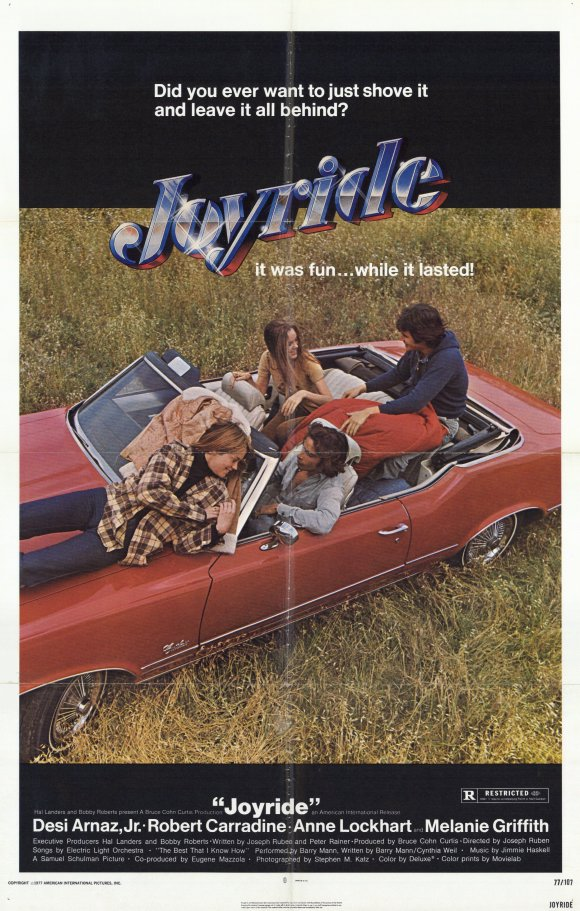
Scott (Desi Arnaz Jr.) is bored with his job and finds that his friend John (Robert Carradine) is too. With John’s girlfriend Susie (Melanie Griffith) in tow they decide to drive up to Alaska where they hope to get jobs on the pipeline. Unfortunately they end up facing a lot of unexpected problems and eventually are forced into robbery with the Canadian Mounted Police hot on their tail.

The film was written and directed by Joseph Ruben who later went on to do much better things, but this isn’t too bad for the most part. It has a good pace without any of the static drama or wooden dialogue typical with these types of features during that era. The situations are for the most part believable and mildly engrossing. The film also features two very unique scenes including that of a genuine pissing contest, which John wages and wins with some fellow bar patrons and a scene where the trio is forced to eat dog food that by the looks on their faces seems to have been the real thing.

Unfortunately the film tends to ramble and takes a lot of predictable dramatic twists while failing to add any new perspective to it. The characters seem ill-prepared for many of the expected problems that they face, which any sensible viewer could’ve predicted would happen from the get-go. It’s also unrelentingly downbeat. I was expecting a little more frivolity and humor, which could’ve helped and I also thought it was unrealistic that every person they meet in the town turns out to be corrupt, conniving or mean.

It’s interesting to some extent to see the next generation of baby boomers or those who were too young to get involved in the protest movement during the 60’s, but still trying to carry on the counter-culture torch during the mid and late 70’s. The four leads are all offspring of famous celebrities, which is the film’s one true novelty and I couldn’t help but wonder while I viewed this what their presumably more conservative parents must’ve thought while watching their kids in this playing characters that are quite jaded and with no shortage of sex, nudity and cursing.

Arnaz Jr. is the weakest link and quite transparent while lacking the charisma needed for a lead actor. Carradine is good and it’s nice seeing him not playing a nerd type. Griffith is cute and there’s even a glimpse of her bare bottom during one segment when she flashes some passing motorists. The most dynamic performance though goes to Anne Lockhart who appears later on and acts as a love interest for Scott. Her character is sassy and real while helping add some needed dynamics and it’s a shame she didn’t stay for the entire duration.

The second half where they decide to rob the payroll department and then go on a mad car chase across the northern Canada has a few fun moments. Unfortunately the viewer is left hanging as we are never shown if they ultimately get away or are caught, which is frustrating and ends up being a cop-out of the highest order.

My Rating: 4 out of 10

Released: June 6, 1977

Runtime: 1Hour 32Minutes

Rated R

Director: Joseph Ruben

Studio: American International Pictures

Available: DVD

Heroes (1977)

heroes

By Richard Winters

My Rating: 4 out of 10

4-Word Review: Adjusting to civilian life.

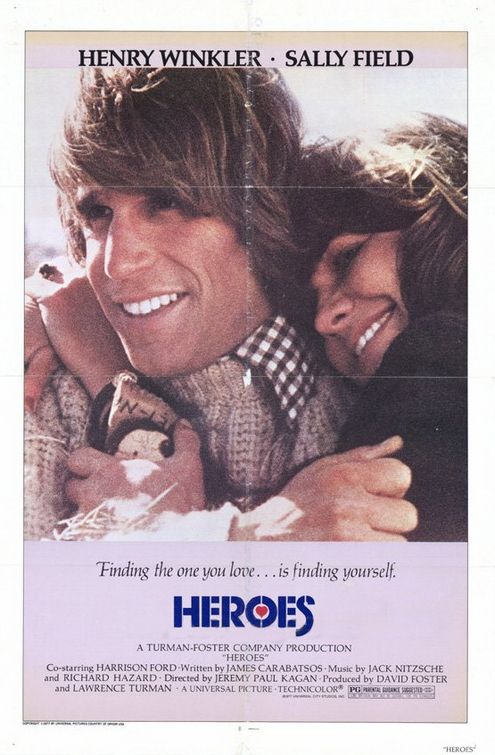
Jack (Henry Winkler) is a Vietnam Vet. still suffering from nightmares from his war time experiences. He has been in and out of the psyche ward at the veteran’s hospital, but has come up with an idea that he feels will makes both him and his buddies a lot of money. He wants to start a worm farm to be used as fisherman’s bait, but must board a bus to California to do. There he meets Carol (Sally Field) a woman who is engaged to be married and was a war protester during the 60’s. The two don’t get along at first, but eventually a relationship is made as she and his cousin Ken (Harrison Ford) help Jack fulfill his dream.

The movie is well filmed for the most part and even has a nicely shot and exciting foot chase down the busy streets of Manhattan, but the script by James Carabatsos, who was a Vietnam Vet. himself is too loosely structured and only glosses over the many issues that veterans face, which gives the whole thing a very shallow feeling. The only time we ever see any type of flashback’s to the experiences that Jack had while fighting in the war is at the end even though I felt the film would’ve been much stronger had this been shown throughout. The comical segments are misplaced and the story would’ve worked better had it just stuck to the drama.

The film also spends too much time with Jack and Carol’s budding romance, which for the most part comes off as forced. The cutesy ways that the two are shown constantly bumping into each other as their relationship ‘blossoms’ is contrived and having the two already as a boyfriend/girlfriend from the very start would’ve helped focus things more solely on Jack, which it doesn’t do enough of. I also felt that the segment where Carol pays for damages that Jack does at a café and then goes with him and his buddy Ken to an isolated location where she is promised to get paid back for it didn’t seem realistic. I realize this was the ‘70s where people were more relaxed about meeting strangers, but it still seemed dangerous and impractical for a lonely woman to be driving off with two men she had only met and were already acting peculiar to begin with.  A normal person would’ve simply sued him in small claims court to get back the money that they felt was owed.

Winkler does a terrific job in the lead and I felt it was a shame he hadn’t pursued his film career further instead of languishing away in television. Field is good as well as is Ford playing against type as a country hick. Character actor Stuart Margolin has a fun bit as a driver who picks the two up as they are hitchhiking and Val Avery is amusing as the bus driver who becomes increasingly annoyed at Jack’s antics.

The film has its share of pleasing moments, but on the whole it’s shallow and forgettable. There have been so many other better films on the subject that this one seems barley worth even mentioning.

My Rating: 4 out of 10

Released: November 4, 1977

Runtime: 1Hour 53Minutes

Rated PG

Director: Jeremy Kagan

Studio: Universal

Available: DVD, Amazon Instant Video

Vanishing Point (1971)

vanishing point 1

By Richard Winters

My Rating: 7 out of 10

4-Word Review: Racing to San Francisco.

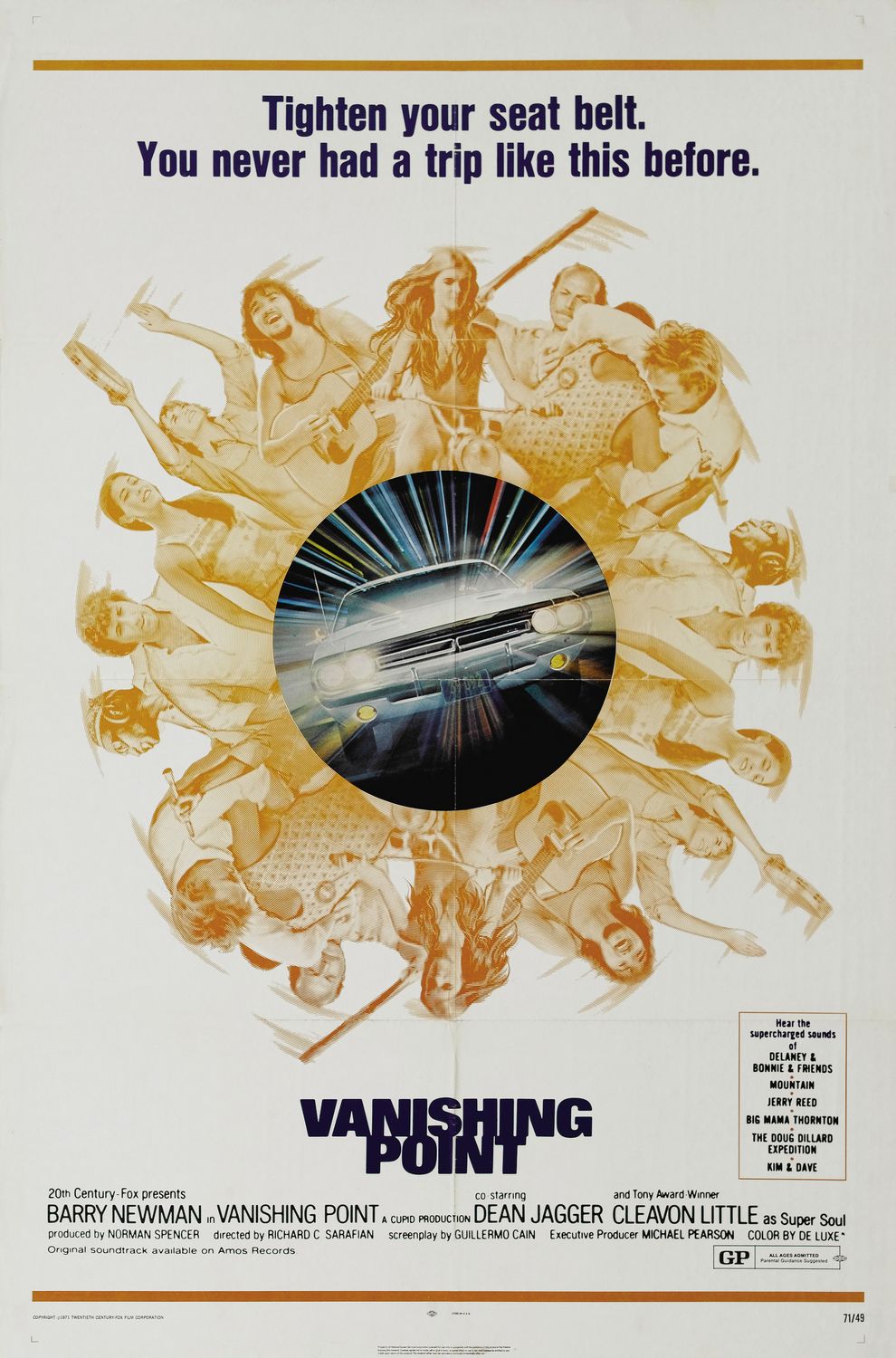
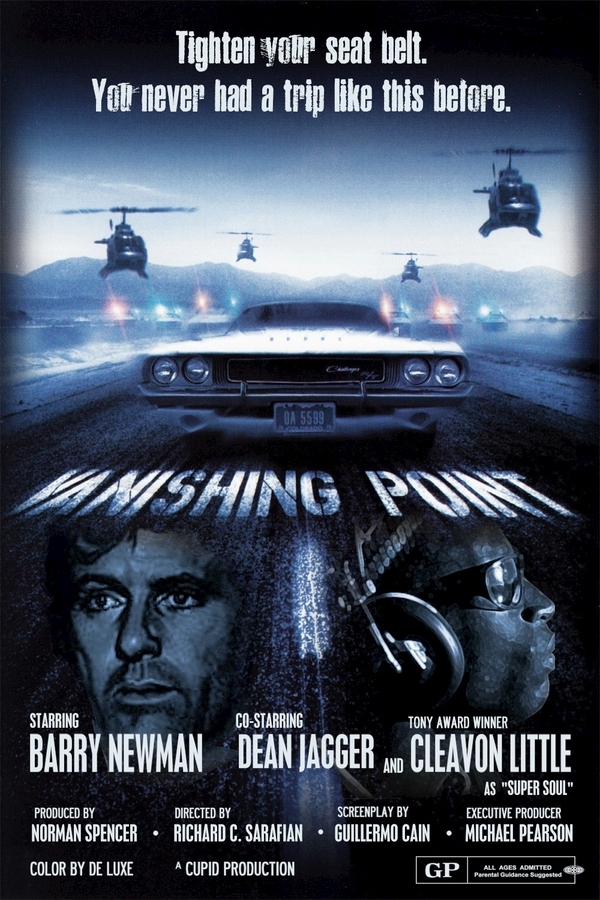
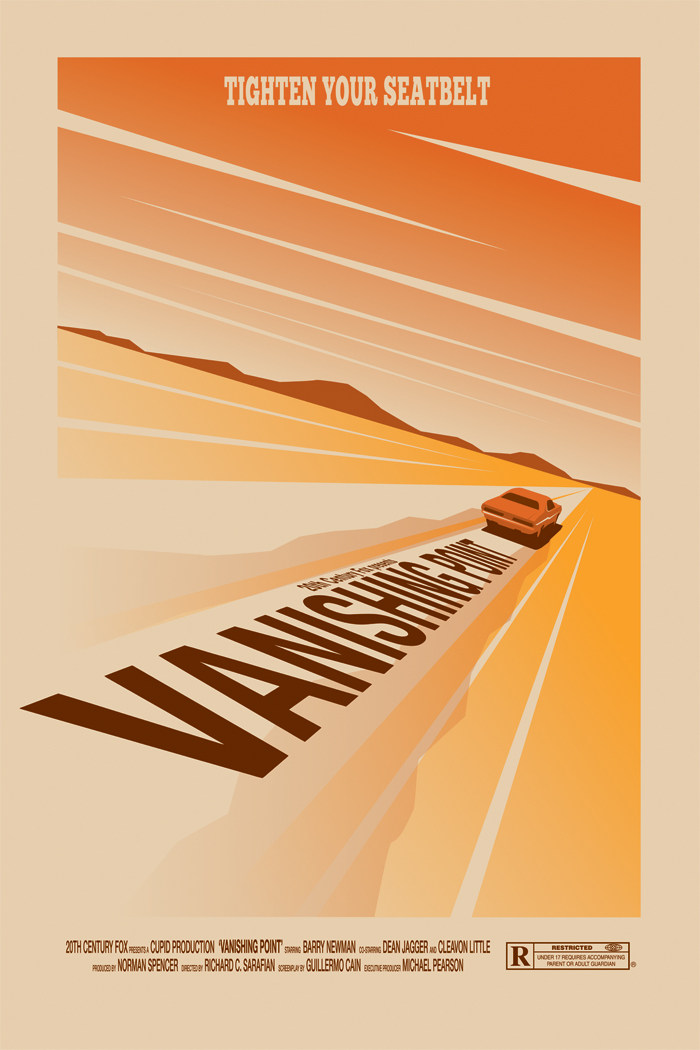
Kowalski (Barry Newman) is a car delivery driver whose next assignment has him driving a white Dodge Challenger R/T 440 Magnum from Denver to San Francisco. He is a former cop who seems disillusioned and detached from the world around him. To give his existence some meaning he decides to ‘challenge’ himself by making the delivery in record time and even makes a bet with a local drug dealer while purchasing some ‘uppers’ that he can get to San Francisco by 3:00 the next day. As his record drive proceeds he gets the attention of the local law enforcement from every state that he drives through, but none of them are able to stop him despite all efforts. He also attracts the attention of a local blind, black DJ named Super Soul (Cleavon Little) who has access to the police radio frequency and able to help Kowalski with his goal.

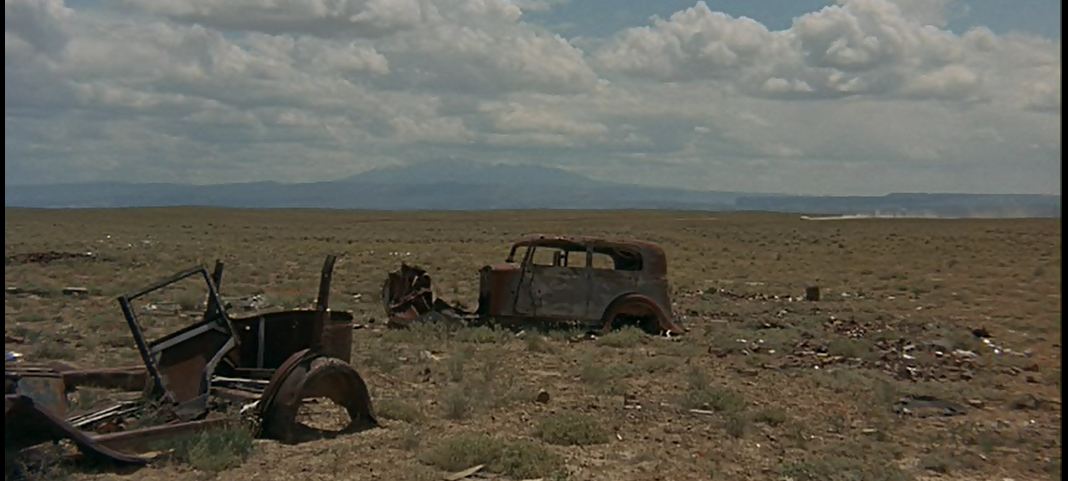
Richard C. Sarafain’s direction and John Alonzo’s cinematography are the real winners here. In fact my favorite scenes from this film are the long distance shots capturing the car driving along the lonely highways to the backdrop of the stunning western skies and its rugged, sandy landscape. This is a movie that will appeal to one’s emotional senses and bypass the need for logic. Certain things aren’t fully explained particularly Kowalski’s past, but the fact that it isn’t makes it more enjoyable. It’s the connection with his need for speed, escape and non-conformity that attracts us and it’s the adrenaline that propels the movie and viewer’s interest forward thus making this one of the quintessential road movies from its era or any other.

Capture 1


Capture 2

Newman seems an unusual casting choice as he really doesn’t have the dynamic star power or all that many lines of dialogue. He is also clearly in his mid-30’s for a part that seems better suited for some renegade, long haired 20-year-old, but in some ways his presence makes the movie more intriguing and distinctive by showing middle-aged people can have a dormant desire to rebel as well and sometimes even more so.

Little is terrific in what is probably the best performance of his career even though it seemed highly improbable and even ridiculous for a black DJ playing soul tunes at a radio station located in a small, isolated town inhabited by conservative, white, racist people. Severn Darden is edgy as a traveling evangelist and Dean Jagger is appealing as an old-time snake hunter. On the flip side of the 20th Century Fox DVD you can see the extended U.K. release that features a brief scene with Charlotte Rampling as a hitch-hiker. This sequence was intended to be allegorical, but really isn’t that impressive even though Rampling is quite attractive with her hair highlighted with blonde streaks.

Spoiler Warning!

The ending, which features Kowalski intentionally driving into some bulldozers parked in the middle of the road, which kills him instantly in a ball of flames, has proved through the years to be quite controversial and filled with many interpretations. I found it to symbolize Kowalski’s ultimate need for escape as he realized that he could never achieve the true freedom that he wanted, so he decided in a way to become a martyr and take his chances in another world beyond this one. The wry smile seen on his face just before he does it signifies the ‘fuck you’ that he gives to the authorities who are convinced that they finally have him cornered but really don’t. It also connects to the death of the counter-culture movement who by that time had realized that their dream of a utopian society filled with complete individual freedom and outside of mainstream control was never going to happen.

End of Spoiler Warning!

vanishing point 4


vanishing_point

My Rating: 7 out of 10

Released: January 15, 1971

Runtime:  1Hour 45Minutes (U.K. Version) 1Hour 39Minutes (U.S. Version)

Rated R

Director: Richard C. Sarafain

Studio: 20th Century Fox

Available: DVD, Blu-ray

Macon County Line (1974)

macon county line 3

By Richard Winters

My Rating: 6 out of 10

4-Word Review: Sheriff attacks innocent trio.

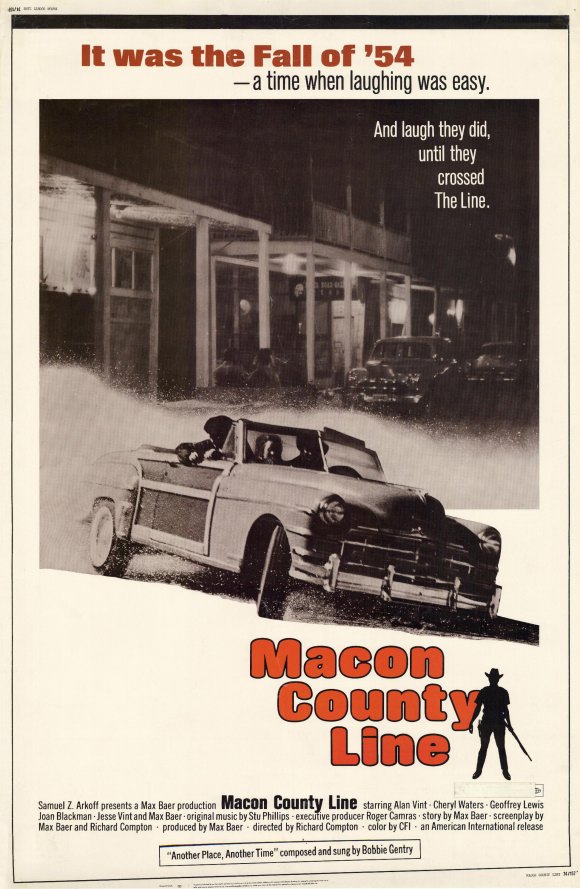
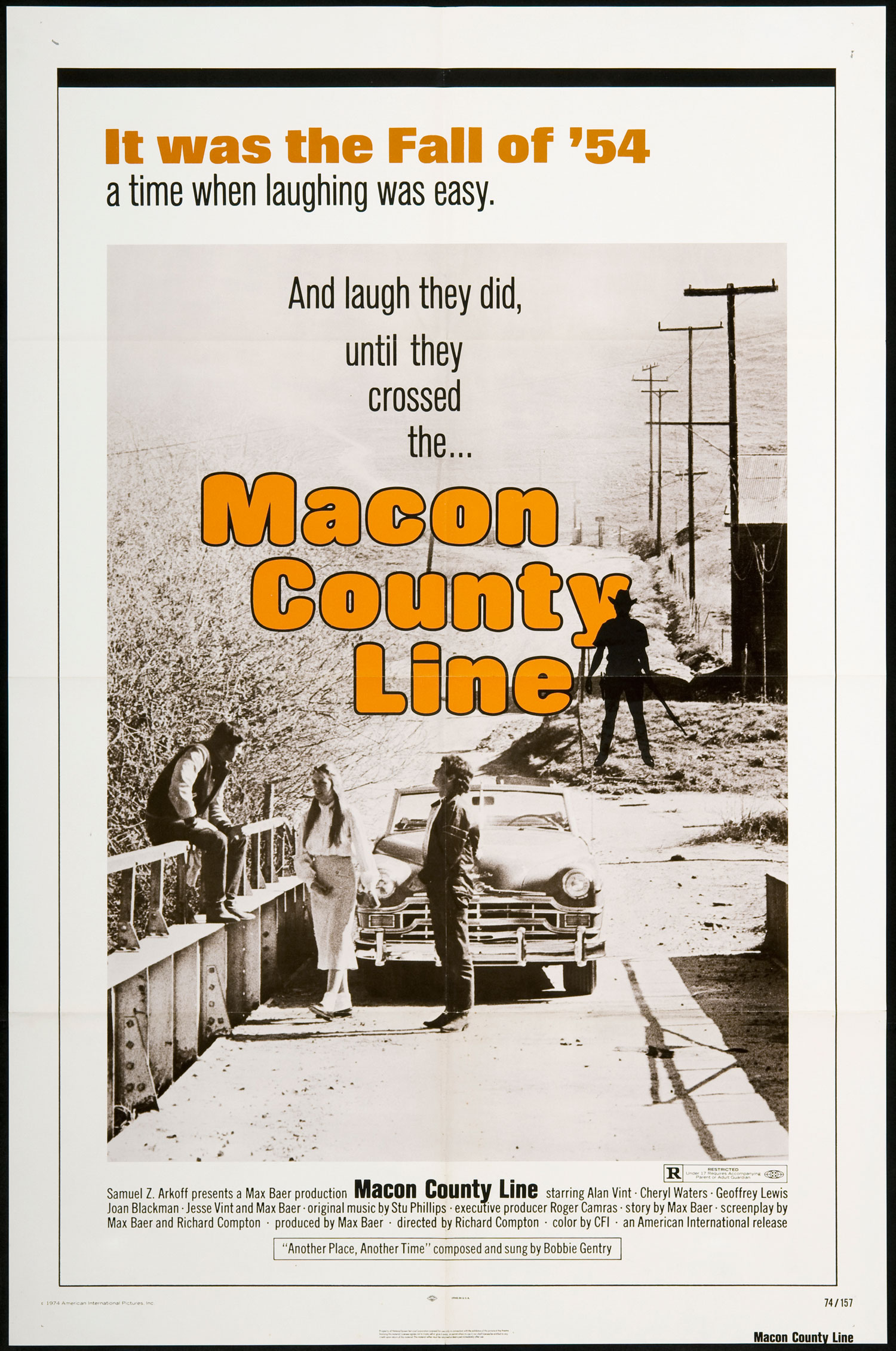
The year is 1954 and Chris and Wayne Dixon (played by real-life brothers Alan and Jesse Vint) are two brothers traveling through the Deep South for one last hurrah before joining boot camp. Along the way they pick up attractive hitch-hiker Jenny (Cheryl Waters) and the three appear ready to party it up when their car suddenly breaks down in front of an isolated country home. Unbeknownst to them the home’s inhabitant (Joan Blackman) has been murdered and when her husband, who just so happens to be the county sheriff, (Max Baer Jr.) arrives to find the carnage he immediately suspects it’s the kids sleeping in the nearby car. Thus begins a wild night chase through the country backwoods as the three try desperately to outrun a man with an unrelenting rage while pleading with him that they are innocent.

The film is a definite step above the average drive-in fare of that era with characters that manage to avoid the usual stereotypes and clichés. The 1950’s are painted in a little more of an edgier way and populated by people that are much more crass than what you will find in an old episode of ‘Leave it to Beaver’ or some sanitized recreation of that period, which I found to be refreshing. The music, particularly La Vern Baker’s gospel tinged opening song and Bobbie Gentry’s closing one is great and really helps to create a definitive mood. There are also two really good flashback sequences including a dimly lighted, moody one dealing with police brutality of a criminal and an ‘interrogation’ scene done at a police station that isn’t bad either.

Unfortunately the story is thin and hinges solely on the frantic chase that takes up the movie’s final 20 minutes, which is well edited and even features a twist ending, but up to then it is rather uneventful with too much time spent on the trio’s visit with a dimwitted auto mechanic (played by Geoffrey Lewis) that adds unnecessary comic relief.  There is also an ill-advised, dream-like segment where Jenny and Chris decide to take off their clothes and make love in some stagnant water found inside an old, rusted circular drinking trough in an abandoned barn that not only takes away from the film’s grittiness, but also seemed extremely unhygienic as well. I was also expecting more car chases especially with all he nicely refurbished vintage cars that appear, but the only one that they do have gets shot at night and the camera focuses more on the driver’s nervous faces in a cheesy melodramatic style than on the automobiles.

The film was produced and co-written by Max Baer Jr. who is better known as Jethro from the hit 60’s TV-series ‘The Beverly Hillbillies’ and in fact he wrote the story for this movie on the back of some Hillbilly scripts during breaks in filming. Although this was filmed in Sacramento the location is supposed to be the south and could’ve been either Georgia, Tennessee, or Alabama as all three of those states have a Macon County, but the real irony is that the two brother are from Chicago and we even see a close-up of their Illinois plate, which also has a Macon County although it’s likely the story wasn’t set in that one.

macon county line 4

My Rating: 6 out of 10

Released: August 8, 1974

Runtime: 1Hour 28Minutes

Rated R

Director: Richard Compton

Studio: American International Pictures

Available: DVD

Eddie Macon’s Run (1983)

eddie macons run 1

By Richard Winters

My Rating: 5 out of 10

4-Word Review: He runs across Texas.

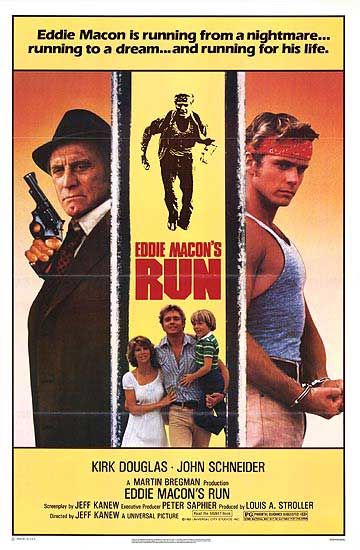
Each Monday during the month of September, in order to celebrate my impending move from Indianapolis to Austin, Texas, we will be reviewing an 80’s movie that takes place in Texas. We start with this film that is based on the James McLendon novel. Eddie Macon (John Schneider) is a young father wrongly accused of a crime who devises a plan to escape from prison and then run on foot from Hunstville to Laredo where he hopes to cross the Mexican border to freedom. The problem is dirty cop Carl (Kirk Douglas) who is holding a past grudge is determined not to let him do it and is hot-on-his-heals.

The film’s basic premise seems not only impractical, but wholly impossible. Per Mapquest the distance between Huntsville and Laredo is 385 miles and this man expects to somehow do it all on foot in only 4 days, which is ridiculous especially when his wife owns a car. Instead of having her drop off his backpack with all of his supplies at a certain strategic point why not have her waiting for him at that same spot with a car ready to whisk him off? The concept makes no sense. There is no reason why he has to do this all on foot and basic logistics of it are mind boggling.

I also had to a lesser extent issues with the Lee Purcell character that plays Jilly Buck. Eddie saves her from an attack by another man and then she helps him elude Carl with her connections through the governor that allows her to lead a rather privileged existence. I understood that she would want to help him a little since he helped her, but she goes far and beyond that and puts herself and her cushy lifestyle in jeopardy by doing it for a man that has clearly stated will stay faithful to his wife.

Schneider, who has too much of a boyish face, is quite weak in the lead with a performance that is dull and one-note.  The character is also painfully stupid as he doesn’t bother to pick-up his backpack that is sitting right at his feet and has everything he needs in it when he escapes from a house even though he had just grabbed a gun out of it only a few seconds earlier.

Douglas is by far the better actor and rightfully deserved the top billing. It is amazing how a man who has played so many good guys in his career could turn around and so easily play a bad guy with the same type of conviction, but he does and it is quite entertaining. His hairstyle looks terrible and almost like it’s a wig, but I think that was intentional as it gives him an appearance of being ugly, crazed and menacing all at the same time.

At times it relies too heavily on old Texas stereotypes, which borders on making the whole thing come off as one giant cliché, but the scene where Eddie gets kidnapped by rednecks and taken into ranch home that is filled with pinball machines and terrorized is fun and has a nice mix of whacky characters and dark humor that the rest of the film should have had. The on-location shooting nicely brings out the dusty, barren landscape as well as a dazzling bird’s-eye shot of the San Antonio skyline.

Norton Buffalo’s moody soundtrack is a major plus, but the two songs sung by Schneider are terrible and just about ruin the whole thing. The film is passable enough to be an adequate time-filler for a slow evening, but don’t expect too much. This also mark’s the official film debut of John Goodman who appears with a mustache as Eddie’s corrupt boss as well as J.T. Walsh who has a brief bit as a bar patron.

My Rating: 3 out of 10

Released: March 23, 1983

Runtime: 1Hour 35Minutes

Rated PG

Director: Jeff Kanew

Studio: Universal

Available: VHS, DVD, Amazon Instant Video

Rabid Dogs (1974)

rabid dogs 3

By Richard Winters

My Rating: 7 out of 10

4-Word Review: Terror filled car ride.

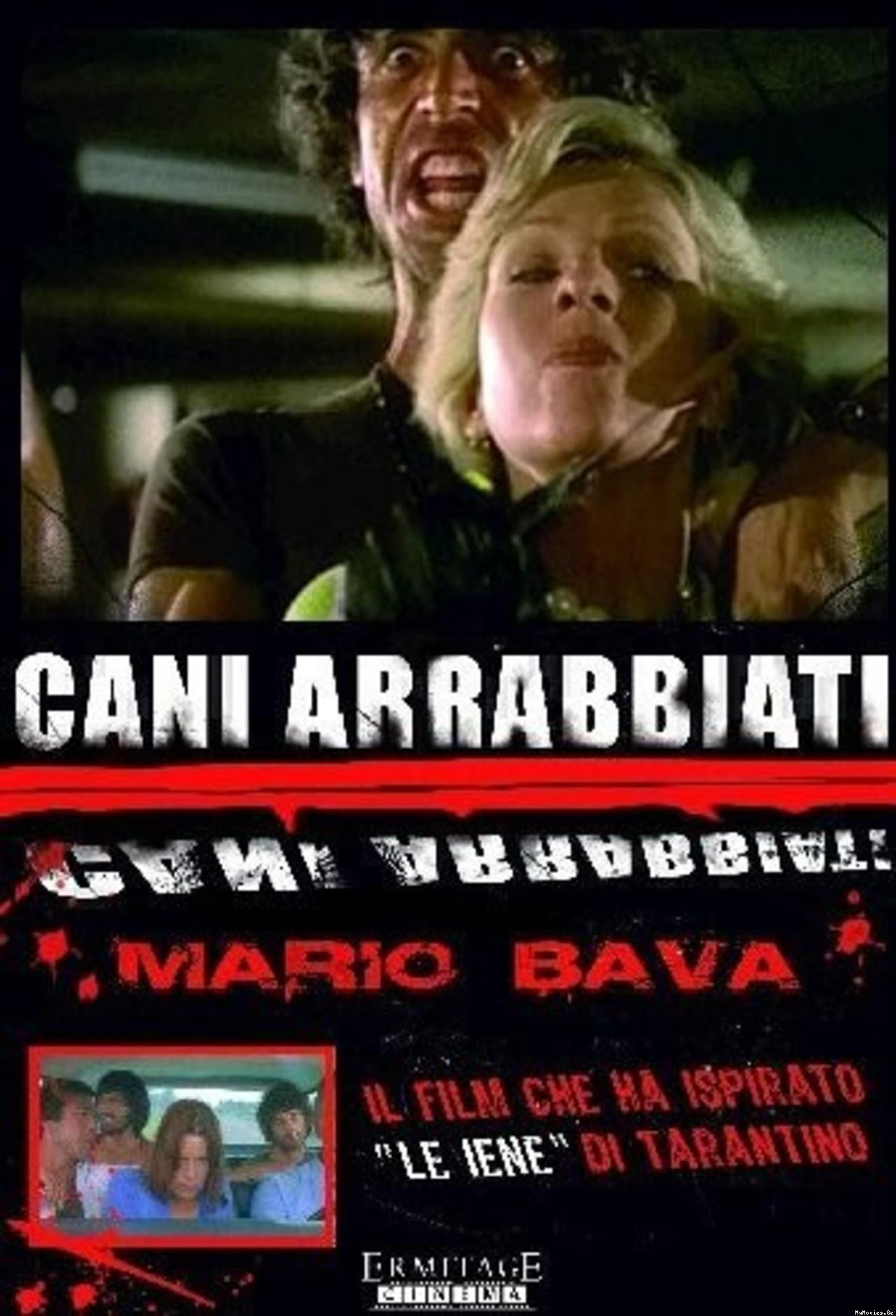
Four men decide to hijack a car that is delivering the payroll to the employees of a local Italian pharmaceutical plant. Both men inside the car are killed, but the four manage to get away with the money only to have the driver of the getaway vehicle shot in the back of the head by a security guard as well as having a bullet hole put into their fuel tank. The remaining three are then forced to find another car. There is the Doctor (Maurice Poli) who is the level-headed leader and mastermind. There is also Bisturi (Don Backy) a lanky child-like man prone to savagery without warning and Thirty-two (George Eastman) who can be equally savage especially with women. They kidnap a beautiful woman named Maria (Lea Lander) and then hijack another car driven by a father Riccardo (Riccardo Cucciolla) who is trying to take his sick son to the hospital. The six then go on a terrifying car ride through the Italian countryside while playing a game of cat-and-mouse with each other and eluding the authorities.

This film turned out to be Mario Bava’s swan song. His career had faded during the 70’s as his style of horror films were no longer considered chic and he made this film project a personal crusade to prove that he could keep up with the modern sensibilities by creating a film that was gritty, raw and violent. All things considered he succeeds valiantly. The film has a nasty edge right from the beginning and manages to stay at that tone throughout. The killers are truly mean and keep the viewer on edge with their unpredictable trigger-finger personalities. It achieves a level of ugliness reminiscent in a true crime that most Hollywood films never seem able to attain and its shoe-string budget and bare-bones approach becomes a major benefit.

For a film that takes place almost entirely inside a car the shot selections has an amazing amount of variety. Bava ended up having to do the cinematography himself because he couldn’t afford to keep the one he had hired on, which makes it all the more incrediable how brilliantly visual this is. The characters faces get up so close to the lens you literally feel like you can smell them and sense the sweat glistening off their bodies making you believe you are stuck in the car with them. The film is never boring or slow, the action well-choreographed with interesting  plot twists proving what an underrated genius Bava was and making me believe that despite the many difficulties getting produced this is his finest effort.

Backy who was and still is today a singer/songwriter with limited acting experience gives a great performance and is possibly the most memorable of the villains especially with his shocked expressions after he commits a particularly vile act proving that even he himself is shaken at his own savagery. Leander isn’t necessarily the best of actresses, but her perpetual look of shock and fear is quite entertaining. I was also impressed with the child actor who manages to stay asleep despite all the violence and chaos around him.

I also enjoyed the similarities to Last House on the Left including an exciting foot chase through a cornfield where you think the women is going to get away as well as a scene where the women is forced to urinate in front of the men while they laugh and mock her.

If you are a fan of 70’s exploitation than this lost gem deserves to be on top of any true fan’s list as it delivers-the-goods without ever watering things down for good taste. I also enjoyed the neat twist ending, which I saw coming, but it’s pretty cool anyways.

Years later Bava’s son Lamberto used existing footage from this film while adding new scenes with a different ending to create a movie called Kidnapped although I prefer this version better.

My Rating: 7 out of 10

Alternate Title: Kidnapped

Released: February 25, 1998 (Never released during Bava’s lifetime.)

Runtime: 1Hour 36Minutes

Not Rated

Director: Mario Bava

Studio: Spera Cinematografica

Available: DVD, Blu-ray, Amazon Instant Video
Runaway, Runaway (1971)

runaway runaway 1

By Richard Winters

My Rating: 4 out of 10

4-Word Review: Teen girl runs away.

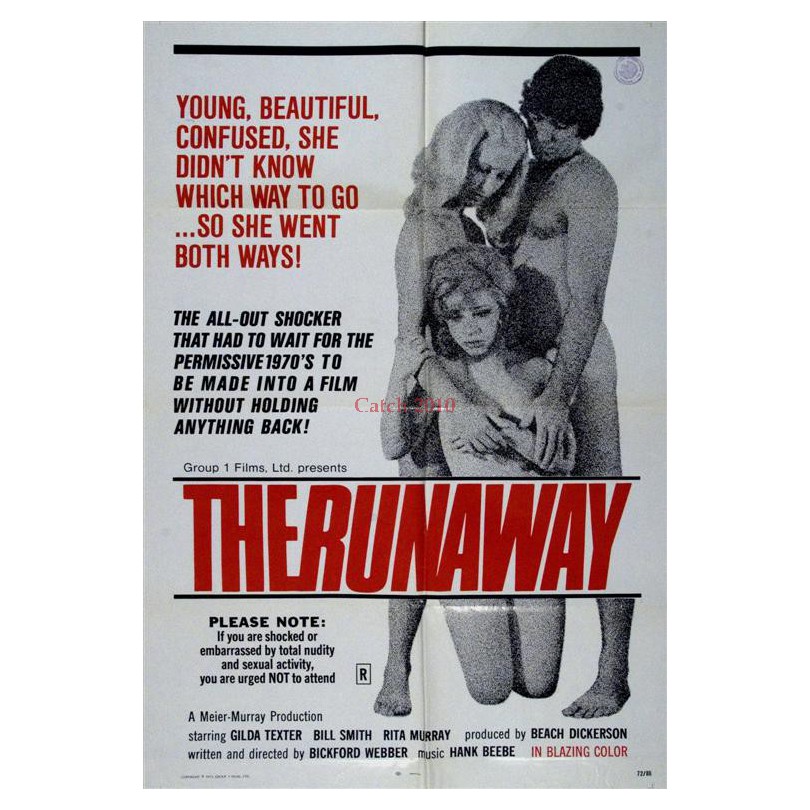
Ricki (Gilda Texter) is a teen girl who has had enough of her unhappy home life and decides to run away and meet up with a guy in California who she has strong feelings for but knows little about. Along the way she takes a ride from Frank (William Smith) whose job is finding young runaways and returning them to their parents. He tries to help Ricki, but she rejects it even though they remain on friendly terms. She then meets up with Lorri (Rita Murray) who works as a prostitute, but is also a closet lesbian. She gives Ricki a place to stay and then makes sexual advances towards her. Although Ricki at first resists she eventually gives in, but remains conflicted about her feelings towards Lorri and unhappy with her situation that seems no better for her than the one she ran away from.

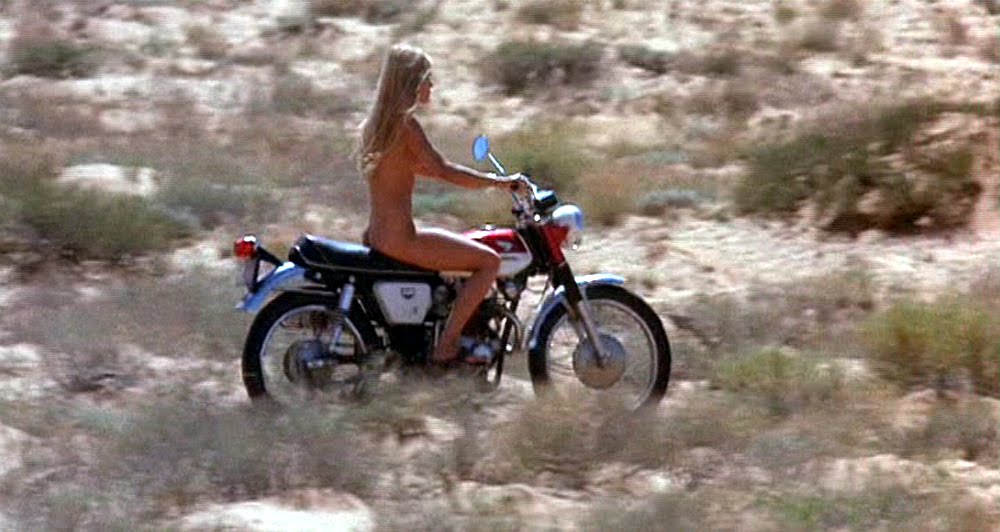
Texter rose to fame after playing the nude blonde riding on a motorcycle in the film Vanishing Point. Her scene lasted for only a couple of minutes, but most male viewers came away remembering her part more than anything else and producers were quick to pick up on it. She was soon given a starring role here, which was hoped to jettison her into a full-time acting career, which never happened and eventually she settled down into the role of costume designer for films, which she did through 2006.

gilda texter 2

Either way she does quite well and shows more flair and ability than most young beauties that get acting jobs with only limited experience or training. She speaks her lines with a nice inflection and has some good facial expressions especially during the scene where she is attacked.

Smith who has made a career playing bulky tough guys is quite good in the sympathetic role as an older father figure. However, in these more cynical times his over concern for her welfare could seem more like a dirty old man with deep seated sexual desires. The fact that they do end up going to bed together seemed quite creepy and unnatural and I didn’t care for it and felt she would have been better off had she stayed with Lorri and formed a more lasting relationship with her.

Hank Beebe’s music score is distinctive and bucked the trend of the time by not having a psychedelic or rock sound, but instead it’s more on the jazz side. The bouncing vibrant song done over the opening credits is especially good and I would love to credit the lady who sings it, but none is given.

The opening sequence features a scene where Ricki gets attacked by a man at an isolated location of an abandoned dessert building that is played by Ron Gans, who later went on to be a famous voice-over narrator for movie trailers, and it is exciting. Another part that I found interesting is when Ricki goes to a party and gets drugged, which makes good use of the fish-eye camera lens, but overall this thing gets too talky and eventually becomes quite boring.

The Ricki character seems a bit too naïve as well. Most runaways I would presume would be practical enough to have some money in their pocket, but she has absolutely none. She barely knows this guy that she has ‘fallen in-love’ with and has no idea where he lives or even his phone number, but somehow expects to magically meet up with him anyways. She also makes no attempt to find a job once she gets to her new location even though that is the first thing most people, even movie characters will do in order to help them get back on their feet and give them some independence.

The story is derivative and predictable and gives us no new insight or slant into the runaway issue. The ending offers no real conclusion and despite some good attempts at realism and well-written dialogue the film is overall sterile and forgettable.

My Rating: 4 out of 10

Released: June 13, 1971

Runtime: 1Hour 30Minutes

Rated R

Director: Bickford Otis Webber

Studio: Meier-Mayer Productions

Available: None at this time

Your Three Minutes Are Up (1973)

your three minutes are up 2

By Richard Winters

My Rating: 6 out of 10

4-Word Review: Road trip goes bad.

Charlie (Beau Bridges) is unhappy with his life. He is stuck in a dull job and engaged to Betty (Janet Margolin) who is constantly nagging him. He longs for a more carefree existence that is friend Mike (Ron Liebman) enjoys. Mike does not work a job and spends most of his time trying to cheat what he feels is a cold and impersonal system, but also has to deal with constant calls from bill collectors and the stress of trying to make ends meet with very little money. The two decide on a whim to take a little road trip, but during the course of their journey things begin to unravel as both men realize there are limits to everything and once you cross it you must pay the consequences.

The film like the characters spans the entire critical spectrum. The script, which was written by James Dixon who appears as the character Howard is incisive and taps into something every individual on the planet must deal with, which is learning how to balance individuals desires with societal demands. Other films have lightly touched on it, but few delve into it quite this deeply. I especially enjoyed the Charlie character who starts out as an obedient schmuck that gets ordered around by everyone, but also harbors a pent up anger that comes out slowly until it finally erupts into volcanic proportions that shocks even him.

Unfortunately the direction by Douglas Schwartz is dull and unimaginative. The budget was clearly low, which gives the movie a cheap TV-Movie look and feel. The framing and camera work is uninspired and could have used more close-ups, tighter editing and better lighting. The film also contains four generic sounding songs all sung by Mark Lindsey the former lead singer from Paul Revere and the Raiders that lack distinction and give the movie a dated quality.

I also didn’t care for the Margolin character. She is a beautiful woman physically, but the character is too much of a one-dimensional nag. Why she would continue to call Charlie and beg him to come back when he clearly lied to her while also openly telling her that she annoyed him didn’t make much sense. The scene where she walks in on him in bed with two naked women and instead of just ending the relationship immediately she stays and tries to ‘reason’ with him, which came off as pathetic and unrealistic.

This also marks the film debut of Nedra Volz a late bloomer into acting who at age 65 started a two decade career playing old lady roles in various TV-shows and movies. She can be briefly spotted at the 31-minute mark playing an old lady sitting on a bench at a bus stop and accepting a free newspaper only to become shocked and embarrassed at its provocative headline.

nedra volz

June Fairchild who appears as a woman who stuffs her face with food at a fancy restaurant thinking that she is being treated to dinner only to end up getting stiffed with the bill ironically had her real-life paralleling the lead character’s quandary in the movie. She was in a string of films during the 70’s, but when the offers dried up she became a homeless alcoholic living on skid row and the subject of a February, 2001 article in The Los Angeles Times. Friends came to her rescue and she managed to get back on her feet and now judging by some recent pics is looking happy and still quite attractive.

june fairchild 1

My Rating: 6 out of 10

Released: August 7, 1973

Runtime: 1Hour 27Minutes

Rated R

Director: Douglas N. Schwartz

Studio: Cinerama Releasing Corporation

Available: YouTube